

Metabolic independence drives gut microbial colonization and resilience in health and disease
Open accessPublished version of a preprint
The DOI matches its Crossref record; 102 of the 102 references it cites were found in a registry or an index.
Abstract
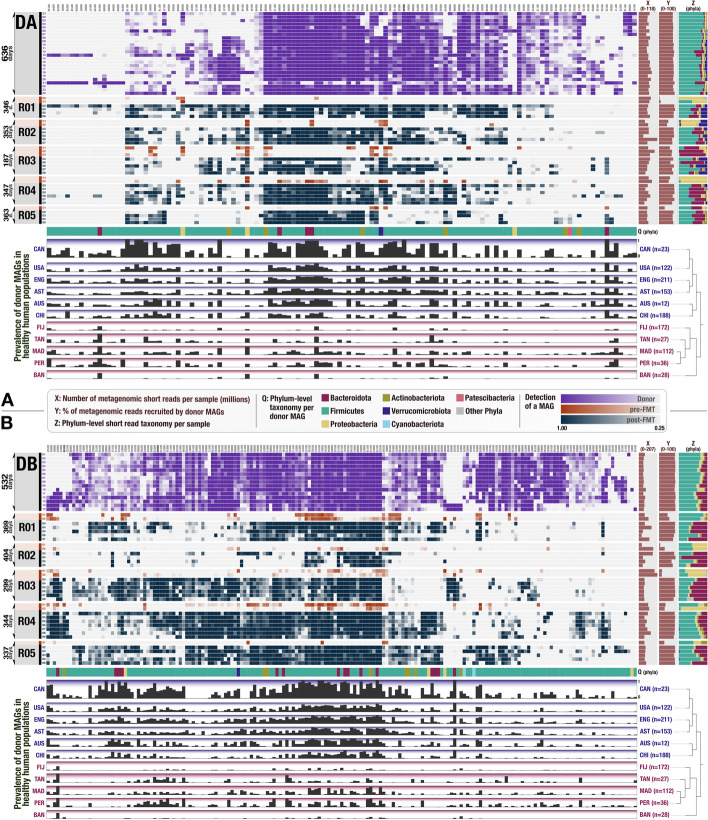
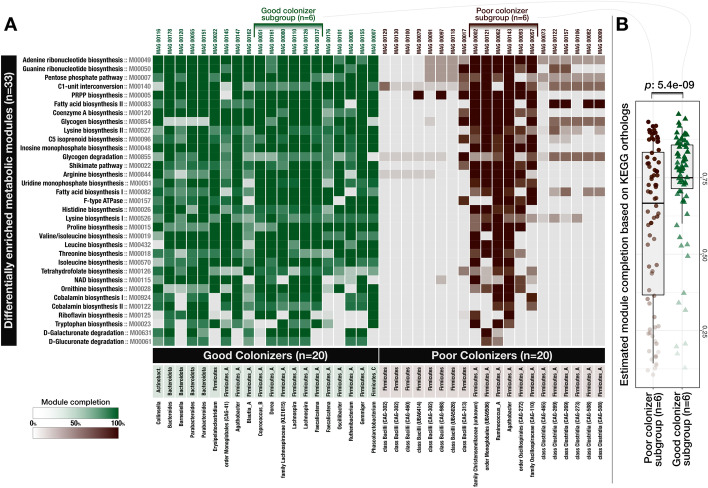
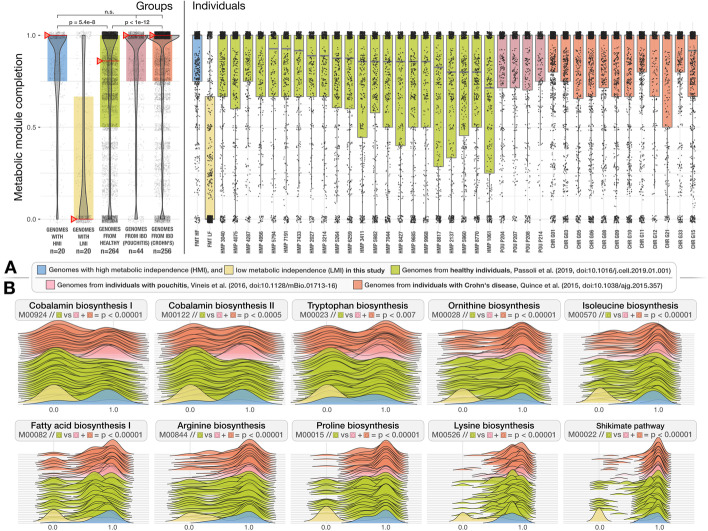
Background: Changes in microbial community composition as a function of human health and disease states have sparked remarkable interest in the human gut microbiome. However, establishing reproducible insights into the determinants of microbial succession in disease has been a formidable challenge. Results: Here we use fecal microbiota transplantation (FMT) as an in natura experimental model to investigate the association between metabolic independence and resilience in stressed gut environments. Our genome-resolved metagenomics survey suggests that FMT serves as an environmental filter that favors populations with higher metabolic independence, the genomes of which encode complete metabolic modules to synthesize critical metabolites, including amino acids, nucleotides, and vitamins. Interestingly, we observe higher completion of the same biosynthetic pathways in microbes enriched in IBD patients. Conclusions: These observations suggest a general mechanism that underlies changes in diversity in perturbed gut environments and reveal taxon-independent markers of “dysbiosis” that may explain why widespread yet typically low-abundance members of healthy gut microbiomes can dominate under inflammatory conditions without any causal association with disease.
Overview
The claims and statistics of this paper haven’t been checked yet.
Free: it reads the open-access text and checks the first 5 claims that cite a source we can check. Create a free account to check every claim.
Integrity signals
Registry
Cites
Statistics
Figures
Verification
Claims the paper makes
The claims and statistics of this paper haven’t been checked yet.
Free: it reads the open-access text and checks the first 5 claims that cite a source we can check. Create a free account to check every claim.
Claims other papers make about this one
Each is checked against this paper’s own text: does it say what the citing paper says it does?
The source backs part of the claim, not all of it — or backs it for a different population, condition or comparison.
In the citing paper
“In this context, metabolic independence — the capacity to synthesize essential cofactors, amino acids, and nucleotides — has emerged as a key ecological trait that promotes enteric health.228,230”
From Gut dysbiosis in oncology: a risk factor for immunoresistance (2026) · doi:10.1038/s41422-025-01212-6 · cites this paper as [228]
Experimental — accuracy not yet measuredThe source backs part of the claim, not all of it — or backs it for a different population, condition or comparison.
In the citing paper
“We are now beginning to recognize that eubiosis, rather than being defined by a fixed catalog of taxa, depends on gut microbial resistance (the ability to withstand insult) and resilience (the capacity to recover after disturbance).189,228”
From Gut dysbiosis in oncology: a risk factor for immunoresistance (2026) · doi:10.1038/s41422-025-01212-6 · cites this paper as [228]
Experimental — accuracy not yet measured
Self-check
Percentages, sums and reported differences re-computed from the paper’s own numbers.
The self-check needs the paper’s full text.
Citations
Cites
Basic local alignment search tool
Altschul, S. F., Gish, W., Miller, W., Myers, E. W., & Lipman, D. J. (1990) · Journal of Molecular Biology · doi:10.1006/jmbi.1990.9999 · Cited by 98,669 · cited 3×
“`DA_MAG_00018`, we used `anvi-get-sequences-for-hmm-hits` to recover DNA 515 sequences for bacterial single-copy core genes that encode ribosomal proteins, and searched them in the NCBI’s nucleotide collection (nt) database using BLAST (Altschul et al. 1990).”
MethodInfluentialThe Sequence Alignment/Map format and SAMtools
Li, H., Handsaker, B., Wysoker, A., Fennell, T., Ruan, J., Homer, N., Marth, G., Abecasis, G., Durbin, R., & 1000 Genome Project Data Processing Subgroup (2009) · Bioinformatics · doi:10.1093/bioinformatics/btp352 · Cited by 62,041 · cited 1×
“9 (Li et al. 2009).”
Fast gapped-read alignment with Bowtie 2
Langmead, B., & Salzberg, S. L. (2012) · Nature Methods · doi:10.1038/nmeth.1923 · Cited by 56,400 · cited 2×
“3.5 (Langmead and Salzberg 2012) and converted resulting SAM files to BAM files using samtools v1.”
MethodInfluentialMUSCLE: multiple sequence alignment with high accuracy and high throughput
Edgar, R. C. (2004) · Nucleic Acids Research · doi:10.1093/nar/gkh340 · Cited by 44,662 · cited 1×
“8.1551 (Edgar 2004) for alignment.”
InfluentialKEGG: Kyoto Encyclopedia of Genes and Genomes
Kanehisa, M. (2000) · Nucleic Acids Research · doi:10.1093/nar/28.1.27 · Cited by 37,077 · cited 1×
“1 [68], (3) “anvi-run-ncbi-cogs” to annotate ORFs with functions from the NCBI’s Clusters of Orthologous Groups (COGs) [69], and (4) “anvi-run-kegg-kofams” to annotate ORFs with functions from the KOfam HMM database of KEGG orthologs (KOs) [70, 71].”
MethodKEGG: Kyoto Encyclopedia of Genes and Genomes
Ogata, H., Goto, S., Sato, K., Fujibuchi, W., Bono, H., & Kanehisa, M. (1999) · Nucleic Acids Research · doi:10.1093/nar/27.1.29 · Cited by 31,232
FastTree 2 – Approximately Maximum-Likelihood Trees for Large Alignments
Price, M. N., Dehal, P. S., & Arkin, A. P. (2010) · PLoS ONE · doi:10.1371/journal.pone.0009490 · Cited by 14,894 · cited 1×
“We then ran ‘anvi-gen-phylogenomic-tree’ with default parameters to compute a phylogenomic tree using FastTree 2.1 (Price, Dehal, and Arkin 2010).”
MethodInfluentialProdigal: prokaryotic gene recognition and translation initiation site identification
Hyatt, D., Chen, G.-L., LoCascio, P. F., Land, M. L., Larimer, F. W., & Hauser, L. J. (2010) · BMC Bioinformatics · doi:10.1186/1471-2105-11-119 · Cited by 12,587
Structure, function and diversity of the healthy human microbiome
The Human Microbiome Project Consortium (2012) · Nature · doi:10.1038/nature11234 · Cited by 11,726
KEGG: new perspectives on genomes, pathways, diseases and drugs
Kanehisa, M., Furumichi, M., Tanabe, M., Sato, Y., & Morishima, K. (2017) · Nucleic Acids Research · doi:10.1093/nar/gkw1092 · Cited by 8,865
Research works printed but not linked: 3
- Vanni C, Schechter MS, Acinas SG, Barberán A, Buttigieg PL, Casamayor EO, et al. Unifying the global coding sequence space enables the study of genes with unknown function across biomes [Internet]. Cold Spring Harbor Laboratory. 2020 [cited 2021 Feb 8]. p. 2020.06.30.180448. Available from: 10.1101/2020.06.30.180448v4.full · doi:10.1101/2020.06.30.180448v4.full
- Watson AR, Füssel J, Veseli I, DeLongchamp JZ, Silva M, Trigodet F, et al. Donor and recipient stool metagenomes from a fecal microbiota transplantation study [Internet]. National Center for Biotechnology Information. 2021. Available from: https://www.ncbi.nlm.nih.gov/bioproject/prjna701961.
- EKmeta [Internet]. 2016. Available from: https://www.ncbi.nlm.nih.gov/bioproject/PRJEB6092/.
Cited by
Fecal microbiota transplantation: current challenges and future landscapes
Yadegar, A., Bar-Yoseph, H., Monaghan, T. M., Pakpour, S., Severino, A., Kuijper, E. J., Smits, W. K., Terveer, E. M., Neupane, S., Nabavi-Rad, A., et al. (2024) · Clinical Microbiology Reviews · doi:10.1128/cmr.00060-22 · Cited by 351
Self-citationPodlesny, D., Durdevic, M., Paramsothy, S., Kaakoush, N. O., Högenauer, C., Gorkiewicz, G., Walter, J., & Fricke, W. F. (2022) · Cell Reports Medicine · doi:10.1016/j.xcrm.2022.100711 · Cited by 111
“Furthermore, frequent coexistence of donor and recipient strains has been justified with the importance of neutral and stochastic ecological determinants,(15) whereas another study identified competition and adaptation that would favor fitness as a main ecological driver for microbiome organization after FMT.(16) Thes…”
BackgroundInfluentialEcological dynamics of Enterobacteriaceae in the human gut microbiome across global populations
Yin, Q., da Silva, A. C., Zorrilla, F., Almeida, A. S., Patil, K. R., & Almeida, A. (2025) · Nature Microbiology · doi:10.1038/s41564-024-01912-6 · Cited by 100
“A previous study showed that metabolic independence drives gut microbial colonization and resilience of disease-associated species, particularly under inflammatory conditions 27 .”
Advances in Fecal Microbiota Transplantation for Gut Dysbiosis‐Related Diseases
Hou, S., Yu, J., Li, Y., Zhao, D., & Zhang, Z. (2025) · Advanced Science · doi:10.1002/advs.202413197 · Cited by 117
Podlesny, D., Arze, C., Dörner, E., Verma, S., Dutta, S., Walter, J., & Fricke, W. F. (2022) · Microbiome · doi:10.1186/s40168-022-01251-w · Cited by 73
“predictive for colonization success after FMT than a high relative abundance of the same species in a FMT donor [45].”
BackgroundDisease-specific loss of microbial cross-feeding interactions in the human gut
Marcelino, V. R., Welsh, C., Diener, C., Gulliver, E. L., Rutten, E. L., Young, R. B., Giles, E. M., Gibbons, S. M., Greening, C., & Forster, S. C. (2023) · Nature Communications · doi:10.1038/s41467-023-42112-w · Cited by 80
“…in bacteria with genomes that encode complete pathways for the synthesis and metabolism of essential amino acids and vitamins (including thiamine), while microbiomes of healthy individuals are enriched with bacteria that are expected to rely on cross-feeding for essential metabolites 41,42 .”
Veillonella intestinal colonization promotes C. difficile infection in Crohn’s disease
Yang, Z., Wang, J., Chen, Y., Chen, T., Shen, Z., Wang, Y., Jian, Y., Xiang, G., Ma, X., Zhao, N., et al. (2025) · Cell Host & Microbe · doi:10.1016/j.chom.2025.07.019 · Cited by 54
Zúñiga-Chaves, I., Eggers, S. I., Kates, A., Safdar, N., Suen, G., & Malecki, K. M. C. (2023) · npj Biofilms and Microbiomes · doi:10.1038/s41522-023-00430-3 · Cited by 55
Chen, Q., Wu, C., Xu, J., Ye, C., Chen, X., Tian, H., Zong, N., Zhang, S., Li, L., Gao, Y., et al. (2024) · Cell Host & Microbe · doi:10.1016/j.chom.2024.01.013 · Cited by 51
Multi-omics time-series analysis in microbiome research: a systematic review
Sherwani, M. K., Ruuskanen, M. O., Feldner-Busztin, D., Firbas, P., Boza, G., Móréh, Á., Borman, T., Erawijantari, P. P., Scheuring, I., Gopalakrishnan, S., et al. (2025) · Briefings in Bioinformatics · doi:10.1093/bib/bbaf502 · Cited by 55
“Several studies used linear mixed models [19, 20, 22, 28, 50, 51, 56, 58–60 , 134] to establish associations between ’omics layers.”
Moving from genome-scale to community-scale metabolic models for the human gut microbiome
Quinn-Bohmann, N., Carr, A. V., Diener, C., & Gibbons, S. M. (2025) · Nature Microbiology · doi:10.1038/s41564-025-01972-2 · Cited by 44
“Other studies have also used MCMMs to investigate differences in microbial metabolism and cross-feeding interactions across disease phenotypes, including type 2 diabetes, impaired glucose tolerance, colorectal cancer and inflammatory bowel disease 29,91,92 .”
Imbalance in gut microbial interactions as a marker of health and disease
López, R. C., Bonachela, J. A., Dominguez-Bello, M. G., Manhart, M., Levin, S. A., Blaser, M. J., & Muñoz, M. A. (2026) · Science · doi:10.1126/science.ady1729 · Cited by 54
Elmassry, M. M., Sugihara, K., Chankhamjon, P., Kim, Y., Camacho, F. R., Wang, S., Sugimoto, Y., Chatterjee, S., Chen, L. A., Kamada, N., et al. (2025) · Cell Host & Microbe · doi:10.1016/j.chom.2025.01.002 · Cited by 41
Meirelles, L. A., Vayena, E., Debache, A., Schmidt, E., Rossy, T., Distler, T., Hatzimanikatis, V., & Persat, A. (2024) · Nature Microbiology · doi:10.1038/s41564-024-01842-3 · Cited by 40
“Simulated growth in minimal media supplemented with glucose, N -acetylglucosamine (Glc-NAc) and three specific amino acids (ornithine, proline, arginine) showed metabolic signatures that were more representative of the experimental data.”
Dynamic genetic adaptation of Bacteroides thetaiotaomicron during murine gut colonization
Kennedy, M. S., Zhang, M., DeLeon, O., Bissell, J., Trigodet, F., Lolans, K., Temelkova, S., Carroll, K., Fiebig, A., Deutschbauer, A. M., et al. (2023) · Cell Reports · doi:10.1016/j.celrep.2023.113009 · Cited by 39
“40 We show that, similarly, Bt casts a wide metabolic net upon gut entry, upregulating carbohydrate metabolism, energy metabolism, vitamin and cofactor biosynthesis, and especially amino acid biosynthesis.”
BackgroundSelf-citationA metagenomics pipeline reveals insertion sequence-driven evolution of the microbiota
Kirsch, J. M., Hryckowian, A. J., & Duerkop, B. A. (2024) · Cell Host & Microbe · doi:10.1016/j.chom.2024.03.005 · Cited by 32
Dias, B. D. C., Lamarca, A. P., Machado, D. T., Klôh, V., de Carvalho, F. M., & de Vasconcelos, A. T. R. (2025) · Animal Microbiome · doi:10.1186/s42523-025-00379-y · Cited by 40
“Interestingly, core phylotypes (i.e., microorganisms grouped by their phe-netic relatedness) have also evolved to provide ecological functions that profoundly shape the co-association and outcome of microbial interactions, including butyrate production and protection against pathogens [19–21].”
Applying ecological principles to microbiome engineering
Henry, L. P., & Bergelson, J. M. (2025) · Nature Microbiology · doi:10.1038/s41564-025-02076-7 · Cited by 44
“A better understanding of temporal dynamics will also be important for how engineered microbiomes evolve, as selective pressures exerted by the transition from colonization to maintenance stages may impact functionality 91,133 .”
Koduru, L., Lakshmanan, M., Lee, Y. Q., Ho, P. L., Lim, P. Y., Ler, W. X., Ng, S. K., Kim, D., Park, D., Banu, M., et al. (2022) · Cell Reports · doi:10.1016/j.celrep.2022.111735 · Cited by 37
Microbes with higher metabolic independence are enriched in human gut microbiomes under stressPreprint
Veseli, I., Chen, Y. T., Schechter, M. S., Vanni, C., Fogarty, E. C., Watson, A. R., Jabrì, B., Blekhman, R., Willis, A. D., Yu, M., et al. (2025) · eLife · doi:10.7554/elife.89862 · Cited by 59
“This observation is in line with another recent work that proposed that the extent of ‘metabolic independence’ (characterized by the genomic presence of a set of key metabolic modules for the synthesis of essential nutrients) is a determinant of microbial survival in IBD (Watson et al. 2023).”
InfluentialSelf-citationTovar-Herrera, O. E., Grinshpan, I., Sorek, G., Lybovits, I., Levin, L., Moraïs, S., & Mizrahi, I. (2025) · Nature Ecology & Evolution · doi:10.1038/s41559-025-02904-3 · Cited by 35
“Only significant pathways ( P < 0.05) that were present in most core genera were considered.”
InfluentialGut dysbiosis in oncology: a risk factor for immunoresistance
(2026) · doi:10.1038/s41422-025-01212-6 · Cited by 24
“228,230 Clinical evidence from FMT trials, which are being investigated to correct dysbiosis, appears to illustrate this ecological perspective.”
Understanding metabolic resilience by unraveling temporal dynamics of cellular responses
Jasbi, P., Mohr, A. E., Murthy, M. H. S., & Klein‐Seetharaman, J. (2025) · Trends in Endocrinology and Metabolism · doi:10.1016/j.tem.2025.04.006 · Cited by 33
Microbes with higher metabolic independence are enriched in human gut microbiomes under stress
Veseli, I., Chen, Y. T., Schechter, M. S., Vanni, C., Fogarty, E. C., Watson, A. R., Jabrì, B., Blekhman, R., Willis, A. D., Yu, M., et al. (2025) · eLife · doi:10.1101/2023.05.10.540289 · Cited by 35
“This observation is in line with another recent work that proposed that the extent of ‘metabolic independence’ (characterized by the genomic presence of a set of key metabolic modules for the synthesis of essential nutrients) is a determinant of microbial survival in IBD (Watson et al. 2023).”
Self-citationCha, J. H., Kim, N., Ma, J., Lee, S.-H., Koh, G., Yang, S., Beck, S., Byeon, I., Lee, B., & Lee, I. (2025) · Cell Host & Microbe · doi:10.1016/j.chom.2025.10.001 · Cited by 29
Self-citationBile acid fitness determinants of a Bacteroides fragilis isolate from a human pouchitis patient
Fiebig, A., Schnizlein, M. K., Pena-Rivera, S., Trigodet, F., Dubey, A. A., Hennessy, M., Basu, A., Pott, S., Dalal, S., Rubin, D., et al. (2023) · mBio · doi:10.1128/mbio.02830-23 · Cited by 26
Self-citationZhang, Y. J., Bousvaros, A., Docktor, M., Kaplan, A. L., Rufo, P. A., Leier, M., Weatherly, M., Zimmerman, L. A., Nguyen, L. T. T., Barton, B., et al. (2024) · Scientific Reports · doi:10.1038/s41598-024-68619-w · Cited by 25
“The determinants of engraftment are still being worked out, and several studies have now proposed a few important factors, such as the degree of dysbiosis prior to FMT and the metabolic flexibility of engrafting strains 19,21,23 .”
The gut microbiota predicts and time-restricted feeding delays experimental colitis
Ruple, H. K., Haasis, E., Bettenburg, A., Maier, C., Fritz, C., Schüle, L., Löcker, S., Soltow, Y., Schintgen, L., Schmidt, N. S., et al. (2025) · Gut Microbes · doi:10.1080/19490976.2025.2453019 · Cited by 18
“…the micro-biome may determine IBD development or merely reflect intestinal ecosystem changes that stem from the disease remains controversial, 26 resulting in uncertainty about the degree to which specific life-style interventions, such as altered dietary habits, could promote, prevent, or…”
Liu, J., Spencer, N., Utter, D. R., Grossman, A. S., Lei, L., dos Santos, N. C. C., Shi, W., Baker, J. L., Hastürk, H., He, X., et al. (2024) · Microbiome · doi:10.1186/s40168-024-01854-5 · Cited by 22
Ma, J., Kim, N., Cha, J. H., Kim, W., Kim, C. Y., Lee, Y., Kim, H. S., Han, Y. D., Yong, D., Han, E., et al. (2025) · Nature Microbiology · doi:10.1038/s41564-025-02206-1 · Cited by 32
“High genome completeness also supports more reliable estimates of metabolic independence 9 and enables high-confidence, automated genome-scale metabolic models (GEMs) for the entire gut microbiota 10 .”
Ji, S., Ahmad, F., Peng, B., Yang, Y., Su, M., Zhao, X., & Vatanen, T. (2025) · Microbiome · doi:10.1186/s40168-025-02046-5 · Cited by 22
Tamburini, F. B., Tripathi, A., Gold, M. P., Yang, J. C., Biancalani, T., McBride, J., Keir, M. E., & GARDENIA Study Group (2024) · Journal of Crohn s and Colitis · doi:10.1093/ecco-jcc/jjae084 · Cited by 19
“30 Further, microbiome sequence data are inherently compositional, and observations based on relative abundance may not perfectly reflect differences in absolute abundance of species.”
BackgroundMethodFloria: fast and accurate strain haplotyping in metagenomes
Shaw, J., Gounot, J.-S., Chen, H., Nagarajan, N., & Yu, Y. W. (2024) · Bioinformatics · doi:10.1093/bioinformatics/btae252 · Cited by 20
Feehan, B. J., Ran, Q., Dorman, V., Rumback, K., Pogranichniy, S., Ward, K., Goodband, R. D., Niederwerder, M. C., & Lee, S. T. M. (2023) · Animal Microbiome · doi:10.1186/s42523-023-00256-6 · Cited by 18
Self-citationMeawad, M., Singh, D., Deng, A., Sonthalia, R., Cai, E., & Dumeaux, V. (2025) · Microbiome · doi:10.1186/s40168-025-02240-5 · Cited by 17
“Furthermore, metabolic independence and resilience in stressed gut environments have been identified as crucial factors for maintaining host health [35].”
Spatiotemporal dynamics during niche remodeling by super-colonizing microbiota in the mammalian gut
Urtecho, G., Moody, T. U., Huang, Y., Sheth, R. U., Richardson, M., Descamps, H. C., Kaufman, A., Lekan, O., Zhang, Z., Velez‐Cortes, F., et al. (2024) · Cell Systems · doi:10.1016/j.cels.2024.10.007 · Cited by 16
Younker, I. T., Molnar, N., Scorza, K., Weed, R., Light, S. H., & Pfister, C. A. (2024) · Environmental Microbiology Reports · doi:10.1111/1758-2229.13270 · Cited by 12
“Metabolisms were described as modules and a module was considered present if 75% of the KEGG genes (KOs) necessary to complete the metabolic pathway were identified, the default result in the anvi ’ o workflow (Watson et al., 2023).”
BackgroundDelanghe, L., Boeck, I. D., Malderen, J. V., Allonsius, C. N., Rillaer, T. V., Bron, P. A., Claes, I. J. J., Hagendorens, M. M., Lebeer, S., & Leysen, J. (2024) · Scientific Reports · doi:10.1038/s41598-024-74513-2 · Cited by 11
“Such functional studies are indeed necessary, because their altered prevalence upon disease could also merely reflect metabolic dependencies and enhanced sensitivity to the stressful conditions of the disease 31 , as already indicated above for opposite observations for the potential pathobionts.”
BackgroundIntraspecies warfare restricts strain coexistence in human skin microbiomes
Mancuso, C. P., Baker, J. S., Qu, E. B., Tripp, A. D., Balogun, I. O., & Lieberman, T. D. (2025) · Nature Microbiology · doi:10.1038/s41564-025-02041-4 · Cited by 12
Microbes with higher metabolic independence are enriched in human gut microbiomes under stressPreprint
Veseli, I., Chen, Y. T., Schechter, M. S., Vanni, C., Fogarty, E. C., Watson, A. R., Jabrì, B., Blekhman, R., Willis, A. D., Yu, M., et al. (2023) · eLife · doi:10.7554/elife.89862.1 · Cited by 19
Self-citationA holo-omics analysis shows how sugar kelp can boost gut health in Atlantic salmon
Rasmussen, J. A., Bernhard, A., Lecaudey, L. A., Kale, V., Baldi, G., Myrmel, L. S., Hansen, M. A., Brealey, J. C., Mak, S. S. T., Nielsen, I. B., et al. (2024) · Aquaculture · doi:10.1016/j.aquaculture.2024.741913 · Cited by 10
Lauder, E., Kiledal, E. A., Maneix, L., Furnholm, T., Santibanez, A., Zhao, D., Sun, Y., Dick, G. J., & Reddy, P. R. (2025) · Blood · doi:10.1182/blood.2024025924 · Cited by 9
Ovaska, M., Tamminen, M. V., Lahdenperä, M., Vahtera, J., Rautava, S., Gonzales‐Inca, C., Heiskanen, M. A., & Lagström, H. (2024) · Environment International · doi:10.1016/j.envint.2024.109093 · Cited by 10
Spleen volume in relation to ulcerative colitis and Crohn’s disease: a Mendelian randomization study
Su, Q., Li, J., Lu, Y., Liang, J., Huang, S. M., Wu, M., He, Y., An, Z., Ding, J., & Zhang, Z. (2025) · Scientific Reports · doi:10.1038/s41598-025-90104-1 · Cited by 12
“The most common potential causes include Genetic Factors 59 , Immune System Abnormalities 60 , Environmental Factors 61 and gut microbiota 62 .”
Pucci, N., Ujčič-Voortman, J. K., Verhoeff, A. P., & Mende, D. R. (2025) · PeerJ · doi:10.7717/peerj.18602 · Cited by 11
Emerging Noninfectious Indications for Live Biotherapeutic Products in Gastroenterology
Newman, K. L., & Allegretti, J. R. (2023) · The American Journal of Gastroenterology · doi:10.14309/ajg.0000000000002584 · Cited by 10
“This feature is also found in strains from FMT that have high engraftment rates in patients treated for recurrent CDI and is indicative of stress tolerance (11).”
BackgroundPfister, C. A., Berlinghof, J., Bogan, M., Cardini, U., Gobet, A., Hamon-Giraud, P., Hart, J. L., Jiménez, N. E., Siegel, A., Stanfield, E., et al. (2025) · mSphere · doi:10.1128/msphere.00996-24 · Cited by 10
Zhou, H., Sun, R., Nie, X., Xia, L., Dong, H., Liu, Y., Hou, S., Dong, W., Zhu, X., Yao, Y., et al. (2026) · Nature Microbiology · doi:10.1038/s41564-026-02279-6 · Cited by 14
Willing, B. P., Rahman, R., Fouhse, J., Ju, T., Fan, Y., Bhardwaj, T., Brook, R. K., Nosach, R., & Harding, J. (2025) · Applied and Environmental Microbiology · doi:10.1128/aem.02265-24 · Cited by 6
Functional profile of host microbiome indicates Clostridioides difficile infection
Nzabarushimana, É., & Tang, H. (2022) · Gut Microbes · doi:10.1080/19490976.2022.2135963 · Cited by 8
“Figure 6d shows the subjects from the Smillie et al. study,17 which studied the post-FMT samples from the CDI+ patients in a short period of time (the longest up to 135 days), and Figure 6f showed the subjects from the Watson et al. study,55 which followed the CDI+ patients in the long term (up to 336 days) after they…”
MethodInfluentialMicrobes with higher metabolic independence are enriched in human gut microbiomes under stressPreprint
Veseli, I., Chen, Y. T., Schechter, M. S., Vanni, C., Fogarty, E. C., Watson, A. R., Jabrì, B., Blekhman, R., Willis, A. D., Yu, M., et al. (2024) · eLife · doi:10.7554/elife.89862.2 · Cited by 10
Self-citationSalmaso, N., Cerasino, L., Brizio, M. D., Pindo, M., & Boscaini, A. (2025) · Environmental Microbiology Reports · doi:10.1111/1758-2229.70098 · Cited by 5
Marcos, S., Odriozola, I., Aizpurua, O., Eisenhofer, R., Mak, S. S. T., Bideguren, G. M., Kale, V., Baldi, G., Richardson, L., Finn, R. D., et al. (2026) · ISME Communications · doi:10.1093/ismeco/ycag091 · Cited by 7
“Without reliance on metabolic by-products produced by other microorganisms [75, 76], generalists dominate the initial stages of caecal microbiome development.”
Cunha, F., Zhai, Y., Casaro, S., Jones, K. L., Hernandez, M., Bisinotto, R. S., Kariyawasam, S., Brown, M. B., Phillips, A., Jeong, K. C., et al. (2024) · Frontiers in Microbiology · doi:10.3389/fmicb.2024.1456569 · Cited by 5
“…in gut dysbiosis, it is possible that H. ovis is more prevalent in the diseased uterus because the disease condition widens an independent metabolic niche which the bacterium can then fill without having to play a key role in the necessary steps for the development of disease (Watson et al., 2023).”
BackgroundBeauchemin, E. T., Hunter, C., & Maurice, C. F. (2024) · mSphere · doi:10.1128/msphere.00825-24 · Cited by 7
Assessing live microbial therapeutic transmission
Faith, J. J. (2025) · Gut Microbes · doi:10.1080/19490976.2024.2447836 · Cited by 4
“These methods can also be used for tracking human-specific species genomes obtained from metagenomic assembly (MAGs) in contexts where no culturing is performed 79,80 or to complement cultured genome tracking with MAGs of uncultured strains.”
Reduced metabolic capacity of the gut microbiota associates with host growth in broiler chickensPreprint
Marcos, S., Odriozola, I., Eisenhofer, R., Aizpurua, O., Tarradas, J., Martin, G., Estonba, A., Gilbert, M. T. P., Kale, V., Baldi, G., et al. (2023) · Research Square · doi:10.21203/rs.3.rs-2885808/v1 · Cited by 6
Popov, I. V., Manakhov, A. D., Gorobets, V. E., Diakova, K. B., Lukbanova, E. A., Вячеславович, М. А., Venema, K., Ermakov, A. M., & Popov, I. V. (2025) · International Journal of Molecular Sciences · doi:10.3390/ijms26135941 · Cited by 4
“In addition, pathways related to nucleotide biosynthesis (e.g., guanosine and adenosine deoxyribonucleotides) were recovered, though at lower prevalence, suggesting that microbial replication capacity may be constrained in low-diversity samples such as VM1 [79–81].”
Ferreira, S. C. M., Jarquín‐Díaz, V. H., Planillo, A., Ďureje, Ľ., Martincová, I., Kramer‐Schadt, S., Forslund, S. K., & Heitlinger, E. G. (2024) · Proceedings of the Royal Society B Biological Sciences · doi:10.1098/rspb.2024.1970 · Cited by 7
Ferreira, S. C. M., Jarquín‐Díaz, V. H., Planillo, A., Ďureje, Ľ., Martincová, I., Kramer‐Schadt, S., Forslund, S. K., & Heitlinger, E. G. (2023) · bioRxiv (Cold Spring Harbor Laboratory) · doi:10.1101/2023.12.11.571054 · Cited by 3
Vaaben, T. H., Lützhøft, D. O., Hedin, K. A., Ahonen, L. L., Vazquez-Uribe, R., & Sommer, M. O. A. (2026) · Gut Microbes · doi:10.1080/19490976.2026.2690687 · Cited by 2
“…genomes encode complete de novo biosynthetic modules 39 ; 33 HMI-associated KEGG modules that are hallmarks of species selected for in microbial communities in stressed gut environments have been identified, 40 the majority of which are related to amino acid biosynthesis (Supplementary Table 2).”
Emergent metabolic interactions in resistance to Clostridioides difficile invasionPreprint
Ambat, A., van den Berg, N. I., Zorrilla, F., Menon, S., Maji, A., Basile, A., Ghimire, S., Kalmár, L., Patil, K. R., & Scaria, J. (2024) · bioRxiv (Cold Spring Harbor Laboratory) · doi:10.1101/2024.08.29.610284 · Cited by 2
State of health of the gut microbiome assessed through a quantitative metabolomic-based marker panelPreprint
DeLeon, O., Frith, M., Sidebottom, A. M., Koval, J., Lolans, K., Ceccato, H. D., Cham, C. M., Fei, N., Wall, E., Kupfer, S. S., et al. (2025) · medRxiv · doi:10.1101/2025.02.14.24319815 · Cited by 2
Self-citationEcological strategies of bacteria shape inherent phage diversity in Atlantic salmon gut microbiomes
Winther-Have, C. S., Rasmussen, J. A., Zhai, X., Nielsen, D. S., Sicheritz‐Pontén, T., Gopalakrishnan, S., Clokie, M. R. J., Middelboe, M., & Limborg, M. T. (2025) · The ISME Journal · doi:10.1093/ismejo/wraf272 · Cited by 2
“The metabolic independence that makes SSA an efficient gut coloniser [97], enabling fast growth and adaptation, may therefore come with the trade-off of increased phage pressure due to its capacity to support diverse phage types.”
Lin, B., Deng, T., Huang, X., & Wang, Y. (2025) · IEEE International Conference on Bioinformatics and Biomedicine (BIBM) · doi:10.1109/bibm66473.2025.11356920 · Cited by 1
“To evaluate PhyMicroNet on real datasets, we performed experiments on a post-fecal microbiota transplantation (FMT) dataset[19].”
Mazzoni, C., Ochana, B.-L., Orlanski‐Meyer, E., Yaʼacov, A. B., Focht, G., Harpenas, E., Shmorak, S., Ledder, O., Lev‐Tzion, R., Shemer, R., et al. (2026) · Microbiome · doi:10.1186/s40168-026-02344-6 · Cited by 5
“…conditions are at the hardest and species are in a race for survival, species presence correlates strongly with their metabolic capacity to endure challenging conditions [125, 126], and although some studies have already suggested this, there is the need to expand research in this direction.”
Liu, Z., Mao, Y., Zhang, L., Wang, B., Tian, J., Li, Y., Li, S., He, Y., Zeng, M., Meng, P., et al. (2026) · Frontiers in Cellular and Infection Microbiology · doi:10.3389/fcimb.2026.1784034 · Cited by 1
Bujdoš, D., Walter, J., & O’Toole, P. W. (2026) · The ISME Journal · doi:10.1093/ismejo/wrag198 · Cited by 1
“Possession of this pathway enables L. mucosae to produce tryptophan independently, a trait that is uncommon among human gut microbes and may provide a competitive advantage [ 88].”
Microbial murmurs — decoding hidden conversations between bacteria
Kullberg, R. F. J., Rozday, T. J., & Haak, B. W. (2023) · Nature Reviews Microbiology · doi:10.1038/s41579-023-00991-2 · Cited by 1
Marcelino, V. R. (2023) · eLife · doi:10.7554/elife.92319
Investigating Eco-evolutionary Interactions between Hosts and Members of Their Gut Microbiota
Sauers, L. A. (2023) · ISU Red - Research and eData (Illinois State University) · doi:10.30707/etd2023.20231004061830166186.999942 · Cited by 1
Insertion Sequence Driven Evolution of the Microbiota Revealed by a Novel Metagenomics PipelinePreprint
Kirsch, J. M., Hryckowian, A. J., & Duerkop, B. A. (2023) · SSRN Electronic Journal · doi:10.2139/ssrn.4605264
The gut microbiome in the onset and progression of Inflammatory Bowel Diseases
Klaassen, M. A. Y. (2024) · University of Groningen research database (University of Groningen / Centre for Information Technology) · doi:10.33612/diss.909058157
Cunha, F., Zhai, Y., Casaro, S., Jones, K. L., Hernandez, M., Bisinotto, R. S., Kariyawasam, S., Brown, M. B., Phillips, A., Jeong, K. C., et al. (2024) · bioRxiv (Cold Spring Harbor Laboratory) · doi:10.1101/2024.05.20.594939
Analysis of the Clinical Incidence and Correlation between Colorectal Cancer and Microorganisms
Koutouvalis, K., & Bejarano, P. A. (2024) · American Journal of Infectious Diseases · doi:10.3844/ajidsp.2024.11.23
Meirelles, L. A., Vayena, E., Debache, A., Schmidt, E., Rossy, T., Distler, T., Vassily Hatzimanikatis, A., & Persat, A. (2024) · bioRxiv (Cold Spring Harbor Laboratory) · doi:10.1101/2024.09.09.611974
Understanding the Biodiversity of an Ecosystem Under Stress: Tales from Inflammatory Bowel Diseases
Eren, A. M. (2023) · doi:10.52843/cassyni.m7f67h
Self-citationJain, C. K., Maurya, S., & Singh, A. (2025) · Archives of Oral Biology · doi:10.1016/j.archoralbio.2025.106346
Tissue-resident microbiomes shape stress resilience and dispersal behavior in an agrobiont spider
Řezáč, M., Řezáčová, V., Némethová, E., Gloríková, N., Tranová, S., & Heneberg, P. (2025) · Journal of Environmental Management · doi:10.1016/j.jenvman.2025.127431
Lucarini, E., D’Amato, A., Pilato, V. D., Morecchiato, F., Gall, G. L., Vauzour, D., Micheli, L., Toti, A., Ciampi, C., Nicoletti, C., et al. (2025) · SSRN Electronic Journal · doi:10.21203/rs.3.rs-6025304/v1
Liu, A., Li, J., Xu, Z., Liu, S., Fan, J., Cao, K., Khan, T. A., Lu, D. D., Tian, Y., Wen, S.-J., et al. (2025) · Research Square · doi:10.21203/rs.3.rs-7540054/v1
Aizpurua, O., Brenner, E., Bideguren, G. M., Barrio, I. G., Cabido, C., & Alberdi, A. (2025) · bioRxiv (Cold Spring Harbor Laboratory) · doi:10.64898/2025.12.14.694248
“Such transmission would be expected to favour bacteria with reduced genomes and limited metabolic capabilities, relying on interactions with other taxa for survival [94].”
Liu, J., Spencer, N., Utter, D. R., Grossman, A. S., Lei, L., Santos, N. C.-D., Shi, W., Baker, J. L., Hastürk, H., He, X., et al. (2024) · Figshare · doi:10.6084/m9.figshare.26340178
Liu, J., Spencer, N., Utter, D. R., Grossman, A. S., Lei, L., Santos, N. C.-D., Shi, W., Baker, J. L., Hastürk, H., He, X., et al. (2024) · Figshare · doi:10.6084/m9.figshare.26339849
Study of human perinatal B cells in the context of intestinal microbial colonization
Gu, Q. (2024) · theses.fr (ABES) · doi:10.70675/fdf94bf2z3bd1z42bezb8f0z3bb3a42a8771
Aizpurua, O., Brenner, E., Bideguren, G. M., Barrio, I. G., Cabido, C., & Alberdi, A. (2026) · ISME Communications · doi:10.1093/ismeco/ycag106
“Such transmission would be expected to favour bacteria with reduced genomes and limited metabolic capabilities, relying on interactions with other taxa for survival [91, 92].”
Liu, Y., Chen, C., & Gao, J. (2026) · Frontiers in Microbiology · doi:10.3389/fmicb.2026.1818141
“Previous studies have shown that metabolic independence promoted the colonization and resilience of gut microbes under conditions of inflammation or nutritional stress (Watson et al., 2023).”
Yang, P., Wu, Z., Cao, Z., Li, Y., Yan, L., Yan, Y., Zhou, F., Gu, S., Liu, C., Ren, X., et al. (2026) · Research Square · doi:10.21203/rs.3.rs-9101224/v1
Cohesive modules of engraftment in fecal microbiota transplantation
Rashidi, A., Minot, S. S., Lee, S. J., Hill, G. R., & Podlesny, D. (2026) · iScience · doi:10.1016/j.isci.2026.116025 · Cited by 1
“21 With complementary functional capacities, species of such populations encode complete metabolic modules that synthesize key cellular building blocks, such as cofactors and vitamins required for cellular maintenance and growth.”
Self-citationSalmaso, N., Cerasino, L., Brizio, M. D., Pindo, M., & Boscaini, A. (2026) · Hydrobiologia · doi:10.1007/s10750-026-06250-8
Diversity of the Gastrointestinal Microbiome
Himani, K. M., Mishra, S. K., Kar, S., & Shaik, R. (2026) · IGI Global eBooks · doi:10.4018/979-8-3373-3079-2.ch002
Guan, F., Zhang, J., Tian, Y., Fu, B., Du, P., Yan, A., Liu, J., Wang, Z., Zhang, S., Yang, H., et al. (2026) · Journal of Integrative Agriculture · doi:10.1016/j.jia.2026.09.035
An Introduction to Bacterial Metabolism
Rosenn, E., Shvartsman, E., Lipshitz, M., Su, S., Kumari, J., & Soni, V. (2026) · Springer eBooks · doi:10.1007/978-3-032-30306-6_1
Metadata
- Authors
- Watson, A. R., Füssel, J., Veseli, I., DeLongchamp, J. Z., Silva, M., Trigodet, F., Lolans, K., Shaiber, A., Fogarty, E., Runde, J. M., Quince, C., Yu, M. K., Söylev, A., Morrison, H. G., Lee, S. T. M., Kao, D., Rubin, D. T., Jabri, B., Louie, T., & Eren, A. M.
- Affiliations
- University of Chicago (US)
- Carl von Ossietzky Universität Oldenburg (DE)
- University of Calgary (CA)
- Lurie Children's Hospital (US)
- Quadram Institute (GB)
- Toyota Technological Institute at Chicago (US)
- Konya Food and Agriculture University (TR)
- Marine Biological Laboratory (US)
- University of Alberta (CA)
- Corresponding author
- Eren, A. Murat
- ORCID
- Venue
- Genome Biology
- Published
- 2023-04-17
- Volume
- 24
- Issue
- 1
- Pages
- 78-78
- ISSN
- 1465-6906 (ISSN-L)
- 1474-760X
- PMC
- PMC10108530
- OpenAlex
- W4366087654
- Cited by
- 92
- References
- 101
- Citations by year
- 2026: 16 · 2025: 33 · 2024: 24 · 2023: 15
- FWCI
- 7.86
- Type
- journal article
- Language
- en
- Open access
- gold
- doi.org
- Licence
- cc-by
- creativecommons.org/licenses/by/4.0 (tdm)
- creativecommons.org/licenses/by/4.0 (vor)
- Locations
- Genome biology (publishedVersion, cc-by)
- PubMed Central (publishedVersion, cc-by)
- PubMed (publishedVersion)
- UEA Digital Repository (University of East Anglia) (acceptedVersion, cc-by)
- Helmholtz-Zentrum für Polar-und Meeresforschung (Alfred-Wegener-Institut) (submittedVersion, cc-by)
- Knowledge@UChicago (University of Chicago) (submittedVersion, cc-by-nc-nd)
- Open Access Server of the Woods Hole Scientific Community (Woods Hole Scientific Community) (submittedVersion, cc-by)
- DOAJ (DOAJ: Directory of Open Access Journals) (submittedVersion, cc-by-sa)
- Libraries and Cultural Resources (University of Calgary) (submittedVersion)
- Funders
- Gastro-Intestinal Research Foundation
- Mutchnik Family Fund
- Robert C. and Mary Jane Gallo Scholarship Fund
- Alissa and Gianna Carlino Fellowship in Celiac Disease Research
- Cancer Center Support Grant (P30CA014599)
- Digestive Diseases Research Core Center, University of Chicago (P30 DK42086)
- National Science Foundation Graduate Research Fellowship (1746045)
- Topics
- Life Sciences › Biochemistry, Genetics and Molecular Biology › Molecular Biology › Gut microbiota and health
- Health Sciences › Dentistry › Periodontics › Oral microbiology and periodontitis research
- Physical Sciences › Environmental Science › Ecology › Microbial Community Ecology and Physiology
- Keywords
- gut microbiota, microbial colonization, microbial resilience, fecal microbiota transplantation, inflammatory bowel disease, microbial production, amino acid biosynthesis, nucleotide synthesis, vitamin biosynthesis, dysbiosis, microbial succession, environmental filtering, genome-resolved metagenomics
- MeSH terms
- Gastrointestinal Microbiome, Fecal Microbiota Transplantation, Amino Acids, Feces, Humans, Metagenomics, Microbiota
About these checks
Registry, retraction, Cites and statistics results are computed, not judged, with one exception: a printed reference that no index lists is read once by a model before it counts as a citation error. Claims are extracted by a model and kept only when their quote appears verbatim in the text; each cited source is then checked, with a model’s help, for whether it says what the claim relies on. Those verdicts can be wrong — read the claim’s quote and the cited source before relying on one.
Statistics and arithmetic are recomputed, not judged.
Confidence bands are shown only for fields calibrated on our annotated test set. None is calibrated yet, so no band is shown.
What counts as a claim ›How we measure confidence ›How we check this ›
Are you an author, or do you see a problem with this page? Request a review
Data sources
Bibliographic data: Semantic Scholar, OpenAlex, Crossref.
Contains information from the Semantic Scholar Academic Graph Datasets, made available under the ODC Attribution License (ODC-BY 1.0).
Semantic Scholar’s data is described in: Kinney, R., et al. (2023). The Semantic Scholar Open Data Platform. arXiv:2301.10140.
