

The difference in effective light penetration may explain the superiority in photosynthetic efficiency of attached cultivation over the conventional open pond for microalgae
Open accessThe DOI matches its Crossref record; 32 of the 32 references it cites were found in a registry or an index.
Abstract
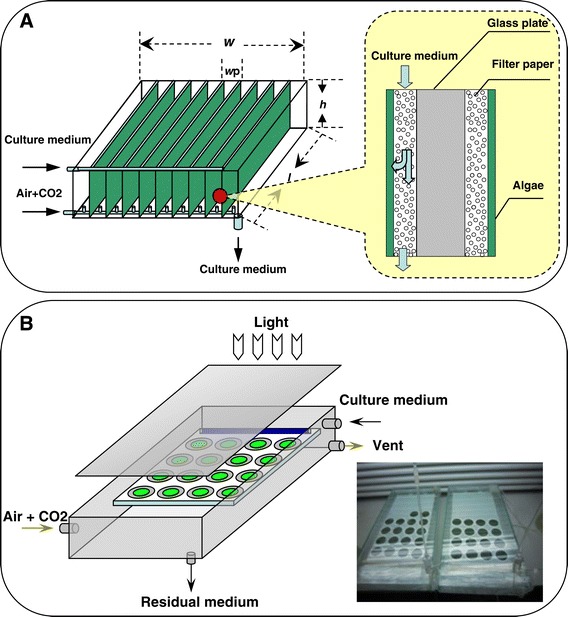
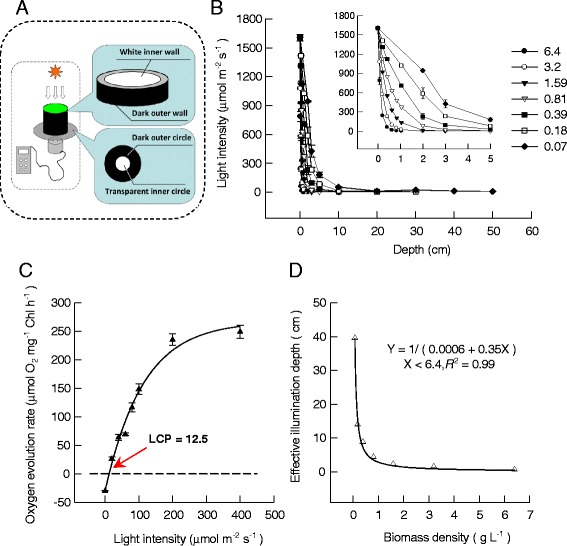
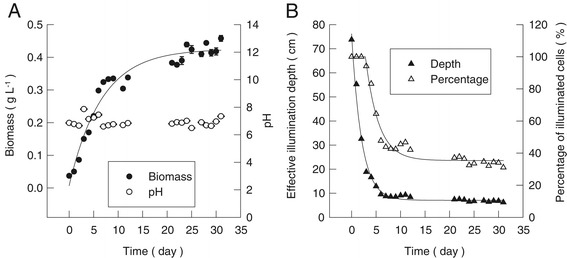
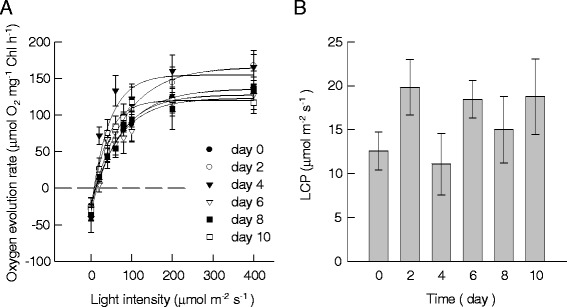
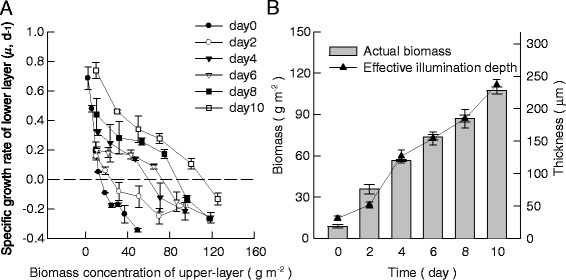
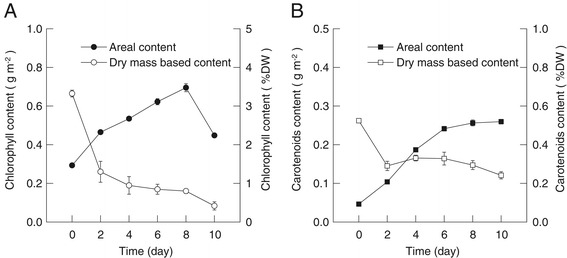
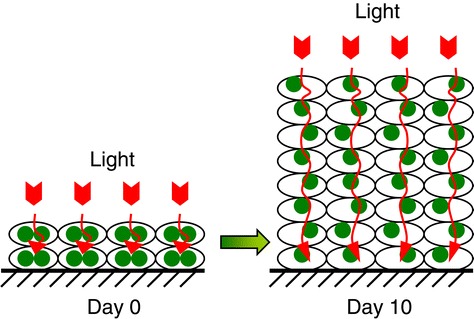
BACKGROUND: The 'attached cultivation' technique for microalgae production, combining the immobilized biofilm technology with proper light dilution strategies, has shown improved biomass production and photosynthetic efficiency over conventional open-pond suspended cultures. However, how light is transferred and distributed inside the biofilm has not been clearly defined yet. RESULTS: In this research, the growth, photosynthetic oxygen evolution, and specific growth rate for microalgal cells in both open-pond and attached cultivation were studied to determine the effective light penetration at different phases of the cultivation. As a result, the light conditions inside the culture broth as well as the biofilm were revealed for the first time. Results showed that outdoor, in a conventional 20-cm deep open pond, all of the algal cells were fully illuminated in the first 3 days of cultivation. As the biomass concentration increased from day 4 to day 10, the light could only effectively penetrate 45.5% of the open-pond depth, and then effective light penetration gradually decreased to 31.1% at day 31, when the biomass density reached a maximum value of 0.45 g L(-1) or 90 g m(-2). In the attached cultivation system, under nitrogen-replete condition, almost 100% of the immobilized algal cells inside the biofilm were effectively illuminated from day 0 through day 10 when the biomass density increased from 8.8 g m(-2) to 107.6 g m(-2). CONCLUSION: Higher light penetration efficiency might be the reason why, using attached cultivation, observed values for photosynthetic efficiency were higher than those recorded in conventional open-pond suspended cultures.
Overview
The claims and statistics of this paper haven’t been checked yet.
Free: it reads the open-access text and checks the first 5 claims that cite a source we can check. Create a free account to check every claim.
Integrity signals
Registry
Cites
Statistics
Figures
Verification
Claims the paper makes
The claims and statistics of this paper haven’t been checked yet.
Free: it reads the open-access text and checks the first 5 claims that cite a source we can check. Create a free account to check every claim.
Claims other papers make about this one
Each is checked against this paper’s own text: does it say what the citing paper says it does?
The cited source says what the claim attributes to it.
In the citing paper
“For example, Wang et al. [92] demonstrated that in a 20 cm deep pond, algal cells were fully illuminated in the first 3 days of cultivation, however as the algae density increased from day 4 to day 10, the light could only effectively penetrate 46% of the open-pond depth.”
From Overview and Challenges of Large-Scale Cultivation of Photosynthetic Microalgae and Cyanobacteria (2023) · cites this paper as [92]
In the citing paper
“Light conditions, including intensity [95], distribution [96], penetration [97], and duration [95,98], must be optimized to prevent photoinhibition [99], which produces reactive oxygen species (ROS) [100] that can damage cellular structures and functions [101,102].”
From A Review of Algae-Based Carbon Capture, Utilization, and Storage (Algae-Based CCUS) (2024) · cites this paper as [97]
Self-check
Percentages, sums and reported differences re-computed from the paper’s own numbers.
The self-check needs the paper’s full text.
Citations
Cites
Chisti, Y. (2007) · Biotechnology Advances · doi:10.1016/j.biotechadv.2007.02.001 · Cited by 9,524 · cited 1×
“the fact that they do not compete with food crops for arable land and water supply [2-7].”
Wellburn, A. R. (1994) · Journal of Plant Physiology · doi:10.1016/s0176-1617(11)81192-2 · Cited by 5,820 · cited 3×
“Determination of the chlorophyll and carotenoid contents The chlorophyll and carotenoid contents were determined according to the methods described by Wellburn [30].”
MethodInfluentialMicroalgae for biodiesel production and other applications: A review
Mata, T. M., Martins, A. A., & Caetano, N. S. (2010) · Renewable and Sustainable Energy Reviews · doi:10.1016/j.rser.2009.07.020 · Cited by 5,685 · cited 2×
“the fact that they do not compete with food crops for arable land and water supply [2-7].”
Brennan, L., & Owende, P. (2010) · Renewable and Sustainable Energy Reviews · doi:10.1016/j.rser.2009.10.009 · Cited by 4,894 · cited 1×
“The highest recorded biomass productivities for open ponds and PBRs are around 40 g dry mass m day and longterm averaged productivity is 10~20 g dry mass m day [3,10,11], which are far less than the theoretical maximum”
Microalgal triacylglycerols as feedstocks for biofuel production: perspectives and advances
Hu, Q., Sommerfeld, M., Jarvis, E., Ghirardi, M., Posewitz, M., Seibert, M., & Darzins, A. (2008) · The Plant Journal · doi:10.1111/j.1365-313x.2008.03492.x · Cited by 3,745 · cited 1×
“Microalgae are a group of photosynthetic microorganisms represented by more than 40,000 species, many of which can produce high-value bioactive compounds [1].”
Purification and properties of unicellular blue-green algae (order Chroococcales)
Stanier, R. Y., Kunisawa, R., Mandel, M., & Cohen-Bazire, G. (1971) · Bacteriological Reviews · doi:10.1128/br.35.2.171-205.1971 · Cited by 3,691
An outlook on microalgal biofuels
Wijffels, R. H., & Barbosa, M. J. (2010) · Science · doi:10.1126/science.1189003 · Cited by 1,886 · cited 1×
“However, until now, the success of microalgae cultures only happened in some small-scale tests and no success in biofuel production or CO2 mitigation has yet been achieved on a commercial scale anywhere in the world with microalgae cultivation [8,9].”
What is the maximum efficiency with which photosynthesis can convert solar energy into biomass?
Zhu, X.-G., Long, S. P., & Ort, D. R. (2008) · Current Opinion in Biotechnology · doi:10.1016/j.copbio.2008.02.004 · Cited by 1,145 · cited 1×
“4% (based on total solar radiation spectrum) and 28% (based on visible light spectrum, 400~700 nm) [12,13].”
Microalgae biofuels: A critical review of issues, problems and the way forward
Lam, M. K., & Lee, K. T. (2012) · Biotechnology Advances · doi:10.1016/j.biotechadv.2011.11.008 · Cited by 936 · cited 1×
“the fact that they do not compete with food crops for arable land and water supply [2-7].”
Constraints to Commercialization of Algal Fuels
Chisti, Y. (2013) · Journal of Biotechnology · doi:10.1016/j.jbiotec.2013.07.020 · Cited by 719 · cited 1×
“Maybe the secret of its superior performances over traditional suspended cultures lies in the differences in delivery of light and nutrients and in CO2 transfer between the two systems [24,25].”
Cited by
Overview and Challenges of Large-Scale Cultivation of Photosynthetic Microalgae and Cyanobacteria
Novoveská, L., Nielsen, S. L., Eroldoğan, O. T., Haznedaroglu, B. Z., Rinkevich, B., Fazi, S., Robbens, J., Vasquez, M., & Einarsson, H. (2023) · Marine Drugs · doi:10.3390/md21080445 · Cited by 368
“[92] demonstrated that in a 20 cm deep pond, algal cells were fully illuminated in the first 3 days of cultivation, however as the algae density increased from day 4 to day 10, the light could only effectively penetrate 46% of the open-pond depth.”
BackgroundPhoton management for augmented photosynthesis
Ooms, M. D., Dinh, C. T., Sargent, E. H., & Sinton, D. (2016) · Nature Communications · doi:10.1038/ncomms12699 · Cited by 305
Al-Jabri, H., Das, P., Khan, S., Thaher, M., & AbdulQuadir, M. (2020) · Water · doi:10.3390/w13010027 · Cited by 270
Nagarajan, D., Varjani, S., Lee, D.-J., & Chang, J.-S. (2021) · Renewable and Sustainable Energy Reviews · doi:10.1016/j.rser.2021.111549 · Cited by 200
The characteristics and influencing factors of the attached microalgae cultivation: A review
Zhuang, L.-L., Yu, D., Zhang, J., Liu, F.-F., Wu, Y.-H., Zhang, T.-Y., Dao, G.-H., & Hu, H.-Y. (2018) · Renewable and Sustainable Energy Reviews · doi:10.1016/j.rser.2018.06.006 · Cited by 198
Machine learning in bioprocess development: from promise to practice
Helleckes, L. M., Hemmerich, J., Wiechert, W., von Lieres, E., & Grünberger, A. (2023) · Trends in Biotechnology · doi:10.1016/j.tibtech.2022.10.010 · Cited by 163
Porous Substrate Bioreactors: A Paradigm Shift in Microalgal Biotechnology?
Podola, B., Li, T., & Melkonian, M. (2016) · Trends in biotechnology · doi:10.1016/j.tibtech.2016.06.004 · Cited by 158
Biofilm based attached cultivation technology for microalgal biorefineries—A review
Wang, J., Liu, W., & Liu, T. (2017) · Bioresource Technology · doi:10.1016/j.biortech.2017.05.136 · Cited by 144
“If combined the results of Wang et al. (2015) with Liu et al. (2013) in case of 10x of light dilution, at day 10 of cultivation, ca. 1 kg biomass is effectively illuminated at each square meter of footprint area for the attached cultivation.”
BackgroundPhotobioreactor cultivation strategies for microalgae and cyanobacteria
Johnson, T. J., Katuwal, S., Anderson, G. A., Gu, L., Zhou, R., & Gibbons, W. R. (2018) · Biotechnology Progress · doi:10.1002/btpr.2628 · Cited by 128
“In PBRs, the POs are cultivated in a growth medium or attached to a material that supplies nutrients.(69,70) Traditionally, a major cost associated with PBRs is the high power consumption and operating costs of artificial light,(6) however solar-lit PBRs do exist.”
BackgroundLong, B., Fischer, B., Zeng, Y., Amerigian, Z., Li, Q., Bryant, H., Li, M., Dai, S. Y., & Yuan, J. S. (2022) · Nature Communications · doi:10.1038/s41467-021-27665-y · Cited by 125
Zhang, Q., Yu, Z., Zhu, L., Ye, T., Zuo, J., Li, X., Xiao, B., & Jin, S. (2018) · Water Research · doi:10.1016/j.watres.2018.03.076 · Cited by 107
“…traditional raceway ponds with suspended algal culture have various limitations: (1) limited light penetration due to the self-shadowing effect (Wang et al., 2015); (2) inefficient photosynthesis; (3) energy consuming and expensive for harvesting the suspended algal biomass (Christenson and…”
BackgroundAdvances in microalgae-based carbon sequestration: Current status and future perspectives
Udaypal, U., Goswami, R. K., Mehariya, S., & Verma, P. (2024) · Environmental Research · doi:10.1016/j.envres.2024.118397 · Cited by 126
Zhu, Z., Jiang, J., & Fa, Y. (2020) · Molecules · doi:10.3390/molecules25225220 · Cited by 96
“Even the solid culture mode, like attached cultivation [58], supplement of Aquatic nutrient solution, exchange of CO2 mixed air, and the contaminants hidden at the blind angles, is also inescapable during the mass culture.”
BackgroundEmerging microalgae technology: a review
Pierobon, S. C., Cheng, X., Graham, P. J., Nguyen, B., Karakolis, E. G., & Sinton, D. (2018) · Sustainable Energy & Fuels · doi:10.1039/c7se00236j · Cited by 94
Innovative membrane photobioreactor for sustainable CO2 capture and utilization
Senatore, V., Buonerba, A., Zarra, T., Oliva, G., Belgiorno, V., Boguniewicz-Zablocka, J., & Naddeo, V. (2021) · Chemosphere · doi:10.1016/j.chemosphere.2021.129682 · Cited by 93
Wang, X., & Hong, Y. (2022) · Current Pollution Reports · doi:10.1007/s40726-022-00214-x · Cited by 94
Cheng, P., Wang, Y., Liu, T., & Liu, D. (2017) · Frontiers in Plant Science · doi:10.3389/fpls.2017.01594 · Cited by 87
“Therefore, the efforts on novel cultivation system are very important in the future research (Wang et al., 2015).”
BackgroundNon-suspended microalgae cultivation for wastewater refinery and biomass production
Zhuang, L.-L., Li, M., & Ngo, H. H. (2020) · Bioresource Technology · doi:10.1016/j.biortech.2020.123320 · Cited by 90
Cheng, P., Zhou, C., Chu, R., Chang, T., Xu, J., Ruan, R. R., Chen, P. L., & Yan, X. (2020) · Algal Research · doi:10.1016/j.algal.2020.102076 · Cited by 92
A Review of Algae-Based Carbon Capture, Utilization, and Storage (Algae-Based CCUS)
Li, G., & Yao, J. (2024) · Gases · doi:10.3390/gases4040024 · Cited by 80
“Light conditions, including intensity [95], distribution [96], penetration [97], and duration [95,98], must be optimized to prevent photoinhibition [99], which produces reactive oxygen species (ROS) [100] that can damage cellular structures and functions [101,102].”
Zhang, Q., Li, X., Guo, D., Ye, T., Xiong, M., Zhu, L., Liu, C., Jin, S., & Hu, Z. (2018) · Bioresource Technology · doi:10.1016/j.biortech.2018.01.014 · Cited by 84
Cheng, P., Chu, R., Zhang, X., Song, L., Chen, D., Zhou, C., Yan, X., Cheng, J. J., & Ruan, R. (2020) · Bioresource Technology · doi:10.1016/j.biortech.2020.124054 · Cited by 76
Huang, Y. Y., Zheng, Y., Li, J., Liao, Q., Fu, Q., Xia, A., Fu, J., & Sun, Y. (2018) · Bioresource Technology · doi:10.1016/j.biortech.2018.03.139 · Cited by 84
Liao, Q., Sun, Y., Huang, Y., Xia, A., Fu, Q., & Zhu, X. (2017) · Bioresource Technology · doi:10.1016/j.biortech.2017.06.091 · Cited by 75
Salama, E.-S., Hwang, J.-H., El-Dalatony, M. M., Kurade, M. B., Kabra, A. N., Abou-Shanab, R. A. I., Kim, K.-H., Yang, I.-S., Govindwar, S. P., Kim, S., et al. (2018) · Bioresource Technology · doi:10.1016/j.biortech.2018.02.006 · Cited by 73
Shear stress affects the architecture and cohesion of Chlorella vulgaris biofilms
Fanesi, A., Lavayssière, M., Breton, C., Bernard, O., Briandet, R., & Lopes, F. (2021) · Scientific Reports · doi:10.1038/s41598-021-83523-3 · Cited by 76
Engineering a powerful green cell factory for robust photoautotrophic diterpenoid production
Einhaus, A., Steube, J., Freudenberg, R. A., Barczyk, J., Baier, T., & Kruse, O. (2022) · Metabolic Engineering · doi:10.1016/j.ymben.2022.06.002 · Cited by 71
Ye, Y., Huang, Y., Xia, A., Fu, Q., Liao, Q., Zeng, W., Zheng, Y., & Zhu, X. (2018) · Bioresource Technology · doi:10.1016/j.biortech.2018.08.116 · Cited by 62
Zhuang, L.-L., Azimi, Y., Yu, D., Wu, Y.-H., & Hu, H. (2017) · Biomass and Bioenergy · doi:10.1016/j.biombioe.2017.12.017 · Cited by 65
Li, T., Piltz, B., Podola, B., Dron, A., de Beer, D., & Melkonian, M. (2015) · Biotechnology and Bioengineering · doi:10.1002/bit.25867 · Cited by 60
“Wang et al. (2015) observed that the mass extinction (extinction per unit biomass) was lower in an algal biofilm than in suspension culture.”
BackgroundGao, Y., Bernard, O., Fanesi, A., Perré, P., & Lopes, F. (2024) · Scientific Reports · doi:10.1038/s41598-023-50432-6 · Cited by 74
“Similarly, Wang et al. 11 observed a reduction in the chlorophyll content (60”
InfluentialLi, T., Strous, M., & Melkonian, M. (2017) · FEMS Microbiology Letters · doi:10.1093/femsle/fnx218 · Cited by 54
Koley, S., Mathimani, T., Bagchi, S. K., Sonkar, S., & Mallick, N. (2019) · Biomass and Bioenergy · doi:10.1016/j.biombioe.2018.11.002 · Cited by 53
Xu, X.-Q., Wang, J., Zhang, T., Dao, G.-H., Wu, G., & Hu, H. (2017) · Algal Research · doi:10.1016/j.algal.2017.08.028 · Cited by 57
Varanasi, J. L., Prasad, S., Singh, H., & Das, D. (2019) · Fuel · doi:10.1016/j.fuel.2019.116696 · Cited by 54
Kim, S., Moon, M., Kwak, M., Lee, B., & Chang, Y. K. (2018) · Scientific Reports · doi:10.1038/s41598-018-33793-1 · Cited by 51
Zhang, Q., Wang, L., Yu, Z., Zhou, T., Gu, Z., Huang, Q., Xiao, B., Zhou, W., Ruan, R. R., & Liu, Y. (2020) · Journal of Cleaner Production · doi:10.1016/j.jclepro.2020.120449 · Cited by 48
Zhang, Q., Yu, Z., Jin, S., Zhu, L., Liu, C., Zheng, H., Zhou, T., Liu, Y., & Ruan, R. R. (2019) · Bioresource Technology · doi:10.1016/j.biortech.2019.122091 · Cited by 48
Zhao, Z., Muylaert, K., Szymczyk, A., & Vankelecom, I. F. J. (2020) · Chemical Engineering Journal · doi:10.1016/j.cej.2020.127390 · Cited by 52
Scenedesmus dimorphus biofilm: Photoefficiency and biomass production under intermittent lighting
Toninelli, A. E., Wang, J., Liu, M., Wu, H., & Liu, T. (2016) · Scientific Reports · doi:10.1038/srep32305 · Cited by 49
Chen, S., Li, X., Ma, X., Qing, R., Chen, Y., Zhou, H., Yu, Y., Li, J., & Tan, Z. (2023) · The Science of The Total Environment · doi:10.1016/j.scitotenv.2023.166298 · Cited by 54
Lan, S., Wu, L., Yang, H., Zhang, D., & Hu, C. (2017) · Bioresource Technology · doi:10.1016/j.biortech.2017.04.058 · Cited by 46
Field study on attached cultivation of Arthrospira (Spirulina) with carbon dioxide as carbon source
Wang, J., Cheng, W., Liu, W., Wang, H., Zhang, D., Qiao, Z., Jin, G., & Liu, T. (2019) · Bioresource Technology · doi:10.1016/j.biortech.2019.03.099 · Cited by 43
Mou, Y., Liu, N., Lu, T., Jia, C., Xu, C., & Song, M. (2023) · Chemosphere · doi:10.1016/j.chemosphere.2023.139694 · Cited by 43
Wang, Y., Jiang, Z., Lai, Z., Yuan, H., Zhang, X., Jia, Y., & Zhang, X. (2021) · Algal Research · doi:10.1016/j.algal.2021.102383 · Cited by 42
Rosmahadi, N. A., Leong, W. H., Rawindran, H., Ho, Y., Mohamad, M., Ghani, N. A., Bashir, M. J. K., Usman, A., Lam, M. K., & Lim, J. W. (2021) · Sustainability · doi:10.3390/su132011159 · Cited by 42
Feasibility of attached cultivation for polysaccharides production by Porphyridium cruentum
Lutzu, G. A., Zhang, L., Zhang, Z., & Liu, T. (2016) · Bioprocess and Biosystems Engineering · doi:10.1007/s00449-016-1676-8 · Cited by 41
Khichi, S. S., Anis, A., & Ghosh, S. (2018) · Biochemical Engineering Journal · doi:10.1016/j.bej.2018.03.001 · Cited by 39
Zhang, X., Yuan, H., Guan, L., Wang, X., Wang, Y., Jiang, Z., Cao, L., & Zhang, X. (2019) · Energies · doi:10.3390/en12193724 · Cited by 40
Effect of photoacclimation on microalgae mass culture productivity
de Mooij, T., Nejad, Z. R., van Buren, L., Wijffels, R. H., & Janssen, M. (2016) · Algal Research · doi:10.1016/j.algal.2016.12.007 · Cited by 39
Liu, W., Chen, Y., Wang, J., & Liu, T. (2018) · European Journal of Phycology · doi:10.1080/09670262.2018.1519601 · Cited by 43
“Poor light distribution and inefficient CO2 usage are major problems that cause low biomass productivity (Brennan & Owende, 2010; Wang et al., 2015).”
BackgroundLi, S. F., Fanesi, A., Martin, T., & Lopes, F. (2021) · Algal Research · doi:10.1016/j.algal.2021.102453 · Cited by 39
Zhuang, L.-L., Wang, J., & Hu, H. (2018) · Journal of Photochemistry and Photobiology B Biology · doi:10.1016/j.jphotobiol.2018.03.014 · Cited by 33
Development and Applications of Attached Growth System for Microalgae Biomass Production
Singh, G., & Patidar, S. K. (2020) · BioEnergy Research · doi:10.1007/s12155-020-10195-8 · Cited by 34
Kumar, S., Cheng, J., Kubar, A. A., Guo, W., Song, Y., Liu, S., Chen, S., & Tian, J. (2020) · Bioresource Technology · doi:10.1016/j.biortech.2020.124179 · Cited by 29
Non-destructive monitoring of microalgae biofilms
Pereira, D. M., Fanesi, A., Martin, T., Tebbani, S., Bernard, O., & Lopes, F. (2024) · Bioresource Technology · doi:10.1016/j.biortech.2024.130520 · Cited by 26
Cui, Y., Jin, L., Ko, S.-R., Chun, S.-J., Oh, H.-S., Lee, C. S., Srivastava, A., Oh, H., & Ahn, C. (2017) · Scientific Reports · doi:10.1038/s41598-017-08083-x · Cited by 28
Cheng, P., Yan, W. X., Osei-Wusu, D., Liu, T., & Liu, D. (2018) · Bioresources and Bioprocessing · doi:10.1186/s40643-018-0198-4 · Cited by 28
Attached culture of Chlamydomonas sp. JSC4 for biofilm production and TN/TP/Cu(II) removal
Shen, Y., Yu, T., Xie, Y., Chen, J., Ho, S., Wang, Y., & Huang, F. (2018) · Biochemical Engineering Journal · doi:10.1016/j.bej.2018.09.017 · Cited by 29
Penaranda, D., Bonnefond, H., Guihéneuf, F., Morales, M., & Olivier Bernard, A. (2022) · Journal of Cleaner Production · doi:10.1016/j.jclepro.2022.135600 · Cited by 29
Shen, Y., Yang, T., Zhu, W., & Zhao, Y. (2016) · Journal of Applied Phycology · doi:10.1007/s10811-016-0981-6 · Cited by 29
“In suspended cultures, self-shading and reduction in carbon dioxide availability are two bottlenecks to achieving high cell density (Wang et al. 2015).”
BackgroundCarbone, D. A., Olivieri, G., Pollio, A., & Melkonian, M. (2020) · Applied Microbiology and Biotechnology · doi:10.1007/s00253-020-10383-8 · Cited by 28
“…of the biomass and associated ease of harvesting and processing of biomass make these systems attractive to many applications in bioremediation (Shi et al. 2007, 2014; Li et al. 2015, 2016; Piltz and Melkonian 2018), biotechnology and biorefinery processes (Podola et al. 2017; Wang et al. 2015).”
BackgroundCarbone, D. A., Olivieri, G., Pollio, A., Gabriele, & Melkonian, M. (2017) · Applied Microbiology and Biotechnology · doi:10.1007/s00253-017-8515-y · Cited by 28
“Microalgal cultures in suspension-based systems are subjected to different types of problems (Wang et al. 2015) such as contamination in open ponds (McBride 2014), large costs for photobioreactor design, construction and operation (Jorquera et al. 2010) and overall low biomass density (on average <…”
BackgroundRecognition of key factors on attached microalgae growth from the internal sight of biofilm
Yang, Y., Zhuang, L.-L., Yang, T., & Zhang, J. (2021) · The Science of The Total Environment · doi:10.1016/j.scitotenv.2021.151417 · Cited by 25
Kuo, C.-M., Jian, J.-F., Sun, Y.-L., Lin, T., Yang, Y.-C., Zhang, W., Chang, H.-F., Lai, J.-T., Chang, J., & Lin, C.-S. (2018) · Bioresource Technology · doi:10.1016/j.biortech.2018.06.090 · Cited by 27
Shen, Y., Wang, S., Ho, S., Xie, Y., & Chen, J. (2017) · Biochemical Engineering Journal · doi:10.1016/j.bej.2017.09.017 · Cited by 25
Avila, R., García-Vara, M., López‐García, E., Postigo, C., de Alda, M. L., Vicent, T., & Blánquez, P. (2021) · The Science of The Total Environment · doi:10.1016/j.scitotenv.2021.150040 · Cited by 26
Immobilized microalgae: principles, processes and its applications in wastewater treatment
Li, Y., Wu, X., Liu, Y., & Taidi, B. (2024) · World Journal of Microbiology and Biotechnology · doi:10.1007/s11274-024-03930-2 · Cited by 27
“However, as the number of days in culture increased, almost 100% of the cells within the immobilized biofilm were effectively exposed to light (Wang et al. 2015).”
Miyauchi, H., Okada, K., Fujiwara, S., & Tsuzuki, M. (2020) · Algal Research · doi:10.1016/j.algal.2020.101814 · Cited by 23
Nitrate Removal from Groundwater Using Immobilized Heterotrophic Algae
Mollamohammada, S., Hassan, A. A., & Dahab, M. F. (2020) · Water Air & Soil Pollution · doi:10.1007/s11270-019-4334-3 · Cited by 23
“This will result in smaller percentage of algal cells being effectively illuminated (J. F. Wang et al. 2015).”
BackgroundAlgal Biofilm Systems: An Answer to Algal Biofuel Dilemma
Choudhary, P., Malik, A., & Pant, K. K. (2017) · Springer eBooks · doi:10.1007/978-3-319-51010-1_4 · Cited by 25
Yu, H., Zhuang, L.-L., Zhang, M., & Zhang, J. (2021) · Resources Conservation and Recycling · doi:10.1016/j.resconrec.2021.106066 · Cited by 21
Dong, H., Liu, W., Zhang, H., Wang, Z., Feng, F., Zhou, L., Duan, H., Xu, T., Li, X., & Ma, J. (2023) · Bioprocess and Biosystems Engineering · doi:10.1007/s00449-023-02855-8 · Cited by 23
“sity, while insufficient light will inhibit the pigment absorption and light energy conversion efficiency in algal cells and affect the anabolism of algal cells themselves [38], thus reducing the growth rate of microalgal cells.”
BackgroundKhosravitabar, F., & Spetea, C. (2024) · International Journal of Hydrogen Energy · doi:10.1016/j.ijhydene.2024.01.299 · Cited by 22
Zhuang, L.-L., Yang, T., Zhang, B., Wu, Y.-H., & Hu, H. (2019) · Algal Research · doi:10.1016/j.algal.2019.101463 · Cited by 19
Kumar, L., Mohan, L., Anand, R., Joshi, V., Chugh, M., & Bharadvaja, N. (2022) · Frontiers in Chemical Engineering · doi:10.3389/fceng.2022.998289 · Cited by 23
“It can be calculated by Beer-Lambert’s law (Wang et al., 2015).”
MethodYan, H., Zhang, Q., Wang, Y., Cui, X., Liu, Y., Yu, Z., Xu, S., & Ruan, R. R. (2023) · Journal of Environmental Management · doi:10.1016/j.jenvman.2023.118075 · Cited by 19
Cheng, P., Wang, Y., Osei-Wusu, D., Wang, Y., & Liu, T. (2017) · Bioprocess and Biosystems Engineering · doi:10.1007/s00449-017-1877-9 · Cited by 17
Li, L., Wang, Y., Gao, L., Zhou, W., Chen, L., Zhang, Z., & Liu, T. (2022) · Chemical Engineering Journal · doi:10.1016/j.cej.2022.141177 · Cited by 25
Pierobon, S. C., Riordon, J., Nguyen, B., Ooms, M. D., & Sinton, D. A. (2017) · Biotechnology and Bioengineering · doi:10.1002/bit.26325 · Cited by 19
“Lower layers consume biomass by respiration, driven by highdensity oxygen production at super-saturating concentrations, while growth occurs only in the top 250 500mm of the biofilm (Badger et al., 2000; Cheng et al., 2013; Li et al., 2016a,b; Naumann et al., 2013; Schultze et al., 2015; Wang et al., 2015)—a scenario…”
BackgroundInfluentialTiO 2 -coated window for facilitated gas evolution in PEC solar water splitting
Miranda, S., Vilanova, A., Lopes, T., & Mendes, A. M. M. (2017) · RSC Advances · doi:10.1039/c7ra01923h · Cited by 16
Hariz, H. B., Lawton, R. J., & Craggs, R. J. (2022) · Journal of Environmental Management · doi:10.1016/j.jenvman.2022.116705 · Cited by 17
Yim, S.-K., Ki, D., Doo, H.-S., Kim, H., & Kwon, T.-H. (2016) · Biotechnology and Bioprocess Engineering · doi:10.1007/s12257-016-0428-6 · Cited by 16
“[18] reported that the culture density affects the light path and penetration into the microalgae cells.”
BackgroundLv, J., Wang, X., Feng, J., Liu, Q., Nan, F., Liu, X., & Xie, S. (2019) · Journal of Chemical Technology & Biotechnology · doi:10.1002/jctb.6054 · Cited by 14
Solving Challenges in Microalgae-Based Living Materials
Kleiner, F. H., Oh, J., & Aubin‐Tam, M. (2025) · ACS Synthetic Biology · doi:10.1021/acssynbio.4c00683 · Cited by 14
Recent advancements in harnessing biodiesel from microalgae through attached growth systems
Rawindran, H., Alam, M. M., Sahrin, N. T., Raksasat, R., Leong, W. H., Liew, C. S., Supramaniam, U., Lim, J. W., Usman, A., Tong, W. Y., et al. (2024) · Biocatalysis and Agricultural Biotechnology · doi:10.1016/j.bcab.2024.103205 · Cited by 14
A novel light source provided by photobacteria to improve the growth of microalgal biofilm
Zhuang, L.-L., Yu, H., Yang, T., Sun, S., & Wang, J.-Y. (2019) · Bioresource Technology Reports · doi:10.1016/j.biteb.2019.02.015 · Cited by 13
Kumar, S., Kubar, A. A., Zhu, F., Shao, C., Cui, Y., Hu, X., Ni, J., Shah, M. A. R., Ding, S., Mehmood, S., et al. (2023) · Bioresource Technology · doi:10.1016/j.biortech.2023.129501 · Cited by 13
Tunay, D., Yildirim, O., Özkaya, B., & Demir, A. (2021) · Chemosphere · doi:10.1016/j.chemosphere.2021.133330 · Cited by 14
Saleem, S., Zeshan, Iftikhar, R., Arshad, M., Zeeshan, M., & Hassan, M. (2022) · Journal of Water Process Engineering · doi:10.1016/j.jwpe.2022.102932 · Cited by 12
Jang, I., Park, J., Son, Y., Min, J., Park, W., & Yi, C. (2023) · Construction and Building Materials · doi:10.1016/j.conbuildmat.2023.132218 · Cited by 12
Liu, Y., Tang, S., Yan, Q., Zhou, J., & Cai, Z. (2023) · Bioresource Technology · doi:10.1016/j.biortech.2023.130077 · Cited by 13
Ohkubo, K., Aburai, N., Miyauchi, H., Tsuzuki, M., & Abe, K. (2017) · Journal of Applied Phycology · doi:10.1007/s10811-017-1123-5 · Cited by 13
“Such biofilms are easily harvested, minimizing the effort of concentrating and dewatering the cells (Ozkana et al. 2012; Cheng et al. 2013; Liu et al. 2013; Schnurr et al. 2013; Shiratake et al. 2013; Guccione et al. 2014; Ji et al. 2014; Zhang et al. 2014; Chen et al. 2015b; Wang et al. 2015).”
BackgroundBasic oxygen furnace slag as a support material for the cultivation of indigenous marine microalgae
Chen, C., Zhuang, K.-W., Chang, Y., Nagarajan, D., Huang, C., & Chang, J. (2021) · Bioresource Technology · doi:10.1016/j.biortech.2021.125968 · Cited by 11
Ugya, A. Y., Mohammed, J. S., Sheng, Y., Yusuf, A., Ajibade, F. O., Chen, H., & Wang, Q. (2024) · Renewable and Sustainable Energy Reviews · doi:10.1016/j.rser.2024.114877 · Cited by 11
Borna, M., & Yeganeh, M. (2024) · Case Studies in Thermal Engineering · doi:10.1016/j.csite.2024.104825 · Cited by 9
Physiological transition of Chlorella vulgaris from planktonic to immobilized conditions
Li, S., Fanesi, A., Martin, T., & Lopes, F. (2023) · Algal Research · doi:10.1016/j.algal.2023.103354 · Cited by 12
Harnessing solar radiation for potential algal biomass production
Ahmad, I., Abdullah, N., Ahmad, M. D., Koji, I., & Yuzir, A. (2022) · Handbook of Algal Biofuels · doi:10.1016/b978-0-12-823764-9.00017-0 · Cited by 8
A novel laccase for alkaline medium temperature environments in the textile industry
Xu, K., Huo, Y., Tang, S., Han, S., Lin, Y. C., & Zheng, S. (2024) · Biotechnology Journal · doi:10.1002/biot.202400383 · Cited by 9
Liu, M. L., & Liao, B. (2025) · Membranes · doi:10.3390/membranes15090269 · Cited by 10
“Furthermore, the identified optimal microalgal biofilm thickness (220–500 µ m) is in the range of typical light penetration limitation (120–250 µ m) [13,18,46–48] and nutrient (N and P) penetration limitation (150–355 µ m) [48,49] in microalgal biofilm, under some experimental conditions.”
Metadata
- Authors
- Wang, J., Liu, J., & Liu, T.
- Affiliations
- Chinese Academy of Sciences (CN)
- Corresponding author
- Liu, Tianzhong
- Venue
- Biotechnology for Biofuels
- Published
- 2015-03-26
- Volume
- 8
- Issue
- 1
- Pages
- 49-49
- ISSN
- 1754-6834 (ISSN-L)
- PMC
- PMC4389658
- OpenAlex
- W2122311616
- Semantic Scholar
- 19f6370b3e674d077a832d366e4737244f1c8c21
- Cited by
- 139
- References
- 32
- Citations by year
- 2026: 10 · 2025: 12 · 2024: 14 · 2023: 14 · 2022: 11 · 2021: 14 · 2020: 14 · 2019: 7 · 2018: 16 · 2017: 18 · 2016: 8 · 2015: 1
- FWCI
- 4.24
- Type
- journal article
- Language
- en
- Open access
- gold
- doi.org
- Locations
- Biotechnology for Biofuels (publishedVersion, cc-by)
- Europe PMC (PubMed Central) (publishedVersion, cc-by)
- PubMed Central (publishedVersion, cc-by)
- PubMed (publishedVersion)
- Institutional knowledge base (Institute of Bioenergy and Bioprocess Technology, Chinese Academy of Sciences) (submittedVersion, cc-by-nc-sa)
- Funders
- National Natural Science Foundation of China (41276144, 2013GHY11520)
- Topics
- Physical Sciences › Energy › Renewable Energy, Sustainability and the Environment › Algal biology and biofuel production
- Physical Sciences › Environmental Science › Environmental Chemistry › Aquatic Ecosystems and Phytoplankton Dynamics
- Physical Sciences › Chemical Engineering › Fluid Flow and Transfer Processes › Fluid Dynamics and Mixing
- Keywords
- microalgae cultivation, immobilized biofilm, photosynthetic efficiency, photosynthetic oxygen evolution, biomass density
About these checks
Registry, retraction, Cites and statistics results are computed, not judged, with one exception: a printed reference that no index lists is read once by a model before it counts as a citation error. Claims are extracted by a model and kept only when their quote appears verbatim in the text; each cited source is then checked, with a model’s help, for whether it says what the claim relies on. Those verdicts can be wrong — read the claim’s quote and the cited source before relying on one.
Statistics and arithmetic are recomputed, not judged.
Confidence bands are shown only for fields calibrated on our annotated test set. None is calibrated yet, so no band is shown.
What counts as a claim ›How we measure confidence ›How we check this ›
Are you an author, or do you see a problem with this page? Request a review
Data sources
Bibliographic data: Semantic Scholar, OpenAlex, Crossref.
Contains information from the Semantic Scholar Academic Graph Datasets, made available under the ODC Attribution License (ODC-BY 1.0).
Semantic Scholar’s data is described in: Kinney, R., et al. (2023). The Semantic Scholar Open Data Platform. arXiv:2301.10140.
