

The difference in effective light penetration may explain the superiority in photosynthetic efficiency of attached cultivation over the conventional open pond for microalgae
Open accessThe DOI matches its Crossref record; 32 of the 32 references it cites were found in a registry or an index.
Abstract
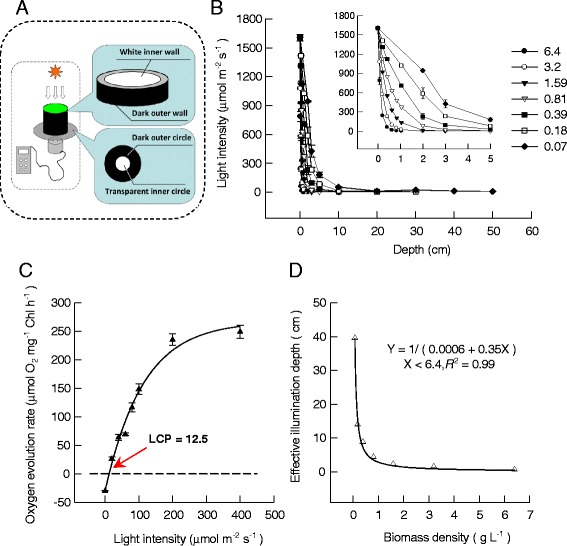
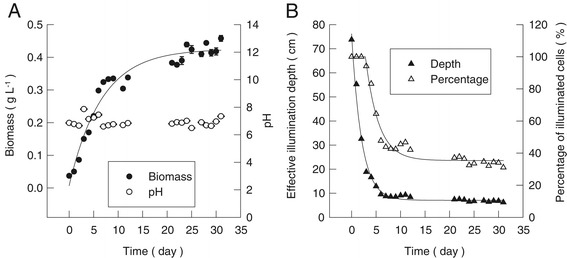
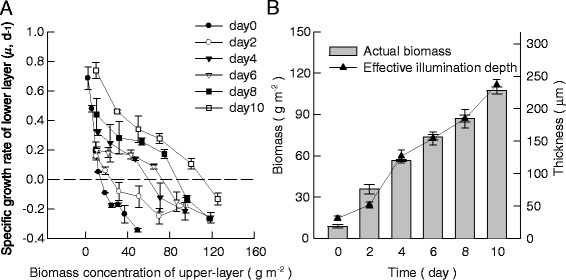
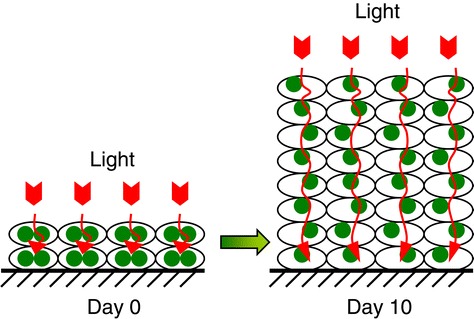
BACKGROUND: The 'attached cultivation' technique for microalgae production, combining the immobilized biofilm technology with proper light dilution strategies, has shown improved biomass production and photosynthetic efficiency over conventional open-pond suspended cultures. However, how light is transferred and distributed inside the biofilm has not been clearly defined yet. RESULTS: In this research, the growth, photosynthetic oxygen evolution, and specific growth rate for microalgal cells in both open-pond and attached cultivation were studied to determine the effective light penetration at different phases of the cultivation. As a result, the light conditions inside the culture broth as well as the biofilm were revealed for the first time. Results showed that outdoor, in a conventional 20-cm deep open pond, all of the algal cells were fully illuminated in the first 3 days of cultivation. As the biomass concentration increased from day 4 to day 10, the light could only effectively penetrate 45.5% of the open-pond depth, and then effective light penetration gradually decreased to 31.1% at day 31, when the biomass density reached a maximum value of 0.45 g L(-1) or 90 g m(-2). In the attached cultivation system, under nitrogen-replete condition, almost 100% of the immobilized algal cells inside the biofilm were effectively illuminated from day 0 through day 10 when the biomass density increased from 8.8 g m(-2) to 107.6 g m(-2). CONCLUSION: Higher light penetration efficiency might be the reason why, using attached cultivation, observed values for photosynthetic efficiency were higher than those recorded in conventional open-pond suspended cultures.
Overview
The claims and statistics of this paper haven’t been checked yet.
Free: it reads the open-access text and checks the first 5 claims that cite a source we can check. Create a free account to check every claim.
Integrity signals
Registry
Cites
Statistics
Figures
Verification
Claims the paper makes
The claims and statistics of this paper haven’t been checked yet.
Free: it reads the open-access text and checks the first 5 claims that cite a source we can check. Create a free account to check every claim.
Claims other papers make about this one
Each is checked against this paper’s own text: does it say what the citing paper says it does?
The cited source says what the claim attributes to it.
In the citing paper
“For example, Wang et al. [92] demonstrated that in a 20 cm deep pond, algal cells were fully illuminated in the first 3 days of cultivation, however as the algae density increased from day 4 to day 10, the light could only effectively penetrate 46% of the open-pond depth.”
From Overview and Challenges of Large-Scale Cultivation of Photosynthetic Microalgae and Cyanobacteria (2023) · cites this paper as [92]
In the citing paper
“Light conditions, including intensity [95], distribution [96], penetration [97], and duration [95,98], must be optimized to prevent photoinhibition [99], which produces reactive oxygen species (ROS) [100] that can damage cellular structures and functions [101,102].”
From A Review of Algae-Based Carbon Capture, Utilization, and Storage (Algae-Based CCUS) (2024) · cites this paper as [97]
Self-check
Percentages, sums and reported differences re-computed from the paper’s own numbers.
The self-check needs the paper’s full text.
Citations
Cites
Chisti, Y. (2007) · Biotechnology Advances · doi:10.1016/j.biotechadv.2007.02.001 · Cited by 9,524 · cited 1×
“the fact that they do not compete with food crops for arable land and water supply [2-7].”
Wellburn, A. R. (1994) · Journal of Plant Physiology · doi:10.1016/s0176-1617(11)81192-2 · Cited by 5,820 · cited 3×
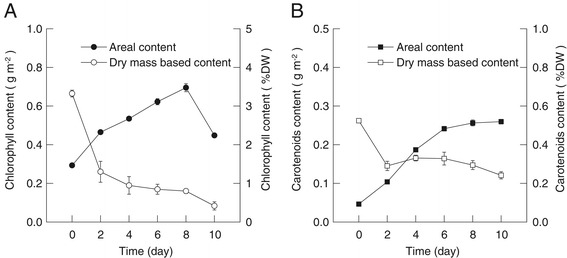
“Determination of the chlorophyll and carotenoid contents The chlorophyll and carotenoid contents were determined according to the methods described by Wellburn [30].”
MethodInfluentialMicroalgae for biodiesel production and other applications: A review
Mata, T. M., Martins, A. A., & Caetano, N. S. (2010) · Renewable and Sustainable Energy Reviews · doi:10.1016/j.rser.2009.07.020 · Cited by 5,685 · cited 2×
“the fact that they do not compete with food crops for arable land and water supply [2-7].”
Brennan, L., & Owende, P. (2010) · Renewable and Sustainable Energy Reviews · doi:10.1016/j.rser.2009.10.009 · Cited by 4,894 · cited 1×
“The highest recorded biomass productivities for open ponds and PBRs are around 40 g dry mass m day and longterm averaged productivity is 10~20 g dry mass m day [3,10,11], which are far less than the theoretical maximum”
Microalgal triacylglycerols as feedstocks for biofuel production: perspectives and advances
Hu, Q., Sommerfeld, M., Jarvis, E., Ghirardi, M., Posewitz, M., Seibert, M., & Darzins, A. (2008) · The Plant Journal · doi:10.1111/j.1365-313x.2008.03492.x · Cited by 3,745 · cited 1×
“Microalgae are a group of photosynthetic microorganisms represented by more than 40,000 species, many of which can produce high-value bioactive compounds [1].”
Purification and properties of unicellular blue-green algae (order Chroococcales)
Stanier, R. Y., Kunisawa, R., Mandel, M., & Cohen-Bazire, G. (1971) · Bacteriological Reviews · doi:10.1128/br.35.2.171-205.1971 · Cited by 3,691
An outlook on microalgal biofuels
Wijffels, R. H., & Barbosa, M. J. (2010) · Science · doi:10.1126/science.1189003 · Cited by 1,886 · cited 1×
“However, until now, the success of microalgae cultures only happened in some small-scale tests and no success in biofuel production or CO2 mitigation has yet been achieved on a commercial scale anywhere in the world with microalgae cultivation [8,9].”
What is the maximum efficiency with which photosynthesis can convert solar energy into biomass?
Zhu, X.-G., Long, S. P., & Ort, D. R. (2008) · Current Opinion in Biotechnology · doi:10.1016/j.copbio.2008.02.004 · Cited by 1,145 · cited 1×
“4% (based on total solar radiation spectrum) and 28% (based on visible light spectrum, 400~700 nm) [12,13].”
Microalgae biofuels: A critical review of issues, problems and the way forward
Lam, M. K., & Lee, K. T. (2012) · Biotechnology Advances · doi:10.1016/j.biotechadv.2011.11.008 · Cited by 936 · cited 1×
“the fact that they do not compete with food crops for arable land and water supply [2-7].”
Constraints to Commercialization of Algal Fuels
Chisti, Y. (2013) · Journal of Biotechnology · doi:10.1016/j.jbiotec.2013.07.020 · Cited by 719 · cited 1×
“Maybe the secret of its superior performances over traditional suspended cultures lies in the differences in delivery of light and nutrients and in CO2 transfer between the two systems [24,25].”
THE CHLOROPHYLL-CAROTENOID PROTEINS OF OXYGENIC PHOTOSYNTHESIS
Green, B. R., & Durnford, D. G. (1996) · Annual Review of Plant Physiology and Plant Molecular Biology · doi:10.1146/annurev.arplant.47.1.685 · Cited by 714 · cited 1×
“Chlorophyll is the main light-harvesting molecule for photosynthetic organism, but some of the carotenoid molecules can also capture light and pass the excited energy to chlorophyll [27].”
Photobiology of microalgae mass cultures: understanding the tools for the next green revolution
Tredici, M. R. (2010) · Biofuels · doi:10.4155/bfs.09.10 · Cited by 450 · cited 5×
“For open-pond suspended cultures, it is obvious that with the increases of biomass density, the light penetration depth decreases [12] and results in less and less percentage of algal cells being illuminated with light intensity which is higher than the compensation point (effectively illuminated) where the biomass ac…”
InfluentialMulbry, W., Kondrad, S., Pizarro, C., & Kebede-Westhead, E. (2008) · Bioresource Technology · doi:10.1016/j.biortech.2008.03.073 · Cited by 440 · cited 1×
“Open ponds and PBRs have existed for a long time now; however, they often exhibited relatively low biomass productivity [14-21].”
Development of an attached microalgal growth system for biofuel production
Johnson, M. B., & Wen, Z. (2010) · Applied Microbiology and Biotechnology · doi:10.1007/s00253-009-2133-2 · Cited by 418 · cited 1×
“Open ponds and PBRs have existed for a long time now; however, they often exhibited relatively low biomass productivity [14-21].”
Shi, J., Podola, B., & Melkonian, M. (2007) · Journal of Applied Phycology · doi:10.1007/s10811-006-9148-1 · Cited by 378 · cited 1×
“Open ponds and PBRs have existed for a long time now; however, they often exhibited relatively low biomass productivity [14-21].”
Ozkan, A., Kinney, K., Katz, L., & Berberoglu, H. (2012) · Bioresource Technology · doi:10.1016/j.biortech.2012.03.055 · Cited by 349 · cited 1×
“Open ponds and PBRs have existed for a long time now; however, they often exhibited relatively low biomass productivity [14-21].”
Nitrogen and phosphorus removal from municipal wastewater effluent using microalgal biofilms
Boelee, N. C., Temmink, H., Janssen, M., Buisman, C. J. N., & Wijffels, R. H. (2011) · Water Research · doi:10.1016/j.watres.2011.08.044 · Cited by 344 · cited 1×
“Open ponds and PBRs have existed for a long time now; however, they often exhibited relatively low biomass productivity [14-21].”
Future prospects of microalgal biofuel production systems
Stephens, E., Ross, I. L., Mussgnug, J. H., Wagner, L. D., Borowitzka, M. A., Posten, C., Kruse, O., & Hankamer, B. (2010) · Trends in Plant Science · doi:10.1016/j.tplants.2010.06.003 · Cited by 340 · cited 1×
“However, until now, the success of microalgae cultures only happened in some small-scale tests and no success in biofuel production or CO2 mitigation has yet been achieved on a commercial scale anywhere in the world with microalgae cultivation [8,9].”
Attached cultivation technology of microalgae for efficient biomass feedstock production
Liu, T., Wang, J., Hu, Q., Cheng, P., Ji, B., Liu, J., Chen, Y., Zhang, W., Chen, X., Chen, L., et al. (2013) · Bioresource Technology · doi:10.1016/j.biortech.2012.09.100 · Cited by 328 · cited 4×
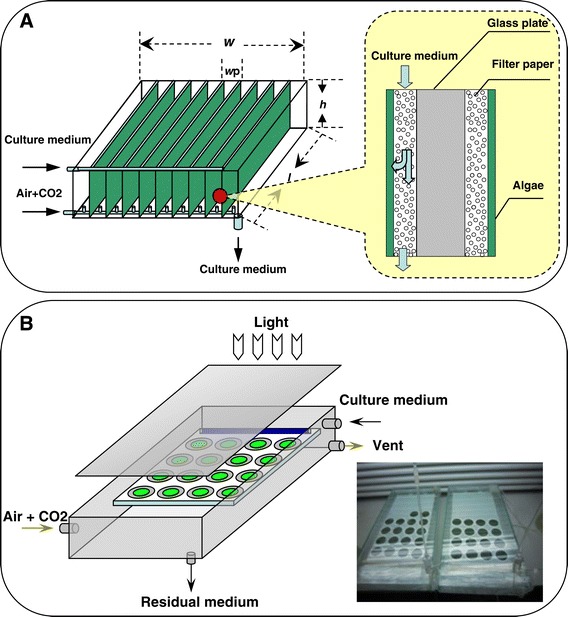
“The second adopted cultivation system was the singlelayer attached biofilm cultivation system (Figure 1B) which has been introduced in detail in our previous research as a ‘type 1’ photobioreactor [22].”
MethodInfluentialSelection, breeding and engineering of microalgae for bioenergy and biofuel production
Larkum, A. W. D., Ross, I. L., Kruse, O., & Hankamer, B. (2012) · Trends in Biotechnology · doi:10.1016/j.tibtech.2011.11.003 · Cited by 310 · cited 1×
“the fact that they do not compete with food crops for arable land and water supply [2-7].”
A new model for relationship between irradiance and the rate of photosynthesis in Oryza sativa
Ye, Z. P. (2007) · Photosynthetica · doi:10.1007/s11099-007-0110-5 · Cited by 285
Growth, lipid extraction and thermal degradation of the microalga Chlorella vulgaris
Šoštarič, M., Klinar, D., Bricelj, M., Golob, J., Berovič, M., & Likozar, B. (2012) · New Biotechnology · doi:10.1016/j.nbt.2011.12.002 · Cited by 167 · cited 1×
“the fact that they do not compete with food crops for arable land and water supply [2-7].”
Growing microalgae as aquaculture feeds on twin-layers: a novel solid-state photobioreactor
Naumann, T., Çebi, Z., Podola, B., & Melkonian, M. (2012) · Journal of Applied Phycology · doi:10.1007/s10811-012-9962-6 · Cited by 166 · cited 1×
“Open ponds and PBRs have existed for a long time now; however, they often exhibited relatively low biomass productivity [14-21].”
The growth, lipid and hydrocarbon production of Botryococcus braunii with attached cultivation
Cheng, P., Ji, B., Gao, L., Zhang, W., Wang, J., & Liu, T. (2013) · Bioresource Technology · doi:10.1016/j.biortech.2013.03.150 · Cited by 159 · cited 2×
“15% (based on visible light) [23].”
Basic Choices and Constraints on Long-Term Energy Supplies
Weisz, P. B. (2004) · Physics Today · doi:10.1063/1.1784302 · Cited by 151
Wang, J., Han, D., Sommerfeld, M. R., Lu, C., & Hu, Q. (2012) · Journal of Applied Phycology · doi:10.1007/s10811-012-9859-4 · Cited by 135 · cited 1×
“In this research, we especially focused on how the illumination worked, because light is always considered as the most important environmental factor that determines the behaviors of the microalgal cells [12,26].”
Raceways-based Production of Algal Crude Oil
Chisti, Y. (2013) · Green · doi:10.1515/green-2013-0018 · Cited by 127
Microalgal Biotechnology: Potential and Production
(2012) · De Gruyter eBooks · doi:10.1515/9783110225020 · Cited by 119
Zamalloa, C., Boon, N., & Verstraete, W. (2012) · Bioresource Technology · doi:10.1016/j.biortech.2012.11.128 · Cited by 117 · cited 1×
“Open ponds and PBRs have existed for a long time now; however, they often exhibited relatively low biomass productivity [14-21].”
7 Raceways-based production of algal crude oil
Chisti, Y. (2012) · De Gruyter eBooks · doi:10.1515/9783110225020.113 · Cited by 53
An applicable nitrogen supply strategy for attached cultivation of Aucutodesmus obliquus
Ji, C., Wang, J., Zhang, W., Liu, J., Wang, H., Gao, L., & Liu, T. (2014) · Journal of Applied Phycology · doi:10.1007/s10811-013-0115-3 · Cited by 42 · cited 1×
“Maybe the secret of its superior performances over traditional suspended cultures lies in the differences in delivery of light and nutrients and in CO2 transfer between the two systems [24,25].”
PHOTOSYNTHETIC CO2 MITIGATION USING A NOVEL MEMBRANE-BASED PHOTOBIOREACTOR
Bayless, D. J., Kremer, G. G., Vis, M. L., Stuart, B. J., Shi, L., Ōno, E., & Cuello, J. L. (2006) · Cited by 16
Cited by
Overview and Challenges of Large-Scale Cultivation of Photosynthetic Microalgae and Cyanobacteria
Novoveská, L., Nielsen, S. L., Eroldoğan, O. T., Haznedaroglu, B. Z., Rinkevich, B., Fazi, S., Robbens, J., Vasquez, M., & Einarsson, H. (2023) · Marine Drugs · doi:10.3390/md21080445 · Cited by 368
“[92] demonstrated that in a 20 cm deep pond, algal cells were fully illuminated in the first 3 days of cultivation, however as the algae density increased from day 4 to day 10, the light could only effectively penetrate 46% of the open-pond depth.”
BackgroundPhoton management for augmented photosynthesis
Ooms, M. D., Dinh, C. T., Sargent, E. H., & Sinton, D. (2016) · Nature Communications · doi:10.1038/ncomms12699 · Cited by 305
Al-Jabri, H., Das, P., Khan, S., Thaher, M., & AbdulQuadir, M. (2020) · Water · doi:10.3390/w13010027 · Cited by 270
Nagarajan, D., Varjani, S., Lee, D.-J., & Chang, J.-S. (2021) · Renewable and Sustainable Energy Reviews · doi:10.1016/j.rser.2021.111549 · Cited by 200
The characteristics and influencing factors of the attached microalgae cultivation: A review
Zhuang, L.-L., Yu, D., Zhang, J., Liu, F.-F., Wu, Y.-H., Zhang, T.-Y., Dao, G.-H., & Hu, H.-Y. (2018) · Renewable and Sustainable Energy Reviews · doi:10.1016/j.rser.2018.06.006 · Cited by 198
Metadata
- Authors
- Wang, J., Liu, J., & Liu, T.
- Affiliations
- Chinese Academy of Sciences (CN)
- Corresponding author
- Liu, Tianzhong
- Venue
- Biotechnology for Biofuels
- Published
- 2015-03-26
- Volume
- 8
- Issue
- 1
- Pages
- 49-49
- ISSN
- 1754-6834 (ISSN-L)
- PMC
- PMC4389658
- OpenAlex
- W2122311616
- Cited by
- 139
- References
- 32
- Citations by year
- 2026: 10 · 2025: 12 · 2024: 14 · 2023: 14 · 2022: 11 · 2021: 14 · 2020: 14 · 2019: 7 · 2018: 16 · 2017: 18 · 2016: 8 · 2015: 1
- FWCI
- 4.24
- Type
- journal article
- Language
- en
- Open access
- gold
- doi.org
- Locations
- Biotechnology for Biofuels (publishedVersion, cc-by)
- Europe PMC (PubMed Central) (publishedVersion, cc-by)
- PubMed Central (publishedVersion, cc-by)
- PubMed (publishedVersion)
- Institutional knowledge base (Institute of Bioenergy and Bioprocess Technology, Chinese Academy of Sciences) (submittedVersion, cc-by-nc-sa)
- Funders
- National Natural Science Foundation of China (41276144, 2013GHY11520)
- Topics
- Physical Sciences › Energy › Renewable Energy, Sustainability and the Environment › Algal biology and biofuel production
- Physical Sciences › Environmental Science › Environmental Chemistry › Aquatic Ecosystems and Phytoplankton Dynamics
- Physical Sciences › Chemical Engineering › Fluid Flow and Transfer Processes › Fluid Dynamics and Mixing
- Keywords
- microalgae cultivation, immobilized biofilm, photosynthetic efficiency, photosynthetic oxygen evolution, biomass density
About these checks
Registry, retraction, Cites and statistics results are computed, not judged, with one exception: a printed reference that no index lists is read once by a model before it counts as a citation error. Claims are extracted by a model and kept only when their quote appears verbatim in the text; each cited source is then checked, with a model’s help, for whether it says what the claim relies on. Those verdicts can be wrong — read the claim’s quote and the cited source before relying on one.
Statistics and arithmetic are recomputed, not judged.
Confidence bands are shown only for fields calibrated on our annotated test set. None is calibrated yet, so no band is shown.
What counts as a claim ›How we measure confidence ›How we check this ›
Are you an author, or do you see a problem with this page? Request a review
Data sources
Bibliographic data: Semantic Scholar, OpenAlex, Crossref.
Contains information from the Semantic Scholar Academic Graph Datasets, made available under the ODC Attribution License (ODC-BY 1.0).
Semantic Scholar’s data is described in: Kinney, R., et al. (2023). The Semantic Scholar Open Data Platform. arXiv:2301.10140.
