

Pyrolysis characteristics and kinetics of lignin derived from enzymatic hydrolysis residue of bamboo pretreated with white-rot fungus
Open accessThe DOI matches its Crossref record; 41 of the 41 references it cites were found in a registry or an index.
Abstract
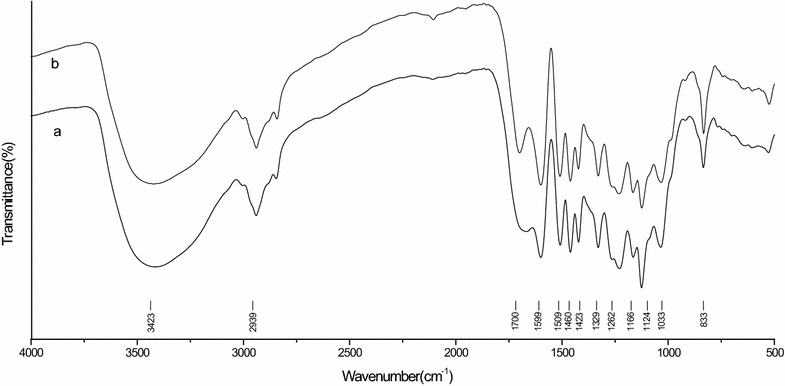
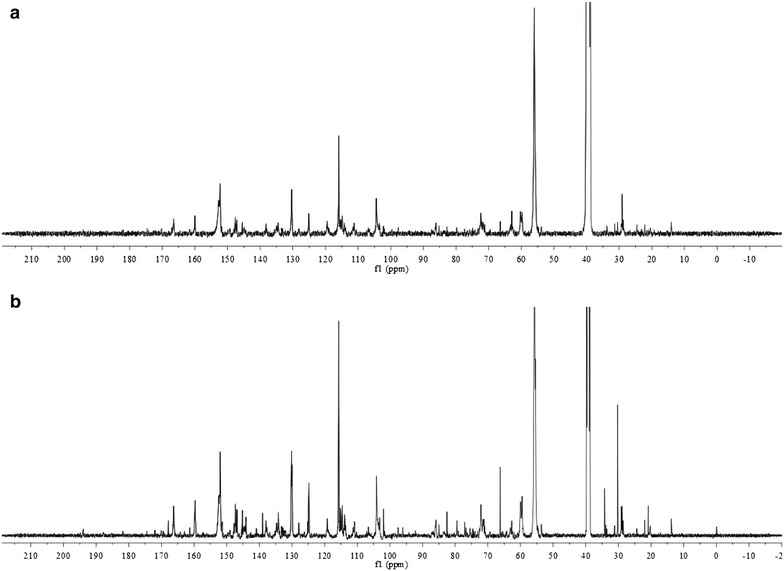
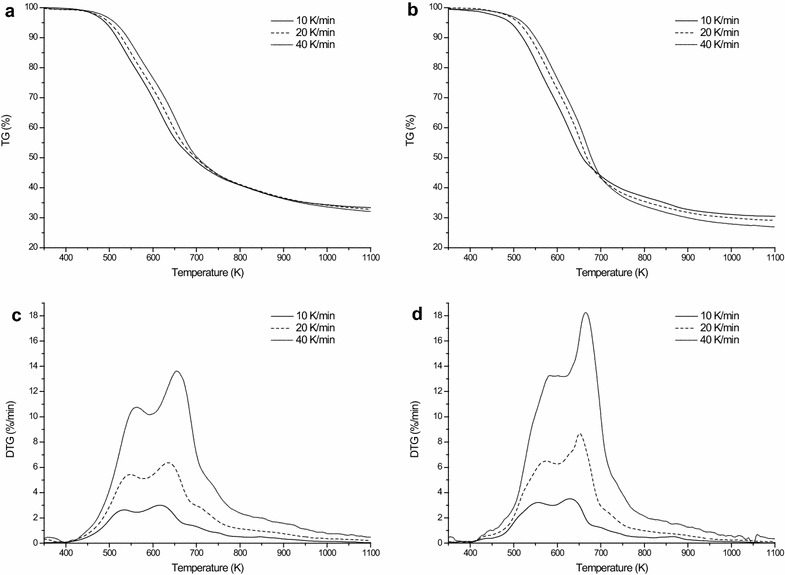
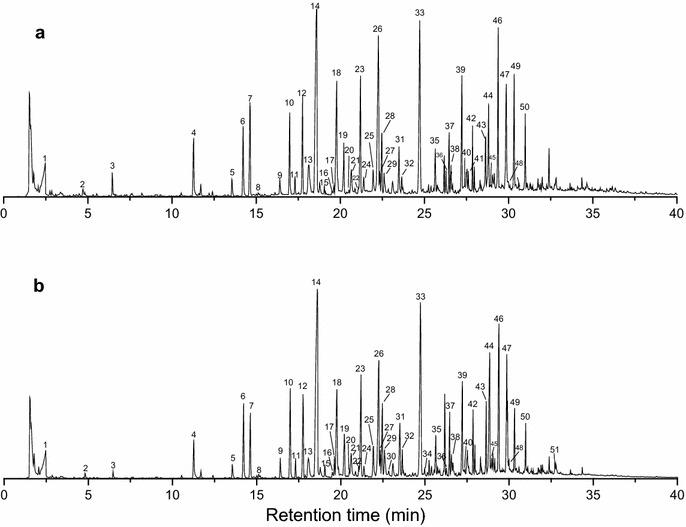
BACKGROUND: The lignocellulose biorefinery based on the sugar platform usually focuses on polysaccharide bioconversion, while lignin is only burned for energy recovery. Pyrolysis can provide a novel route for the efficient utilization of residual lignin obtained from the enzymatic hydrolysis of lignocellulose. The pyrolysis characteristics of residual lignin are usually significantly affected by the pretreatment process because of structural alteration of lignin during pretreatment. In recent years, biological pretreatment using white-rot fungi has attracted extensive attention, but there are only few reports on thermal conversion of lignin derived from enzymatic hydrolysis residue (EHRL) of the bio-pretreated lignocellulose. Therefore, the study investigated the pyrolysis characteristics and kinetics of EHRL obtained from bamboo pretreated with Echinodontium taxodii in order to evaluate the potential of thermal conversion processes of EHRL. RESULTS: Fourier transform infrared spectroscopy spectra showed that EHRL of bamboo treated with E. taxodii had the typical lignin structure, but aromatic skeletal carbon and side chain of lignin were partially altered by the fungus. Thermogravimetric analysis indicated that EHRL pyrolysis at different heating rates could be divided into two depolymerization stages and covered a wide temperature range from 500 to 900 K. The thermal decomposition reaction can be well described by two third-order reactions. The kinetics study indicated that the EHRL of bamboo treated with white-rot fungus had lower apparent activation energies, lower peak temperatures of pyrolysis reaction, and higher char residue than the EHRL of raw bamboo. Pyrolysis-gas chromatography-mass spectrometry (Py-GC/MS) was applied to characterize the fast pyrolysis products of EHRL at 600 ℃. The ratios of guaiacyl-type to syringyl-type derivatives yield (G/S) and guaiacyl-type to p-hydroxy-phenylpropane-type derivatives yield (G/H) for the treated sample were increased by 33.18 and 25.30 % in comparison with the raw bamboo, respectively. CONCLUSIONS: The structural alterations of lignin during pretreatment can decrease the thermal stability of EHRL from the bio-treated bamboo and concentrate the guaiacyl-type derivatives in the fast pyrolysis products. Thus, the pyrolysis can be a promising route for effective utilization of the enzymatic hydrolysis residue from bio-pretreated lignocellulose.
Overview
The claims and statistics of this paper haven’t been checked yet.
Free: it reads the open-access text and checks the first 5 claims that cite a source we can check. Create a free account to check every claim.
Integrity signals
Registry
Cites
Statistics
Figures
Verification
Claims the paper makes
The claims and statistics of this paper haven’t been checked yet.
Free: it reads the open-access text and checks the first 5 claims that cite a source we can check. Create a free account to check every claim.
Claims other papers make about this one
Each is checked against this paper’s own text: does it say what the citing paper says it does?
The cited source says what the claim attributes to it.
In the citing paper
“For example, bio-treated bamboo lignin using white-rot fungi contained lower thermal stability, which can be decomposed into more G-type phenols through fast pyrolysis [245].”
From A review on lignin pyrolysis: pyrolytic behavior, mechanism, and relevant upgrading for improving process efficiency (2022) · cites this paper as [245]
Self-check
Percentages, sums and reported differences re-computed from the paper’s own numbers.
The self-check needs the paper’s full text.
Citations
Cites
Biomass Recalcitrance: Engineering Plants and Enzymes for Biofuels Production
Himmel, M. E., Ding, S.-Y., Johnson, D. K., Adney, W. S., Nimlos, M. R., Brady, J. W., & Foust, T. D. (2007) · Science · doi:10.1126/science.1137016 · Cited by 4,533 · cited 1×
“The alteration is usually depending on the type and condition of pretreatment process [16].”
BackgroundLignin Valorization: Improving Lignin Processing in the Biorefinery
Ragauskas, A. J., Beckham, G. T., Biddy, M. J., Chandra, R., Chen, F., Davis, M. F., Davison, B. H., Dixon, R. A., Gilna, P., Keller, M., et al. (2014) · Science · doi:10.1126/science.1246843 · Cited by 4,125 · cited 2×
“So it is necessary to promote the integration of biorefinery processes and to improve the cost competitiveness of the industry by developing novel routes for effective utilization of lignin [4, 7].”
BackgroundPretreatment: the key to unlocking low‐cost cellulosic ethanol
Yang, B., & Wyman, C. E. (2008) · Biofuels, Bioproducts and Biorefining · doi:10.1002/bbb.49 · Cited by 1,524 · cited 1×
“The pyrolysis of lignin derived from enzymatic hydrolysis residue may be distinctly different from that of natural lignin because the chemical and physical structure of lignin can be altered significantly by the pretreatment process which is a conventional method to make the cellulose more accessible to enzymatic hydr…”
Lignin Depolymerization and Conversion: A Review of Thermochemical Methods
Pandey, M. P., & Kim, C. S. (2011) · Chemical Engineering & Technology · doi:10.1002/ceat.201000270 · Cited by 1,419 · cited 7×
“Currently, pyrolysis characteristics of lignin derived from a wide variety of biomass feedstocks have been investigated using thermogravimetric analysis (TGA), pyrolysis–gas chromatography/ mass spectrometry (Py–GC/MS), or Fourier transform infrared spectrometry (FTIR) technologies [13, 14].”
BackgroundMethodInfluentialClassification of Lignins from Different Botanical Origins by FT-IR Spectroscopy
Faix, O. (1991) · Holzforschung · doi:10.1515/hfsg.1991.45.s1.21 · Cited by 1,276
Production of bioethanol from wheat straw: An overview on pretreatment, hydrolysis and fermentation
Talebnia, F., Karakashev, D., & Angelidaki, I. (2010) · Bioresource Technology · doi:10.1016/j.biortech.2009.11.080 · Cited by 1,091 · cited 1×
“Traditional industrial processes for sugar platform biorefinery usually focus on the bioconversion of polysaccharides in the lignocellulosic biomass, including pretreatment, enzymatic saccharification, and fermentation to ethanol or other bio-chemicals, while lignin in the enzymatic hydrolysis residue is only burned t…”
BackgroundBamboo: an overlooked biomass resource?
Scurlock, J. M. O., Dayton, D. C., & Hames, B. (2000) · Biomass and Bioenergy · doi:10.1016/s0961-9534(00)00038-6 · Cited by 765
THERMAL DEGRADATION OF LIGNIN - A REVIEW
Brebu, M. A., & Vasile, C. (2010) · Cited by 711
Adipic acid production from lignin
Vardon, D. R., Franden, M. A., Johnson, C. W., Karp, E. M., Guarnieri, M. T., Linger, J. G., Salm, M. J., Strathmann, T. J., & Beckham, G. T. (2015) · Energy & Environmental Science · doi:10.1039/c4ee03230f · Cited by 602 · cited 1×
“Development and scale-up of biorefinery industry might yield substantial solid residue with high lignin content [5, 6].”
BackgroundFungal pretreatment of lignocellulosic biomass
Wan, C., & Li, Y. (2012) · Biotechnology Advances · doi:10.1016/j.biotechadv.2012.03.003 · Cited by 532 · cited 1×
“In the past 10 years, biological pretreatment technology using white-rot fungi has attracted extensive attention because it was more environmentally benign and had less energy consumption [17, 18].”
Background
Cited by
Kumar, R., Strezov, V., Weldekidan, H., He, J., Singh, S., Kan, T., & Dastjerdi, B. (2020) · Renewable and Sustainable Energy Reviews · doi:10.1016/j.rser.2020.109763 · Cited by 542
Lu, X., & Gu, X. (2022) · Biotechnology for Biofuels and Bioproducts · doi:10.1186/s13068-022-02203-0 · Cited by 354
Kong, W., Fu, X., Wang, L., Alhujaily, A., Zhang, J., Ma, F., Zhang, X., & Yu, H. (2017) · Biotechnology for Biofuels · doi:10.1186/s13068-017-0906-x · Cited by 103
“Thus, the degradation of lignin by thermochemical reaction is critical to remove enzymatic recalcitrance of lignocellulose and enhance the hydrolysis of cellulose [4, 5], but it is very expensive and produces a series of toxic compounds, such as black liquor which are harmful for the environment or human health, and f…”
BackgroundSelf-citationLi, F., Ma, F., Zhao, H., Zhang, S., Wang, L., Zhang, X., & Yu, H. (2019) · Applied and Environmental Microbiology · doi:10.1128/aem.02803-18 · Cited by 90
Self-citationÁlvarez-Chávez, B. J., Godbout, S., Palacios-Ríos, J. H., Roux, É. L., & Raghavan, V. (2019) · Biomass and Bioenergy · doi:10.1016/j.biombioe.2019.105333 · Cited by 94
Semerciöz, A. S., Göğüş, F., Çelekli, A., & Bozkurt, H. (2017) · Journal of Cleaner Production · doi:10.1016/j.jclepro.2017.07.159 · Cited by 80
Wang, L., Zhang, R., Li, J., Guo, L., Yang, H., Ma, F., & Yu, H. (2018) · Industrial Crops and Products · doi:10.1016/j.indcrop.2018.06.038 · Cited by 74
Self-citationLiu, D., Xu, Y., Zhuo, S., Si, M., Liu, M., Wang, S., Ren, L., Chai, L., & Shi, Y. (2018) · Bioresource Technology · doi:10.1016/j.biortech.2018.02.029 · Cited by 65
Fast pyrolysis of Kraft lignins fractionated by ultrafiltration
Shao, L., Zhang, X., Chen, F., & Xu, F. (2017) · Journal of Analytical and Applied Pyrolysis · doi:10.1016/j.jaap.2017.11.003 · Cited by 59
Self-citationBacterial pretreatment of microalgae and the potential of novel nature hydrolytic sources
Barati, B., Zafar, F. F., Rupani, P. F., & Wang, S. (2021) · Environmental Technology & Innovation · doi:10.1016/j.eti.2021.101362 · Cited by 61
Ma, J., Yue, H., Li, H., Zhang, J., Zhang, Y., Wang, X., Gong, S., & Liu, G. (2021) · Biotechnology for Biofuels · doi:10.1186/s13068-021-01986-y · Cited by 55
Structural and Thermal Characterization of Novel Organosolv Lignins from Wood and Herbaceous Sources
Trubetskaya, A., Lange, H., Wittgens, B., Brunsvik, A., Crestini, C., Rova, U., Christakopoulos, P., Leahy, J. J., & Μάτσακας, Λ. (2020) · Processes · doi:10.3390/pr8070860 · Cited by 53
“Accumulative analysis of the curves indicate that lignins fractionated from herbaceous species are thermally less stable than those of softwood, which is in line with previous results [54,55].”
ResultVasco‐Correa, J., Luo, X., Li, Y., & Shah, A. (2019) · Industrial Crops and Products · doi:10.1016/j.indcrop.2019.03.043 · Cited by 53
Sulfur contaminations inhibit depolymerization of Kraft lignin
Daniel, D., Khachatryan, L., Astete, C., Asatryan, R., Marculescu, C., & Boldor, D. (2019) · Bioresource Technology Reports · doi:10.1016/j.biteb.2019.100341 · Cited by 29
Thermal degradation of lignins fractionated by gradient acid precipitation
Cao, X., Shao, L., Huang, W., Wang, C., Mao, J., Xu, F., & Zhang, X. (2021) · Journal of Analytical and Applied Pyrolysis · doi:10.1016/j.jaap.2021.105200 · Cited by 25
Self-citationEnzymatic treatment improves fast pyrolysis product selectivity of softwood and hardwood lignin
Wang, L., Ni, H., Zhang, J., Shi, Q., Zhang, R., Yu, H., & Li, M. (2020) · Science of The Total Environment · doi:10.1016/j.scitotenv.2020.137241 · Cited by 25
Self-citationGuo, G., Liu, X., Li, R., Li, Q., Yu, H., & Li, M. (2019) · Journal of Analytical and Applied Pyrolysis · doi:10.1016/j.jaap.2019.104665 · Cited by 26
Self-citationInfluence of Lignin units on the properties of Lignin/ PAN ‐derived carbon fibers
Zhang, X., Dong, S., Wu, W. H., Yang, J., Li, J., Shi, K., & Liu, H. (2020) · Journal of Applied Polymer Science · doi:10.1002/app.49274 · Cited by 24
Self-citationLiu, J., Zhang, S., Shi, Q., Wang, L., Kong, W., Yu, H., & Ma, F. (2018) · International Biodeterioration & Biodegradation · doi:10.1016/j.ibiod.2018.10.009 · Cited by 23
Self-citationZhang, J., Wang, L., Ni, H., Shi, Q., Zhang, X., Yu, H., & Ma, F. (2021) · Fuel Processing Technology · doi:10.1016/j.fuproc.2021.106749 · Cited by 22
Self-citationRasool, S., Rasool, T., & Gani, K. M. (2023) · Bioresource Technology Reports · doi:10.1016/j.biteb.2023.101553 · Cited by 25
Conversion of Cellulose and Lignin Residues into Transparent UV-Blocking Composite Films
Yang, F., Lu, X., Dai, G., Luo, L. G., Yang, K., Huang, C., Tian, D., & Shen, F. (2022) · Molecules · doi:10.3390/molecules27051637 · Cited by 19
Sophonrat, N., & Wooldridge, M. S. (2024) · Thermochimica Acta · doi:10.1016/j.tca.2024.179814 · Cited by 15
Șen, A. U., Simões, R., Yücedağ, C., Quilhó, T., Sousa, V. B., Miranda, I., Fernandes, Â. S. F., & Pereira, H. (2024) · Wood Science and Technology · doi:10.1007/s00226-023-01518-x · Cited by 12
Zhou, T., Wang, J., Gui, Z., Wang, S., Xie, F., & Luo, H. (2024) · Process Biochemistry · doi:10.1016/j.procbio.2024.09.016 · Cited by 11
Comparison of Combustion Kinetics of the Biomass Hydrolysis Residue with Raw Biomass Materials
Chen, G., Wang, Y., Liu, F., Yan, B., Cheng, Z., & Ma, W. (2019) · Energy & Fuels · doi:10.1021/acs.energyfuels.9b02143 · Cited by 10
Self-citationAthparia, M., Saikia, N., & Kataki, R. (2025) · Fuel · doi:10.1016/j.fuel.2025.136484 · Cited by 9
Padilha, C. E. D. A., Nogueira, C. D. C., de Deus, J. O., Cavalcante, J. D. N., de Araújo, B. M. C., de Jesus, A. A., Braga, R. M., & Souza, D. F. D. S. (2023) · Industrial Crops and Products · doi:10.1016/j.indcrop.2023.117855 · Cited by 9
Characterization of Pyrolysis Bio-Oil and Biochar from Polyporus brumalis-Pretreated Pine Wood Chip
Li, C., Zhu, L. S., Dong, Q., Su, Y., & Luo, C. (2025) · ACS Sustainable Chemistry & Engineering · doi:10.1021/acssuschemeng.5c02085 · Cited by 9
Sanni, S. E., Akinrinola, O., Yusuf, E. O., Fagbiele, O. O., & Agboola, O. (2018) · The Open Chemical Engineering Journal · doi:10.2174/1874123101812010036 · Cited by 5
“Besides providing access route to the cellulose in biomass, initial pretreatment of biomass and enzymatic hydrolysis lead to the recovery of residual lignin which can be converted to p-hydroxy-phenyl propane by taking advantage of the structural adjustments in the lignin matrix on further pretreatment [8, 9].”
BackgroundGreen synthesis of binder-free plate from waste bamboo based on hydrothermal treatment
Wang, Q., Komatsu, H., Kudo, S., Asano, S., & Hayashi, J. (2024) · Biomass Conversion and Biorefinery · doi:10.1007/s13399-024-05437-0 · Cited by 4
“It is noticed that, unlike alkaline lignin, the SSM appeared as an obvious band at 1700 cm −1 , suggesting the presence of unconjugated carbonyl groups (C = O stretch) in ketone or aldehyde groups [42].”
Li, F., Wang, R., Xu, P., & Huang, D. (2023) · Advances in transdisciplinary engineering · doi:10.3233/atde230274 · Cited by 1
Yuan, R., Wu, Q., Li, J., Niu, D., Lei, T., & Huhe, T. (2026) · Bioprocess and Biosystems Engineering · doi:10.1007/s00449-025-03274-7 · Cited by 1
Castro, J. P. C., Wagner, J., & Schartel, B. (2026) · Polymer Testing · doi:10.1016/j.polymertesting.2026.109220 · Cited by 2
Åberg, K. (2017) · DiVA at Umeå University (Umeå University) · Cited by 3
Daniel, D. (2019) · Louisiana State University · doi:10.31390/gradschool_theses.5011
Ma, J., Yue, H., Li, H., Zhang, J., Zhang, Y., Wang, X., Gong, S., & Liu, G. (2021) · Figshare · doi:10.6084/m9.figshare.14775402
Ma, J., Yue, H., Li, H., Zhang, J., Zhang, Y., Wang, X., Gong, S., & Liu, G. (2021) · Figshare · doi:10.6084/m9.figshare.14775405
Ma, J., Yue, H., Li, H., Zhang, J., Zhang, Y., Wang, X., Gong, S., & Liu, G. (2021) · Figshare · doi:10.6084/m9.figshare.14775399
Ma, J., Yue, H., Li, H., Zhang, J., Zhang, Y., Wang, X., Gong, S., & Liu, G. (2021) · Figshare · doi:10.6084/m9.figshare.14775408
Ma, J., Yue, H., Li, H., Zhang, J., Zhang, Y., Wang, X., Gong, S., & Liu, G. (2021) · Figshare · doi:10.6084/m9.figshare.14775396
Ahmad, F. J., Hanif, A., Ali, S., Iqbal, M. A., Kanwal, R., Hussain, I., Khalid, M., Nadeem, H., Ling, C. K., Mahmood, S., et al. (2025) · Chemistry & Biodiversity · doi:10.1002/cbdv.202501107 · Cited by 1
Qi, J., Fan, M., Zhou, Y., Zhang, C., Wen, J., & Xia, Y. (2025) · Industrial Crops and Products · doi:10.1016/j.indcrop.2025.122394
Ma, J., Yue, H., Li, H., Zhang, J., Zhang, Y., Wang, X., Gong, S., & Liu, G.-Q. (2021) · Figshare · doi:10.6084/m9.figshare.14775414
Ma, J., Yue, H., Li, H., Zhang, J., Zhang, Y., Wang, X., Gong, S., & Liu, G.-Q. (2021) · Figshare · doi:10.6084/m9.figshare.14775387
Ma, J., Yue, H., Li, H., Zhang, J., Zhang, Y., Wang, X., Gong, S., & Liu, G.-Q. (2021) · Figshare · doi:10.6084/m9.figshare.14775417
Ma, J., Yue, H., Li, H., Zhang, J., Zhang, Y., Wang, X., Gong, S., & Liu, G. (2021) · Figshare · doi:10.6084/m9.figshare.14775390
Ma, J., Yue, H., Li, H., Zhang, J., Zhang, Y., Wang, X., Gong, S., & Liu, G.-Q. (2021) · Figshare · doi:10.6084/m9.figshare.14775393
Ma, J., Yue, H., Li, H., Zhang, J., Zhang, Y., Wang, X., Gong, S., & Liu, G.-Q. (2021) · Figshare · doi:10.6084/m9.figshare.14775384
Cai, F., Yi, L., Li, K., Hu, S., Kong, W., Yuxuan, X., Zhang, Z., Wu, X., Chen, Z., Zhang, C., et al. (2026) · Journal of Thermal Analysis and Calorimetry · doi:10.1007/s10973-026-15806-8
Yang, T., Yao, Z., Chen, Y., Li, H., Xu, S., Kumar, S., Sun, Y., Kumar, A., Liu, J., & Qi, W. (2026) · Journal of Environmental Management · doi:10.1016/j.jenvman.2026.130591
Metadata
- Authors
- Yan, K., Liu, F., Chen, Q., Ke, M., Huang, X., Hu, W., Zhou, B., Zhang, X., & Yu, H.
- Affiliations
- China Tobacco (CN)
- Huazhong University of Science and Technology (CN)
- Corresponding author
- Yu, Hongbo
- Venue
- Biotechnology for Biofuels
- Published
- 2016-03-31
- Volume
- 9
- Issue
- 1
- Pages
- 76-76
- ISSN
- 1754-6834 (ISSN-L)
- PMC
- PMC4815148
- OpenAlex
- W2312869208
- Semantic Scholar
- b900a5b20b5f92c6c286fb9475f3739640fde405
- Cited by
- 46
- References
- 41
- Citations by year
- 2026: 4 · 2025: 4 · 2024: 4 · 2023: 3 · 2022: 2 · 2021: 10 · 2020: 4 · 2019: 7 · 2018: 4 · 2017: 4
- FWCI
- 2.41
- Type
- journal article
- Language
- en
- Open access
- gold
- doi.org
- Licence
- cc-by
- Locations
- Biotechnology for Biofuels (publishedVersion, cc-by)
- Europe PMC (PubMed Central) (publishedVersion, cc-by)
- PubMed Central (publishedVersion, cc-by)
- PubMed (publishedVersion)
- Funders
- Research Foundation of Yunnan Tobacco Industry Co. Ltd (2013FL04)
- the National High Technology research and Development Program of China (2012AA101805)
- the National Basic Research Program of China (2014CB138301)
- Topics
- Physical Sciences › Energy › Fuel Technology › Thermochemical Biomass Conversion Processes
- Physical Sciences › Chemical Engineering › Process Chemistry and Technology › Lignin and Wood Chemistry
- Physical Sciences › Materials Science › Materials Chemistry › Thermal and Kinetic Analysis
- Keywords
- lignin, bamboo, pyrolysis kinetics, fast pyrolysis, lignin depolymerization, char residue, lignin valorization, lignocellulosic biorefinery
About these checks
Registry, retraction, Cites and statistics results are computed, not judged, with one exception: a printed reference that no index lists is read once by a model before it counts as a citation error. Claims are extracted by a model and kept only when their quote appears verbatim in the text; each cited source is then checked, with a model’s help, for whether it says what the claim relies on. Those verdicts can be wrong — read the claim’s quote and the cited source before relying on one.
Statistics and arithmetic are recomputed, not judged.
Confidence bands are shown only for fields calibrated on our annotated test set. None is calibrated yet, so no band is shown.
What counts as a claim ›How we measure confidence ›How we check this ›
Are you an author, or do you see a problem with this page? Request a review
Data sources
Bibliographic data: Semantic Scholar, OpenAlex, Crossref.
Contains information from the Semantic Scholar Academic Graph Datasets, made available under the ODC Attribution License (ODC-BY 1.0).
Semantic Scholar’s data is described in: Kinney, R., et al. (2023). The Semantic Scholar Open Data Platform. arXiv:2301.10140.
