

Pyrolysis characteristics and kinetics of lignin derived from enzymatic hydrolysis residue of bamboo pretreated with white-rot fungus
Open accessThe DOI matches its Crossref record; 41 of the 41 references it cites were found in a registry or an index.
Abstract
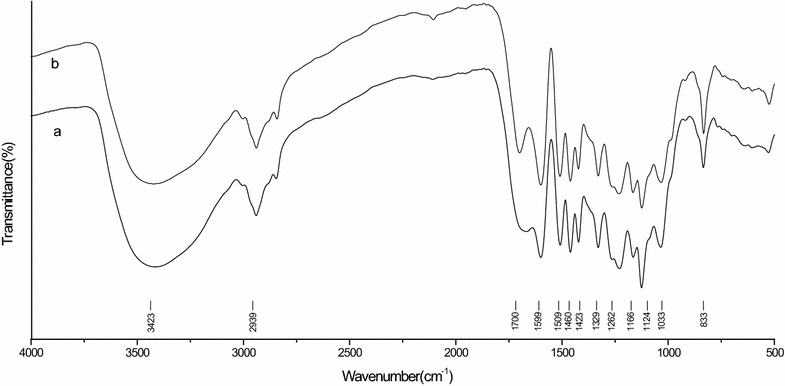
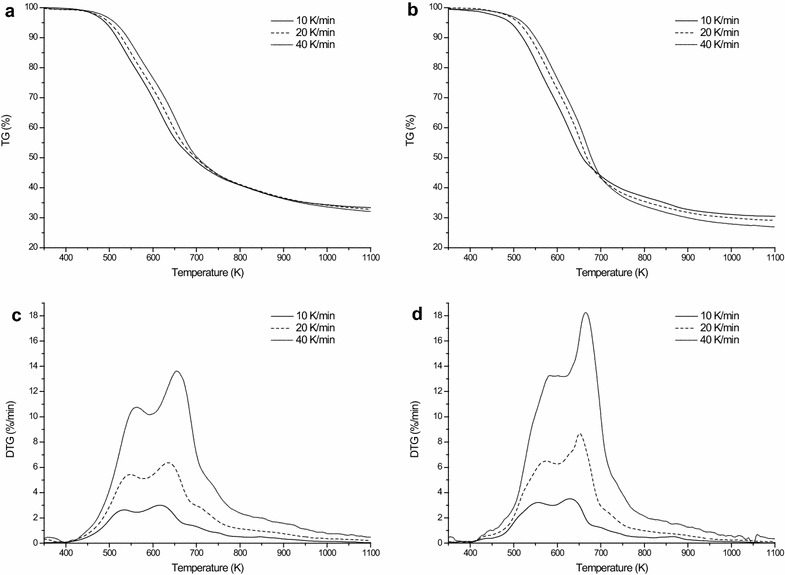
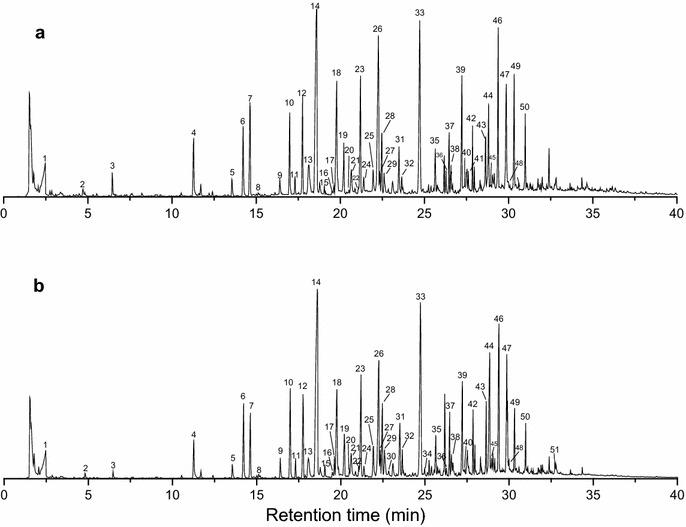
BACKGROUND: The lignocellulose biorefinery based on the sugar platform usually focuses on polysaccharide bioconversion, while lignin is only burned for energy recovery. Pyrolysis can provide a novel route for the efficient utilization of residual lignin obtained from the enzymatic hydrolysis of lignocellulose. The pyrolysis characteristics of residual lignin are usually significantly affected by the pretreatment process because of structural alteration of lignin during pretreatment. In recent years, biological pretreatment using white-rot fungi has attracted extensive attention, but there are only few reports on thermal conversion of lignin derived from enzymatic hydrolysis residue (EHRL) of the bio-pretreated lignocellulose. Therefore, the study investigated the pyrolysis characteristics and kinetics of EHRL obtained from bamboo pretreated with Echinodontium taxodii in order to evaluate the potential of thermal conversion processes of EHRL. RESULTS: Fourier transform infrared spectroscopy spectra showed that EHRL of bamboo treated with E. taxodii had the typical lignin structure, but aromatic skeletal carbon and side chain of lignin were partially altered by the fungus. Thermogravimetric analysis indicated that EHRL pyrolysis at different heating rates could be divided into two depolymerization stages and covered a wide temperature range from 500 to 900 K. The thermal decomposition reaction can be well described by two third-order reactions. The kinetics study indicated that the EHRL of bamboo treated with white-rot fungus had lower apparent activation energies, lower peak temperatures of pyrolysis reaction, and higher char residue than the EHRL of raw bamboo. Pyrolysis-gas chromatography-mass spectrometry (Py-GC/MS) was applied to characterize the fast pyrolysis products of EHRL at 600 ℃. The ratios of guaiacyl-type to syringyl-type derivatives yield (G/S) and guaiacyl-type to p-hydroxy-phenylpropane-type derivatives yield (G/H) for the treated sample were increased by 33.18 and 25.30 % in comparison with the raw bamboo, respectively. CONCLUSIONS: The structural alterations of lignin during pretreatment can decrease the thermal stability of EHRL from the bio-treated bamboo and concentrate the guaiacyl-type derivatives in the fast pyrolysis products. Thus, the pyrolysis can be a promising route for effective utilization of the enzymatic hydrolysis residue from bio-pretreated lignocellulose.
Overview
The claims and statistics of this paper haven’t been checked yet.
Free: it reads the open-access text and checks the first 5 claims that cite a source we can check. Create a free account to check every claim.
Integrity signals
Registry
Cites
Statistics
Figures
Verification
Claims the paper makes
The claims and statistics of this paper haven’t been checked yet.
Free: it reads the open-access text and checks the first 5 claims that cite a source we can check. Create a free account to check every claim.
Claims other papers make about this one
Each is checked against this paper’s own text: does it say what the citing paper says it does?
The cited source says what the claim attributes to it.
In the citing paper
“For example, bio-treated bamboo lignin using white-rot fungi contained lower thermal stability, which can be decomposed into more G-type phenols through fast pyrolysis [245].”
From A review on lignin pyrolysis: pyrolytic behavior, mechanism, and relevant upgrading for improving process efficiency (2022) · cites this paper as [245]
Self-check
Percentages, sums and reported differences re-computed from the paper’s own numbers.
The self-check needs the paper’s full text.
Citations
Cites
Biomass Recalcitrance: Engineering Plants and Enzymes for Biofuels Production
Himmel, M. E., Ding, S.-Y., Johnson, D. K., Adney, W. S., Nimlos, M. R., Brady, J. W., & Foust, T. D. (2007) · Science · doi:10.1126/science.1137016 · Cited by 4,533 · cited 1×
“The alteration is usually depending on the type and condition of pretreatment process [16].”
BackgroundLignin Valorization: Improving Lignin Processing in the Biorefinery
Ragauskas, A. J., Beckham, G. T., Biddy, M. J., Chandra, R., Chen, F., Davis, M. F., Davison, B. H., Dixon, R. A., Gilna, P., Keller, M., et al. (2014) · Science · doi:10.1126/science.1246843 · Cited by 4,125 · cited 2×
“So it is necessary to promote the integration of biorefinery processes and to improve the cost competitiveness of the industry by developing novel routes for effective utilization of lignin [4, 7].”
BackgroundPretreatment: the key to unlocking low‐cost cellulosic ethanol
Yang, B., & Wyman, C. E. (2008) · Biofuels, Bioproducts and Biorefining · doi:10.1002/bbb.49 · Cited by 1,524 · cited 1×
“The pyrolysis of lignin derived from enzymatic hydrolysis residue may be distinctly different from that of natural lignin because the chemical and physical structure of lignin can be altered significantly by the pretreatment process which is a conventional method to make the cellulose more accessible to enzymatic hydr…”
Lignin Depolymerization and Conversion: A Review of Thermochemical Methods
Pandey, M. P., & Kim, C. S. (2011) · Chemical Engineering & Technology · doi:10.1002/ceat.201000270 · Cited by 1,419 · cited 7×
“Currently, pyrolysis characteristics of lignin derived from a wide variety of biomass feedstocks have been investigated using thermogravimetric analysis (TGA), pyrolysis–gas chromatography/ mass spectrometry (Py–GC/MS), or Fourier transform infrared spectrometry (FTIR) technologies [13, 14].”
BackgroundMethodInfluentialClassification of Lignins from Different Botanical Origins by FT-IR Spectroscopy
Faix, O. (1991) · Holzforschung · doi:10.1515/hfsg.1991.45.s1.21 · Cited by 1,276
Production of bioethanol from wheat straw: An overview on pretreatment, hydrolysis and fermentation
Talebnia, F., Karakashev, D., & Angelidaki, I. (2010) · Bioresource Technology · doi:10.1016/j.biortech.2009.11.080 · Cited by 1,091 · cited 1×
“Traditional industrial processes for sugar platform biorefinery usually focus on the bioconversion of polysaccharides in the lignocellulosic biomass, including pretreatment, enzymatic saccharification, and fermentation to ethanol or other bio-chemicals, while lignin in the enzymatic hydrolysis residue is only burned t…”
BackgroundBamboo: an overlooked biomass resource?
Scurlock, J. M. O., Dayton, D. C., & Hames, B. (2000) · Biomass and Bioenergy · doi:10.1016/s0961-9534(00)00038-6 · Cited by 765
THERMAL DEGRADATION OF LIGNIN - A REVIEW
Brebu, M. A., & Vasile, C. (2010) · Cited by 711
Adipic acid production from lignin
Vardon, D. R., Franden, M. A., Johnson, C. W., Karp, E. M., Guarnieri, M. T., Linger, J. G., Salm, M. J., Strathmann, T. J., & Beckham, G. T. (2015) · Energy & Environmental Science · doi:10.1039/c4ee03230f · Cited by 602 · cited 1×
“Development and scale-up of biorefinery industry might yield substantial solid residue with high lignin content [5, 6].”
BackgroundFungal pretreatment of lignocellulosic biomass
Wan, C., & Li, Y. (2012) · Biotechnology Advances · doi:10.1016/j.biotechadv.2012.03.003 · Cited by 532 · cited 1×
“In the past 10 years, biological pretreatment technology using white-rot fungi has attracted extensive attention because it was more environmentally benign and had less energy consumption [17, 18].”
BackgroundFast pyrolysis of rice husk: Product yields and compositions
TSAI, W., LEE, M., & CHANG, Y. (2007) · Bioresource Technology · doi:10.1016/j.biortech.2005.12.005 · Cited by 525
Hasunuma, T., Okazaki, F., Okai, N., Hara, K. Y., Ishii, J., & Kondo, A. (2013) · Bioresource Technology · doi:10.1016/j.biortech.2012.10.047 · Cited by 370 · cited 1×
“Background Lignocellulose biorefinery based on sugar platform can deliver a sustainable approach to industrial-scale production of renewable biofuels and chemicals [1, 2].”
BackgroundControlling the selectivity to chemicals from lignin via catalytic fast pyrolysis
Ma, Z., Troussard, E., & van Bokhoven, J. A. (2012) · Applied Catalysis A: General · doi:10.1016/j.apcata.2012.02.027 · Cited by 363 · cited 1×
“The recent trend of biofuel and chemical recovery from lignin has led to a growing interest in the area of fast pyrolysis [8, 9].”
BackgroundKleinert, M., & Barth, T. (2008) · Energy & Fuels · doi:10.1021/ef700631w · Cited by 345 · cited 1×
“So it is necessary to promote the integration of biorefinery processes and to improve the cost competitiveness of the industry by developing novel routes for effective utilization of lignin [4, 7].”
BackgroundEffect of the Temperature on the Composition of Lignin Pyrolysis Products
Jiang, G., Nowakowski, D. J., & Bridgwater, A. V. (2010) · Energy & Fuels · doi:10.1021/ef100363c · Cited by 332 · cited 1×
“This result provided a good evidence to explain why the EHRL of treated bamboo had higher char residue at the final temperature of TGA than that of untreated bamboo, because lignin with low methoxy group content (guaiacyl unit) could produce more char residue and the char yield is inversely proportional to the total a…”
BackgroundKinetics of Biomass Pyrolysis: a Reformulated Three-Parallel-Reactions Model
Manyà, J. J., Velo, E., & Puigjaner, L. (2003) · Industrial & Engineering Chemistry Research · doi:10.1021/ie020218p · Cited by 291
Zhang, X., Yu, H., Huang, H., & Liu, Y. (2007) · International Biodeterioration & Biodegradation · doi:10.1016/j.ibiod.2007.02.003 · Cited by 248 · cited 10×
“Moso bamboo (Phyllostachys pubescens) is one of the most important fast-growing tree species for industrial purposes in China.”
BackgroundMethodSelf-citationWen, J.-L., Sun, S.-L., Xue, B.-L., & Sun, R.-C. (2013) · hfsg · doi:10.1515/hf-2012-0162 · Cited by 209
Synergistic enzymatic and microbial lignin conversion
Zhao, C., Xie, S., Pu, Y., Zhang, R., Huang, F., Ragauskas, A. J., & Yuan, J. S. (2016) · Green Chemistry · doi:10.1039/c5gc01955a · Cited by 207 · cited 1×
“This phenomenon has also been observed in the study of laccase-mediator system degrading jute lignin [30, 31].”
BackgroundQuantification of Wheat Straw Lignin Structure by Comprehensive NMR Analysis
Zeng, J., Helms, G. L., Gao, X., & Chen, S. (2013) · Journal of Agricultural and Food Chemistry · doi:10.1021/jf4030486 · Cited by 201
Catalytic fast pyrolysis of aspen lignin via Py-GC/MS
Zhang, M., Resende, F. L. P., & Moutsoglou, A. (2014) · Fuel · doi:10.1016/j.fuel.2013.07.128 · Cited by 159 · cited 3×
“The pyrolysis products were identified based on the reported literature and by comparing the mass spectra with the NIST mass spectrum library [8, 11, 36].”
BackgroundMethodWei, Z., Zeng, G., Huang, F., Kosa, M., Huang, D., & Ragauskas, A. J. (2015) · Green Chemistry · doi:10.1039/c5gc00422e · Cited by 138 · cited 1×
“Development and scale-up of biorefinery industry might yield substantial solid residue with high lignin content [5, 6].”
BackgroundBiological pretreatment of lignocellulosics: potential, progress and challenges
Chen, S., Zhang, X., Singh, D., Yu, H., & Yang, X. (2010) · Biofuels · doi:10.4155/bfs.09.13 · Cited by 134 · cited 1×
“In the past 10 years, biological pretreatment technology using white-rot fungi has attracted extensive attention because it was more environmentally benign and had less energy consumption [17, 18].”
BackgroundSelf-citationMartínez, A. T., Rencoret, J., Nieto, L., Jiménez‐Barbero, J., Gutiérrez, A., & del Río, J. C. (2011) · Environmental Microbiology · doi:10.1111/j.1462-2920.2010.02312.x · Cited by 122 · cited 1×
“The phenolic products consisted of derivatives of the lignin units (G, S, H) and catechol derivatives (catechol and 4-methylcatechol) that are the demethylated products of guaiacyl unit with fungal treatment [37].”
BackgroundYu, H., Du, W., Zhang, J., Ma, F., Zhang, X., & Zhong, W. (2010) · Bioresource Technology · doi:10.1016/j.biortech.2010.03.119 · Cited by 96
Self-citationDu, W., Yu, H., Song, L., Zhang, J., Weng, C., Ma, F., & Zhang, X. (2011) · Biotechnology for Biofuels · doi:10.1186/1754-6834-4-37 · Cited by 94
Self-citationCamarero, S., Martínez, M. J., & Martínez, A. T. (2014) · Biofuels, Bioproducts and Biorefining · doi:10.1002/bbb.1467 · Cited by 89 · cited 1×
“The fungal pretreatment can overcome barriers of biomass structure and facilitate subsequent enzymatic hydrolysis by selective delignification [19].”
BackgroundImproving the conversion of biomass in catalytic fast pyrolysis via white-rot fungal pretreatment
Yu, Y., Zeng, Y., Zuo, J., Ma, F., Yang, X., Zhang, X., & Wang, Y. (2013) · Bioresource Technology · doi:10.1016/j.biortech.2013.01.167 · Cited by 86 · cited 3×
“The pyrolysis products were identified based on the reported literature and by comparing the mass spectra with the NIST mass spectrum library [8, 11, 36].”
BackgroundMethodSelf-citationYang, Q. L., Wu, S., Lou, R., & Lv, G. (2009) · Journal of Analytical and Applied Pyrolysis · doi:10.1016/j.jaap.2009.10.006 · Cited by 79
Yuan, T., Sun, S., Xu, F., & Sun, R. (2010) · BioResources · doi:10.15376/biores.6.1.414-433 · Cited by 66 · cited 3×
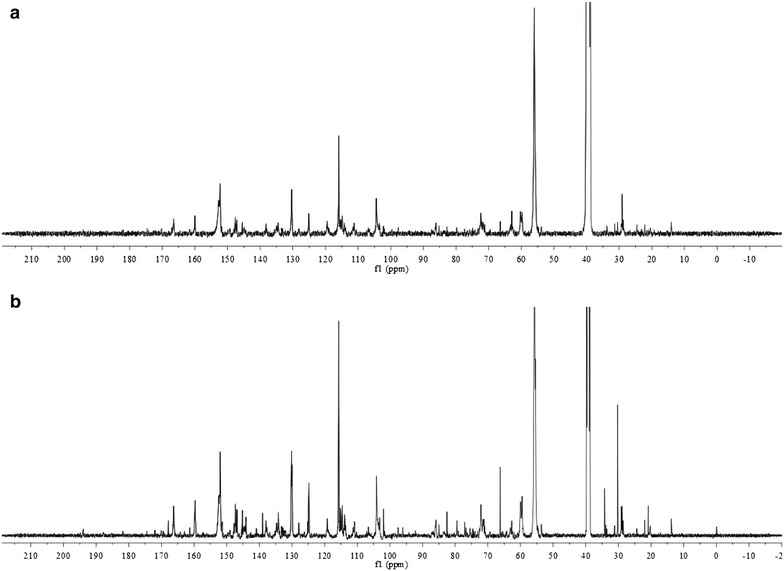
“Most of the observed signals have been previously assigned in wood and bamboo lignin spectra [32, 33].”
BackgroundMethodInfluentialZeng, Y., Yang, X., Yu, H., Zhang, X., & Ma, F. (2011) · Bioresource Technology · doi:10.1016/j.biortech.2011.10.036 · Cited by 65 · cited 11×
“and consists mainly of Klason lignin [26].”
BackgroundMethodSelf-citationSugar recoveries from wheat straw following treatments with the fungus Irpex lacteus
Salvachúa, D., Prieto, A., Vaquero, M. E., Martínez, Á. T., & Martínez, M. J. (2012) · Bioresource Technology · doi:10.1016/j.biortech.2012.11.089 · Cited by 65
Xie, S., Syrenne, R., Sun, S., & Yuan, J. S. (2014) · Current Opinion in Biotechnology · doi:10.1016/j.copbio.2014.02.007 · Cited by 62 · cited 1×
“The fungal pretreatment is a mild and environmentally friendly process of lignocellulose biorefinery [39].”
BackgroundCurrent development of biorefinery in China
Tan, T., Shang, F., & Zhang, X. (2010) · Biotechnology Advances · doi:10.1016/j.biotechadv.2010.05.004 · Cited by 62 · cited 1×
“Background Lignocellulose biorefinery based on sugar platform can deliver a sustainable approach to industrial-scale production of renewable biofuels and chemicals [1, 2].”
BackgroundSelf-citationStructure alteration of lignin in corn stover degraded by white-rot fungus Irpex lacteus CD2
Yang, X., Ma, F., Zeng, Y., Yu, H., Xu, C., & Zhang, X. (2009) · International Biodeterioration & Biodegradation · doi:10.1016/j.ibiod.2009.12.001 · Cited by 61 · cited 1×
“8, 50 mM acetate buffer, at 48 °C) for 3 days in order to remove the residual polysaccharide [28].”
BackgroundSelf-citationNinomiya, K., Soda, H., Ogino, C., Takahashi, K., & Shimizu, N. (2012) · Bioresource Technology · doi:10.1016/j.biortech.2012.10.097 · Cited by 51 · cited 1×
“Recent researches indicated that bamboo is a promising candidate substrate for fuel ethanol production [24, 25].”
BackgroundSun, Z.-Y., Tang, Y., Morimura, S., & Kida, K. (2012) · Bioresource Technology · doi:10.1016/j.biortech.2012.10.082 · Cited by 40 · cited 1×
“Recent researches indicated that bamboo is a promising candidate substrate for fuel ethanol production [24, 25].”
BackgroundShi, L., Yu, H., Dong, T., Kong, W., Ke, M., Ma, F., & Zhang, X. (2014) · Process Biochemistry · doi:10.1016/j.procbio.2014.03.028 · Cited by 40 · cited 1×
“taxodii cultivated on the natural bamboo substrate, it secretes laccase and manganese peroxidase for lignin depolymerization and modification which can facilitate the thermal conversion of lignin in enzymatic hydrolysis residue [40].”
BackgroundSelf-citationKe, J., Laskar, D. D., & Chen, S. (2011) · Biomacromolecules · doi:10.1021/bm2000132 · Cited by 39
Shi, Z., Xiao, L., Jia‐Deng, Xu, F., & Sun, R. (2012) · Journal of Applied Polymer Science · doi:10.1002/app.36580 · Cited by 33
Structural changes of lignin in the jute fiber treated by laccase and mediator system
Zhang, Y., Wang, Q., Fan, X., & Yuan, J. (2013) · Journal of Molecular Catalysis B Enzymatic · doi:10.1016/j.molcatb.2013.12.010 · Cited by 25 · cited 1×
“This phenomenon has also been observed in the study of laccase-mediator system degrading jute lignin [30, 31].”
Background
Cited by
Kumar, R., Strezov, V., Weldekidan, H., He, J., Singh, S., Kan, T., & Dastjerdi, B. (2020) · Renewable and Sustainable Energy Reviews · doi:10.1016/j.rser.2020.109763 · Cited by 542
Lu, X., & Gu, X. (2022) · Biotechnology for Biofuels and Bioproducts · doi:10.1186/s13068-022-02203-0 · Cited by 354
Kong, W., Fu, X., Wang, L., Alhujaily, A., Zhang, J., Ma, F., Zhang, X., & Yu, H. (2017) · Biotechnology for Biofuels · doi:10.1186/s13068-017-0906-x · Cited by 103
“Thus, the degradation of lignin by thermochemical reaction is critical to remove enzymatic recalcitrance of lignocellulose and enhance the hydrolysis of cellulose [4, 5], but it is very expensive and produces a series of toxic compounds, such as black liquor which are harmful for the environment or human health, and f…”
BackgroundSelf-citationLi, F., Ma, F., Zhao, H., Zhang, S., Wang, L., Zhang, X., & Yu, H. (2019) · Applied and Environmental Microbiology · doi:10.1128/aem.02803-18 · Cited by 90
Self-citationÁlvarez-Chávez, B. J., Godbout, S., Palacios-Ríos, J. H., Roux, É. L., & Raghavan, V. (2019) · Biomass and Bioenergy · doi:10.1016/j.biombioe.2019.105333 · Cited by 94
Metadata
- Authors
- Yan, K., Liu, F., Chen, Q., Ke, M., Huang, X., Hu, W., Zhou, B., Zhang, X., & Yu, H.
- Affiliations
- China Tobacco (CN)
- Huazhong University of Science and Technology (CN)
- Corresponding author
- Yu, Hongbo
- Venue
- Biotechnology for Biofuels
- Published
- 2016-03-31
- Volume
- 9
- Issue
- 1
- Pages
- 76-76
- ISSN
- 1754-6834 (ISSN-L)
- PMC
- PMC4815148
- OpenAlex
- W2312869208
- Cited by
- 46
- References
- 41
- Citations by year
- 2026: 4 · 2025: 4 · 2024: 4 · 2023: 3 · 2022: 2 · 2021: 10 · 2020: 4 · 2019: 7 · 2018: 4 · 2017: 4
- FWCI
- 2.41
- Type
- journal article
- Language
- en
- Open access
- gold
- doi.org
- Licence
- cc-by
- Locations
- Biotechnology for Biofuels (publishedVersion, cc-by)
- Europe PMC (PubMed Central) (publishedVersion, cc-by)
- PubMed Central (publishedVersion, cc-by)
- PubMed (publishedVersion)
- Funders
- Research Foundation of Yunnan Tobacco Industry Co. Ltd (2013FL04)
- the National High Technology research and Development Program of China (2012AA101805)
- the National Basic Research Program of China (2014CB138301)
- Topics
- Physical Sciences › Energy › Fuel Technology › Thermochemical Biomass Conversion Processes
- Physical Sciences › Chemical Engineering › Process Chemistry and Technology › Lignin and Wood Chemistry
- Physical Sciences › Materials Science › Materials Chemistry › Thermal and Kinetic Analysis
- Keywords
- lignin, bamboo, pyrolysis kinetics, fast pyrolysis, lignin depolymerization, char residue, lignin valorization, lignocellulosic biorefinery
About these checks
Registry, retraction, Cites and statistics results are computed, not judged, with one exception: a printed reference that no index lists is read once by a model before it counts as a citation error. Claims are extracted by a model and kept only when their quote appears verbatim in the text; each cited source is then checked, with a model’s help, for whether it says what the claim relies on. Those verdicts can be wrong — read the claim’s quote and the cited source before relying on one.
Statistics and arithmetic are recomputed, not judged.
Confidence bands are shown only for fields calibrated on our annotated test set. None is calibrated yet, so no band is shown.
What counts as a claim ›How we measure confidence ›How we check this ›
Are you an author, or do you see a problem with this page? Request a review
Data sources
Bibliographic data: Semantic Scholar, OpenAlex, Crossref.
Contains information from the Semantic Scholar Academic Graph Datasets, made available under the ODC Attribution License (ODC-BY 1.0).
Semantic Scholar’s data is described in: Kinney, R., et al. (2023). The Semantic Scholar Open Data Platform. arXiv:2301.10140.
