

Microbial synthesis of poly-γ-glutamic acid: current progress, challenges, and future perspectives
Open accessThe DOI matches its Crossref record; 107 of the 109 references it cites were found in a registry or an index.
Abstract
Poly-γ-glutamic acid (γ-PGA) is a naturally occurring biopolymer made from repeating units of l-glutamic acid, d-glutamic acid, or both. Since some bacteria are capable of vigorous γ-PGA biosynthesis from renewable biomass, γ-PGA is considered a promising bio-based chemical and is already widely used in the food, medical, and wastewater industries due to its biodegradable, non-toxic, and non-immunogenic properties. In this review, we consider the properties, biosynthetic pathway, production strategies, and applications of γ-PGA. Microbial biosynthesis of γ-PGA and the molecular mechanisms regulating production are covered in particular detail. Genetic engineering and optimization of the growth medium, process control, and downstream processing have proved to be effective strategies for lowering the cost of production, as well as manipulating the molecular mass and conformational/enantiomeric properties that facilitate screening of competitive γ-PGA producers. Finally, future prospects of microbial γ-PGA production are discussed in light of recent progress, challenges, and trends in this field.
Overview
The claims and statistics of this paper haven’t been checked yet.
Free: it reads the open-access text and checks the first 5 claims that cite a source we can check. Create a free account to check every claim.
Integrity signals
Registry
Cites
Statistics
Figures
Verification
Claims the paper makes
The claims and statistics of this paper haven’t been checked yet.
Free: it reads the open-access text and checks the first 5 claims that cite a source we can check. Create a free account to check every claim.
Claims other papers make about this one
Each is checked against this paper’s own text: does it say what the citing paper says it does?
The cited source says what the claim attributes to it.
In the citing paper
“Gamma-polyglutamic acid (γ-PGA) is a non-toxic and biodegradable biopolymer produced by several species of Bacillus, including B. licheniformis and B. subtilis [12,13].”
From Soy Molasses as Culture Medium for Bacillus Species Aiming at Plant Growth Promotion (2024) · cites this paper as [12]
Self-check
Percentages, sums and reported differences re-computed from the paper’s own numbers.
The self-check needs the paper’s full text.
Citations
Cites
The production of poly-(γ-glutamic acid) from microorganisms and its various applications
Shih, I.-L., & Van, Y.-T. (2001) · Bioresource Technology · doi:10.1016/s0960-8524(01)00074-8 · Cited by 579 · cited 8×
“Animal feed additives Increasing egg-shells strength; decreasing body fat, etc [1]”
BackgroundMethodInfluentialPoly (glutamic acid) – An emerging biopolymer of commercial interest
Bajaj, I., & Singhal, R. (2011) · Bioresource Technology · doi:10.1016/j.biortech.2011.02.047 · Cited by 372 · cited 1×
“Surprisingly, only a small number of mini reviews on the biosynthesis and applications of γ-PGA have been published to date [1, 6–9].”
BackgroundPoly-γ-glutamic acid: production, properties and applications
Ogunleye, A., Bhat, A., Irorere, V. U., Hill, D., Williams, C., & Radecka, I. (2015) · Microbiology · doi:10.1099/mic.0.081448-0 · Cited by 354
Poly‐gamma‐glutamate in bacteria
Candela, T., & Fouet, A. (2006) · Molecular Microbiology · doi:10.1111/j.1365-2958.2006.05179.x · Cited by 341 · cited 3×
“For example, γ-PGA containing only l or d enantiomers is soluble in ethanol, whereas γ-PGA containing equimolar amounts of l and d precipitates in ethanol [6].”
BackgroundBuescher, J. M., & Margaritis, A. (2007) · Critical Reviews in Biotechnology · doi:10.1080/07388550601166458 · Cited by 276 · cited 8×
“A lot of research has been carried out on the molecular biology (genes, enzymes, pathways) of γ-PGA and its biosynthesis in different organisms, some of which have been applied to improving its production [7, 8, 73].”
BackgroundInfluentialStanley, N. R., & Lazazzera, B. A. (2005) · Molecular Microbiology · doi:10.1111/j.1365-2958.2005.04746.x · Cited by 264
Natural and edible biopolymer poly‐γ‐glutamic acid: synthesis, production, and applications
Sung, M., Park, C., Kim, C., Poo, H., Soda, K., & Ashiuchi, M. (2005) · The Chemical Record · doi:10.1002/tcr.20061 · Cited by 239 · cited 2×
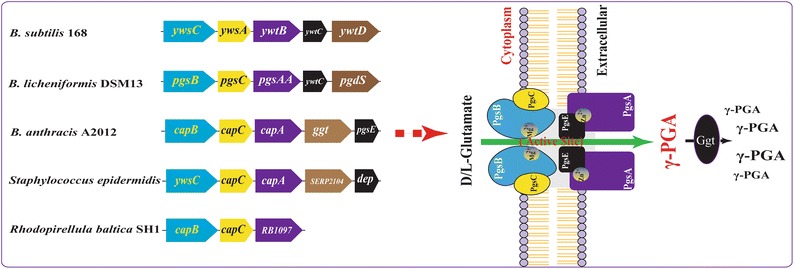
“Recently, pgsBCA was identified as the sole machinery responsible for polymerizing γ-PGA at the active site of the synthase complex (PgsBCA) in an ATP-dependent reaction [25].”
BackgroundKey role of poly-γ-dl-glutamic acid in immune evasion and virulence of Staphylococcus epidermidis
Kocianova, S., Vuong, C., Yao, Y., Voyich, J. M., Fischer, E. R., DeLeo, F. R., & Otto, M. (2005) · Journal of Clinical Investigation · doi:10.1172/jci200523523 · Cited by 230
Paclitaxel poliglumex (XYOTAX™, CT-2103): A macromolecular taxane
Singer, J. W. (2005) · Journal of Controlled Release · doi:10.1016/j.jconrel.2005.09.033 · Cited by 213
Microbial Degradation of Poly(amino acid)s
Obst, M., & Steinbüchel, A. (2004) · Biomacromolecules · doi:10.1021/bm049949u · Cited by 191 · cited 1×
“γ‐PGA degradation There are two enzymes capable of degrading γ-PGA in Bacilli: endo-γ-glutamyl peptidase and exo-γ-glutamyl peptidase [33].”
BackgroundBiochemistry and molecular genetics of poly-γ-glutamate synthesis
M., A., & H., M. (2002) · Applied Microbiology and Biotechnology · doi:10.1007/s00253-002-0984-x · Cited by 177
Ternary complexes of pDNA, polyethylenimine, and γ-polyglutamic acid for gene delivery systems
Kurosaki, T., Kitahara, T., Fumoto, S., Nishida, K., Nakamura, J., Niidome, T., Kodama, Y., Nakagawa, H., To, H., & Sasaki, H. (2009) · Biomaterials · doi:10.1016/j.biomaterials.2009.01.055 · Cited by 171 · cited 1×
“Gene vectors Use for gene therapy [102]”
Candela, T., & Fouet, A. (2005) · Molecular Microbiology · doi:10.1111/j.1365-2958.2005.04718.x · Cited by 170
Evaluation of chitosan/γ-poly(glutamic acid) polyelectrolyte complex for wound dressing materials
Tsao, C. T., Chang, C., Lin, Y. Y., Wu, M. F., Wang, J., Young, T. H., Han, J. L., & Hsieh, K.-H. (2010) · Carbohydrate Polymers · doi:10.1016/j.carbpol.2010.04.034 · Cited by 156
Bhattacharyya, D., Hestekin, J., Brushaber, P., Cullen, L., Bachas, L. G., & Sikdar, S. K. (1998) · Journal of Membrane Science · doi:10.1016/s0376-7388(97)00301-3 · Cited by 153 · cited 1×
“Metal chelates Removal of heavy metals and radionuclides [105]”
BackgroundHo, G., Ho, T., Hsieh, K., Su, Y., Lin, P., Yang, J., Yang, K., & Yang, S. (2006) · Journal of the Chinese Chemical Society · doi:10.1002/jccs.200600182 · Cited by 150 · cited 2×
“The conformation can be changed by altering environmental conditions such as pH, polymer concentration, and ionic strength [10].”
BackgroundMcLean, R. J. C., Beauchemin, D., Clapham, L., & Beveridge, T. J. (1990) · Applied and Environmental Microbiology · doi:10.1128/aem.56.12.3671-3677.1990 · Cited by 146 · cited 2×
“More importantly, γ-PGA can be released into the environment to sequester toxic metal ions, decrease salt concentration [4], provide a carbon source [15], and protect against adverse conditions [16].”
BackgroundAshiuchi, M., Kamei, T., Baek, D.-H., Shin, S. Y., Sung, M., Soda, K., Yagi, T., & Misono, H. (2001) · Applied Microbiology and Biotechnology · doi:10.1007/s00253-001-0848-9 · Cited by 145
Tran, L. P., Nagai, T., & Itoh, Y. (2000) · Molecular Microbiology · doi:10.1046/j.1365-2958.2000.02069.x · Cited by 142
Siaterlis, A., Deepika, G., & Charalampopoulos, D. (2009) · Letters in Applied Microbiology · doi:10.1111/j.1472-765x.2008.02529.x · Cited by 139 · cited 1×
“As a cryoprotectant, γ-PGA enhances the viability of probiotic bacteria during freeze-drying, and γ-PGA was found to protect Lactobacillus paracasei more effectively than sucrose, trehalose, or sorbitol [11, 67].”
BackgroundCromwick, A.-M., Birrer, G. A., & Gross, R. A. (1996) · Biotechnology and Bioengineering · doi:10.1002/(sici)1097-0290(19960420)50:2<222::aid-bit10>3.0.co;2-p · Cited by 133
Ye, H., Li, J., Hu, R., Yi, Z., Li, J., Wu, Y., Xi, X., & Wu, Z. (2006) · Biomaterials · doi:10.1016/j.biomaterials.2006.08.016 · Cited by 131 · cited 1×
“Drug carrier/deliverer Improvement of anticancer; nanoparticle medicine [101]”
BackgroundHezayen, F. F., Rehm, B. H., Tindall, B. J., & Steinbüchel, A. (2001) · International Journal of Systematic and Evolutionary Microbiology · doi:10.1099/00207713-51-3-1133 · Cited by 131 · cited 2×
“More importantly, γ-PGA can be released into the environment to sequester toxic metal ions, decrease salt concentration [4], provide a carbon source [15], and protect against adverse conditions [16].”
BackgroundAkagi, T., Baba, M., & Akashi, M. (2007) · Polymer · doi:10.1016/j.polymer.2007.08.038 · Cited by 122
Uchida, I., Makino, S., Sasakawa, C., Yoshikawa, M., Sugimoto, C., & Terakado, N. (1993) · Molecular Microbiology · doi:10.1111/j.1365-2958.1993.tb01710.x · Cited by 117 · cited 1×
“anthracis [40].”
Kimura, K. (2004) · Microbiology · doi:10.1099/mic.0.27467-0 · Cited by 115 · cited 4×
“licheniformis, where it is able to cleave high molecular weight γ-PGA into fragments of 1000 Da to 20 kDa, which decreases dispersity as a function of depolymerization time [22, 34, 35].”
BackgroundInfluentialWang, Q., Chen, S., Zhang, J., Sun, M., Liu, Z., & Yu, Z. (2008) · Bioresource Technology · doi:10.1016/j.biortech.2007.05.052 · Cited by 113 · cited 1×
“Biocontrol agent Increasing the nutrient consumption as well as growth of seedlings [106]”
BackgroundMesnage, S., Tosi-Couture, E., Gounon, P., Mock, M., & Fouet, A. (1998) · Journal of Bacteriology · doi:10.1128/jb.180.1.52-58.1998 · Cited by 112 · cited 1×
“Peptidoglycanbound γ-PGA may protect bacterial cells against phage infections and prevent antibodies from gaining access to the bacterium [14].”
BackgroundKo, Y. H., & Gross, R. A. (1998) · Biotechnology and Bioengineering · doi:10.1002/(sici)1097-0290(19980220)57:4<430::aid-bit6>3.0.co;2-n · Cited by 110
Ko, Y. H., & Gross, R. A. (1998) · Biotechnology and Bioengineering · doi:10.1002/(sici)1097-0290(19980220)57:4<409::aid-bit4>3.0.co;2-q · Cited by 108
Production of poly-γ-glutamic acid by fed-batch culture of Bacillus licheniformis
Yoon, S. H., Do, J. H., Lee, S. Y., & Chang, H. N. (2000) · Biotechnology Letters · doi:10.1023/a:1005625026623 · Cited by 105 · cited 1×
“large differences in molecule size between high molecular weight γ-PGA and all other constituents of the culture broth, a series of filtration and buffer exchange steps can be applied to effectively separate γ-PGA [66].”
BackgroundRemoval of cationic dyes from aqueous solution using an anionic poly-γ-glutamic acid-based adsorbent
Inbaraj, B. S., Chiu, C. P., Ho, G. H., Yang, J. H., & Chen, B. (2006) · Journal of Hazardous Materials · doi:10.1016/j.jhazmat.2006.01.057 · Cited by 105
Efficient production of poly(γ-glutamic acid) by newly isolated Bacillus subtilis NX-2
Xu, H. L., Jiang, M., Li, H., Lu, D., & Ouyang, P. (2004) · Process Biochemistry · doi:10.1016/j.procbio.2003.09.025 · Cited by 105 · cited 1×
“Culture pH is another important environmental factor in γ-PGA fermentation [60].”
BackgroundFeng, J., Gu, Y., Quan, Y., Cao, M., Gao, W., Zhang, W., Wang, S., Yang, C., & Song, C. (2015) · Metabolic Engineering · doi:10.1016/j.ymben.2015.09.011 · Cited by 104
Cao, M., Geng, W., Liu, L., Song, C., Xie, H., Guo, W., Jin, Y., & Wang, S. (2010) · Bioresource Technology · doi:10.1016/j.biortech.2010.12.065 · Cited by 98
Bhat, A. R., Irorere, V. U., Bartlett, T., Hill, D., Kedia, G., Morris, M. R., Charalampopoulos, D., & Radecka, I. (2013) · AMB Express · doi:10.1186/2191-0855-3-36 · Cited by 98
Microbial production and chemical transformation of poly‐γ‐glutamate
Ashiuchi, M. (2013) · Microbial Biotechnology · doi:10.1111/1751-7915.12072 · Cited by 90
Zhang, D., Feng, X., Zhou, Z., Zhang, Y., & Xu, H. L. (2012) · Bioresource Technology · doi:10.1016/j.biortech.2012.02.114 · Cited by 89 · cited 1×
“1 g/L of γ-PGA from cane molasses, without optimizing the fermentation process [55].”
BackgroundKnockout of pgdS and ggt genes improves γ‐PGA yield in B. subtilis
Scoffone, V., Dondi, D., Biino, G., Borghese, G., Pasini, D., Galizzi, A., & Calvio, C. (2013) · Biotechnology and Bioengineering · doi:10.1002/bit.24846 · Cited by 87
Bajaj, I. B., Lele, S. S., & Singhal, R. S. (2008) · Bioresource Technology · doi:10.1016/j.biortech.2008.06.047 · Cited by 85 · cited 1×
“12 g/L [89]”
OHSAWA, T., TSUKAHARA, K., & OGURA, M. (2009) · Bioscience, Biotechnology, and Biochemistry · doi:10.1271/bbb.90341 · Cited by 84 · cited 1×
“DegU-P could directly activate pgs expression for γ-PGA production in place of swrA [31].”
BackgroundInbaraj, B. S., Kao, T. H., Tsai, T. Y., Chiu, C. P., Kumar, R., & Chen, B. (2011) · Nanotechnology · doi:10.1088/0957-4484/22/7/075101 · Cited by 84 · cited 1×
“coli and Staphylococcus aureus [107]”
Vandanjon, L., Rossignol, N., Jaouen, P., Robert, J. M., & Qu�m�neur, F. (1999) · Biotechnology and Bioengineering · doi:10.1002/(sici)1097-0290(19990405)63:1<1::aid-bit1>3.0.co;2-k · Cited by 82
Burdick, J. A., Philpott, L. M., & Anseth, K. S. (2001) · Journal of Polymer Science Part A Polymer Chemistry · doi:10.1002/1099-0518(20010301)39:5<683::aid-pola1040>3.0.co;2-z · Cited by 81
Enzymatic Synthesis of High-Molecular-Mass Poly-γ-Glutamate and Regulation of Its Stereochemistry
Ashiuchi, M., Shimanouchi, K., Nakamura, H., Kamei, T., Soda, K., Park, C., Sung, M.-H., & Misono, H. (2004) · Applied and Environmental Microbiology · doi:10.1128/aem.70.7.4249-4255.2004 · Cited by 77
Tang, B., Lei, P., Xu, Z., Jiang, Y., Xu, Z., Liang, J., Feng, X., & Xu, H. L. (2015) · Bioresource Technology · doi:10.1016/j.biortech.2015.05.110 · Cited by 75
Yong, X., Raza, W., Yu, G., Ran, W., Shen, Q., & Yang, X. (2011) · Bioresource Technology · doi:10.1016/j.biortech.2011.05.057 · Cited by 75
Sealing effect of rapidly curable gelatin-poly (l-glutamic acid) hydrogel glue on lung air leak
Otani, Y., Tabata, Y., & Ikada, Y. (1999) · The Annals of Thoracic Surgery · doi:10.1016/s0003-4975(99)00153-8 · Cited by 73 · cited 1×
“Biological adhesive Substitutes of fibrin with the better lung adhesion and air-leak sealing [104]”
BackgroundXu, K., & Strauch, M. A. (1996) · Journal of Bacteriology · doi:10.1128/jb.178.14.4319-4322.1996 · Cited by 69 · cited 1×
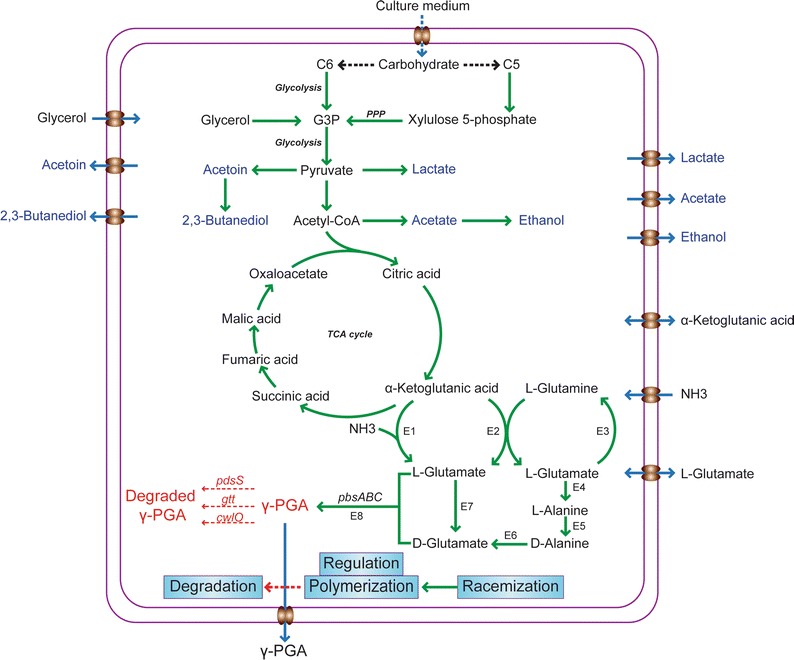
“Exo-γ-glutamyl peptidase (Ggt) is a key enzyme in glutathione metabolism, and catalyzes the formation of γ-glutamic acid di- and tripeptides in vitro, but does not appear to be involved in γ-PGA synthesis in vivo [36, 37].”
BackgroundBajaj, I. B., & Singhal, R. S. (2008) · Applied Biochemistry and Biotechnology · doi:10.1007/s12010-008-8427-5 · Cited by 67 · cited 2×
“12 g/L [81]”
Park, C., Choi, J.-C., Choi, Y., Nakamura, H., Shimanouchi, K., Horiuchi, T., Misono, H., Sewaki, T., Soda, K., Ashiuchi, M., et al. (2005) · Journal of Molecular Catalysis B Enzymatic · doi:10.1016/j.molcatb.2005.06.007 · Cited by 65
Microbial production of a poly(γ-glutamic acid) derivative by Bacillus subtilis
Shih, I., Wu, P.-J., & Shieh, C. (2005) · Process Biochemistry · doi:10.1016/j.procbio.2004.12.009 · Cited by 65
Zhang, H., Zhu, J., Zhu, X., Cai, J., Zhang, A., Hong, Y., Huang, J., Huang, L., & Xu, Z. (2012) · Bioresource Technology · doi:10.1016/j.biortech.2011.11.085 · Cited by 64
Ji, X., Nie, Z.-K., Huang, H., Ren, L., Peng, C., & Ouyang, P. (2010) · Applied Microbiology and Biotechnology · doi:10.1007/s00253-010-2940-5 · Cited by 64 · cited 1×
“Process control Efficient and effective control of fermentation depends on an understanding of the key biological and chemical parameters [57], and dissolved oxygen and culture pH are fundamental parameters that need careful control.”
BackgroundHigh yield and cost‐effective production of poly(γ‐glutamic acid) with Bacillus subtilis
Huang, J., Du, Y., Xu, G., Zhang, H., Zhu, F., Huang, L., & Xu, Z. (2011) · Engineering in Life Sciences · doi:10.1002/elsc.201000133 · Cited by 63
Acute Effect of Poly-γ-Glutamic Acid on Calcium Absorption in Post-Menopausal Women
Tanimoto, H., Fox, T., Eagles, J., Satoh, H., Nozawa, H., Okiyama, A., Morinaga, Y., & Fairweather-Tait, S. J. (2007) · Journal of the American College of Nutrition · doi:10.1080/07315724.2007.10719642 · Cited by 62 · cited 2×
“More importantly, as a food supplement, γ-PGA could effectively increase the bioavailability of calcium by increasing its solubility and intestinal absorption, which decreased bone loss in humans [68].”
BackgroundPeng, Y., Jiang, B., Zhang, T., Mu, W., Miao, M., & Hua, Y. (2015) · Process Biochemistry · doi:10.1016/j.procbio.2014.12.024 · Cited by 62 · cited 2×
“For an exogenous glutamate-independent producer, yeast extract proved to be an excellent nitrogen source for bacterial cell growth and γ-PGA production, but the high cost is a barrier to commercial production [51].”
BackgroundFeng, J., Gao, W., Gu, Y., Zhang, W., Cao, M., Song, C., Zhang, P., Min, S., Yang, C., & Wang, S. (2014) · Applied Microbiology and Biotechnology · doi:10.1007/s00253-014-5729-0 · Cited by 60
Zhao, C., Zhang, Y., Wei, X., Hu, Z., Zhu, F., Xu, L., Luo, M., & Liu, H. (2013) · Applied Biochemistry and Biotechnology · doi:10.1007/s12010-013-0214-2 · Cited by 59
Efficient recovery of γ‐poly (glutamic acid) from highly viscous culture broth
Do, J. H., Chang, H. N., & Lee, S. Y. (2001) · Biotechnology and Bioengineering · doi:10.1002/bit.1186 · Cited by 58 · cited 1×
“Alternatively, γ-PGA can be precipitated by reducing water solubility, following the addition of ethanol to the supernatant or filtrate and then re-dissolving in distilled water [64].”
BackgroundFusobacterium nucleatum, the first Gram-negative bacterium demonstrated to produce polyglutamate
Candela, T., Moya, M., Haustant, M., & Fouet, A. (2009) · Canadian Journal of Microbiology · doi:10.1139/w09-003 · Cited by 58 · cited 2×
“Fermentation engineering for γ‐PGA production At present, γ-PGA can be synthesized by Bacillus species, Fusobacterium nucleatum, and some archaea and eukaryotes [3], but Bacillus species are used most widely to study biological γ-PGA production.”
BackgroundXu, Z., Feng, X., Zhang, D., Tang, B., Lei, P., Liang, J., & Xu, H. L. (2014) · Bioresource Technology · doi:10.1016/j.biortech.2013.12.080 · Cited by 56 · cited 2×
“21 [42]”
Kongklom, N., Luo, H., Shi, Z., Pechyen, C., Chisti, Y., & Sirisansaneeyakul, S. (2015) · Biochemical Engineering Journal · doi:10.1016/j.bej.2015.04.007 · Cited by 56
Tian, G., Fu, J., Wei, X., Ji, Z., Ma, X., Qi, G., & Chen, S. (2014) · Journal of Chemical Technology & Biotechnology · doi:10.1002/jctb.4261 · Cited by 55
Flocculation Properties of Poly(γ-Glutamic Acid) Produced from Bacillus subtilis Isolate
Bajaj, I. B., & Singhal, R. S. (2009) · Food and Bioprocess Technology · doi:10.1007/s11947-009-0186-y · Cited by 55
Investigation on enzymatic degradation of γ-polyglutamic acid from Bacillus subtilis NX-2
Yao, J., Jing, J., Xu, H. L., Liang, J., Wu, Q., Feng, X., & Ouyang, P. (2008) · Journal of Molecular Catalysis B Enzymatic · doi:10.1016/j.molcatb.2007.12.027 · Cited by 55 · cited 1×
“licheniformis, where it is able to cleave high molecular weight γ-PGA into fragments of 1000 Da to 20 kDa, which decreases dispersity as a function of depolymerization time [22, 34, 35].”
BackgroundWu, Q., Xu, H. L., Xu, L., & Ouyang, P. (2006) · Process Biochemistry · doi:10.1016/j.procbio.2006.03.034 · Cited by 53
King, E. C., Blacker, A. J., & Bugg, T. D. H. (2000) · Biomacromolecules · doi:10.1021/bm990001n · Cited by 53
Poly-γ-glutamate synthetase of Bacillus subtilis
Ashiuchi, M., Kamei, T., & Misono, H. (2003) · Journal of Molecular Catalysis B Enzymatic · doi:10.1016/s1381-1177(03)00076-6 · Cited by 53
Zeng, W., Li, W., Shu, L., Yi, J., Chen, G., & Liang, Z. (2013) · Bioresource Technology · doi:10.1016/j.biortech.2013.05.020 · Cited by 53
Morelli, C. F., Calvio, C., Biagiotti, M., & Speranza, G. (2013) · FEBS Journal · doi:10.1111/febs.12591 · Cited by 51 · cited 1×
“GTTs display exohydrolase activity toward γ-PGA, releasing glutamate as a source of carbon and nitrogen [39].”
BackgroundChen, B., & Inbaraj, B. S. (2012) · International Journal of Nanomedicine · doi:10.2147/ijn.s34396 · Cited by 51
Yamashiro, D., Yoshioka, M., & Ashiuchi, M. (2011) · Biotechnology and Bioengineering · doi:10.1002/bit.22913 · Cited by 50 · cited 1×
“subtilis [27].”
ABacillus thuringiensisstrain producing a polyglutamate capsule resembling that ofBacillus anthracis
Cachat, É., Barker, M., Read, T. D., & Priest, F. G. (2008) · FEMS Microbiology Letters · doi:10.1111/j.1574-6968.2008.01231.x · Cited by 48 · cited 1×
“anthracis and Bacillus thuringiensis also have the capacity for γ-PGA production [52], but these organisms attach γ-PGA to peptidoglycan instead of secreting it into the medium, making the recovery and purification procedure”
BackgroundSwrAA activates poly-γ-glutamate synthesis in addition to swarming in Bacillus subtilis
Osera, C., Amati, G., Calvio, C., & Galizzi, A. (2009) · Microbiology · doi:10.1099/mic.0.026435-0 · Cited by 48 · cited 1×
“discovered that the presence of both SwrA and phosphorylated DegU (DegU-P) could fully activate the pgs operon for γ-PGA production, but the effect of either gene on both pgs transcription and γ-PGA production was negligible [30].”
BackgroundZhang, D., Feng, X., Li, S., Chen, F., & Xu, H. L. (2012) · Process Biochemistry · doi:10.1016/j.procbio.2012.07.029 · Cited by 47
Self-citationDo, T.-H., Suzuki, Y., Abe, N., Kaneko, J., Itoh, Y., & Kimura, K. (2011) · Applied and Environmental Microbiology · doi:10.1128/aem.05827-11 · Cited by 46 · cited 1×
“The role of DegQ has been thoroughly investigated, and alteration of degQ prevents the synthesis of γ-PGA and effectively downregulates the production of degradation enzymes [29].”
BackgroundCharacterization of yrpC Gene Product of Bacillus subtilis IFO 3336 as Glutamate Racemase Isozyme
ASHIUCHI, M., SODA, K., & MISONO, H. (1999) · Bioscience, Biotechnology, and Biochemistry · doi:10.1271/bbb.63.792 · Cited by 45 · cited 1×
“subtilis, two homologs of the glutamate racemase gene (racE/glr and yrpC) have been identified, and glr is essential for converting l-glutamate into d-glutamate for the synthesis of γ-PGA [21].”
BackgroundAntifreeze activities of poly(γ-glutamic acid) produced by Bacillus licheniformis
Shih, I., Van, Y.-T., & Sau, Y.-Y. (2003) · Biotechnology Letters · doi:10.1023/a:1026042302102 · Cited by 44
Zhu, F., Cai, J., Zheng, Q., Zhu, X., Cen, P., & Xu, Z. (2014) · Journal of Chemical Technology & Biotechnology · doi:10.1002/jctb.4169 · Cited by 43
Genetically Engineered Poly-γ-glutamate Producer from Bacillus subtilis ISW1214
ASHIUCHI, M., SHIMANOUCHI, K., HORIUCHI, T., KAMEI, T., & MISONO, H. (2006) · Bioscience, Biotechnology, and Biochemistry · doi:10.1271/bbb.60082 · Cited by 41 · cited 2×
“0 [47]”
Optimal Production of Poly-γ-glutamic Acid by Metabolically Engineered Escherichia coli
Jiang, H., Shang, L., Yoon, S. H., Lee, S. Y., & Yu, Z. (2006) · Biotechnology Letters · doi:10.1007/s10529-006-9080-0 · Cited by 40
Cao, M., Geng, W., Zhang, W., Sun, J., Wang, S., Feng, J., Zheng, P., Jiang, A., & Song, C. (2013) · Microbial Biotechnology · doi:10.1111/1751-7915.12075 · Cited by 39 · cited 2×
“coli [48] has also been used to increase γ-PGA production.”
MethodZeng, W., Lin, Y., Qi, Z., He, Y., Wang, D., Chen, G., & Liang, Z. (2013) · Applied Microbiology and Biotechnology · doi:10.1007/s00253-013-4717-0 · Cited by 39
Association of Bacillus anthracis Capsule with Lethal Toxin during Experimental Infection
Ezzell, J. W., Abshire, T. G., Panchal, R. G., Chabot, D. J., Bavari, S., Leffel, E. K., Purcell, B. K., Friedlander, A. M., & Ribot, W. J. (2008) · Infection and Immunity · doi:10.1128/iai.00764-08 · Cited by 39 · cited 1×
“anthracis is not viable owing to its toxicity [53].”
BackgroundAshiuchi, M., Kuwana, E., Komatsu, K., Soda, K., & Misono, H. (2003) · FEMS Microbiology Letters · doi:10.1016/s0378-1097(03)00381-1 · Cited by 37 · cited 1×
“The functions of these enzymes remains unknown [22, 23].”
BackgroundFeng, J., Gu, Y., Sun, Y., Han, L., Yang, C., Zhang, W., Cao, M., Song, C., Gao, W., & Wang, S. (2014) · Microbial Biotechnology · doi:10.1111/1751-7915.12136 · Cited by 36 · cited 1×
“amyloliquefaciens [46], B.”
Effect of poly-γ-glutamic acids (PGA) on oil uptake and sensory quality in doughnuts
Lim, S.-M., Kim, J., Shim, J., Imm, B.-Y., Sung, M., & Imm, J. (2012) · Food Science and Biotechnology · doi:10.1007/s10068-012-0032-2 · Cited by 36
Wei, X., Tian, G., Ji, Z., & Chen, S. (2014) · Journal of Chemical Technology & Biotechnology · doi:10.1002/jctb.4362 · Cited by 35
Enhanced production of poly-γ-glutamic acid by a newly-isolated Bacillus subtilis
Ju, W., Song, Y., Jung, W., & Park, R. (2014) · Biotechnology Letters · doi:10.1007/s10529-014-1613-3 · Cited by 35
Zhang, W., He, Y., Gao, W., Feng, J., Cao, M., Yang, C., Song, C., & Wang, S. (2015) · Journal of Industrial Microbiology and Biotechnology · doi:10.1007/s10295-014-1563-8 · Cited by 35
Poly-γ-Glutamic Acid: Biodegradable Polymer for Potential Protection of Beneficial Viruses
Khalil, I., Irorere, V. U., Radecka, I., Burns, A. T. H., Kowalczuk, M. M., Mason, J., & Khechara, M. P. (2016) · Materials · doi:10.3390/ma9010028 · Cited by 35 · cited 1×
“Protective effect γ-PGA has a unique protective effect on phage particles [108]”
BackgroundRichard, A., & Margaritis, A. (2003) · Biotechnology Letters · doi:10.1023/a:1022644417429 · Cited by 33 · cited 1×
“subtilis IFO 3335 [61].”
Jiang, F., Qi, G., Ji, Z., Zhang, S., Liu, J., Ma, X., & Chen, S. (2011) · Biotechnology Letters · doi:10.1007/s10529-011-0631-7 · Cited by 32
Self-citationIMPROVING THE EMULSION STABILITY OF SPONGE CAKE BY THE ADDITION OF ?-POLYGLUTAMIC ACID
Shyu, Y., & Sung, W. (2010) · Journal of marine science and technology · doi:10.51400/2709-6998.1948 · Cited by 31
Zhang, D., Xu, Z., Xu, H. L., Feng, X., Li, S., Cai, H. J., Yan, W., & Ouyang, P. (2011) · Biotechnology and Bioprocess Engineering · doi:10.1007/s12257-011-0074-y · Cited by 31
Self-citationZhu, F., Cai, J., Wu, X., Huang, J., Huang, L., Zhu, J., Zheng, Q., Cen, P., & Xu, Z. (2012) · Journal of Biotechnology · doi:10.1016/j.jbiotec.2012.12.009 · Cited by 31
Wang, J., Yuan, H., Wei, X., Chen, J., & Chen, S. (2016) · Journal of Chemical Technology & Biotechnology · doi:10.1002/jctb.4822 · Cited by 29
Wu, Q., Xu, H., Ying, H., & Ouyang, P. (2010) · Biochemical Engineering Journal · doi:10.1016/j.bej.2010.02.012 · Cited by 28
Regulation of poly-γ-glutamic acid production in Bacillus subtilis GXA-28 by potassium
Zeng, W., Liang, Z., Li, Z., Bian, Y., Li, Z., Tang, Z., & Chen, G. (2016) · Journal of the Taiwan Institute of Chemical Engineers · doi:10.1016/j.jtice.2015.12.026 · Cited by 28 · cited 1×
“5 % [95]”
Candela, T., Balomenou, S., Aucher, W., Bouriotis, V., Simore, J.-P., Fouet, A., & Boneca, I. G. (2014) · Microbial Drug Resistance · doi:10.1089/mdr.2014.0063 · Cited by 25 · cited 1×
“As a member of the γ-glutamyl transpeptidase (GGT) family, CapD is able to cleave and subsequently transfer γ-PGA to an acceptor molecule or H2O, resulting in transpeptidation or hydrolysis, respectively [38].”
Backgroundde Cesaro, A., da Silva, S. B., & Ayub, M. A. Z. (2014) · Journal of Industrial Microbiology & Biotechnology · doi:10.1007/s10295-014-1477-5 · Cited by 18
Tang, B., Zhang, D., Li, S., Xu, Z., Feng, X., & Xu, H. L. (2015) · Biotechnology and Applied Biochemistry · doi:10.1002/bab.1416 · Cited by 16
Self-citationγ-Poly glutamic acid : A novel peptide for skin care
Ben-Zur, N., & Goldman, D. M. (2007) · Cosmetics and toiletries · Cited by 16
Peng, Y., Zhang, T., Mu, W., Miao, M., & Jiang, B. (2015) · Journal of the Science of Food and Agriculture · doi:10.1002/jsfa.7318 · Cited by 15
Yan, S., Yao, H., Chen, Z., Zeng, S., Xi, X., Wang, Y., He, N., & Li, Q. (2015) · Biotechnology Progress · doi:10.1002/btpr.2118 · Cited by 15 · cited 1×
“γ-PGA can also improve the formation of biofilms and assist absorption of essential nutrients from the environment [17].”
BackgroundOptimal production of poly-gamma-glutamic acid by metabolically engineered Escherichia coli
Jiang, Shang, ►., Yoon, Y., Sh, S., Lee, Sy, & Yu (2007) · 中国生物学文摘 · Cited by 12
New membrane emulsification technologies for production of micro-and nanoparticulates
Briggs, S. R., Williams, R. A., Yuan, Q., & Daintree, L. S. (2007) · Cosmetics and toiletries · Cited by 11
Sanda, F., Fujiyama, T., & Endō, T. (2001) · Journal of Polymer Science Part A Polymer Chemistry · doi:10.1002/1099-0518(20010301)39:5<732::aid-pola1045>3.0.co;2-p
Research works printed but not linked: 1
- 13. Perez-Camero G, Congregado F, Bou JJ, Munoz-Guerra S. Biosynthesis and ultrasonic degradation of bacterial poly(gamma-glutamic acid). Biotechnol Bioeng. 1999;63:110-5. · doi:10.1002/(sici)1097-0290(19990405)63:1<110::aid-bit11>3.0.co;2-t
Cited by
Bacterial biopolymers: from pathogenesis to advanced materials
Moradali, M. F., & Rehm, B. H. A. (2020) · Nature Reviews Microbiology · doi:10.1038/s41579-019-0313-3 · Cited by 459
Gu, Y., Xu, X., Wu, Y., Niu, T., Liu, Y., Li, J., Du, G., & Liu, L. (2018) · Metabolic Engineering · doi:10.1016/j.ymben.2018.05.006 · Cited by 218
Zhang, S., Wang, J., & Jiang, H. (2021) · Food Chemistry · doi:10.1016/j.foodchem.2020.128860 · Cited by 181
Das, S., Chakraborty, J., Chatterjee, S., & Kumar, H. (2018) · Environmental Science: Nano · doi:10.1039/c8en00799c · Cited by 164
Park, S.-B., Sung, M., Uyama, H., & Han, D. K. (2020) · Progress in Polymer Science · doi:10.1016/j.progpolymsci.2020.101341 · Cited by 153
Metadata
- Authors
- Luo, Z., Guo, Y., Liu, J., Qiu, H., Zhao, M., Zou, W., & Li, S.
- Affiliations
- Guangxi University (CN)
- Guangxi Academy of Sciences (CN)
- Sichuan University of Science and Engineering (CN)
- Corresponding author
- Zou, Wei
- Li, Shubo
- Venue
- Biotechnology for Biofuels
- Published
- 2016-06-29
- Volume
- 9
- Issue
- 1
- Pages
- 134-134
- ISSN
- 1754-6834 (ISSN-L)
- PMC
- PMC4928254
- OpenAlex
- W2468943383
- Cited by
- 274
- References
- 107
- Citations by year
- 2026: 16 · 2025: 27 · 2024: 35 · 2023: 33 · 2022: 48 · 2021: 21 · 2020: 23 · 2019: 32 · 2018: 23 · 2017: 14 · 2016: 2
- FWCI
- 2.14
- Type
- journal article
- Language
- en
- Open access
- gold
- doi.org
- Licence
- cc-by
- Locations
- Biotechnology for Biofuels (publishedVersion, cc-by)
- PubMed Central (publishedVersion, cc-by)
- PubMed (publishedVersion)
- Funders
- Fund of Guangxi Academy of Sciences (15YJ22SW05)
- Bagui Scholars Distinguished Professor” Special Project
- the Talents introduction program of Sichuan University of Science and Engineering (No. 2013RC12)
- Topics
- Life Sciences › Immunology and Microbiology › Applied Microbiology and Biotechnology › Biopolymer Synthesis and Applications
- Physical Sciences › Materials Science › Biomaterials › biodegradable polymer synthesis and properties
- Life Sciences › Biochemistry, Genetics and Molecular Biology › Molecular Biology › Microbial Metabolic Engineering and Bioproduction
- Keywords
- poly-γ-glutamic acid, microbial production, biopolymer production, genetic engineering, fermentation medium optimization, downstream processing, biodegradable polymers, bio-based chemicals, production cost reduction
About these checks
Registry, retraction, Cites and statistics results are computed, not judged, with one exception: a printed reference that no index lists is read once by a model before it counts as a citation error. Claims are extracted by a model and kept only when their quote appears verbatim in the text; each cited source is then checked, with a model’s help, for whether it says what the claim relies on. Those verdicts can be wrong — read the claim’s quote and the cited source before relying on one.
Statistics and arithmetic are recomputed, not judged.
Confidence bands are shown only for fields calibrated on our annotated test set. None is calibrated yet, so no band is shown.
What counts as a claim ›How we measure confidence ›How we check this ›
Are you an author, or do you see a problem with this page? Request a review
Data sources
Bibliographic data: Semantic Scholar, OpenAlex, Crossref.
Contains information from the Semantic Scholar Academic Graph Datasets, made available under the ODC Attribution License (ODC-BY 1.0).
Semantic Scholar’s data is described in: Kinney, R., et al. (2023). The Semantic Scholar Open Data Platform. arXiv:2301.10140.
