

Microbial synthesis of poly-γ-glutamic acid: current progress, challenges, and future perspectives
Open accessThe DOI matches its Crossref record; 107 of the 109 references it cites were found in a registry or an index.
Abstract
Poly-γ-glutamic acid (γ-PGA) is a naturally occurring biopolymer made from repeating units of l-glutamic acid, d-glutamic acid, or both. Since some bacteria are capable of vigorous γ-PGA biosynthesis from renewable biomass, γ-PGA is considered a promising bio-based chemical and is already widely used in the food, medical, and wastewater industries due to its biodegradable, non-toxic, and non-immunogenic properties. In this review, we consider the properties, biosynthetic pathway, production strategies, and applications of γ-PGA. Microbial biosynthesis of γ-PGA and the molecular mechanisms regulating production are covered in particular detail. Genetic engineering and optimization of the growth medium, process control, and downstream processing have proved to be effective strategies for lowering the cost of production, as well as manipulating the molecular mass and conformational/enantiomeric properties that facilitate screening of competitive γ-PGA producers. Finally, future prospects of microbial γ-PGA production are discussed in light of recent progress, challenges, and trends in this field.
Overview
The claims and statistics of this paper haven’t been checked yet.
Free: it reads the open-access text and checks the first 5 claims that cite a source we can check. Create a free account to check every claim.
Integrity signals
Registry
Cites
Statistics
Figures
Verification
Claims the paper makes
The claims and statistics of this paper haven’t been checked yet.
Free: it reads the open-access text and checks the first 5 claims that cite a source we can check. Create a free account to check every claim.
Claims other papers make about this one
Each is checked against this paper’s own text: does it say what the citing paper says it does?
The cited source says what the claim attributes to it.
In the citing paper
“Gamma-polyglutamic acid (γ-PGA) is a non-toxic and biodegradable biopolymer produced by several species of Bacillus, including B. licheniformis and B. subtilis [12,13].”
From Soy Molasses as Culture Medium for Bacillus Species Aiming at Plant Growth Promotion (2024) · cites this paper as [12]
Self-check
Percentages, sums and reported differences re-computed from the paper’s own numbers.
The self-check needs the paper’s full text.
Citations
Cites
The production of poly-(γ-glutamic acid) from microorganisms and its various applications
Shih, I.-L., & Van, Y.-T. (2001) · Bioresource Technology · doi:10.1016/s0960-8524(01)00074-8 · Cited by 579 · cited 8×
“Animal feed additives Increasing egg-shells strength; decreasing body fat, etc [1]”
BackgroundMethodInfluentialPoly (glutamic acid) – An emerging biopolymer of commercial interest
Bajaj, I., & Singhal, R. (2011) · Bioresource Technology · doi:10.1016/j.biortech.2011.02.047 · Cited by 372 · cited 1×
“Surprisingly, only a small number of mini reviews on the biosynthesis and applications of γ-PGA have been published to date [1, 6–9].”
BackgroundPoly-γ-glutamic acid: production, properties and applications
Ogunleye, A., Bhat, A., Irorere, V. U., Hill, D., Williams, C., & Radecka, I. (2015) · Microbiology · doi:10.1099/mic.0.081448-0 · Cited by 354
Poly‐gamma‐glutamate in bacteria
Candela, T., & Fouet, A. (2006) · Molecular Microbiology · doi:10.1111/j.1365-2958.2006.05179.x · Cited by 341 · cited 3×
“For example, γ-PGA containing only l or d enantiomers is soluble in ethanol, whereas γ-PGA containing equimolar amounts of l and d precipitates in ethanol [6].”
BackgroundBuescher, J. M., & Margaritis, A. (2007) · Critical Reviews in Biotechnology · doi:10.1080/07388550601166458 · Cited by 276 · cited 8×
“A lot of research has been carried out on the molecular biology (genes, enzymes, pathways) of γ-PGA and its biosynthesis in different organisms, some of which have been applied to improving its production [7, 8, 73].”
BackgroundInfluentialStanley, N. R., & Lazazzera, B. A. (2005) · Molecular Microbiology · doi:10.1111/j.1365-2958.2005.04746.x · Cited by 264
Natural and edible biopolymer poly‐γ‐glutamic acid: synthesis, production, and applications
Sung, M., Park, C., Kim, C., Poo, H., Soda, K., & Ashiuchi, M. (2005) · The Chemical Record · doi:10.1002/tcr.20061 · Cited by 239 · cited 2×
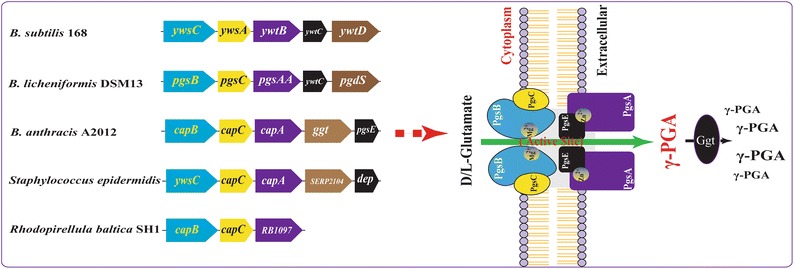
“Recently, pgsBCA was identified as the sole machinery responsible for polymerizing γ-PGA at the active site of the synthase complex (PgsBCA) in an ATP-dependent reaction [25].”
BackgroundKey role of poly-γ-dl-glutamic acid in immune evasion and virulence of Staphylococcus epidermidis
Kocianova, S., Vuong, C., Yao, Y., Voyich, J. M., Fischer, E. R., DeLeo, F. R., & Otto, M. (2005) · Journal of Clinical Investigation · doi:10.1172/jci200523523 · Cited by 230
Paclitaxel poliglumex (XYOTAX™, CT-2103): A macromolecular taxane
Singer, J. W. (2005) · Journal of Controlled Release · doi:10.1016/j.jconrel.2005.09.033 · Cited by 213
Microbial Degradation of Poly(amino acid)s
Obst, M., & Steinbüchel, A. (2004) · Biomacromolecules · doi:10.1021/bm049949u · Cited by 191 · cited 1×
“γ‐PGA degradation There are two enzymes capable of degrading γ-PGA in Bacilli: endo-γ-glutamyl peptidase and exo-γ-glutamyl peptidase [33].”
Background
Research works printed but not linked: 1
- 13. Perez-Camero G, Congregado F, Bou JJ, Munoz-Guerra S. Biosynthesis and ultrasonic degradation of bacterial poly(gamma-glutamic acid). Biotechnol Bioeng. 1999;63:110-5. · doi:10.1002/(sici)1097-0290(19990405)63:1<110::aid-bit11>3.0.co;2-t
Cited by
Bacterial biopolymers: from pathogenesis to advanced materials
Moradali, M. F., & Rehm, B. H. A. (2020) · Nature Reviews Microbiology · doi:10.1038/s41579-019-0313-3 · Cited by 459
Gu, Y., Xu, X., Wu, Y., Niu, T., Liu, Y., Li, J., Du, G., & Liu, L. (2018) · Metabolic Engineering · doi:10.1016/j.ymben.2018.05.006 · Cited by 218
Zhang, S., Wang, J., & Jiang, H. (2021) · Food Chemistry · doi:10.1016/j.foodchem.2020.128860 · Cited by 181
Das, S., Chakraborty, J., Chatterjee, S., & Kumar, H. (2018) · Environmental Science: Nano · doi:10.1039/c8en00799c · Cited by 164
Park, S.-B., Sung, M., Uyama, H., & Han, D. K. (2020) · Progress in Polymer Science · doi:10.1016/j.progpolymsci.2020.101341 · Cited by 153
Farjadian, F., Moghoofei, M., Mirkiani, S., Ghasemi, A., Rabiee, N., Hadifar, S., Beyzavi, A., Karimi, M., & Hamblin, M. R. (2018) · Biotechnology Advances · doi:10.1016/j.biotechadv.2018.02.016 · Cited by 129
“It is a biological resource, biodegradable, and even an edible substance that is produced primarily by B. subtilis bacteria (Bae et al., 2010; Luo et al., 2016).”
BackgroundJaiswal, D., Sengupta, A., Sohoni, S., Sengupta, S., Phadnavis, A. G., Pakrasi, H. B., & Wangikar, P. P. (2018) · Scientific Reports · doi:10.1038/s41598-018-34872-z · Cited by 120
Supramolecular Self‐Assembly in Living Cells
Abdelrahim, M., Lin, S., & Geng, J. (2022) · Angewandte Chemie International Edition · doi:10.1002/anie.202114267 · Cited by 119
Poly-γ-glutamic acid: Recent achievements, diverse applications and future perspectives
Wang, L., Chen, S., & Yu, B. (2021) · Trends in Food Science & Technology · doi:10.1016/j.tifs.2021.11.009 · Cited by 120
Recent Advances in Poly(α-L-glutamic acid)-Based Nanomaterials for Drug Delivery
Zhang, Y., Song, W., Lu, Y., Xu, Y., Wang, C., Yu, D., & Kim, I. (2022) · Biomolecules · doi:10.3390/biom12050636 · Cited by 108
Selective separation of chalcopyrite from pyrite with a novel non-hazardous biodegradable depressant
Khoso, S. A., Hu, Y., Lyu, F., Liu, R., & Sun, W. (2019) · Journal of Cleaner Production · doi:10.1016/j.jclepro.2019.06.008 · Cited by 101
Bio-synthesis of food additives and colorants-a growing trend in future food
Sun, L., Xin, F., & Alper, H. S. (2020) · Biotechnology Advances · doi:10.1016/j.biotechadv.2020.107694 · Cited by 111
Khalil, I., Burns, A., Radecka, I., Kowalczuk, M. M., Khalaf, T., Adamus, G., Johnston, B., & Khechara, M. P. (2017) · International Journal of Molecular Sciences · doi:10.3390/ijms18020313 · Cited by 106
“subtilis are characterised as safe microorganisms that, through cultivation, produce microbial γ-PGA [29,33,34].”
BackgroundNair, P., Navale, G. R., & Dharne, M. S. (2023) · Biomass Conversion and Biorefinery · doi:10.1007/s13399-021-01467-0 · Cited by 91
“However, the synthesis of D-glutamic acid requires the activity of racemases, which catalysis the formation of D-glutamic acid from L-glutamic acid in the process known as racemization [5].”
BackgroundInfluentialPoly (γ) glutamic acid: a unique microbial biopolymer with diverse commercial applicability
Elbanna, K., Alsulami, F. S., Neyaz, L. A., & Abulreesh, H. H. (2024) · Frontiers in Microbiology · doi:10.3389/fmicb.2024.1348411 · Cited by 104
“Microbial γ -PGA production is well developed, but low yield hinders its industrial usage (Luo et al., 2016).”
BackgroundInfluentialMicrobial production of poly-γ-glutamic acid
Sirisansaneeyakul, S., Cao, M., Kongklom, N., Chuensangjun, C., Shi, Z., & Chisti, Y. (2017) · World Journal of Microbiology and Biotechnology · doi:10.1007/s11274-017-2338-y · Cited by 92
“licheniformis are among the most promising native bacteria for commercial production of γ-PGA (Luo et al. 2016).”
BackgroundInfluentialCai, D., Chen, Y., He, P., Wang, S., Mo, F., Li, X., Wang, Q., Nomura, C. T., Wen, Z., Ma, X., et al. (2018) · Biotechnology and Bioengineering · doi:10.1002/bit.26774 · Cited by 90
“Some examples of γ‐PGA use that have been demonstrated include, as a material and drug carriers, food preservatives, metal ion chelating agents, highly water‐absorbable hydrogels, and fertilizer accelerators (Luo et al., 2016; Ogunleye et al., 2015).”
BackgroundGenetic and metabolic engineering for microbial production of poly-γ-glutamic acid
Cao, M., Feng, J., Sirisansaneeyakul, S., Song, C., & Chisti, Y. (2018) · Biotechnology Advances · doi:10.1016/j.biotechadv.2018.05.006 · Cited by 87
Cai, D., He, P., Lu, X., Zhu, C., Zhu, J., Zhan, Y., Wang, Q., Wen, Z., & Chen, S. (2017) · Scientific Reports · doi:10.1038/srep43404 · Cited by 95
Nanotechnology-Based Biopolymeric Oral Delivery Platforms for Advanced Cancer Treatment
Chivere, V. T., Kondiah, P. P. D., Choonara, Y. E., & Pillay, V. (2020) · Cancers · doi:10.3390/cancers12020522 · Cited by 92
“Additionally, PGA is non-toxic to both the environment and humans [22].”
BackgroundCovalent nano delivery systems for selective imaging and treatment of brain tumors
Ljubimova, J. Y., Sun, T., Mashouf, L. A., Ljubimov, A. V., Israel, L. L., Ljubimov, V. A., Falahatian, V., & Holler, E. (2017) · Advanced Drug Delivery Reviews · doi:10.1016/j.addr.2017.06.002 · Cited by 87
“The γ-PGA amide bonds are cleaved by extracellular peptidases of Bacillus subtilis and of other Bacillus strains [52-54].”
BackgroundMassaiu, I., Pasotti, L., Sonnenschein, N., Rama, E., Cavaletti, M., Magni, P., Calvio, C., & Herrgård, M. J. (2019) · Microbial Cell Factories · doi:10.1186/s12934-018-1052-2 · Cited by 77
“For its unique proprieties, different studies for improving the microbial production of γ-PGA were carried out [52, 53].”
BackgroundKorupalli, C., Pan, W., Yeh, C.-Y., Chen, P.-M., Mi, F., Tsai, H.-W., Chang, Y., Wei, H.-J., & Sung, H. (2019) · Biomaterials · doi:10.1016/j.biomaterials.2019.119268 · Cited by 76
Recent Advances in Microbial Synthesis of Poly-γ-Glutamic Acid: A Review
Li, D., Hou, L., Gao, Y., Tian, Z., Fan, B., Wang, F., & Li, S. (2022) · Foods · doi:10.3390/foods11050739 · Cited by 72
“In fact, engineered microorganisms have also been used as a suitable device for γ-PGA biosynthesis [1,11,54,55].”
BackgroundMethodInfluentialSelf-citationMa, H., Li, P., Liu, X., Li, C., Zhang, S., Wang, X., & Tao, X. (2022) · BMC Plant Biology · doi:10.1186/s12870-021-03392-w · Cited by 80
“Poly-γ-glutamic acid (γ-PGA) is a nontoxic, water-soluble, biodegradable and environmentally friendly biopolymer that is composed of D/L-glutamic acid monomers and is fermented by Bacillus subtilis [22, 23].”
Yang, J., Wang, Z., Liang, X., Wang, W., & Wang, S. (2024) · Advances in Colloid and Interface Science · doi:10.1016/j.cis.2024.103155 · Cited by 68
Tailor-made poly-γ-glutamic acid production
Halmschlag, B., Steurer, X., Putri, S. P., Fukusaki, E., & Blank, L. M. (2019) · Metabolic Engineering · doi:10.1016/j.ymben.2019.07.009 · Cited by 70
Engineering Corynebacterium glutamicum for the de novo biosynthesis of tailored poly-γ-glutamic acid
Xu, G., Zha, J., Cheng, H. W., Ibrahim, M. H. A., Yang, F., Dalton, H., Cao, R., Zhu, Y., Fang, J., Chi, K., et al. (2019) · Metabolic Engineering · doi:10.1016/j.ymben.2019.08.011 · Cited by 62
Wang, X., Dong, G., Liu, X., Zhang, S., Li, C., Lu, X., & Xia, T. (2020) · Journal of Hazardous Materials · doi:10.1016/j.jhazmat.2020.123146 · Cited by 61
Pandian, M., Reshma, G., Chandramouli, A., Másson, M., & Jayakumar, R. (2023) · European Polymer Journal · doi:10.1016/j.eurpolymj.2023.112390 · Cited by 60
Microbial Biopolymers: From Production to Environmental Applications—A Review
Sharma, M., Tellili, N., Kacem, I., & Rouissi, T. (2024) · Applied Sciences · doi:10.3390/app14125081 · Cited by 77
“Although the microbial fermentation of γ -PGA has been extensively researched, costs related to manufacturing, particularly those associated with substrates and processes, continue to be high [170].”
BackgroundA critical review on the application of green polymer-type scale inhibitors in mineral flotation
Yang, S., Zhang, H., Chi, R., Bao, S., Xu, Y., & Liu, C. (2023) · Minerals Engineering · doi:10.1016/j.mineng.2023.108436 · Cited by 52
Li, X., Tao, M., Pan, M., Liu, W., Gao, Z., Yuan, H., & Ma, C. (2022) · Journal of the European Ceramic Society · doi:10.1016/j.jeurceramsoc.2022.06.050 · Cited by 50
Poly-γ-glutamic acid nanoparticles as adjuvant and antigen carrier system for cancer vaccination
Mohammadzadeh, V., Rahiman, N., Cabral, H., Quader, S., Zirak, M. R., Yazdi, M. E. T., Jaafari, M. R., & Alavizadeh, S. H. (2023) · Journal of Controlled Release · doi:10.1016/j.jconrel.2023.08.049 · Cited by 50
Extracellular polymer substance synthesized by a halophilic bacterium Chromohalobacter canadensis 28
Radchenkova, N., Boyadzhieva, I., Atanasova, N., Poli, A., Finore, I., Donato, P. D., Nicolaus, B., PANCHEV, I. N., Kuncheva, M., & Kambourova, M. S. (2018) · Applied Microbiology and Biotechnology · doi:10.1007/s00253-018-8901-0 · Cited by 47
Bio-Based Polymeric Membranes: Development and Environmental Applications
Morales-Jiménez, M., Palacio, D. A., Palencia, M., Melendrez, M. F., & Rivas, B. L. (2023) · Membranes · doi:10.3390/membranes13070625 · Cited by 63
Bai, N., Zhang, H., Li, S., Zheng, X., Zhang, J., Sun, L., & Lv, W. (2019) · Applied Soil Ecology · doi:10.1016/j.apsoil.2019.103405 · Cited by 51
Self-citationBuilding a circular economy around poly(D/L-γ-glutamic acid)- a smart microbial biopolymer
Parati, M., Khalil, I., Tchuenbou-Magaia, F. L., Adamus, G., Mendrek, B., Hill, R. G., & Radecka, I. (2022) · Biotechnology Advances · doi:10.1016/j.biotechadv.2022.108049 · Cited by 49
Dabiré, Y., Somda, N. S., Somda, M. K., Compaoré, C. B., Mogmenga, I., Ezeogu, L. I., Traore, A. S., Ugwuanyi, J. O., & Dicko, M. H. (2022) · BMC Microbiology · doi:10.1186/s12866-022-02642-7 · Cited by 57
Biomedical Applications of Bacteria-Derived Polymers
Hinchliffe, J. D., Madappura, A. P., Mohamed, S. M. D. S., & Roy, I. (2021) · Polymers · doi:10.3390/polym13071081 · Cited by 45
“[373] documents the use of the polyglutamate synthase enzyme complex in an ATP-independent reaction, as well as the role of enzymes that convert one enantiomer to another (for example D, L racemization) during the formation of the γ-PGA chain.”
BackgroundSha, Y., Zhang, Y., Qiu, Y., Xu, Z., Li, S., Feng, X., Wang, M., & Xu, H. L. (2018) · Journal of Agricultural and Food Chemistry · doi:10.1021/acs.jafc.8b05485 · Cited by 42
Self-citationBacterially Produced, Nacre‐Inspired Composite Materials
Spiesz, E. M., Schmieden, D. T., Grande, A. M., Liang, K., Schwiedrzik, J. J., Natálio, F., Michler, J., García, S. J., Aubin‐Tam, M., & Meyer, A. S. (2019) · Small · doi:10.1002/smll.201805312 · Cited by 44
Drug delivery applications of poly-γ-glutamic acid
Balogun‐Agbaje, O. A., Odeniyi, O. A., & Odeniyi, M. A. (2021) · Future Journal of Pharmaceutical Sciences · doi:10.1186/s43094-021-00280-w · Cited by 52
“The properties and eventual fields of application of γPGA are determined by the molecular mass of the polymer [50].”
BackgroundAntioxidant and gastrointestinal cytoprotective effect of edible polypeptide poly-γ-glutamic acid
Lee, J. M., Jang, W. J., Park, S., & Kong, I. (2020) · International Journal of Biological Macromolecules · doi:10.1016/j.ijbiomac.2020.03.050 · Cited by 42
Zhan, Y., Sheng, B., Wang, H., Shi, J., Cai, D., Li, Y., Yang, S., Wen, Z., Ma, X., & Chen, S. (2018) · Biotechnology for Biofuels · doi:10.1186/s13068-018-1311-9 · Cited by 40
Effect of glucose on poly-γ-glutamic acid metabolism in Bacillus licheniformis
Yu, W., Chen, Z., Ye, H., Liu, P., Li, Z., Wang, Y., Li, Q., Yan, S., Zhong, C., & He, N. (2017) · Microbial Cell Factories · doi:10.1186/s12934-017-0642-8 · Cited by 39
“Polymers with different components and molecular weights are required for different purposes, and controlling the components and molecular weights has fundamental and practical importance for commercial development [16, 17].”
BackgroundStimulatory effects of amino acids on γ-polyglutamic acid production by Bacillus subtilis
Zhang, C., Wu, D., & Qiu, X. (2018) · Scientific Reports · doi:10.1038/s41598-018-36439-4 · Cited by 39
Zhang, C., Wu, D., & Ren, H. (2019) · Biochemical Engineering Journal · doi:10.1016/j.bej.2019.03.013 · Cited by 39
Ajayeoba, T. A., Dula, S., & Ijabadeniyi, O. A. (2019) · Frontiers in Microbiology · doi:10.3389/fmicb.2019.00771 · Cited by 42
Halmschlag, B., Putri, S. P., Fukusaki, E., & Blank, L. M. (2020) · Journal of Bioscience and Bioengineering · doi:10.1016/j.jbiosc.2020.04.011 · Cited by 40
Fang, J., Liu, Y., Huan, C., Xu, L., Ji, G., & Yan, Z. (2020) · Journal of Cleaner Production · doi:10.1016/j.jclepro.2020.120248 · Cited by 37
“Clickable” bacterial poly(γ-glutamic acid)
Cedrati, V., Pacini, A., Nitti, A., de Ilarduya, A. M., Muñoz‐Guerra, S., Sanyal, A., & Pasini, D. (2020) · Polymer Chemistry · doi:10.1039/d0py00843e · Cited by 38
Samarah, L. Z., Tran, T. H., Stacey, G. S., & Vértes, Á. (2021) · Angewandte Chemie International Edition · doi:10.1002/anie.202015251 · Cited by 45
Li, J., Chen, S., Fu, J., Jianchun, X., Ju, J., Yu, B., & Wang, L. (2022) · Microbial Cell Factories · doi:10.1186/s12934-022-01867-5 · Cited by 36
Tian, G., Wang, Q., Wei, X., Ma, X., & Chen, S. (2017) · Enzyme and Microbial Technology · doi:10.1016/j.enzmictec.2017.01.002 · Cited by 35
Liu, X., Wang, X., Xu, T., Ma, H., & Xia, T. (2022) · Environmental Science and Pollution Research · doi:10.1007/s11356-022-21842-2 · Cited by 37
Optimized production of gamma poly glutamic acid (γ-PGA) using sago
Mohanraj, R., Gnanamangai, B. M., Ramesh, K., Priya, P., Srisunmathi, R., Poornima, S., Ponmurugan, P., & Robinson, J. P. (2019) · Biocatalysis and Agricultural Biotechnology · doi:10.1016/j.bcab.2019.101413 · Cited by 34
Poly-γ-Glutamic Acid Production by Engineering a DegU Quorum-Sensing Circuit in Bacillus subtilis
Hu, L.-X., Zhao, M., Hu, W., Zhou, M., Huang, J.-B., Huang, X.-L., Gao, X.-L., Luo, Y., Li, C., Liu, K., et al. (2022) · ACS Synthetic Biology · doi:10.1021/acssynbio.2c00464 · Cited by 33
Self-citationKongklom, N., Shi, Z., Yusuf Chisti, B., & Sirisansaneeyakul, S. (2016) · Applied Biochemistry and Biotechnology · doi:10.1007/s12010-016-2376-1 · Cited by 32
Ma, S., Li, X., Ran, M., Ji, M., Gou, J., Yin, T., He, H., Wang, Y., Zhang, Y., & Tang, X. (2021) · International Journal of Pharmaceutics · doi:10.1016/j.ijpharm.2021.120577 · Cited by 31
Fast-growing cyanobacterial chassis for synthetic biology application
Li, Z., Li, S., Chen, L., Sun, T., & Zhang, W. (2023) · Critical Reviews in Biotechnology · doi:10.1080/07388551.2023.2166455 · Cited by 35
Self-citationSong, J., Zhu, J. W., Jiang, Y., Guo, Y., Liu, S., Qiao, Y., Du, Y., & Li, J. (2025) · Biochimica et Biophysica Acta (BBA) - Reviews on Cancer · doi:10.1016/j.bbcan.2025.189277 · Cited by 36
Self-citationSha, Y., Qiu, Y., Zhu, Y., Sun, T., Luo, Z., Gao, J., Feng, X., Li, S., & Xu, H. L. (2020) · ACS Synthetic Biology · doi:10.1021/acssynbio.0c00207 · Cited by 30
Self-citationSha, Y., Huang, Y., Zhu, Y., Sun, T., Luo, Z., Qiu, Y., Zhan, Y., Lei, P., Li, S., & Xu, H. L. (2020) · ACS Synthetic Biology · doi:10.1021/acssynbio.0c00080 · Cited by 32
Self-citationPoly(glutamic acid): From natto to drug delivery systems
Johnson, L. C., Akinmola, A. T., & Scholz, C. (2022) · Biocatalysis and Agricultural Biotechnology · doi:10.1016/j.bcab.2022.102292 · Cited by 31
Xiang, H., Huang, H., Sun‐Waterhouse, D., Hu, X., Li, L., Waterhouse, G. I. N., Tang, R., Xiong, J., & Cui, C. (2022) · Food Chemistry · doi:10.1016/j.foodchem.2022.132918 · Cited by 29
Sha, Y., Sun, T., Qiu, Y., Zhu, Y., Zhan, Y., Zhang, Y., Xu, Z., Li, S., Feng, X., & Xu, H. L. (2019) · Journal of Agricultural and Food Chemistry · doi:10.1021/acs.jafc.9b01755 · Cited by 28
Self-citationAzarhava, H., Bajestani, M. I., Jafari, A., Vakilchap, F., & Mousavi, S. M. (2019) · International Journal of Biological Macromolecules · doi:10.1016/j.ijbiomac.2019.10.090 · Cited by 28
Fang, J., Huan, C., Liu, Y., Xu, L., & Yan, Z. (2019) · Waste Management · doi:10.1016/j.wasman.2019.12.016 · Cited by 28
Ma, H., Li, P., Xiao, N., & Xia, T. (2022) · BMC Plant Biology · doi:10.1186/s12870-022-03908-y · Cited by 31
“Poly-γ-glutamic acid (γ-PGA) is a nontoxic, water-soluble, biodegradable and environmentally friendly biopolymer, composed of D/L-glutamic acid monomers and produced through Bacillus subtilis-mediated fermentation [22, 23].”
BackgroundSyeda, H. I., Muthukumaran, S., & Baskaran, K. (2023) · Journal of Water Process Engineering · doi:10.1016/j.jwpe.2023.104367 · Cited by 28
Jang, W. J., Choi, S.-Y., Lee, J. M., Lee, G. H., Hasan, M. T., & Kong, I. (2019) · LWT · doi:10.1016/j.lwt.2019.05.120 · Cited by 28
Improvement of glycerol catabolism in Bacillus licheniformis for production of poly-γ-glutamic acid
Zhan, Y., Zhu, C., Sheng, B., Cai, D., Wang, Q., Wen, Z., & Chen, S. (2017) · Applied Microbiology and Biotechnology · doi:10.1007/s00253-017-8459-2 · Cited by 26
Poly(Glutamic Acid)-Engineered Nanoplatforms for Enhanced Cancer Phototherapy
Zhang, Y., Lu, Y., Li, Y., Xu, Y., & Song, W. (2023) · Current Drug Delivery · doi:10.2174/1567201820666230116164511 · Cited by 25
Biopolymer and polymer precursor production by microorganisms: applications and future prospects
Saharan, B. S., Kamal, N., Badoni, P., Kumar, R., Saini, M., Kumar, D., Sharma, D., Tyagi, S., Ranga, P., Parshad, J., et al. (2023) · Journal of Chemical Technology & Biotechnology · doi:10.1002/jctb.7524 · Cited by 32
Liu, H., Yan, Q., Wang, Y., Li, Y., & Jiang, Z. (2022) · Food Bioscience · doi:10.1016/j.fbio.2022.101575 · Cited by 25
Cristiano‐Fajardo, S. A., Flores, C., Flores, N., Tinoco‐Valencia, R., Serrano‐Carreón, L., & Galindo, E. (2019) · Journal of Biotechnology · doi:10.1016/j.jbiotec.2019.04.027 · Cited by 27
Quach, N. T., Vu, T. H. N., Nguyen, T. T. A., Hoang, H., Hồ, P.-H., Chu‐Ky, S., Nguyen, L.-H., Nguyen, H. V., Thanh, T. T. T., Nguyen, N. A., et al. (2022) · World Journal of Microbiology and Biotechnology · doi:10.1007/s11274-022-03364-8 · Cited by 24
Lee, T.-Y., Lee, Y.-S., Yeh, R.-H., Chen, K.-H., & Chen, K.-L. (2022) · Poultry Science · doi:10.1016/j.psj.2022.102027 · Cited by 28
“amyloliquefaciens can all produce g-PGA (Chettri et al., 2016; Luo et al., 2016), and the higher g-PGA content, the higher viscosity of the fermented product (Cai et al.”
BackgroundCytokine Therapy Combined with Nanomaterials Participates in Cancer Immunotherapy
Lian, H., Ma, S., Zhao, D., Zhao, W., Cui, Y., Hua, Y., & Zhang, Z. (2022) · Pharmaceutics · doi:10.3390/pharmaceutics14122606 · Cited by 26
Cai, D., Hu, S., Chen, Y., Liu, L., Yang, S., Ma, X., & Chen, S. (2018) · Applied Biochemistry and Biotechnology · doi:10.1007/s12010-018-2693-7 · Cited by 23
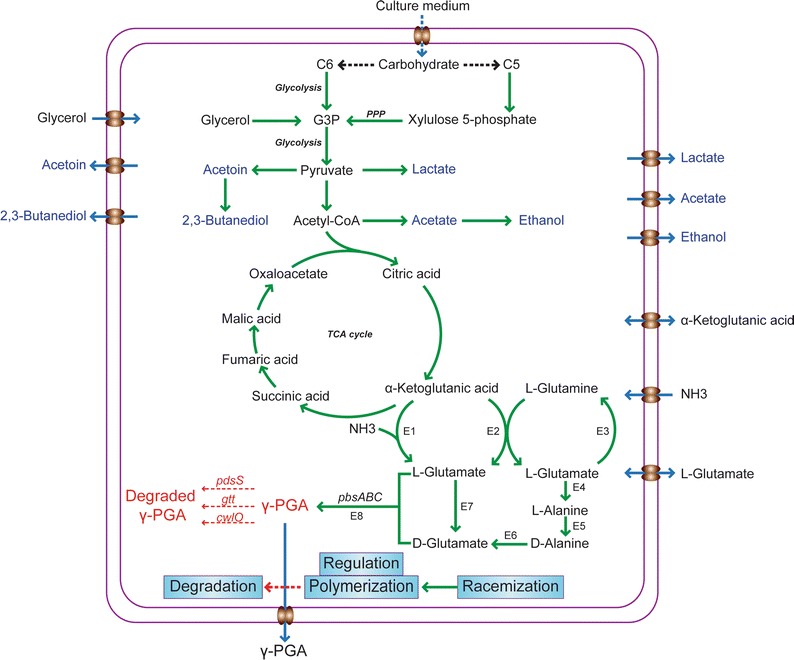
“Glutamic acid serves as precursor for γ-PGA synthesis, and γ-PGA synthetase PgsBCAA or CapBCAA facilitates the production of γ-PGA from glutamic acid under ATP consumption [2, 3].”
BackgroundPoly-l-gamma-glutamic acid production by recombinant Bacillus subtilis without pgsA gene
Sawada, K., Araki, H., Takimura, Y., Masuda, K., Kageyama, Y., Ozaki, K., & Hagihara, H. (2018) · AMB Express · doi:10.1186/s13568-018-0636-x · Cited by 22
Ren, D.-X., Chen, P., Zheng, P., & Xu, Z. (2019) · Colloids and Surfaces A Physicochemical and Engineering Aspects · doi:10.1016/j.colsurfa.2019.06.002 · Cited by 23
Gu, Y., Yan, W., Chen, Y., Liu, S., Sun, L., Zhang, Z., Lei, P., Wang, R., Li, S., Banerjee, S., et al. (2025) · The ISME Journal · doi:10.1093/ismejo/wraf040 · Cited by 40
“). produced by Bacillus species [ 27, 28], and Bacillus species also frequently contain genes encoding a group of enzymes associated with γ -PGA degradation such as γ -”
Self-citationDL-endopeptidases function as both cell wall hydrolases and poly-γ-glutamic acid hydrolases
Fukushima, T., Uchida, N., Ide, M., Kodama, T., & Sekiguchi, J. (2018) · Microbiology · doi:10.1099/mic.0.000609 · Cited by 22
“The polymers also contribute by storing nutrients and minerals [3].”
BackgroundOjima, Y., Kobayashi, J., Doi, T., & Azuma, M. (2019) · Journal of Biotechnology · doi:10.1016/j.jbiotec.2019.08.003 · Cited by 24
“Moreover, the detailed mechanism of γ-PGA synthesis, secretion, and degradation have been clarified in recent years (Luo et al. 2016).”
BackgroundLi, Y., Wang, J., Liu, N., Ke, L., Zhao, X., & Qi, G. (2020) · Biotechnology for Biofuels · doi:10.1186/s13068-020-01818-5 · Cited by 22
Zhang, Z., He, P., Cai, D., & Chen, S. (2022) · World Journal of Microbiology and Biotechnology · doi:10.1007/s11274-022-03390-6 · Cited by 22
Revolutionizing diabetic wound healing: The power of microneedles
Liang, C., Wang, R., He, T., Chen, D., Zhang, G., Yin, X., Wang, H., Xie, J., Li, Y., & Chen, Y. (2023) · Chinese Journal of Plastic and Reconstructive Surgery · doi:10.1016/j.cjprs.2023.12.004 · Cited by 22
Zhang, M., Yang, J., Ding, C.-C., Huang, L., & Chen, L. (2017) · Reactive and Functional Polymers · doi:10.1016/j.reactfunctpolym.2017.11.012 · Cited by 21
Qiu, Y., Zhu, Y., Zhan, Y., Zhang, Y., Sha, Y., Zhan, Y., Xu, Z., Li, S., Feng, X., & Xu, H. (2019) · Biotechnology for Biofuels · doi:10.1186/s13068-019-1485-9 · Cited by 21
Self-citationZhang, Q., Chen, Y., Gao, L., Chen, J., Ma, X., Cai, D., Wang, D., & Chen, S. (2022) · Synthetic and Systems Biotechnology · doi:10.1016/j.synbio.2022.01.006 · Cited by 20
Zhang, C., Wu, D., Jia, J., & Hong-qi, Y. (2017) · Waste and Biomass Valorization · doi:10.1007/s12649-017-0100-1 · Cited by 20
Khoso, S. A., Gao, Z., Meng, X., Hu, Y., & Sun, W. (2019) · Minerals · doi:10.3390/min9090510 · Cited by 20
Manika, V., Devi, P. B., Singh, S. P., Reddy, G. B., Kavitake, D., & Shetty, P. H. (2025) · Fermentation · doi:10.3390/fermentation11040208 · Cited by 21
“Although α -PGA can be synthesized chemically and through biotransformation, these approaches are neither economic nor ecological [10].”
InfluentialBai, N., He, Y., Zhang, H., Zheng, X., Zeng, R., Li, Y., Li, S., & Lv, W. (2022) · International Journal of Environmental Research and Public Health · doi:10.3390/ijerph19137630 · Cited by 20
“Metal ions, such as Fe3+, K+, and Mn2+ have also been reported to influence synthesis and accumulation of γ-PGA [34,35].”
BackgroundSelf-citationAli, A. A. M., Momin, B. M., & Ghogare, P. (2019) · Preparative Biochemistry & Biotechnology · doi:10.1080/10826068.2019.1706560 · Cited by 19
Hasannia, M., Lamei, K., Abnous, K., Taghdisi, S. M., Nekooei, S., Nekooei, N., Ramezani, M., & Alibolandi, M. (2022) · Nanomedicine Nanotechnology Biology and Medicine · doi:10.1016/j.nano.2022.102645 · Cited by 22
Microbial Conversion of Inulin to Valuable Products: The Biorefinery Concept
Tsigoriyna, L., Stefanov, S. M., Armenova, N., Petrova, P. M., & Petrov, K. K. (2024) · Fermentation · doi:10.3390/fermentation10120640 · Cited by 20
Jiang, S., Fan, L., Zhao, M., Qiu, Y., & Zhao, L. (2019) · Applied Biochemistry and Biotechnology · doi:10.1007/s12010-019-03004-2 · Cited by 18
Self-citation
Metadata
- Authors
- Luo, Z., Guo, Y., Liu, J., Qiu, H., Zhao, M., Zou, W., & Li, S.
- Affiliations
- Guangxi University (CN)
- Guangxi Academy of Sciences (CN)
- Sichuan University of Science and Engineering (CN)
- Corresponding author
- Zou, Wei
- Li, Shubo
- Venue
- Biotechnology for Biofuels
- Published
- 2016-06-29
- Volume
- 9
- Issue
- 1
- Pages
- 134-134
- ISSN
- 1754-6834 (ISSN-L)
- PMC
- PMC4928254
- OpenAlex
- W2468943383
- Cited by
- 274
- References
- 107
- Citations by year
- 2026: 16 · 2025: 27 · 2024: 35 · 2023: 33 · 2022: 48 · 2021: 21 · 2020: 23 · 2019: 32 · 2018: 23 · 2017: 14 · 2016: 2
- FWCI
- 2.14
- Type
- journal article
- Language
- en
- Open access
- gold
- doi.org
- Licence
- cc-by
- Locations
- Biotechnology for Biofuels (publishedVersion, cc-by)
- PubMed Central (publishedVersion, cc-by)
- PubMed (publishedVersion)
- Funders
- Fund of Guangxi Academy of Sciences (15YJ22SW05)
- Bagui Scholars Distinguished Professor” Special Project
- the Talents introduction program of Sichuan University of Science and Engineering (No. 2013RC12)
- Topics
- Life Sciences › Immunology and Microbiology › Applied Microbiology and Biotechnology › Biopolymer Synthesis and Applications
- Physical Sciences › Materials Science › Biomaterials › biodegradable polymer synthesis and properties
- Life Sciences › Biochemistry, Genetics and Molecular Biology › Molecular Biology › Microbial Metabolic Engineering and Bioproduction
- Keywords
- poly-γ-glutamic acid, microbial production, biopolymer production, genetic engineering, fermentation medium optimization, downstream processing, biodegradable polymers, bio-based chemicals, production cost reduction
About these checks
Registry, retraction, Cites and statistics results are computed, not judged, with one exception: a printed reference that no index lists is read once by a model before it counts as a citation error. Claims are extracted by a model and kept only when their quote appears verbatim in the text; each cited source is then checked, with a model’s help, for whether it says what the claim relies on. Those verdicts can be wrong — read the claim’s quote and the cited source before relying on one.
Statistics and arithmetic are recomputed, not judged.
Confidence bands are shown only for fields calibrated on our annotated test set. None is calibrated yet, so no band is shown.
What counts as a claim ›How we measure confidence ›How we check this ›
Are you an author, or do you see a problem with this page? Request a review
Data sources
Bibliographic data: Semantic Scholar, OpenAlex, Crossref.
Contains information from the Semantic Scholar Academic Graph Datasets, made available under the ODC Attribution License (ODC-BY 1.0).
Semantic Scholar’s data is described in: Kinney, R., et al. (2023). The Semantic Scholar Open Data Platform. arXiv:2301.10140.
