

Recent advances in lignin valorization with bacterial cultures: microorganisms, metabolic pathways, and bio-products
Open accessThe DOI matches its Crossref record; 155 of the 155 references it cites were found in a registry or an index.
Abstract
Lignin is the most abundant aromatic substrate on Earth and its valorization technologies are still under developed. Depolymerization and fragmentation are the predominant preparatory strategies for valorization of lignin to chemicals and fuels. However, due to the structural heterogeneity of lignin, depolymerization and fragmentation typically result in diverse product species, which require extensive separation and purification procedures to obtain target products. For lignin valorization, bacterial-based systems have attracted increasing attention because of their diverse metabolisms, which can be used to funnel multiple lignin-based compounds into specific target products. Here, recent advances in lignin valorization using bacteria are critically reviewed, including lignin-degrading bacteria that are able to degrade lignin and use lignin-associated aromatics, various associated metabolic pathways, and application of bacterial cultures for lignin valorization. This review will provide insight into the recent breakthroughs and future trends of lignin valorization based on bacterial systems.
Overview
The claims and statistics of this paper haven’t been checked yet.
Free: it reads the open-access text and checks the first 5 claims that cite a source we can check. Create a free account to check every claim.
Integrity signals
Registry
Cites
Statistics
Figures
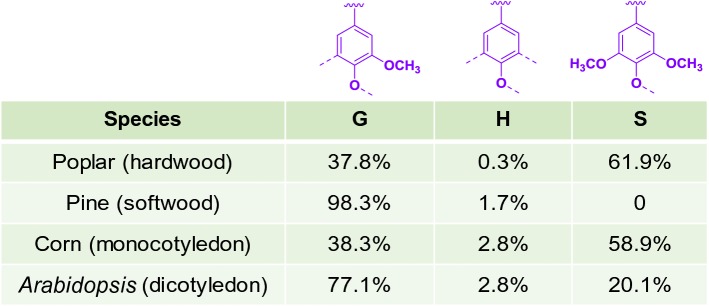
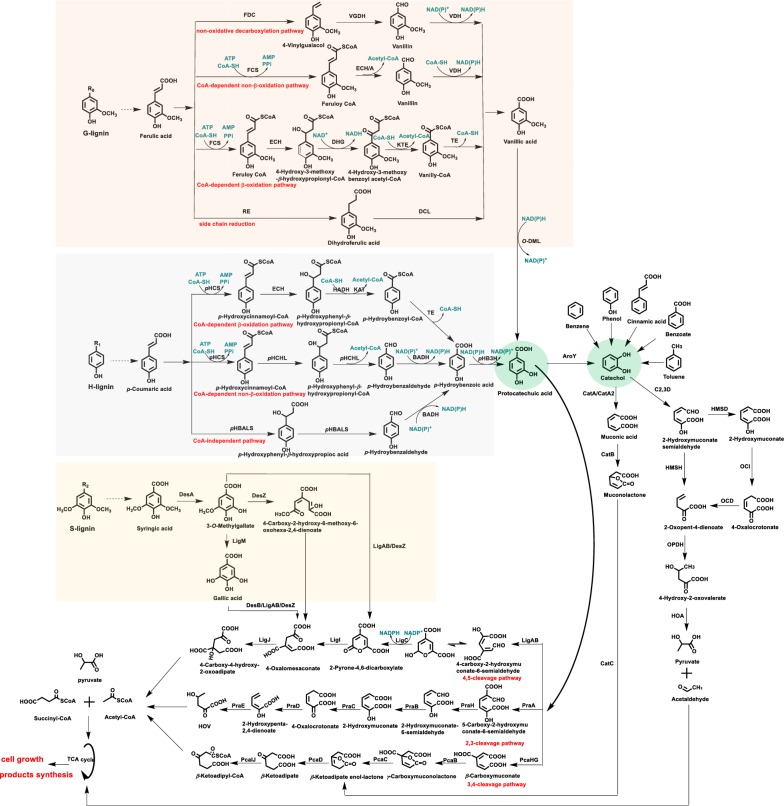
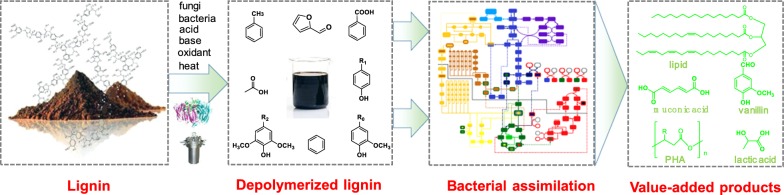
Verification
Claims the paper makes
The claims and statistics of this paper haven’t been checked yet.
Free: it reads the open-access text and checks the first 5 claims that cite a source we can check. Create a free account to check every claim.
Claims other papers make about this one
Each is checked against this paper’s own text: does it say what the citing paper says it does?
The source backs part of the claim, not all of it — or backs it for a different population, condition or comparison.
In the citing paper
“Lignin generated from bio-treatments (e.g., using cellular ligninolytic enzymes like laccase and peroxidases) can obtain certain structural modifications, of which the mechanism is based on the lignin structure oxidation and degradation (e.g., lignin side chains oxidation, demethoxylation, demethylation, and some linkages cleavage) [246–248].”
From A review on lignin pyrolysis: pyrolytic behavior, mechanism, and relevant upgrading for improving process efficiency (2022) · cites this paper as [248]
Experimental — accuracy not yet measured
Self-check
Percentages, sums and reported differences re-computed from the paper’s own numbers.
The self-check needs the paper’s full text.
Citations
Cites
Lignin Valorization: Improving Lignin Processing in the Biorefinery
Ragauskas, A. J., Beckham, G. T., Biddy, M. J., Chandra, R., Chen, F., Davis, M. F., Davison, B. H., Dixon, R. A., Gilna, P., Keller, M., et al. (2014) · Science · doi:10.1126/science.1246843 · Cited by 4,125
Catalytic Transformation of Lignin for the Production of Chemicals and Fuels
Li, C., Zhao, X., Wang, A., Huber, G. W., & Zhang, T. (2015) · Chemical Reviews · doi:10.1021/acs.chemrev.5b00155 · Cited by 2,951
Lignin Biosynthesis and Structure
Vanholme, R., Demedts, B., Morreel, K., Ralph, J., & Boerjan, W. (2010) · Plant Physiology · doi:10.1104/pp.110.155119 · Cited by 2,664
Chemicals from lignin: an interplay of lignocellulose fractionation, depolymerisation, and upgrading
Schutyser, W., Renders, T., Van den Bosch, S., Koelewijn, S.-F., Beckham, G. T., & Sels, B. F. (2018) · Chemical Society Reviews · doi:10.1039/c7cs00566k · Cited by 2,552 · cited 1×
“Biological conversion is a commendable supplement for the thermo-chemical lignin valorization route because some bacteria can funnel lignin fragments and other fermentation residuals into target chemicals [5, 11, 51, 94, 95].”
BackgroundJönsson, L. J., & Martín, C. (2016) · Bioresource Technology · doi:10.1016/j.biortech.2015.10.009 · Cited by 2,147
Paving the Way for Lignin Valorisation: Recent Advances in Bioengineering, Biorefining and Catalysis
Rinaldi, R., Jastrzebski, R., Clough, M. T., Ralph, J., Kennema, M., Bruijnincx, P. C. A., & Weckhuysen, B. M. (2016) · Angewandte Chemie International Edition · doi:10.1002/anie.201510351 · Cited by 2,138
Lignins: Natural polymers from oxidative coupling of 4-hydroxyphenyl- propanoids
Ralph, J., Lundquist, K., Brunow, G., Lu, F., Kim, H., Schatz, P. F., Marita, J. M., Hatfield, R. D., Ralph, S. A., Christensen, J. H., et al. (2004) · Phytochemistry Reviews · doi:10.1023/b:phyt.0000047809.65444.a4 · Cited by 1,660
Pathways for degradation of lignin in bacteria and fungi
Bugg, T. D. H., Ahmad, M., Hardiman, E. M., & Rahmanpour, R. (2011) · Natural Product Reports · doi:10.1039/c1np00042j · Cited by 1,018
Safety assessment of esters of p-hydroxybenzoic acid (parabens)
Soni, M. G., Carabin, I. G., & Burdock, G. A. (2005) · Food and Chemical Toxicology · doi:10.1016/j.fct.2005.01.020 · Cited by 1,012
THE β-KETOADIPATE PATHWAY AND THE BIOLOGY OF SELF-IDENTITY
Harwood, C. S., & Parales, R. E. (1996) · Annual Review of Microbiology · doi:10.1146/annurev.micro.50.1.553 · Cited by 1,004
Cited by
Items 101–200 of 276
Pham, L. T. M., Deng, K., Northen, T. R., Singer, S. W., Adams, P. D., Simmons, B. A., & Sale, K. L. (2021) · Biotechnology for Biofuels · doi:10.1186/s13068-021-01953-7 · Cited by 31
Liao, H., Xu, Y. Q., & Zhang, J. (2021) · Bioresource Technology · doi:10.1016/j.biortech.2021.125680 · Cited by 31
Microbial valorization of lignin toward coumarins: Challenges and perspectives
Liu, R.-Y., Lan, H.-N., Liu, Z., Li, B., & Yuan, Y. (2023) · Renewable and Sustainable Energy Reviews · doi:10.1016/j.rser.2023.114205 · Cited by 30
Dai, M., Zhang, Y., Zhang, L., Tian, Y., Liu, G., Zhao, J., Liu, Y., Zhu, S., & Ye, Z. (2022) · Composites Part A Applied Science and Manufacturing · doi:10.1016/j.compositesa.2022.106916 · Cited by 33
Adaptive laboratory evolution boosts Yarrowia lipolytica tolerance to vanillic acid
Sha, Y., Zhou, L., Wang, Z., Ding, Y., Lu, M., Xu, Z., Zhai, R., & Jin, M. (2023) · Journal of Biotechnology · doi:10.1016/j.jbiotec.2023.03.006 · Cited by 30
Self-citationPolymer principles behind solubilizing lignin with organic cosolvents for bioenergy
Vural, D., Smith, J. C., & Petridis, L. (2020) · Green Chemistry · doi:10.1039/d0gc00630k · Cited by 31
Manfrão-Netto, J. H. C., Lund, F. K., Muratovska, N., Larsson, E. M., Parachin, N. S., & Carlquist, M. (2021) · Microbial Biotechnology · doi:10.1111/1751-7915.13764 · Cited by 29
“Pseudomonas putida is a gram-negative bacterium with high tolerance to aromatic compounds, and it carries several well-characterized funnelling pathways for the assimilation of various aromatics (Brink et al., 2019; Xu et al., 2019).”
BackgroundZhao, J., Yang, Y., Zhang, M., & Wang, D. (2021) · Bioresource Technology · doi:10.1016/j.biortech.2021.125389 · Cited by 32
Engineering isoprenoids production in metabolically versatile microbial host Pseudomonas putida
Wang, X., Baidoo, E. E. K., Kakumanu, R. D., Xie, S., Mukhopadhyay, A., & Lee, T. S. (2022) · Biotechnology for Biofuels and Bioproducts · doi:10.1186/s13068-022-02235-6 · Cited by 29
Biswas, B., Kumar, A., Krishna, B. B., Baltrušaitis, J., Adhikari, S., & Bhaskar, T. (2023) · Energy & Fuels · doi:10.1021/acs.energyfuels.2c04193 · Cited by 29
Progress in developing methods for lignin depolymerization and elucidating the associated mechanisms
Yang, C., Qin, J., Sun, S., Gao, D., Fang, Y., Chen, G., Tian, C., Bao, C., & Zhang, S. (2024) · European Polymer Journal · doi:10.1016/j.eurpolymj.2024.112995 · Cited by 32
Shinoda, E., Takahashi, K., Abe, N., Kamimura, N., Sonoki, T., & Masai, E. (2019) · Journal of Industrial Microbiology & Biotechnology · doi:10.1007/s10295-019-02190-6 · Cited by 27
Recent advances in biotechnology for marine enzymes and molecules
Zhang, J., Jiang, L., Chen, X., Lv, K., Basiony, M., Zhu, G., Karthik, L., Ouyang, L., Zhang, L., & Liu, X. (2021) · Current Opinion in Biotechnology · doi:10.1016/j.copbio.2021.05.009 · Cited by 32
Microbial Upcycling of Depolymerized Lignin into Value-Added Chemicals
Zhang, Y., Cheng, C., Fu, B., Long, T., He, N., Fan, J., Xue, Z., Chen, A., & Yuan, J. (2023) · BioDesign Research · doi:10.34133/bdr.0027 · Cited by 27
“Additionally, lignin-derived compounds such as benzene, phenol, toluene, benzoate, and cinnamic acid can also be converted to ccMA through catechol-mediated reactions [3].”
BackgroundRecent advances in lignin from forest residue for hydrogel application
Bakshi, M. I., Nazir, S., Restu, W. K., Rajamanickam, R., Selvasembian, R., Hua, L. S., Antov, P., Yadav, K. K., Abbas, M. A. E., Farobie, O., et al. (2024) · Biomass Conversion and Biorefinery · doi:10.1007/s13399-024-05973-9 · Cited by 30
“Meanwhile, in microbial degradation, bacteria or lignin-degrading fungi can break down lignin into smaller and simpler compounds [50].”
Suhartini, S., Hidayat, N., Rohma, N. A., Paul, R., Pangestuti, M. B., Utami, R. N., Nurika, I., & Melville, L. (2022) · International Journal of Sustainable Energy · doi:10.1080/14786451.2022.2130923 · Cited by 37
“most factor limiting the biodegradability of lignocellulosic biomass (Xu et al. 2019).”
BackgroundLignin Depolymerization for Its Valorization
Chettri, D., Ahmed, S., Malik, A. A., & Verma, A. K. (2023) · BioEnergy Research · doi:10.1007/s12155-022-10561-8 · Cited by 31
Enzymatic treatment improves fast pyrolysis product selectivity of softwood and hardwood lignin
Wang, L., Ni, H., Zhang, J., Shi, Q., Zhang, R., Yu, H., & Li, M. (2020) · Science of The Total Environment · doi:10.1016/j.scitotenv.2020.137241 · Cited by 25
Zhao, J., Yang, Y., Zhang, M., & Wang, D. (2021) · Bioresource Technology · doi:10.1016/j.biortech.2021.125605 · Cited by 27
Lignin to polyhydroxyalkanoate bioprocessing by novel strain of Pseudomonas monteilii
Unrean, P., Napathorn, S. C., Tee, K. L., Wong, T. S., & Champreda, V. (2021) · Biomass Conversion and Biorefinery · doi:10.1007/s13399-021-01525-7 · Cited by 25
Sonkar, R. M., Gade, P. S., Bokade, V. V., Mudliar, S. N., & Bhatt, P. (2021) · Bioresource Technology · doi:10.1016/j.biortech.2021.125559 · Cited by 24
Deciphering the metabolic distribution of vanillin in Rhodococcus opacus during lignin valorization
Zhou, H., Xu, Z., Cai, C., Li, J., & Jin, M. (2021) · Bioresource Technology · doi:10.1016/j.biortech.2021.126348 · Cited by 24
Self-citationLigninolytic Microbes and Their Role in Effluent Management of Pulp and Paper Industry
Yadav, K. K., Patil, P. B., Kumaraswamy, H. H., & Kashyap, B. K. (2020) · Springer eBooks · doi:10.1007/978-981-33-4347-4_13 · Cited by 23
Rath, S., Paul, M., Behera, H. K., & Thatoi, H. (2022) · Journal of Genetic Engineering and Biotechnology · doi:10.1186/s43141-021-00284-2 · Cited by 23
“On the other hand, such adverse effect can overcome by using biological lignin depolymerization method that has now fascinated a growing consideration on lignin valorization [7].”
BackgroundMethodLi, J., Duan, L., Wu, Y., Ahmad, M., Yin, L., Luo, X., Wang, X., Fang, B., Li, S., Huang, L., et al. (2022) · Chemosphere · doi:10.1016/j.chemosphere.2022.133995 · Cited by 23
Evaluating lignin degradation under limited oxygen conditions by bacterial isolates from forest soil
Sumranwanich, T., Amosu, E., Chankhamhaengdecha, S., Phetruen, T., Loktumraks, W., Ounjai, P., & Harnvoravongchai, P. (2024) · Scientific Reports · doi:10.1038/s41598-024-64237-8 · Cited by 30
“Many of the compounds discovered under oxygen limited conditions are valuable in the food, flavour and aroma industries as well as in both pharmaceutical and cosmetic sectors 12 .”
BackgroundLignin extraction and valorization using heterogeneous transition metal catalysts
Liu, B., & Abu‐Omar, M. M. (2021) · Advances in inorganic chemistry · doi:10.1016/bs.adioch.2021.02.001 · Cited by 30
Diao, J., Carr, R. R., & Moon, T. S. (2022) · Communications Biology · doi:10.1038/s42003-022-04069-2 · Cited by 23
Whole-Cell Bioconversion of Renewable Biomasses-Related Aromatics to cis,cis-Muconic Acid
Molinari, F., Pollegioni, L., & Rosini, E. (2023) · ACS Sustainable Chemistry & Engineering · doi:10.1021/acssuschemeng.2c06534 · Cited by 25
Microbial bioprospecting for lignocellulose degradation at a unique Greek environment
Georgiadou, D. N., Avramidis, P., Ioannou, E., & Hatzinikolaou, D. G. (2021) · Heliyon · doi:10.1016/j.heliyon.2021.e07122 · Cited by 22
Chen, Z., Wang, Y., Cheng, H., & Zhou, H. (2022) · Journal of Chemical Technology & Biotechnology · doi:10.1002/jctb.7241 · Cited by 23
Sustainable biosynthetic pathways to value-added bioproducts from hydroxycinnamic acids
Tramontina, R., Ciancaglini, I., Román, E. K. B., Chacón, M. G., Côrrea, T. L. R., Dixon, N., Bugg, T. D. H., & Squina, F. M. (2023) · Applied Microbiology and Biotechnology · doi:10.1007/s00253-023-12571-8 · Cited by 22
“These advancements will make lignin valorization strategies accessible in the context of a biorefinery platform, and several pathways were summarized in excellent previous studies (Liu et al. 2019; Zhang et al. 2019; Xu et al. 2019; Tramontina et al. 2020a).”
BackgroundUrban sewage treatment odor gas release characteristics and regional differences
Zuoyun, L. (2020) · Environmental Technology & Innovation · doi:10.1016/j.eti.2020.101190 · Cited by 20
Bacterial valorization of pulp and paper industry process streams and waste
Brown, D. M., Pawlak, J. J., & Grunden, A. M. (2021) · Applied Microbiology and Biotechnology · doi:10.1007/s00253-021-11107-2 · Cited by 20
“3 Lignin phenylpropane catabolic pathways, reprinted from original publisher BioMed Central (Xu et al. 2019) 1354 Appl Microbiol Biotechnol (2021) 105:1345–1363”
BackgroundMakaveckas, T., Šimonėlienė, A., & Šipailaitė-Ramoškienė, V. (2025) · Sustainability · doi:10.3390/su17219913 · Cited by 26
“Recent geopolitical and economic developments, especially energy price fluctuations, have further shaped the trade-off between burning lignin for energy versus valorizing it as a renewable resource for chemicals and advanced materials [22,105].”
Optimizing lignin extraction from Kraft black liquor using protic Ionic liquids
Bagh, F. S. G., Ray, S., & Seth, R. (2021) · Biomass and Bioenergy · doi:10.1016/j.biombioe.2021.106249 · Cited by 22
The SlHB8 Acts as a Negative Regulator in Stem Development and Lignin Biosynthesis
Liu, X., Wu, C., Su, D., Yang, Y., Xian, Z., Yu, C., Li, Z., Hao, Y., & Chen, R. (2021) · International Journal of Molecular Sciences · doi:10.3390/ijms222413343 · Cited by 19
Recent advances of integrated microfluidic systems for fungal and bacterial analysis
Shi, H., Wang, Y., Zhang, Z., Song, Y. Q., Huang, X., Pan, D., Wang, Z., Huang, Q., & Zhu, Z. (2022) · TrAC Trends in Analytical Chemistry · doi:10.1016/j.trac.2022.116850 · Cited by 20
Microbe assisted depolymerization of lignin rich waste and its conversion to gaseous biofuel
Radhika, N. L., Sachdeva, S., & Kumar, M. (2021) · Journal of Environmental Management · doi:10.1016/j.jenvman.2021.113684 · Cited by 22
Martim, D. B., Brilhante, A. J. V. C., Lima, A. R., Paixão, D. A. A., Martins, J., Kashiwagi, F. M., Wolf, L. D., Costa, M. S., de Menezes, F. F., Prata, R., et al. (2024) · Nature Communications · doi:10.1038/s41467-024-52367-6 · Cited by 18
“8a) 7,10 .”
Fungal bioconversion of lignin-derived aromatics: Pathways, enzymes, and biotechnological potential
Li, J., Pi, C., Zhang, J., Jiang, F., Bao, T., Gao, L., & Wu, X. (2025) · Biotechnology Advances · doi:10.1016/j.biotechadv.2025.108624 · Cited by 19
Hamann, P. R. V., Gomes, T. C., Silva, L. D. M. B., & Noronha, E. F. (2020) · Process Biochemistry · doi:10.1016/j.procbio.2020.02.034 · Cited by 18
Ramesh, S., Purnima, D., & Pamidipati, S. (2021) · Biomass Conversion and Biorefinery · doi:10.1007/s13399-021-01306-2 · Cited by 19
Gao, J., Ali, M. Y., Kamaraj, Y., Zhang, Z., Weike, L., Sethupathy, S., & Zhu, D. (2024) · Microbiological Research · doi:10.1016/j.micres.2024.127835 · Cited by 23
Li, D., Wang, F., Zheng, X., Zheng, Y., Pan, X., Li, J., Ma, X., Yin, F., & Wang, Q. (2024) · Biotechnology Advances · doi:10.1016/j.biotechadv.2024.108512 · Cited by 22
Characterization and antioxidant activity of differentiated fractionation lignin from corn stover
Yuan, S., Li, B., Chang, L., Guo, H., Ding, L., Hou, J., Zhang, S., Zang, C., Zheng, L. T., Yang, W., et al. (2025) · International Journal of Biological Macromolecules · doi:10.1016/j.ijbiomac.2025.140538 · Cited by 19
Aromatic Dimer Dehydrogenases from Novosphingobium aromaticivorans Reduce Monoaromatic Diketones
Linz, A. M., Ma, Y., Perez, J. M., Myers, K. S., Kontur, W. S., Noguera, D. R., & Donohue, T. J. (2021) · Applied and Environmental Microbiology · doi:10.1128/aem.01742-21 · Cited by 19
Effective Biotransformation of Variety of Guaiacyl Lignin Monomers Into Vanillin by Bacillus pumilus
Zuo, K., Li, H., Chen, J., Ran, Q., Huang, M. T., Cui, X., He, L., Liu, J., & Jiang, Z. (2022) · Frontiers in Microbiology · doi:10.3389/fmicb.2022.901690 · Cited by 19
Xu, L., Zhao, Y., Li, Y., & Sun, J.-Q. (2024) · Environmental Research · doi:10.1016/j.envres.2024.118145 · Cited by 17
Depolymerization of lignin into high-value products
Camas, K. L., & Ullah, A. (2022) · Biocatalysis and Agricultural Biotechnology · doi:10.1016/j.bcab.2022.102306 · Cited by 18
la Vega-Camarillo, E. D., Arreola‐Vargas, J., Antony‐Babu, S., Mathur, S. K., Santos, J. A., & Shim, W. (2026) · Environmental Science & Technology · doi:10.1021/acs.est.6c01112 · Cited by 25
“Atrazine degradation was more phylogenetically restricted, with P. pergaminensis (3.60 ± 0.29 RFU) as the leading strain, and only 12 of 45 strains (26.7”
InfluentialUnravelling the hidden power of esterases for biomanufacturing of short-chain esters
Sarnaik, A. P., Shinde, S., Mhatre, A., Jansen, A., Jha, A. K., Mckeown, H., Davis, R., & Varman, A. M. (2023) · Scientific Reports · doi:10.1038/s41598-023-37542-x · Cited by 16
Yang, X., Tang, C., Hu, L., Zhou, Y., & Zhou, M. (2023) · Industrial Crops and Products · doi:10.1016/j.indcrop.2023.117305 · Cited by 16
An Engineered Laccase from Fomitiporia mediterranea Accelerates Lignocellulose Degradation
Pham, L. T. M., Deng, K., Choudhary, H., Northen, T. R., Singer, S. W., Adams, P. D., Simmons, B. A., & Sale, K. L. (2024) · Biomolecules · doi:10.3390/biom14030324 · Cited by 18
“While cellulose provides strength and rigidity to the cell wall, and hemicellulose contributes to its flexibility, lignin acts as a binding agent, providing additional support and resistance to decay [1].”
Research on the mechanism of natural antibacterial properties of Calotropis gigantea fiber
Zhou, J., Kamei, K., Marin, E., Pezzotti, G., Ma, Y., Li, Y., & Zhu, W. (2024) · Industrial Crops and Products · doi:10.1016/j.indcrop.2024.119447 · Cited by 17
Multi‐Enzymatic Cascade Reactions for the Synthesis of cis,cis ‐Muconic Acid
Vignali, E., Pollegioni, L., Nardo, G. D., Valetti, F., Gazzola, S., Gilardi, G., & Rosini, E. (2021) · Advanced Synthesis & Catalysis · doi:10.1002/adsc.202100849 · Cited by 16
Recent Biotechnology Advances in Bio-Conversion of Lignin to Lipids by Bacterial Cultures
Wang, H., Peng, X., Li, H., Giannis, A., & He, C. H. (2022) · Frontiers in Chemistry · doi:10.3389/fchem.2022.894593 · Cited by 26
“Substrate sources and screening methods are key factors in obtaining bacteria with excellent lignin-degradation performance (Xu et al., 2019).”
BackgroundPotential of Bacillus subtilis from marine environment to degrade aromatic hydrocarbons
Velupillaimani, D., & Muthaiyan, A. (2019) · Environmental Sustainability · doi:10.1007/s42398-019-00080-2 · Cited by 21
Morales, G. M., Ali, S. S., Si, H., Zhang, W., Zhang, R., Hosseini, K., Sun, J., & Zhu, D. (2020) · Frontiers in Bioengineering and Biotechnology · doi:10.3389/fbioe.2020.00671 · Cited by 17
Why Does Phlebiopsis gigantea not Always Inhibit Root and Butt Rot in Conifers?
Żółciak, A., Sikora, K., Wrzosek, M., Damszel, M., & Sierota, Z. (2020) · Forests · doi:10.3390/f11020129 · Cited by 14
Bacterial Transformation of Aromatic Monomers in Softwood Black Liquor
Navas, L. E., Dexter, G. N., Liu, J., Levy‐Booth, D. J., Cho, M., Jang, S., Mansfield, S. D., Renneckar, S. H., Mohn, W. W., & Eltis, L. D. (2021) · Frontiers in Microbiology · doi:10.3389/fmicb.2021.735000 · Cited by 15
Yu, Q., Wang, Y., Chen, X., Wang, F., Tian, X., Gao, Y., & Zhang, Q. (2021) · Journal of Cleaner Production · doi:10.1016/j.jclepro.2021.128719 · Cited by 13
Biodegradation potential of indigenous litter dwelling ligninolytic fungi on agricultural wastes
Geethanjali, P. A., Gowtham, H. G., & Jayashankar, M. (2020) · Bulletin of the National Research Centre/Bulletin of the National Research Center · doi:10.1186/s42269-020-00426-5 · Cited by 17
“Nowadays, it has attracted a lot of attention of scientists towards the lignocellulosic biomass and waste valorization (Arancon et al. 2013; Abdel-Shafy and Mansour 2018; Xu et al. 2019).”
BackgroundSurfactants protect the activities of endoglucanase and cellobiohydrolase from gas-liquid interface
Ying, W., Xu, Y. Q., & Zhang, J. (2021) · Industrial Crops and Products · doi:10.1016/j.indcrop.2021.113958 · Cited by 13
Microbial degradation of lignin
Raychaudhuri, A., & Behera, M. (2021) · Elsevier eBooks · doi:10.1016/b978-0-323-85657-7.00008-0 · Cited by 13
Liu, X., Shu, Y., Li, K., Wang, H., Bi, Q.-F., Wang, H., Sun, C., & Lin, X. (2025) · Soil Ecology Letters · doi:10.1007/s42832-025-0316-0 · Cited by 12
“Likewise, the metabolites produced during the degradation of lignin may contribute to the accumulation of substances such as lipids and carbohydrates (Xu et al., 2019).”
Li, X., Li, M., Pu, Y., Ragauskas, A. J., & Zheng, Y. (2020) · ACS Sustainable Chemistry & Engineering · doi:10.1021/acssuschemeng.9b05696 · Cited by 12
Choudhury, S. P., Haq, I., & Kalamdhad, A. S. (2023) · Journal of Hazardous Materials · doi:10.1016/j.jhazmat.2023.132361 · Cited by 12
Papp, D., Carlström, G., Nylander, T., Sandahl, M., & Turner, C. (2024) · Analytical Chemistry · doi:10.1021/acs.analchem.4c01187 · Cited by 11
Lignin valorization through the oxidative activity of β-etherases: Recent advances and perspectives
Rahman, M. U., Ullah, M. W., Alabbosh, K. F., Shah, J. A., Muhammad, N., Zahoor, Z., Shah, S. W. A., Nawab, S., Sethupathy, S., Abdikakharovich, S. A., et al. (2024) · International Journal of Biological Macromolecules · doi:10.1016/j.ijbiomac.2024.136383 · Cited by 11
Chemical and non-chemical pre-treatment techniques for bio ethanol production from biomass
Megala, S., Rekha, B., & Saravanathamizhan, R. (2020) · International Journal of Energy and Water Resources · doi:10.1007/s42108-020-00064-7 · Cited by 11
Enhancing Lignin Dispersion and Bioconversion by Eliminating Thermal Sterilization
Zhao, Z., Meng, X., Senanayake, M., Pingali, S. V., Pu, Y., Li, M., Ma, L., Xu, J., & Ragauskas, A. J. (2022) · ACS Sustainable Chemistry & Engineering · doi:10.1021/acssuschemeng.1c07787 · Cited by 11
Ma, Y., Li, H., Yang, H., Zhu, Y., Zhao, L., & Li, M. (2021) · Journal of the Energy Institute · doi:10.1016/j.joei.2021.09.005 · Cited by 11
Jia, H., Xu, T., Wang, C., Zhu, H., Li, B., Yuan, Y., & Liu, Z.-H. (2025) · Bioresource Technology · doi:10.1016/j.biortech.2025.132278 · Cited by 13
Separation and catalytic depolymerization of empty palm fruit bunch lignin
Chakraborty, M. S., & Lali, A. M. (2021) · Industrial Crops and Products · doi:10.1016/j.indcrop.2021.114183 · Cited by 10
Microbial conversion of biomass to value-added chemicals
Rabha, J., Devi, S. P., Das, S., Roy, N., & Jha, D. K. (2023) · Elsevier eBooks · doi:10.1016/b978-0-323-89928-4.00018-3 · Cited by 22
Integrated Biorefinery for Valorization of Engineered Bioenergy Crops—A Review
Singh, R. D., & Singh, V. (2021) · Industrial Biotechnology · doi:10.1089/ind.2021.0020 · Cited by 12
“Also, approximately 1 kg of lignin is generated for every liter of cellulosic ethanol produced; 65 thus huge quantum of lignin would result from the objective of re-placing fossil fuel with biofuels.”
Xia, J., Qiu, Z., Ma, S., Liu, Q., Han, R., Liu, X., & Xu, J. (2023) · Frontiers in Bioengineering and Biotechnology · doi:10.3389/fbioe.2023.1339982 · Cited by 10
Meriläinen, E., Efimova, E., Santala, V. P., & Santala, S. (2024) · Biotechnology for Biofuels and Bioproducts · doi:10.1186/s13068-024-02526-0 · Cited by 9
Virginia, L. J., & Peterbauer, C. (2023) · International Journal of Molecular Sciences · doi:10.3390/ijms24031975 · Cited by 9
“The process of lignin degradation is mostly described in white-rot and brown-rot fungi [3,4], which mineralize lignin through a cocktail of oxidative enzymes, namely polyphenol oxidases (laccases) and peroxidases (lignin, manganese and versatile peroxidases), as well as auxiliary enzymes such as H2O2-generating oxidas…”
BackgroundDevi, A., Bajar, S., Sheikh, Z. U. D., Singh, A., Kotwal, N., Bharti, A., Raina, S., Kouser, R., & Kothari, R. (2024) · Biomass Conversion and Biorefinery · doi:10.1007/s13399-024-05793-x · Cited by 9
“Genetic modifications have been implemented to augment the vanillin production capacities of the microbial strains [157].”
Insights on kraft lignin degradation in an anaerobic environment
Silva, J. P., Frederico, T. D., Ticona, A. R. P., Pinto, O. H. B., Williams, T. C. R., Krüger, R. H., & Noronha, E. F. (2024) · Enzyme and Microbial Technology · doi:10.1016/j.enzmictec.2024.110468 · Cited by 8
Xia, Y., Deng, M., Zhang, T., Yuan, N., & Lin, X. (2024) · Chemical Engineering Journal · doi:10.1016/j.cej.2024.157658 · Cited by 8
Shamshitov, A., Satkevičiūtė, E., Decorosi, F., Viti, C., & Supronienė, S. (2025) · Microorganisms · doi:10.3390/microorganisms13010193 · Cited by 8
Tang, H., Li, Y., Wang, M.-J., Wang, Y., & Luo, C. (2023) · International Journal of Biological Macromolecules · doi:10.1016/j.ijbiomac.2023.126079 · Cited by 7
Zhang, K., Li, J., Wang, Z., Xie, B., Xiong, Z., Li, H., Ahmed, M., Fang, F., Li, J., & Li, X. O. (2024) · International Journal of Biological Macromolecules · doi:10.1016/j.ijbiomac.2024.131109 · Cited by 8
Olajuyigbe, F. M., Afere, F. P., Adetuyi, O. Y., & Fatokun, C. O. (2021) · Biocatalysis and Biotransformation · doi:10.1080/10242422.2021.1935898 · Cited by 8
“coumaryl, coniferyl, and sinapyl alcohols) (Xu et al. 2019).”
BackgroundWang, C., Wu, J., Shi, L., Hou, L., Wang, X., & Wang, X. (2022) · The Journal of Supercritical Fluids · doi:10.1016/j.supflu.2022.105737 · Cited by 7
Tapia-Olivares, V. R., Vazquez-Bello, E. A., Aguilar‐Garnica, E., & Escalante, F. M. E. (2019) · Molecules · doi:10.3390/molecules24244613 · Cited by 7
Li, X., Xu, Z., Gluth, A., Qian, W., & Yang, B. (2021) · ACS symposium series · doi:10.1021/bk-2021-1377.ch004 · Cited by 8
Self-citationLee, A. C., Ibrahim, M. F., & Abd‐Aziz, S. (2022) · Wiley eBooks · doi:10.1002/9783527830756.ch10 · Cited by 6
Ludwikowski, T. M., Wagner, A. O., & Margesin, R. (2023) · Annals of Microbiology · doi:10.1186/s13213-023-01714-x · Cited by 7
“Both compounds are intermediates of microbial FA degradation (Brink et al. 2019; Bugg et al. 2011; Lubbers et al. 2019; Xu et al. 2019).”
BackgroundVanillin from lignin-chemicals platform: An overview on current chemo- and biocatalytic processes
Simone, M. D., & Martins, L. O. (2025) · Sustainable Chemistry for the Environment · doi:10.1016/j.scenv.2025.100297 · Cited by 6
Tawalbeh, M., Nimir, W., Al–Othman, A., & Ka’ki, A. (2025) · International Journal of Hydrogen Energy · doi:10.1016/j.ijhydene.2025.04.314 · Cited by 6
Abbas, N. H., Elsayed, A., Hassan, H. A., El-Sabbagh, S. M., El‐Baz, A. F., & Khalil, H. (2022) · Current Microbiology · doi:10.1007/s00284-022-02981-8 · Cited by 6
Microbial Conversion of Lignin-Based Compounds into Carotenoids by Rhodococci
Chen, Z., & Wan, C. (2021) · Applied Biochemistry and Biotechnology · doi:10.1007/s12010-021-03602-z · Cited by 6
Microbial conversion of crop straw: From bioenergy to bio-based materials
Zheng, A., Ji, X., Liu, T., Zhao, D., Zhang, S., & Yan, L. (2025) · Process Safety and Environmental Protection · doi:10.1016/j.psep.2025.107337 · Cited by 8
Vazquez-Ortiz, K., Rivera-Orduña, F. N., & Zúñiga, G. (2025) · BMC Genomics · doi:10.1186/s12864-025-12279-1 · Cited by 5
Ascencio, J. J., Cruz-Santos, M. M., Ferreira, F. B., Ferraz, A. L., Yuan, J. S., & Chandel, A. K. (2026) · Chemical Engineering Journal · doi:10.1016/j.cej.2025.172434 · Cited by 5
Insights into lignin bioconversion: lignin‐derived compounds treatment of a novel marine fungus K‐2
Liu, W., Xu, L., Cheng, H., Chen, Z., Zhou, H., & Wang, Y. (2024) · Journal of the Science of Food and Agriculture · doi:10.1002/jsfa.13942 · Cited by 5
Metadata
- Authors
- Xu, Z., Lei, P., Zhai, R., Wen, Z., & Jin, M.
- Affiliations
- Nanjing University of Science and Technology (CN)
- Corresponding author
- Jin, Mingjie
- Venue
- Biotechnology for Biofuels
- Published
- 2019-02-15
- Volume
- 12
- Issue
- 1
- Pages
- 32-32
- ISSN
- 1754-6834 (ISSN-L)
- PMC
- PMC6376720
- OpenAlex
- W2913338044
- Cited by
- 276
- References
- 155
- Citations by year
- 2026: 20 · 2025: 24 · 2024: 44 · 2023: 31 · 2022: 37 · 2021: 68 · 2020: 39 · 2019: 13
- FWCI
- 3.17
- Type
- journal article
- Language
- en
- Open access
- gold
- doi.org
- Licence
- cc-by
- creativecommons.org/licenses/by/4.0/ (tdm)
- Locations
- Biotechnology for Biofuels (publishedVersion, cc-by)
- Europe PMC (PubMed Central) (publishedVersion, other-oa)
- PubMed Central (publishedVersion, cc-by)
- PubMed (publishedVersion)
- DOAJ (DOAJ: Directory of Open Access Journals) (submittedVersion)
- Funders
- National Key R&D Program of China (2016YFE0105400)
- National Natural Science Foundation of China (21808111, 21606132)
- Natural Science Foundation of Jiangsu Province (BK20160823, BK20170829)
- the Fundamental Research Funds for the Central Universities (30916011202, 30917011307)
- Topics
- Physical Sciences › Chemical Engineering › Process Chemistry and Technology › Lignin and Wood Chemistry
- Physical Sciences › Engineering › Biomedical Engineering › Biofuel production and bioconversion
- Physical Sciences › Environmental Science › Pollution › Microbial bioremediation and biosurfactants
- Keywords
- lignin valorization, lignin-degrading bacteria, bacterial culture, lignin depolymerization, lignin fragmentation, metabolic pathways, aromatic compounds, biofuels, bioproducts, lignin heterogeneity
About these checks
Registry, retraction, Cites and statistics results are computed, not judged, with one exception: a printed reference that no index lists is read once by a model before it counts as a citation error. Claims are extracted by a model and kept only when their quote appears verbatim in the text; each cited source is then checked, with a model’s help, for whether it says what the claim relies on. Those verdicts can be wrong — read the claim’s quote and the cited source before relying on one.
Statistics and arithmetic are recomputed, not judged.
Confidence bands are shown only for fields calibrated on our annotated test set. None is calibrated yet, so no band is shown.
What counts as a claim ›How we measure confidence ›How we check this ›
Are you an author, or do you see a problem with this page? Request a review
Data sources
Bibliographic data: Semantic Scholar, OpenAlex, Crossref.
Contains information from the Semantic Scholar Academic Graph Datasets, made available under the ODC Attribution License (ODC-BY 1.0).
Semantic Scholar’s data is described in: Kinney, R., et al. (2023). The Semantic Scholar Open Data Platform. arXiv:2301.10140.
