

Recent advances in lignin valorization with bacterial cultures: microorganisms, metabolic pathways, and bio-products
Open accessThe DOI matches its Crossref record; 155 of the 155 references it cites were found in a registry or an index.
Abstract
Lignin is the most abundant aromatic substrate on Earth and its valorization technologies are still under developed. Depolymerization and fragmentation are the predominant preparatory strategies for valorization of lignin to chemicals and fuels. However, due to the structural heterogeneity of lignin, depolymerization and fragmentation typically result in diverse product species, which require extensive separation and purification procedures to obtain target products. For lignin valorization, bacterial-based systems have attracted increasing attention because of their diverse metabolisms, which can be used to funnel multiple lignin-based compounds into specific target products. Here, recent advances in lignin valorization using bacteria are critically reviewed, including lignin-degrading bacteria that are able to degrade lignin and use lignin-associated aromatics, various associated metabolic pathways, and application of bacterial cultures for lignin valorization. This review will provide insight into the recent breakthroughs and future trends of lignin valorization based on bacterial systems.
Overview
The claims and statistics of this paper haven’t been checked yet.
Free: it reads the open-access text and checks the first 5 claims that cite a source we can check. Create a free account to check every claim.
Integrity signals
Registry
Cites
Statistics
Figures
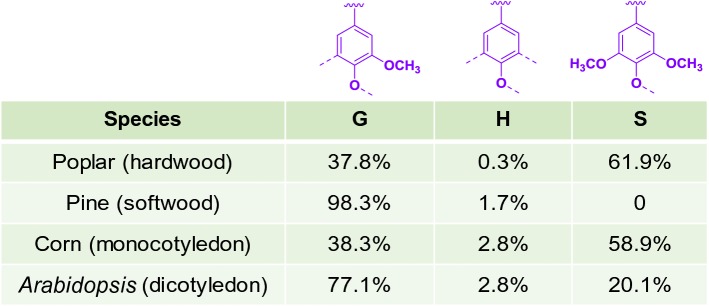
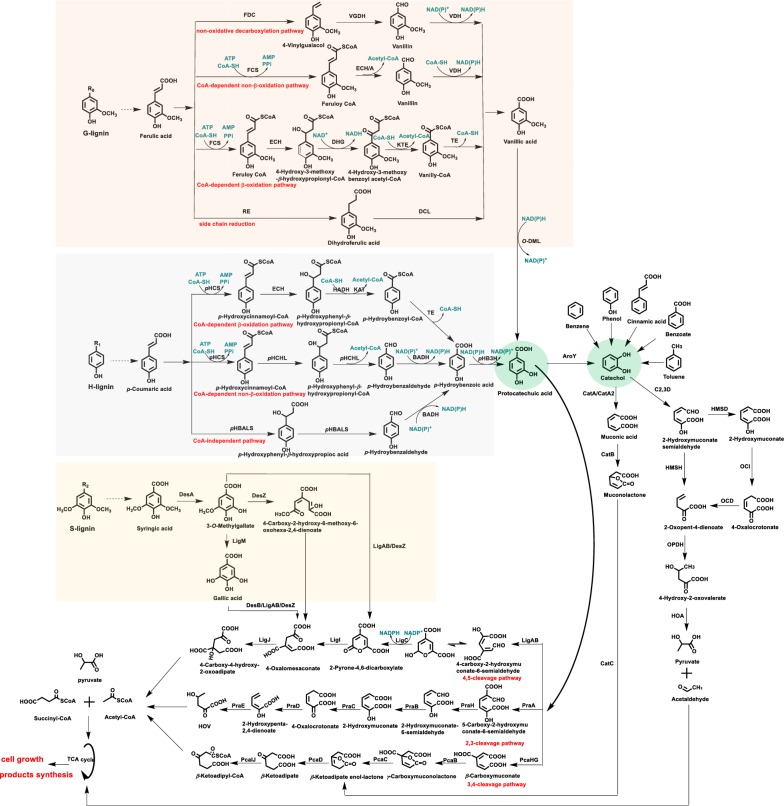
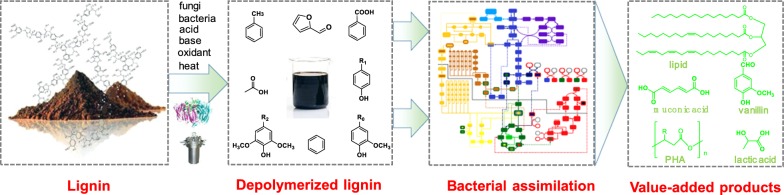
Verification
Claims the paper makes
The claims and statistics of this paper haven’t been checked yet.
Free: it reads the open-access text and checks the first 5 claims that cite a source we can check. Create a free account to check every claim.
Claims other papers make about this one
Each is checked against this paper’s own text: does it say what the citing paper says it does?
The source backs part of the claim, not all of it — or backs it for a different population, condition or comparison.
In the citing paper
“Lignin generated from bio-treatments (e.g., using cellular ligninolytic enzymes like laccase and peroxidases) can obtain certain structural modifications, of which the mechanism is based on the lignin structure oxidation and degradation (e.g., lignin side chains oxidation, demethoxylation, demethylation, and some linkages cleavage) [246–248].”
From A review on lignin pyrolysis: pyrolytic behavior, mechanism, and relevant upgrading for improving process efficiency (2022) · cites this paper as [248]
Experimental — accuracy not yet measured
Self-check
Percentages, sums and reported differences re-computed from the paper’s own numbers.
The self-check needs the paper’s full text.
Citations
Cites
Lignin Valorization: Improving Lignin Processing in the Biorefinery
Ragauskas, A. J., Beckham, G. T., Biddy, M. J., Chandra, R., Chen, F., Davis, M. F., Davison, B. H., Dixon, R. A., Gilna, P., Keller, M., et al. (2014) · Science · doi:10.1126/science.1246843 · Cited by 4,125
Catalytic Transformation of Lignin for the Production of Chemicals and Fuels
Li, C., Zhao, X., Wang, A., Huber, G. W., & Zhang, T. (2015) · Chemical Reviews · doi:10.1021/acs.chemrev.5b00155 · Cited by 2,951
Lignin Biosynthesis and Structure
Vanholme, R., Demedts, B., Morreel, K., Ralph, J., & Boerjan, W. (2010) · Plant Physiology · doi:10.1104/pp.110.155119 · Cited by 2,664
Chemicals from lignin: an interplay of lignocellulose fractionation, depolymerisation, and upgrading
Schutyser, W., Renders, T., Van den Bosch, S., Koelewijn, S.-F., Beckham, G. T., & Sels, B. F. (2018) · Chemical Society Reviews · doi:10.1039/c7cs00566k · Cited by 2,552 · cited 1×
“Biological conversion is a commendable supplement for the thermo-chemical lignin valorization route because some bacteria can funnel lignin fragments and other fermentation residuals into target chemicals [5, 11, 51, 94, 95].”
BackgroundJönsson, L. J., & Martín, C. (2016) · Bioresource Technology · doi:10.1016/j.biortech.2015.10.009 · Cited by 2,147
Paving the Way for Lignin Valorisation: Recent Advances in Bioengineering, Biorefining and Catalysis
Rinaldi, R., Jastrzebski, R., Clough, M. T., Ralph, J., Kennema, M., Bruijnincx, P. C. A., & Weckhuysen, B. M. (2016) · Angewandte Chemie International Edition · doi:10.1002/anie.201510351 · Cited by 2,138
Lignins: Natural polymers from oxidative coupling of 4-hydroxyphenyl- propanoids
Ralph, J., Lundquist, K., Brunow, G., Lu, F., Kim, H., Schatz, P. F., Marita, J. M., Hatfield, R. D., Ralph, S. A., Christensen, J. H., et al. (2004) · Phytochemistry Reviews · doi:10.1023/b:phyt.0000047809.65444.a4 · Cited by 1,660
Pathways for degradation of lignin in bacteria and fungi
Bugg, T. D. H., Ahmad, M., Hardiman, E. M., & Rahmanpour, R. (2011) · Natural Product Reports · doi:10.1039/c1np00042j · Cited by 1,018
Safety assessment of esters of p-hydroxybenzoic acid (parabens)
Soni, M. G., Carabin, I. G., & Burdock, G. A. (2005) · Food and Chemical Toxicology · doi:10.1016/j.fct.2005.01.020 · Cited by 1,012
THE β-KETOADIPATE PATHWAY AND THE BIOLOGY OF SELF-IDENTITY
Harwood, C. S., & Parales, R. E. (1996) · Annual Review of Microbiology · doi:10.1146/annurev.micro.50.1.553 · Cited by 1,004
Cited by
Items 201–276 of 276
Rammala, B. J., & Zhou, N. (2022) · Biotechnology for Biofuels and Bioproducts · doi:10.1186/s13068-022-02159-1 · Cited by 10
de Castro, L. M., Foong, C. P., Higuchi‐Takeuchi, M., Morisaki, K., Lopes, E. F., Numata, K., & da Mota, A. J. (2020) · Polymer Journal · doi:10.1038/s41428-020-00424-4 · Cited by 6
Recent Advances in Enzymatic Conversion of Lignin to Value Added Products
Nguyen, G., Lewin, A. S., Bartolomeo, F. D., & Wentzel, A. (2020) · Springer eBooks · doi:10.1007/978-3-030-58315-6_14 · Cited by 7
Papp, D., Rukkijakan, T., Lebedeva, D., Nylander, T., Sandahl, M., Samec, J. S. M., & Turner, C. (2022) · Analytical Chemistry · doi:10.1021/acs.analchem.2c04383 · Cited by 5
Harahap, B. M., Maulid, M. R., Dewantoro, A. I., Mardawati, E., & Huda, S. (2020) · IOP Conference Series Earth and Environmental Science · doi:10.1088/1755-1315/443/1/012081 · Cited by 5
Borang, N., Dutta, A., & Yadav, M. (2025) · Trends in Sciences · doi:10.48048/tis.2025.9716 · Cited by 5
“These enzymes often work by generating reactive intermediates, including compound I, which can oxidize a range of substrates, including phenolic compounds and lignin [23].”
Talwar, C., Nagar, S., & Negi, R. K. (2024) · Folia Microbiologica · doi:10.1007/s12223-024-01151-6 · Cited by 3
“Lignin is a complex polymer found in plant matter such as leaves, decomposing woods, paper pulp, and soils which form a large portion of the ingested food of omnivo-rous mirror carps (Xu et al. 2019).”
Genomic characterization and proteomic analysis of Bacillus amyloliquefaciens in response to lignin
Li, X., Gao, T., Zhang, Y., Yu, X., Wang, Q., Li, S., Wang, S., Gao, L., & Li, H. (2024) · International Journal of Biological Macromolecules · doi:10.1016/j.ijbiomac.2024.136611 · Cited by 4
Unrean, P., & Champreda, V. (2022) · Biotechnology Progress · doi:10.1002/btpr.3302 · Cited by 4
“Due to its heterogeneity and recalcitrant chemical structure, lignin accounting for 15%–40% fraction of lignocellulose is regarded as solid waste being burnt for energy supply in lignocellulose-based processes.(2) Hence, intense efforts have been made in commercially upgrading lignin to value-added products that would…”
BackgroundMoiseenko, K. V., Glazunova, O. A., Savinova, О. S., & Федорова, Т. В. (2023) · International Journal of Molecular Sciences · doi:10.3390/ijms241713115 · Cited by 5
Synergistic Improvement of Carbohydrate and Lignin Processability by Biomimicking Biomass Processing
Li, M., Liu, Z., Hao, N., Olson, M. L., Li, Q., Bhagia, S., Shinde, S., Kao, K. C., Ragauskas, A. J., Xie, S., et al. (2021) · Frontiers in Energy Research · doi:10.3389/fenrg.2020.00194 · Cited by 4
He, F., Ma, R., Zeng, J., Zhang, Y., Liu, Y., Gong, C., & Yu, X. (2025) · Industrial Crops and Products · doi:10.1016/j.indcrop.2025.121460 · Cited by 3
Integrated base editing and microfluidics boost microbial lipid production from lignin
Pi, C., Li, J., Bao, T., Gao, L., & Wu, X. (2025) · Bioresource Technology · doi:10.1016/j.biortech.2025.133441 · Cited by 4
Wang, Y., Hu, Y., Tang, H., Li, Y., & Luo, C. (2025) · Industrial Crops and Products · doi:10.1016/j.indcrop.2025.122122 · Cited by 3
Daimary, N., Deb, B., Roy, B., Ranjan, R. K., & Mukherjee, A. (2025) · Sustainable Energy Technologies and Assessments · doi:10.1016/j.seta.2025.104457 · Cited by 14
Atri, R., Putzke, S., Simon, F., & Zimmerer, C. (2026) · RSC Advances · doi:10.1039/d5ra08182c · Cited by 8
Kamaraj, Y., Ali, S., Sethupathy, S., Dar, M. A., Gao, L., Rani, A., Kumaresan, V., Ahmad, N., & Zhu, D. (2026) · Biomolecules · doi:10.3390/biom16070979 · Cited by 3
“Both can be derived from lignin-based feedstocks through oxidative depolymerization and subsequent bio-funneling steps, highlighting their significance as sustainable chemical precursors in lignocellulosic biorefineries [1].”
InfluentialIndustrial and biotechnological application of lignin-degrading forest fungi
Nwagu, T. N., Anaele, E. N., Otutu, U. R., Ekwedike, A. L., Oduogu, V., & Ndubuisi, I. A. (2024) · Elsevier eBooks · doi:10.1016/b978-0-443-18870-1.00016-0 · Cited by 5
Biorenewables: Properties and Functions in Materials Application
Iroegbu, A. O. C., & Ray, S. S. (2022) · ACS symposium series · doi:10.1021/bk-2022-1410.ch006 · Cited by 3
Unraveling interspecies cross-feeding during anaerobic lignin degradation for bioenergy applications
Kim, M.-J., Cha, I., Li, M., & Park, S.-J. (2024) · Chemosphere · doi:10.1016/j.chemosphere.2024.142588 · Cited by 3
Pham, L. T. M., Deng, K., Northen, T. R., Singer, S. W., Adams, P. D., Simmons, B. A., & Sale, K. L. (2022) · Catalysis Research · doi:10.21926/cr.2203028 · Cited by 3
Valorizing Lignin to Bioactive Natural Compounds
Qi, S., Zhang, X., Zhang, Z., Na, Q., Tan, Z., Ying, H., & Zhu, C. (2025) · ChemSusChem · doi:10.1002/cssc.202501617 · Cited by 5
Freitas, F. P. M., Dias, R. G., de Almeida, E. L. M., Barbosa, S. L., Prado, C. A., Santos, J. C. F. S., da Silva, S. S., & da Silveira, W. B. (2026) · World Journal of Microbiology and Biotechnology · doi:10.1007/s11274-026-04919-9 · Cited by 2
“These inhibitors interfere with enzymatic activity and microbial metabolism, reducing the efficiency of biomass conversion into biobased products (Xu et al. 2019).”
Kumar, V., Mishra, S., Joshi, P., Misra, J. P., Yegneswaran, P. P., Bhavanari, M., Yazdani, S. S., & Lal, P. B. (2026) · Bioresources and Bioprocessing · doi:10.1186/s40643-026-01081-w · Cited by 3
Kamalesh, R., Saravanan, A., Yaashikaa, P. R., Vickram, A., Akshaya, B., & Thiruvengadam, S. (2026) · Hybrid Advances · doi:10.1016/j.hybadv.2026.100717 · Cited by 2
Zhang, S., Han, S., Yu, X., Gao, J., Hu, S., Borjigin, N., Borjigin, Q., Guo, J., Bai, J., Zhang, B., et al. (2023) · Agronomy · doi:10.3390/agronomy13041032 · Cited by 2
Development, economics and global warming potential of lignocellulose biorefinery
Fang, Y., Li, Y., Ahmed, A., & You, S. (2021) · Elsevier eBooks · doi:10.1016/b978-0-12-820294-4.00012-0 · Cited by 3
Ketsakhon, P., Sittirangsinan, N., Jaihao, P., Raita, M., Unrean, P., & Champreda, V. (2025) · Biomass and Bioenergy · doi:10.1016/j.biombioe.2025.108289 · Cited by 1
Fractionation of guaiacyl and syringyl lignin units using organic solvent nanofiltration
Croes, T., Dutta, A., Aelst, K. V., Sels, B. F., der Bruggen, B. V., & Cornet, I. (2026) · Separation and Purification Technology · doi:10.1016/j.seppur.2026.137099 · Cited by 1
Rethinapraga, K., Kavitha, S., Ravi, Y. K., Zhen, G., & Banu, J. R. (2026) · International Journal of Biological Macromolecules · doi:10.1016/j.ijbiomac.2026.152090 · Cited by 1
Choudhury, S. P., Gautam, P., Haq, I., & Kalamdhad, A. S. (2026) · Bioresource Technology Reports · doi:10.1016/j.biteb.2026.102938 · Cited by 1
Biochemical Conversion of Lignin
Nghiem, N. P. (2022) · Springer eBooks · doi:10.1007/978-3-031-05835-6_5 · Cited by 1
Microbiotechnology-Based Solutions for Removal and Valorization of Waste in Pulp and Paper Industry
Verdel, N., Sežun, M., Rijavec, T., Zugan, M., Deev, D., Rybkin, I., & Lapanje, A. (2023) · Springer eBooks · doi:10.1007/978-3-031-20822-5_21 · Cited by 1
Fu, B., Cheng, C., Fan, J., & Yuan, J. (2024) · Elsevier eBooks · doi:10.1016/b978-0-443-15584-0.00009-4 · Cited by 2
Microbial and enzymatic methods for phenolic production
Silva, J. A. C., Thomas, M., Wallace, C., Rodrigues, B. V. M., Barbosa, F. G., Grilo, L. M., Marcelino, P. R. F., Lacerda, T. M., & Quirino, R. L. (2024) · Elsevier eBooks · doi:10.1016/b978-0-443-19019-3.00008-x · Cited by 2
Agro-waste Valorization and Production of Bioethanol
Bhattacharjee, A., & Nath, R. (2024) · Environmental science and engineering · doi:10.1007/978-3-031-58025-3_10 · Cited by 1
Interfacial and temperature behaviors of water and solutions bound to water-soluble lignin powder
Гунько, В. М., & Turov, V. V. (2024) · Himia Fizika ta Tehnologia Poverhni · doi:10.15407/hftp15.03.313 · Cited by 1
Enterobacter spp. isolates from an underground coal mine reveal ligninolytic activity
Rammala, B. J., Ramchuran, S. O., Chunilall, V., & Zhou, N. (2024) · BMC Microbiology · doi:10.1186/s12866-024-03537-5 · Cited by 2
Lugo-Pimentel, M., Boboescu, I. Z., Beigbeder, J., Duret, X., Wolfaardt, F. J., Ghislain, T., & Lavoie, J. (2020) · International Journal of Energy Production and Management · doi:10.2495/eq-v5-n1-35-47 · Cited by 1
“The last part of this ‘puzzle’ is lignin, which is a research focus for many groups working in the utilization of biomass in a biorefinery approach [30], [31].”
BackgroundKim, S. R., Ko, J. K., Kim, K., Jeon, H., & Lee, S. (2021) · Elsevier eBooks · doi:10.1016/b978-0-12-820294-4.00014-4 · Cited by 2
Fermentative Production of Xylitol from Various Lignocellulosic Hydrolysates
Queiroz, S. D. S., Jofre, F. M., Bianchini, I. D. A., Bordini, F. W., Boaes, T. D. S., Chandel, A. K., & Felipe, M. D. G. D. A. (2022) · Springer eBooks · doi:10.1007/978-3-031-04942-2_3 · Cited by 2
Development of agarose gel electrophoresis as a novel method to monitor lignin degradation
Holt, C. (2019) · White Rose eTheses Online (University of Leeds, The University of Sheffield, University of York)
Next Generation Sequencing Methods: Pushing the Boundaries
Finnegan, L. A., Crispie, F., Claesson, M. J., Cotter, P. D., & Kenny, J. G. (2020) · Elsevier eBooks · doi:10.1016/b978-0-08-100596-5.22688-7
Abbas, N., Elsayed, A., Hassan, H. A., El-Sabbagh, S. M., & Khalil, H. (2021) · Research Square · doi:10.21203/rs.3.rs-272167/v1
Zhang, X., Jin, G., Chen, Z., Ai, D., Li, Q., Fu, B., & Xi, G. (2021) · SSRN Electronic Journal · doi:10.2139/ssrn.3928318
Dam, T. T. (2021) · Queensland University of Technology · doi:10.5204/thesis.eprints.211899
Biorefining of Lignin Wastes: Modularized Production of Value-Added Compounds
Govil, T., Vaughn, M., Salem, D. R., & Sani, R. K. (2022) · Clean Energy Production Technologies · doi:10.1007/978-981-16-3852-7_6
Rational design of flavoprotein oxidases for biocatalytic valorization of lignin-derived monomers
Guo, Y. (2023) · University of Groningen research database (University of Groningen / Centre for Information Technology) · doi:10.33612/diss.651654408
Microbial Production of Critical Enzymes of Lignolytic Functions
Indira, M., Krupanidhi, S., Prabhakar, K., Venkateswarulu, T. C., & Peele, K. A. (2023) · Wiley eBooks · doi:10.1002/9781119874096.ch8
Lignin Depolymerization Technologies
Bajpai, P. (2023) · Wiley eBooks · doi:10.1002/9781394191666.ch3
General Background and Introduction
Bajpai, P. (2023) · Wiley eBooks · doi:10.1002/9781394191666.ch1
Current Biotechnological Advancements in Lignin Valorization For Value-added Products
Pandey, M., Parashar, R., & Singhal, B. (2023) · BENTHAM SCIENCE PUBLISHERS eBooks · doi:10.2174/9789815123074123010005
Wood Biomass Valorization for Value-added Chemicals
Kumar, V., Sharma, N., & Maitra, S. S. (2023) · BENTHAM SCIENCE PUBLISHERS eBooks · doi:10.2174/9789815123074123010012
Meriläinen, E., Efimova, E., Santala, V. P., & Santala, S. (2024) · bioRxiv (Cold Spring Harbor Laboratory) · doi:10.1101/2024.02.14.580265
“Biological lignin valorization relies on the specific catabolic pathways of microbes, such as β-35 ketoadipate pathway 5 , to funnel heterogeneous mixtures of aromatic compounds into central carbon metabolites 6,7 .”
BackgroundChe, Z., Ding, F., Jiang, Q. Y., Zhang, M., Wu, G., Li, X., Zhang, C., Gong, S., Xu, Y., Chen, F., et al. (2024) · SSRN Electronic Journal · doi:10.2139/ssrn.4830468
Lignocellulose Degradation in Bacteria and Fungi for Biomass ConversionPreprint
Hsin, K., Lee, H., Lin, Y. J., & Chen, P. (2024) · bioRxiv (Cold Spring Harbor Laboratory) · doi:10.1101/2024.11.06.622210
Nambissan, V. D., Singh, S., & Gummadi, S. N. (2025) · Springer eBooks · doi:10.1007/978-981-96-2786-8_3 · Cited by 1
Multifunctional paddy cultivated soil-borne bacteria: potential biofertilizer
Kurtuluş, G., KAYALI, E., Sesal, N. C., & Vardar, F. (2025) · Letters in Applied Microbiology · doi:10.1093/lambio/ovaf082
Evaluating the ligninolytic potential of soil bacteria isolated from Western Ghats, India
Kaur, S., Shareef, S., & Hariprasad, P. (2025) · Ecological Genetics and Genomics · doi:10.1016/j.egg.2025.100423 · Cited by 2
Tools and technologies for metabolic engineering for bioproduction or biosynthesis
Kumar, P., Raj, A., Patel, M., & Morya, S. (2025) · Elsevier eBooks · doi:10.1016/b978-0-443-40529-7.00016-0
135Renewable Feedstocks in Green Synthesis
Ishwarya, R., Danya, U., & Kamaraj, M. (2025) · De Gruyter eBooks · doi:10.1515/9783111673431-004
Wang, X., Baidoo, E. E. K., Kakumanu, R. D., Xie, S., Mukhopadhyay, A., & Lee, T. S. (2024) · Figshare · doi:10.6084/m9.figshare.26553323
Pham, L. T. M., Deng, K., Northen, T. R., Singer, S. W., Adams, P. D., Simmons, B. A., & Sale, K. L. (2021) · Figshare · doi:10.6084/m9.figshare.14516192
Meriläinen, E., Efimova, E., Santala, V. P., & Santala, S. (2024) · Figshare · doi:10.6084/m9.figshare.25998632
Kumagawa, E., & Ohta, Y. (2026) · Springer eBooks · doi:10.1007/978-981-95-6970-0_5
Czerwiec, Q. (2020) · theses.fr (ABES) · doi:10.70675/d4844386z5651z4e7czaf3fz5ec8085dc9ec · Cited by 1
Aadil, K. R., Bhange, K., Barapatre, A., Mishra, G., Kumar, B., Jha, H., & Mussatto, S. I. (2026) · Waste and Biomass Valorization · doi:10.1007/s12649-026-03532-z
Senadheera, U. E., Takimoto, Y., Nakayama, T., & Jayasanka, J. (2026) · International Conference on Artificial Intelligence, Computer, Data Sciences and Applications (ACDSA) · doi:10.1109/acdsa67686.2026.11467832
“The aromatic and biopolymeric lignin is the most abundant source of renewable aromatic compounds[1].”
Bioaromatic, a Sustainable Biofuel: Production and Potential Applications
Adeoye, A. O., Arogundade, I. O., Momodu, D. U., Faleye, E. D., Quadri, R. O., Nebo, U. C., Lawal, O. S., Emojevu, E. O., Muhammad, H. I., Garba, N. A., et al. (2026) · Lecture notes in intelligent transportation and infrastructure · doi:10.1007/978-3-032-01662-1_25
Osinuga, A., Kathol, M., & Saha, R. (2026) · mSystems · doi:10.1128/msystems.00383-26 · Cited by 1
“Vanillate O-demethylase VanA (RPA3619) and acyl-CoA synthetase RPA2302 anchor tier 4 to lignin-aromatic entry and CoA-ester activation, respectively, representing the most substrate-specific biochemical access points in the hierarchy (82–84).”
Environmental and sustainability considerations in lignin valorization
Kadian, P., Kumar, R., Ahlawat, I., Ohlyan, H., Kumar, A., Saini, S., & Kuhad, R. C. (2026) · Elsevier eBooks · doi:10.1016/b978-0-443-27747-4.00002-4
Raydan, N. D. V., Ergün, M. E., & Robles, E. (2026) · Springer eBooks · doi:10.1007/978-981-95-5283-2_43-1
Zugan, M., Plešnik, H., Strojnik, L., Ogrinc, N., Kosjek, T., Lapanje, A., & Rijavec, T. (2026) · Geoderma · doi:10.1016/j.geoderma.2026.118009
Doumbia, B., Luo, S., Yang, S., Wang, C., Jia, Y., Kuprin, A., Geng, A., Zhu, D., Sun, J., Ezenwanne, B. C., et al. (2026) · Insect Science · doi:10.1111/1744-7917.70378
Zhang, H., Li, R., Yin, S., Zhang, X., Lin, C. S. K., Gao, C., & Liu, J. (2026) · Microorganisms · doi:10.3390/microorganisms14112421
Metadata
- Authors
- Xu, Z., Lei, P., Zhai, R., Wen, Z., & Jin, M.
- Affiliations
- Nanjing University of Science and Technology (CN)
- Corresponding author
- Jin, Mingjie
- Venue
- Biotechnology for Biofuels
- Published
- 2019-02-15
- Volume
- 12
- Issue
- 1
- Pages
- 32-32
- ISSN
- 1754-6834 (ISSN-L)
- PMC
- PMC6376720
- OpenAlex
- W2913338044
- Cited by
- 276
- References
- 155
- Citations by year
- 2026: 20 · 2025: 24 · 2024: 44 · 2023: 31 · 2022: 37 · 2021: 68 · 2020: 39 · 2019: 13
- FWCI
- 3.17
- Type
- journal article
- Language
- en
- Open access
- gold
- doi.org
- Licence
- cc-by
- creativecommons.org/licenses/by/4.0/ (tdm)
- Locations
- Biotechnology for Biofuels (publishedVersion, cc-by)
- Europe PMC (PubMed Central) (publishedVersion, other-oa)
- PubMed Central (publishedVersion, cc-by)
- PubMed (publishedVersion)
- DOAJ (DOAJ: Directory of Open Access Journals) (submittedVersion)
- Funders
- National Key R&D Program of China (2016YFE0105400)
- National Natural Science Foundation of China (21808111, 21606132)
- Natural Science Foundation of Jiangsu Province (BK20160823, BK20170829)
- the Fundamental Research Funds for the Central Universities (30916011202, 30917011307)
- Topics
- Physical Sciences › Chemical Engineering › Process Chemistry and Technology › Lignin and Wood Chemistry
- Physical Sciences › Engineering › Biomedical Engineering › Biofuel production and bioconversion
- Physical Sciences › Environmental Science › Pollution › Microbial bioremediation and biosurfactants
- Keywords
- lignin valorization, lignin-degrading bacteria, bacterial culture, lignin depolymerization, lignin fragmentation, metabolic pathways, aromatic compounds, biofuels, bioproducts, lignin heterogeneity
About these checks
Registry, retraction, Cites and statistics results are computed, not judged, with one exception: a printed reference that no index lists is read once by a model before it counts as a citation error. Claims are extracted by a model and kept only when their quote appears verbatim in the text; each cited source is then checked, with a model’s help, for whether it says what the claim relies on. Those verdicts can be wrong — read the claim’s quote and the cited source before relying on one.
Statistics and arithmetic are recomputed, not judged.
Confidence bands are shown only for fields calibrated on our annotated test set. None is calibrated yet, so no band is shown.
What counts as a claim ›How we measure confidence ›How we check this ›
Are you an author, or do you see a problem with this page? Request a review
Data sources
Bibliographic data: Semantic Scholar, OpenAlex, Crossref.
Contains information from the Semantic Scholar Academic Graph Datasets, made available under the ODC Attribution License (ODC-BY 1.0).
Semantic Scholar’s data is described in: Kinney, R., et al. (2023). The Semantic Scholar Open Data Platform. arXiv:2301.10140.
