

Innovative diagnostic strategies for equine habronemiasis: exploring molecular identification, gene expression, and oxidative stress markers
Open accessThe DOI matches its Crossref record; 37 of the 37 references it cites were found in a registry or an index; 3 of the 10 sources its claims cite were checked for support.
Abstract
Equine habronemiasis, caused by Habronema (H.) muscae, H. microstoma, and Draschia megastoma, is a parasitic disease that presents in both gastric and cutaneous forms. Conventional diagnostic methods often lack sensitivity due to intermittent egg shedding and nonspecific clinical signs. This study aimed to enhance diagnostic accuracy by integrating molecular identification, oxidative stress profiling, and cytokine gene expression analysis. A total of 100 horses from a private farm in Giza, Egypt, were clinically examined for signs of habronemiasis.
Overview
CoChat Summary
## TL;DR
This field study of 100 horses in Giza, Egypt combined fecal/skin parasitology, COXI PCR, oxidative stress assays, and cytokine qRT-PCR to improve diagnosis of equine habronemiasis. It found that molecular testing identified H. muscae as the predominant species and that infected horses showed increased oxidative stress and proinflammatory cytokine expression.
## Key findings
- Among the 100 horses examined, 62% had Habronema spp. eggs in feces; molecular analysis confirmed H. muscae as the predominant species.
- Clinical assessment found 13% of horses had both cutaneous and gastric habronemiasis, 49% had gastric-only signs, and 38% were negative.
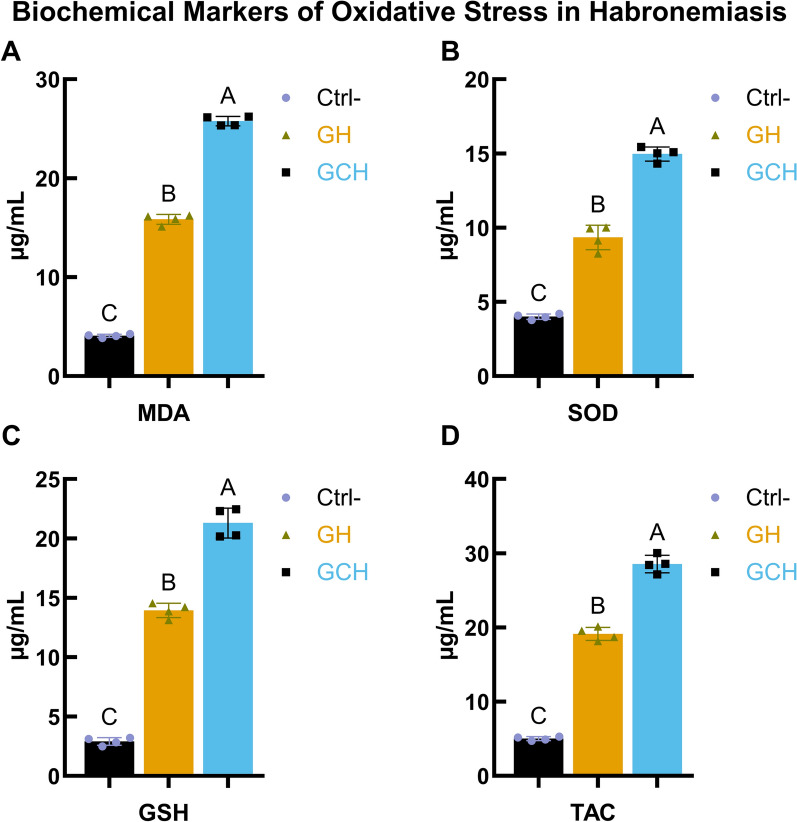
- In infected horses, MDA, SOD, GSH, and TAC were all significantly elevated versus healthy controls, with the highest levels in the cutaneous-gastric group (GCH).
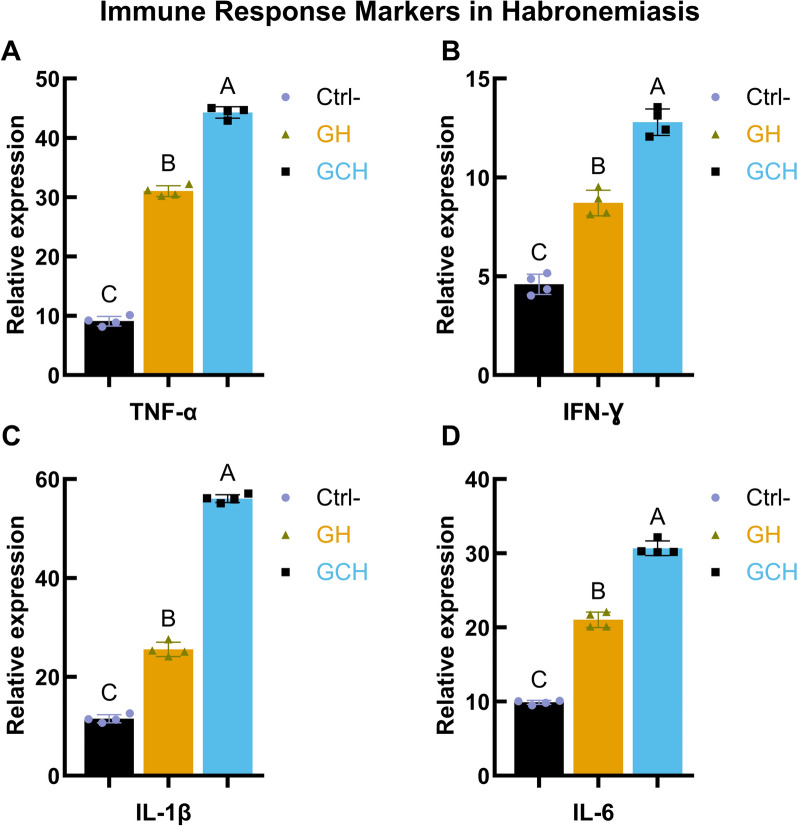
- TNF-α, IFN-γ, IL-1β, and IL-6 were upregulated in infected horses, indicating a Th1-dominated inflammatory response; the increase was most pronounced in GCH.
## Methods
- Design/sample: Cross-sectional study conducted April–October 2024 on 100 horses from a single private farm in Nazlet El-Saman, Giza, Egypt; monthly fecal and blood samples were collected over six successive months.
- Diagnostics/biomarkers: Fecal flotation/sedimentation and skin lesion examination/scrapings were used alongside PCR of the mitochondrial COXI gene (with sequencing and phylogenetic analysis). Serum MDA, SOD, GSH, TAC and cytokine gene expression (TNF-α, IFN-γ, IL-1β, IL-6) were measured.
- Analysis: Sequence comparison/phylogenetics used BLAST, MAFFT, and maximum likelihood trees with 1,000 bootstrap replicates; biomarker and gene-expression differences were analyzed in SPSS using Shapiro–Wilk, one-way ANOVA, and Tukey’s post hoc tests.
## Limitations
- The authors state that the single-farm setting may limit broad generalizability.
- The paper notes that focusing on only the mitochondrial COXI gene limits genetic breadth; they say additional genetic markers would better capture parasite diversity.
- The authors say the study is cross-sectional, so it does not capture temporal changes in infection or immune response; this is a limitation the text makes evident.
Model-written summary. Check it against the paper before relying on it.
Integrity signals
Registry
Cites
Statistics
Figures
Verification
Claims the paper makes
3 Valid · 0 Not valid · 4 Not checked · 39 Own results and interpretations
A result the paper reports from its own data — it cites no other source for it, so there is none to check. The quote shows it is in the paper.
In the paper
“with molecular analysis confirming H. muscae as the predominant species”
- Also stated in: § Discussion · plain
“with molecular diagnostics confirming H. muscae as the predominant species”
§ Innovative diagnostic strategies for equine habronemiasis: exploring molecular identification, gene expression, and oxidative stress markers > Abstract > Results
plain- Asserted: passes — The authors put it forward as true.
- Checkable: passes — It can be checked against evidence.
- Load-bearing: passes — The paper’s conclusions depend on it.
- Based: passes — The paper gives a reason why it holds.
- Also stated in: § Discussion · plain
A result the paper reports from its own data — it cites no other source for it, so there is none to check. The quote shows it is in the paper.
In the paper
“By contrast, 49 horses (49%) presented with clinical signs consistent with gastric habronemiasis only, such as intermittent colic, poor body condition, inappetence, dull hair coat, and weight loss.”
§ Innovative diagnostic strategies for equine habronemiasis: exploring molecular identification, gene expression, and oxidative stress markers > Results > Clinical signs of inspected equines
plain- Asserted: passes — The authors put it forward as true.
- Checkable: passes — It can be checked against evidence.
- Load-bearing: unclear — It is unclear whether the paper’s conclusions depend on it.
- Based: passes — The paper gives a reason why it holds.
A result the paper reports from its own data — it cites no other source for it, so there is none to check. The quote shows it is in the paper.
In the paper
“Habronema spp. eggs were detected in 62% of fecal samples”
- Also stated in: § Microscopic examination of fecal samples · plain
“A total of 62 samples (62%) tested positive for Habronema spp. eggs.”
§ Innovative diagnostic strategies for equine habronemiasis: exploring molecular identification, gene expression, and oxidative stress markers > Abstract > Results
plainn = 62- Asserted: passes — The authors put it forward as true.
- Checkable: passes — It can be checked against evidence.
- Load-bearing: unclear — It is unclear whether the paper’s conclusions depend on it.
- Based: passes — The paper gives a reason why it holds.
- Also stated in: § Microscopic examination of fecal samples · plain
A result the paper reports from its own data — it cites no other source for it, so there is none to check. The quote shows it is in the paper.
In the paper
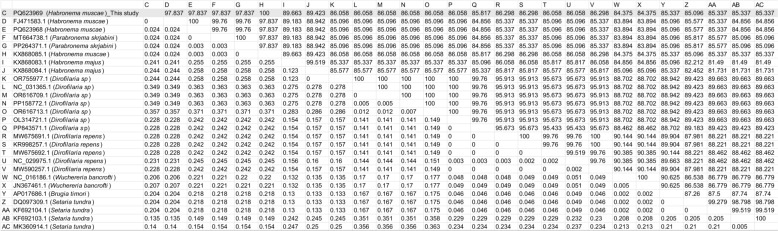
“Pairwise sequence similarity analysis (Fig. 2) demonstrated high nucleotide identity (> 97%) within the H. muscae group”
- Also stated in: § Discussion · plain
“Sequences obtained in this study showed greater than 97% identity with H. muscae sequences in GenBank”
§ Innovative diagnostic strategies for equine habronemiasis: exploring molecular identification, gene expression, and oxidative stress markers > Results > Molecular detection of Habronema species involved in cutaneous and gastric habronemosis
boosted- Asserted: passes — The authors put it forward as true.
- Checkable: passes — It can be checked against evidence.
- Load-bearing: passes — The paper’s conclusions depend on it.
- Based: passes — The paper gives a reason why it holds.
- Also stated in: § Discussion · plain
A result the paper reports from its own data — it cites no other source for it, so there is none to check. The quote shows it is in the paper.
In the paper
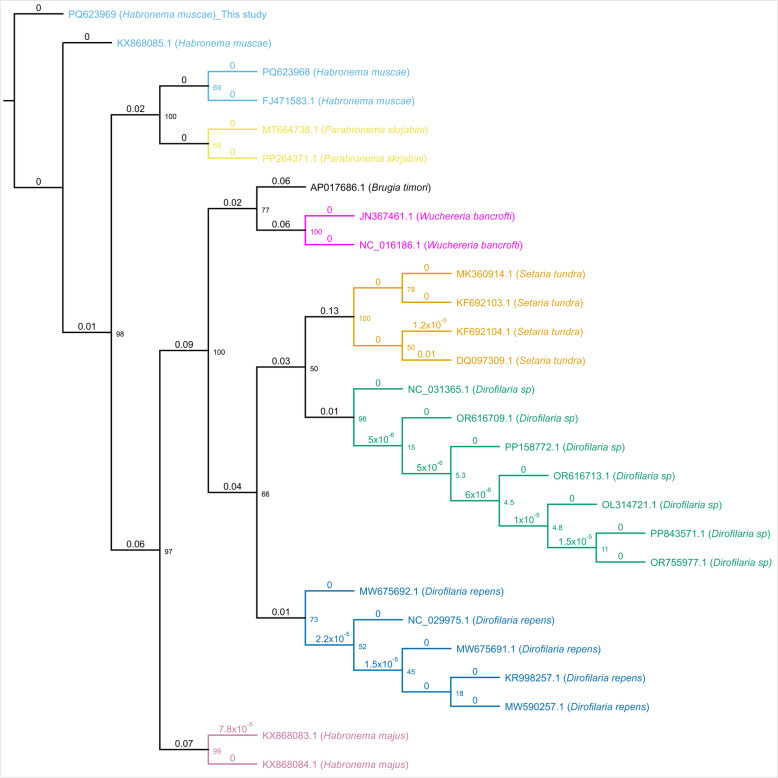
“The ML phylogenetic tree revealed that the sequences obtained in this study clustered tightly with the reference sequences of H. muscae (GenBank accession numbers KX868085.1, FJ471583.1, and PQ623968), confirming their species identity with high bootstrap support (Fig. 1).”
- Also stated in: § Discussion · hedged
“phylogenetic analysis grouped these isolates with known H. muscae references with strong bootstrap support”
§ Innovative diagnostic strategies for equine habronemiasis: exploring molecular identification, gene expression, and oxidative stress markers > Results > Molecular detection of Habronema species involved in cutaneous and gastric habronemosis
boosted- Asserted: passes — The authors put it forward as true.
- Checkable: passes — It can be checked against evidence.
- Load-bearing: passes — The paper’s conclusions depend on it.
- Based: passes — The paper gives a reason why it holds.
- Also stated in: § Discussion · hedged
17 more claims
Create a free account to see all 46 claims and every source verdict.
- It may state two separate claims as one. 16
- Probably not a substantial claim. 11
Citations
Cites
Analysis of Relative Gene Expression Data Using Real-Time Quantitative PCR and the 2−ΔΔCT Method
Livak, K. J., & Schmittgen, T. D. (2001) · Methods · doi:10.1006/meth.2001.1262 · Cited by 180,860
Mutation of the mouse klotho gene leads to a syndrome resembling ageing
Kuro-o, M., Matsumura, Y., Aizawa, H., Kawaguchi, H., Suga, T., Utsugi, T., Ohyama, Y., Kurabayashi, M., Kaname, T., Kume, E., et al. (1997) · Nature · doi:10.1038/36285 · Cited by 3,837
Oxidative Stress, Prooxidants, and Antioxidants: The Interplay
Rahal, A., Kumar, A., Singh, V., Yadav, B., Tiwari, R., Chakraborty, S., & Dhama, K. (2014) · BioMed Research International · doi:10.1155/2014/761264 · Cited by 1,706 · cited 2×
“In response to this imbalance, the host activates various antioxidant defenses; however, if ROS production overwhelms these systems, oxidative stress occurs [11].”
Oxidative Stress and Oxidative Damage in Carcinogenesis
Klaunig, J. E., Kamendulis, L. M., & Hocevar, B. A. (2010) · Toxicologic Pathology · doi:10.1177/0192623309356453 · Cited by 957 · cited 2×
“Furthermore, oxidative damage to proteins can result in the loss of important metabolic activity [12].”
Sasindran, S. J., & Torrelles, J. B. (2011) · Frontiers in Microbiology · doi:10.3389/fmicb.2011.00002 · Cited by 250 · cited 1×
“These findings are consistent with those of previous studies by Maia and Campino [33] and Sasin-dran and Torrelles [34], who reported elevated cytokine mRNA levels in the context of bacterial and parasitic infections.”
Nazarizadeh, A., & Asri-Rezaie, S. (2016) · AAPS PharmSciTech · doi:10.1208/s12249-015-0405-y · Cited by 135 · cited 1×
“Specifically, SOD acts as an efficient catalyst and demonstrates high resistance to oxidative stress [32], highlighting the importance of the inter-play between ROS generation and antioxidant defense in the pathophysiological responses of horses infected with Habronema .”
Ross, T., Kisiday, J. D., Hess, T. M., & McIlwraith, C. W. (2012) · Osteoarthritis and Cartilage · doi:10.1016/j.joca.2012.08.008 · Cited by 108 · cited 1×
“Overall, this study offers important new insights into the mechanisms involved in controlling Habronema infection and advances our understanding of the immunological responses associated with this parasitic disease [35].”
Cytokine and Phenotypic Cell Profiles ofLeishmania infantumInfection in the Dog
Maia, C., & Campino, L. (2011) · Journal of Tropical Medicine · doi:10.1155/2012/541571 · Cited by 87 · cited 1×
“These findings are consistent with those of previous studies by Maia and Campino [33] and Sasin-dran and Torrelles [34], who reported elevated cytokine mRNA levels in the context of bacterial and parasitic infections.”
Salem, N. Y., Yehia, S. G., Farag, H. S., & Elkhiat, M. A. (2016) · International Journal of Veterinary Science and Medicine · doi:10.1016/j.ijvsm.2016.10.003 · Cited by 51 · cited 1×
“These parameters were measured in both positive and negative sera of the examined horses using specialized kits, as described by Attia et al. [21] and Salem et al. [22].”
The interferon-dependent orchestration of innate and adaptive immunity after transplantation
Robb, R. J., & Hill, G. R. (2012) · Blood · doi:10.1182/blood-2012-02-368076 · Cited by 50 · cited 1×
“T helper 1 (Th1) cytokines, particularly IFN-γ , play a central role during the early acute stages of parasitic disease [13].”
Esmaeilnejad, B., Tavassoli, M., Asri‐Rezaei, S., Dalir‐Naghadeh, B., Malekinejad, H., Jalilzadeh‐Amin, G., Arjmand, J., Golabi, M., & Hajipour, N. (2014) · Veterinary Parasitology · doi:10.1016/j.vetpar.2014.07.005 · Cited by 50 · cited 1×
“However, ROS cannot distinguish between infectious agents and host cells, resulting in potential collateral damage [10].”
PUGH, D. G., Hu, X. P., & Blagburn, B. L. (2013) · Journal of Equine Veterinary Science · doi:10.1016/j.jevs.2013.06.004 · Cited by 41 · cited 2×
“Gastric habronemiasis typically manifests as catarrhal gastritis, presenting with symptoms such as diarrhea, progressive weight loss, and gastric ulcers [3].”
Habronematidosis in Equids: Current Status, Advances, Future Challenges
Barlaam, A., Traversa, D., Papini, R., & Giangaspero, A. (2020) · Frontiers in Veterinary Science · doi:10.3389/fvets.2020.00358 · Cited by 34 · cited 5×
“Infected adult worms typically reside in the equine stomach, resulting in gastric habronemiasis, while their larvae can aberrantly migrate to the cutaneous tissues and cause cutaneous habronemiasis [2].”
InfluentialMolecular and immunological studies on Theileria equi and its vector in Egypt
Ramadan, R. M., Taha, N. M., Auda, H. M., Elsamman, E. M., El‐Bahy, M. M., & Salem, M. A. (2024) · Experimental and Applied Acarology · doi:10.1007/s10493-024-00933-4 · Cited by 28 · cited 3×
“…up in 25-μl volumes with Emerald Amp Max PCR Master Mix (Takara, Japan), and thermal cycling conditions were slightly modified from Ramadan et al. [17, 18]: initial denaturation at 94 °C for 7 min, followed by 40 cycles at 94 °C for 1 min, 50 °C for 1 min, and 72 °C for 1 min, with a final…”
Self-citationMolecular cross-sectional survey of gastric habronemosis in horses
Traversa, D., Iorio, R., Capelli, G., Paoletti, B., Bartolini, R., Otranto, D., & Giangaspero, A. (2006) · Veterinary Parasitology · doi:10.1016/j.vetpar.2006.05.021 · Cited by 26 · cited 2×
“Sequences obtained in this study showed greater than 97% identity with H. muscae sequences in GenBank, and phylogenetic analysis grouped these isolates with known H. muscae references with strong bootstrap support, suggesting a conserved genetic makeup with limited geographical divergence [6, 31].”
A smart economic way to control camel parasites and improve camel production in Egypt
El‐Bahy, M. M., Kamel, N. O. H., Auda, H. M., & Ramadan, R. M. (2023) · Experimental Parasitology · doi:10.1016/j.exppara.2023.108650 · Cited by 24 · cited 1×
“Oxidative stress markers and gene expression data were analyzed using SPSS software (version 27, SPSS Inc., Chicago, IL, USA) [29].”
Self-citationAwareness of parasitic zoonotic diseases among pet owners in Cairo, Egypt
Taha, N. M., Sabry, M. A., El‐Bahy, M. M., & Ramadan, R. M. (2024) · Veterinary Parasitology Regional Studies and Reports · doi:10.1016/j.vprsr.2024.101025 · Cited by 23 · cited 1×
“Statistical significance was set at P 0.05 [30].”
InfluentialSelf-citationRamadan, R. M., Mahdy, O. A., El-Saied, M. A., Mohammed, F. F., & Salem, M. A. (2024) · PLoS ONE · doi:10.1371/journal.pone.0303702 · Cited by 23
Self-citationSalem, M. A., Mahdy, O. A., & Ramadan, R. M. (2023) · Research in Veterinary Science · doi:10.1016/j.rvsc.2023.105097 · Cited by 22
Self-citationRamadan, R. M., Bakr, A. F., Fouad, E., Mohammed, F. F., Abdel-Wahab, A. M., Abdel‐Maogood, S. Z., El‐Bahy, M. M., & Salem, M. A. (2024) · Parasites & Vectors · doi:10.1186/s13071-024-06564-3 · Cited by 22 · cited 1×
“…in 25-μl volumes with Emerald Amp Max PCR Master Mix (Takara, Japan), and thermal cycling conditions were slightly modified from Ramadan et al. [17, 18]: initial denaturation at 94 °C for 7 min, followed by 40 cycles at 94 °C for 1 min, 50 °C for 1 min, and 72 °C for 1 min, with a final extension…”
Self-citationMorsy, K., Bashtar, A. R., Al Quraishy, S., & Adel, S. (2016) · Parasitology Research · doi:10.1007/s00436-016-5212-1 · Cited by 20
Salem, M. A., Taha, N. M., El‐Bahy, M. M., & Ramadan, R. M. (2024) · Scientific Reports · doi:10.1038/s41598-024-72433-9 · Cited by 18 · cited 1×
“The RNA concentration and purity were determined using a Nano-Drop ND-1000 Spectrophotometer (Nano-Drop Technologies Inc., Delaware, USA) as described by Salem et al. [23].”
Self-citationEl-Deeb, W., Iacob, O., Fayez, M., Elgioushy, M., Shawaf, T., & Ibrahim, A. (2018) · Veterinary Parasitology · doi:10.1016/j.vetpar.2018.03.023 · Cited by 17 · cited 2×
“In addition, increased levels of proinflammatory cytokines, such as interleukin 6 ( IL-6 ) and tumor necrosis factor alpha ( TNF-α ), have been observed in affected horses [9].”
Characterisation of the inflammatory cytokine response to anthelmintic treatment in ponies
Betancourt, A., Lyons, Ε. T., & Horohov, D. W. (2014) · Equine Veterinary Journal · doi:10.1111/evj.12280 · Cited by 14 · cited 1×
“…[17] IL-1β F‑ AAA ACA GTG AGG GAG AAA TT R‑ AGA AAC TTC TTC TTG GGT AG [27] IL-6 F‑GGA TGC TTC CAA TCT GGG TTC AAT R‑TCC GAA AGA CCA GTG GTG ATTTT [28] TNF-α F‑ATG TTT CAG TCA CAT TTC AG R‑CCT ACC GGT TCC CAT CTC AA [27] GADPH F‑CCT GGA GAA ACC TGC CAA G R‑GCC AAA TTC ATT GTC GTA CC [17]…”
Iorio, R., Šlapeta, J., Otranto, D., Paoletti, B., Giangaspero, A., & Traversa, D. (2009) · Parasitology Research · doi:10.1007/s00436-008-1276-x · Cited by 13 · cited 2×
“PCR amplification targeted the COXI gene (689 base pairs) using specific degenerate primer pairs (forward (F): 5 ′ -TGA TTG GTG GTT TTG GTA A-3 ′ and reverse (R): 5 ′ -ATA AGT ACG AGT ATC AAT ATC-3 ′ ) developed by Iorio et al. [16].”
Evaluation of cytokines and sialic acids contents in horses naturally infected with Theileria equi
Mostafavi, E., Esmaeilnejad, B., & Froushani, S. M. A. (2020) · Comparative Immunology Microbiology and Infectious Diseases · doi:10.1016/j.cimid.2020.101453 · Cited by 12 · cited 1×
“Despite the critical role of these inflammatory mediators in shaping disease outcomes, few studies have specifically evaluated their role in equine habronemiasis [15].”
Attia, M. M., Soliman, S. M., Salaeh, N. M. K., Salem, H. M., Alkafafy, M., Saad, A. M., El‐Saadony, M. T., & El-Gameel, S. M. (2021) · Saudi Journal of Biological Sciences · doi:10.1016/j.sjbs.2021.11.044 · Cited by 12 · cited 2×
“…References IFN-γ F‑TCT TTA ACA GCA GCA CCA GAA R‑GCG CTG GAC CTT CAG ATC AT [17] IL-1β F‑ AAA ACA GTG AGG GAG AAA TT R‑ AGA AAC TTC TTC TTG GGT AG [27] IL-6 F‑GGA TGC TTC CAA TCT GGG TTC AAT R‑TCC GAA AGA CCA GTG GTG ATTTT [28] TNF-α F‑ATG TTT CAG TCA CAT TTC AG R‑CCT ACC GGT TCC CAT CTC AA [27]…”
Self-citationTaha, N. M., Salem, M. A., El-Saied, M. A., Mohammed, F. F., Kamel, M. S., El‐Bahy, M. M., & Ramadan, R. M. (2025) · BMC Veterinary Research · doi:10.1186/s12917-025-04616-z · Cited by 12 · cited 1×
“Each reaction had a final volume of 25 µl, containing 0.5 µl of each primer (10 pmol), 12.5 µl of SYBR Green PCR master mix (Applied Biosystems, USA), 1 µl complementary DNA (cDNA) (400 ng), and 10.5 µl RNase-free water [25].”
InfluentialSelf-citationRakhshandehroo, E., Sharifiyazdi, H., Shayegh, H., & Ahmadi, A. (2014) · Parasitology Research · doi:10.1007/s00436-014-4123-2 · Cited by 9
Jian, R., Wang, S.-W., Zhang, W.-X., & Zhang, L.-P. (2017) · Systematic Parasitology · doi:10.1007/s11230-017-9714-8 · Cited by 8
Ramadan, R. M., Khalifa, M. M. E., Youssef, F. S., Fouad, E. A., Kamel, M. S., El‐Bahy, M. M., & Taha, N. M. (2025) · BMC Veterinary Research · doi:10.1186/s12917-025-04821-w · Cited by 7 · cited 1×
“The raw sequence data were edited and assembled using the BioEdit program [19] and then submitted to GenBank for accession number assignment.”
Self-citationIncidence of cutaneous habronemosis in Manipuri ponies in India
Devi, C. N., Borthakur, S. K., Patra, G., Singh, N. S., Tolenkhomba, T. C., Ravindran, R., & Ghosh, S. (2019) · Veterinary Parasitology: Regional Studies and Reports · doi:10.1016/j.vprsr.2019.100295 · Cited by 6 · cited 3×
“Standard parasitological techniques, including flotation and sedimentation, were used to identify Habronema spp. eggs [7].”
InfluentialHabronemiasis (Equine Summer Sore) in an 8-year-old Arab Horse
Forouzanpour, D., Ostovari, G., Mashhadi, M. H., Dehghani, H., & Hajimohammadi, A. (2022) · Farm Animal Health and Nutrition · doi:10.58803/fahn.v1i2.12 · Cited by 3 · cited 1×
“These lesions often prove refractory to standard treatments, making an accurate diagnosis essential [8].”
Attia, M. M., Barsoum, S. S., Baghdadi, H. B. A., Mahdy, O. A., & El-Gameel, S. M. (2024) · BMC Veterinary Research · doi:10.1186/s12917-024-04295-2 · Cited by 3 · cited 1×
“These parameters were measured in both positive and negative sera of the examined horses using specialized kits, as described by Attia et al. [21] and Salem et al. [22].”
Gamal, F. A., Abdel-Wahab, A. M., Khalifa, M. M. E., Ramadan, R. M., & Nassar, A. M. (2025) · Veterinary Parasitology Regional Studies and Reports · doi:10.1016/j.vprsr.2025.101283 · Cited by 2 · cited 1×
“The assembled sequences were compared with existing entries using the National Center for Biotechnology Information Basic Local Alignment Search Tool (NCBI BLAST) [20].”
Self-citationGastric Habronematidosis in Mules: Gastroscopy and Histopathology-Based DiagnosisPreprint
Calixto‐Vega, L. C., Castro-Mesa, A. F., & Aranzales, J. R. M. (2023) · SSRN Electronic Journal · doi:10.2139/ssrn.4619418 · Cited by 1
Gastric habronematidosis in mules: Gastroscopy and histopathology-based diagnosis
Calixto-Vega, L. C., Castro-Mesa, A. F., & Martínez-Aranzales, J. R. (2025) · Research in Veterinary Science · doi:10.1016/j.rvsc.2024.105525 · Cited by 1 · cited 1×
“These methods offer enhanced sensitivity, enabling reliable identification even in subclinical infections or cases with low parasite burdens [5, 6].”
Cited by
El‐Geneady, M. A., Ramadan, R. M., Mahdy, O. A., Kamel, M. S., & Salem, M. A. (2025) · Medical and Veterinary Entomology · doi:10.1111/mve.70041 · Cited by 4
“DNA purity and concentration were measured using a Nanodrop2000 spectrophotometer (NP80, Nano-photometer, Implen, Germany), as described by and Salem et al. (2025a).”
Self-citationAbdel-Radi, S., Salem, M. A., Youssef, F. S., et al. (2025) · Experimental and Applied Acarology · doi:10.1007/s10493-025-01085-9 · Cited by 3
“Moreover, nanoparticles have garnered attention for pharmacological applications because of their enhanced bioavailability, improved pharmacokinetics, and minimized toxicity (Abdel-Rahman and Abdel-Radi 2022 ; Khalifa et al. 2025; Salem et al. 2025a).”
Self-citationMolecular Detection of Pythium insidiosum in Cutaneous Lesions of Horses from Northeastern Brazil
de Vasconcelos, A. B., de França, D. A., do Prado, A. C., et al. (2025) · Animals · doi:10.3390/ani15192863 · Cited by 1
“This is illustrated in the study by Souto et al. [12], which reported 1331 suspected cases of equine pythiosis between 1985 and 2020, of which 202 were confirmed through microbiological and histochemical methods [12–14].”
Mahdy, O. A., Salem, M., Kamel, M. A., et al. (2026) · Veterinary Parasitology · doi:10.1016/j.vetpar.2026.110701
Self-citationGao, Z., Li, J., Wang, L., & Jiang, D. (2026) · Mitochondrion · doi:10.1016/j.mito.2026.102176
Metadata
- Authors
- Salem, M. A., El-Gameel, S. M., Kamel, M. S., Elsamman, E. M., & Ramadan, R. M.
- Affiliations
- Cairo University (EG)
- Corresponding author
- Ramadan, Reem M.
- Venue
- Parasites & Vectors
- Published
- 2025-08-02
- Volume
- 18
- Issue
- 1
- Pages
- 325-325
- ISSN
- 1756-3305 (ISSN-L)
- PMC
- PMC12318383
- OpenAlex
- W4412859754
- Cited by
- 5
- References
- 37
- Citations by year
- 2026: 2 · 2025: 3
- FWCI
- 5.96
- Type
- journal article
- Language
- en
- Open access
- gold
- doi.org
- Licence
- cc-by
- creativecommons.org/licenses/by/4.0 (tdm)
- creativecommons.org/licenses/by/4.0 (vor)
- Locations
- Parasites & Vectors (publishedVersion, cc-by)
- PubMed Central (publishedVersion, cc-by)
- PubMed (publishedVersion)
- DOAJ (DOAJ: Directory of Open Access Journals) (submittedVersion, cc-by-sa)
- Funders
- Cairo University
- Topics
- Life Sciences › Immunology and Microbiology › Parasitology › Helminth infection and control
- Health Sciences › Veterinary › Equine › Veterinary Equine Medical Research
- Health Sciences › Medicine › Infectious Diseases › Parasitic Diseases Research and Treatment
- Keywords
- Habronema muscae, horses, molecular diagnosis, oxidative stress biomarkers, cytokine gene expression, Th1 response, inflammatory cytokines, host-pathogen interaction
- MeSH terms
- Animals, Egypt, Feces, Female, Horse Diseases, Horses, Male, Biomarkers, Gene Expression, Cytokines, Spirurida Infections, Oxidative Stress
About these checks
Registry, retraction, Cites and statistics results are computed, not judged, with one exception: a printed reference that no index lists is read once by a model before it counts as a citation error. Claims are extracted by a model and kept only when their quote appears verbatim in the text; each cited source is then checked, with a model’s help, for whether it says what the claim relies on. Those verdicts can be wrong — read the claim’s quote and the cited source before relying on one.
The claim verdicts this report counts are experimental: their accuracy is not yet measured.
A language model drew the claims from the paper on 2026-10-11, under version 3 of the claim definition (model deepseek-v4.1-flash, prompt extract-v3).
A second model labelled each claim on 2026-10-11 (model jev-1.13-20260917, definition revision gold-guideline-v0.2).
Statistics and arithmetic are recomputed, not judged.
Confidence bands are shown only for fields calibrated on our annotated test set. None is calibrated yet, so no band is shown.
What counts as a claim ›How we measure confidence ›How we check this ›
Are you an author, or do you see a problem with this page? Request a review
Data sources
Bibliographic data: Semantic Scholar, OpenAlex, Crossref.
Contains information from the Semantic Scholar Academic Graph Datasets, made available under the ODC Attribution License (ODC-BY 1.0).
Semantic Scholar’s data is described in: Kinney, R., et al. (2023). The Semantic Scholar Open Data Platform. arXiv:2301.10140.
