

Characterisation of the transcriptome and proteome of SARS-CoV-2 reveals a cell passage induced in-frame deletion of the furin-like cleavage site from the spike glycoprotein
Open accessPublished version of a preprint
The DOI matches its Crossref record; 64 of the 64 references it cites were found in a registry or an index.
Abstract
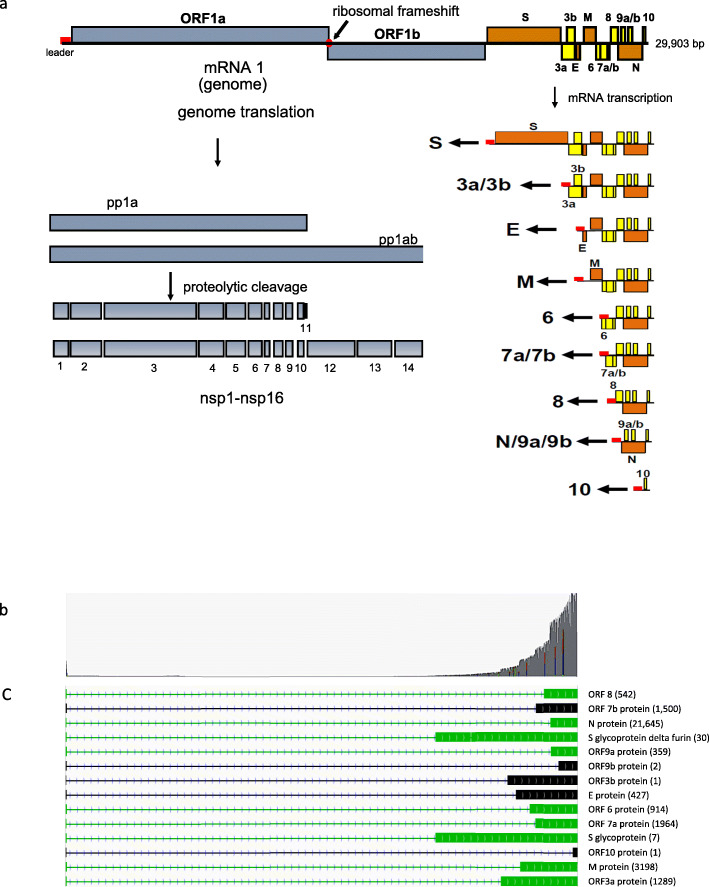
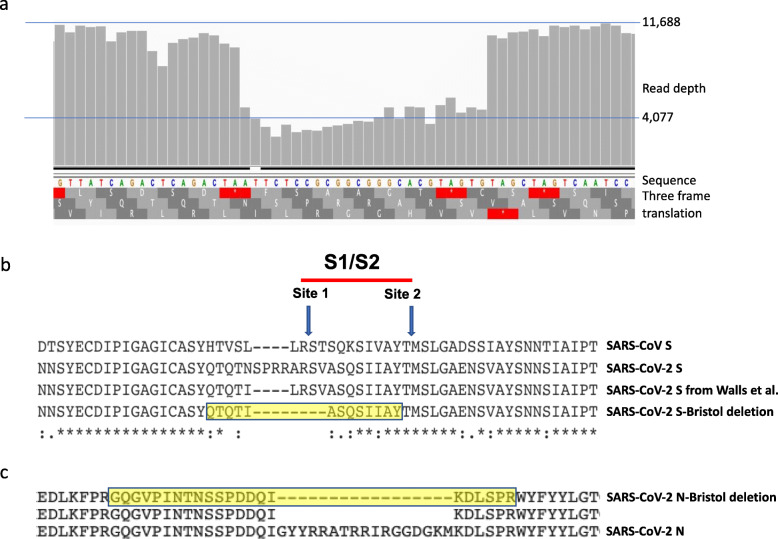
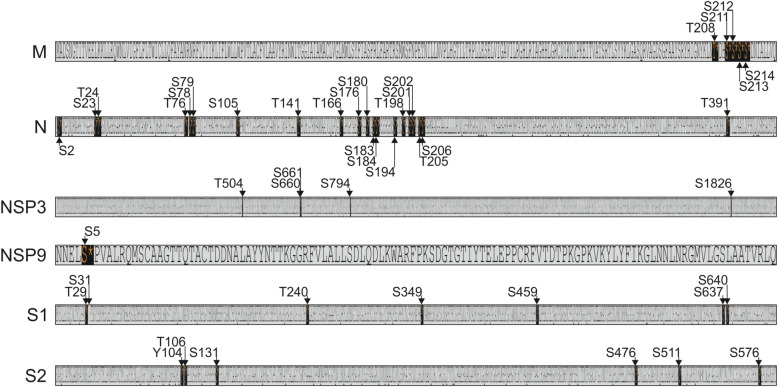
Background: SARS-CoV-2 is a recently emerged respiratory pathogen that has significantly impacted global human health. We wanted to rapidly characterise the transcriptomic, proteomic and phosphoproteomic landscape of this novel coronavirus to provide a fundamental description of the virus’s genomic and proteomic potential. Methods: We used direct RNA sequencing to determine the transcriptome of SARS-CoV-2 grown in Vero E6 cells which is widely used to propagate the novel coronavirus. The viral transcriptome was analysed using a recently developed ORF-centric pipeline. Allied to this, we used tandem mass spectrometry to investigate the proteome and phosphoproteome of the same virally infected cells. Results: Our integrated analysis revealed that the viral transcripts (i.e. subgenomic mRNAs) generally fitted the expected transcription model for coronaviruses. Importantly, a 24 nt in-frame deletion was detected in over half of the subgenomic mRNAs encoding the spike (S) glycoprotein and was predicted to remove a proposed furin cleavage site from the S glycoprotein. Tandem mass spectrometry identified over 500 viral peptides and 44 phosphopeptides in virus-infected cells, covering almost all proteins predicted to be encoded by the SARS-CoV-2 genome, including peptides unique to the deleted variant of the S glycoprotein. Conclusions: Detection of an apparently viable deletion in the furin cleavage site of the S glycoprotein, a leading vaccine target, shows that this and other regions of SARS-CoV-2 proteins may readily mutate. The furin site directs cleavage of the S glycoprotein into functional subunits during virus entry or exit and likely contributes strongly to the pathogenesis and zoonosis of this virus. Our data emphasises that the viral genome sequence should be carefully monitored during the growth of viral stocks for research, animal challenge models and, potentially, in clinical samples. Such variations may result in different levels of virulence, morbidity and mortality.
Overview
The claims and statistics of this paper haven’t been checked yet.
Free: it reads the open-access text and checks the first 5 claims that cite a source we can check. Create a free account to check every claim.
Integrity signals
Registry
Cites
Statistics
Figures
Verification
Claims the paper makes
The claims and statistics of this paper haven’t been checked yet.
Free: it reads the open-access text and checks the first 5 claims that cite a source we can check. Create a free account to check every claim.
Claims other papers make about this one
Each is checked against this paper’s own text: does it say what the citing paper says it does?
In the citing paper
“Moreover, a recent phosphoproteome analysis pointed to the regulation of viral proteins through PTMs160.”
From A high-stringency blueprint of the human proteome (2020) · cites this paper as [160]
Self-check
Percentages, sums and reported differences re-computed from the paper’s own numbers.
The self-check needs the paper’s full text.
Citations
Cites
A pneumonia outbreak associated with a new coronavirus of probable bat origin
Zhou, P., Yang, X.-L., Wang, X.-G., Hu, B., Zhang, L., Zhang, W., Si, H.-R., Zhu, Y., Li, B., Huang, C.-L., et al. (2020) · Nature · doi:10.1038/s41586-020-2012-7 · Cited by 21,969
Hoffmann, M., Kleine-Weber, H., Schroeder, S., Krüger, N., Herrler, T., Erichsen, S., Schiergens, T. S., Herrler, G., Wu, N.-H., Nitsche, A., et al. (2020) · Cell · doi:10.1016/j.cell.2020.02.052 · Cited by 20,286 · cited 1×
“The presence of a furinlike cleavage site at the S1/S2 boundary results in cleavage of the SARS-CoV-2 S glycoprotein before viral exit from the cell, whereas the S glycoprotein of coronaviruses such as SARS-CoV, lacking a S1/S2 furin cleavage site, exit the cells with the S glycoprotein largely uncleaved, necessitatin…”
BackgroundA SIMPLE METHOD OF ESTIMATING FIFTY PER CENT ENDPOINTS12
REED, L. J., & MUENCH, H. (1938) · American Journal of Epidemiology · doi:10.1093/oxfordjournals.aje.a118408 · Cited by 19,926
A new coronavirus associated with human respiratory disease in China
Wu, F., Zhao, S., Yu, B., Chen, Y.-M., Wang, W., Song, Z.-G., Hu, Y., Tao, Z.-W., Tian, J.-H., Pei, Y.-Y., et al. (2020) · Nature · doi:10.1038/s41586-020-2008-3 · Cited by 11,688 · cited 6×
“termined and revealed the virus is most closely related to bat coronavirus RaTG13 and clusters phylogenetically with SARS-CoV, which emerged in 2002, in the genus Betacoronavirus of the family Coronaviridae [3, 4].”
BackgroundInfluentialAn interactive web-based dashboard to track COVID-19 in real time
Dong, E., Du, H., & Gardner, L. (2020) · The Lancet Infectious Diseases · doi:10.1016/s1473-3099(20)30120-1 · Cited by 10,048
Cryo-EM structure of the 2019-nCoV spike in the prefusion conformation
Wrapp, D., Wang, N., Corbett, K. S., Goldsmith, J. A., Hsieh, C.-L., Abiona, O., Graham, B. S., & McLellan, J. S. (2020) · Science · doi:10.1126/science.abb2507 · Cited by 8,897
Structure, function and antigenicity of the SARS-CoV-2 spike glycoprotein
Walls, A. C., Park, Y.-J., Tortorici, M. A., Wall, A., McGuire, A. T., & Veesler, D. (2020) · doi:10.1101/2020.02.19.956581 · Cited by 8,586 · cited 2×
“The presence of a furinlike cleavage site at the S1/S2 boundary results in cleavage of the SARS-CoV-2 S glycoprotein before viral exit from the cell, whereas the S glycoprotein of coronaviruses such as SARS-CoV, lacking a S1/S2 furin cleavage site, exit the cells with the S glycoprotein largely uncleaved, necessitatin…”
BackgroundDetection of 2019 novel coronavirus (2019-nCoV) by real-time RT-PCR
Corman, V. M., Landt, O., Kaiser, M., Molenkamp, R., Meijer, A., Chu, D. K., Bleicker, T., Brünink, S., Schneider, J., Schmidt, M. L., et al. (2020) · Eurosurveillance · doi:10.2807/1560-7917.es.2020.25.3.2000045 · Cited by 7,344 · cited 1×
“This deletion removes one of the primer sites recently recommended as a first-line screening tool [50].”
BackgroundSelf-citationThe proximal origin of SARS-CoV-2
Andersen, K. G., Rambaut, A., Lipkin, W. I., Holmes, E. C., & Garry, R. F. (2020) · Nature Medicine · doi:10.1038/s41591-020-0820-9 · Cited by 5,081 · cited 1×
“The furin cleavage site is also not found in other “lineage B” betacoronaviruses including SARS-CoV, but has been detected in betacoronaviruses in other lineages, suggesting that this region has arisen during natural evolution [25].”
BackgroundCoronaviruses: An Overview of Their Replication and Pathogenesis
Fehr, A. R., & Perlman, S. (2015) · Methods in Molecular Biology · doi:10.1007/978-1-4939-2438-7_1 · Cited by 3,787
Research works printed but not linked: 2
- Davidson, A. D. et al. Characterisation of the transcriptome and proteome of SARS-CoV-2 reveals a cell passage induced in-frame deletion of the furin-like cleavage site from the spike glycoprotein. Proteomics dataset. PRIDE PXD018241. 2020. PMC7386171 32723359
- Davidson, A. D. et al. Characterisation of the transcriptome and proteome of SARS-CoV-2 reveals a cell passage induced in-frame deletion of the furin-like cleavage site from the spike glycoprotein. Transcriptomics data. ENA PRJEB39337. 2020. PMC7386171 32723359
Cited by
Items 101–200 of 461
Falvo, P., Orecchioni, S., Hillje, R., Raveane, A., Mancuso, P., Camisaschi, C., Luzi, L., Pelicci, P. G., & Bertolini, F. (2020) · Cancer Research · doi:10.1158/0008-5472.can-20-1818 · Cited by 65
Genome evolution of SARS-CoV-2 and its virological characteristics
Nakagawa, S., & Miyazawa, T. (2020) · Inflammation and Regeneration · doi:10.1186/s41232-020-00126-7 · Cited by 67
Characterization of SARS-CoV-2 Evasion: Interferon Pathway and Therapeutic Options
Znaidia, M., Demeret, C., van der Werf, S., & Komarova, A. V. (2022) · Viruses · doi:10.3390/v14061247 · Cited by 67
Barra, G. B., Rita, T. H. S., Mesquita, P. G., Jácomo, R. H., & Nery, L. F. A. (2020) · Genes · doi:10.3390/genes11101183 · Cited by 63
Detecting SARS-CoV-2 variants with SNP genotyping
Harper, H., Burridge, A. J., Winfield, M., Finn, A. H. R., Davidson, A. D., Matthews, D. A., Hutchings, S., Vipond, B. B., Jain, N., Edwards, K. J., et al. (2021) · PLoS ONE · doi:10.1371/journal.pone.0243185 · Cited by 58
Self-citationAlmuqrin, A., Davidson, A. D., Williamson, M. K., Lewis, P. A., Heesom, K. J., Morris, S. J., Gilbert, S. C., & Matthews, D. A. (2021) · Genome Medicine · doi:10.1186/s13073-021-00859-1 · Cited by 61
“Proteomically, we were able to detect SARS-CoV-2 S glycoprotein and several ChAdOx1 proteins as well as using phosphoproteomics to confirm that the SARS-CoV-2 S protein is phosphorylated as we have previously reported [25].”
MethodResultInfluentialSelf-citationJungreis, I., Nelson, C. W., Ardern, Z., Finkel, Y., Krogan, N. J., Sato, K., Ziebuhr, J., Stern‐Ginossar, N., Pavesi, A., Firth, A. E., et al. (2021) · Virology · doi:10.1016/j.virol.2021.02.013 · Cited by 62
“Various authors have referred to the 97 and 73 codon SARS-CoV-2 ORFs overlapping N, respectively, as ORF9a and ORF9b (Cagliani et al., 2020; Davidson et al., 2020; Wu et al., 2020a), ORF9b and ORF9c (Gordon et al., 2020; Michel et al., 2020; Nelson et al., 2020b), or ORF13 and ORF14 (Lu et al.,…”
BackgroundSARS-CoV-2 variants reveal features critical for replication in primary human cells
Pohl, M. O., Busnadiego, I., Kufner, V., Glas, I., Karakus, U., Schmutz, S., Zaheri, M., Abela, I., Trkola, A., Huber, M., et al. (2021) · PLOS Biology · doi:10.1371/journal.pbio.3001006 · Cited by 58
“However, a number of studies, including our own here, have reported that deletions in the furin cleavage site can be acquired during passage in Vero cell substrates [32,33].”
BackgroundInfluentialA systematic analysis of splicing variants identifies new diagnoses in the 100,000 Genomes Project
Blakes, A. J. M., Wai, H. A., Davies, I., Moledina, H. E., Ruiz, A., Thomas, T., Bunyan, D. J., Thomas, N. S., Burren, C. P., Greenhalgh, L., et al. (2022) · Genome Medicine · doi:10.1186/s13073-022-01087-x · Cited by 58
Asrani, P., Hasan, G. M., Sohal, S. S., & Hassan, M. I. (2020) · OMICS A Journal of Integrative Biology · doi:10.1089/omi.2020.0131 · Cited by 59
“Their major studies revealed that SARS-CoV-2 proteins have a high potential to mutate rapidly (Davidson et al., 2020).”
Osman, E. E. A., Rehemtulla, A., & Neamati, N. (2021) · Journal of Medicinal Chemistry · doi:10.1021/acs.jmedchem.1c00518 · Cited by 55
DNA methylation in relation to gestational age and brain dysmaturation in preterm infants
Wheater, E., Galdi, P., McCartney, D. L., Blesa, M., Sullivan, G., Stoye, D. Q., Lamb, G. J., Sparrow, S. A., Murphy, L., Wrobel, N., et al. (2022) · Brain Communications · doi:10.1093/braincomms/fcac056 · Cited by 57
Associating growth factor secretions and transcriptomes of single cells in nanovials using SEC-seq
Udani, S., Langerman, J., Koo, D., Baghdasarian, S., Cheng, B., Kang, S., Soemardy, C., de Rutte, J. M., Plath, K., & Carlo, D. D. (2023) · Nature Nanotechnology · doi:10.1038/s41565-023-01560-7 · Cited by 54
A Comprehensive, Flexible Collection of SARS-CoV-2 Coding Regions
Kim, D.-K., Knapp, J. J., Kuang, D., Chawla, A., Cassonnet, P., Lee, H., Sheykhkarimli, D., Samavarchi-Tehrani, P., Abdouni, H., Rayhan, A., et al. (2020) · G3 Genes|Genomes|Genetics · doi:10.1534/g3.120.401554 · Cited by 52
Rapid SARS-CoV-2 Adaptation to Available Cellular Proteases
Chaudhry, M. Z., Eschke, K., Hoffmann, M., Grashoff, M., Abassi, L., Kim, Y., Brunotte, L., Ludwig, S., Kröger, A., Klawonn, F., et al. (2022) · Journal of Virology · doi:10.1128/jvi.02186-21 · Cited by 53
Dinstag, G., Shulman, E. D., Elis, E., Ben-Zvi, D. S., Tirosh, O., Maimon, E., Meilijson, I., Elalouf, E., Temkin, B., Vitkovsky, P., et al. (2022) · Med · doi:10.1016/j.medj.2022.11.001 · Cited by 55
Lavie, M., Dubuisson, J., & Belouzard, S. (2022) · Journal of Virology · doi:10.1128/jvi.00474-22 · Cited by 56
Yaron, T. M., Heaton, B. E., Levy, T. M., Johnson, J. L., Jordan, T. X., Cohen, B. M., Kerelsky, A., Lin, T.-Y., Liberatore, K. M., Bulaon, D. K., et al. (2020) · bioRxiv (Cold Spring Harbor Laboratory) · doi:10.1101/2020.08.14.251207 · Cited by 51
Self-citationTranscriptional and epi-transcriptional dynamics of SARS-CoV-2 during cellular infection
Chang, J. J. ‐., Rawlinson, D., Pitt, M. E., Taiaroa, G., Gleeson, J., Zhou, C., Mordant, F. L., Paoli‐Iseppi, R. D., Caly, L., Purcell, D. F. J., et al. (2021) · Cell Reports · doi:10.1016/j.celrep.2021.109108 · Cited by 52
“Major SARS-CoV-2 TRS-dependent mRNAs have been previously described (Davidson et al., 2020; Kim et al., 2020; Taiaroa et al., 2020).”
Subgenomic RNA identification in SARS-CoV-2 genomic sequencing data
Parker, M. D., Lindsey, B. B., Leary, S., Gaudieri, S., Chopra, A., Wyles, M., Angyal, A., Green, L. R., Parsons, P., Tucker, R. M., et al. (2021) · Genome Research · doi:10.1101/gr.268110.120 · Cited by 56
Gene evolutionary trajectories in Mycobacterium tuberculosis reveal temporal signs of selection
Chiner‐Oms, Á., López, M. G., Moreno-Molina, M., Furió, V., & Comas, I. (2022) · Proceedings of the National Academy of Sciences · doi:10.1073/pnas.2113600119 · Cited by 52
Forinová, M., Pilipenco, A., Víšová, I., Lynn, N. S., Jr., Dostálek, J., Mašková, H., Hönig, V., Palus, M., Selinger, M., Kočová, P., et al. (2021) · ACS Applied Materials & Interfaces · doi:10.1021/acsami.1c16930 · Cited by 48
SARS-CoV-2 genomic diversity and the implications for qRT-PCR diagnostics and transmission
Sapoval, N., Mahmoud, M., Jochum, M. D., Liu, Y., Elworth, R. A. L., Wang, Q., Albin, D., Ogilvie, H. A., Lee, M., Villapol, S., et al. (2021) · Genome Research · doi:10.1101/gr.268961.120 · Cited by 51
“Overall, because we are identifying SVs based on RNA-seq data, the majority of these SVs are likely to be highlighting variability in the SARS-CoV-2 transcriptome (Davidson et al. 2020), which is influenced by fusion, deletions, frame-shifts, and recombination.”
BackgroundFurusawa, Y., Kiso, M., Iida, S., Uraki, R., Hirata, Y., Imai, M., Suzuki, T., Yamayoshi, S., & Kawaoka, Y. (2023) · EBioMedicine · doi:10.1016/j.ebiom.2023.104561 · Cited by 50
Sasaki, M., Toba, S., Itakura, Y., Chambaro, H. M., Kishimoto, M., Tabata, K., Intaruck, K., Uemura, K., Sanaki, T., Sato, A., et al. (2021) · mBio · doi:10.1128/mbio.01415-21 · Cited by 50
“However, our previous findings and those from other research groups suggest that 68 SARS-CoV-2 variants bearing mutations at the furin cleavage site can be selected 69 following passaging in Vero cells [18-25].”
ResultGarushyants, S. K., Rogozin, I. B., & Koonin, E. V. (2021) · Communications Biology · doi:10.1038/s42003-021-02858-9 · Cited by 49
Terracciano, R., Preianò, M., Fregola, A., Pelaia, C., Montalcini, T., & Savino, R. (2021) · International Journal of Molecular Sciences · doi:10.3390/ijms22020532 · Cited by 48
“In particular, the authors detected 25 phosphorylation sites in SARS-CoV-2 viral proteins that, combined with a proteomic dataset of Davidson and colleagues [67], resulted in a total of 49 sites on seven different viral proteins.”
BackgroundThe genomic landscape of rare disorders in the Middle East
Naofal, M. E., Ramaswamy, S., Alsarhan, A., Nugud, A. A. A., Sarfraz, F., Janbaz, H., Taylor, A., Jain, R., Halabi, N., Yaslam, S., et al. (2023) · Genome Medicine · doi:10.1186/s13073-023-01157-8 · Cited by 52
SARS-CoV-2 Infection Triggers Phosphorylation: Potential Target for Anti-COVID-19 Therapeutics
Chatterjee, B., & Thakur, S. S. (2022) · Frontiers in Immunology · doi:10.3389/fimmu.2022.829474 · Cited by 48
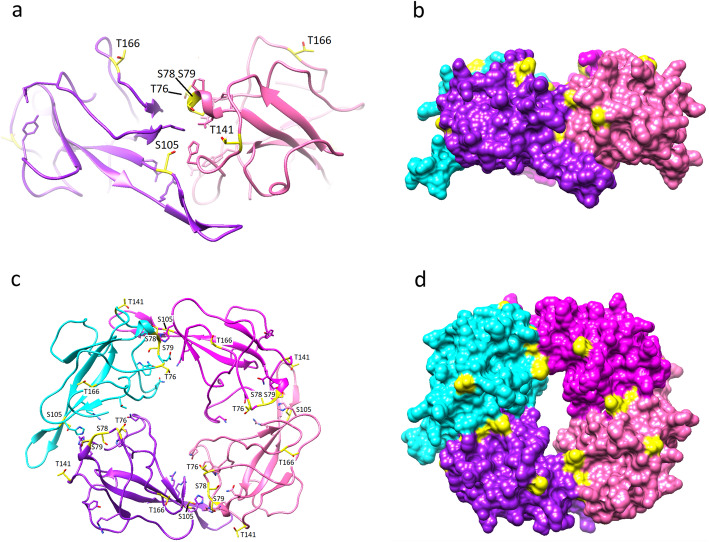
“The Y789 and T791 found at the subunit interface may play an important role in regulating trimer assembly (4).”
BackgroundMethodResultInfluentialSurfaceome analysis of extracellular vesicles from senescent cells uncovers uptake repressor DPP4
Meng, Q., Chen, C., Yang, N., Gololobova, O. A., Shi, C., Dunn, C., Rossi, M. S., Martindale, J. L., Basisty, N., Ding, J., et al. (2023) · Proceedings of the National Academy of Sciences · doi:10.1073/pnas.2219801120 · Cited by 45
“We hypothesize that macrophages in this paradigm engulf EVs, in keeping with their typical function, and do not rely on the presence of membrane detection proteins, as previously described (42, 43).”
BackgroundIntra-genome variability in the dinucleotide composition of SARS-CoV-2
Digard, P., Lee, H. M., Sharp, C., Grey, F. E., & Gaunt, E. R. (2020) · Virus Evolution · doi:10.1093/ve/veaa057 · Cited by 47
Doddapaneni, H., Cregeen, S. J., Sucgang, R., Meng, Q., Qin, X., Avadhanula, V., Chao, H., Menon, V. K., Nicholson, E. G., Henke, D., et al. (2021) · PLoS ONE · doi:10.1371/journal.pone.0244468 · Cited by 45
“In all three studies, N gene was reported as most expressed, which agrees with the mass spectrometry studies as the most highly expressed gene [45].”
ResultGeneration and Functional Analysis of Defective Viral Genomes during SARS-CoV-2 Infection
Zhou, T., Gilliam, N. J., Li, S., Spandau, S., Osborn, R. M., Connor, S., Anderson, C., Mariani, T. J., Thakar, J., Dewhurst, S., et al. (2023) · mBio · doi:10.1128/mbio.00250-23 · Cited by 52
Molecular screening of glycyrrhizin-based inhibitors against ACE2 host receptor of SARS-CoV-2
Ahmad, S., Waheed, Y., Abro, A., Abbasi, S. W., & Ismail, S. (2021) · Journal of Molecular Modeling · doi:10.1007/s00894-021-04816-y · Cited by 44
Proteomic Approaches to Study SARS-CoV-2 Biology and COVID-19 Pathology
Haas, P., Muralidharan, M., Krogan, N. J., Kaake, R. M., & Hüttenhain, R. (2021) · Journal of Proteome Research · doi:10.1021/acs.jproteome.0c00764 · Cited by 43
Puyvelde, B. V., Uytfanghe, K. V., Tytgat, O., Oudenhove, L. V., Gabriels, R., Bouwmeester, R., Daled, S., Bossche, T. V. D., Ramasamy, P., Verhelst, S., et al. (2021) · JACS Au · doi:10.1021/jacsau.1c00048 · Cited by 40
Natural Polymorphisms Are Present in the Furin Cleavage Site of the SARS-CoV-2 Spike Glycoprotein
Xing, Y., Li, X., Gao, X., & Dong, Q. (2020) · Frontiers in Genetics · doi:10.3389/fgene.2020.00783 · Cited by 41
ORF10–Cullin-2–ZYG11B complex is not required for SARS-CoV-2 infection
Mena, E. L., Donahue, C. J., Vaites, L. P., Li, J., Róna, G., O’Leary, C., Lignitto, L., Miwatani-Minter, B., Paulo, J. A., Dhabaria, A., et al. (2021) · Proceedings of the National Academy of Sciences · doi:10.1073/pnas.2023157118 · Cited by 39
“Second, while efforts to identify the abundance of ORF10 using mass spectrometry may miss ORF10 because it is small and contains few tryptic peptides (4), ribosome footprinting studies can also report on whether an RNA is translated (20).”
BackgroundSystematic benchmarking of nanopore Q20+ kit in SARS-CoV-2 whole genome sequencing
Luo, J., Meng, Z., Xu, X., Wang, L., Zhao, K., Zhu, X., Qiao, Q., Ge, Y., Mao, L., & Cui, L. (2022) · Frontiers in Microbiology · doi:10.3389/fmicb.2022.973367 · Cited by 45
Goldswain, H., Dong, X., Penrice-Randal, R., Alruwaili, M., Shawli, G. T., Prince, T., Williamson, M. K., Raghwani, J., Randle, N., Jones, B., et al. (2023) · Genome biology · doi:10.1186/s13059-023-02881-5 · Cited by 39
“This process may account for insertions and deletions, for example, observed in and around the furin cleavage site in the spike glycoprotein [2] and other genes [3].”
BackgroundSelf-citationGupta, Y. A., Maciorowski, D., Zak, S. E., Jones, K. A., Kathayat, R. S., Azizi, S., Mathur, R., Pearce, C. M., Ilc, D. J., Husein, H., et al. (2020) · Methods · doi:10.1016/j.ymeth.2021.01.003 · Cited by 39
A cautionary perspective regarding the isolation and serial propagation of SARS-CoV-2 in Vero cells
Funnell, S. G. P., Afrough, B., Baczenas, J. J., Berry, N. J., Bewley, K. R., Bradford, R., Florence, C., Duff, Y. L., Lewis, M. G., Moriarty, R. V., et al. (2021) · npj Vaccines · doi:10.1038/s41541-021-00346-z · Cited by 38
Evolutionary remodelling of N‐terminal domain loops fine‐tunes SARS‐CoV‐2 spike
Cantoni, D. M., Murray, M. J., Kalemera, M. D., Dicken, S. J., Stejskal, L., Brown, G., Lytras, S., Coey, J. D., McKenna, J. P., Bridgett, S., et al. (2022) · EMBO Reports · doi:10.15252/embr.202154322 · Cited by 40
“Serial passage in Vero E6 cells selects for SARS-CoV-2 with a deletion of the polybasic cleavage site ( D PBCS, Davidson et al , 2020; Bamford et al , 2022).”
Structural insights in cell-type specific evolution of intra-host diversity by SARS-CoV-2
Gupta, K., Toelzer, C., Williamson, M. K., Shoemark, D. K., Oliveira, A. S. F., Matthews, D. A., Almuqrin, A., Staufer, O., Yadav, S. K. N., Borucu, U., et al. (2022) · Nature Communications · doi:10.1038/s41467-021-27881-6 · Cited by 39
Self-citationCombined assessment of MHC binding and antigen abundance improves T cell epitope predictions
Koşaloğlu‐Yalçın, Z., Lee, J., Greenbaum, J., Schoenberger, S. P., Miller, A. M., Kim, Y. J., Sette, A., Nielsen, M., & Peters, B. (2022) · iScience · doi:10.1016/j.isci.2022.103850 · Cited by 37
Oliveira, A. S. F., Shoemark, D. K., Ibarra, A. Á., Davidson, A. D., Berger, I., Schaffitzel, C., & Mulholland, A. J. (2021) · Computational and Structural Biotechnology Journal · doi:10.1016/j.csbj.2021.12.011 · Cited by 39
“The SARS-CoV-2 spike contains two proteolytic cleavage sites (16): one 'furin protease recognition' site at the S1/S2 boundary, thought to activate the protein (19), and a second in the S2 subunit (S2 ́) that releases the fusion peptide (16, 18).”
Self-citationChromatin remodeling (SWI/SNF) complexes, cancer, and response to immunotherapy
Krishnamurthy, N., Kato, S., Lippman, S. M., & Kurzrock, R. (2022) · Journal for ImmunoTherapy of Cancer · doi:10.1136/jitc-2022-004669 · Cited by 41
Krill-Burger, J. M., Dempster, J. M., Borah, A. A., Paolella, B. R., Root, D. E., Golub, T. R., Boehm, J. S., Hahn, W. C., McFarland, J. M., Vázquez, F., et al. (2023) · Genome biology · doi:10.1186/s13059-023-03020-w · Cited by 38
SARS-CoV-2 activates ER stress and Unfolded protein responsePreprint
Rosa-Fernandes, L., Lázari, L. C., da Silva, J. M., Gomes, V. M., Machado, R. R. G., dos Santos, A. F., Araújo, D. B., Coutinho, J. V. P., Arini, G. S., Angeli, C. B., et al. (2021) · bioRxiv (Cold Spring Harbor Laboratory) · doi:10.1101/2021.06.21.449284 · Cited by 37
Zahedipour, F., Zahedipour, F., Zamani, P., Jaafari, M. R., & Sahebkar, A. (2024) · Virus Research · doi:10.1016/j.virusres.2024.199314 · Cited by 38
TMPRSS2 promotes SARS-CoV-2 evasion from NCOA7-mediated restriction
Khan, H., Winstone, H., Jiménez-Guardeño, J. M., Graham, C., Doores, K. J., Goujon, C., Matthews, D. A., Davidson, A. D., Rihn, S. J., Palmarini, M., et al. (2021) · PLoS Pathogens · doi:10.1371/journal.ppat.1009820 · Cited by 35
“SARS-CoV-2 strain England/02/2020 in which the RRAR furin cleavage site had been deleted has been described [10,96].”
MethodSelf-citationPatel, D. R., Field, C. J., Septer, K. M., Sim, D. G., Jones, M. J., Heinly, T. A., Vanderford, T. H., McGraw, E. A., & Sutton, T. C. (2021) · Journal of Virology · doi:10.1128/jvi.02232-20 · Cited by 33
Cook, G. M., Brown, K., Shang, P., Li, Y., Soday, L., Dinan, A. M., Tumescheit, C., Mockett, A. P. A., Fang, Y., Firth, A. E., et al. (2022) · eLife · doi:10.7554/elife.75668 · Cited by 35
Biology of the SARS-CoV-2 Coronavirus
Mingaleeva, R. N., Nigmatulina, N. A., Sharafetdinova, L. M., Romozanova, A. M., Gabdoulkhakova, A. G., Filina, Y. V., Фирнаялович, Ш. Р., Rizvanov, A. A., & Рифкатовна, М. Р. (2022) · Biochemistry (Moscow) · doi:10.1134/s0006297922120215 · Cited by 41
“[34] presented the evidence based on the peptide mapping obtained with the help of tandem mass spectrometry, indicating presence of the previously unknown viral proteins, some of which may originate from the non-canonical subgenomic RNAs.”
BackgroundExploring dynamics and network analysis of spike glycoprotein of SARS-COV-2
Ghorbani, M., Brooks, B. R., & Klauda, J. B. (2021) · Biophysical Journal · doi:10.1016/j.bpj.2021.02.047 · Cited by 33
“1) can be divided into two subunits (S1 and S2), which can be cleaved at residues 685–686 (furin cleavage site) by TMPRSS protease after binding to host cell receptor h-ACE2 (13).”
Chen, D. W., Turcinovic, J., Feng, S., Kenney, D., Chin, C. V., Choudhary, M. C., Conway, H. L., Semaan, M., Close, B. J., Tavares, A. H., et al. (2023) · iScience · doi:10.1016/j.isci.2023.106634 · Cited by 33
The Applications of Nanopore Sequencing Technology in Animal and Human Virus Research
Ji, C., Feng, X.-Y., Huang, Y., & Chen, R. (2024) · Viruses · doi:10.3390/v16050798 · Cited by 35
Salzer, R., Clark, J. J., Vaysburd, M., Chang, V. T.-C., Albecka, A., Kiss, L., Sharma, P., Llamazares, A. G., Kipar, A., Hiscox, J. A., et al. (2021) · FEBS Letters · doi:10.1002/1873-3468.14171 · Cited by 32
Self-citationReduced subgenomic RNA expression is a molecular indicator of asymptomatic SARS-CoV-2 infection
Wong, C., Ngan, C. Y., Goldfeder, R. L., Idol, J., Kuhlberg, C., Maurya, R., Kelly, K., Omerza, G., Renzette, N., Abreu, F. D., et al. (2021) · Communications Medicine · doi:10.1038/s43856-021-00034-y · Cited by 31
Guo, C., Tsai, S. J., Ai, Y., Li, M., Pekosz, A. S., Cox, A., Atai, N. A., & Gould, S. J. (2022) · Science Advances · doi:10.1126/sciadv.ade5085 · Cited by 31
The SARS-CoV-2 protein ORF3c is a mitochondrial modulator of innate immunity
Stewart, H., Lu, Y., O’Keefe, S. M., Valpadashi, A., Cruz‐Zaragoza, L. D., Michel, H. A., Nguyen, S. K., Carnell, G., Lukhovitskaya, N. I., Milligan, R., et al. (2023) · iScience · doi:10.1016/j.isci.2023.108080 · Cited by 31
Self-citationAhsan, N., Rao, R. S. P., Wilson, R. S., Punyamurtula, U., Salvato, F., Petersen, M., Ahmed, M. K., Abid, M. R., Verburgt, J. C., Kihara, D., et al. (2021) · PROTEOMICS · doi:10.1002/pmic.202000279 · Cited by 34
SARS-CoV-2 RNA Quantification Using Droplet Digital RT-PCR
Kinloch, N. N., Ritchie, G., Dong, W. W. Y., Cobarrubias, K. D., Sudderuddin, H., Lawson, T., Matic, N., Montaner, J. S. G., Leung, V. C. M., Romney, M. G., et al. (2021) · Journal of Molecular Diagnostics · doi:10.1016/j.jmoldx.2021.04.014 · Cited by 31
“This is consistent with assay analytical efficiency (Figure 2) and in vivo coronavirus 292 RNA expression patterns, where transcripts covering the 3’ end of the genome are more 293 abundant than those covering the 5’ end (37-40).”
Schlag, F., Allegrini, A. G., Buitelaar, J. K., Verhoef, E., van Donkelaar, M. M. J., Plomin, R. J., Rimfeld, K., Fisher, S. E., & Pourcain, B. S. (2022) · Molecular Psychiatry · doi:10.1038/s41380-021-01419-0 · Cited by 33
nanoDoc: RNA modification detection using Nanopore raw reads with Deep One-Class ClassificationPreprint
Ueda, H. (2020) · bioRxiv (Cold Spring Harbor Laboratory) · doi:10.1101/2020.09.13.295089 · Cited by 32
“[37] Davidson AD, Williamson MK, Lewis S, Shoemark D, Carroll MW, Heesom KJ, et al.”
BackgroundMethodInfluentialGoenka, A., Halliday, A., Gregorová, M., Milodowski, E., Thomas, A. C., Williamson, M. K., Baum, H. E., Oliver, E., Long, A. E., Knežević, L., et al. (2021) · Cell Reports Medicine · doi:10.1016/j.xcrm.2021.100327 · Cited by 32
Self-citationAntimicrobial Peptides and Physical Activity: A Great Hope against COVID 19
Laneri, S., Brancaccio, M., Mennitti, C., Biasi, M.-G. D., Pero, M. E., Pisanelli, G., Scudiero, O., & Pero, R. (2021) · Microorganisms · doi:10.3390/microorganisms9071415 · Cited by 29
Koetzner, C. A., Hurst-Hess, K. R., Kuo, L., & Masters, P. S. (2021) · Virology · doi:10.1016/j.virol.2021.12.004 · Cited by 30
Tugaeva, K. V., Sysoev, A. A., Kapitonova, A. A., Smith, J. L. R., Zhu, P., Cooley, R. B., Antson, A. A., & Sluchanko, N. N. (2021) · Journal of Molecular Biology · doi:10.1016/j.jmb.2022.167891 · Cited by 29
“6 Ser197 site (SRNSTP), undergoes phosphorylation in vivo [4,18] and by PKA in vitro [26], and is the best candidate 14-3-3-binding motif.”
Systematic Exploration of SARS-CoV-2 Adaptation to Vero E6, Vero E6/TMPRSS2, and Calu-3 Cells
Aiewsakun, P., Phumiphanjarphak, W., Ludowyke, N., Purwono, P. B., Manopwisedjaroen, S., Srisaowakarn, C., Ekronarongchai, S., Suksatu, A., Yuvaniyama, J., & Thitithanyanont, A. (2023) · Genome Biology and Evolution · doi:10.1093/gbe/evad035 · Cited by 29
Pachchek, S., Landoulsi, Z., Pavelka, L., Schulte, C., Buena‐Atienza, E., Groß, C., Hauser, A., Bobbili, D. R., Casadei, N., May, P., et al. (2023) · npj Parkinson s Disease · doi:10.1038/s41531-023-00595-w · Cited by 37
Non-Receptor-Mediated Lipid Membrane Permeabilization by the SARS-CoV-2 Spike Protein S1 Subunit
Asandei, A., Mereuta, L., Schiopu, I., Park, J., Seo, C. H., Park, Y., & Luchian, T. (2020) · ACS Applied Materials & Interfaces · doi:10.1021/acsami.0c17044 · Cited by 29
Assessing agreement between different polygenic risk scores in the UK Biobank
Clifton, L., Collister, J. A., Liu, X., Littlejohns, T. J., & Hunter, D. J. (2022) · Scientific Reports · doi:10.1038/s41598-022-17012-6 · Cited by 31
Zachrdla, M., Savastano, A., de Opakua, A. I., Cima‐Omori, M., & Zweckstetter, M. (2022) · Protein Science · doi:10.1002/pro.4409 · Cited by 28
“Further support for an important role of the NTE in the life cycle of N comes from the observation that, besides the SR-region, it can be phosphorylated in SARS-CoV-2 infected cells (Figure 1d).(23,24)”
BackgroundClark, J. J., Penrice-Randal, R., Sharma, P., Kipar, A., Dong, X., Pennington, S. H., Marriott, A. E., Colombo, S., DAVIDSON, A., Williamson, M. K., et al. (2024) · Viruses · doi:10.3390/v16060863 · Cited by 30
“Direct RNA sequencing was performed as describe previously (31) and an inhouse script was used to check for deletions in the mapped reads.”
MethodSelf-citationBewley, K. R., Gooch, K. E., Thomas, K. M., Longet, S., Wiblin, N. R., Hunter, L. E., Chan, K., Brown, P. J., Russell, R. A., Ho, C. M. K., et al. (2021) · Science Advances · doi:10.1126/sciadv.abg7996 · Cited by 29
“The high-titer stock of challenge virus was prepared (passage 3), and quality control sequencing showed that it was identical to the original stock received from the Doherty Institute and did not contain a commonly reported 8–amino acid deletion in the furin cleavage site (29).”
Self-citationWang, C.-X., Xiu, L., Hu, Q., Lee, T., Liu, J., Shi, L., Zhou, X., Guo, X., Hou, L., & Yin, K. (2023) · Advances in Climate Change Research · doi:10.1016/j.accre.2023.11.014 · Cited by 33
Ugolini, C., Mulroney, L., Léger, A., Castelli, M., Criscuolo, E., Williamson, M. K., Davidson, A. D., Almuqrin, A., Giambruno, R., Jain, M., et al. (2022) · Nucleic Acids Research · doi:10.1093/nar/gkac144 · Cited by 28
“Our data support the expression of an sgRNA for ORF10, whose existence was recently debated (11,14,46).”
BackgroundMethodSelf-citationVindeirinho, J. M., Pinho, E., Azevedo, N. F., & Almeida, C. (2022) · Frontiers in Cellular and Infection Microbiology · doi:10.3389/fcimb.2022.799678 · Cited by 27
“, 2020) and originate 16 NSPs in total, with ORF1a originating 11 and ORF1ab leading to 16 (Davidson et al., 2020; Clark et al., 2021).”
BackgroundEspeseth, A. S., Yuan, M., Citron, M. P., Reiserova, L., Morrow, G., Wilson, A. J., Horton, M. S., Rukhman, M., Kinek, K. C., Hou, F., et al. (2022) · EBioMedicine · doi:10.1016/j.ebiom.2022.104203 · Cited by 26
Hartley, P. D., Tillett, R. L., AuCoin, D. P., Sevinsky, J. R., Xu, Y., Gorzalski, A. J., Pandori, M., Buttery, E., Hansen, H., Picker, M. A., et al. (2021) · Journal of genetics and genomics/Journal of Genetics and Genomics · doi:10.1016/j.jgg.2021.01.004 · Cited by 25
Hidden genomic diversity of SARS-CoV-2: implications for qRT-PCR diagnostics and transmissionPreprint
Sapoval, N., Mahmoud, M., Jochum, M. D., Liu, Y., Elworth, R. A. L., Wang, Q., Albin, D., Ogilvie, H., Lee, M. D., Villapol, S., et al. (2020) · bioRxiv (Cold Spring Harbor Laboratory) · doi:10.1101/2020.07.02.184481 · Cited by 26
Targeted escape of SARS-CoV-2 in vitro from monoclonal antibody S309, the precursor of sotrovimab
Magnus, C. L., Hiergeist, A., Schuster, P., Rohrhofer, A., Medenbach, J., Gessner, A., Peterhoff, D., & Schmidt, B. (2022) · Frontiers in Immunology · doi:10.3389/fimmu.2022.966236 · Cited by 24
Donovan-Banfield, I., Milligan, R., Hall, S., Gao, T., Murphy, E., Li, J., Shawli, G. T., Hiscox, J. A., Zhuang, X., McKeating, J. A., et al. (2022) · PLoS ONE · doi:10.1371/journal.pone.0276697 · Cited by 26
“RNA extraction and sequencing was as described previously [27, 31, 34].”
MethodSelf-citationRais, Y., Fu, Z., & Drabovich, A. P. (2021) · Clinical Proteomics · doi:10.1186/s12014-021-09325-x · Cited by 24
“Some of these tryptic peptides were experimentally detected by mass spectrometry [20, 29].”
BackgroundMethodAdvances in nanopore direct RNA sequencing and its impact on biological research
Sun, K., Li, J., Che, C., Zhou, X., Ma, G., Mao, L., Tang, Q., Ma, B., Li, D., Chen, Z., et al. (2025) · Biotechnology Advances · doi:10.1016/j.biotechadv.2025.108710 · Cited by 22
Huggett, J. F., Moran‐Gilad, J., & Lee, J. E. (2021) · Current Opinion in Pulmonary Medicine · doi:10.1097/mcp.0000000000000768 · Cited by 22
Zou, W., Xiong, M., Hao, S., Zhang, E. Y., Baumlin, N., Kim, M. D., Salathe, M. A., Yan, Z., & Qiu, J. (2021) · mBio · doi:10.1128/mbio.01006-21 · Cited by 23
“isolated in SARS-CoV-2 infected Vero cells (17,31-34).”
BackgroundUpregulation of PD‐L1 by SARS‐CoV‐2 promotes immune evasion
Huang, H., Wang, S., Fang, G., Chou, W., Liao, C., Sun, C., Jan, J., Ma, H., Ko, H., Ko, Y., et al. (2023) · Journal of Medical Virology · doi:10.1002/jmv.28478 · Cited by 24
Isolation of ACE2-dependent and -independent sarbecoviruses from Chinese horseshoe bats
Guo, H., Li, A., Dong, T.-Y., Si, H.-R., Hu, B., Li, B., Zhu, Y., Shi, Z., & Letko, M. C. (2023) · Journal of Virology · doi:10.1128/jvi.00395-23 · Cited by 24
“192 193 Tissue culture adaptations in ACE2-independent spike increase trypsin resistance 194 Coronavirus spike genes are known to rapidly acquire cell-culture specific adaptations – 195 sometimes in as few as three passages (24-31).”
BackgroundBriggs, E. M., Ward, W. S., Rey, S., Law, D., Nelson, K., Bois, M., Ostrov, N., Lee, H. H., Laurent, J. M., & Mita, P. (2021) · Proceedings of the National Academy of Sciences · doi:10.1073/pnas.2113065118 · Cited by 23
Li, X., Cui, Z., Fan, H., Chen, Q., Cao, L., Qiu, H., Zhang, N., Xu, Y., Zhang, R., Chao Hui, Z. H. O. U., et al. (2022) · The Innovation · doi:10.1016/j.xinn.2022.100221 · Cited by 23
“Similar observations have been reported where multiple variants bearing furin site deletions emerged in SARS-CoV-2 preparations using Vero E6 cells and in clinical samples.(22,24,25) The frequent detection of these variants suggests that this region is likely to be tolerant of deletions in vitro.”
Storti, B., Quaranta, P., Primio, C. D., Clementi, N., Mancini, N., Criscuolo, E., Spezia, P. G., Carnicelli, V., Lottini, G., Paolini, E., et al. (2021) · Computational and Structural Biotechnology Journal · doi:10.1016/j.csbj.2021.10.038 · Cited by 22
Are There Hidden Genes in DNA/RNA Vaccines?
Beaudoin, C. A., Bartas, M., Volná, A., Pečínka, P., & Blundell, T. L. (2022) · Frontiers in Immunology · doi:10.3389/fimmu.2022.801915 · Cited by 23
Beaudoin, C. A., Pandurangan, A. P., Kim, S. Y., Hamaia, S. W., Huang, C. L.-H., Blundell, T. L., Vedithi, S. C., & Jackson, A. P. (2022) · Journal of Medical Virology · doi:10.1002/jmv.27845 · Cited by 23
“Additionally, the spike protein has been shown to be phosphorylated and palmitoylated.(22,23) 4182 | BEAUDOIN ET AL.”
BackgroundGoudswaard, L. J., Williams, C., Khalil, J. S., Burley, K., Hamilton, F., Arnold, D., Milne, A., Lewis, P. A., Heesom, K. J., Mundell, S. J., et al. (2023) · Journal of Thrombosis and Haemostasis · doi:10.1016/j.jtha.2023.01.018 · Cited by 21
“[47] in COVID-19 patient samples, indicating that the virus hadnot enteredand/or replicated inplatelets.”
Self-citationHeupink, T. H., Verboven, L., Warren, R. M., & Rie, A. V. (2021) · Microbial Genomics · doi:10.1099/mgen.0.000689 · Cited by 20
MAVISp: A Modular Structure-Based Framework for Protein Variant Effects
Arnaudi, M., Utichi, M., Degn, K., Tiberti, M., Beltrame, L., Krzesińska, K., Sánchez-Izquierdo Besora, P., Kiachaki, E., Scrima, S., Bauer, L., et al. (2022) · doi:10.1101/2022.10.22.513328 · Cited by 20
Praissman, J. L., & Wells, L. (2021) · Molecular & Cellular Proteomics · doi:10.1016/j.mcpro.2021.100103 · Cited by 24
Sharif, N., Ahmed, S. N., Opu, R. R., Daullah, M. U., Khan, S., Talukder, A. A., Okitsu, S., Ushijima, H., Zhang, M., & Dey, S. K. (2021) · Epidemiology and Infection · doi:10.1017/s095026882100100x · Cited by 19
Metadata
- Authors
- Davidson, A. D., Williamson, M. K., Lewis, S., Shoemark, D., Carroll, M. W., Heesom, K. J., Zambon, M., Ellis, J., Lewis, P. A., Hiscox, J. A., & Matthews, D. A.
- Affiliations
- University of Bristol (GB)
- Public Health England (GB)
- University of Liverpool (GB)
- Corresponding author
- Matthews, David A.
- ORCID
- Venue
- Genome Medicine
- Published
- 2020-07-28
- Volume
- 12
- Issue
- 1
- Pages
- 68-68
- ISSN
- 1756-994X (ISSN-L)
- PMC
- PMC7386171
- OpenAlex
- W3043391491
- Semantic Scholar
- bb30d668aa8f4ff1d3fcf6a09dd527a9c23c258d
- Cited by
- 457
- References
- 61
- Citations by year
- 2026: 12 · 2025: 39 · 2024: 45 · 2023: 55 · 2022: 95 · 2021: 143 · 2020: 68
- FWCI
- 11.88
- Type
- journal article
- Language
- en
- Open access
- gold
- doi.org
- Licence
- cc-by
- creativecommons.org/licenses/by/4.0 (tdm)
- creativecommons.org/licenses/by/4.0 (vor)
- Locations
- Genome Medicine (publishedVersion, cc-by)
- bioRxiv (Cold Spring Harbor Laboratory) (acceptedVersion, cc-by)
- PubMed Central (publishedVersion, cc-by)
- PubMed (publishedVersion)
- Bristol Research (University of Bristol) (acceptedVersion, cc-by)
- DOAJ (DOAJ: Directory of Open Access Journals) (submittedVersion, cc-by-sa)
- Funders
- Biotechnology and Biological Sciences Research Council (BB/M02542X/1)
- U.S. Food and Drug Administration (HHSF223201510104C)
- Topics
- Health Sciences › Medicine › Infectious Diseases › SARS-CoV-2 and COVID-19 Research
- Life Sciences › Agricultural and Biological Sciences › Animal Science and Zoology › Animal Virus Infections Studies
- Physical Sciences › Chemistry › Spectroscopy › Advanced Proteomics Techniques and Applications
- Keywords
- SARS-CoV-2, viral transcriptome, viral proteome, phosphoproteome, spike protein, furin cleavage site, in-frame deletion, subgenomic mRNA, Vero E6 cells, viral evolution, vaccine targets
- MeSH terms
- Betacoronavirus, SARS-CoV-2, Animals, Chlorocebus aethiops, Phosphorylation, Serial Passage, Vero Cells, Sequence Deletion, Sequence Analysis, RNA, Gene Expression Profiling, Proteomics, Tandem Mass Spectrometry, Spike Glycoprotein, Coronavirus
About these checks
Registry, retraction, Cites and statistics results are computed, not judged, with one exception: a printed reference that no index lists is read once by a model before it counts as a citation error. Claims are extracted by a model and kept only when their quote appears verbatim in the text; each cited source is then checked, with a model’s help, for whether it says what the claim relies on. Those verdicts can be wrong — read the claim’s quote and the cited source before relying on one.
Statistics and arithmetic are recomputed, not judged.
Confidence bands are shown only for fields calibrated on our annotated test set. None is calibrated yet, so no band is shown.
What counts as a claim ›How we measure confidence ›How we check this ›
Are you an author, or do you see a problem with this page? Request a review
Data sources
Bibliographic data: Semantic Scholar, OpenAlex, Crossref.
Contains information from the Semantic Scholar Academic Graph Datasets, made available under the ODC Attribution License (ODC-BY 1.0).
Semantic Scholar’s data is described in: Kinney, R., et al. (2023). The Semantic Scholar Open Data Platform. arXiv:2301.10140.
