

Characterisation of the transcriptome and proteome of SARS-CoV-2 reveals a cell passage induced in-frame deletion of the furin-like cleavage site from the spike glycoprotein
Open accessPublished version of a preprint
The DOI matches its Crossref record; 64 of the 64 references it cites were found in a registry or an index.
Abstract
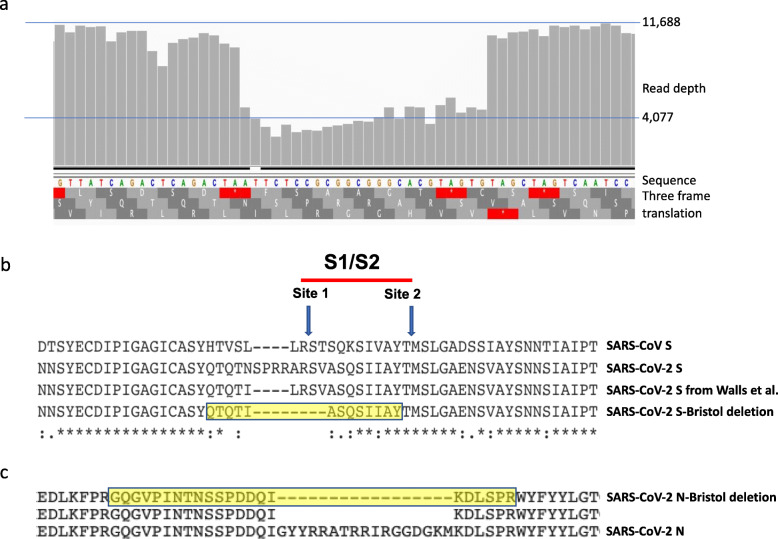
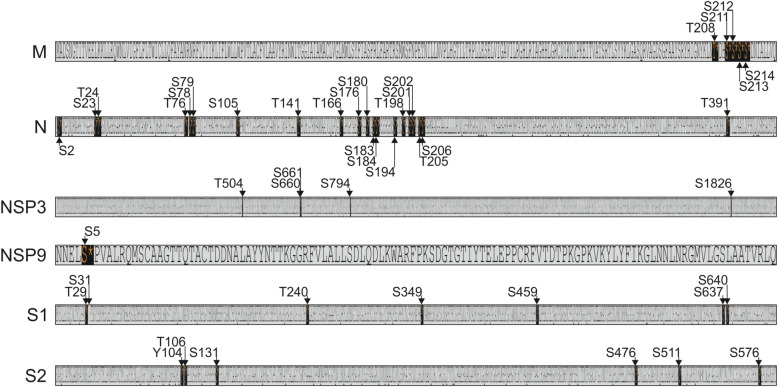
Background: SARS-CoV-2 is a recently emerged respiratory pathogen that has significantly impacted global human health. We wanted to rapidly characterise the transcriptomic, proteomic and phosphoproteomic landscape of this novel coronavirus to provide a fundamental description of the virus’s genomic and proteomic potential. Methods: We used direct RNA sequencing to determine the transcriptome of SARS-CoV-2 grown in Vero E6 cells which is widely used to propagate the novel coronavirus. The viral transcriptome was analysed using a recently developed ORF-centric pipeline. Allied to this, we used tandem mass spectrometry to investigate the proteome and phosphoproteome of the same virally infected cells. Results: Our integrated analysis revealed that the viral transcripts (i.e. subgenomic mRNAs) generally fitted the expected transcription model for coronaviruses. Importantly, a 24 nt in-frame deletion was detected in over half of the subgenomic mRNAs encoding the spike (S) glycoprotein and was predicted to remove a proposed furin cleavage site from the S glycoprotein. Tandem mass spectrometry identified over 500 viral peptides and 44 phosphopeptides in virus-infected cells, covering almost all proteins predicted to be encoded by the SARS-CoV-2 genome, including peptides unique to the deleted variant of the S glycoprotein. Conclusions: Detection of an apparently viable deletion in the furin cleavage site of the S glycoprotein, a leading vaccine target, shows that this and other regions of SARS-CoV-2 proteins may readily mutate. The furin site directs cleavage of the S glycoprotein into functional subunits during virus entry or exit and likely contributes strongly to the pathogenesis and zoonosis of this virus. Our data emphasises that the viral genome sequence should be carefully monitored during the growth of viral stocks for research, animal challenge models and, potentially, in clinical samples. Such variations may result in different levels of virulence, morbidity and mortality.
Overview
The claims and statistics of this paper haven’t been checked yet.
Free: it reads the open-access text and checks the first 5 claims that cite a source we can check. Create a free account to check every claim.
Integrity signals
Registry
Cites
Statistics
Figures
Verification
Claims the paper makes
The claims and statistics of this paper haven’t been checked yet.
Free: it reads the open-access text and checks the first 5 claims that cite a source we can check. Create a free account to check every claim.
Claims other papers make about this one
Each is checked against this paper’s own text: does it say what the citing paper says it does?
In the citing paper
“Moreover, a recent phosphoproteome analysis pointed to the regulation of viral proteins through PTMs160.”
From A high-stringency blueprint of the human proteome (2020) · cites this paper as [160]
Self-check
Percentages, sums and reported differences re-computed from the paper’s own numbers.
The self-check needs the paper’s full text.
Citations
Cites
A pneumonia outbreak associated with a new coronavirus of probable bat origin
Zhou, P., Yang, X.-L., Wang, X.-G., Hu, B., Zhang, L., Zhang, W., Si, H.-R., Zhu, Y., Li, B., Huang, C.-L., et al. (2020) · Nature · doi:10.1038/s41586-020-2012-7 · Cited by 21,969
Hoffmann, M., Kleine-Weber, H., Schroeder, S., Krüger, N., Herrler, T., Erichsen, S., Schiergens, T. S., Herrler, G., Wu, N.-H., Nitsche, A., et al. (2020) · Cell · doi:10.1016/j.cell.2020.02.052 · Cited by 20,286 · cited 1×
“The presence of a furinlike cleavage site at the S1/S2 boundary results in cleavage of the SARS-CoV-2 S glycoprotein before viral exit from the cell, whereas the S glycoprotein of coronaviruses such as SARS-CoV, lacking a S1/S2 furin cleavage site, exit the cells with the S glycoprotein largely uncleaved, necessitatin…”
BackgroundA SIMPLE METHOD OF ESTIMATING FIFTY PER CENT ENDPOINTS12
REED, L. J., & MUENCH, H. (1938) · American Journal of Epidemiology · doi:10.1093/oxfordjournals.aje.a118408 · Cited by 19,926
A new coronavirus associated with human respiratory disease in China
Wu, F., Zhao, S., Yu, B., Chen, Y.-M., Wang, W., Song, Z.-G., Hu, Y., Tao, Z.-W., Tian, J.-H., Pei, Y.-Y., et al. (2020) · Nature · doi:10.1038/s41586-020-2008-3 · Cited by 11,688 · cited 6×
“termined and revealed the virus is most closely related to bat coronavirus RaTG13 and clusters phylogenetically with SARS-CoV, which emerged in 2002, in the genus Betacoronavirus of the family Coronaviridae [3, 4].”
BackgroundInfluentialAn interactive web-based dashboard to track COVID-19 in real time
Dong, E., Du, H., & Gardner, L. (2020) · The Lancet Infectious Diseases · doi:10.1016/s1473-3099(20)30120-1 · Cited by 10,048
Cryo-EM structure of the 2019-nCoV spike in the prefusion conformation
Wrapp, D., Wang, N., Corbett, K. S., Goldsmith, J. A., Hsieh, C.-L., Abiona, O., Graham, B. S., & McLellan, J. S. (2020) · Science · doi:10.1126/science.abb2507 · Cited by 8,897
Structure, function and antigenicity of the SARS-CoV-2 spike glycoprotein
Walls, A. C., Park, Y.-J., Tortorici, M. A., Wall, A., McGuire, A. T., & Veesler, D. (2020) · doi:10.1101/2020.02.19.956581 · Cited by 8,586 · cited 2×
“The presence of a furinlike cleavage site at the S1/S2 boundary results in cleavage of the SARS-CoV-2 S glycoprotein before viral exit from the cell, whereas the S glycoprotein of coronaviruses such as SARS-CoV, lacking a S1/S2 furin cleavage site, exit the cells with the S glycoprotein largely uncleaved, necessitatin…”
BackgroundDetection of 2019 novel coronavirus (2019-nCoV) by real-time RT-PCR
Corman, V. M., Landt, O., Kaiser, M., Molenkamp, R., Meijer, A., Chu, D. K., Bleicker, T., Brünink, S., Schneider, J., Schmidt, M. L., et al. (2020) · Eurosurveillance · doi:10.2807/1560-7917.es.2020.25.3.2000045 · Cited by 7,344 · cited 1×
“This deletion removes one of the primer sites recently recommended as a first-line screening tool [50].”
BackgroundSelf-citationThe proximal origin of SARS-CoV-2
Andersen, K. G., Rambaut, A., Lipkin, W. I., Holmes, E. C., & Garry, R. F. (2020) · Nature Medicine · doi:10.1038/s41591-020-0820-9 · Cited by 5,081 · cited 1×
“The furin cleavage site is also not found in other “lineage B” betacoronaviruses including SARS-CoV, but has been detected in betacoronaviruses in other lineages, suggesting that this region has arisen during natural evolution [25].”
BackgroundCoronaviruses: An Overview of Their Replication and Pathogenesis
Fehr, A. R., & Perlman, S. (2015) · Methods in Molecular Biology · doi:10.1007/978-1-4939-2438-7_1 · Cited by 3,787
Research works printed but not linked: 2
- Davidson, A. D. et al. Characterisation of the transcriptome and proteome of SARS-CoV-2 reveals a cell passage induced in-frame deletion of the furin-like cleavage site from the spike glycoprotein. Proteomics dataset. PRIDE PXD018241. 2020. PMC7386171 32723359
- Davidson, A. D. et al. Characterisation of the transcriptome and proteome of SARS-CoV-2 reveals a cell passage induced in-frame deletion of the furin-like cleavage site from the spike glycoprotein. Transcriptomics data. ENA PRJEB39337. 2020. PMC7386171 32723359
Cited by
Items 401–461 of 461
Allosteric modulation by the fatty acid site in the glycosylated SARS-CoV-2 spikePreprint
Oliveira, A. S. F., Kearns, F. L., Rosenfeld, M. A., Casalino, L., Berger, I., Schaffitzel, C., Davidson, A. D., Amaro, R. E., & Mulholland, A. J. (2024) · eLife · doi:10.7554/elife.97313.1 · Cited by 1
Self-citationComas‐García, M. (2025) · eLife · doi:10.7554/elife.97532.2.sa3 · Cited by 1
Suzuki-Okutani, M., Okamura, S., Tanggis, Sasaki, H., Lee, S. P., Yoshida, A., Goto, S., Matsumoto, M., Yamawaki, M., Miyazaki, T., et al. (2025) · eLife · doi:10.7554/elife.97532.2 · Cited by 4
AdaGenes: A streaming processor for high-throughput variant annotation and filteringPreprint
Kurz, N. S., Drofenik, K., Kornrumpf, K., Reuter‐Jessen, K., & Dönitz, J. (2025) · bioRxiv (Cold Spring Harbor Laboratory) · doi:10.1101/2025.06.17.659929 · Cited by 1
pH-induced structural changes in SARS-CoV-2 spike variantsPreprint
Oliveira, A. S. F., Tulli, L., Kearns, F. L., Casalino, L., Rosenfeld, M. A., Berger, I., Schaffitzel, C., Davidson, A. D., Haddrell, A. E., Reid, J. P., et al. (2025) · bioRxiv (Cold Spring Harbor Laboratory) · doi:10.1101/2025.11.17.688702 · Cited by 1
“…short, hydrophobic helix that inserts into the host cell membrane to initiate fusion (37-39), while the furin cleavage site (a polybasic insertion located at the S1/S2 junction (37, 38)) is involved in protein activation (42), with its removal reducing viral infectivity (8, 40, 42, 132, 145, 146).”
Self-citationHigh rate of SARS-CoV2 nonsense spike genomes coding for prematurely truncated proteinsPreprint
D'Alessandro, A. (2021) · arXiv (Cornell University) · doi:10.48550/arxiv.2105.10074
Campos‐Pardos, E., Seral, J. C., Aguilera, A., Milagro, A., Martínez-Sapiña, A. M., Barbeito, G., del Molino, M. L. P., & Gonzalo‐Asensio, J. (2021) · medRxiv · doi:10.1101/2021.08.30.21262536
“This transcriptome architecture might 56 have key implications in the qRT-PCR diagnostic of SARS-CoV-2 due to the increased 57 accumulation of viral transcripts as we progress in the viral genome as was previously 58 demonstrated by RNA sequencing [6, 7].”
MethodResultGonsalves, R. C., Pacharla, H., Manohar, S. S., Belliraj, S. K., Tripathi, E., Karyala, P., & Pakala, S. B. (2021) · Elsevier eBooks · doi:10.1016/b978-0-323-85662-1.00006-9
Mutation hotspots of SARS-CoV-2 RNA motifs conserved in betacoronaviruses
Kobalo, N., Kulikov, A., & Titov, I. I. (2021) · Journal of Physics Conference Series · doi:10.1088/1742-6596/2099/1/012037
“Fragment #96 belongs to the M gene encoding a membrane glycoprotein [9].”
BackgroundPierros, V., Kontopodis, E., Stravopodis, D. J., & Tsangaris, G. T. (2021) · SSRN Electronic Journal · doi:10.2139/ssrn.3972247
Miranda, J., Bringas, R., Fernández-de-Cossío, J., & Perera, Y. (2021) · bioRxiv (Cold Spring Harbor Laboratory) · doi:10.1101/2021.07.26.453805
Hörnich, B. F. (2022) · eDiss (Georg-August-Universität Göttingen) · doi:10.53846/goediss-9251 · Cited by 1
Kastenhuber, E. R., Johnson, J. L., Yaron, T. M., Mercadante, M. N., & Cantley, L. C. (2022) · bioRxiv (Cold Spring Harbor Laboratory) · doi:10.1101/2022.06.16.496428
Investigação do papel da Microglia derivada de iPSC no Transtorno do Espectro do Autismo.
Castanha, A. G. (2022) · Digital Library of Theses and Dissertations (Universidade de São Paulo) · doi:10.11606/d.42.2022.tde-18042022-145828
Molecular dynamic simulation with protein and detection of repurposable drugs for COVID-19
Mazraedoost, S., Mousavi, S. M., Kazemi, K., Hashemi, S. A., Chiang, W., Gholami, A., Omidifarf, N., Afsa, M., Babapoor, A., & Zarei, M. (2022) · Elsevier eBooks · doi:10.1016/b978-0-323-95578-2.00011-x
Avaliação da infecção de SARS-CoV-2 em astrócitos
Maglio, T. G. (2022) · Digital Library of Theses and Dissertations (Universidade de São Paulo) · doi:10.11606/d.10.2022.tde-01122022-120058
Rapid System to Detect Variants of SARS-CoV-2 in Nasopharyngeal Swabs
Favaro, M., Zampini, P., Pistoia, E. S., Gaziano, R., Grelli, S., & Fontana, C. (2023) · Viruses · doi:10.3390/v15020353
“All these variants likely have not had an impact on the mortality rate but led to increased transmissibility, especially for Gamma and Beta, in which point mutations K417N and E484K could weaken the effectiveness of vaccines, all of which resulted in a worsening of the epidemiological situation across the globe [11,12…”
Determine transposable genes when the orders of genes are differentPreprint
Wang, Y. (2023) · bioRxiv (Cold Spring Harbor Laboratory) · doi:10.1101/2023.03.14.532623
SARS-CoV-2: Structure, Pathogenesis, and Diagnosis
Goverdhan, A. (2023) · Elsevier eBooks · doi:10.1016/b978-0-323-87539-4.00002-6 · Cited by 2
Computational Analysis of SARS-CoV-2 Genome Representing Intraspecific Variability
Kumari, U., Malik, M., & Kumar, D. (2023) · International Journal for Research in Applied Science and Engineering Technology · doi:10.22214/ijraset.2023.51486
Liu, Z., Gerritsen, J., Smidt, H., & Zoetendal, E. G. (2023) · bioRxiv (Cold Spring Harbor Laboratory) · doi:10.1101/2023.08.07.552316
Swiatek, L.-S., Surmann, K., Eger, E., Müller, J. U., Salazar, M. G., Guenther, S., Werner, G., Hübner, N., Bohnert, J. A., Becker, K., et al. (2023) · bioRxiv (Cold Spring Harbor Laboratory) · doi:10.1101/2023.12.22.573023
Bioinformatics in the study of microbial infections
Snyder, L. A. S. (2024) · Elsevier eBooks · doi:10.1016/b978-0-12-818619-0.00039-3 · Cited by 1
Chen, S., He, Z., Kanyo, J. E., Lam, T. T., Ha, G., Lindenbach, B. D., & Ha, Y. (2024) · bioRxiv (Cold Spring Harbor Laboratory) · doi:10.1101/2024.05.25.595913
Martínez, S., Salas, B. G. P., Pérez, N., & Neme, A. (2024) · Lecture notes in computer science · doi:10.1007/978-3-031-75543-9_3
Paul, P. M., Parthasarathy, K., Rao, S. S., Sounderrajan, V., Jayaraj, S., & Sunkar, S. (2024) · Current Trends in Biotechnology and Pharmacy · doi:10.5530/ctbp.2024.4s.4
Host Genetic Diversity of SARS-CoV
Hussain, F., Ali, H. H., Siddique, A., Rahim, K., Younas, U., Siddique, F., Nisar, M. F., Shuaib, M., Saeed, M., Li, W., et al. (2024) · BENTHAM SCIENCE PUBLISHERS eBooks · doi:10.2174/9789815274943124010006
Goyzueta-Mamani, L. D., Barazorda-Ccahuana, H. L., Candia-Puma, M. A., Hamdy, N. Μ., & Chávez‐Fumagalli, M. Á. (2025) · bioRxiv (Cold Spring Harbor Laboratory) · doi:10.1101/2025.02.20.639333
Allosteric modulation by the fatty acid site in the glycosylated SARS-CoV-2 spikePreprint
Oliveira, A. S. F., Kearns, F. L., Rosenfeld, M. A., Casalino, L., Tulli, L., Berger, I., Schaffitzel, C., Davidson, A. D., Amaro, R. E., & Mulholland, A. J. (2025) · eLife · doi:10.7554/elife.97313.2
Self-citationRare variants in infection response protein pathways associated with sepsis in childrenPreprint
Lawless, D., Rogg, P., Bouzereau, M., Fallegger, R., Seferbekova, Z., Timonina, V., Popadin, K. Y., Ali, S., Xu, Z. M., Boutry, S., et al. (2025) · medRxiv · doi:10.1101/2025.06.12.25329504
Cueno, M. E., & Imai, K. (2025) · ImmunoInformatics · doi:10.1016/j.immuno.2025.100055
Squires, S., Katte, J.-C. N., Dabelea, D., Pihoker, C., Divers, J., Sobngwi, E., Nyirenda, M., Kreienkamp, R. J., Liese, A. D., SHAH, A. S., et al. (2025) · medRxiv · doi:10.1101/2025.07.17.25330632
Nucleoside Modifications in Novel Coronavirus SARS-CoV-2
Snyder, L. (2025) · Deep Blue (University of Michigan) · doi:10.7302/25558
Khan, J. Q., Rajamanickam, K., Vizeacoumar, F. S., Balouchi, M., Zhang, Y., Elhasasna, H., Rohamare, M., Dong, H., Glover, K. K. M., Anderson-Woodsworth, T., et al. (2026) · npj Viruses · doi:10.1038/s44298-026-00213-5
Pal, A., Roy, N. S., Angeliadis, M., Madhu, P., O’Reilly, S. R., Bera, I., Francois, N., Lynch, A., Gautier, V., Devocelle, M. C., et al. (2026) · Molecules · doi:10.3390/molecules31020282
Ali, A., Courtney, D., Broadbent, L., Sharma, P., Bamford, C., Manzoor, S., Touzelet, O., McCaughey, C., Kirby, A., Bentley, E. G., et al. (2025) · Journal of Medical Virology · doi:10.1002/jmv.70713
“These virus isolates are described in more detail elsewhere [58].”
Perfilova, K. V., Cooley, R. B., & Sluchanko, N. N. (2025) · Bioconjugate Chemistry · doi:10.1021/acs.bioconjchem.5c00531
Additional file 1 of Landscape and selection of vaccine epitopes in SARS-CoV-2
Smith, C. C., Olsen, K. S., Gentry, K. M., Sambade, M., Beck, W. A., Garness, J. A., Entwistle, S., Willis, C., Vensko, S. P., II, Woods, A., et al. (2021) · Figshare · doi:10.6084/m9.figshare.14782768
Goldswain, H., Dong, X., Penrice-Randal, R., Alruwaili, M., Shawli, G. T., Prince, T., Williamson, M. K., Raghwani, J., Randle, N., Jones, B., et al. (2024) · Figshare · doi:10.6084/m9.figshare.26574823
Self-citationCoppolino, M. (2021) · Zenodo (CERN European Organization for Nuclear Research) · doi:10.5281/zenodo.4672364
A Computational study of clades and drug adaptation to remdesivir in SARS-CoV-2
Ueda, N. (2022) · Kent Academic Repository (University of Kent) · doi:10.22024/unikent/01.02.92404
Mautner, L., Hoyos, M., Dangel, A., Berger, C., Ehrhardt, A., & Baiker, A. E. (2022) · Figshare · doi:10.6084/m9.figshare.19661629
Goldswain, H., Dong, X., Penrice-Randal, R., Alruwaili, M., Shawli, G. T., Prince, T., Williamson, M. K., Raghwani, J., Randle, N., Jones, B., et al. (2024) · Figshare · doi:10.6084/m9.figshare.26574826
Self-citationGoldswain, H., Dong, X., Penrice-Randal, R., Alruwaili, M., Shawli, G. T., Prince, T., Williamson, M. K., Raghwani, J., Randle, N., Jones, B., et al. (2024) · Figshare · doi:10.6084/m9.figshare.26574829
Self-citationMass Spectrometry-Centered Multi-Omic Applications In The Analysis Of Inflammation And Exposure
Rajczewski, A. (2022) · University of Minnesota Digital Conservancy (University of Minnesota)
Virus-neuropilin-1 interaction and animal models of SARS-CoV-2 infection
Guardo, G. D. (2020) · UniTERAMO Research Catalog (University of Teramo)
Overmaturation as a major trajectory of naïve CD4 T cell agingPreprint
Kelly, C., Wagandi, J., Quaranta, D., Prosser, D. M., Diegel, M., & Burnaevskiy, N. (2026) · bioRxiv (Cold Spring Harbor Laboratory) · doi:10.64898/2026.02.02.703431
Búsqueda de antivirales para el tratamiento de enfermedades causadas por coronavirus
Torrejón, D. C. (2025) · e_Buah
Flores‐Ocampo, V., Reyes‐Pérez, P., Ogonowski, N. S., Sevilla-Parra, G., Díaz‐Torres, S., Leal, T. P., Waldo, E., Ruiz‐Contreras, A. E., Alcauter, S., Arguello-Pascualli, P., et al. (2026) · medRxiv · doi:10.64898/2026.03.02.26347226
The role of O-GlcNAcylation in the pathophysiology of Systemic Lupus Erythematosus
Galli, G. (2022) · theses.fr (ABES) · doi:10.70675/db863337z7c69z4a5dz9e94z7163b54542ee
Leoni, G., Petrillo, M., Tang, M. E., & Alexandersen, S. (2026) · Frontiers in Bioinformatics · doi:10.3389/fbinf.2026.1803237
“…IonTorrent and Illumina amplicon sequencing (Alexandersen et al., 2020; Parker et al., 2021; Wong et al., 2021), Nanopore direct sequencing (Davidson et al., 2020; Taiaroa et al., 2020), poly(A) enrichment (Dong et al., 2022; Finkel et al., 2021; Thorne et al., 2022), metagenomics (Thorne…”
Zoi, I., Rajput, M., Holguín-Horcajo, A., Haidar, M., Brusa, D., Chu, K., Xie, J., Shields, M. A., Ferreira, S., Stanger, B. Z., et al. (2026) · Cancer Letters · doi:10.1016/j.canlet.2026.218666
EEG functional connectivity as a prognostic biomarker of adaptive function in autistic people
Mehra, C., Laiou, P., Garces, P., Ewen, J. B., Loth, E., Johnson, M. H., Mason, L., Jones, E. J., Charman, T., Bourgeron, T., et al. (2026) · Translational Psychiatry · doi:10.1038/s41398-026-04422-7
Chen, S., He, Z., Kanyo, J. E., Lam, T. T., Ha, G., Lindenbach, B. D., & Ha, Y. (2026) · British Journal of Pharmacology · doi:10.1111/bph.70679
Xie, L., Huang, Z., Zhang, Z., Zhu, Y., Liu, X., Wang, L., Bi, T., Liang, T., Lai, J., Hu, M., et al. (2026) · Advanced Science · doi:10.1002/advs.78023
“…events on other viral proteins, including spike (S), M, NSP1, NSP2, NSP3, ORF3a, and ORF9b in SARS-CoV, as well as S, M, NSP2, NSP3, NSP6, NSP9, NSP14, ORF3a, and ORF9b in SARS-CoV-2, underscoring the broad regulatory role of phosphorylation in viral life cycles [ 18, 40, 41, 45, 49 ].”
BindingDB Entry 50017414: Why All the Fury over Furin?
BindingDB (2023) · UC San Diego · doi:10.7270/q26h4ng9
Metadata
- Authors
- Davidson, A. D., Williamson, M. K., Lewis, S., Shoemark, D., Carroll, M. W., Heesom, K. J., Zambon, M., Ellis, J., Lewis, P. A., Hiscox, J. A., & Matthews, D. A.
- Affiliations
- University of Bristol (GB)
- Public Health England (GB)
- University of Liverpool (GB)
- Corresponding author
- Matthews, David A.
- ORCID
- Venue
- Genome Medicine
- Published
- 2020-07-28
- Volume
- 12
- Issue
- 1
- Pages
- 68-68
- ISSN
- 1756-994X (ISSN-L)
- PMC
- PMC7386171
- OpenAlex
- W3043391491
- Semantic Scholar
- bb30d668aa8f4ff1d3fcf6a09dd527a9c23c258d
- Cited by
- 457
- References
- 61
- Citations by year
- 2026: 12 · 2025: 39 · 2024: 45 · 2023: 55 · 2022: 95 · 2021: 143 · 2020: 68
- FWCI
- 11.88
- Type
- journal article
- Language
- en
- Open access
- gold
- doi.org
- Licence
- cc-by
- creativecommons.org/licenses/by/4.0 (tdm)
- creativecommons.org/licenses/by/4.0 (vor)
- Locations
- Genome Medicine (publishedVersion, cc-by)
- bioRxiv (Cold Spring Harbor Laboratory) (acceptedVersion, cc-by)
- PubMed Central (publishedVersion, cc-by)
- PubMed (publishedVersion)
- Bristol Research (University of Bristol) (acceptedVersion, cc-by)
- DOAJ (DOAJ: Directory of Open Access Journals) (submittedVersion, cc-by-sa)
- Funders
- Biotechnology and Biological Sciences Research Council (BB/M02542X/1)
- U.S. Food and Drug Administration (HHSF223201510104C)
- Topics
- Health Sciences › Medicine › Infectious Diseases › SARS-CoV-2 and COVID-19 Research
- Life Sciences › Agricultural and Biological Sciences › Animal Science and Zoology › Animal Virus Infections Studies
- Physical Sciences › Chemistry › Spectroscopy › Advanced Proteomics Techniques and Applications
- Keywords
- SARS-CoV-2, viral transcriptome, viral proteome, phosphoproteome, spike protein, furin cleavage site, in-frame deletion, subgenomic mRNA, Vero E6 cells, viral evolution, vaccine targets
- MeSH terms
- Betacoronavirus, SARS-CoV-2, Animals, Chlorocebus aethiops, Phosphorylation, Serial Passage, Vero Cells, Sequence Deletion, Sequence Analysis, RNA, Gene Expression Profiling, Proteomics, Tandem Mass Spectrometry, Spike Glycoprotein, Coronavirus
About these checks
Registry, retraction, Cites and statistics results are computed, not judged, with one exception: a printed reference that no index lists is read once by a model before it counts as a citation error. Claims are extracted by a model and kept only when their quote appears verbatim in the text; each cited source is then checked, with a model’s help, for whether it says what the claim relies on. Those verdicts can be wrong — read the claim’s quote and the cited source before relying on one.
Statistics and arithmetic are recomputed, not judged.
Confidence bands are shown only for fields calibrated on our annotated test set. None is calibrated yet, so no band is shown.
What counts as a claim ›How we measure confidence ›How we check this ›
Are you an author, or do you see a problem with this page? Request a review
Data sources
Bibliographic data: Semantic Scholar, OpenAlex, Crossref.
Contains information from the Semantic Scholar Academic Graph Datasets, made available under the ODC Attribution License (ODC-BY 1.0).
Semantic Scholar’s data is described in: Kinney, R., et al. (2023). The Semantic Scholar Open Data Platform. arXiv:2301.10140.
