

Guild-based analysis for understanding gut microbiome in human health and diseases
Open accessThe DOI matches its Crossref record; 103 of the 103 references it cites were found in a registry or an index.
Abstract
To demonstrate the causative role of gut microbiome in human health and diseases, we first need to identify, via next-generation sequencing, potentially important functional members associated with specific health outcomes and disease phenotypes. However, due to the strain-level genetic complexity of the gut microbiota, microbiome datasets are highly dimensional and highly sparse in nature, making it challenging to identify putative causative agents of a particular disease phenotype. Members of an ecosystem seldomly live independently from each other. Instead, they develop local interactions and form inter-member organizations to influence the ecosystem’s higher-level patterns and functions. In the ecological study of macro-organisms, members are defined as belonging to the same “guild” if they exploit the same class of resources in a similar way or work together as a coherent functional group. Translating the concept of “guild” to the study of gut microbiota, we redefine guild as a group of bacteria that show consistent co-abundant behavior and likely to work together to contribute to the same ecological function. In this opinion article, we discuss how to use guilds as the aggregation unit to reduce dimensionality and sparsity in microbiome-wide association studies for identifying candidate gut bacteria that may causatively contribute to human health and diseases.
Overview
The claims and statistics of this paper haven’t been checked yet.
Free: it reads the open-access text and checks the first 5 claims that cite a source we can check. Create a free account to check every claim.
Integrity signals
Registry
Cites
Statistics
Figures
Verification
Claims the paper makes
The claims and statistics of this paper haven’t been checked yet.
Free: it reads the open-access text and checks the first 5 claims that cite a source we can check. Create a free account to check every claim.
Claims other papers make about this one
Each is checked against this paper’s own text: does it say what the citing paper says it does?
In the citing paper
“One approach is co-abundance network analysis, which clusters microorganisms on the basis of shared abundance trends.146,180–182,184,185”
From Gut dysbiosis in oncology: a risk factor for immunoresistance (2026) · doi:10.1038/s41422-025-01212-6 · cites this paper as [180]
In the citing paper
“Originally an ecological concept, guilds are groups of species that use similar resources in similar ways and contribute to the same ecological function.179,180”
From Gut dysbiosis in oncology: a risk factor for immunoresistance (2026) · doi:10.1038/s41422-025-01212-6 · cites this paper as [180]
Self-check
Percentages, sums and reported differences re-computed from the paper’s own numbers.
The self-check needs the paper’s full text.
Citations
Cites
KEGG: Kyoto Encyclopedia of Genes and Genomes
Kanehisa, M. (2000) · Nucleic Acids Research · doi:10.1093/nar/28.1.27 · Cited by 37,077 · cited 1×
“[37] and MetaCyc [38], and subsequently identify the pathways that are relevant to host phenotypes.”
BackgroundDADA2: High–resolution sample inference from Illumina amplicon data
Callahan, B. J., McMurdie, P. J., Rosen, M. J., Han, A. W., Johnson, A. J. A., & Holmes, S. P. (2016) · Nature Methods · doi:10.1038/nmeth.3869 · Cited by 35,698 · cited 1×
“Recent advancement in the field is to perform denoising, which models and corrects sequencing amplicon errors, obtaining amplicon sequences variants (ASVs) with single-nucleotide resolution [85].”
MethodKEGG: Kyoto Encyclopedia of Genes and Genomes
Ogata, H., Goto, S., Sato, K., Fujibuchi, W., Bono, H., & Kanehisa, M. (1999) · Nucleic Acids Research · doi:10.1093/nar/27.1.29 · Cited by 31,232
Reducing the dimensionality of data with neural networks
Hinton, G. E., & Salakhutdinov, R. R. (2006) · Science · doi:10.1126/science.1127647 · Cited by 20,928
Naïve Bayesian Classifier for Rapid Assignment of rRNA Sequences into the New Bacterial Taxonomy
Wang, Q., Garrity, G. M., Tiedje, J. M., & Cole, J. R. (2007) · Applied and Environmental Microbiology · doi:10.1128/aem.00062-07 · Cited by 19,885 · cited 2×
“At present, the generally used practice in taxon-based analysis is assigning bacterial DNA sequence taxonomic names based on their similarity to the nearest neighbor recorded in a reference database [5, 6].”
BackgroundMethodUPARSE: highly accurate OTU sequences from microbial amplicon reads
Edgar, R. C. (2013) · Nature Methods · doi:10.1038/nmeth.2604 · Cited by 16,707 · cited 2×
“Edgar RC. UPARSE: highly accurate OTU sequences from microbial amplicon reads.”
MethodRor2 signaling regulates Golgi structure and transport through IFT20 for tumor invasiveness
Nishita, M., Park, S.-Y., Nishio, T., Kamizaki, K., Wang, Z., Tamada, K., Takumi, T., Hashimoto, R., Otani, H., Pazour, G. J., et al. (2017) · Scientific Reports · doi:10.1038/s41598-016-0028-x · Cited by 15,947
Structure, function and diversity of the healthy human microbiome
The Human Microbiome Project Consortium (2012) · Nature · doi:10.1038/nature11234 · Cited by 11,726
A human gut microbial gene catalogue established by metagenomic sequencing
MetaHIT Consortium, Qin, J., Li, R., Raes, J., Arumugam, M., Burgdorf, K. S., Manichanh, C., Nielsen, T., Pons, N., Levenez, F., et al. (2010) · Nature · doi:10.1038/nature08821 · Cited by 11,624
Cd-hit: a fast program for clustering and comparing large sets of protein or nucleotide sequences
Li, W., & Godzik, A. (2006) · Bioinformatics · doi:10.1093/bioinformatics/btl158 · Cited by 11,410 · cited 1×
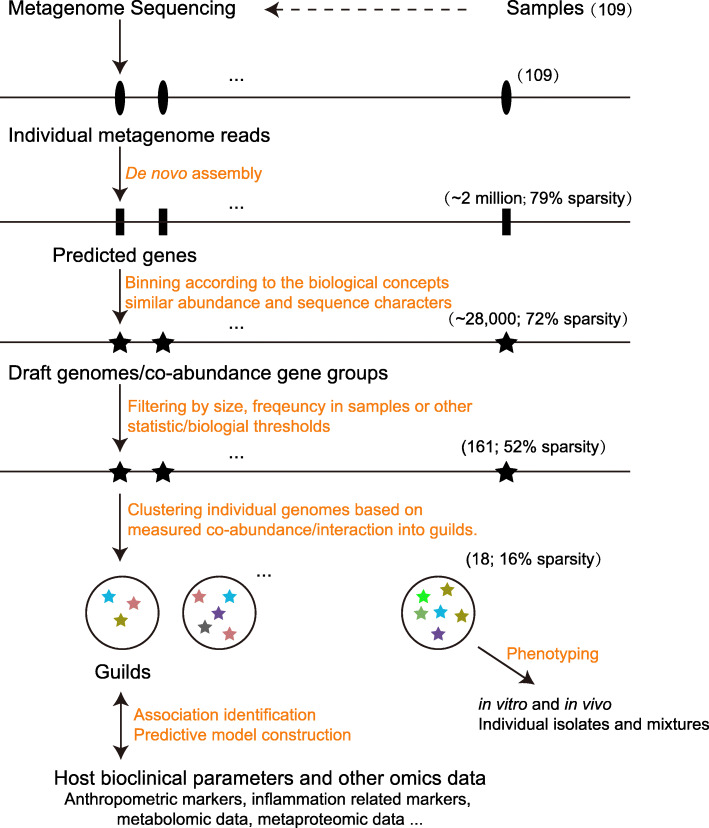
“After de novo assembly with IDBA-UD [80], gene prediction with MetaGeneMark [81], and gene de-redundancy with CD-HIT [82], we generated a nonredundant gut microbial gene catalog containing ~ 2 million genes.”
Method
Research works printed but not linked: 1
- Madigan MT, Clark, DP, Stahl D, Martinko JM. Brock biology of microorganisms 13th edition. San Francisco: Benjamin Cummings; 2010.
Cited by
Items 101–200 of 214
Hay, M., Hinsu, A., KORINGA, P. G., Pandit, R. J., Liu, P., Parekh, M. J., Jakhesara, S. J., Dai, X., Crotta, M., Fosso, B., et al. (2023) · Frontiers in Microbiomes · doi:10.3389/frmbi.2023.1301609 · Cited by 9
“We refer to clusters of co-occurring and positively correlated bacteria as “ ecological guilds ” in line with the established de fi nition of guilds in macro-ecological studies (Simberloff and Dayan, 1991) and recent microbiome research (Wu et al., 2021; Frioux et al., 2023).”
The Human Gut Microbiota in all its States: From Disturbance to Resilience
Tap, J., Ruppé, É., & Derrien, M. (2021) · Elsevier eBooks · doi:10.1016/b978-0-12-819265-8.00039-5 · Cited by 9
Kaiser, T., Jahansouz, C., & Staley, C. M. (2022) · Future Microbiology · doi:10.2217/fmb-2021-0219 · Cited by 8
Elemental iron protects gut microbiota against oxygen-induced dysbiosis
Ostrov, I., Gong, Y., Zuk, J. B., Wickramasinghe, P. C. K., Tmenova, I., Roopchand, D. E., Zhao, L., & Raskin, I. (2024) · PLoS ONE · doi:10.1371/journal.pone.0298592 · Cited by 7
Self-citationRelational Stability: A New Strategy for Defining the Human Core Microbiome
Zhao, L. (2025) · Phenomics · doi:10.1007/s43657-025-00236-7 · Cited by 7
“Taxonomic labels often fail to capture the ecological and functional roles of individual strains, risking the exclusion of key microbial interactions that sustain host health (Zhao et al. 2024; Wu et al. 2021).”
Self-citationMezhibovsky, E., Wu, G. G., Wu, Y., Ning, Z., Bacalia, K. M. A., Sadangi, S., Patel, R. M., Poulev, A., Duran, R. M., Macor, M., et al. (2025) · npj Science of Food · doi:10.1038/s41538-025-00443-6 · Cited by 7
“Bacteria in the gut ecosystem are not independent but rather co-exist as functional groups called guilds, which interact to affect host health 51 .”
InfluentialSelf-citationNurturing by nutrition: On the future of gut microbiota management strategies for autoimmune disease
Larsen, O. F. A. (2023) · Frontiers in Nutrition · doi:10.3389/fnut.2022.1107016 · Cited by 7
“These signatures will most likely consist of keystone taxa (35) and microbial ecosystems dedicated to a specific functionality, also called microbial guilds (36).”
BackgroundThe Impact of Microbiota on Neurological Disorders: Mechanisms and Therapeutic Implications
Merra, G., Placa, G. L., Covino, M., Candelli, M., Gasbarrini, A., & Franceschi, F. (2025) · OBM Neurobiology · doi:10.21926/obm.neurobiol.2501273 · Cited by 6
Ecological traits of high-affinity hydrogen-oxidizing soil bacteria involved in the hydrogen cycle
Hou, L., Whalen, J. K., & Constant, P. (2025) · Soil Biology and Biochemistry · doi:10.1016/j.soilbio.2025.109831 · Cited by 6
Zhai, C., Liu, X., Liu, Z., Ma, H., Li, H., Gong, Y., Li, X., Wang, Y., Zhang, N., Zhang, H., et al. (2025) · Gut Microbes · doi:10.1080/19490976.2025.2560598 · Cited by 6
Dissecting the Ecological Structure of Health and Disease in the Global Gut Microbiome
Zhu, B., Chen, S., Diao, Y., Wang, W., Huang, Y., Liang, L., Lu, X., Han, R., Guo, M., Li, Z., et al. (2026) · Advanced Science · doi:10.1002/advs.202517087 · Cited by 8
“In addition, we found that microbial imbalance characteristics were highly correlated with the MEFs pattern, suggesting that gut microbiota disruption is not driven by changes in individual species, but rather reflects a systemic ecological restructuring [ 45 ].”
Liu, X., Xu, W., Zhao, Z., Wu, X., Wang, S., Jian, C., Li, M., Li, K., Wang, Y., & Qin, X. (2024) · Food Frontiers · doi:10.1002/fft2.519 · Cited by 6
Gut microbiome dysbiosis in neonatal sepsis
Verma, J. K., Sankar, M. J., Atmakuri, K., Agarwal, R. K., & Das, B. (2022) · Progress in molecular biology and translational science · doi:10.1016/bs.pmbts.2022.07.010 · Cited by 6
Luk, A. W. S., Mitchell, L., Koay, Y. C., O’Sullivan, J., O'Connor, H. T., Hackett, D. A., & Holmes, A. J. (2022) · Metabolites · doi:10.3390/metabo12100911 · Cited by 6
Silva, C. A. C., Almonte, A. A., & Zitvogel, L. (2025) · Biomolecules · doi:10.3390/biom15040504 · Cited by 6
“Moreover, two competing microbial ecological functional units that collectively increase or decrease in abundance (e.g., “guilds”) are composed of different taxonomic backgrounds and predict the metabolic syndrome of patients with type 2 diabetes [98,99].”
Assessing the health of the gut microbial organ: why and how?
DeLeon, O., & Chang, E. B. (2025) · Journal of Clinical Investigation · doi:10.1172/jci184313 · Cited by 5
“Still, there have been some promising advances made through bioinformatic analysis of metag-enomic sequences to identify functional “guilds,” groups of bacteria with a common aggregate function, that can gauge the health of the gut microbiota (22).”
Piccolo, B. D., Chen, M., Lan, R. S.-L., Moody, B., Yao, T., Huang, T.-Y., Pack, L., Adams, S. H., & Lindemann, S. R. (2025) · mSystems · doi:10.1128/msystems.01031-25 · Cited by 6
“Wu et al. highlighted the potential importance of the guild concept when applied to the associations between host phenotypes, gut microbiota communities, and metagenomes (61).”
PRIME: a database for 16S rRNA microbiome data with phenotypic reference and comprehensive metadata
Zhang, Z., Zhao, H., & Wang, T. (2025) · Nucleic Acids Research · doi:10.1093/nar/gkaf1057 · Cited by 5
Dore, J. M., & Sansonetti, P. J. (2024) · médecine/sciences · doi:10.1051/medsci/2024101 · Cited by 5
A bio-inspired approach for boosting innovation in the separation technology sector
Bianciardi, A., & Cascini, G. (2021) · Proceedings of the Institution of Mechanical Engineers Part C Journal of Mechanical Engineering Science · doi:10.1177/09544062211052128 · Cited by 5
“It refers to methods to determine ecosystem’s behaviour and conditions by assessing the abundance and diversity of guilds in ecosystems utilised the behaviour.(35,36) Nevertheless, in this study, the term is used with a different intent.”
MethodWang, N., Wu, P., & Chen, X. D. (2025) · Foods · doi:10.3390/foods14081335 · Cited by 4
“competitive resources in a similar way or possessing certain interactive molecular mechanisms [78].”
Fu, J., Xu, W., Yu, D., Jiang, Y., Wang, L., Cai, H., Xia, Q., Shu, X., & Zheng, W. (2025) · Aging Cell · doi:10.1111/acel.70192 · Cited by 5
“These OTUs were used to construct microbial guilds following the procedure recommended by Wu et al. (2021).”
InfluentialChen, H., Zhao, R., Xiao, Z., Li, Y., Yang, J., Jiang, S., Xu, S., Xu, Z., & Gu, D. (2025) · Foods · doi:10.3390/foods14213747 · Cited by 4
Millick, D. D., Ghosh, S., Wu, G. G., Krzyzanowska, A. K., Osorio, L., Zhao, L., STRAIR, R. K., & Sant’Angelo, D. B. (2026) · Blood Advances · doi:10.1182/bloodadvances.2024014831 · Cited by 4
Self-citationPrincipal microbial groups: compositional alternative to phylogenetic grouping of microbiome data
Boyraz, A., Pawlowsky‐Glahn, V., Egozcue, J. J., & Acar, A. C. (2022) · Briefings in Bioinformatics · doi:10.1093/bib/bbac328 · Cited by 4
The underground network: facilitation in soil bacteria
Jorna, J., Adams, B. J., Aanderud, Z. T., Frandsen, P. B., Takacs‐Vesbach, C. D., & Kéfi, S. (2024) · Oikos · doi:10.1111/oik.10299 · Cited by 4
Sansonetti, P. J., & Dore, J. M. (2024) · médecine/sciences · doi:10.1051/medsci/2024121 · Cited by 3
Chen, W., Hu, G., Dong, B.-C., Sun, H.-Y., Lu, D., Ru, M.-Y., Yu, Y., Wang, H., & Wei, B. (2024) · Biochemical Pharmacology · doi:10.1016/j.bcp.2024.116596 · Cited by 4
O’Donovan, C. M., Nori, S. R. C., Shanahan, F., Celentano, G., Murphy, T. B., Cotter, P. D., & Sullivan, O. O. (2025) · Scientific Reports · doi:10.1038/s41598-025-88723-9 · Cited by 3
Byrd, D. A., Gómez, M. F. L., Hogue, S., Burns, J. R., Smith, N., Sampson, J. N., Loftfield, E., Wolf, P. G., Wan, Y., Warner, A., et al. (2025) · Cancer Medicine · doi:10.1002/cam4.71048 · Cited by 3
“Finally, we inferred microbial guilds that can better represent overall community functionality and be more relevant than a single bacteria-adenoma model, as described previously [18].”
Host genome and bacterial taxa shape the Arabidopsis seed microbiome
Parween, S., Tabassum, N., Shekhawat, K., Gnannt, B., Alzayed, W., Jalal, R. S., & Hirt, H. (2025) · EMBO Reports · doi:10.1038/s44319-025-00635-x · Cited by 3
“This concept emphasizes that different bacterial species may share molecular mechanisms that enable them to collaborate to ful fi ll speci fi c functional roles (Wu et al, 2021).”
Detecting signatures underlying the composition of biological data
Duncan, A., Koon, W., Sidorczuk, K., Quince, C., Frioux, C., & Hildebrand, F. (2025) · Nucleic Acids Research · doi:10.1093/nar/gkaf1388 · Cited by 3
“These signatures represent potential gut bacterial guilds, taxa which show consistent co-abundance and complimentary function [ 18 ], and were both consistent with previously conducted hierarchical clustering (e.g. enterotypes [ 14 , 19 ]), while representing different bacterial guilds as fractions…”
Li, H., Wang, Z., He, S., Zhao, X., Wu, Q., Sun, Y., Fan, Y., Hu, X., Tian, Z., & Zhang, S. (2025) · Microbiology Spectrum · doi:10.1128/spectrum.02302-24 · Cited by 4
“We then performed a guild-based analysis to identify co-abundant species that might work as functional groups in the gut ecosystem (27, 28).”
Intestinal Microbiome Modulation of Therapeutic Efficacy of Cancer Immunotherapy
Silveira, M. A. D., Rodrigues, R. R., & Trinchieri, G. (2025) · Gastroenterology Clinics of North America · doi:10.1016/j.gtc.2024.10.005 · Cited by 3
Wang, H., Gu, Y., He, W., Yang, J., Liang, H., Wang, M., Wu, Z., Wen, Y., Wang, J., Rao, X., et al. (2026) · bioRxiv (Cold Spring Harbor Laboratory) · doi:10.64898/2026.03.25.714112 · Cited by 3
Genotype–microbiome–metabolome associations in early childhood and their link to BMI
Aparicio, A., Sun, Z., Gold, D. R., Lasky-Su, J. A., Litonjua, A. A., Weiss, S. T., Lee‐Sarwar, K. A., & Liu, Y. (2024) · mLife · doi:10.1002/mlf2.12153 · Cited by 2
Dual associations of gut and oral microbial networks with kidney transplantation
Qu, S., Gu, Y., Hou, X., Wei, M., Wang, M., Su, Y. Y., Miao, Y., Yang, J., Sun, Y., & Zeng, Z. (2025) · mSystems · doi:10.1128/msystems.00252-25 · Cited by 2
“Within the complex microbial communities, microbes form structural modules known as “guilds,” underpinning the unique functions that support host health (52).”
Ghosh, S., Li, Y., Yang, X., Wu, G. G., Zhang, C., & Zhao, L. (2025) · ISME Communications · doi:10.1093/ismeco/ycaf127 · Cited by 3
Self-citationEvidence for an indigenous female mouse urobiome
Sohail, S., Bushnell, D. S., Khemmani, M., Narla, S. T., Lamanna, O. K., Sharma, B., Moreland, R. B., Wolfe, A. J., & Forster, C. S. (2025) · PLoS ONE · doi:10.1371/journal.pone.0331633 · Cited by 2
“The concept of colonization resistance has been described in the context of probiotics in the gut microbiome in which features of the gut microbiome can predict subsequent colonization by exogenous bacteria [31].”
Gong, Y., Wu, G. G., Tavarez, S., Zhao, C., Zhao, L., & Ghosh, S. (2026) · mBio · doi:10.1128/mbio.03934-25 · Cited by 2
“To overcome this limitation, we applied a guild-based analytical framework (25).”
Self-citationBaseline Gut Microbiome-Dependent Responses to Probiotic Treatments for IBD in Mice
Zhang, Z., Yang, Z., Jiang, S., Sun, Y., Jiang, Y., Huang, S., & Zhang, J. (2026) · Engineering · doi:10.1016/j.eng.2025.02.025 · Cited by 2
Reject and Cascade Classifier with Subgroup Discovery for Interpretable Metagenomic Signatures
Queyrel, M., Templier, A., & Zucker, J. (2021) · Communications in computer and information science · doi:10.1007/978-3-030-93736-2_5 · Cited by 2
Roy, G., Belda, E., Prifti, E., Chevaleyre, Y., & Zucker, J. (2025) · bioRxiv (Cold Spring Harbor Laboratory) · doi:10.1101/2025.05.06.652444 · Cited by 3
“Consequently, alternative approaches, such as functional guild-based representations, have been proposed to improve the representation of metagenomic samples Wu et al., 2021.”
Chang, S., Zhou, H., Zhang, K., Deng, H., Peng, X., Zhou, W., Gao, Y., Wang, J., Li, W. J., Li, W., et al. (2026) · Journal of Agricultural and Food Chemistry · doi:10.1021/acs.jafc.5c16113 · Cited by 2
Ma, G., Niu, H., Li, J., Yang, N., Liao, X., Yu, H., Yang, H., Tian, T., Wang, Q., & Liu, X. (2026) · Molecular Nutrition & Food Research · doi:10.1002/mnfr.70463 · Cited by 1
“Members of the gut ecosystem often develop in situ networks and “guilds” of co-occurring species that work together to carry out metabolic functions [ 12 ].”
Pacheco-Valenciana, A., Milke, F., Wienhausen, G., & Garcia, S. L. (2026) · PeerJ · doi:10.7717/peerj.21847 · Cited by 1
Cohesive modules of engraftment in fecal microbiota transplantation
Rashidi, A., Minot, S. S., Lee, S. J., Hill, G. R., & Podlesny, D. (2026) · iScience · doi:10.1016/j.isci.2026.116025 · Cited by 1
“60,61 Members of a guild grow and diminish together, due to their similar exploitations of the same class of environmental resources.”
Rittmann, M., Wu, G., Zhao, L., Green, T., Hanselman, E. C., Green, R., Lam, Y. Y., & Miller, J. W. (2026) · Journal of Nutrition · doi:10.1016/j.tjnut.2026.101622 · Cited by 1
“…ecological principle-based approach for categorizing the gut microbiome was used in which microbes with similar coabundance behaviors were clustered into groups, called guilds, that exploit resources together and thus thrive or decline together depending on the availability of those resources [13].”
InfluentialSelf-citation(170990), C. S., Mao, Y., He, M., Doren, V. V., Kelley, C. F., & Hu, Y. (2026) · Genome biology · doi:10.1186/s13059-026-04103-0 · Cited by 2
“Guilds can serve as units for microbiome data reduction or microbial association analysis with disease outcomes [2].”
Vourlaki, I., Furman, O., Tapio, I., Guan, L. L., Waters, S. M., Kenny, D. A., Smith, P., Kirwan, S. F., Kelly, D. N., Evans, R., et al. (2026) · The ISME Journal · doi:10.1093/ismejo/wrag185 · Cited by 1
The “normal” gut microbiome and human health
Xia, Y., & Sun, J. (2023) · Elsevier eBooks · doi:10.1016/b978-0-323-98338-9.00001-3 · Cited by 1
Harnessing microbiome for health and sustainable waste management
Maqsood, Q., Khan, M. I., Ashraf, M. H., Khan, U., & Hussain, N. (2025) · Advances in chemical pollution, environmental management and protection · doi:10.1016/bs.apmp.2025.02.005 · Cited by 1
Wei, Y., Han, C., Fan, Y., Huang, S., Chen, Z., Lv, J., & Hao, Z. (2026) · Food Science and Human Wellness · doi:10.26599/fshw.2025.9250555 · Cited by 1
Simulating transgenerational hologenomes under selection with RITHMS
Pety, S., David, I., Rau, A., & Mariadassou, M. (2025) · Peer Community Journal · doi:10.24072/pcjournal.666 · Cited by 2
“It has been shown that some taxa are correlated, regardless of whether or not a taxonomic link exists between them (Wu et al., 2021).”
Gut microbiome co-abundance networks varies with age, sex, smoking status and body mass indexPreprint
Boetto, C., Romero, V. B., Henches, L., Frouin, A., Auvergne, A., Patin, É., Bredon, M., Kennedy, S., Duffy, D., Quintana‐Murci, L., et al. (2024) · medRxiv · doi:10.1101/2024.04.30.24306630 · Cited by 1
Li, C., Ravikrishnan, A., Wijaya, I., Naim, A. N. M., Gounot, J.-S., Wearne, S., On, Y. Y., Ho, E. X. P., Png, E., Kwah, J. S., et al. (2025) · bioRxiv (Cold Spring Harbor Laboratory) · doi:10.1101/2025.04.24.650393 · Cited by 1
Hybrid Query Processing in Wireless Sensor Networks.
Yun, S., Cho, H., & Yoo, K.-Y. (2007) · Parallel and Distributed Processing Techniques and Applications
Evaluating trait-based sets for taxonomic enrichment analysis applied to human microbiome data setsPreprint
Nguyen, Q. P., Hoen, A. G., & Frost, H. R. (2022) · bioRxiv (Cold Spring Harbor Laboratory) · doi:10.1101/2022.05.16.492155
“Like genes, microbes act in concert with co-abundant partners to drive biochemical processes that interact with the host, thereby impacting health outcomes [66].”
BackgroundMicrobiome: another -ome or actually a biome?
Zhao, L. (2023) · Scientia Sinica Vitae · doi:10.1360/ssv-2023-0026
Self-citationXu, Y., Ye, H., Meng, X., Zhang, S., Zhang, Y., Chen, Y., & Chen, Y. (2023) · bioRxiv (Cold Spring Harbor Laboratory) · doi:10.1101/2023.11.13.566887
“Members in a same guild may show co-abundant behavior and work together to influence human health and diseases (24).”
BackgroundThe Critical Role of Gut Microbiota and its Association with Obesity and Related Diseases
(2024) · Obesity and Diabetes Research · doi:10.47275/2692-0964-130
“As a result, a better understanding of this complex system may lead to new treatment options not only for obesity but also for depression, inflammatory bowel diseases (IBD), and cancer [27].”
Adams, J. L., Ball, R. L., Bubier, J. A., Chesler, E. J., Tory, M. K., & Borkin, M. A. (2025) · Computer Graphics Forum · doi:10.1111/cgf.70113
Boetto, C., Romero, V. B., Henches, L., Frouin, A., Auvergne, A., Patin, É., Bredon, M., Abel, L., Alcover, A., Aschard, H., et al. (2025) · Communications Biology · doi:10.1038/s42003-025-08895-y · Cited by 2
“Those sub-communities, sometimes referred to as guilds 29 , or cliques, display co-abundances because they exploit the same class of resources or work together as a coherent functional group 25,30 .”
Zhang, G., Shi, L., Liu, C., Mao, R., Xia, B., Huang, Z., Wei, X., Wu, L., Zheng, Y., Wei, G., et al. (2024) · Figshare · doi:10.6084/m9.figshare.26603770
van der Vossen, E. W. J., Davids, M., Bresser, L. R. F., Galenkamp, H., van den Born, B. H., Zwinderman, A. H., Levin, E., Nieuwdorp, M., & de Goffau, M. C. (2024) · Figshare · doi:10.6084/m9.figshare.26587719
Watson, A. R., Füssel, J., Veseli, I., DeLongchamp, J. Z., Silva, M., Trigodet, F., Lolans, K., Shaiber, A., Fogarty, E., Runde, J. M., et al. (2023) · Figshare · doi:10.6084/m9.figshare.22649422
Watson, A. R., Füssel, J., Veseli, I., DeLongchamp, J. Z., Silva, M., Trigodet, F., Lolans, K., Shaiber, A., Fogarty, E., Runde, J. M., et al. (2023) · Figshare · doi:10.6084/m9.figshare.22649383
Weinert-Nelson, J. R., Biddle, A. S., & Williams, C. A. (2022) · Figshare · doi:10.6084/m9.figshare.20115558
Watson, A. R., Füssel, J., Veseli, I., DeLongchamp, J. Z., Silva, M., Trigodet, F., Lolans, K., Shaiber, A., Fogarty, E., Runde, J. M., et al. (2023) · Figshare · doi:10.6084/m9.figshare.22649395
van der Vossen, E. W. J., Davids, M., Bresser, L. R. F., Galenkamp, H., van den Born, B. H., Zwinderman, A. H., Levin, E., Nieuwdorp, M., & de Goffau, M. C. (2024) · Figshare · doi:10.6084/m9.figshare.26587728
van der Vossen, E. W. J., Davids, M., Bresser, L. R. F., Galenkamp, H., van den Born, B. H., Zwinderman, A. H., Levin, E., Nieuwdorp, M., & de Goffau, M. C. (2024) · Figshare · doi:10.6084/m9.figshare.26587734
van der Vossen, E. W. J., Davids, M., Bresser, L. R. F., Galenkamp, H., van den Born, B. H., Zwinderman, A. H., Levin, E., Nieuwdorp, M., & de Goffau, M. C. (2024) · Figshare · doi:10.6084/m9.figshare.26587749
van der Vossen, E. W. J., Davids, M., Bresser, L. R. F., Galenkamp, H., van den Born, B. H., Zwinderman, A. H., Levin, E., Nieuwdorp, M., & de Goffau, M. C. (2024) · Figshare · doi:10.6084/m9.figshare.26587737
van der Vossen, E. W. J., Davids, M., Bresser, L. R. F., Galenkamp, H., van den Born, B. H., Zwinderman, A. H., Levin, E., Nieuwdorp, M., & de Goffau, M. C. (2024) · Figshare · doi:10.6084/m9.figshare.26587722
Weinert-Nelson, J. R., Biddle, A. S., & Williams, C. A. (2022) · Figshare · doi:10.6084/m9.figshare.20115543
Weinert-Nelson, J. R., Biddle, A. S., & Williams, C. A. (2022) · Figshare · doi:10.6084/m9.figshare.20115549
van der Vossen, E. W. J., Davids, M., Bresser, L. R. F., Galenkamp, H., van den Born, B. H., Zwinderman, A. H., Levin, E., Nieuwdorp, M., & de Goffau, M. C. (2024) · Figshare · doi:10.6084/m9.figshare.26587725
van der Vossen, E. W. J., Davids, M., Bresser, L. R. F., Galenkamp, H., van den Born, B. H., Zwinderman, A. H., Levin, E., Nieuwdorp, M., & de Goffau, M. C. (2024) · Figshare · doi:10.6084/m9.figshare.26587716
Weinert-Nelson, J. R., Biddle, A. S., & Williams, C. A. (2022) · Figshare · doi:10.6084/m9.figshare.20115555
van der Vossen, E. W. J., Davids, M., Bresser, L. R. F., Galenkamp, H., van den Born, B. H., Zwinderman, A. H., Levin, E., Nieuwdorp, M., & de Goffau, M. C. (2024) · Figshare · doi:10.6084/m9.figshare.26587743
van der Vossen, E. W. J., Davids, M., Bresser, L. R. F., Galenkamp, H., van den Born, B. H., Zwinderman, A. H., Levin, E., Nieuwdorp, M., & de Goffau, M. C. (2024) · Figshare · doi:10.6084/m9.figshare.26587755
Weinert-Nelson, J. R., Biddle, A. S., & Williams, C. A. (2022) · Figshare · doi:10.6084/m9.figshare.20115561
Weinert-Nelson, J. R., Biddle, A. S., & Williams, C. A. (2022) · Figshare · doi:10.6084/m9.figshare.20115546
van der Vossen, E. W. J., Davids, M., Bresser, L. R. F., Galenkamp, H., van den Born, B. H., Zwinderman, A. H., Levin, E., Nieuwdorp, M., & de Goffau, M. C. (2024) · Figshare · doi:10.6084/m9.figshare.26587731
Weinert-Nelson, J. R., Biddle, A. S., & Williams, C. A. (2022) · Figshare · doi:10.6084/m9.figshare.20115567
van der Vossen, E. W. J., Davids, M., Bresser, L. R. F., Galenkamp, H., van den Born, B. H., Zwinderman, A. H., Levin, E., Nieuwdorp, M., & de Goffau, M. C. (2024) · Figshare · doi:10.6084/m9.figshare.26587740
Weinert-Nelson, J. R., Biddle, A. S., & Williams, C. A. (2022) · Figshare · doi:10.6084/m9.figshare.20115564
van der Vossen, E. W. J., Davids, M., Bresser, L. R. F., Galenkamp, H., van den Born, B. H., Zwinderman, A. H., Levin, E., Nieuwdorp, M., & de Goffau, M. C. (2024) · Figshare · doi:10.6084/m9.figshare.26587752
van der Vossen, E. W. J., Davids, M., Bresser, L. R. F., Galenkamp, H., van den Born, B. H., Zwinderman, A. H., Levin, E., Nieuwdorp, M., & de Goffau, M. C. (2024) · Figshare · doi:10.6084/m9.figshare.26587746
Ecological traits of high-affinity hydrogen-oxidizing bacteria
Hou, L. (2025) · eScholarship@McGill (McGill) · doi:10.82308/20901
Roy, G., Belda, E., Hennecart, B., Chevaleyre, Y., Prifti, E., & Zucker, J. (2026) · arXiv (Cornell University) · doi:10.48550/arxiv.2601.03295
“[4] To this date, these representations are used by Machine Learning (ML) and Deep Learning (DL) models to classify gut metagenomic samples from patients with various diseases such as Cirrhosis, Colorectal Cancer or Type 2 Diabetes.”
Sun, J.-R., Liu, R.-H., Yu, Y.-Y., Zhang, L., & Yan, X. (2026) · Applied Biological Chemistry · doi:10.1186/s13765-026-01080-7
“In gut microbiota, it is not a single species that plays a critical role, but rather it functions through a group collaboration pattern [35].”
Albright, J. D., & Haug, L. I. (2026) · Veterinary Clinics of North America Small Animal Practice · doi:10.1016/j.cvsm.2026.01.008
Gong, X., Chen, Y., Chen, Y., Chen, Z., & Zhang, X. (2026) · Food Reviews International · doi:10.1080/87559129.2026.2645924
“[85] Different dietary patterns modulate specific guild structures: sugars and fats enriched in UPFs often lead to the expansion of “inflammation-related guilds” composed of conditionally pathogenic bacteria, whereas flavonoids selectively activate butyrate-producing guilds and…”
End-to-End Deep Learning and Subgroup discovery approaches to learn from metagenomics data
Queyrel, M. (2021) · theses.fr (ABES) · doi:10.70675/792af726z4ec2z4c52z868az6d92631761e6 · Cited by 1
Liu, Y., Chen, C., & Gao, J. (2026) · Frontiers in Microbiology · doi:10.3389/fmicb.2026.1818141
“Using a guild-based analytical strategy, we constructed an ADG-associated co-abundance network with MAGs (Wu et al., 2024; Wu et al., 2021).”
Huang, J., Zhou, X., Wang, H. L., Liu, A., FU, J., Dong, G. P., Shen, Y., Xiang, W., Schwimmer, J. B., Yu, G., et al. (2026) · bioRxiv (Cold Spring Harbor Laboratory) · doi:10.64898/2026.05.11.724093
Ernährung verstehen – Einführung in psychologische und gesundheitliche Aspekte
Abt, T. (2026) · Springer eBooks · doi:10.1007/978-3-658-51410-5_1
Metadata
- Authors
- Wu, G., Zhao, N., Zhang, C., Lam, Y. Y., & Zhao, L.
- Affiliations
- Rutgers, The State University of New Jersey (US)
- Corresponding author
- Zhao, Liping
- Venue
- Genome Medicine
- Published
- 2021-02-09
- Volume
- 13
- Issue
- 1
- Pages
- 22-22
- ISSN
- 1756-994X (ISSN-L)
- PMC
- PMC7874449
- OpenAlex
- W3129102895
- Cited by
- 203
- References
- 102
- Citations by year
- 2026: 26 · 2025: 40 · 2024: 50 · 2023: 31 · 2022: 39 · 2021: 16
- FWCI
- 10.91
- Type
- journal article
- Language
- en
- Open access
- gold
- doi.org
- Licence
- cc-by
- creativecommons.org/licenses/by/4.0/ (tdm)
- creativecommons.org/licenses/by/4.0/ (vor)
- Locations
- Genome Medicine (publishedVersion, cc-by)
- PubMed Central (publishedVersion, cc-by)
- PubMed (publishedVersion)
- DOAJ (DOAJ: Directory of Open Access Journals) (submittedVersion, cc-by-sa)
- Funders
- National Institute of Environmental Health Sciences (P30ES005022)
- Topics
- Life Sciences › Biochemistry, Genetics and Molecular Biology › Molecular Biology › Gut microbiota and health
- Physical Sciences › Environmental Science › Ecology › Microbial Community Ecology and Physiology
- Health Sciences › Dentistry › Periodontics › Oral microbiology and periodontitis research
- Keywords
- gut microbiota, microbial guilds, dimensionality reduction, sparsity, CO abundance, microbial ecology, human health and disease
- MeSH terms
- Gastrointestinal Microbiome, Disease, Female, Health, Humans, Obesity, Phylogeny, Polycystic Ovary Syndrome, RNA, Ribosomal, 16S, Databases, Genetic, Metagenomics
About these checks
Registry, retraction, Cites and statistics results are computed, not judged, with one exception: a printed reference that no index lists is read once by a model before it counts as a citation error. Claims are extracted by a model and kept only when their quote appears verbatim in the text; each cited source is then checked, with a model’s help, for whether it says what the claim relies on. Those verdicts can be wrong — read the claim’s quote and the cited source before relying on one.
Statistics and arithmetic are recomputed, not judged.
Confidence bands are shown only for fields calibrated on our annotated test set. None is calibrated yet, so no band is shown.
What counts as a claim ›How we measure confidence ›How we check this ›
Are you an author, or do you see a problem with this page? Request a review
Data sources
Bibliographic data: Semantic Scholar, OpenAlex, Crossref.
Contains information from the Semantic Scholar Academic Graph Datasets, made available under the ODC Attribution License (ODC-BY 1.0).
Semantic Scholar’s data is described in: Kinney, R., et al. (2023). The Semantic Scholar Open Data Platform. arXiv:2301.10140.
