

Deep learning in cancer diagnosis, prognosis and treatment selection
Open accessThe DOI matches its Crossref record; 174 of the 175 references it cites were found in a registry or an index, and 1 are not checked yet.
Abstract
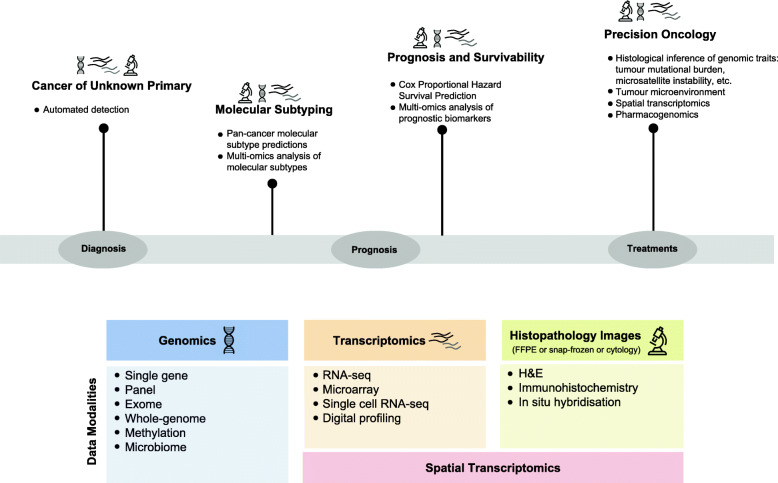
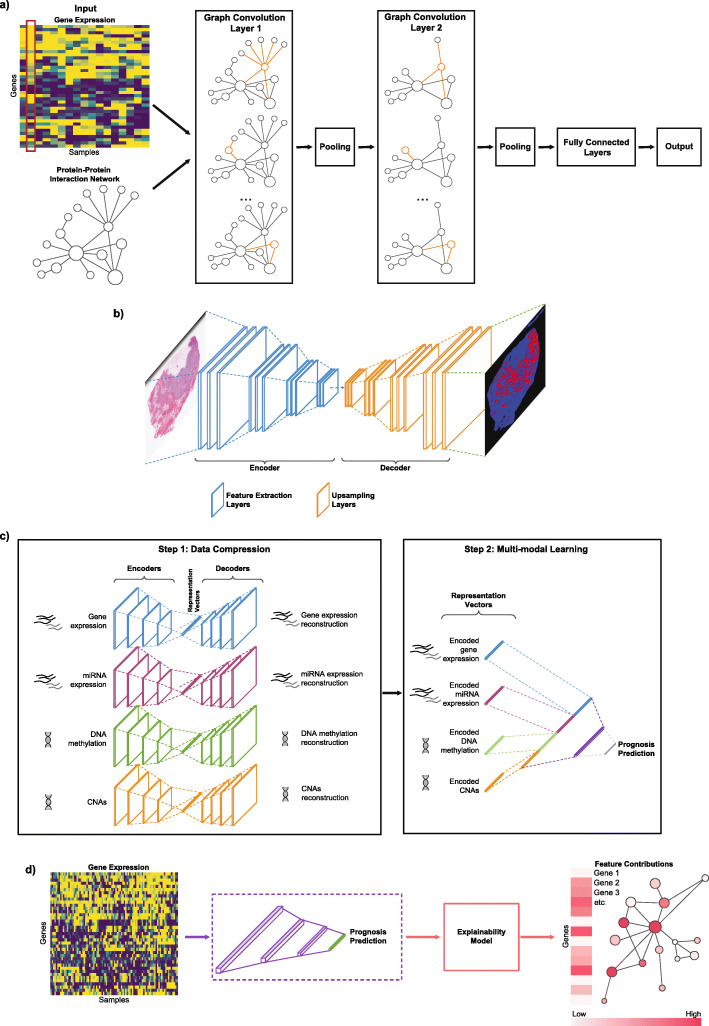
Deep learning is a subdiscipline of artificial intelligence that uses a machine learning technique called artificial neural networks to extract patterns and make predictions from large data sets. The increasing adoption of deep learning across healthcare domains together with the availability of highly characterised cancer datasets has accelerated research into the utility of deep learning in the analysis of the complex biology of cancer. While early results are promising, this is a rapidly evolving field with new knowledge emerging in both cancer biology and deep learning. In this review, we provide an overview of emerging deep learning techniques and how they are being applied to oncology. We focus on the deep learning applications for omics data types, including genomic, methylation and transcriptomic data, as well as histopathology-based genomic inference, and provide perspectives on how the different data types can be integrated to develop decision support tools. We provide specific examples of how deep learning may be applied in cancer diagnosis, prognosis and treatment management. We also assess the current limitations and challenges for the application of deep learning in precision oncology, including the lack of phenotypically rich data and the need for more explainable deep learning models. Finally, we conclude with a discussion of how current obstacles can be overcome to enable future clinical utilisation of deep learning.
Overview
The claims and statistics of this paper haven’t been checked yet.
Free: it reads the open-access text and checks the first 5 claims that cite a source we can check. Create a free account to check every claim.
Integrity signals
Registry
Cites
Statistics
Figures
Verification
Claims the paper makes
The claims and statistics of this paper haven’t been checked yet.
Free: it reads the open-access text and checks the first 5 claims that cite a source we can check. Create a free account to check every claim.
Claims other papers make about this one
Each is checked against this paper’s own text: does it say what the citing paper says it does?
The source backs part of the claim, not all of it — or backs it for a different population, condition or comparison.
In the citing paper
“These technologies contribute to the emergence of new hypotheses, discoveries, and task optimization in healthcare, aiming for a safer and more efficient approach(5-8).”
From Artificial intelligence in the diagnosis and management of dysphagia: a scoping review (2025) · cites this paper as [6]
Experimental — accuracy not yet measuredThe source backs part of the claim, not all of it — or backs it for a different population, condition or comparison.
In the citing paper
“With the significant development of computer technology, many DL algorithms, such as Convolutional Neural Networks (CNN), Recurrent Neural Networks (RNN), MultiLayer Perceptron (MLP), Generative Adversarial Networks (GAN), and Deep Belief Networks (DBN), have been widely used in the field of oncology (Figure 3) 85-87.”
From Artificial intelligence in pancreatic cancer (2022) · cites this paper as [85]
Experimental — accuracy not yet measuredThe cited source says what the claim attributes to it.
In the citing paper
“These techniques have been applied to predict cancer prognosis and estimate treatment response based on genomic and clinical data [8–14].”
From Integrating machine learning and artificial intelligence in life-course epidemiology: pathways to innovative public health solutions (2024) · cites this paper as [8]
Self-check
Percentages, sums and reported differences re-computed from the paper’s own numbers.
The self-check needs the paper’s full text.
Citations
Cites
LeCun, Y., Bengio, Y., & Hinton, G. (2015) · Nature · doi:10.1038/nature14539 · Cited by 84,126
Going deeper with convolutions
Szegedy, C., Liu, W., Jia, Y., Sermanet, P., Reed, S., Anguelov, D., Erhan, D., Vanhoucke, V., & Rabinovich, A. (2015) · 2015 IEEE Conference on Computer Vision and Pattern Recognition (CVPR) · doi:10.1109/cvpr.2015.7298594 · Cited by 48,562
Robinson, M. D., McCarthy, D. J., & Smyth, G. K. (2010) · Bioinformatics · doi:10.1093/bioinformatics/btp616 · Cited by 41,364 · cited 1×
“In genomics, this entails validating DL-identified relevant genetic features against those identified by conventional bioinformatics methods, for example confirming that the most discriminatory genes in predicting tissue types, as identified by SHAP, were also identified by pairwise differential expression analysis us…”
MethodWGCNA: an R package for weighted correlation network analysis
Langfelder, P., & Horvath, S. (2008) · BMC Bioinformatics · doi:10.1186/1471-2105-9-559 · Cited by 27,252
Regression Models and Life-Tables
Cox, D. R. (1992) · Springer Series in Statistics · doi:10.1007/978-1-4612-4380-9_37 · Cited by 26,297
A Unified Approach to Interpreting Model Predictions
Lundberg, S., & Lee, S.-I. (2017) · arXiv · doi:10.48550/arxiv.1705.07874 · Cited by 23,707
Generative adversarial networks
Goodfellow, I., Pouget-Abadie, J., Mirza, M., Xu, B., Warde-Farley, D., Ozair, S., Courville, A., & Bengio, Y. (2020) · Communications of the ACM · doi:10.1145/3422622 · Cited by 18,384
"Why Should I Trust You?": Explaining the Predictions of Any Classifier
Ribeiro, M. T., Singh, S., & Guestrin, C. (2016) · Proceedings of the 22nd ACM SIGKDD International Conference on Knowledge Discovery and Data Mining · doi:10.1145/2939672.2939778 · Cited by 17,555
Gene Expression Omnibus: NCBI gene expression and hybridization array data repository
Edgar, R. (2002) · Nucleic Acids Research · doi:10.1093/nar/30.1.207 · Cited by 13,288 · cited 2×
“Large curated ‘ground-truth’ datasets of matched genomic, histopathological and clinical outcome data are scarce beyond the publicly available datasets, such as The Cancer Genome Atlas (TCGA) [34], International Cancer Genome Consortium (ICGC) [35], Gene Expression Omnibus (GEO) [36], European Genome-Phenome Archive (…”
BackgroundRobust enumeration of cell subsets from tissue expression profiles
Newman, A. M., Liu, C. L., Green, M. R., Gentles, A. J., Feng, W., Xu, Y., Hoang, C. D., Diehn, M., & Alizadeh, A. A. (2015) · Nature Methods · doi:10.1038/nmeth.3337 · Cited by 13,224 · cited 2×
“using transcriptomic [141, 142] or methylation data [143].”
Method
Research works printed but not linked: 1
- Maggiori E, Tarabalka Y, Charpiat G, Alliez P. High-resolution image classification with convolutional networks. 2017 IEEE Int Geosci Remote Sens Symp IGARSS [Internet]. Fort Worth: IEEE; 2017. p. 5157-60. [cited 2020 Dec 8]. Available from: http://ieeexplore.ieee.org/document/8128163/
Cited by
Items 101–200 of 984
Yu, W., Lu, Y., Shou, H., Xu, H., Shi, L., Geng, X., & Song, T. (2022) · Cancer Medicine · doi:10.1002/cam4.5477 · Cited by 31
Using Machine Learning to Predict Surgical Site Infection After Lumbar Spine Surgery
Chen, T., Liu, C., Zhang, Z., Liang, T., Zhu, J., Zhou, C., Wu, S., Yao, Y., Huang, C., Zhang, B., et al. (2023) · Infection and Drug Resistance · doi:10.2147/idr.s417431 · Cited by 32
“We can diagnose and predict various diseases, including tumors, specific diseases, and inflammatory diseases, via machine learning.(9,10,24) Many studies have assessed SSI risk factors after spinal surgery, including the establishment of predictive models based on machine learning.”
BackgroundImaging Analytics using Artificial Intelligence in Oncology: A Comprehensive Review
Chakrabarty, N., & Mahajan, A. (2023) · Clinical Oncology · doi:10.1016/j.clon.2023.09.013 · Cited by 35
D’Orsi, L., Capasso, B., Lamacchia, G., Pizzichini, P., Ferranti, S., Liverani, A., Fontana, C., Panunzi, S., Gaetano, A. D., & Presti, E. L. (2024) · International Journal of Molecular Sciences · doi:10.3390/ijms252111588 · Cited by 35
Multi-task deep learning based on T2-Weighted Images for predicting Muscular-Invasive Bladder Cancer
Zou, Y., Cai, L., Chen, C., Shao, Q., Fu, X. G., Yu, J., Wang, L., Chen, Z., Yang, X. F., Yuan, B., et al. (2022) · Computers in Biology and Medicine · doi:10.1016/j.compbiomed.2022.106219 · Cited by 29
Application of machine learning in breast cancer survival prediction using a multimethod approach
Hamedi, S. Z., Emami, H., Khayamzadeh, M., Rabiei, R., Aria, M., Akrami, M., & Zangouri, V. (2024) · Scientific Reports · doi:10.1038/s41598-024-81734-y · Cited by 33
Zeng, L., Liu, L., Chen, D., Lu, H., Yang, X., Bi, H., & Yang, W. (2023) · Frontiers in Oncology · doi:10.3389/fonc.2023.1117420 · Cited by 35
Liu, X., Wang, W., Zhang, X., Liang, J., Dingqing, F., Li, Y., Xue, M., & Ling, B. (2024) · Molecular Therapy — Nucleic Acids · doi:10.1016/j.omtn.2024.102155 · Cited by 35
“80 The application of LASSO and random forest algorithms ensured the selection of important features, and stepwise regression was used to analyze the intersected variables.”
MethodExploring Pre-Trained Models for Skin Cancer Classification
Alrabai, A., Echtioui, A., & Kallel, F. (2025) · Applied System Innovation · doi:10.3390/asi8020035 · Cited by 31
“To be effectively integrated into medical workflows, deep learning models must not only achieve high predictive accuracy but also ensure interpretability and provide an estimate of prediction uncertainty [17].”
Wang, Y., Zhou, M., Ding, Y., Li, X., Zhou, Z., Shi, Z., & Fu, W. (2022) · Frontiers in Cardiovascular Medicine · doi:10.3389/fcvm.2022.870132 · Cited by 31
Li, Y., Wang, P., Xu, J., Shi, X., Yin, T., & Teng, F. (2024) · OncoImmunology · doi:10.1080/2162402x.2024.2312628 · Cited by 32
Large Language Models in Oncology: Revolution or Cause for Concern?
Caglayan, A., Slusarczyk, W., Rabbani, R. D., Ghose, A., Papadopoulos, V. P., & Boussios, S. (2024) · Current Oncology · doi:10.3390/curroncol31040137 · Cited by 30
“…node and making it amenable to computational algorithmic change. be back-propagated, thus identifying the error networks, Fundamental neural network methods include multilayer perceptrons, recurrent neural networks, and convolutional neural networks [23]. and convolutional neural networks [23].”
BackgroundDeep learning assisted cancer disease prediction from gene expression data using WT-GAN
Ravindran, U., & Gunavathi, C. (2024) · BMC Medical Informatics and Decision Making · doi:10.1186/s12911-024-02712-y · Cited by 28
“Deep learning (DL) methods are heavily used in the field of diagnostic genomics [4].”
MethodMcElroy, S. J., & Lueschow, S. R. (2023) · Frontiers in Pediatrics · doi:10.3389/fped.2023.1182597 · Cited by 28
Li, Z., Guo, M., Lin, W., & Huang, P. (2023) · Archives of Medical Research · doi:10.1016/j.arcmed.2023.102897 · Cited by 27
Margue, G., Ferrer, L., Etchepare, G., Bigot, P., Bensalah, K., Méjean, A., Rouprêt, M., Doumerc, N., Ingels, A., Boissier, R., et al. (2024) · npj Precision Oncology · doi:10.1038/s41698-024-00532-x · Cited by 31
Matarneh, S. T., Elghaish, F., Edwards, D. J., Rahimian, F. P., Abdellatef, E., & EJOHWOMU, O. A. (2024) · Journal of Information Technology in Construction · doi:10.36680/j.itcon.2024.055 · Cited by 30
Application of deep learning-based multimodal fusion technology in cancer diagnosis: A survey
Li, Y., Pan, L., Peng, Y., Li, X., Wang, X., Qu, L., Song, Q., Liang, Q., & Peng, S. (2025) · Engineering Applications of Artificial Intelligence · doi:10.1016/j.engappai.2024.109972 · Cited by 30
Zhao, M., Yao, Z., Zhang, Y., Ma, L., Pang, W., Ma, S., Xu, Y., & Wei, L. S. (2025) · BMC Medical Informatics and Decision Making · doi:10.1186/s12911-024-02848-x · Cited by 32
“…to its desirable prediction and stratification performance [17, 18], such as the diagnosis of disease status (e.g., tumor lymph node metastasis status [19, 20], and molecular subtype [21]), prognostic prediction (e.g., early tumor recurrence [22]), and prediction of treatment responses [23, 24].”
Romeo, M., Dallio, M., Napolitano, C., Basile, C., Nardo, F. D., Vaia, P., Iodice, P., & Federico, A. (2025) · Diagnostics · doi:10.3390/diagnostics15030252 · Cited by 31
“…be mainly effective in processing complex data, such as medical images (both radiological and histopathological), molecular networks, and genetic sequences, with a large potential range of applications in the oncological field, especially regarding genomics, transcriptomics, and radiomics [38–41].”
A Review of the Applications, Benefits, and Challenges of Generative AI for Sustainable Toxicology
Alam, F., Alnazzawi, T. S. M., Mehmood, R., & Almaghthawi, A. (2025) · Current Research in Toxicology · doi:10.1016/j.crtox.2025.100232 · Cited by 28
“Personalized medicines and treatments are showing significant promising effects in treating cancers (Tran et al., 2021).”
Wang, C., Lee, Y., Lin, Y., Chang, C.-C., Sai, A., Wang, C., & Chao, T. (2023) · Computerized Medical Imaging and Graphics · doi:10.1016/j.compmedimag.2023.102233 · Cited by 25
Artificial Intelligence in Urooncology: What We Have and What We Expect
Froń, A., Semianiuk, A., Lazuk, U., Ptaszkowski, K., Siennicka, A. E., Lemiński, A., Krajewski, W. R., Szydełko, T., & Małkiewicz, B. (2023) · Cancers · doi:10.3390/cancers15174282 · Cited by 27
“The use of CNNs is not limited to image data; they have also been adapted to analyze non-image data, like genomic data represented in vector, matrix, or tensor formats [6,9,11].”
BackgroundMethodGu, W., Liu, Z., Yang, Y., Zhang, X., Chen, L.-Y., Wan, F., Liu, X., Chen, Z.-Z., Kong, Y.-Y., & Dai, B. (2023) · npj Precision Oncology · doi:10.1038/s41698-023-00481-x · Cited by 26
“Risk strati fi cation plays an import role in tailoring the treatment for patients with prostate cancer 19 , and arti fi cial intelligence risk classi fi ers are emerging for its rapid, low-cost, and automated features 20,21 .”
Artificial Intelligence Applications in the Treatment of Colorectal Cancer: A Narrative Review
Yang, J., Huang, J., Han, D., & Ma, X. (2024) · Clinical Medicine Insights Oncology · doi:10.1177/11795549231220320 · Cited by 31
Applications of Digital Pathology in Cancer: A Comprehensive Review
Omar, M., Alexanderani, M. K., Valencia, I., Loda, M. F., & Marchionni, L. (2024) · Annual Review of Cancer Biology · doi:10.1146/annurev-cancerbio-062822-010523 · Cited by 29
Quantum Variational Transformer Model for Enhanced Cancer Classification
Roosan, D., Khan, R. I., Ashakin, M. R., Khou, T., Nirzhor, S. S. R., & Haider, M. R. (2025) · Advances in transdisciplinary engineering · doi:10.3233/atde250557 · Cited by 24
Artificial Intelligence-Driven Multi-Omics Approaches in Glioblastoma
Morello, G., Cognata, V. L., Guarnaccia, M., Gentile, G., & Cavallaro, S. (2025) · International Journal of Molecular Sciences · doi:10.3390/ijms26199362 · Cited by 25
“ANN consists of densely interconnected artificial neurons, usually arranged into layers: an input layer that collects the input data, which is then processed in the hidden layers used to find any hidden features in the data, while the output layer generates the final expected output [46].”
Adversary-Aware Multimodal Neural Networks for Cancer Susceptibility Prediction From Multiomics Data
Karim, M. R., Islam, T., Lange, C., Rebholz‐Schuhmann, D., & Decker, S. (2022) · IEEE Access · doi:10.1109/access.2022.3175816 · Cited by 25
CADNet157 model: fine-tuned ResNet152 model for breast cancer diagnosis from mammography images
Mokni, R., & Haoues, M. (2022) · Neural Computing and Applications · doi:10.1007/s00521-022-07648-w · Cited by 28
“Hence, large datasets with thousands of samples per class are still needed for accurate diagnosis in clinics [58].”
BackgroundComparison of ischemic stroke diagnosis models based on machine learning
Yang, W., Wang, F., Pan, Y., Xie, J., Lu, M., & You, C. (2022) · Frontiers in Neurology · doi:10.3389/fneur.2022.1014346 · Cited by 24
“The growing popularity of deep learning in healthcare has accelerated research into its utility in the complex biology of cancer (36).”
BackgroundWu, M., Zhu, C., Yang, J., Cheng, S., Yang, X., Gu, S., Xu, S., Wu, Y., Shen, W., Huang, S., et al. (2023) · Frontiers in Genetics · doi:10.3389/fgene.2022.1069673 · Cited by 27
“, 2020), can provide better predicted performance than traditional Cox regression model in predicting prognosis since learning the complex non-linear interactions (Tran et al., 2021).”
BackgroundAutomatic machine learning-based classification of mandibular third molar impaction status
Maruta, N., Morita, K., Harazono, Y., Anzai, E., Akaike, Y., Yamazaki, K., Tonouchi, E., & Yoda, T. (2023) · Journal of Oral and Maxillofacial Surgery Medicine and Pathology · doi:10.1016/j.ajoms.2022.12.010 · Cited by 24
Deep learning in regulatory genomics: from identification to design
Hu, X., Fernie, A. R., & Yan, J. (2023) · Current Opinion in Biotechnology · doi:10.1016/j.copbio.2022.102887 · Cited by 26
“Indeed, their combined use has already achieved considerable progresses in the fields of regulatory genomics [9–11], gene expression modeling [12–14], and cancer diagnosis [15] in the past decade.”
BackgroundManson, E. N., Hasford, F., Trauernicht, C. J., Ige, T. A., Inkoom, S., Inyang, S. O., Samba, O. N., Khelassi-Toutaoui, N., Lazarus, G. L., Sosu, E. K., et al. (2023) · Physica Medica · doi:10.1016/j.ejmp.2023.102653 · Cited by 29
“They also help determine the cause of a machine failure and implement corrective measures, such as calibrations or quality control tests, when AI techniques forecast a LINAC machine failure [13].”
BackgroundMethodInfluentialLi, Z., Wang, W., Liang, H., Li, Y., Zhang, Z., & Han, L. (2023) · Cancer Letters · doi:10.1016/j.canlet.2023.216369 · Cited by 26
González, R., Saha, A., Campbell, C. J. V., Nejat, P., Lokker, C., & Norgan, A. P. (2023) · Journal of Pathology Informatics · doi:10.1016/j.jpi.2023.100347 · Cited by 28
Advancements in technology for characterizing the tumor immune microenvironment
Yan, H., Ju, X., Huang, A., & Yuan, J. (2024) · International Journal of Biological Sciences · doi:10.7150/ijbs.92525 · Cited by 26
“These synthetic images can be used for training models, augmenting datasets, or understanding immune cell spatial distribution within the tumor micro-environment [114, 115].”
BackgroundMethodInfluentialSagkrioti, E., Biz, G. M., Takan, I., Asfa, S., Nikitaki, Z., Zanni, V., Kars, R. H., Hellweg, C. E., Azzam, E. I., Logotheti, S., et al. (2022) · Antioxidants · doi:10.3390/antiox11112286 · Cited by 24
Dickinson, H. A., Teltsch, D. Y., Feifel, J., Hunt, P., Vallejo‐Yagüe, E., Virkud, A., Muylle, K. M., Ochi, T., Donneyong, M. M., Zabinski, J. W., et al. (2023) · Drug Safety · doi:10.1007/s40264-023-01376-3 · Cited by 26
Cao, M., Hu, C., Li, F., He, J., Li, E., Zhang, R., Shi, W., Zhang, Y., Zhang, Y., Yang, Q., et al. (2024) · International Journal of Surgery · doi:10.1097/js9.0000000000001627 · Cited by 25
“It automatically learns image features, eliminating the need for traditional manual feature extraction and making medical image analysis more automated and accurate [23] .”
AI Thinking: a framework for rethinking artificial intelligence in practice
Newman-Griffis, D. R. (2025) · Royal Society Open Science · doi:10.1098/rsos.241482 · Cited by 24
“…detecting and modelling rare diseases, a simpler model may be preferable to data-hungry deep learning (73), while the reverse is true for cancer detection and prognosis, where complex relationships between hundreds of variables are needed and rich multimodal data are available to learn from (74).”
BackgroundArtificial Intelligence Can Predict Personalized Immunotherapy Outcomes in Cancer
Huang, L., Wu, X., You, J., Jin, Z., He, W., Sun, J., Shen, H., Liu, X., Yue, X., Cai, W., et al. (2025) · Cancer Immunology Research · doi:10.1158/2326-6066.cir-24-1270 · Cited by 28
Hou, J., Jia, X., Xie, Y., & Qin, W. (2022) · Genes · doi:10.3390/genes13101770 · Cited by 26
“It is useful for strategy optimization and effect evaluation of treatment [3].”
BackgroundApplying a GAN-based classifier to improve transcriptome-based prognostication in breast cancer
Guttà, C., Morhard, C., & Rehm, M. (2023) · PLoS Computational Biology · doi:10.1371/journal.pcbi.1011035 · Cited by 24
“It is hoped that from DL-based methods can be developed tools that can aid in further advancing cancer diagnosis, prognosis or predicting treatment efficacy in the future [15].”
MethodChen, Z., Yu, Y., Liu, S., Du, W., Hu, L., Wang, C., Li, J., Liu, J., Zhang, W., & Peng, X. (2023) · Clinical Oral Investigations · doi:10.1007/s00784-023-05423-2 · Cited by 23
“Among the feature learning-based models, deep learning (DL) is a powerful method that has been used to build predictive models for cancer diagnosis [18, 19].”
A deep learning framework for in silico screening of anticancer drugs at the single-cell level
Zhang, P., Wang, X., Cen, X., Zhang, Q., Fu, Y., Mei, Y., Wang, X., Wang, R., Wang, J., Ouyang, H., et al. (2024) · National Science Review · doi:10.1093/nsr/nwae451 · Cited by 25
Artificial intelligence in orthopedics: fundamentals, current applications, and future perspectives
Song, J., Wang, G.-C., Wang, S., He, C., Zhang, Y., Chen, X., & Su, J. (2025) · Military Medical Research · doi:10.1186/s40779-025-00633-z · Cited by 52
“In contrast, convolutional neural networks (CNNs) are particularly effective for image analysis because of their ability to capture local spatial features [38].”
Wang, X., Wang, Q., Ding, G., Wang, J., Tang, Y., & Feng, Y. (2025) · iScience · doi:10.1016/j.isci.2025.114082 · Cited by 28
“…oncology, ML automates staging and risk stratification 10 ; NLP composes concise summaries from unstructured notes and reports 11 ; DL excels at image-based detection and characterization 12 ; and LLMs generate transparent, evidence-linked recommendations and patient-facing documents 13 (Figure 1).”
Mahmoud, A. Y., Neagu, D. C., Scrimieri, D., & Abdullatif, A. (2023) · Computers in Biology and Medicine · doi:10.1016/j.compbiomed.2023.107295 · Cited by 26
Chereda, H., Leha, A., & Beißbarth, T. (2024) · Artificial Intelligence in Medicine · doi:10.1016/j.artmed.2024.102840 · Cited by 27
Zhou, L., Wang, Y., Zhu, W., Zhao, Y., Yu, Y., Hu, Q., & Yu, W. (2024) · Annals of Medicine · doi:10.1080/07853890.2024.2401613 · Cited by 21
“Fourth, the underlying theories of various Ml algorithms can be complex and challenging to comprehend. to make these models more accessible for clinicians, not only should they be comprehensible but should also have the capability to estimate their uncertainties [35].”
BackgroundVosoughi, P., Naghib, S. M., & Takdehghan, G. (2025) · Sensors and Actuators Reports · doi:10.1016/j.snr.2025.100385 · Cited by 21
Abdelwahed, N., El-Tawel, G. S., & Makhlouf, M. A. A. (2022) · BioData Mining · doi:10.1186/s13040-022-00304-y · Cited by 22
“BioData Mining (2022) 15:24 Keywords: Machine Learning, Random Forest feature importance, Recursive feature elimination and its disadvantages, Over‐fitting, Learning algorithms, High dimensional data Introduction Artificial intelligence (AI) is a science that plays an important role in all fields, especially in the bi…”
BackgroundWeusthof, C., Burkart, S., Metzger, K., Stögbauer, F., Feng, B., Khorani, K., Bode, S., Plinkert, P. K., Plath, K., & Heß, J. (2023) · International Journal of Molecular Sciences · doi:10.3390/ijms24108938 · Cited by 21
“Three commonly used classification models (random forest, neural network, and logistic regression [21,22]) revealed a comparable prediction accuracy for the PNI status with similar positive and negative prediction values, but slight differences in sensitivity and specificity (Supplemental Table S6).”
MethodWang, C., Lee, Y., Lin, Y., Firdi, N. P., Muzakky, H., Liu, T.-C., Lai, P.-J., Wang, C., Wang, Y., Yu, M.-H., et al. (2023) · Laboratory Investigation · doi:10.1016/j.labinv.2023.100247 · Cited by 21
Diagnostics of Thyroid Cancer Using Machine Learning and Metabolomics
Kuang, A., Kouznetsova, V. L., Kesari, S., & Tsigelny, I. F. (2023) · Metabolites · doi:10.3390/metabo14010011 · Cited by 21
“These forms of assessment examine whether tumor cells are present in a given patient’s sample [19].”
BackgroundNoviandy, T. R., Maulana, A., Zulfikar, T. M., Rusyana, A., Enitan, S. S., & Idroes, R. (2024) · Indonesian Journal of Case Reports · doi:10.60084/ijcr.v2i1.150 · Cited by 21
“In recent years, the incorporation of artificial intelligence (AI) into diagnostic assistance has represented a major advancement [21 – 23], mainly through the use of a method known as deep learning [24 – 26].”
MethodDomrös-Zoungrana, D., Rajaeean, N., Boie, S. D., Fröling, E., & Lenz, C. (2024) · Journal of Medical Education and Curricular Development · doi:10.1177/23821205241284719 · Cited by 23
Artificial intelligence-enabled obesity prediction: A systematic review of cohort data analysis
Kalhori, S. R. N., Najafi, F., Hasannejadasl, H., & Heydari, S. (2025) · International Journal of Medical Informatics · doi:10.1016/j.ijmedinf.2025.105804 · Cited by 21
Mao, X., Pérez‐Losada, J., Abad, M., González, M. R., Rodríguez, C. A. P., Mao, J., & Chang, H. (2022) · World Journal of Clinical Oncology · doi:10.5306/wjco.v13.i7.616 · Cited by 24
Bi, Q., Ai, C., Qu, L., Meng, Q., Wang, Q., Yang, J., Zhou, A., Shi, W., Lei, Y., Wu, Y., et al. (2025) · npj Precision Oncology · doi:10.1038/s41698-025-00900-1 · Cited by 22
“Arti fi cial intelligence (AI) algorithms excel in extracting high-throughput quantitative features from images and automatically identifying complex patterns, making them increasingly valuable in cancer diagnosis, prognosis, and treatment evaluation 13,14 .”
He, H., La, Z., Wen, Y., Wang, Y., Zhang, J., Yao, F., Yu, J., Wu, J., Peng, Q., & Jiang, N. (2025) · Interdisciplinary medicine · doi:10.1002/inmd.20250037 · Cited by 20
Xia, S., Xia, Y., Liu, T., Luo, Y., & Pang, P. C. (2025) · BMC Cancer · doi:10.1186/s12885-025-14662-3 · Cited by 18
“DL is increasingly applied in medical diagnosis and treat-ment, covering areas such as disease screening, diagnosis, prognosis prediction, and treatment response evaluation [53, 60, 67, 71].”
Bartusik‐Aebisher, D., Raj, D. R. J., & Aebisher, D. (2026) · Applied Sciences · doi:10.3390/app16020728 · Cited by 25
Qi, K., Wang, K., Wang, X., Zhang, Y., Lin, G., Zhang, X., Liu, H., Huang, W., Wu, J., Zhao, K., et al. (2023) · American Journal of Roentgenology · doi:10.2214/ajr.23.29674 · Cited by 23
Wu, M., Yang, X., Liu, Y., Han, F., Li, X., Wang, J., Guo, D., Tang, X., Lü, L., & Liu, C. (2024) · BMC Public Health · doi:10.1186/s12889-024-18221-6 · Cited by 18
“Machine learning (ML) excels in acquiring information from high-dimensional, complex data, learning automatically and making predictions in supervised or unsupervised mode, and plays a major role in disease prognosis [8].”
BackgroundPredicting early gastric cancer risk using machine learning: A population-based retrospective study
Xing, K., Cai, X., Bian, B., Shen, Y., Zhou, Y., Liu, W., Wang, X., Shen, L., & Yang, J. (2024) · Digital Health · doi:10.1177/20552076241240905 · Cited by 19
“23,24 ML focuses on how to improve the performance of speci fi c algorithms in experiential learning.”
BackgroundBibliometric analysis of the application of deep learning in cancer from 2015 to 2023
Wang, R., Huang, S., Wang, P., Shi, X., Li, S., Ye, Y., Zhang, W., Shi, L., Zhou, X., & Tang, X. (2024) · Cancer Imaging · doi:10.1186/s40644-024-00737-0 · Cited by 19
“The application of DL in cancer has not only continuously improved medical diagnosis and medical quality, but also promoted the development of precision medicine [28].”
BackgroundEnhancing Deep Learning Model Explainability in Brain Tumor Datasets Using Post-Heuristic Approaches
Pasvantis, K., & Protopapadakis, E. E. (2024) · Journal of Imaging · doi:10.3390/jimaging10090232 · Cited by 18
“Deep learning models’ capacity to model complicated patterns on various fields, such as medical imaging, has demonstrated great potential for prognostic and diagnostic purposes [1–6].”
BackgroundZhang, H., Xiong, X., Cheng, M., Ji, L., & Ning, K. (2024) · mSystems · doi:10.1128/msystems.01395-24 · Cited by 18
Automatic glioma segmentation based on efficient U-net model using MRI images
Amri, Y., Slama, A. B., Mbarki, Z., Selmi, R., & Trabelsi, H. (2025) · Intelligence-Based Medicine · doi:10.1016/j.ibmed.2025.100216 · Cited by 18
Quantitative analysis of artificial intelligence on liver cancer: A bibliometric analysis
Xiong, M., Xu, Y., Zhao, Y., He, S., Zhu, Q., Wu, Y., Hu, X., & Liu, L. (2023) · Frontiers in Oncology · doi:10.3389/fonc.2023.990306 · Cited by 23
Jia, W., Shi, W., Yao, Q., Mao, Z., Chen, C., Fan, A., Wang, Y., Zhao, Z., Li, J., & Song, W. (2023) · Journal of Cancer Research and Clinical Oncology · doi:10.1007/s00432-023-05097-z · Cited by 19
“Notably, the progression of machine learning in recent years has spawned a new subfield called deep learning (DL) (Tran et al. 2021), which was proposed as a way to bring machine learning closer to its original goal of artificial intelligence.”
BackgroundLorkowski, S. W., Dermawan, J. K. T. K., & Rubin, B. P. (2023) · Archiv für Pathologische Anatomie und Physiologie und für Klinische Medicin · doi:10.1007/s00428-023-03708-1 · Cited by 28
“…in mind and in the context of our previous review on the role of molecular profiling for the diagnosis and management of CUP [4], we hereby provide an updated review on this topic, with emphasis on the increased application of artificial intelligence and machine learning to this arena [5, 6] (Fig.”
Retroactive data structure for protein–protein interaction in lung cancer using Dijkstra algorithm
Kumar, R. P., Gurusamy, B. M., Rajasekar, E., Srisurya, I. V., & Spandana, C. (2023) · International Journal of Information Technology · doi:10.1007/s41870-023-01557-4 · Cited by 17
Hu, T., Gong, J., Sun, Y., Li, M., Cai, C., Li, X., Cui, Y., Zhang, X., & Tong, T. (2024) · MedComm · doi:10.1002/mco2.609 · Cited by 18
“58 Therefore, more study should be done on the application of DL algorithms in conjunction with MR-based radiomics to predict the treatment response of LARC patients.”
MethodMachine learning-driven discovery of novel therapeutic targets in diabetic foot ulcers
Yu, X., Wu, Z., & Zhang, N. (2024) · Molecular Medicine · doi:10.1186/s10020-024-00955-z · Cited by 19
Flores, E., Salinas, J. M., Blasco, Á., López‐Garrigós, M., Torreblanca, R., Carbonell, R., Martínez-Racaj, L., & Salinas, M. (2023) · Computational and Structural Biotechnology Journal · doi:10.1016/j.csbj.2023.08.006 · Cited by 18
“Hence, it presents a significant opportunity for the improvement of prevention, diagnosis, monitoring, and treatment in different healthcare settings [29,30].”
Explainable AI for computational pathology identifies model limitations and tissue biomarkersPreprint
Kaczmarzyk, J., Kim, C., Gadgil, S. U., Savant, D., Zhao, Z., Saltz, J. H., Lee, S., & Koo, P. K. (2024) · Cold Spring Harbor Laboratory Institutional Repository (Cold Spring Harbor Laboratory) · doi:10.48550/arxiv.2409.03080 · Cited by 40
“However, the widespread adoption of ABMIL models in clinical settings is hindered by challenges in model interpretability and trustworthiness 9,10,38,39 .”
At the nucleus of cancer: how the nuclear envelope controls tumor progression
Paganelli, F., Poli, A., Truocchio, S., Martelli, A. M., Palumbo, C., Lattanzi, G., & Chiarini, F. (2025) · MedComm · doi:10.1002/mco2.70073 · Cited by 19
Sun, Q., Yu, L., Song, Z., Wang, C., Li, W., Chen, W., Xu, J., & Han, S. (2025) · Scientific Reports · doi:10.1038/s41598-025-13447-9 · Cited by 24
“In contrast, radiomics and deep learning approaches have demonstrated markedly improved performance in recent studies by extracting high-dimensional features beyond human perception 9–11 .”
Yuan, X., Xu, H.-L., Zhu, J., Yang, Z., Pan, B., Wu, L. F., & Chen, H. (2025) · npj Precision Oncology · doi:10.1038/s41698-025-01095-1 · Cited by 24
“DL uses arti fi cial neural networks to extract high-order characteristics and make predictions from vast datasets 28 .”
TULIP: An RNA-seq-based Primary Tumor Type Prediction Tool Using Convolutional Neural Networks
Jones, S. E., Beyers, M., Shukla, M. P., Xia, F., Brettin, T. S., Stevens, R. L., Weil, M. R., & Ganakammal, S. R. (2022) · Cancer Informatics · doi:10.1177/11769351221139491 · Cited by 16
Application of Deep Learning in Cancer Prognosis Prediction Model
Zhang, H., Xi, Q., Zhang, F., Li, Q., Jiao, Z., & Ni, X. (2023) · Technology in Cancer Research & Treatment · doi:10.1177/15330338231199287 · Cited by 22
“13 In the last 5 years, thousands of articles on “ Deep learning cancer prediction ” have been published on PubMed.”
BackgroundLung Diseases Diagnosis-Based Deep Learning Methods: A Review
Salih, S. A., Gharghan, S. K., Mahdi, J. F., & Kadhim, I. J. (2023) · Journal of Techniques · doi:10.51173/jt.v5i3.1469 · Cited by 18
“They can learn complex nonlinear relationships between input data and output labels, making them well-suited for identifying subtle patterns and features in medical images [78].”
BackgroundHiOmics: A cloud-based one-stop platform for the comprehensive analysis of large-scale omics data
Li, W., Zhang, Z., Xie, B., He, Y., He, K., Qiu, H., Lü, Z., Jiang, C., Pan, X., He, Y., et al. (2024) · Computational and Structural Biotechnology Journal · doi:10.1016/j.csbj.2024.01.002 · Cited by 16
Wang, S., Han, J., Huang, J., Shi, Y., Zhou, Y., Kim, D., Islam, M. K., Zhou, J. H., Ostrovsky, O., Liu, Y., et al. (2024) · Stem Cell Research & Therapy · doi:10.1186/s13287-024-03682-8 · Cited by 19
“For instance, deep learning can be trained to detect and measure cell size and shape in microscopic images, which can help identify abnormalities or changes in cell morphology [32, 33].”
BackgroundLawrence, M. O., Jimoh, R. G., & Yahya, W. B. (2024) · Multimedia Tools and Applications · doi:10.1007/s11042-024-18802-y · Cited by 19
“It unfolds the solutions to complex issues using representation learning by introducing representations expressed regarding other, elementary representations [48].”
Aalam, S. W., Ahanger, A. B., Masoodi, T., Bhat, A. A., Akil, A. S. A.-S., Khan, M. A., Assad, A., Macha, M. A., & Bhat, M. R. (2024) · Frontiers in Molecular Biosciences · doi:10.3389/fmolb.2024.1346242 · Cited by 20
“Remarkably, both DL and machine learning (ML) have been deployed in intriguing ways for the diagnosis, prognosis prediction (Tran et al., 2021), and classi fi cation of various cancer types, utilizing diverse imaging modalities such as histopathology, CT scans, and MRI imaging.”
BackgroundMachine Learning in Diagnosis and Prognosis of Lung Cancer by PET-CT
Yuan, L., An, L. K., Zhu, Y., Duan, C., Kong, W., Jiang, P., & Yu, Q. (2024) · Cancer Management and Research · doi:10.2147/cmar.s451871 · Cited by 16
Cervical Cancer Tissue Analysis Using Photothermal Midinfrared Spectroscopic Imaging
Reihanisaransari, R., Gajjela, C., Wu, X., Ishrak, R., Zhong, Y., Mayerich, D. M., Berisha, S., & Reddy, R. K. (2024) · Chemical & Biomedical Imaging · doi:10.1021/cbmi.4c00031 · Cited by 16
Gu, Z., Wang, S., Rong, R., Zhao, Z., Wu, F., Zhou, Q., Wen, Z., Chi, Z., Fang, Y. V., Peng, Y., et al. (2024) · Laboratory Investigation · doi:10.1016/j.labinv.2024.102184 · Cited by 16
Chen, C., Wang, Y., Zhao, J., Wu, D., Li, H., & Zhao, H. (2025) · Journal of Multidisciplinary Healthcare · doi:10.2147/jmdh.s509004 · Cited by 24
“22”
Cosola, M. D., Ballini, A., Prencipe, F. A., TULLIO, F. D., Fabrocini, A., Cupelli, P., Rignani, M., Cazzolla, A. P., Bizzoca, M. E., & Musella, G. (2025) · Minerva Dental and Oral Science · doi:10.23736/s2724-6329.25.05217-9 · Cited by 19
SurvMamba: State Space Model with Multi-Grained Multi-Modal Interaction for Survival Prediction
Chen, Y., Xie, J., Lin, Y., Song, Y., Zhang, C., Yang, W., & Yu, R. (2025) · IEEE International Conference on Bioinformatics and Biomedicine (BIBM) · doi:10.1109/bibm66473.2025.11356727 · Cited by 21
“Survival prediction evaluates patients’ mortality risks, thereby enhancing the clinical decision-making process re-lated to diagnosis and treatment planning [1].”
Chiricosta, L., D’Angiolini, S., Gugliandolo, A., & Mazzon, E. (2022) · International Journal of Molecular Sciences · doi:10.3390/ijms23095237 · Cited by 17
“Recently, inspecting the expression profile, this technique has been achieving excellent results in medical fields such as cancer [14,15].”
MethodLee, J., Jung, K., Newman, E., Chow, E., & Chen, Y. (2025) · CHI Conference on Human Factors in Computing Systems · doi:10.1145/3706598.3713244 · Cited by 18
“…experiences, either as individuals directly interacting with AI-driven personal health technologies (e.g., tracking [43, 61, 172], chatbots [27, 126, 181]) or as patients benefiting from healthcare providers who use an AI system (e.g., screening [66, 77, 135], treat-ment selection [88, 98, 183]).”
USP5-Mediated PD-L1 deubiquitination regulates immunotherapy efficacy in melanoma
Xie, J., Zhang, P., Liu, Y., Wu, D., Ou, X., Wang, M., Yan, W., Liu, J.-L., Tang, J., Ni, T., et al. (2025) · Journal of Translational Medicine · doi:10.1186/s12967-025-06812-9 · Cited by 17
“By leveraging these computational tools, researchers can build robust predictive models that not only stratify patients based on prognosis but also uncover potential therapeutic targets [22].”
Karimzadhagh, S., Ghodous, S., ROBATI, R. M., Abbaspour, E., Goldust, M., Zaresharifi, N., & Zaresharifi, S. (2025) · International Journal of Dermatology · doi:10.1111/ijd.17981 · Cited by 21
“Skin cancer is a major health concern worldwide, with melanoma alone responsible for 331,647 new cases and 58,645 deaths in 2022 [1].”
Metadata
- Authors
- Tran, K. A., Kondrashova, O., Bradley, A., Williams, E. D., Pearson, J. V., & Waddell, N.
- Affiliations
- Queensland University of Technology (AU)
- QIMR Berghofer Medical Research Institute (AU)
- Corresponding author
- Waddell, Nicola
- ORCID
- Venue
- Genome Medicine
- Published
- 2021-09-27
- Volume
- 13
- Issue
- 1
- Pages
- 152-152
- ISSN
- 1756-994X (ISSN-L)
- PMC
- PMC8477474
- OpenAlex
- W3204312334
- Cited by
- 932
- References
- 170
- Citations by year
- 2026: 158 · 2025: 246 · 2024: 258 · 2023: 191 · 2022: 79
- FWCI
- 9.60
- Type
- journal article
- Language
- en
- Open access
- gold
- doi.org
- Licence
- cc-by
- creativecommons.org/licenses/by/4.0 (tdm)
- creativecommons.org/licenses/by/4.0 (vor)
- Locations
- Genome Medicine (publishedVersion, cc-by)
- Europe PMC (PubMed Central) (publishedVersion, other-oa)
- PubMed Central (publishedVersion, cc-by)
- PubMed (publishedVersion)
- QUT ePrints (Queensland University of Technology) (submittedVersion, cc-by)
- DOAJ (DOAJ: Directory of Open Access Journals) (submittedVersion, cc-by-sa)
- Figshare (submittedVersion, cc-by)
- Minerva Access (University of Melbourne) (submittedVersion, cc-by)
- Funders
- National Health and Medical Research Council (APP1139071)
- Topics
- Physical Sciences › Computer Science › Artificial Intelligence › AI in cancer detection
- Health Sciences › Medicine › Health Informatics › Artificial Intelligence in Healthcare and Education
- Health Sciences › Medicine › Radiology, Nuclear Medicine and Imaging › Radiomics and Machine Learning in Medical Imaging
- Keywords
- deep learning, cancer diagnosis, cancer prognosis, treatment selection, precision oncology, multi-omics integration, genomic data, DNA methylation, transcriptomic data, decision support system, explainable deep learning
- MeSH terms
- Machine Learning, Deep Learning, Artificial Intelligence, Humans, Medical Oncology, Neoplasms, Pharmacogenetics, Prognosis, Neural Networks, Computer, Genomics, Precision Medicine, Tumor Microenvironment
About these checks
Registry, retraction, Cites and statistics results are computed, not judged, with one exception: a printed reference that no index lists is read once by a model before it counts as a citation error. Claims are extracted by a model and kept only when their quote appears verbatim in the text; each cited source is then checked, with a model’s help, for whether it says what the claim relies on. Those verdicts can be wrong — read the claim’s quote and the cited source before relying on one.
Statistics and arithmetic are recomputed, not judged.
Confidence bands are shown only for fields calibrated on our annotated test set. None is calibrated yet, so no band is shown.
What counts as a claim ›How we measure confidence ›How we check this ›
Are you an author, or do you see a problem with this page? Request a review
Data sources
Bibliographic data: Semantic Scholar, OpenAlex, Crossref.
Contains information from the Semantic Scholar Academic Graph Datasets, made available under the ODC Attribution License (ODC-BY 1.0).
Semantic Scholar’s data is described in: Kinney, R., et al. (2023). The Semantic Scholar Open Data Platform. arXiv:2301.10140.
