

Deep learning in cancer diagnosis, prognosis and treatment selection
Open accessThe DOI matches its Crossref record; 174 of the 175 references it cites were found in a registry or an index, and 1 are not checked yet.
Abstract
Deep learning is a subdiscipline of artificial intelligence that uses a machine learning technique called artificial neural networks to extract patterns and make predictions from large data sets. The increasing adoption of deep learning across healthcare domains together with the availability of highly characterised cancer datasets has accelerated research into the utility of deep learning in the analysis of the complex biology of cancer. While early results are promising, this is a rapidly evolving field with new knowledge emerging in both cancer biology and deep learning. In this review, we provide an overview of emerging deep learning techniques and how they are being applied to oncology. We focus on the deep learning applications for omics data types, including genomic, methylation and transcriptomic data, as well as histopathology-based genomic inference, and provide perspectives on how the different data types can be integrated to develop decision support tools. We provide specific examples of how deep learning may be applied in cancer diagnosis, prognosis and treatment management. We also assess the current limitations and challenges for the application of deep learning in precision oncology, including the lack of phenotypically rich data and the need for more explainable deep learning models. Finally, we conclude with a discussion of how current obstacles can be overcome to enable future clinical utilisation of deep learning.
Overview
The claims and statistics of this paper haven’t been checked yet.
Free: it reads the open-access text and checks the first 5 claims that cite a source we can check. Create a free account to check every claim.
Integrity signals
Registry
Cites
Statistics
Figures
Verification
Claims the paper makes
The claims and statistics of this paper haven’t been checked yet.
Free: it reads the open-access text and checks the first 5 claims that cite a source we can check. Create a free account to check every claim.
Claims other papers make about this one
Each is checked against this paper’s own text: does it say what the citing paper says it does?
The source backs part of the claim, not all of it — or backs it for a different population, condition or comparison.
In the citing paper
“These technologies contribute to the emergence of new hypotheses, discoveries, and task optimization in healthcare, aiming for a safer and more efficient approach(5-8).”
From Artificial intelligence in the diagnosis and management of dysphagia: a scoping review (2025) · cites this paper as [6]
Experimental — accuracy not yet measuredThe source backs part of the claim, not all of it — or backs it for a different population, condition or comparison.
In the citing paper
“With the significant development of computer technology, many DL algorithms, such as Convolutional Neural Networks (CNN), Recurrent Neural Networks (RNN), MultiLayer Perceptron (MLP), Generative Adversarial Networks (GAN), and Deep Belief Networks (DBN), have been widely used in the field of oncology (Figure 3) 85-87.”
From Artificial intelligence in pancreatic cancer (2022) · cites this paper as [85]
Experimental — accuracy not yet measuredThe cited source says what the claim attributes to it.
In the citing paper
“These techniques have been applied to predict cancer prognosis and estimate treatment response based on genomic and clinical data [8–14].”
From Integrating machine learning and artificial intelligence in life-course epidemiology: pathways to innovative public health solutions (2024) · cites this paper as [8]
Self-check
Percentages, sums and reported differences re-computed from the paper’s own numbers.
The self-check needs the paper’s full text.
Citations
Cites
LeCun, Y., Bengio, Y., & Hinton, G. (2015) · Nature · doi:10.1038/nature14539 · Cited by 84,126
Going deeper with convolutions
Szegedy, C., Liu, W., Jia, Y., Sermanet, P., Reed, S., Anguelov, D., Erhan, D., Vanhoucke, V., & Rabinovich, A. (2015) · 2015 IEEE Conference on Computer Vision and Pattern Recognition (CVPR) · doi:10.1109/cvpr.2015.7298594 · Cited by 48,562
Robinson, M. D., McCarthy, D. J., & Smyth, G. K. (2010) · Bioinformatics · doi:10.1093/bioinformatics/btp616 · Cited by 41,364 · cited 1×
“In genomics, this entails validating DL-identified relevant genetic features against those identified by conventional bioinformatics methods, for example confirming that the most discriminatory genes in predicting tissue types, as identified by SHAP, were also identified by pairwise differential expression analysis us…”
MethodWGCNA: an R package for weighted correlation network analysis
Langfelder, P., & Horvath, S. (2008) · BMC Bioinformatics · doi:10.1186/1471-2105-9-559 · Cited by 27,252
Regression Models and Life-Tables
Cox, D. R. (1992) · Springer Series in Statistics · doi:10.1007/978-1-4612-4380-9_37 · Cited by 26,297
A Unified Approach to Interpreting Model Predictions
Lundberg, S., & Lee, S.-I. (2017) · arXiv · doi:10.48550/arxiv.1705.07874 · Cited by 23,707
Generative adversarial networks
Goodfellow, I., Pouget-Abadie, J., Mirza, M., Xu, B., Warde-Farley, D., Ozair, S., Courville, A., & Bengio, Y. (2020) · Communications of the ACM · doi:10.1145/3422622 · Cited by 18,384
"Why Should I Trust You?": Explaining the Predictions of Any Classifier
Ribeiro, M. T., Singh, S., & Guestrin, C. (2016) · Proceedings of the 22nd ACM SIGKDD International Conference on Knowledge Discovery and Data Mining · doi:10.1145/2939672.2939778 · Cited by 17,555
Gene Expression Omnibus: NCBI gene expression and hybridization array data repository
Edgar, R. (2002) · Nucleic Acids Research · doi:10.1093/nar/30.1.207 · Cited by 13,288 · cited 2×
“Large curated ‘ground-truth’ datasets of matched genomic, histopathological and clinical outcome data are scarce beyond the publicly available datasets, such as The Cancer Genome Atlas (TCGA) [34], International Cancer Genome Consortium (ICGC) [35], Gene Expression Omnibus (GEO) [36], European Genome-Phenome Archive (…”
BackgroundRobust enumeration of cell subsets from tissue expression profiles
Newman, A. M., Liu, C. L., Green, M. R., Gentles, A. J., Feng, W., Xu, Y., Hoang, C. D., Diehn, M., & Alizadeh, A. A. (2015) · Nature Methods · doi:10.1038/nmeth.3337 · Cited by 13,224 · cited 2×
“using transcriptomic [141, 142] or methylation data [143].”
MethodSørlie, T., Perou, C. M., Tibshirani, R., Aas, T., Geisler, S., Johnsen, H., Hastie, T., Eisen, M. B., van de Rijn, M., Jeffrey, S. S., et al. (2001) · Proceedings of the National Academy of Sciences · doi:10.1073/pnas.191367098 · Cited by 10,938 · cited 1×
“Molecular subtypes were first described for breast cancer [85, 86], then later for other cancers including colorectal”
BackgroundRudin, C. (2019) · Nature Machine Intelligence · doi:10.1038/s42256-019-0048-x · Cited by 10,561 · cited 1×
“interpretable models such as Decision Trees should be ultimately preferred for making medical decisions [26].”
BackgroundFrom local explanations to global understanding with explainable AI for trees
Lundberg, S. M., Erion, G., Chen, H., DeGrave, A., Prutkin, J. M., Nair, B., Katz, R., Himmelfarb, J., Bansal, N., & Lee, S.-I. (2020) · Nature Machine Intelligence · doi:10.1038/s42256-019-0138-9 · Cited by 10,551 · cited 3×
“While some explainability methods were developed specifically for neural networks [28, 29], others offer a more model-and data-agnostic solution [30 – 33].”
MethodSTRING v10: protein–protein interaction networks, integrated over the tree of life
Szklarczyk, D., Franceschini, A., Wyder, S., Forslund, K., Heller, D., Huerta-Cepas, J., Simonovic, M., Roth, A., Santos, A., Tsafou, K. P., et al. (2015) · Nucleic Acids Research · doi:10.1093/nar/gku1003 · Cited by 10,436 · cited 3×
“[18] Utilised a hybrid GCNN model to organise input gene expression profiles into STRING PPI network [16] and predict breast cancer molecular subtypes”
MethodThe cancer genome atlas pan-cancer analysis project
The Cancer Genome Atlas Research Network, Weinstein, J. N., Collisson, E. A., Mills, G. B., Shaw, K. R. M., Ozenberger, B. A., Ellrott, K., Shmulevich, I., Sander, C., & Stuart, J. M. (2013) · Nature Genetics · doi:10.1038/ng.2764 · Cited by 9,092 · cited 6×
“A neural network model DeepCC trained on TCGA RNA-seq colon and breast cancer data, then tested on independent gene expression microarray data showed superior accuracy, sensitivity and specificity when compared to traditional ML approaches including random forest, logistic regression, SVM and gradient boosting machine…”
InfluentialKEGG: new perspectives on genomes, pathways, diseases and drugs
Kanehisa, M., Furumichi, M., Tanabe, M., Sato, Y., & Morishima, K. (2017) · Nucleic Acids Research · doi:10.1093/nar/gkw1092 · Cited by 8,865 · cited 2×
“layers of the neural network, where each node of the pathway layer represents a pathway (based on pathway databases such as Reactome [117] and KEGG [118]), and”
Intratumor Heterogeneity and Branched Evolution Revealed by Multiregion Sequencing
Gerlinger, M., Rowan, A. J., Horswell, S., Larkin, J., Endesfelder, D., Gronroos, E., Martinez, P., Matthews, N., Stewart, A., Tarpey, P., et al. (2012) · New England Journal of Medicine · doi:10.1056/nejmoa1113205 · Cited by 7,774 · cited 1×
“An exciting new approach for studying the TME is spatial transcriptomics which allows quantification of gene expression in individual cells or regions while maintaining their positional representation, thus capturing spatial heterogeneity of gene expression at high resolution [149, 150].”
BackgroundA Comprehensive Survey on Transfer Learning
Zhuang, F., Qi, Z., Duan, K., Xi, D., Zhu, Y., Zhu, H., Xiong, H., & He, Q. (2021) · Proceedings of the IEEE · doi:10.1109/jproc.2020.3004555 · Cited by 6,678
PD-1 blockade induces responses by inhibiting adaptive immune resistance
Tumeh, P. C., Harview, C. L., Yearley, J. H., Shintaku, I. P., Taylor, E. J. M., Robert, L., Chmielowski, B., Spasic, M., Henry, G., Ciobanu, V., et al. (2014) · Nature · doi:10.1038/nature13954 · Cited by 6,609 · cited 1×
“Infiltrating immune cell populations, such as CD4+ and CD8+ T cells, are potential important biomarkers of immunotherapy response [139, 140].”
BackgroundThe genomic and transcriptomic architecture of 2,000 breast tumours reveals novel subgroups
METABRIC Group, Curtis, C., Shah, S. P., Chin, S.-F., Turashvili, G., Rueda, O. M., Dunning, M. J., Speed, D., Lynch, A. G., Samarajiwa, S., et al. (2012) · Nature · doi:10.1038/nature10983 · Cited by 6,097 · cited 2×
“Large curated ‘ground-truth’ datasets of matched genomic, histopathological and clinical outcome data are scarce beyond the publicly available datasets, such as The Cancer Genome Atlas (TCGA) [34], International Cancer Genome Consortium (ICGC) [35], Gene Expression Omnibus (GEO) [36], European Genome-Phenome Archive (…”
BackgroundThe Reactome pathway Knowledgebase
Fabregat, A., Sidiropoulos, K., Garapati, P., Gillespie, M., Hausmann, K., Haw, R., Jassal, B., Jupe, S., Korninger, F., McKay, S., et al. (2016) · Nucleic Acids Research · doi:10.1093/nar/gkv1351 · Cited by 5,605
Mutational heterogeneity in cancer and the search for new cancer-associated genes
Lawrence, M. S., Stojanov, P., Polak, P., Kryukov, G. V., Cibulskis, K., Sivachenko, A., Carter, S. L., Stewart, C., Mermel, C. H., Roberts, S. A., et al. (2013) · Nature · doi:10.1038/nature12213 · Cited by 5,461
On Pixel-Wise Explanations for Non-Linear Classifier Decisions by Layer-Wise Relevance Propagation
Bach, S., Binder, A., Montavon, G., Klauschen, F., Müller, K.-R., & Samek, W. (2015) · PLOS ONE · doi:10.1371/journal.pone.0130140 · Cited by 4,524 · cited 6×
“The explainability method, LRP [29], was then used to identify and analyse the biological relevance of the most relevant genes for predictions [19].”
MethodInfluentialDetermining cell type abundance and expression from bulk tissues with digital cytometry
Newman, A. M., Steen, C. B., Liu, C. L., Gentles, A. J., Chaudhuri, A. A., Scherer, F., Khodadoust, M. S., Esfahani, M. S., Luca, B. A., Steiner, D., et al. (2019) · Nature Biotechnology · doi:10.1038/s41587-019-0114-2 · Cited by 4,478 · cited 1×
“using transcriptomic [141, 142] or methylation data [143].”
Generative Adversarial Networks
Goodfellow, I. J., Pouget-Abadie, J., Mirza, M., Xu, B., Warde-Farley, D., Ozair, S., Courville, A., & Bengio, Y. (2014) · arXiv · doi:10.48550/arxiv.1406.2661 · Cited by 4,477
Mutational landscape and significance across 12 major cancer types
Kandoth, C., McLellan, M. D., Vandin, F., Ye, K., Niu, B., Lu, C., Xie, M., Zhang, Q., McMichael, J. F., Wyczalkowski, M. A., et al. (2013) · Nature · doi:10.1038/nature12634 · Cited by 4,419
Tumor mutational load predicts survival after immunotherapy across multiple cancer types
Samstein, R. M., Lee, C.-H., Shoushtari, A. N., Hellmann, M. D., Shen, R., Janjigian, Y. Y., Barron, D. A., Zehir, A., Jordan, E. J., Omuro, A., et al. (2019) · Nature Genetics · doi:10.1038/s41588-018-0312-8 · Cited by 4,071
Visualization and analysis of gene expression in tissue sections by spatial transcriptomics
Ståhl, P. L., Salmén, F., Vickovic, S., Lundmark, A., Navarro, J. F., Magnusson, J., Giacomello, S., Asp, M., Westholm, J. O., Huss, M., et al. (2016) · Science · doi:10.1126/science.aaf2403 · Cited by 3,834
Human Protein Reference Database--2009 update
Keshava Prasad, T. S., Goel, R., Kandasamy, K., Keerthikumar, S., Kumar, S., Mathivanan, S., Telikicherla, D., Raju, R., Shafreen, B., Venugopal, A., et al. (2009) · Nucleic Acids Research · doi:10.1093/nar/gkn892 · Cited by 3,234 · cited 1×
“The study used gene expression profiles, structured by a PPI from Human Protein Reference Database (HPRD) [121], to predict metastasis of breast cancer samples.”
MethodKey challenges for delivering clinical impact with artificial intelligence
Kelly, C. J., Karthikesalingam, A., Suleyman, M., Corrado, G., & King, D. (2019) · BMC Medicine · doi:10.1186/s12916-019-1426-2 · Cited by 3,136 · cited 1×
“A major challenge with implementing DL into clinical practice is the ‘black box’ nature of the models [25].”
BackgroundPan-cancer analysis of whole genomes
The ICGC/TCGA Pan-Cancer Analysis of Whole Genomes Consortium, Aaltonen, L. A., Abascal, F., Abeshouse, A., Aburatani, H., Adams, D. J., Agrawal, N., Ahn, K. S., Ahn, S.-M., Aikata, H., et al. (2020) · Nature · doi:10.1038/s41586-020-1969-6 · Cited by 3,064
The Reactome Pathway Knowledgebase
Fabregat, A., Jupe, S., Matthews, L., Sidiropoulos, K., Gillespie, M., Garapati, P., Haw, R., Jassal, B., Korninger, F., May, B., et al. (2018) · Nucleic Acids Research · doi:10.1093/nar/gkx1132 · Cited by 2,855
Learning Important Features Through Propagating Activation Differences
Shrikumar, A., Greenside, P., & Kundaje, A. (2017) · arXiv · doi:10.48550/arxiv.1704.02685 · Cited by 2,761
Deep generative modeling for single-cell transcriptomics
Lopez, R., Regier, J., Cole, M. B., Jordan, M. I., & Yosef, N. (2018) · Nature Methods · doi:10.1038/s41592-018-0229-2 · Cited by 2,530
Generative Adversarial Networks
(2022) · The Science of Deep Learning · doi:10.1017/9781108891530.013 · Cited by 2,402
International network of cancer genome projects
The International Cancer Genome Consortium (2010) · Nature · doi:10.1038/nature08987 · Cited by 2,299
Data-efficient and weakly supervised computational pathology on whole-slide images
Lu, M. Y., Williamson, D. F. K., Chen, T. Y., Chen, R. J., Barbieri, M., & Mahmood, F. (2021) · Nature Biomedical Engineering · doi:10.1038/s41551-020-00682-w · Cited by 2,282 · cited 1×
“Moreover, the model employed an explainability method called attention [109, 110] to assign diagnostic relevance scores to image regions and revealed that regions with cancer cells contributed most to both metastasis and origin decision making [58].”
MethodExplainability for artificial intelligence in healthcare: a multidisciplinary perspective
the Precise4Q consortium, Amann, J., Blasimme, A., Vayena, E., Frey, D., & Madai, V. I. (2020) · BMC Medical Informatics and Decision Making · doi:10.1186/s12911-020-01332-6 · Cited by 2,203 · cited 3×
“assay noise or errors in recording) or systematic errors caused by bias within DL models themselves, which can result from the training data not being representative of the population where DL is later applied [27].”
BackgroundInfluentialTackling the widespread and critical impact of batch effects in high-throughput data
Leek, J. T., Scharpf, R. B., Bravo, H. C., Simcha, D., Langmead, B., Johnson, W. E., Geman, D., Baggerly, K., & Irizarry, R. A. (2010) · Nature Reviews Genetics · doi:10.1038/nrg2825 · Cited by 2,196 · cited 1×
“Standard computational methods, such as support vector machines (SVMs) or k-nearest neighbours, used to subtype cancers can be prone to errors due to batch effects [90] and may rely only on a handful of signature genes, omitting important biological information [91–93].”
BackgroundMachine learning applications in genetics and genomics
Libbrecht, M. W., & Noble, W. S. (2015) · Nature Reviews Genetics · doi:10.1038/nrg3920 · Cited by 2,084 · cited 1×
“The use of ML algorithms to automate these tasks and aid cancer detection (identifying the presence of cancer) and diagnosis (characterising the cancer) has become increasingly prevalent [2, 3].”
MethodKatzman, J. L., Shaham, U., Cloninger, A., Bates, J., Jiang, T., & Kluger, Y. (2018) · BMC Medical Research Methodology · doi:10.1186/s12874-018-0482-1 · Cited by 1,995 · cited 2×
“Prognosis prediction MLP Cox-nnet [59], DeepSurv [60], RankedDeepSurv [61] Cox regression used as the last layer of MLP models for prognosis prediction”
BackgroundMethodExplainable machine-learning predictions for the prevention of hypoxaemia during surgery
Lundberg, S. M., Nair, B., Vavilala, M. S., Horibe, M., Eisses, M. J., Adams, T., Liston, D. E., Low, D. K.-W., Newman, S.-F., Kim, J., et al. (2018) · Nature Biomedical Engineering · doi:10.1038/s41551-018-0304-0 · Cited by 1,967 · cited 2×
“MethylNet also incorporated the SHAP explainability method [31 – 33 , 127] to quantify how relevant each CpG”
MethodPrincipal components analysis (PCA)
Maćkiewicz, A., & Ratajczak, W. (1993) · Computers & Geosciences · doi:10.1016/0098-3004(93)90090-r · Cited by 1,734
Artificial intelligence in digital pathology — new tools for diagnosis and precision oncology
Bera, K., Schalper, K. A., Rimm, D. L., Velcheti, V., & Madabhushi, A. (2019) · Nature Reviews Clinical Oncology · doi:10.1038/s41571-019-0252-y · Cited by 1,698 · cited 1×
“Moreover, the use of MLPs, RNNs and CNNs to assist clinicians and researchers has been proposed across multiple oncology areas, including radiotherapy [9], digital histopathology [10, 11] and clinical and genomic diagnostics [7].”
MethodCD4+ T cell help in cancer immunology and immunotherapy
Borst, J., Ahrends, T., Bąbała, N., Melief, C. J. M., & Kastenmüller, W. (2018) · Nature Reviews Immunology · doi:10.1038/s41577-018-0044-0 · Cited by 1,585 · cited 1×
“Infiltrating immune cell populations, such as CD4+ and CD8+ T cells, are potential important biomarkers of immunotherapy response [139, 140].”
BackgroundNovel Molecular Subtypes of Serous and Endometrioid Ovarian Cancer Linked to Clinical Outcome
Tothill, R. W., Tinker, A. V., George, J., Brown, R., Fox, S. B., Lade, S., Johnson, D. S., Trivett, M. K., Etemadmoghadam, D., Locandro, B., et al. (2008) · Clinical Cancer Research · doi:10.1158/1078-0432.ccr-08-0196 · Cited by 1,467 · cited 1×
“[87], ovarian cancer [88] and sarcomas [89].”
Kather, J. N., Pearson, A. T., Halama, N., Jäger, D., Krause, J., Loosen, S. H., Marx, A., Boor, P., Tacke, F., Neumann, U. P., et al. (2019) · Nature Medicine · doi:10.1038/s41591-019-0462-y · Cited by 1,458 · cited 2×
“Several CNN methods have been developed to infer TMB, MSI and other clinically relevant genomic features from H&E sections [68 – 70 , 137 ].”
MethodResultEmerging landscape of oncogenic signatures across human cancers
Ciriello, G., Miller, M. L., Aksoy, B. A., Senbabaoglu, Y., Schultz, N., & Sander, C. (2013) · Nature Genetics · doi:10.1038/ng.2762 · Cited by 1,378 · cited 1×
“Genomic, methylation and transcriptomic profiles of metastatic tumours have unique patterns that can reveal their tissues of origin [100 – 102].”
BackgroundDeep learning: new computational modelling techniques for genomics
Eraslan, G., Avsec, Ž., Gagneur, J., & Theis, F. J. (2019) · Nature Reviews Genetics · doi:10.1038/s41576-019-0122-6 · Cited by 1,203 · cited 2×
“genomic data represented in a vector, matrix or tensor format [8].”
Biological subtypes of breast cancer: Prognostic and therapeutic implications
Yersal, O. (2014) · World Journal of Clinical Oncology · doi:10.5306/wjco.v5.i3.412 · Cited by 1,156 · cited 1×
“Molecular subtypes were first described for breast cancer [85, 86], then later for other cancers including colorectal”
BackgroundSaltz, J., Gupta, R., Hou, L., Kurc, T., Singh, P., Nguyen, V., Samaras, D., Shroyer, K. R., Zhao, T., Batiste, R., et al. (2018) · Cell Reports · doi:10.1016/j.celrep.2018.03.086 · Cited by 1,027
K-Profiles: A Nonlinear Clustering Method for Pattern Detection in High Dimensional Data
Wang, K., Zhao, Q., Lu, J., & Yu, T. (2015) · BioMed Research International · doi:10.1155/2015/918954 · Cited by 989
Pharmacogenomics in the clinic
Relling, M. V., & Evans, W. E. (2015) · Nature · doi:10.1038/nature15817 · Cited by 904 · cited 1×
“Lastly, pharmacogenomics, to predict drug responses and the mechanisms of action using genomic characteristics, is an important and exciting area in precision oncology where DL methods have significant potential [154].”
BackgroundA primer on deep learning in genomics
Zou, J., Huss, M., Abid, A., Mohammadi, P., Torkamani, A., & Telenti, A. (2019) · Nature Genetics · doi:10.1038/s41588-018-0295-5 · Cited by 891 · cited 1×
“Excitingly, DL models have the potential to harness this complexity to provide meaningful insights and identify relevant granular features from multiple data types [4, 5].”
BackgroundA survey on deep learning for multimodal data fusion
Gao, J., Li, P., Chen, Z., & Zhang, J. (2020) · Neural Computation · doi:10.1162/neco_a_01273 · Cited by 821 · cited 1×
“CNNs, RNNs, deep belief networks and autoencoders (AE) [21]; score-level fusion [22]; or multimodal data fusion [23].”
BackgroundOutcome signature genes in breast cancer: is there a unique set?
Ein-Dor, L., Kela, I., Getz, G., Givol, D., & Domany, E. (2005) · Bioinformatics · doi:10.1093/bioinformatics/bth469 · Cited by 802
Pan-cancer image-based detection of clinically actionable genetic alterations
Kather, J. N., Heij, L. R., Grabsch, H. I., Loeffler, C., Echle, A., Muti, H. S., Krause, J., Niehues, J. M., Sommer, K. A. J., Bankhead, P., et al. (2020) · Nature Cancer · doi:10.1038/s43018-020-0087-6 · Cited by 662 · cited 2×
“[70] has also showed that CNN models trained and evaluated on TCGA H&E slides can accurately predict a range of actionable genetic alterations across multiple cancer types, including mutational status of key genes, molecular subtypes and gene expression of standard biomarkers such as hormone receptor status.”
BackgroundMethodA molecular portrait of microsatellite instability across multiple cancers
Cortes-Ciriano, I., Lee, S., Park, W.-Y., Kim, T.-M., & Park, P. J. (2017) · Nature Communications · doi:10.1038/ncomms15180 · Cited by 658 · cited 1×
“Genomic traits such as tumour mutation burden (TMB) and microsatellite instability (MSI) have been shown to be important biomarkers of immunotherapy response across cancer types [133 – 136].”
BackgroundDeepSynergy: predicting anti-cancer drug synergy with Deep Learning
Preuer, K., Lewis, R. P. I., Hochreiter, S., Bender, A., Bulusu, K. C., & Klambauer, G. (2018) · Bioinformatics · doi:10.1093/bioinformatics/btx806 · Cited by 653 · cited 2×
“MLP DeepSynergy [75] Cell line gene expression and chemical features of drugs in drug combinations used as input; Predicts ‘synergy score’ between the drug combinations and transcriptomic profiles”
Deep learning based tissue analysis predicts outcome in colorectal cancer
Bychkov, D., Linder, N., Turkki, R., Nordling, S., Kovanen, P. E., Verrill, C., Walliander, M., Lundin, M., Haglund, C., & Lundin, J. (2018) · Scientific Reports · doi:10.1038/s41598-018-21758-3 · Cited by 644 · cited 1×
“In addition to prognosis predictions from transcriptomic data, CNN models trained on histopathology images have been used to infer survival in several cancers including brain [122], colorectal [123], renal cell [124], liver cancers [125] and mesothelioma [65].”
BackgroundAI-based pathology predicts origins for cancers of unknown primary
Lu, M. Y., Chen, T. Y., Williamson, D. F. K., Zhao, M., Shady, M., Lipkova, J., & Mahmood, F. (2021) · Nature · doi:10.1038/s41586-021-03512-4 · Cited by 636 · cited 5×
“(WSIs) was able to simultaneously predict metastasis status and origin of 18 tumour types [58].”
BackgroundMethodInfluentialAttention-based Deep Multiple Instance Learning
Ilse, M., Tomczak, J. M., & Welling, M. (2018) · arXiv (Cornell University) · doi:10.48550/arxiv.1802.04712 · Cited by 636
Ström, P., Kartasalo, K., Olsson, H., Solorzano, L., Delahunt, B., Berney, D. M., Bostwick, D. G., Evans, A. J., Grignon, D. J., Humphrey, P. A., et al. (2020) · The Lancet Oncology · doi:10.1016/s1470-2045(19)30738-7 · Cited by 620 · cited 2×
“…connections between genes) Vuong et al. [44] El Achi and Khoury [45] Trained CNNs on pathology images to predict grading of prostate [40 – 42], breast [43], colon cancer [44] and lymphoma [45] CNN & explainability Models trained on histopathology images to classify molecular subtypes of…”
BackgroundMethodSemantic Segmentation using Adversarial Networks
Luc, P., Couprie, C., Chintala, S., & Verbeek, J. (2016) · arXiv · doi:10.48550/arxiv.1611.08408 · Cited by 611 · cited 2×
“This ‘ adversarial ’ mechanism forces the generator to be as accurate as possible in localising objects so that the discriminator cannot recognise the difference be-tween predicted and ground-truth class labels [84].”
BackgroundGut Microbiota and Cancer: From Pathogenesis to Therapy
Vivarelli, S., Salemi, R., Candido, S., Falzone, L., Santagati, M., Stefani, S., Torino, F., Banna, G. L., Tonini, G., & Libra, M. (2019) · Cancers · doi:10.3390/cancers11010038 · Cited by 586 · cited 1×
“metagenome, has been an emerging field and shown to play an important role in cancer treatment efficacy and outcomes [152, 153].”
BackgroundWainberg, M., Merico, D., Delong, A., & Frey, B. J. (2018) · Nature Biotechnology · doi:10.1038/nbt.4233 · Cited by 585 · cited 1×
“Excitingly, DL models have the potential to harness this complexity to provide meaningful insights and identify relevant granular features from multiple data types [4, 5].”
BackgroundCancer of unknown primary site
Pavlidis, N., & Pentheroudakis, G. (2012) · The Lancet · doi:10.1016/s0140-6736(11)61178-1 · Cited by 584
Deep-Learning-Based Drug–Target Interaction Prediction
Wen, M., Zhang, Z., Niu, S., Sha, H., Yang, R., Yun, Y., & Lu, H. (2017) · Journal of Proteome Research · doi:10.1021/acs.jproteome.6b00618 · Cited by 576 · cited 2×
“Most common applications include therapy response and resistance (e.g. Dr.VAE [158] or CDRscan [74]), drug combination synergy (e.g. DeepSynergy [75] and Jiang et al. [76]), drug repositioning (e.g. deepDR [77]) and drug-target interactions (e.g. DeepDTI [78]).”
MethodDeep learning-based classification of mesothelioma improves prediction of patient outcome
Courtiol, P., Maussion, C., Moarii, M., Pronier, E., Pilcer, S., Sefta, M., Manceron, P., Toldo, S., Zaslavskiy, M., Le Stang, N., et al. (2019) · Nature Medicine · doi:10.1038/s41591-019-0583-3 · Cited by 544 · cited 6×
“Among them, MesoNet [65] stands out for incorporating a feature contribution explainability algorithm called CHOWDER [126] on H&E tissue sections of mesothelioma to identify that the features contributing the most to survival predictions were primarily stromal cells associated with inflammation, cellular diversity and…”
BackgroundMethodInfluentialdeepDR: a network-based deep learning approach to in silico drug repositioning
Zeng, X., Zhu, S., Liu, X., Zhou, Y., Nussinov, R., & Cheng, F. (2019) · Bioinformatics · doi:10.1093/bioinformatics/btz418 · Cited by 535
A deep learning model to predict RNA-Seq expression of tumours from whole-slide images
Schmauch, B., Romagnoni, A., Pronier, E., Saillard, C., Maillé, P., Calderaro, J., Kamoun, A., Sefta, M., Toldo, S., Zaslavskiy, M., et al. (2020) · Nature Communications · doi:10.1038/s41467-020-17678-4 · Cited by 533 · cited 2×
“Another DL model called HE2RNA used weakly supervised learning to infer gene expression from histopathology images, which were then used to infer MSI status in colorectal cancer [68].”
MethodSecond opinion needed: Communicating uncertainty in medical machine learning
Kompa, B., Snoek, J., & Beam, A. L. (2021) · npj Digital Medicine · doi:10.1038/s41746-020-00367-3 · Cited by 514 · cited 1×
“from making predictions and ask for medical experts’ opinion [160].”
BackgroundIntegrating spatial gene expression and breast tumour morphology via deep learning
He, B., Bergenstråhle, L., Stenbeck, L., Abid, A., Andersson, A., Borg, Å., Maaskola, J., Lundeberg, J., & Zou, J. (2020) · Nature Biomedical Engineering · doi:10.1038/s41551-020-0578-x · Cited by 507 · cited 2×
“demonstrated by ST-Net, a neural network capable of predicting expressions of clinically relevant genes in breast cancer using tissue spots from H&E slides [73].”
BackgroundMethodArtificial intelligence in clinical and genomic diagnostics
Dias, R., & Torkamani, A. (2019) · Genome Medicine · doi:10.1186/s13073-019-0689-8 · Cited by 456 · cited 3×
“Moreover, the use of MLPs, RNNs and CNNs to assist clinicians and researchers has been proposed across multiple oncology areas, including radiotherapy [9], digital histopathology [10, 11] and clinical and genomic diagnostics [7].”
BackgroundMethodMachine learning approaches to drug response prediction: challenges and recent progress
Adam, G., Rampášek, L., Safikhani, Z., Smirnov, P., Haibe-Kains, B., & Goldenberg, A. (2020) · npj Precision Oncology · doi:10.1038/s41698-020-0122-1 · Cited by 425 · cited 1×
“The increasing availability of public omics data has facilitated recent growth of DL applications in cancer pharmacogenomics [155 – 157].”
BackgroundDeep learning with multimodal representation for pancancer prognosis prediction
Cheerla, A., & Gevaert, O. (2019) · Bioinformatics · doi:10.1093/bioinformatics/btz342 · Cited by 421
Artificial intelligence in radiation oncology
Huynh, E., Hosny, A., Guthier, C., Bitterman, D. S., Petit, S. F., Haas-Kogan, D. A., Kann, B., Aerts, H. J. W. L., & Mak, R. H. (2020) · Nature Reviews Clinical Oncology · doi:10.1038/s41571-020-0417-8 · Cited by 419
Cox-nnet: An artificial neural network method for prognosis prediction of high-throughput omics data
Ching, T., Zhu, X., & Garmire, L. X. (2018) · PLOS Computational Biology · doi:10.1371/journal.pcbi.1006076 · Cited by 400 · cited 1×
“DL applied to genomic, transcriptomic and other data types has the potential to predict prognosis and patient survival [59 – 62 , 112].”
MethodHaury, A.-C., Gestraud, P., & Vert, J.-P. (2011) · PLoS ONE · doi:10.1371/journal.pone.0028210 · Cited by 392 · cited 1×
“Standard computational methods, such as support vector machines (SVMs) or k-nearest neighbours, used to subtype cancers can be prone to errors due to batch effects [90] and may rely only on a handful of signature genes, omit-ting important biological information [91 – 93].”
BackgroundA review of deep learning applications for genomic selection
Montesinos-López, O. A., Montesinos-López, A., Pérez-Rodríguez, P., Barrón-López, J. A., Martini, J. W. R., Fajardo-Flores, S. B., Gaytan-Lugo, L. S., Santana-Mancilla, P. C., & Crossa, J. (2021) · BMC Genomics · doi:10.1186/s12864-020-07319-x · Cited by 361 · cited 1×
“Although MLPs can perform well for generic predictions, they are also prone to overfitting [6].”
BackgroundThe European Genome-phenome Archive of human data consented for biomedical research
Lappalainen, I., Almeida-King, J., Kumanduri, V., Senf, A., Spalding, J. D., ur-Rehman, S., Saunders, G., Kandasamy, J., Caccamo, M., Leinonen, R., et al. (2015) · Nature Genetics · doi:10.1038/ng.3312 · Cited by 354 · cited 2×
“Large curated ‘ground-truth’ datasets of matched genomic, histopathological and clinical outcome data are scarce beyond the publicly available datasets, such as The Cancer Genome Atlas (TCGA) [34], International Cancer Genome Consortium (ICGC) [35], Gene Expression Omnibus (GEO) [36], European Genome-Phenome Archive (…”
BackgroundSun, D., Wang, M., & Li, A. (2019) · IEEE/ACM Transactions on Computational Biology and Bioinformatics · doi:10.1109/tcbb.2018.2806438 · Cited by 338 · cited 1×
“CNNs, RNNs, deep belief networks and autoencoders (AE) [21]; score-level fusion [22]; or multimodal data fusion [23].”
BackgroundRecent Advances in Autoencoder-Based Representation Learning
Tschannen, M., Bachem, O., & Lučić, M. (2018) · arXiv (Cornell University) · doi:10.48550/arxiv.1812.05069 · Cited by 329
Couture, H. D., Williams, L. A., Geradts, J., Nyante, S. J., Butler, E. N., Marron, J. S., Perou, C. M., Troester, M. A., & Niethammer, M. (2018) · npj Breast Cancer · doi:10.1038/s41523-018-0079-1 · Cited by 327 · cited 2×
“eosin (H&E) sections to predict molecular subtypes of lung [49], colorectal [50], breast [51, 52] and bladder”
BackgroundMethodPan-cancer deconvolution of tumour composition using DNA methylation
Chakravarthy, A., Furness, A., Joshi, K., Ghorani, E., Ford, K., Ward, M. J., King, E. V., Lechner, M., Marafioti, T., Quezada, S. A., et al. (2018) · Nature Communications · doi:10.1038/s41467-018-05570-1 · Cited by 327 · cited 1×
“using transcriptomic [141, 142] or methylation data [143].”
Gut microbiome, big data and machine learning to promote precision medicine for cancer
Cammarota, G., Ianiro, G., Ahern, A., Carbone, C., Temko, A., Claesson, M. J., Gasbarrini, A., & Tortora, G. (2020) · Nature Reviews Gastroenterology & Hepatology · doi:10.1038/s41575-020-0327-3 · Cited by 324 · cited 1×
“metagenome, has been an emerging field and shown to play an important role in cancer treatment efficacy and outcomes [152, 153].”
BackgroundChang, Y., Park, H., Yang, H.-J., Lee, S., Lee, K.-Y., Kim, T. S., Jung, J., & Shin, J.-M. (2018) · Scientific Reports · doi:10.1038/s41598-018-27214-6 · Cited by 320 · cited 3×
“Pharmacogenomics CNN CDRscan [74] Two models used to extract features from somatic mutational fingerprints and molecular profiles of drugs (cell lines); Feature vectors combined to predict efficacy of drugs based on genomic profiles”
BackgroundMethodSaillard, C., Schmauch, B., Laifa, O., Moarii, M., Toldo, S., Zaslavskiy, M., Pronier, E., Laurent, A., Amaddeo, G., Regnault, H., et al. (2020) · Hepatology · doi:10.1002/hep.31207 · Cited by 318 · cited 1×
“In addition to prognosis predictions from transcriptomic data, CNN models trained on histopathology images have been used to infer survival in several cancers including brain [122], colorectal [123], renal cell [124], liver cancers [125] and mesothelioma [65].”
BackgroundExploring single-cell data with deep multitasking neural networks
Amodio, M., van Dijk, D., Srinivasan, K., Chen, W. S., Mohsen, H., Moon, K. R., Campbell, A., Zhao, Y., Wang, X., Venkataswamy, M., et al. (2019) · Nature Methods · doi:10.1038/s41592-019-0576-7 · Cited by 297
A DEEP LEARNING APPROACH FOR CANCER DETECTION AND RELEVANT GENE IDENTIFICATION
DANAEE, P., GHAEINI, R., & HENDRIX, D. A. (2017) · Biocomputing 2017 · doi:10.1142/9789813207813_0022 · Cited by 291 · cited 1×
“Probabilistic DL methods capable of quantifying prediction uncertainty, such as Bayesian DL [161], are great candidates to address these issues and have recently started to be applied in cancer diagnosis tasks [162 – 164].”
MethodDiagnostic strategies for unknown primary cancer
Varadhachary, G. R., Abbruzzese, J. L., & Lenzi, R. (2004) · Cancer · doi:10.1002/cncr.20202 · Cited by 266 · cited 1×
“Determining the primary cancer site can be important during the diagnostic process, as it can be a significant indicator of how the cancer will behave clinically, and the treatment strategies are sometimes decided by the tumour origin [96, 97].”
BackgroundSirinukunwattana, K., Domingo, E., Richman, S. D., Redmond, K. L., Blake, A., Verrill, C., Leedham, S. J., Chatzipli, A., Hardy, C., Whalley, C. M., et al. (2021) · Gut · doi:10.1136/gutjnl-2019-319866 · Cited by 264 · cited 2×
“eosin (H&E) sections to predict molecular subtypes of lung [49], colorectal [50], breast [51, 52] and bladder”
BackgroundMethodAI-based pathology predicts origins for cancers of unknown primary
Lu, M. Y., Chen, T., Williamson, D. F. K., Zhao, M. M., Shady, M., Lipková, J., & Mahmood, F. (2021) · RePEc: Research Papers in Economics · Cited by 263
Deep learning–based cell composition analysis from tissue expression profiles
Menden, K., Marouf, M., Oller, S., Dalmia, A., Magruder, D. S., Kloiber, K., Heutink, P., & Bonn, S. (2020) · Science Advances · doi:10.1126/sciadv.aba2619 · Cited by 262 · cited 1×
“Recently developed DL TME methods include Scaden [71], a transcriptomic-based neural network model, and MethylNet, a methylation-based model [72].”
MethodCancer of Unknown Primary Site
Varadhachary, G. R., & Raber, M. N. (2014) · New England Journal of Medicine · doi:10.1056/nejmra1303917 · Cited by 261
Towards Bayesian Deep Learning: A Framework and Some Existing Methods
Wang, H., & Yeung, D.-Y. (2016) · IEEE Transactions on Knowledge and Data Engineering · doi:10.1109/tkde.2016.2606428 · Cited by 253
Tabibu, S., Vinod, P. K., & Jawahar, C. V. (2019) · Scientific Reports · doi:10.1038/s41598-019-46718-3 · Cited by 245 · cited 1×
“In addition to prognosis predictions from transcriptomic data, CNN models trained on histopathology images have been used to infer survival in several cancers including brain [122], colorectal [123], renal cell [124], liver cancers [125] and mesothelioma [65].”
BackgroundAbdar, M., Samami, M., Dehghani Mahmoodabad, S., Doan, T., Mazoure, B., Hashemifesharaki, R., Liu, L., Khosravi, A., Acharya, U. R., Makarenkov, V., et al. (2021) · Computers in Biology and Medicine · doi:10.1016/j.compbiomed.2021.104418 · Cited by 237 · cited 1×
“Probabilistic DL methods capable of quantifying prediction uncertainty, such as Bayesian DL [161], are great candidates to address these issues and have recently started to be applied in cancer diagnosis tasks [162 – 164].”
MethodDeepCC: a novel deep learning-based framework for cancer molecular subtype classification
Gao, F., Wang, W., Tan, M., Zhu, L., Zhang, Y., Fessler, E., Vermeulen, L., & Wang, X. (2019) · Oncogenesis · doi:10.1038/s41389-019-0157-8 · Cited by 226 · cited 2×
“Molecular subtyping MLP DeepCC [48] Gene set enrichment analysis used to transform gene expression input into functional spectra”
MethodA Comprehensive Survey on Transfer LearningPreprint
Zhuang, F., Qi, Z., Duan, K., et al. (2019) · arXiv (Cornell University) · doi:10.48550/arxiv.1911.02685 · Cited by 223
Ehteshami Bejnordi, B., Mullooly, M., Pfeiffer, R. M., Fan, S., Vacek, P. M., Weaver, D. L., Herschorn, S., Brinton, L. A., van Ginneken, B., Karssemeijer, N., et al. (2018) · Modern Pathology · doi:10.1038/s41379-018-0073-z · Cited by 217 · cited 2×
“[44] El Achi and Khoury [45] Trained CNNs on pathology images to predict grading of prostate [40– 42], breast [43], colon cancer [44] and lymphoma [45]”
ResultJiao, W., Atwal, G., Polak, P., Karlic, R., Cuppen, E., PCAWG Tumor Subtypes and Clinical Translation Working Group, Al-Shahrour, F., Atwal, G., Bailey, P. J., Biankin, A. V., et al. (2020) · Nature Communications · doi:10.1038/s41467-019-13825-8 · Cited by 217
Deep learning in pharmacogenomics: from gene regulation to patient stratification
Kalinin, A. A., Higgins, G. A., Reamaroon, N., Soroushmehr, S., Allyn-Feuer, A., Dinov, I. D., Najarian, K., & Athey, B. D. (2018) · Pharmacogenomics · doi:10.2217/pgs-2018-0008 · Cited by 207
Single-cell transcriptomics in cancer: computational challenges and opportunities
Fan, J., Slowikowski, K., & Zhang, F. (2020) · Experimental & Molecular Medicine · doi:10.1038/s12276-020-0422-0 · Cited by 191 · cited 1×
“However, these studies are still experimental and require further effort and validation to be clinically applicable [148].”
BackgroundLai, Y.-H., Chen, W.-N., Hsu, T.-C., Lin, C., Tsao, Y., & Wu, S. (2020) · Scientific Reports · doi:10.1038/s41598-020-61588-w · Cited by 191 · cited 1×
“DL applied to genomic, transcriptomic and other data types has the potential to predict prognosis and patient survival [59 – 62 , 112].”
MethodAssessing the accuracy of a deep learning method to risk stratify indeterminate pulmonary nodules
Massion, P. P., Antic, S., Ather, S., Arteta, C., Brabec, J., Chen, H., Declerck, J., Dufek, D., Hickes, W., Kadir, T., et al. (2020) · American Journal of Respiratory and Critical Care Medicine · doi:10.1164/rccm.201903-0505oc · Cited by 190 · cited 1×
“While routine clinical use is still limited, some of the models have already been FDA-approved and adopted into a clinical setting, for example CNNs for the prediction of malignancy in pulmonary nodules detected by CT [12], and prostate and breast cancer diagnosis prediction using digital histopathology [13, 14].”
MethodDigital image analysis outperforms manual biomarker assessment in breast cancer
Stålhammar, G., Fuentes Martinez, N., Lippert, M., Tobin, N. P., Mølholm, I., Kis, L., Rosin, G., Rantalainen, M., Pedersen, L., Bergh, J., et al. (2016) · Modern Pathology · doi:10.1038/modpathol.2016.34 · Cited by 186 · cited 2×
“eosin (H&E) sections to predict molecular subtypes of lung [49], colorectal [50], breast [51, 52] and bladder”
BackgroundMethodDr.VAE: improving drug response prediction via modeling of drug perturbation effects
Rampášek, L., Hidru, D., Smirnov, P., Haibe-Kains, B., & Goldenberg, A. (2019) · Bioinformatics · doi:10.1093/bioinformatics/btz158 · Cited by 179
Tumor Microenvironment Heterogeneity: Challenges and Opportunities
Runa, F., Hamalian, S., Meade, K., Shisgal, P., Gray, P. C., & Kelber, J. A. (2017) · Current Molecular Biology Reports · doi:10.1007/s40610-017-0073-7 · Cited by 176 · cited 1×
“The TME plays a key role in cancer progression, metastasis and response to therapy [138].”
BackgroundIndependent real‐world application of a clinical‐grade automated prostate cancer detection system
da Silva, L. M., Pereira, E. M., Salles, P. G., Godrich, R., Ceballos, R., Kunz, J. D., Casson, A., Viret, J., Chandarlapaty, S., Ferreira, C. G., et al. (2021) · The Journal of Pathology · doi:10.1002/path.5662 · Cited by 175 · cited 1×
“While routine clinical use is still limited, some of the models have already been FDA-approved and adopted into a clinical setting, for example CNNs for the prediction of malignancy in pulmonary nodules detected by CT [12], and prostate and breast cancer diagnosis prediction using digital histopathology [13, 14].”
MethodRhee, S., Seo, S., & Kim, S. (2018) · Proceedings of the Twenty-Seventh International Joint Conference on Artificial Intelligence · doi:10.24963/ijcai.2018/490 · Cited by 175
Woerl, A.-C., Eckstein, M., Geiger, J., Wagner, D. C., Daher, T., Stenzel, P., Fernandez, A., Hartmann, A., Wand, M., Roth, W., et al. (2020) · European Urology · doi:10.1016/j.eururo.2020.04.023 · Cited by 175 · cited 2×
“[53] Models trained on histopathology images to classify molecular subtypes of of lung [49], colorectal [50], breast [51, 52] and bladder cancer [53]”
MethodResultScoring of tumor-infiltrating lymphocytes: From visual estimation to machine learning
Klauschen, F., Müller, K.-R., Binder, A., Bockmayr, M., Hägele, M., Seegerer, P., Wienert, S., Pruneri, G., de Maria, S., Badve, S., et al. (2018) · Seminars in Cancer Biology · doi:10.1016/j.semcancer.2018.07.001 · Cited by 168 · cited 1×
“We expect future DL methods will further explore the integrations of histopathology and omics in profiling tumour immune landscape [144].”
MethodHägele, M., Seegerer, P., Lapuschkin, S., Bockmayr, M., Samek, W., Klauschen, F., Müller, K.-R., & Binder, A. (2020) · Scientific Reports · doi:10.1038/s41598-020-62724-2 · Cited by 165 · cited 4×
“In medical imaging, this entails validating DL-identified clinically relevant regions against pathology review, and in some cases, cross-validation with genomic features [46].”
MethodInfluentialDecision Support Systems in Oncology
Walsh, S., de Jong, E. E. C., van Timmeren, J. E., Ibrahim, A., Compter, I., Peerlings, J., Sanduleanu, S., Refaee, T., Keek, S., Larue, R. T. H. M., et al. (2019) · JCO Clinical Cancer Informatics · doi:10.1200/cci.18.00001 · Cited by 160 · cited 1×
“Therefore, the goal of DL is not to outperform or replace humans, but to provide decision support tools that assist cancer researchers to study the disease and health professionals in the clinical management of people with cancer [79].”
BackgroundDeng, Y., Bao, F., Dai, Q., Wu, L. F., & Altschuler, S. J. (2019) · Nature Methods · doi:10.1038/s41592-019-0353-7 · Cited by 160
Hao, J., Kim, Y., Kim, T.-K., & Kang, M. (2018) · BMC Bioinformatics · doi:10.1186/s12859-018-2500-z · Cited by 139 · cited 4×
“PASNET [63] and its Cox-regression version Cox-PASNet [64] are among the most advanced DL models in this area.”
BackgroundMethodInfluentialClassification of Cancer Types Using Graph Convolutional Neural Networks
Ramirez, R., Chiu, Y.-C., Hererra, A., Mostavi, M., Ramirez, J., Chen, Y., Huang, Y., & Jin, Y.-F. (2020) · Frontiers in Physics · doi:10.3389/fphy.2020.00203 · Cited by 136 · cited 2×
“This enables GCNNs to incorporate known biological associations between genetic features and perceive their cooperative patterns, which have been shown to be useful in cancer diagnostics [17].”
BackgroundMethodMolecular classification of soft tissue sarcomas and its clinical applications.
Jain, S., Xu, R., Prieto, V. G., & Lee, P. (2010) · Europe PMC (PubMed Central) · Cited by 129
MethylNet: an automated and modular deep learning approach for DNA methylation analysis
Levy, J. J., Titus, A. J., Petersen, C. L., Chen, Y., Salas, L. A., & Christensen, B. C. (2020) · BMC Bioinformatics · doi:10.1186/s12859-020-3443-8 · Cited by 125 · cited 2×
“Recently developed DL TME methods include Scaden [71], a transcriptomic-based neural network model, and MethylNet, a methylation-based model [72].”
MethodDeep graph embedding for prioritizing synergistic anticancer drug combinations
Jiang, P., Huang, S., Fu, Z., Sun, Z., Lakowski, T. M., & Hu, P. (2020) · Computational and Structural Biotechnology Journal · doi:10.1016/j.csbj.2020.02.006 · Cited by 123 · cited 1×
“[76] Utilised graph structure to integrate protein-protein, drug-drug and drug-protein interactions to predict synergistic drug combination for specific cell lines”
BackgroundZhao, Y., Pan, Z., Namburi, S., Pattison, A., Posner, A., Balachander, S., Paisie, C. A., Reddi, H. V., Rueter, J., Gill, A. J., et al. (2020) · EBioMedicine · doi:10.1016/j.ebiom.2020.103030 · Cited by 122 · cited 2×
“The CUP-AI-Dx algorithm, built upon a widely used CNN model called Inception [108], achieved similar re-sults on 32 cancer types from TCGA and ICGC [57].”
MethodYu, K.-H., Wang, F., Berry, G. J., Ré, C., Altman, R. B., Snyder, M., & Kohane, I. S. (2020) · Journal of the American Medical Informatics Association · doi:10.1093/jamia/ocz230 · Cited by 121 · cited 2×
“…[43], colon cancer [44] and lymphoma [45] CNN & explainability Models trained on histopathology images to classify molecular subtypes of of lung [49], colorectal [50], breast [51, 52] and bladder cancer [53] GCNN Rhee et al. [18] Utilised a hybrid GCNN model to organise input gene expression…”
BackgroundMethodChereda, H., Bleckmann, A., Menck, K., Perera-Bel, J., Stegmaier, P., Auer, F., Kramer, F., Leha, A., & Beißbarth, T. (2021) · Genome Medicine · doi:10.1186/s13073-021-00845-7 · Cited by 119 · cited 6×
“The explainability method, LRP [29], was then used to identify and analyse the biological relevance of the most relevant genes for predictions [19].”
BackgroundMethodInfluentialTothill, R. W., Li, J., Mileshkin, L., Doig, K., Siganakis, T., Cowin, P. A., FELLOWES, A. P., Semple, T. J., Fox, S. B., Byron, K. A., et al. (2013) · The Journal of Pathology · doi:10.1002/path.4251 · Cited by 114
Weber, G. L., Parat, M.-O., Binder, Z. A., Gallia, G. L., & Riggins, G. J. (2011) · Oncotarget · doi:10.18632/oncotarget.346 · Cited by 111 · cited 3×
“By analysing the weight differences across different survival groups and identifying genes connected to each node, PASNet and Cox-PASNet were able to identify clinically actionable genetic traits of glioblastoma multiforme (GBM) and ovarian cancer [63, 64].”
MethodRiviere, P. J., Goodman, A. M., Okamura, R., Barkauskas, D. A., Whitchurch, T. J., Lee, S., Khalid, N. K., Collier, R., Mareboina, M., Frampton, G. M., et al. (2020) · Molecular Cancer Therapeutics · doi:10.1158/1535-7163.mct-20-0161 · Cited by 109
Shao, W., Huang, K., Han, Z., Cheng, J., Cheng, L., Wang, T., Sun, L., Lu, Z., Zhang, J., & Zhang, D. (2020) · IEEE Transactions on Medical Imaging · doi:10.1109/tmi.2019.2920608 · Cited by 107
Nir, G., Karimi, D., Goldenberg, S. L., Fazli, L., Skinnider, B. F., Tavassoli, P., Turbin, D., Villamil, C. F., Wang, G., Thompson, D. J. S., et al. (2019) · JAMA Network Open · doi:10.1001/jamanetworkopen.2019.0442 · Cited by 106
Predicting tumour mutational burden from histopathological images using multiscale deep learning
Jain, M. S., & Massoud, T. F. (2020) · Nature Machine Intelligence · doi:10.1038/s42256-020-0190-5 · Cited by 103 · cited 2×
“It also attempted to estimate TMB for each region of an image [69], which could enable studies of histological features associated with molecular heterogeneity.”
BackgroundMethodComputational biology: deep learning
Jones, W., Alasoo, K., Fishman, D., & Parts, L. (2017) · Emerging Topics in Life Sciences · doi:10.1042/etls20160025 · Cited by 100 · cited 1×
“The use of ML algorithms to automate these tasks and aid cancer detection (identifying the presence of cancer) and diagnosis (characterising the cancer) has become increasingly prevalent [2, 3].”
MethodDeep learning-based cancer survival prognosis from RNA-seq data: approaches and evaluations
Huang, Z., Johnson, T. S., Han, Z., Helm, B., Cao, S., Zhang, C., Salama, P., Rizkalla, M., Yu, C. Y., Cheng, J., et al. (2020) · BMC Medical Genomics · doi:10.1186/s12920-020-0686-1 · Cited by 97 · cited 2×
“MLP & AEs AECOX [62] AE used to “compress” gene expression into low-dimensional embedding vector and used as an input for Cox-regression”
BackgroundMethodCourtiol, P., Tramel, E. W., Sanselme, M., & Wainrib, G. (2018) · arXiv (Cornell University) · doi:10.48550/arxiv.1802.02212 · Cited by 94
Bao, X., Zhang, H., Wu, W., Cheng, S., Dai, X., Zhu, X., Fu, Q., Tong, Z., Liu, L., Zheng, Y., et al. (2020) · Journal for ImmunoTherapy of Cancer · doi:10.1136/jitc-2020-001437 · Cited by 94
A deep survival analysis method based on ranking
Jing, B., Zhang, T., Wang, Z., Jin, Y., Liu, K., Qiu, W., Ke, L., Sun, Y., He, C., Hou, D., et al. (2019) · Artificial Intelligence in Medicine · doi:10.1016/j.artmed.2019.06.001 · Cited by 91 · cited 1×
“Prognosis prediction MLP Cox-nnet [59], DeepSurv [60], RankedDeepSurv [61] Cox regression used as the last layer of MLP models for prognosis prediction”
MethodGrewal, J. K., Tessier-Cloutier, B., Jones, M., Gakkhar, S., Ma, Y., Moore, R., Mungall, A. J., Zhao, Y., Taylor, M. D., Gelmon, K., et al. (2019) · JAMA Network Open · doi:10.1001/jamanetworkopen.2019.2597 · Cited by 90 · cited 3×
“Deep learning approaches utilising transcriptome data have also shown utility in predicting tumour site of origin [56, 57].”
MethodIdentification and transfer of spatial transcriptomics signatures for cancer diagnosis
Yoosuf, N., Navarro, J. F., Salmén, F., Ståhl, P. L., & Daub, C. O. (2020) · Breast Cancer Research · doi:10.1186/s13058-019-1242-9 · Cited by 90 · cited 1×
“As the cost of spatial transcriptomics decreases in the future, it is expected more translational applications of DL will arise, for example utilising spatial transcriptomics information for improved prognosis predictions, subtype classification and refining our understanding of tumour heterogeneity [151].”
BackgroundAn integrative deep learning framework for classifying molecular subtypes of breast cancer
Mohaiminul Islam, M., Huang, S., Ajwad, R., Chi, C., Wang, Y., & Hu, P. (2020) · Computational and Structural Biotechnology Journal · doi:10.1016/j.csbj.2020.08.005 · Cited by 90 · cited 2×
“A novel multimodal method using two CNN models trained separately on copy number alterations (CNAs) and gene expression before concatenating their representations for predictions was able to predict PAM50 breast cancer subtypes better than CNNs trained on individual data types [54].”
MethodConsensus molecular subtype classification of colorectal adenomas
Komor, M. A., Bosch, L. J., Bounova, G., Bolijn, A. S., Delis‐van Diemen, P. M., Rausch, C., Hoogstrate, Y., Stubbs, A. P., de Jong, M., Jenster, G., et al. (2018) · The Journal of Pathology · doi:10.1002/path.5129 · Cited by 86 · cited 1×
“[87], ovarian cancer [88] and sarcomas [89].”
Hao, J., Kim, Y., Mallavarapu, T., Oh, J. H., & Kang, M. (2019) · BMC Medical Genomics · doi:10.1186/s12920-019-0624-2 · Cited by 82 · cited 9×
“PASNET [63] and its Cox-regression version Cox-PASNet [64] are among the most advanced DL models in this area.”
BackgroundMethodInfluentialModeling survival in colon cancer: a methodological review.
Ahmed, F., Vos, P. W., & Holbert, D. (2007) · Molecular Cancer · doi:10.1186/1476-4598-6-15 · Cited by 82
Hao, J., Kosaraju, S. C., Tsaku, N. Z., Song, D. H., & Kang, M. (2019) · Biocomputing 2020 · doi:10.1142/9789811215636_0032 · Cited by 78 · cited 5×
“The model PAGE-Net performed these tasks by using a CNN to create representations of WSIs and Cox-PASNet [64] to extract gen-etic pathway information from gene expression [66].”
BackgroundMethodInfluentialDeep learning of pharmacogenomics resources: moving towards precision oncology
Chiu, Y.-C., Chen, H.-I. H., Gorthi, A., Mostavi, M., Zheng, S., Huang, Y., & Chen, Y. (2020) · Briefings in Bioinformatics · doi:10.1093/bib/bbz144 · Cited by 78 · cited 1×
“The increasing availability of public omics data has facilitated recent growth of DL applications in cancer pharmacogenomics [155 – 157].”
BackgroundArtificial Intelligence and Digital Microscopy Applications in Diagnostic Hematopathology
El Achi, H. E., & Khoury, J. D. (2020) · Cancers · doi:10.3390/cancers12040797 · Cited by 75 · cited 3×
“…shown coloured by contribution scores (links between red dots represent biological connections between genes) Vuong et al. [44] El Achi and Khoury [45] Trained CNNs on pathology images to predict grading of prostate [40 – 42], breast [43], colon cancer [44] and lymphoma [45] CNN & explainability…”
BackgroundMethodLearning Explainable Models Using Attribution Priors
Erion, G., Janizek, J. D., Sturmfels, P., Lundberg, S., & Lee, S. (2019) · Cited by 73
Ryu, H. S., Jin, M., Park, J. H., Lee, S. H., Cho, J., Oh, S., Kwak, T.-Y., Woo, J. I., Mun, Y., Kim, S. W., et al. (2019) · Cancers · doi:10.3390/cancers11121860 · Cited by 73 · cited 2×
“…biological connections between genes) Vuong et al. [44] El Achi and Khoury [45] Trained CNNs on pathology images to predict grading of prostate [40 – 42], breast [43], colon cancer [44] and lymphoma [45] CNN & explainability Models trained on histopathology images to classify molecular…”
BackgroundMethodSoftware‐assisted decision support in digital histopathology
Huss, R., & Coupland, S. E. (2020) · The Journal of Pathology · doi:10.1002/path.5388 · Cited by 72 · cited 2×
“the oncology workflow [11] and can be an alternative to transcriptomic-based methods for molecular subtyping.”
MethodPredicting cancer type from tumour DNA signatures
Soh, K. P., Szczurek, E., Sakoparnig, T., & Beerenwinkel, N. (2017) · Genome Medicine · doi:10.1186/s13073-017-0493-2 · Cited by 69
Lemsara, A., Ouadfel, S., & Fröhlich, H. (2020) · BMC Bioinformatics · doi:10.1186/s12859-020-3465-2 · Cited by 64 · cited 6×
“PathME [67] is a pioneer of this approach by bringing together representation-extraction AEs and an explainability algorithm called SHAP [31– 33, 127].”
BackgroundMethodInfluentialZadeh Shirazi, A., Fornaciari, E., Bagherian, N. S., Ebert, L. M., Koszyca, B., & Gomez, G. A. (2020) · Medical & Biological Engineering & Computing · doi:10.1007/s11517-020-02147-3 · Cited by 60 · cited 1×
“In addition to prognosis predictions from transcriptomic data, CNN models trained on histopathology images have been used to infer survival in several cancers including brain [122], colorectal [123], renal cell [124], liver cancers [125] and mesothelioma [65].”
BackgroundThiagarajan, P., Khairnar, P., & Ghosh, S. (2022) · IEEE Transactions on Medical Imaging · doi:10.1109/tmi.2021.3123300 · Cited by 57
Marquard, A. M., Birkbak, N. J., Thomas, C. E., Favero, F., Krzystanek, M., Lefebvre, C., Ferté, C., Jamal-Hanjani, M., Wilson, G. A., Shafi, S., et al. (2015) · BMC Medical Genomics · doi:10.1186/s12920-015-0130-0 · Cited by 56 · cited 1×
“Remarkably, the study found that driver genes and pathways are not among the most salient features, highlighting why previous efforts in panel and exome sequencing for CUP produced mixed results [104 – 107].”
ResultGreco, F. A. (2013) · Current Treatment Options in Oncology · doi:10.1007/s11864-013-0257-1 · Cited by 54 · cited 1×
“Determining the primary cancer site can be important during the diagnostic process, as it can be a significant indicator of how the cancer will behave clinically, and the treatment strategies are sometimes decided by the tumour origin [96, 97].”
BackgroundInterobserver variability in breast carcinoma grading results in prognostic stage differences
Rabe, K. M., Snir, O. L., Bossuyt, V., Harigopal, M., Celli, R., & Reisenbichler, E. (2019) · Human Pathology · doi:10.1016/j.humpath.2019.09.006 · Cited by 54 · cited 1×
“This microscopy-based assessment is crucial; however, the process is relatively labourintensive and somewhat subjective [80, 81].”
BackgroundNing, Z., Pan, W., Chen, Y., Xiao, Q., Zhang, X., Luo, J., Wang, J., & Zhang, Y. (2020) · Bioinformatics · doi:10.1093/bioinformatics/btaa056 · Cited by 53
Gene Expression Classification of Lung Adenocarcinoma into Molecular Subtypes
Hu, F., Zhou, Y., Wang, Q., Yang, Z., Shi, Y., & Chi, Q. (2020) · IEEE/ACM Transactions on Computational Biology and Bioinformatics · doi:10.1109/tcbb.2019.2905553 · Cited by 50 · cited 1×
“Neural networks have also been successfully applied to transcriptomic data for molecular subtyping of lung [94], gastric and ovarian cancers [95].”
BackgroundOutcome signature genes in breast cancer: is there a unique set?
Kela, I., Ein‐Dor, L., Getz, G. A., Givol, D., & Domany, E. (2005) · Breast Cancer Research · doi:10.1186/bcr1168 · Cited by 48
Solvang, H. K., Lingjærde, O. C., Frigessi, A., Børresen-Dale, A.-L., & Kristensen, V. N. (2011) · BMC Bioinformatics · doi:10.1186/1471-2105-12-197 · Cited by 47 · cited 1×
“A challenge of applying Cox-PH on genomic and transcriptomic data is its linear nature, which can potentially neglect complex and possibly nonlinear relationships between features [116].”
MethodHassan, M. J., Khurshid, M., Azeem, Z., John, P., Ali, G., Chishti, M. S., & Ahmad, W. (2007) · BMC Medical Genetics · doi:10.1186/1471-2350-8-58 · Cited by 44
Prognostic and Predictive Biomarkers in Cancer
Nair, M., Sandhu, S. S., & Sharma, A. K. (2014) · Current Cancer Drug Targets · doi:10.2174/1568009614666140506111118 · Cited by 44 · cited 1×
“Prognosis prediction is an essential part of clinical oncology, as the expected disease path and likelihood of survival can inform treatment decisions [111].”
BackgroundGraph Convolutional Networks Improve the Prediction of Cancer Driver Genes
Schulte-Sasse, R., Budach, S., Hnisz, D., & Marsico, A. (2019) · Lecture notes in computer science · doi:10.1007/978-3-030-30493-5_60 · Cited by 41 · cited 5×
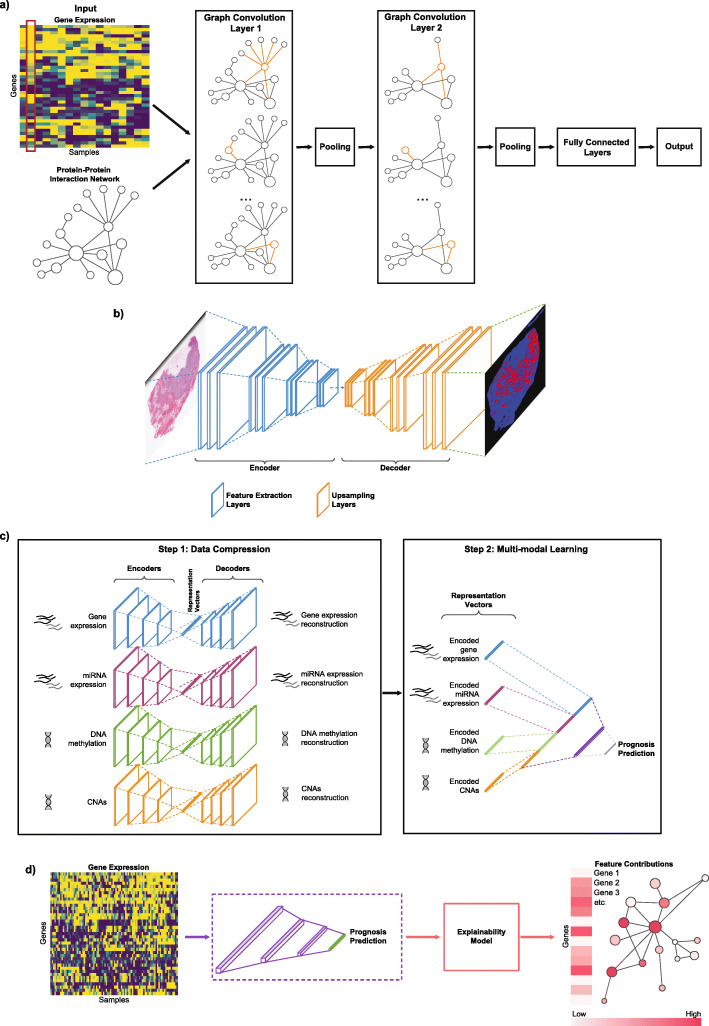
“GCNNs are specifically designed to analyse graph data, e.g. using prior biological knowledge of an interconnected network of proteins with nodes representing proteins and pairwise connections representing protein – protein interactions (PPI) [15], using resources such as the STRING PPI database [16] (Fig.”
MethodInfluentialDrier, Y., & Domany, E. (2011) · PLoS ONE · doi:10.1371/journal.pone.0017795 · Cited by 39
Classification of Cancer Primary Sites Using Machine Learning and Somatic Mutations
Chen, Y., Sun, J., Huang, L., Xu, H., & Zhao, Z. (2015) · BioMed Research International · doi:10.1155/2015/491502 · Cited by 31 · cited 1×
“Remarkably, the study found that driver genes and pathways are not among the most salient features, highlighting why previous efforts in panel and exome sequencing for CUP produced mixed results [104 – 107].”
ResultMulti-task Deep Learning for Colon Cancer Grading
Vuong, T. T. L., Lee, D., Kwak, J. T., & Kim, K. (2020) · International Conference on Electronics, Information, and Communication (ICEIC) · doi:10.1109/iceic49074.2020.9051305 · Cited by 31
Ordinal Multi-modal Feature Selection for Survival Analysis of Early-Stage Renal Cancer
Shao, W., Cheng, J., Sun, L., Han, Z., Feng, Q., Zhang, D., & Huang, K. (2018) · Lecture notes in computer science · doi:10.1007/978-3-030-00934-2_72 · Cited by 30
Inter-reader variability in follicular lymphoma grading: Conventional and digital reading
Lozanski, G., Pennell, M. L., Shana’ah, A., Zhao, W., Gewirtz, A. S., Racke, F. K., Hsi, E. D., Simpson, S., Mosse, C. A., Alam, S., et al. (2013) · Journal of Pathology Informatics · doi:10.4103/2153-3539.120747 · Cited by 29 · cited 1×
“This microscopy-based assessment is crucial; however, the process is relatively labourintensive and somewhat subjective [80, 81].”
BackgroundWang, K., Duan, X., Gao, F., Wang, W., Liu, L., & Wang, X. (2018) · PLoS ONE · doi:10.1371/journal.pone.0203824 · Cited by 26 · cited 1×
“Neural networks have also been successfully applied to transcriptomic data for molecular subtyping of lung [94], gastric and ovarian cancers [95].”
BackgroundHybrid Unified Deep Learning Network for Highly Precise Gleason Grading of Prostate Cancer
Poojitha, U. P., & Sharma, S. L. (2019) · Annual International Conference of the IEEE Engineering in Medicine and Biology Society (EMBC) · doi:10.1109/embc.2019.8856912 · Cited by 18 · cited 3×
“Semantic segmentation Poojitha and Lal Sharma [47] A semantic segmentation technique called GAN was used to segment tissue maps for prostate cancer grade prediction”
BackgroundMethodInfluentialAnálise de sobrevivência de mulheres com câncer de mama: modelos de riscos competitivos
Ferraz, R. D. O., & Filho, D. D. C. M. (2017) · Ciência & Saúde Coletiva · doi:10.1590/1413-812320172211.05092016 · Cited by 17
Straznicky, N. E., Grima, M. T., Sari, C. I., Eikelis, N., Nestel, P. J., Dixon, J. B., Lambert, G. W., Schlaich, M. P., Phillips, S. E., & Lambert, É. (2017) · Frontiers in Physiology · doi:10.3389/fphys.2017.00203 · Cited by 14
Kanan, C., Sue, J., Grady, L. J., Fuchs, T. J., Chandarlapaty, S., Reis-Filho, J. S., Salles, P. G. O., Silva, L. M. D., Ferreira, C. G., & Pereira, E. M. (2020) · Journal of Clinical Oncology · doi:10.1200/jco.2020.38.15_suppl.e14076 · Cited by 13 · cited 1×
“While routine clinical use is still limited, some of the models have already been FDA-approved and adopted into a clinical setting, for example CNNs for the prediction of malignancy in pulmonary nodules detected by CT [12], and prostate and breast cancer diagnosis prediction using digital histopathology [13, 14].”
MethodRummel, S. K., Shriver, C. D., & Ellsworth, R. E. (2012) · BMC Medical Genetics · doi:10.1186/1471-2350-13-41 · Cited by 13
Wang, K., Duan, X., Gao, F., Wang, W. T., Liu, L., & Wang, X. (2018) · PLoS ONE · doi:10.1371/journal.pone.0205548 · Cited by 12
Identification of novel therapeutic targets in glioblastoma with functional genomic mRNA profiling.
Brahm, C. G., Walenkamp, A., Linde, M. E. V., Verheul, H. M. W., & Fehrmann, R. S. N. (2017) · Journal of Clinical Oncology · doi:10.1200/jco.2017.35.15_suppl.2018 · Cited by 4 · cited 1×
“Cox-PASNet also correctly detected MAPK9, a gene strongly associated with GBM carcinogenesis and a novel potential therapeutic, as one the most influential genes [120].”
MethodThiagarajan, P., Khairnar, P., & Ghosh, S. (2020) · doi:10.31224/osf.io/5xf8c · Cited by 3
Research works printed but not linked: 1
- Maggiori E, Tarabalka Y, Charpiat G, Alliez P. High-resolution image classification with convolutional networks. 2017 IEEE Int Geosci Remote Sens Symp IGARSS [Internet]. Fort Worth: IEEE; 2017. p. 5157-60. [cited 2020 Dec 8]. Available from: http://ieeexplore.ieee.org/document/8128163/
Cited by
Deep learning-enabled virtual histological staining of biological samples
Bai, B., Yang, X., Li, Y., Zhang, Y., Pillar, N., & Ozcan, A. (2023) · Light: Science & Applications · doi:10.1038/s41377-023-01104-7 · Cited by 345
Chakraborty, C., Bhattacharya, M., Pal, S., & Lee, S.-S. (2024) · Current Research in Biotechnology · doi:10.1016/j.crbiot.2023.100164 · Cited by 274
Machine Learning for Lung Cancer Diagnosis, Treatment, and Prognosis
Li, Y., Wu, X., Yang, P., Jiang, G., & Luo, Y. (2022) · Genomics, Proteomics & Bioinformatics · doi:10.1016/j.gpb.2022.11.003 · Cited by 263
“Statistical algorithms, such as the Cox proportional-hazards model [118], have been implemented to assist physicians’ prediction in many studies [119–122], but they are not particularly accurate [12].”
BackgroundMethodBaião, A. R., Cai, Z., Poulos, R. C., Robinson, P. J., Reddel, R. R., Zhong, Q., Vinga, S., & Gonçalves, E. (2025) · Briefings in Bioinformatics · doi:10.1093/bib/bbaf355 · Cited by 211
Digital health: trends, opportunities and challenges in medical devices, pharma and bio-technology
Kasoju, N., Remya, N. S., Sasi, R., Sreedharan, S., Soman, B., Kesavadas, C., Muraleedharan, C. V., Varma, P. R. H., & Behari, S. (2023) · CSI Transactions on ICT · doi:10.1007/s40012-023-00380-3 · Cited by 244
“(c) Clinical decision support Clinical decision support systems that incorporate omics data can provide healthcare providers with real-time information and recommendations to help them make more informed treatment decisions for their patients [79].”
Background
Metadata
- Authors
- Tran, K. A., Kondrashova, O., Bradley, A., Williams, E. D., Pearson, J. V., & Waddell, N.
- Affiliations
- Queensland University of Technology (AU)
- QIMR Berghofer Medical Research Institute (AU)
- Corresponding author
- Waddell, Nicola
- ORCID
- Venue
- Genome Medicine
- Published
- 2021-09-27
- Volume
- 13
- Issue
- 1
- Pages
- 152-152
- ISSN
- 1756-994X (ISSN-L)
- PMC
- PMC8477474
- OpenAlex
- W3204312334
- Cited by
- 932
- References
- 170
- Citations by year
- 2026: 158 · 2025: 246 · 2024: 258 · 2023: 191 · 2022: 79
- FWCI
- 9.60
- Type
- journal article
- Language
- en
- Open access
- gold
- doi.org
- Licence
- cc-by
- creativecommons.org/licenses/by/4.0 (tdm)
- creativecommons.org/licenses/by/4.0 (vor)
- Locations
- Genome Medicine (publishedVersion, cc-by)
- Europe PMC (PubMed Central) (publishedVersion, other-oa)
- PubMed Central (publishedVersion, cc-by)
- PubMed (publishedVersion)
- QUT ePrints (Queensland University of Technology) (submittedVersion, cc-by)
- DOAJ (DOAJ: Directory of Open Access Journals) (submittedVersion, cc-by-sa)
- Figshare (submittedVersion, cc-by)
- Minerva Access (University of Melbourne) (submittedVersion, cc-by)
- Funders
- National Health and Medical Research Council (APP1139071)
- Topics
- Physical Sciences › Computer Science › Artificial Intelligence › AI in cancer detection
- Health Sciences › Medicine › Health Informatics › Artificial Intelligence in Healthcare and Education
- Health Sciences › Medicine › Radiology, Nuclear Medicine and Imaging › Radiomics and Machine Learning in Medical Imaging
- Keywords
- deep learning, cancer diagnosis, cancer prognosis, treatment selection, precision oncology, multi-omics integration, genomic data, DNA methylation, transcriptomic data, decision support system, explainable deep learning
- MeSH terms
- Machine Learning, Deep Learning, Artificial Intelligence, Humans, Medical Oncology, Neoplasms, Pharmacogenetics, Prognosis, Neural Networks, Computer, Genomics, Precision Medicine, Tumor Microenvironment
About these checks
Registry, retraction, Cites and statistics results are computed, not judged, with one exception: a printed reference that no index lists is read once by a model before it counts as a citation error. Claims are extracted by a model and kept only when their quote appears verbatim in the text; each cited source is then checked, with a model’s help, for whether it says what the claim relies on. Those verdicts can be wrong — read the claim’s quote and the cited source before relying on one.
Statistics and arithmetic are recomputed, not judged.
Confidence bands are shown only for fields calibrated on our annotated test set. None is calibrated yet, so no band is shown.
What counts as a claim ›How we measure confidence ›How we check this ›
Are you an author, or do you see a problem with this page? Request a review
Data sources
Bibliographic data: Semantic Scholar, OpenAlex, Crossref.
Contains information from the Semantic Scholar Academic Graph Datasets, made available under the ODC Attribution License (ODC-BY 1.0).
Semantic Scholar’s data is described in: Kinney, R., et al. (2023). The Semantic Scholar Open Data Platform. arXiv:2301.10140.
