

Predicting heterogeneity in clone-specific therapeutic vulnerabilities using single-cell transcriptomic signatures
Open accessPublished version of a preprint
The DOI matches its Crossref record; 63 of the 69 references it cites were found in a registry or an index.
Abstract
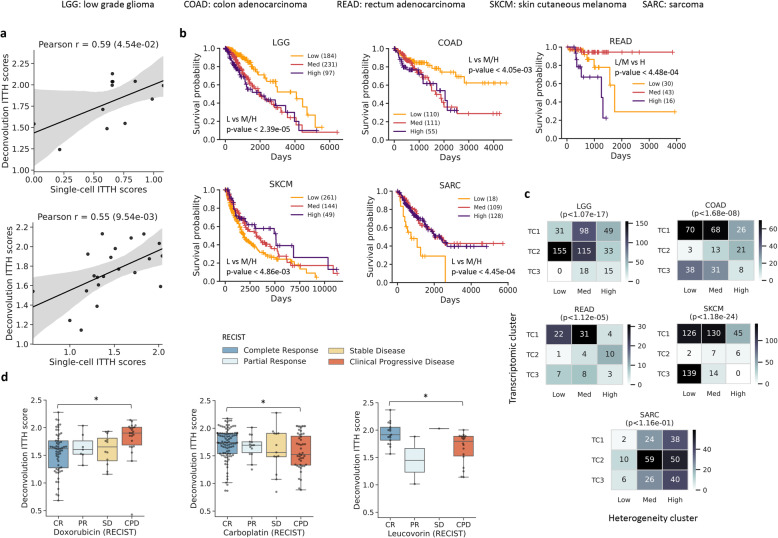
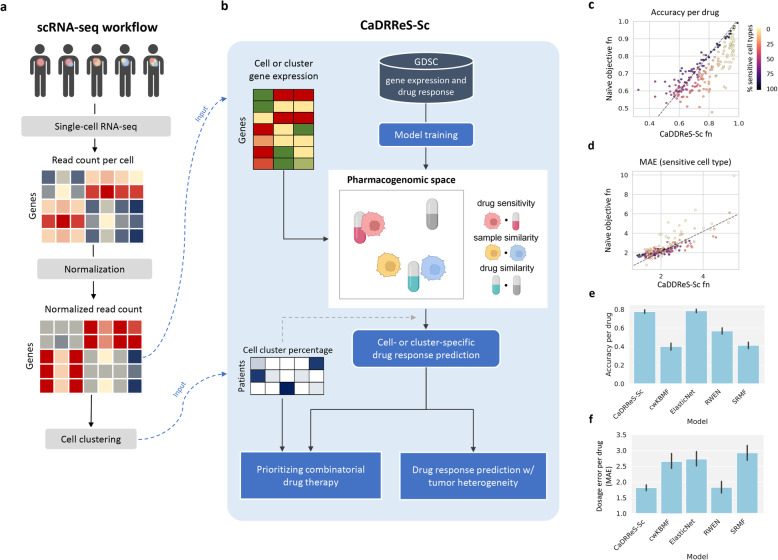
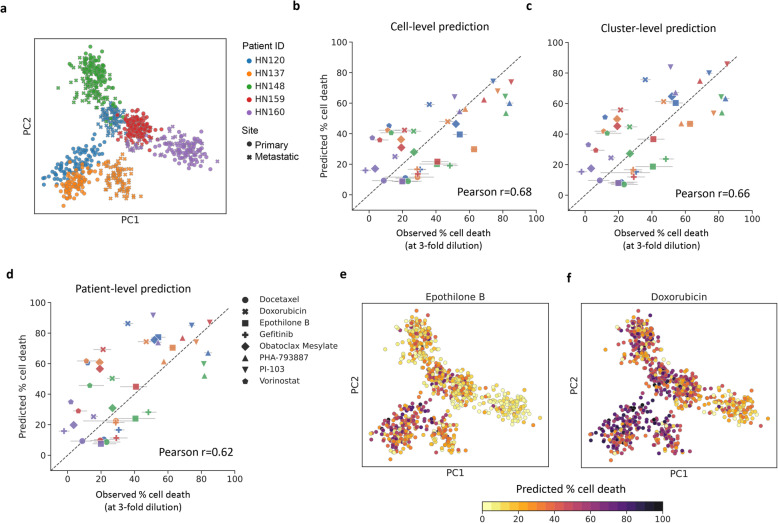
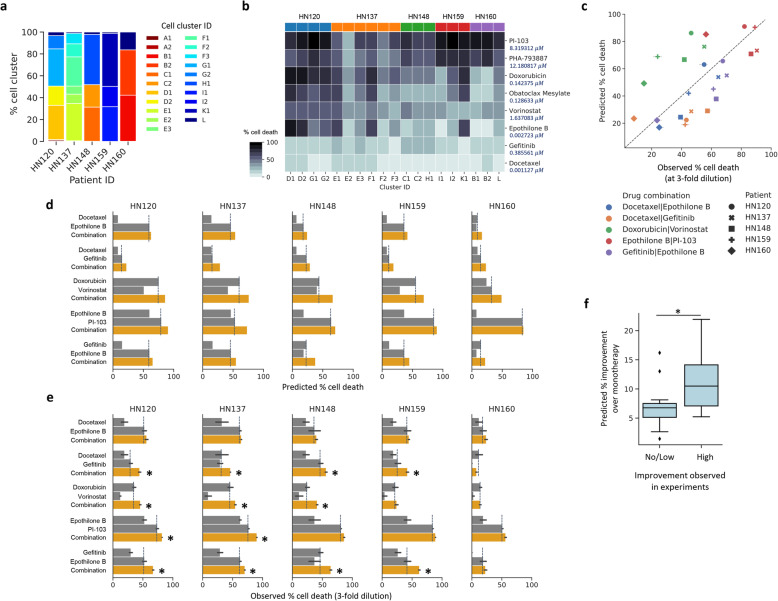
While understanding molecular heterogeneity across patients underpins precision oncology, there is increasing appreciation for taking intra-tumor heterogeneity into account. Based on large-scale analysis of cancer omics datasets, we highlight the importance of intra-tumor transcriptomic heterogeneity (ITTH) for predicting clinical outcomes. Leveraging single-cell RNA-seq (scRNA-seq) with a recommender system (CaDRReS-Sc), we show that heterogeneous gene-expression signatures can predict drug response with high accuracy (80%). Using patient-proximal cell lines, we established the validity of CaDRReS-Sc’s monotherapy (Pearson r >0.6) and combinatorial predictions targeting clone-specific vulnerabilities (>10% improvement). Applying CaDRReS-Sc to rapidly expanding scRNA-seq compendiums can serve as in silico screen to accelerate drug-repurposing studies. Availability: https://github.com/CSB5/CaDRReS-Sc .
Overview
The claims and statistics of this paper haven’t been checked yet.
Free: it reads the open-access text and checks the first 5 claims that cite a source we can check. Create a free account to check every claim.
Integrity signals
Registry
Cites
Statistics
Figures
Verification
Claims the paper makes
The claims and statistics of this paper haven’t been checked yet.
Free: it reads the open-access text and checks the first 5 claims that cite a source we can check. Create a free account to check every claim.
Claims other papers make about this one
Each is checked against this paper’s own text: does it say what the citing paper says it does?
The cited source says what the claim attributes to it.
In the citing paper
“which predicts cancer drug responses for unseen cell lines or patients, based on learning projections for drugs and cell lines within a latent ‘pharmacogenomic’ space.”
From A mini-review on perturbation modelling across single-cell omic modalities (2024) · cites this paper as [41]
In the citing paper
“CaDRReS-Sc combines cell- or cluster-specific drug response predictions to estimate overall drug response and prioritise drug combinations for a patient.”
From A mini-review on perturbation modelling across single-cell omic modalities (2024) · cites this paper as [41]
In the citing paper
“CaDRReS-Sc can effectively combine cell-specific drug response values into a holistic response value using Newton’s method, which is ideal for constructing IC50 sigmoid-like curves.”
From A mini-review on perturbation modelling across single-cell omic modalities (2024) · cites this paper as [41]
In the citing paper
“Moreover, CaDRReS-Sc enables drug-pathway associations and combinatorial therapy responses for personalised therapeutic regimens.”
From A mini-review on perturbation modelling across single-cell omic modalities (2024) · cites this paper as [41]
Self-check
Percentages, sums and reported differences re-computed from the paper’s own numbers.
The self-check needs the paper’s full text.
Citations
Cites
STAR: ultrafast universal RNA-seq aligner
Dobin, A., Davis, C. A., Schlesinger, F., Drenkow, J., Zaleski, C., Jha, S., Batut, P., Chaisson, M., & Gingeras, T. R. (2013) · Bioinformatics · doi:10.1093/bioinformatics/bts635 · Cited by 51,709 · cited 1×
“2a, default parameters) [28], followed by RSEM analysis (v1.”
MethodRSEM: accurate transcript quantification from RNA-Seq data with or without a reference genome
Li, B., & Dewey, C. N. (2011) · BMC Bioinformatics · doi:10.1186/1471-2105-12-323 · Cited by 22,179 · cited 1×
“3.0, default parameters) [29].”
InfluentialFast unfolding of communities in large networks
Blondel, V. D., Guillaume, J.-L., Lambiotte, R., & Lefebvre, E. (2008) · Journal of Statistical Mechanics: Theory and Experiment · doi:10.1088/1742-5468/2008/10/p10008 · Cited by 21,424 · cited 1×
“In the final step, the neighborhood graph was used for cell clustering using the Louvain algorithm (Blondel et al., 2008).”
MethodRobust enumeration of cell subsets from tissue expression profiles
Newman, A. M., Liu, C. L., Green, M. R., Gentles, A. J., Feng, W., Xu, Y., Hoang, C. D., Diehn, M., & Alizadeh, A. A. (2015) · Nature Methods · doi:10.1038/nmeth.3337 · Cited by 13,224 · cited 3×
“While this analysis emphasized the general importance of taking ITTH into account for predicting treatment response and outcomes, the power to detect associations might have been limited by the dependence on an in silico deconvolution approach [34, 56].”
BackgroundMethodIntegrating single-cell transcriptomic data across different conditions, technologies, and species
Butler, A., Hoffman, P., Smibert, P., Papalexi, E., & Satija, R. (2018) · Nature Biotechnology · doi:10.1038/nbt.4096 · Cited by 13,174 · cited 1×
“A standard scRNA-seq workflow described in the Scanpy tutorial was used to perform single-cell clustering [30, 31].”
MethodMatrix Factorization Techniques for Recommender Systems
Koren, Y., Bell, R., & Volinsky, C. (2009) · Computer · doi:10.1109/mc.2009.263 · Cited by 11,673 · cited 1×
“System for single-cell RNA-seq or CaDDReS-Sc) that robustly combines single-cell RNA-sequencing (scRNA-seq) data with matrix factorization techniques for recommender system [18, 26] to predict drug response for a heterogeneous tumor.”
MethodSCANPY: large-scale single-cell gene expression data analysis
Wolf, F. A., Angerer, P., & Theis, F. J. (2018) · Genome Biology · doi:10.1186/s13059-017-1382-0 · Cited by 8,881 · cited 1×
“A standard scRNA-seq workflow described in the Scanpy tutorial was used to perform single-cell clustering [30, 31].”
MethodThe Cancer Cell Line Encyclopedia enables predictive modelling of anticancer drug sensitivity
Barretina, J., Caponigro, G., Stransky, N., Venkatesan, K., Margolin, A. A., Kim, S., Wilson, C. J., Lehár, J., Kryukov, G. V., Sonkin, D., et al. (2012) · Nature · doi:10.1038/nature11003 · Cited by 7,950 · cited 2×
“These efforts have been complemented by studies on cancer cell lines [14 – 16] to understand the relationship between molecular markers and drug response in vitro.”
BackgroundDrug combination studies and their synergy quantification using the Chou-Talalay method
Chou, T.-C. (2010) · Cancer Research · doi:10.1158/0008-5472.can-09-1947 · Cited by 5,739 · cited 1×
“impact of drug-drug interactions (Chou, 2010; Jia et al., 2009; Yadav et al., 2015), overall we were able to capture the effect of combinatorial drug therapy (Figure 4C-E) and its improvement over monotherapy (Figure 4F).”
BackgroundSingle-cell RNA-seq highlights intratumoral heterogeneity in primary glioblastoma
Patel, A. P., Tirosh, I., Trombetta, J. J., Shalek, A. K., Gillespie, S. M., Wakimoto, H., Cahill, D. P., Nahed, B. V., Curry, W. T., Martuza, R. L., et al. (2014) · Science · doi:10.1126/science.1254257 · Cited by 5,063 · cited 1×
“The development of single-cell transcriptomics has enabled the direct identification and quantification of cell populations within a tumor [4, 44 – 46].”
Research works printed but not linked: 1
- Suphavilai C, Chia S, Sharma A, Tu L, Peres R, Mongia A, DasGupta R NN. CaDRReS-Sc. Figshare. https://figshare.com/projects/CaDRReS-Sc/75936 (2021) PMC8680165 34915921
Cited by
Gene expression based inference of cancer drug sensitivity
Chawla, S., Rockstroh, A., Lehman, M., Ratther, E., Jain, A., Anand, A., Gupta, A., Bhattacharya, N., Poonia, S., Rai, P., et al. (2022) · Nature Communications · doi:10.1038/s41467-022-33291-z · Cited by 185
“21 and another method by Sakellaropoulos, Theodore, et al 16 .”
BackgroundMethodSinha, S., Vegesna, R., Mukherjee, S., Kammula, A. V., Dhruba, S. R., Wu, W., Kerr, D. L., Nair, N. U., Jones, M. G., Yosef, N., et al. (2024) · Nature Cancer · doi:10.1038/s43018-024-00756-7 · Cited by 152
“We obtained the sc-expression data for five head and neck squamous cell cancer PDCs lines, along with their treatment response for eight drugs and combination therapy at two different dosages 26 .”
MethodKe, M. S., Elshenawy, B., Sheldon, H., Arora, A., & Buffa, F. M. (2022) · BioEssays · doi:10.1002/bies.202200084 · Cited by 90
A mini-review on perturbation modelling across single-cell omic modalities
Gavriilidis, G. I., Vasileiou, V., Orfanou, A., Ishaque, N., & Psomopoulos, F. (2024) · Computational and Structural Biotechnology Journal · doi:10.1016/j.csbj.2024.04.058 · Cited by 54
“CaDRReS-Sc [41] (Cancer Drug Response prediction using a Recommender System for single-cell RNA-seq) is the single-cell version of the CaDRReS model (https://doi.org/10.1093/bioinformatics/ bty452), which predicts cancer drug responses for unseen cell lines or patients, based on learning…”
MethodInfluentialscDrug: From single-cell RNA-seq to drug response prediction
Hsieh, C.-Y., Wen, J.-H., Lin, S.-M., Tseng, T.-Y., Huang, J., Huang, H., & Juan, H. (2022) · Computational and Structural Biotechnology Journal · doi:10.1016/j.csbj.2022.11.055 · Cited by 59
“The cancer cluster-specific model proposed in CaDRReS-Sc [16] was defined as where s iu is the observed drug response (IC 50 or scaled 1 (cid:1) AUC) of cell line u to drug i , b s iu is the predicted drug response, l is the over-all mean drug response, b and b are the bias terms for drug i and cell…”
BackgroundMethodMei, T., Wang, T., & Zhou, Q. (2024) · Clinical and Experimental Medicine · doi:10.1007/s10238-024-01324-0 · Cited by 61
“Intratumoral heterogeneity (ITH) is a key factor influencing the patient response to immunotherapy [76].”
BackgroundPredicting drug response from single-cell expression profiles of tumours
Pellecchia, S., Viscido, G., Franchini, M., & Gambardella, G. (2023) · BMC Medicine · doi:10.1186/s12916-023-03182-1 · Cited by 50
“PDCs 2 ∗ m TPM counts were instead retrieved from supplementary data of the original work [18].”
BackgroundMethodInfluentialPersonalized tumor combination therapy optimization using the single-cell transcriptome
Tang, C., Fu, S., Jin, X., Li, W., Xing, F., Duan, B., Cheng, X., Chen, X., Wang, S., Zhu, C., et al. (2023) · Genome Medicine · doi:10.1186/s13073-023-01256-6 · Cited by 37
“We collected scRNA-seq data from three head and neck patient-derived cell lines (PDC) samples treated with five drug combinations at two different dosages (GSE117872) [62].”
MethodArtificial Intelligence-Assisted Transcriptomic Analysis to Advance Cancer Immunotherapy
Gui, Y., He, X., Yu, J., & Jing, J. (2023) · Journal of Clinical Medicine · doi:10.3390/jcm12041279 · Cited by 36
“Intratumor heterogeneity (ITH) is a key factor contributing to patient outcomes and immunotherapy response [32,33].”
BackgroundMaeser, D., Zhang, W., Huang, Y., & Huang, R. S. (2023) · Current Opinion in Structural Biology · doi:10.1016/j.sbi.2023.102745 · Cited by 30
Evolution-Informed Strategies for Combating Drug Resistance in Cancer
Lin‐Rahardja, K., Weaver, D. T., Scarborough, J. A., & Scott, J. G. (2023) · International Journal of Molecular Sciences · doi:10.3390/ijms24076738 · Cited by 25
“In the interest of capturing tumor heterogeneity in a more explicit manner, another study utilized single-cell RNA-seq data and matrix factorization to predict drug response [60].”
MethodZhang, W., Maeser, D., Lee, A. M., Huang, Y., Gruener, R. F., Abdelbar, I. G., Jena, S., Patel, A. G., & Huang, R. S. (2024) · Cancer Research · doi:10.1158/0008-5472.can-23-3005 · Cited by 28
Schäfer, S., Smelik, M., Sysoev, O., Zhao, Y., Eklund, D., Lilja, S., Gustafsson, M., Heyn, H., Julià, A., Kovács, I. A., et al. (2024) · Genome Medicine · doi:10.1186/s13073-024-01314-7 · Cited by 23
In silico approaches for drug repurposing in oncology: a scoping review
Cavalcante, B. R. R., Freitas, R. D., da Rocha, L. D. O. S., dos Santos, R. D. S. B., Souza, B. S. D. F., Ramos, P. I. P., Rocha, G. V., & Rocha, C. A. G. (2024) · Frontiers in Pharmacology · doi:10.3389/fphar.2024.1400029 · Cited by 22
CREAMMIST: an integrative probabilistic database for cancer drug response prediction
Yingtaweesittikul, H., Wu, J., Mongia, A., Peres, R., Ko, K. K. K., Nagarajan, N., & Suphavilai, C. (2022) · Nucleic Acids Research · doi:10.1093/nar/gkac911 · Cited by 21
“As inter- and intra-tumor heterogeneity pose further challenges to cancer treatments, the diversity of cancer cell lines with drug response information could also reveal distinct drug response behaviors across subpopulations (50,51) as well as novel target populations (52).”
BackgroundSelf-citationMachine learning to dissect perturbations in complex cellular systems
Monfort‐Lanzas, P., Rungger, K., Madersbacher, L., & Hackl, H. (2025) · Computational and Structural Biotechnology Journal · doi:10.1016/j.csbj.2025.02.028 · Cited by 24
Deep learning-driven drug response prediction and mechanistic insights in cancer genomics
Yu, G., & Fan, Q. (2025) · Scientific Reports · doi:10.1038/s41598-025-91571-2 · Cited by 25
Zhou, M., Luo, Z., Yin, Y.-H., Liu, Q., Wang, G., & Zhao, Y. (2025) · Briefings in Bioinformatics · doi:10.1093/bib/bbaf268 · Cited by 13
“In clinical applications, identifying biomarkers is vital for understanding cancer mechanisms and assessing the potential of prediction models in clinical applications [13, 43].”
Taniguchi‐Ponciano, K., Hinojosa‐Álvarez, S., Hernández-Pérez, J., Chávez-Santoscoy, R. A., Remba-Shapiro, I., Guinto, G., Magallón-Gayón, E., Telles-Ramirez, B., de Leon-Conconi, R. P., Vela-Patiño, S., et al. (2024) · Acta Neuropathologica Communications · doi:10.1186/s40478-024-01796-x · Cited by 9
“Intratumoral transcriptomic heterogeneity can confer selective advantages that influence the phenotype of tumor cell populations and thus, their biological behavior [21].”
BackgroundChampagne, A., Jain, P., Vélot, L., Riopel, J., Lefèbvre, V., Neveu, B., & Pouliot, F. (2021) · Theranostics · doi:10.7150/thno.63744 · Cited by 8
Liu, H., Duan, W., & Luo, J. (2025) · IEEE Journal of Biomedical and Health Informatics · doi:10.1109/jbhi.2025.3553126 · Cited by 11
Modern approaches to target tumor heterogeneity: Integrating technology and treatment
Kumar, A., Manav, N., Singh, M., Shankar, A., Kumar, M., & Prasad, C. P. (2026) · Tumori Journal · doi:10.1177/03008916261437964 · Cited by 4
Breast Cancer Tissue Explants: An Approach to Develop Personalized Therapy in Public Health Services
Carranza‐Rosales, P., Valencia-Mercado, D., Esquivel-Hernández, O., González-Geroniz, M. I., Bañuelos-García, J. I., Castruita-Ávila, A. L., Sánchez-Prieto, M. A., Viveros‐Valdez, E., Morán‐Martínez, J., Balderas-Rentería, I., et al. (2023) · Journal of Personalized Medicine · doi:10.3390/jpm13101521 · Cited by 4
“Preclinical models that make it possible to identify individual differences in the tumor response to different therapeutic drugs could help design specific regimens for each patient, which increases the probability of achieving the most favorable response [26].”
BackgroundPredicting patient treatment response and resistance via single-cell transcriptomics of their tumorsPreprint
Sinha, S., Vegesna, R., Dhruba, S. R., Wu, W., Kerr, D. L., Stroganov, O. V., Grishagin, I. V., Aldape, K., Blakely, C. M., Jiang, P., et al. (2022) · bioRxiv (Cold Spring Harbor Laboratory) · doi:10.1101/2022.01.11.475728 · Cited by 3
Zhou, B., Sun, S.-L., Liu, S., Long, H., & Li, Y. (2025) · Frontiers in Medicine · doi:10.3389/fmed.2025.1631898 · Cited by 5
Personalizing chemotherapy drug selection using a novel transcriptomic chemogram
Lin‐Rahardja, K., Scarborough, J. A., & Scott, J. G. (2025) · PLoS Computational Biology · doi:10.1371/journal.pcbi.1013417 · Cited by 2
“As the availability of multi-omics data increases exponentially, more models are including such information to predict drug response [7–9].”
Tian, P., Zheng, J., Qiao, K., Fan, Y., Xu, Y., Wu, T., Chen, S., Zhang, Y., Zhang, B., Ambrogio, C., et al. (2024) · Advanced Science · doi:10.1002/advs.202412419 · Cited by 4
Zhang, W., Maeser, D., Lee, A., Huang, Y., Gruener, R. F., Abdelbar, I. G., Jena, S., Patel, A. G., & Huang, R. S. (2023) · bioRxiv (Cold Spring Harbor Laboratory) · doi:10.1101/2023.10.29.564598 · Cited by 2
“We benchmarked prediction performances of scIDUC, Beyondcell 22 , and CaDRReS-Sc 21 using the same evaluation criteria, namely Cohen’s D and Rho statistics.”
InfluentialSha, Z., Gao, Q., Wang, L., An, N., Wu, Y., Dong, W., Wang, T., Liu, C., & Shen, Y. (2024) · OncoTargets and Therapy · doi:10.2147/ott.s454295 · Cited by 3
MACHINE LEARNING APPROACHES FOR INTEGRATIVE MULTI-OMICS DATA ANALYSIS OF CANCER: A SYSTEMATIC REVIEW
Hassan, A. M., Naeem, S. M., Eldosoky, M. A. A., & Mabrouk, M. S. (2025) · Biomedical Engineering Applications Basis and Communications · doi:10.4015/s1016237225300044 · Cited by 3
scHDR: A Heterogeneous Network Transfer Learning Model for Predicting Single-Cell Drug Responses
Qi, G., Wang, L., Chen, X., SHI, Y. H., Ma, Y., Ren, Q., Fu, Y., Nan, M., & Gao, J. (2026) · Current Bioinformatics · doi:10.2174/0115748936401291251010055212 · Cited by 1
Wang, Y. (., Haase, S., Whitman, A. A., Beltran, A. S., Spanheimer, P. M., & Brunk, E. (2026) · iScience · doi:10.1016/j.isci.2026.115445 · Cited by 2
Liu, H., Yuan, M., Shang, Y., Chen, J., Hou, F., Wang, L., & Jiang, W. (2026) · Advanced Science · doi:10.1002/advs.202513246 · Cited by 1
“This stratification pattern and the associated gradient of drug resistance were consistently validated by another algorithm CaDRReS-Sc [ 26 ] (Figure 5C ).”
REFLECTions on Combination Therapies Empowered by Data Sharing
Pugh, T. J., & Haibe‐Kains, B. (2022) · Cancer Discovery · doi:10.1158/2159-8290.cd-22-0330 · Cited by 1
Liu, H., & Duan, W. (2024) · Research Square · doi:10.21203/rs.3.rs-4487198/v1
Lee, S., Sun, M., Hu, Y., Wang, Y., Islam, M. N., Goerlitz, D. S., Lucas, P. C., Lee, A. V., Swain, S. M., Tang, G., et al. (2024) · BMC Bioinformatics · doi:10.1186/s12859-024-05835-1
“In addition, most of these tools are developed for modeling pharma-cogenomics data of cancer cell lines and are not validated for directly modeling clinical trials [1–6].”
MethodPatient Anticancer Drug Response Prediction Based on Single-Cell Deconvolution
Peng, W., Chen, C., & Dai, W. (2024) · Lecture notes in computer science · doi:10.1007/978-981-97-5087-0_4
Drug Repositioning Using Single-Cell RNA Sequencing in Cancer Research
Abdullah‐Zawawi, M., Chan, S. N., Tieng, F. Y. F., Mohamed‐Hussein, Z., & Mutalib, N. A. (2024) · Interdisciplinary cancer research · doi:10.1007/16833_2024_441
Recombinant α-Toxin BmK-M9 Inhibits Breast Cancer Progression by Regulating β-Catenin In Vivo
Chen, W., Cha, Z., Huang, S., Liu, R., Chen, J., Kamau, P. M., Lu, X., Li, B., & Liu, D. (2025) · Cell Biochemistry and Biophysics · doi:10.1007/s12013-025-01711-8 · Cited by 1
Wang, Y., Haase, S., Whitman, A. A., Beltran, A. S., Spanheimer, P. M., & Brunk, E. (2025) · SSRN Electronic Journal · doi:10.2139/ssrn.5256098
Advances in single-cell perturbation modeling
Qi, X., Zhao, L., Chen, R., & Zhao, Y. C. (2025) · Chinese Science Bulletin (Chinese Version) · doi:10.1360/csb-2025-0682
Ho, Y., Sheng, P. Y., Chen, Y.-R., Tang, Y., Ho, S., & Lee, T.-Y. (2025) · IEEE Conference on Computational Intelligence in Bioinformatics and Computational Biology (CIBCB) · doi:10.1109/cibcb66090.2025.11177086
Taniguchi‐Ponciano, K., Hinojosa‐Álvarez, S., Hernández-Pérez, J., Santoscoy, R. C., Remba-Shapiro, I., Guinto, G., Magallón-Gayón, E., Telles-Ramirez, B., de Leon-Conconi, R. P., Vela-Patiño, S., et al. (2024) · Figshare · doi:10.6084/m9.figshare.26944560
Tang, C., Fu, S., Jin, X., Li, W., Xing, F., Duan, B., Cheng, X., Chen, X., Wang, S., Zhu, C., et al. (2023) · Figshare · doi:10.6084/m9.figshare.24715432
Lee, S., Sun, M., Hu, Y., Wang, Y., Islam, M. N., Goerlitz, D. S., Lucas, P. C., Lee, A. V., Swain, S. M., Tang, G., et al. (2024) · Figshare · doi:10.6084/m9.figshare.26736336
Lee, S., Sun, M., Hu, Y., Wang, Y., Islam, M. N., Goerlitz, D. S., Lucas, P. C., Lee, A. V., Swain, S. M., Tang, G., et al. (2024) · Figshare · doi:10.6084/m9.figshare.26736342
Schäfer, S., Smelik, M., Sysoev, O., Zhao, Y., Eklund, D., Lilja, S., Gustafsson, M., Heyn, H., Julia, A., Kovács, I. A., et al. (2024) · Figshare · doi:10.6084/m9.figshare.26695929
Schäfer, S., Smelik, M., Sysoev, O., Zhao, Y., Eklund, D., Lilja, S., Gustafsson, M., Heyn, H., Julia, A., Kovács, I. A., et al. (2024) · Figshare · doi:10.6084/m9.figshare.25449100
Schäfer, S., Smelik, M., Sysoev, O., Zhao, Y., Eklund, D., Lilja, S., Gustafsson, M., Heyn, H., Julia, A., Kovács, I. A., et al. (2024) · Figshare · doi:10.6084/m9.figshare.26695920
Schäfer, S., Smelik, M., Sysoev, O., Zhao, Y., Eklund, D., Lilja, S., Gustafsson, M., Heyn, H., Julia, A., Kovács, I. A., et al. (2024) · Figshare · doi:10.6084/m9.figshare.26695923
Additional file 2 of Predicting drug response from single-cell expression profiles of tumours
Pellecchia, S., Viscido, G., Franchini, M., & Gambardella, G. (2024) · Figshare · doi:10.6084/m9.figshare.26648316
Lee, S., Sun, M., Hu, Y., Wang, Y., Islam, M. N., Goerlitz, D. S., Lucas, P. C., Lee, A. V., Swain, S. M., Tang, G., et al. (2024) · Figshare · doi:10.6084/m9.figshare.26736339
Schäfer, S., Smelik, M., Sysoev, O., Zhao, Y., Eklund, D., Lilja, S., Gustafsson, M., Heyn, H., Julia, A., Kovács, I. A., et al. (2024) · Figshare · doi:10.6084/m9.figshare.25448998
Schäfer, S., Smelik, M., Sysoev, O., Zhao, Y., Eklund, D., Lilja, S., Gustafsson, M., Heyn, H., Julia, A., Kovács, I. A., et al. (2024) · Figshare · doi:10.6084/m9.figshare.26695926
Additional file 1 of Predicting drug response from single-cell expression profiles of tumours
Pellecchia, S., Viscido, G., Franchini, M., & Gambardella, G. (2024) · Figshare · doi:10.6084/m9.figshare.26648313
Taniguchi‐Ponciano, K., Hinojosa‐Álvarez, S., Hernández-Pérez, J., Santoscoy, R. C., Remba-Shapiro, I., Guinto, G., Magallón-Gayón, E., Telles-Ramirez, B., de Leon-Conconi, R. P., Vela-Patiño, S., et al. (2024) · Figshare · doi:10.6084/m9.figshare.26944554
Tang, C., Fu, S., Jin, X., Li, W., Xing, F., Duan, B., Cheng, X., Chen, X., Wang, S., Zhu, C., et al. (2024) · Figshare · doi:10.6084/m9.figshare.24715534
Schäfer, S., Smelik, M., Sysoev, O., Zhao, Y., Eklund, D., Lilja, S., Gustafsson, M., Heyn, H., Julia, A., Kovács, I. A., et al. (2024) · Figshare · doi:10.6084/m9.figshare.26695932
Taniguchi‐Ponciano, K., Hinojosa‐Álvarez, S., Hernández-Pérez, J., Santoscoy, R. C., Remba-Shapiro, I., Guinto, G., Magallón-Gayón, E., Telles-Ramirez, B., de Leon-Conconi, R. P., Vela-Patiño, S., et al. (2024) · Figshare · doi:10.6084/m9.figshare.26944557
Taniguchi‐Ponciano, K., Hinojosa‐Álvarez, S., Hernández-Pérez, J., Santoscoy, R. C., Remba-Shapiro, I., Guinto, G., Magallón-Gayón, E., Telles-Ramirez, B., de Leon-Conconi, R. P., Vela-Patiño, S., et al. (2024) · Figshare · doi:10.6084/m9.figshare.26944551
Qi, G., Wang, L., Nan, M., Fu, Y., Ren, Q., Zhang, Y., Sun, Z., Shi, Z., Lu, J., & Gao, J. (2026) · Communications Biology · doi:10.1038/s42003-025-09418-5 · Cited by 2
AI Approaches for Constructing Digital Transcriptomics
Das, S., & Maity, S. (2026) · IGI Global eBooks · doi:10.4018/979-8-3373-4849-0.ch011
Xu, D., Li, J., & Zhou, L. (2025) · IEEE International Conference on Bioinformatics and Biomedicine (BIBM) · doi:10.1109/bibm66473.2025.11357178
Tang, H., Li, H., Zhao, Q., Zhou, X., Peng, L., Cai, Y., Lin, R., Li, Y., Yuan, Y., Feng, W., et al. (2026) · BMC Genomics · doi:10.1186/s12864-026-13270-0
“The second family consists of perturbation-similarity or pharmacogenomic latent-space models, such as CaDRReS-Sc, which integrate drug knowledge bases and expression features to prioritize drug responses and combinatorial therapies [24, 25].”
A systematic single-cell analysis of enhancer RNAs across human and mouse
Rong, H., Liu, H., Li, Y., Yu, X., Du, J., Zuo, J., Meng, Z., Gao, L., Li, X., Tao, Y., et al. (2026) · Nucleic Acids Research · doi:10.1093/nar/gkag914
“We next examined eRNAs in drug resistance using the OSCC cisplatin-response dataset (GSE117872), which includes drug-holiday, drug-sensitive, and drug-resistant cells [ 82 ].”
Costa, G., Ribeiro, L. F., Alves, R., & Lopes, M. (2025) · International Journal of Pharmaceutical and Phytopharmacological Research · doi:10.51847/ambjjtceuz
Metadata
- Authors
- Suphavilai, C., Chia, S., Sharma, A., Tu, L., Da Silva, R. P., Mongia, A., DasGupta, R., & Nagarajan, N.
- Affiliations
- Agency for Science, Technology and Research (SG)
- Corresponding author
- DasGupta, Ramanuj
- Nagarajan, Niranjan
- Venue
- Genome Medicine
- Published
- 2021-12
- Volume
- 13
- Issue
- 1
- Pages
- 189-189
- ISSN
- 1756-994X (ISSN-L)
- PMC
- PMC8680165
- OpenAlex
- W4225886114
- Semantic Scholar
- 99600561476d7fa9673e75392afb02a79805f89f
- Cited by
- 58
- References
- 69
- Citations by year
- 2026: 8 · 2025: 13 · 2024: 21 · 2023: 8 · 2022: 6 · 2021: 2
- FWCI
- 3.61
- Type
- journal article
- Language
- en
- Open access
- gold
- doi.org
- Licence
- cc-by
- creativecommons.org/licenses/by/4.0 (tdm)
- creativecommons.org/licenses/by/4.0 (vor, 15 d)
- Locations
- Genome Medicine (publishedVersion, cc-by)
- bioRxiv (Cold Spring Harbor Laboratory) (acceptedVersion)
- PubMed Central (publishedVersion, cc-by)
- PubMed (publishedVersion)
- National University of Singapore (submittedVersion, cc-by)
- cIRcle (University of British Columbia) (submittedVersion, cc-by)
- DOAJ (DOAJ: Directory of Open Access Journals) (submittedVersion, cc-by-sa)
- Funders
- Genome Institute of Singapore
- Topics
- Life Sciences › Biochemistry, Genetics and Molecular Biology › Molecular Biology › Single-cell and spatial transcriptomics
- Life Sciences › Biochemistry, Genetics and Molecular Biology › Cancer Research › Cancer Genomics and Diagnostics
- Life Sciences › Biochemistry, Genetics and Molecular Biology › Molecular Biology › Gene expression and cancer classification
- Keywords
- intratumoral heterogeneity, drug response prediction, single-cell transcriptomics, recommender systems, precision oncology, drug repurposing
- MeSH terms
- Clone Cells, Humans, Neoplasms, Software, Sequence Analysis, RNA, Gene Expression Profiling, Precision Medicine, Single-Cell Analysis, Transcriptome
About these checks
Registry, retraction, Cites and statistics results are computed, not judged, with one exception: a printed reference that no index lists is read once by a model before it counts as a citation error. Claims are extracted by a model and kept only when their quote appears verbatim in the text; each cited source is then checked, with a model’s help, for whether it says what the claim relies on. Those verdicts can be wrong — read the claim’s quote and the cited source before relying on one.
Statistics and arithmetic are recomputed, not judged.
Confidence bands are shown only for fields calibrated on our annotated test set. None is calibrated yet, so no band is shown.
What counts as a claim ›How we measure confidence ›How we check this ›
Are you an author, or do you see a problem with this page? Request a review
Data sources
Bibliographic data: Semantic Scholar, OpenAlex, Crossref.
Contains information from the Semantic Scholar Academic Graph Datasets, made available under the ODC Attribution License (ODC-BY 1.0).
Semantic Scholar’s data is described in: Kinney, R., et al. (2023). The Semantic Scholar Open Data Platform. arXiv:2301.10140.
