

Predicting heterogeneity in clone-specific therapeutic vulnerabilities using single-cell transcriptomic signatures
Open accessPublished version of a preprint
The DOI matches its Crossref record; 63 of the 69 references it cites were found in a registry or an index.
Abstract
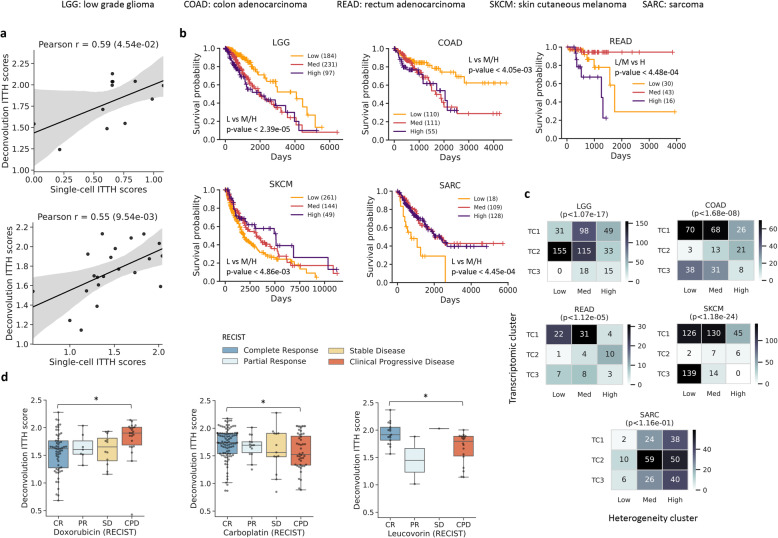
While understanding molecular heterogeneity across patients underpins precision oncology, there is increasing appreciation for taking intra-tumor heterogeneity into account. Based on large-scale analysis of cancer omics datasets, we highlight the importance of intra-tumor transcriptomic heterogeneity (ITTH) for predicting clinical outcomes. Leveraging single-cell RNA-seq (scRNA-seq) with a recommender system (CaDRReS-Sc), we show that heterogeneous gene-expression signatures can predict drug response with high accuracy (80%). Using patient-proximal cell lines, we established the validity of CaDRReS-Sc’s monotherapy (Pearson r >0.6) and combinatorial predictions targeting clone-specific vulnerabilities (>10% improvement). Applying CaDRReS-Sc to rapidly expanding scRNA-seq compendiums can serve as in silico screen to accelerate drug-repurposing studies. Availability: https://github.com/CSB5/CaDRReS-Sc .
Overview
The claims and statistics of this paper haven’t been checked yet.
Free: it reads the open-access text and checks the first 5 claims that cite a source we can check. Create a free account to check every claim.
Integrity signals
Registry
Cites
Statistics
Figures
Verification
Claims the paper makes
The claims and statistics of this paper haven’t been checked yet.
Free: it reads the open-access text and checks the first 5 claims that cite a source we can check. Create a free account to check every claim.
Claims other papers make about this one
Each is checked against this paper’s own text: does it say what the citing paper says it does?
The cited source says what the claim attributes to it.
In the citing paper
“which predicts cancer drug responses for unseen cell lines or patients, based on learning projections for drugs and cell lines within a latent ‘pharmacogenomic’ space.”
From A mini-review on perturbation modelling across single-cell omic modalities (2024) · cites this paper as [41]
In the citing paper
“CaDRReS-Sc combines cell- or cluster-specific drug response predictions to estimate overall drug response and prioritise drug combinations for a patient.”
From A mini-review on perturbation modelling across single-cell omic modalities (2024) · cites this paper as [41]
In the citing paper
“CaDRReS-Sc can effectively combine cell-specific drug response values into a holistic response value using Newton’s method, which is ideal for constructing IC50 sigmoid-like curves.”
From A mini-review on perturbation modelling across single-cell omic modalities (2024) · cites this paper as [41]
In the citing paper
“Moreover, CaDRReS-Sc enables drug-pathway associations and combinatorial therapy responses for personalised therapeutic regimens.”
From A mini-review on perturbation modelling across single-cell omic modalities (2024) · cites this paper as [41]
Self-check
Percentages, sums and reported differences re-computed from the paper’s own numbers.
The self-check needs the paper’s full text.
Citations
Cites
STAR: ultrafast universal RNA-seq aligner
Dobin, A., Davis, C. A., Schlesinger, F., Drenkow, J., Zaleski, C., Jha, S., Batut, P., Chaisson, M., & Gingeras, T. R. (2013) · Bioinformatics · doi:10.1093/bioinformatics/bts635 · Cited by 51,709 · cited 1×
“2a, default parameters) [28], followed by RSEM analysis (v1.”
MethodRSEM: accurate transcript quantification from RNA-Seq data with or without a reference genome
Li, B., & Dewey, C. N. (2011) · BMC Bioinformatics · doi:10.1186/1471-2105-12-323 · Cited by 22,179 · cited 1×
“3.0, default parameters) [29].”
InfluentialFast unfolding of communities in large networks
Blondel, V. D., Guillaume, J.-L., Lambiotte, R., & Lefebvre, E. (2008) · Journal of Statistical Mechanics: Theory and Experiment · doi:10.1088/1742-5468/2008/10/p10008 · Cited by 21,424 · cited 1×
“In the final step, the neighborhood graph was used for cell clustering using the Louvain algorithm (Blondel et al., 2008).”
MethodRobust enumeration of cell subsets from tissue expression profiles
Newman, A. M., Liu, C. L., Green, M. R., Gentles, A. J., Feng, W., Xu, Y., Hoang, C. D., Diehn, M., & Alizadeh, A. A. (2015) · Nature Methods · doi:10.1038/nmeth.3337 · Cited by 13,224 · cited 3×
“While this analysis emphasized the general importance of taking ITTH into account for predicting treatment response and outcomes, the power to detect associations might have been limited by the dependence on an in silico deconvolution approach [34, 56].”
BackgroundMethodIntegrating single-cell transcriptomic data across different conditions, technologies, and species
Butler, A., Hoffman, P., Smibert, P., Papalexi, E., & Satija, R. (2018) · Nature Biotechnology · doi:10.1038/nbt.4096 · Cited by 13,174 · cited 1×
“A standard scRNA-seq workflow described in the Scanpy tutorial was used to perform single-cell clustering [30, 31].”
MethodMatrix Factorization Techniques for Recommender Systems
Koren, Y., Bell, R., & Volinsky, C. (2009) · Computer · doi:10.1109/mc.2009.263 · Cited by 11,673 · cited 1×
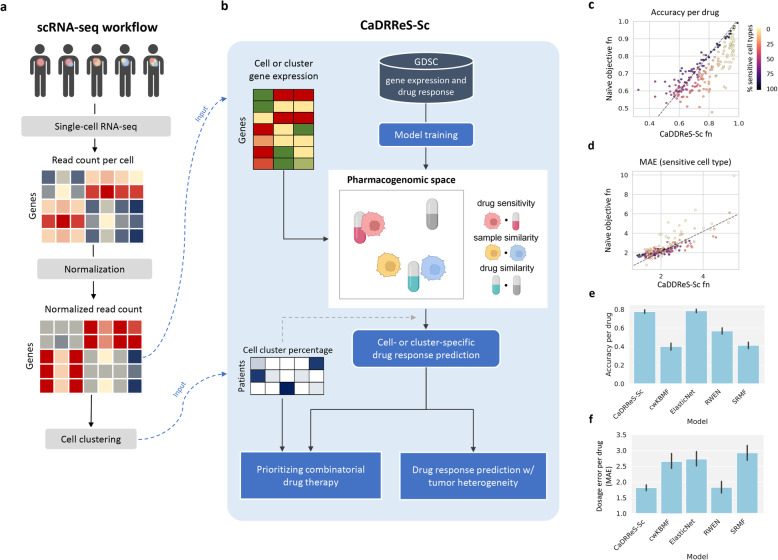
“System for single-cell RNA-seq or CaDDReS-Sc) that robustly combines single-cell RNA-sequencing (scRNA-seq) data with matrix factorization techniques for recommender system [18, 26] to predict drug response for a heterogeneous tumor.”
MethodSCANPY: large-scale single-cell gene expression data analysis
Wolf, F. A., Angerer, P., & Theis, F. J. (2018) · Genome Biology · doi:10.1186/s13059-017-1382-0 · Cited by 8,881 · cited 1×
“A standard scRNA-seq workflow described in the Scanpy tutorial was used to perform single-cell clustering [30, 31].”
MethodThe Cancer Cell Line Encyclopedia enables predictive modelling of anticancer drug sensitivity
Barretina, J., Caponigro, G., Stransky, N., Venkatesan, K., Margolin, A. A., Kim, S., Wilson, C. J., Lehár, J., Kryukov, G. V., Sonkin, D., et al. (2012) · Nature · doi:10.1038/nature11003 · Cited by 7,950 · cited 2×
“These efforts have been complemented by studies on cancer cell lines [14 – 16] to understand the relationship between molecular markers and drug response in vitro.”
BackgroundDrug combination studies and their synergy quantification using the Chou-Talalay method
Chou, T.-C. (2010) · Cancer Research · doi:10.1158/0008-5472.can-09-1947 · Cited by 5,739 · cited 1×
“impact of drug-drug interactions (Chou, 2010; Jia et al., 2009; Yadav et al., 2015), overall we were able to capture the effect of combinatorial drug therapy (Figure 4C-E) and its improvement over monotherapy (Figure 4F).”
BackgroundSingle-cell RNA-seq highlights intratumoral heterogeneity in primary glioblastoma
Patel, A. P., Tirosh, I., Trombetta, J. J., Shalek, A. K., Gillespie, S. M., Wakimoto, H., Cahill, D. P., Nahed, B. V., Curry, W. T., Martuza, R. L., et al. (2014) · Science · doi:10.1126/science.1254257 · Cited by 5,063 · cited 1×
“The development of single-cell transcriptomics has enabled the direct identification and quantification of cell populations within a tumor [4, 44 – 46].”
Tumour heterogeneity and resistance to cancer therapies
Dagogo-Jack, I., & Shaw, A. T. (2018) · Nature Reviews Clinical Oncology · doi:10.1038/nrclinonc.2017.166 · Cited by 3,846 · cited 2×
“This response pattern for Doxorubicin in patients with high ITTH score could indicate pre-existing resistant populations (Dagogo-Jack and Shaw, 2018), tumor evolution (Sharma et al.”
BackgroundMethodLiu, J., Lichtenberg, T., Hoadley, K. A., Poisson, L. M., Lazar, A. J., Cherniack, A. D., Kovatich, A. J., Benz, C. C., Levine, D. A., Lee, A. V., et al. (2018) · Cell · doi:10.1016/j.cell.2018.02.052 · Cited by 3,725 · cited 1×
“In this work, we begin by highlighting the impact of intra-tumor transcriptomic heterogeneity on clinical outcomes based on large-scale re-analysis of TCGA data (Ding et al., 2016; Liu et al., 2018).”
MethodThe prognostic landscape of genes and infiltrating immune cells across human cancers
Gentles, A. J., Newman, A. M., Liu, C. L., Bratman, S. V., Feng, W., Kim, D., Nair, V. S., Xu, Y., Khuong, A., Hoang, C. D., et al. (2015) · Nature Medicine · doi:10.1038/nm.3909 · Cited by 3,118
An Integrative Model of Cellular States, Plasticity, and Genetics for Glioblastoma
Neftel, C., Laffy, J., Filbin, M. G., Hara, T., Shore, M. E., Rahme, G. J., Richman, A. R., Silverbush, D., Shaw, M. L., Hebert, C. M., et al. (2019) · Cell · doi:10.1016/j.cell.2019.06.024 · Cited by 2,873 · cited 1×
“Phenotypic heterogeneity in cancer cells is defined by transcriptomic signatures that govern cell biological behaviors, such as proliferation, apoptosis, migration, invasion, metabolism and immune response (Neftel et al., 2019; Puram et al., 2017).”
BackgroundClonal heterogeneity and tumor evolution: past, present, and the future
McGranahan, N., & Swanton, C. (2017) · Cell · doi:10.1016/j.cell.2017.01.018 · Cited by 2,840 · cited 2×
“Tumors comprise heterogeneous populations of malignant cells that display cellular plasticity and phenotypic heterogeneity, as determined by genetic and environmental cues [1 – 3].”
BackgroundMethodPuram, S. V., Tirosh, I., Parikh, A. S., Patel, A. P., Yizhak, K., Gillespie, S., Rodman, C., Luo, C. L., Mroz, E. A., Emerick, K. S., et al. (2017) · Cell · doi:10.1016/j.cell.2017.10.044 · Cited by 2,557 · cited 5×
“Comparing these in silico heterogeneity scores with single-cell RNA-seq derived gold-standards (single-cell ITTH score — scITTH; Methods) on two different datasets [4, 8] showed that the in silico scores provided a useful proxy to capture transcriptomic heterogeneity (Pearson r =0.55 and 0.59; Fig.”
BackgroundMethodInfluentialHoadley, K. A., Yau, C., Hinoue, T., Wolf, D. M., Lazar, A. J., Drill, E., Shen, R., Taylor, A. M., Cherniack, A. D., Thorsson, V., et al. (2018) · Cell · doi:10.1016/j.cell.2018.03.022 · Cited by 2,546
Tumour heterogeneity and cancer cell plasticity
Meacham, C. E., & Morrison, S. J. (2013) · Nature · doi:10.1038/nature12624 · Cited by 2,446
A Landscape of Pharmacogenomic Interactions in Cancer
Iorio, F., Knijnenburg, T. A., Vis, D. J., Bignell, G. R., Menden, M. P., Schubert, M., Aben, N., Gonçalves, E., Barthorpe, S., Lightfoot, H., et al. (2016) · Cell · doi:10.1016/j.cell.2016.06.017 · Cited by 2,090 · cited 8×
“2a) can be coupled in principle with existing methods that predict drug response from bulk transcriptomic profiles [15, 18 – 21] to obtain cell-specific response information.”
BackgroundMethodInfluentialDe novo assembly of bacterial transcriptomes from RNA-seq data
Tjaden, B. (2015) · Genome Biology · doi:10.1186/s13059-014-0572-2 · Cited by 1,717
Identification and characterization of essential genes in the human genome
Wang, T., Birsoy, K., Hughes, N. W., Krupczak, K. M., Post, Y., Wei, J. J., Lander, E. S., & Sabatini, D. M. (2015) · Science · doi:10.1126/science.aac7041 · Cited by 1,617
A step-by-step workflow for low-level analysis of single-cell RNA-seq data with Bioconductor
Lun, A. T. L., McCarthy, D. J., & Marioni, J. C. (2016) · F1000Research · doi:10.12688/f1000research.9501.2 · Cited by 1,574 · cited 1×
“%) of mitochondrial genes were removed as the high proportions are indicative of poor-quality cells [32].”
BackgroundAlgorithms and applications for approximate nonnegative matrix factorization
Berry, M. W., Browne, M., Langville, A. N., Pauca, V. P., & Plemmons, R. J. (2007) · Computational Statistics & Data Analysis · doi:10.1016/j.csda.2006.11.006 · Cited by 1,512 · cited 1×
“Gene expression profiles for tumors from TCGA were clustered using nonnegative matrix factorization (NMF; k = 3 to mimic the number of ITTH clusters) [35].”
MethodThe Technology and Biology of Single-Cell RNA Sequencing
Kolodziejczyk, A. A., Kim, J. K., Svensson, V., Marioni, J. C., & Teichmann, S. A. (2015) · Molecular Cell · doi:10.1016/j.molcel.2015.04.005 · Cited by 1,487 · cited 1×
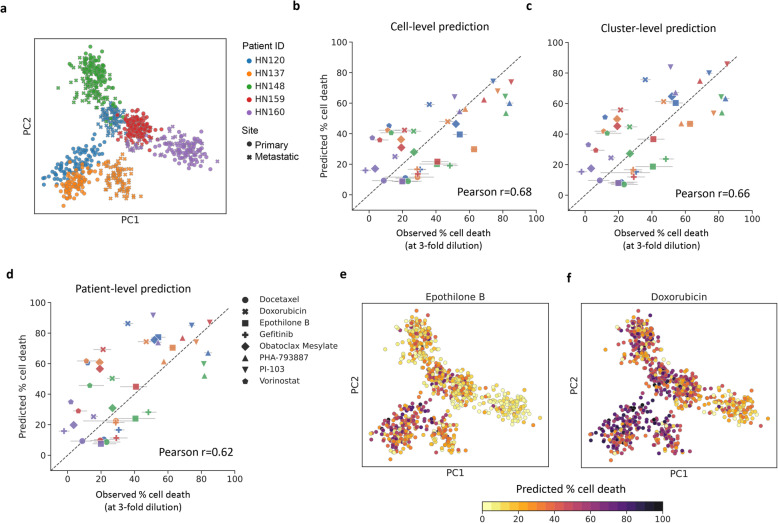
“Despite noise and dropout events observed in single-cell data [47], predictions based on cell-and cluster-level transcriptomic profiles consistently showed better agreement with in vitro drug response compared to patient-level prediction (Pearson r =0.68/0.66 vs 0.62; consistently across drug…”
BackgroundInfluentialMechanisms of drug combinations: interaction and network perspectives
Jia, J., Zhu, F., Ma, X., Cao, Z. W., Li, Y. X., & Chen, Y. Z. (2009) · Nature Reviews Drug Discovery · doi:10.1038/nrd2683 · Cited by 969 · cited 3×
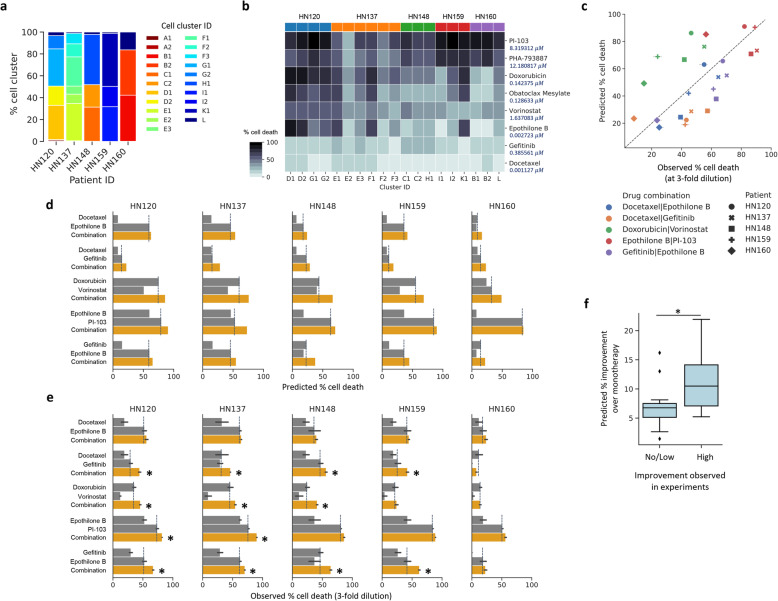
“Although this does not directly account for the impact of drug-drug interactions [50, 61, 62], overall, we were able to capture the effect of combinatorial drug therapy (Fig.”
BackgroundHuang, W., Takebayashi, N., Qi, Y., & Hickerson, M. J. (2011) · BMC Bioinformatics · doi:10.1186/1471-2105-12-1 · Cited by 951
Cancer Epigenetics: Tumor Heterogeneity, Plasticity of Stem-like States, and Drug Resistance
Easwaran, H., Tsai, H.-C., & Baylin, S. B. (2014) · Molecular Cell · doi:10.1016/j.molcel.2014.05.015 · Cited by 915 · cited 2×
“glioma (Easwaran et al., 2014) and cellular plasticity in sarcoma (Suvà et al.”
BackgroundCorrelating chemical sensitivity and basal gene expression reveals mechanism of action
Rees, M. G., Seashore-Ludlow, B., Cheah, J. H., Adams, D. J., Price, E. V., Gill, S., Javaid, S., Coletti, M. E., Jones, V. L., Bodycombe, N. E., et al. (2016) · Nature Chemical Biology · doi:10.1038/nchembio.1986 · Cited by 898 · cited 1×
“These efforts have been complemented by studies on cancer cell lines [14 – 16] to understand the relationship between molecular markers and drug response in vitro.”
BackgroundSearching for Drug Synergy in Complex Dose–Response Landscapes Using an Interaction Potency Model
Yadav, B., Wennerberg, K., Aittokallio, T., & Tang, J. (2015) · Computational and Structural Biotechnology Journal · doi:10.1016/j.csbj.2015.09.001 · Cited by 845 · cited 1×
“impact of drug-drug interactions (Chou, 2010; Jia et al., 2009; Yadav et al., 2015), overall we were able to capture the effect of combinatorial drug therapy (Figure 4C-E) and its improvement over monotherapy (Figure 4F).”
BackgroundA community effort to assess and improve drug sensitivity prediction algorithms
Community, N. D., Costello, J. C., Heiser, L. M., Georgii, E., Gönen, M., Menden, M. P., Wang, N. J., Bansal, M., Ammad-ud-din, M., Hintsanen, P., et al. (2014) · Nature Biotechnology · doi:10.1038/nbt.2877 · Cited by 772 · cited 1×
“…as a standard model, cwKBMF is a component-wise multiple kernel learning model that outperformed the best performing model from the DREAM challenge [37], SRMF is a collaborative filtering model, and RWEN is a model that aims to reduce the effect of extrapolation errors from the dose-response curve…”
MethodSharma, A., Seow, J. J. W., Dutertre, C.-A., Pai, R., Blériot, C., Mishra, A., Wong, R. M. M., Singh, G. S. N., Sudhagar, S., Khalilnezhad, S., et al. (2020) · Cell · doi:10.1016/j.cell.2020.08.040 · Cited by 677 · cited 1×
“Calibrating a recommender system for improved predictive performance on diverse unseen cell types The development of single-cell transcriptomics has enabled direct identification and quantification of cell populations within a tumor (Kim et al., 2015; Patel et al., 2014; Puram et al., 2017; Sharma et al., 2020).”
BackgroundSelf-citationPalmer, A. C., & Sorger, P. K. (2017) · Cell · doi:10.1016/j.cell.2017.11.009 · Cited by 642 · cited 2×
“This prompted us to consider prioritizing combinatorial therapy options based on CaDRReS-Sc predictions for different subclones, assuming that the combinatorial effect can be approximated in many cases through independent drug action on distinct subclonal cancer cell populations [52].”
BackgroundMethodInternational Cancer Genome Consortium Data Portal--a one-stop shop for cancer genomics data
Zhang, J., Baran, J., Cros, A., Guberman, J. M., Haider, S., Hsu, J., Liang, Y., Rivkin, E., Wang, J., Whitty, B., et al. (2011) · Database · doi:10.1093/database/bar026 · Cited by 638
Nishimura, D. (2001) · Biotech Software & Internet Report · doi:10.1089/152791601750294344 · Cited by 567
Translational Implications of Tumor Heterogeneity
Jamal-Hanjani, M., Quezada, S. A., Larkin, J., & Swanton, C. (2015) · Clinical Cancer Research · doi:10.1158/1078-0432.ccr-14-1429 · Cited by 549
Menden, M. P., Iorio, F., Garnett, M., McDermott, U., Benes, C. H., Ballester, P. J., & Saez-Rodriguez, J. (2013) · PLoS ONE · doi:10.1371/journal.pone.0061318 · Cited by 542 · cited 1×
“Several machine learning models have been proposed to utilize information from multi-omic profiles to predict drug response for cell lines [17 – 23], although significant challenges remain in terms of robustness, generalizability, and trans-latability into the clinic.”
Bruna, A., Rueda, O. M., Greenwood, W., Batra, A. S., Callari, M., Batra, R. N., Pogrebniak, K., Sandoval, J., Cassidy, J. W., Tufegdzic-Vidakovic, A., et al. (2016) · Cell · doi:10.1016/j.cell.2016.08.041 · Cited by 448 · cited 1×
“Intra-tumor transcriptomic heterogeneity (ITTH) can confer differential selective advantages to influence tumor progression and metastasis in vivo (Bruna et al., 2016; Wei et al., 2016), as well drug response in vitro (Chia et al.”
BackgroundPerspective on Oncogenic Processes at the End of the Beginning of Cancer Genomics
Ding, L., Bailey, M. H., Porta-Pardo, E., Thorsson, V., Colaprico, A., Bertrand, D., Gibbs, D. L., Weerasinghe, A., Huang, K.-L., Tokheim, C., et al. (2018) · Cell · doi:10.1016/j.cell.2018.03.033 · Cited by 399 · cited 1×
“Advances in high-throughput sequencing have enabled large-scale studies into inter-patient tumor heterogeneity at the molecular level [10 – 12], serving as the basis to distinguish cancer subtypes, investigate tumor biology, and define treatment regimens [2, 13].”
BackgroundSelf-citationClinically Relevant Concentrations of Anticancer Drugs: A Guide for Nonclinical Studies
Liston, D. R., & Davis, M. (2017) · Clinical Cancer Research · doi:10.1158/1078-0432.ccr-16-3083 · Cited by 395 · cited 1×
“Further availability of drug response data in PDCs and at clinically relevant doses [60] could help advance the predictive performance and clinical utility of such models.”
BackgroundDrug interactions in cancer therapy
Scripture, C. D., & Figg, W. D. (2006) · Nature Reviews Cancer · doi:10.1038/nrc1887 · Cited by 366 · cited 1×
“Despite the potential for drug interactions [53], CaDRReS-Sc predictions for response to various drug combinations showed a clear correlation to observed responses across the 25 different experimental conditions (Fig.”
BackgroundStrategies for optimizing combinations of molecularly targeted anticancer agents
Dancey, J. E., & Chen, H. X. (2006) · Nature Reviews Drug Discovery · doi:10.1038/nrd2089 · Cited by 365 · cited 1×
“Going beyond monotherapy, the ability to predict drug combinations to target different cancer cell types within a heterogeneous tumor can be essential for improving treat-ment efficacy in the clinic [50, 51].”
BackgroundPersonalized medicine in oncology: the future is now
Schilsky, R. L. (2010) · Nature Reviews Drug Discovery · doi:10.1038/nrd3181 · Cited by 337 · cited 1×
“Advances in high-throughput sequencing have enabled large-scale studies into inter-patient tumor heterogeneity at the molecular level [10 – 12], serving as the basis to distinguish cancer subtypes, investigate tumor biology, and define treatment regimens [2, 13].”
BackgroundIdentification of Cancer Stem Cells in Ewing's Sarcoma
Suvà, M.-L., Riggi, N., Stehle, J.-C., Baumer, K., Tercier, S., Joseph, J.-M., Suvà, D., Clément, V., Provero, P., Cironi, L., et al. (2009) · Cancer Research · doi:10.1158/0008-5472.can-08-2242 · Cited by 302 · cited 1×
“, 2014) and cellular plasticity in sarcoma (Suvà et al., 2009) on treatment outcomes.”
BackgroundSelection and adaptation during metastatic cancer progression
Klein, C. A. (2013) · Nature · doi:10.1038/nature12628 · Cited by 273 · cited 1×
“We also observed that increased ITTH does not always associate with adverse outcomes, as a progressive disease could be associated with convergence to homogeneity (or loss of ITTH) which may influence the response to specific classes of drugs [57, 58].”
BackgroundKim, K.-T., Lee, H. W., Lee, H.-O., Kim, S. C., Seo, Y. J., Chung, W., Eum, H. H., Nam, D.-H., Kim, J., Joo, K. M., et al. (2015) · Genome Biology · doi:10.1186/s13059-015-0692-3 · Cited by 268 · cited 1×
“Calibrating a recommender system for improved predictive performance on diverse unseen cell types The development of single-cell transcriptomics has enabled direct identification and quantification of cell populations within a tumor (Kim et al., 2015; Patel et al., 2014; Puram et al., 2017; Sharma et al., 2020).”
Deep learning for drug response prediction in cancer
Baptista, D., Ferreira, P. G., & Rocha, M. (2021) · Briefings in Bioinformatics · doi:10.1093/bib/bbz171 · Cited by 237 · cited 1×
“Besides, a more fundamental challenge is the robustness of such models to diverse, unseen cell types [22].”
BackgroundA divergent canonical WNT-signaling pathway regulates microtubule dynamics
Ciani, L., Krylova, O., Smalley, M. J., Dale, T. C., & Salinas, P. C. (2004) · The Journal of Cell Biology · doi:10.1083/jcb.200309096 · Cited by 215 · cited 1×
“24 ́10-8; Supplementary figure 8C), consistent with prior work on this subject (Ciani et al., 2004).”
ResultPharmacogenomic landscape of patient-derived tumor cells informs precision oncology therapy
Lee, J.-K., Liu, Z., Sa, J. K., Shin, S., Wang, J., Bordyuh, M., Cho, H. J., Elliott, O., Chu, T., Choi, S. W., et al. (2018) · Nature Genetics · doi:10.1038/s41588-018-0209-6 · Cited by 203 · cited 2×
“Advances in high-throughput sequencing have enabled large-scale studies into inter-patient tumor heterogeneity at the molecular level [10 – 12], serving as the basis to distinguish cancer subtypes, investigate tumor biology, and define treatment regimens [2, 13].”
BackgroundMethodWang, L., Li, X., Zhang, L., & Gao, Q. (2017) · BMC Cancer · doi:10.1186/s12885-017-3500-5 · Cited by 179 · cited 3×
“Corresponding scRNA-seq workflows with gene expression measurement, normalization, cell clustering and summarization (Figure 2A), can be coupled in principle with existing methods that predict drug response from bulk transcriptomic profiles (Ammad-ud-din et al., 2016; Basu et al., 2018; Iorio et al., 2016; Suphavilai…”
BackgroundMethodEvolution of intratumoral genetic heterogeneity during colorectal cancer progression
Losi, L., Baisse, B., Bouzourene, H., & Benhattar, J. (2005) · Carcinogenesis · doi:10.1093/carcin/bgi044 · Cited by 174 · cited 1×
“We also observed that increased ITTH does not always associate with adverse outcomes, as a progressive disease could be associated with convergence to homogeneity (or loss of ITTH) which may influence the response to specific classes of drugs [57, 58].”
BackgroundWei, W., Shin, Y. S., Xue, M., Matsutani, T., Masui, K., Yang, H., Ikegami, S., Gu, Y., Herrmann, K., Johnson, D., et al. (2016) · Cancer Cell · doi:10.1016/j.ccell.2016.03.012 · Cited by 168
Sharma, A., Cao, E. Y., Kumar, V., Zhang, X., Leong, H. S., Wong, A. M. L., Ramakrishnan, N., Hakimullah, M., Teo, H. M. V., Chong, F. T., et al. (2018) · Nature Communications · doi:10.1038/s41467-018-07261-3 · Cited by 161
Self-citationEvaluating the molecule-based prediction of clinical drug responses in cancer
Ding, Z., Zu, S., & Gu, J. (2016) · Bioinformatics · doi:10.1093/bioinformatics/btw344 · Cited by 158 · cited 2×
“In this work, we begin by highlighting the impact of intra-tumor transcriptomic heterogeneity on clinical outcomes based on large-scale re-analysis of TCGA data [24, 25].”
MethodPredicting Cancer Drug Response using a Recommender System
Suphavilai, C., Bertrand, D., & Nagarajan, N. (2018) · Bioinformatics · doi:10.1093/bioinformatics/bty452 · Cited by 149 · cited 8×
“Predicting treatment response in silico in the presence of intra-tumor heterogeneity requires models that provide calibrated values for a single drug across many cell types, while prior work has focused on calibrated predictions for a cell type across many drugs (Suphavilai et al., 2018).”
BackgroundMethodInfluentialSelf-citationDoxorubicin Exerts Cytotoxic Effects through Cell Cycle Arrest and Fas-Mediated Cell Death
Kim, H.-S., Lee, Y.-S., & Kim, D.-K. (2009) · Pharmacology · doi:10.1159/000245937 · Cited by 127 · cited 1×
“S14d) [49], highlighting the potential to obtain biological insights on therapeutic vulnerabilities based on single-cell information and the interpretability of the CaDRReS-Sc model.”
BackgroundAmmad-ud-din, M., Khan, S. A., Malani, D., Murumägi, A., Kallioniemi, O., Aittokallio, T., & Kaski, S. (2016) · Bioinformatics · doi:10.1093/bioinformatics/btw433 · Cited by 118
The challenges posed by cancer heterogeneity
Bhatia, S. N., Frangioni, J. V., Hoffman, R. M., Iafrate, A. J., & Polyák, K. (2012) · Nature Biotechnology · doi:10.1038/nbt.2294 · Cited by 105 · cited 1×
“While the role of intra-patient heterogeneity in genetic mutations has been extensively explored with respect to tumor biology [3, 55], fewer studies have investigated how this combines with epigenetic heterogeneity to influence transcriptomic heterogeneity [39], drug response, In general, relative…”
BackgroundRevisiting inconsistency in large pharmacogenomic studies
Safikhani, Z., Smirnov, P., Freeman, M., El-Hachem, N., She, A., Rene, Q., Goldenberg, A., Birkbak, N. J., Hatzis, C., Shi, L., et al. (2016) · F1000Research · doi:10.12688/f1000research.9611.1 · Cited by 96 · cited 1×
“Several sources of noise in drug response measurement experiments have been reported in previous studies, including lack of experimental replication [14, 15], and discordance in drug response information that was generated based on the same set of cell lines [59].”
BackgroundPhenotype-driven precision oncology as a guide for clinical decisions one patient at a time
Chia, S., Low, J.-L., Zhang, X., Kwang, X.-L., Chong, F.-T., Sharma, A., Bertrand, D., Toh, S. Y., Leong, H.-S., Thangavelu, M. T., et al. (2017) · Nature Communications · doi:10.1038/s41467-017-00451-5 · Cited by 91 · cited 4×
“Accurate drug response prediction in the presence of intra-patient heterogeneity As commonly used cancer cell lines typically lack significant transcriptomic heterogeneity, we leveraged patient-derived cell lines (PDCs) to serve as model systems where sensitivity measurements can be systematically and conveniently mad…”
BackgroundMethodInfluentialSelf-citationRevisiting inconsistency in large pharmacogenomic studies
Safikhani, Z., Smirnov, P., Freeman, M., El-Hachem, N., She, A., Rene, Q., Goldenberg, A., Birkbak, N. J., Hatzis, C., Shi, L., et al. (2017) · F1000Research · doi:10.12688/f1000research.9611.3 · Cited by 76
Böttger, F., Semenova, E. A., Song, J., Ferone, G., van der Vliet, J., Cozijnsen, M., Bhaskaran, R., Bombardelli, L., Piersma, S. R., Pham, T. V., et al. (2019) · Cell Reports · doi:10.1016/j.celrep.2019.05.057 · Cited by 64
Understanding the Cause and Consequence of Tumor Heterogeneity
Khatib, S., Pomyen, Y., Dang, H., & Wang, X. W. (2020) · Trends in Cancer · doi:10.1016/j.trecan.2020.01.010 · Cited by 60
Computational models for predicting drug responses in cancer research
Azuaje, F. (2016) · Briefings in Bioinformatics · doi:10.1093/bib/bbw065 · Cited by 59 · cited 1×
“Several machine learning models have been proposed to utilize information from multi-omic profiles to predict drug response for cell lines (Ammad-ud-din et al., 2016; Azuaje, 2016; Baptista et al., 2020; Basu et al., 2018; Suphavilai et al., 2018; Wang et al., 2017), although significant challenges remain in terms of…”
MethodSparks, H., Kondo, H., Hooper, S., Munro, I., Kennedy, G., Dunsby, C., French, P., & Sahai, E. (2018) · Nature Communications · doi:10.1038/s41467-018-04820-6 · Cited by 54 · cited 1×
“, 2018) or high variability in drug-target engagement (Sparks et al., 2018).”
BackgroundCheriyath, V., Kuhns, M. A., Kalaycio, M. E., & Borden, E. C. (2011) · British Journal of Cancer · doi:10.1038/bjc.2011.42 · Cited by 45 · cited 1×
“%) in HN148, which was observed experimentally as well (+11%), consistent with prior work on this combination [54].”
ResultLiu, J., Lichtenberg, T. M., Hoadley, K. A., Poisson, L., Lazar, A. J., Cherniack, A. D., Kovatich, A. J., Benz, C. C., Levine, D. A., Lee, A. V., et al. (2018) · Cancer Research · doi:10.1158/1538-7445.am2018-3287 · Cited by 37
RWEN: response-weighted elastic net for prediction of chemosensitivity of cancer cell lines
Basu, A. B., Mitra, R., Liu, H., Schreiber, S. L., & Clemons, P. A. (2018) · Bioinformatics · doi:10.1093/bioinformatics/bty199 · Cited by 36 · cited 4×
“, 2017) and RWEN (Basu et al., 2018), we noted that average preprint (which was not certified by peer review) is the author/funder.”
BackgroundMethodInfluential
Research works printed but not linked: 1
- Suphavilai C, Chia S, Sharma A, Tu L, Peres R, Mongia A, DasGupta R NN. CaDRReS-Sc. Figshare. https://figshare.com/projects/CaDRReS-Sc/75936 (2021) PMC8680165 34915921
Cited by
Gene expression based inference of cancer drug sensitivity
Chawla, S., Rockstroh, A., Lehman, M., Ratther, E., Jain, A., Anand, A., Gupta, A., Bhattacharya, N., Poonia, S., Rai, P., et al. (2022) · Nature Communications · doi:10.1038/s41467-022-33291-z · Cited by 185
“21 and another method by Sakellaropoulos, Theodore, et al 16 .”
BackgroundMethodSinha, S., Vegesna, R., Mukherjee, S., Kammula, A. V., Dhruba, S. R., Wu, W., Kerr, D. L., Nair, N. U., Jones, M. G., Yosef, N., et al. (2024) · Nature Cancer · doi:10.1038/s43018-024-00756-7 · Cited by 152
“We obtained the sc-expression data for five head and neck squamous cell cancer PDCs lines, along with their treatment response for eight drugs and combination therapy at two different dosages 26 .”
MethodKe, M. S., Elshenawy, B., Sheldon, H., Arora, A., & Buffa, F. M. (2022) · BioEssays · doi:10.1002/bies.202200084 · Cited by 90
A mini-review on perturbation modelling across single-cell omic modalities
Gavriilidis, G. I., Vasileiou, V., Orfanou, A., Ishaque, N., & Psomopoulos, F. (2024) · Computational and Structural Biotechnology Journal · doi:10.1016/j.csbj.2024.04.058 · Cited by 54
“CaDRReS-Sc [41] (Cancer Drug Response prediction using a Recommender System for single-cell RNA-seq) is the single-cell version of the CaDRReS model (https://doi.org/10.1093/bioinformatics/ bty452), which predicts cancer drug responses for unseen cell lines or patients, based on learning…”
MethodInfluentialscDrug: From single-cell RNA-seq to drug response prediction
Hsieh, C.-Y., Wen, J.-H., Lin, S.-M., Tseng, T.-Y., Huang, J., Huang, H., & Juan, H. (2022) · Computational and Structural Biotechnology Journal · doi:10.1016/j.csbj.2022.11.055 · Cited by 59
“The cancer cluster-specific model proposed in CaDRReS-Sc [16] was defined as where s iu is the observed drug response (IC 50 or scaled 1 (cid:1) AUC) of cell line u to drug i , b s iu is the predicted drug response, l is the over-all mean drug response, b and b are the bias terms for drug i and cell…”
BackgroundMethod
Metadata
- Authors
- Suphavilai, C., Chia, S., Sharma, A., Tu, L., Da Silva, R. P., Mongia, A., DasGupta, R., & Nagarajan, N.
- Affiliations
- Agency for Science, Technology and Research (SG)
- Corresponding author
- DasGupta, Ramanuj
- Nagarajan, Niranjan
- Venue
- Genome Medicine
- Published
- 2021-12
- Volume
- 13
- Issue
- 1
- Pages
- 189-189
- ISSN
- 1756-994X (ISSN-L)
- PMC
- PMC8680165
- OpenAlex
- W4225886114
- Cited by
- 58
- References
- 69
- Citations by year
- 2026: 8 · 2025: 13 · 2024: 21 · 2023: 8 · 2022: 6 · 2021: 2
- FWCI
- 3.61
- Type
- journal article
- Language
- en
- Open access
- gold
- doi.org
- Licence
- cc-by
- creativecommons.org/licenses/by/4.0 (tdm)
- creativecommons.org/licenses/by/4.0 (vor, 15 d)
- Locations
- Genome Medicine (publishedVersion, cc-by)
- bioRxiv (Cold Spring Harbor Laboratory) (acceptedVersion)
- PubMed Central (publishedVersion, cc-by)
- PubMed (publishedVersion)
- National University of Singapore (submittedVersion, cc-by)
- cIRcle (University of British Columbia) (submittedVersion, cc-by)
- DOAJ (DOAJ: Directory of Open Access Journals) (submittedVersion, cc-by-sa)
- Funders
- Genome Institute of Singapore
- Topics
- Life Sciences › Biochemistry, Genetics and Molecular Biology › Molecular Biology › Single-cell and spatial transcriptomics
- Life Sciences › Biochemistry, Genetics and Molecular Biology › Cancer Research › Cancer Genomics and Diagnostics
- Life Sciences › Biochemistry, Genetics and Molecular Biology › Molecular Biology › Gene expression and cancer classification
- Keywords
- intratumoral heterogeneity, drug response prediction, single-cell transcriptomics, recommender systems, precision oncology, drug repurposing
- MeSH terms
- Clone Cells, Humans, Neoplasms, Software, Sequence Analysis, RNA, Gene Expression Profiling, Precision Medicine, Single-Cell Analysis, Transcriptome
About these checks
Registry, retraction, Cites and statistics results are computed, not judged, with one exception: a printed reference that no index lists is read once by a model before it counts as a citation error. Claims are extracted by a model and kept only when their quote appears verbatim in the text; each cited source is then checked, with a model’s help, for whether it says what the claim relies on. Those verdicts can be wrong — read the claim’s quote and the cited source before relying on one.
Statistics and arithmetic are recomputed, not judged.
Confidence bands are shown only for fields calibrated on our annotated test set. None is calibrated yet, so no band is shown.
What counts as a claim ›How we measure confidence ›How we check this ›
Are you an author, or do you see a problem with this page? Request a review
Data sources
Bibliographic data: Semantic Scholar, OpenAlex, Crossref.
Contains information from the Semantic Scholar Academic Graph Datasets, made available under the ODC Attribution License (ODC-BY 1.0).
Semantic Scholar’s data is described in: Kinney, R., et al. (2023). The Semantic Scholar Open Data Platform. arXiv:2301.10140.
