

The DOI matches its Crossref record; 343 of the 343 references it cites were found in a registry or an index.
From inflammaging to healthy aging by dietary lifestyle choices: is epigenetics the key to personalized nutrition?
Open accessAbstract
The progressively older population in developed countries is reflected in an increase in the number of people suffering from age-related chronic inflammatory diseases such as metabolic syndrome, diabetes, heart and lung diseases, cancer, osteoporosis, arthritis, and dementia. The heterogeneity in biological aging, chronological age, and aging-associated disorders in humans have been ascribed to different genetic and environmental factors (i.e., diet, pollution, stress) that are closely linked to socioeconomic factors. The common denominator of these factors is the inflammatory response. Chronic low-grade systemic inflammation during physiological aging and immunosenescence are intertwined in the pathogenesis of premature aging also defined as 'inflammaging.' The latter has been associated with frailty, morbidity, and mortality in elderly subjects. However, it is unknown to what extent inflammaging or longevity is controlled by epigenetic events in early life. Today, human diet is believed to have a major influence on both the development and prevention of age-related diseases. Most plant-derived dietary phytochemicals and macro- and micronutrients modulate oxidative stress and inflammatory signaling and regulate metabolic pathways and bioenergetics that can be translated into stable epigenetic patterns of gene expression. Therefore, diet interventions designed for healthy aging have become a hot topic in nutritional epigenomic research. Increasing evidence has revealed that complex interactions between food components and histone modifications, DNA methylation, non-coding RNA expression, and chromatin remodeling factors influence the inflammaging phenotype and as such may protect or predispose an individual to many age-related diseases. Remarkably, humans present a broad range of responses to similar dietary challenges due to both genetic and epigenetic modulations of the expression of target proteins and key genes involved in the metabolism and distribution of the dietary constituents. Here, we will summarize the epigenetic actions of dietary components, including phytochemicals, and macro- and micronutrients as well as metabolites, that can attenuate inflammaging. We will discuss the challenges facing personalized nutrition to translate highly variable interindividual epigenetic diet responses to potential individual health benefits/risks related to aging disease.
Overview
The claims and statistics of this paper haven’t been checked yet.
Run the check — free, no account needed. It reads the open-access text and checks the sources it cites.
Integrity signals
Registry
Cites
Statistics
Figures
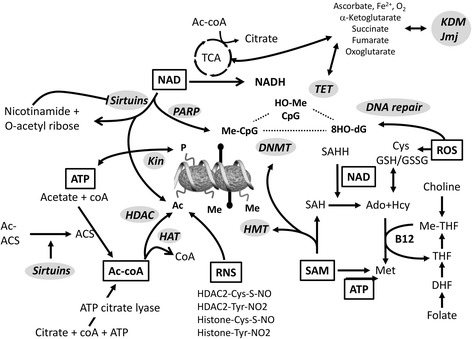
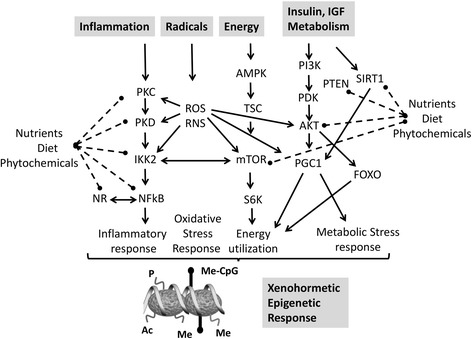
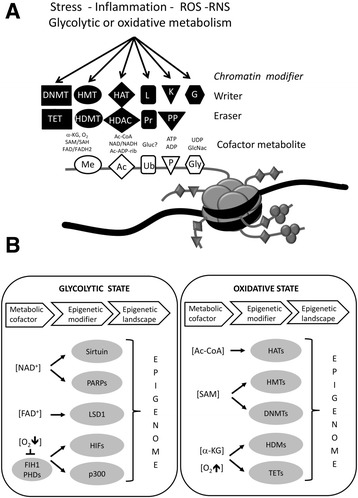
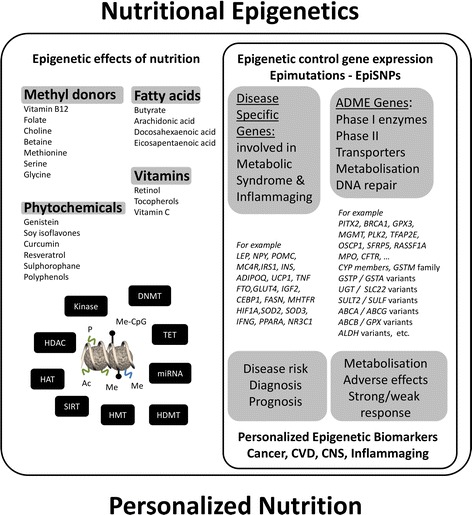
Verification
Claims the paper makes
The claims and statistics of this paper haven’t been checked yet.
Run the check — free, no account needed. It reads the open-access text and checks the sources it cites.
Claims other papers make about this one
Each is checked against this paper’s own text: does it say what the citing paper says it does?
The source backs part of the claim, not all of it — or backs it for a different population, condition or comparison.
In the citing paper
“Other procedures such as healthy diets, wine consumption, and flavonoid supplements are able to modify activity of certain genes, and various types of mediation and anti-stress methods are recommended to improve gene expression [65,66].”
From Regenerative and Protective Actions of the GHK-Cu Peptide in the Light of the New Gene Data (2018) · cites this paper as [65]
Experimental — accuracy not yet measuredThe source backs part of the claim, not all of it — or backs it for a different population, condition or comparison.
In the citing paper
“It is now known that some age-related changes in gene expression are not permanent and can be reversed.”
From Regenerative and Protective Actions of the GHK-Cu Peptide in the Light of the New Gene Data (2018) · cites this paper as [65]
Experimental — accuracy not yet measuredThe check wasn’t confident either way, so it gives no verdict — never disputed.
In the citing paper
“Studies show that regular physical exercise of older humans, as little as 30 min daily three times a week, can reset mitochondrial human DNA to a gene expression more like that of a younger person.”
From Regenerative and Protective Actions of the GHK-Cu Peptide in the Light of the New Gene Data (2018) · cites this paper as [65]
Experimental — accuracy not yet measuredIn the citing paper
“Potential influences of diet on epigenetic changes (e.g., DNA methylation) and subsequent cardiometabolic risk pathways are also of considerable interest,88 but relevant between-individual variation in these diet-epigenetic responses has yet to be identified.”
From Dietary and Policy Priorities for Cardiovascular Disease, Diabetes, and Obesity: A Comprehensive Review (2016) · cites this paper as [88]
In the citing paper
“Other studies showed positive effects of diet, moderate wine consumption, and meditation [14,15].”
From Skin Regenerative and Anti-Cancer Actions of Copper Peptides (2018) · cites this paper as [15]
In the citing paper
“The fact that GHK has gene-modulating effects is important, because as science has now demonstrated, age-related changes in gene expression are not permanent and can be reversed.”
From Skin Regenerative and Anti-Cancer Actions of Copper Peptides (2018) · cites this paper as [15]
In the citing paper
“Recent studies have demonstrated that physical exercise for 30 min a day, three times a week can revert gene expression in mitochondrial human DNA in older humans to a gene expression that is more like that of a younger person.”
From Skin Regenerative and Anti-Cancer Actions of Copper Peptides (2018) · cites this paper as [15]
Self-check
Percentages, sums and reported differences re-computed from the paper’s own numbers.
The self-check needs the paper’s full text.
Citations
Cites
1 retracted
Reddy, M. A., Villeneuve, L. M., Wang, M., Lanting, L. L., & Natarajan, R. D. (2008) · Circulation Research · doi:10.1161/circresaha.108.175190 · Cited by 83
RetractedAn integrated encyclopedia of DNA elements in the human genome
The ENCODE Project Consortium (2012) · Nature · doi:10.1038/nature11247 · Cited by 18,072
López-Otín, C., Blasco, M. A., Partridge, L., Serrano, M., & Kroemer, G. (2013) · Cell · doi:10.1016/j.cell.2013.05.039 · Cited by 14,982
Finding the missing heritability of complex diseases
Manolio, T. A., Collins, F. S., Cox, N. J., Goldstein, D. B., Hindorff, L. A., Hunter, D. J., McCarthy, M. I., Ramos, E. M., Cardon, L. R., Chakravarti, A., et al. (2009) · Nature · doi:10.1038/nature08494 · Cited by 8,336
Polyphenols: Food sources and bioavailability
Manach, C., Scalbert, A., Morand, C., Rémésy, C., & Jiménez, L. (2004) · The American Journal of Clinical Nutrition · doi:10.1093/ajcn/79.5.727 · Cited by 8,175
DNA methylation patterns and epigenetic memory
Bird, A. (2002) · Genes & Development · doi:10.1101/gad.947102 · Cited by 7,124
Integrative analysis of 111 reference human epigenomes
Roadmap Epigenomics Consortium, Kundaje, A., Meuleman, W., Ernst, J., Bilenky, M., Yen, A., Heravi-Moussavi, A., Kheradpour, P., Zhang, Z., Wang, J., et al. (2015) · Nature · doi:10.1038/nature14248 · Cited by 6,368
Genome-wide methylation profiles reveal quantitative views of human aging rates
Hannum, G., Guinney, J., Zhao, L., Zhang, L., Hughes, G., Sadda, S., Klotzle, B., Bibikova, M., Fan, J.-B., Gao, Y., et al. (2013) · Molecular Cell · doi:10.1016/j.molcel.2012.10.016 · Cited by 4,270
Bioavailability and bioefficacy of polyphenols in humans. I. Review of 97 bioavailability studies
Manach, C., Williamson, G., Morand, C., Scalbert, A., & Rémésy, C. (2005) · The American Journal of Clinical Nutrition · doi:10.1093/ajcn/81.1.230s · Cited by 4,219 · cited 1×
“Pharmacogenomic and -kinomic studies demonstrate that for some drugs and/or bioactive nutrients, individuals can be categorized into poor, intermediate, or extensive absorbers or metabolizers and dosing has to be personalized [102,143,160,161,203,292-295].”
BackgroundTherapeutic potential of resveratrol: the in vivo evidence
Baur, J. A., & Sinclair, D. A. (2006) · Nature Reviews Drug Discovery · doi:10.1038/nrd2060 · Cited by 3,958
Research works printed but not linked: 1
- Luo J, Kuo MH. Linking nutrient metabolism to epigenetics. Cell Sci Rev. 2009;6:49–54.
Cited by
Sorted by citations
Items 101–191 of 191
Deligiannidou, G.-E., Athina, S., Berghe, W. V., Christos, K., & Constantinides, T. K. (2019) · Current Pharmaceutical Biotechnology · doi:10.2174/1573407215666190628150921 · Cited by 17
Maitra, U., Conger, J., Owens, M. M., & Ciesla, L. M. (2022) · bioRxiv (Cold Spring Harbor Laboratory) · doi:10.1101/2022.06.03.494711 · Cited by 17
Collection of the Abstracts of the 2019Sp PMD: Translational Myology and Mobility Medicine
Carraro, U. (2019) · European Journal of Translational Myology · doi:10.4081/ejtm.2019.8155 · Cited by 16
Nutritional Epigenomics: Bioactive Dietary Compounds in the Epigenetic Regulation of Osteoarthritis
Villagrán-Andrade, K. M., Núñez-Carro, C., Blanco, F. J., & de Andrés, M. C. (2024) · Pharmaceuticals · doi:10.3390/ph17091148 · Cited by 29
Gregori, M. D., Belfer, I., GIORGIO, R. D., Marchesini, M., Muscoli, C., Rondanelli, M., Martini, D., Mena, P. R., Arranz, L. I., Lorente‐Cebrián, S., et al. (2018) · Journal of Pain Research · doi:10.2147/jpr.s160660 · Cited by 15
Dijksterhuis, G., Bouwman, E. P., & Taufik, D. (2021) · Frontiers in Psychology · doi:10.3389/fpsyg.2021.575465 · Cited by 13
Proteomics and metabolomics-driven pathway reconstruction of mung bean for nutraceutical evaluation
Hashiguchi, A., Zhu, W., Tian, J., & Komatsu, S. (2017) · Biochimica et Biophysica Acta (BBA) - Proteins and Proteomics · doi:10.1016/j.bbapap.2017.05.006 · Cited by 15
Frías-Toral, E., Chapela, S. P., Carignano, M. D. L. A., Moretti, D., Martinuzzi, A. L. N., Veintimilla, D. R., Guerrero, M., Pugliese, G., Muscogiuri, G., & Barrea, L. (2021) · Endocrines · doi:10.3390/endocrines2040034 · Cited by 16
Dhouibi, R., Moalla, D., Ksouda, K., Salem, M. B., Hammami, S., Sahnoun, Z., Zeghal, K. M., & Affes, H. (2017) · Archives of Physiology and Biochemistry · doi:10.1080/13813455.2017.1402352 · Cited by 14
Longevity, Metabolic Disease, and Community Health
Spann, S. J., & Ottinger, M. A. (2018) · Progress in molecular biology and translational science · doi:10.1016/bs.pmbts.2017.11.015 · Cited by 14
Ilesanmi-Oyelere, B. L., Roy, N. C., & Kruger, M. C. (2021) · JMIR Research Protocols · doi:10.2196/30131 · Cited by 13
Combined Effects of Phytochemicals and Exercise on Fatty Acid Oxidation
Kim, J.-H., & Park, Y. (2016) · Physical Activity and Nutrition · doi:10.20463/jenb.2016.0053 · Cited by 14
Guarasci, F., D’Aquila, P., Montesanto, A., Corsonello, A., Bellizzi, D., & Passarino, G. (2019) · Current Pharmaceutical Design · doi:10.2174/1381612825666191112095655 · Cited by 14
Borkowska, J., Domaszewska-Szostek, A., Kołodziej, P., Wicik, Z., Połosak, J., Buyanovskaya, O. A., Charzewski, Ł., Stańczyk, M., Noszczyk, B. H., & Puzianowska‐Kuźnicka, M. (2020) · Epigenomics · doi:10.2217/epi-2019-0131 · Cited by 14
Metabolic dysregulation of trained immunity in immune aging and the impact of dietary patterns
Grigorescu, A., Riza, A., Streață, I., & Netea, M. G. (2025) · American Journal of Physiology-Cell Physiology · doi:10.1152/ajpcell.00153.2025 · Cited by 16
Scortegagna, M., Murad, R., Bina, P., Feng, Y., Porritt, R. A., Terskikh, A. V., Tian, X., Adams, P. D., Vuori, K., & Ronai, Z. A. (2025) · Cancer Research · doi:10.1158/0008-5472.can-24-4317 · Cited by 13
Deligiannidou, G.-E., Philippou, E., Vidaković, M., Berghe, W. V., Heraclides, A., Grdović, N., Mihailović, M., & Kontogiorgis, C. A. (2019) · Current Pharmaceutical Design · doi:10.2174/1381612825666190705191000 · Cited by 12
Self-citationEpigenetic Mechanisms Involved in Inflammaging-Associated Hypertension
Simão, V. A., Ferder, L., Manucha, W. A., & Chuffa, L. G. D. A. (2022) · Current Hypertension Reports · doi:10.1007/s11906-022-01214-4 · Cited by 12
Bariatric Surgery: Bad to the Bone, Part 1.
Pizzorno, L. (2016) · Europe PMC (PubMed Central) · Cited by 12
Wu, Y., Cheng, Z., Bai, Y., & Ma, X. (2019) · Current Protein and Peptide Science · doi:10.2174/1389203720666190125110150 · Cited by 13
Shirinsky, V. S., & Shirinsky, I. V. (2020) · Medical Immunology (Russia) · doi:10.15789/1563-0625-pao-2042 · Cited by 13
Overview of the Health Benefits of Adequate Fiber Intake
Dreher, M. L. (2017) · Springer eBooks · doi:10.1007/978-3-319-50557-2_2 · Cited by 11
Dietary and Lifestyle Factors in Epigenetic Regulation of Cancer
Shankar, E., Gupta, K., & Gupta, S. (2019) · Elsevier eBooks · doi:10.1016/b978-0-12-812494-9.00017-2 · Cited by 12
Ziegler, T., Tsiountsioura, M., Meixner-Götz, L., Cvirn, G., & Lamprecht, M. (2023) · Nutrients · doi:10.3390/nu15173770 · Cited by 10
Abudahab, S., Slattum, P. W., Price, E. T., & McClay, J. L. (2023) · Pharmacogenomics · doi:10.2217/pgs-2023-0199 · Cited by 11
Jung, H., Choi, I. Y., Shin, D. W., Han, K., Yoo, J. E., Chun, S., & Yi, Y. (2021) · BMC Nephrology · doi:10.1186/s12882-021-02291-4 · Cited by 9
A Review on Immunomodulatory Effects of Plant Extracts
Raman Bhat, P. (2018) · Virology & Immunology Journal · doi:10.23880/vij-16000167 · Cited by 9
Maitra, U., Conger, J., Owens, M. M., & Ciesla, L. M. (2022) · NeuroToxicology · doi:10.1016/j.neuro.2023.02.008 · Cited by 23
Méndez‐Mancilla, A., Turiján-Espinoza, E., Vega‐Cárdenas, M., Hernández-Hernández, G. E., Uresti‐Rivera, E. E., Morales, J. M. V., & Portales‐Pérez, D. P. (2024) · PLoS ONE · doi:10.1371/journal.pone.0300420 · Cited by 10
Savoca, M. R., Steffen, L. M., Bertoni, A. G., & Wagenknecht, L. E. (2017) · Journal of the Academy of Nutrition and Dietetics · doi:10.1016/j.jand.2017.08.008 · Cited by 7
Thunders, M. C., Holley, A., Harding, S. A., Stockwell, P. A., & Larsen, P. (2019) · Epigenetics · doi:10.1080/15592294.2019.1605815 · Cited by 7
Laqqan, M. M., & Yassin, M. M. (2021) · Middle East Fertility Society Journal · doi:10.1186/s43043-021-00084-1 · Cited by 7
Epigenetic horizons in aquaculture: unlocking sustainable fish production
Hussain, K., Hussain, S. M., Ali, S., Zahoor, A. F., Yilmaz, E., Alasmari, A., Munir, M., Arsalan, M. Z.-U.-H., & Naeem, A. (2025) · Fish Physiology and Biochemistry · doi:10.1007/s10695-025-01564-1 · Cited by 6
Functional Foods as Modulators of Epigenetic Mechanisms Affecting Metabolic Health in Adolescence
Kurhaluk, N., Kołodziejska, R., Mazur, Z., Лукаш, О. В., Yakovenko, O., & TKACZENKO, H. (2026) · International Journal of Molecular Sciences · doi:10.3390/ijms27042066 · Cited by 9
Preventive Nutrition: From Public to Personal Recommendations and Approaches to Behavior Change
Folta, S. C., Brown, A. G. M., & Blumberg, J. B. (2015) · Springer eBooks · doi:10.1007/978-3-319-22431-2_1 · Cited by 6
Simões-Alves, A. C., de Mello, A. P. D. F. A. C., Campos, J. D. O., Wanderley, A. G., Leandro, C. V. G., Costa‐Silva, J. H., & Souza, V. D. O. N. (2022) · Frontiers in Physiology · doi:10.3389/fphys.2022.829920 · Cited by 7
Body composition, physical fitness and exercise activities of elderly
Ruíz-Montero, P. J., & Castillo-Rodríguez, A. (2016) · Journal of Physical Education and Sport · doi:10.7752/jpes.2016.03136 · Cited by 7
Su, L., Zhang, S., Cheng, H.-Y., Zhou, Z., Zhang, Q., Wu, J., & Jiao, Y. (2025) · Andrology · doi:10.1111/andr.70036 · Cited by 5
Low, E., D'Cunha, N. M., Georgousopoulou, E. N., Naumovski, N., Bacon, R., Isbel, S. T., Brocklehurst, M., Reynolds, M., Ryan, D., & Kellett, J. (2024) · Healthcare · doi:10.3390/healthcare12050539 · Cited by 5
The Role of Epigenetics in the Etiology of Obesity: A Review
Lima, R. P. A., Neto, D. H., Lima, K. Q. D. F., Gomes, N. I. G., Ribeiro, M. R., Prada, P. O., & Costa, M. J. D. C. (2017) · Journal of Clinical Epigenetics · doi:10.21767/2472-1158.100075 · Cited by 6
Causes, Mechanisms and Prevention of Environmental Diseases
Zeliger, H. I. (2016) · Dual Diagnosis Open Access · doi:10.21767/2472-5048.100001 · Cited by 5
Glucocorticoid Hormones in Aging
Kharwanlang, B., & Sharma, R. (2017) · Healthy ageing and longevity · doi:10.1007/978-3-319-63001-4_3 · Cited by 5
One size does not fit all – A transdisciplinary rehab program for adhesive capsulitis: A case report
Roncaglia, I. (2022) · Journal of Bodywork and Movement Therapies · doi:10.1016/j.jbmt.2022.09.022 · Cited by 4
Xu, J., Zou, H., Shu, C., Liu, Y., Yin, Y., & Ni, B. (2025) · Geriatric Nursing · doi:10.1016/j.gerinurse.2025.05.014 · Cited by 4
Epigenetic Biomarkers of Cardiovascular Risk in Frail Patients—A Scope Review
Wawrzyniak, S., Cieśla, J., Woś, M., Wołoszyn-Horák, E., Masternak, M. M., Kukulski, T., Stępień, E. Ł., & Tomasik, A. R. (2025) · Current Issues in Molecular Biology · doi:10.3390/cimb47060422 · Cited by 3
Epigenetics and Its Clinical Applications
Horowitz, S. (2015) · Alternative and Complementary Therapies · doi:10.1089/act.2015.29027.sho · Cited by 3
Resetting Skin Genome Back to Health Naturally with GHK
Pickart, L., Vasquez-Soltero, J. M., & Margolina, A. (2015) · Springer eBooks · doi:10.1007/978-3-642-27814-3_162-1 · Cited by 3
Worldwide research on calorie restriction in aging. A bibliometric study
Murillo-Cancho, A. F., Lozano‐Paniagua, D., Manzano-Agugliaro, F. R., & Soriano, B. J. N. (2024) · Nutrición clínica y dietética hospitalaria/Nutrición clínica, dietética hospitalaria · doi:10.12873/443murillo · Cited by 3
Sustainability of the Mediterranean Diet: A Nutritional and Environmental Imperative
Micheloni, G., Cocchi, C., Sinigaglia, G., Coppi, F., Zanini, G., Moscucci, F., Sciomer, S., Nasi, M., Desideri, G., Gallina, S., et al. (2025) · Journal of Sustainability Research · doi:10.20900/jsr20250036 · Cited by 4
Diet and Epigenetics: Dietary Effects on DNA Methylation, Histone Remodeling and mRNA Stability
Fratantonio, D., Virgili, F., & Benassi, B. (2020) · Elsevier eBooks · doi:10.1016/b978-0-08-100596-5.22721-2 · Cited by 2
Carvalho, R. M., Ferreira, I. M. D. E. S. R., & Miranda, F. (2021) · Acta Cirúrgica Brasileira · doi:10.1590/acb361008 · Cited by 2
Lifestyle and Preventive Medical Epigenetics
Gomes, M. V. (2016) · Elsevier eBooks · doi:10.1016/b978-0-12-803239-8.00006-5 · Cited by 2
Schumacher, A. (2017) · Elsevier eBooks · doi:10.1016/b978-0-12-805388-1.00025-0 · Cited by 2
Swain, L. K. (2021) · Lifestyle Medicine · doi:10.1002/lim2.35 · Cited by 2
Resetting Skin Genome Back to Health Naturally with GHK
Pickart, L., Vasquez-Soltero, J. M., & Margolina, A. (2016) · Springer eBooks · doi:10.1007/978-3-662-47398-6_162 · Cited by 2
Epigenetic regulation mediated by diets
Tiffon, C. (2023) · Elsevier eBooks · doi:10.1016/b978-0-12-823931-5.00021-9 · Cited by 2
Saghazadeh, A., Mahmoudi, M., & Rezaei, N. (2019) · Springer eBooks · doi:10.1007/978-3-030-16073-9_25 · Cited by 2
Kowal, P. R. (2015) · American Journal of Human Biology · doi:10.1002/ajhb.22788 · Cited by 2
Toward Dynamical Systems Medicine: Personalized and Preventive Strategies
Yan, Q. (2017) · Personalized Medicine · doi:10.2217/pme-2017-0030 · Cited by 2
Araf, Y., Portlock, T., & O'Sullivan, J. M. (2026) · Nutrients · doi:10.3390/nu18152453 · Cited by 1
Whole Plant Foods in Aging and Disease
Dreher, M. L. (2018) · Springer eBooks · doi:10.1007/978-3-319-59180-3_3 · Cited by 1
Postnatal Social Factors: The Epigenome and the Skeleton
Santurtún, A., del Real, Á., & Riancho, J. A. (2019) · Springer eBooks · doi:10.1007/978-981-13-7256-8_9 · Cited by 1
The Complex Relationship Between Nutrition and Immunosenescence
Larbi, A., Lesourd, B., & Fülöp, T. (2019) · Springer eBooks · doi:10.1007/978-3-319-99375-1_65 · Cited by 1
Linking Aging to Cancer: The Role of Chromatin Biology
Corveleyn, L., Sen, P., Adams, P. D., & Sidoli, S. (2024) · The Journals of Gerontology Series A · doi:10.1093/gerona/glae133 · Cited by 2
Tripathy, C. S., Mishra, A., Behera, S. K., & Parida, S. (2024) · Plant Science Today · doi:10.14719/pst.3549 · Cited by 1
Immunosenescence and nutrition: reviewing clinical evidence on pre-, pro- and synbiotics in aging
Ramalho, R. (2017) · Journal of Allergy and Immunology · doi:10.15761/jai.1000105 · Cited by 1
Nutritional and Lifestyle Impact on Epigenetics and Cancer
Shankar, E., & Gupta, S. (2016) · Energy balance and cancer · doi:10.1007/978-3-319-41610-6_4
Serum Procalcitonin and Proinflammatory markers in Polycystic Ovary Syndrome
Göde, F., Yücesoy, F., Sağlam, A., Akarsu, S., Örem, A., & Sharafkhanov, K. (2016) · Gynecology Obstetrics and Reproductive Medicine · doi:10.21613/gorm.2016.619
Aging and Functional Changes in Polymorphonuclear Leukocytes
Kalra, J., Saxena, A., Rostampour, N., & Vantomme, E. (2018) · Advances in intelligent systems and computing · doi:10.1007/978-3-319-94373-2_34
MATERNAL NUTRITION AND THE PROBLEM OF INTRAUTERINE DISEASE PROGRAMMING IN CHILDREN
Kovtun, O. P., & Tsyvian, P. (2018) · Annals of the Russian academy of medical sciences · doi:10.15690/vramn988
The Complex Relationship Between Nutrition and Immunosenescence
Larbi, A., Lesourd, B., & Fülöp, T. (2018) · Springer eBooks · doi:10.1007/978-3-319-64597-1_65-1
Nutrition in Inflammatory Lung Diseases
Aguilar-López, D. K., Sandoval, C. O., Estrada-Luna, D., Vega, J. A. I., Sharma, A. K., & Cabrera, G. B. (2019) · Springer eBooks · doi:10.1007/978-981-13-8413-4_1
Diet and Nutrition in Alzheimer’s Disease and Healthy Aging
Bule, M. H., Shah, M. A., Abdurahman, A. A., Ullah, M. S., Shah, S., Amin, A., & Niaz, K. (2019) · Springer eBooks · doi:10.1007/978-981-13-9636-6_3
Koç, T. Y., Güllüce, M., Alaylar, B., & Karadayı, M. (2020) · Iğdır Üniversitesi Fen Bilimleri Enstitüsü Dergisi · doi:10.21597/jist.719873
Personalized Complementary & Alternative Therapies
Jain, K. K. (2020) · Springer eBooks · doi:10.1007/978-3-030-62080-6_10
WHY IS EPIGENETICS IMPORTANT IN PAEDIATRICS
Buzinschi, S. (2016) · Romanian Journal of Pediatrics · doi:10.37897/rjp.2016.3.1
From Genetics to Epigenetics: New Insights into Male Reproduction
Franzago, M., & Stuppia, L. (2021) · Trends in andrology and sexual medicine · doi:10.1007/978-3-030-80015-4_3
Arituluk, Z. C., Adhikari, B., Maitra, U., Goodman, C., & Ciesla, L. M. (2022) · Journal of Visualized Experiments · doi:10.3791/63118
Claridge, J. A., & Zosa, B. M. (2017) · Springer eBooks · doi:10.1007/978-3-319-48687-1_7
History of nutrition and inflammation
Hébert, J. R. (2022) · Elsevier eBooks · doi:10.1016/b978-0-12-822130-3.00003-x
Mondino, A., Baù, M. G., Surace, A., Gallo, F., Bortolini, M., & Mano, M. P. (2025) · Journal of Lifestyle Medicine · doi:10.15280/jlm.2025.15.1.1
Association between epigenetic mark 5-hydroxymethylcytosine and brain pathophysiology
Kang, A. K., Dhawan, U., & Mallick, B. N. (2025) · Brain Research · doi:10.1016/j.brainres.2025.149755
Alzheimer’s Disease: Link to Aging and Epigenetics
Zala, D. K., Banerjee, S., & Tiwari, A. K. (2025) · RNA technologies · doi:10.1007/978-3-031-91072-2_15
Personalized Dietary Advice: A Consumer Behavior Perspective
Reinders, M. J., Verain, M. C. D., & van der Haar, S. (2025) · Elsevier eBooks · doi:10.1016/b978-0-443-29139-5.00046-x
Functional and Biochemical Benefits of Polyphenols as Plant-Based Nutraceuticals for Heart Function
Turan, B., Atici, Y., & Ilik, P. C. (2026) · Advances in biochemistry in health and disease · doi:10.1007/978-3-032-14441-6_19
Inflammaging: Immune–Metabolic Crosstalk Between the Prostate–Testis and Musculoskeletal System
Bossio, S., Russa, D. L., Rago, V., Dio, M. D., Aversa, A., & Perri, A. (2026) · International Journal of Molecular Sciences · doi:10.3390/ijms27083612 · Cited by 1
Wu, S., Lyu, S. Q., Yang, Z., Gu, T., Wang, Y., Wang, J., Zhu, J., Yang, Y., Chen, Y. C., & Zheng, L. (2026) · Genes & Nutrition · doi:10.1186/s12263-026-00804-0
Sunzeri, F. (2026) · Springer eBooks · doi:10.1007/978-3-032-14465-2_14
Induction of senescence like macrophages by hepatocellular carcinoma cells in vitro
Chen, Z., Huang, J., Liang, J., Wen, T., & Luo, X. (2026) · Discover Oncology · doi:10.1007/s12672-026-05348-8
Król, I., Doskaliuk, B., Zimba, O., & Korkosz, M. (2026) · Therapeutic Advances in Musculoskeletal Disease · doi:10.1177/1759720x261479921
Mahdiani, S., Talasaz, A. H., AlAzzeh, O., Tassell, B. W. V., & McClay, J. L. (2026) · Epigenomics · doi:10.1080/17501911.2026.2732421
Metadata
- Authors
- vel Szic, K. S., Declerck, K., Vidaković, M., & Vanden Berghe, W.
- Affiliations
- University of Antwerp (BE)
- University of Belgrade (RS)
- Corresponding author
- Declerck, Ken
- Vidaković, Melita
- Venue
- Clinical Epigenetics
- Published
- 2015-03-25
- Volume
- 7
- Issue
- 1
- Pages
- 33-33
- ISSN
- 1868-7075 (ISSN-L)
- 1868-7083
- PMC
- PMC4389409
- OpenAlex
- W2062149404
- Cited by
- 192
- References
- 343
- Citations by year
- 2026: 9 · 2025: 14 · 2024: 11 · 2023: 8 · 2022: 12 · 2021: 20 · 2020: 14 · 2019: 23 · 2018: 20 · 2017: 21 · 2016: 31 · 2015: 9
- FWCI
- 11.73
- Type
- journal article
- Language
- en
- Open access
- gold
- doi.org
- Locations
- Clinical Epigenetics (publishedVersion, cc-by)
- Europe PMC (PubMed Central) (publishedVersion, cc-by)
- PubMed Central (publishedVersion, cc-by)
- PubMed (publishedVersion)
- Funders
- Fonds Wetenschappelijk Onderzoek
- Ministarstvo Prosvete, Nauke i Tehnološkog Razvoja (173020)
- Topics
- Life Sciences › Biochemistry, Genetics and Molecular Biology › Molecular Biology › Epigenetics and DNA Methylation
- Life Sciences › Biochemistry, Genetics and Molecular Biology › Genetics › Nutrition, Genetics, and Disease
- Life Sciences › Biochemistry, Genetics and Molecular Biology › Aging › Genetics, Aging, and Longevity in Model Organisms
- Keywords
- inflammaging, healthy aging, epigenetics, personalized nutrition, dietary phytochemicals, macro and micronutrients, DNA methylation, histone modifications, non-coding RNA, chromatin remodeling, immunosenescence, dietary metabolites, oxidative stress
About these checks
Registry, retraction, Cites and statistics results are computed, not judged, with one exception: a printed reference that no index lists is read once by a model before it counts as a citation error. Claims are extracted by a model and kept only when their quote appears verbatim in the text; each cited source is then checked, with a model’s help, for whether it says what the claim relies on. Those verdicts can be wrong — read the claim’s quote and the cited source before relying on one.
Statistics and arithmetic are recomputed, not judged.
Confidence bands are shown only for fields calibrated on our annotated test set. None is calibrated yet, so no band is shown.
What counts as a claim ›How we measure confidence ›How we check this ›
Are you an author, or do you see a problem with this page? Request a review
