

Epigenetic reprogramming of melanoma cells by vitamin C treatment
Open accessThe DOI matches its Crossref record; 43 of the 43 references it cites were found in a registry or an index.
Abstract
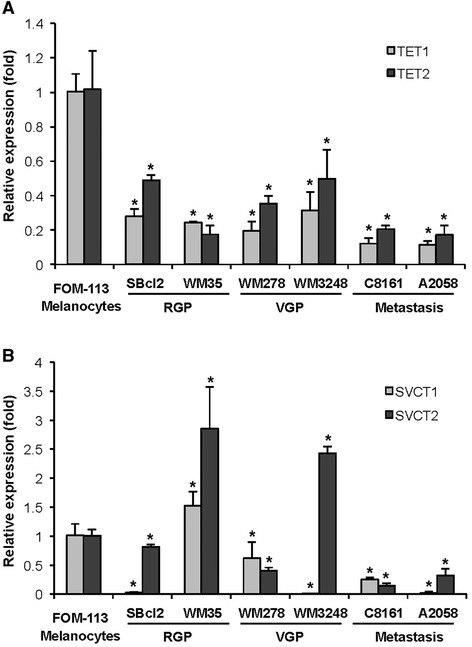
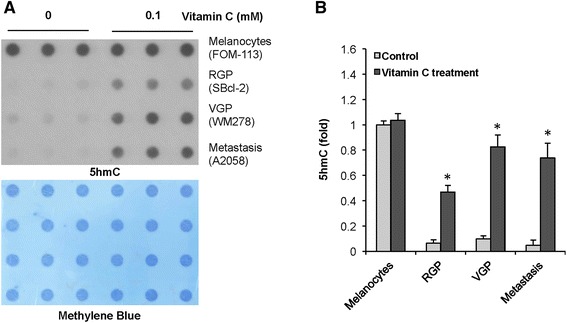
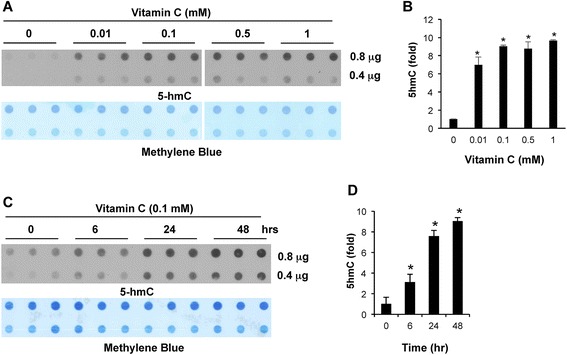
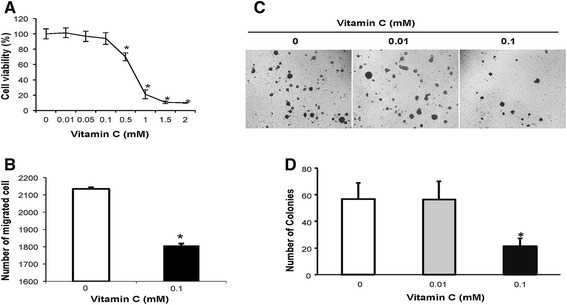
BACKGROUND: The loss of 5-hydroxymethylcytosine (5hmC) has been identified as a novel epigenetic hallmark for melanoma. One of the known mechanisms underlying the loss of 5hmC is the decrease in expression of ten-eleven translocation family dioxygenase (TET) genes, which encode enzymes that catalyze the generation of 5hmC. Overexpressing TET2 was shown to partially reestablish a normal 5hmC profile in melanoma and decrease invasiveness in rodents. However, the feasibility to overexpress TETs in patients remains unclear. We and others have recently demonstrated that TETs require vitamin C as a cofactor to generate 5hmC. This finding prompted us to test whether vitamin C, as an alternative to overexpressing TETs, could rebuild 5hmC content in melanoma. RESULTS: Consistent with previous reports, we found that the expression of TETs was decreased in various melanoma cell lines. In contrast, the expressions of sodium-dependent vitamin C transporters (SVCTs) were down-regulated in cell lines derived from melanoma metastases. Treatment of vitamin C at the physiological level (0.1 mM) promoted the content of 5hmC in melanoma cell lines derived from different stages toward the level of healthy melanocytes, which was comparable to the effect of overexpressing TET2. Vitamin C treatment decreased the malignancy of metastatic A2058 cells by inhibiting migration and anchorage-independent growth, while not exerting any effect on the rate of proliferation. Further, vitamin C treatment caused alterations in genome-wide transcriptions shown by RNA-seq, predominantly in ArhGAP30 and genes involved in extracellular matrix remodeling, which could underlie the decreased malignant phenotypes. CONCLUSIONS: Our data support the idea that vitamin C treatment increases 5hmC content in melanoma cells, while causing a decrease in tumor-cell invasiveness and clonogenic growth in soft agar. Thus, vitamin C could be a potential epigenetic treatment for melanoma.
Overview
The claims and statistics of this paper haven’t been checked yet.
Free: it reads the open-access text and checks the first 5 claims that cite a source we can check. Create a free account to check every claim.
Integrity signals
Registry
Cites
Statistics
Figures
Verification
Claims the paper makes
The claims and statistics of this paper haven’t been checked yet.
Free: it reads the open-access text and checks the first 5 claims that cite a source we can check. Create a free account to check every claim.
Claims other papers make about this one
Each is checked against this paper’s own text: does it say what the citing paper says it does?
The cited source says what the claim attributes to it.
In the citing paper
“Interestingly, vitamin C treatment has been shown to increase 5 hmC content in melanoma cell lines, also causing a consequent alteration in the transcriptome and a decrease in malignant phenotype [115].”
From The Roles of Vitamin C in Skin Health. (2017) · cites this paper as [115]
In the citing paper
“ascorbate treatment in melanoma and bladder cancer cells also enhanced 5hmC levels and decreased their malignancy70,71, suggesting that ascorbate treatment may also be effective in solid cancer with low levels of 5hmC.”
From Targeting cancer vulnerabilities with high-dose vitamin C (2019) · cites this paper as [70]
Self-check
Percentages, sums and reported differences re-computed from the paper’s own numbers.
The self-check needs the paper’s full text.
Citations
Cites
STAR: ultrafast universal RNA-seq aligner
Dobin, A., Davis, C. A., Schlesinger, F., Drenkow, J., Zaleski, C., Jha, S., Batut, P., Chaisson, M., & Gingeras, T. R. (2013) · Bioinformatics · doi:10.1093/bioinformatics/bts635 · Cited by 51,709
Robinson, M. D., McCarthy, D. J., & Smyth, G. K. (2010) · Bioinformatics · doi:10.1093/bioinformatics/btp616 · Cited by 41,364 · cited 2×
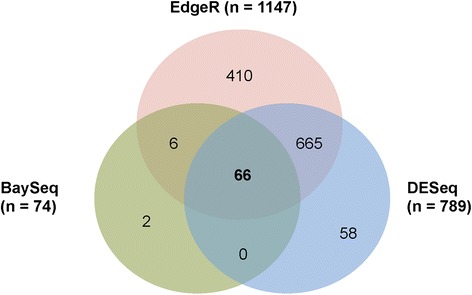
“However, only 66 genes including a few of noncoding transcripts were significantly and differentially expressed in the analyses of all three methods - EdgeR, DESeq, and BaySeq (Figure 5).”
HTSeq—a Python framework to work with high-throughput sequencing data
Anders, S., Pyl, P. T., & Huber, W. (2015) · Bioinformatics · doi:10.1093/bioinformatics/btu638 · Cited by 21,464 · cited 1×
“gtf file [38].”
Differential expression analysis for sequence count data
Anders, S., & Huber, W. (2010) · Genome Biology · doi:10.1186/gb-2010-11-10-r106 · Cited by 15,581
Conversion of 5-Methylcytosine to 5-Hydroxymethylcytosine in Mammalian DNA by MLL Partner TET1
Tahiliani, M., Koh, K. P., Shen, Y., Pastor, W. A., Bandukwala, H., Brudno, Y., Agarwal, S., Iyer, L. M., Liu, D. R., Aravind, L., et al. (2009) · Science · doi:10.1126/science.1170116 · Cited by 5,836 · cited 1×
“5hmC is converted from 5-methylcytosine (5mC), the major epigenetic modification of mammalian DNA, by a group of enzymes termed TET (ten-eleven translocation) family dioxygenases [5,6].”
Maere, S., Heymans, K., & Kuiper, M. (2005) · Bioinformatics · doi:10.1093/bioinformatics/bti551 · Cited by 4,155
Xu, W., Yang, H., Liu, Y., Yang, Y., Wang, P., Kim, S.-H., Ito, S., Yang, C., Wang, P., Xiao, M.-T., et al. (2011) · Cancer Cell · doi:10.1016/j.ccr.2010.12.014 · Cited by 2,875 · cited 2×
“Recently, the loss of 5-hydroxymethylcytosine (5hmC) has been identified as a novel hallmark for most, if not all, types of cancer (including melanoma) [1-4].”
Figueroa, M. E., Abdel-Wahab, O., Lu, C., Ward, P. S., Patel, J., Shih, A., Li, Y., Bhagwat, N., Vasanthakumar, A., Fernandez, H. F., et al. (2010) · Cancer Cell · doi:10.1016/j.ccr.2010.11.015 · Cited by 2,766 · cited 3×
“This previously unknown function of vitamin C in modulating DNA demethylation prompted us to test whether vitamin C, as an alternative to overexpressing TETs or IDHs, could be a potential epigenetic treatment for melanoma by rebuilding 5hmC profiles.”
Ito, S., D’Alessio, A. C., Taranova, O. V., Hong, K., Sowers, L. C., & Zhang, Y. (2010) · Nature · doi:10.1038/nature09303 · Cited by 2,373 · cited 1×
“5hmC is converted from 5-methylcytosine (5mC), the major epigenetic modification of mammalian DNA, by a group of enzymes termed TET (ten-eleven translocation) family dioxygenases [5,6].”
TET enzymes, TDG and the dynamics of DNA demethylation
Kohli, R. M., & Zhang, Y. (2013) · Nature · doi:10.1038/nature12750 · Cited by 1,623 · cited 16×
“The cascade oxidation of 5mC by TETs and the ensuing base excision repair has been recognized as the most consistent mechanism underlying the active demethylation of DNA [7].”
Influential
Cited by
The Roles of Vitamin C in Skin Health.
Pullar, J., Carr, A., & Vissers, M. (2017) · Nutrients · doi:10.3390/nu9080866 · Cited by 756
“Interestingly, vitamin C treatment has been shown to increase 5 hmC content in melanoma cell lines, also causing a consequent alteration in the transcriptome and a decrease in malignant phenotype [115].”
BackgroundTargeting cancer vulnerabilities with high-dose vitamin C
Ngo, B., Van Riper, J. M., Cantley, L. C., & Yun, J. (2019) · Nature Reviews Cancer · doi:10.1038/s41568-019-0135-7 · Cited by 423
Cui, B., Luo, Y., Tian, P., Peng, F., Lu, J., Yang, Y., Su, Q., Liu, B., Yu, J., Luo, X., et al. (2019) · Journal of Clinical Investigation · doi:10.1172/jci121685 · Cited by 308
“In addition, physiological-level vitamin C, acting as an antioxidant, increases the activity of TET enzymes to rebuild 5-hydroxymethylcytosine (5hmC) content, leading to the inhibition of invasiveness and clonogenic growth in melanoma (64).”
The DNA methylation landscape in cancer
Skvortsova, K., Stirzaker, C., & Taberlay, P. (2019) · Essays in Biochemistry · doi:10.1042/ebc20190037 · Cited by 308
TET (Ten-eleven translocation) family proteins: structure, biological functions and applications
Zhang, X., Zhang, Y., Wang, C., & Wang, X. (2023) · Signal Transduction and Targeted Therapy · doi:10.1038/s41392-023-01537-x · Cited by 273
Vitamin C: One compound, several uses. Advances for delivery, efficiency and stability
Caritá, A. C., Fonseca-Santos, B., Shultz, J. D., Michniak-Kohn, B., Chorilli, M., & Leonardi, G. R. (2020) · Nanomedicine: Nanotechnology, Biology and Medicine · doi:10.1016/j.nano.2019.102117 · Cited by 262
Antioxidants in Translational Medicine
Schmidt, H. H. H. W., Stocker, R., Vollbracht, C., Paulsen, G., Riley, D., Daiber, A., & Cuadrado, A. (2015) · Antioxidants & Redox Signaling · doi:10.1089/ars.2015.6393 · Cited by 228
“On the other hand, experimental data support the hypothesis that vitamin C affects epigenetic reprogramming toward less invasiveness of tumor cells (44, 149, 156).”
BackgroundThe epigenetic role of vitamin C in health and disease
Camarena, V., & Wang, G. (2016) · Cellular and Molecular Life Sciences · doi:10.1007/s00018-016-2145-x · Cited by 221
“One recent study shows that ascorbate treatment increases 5hmC content in cultured melanoma cells, while decreasing their malignancy [46].”
Self-citationHigh-dose intravenous vitamin C, a promising multi-targeting agent in the treatment of cancer
Böttger, F., Vallés-Martí, A., Cahn, L., & Jimenez, C. R. (2021) · Journal of Experimental & Clinical Cancer Research · doi:10.1186/s13046-021-02134-y · Cited by 211
Ascorbic Acid in Cancer Treatment: Let the Phoenix Fly
Shenoy, N., Creagan, E., Witzig, T., & Levine, M. (2018) · Cancer Cell · doi:10.1016/j.ccell.2018.07.014 · Cited by 205
Antioxidant and Anti-Tumor Effects of Dietary Vitamins A, C, and E
Didier, A. J., Stiene, J., Fang, L., Watkins, D., Dworkin, L. D., & Creeden, J. F. (2023) · Antioxidants · doi:10.3390/antiox12030632 · Cited by 175
“Similar results have been demonstrated in melanoma cells [103].”
ResultAberrant DNA methylation in melanoma: biomarker and therapeutic opportunities
Micevic, G., Theodosakis, N., & Bosenberg, M. (2017) · Clinical Epigenetics · doi:10.1186/s13148-017-0332-8 · Cited by 165
“Several subsequent studies confirmed that 5-hmc is decreased in metastatic melanoma, associated with loss of TET activity [84, 85], and suggest its use as an adjunct marker to distinguish between benign nodal nevi and melanoma in lymph node biopsies [86–88].”
BackgroundTherapeutic Perspective of Vitamin C and Its Derivatives
Meščić Macan, A., Gazivoda Kraljević, T., & Raić-Malić, S. (2019) · Antioxidants · doi:10.3390/antiox8080247 · Cited by 142
Role of Vitamin C in Skin Diseases
Wang, K., Jiang, H., Li, W., Qiang, M., Dong, T., & Li, H. (2018) · Frontiers in Physiology · doi:10.3389/fphys.2018.00819 · Cited by 158
Intravenous Vitamin C for Cancer Therapy – Identifying the Current Gaps in Our Knowledge
Carr, A. C., & Cook, J. (2018) · Frontiers in Physiology · doi:10.3389/fphys.2018.01182 · Cited by 133
“Research has also indicated that vitamin C treatment increases hydroxymethylation in lymphoma and melanoma cells, and causes a decrease in tumor-cell invasiveness and clonogenic growth (Gustafson et al., 2015; Shenoy et al., 2017).”
BackgroundEpigenetic Regulation of Genomic Stability by Vitamin C
Brabson, J. P., Leesang, T. E., Mohammad, S., & Cimmino, L. (2021) · Frontiers in Genetics · doi:10.3389/fgene.2021.675780 · Cited by 119
Prevention of tumor risk associated with the reprogramming of human pluripotent stem cells
Wuputra, K., Ku, C., Wu, D., Lin, Y., Saito, S., & Yokoyama, K. K. (2020) · Journal of Experimental & Clinical Cancer Research · doi:10.1186/s13046-020-01584-0 · Cited by 106
TET2 in Normal and Malignant Hematopoiesis
Bowman, R. L., & Levine, R. L. (2017) · Cold Spring Harbor Perspectives in Medicine · doi:10.1101/cshperspect.a026518 · Cited by 94
“Cite this article as Cold Spring Harb Perspect Med doi: 10.1101/cshperspect.a026518 5 w w w .p er sp ec ti ve si n m ed ic in e. o rg with consistent effects in ES cells, mouse embryonic fibroblasts, Tregulatory cells (Nair et al. 2016; Yue et al. 2016), and melanoma cells (Gustafson et al. 2015).”
InfluentialMechanisms of anti-cancer effects of ascorbate: Cytotoxic activity and epigenetic modulation
Mastrangelo, D., Pelosi, E., Castelli, G., Lo‐Coco, F., & Testa, U. (2017) · Blood Cells Molecules and Diseases · doi:10.1016/j.bcmd.2017.09.005 · Cited by 99
High-Dose Vitamin C for Cancer Therapy
Mussa, A., Idris, R. A. M., Ahmed, N., Ahmad, S., Murtadha, A. H., Din, T. A. D. A. T., Yean, C. Y., Rahman, W. F. W. A., Lazim, N. M., Uskoković, V., et al. (2022) · Pharmaceuticals · doi:10.3390/ph15060711 · Cited by 92
“Vit-C appeared to increase 5hmC levels for blood malignancies and reduce the metastatic tumor development of melanoma and bladder cancers [189,190], suggesting that the Vit-C therapy may be effective for solid tumors with low 5hmC levels or low levels of TET expression.”
BackgroundVitamin C increases 5-hydroxymethylcytosine level and inhibits the growth of bladder cancer
Ding, P., Ge, G., Gong, Y., Zhan, Y., He, S., Guan, B., Li, Y., Xu, Z., Hao, H., He, Z., et al. (2018) · Clinical Epigenetics · doi:10.1186/s13148-018-0527-7 · Cited by 86
The potential role of vitamin C in empowering cancer immunotherapy
Bedhiafi, T., Inchakalody, V. P., Fernandes, Q., Mestiri, S., Billa, N., Shahab Uddin, M. S., Merhi, M., & Dermime, S. (2021) · Biomedicine & Pharmacotherapy · doi:10.1016/j.biopha.2021.112553 · Cited by 82
Portraits of TET-mediated DNA hydroxymethylation in cancer
Jeschke, J., Collignon, É., & Fuks, F. (2016) · Current Opinion in Genetics & Development · doi:10.1016/j.gde.2016.01.004 · Cited by 82
TET2 as a tumor suppressor and therapeutic target in T-cell acute lymphoblastic leukemia
Bensberg, M., Rundquist, O., Selimović-Pašić, A., Lagerwall, C., Benson, M., Gustafsson, M., Vogt, H., Lentini, A., & Nestor, C. E. (2021) · Proceedings of the National Academy of Sciences · doi:10.1073/pnas.2110758118 · Cited by 74
“The observation that treatment with physiological vitamin C concentrations (100 μM) resulted in increased global 5hmC levels in T-ALL cells in the absence of toxicity suggested that vitamin C toxicity was not mediated by the TET enzymes (17, 18, 37, 38) (Fig.”
BackgroundHigh-Dose Vitamin C in Advanced-Stage Cancer Patients
Zasowska‐Nowak, A., Nowak, P. J., & Ciałkowska-Rysz, A. D. (2021) · Nutrients · doi:10.3390/nu13030735 · Cited by 82
“Studies have shown that overexpressing TET2 in melanoma cells and TET1 in breast cancer cells increase their 5hmC content and decrease their malignancy in vitro and in vivo [96].”
BackgroundInfluentialThe Application of Genome-Wide 5-Hydroxymethylcytosine Studies in Cancer Research
Thomson, J. P., & Meehan, R. R. (2016) · Epigenomics · doi:10.2217/epi-2016-0122 · Cited by 70
Vitamin C Transporters and Their Implications in Carcinogenesis
Linowiecka, K., Foksiński, M., & Brożyna, A. A. (2020) · Nutrients · doi:10.3390/nu12123869 · Cited by 68
“In vitro studies and murine models indicated that vitamin C inhibits invasion and growth in melanoma cells [70,71,92].”
BackgroundThe role of vitamin C in epigenetic cancer therapy
Mikkelsen, S. U., Gillberg, L., Lykkesfeldt, J., & Grønbæk, K. (2021) · Free Radical Biology and Medicine · doi:10.1016/j.freeradbiomed.2021.03.017 · Cited by 67
He, X., Wang, Q., Cheng, X., Wang, W., Li, Y., Nan, Y., Wu, J., Xiu, B., Jiang, T., Bergholz, J. S., et al. (2025) · Cell · doi:10.1016/j.cell.2025.01.043 · Cited by 65
Dysregulated epigenetic modifications in psoriasis
Zeng, C., Tsoi, L. C., & Gudjonsson, J. E. (2021) · Experimental Dermatology · doi:10.1111/exd.14332 · Cited by 62
Ding, P., He, A., He, S., Ge, G., Wang, S., Ci, W., Li, X., Xia, D., & Zhou, L. (2022) · International Journal of Biological Sciences · doi:10.7150/ijbs.67329 · Cited by 60
“Several studies have previously shown that pharmacological doses of ascorbic acid reduce the growth of aggressive tumors, enhance the cytotoxicity of chemotherapy and radiation therapy and relieve symptoms related to cancer and chemotherapy [23, 37-45].”
BackgroundKumari, A., Bhawal, S., Kapila, S., Yadav, H., & Kapila, R. (2020) · Critical Reviews in Food Science and Nutrition · doi:10.1080/10408398.2020.1825286 · Cited by 59
“Likewise, vitamin C exhibited anti-cancer potential due to the activation of Tet enzymes (Gustafson et al. 2015).”
BackgroundCombination Therapy with Vitamin C Could Eradicate Cancer Stem Cells
Satheesh, N. J., Samuel, S. M., & Büsselberg, D. (2020) · Biomolecules · doi:10.3390/biom10010079 · Cited by 54
The Impact of Antioxidants on Vitiligo and Melasma: A Scoping Review and Meta-Analysis
Speeckaert, R., Bulat, V., Speeckaert, M. M., & van Geel, N. (2023) · Antioxidants · doi:10.3390/antiox12122082 · Cited by 60
Environmental Epigenetics and Genome Flexibility: Focus on 5-Hydroxymethylcytosine
Efimova, O. A., Koltsova, A. S., Krapivin, M. I., Tikhonov, A. V., & Pendina, A. A. (2020) · International Journal of Molecular Sciences · doi:10.3390/ijms21093223 · Cited by 55
“Evidence suggests that ascorbate-mediated 5hmC increase in melanoma cells suppresses their metastatic capabilities and detains tumor growth [66].”
BackgroundTET2 promotes anti‐tumor immunity by governing G‐MDSCs and CD8+ T‐cell numbers
Li, S., Feng, J., Wu, F., Cai, J., Zhang, X., Wang, H., Fetahu, I. S., Iwanicki, I. J., Ma, D., Hu, T., et al. (2020) · EMBO Reports · doi:10.15252/embr.201949425 · Cited by 53
“Importantly, we and other groups have demonstrated that loss of 5hmC is an epigenetic hallmark in multiple cancers and that restoration of TET2 can significantly reduce tumor growth and metastasis of melanoma (Lian et al , 2012; Gustafson et al , 2015; Bonvin et al , 2018).”
High-Dose Vitamin C: Preclinical Evidence for Tailoring Treatment in Cancer Patients
Giansanti, M., Karimi, T., Faraoni, I., & Graziani, G. (2021) · Cancers · doi:10.3390/cancers13061428 · Cited by 57
5-Hydroxymethylcytosine: the many faces of the sixth base of mammalian DNA
Kriukienė, E., Tomkuvienė, M., & Klimašauskas, S. (2024) · Chemical Society Reviews · doi:10.1039/d3cs00858d · Cited by 52
Vitamin C Sensitizes Melanoma to BET Inhibitors
Mustafi, S., Camarena, V., Volmar, C.-H., Huff, T. C., Sant, D. W., Brothers, S. P., Liu, Z.-J., Wahlestedt, C., & Wang, G. (2018) · Cancer Research · doi:10.1158/0008-5472.can-17-2040 · Cited by 47
“We first examined our existing RNA-seq data (32), which indicate that BRD transcripts remain at comparable levels in the A2058 melanoma cells treated with or without ascorbate.”
BackgroundMethodSelf-citationLian, H., Li, W., & Jin, W. (2016) · Oncotarget · doi:10.18632/oncotarget.11412 · Cited by 52
“Treatment with vitamin C was showed to contribute to higher level of 5hmC in melanoma cell lines and to decrease the degree of malignancy by potentiating TET enzymatic activity [61].”
BackgroundVaishampayan, P., & Lee, Y. (2024) · Redox Biology · doi:10.1016/j.redox.2024.103288 · Cited by 43
“While the involvement of these enzymes in tumor suppression is evident in various cancer models when using lower doses of VC (0.1 – 1 mM) [38 – 40], it remains unclear if these pathways contribute to acute cancer cell death with higher doses of VC [39 – 43].”
BackgroundInfluentialParfett, C. L. J., & Desaulniers, D. M. (2017) · International Journal of Molecular Sciences · doi:10.3390/ijms18061179 · Cited by 44
“Beneficial effects of Vitamin C also occur on human TET enzyme and histone demethylase activities [228], and on human cancer cell malignancy (hepatocelloular carcinoma [229]; melanoma [230]).”
BackgroundAscorbate induces apoptosis in melanoma cells by suppressing Clusterin expression
Mustafi, S., Sant, D., Liu, Z., & Wang, G. (2017) · Scientific Reports · doi:10.1038/s41598-017-03893-5 · Cited by 40
Self-citationPotential application of cell reprogramming techniques for cancer research
Saito, S., Lin, Y., Nakamura, Y., Eckner, R., Wuputra, K., Kuo, K., Lin, C., & Yokoyama, K. K. (2018) · Cellular and Molecular Life Sciences · doi:10.1007/s00018-018-2924-7 · Cited by 40
El-Mofty, M. S., Elkot, S. M., Ghoneim, A. M., Yossri, D., & Ezzatt, O. M. (2021) · Clinical Oral Investigations · doi:10.1007/s00784-021-03978-6 · Cited by 43
“activity as well as disturbances in basement membrane [15] Ascorbic acid/Vitamin C has been introduced as treatment of melanin pigmentation due to its suppressing effect on the tyrosine activity which directly downregulates dopaquinone formation, a precursor in melanin synthesis, as well as its epigenetic inhibitory e…”
BackgroundFischer, A. P., & Miles, S. L. (2017) · Biochemical and Biophysical Research Communications · doi:10.1016/j.bbrc.2017.06.017 · Cited by 34
“In agreement with previous findings [19], we found that supplementation of cells with 100 mm A2P, which represents physiological levels of ascorbate [16,18,20], significantly increased global 5 hmC levels in our cells (Fig.”
ResultLoss of the Epigenetic Mark 5-hmC in Psoriasis: Implications for Epidermal Stem Cell Dysregulation
Li, F., Yuan, C. W.-Y., Xu, S., Zu, T., Woappi, Y., Lee, C. A. A., Abarzua, P., Wells, M., Ramsey, M. R., Frank, N. Y., et al. (2019) · Journal of Investigative Dermatology · doi:10.1016/j.jid.2019.10.016 · Cited by 31
“By manipulating TET expression in vitro, as previously accomplished in melanoma, we were able to epigenetically reprogram KSCs by increasing levels of 5-hmC (Gustafson et al., 2015).”
BackgroundInfluentialYan, Y., Huang, Z., Zhu, Z. Y., Cui, Y., Li, M., Huang, R., Yan, J., & Shen, B. (2020) · Frontiers in Oncology · doi:10.3389/fonc.2020.00667 · Cited by 31
“The antitumor effects of vitamin C have been reported in several cancers (37, 38).”
BackgroundRepurposing Vitamin C for Cancer Treatment: Focus on Targeting the Tumor Microenvironment
Li, W.-N., Zhang, S.-J., Feng, J.-Q., & Jin, W. (2022) · Cancers · doi:10.3390/cancers14112608 · Cited by 206
“Melanoma cell line 0–2 mM DNA demethylation Physiological concentrations of VitC inhibit melanoma migration and malignant transformation by increasing 5hmC levels without damaging normal melanocytes [12]”
BackgroundAlterations of regulatory factors and DNA methylation pattern in thyroid cancer
Iancu, I. V., Botezatu, A., Plesa, A., Huică, I., Fudulu, A., Albulescu, A., Bostan, M., Mihaila, M. A., Grancea, C., Manda, D. A., et al. (2020) · Cancer Biomarkers · doi:10.3233/cbm-190871 · Cited by 31
Yin, R., Mo, J., Dai, J., & Wang, H. (2018) · Metallomics · doi:10.1039/c7mt00346c · Cited by 29
Ascorbic Acid in Epigenetic Reprogramming
Liu, X., Khan, A., Li, H., Wang, S., Chen, X., & Huang, H. (2021) · Current Stem Cell Research & Therapy · doi:10.2174/1574888x16666210714152730 · Cited by 27
Redox signaling-mediated tumor extracellular matrix remodeling: pleiotropic regulatory mechanisms
Liu, G., Li, B., Qin, S., Nice, E. C., Yang, J., Li, Y., & Huang, C. (2023) · Cellular Oncology · doi:10.1007/s13402-023-00884-9 · Cited by 21
Esmat, S. A., Elsayed, N. M., & Fahmy, R. (2023) · BMC Oral Health · doi:10.1186/s12903-023-03614-7 · Cited by 24
“It has shown promising results in the treatment of various dermatological problems associated with hyperpigmentation [16, 17].”
BackgroundZhao, H., Fu, W., Yang, X., Zhang, W., Wu, S., Ma, J., Zhang, T., Yao, H., & Zhang, Z. (2025) · Genes & Diseases · doi:10.1016/j.gendis.2025.101742 · Cited by 21
“In solid tumors such as melanoma 54 and bladder cancer, 55 vitamin C significantly reduces tumor malignancy by elevating 5hmC levels.”
Role of Vitamin C in Targeting Cancer Stem Cells and Cellular Plasticity
Lee, Y. (2023) · Cancers · doi:10.3390/cancers15235657 · Cited by 20
“The activities of these enzymes contribute to the suppression of oncogenes and the re-expression of tumor suppressor genes, resulting in post-translational and/or epigenetic anti-tumor effects in both hematological and solid tumors [36,79,80].”
BackgroundNutrient-Based Approaches for Melanoma: Prevention and Therapeutic Insights
Dong, Y., Wei, J., Yang, F., Qu, Y., Huang, J., & Shi, D. (2023) · Nutrients · doi:10.3390/nu15204483 · Cited by 20
The role of 5-hydroxymethylcytosine in melanoma
Li, F., Li, L., Zhang, R., Xu, C., Zhou, P., Long, J., Hu, G., & Jiang, M.-J. (2017) · Melanoma Research · doi:10.1097/cmr.0000000000000349 · Cited by 17
Salomão, K. B., Cruzeiro, G. A. V., Bonfim-Silva, R., Geron, L., Ramalho, F. S., Saggioro, F. P., Serafini, L. N., Moreno, D. A., Queiróz, R. G. D. P., Aguiar, S. D. S., et al. (2018) · Journal of Neuro-Oncology · doi:10.1007/s11060-018-2845-1 · Cited by 16
Li, J. J. N., Liu, G., & Lok, B. H. (2024) · Genes · doi:10.3390/genes15091160 · Cited by 16
“However”
Mastrangelo, D., Massai, L., Fioritoni, G., & Lo‐Coco, F. (2017) · InTech eBooks · doi:10.5772/intechopen.68746 · Cited by 13
“Other epigenetically relevant effects of vitamin C include: • The development of dopamine neuron differentiation in fetal midbrain [60], the induction of pluripotent state in mouse embryonic stem cells [61, 62]; • The enhancement of the demethylating activity of 5-azacytidine, and induction of cytotoxicity [63, 64]; •…”
BackgroundCrake, R., Burgess, E. R., Wiggins, G. A. R., Magon, N. J., Das, A. B., Vissers, M. C. M., Morrin, H. R., Royds, J. A., Slatter, T. L., Robinson, B. A., et al. (2022) · Scientific Reports · doi:10.1038/s41598-022-19032-8 · Cited by 13
Nutrition and Diet Patterns as Key Modulators of Metabolic Reprogramming in Melanoma Immunotherapy
Grafanaki, K., Maniatis, A., Anastogianni, A., Bania, A., Pasmatzi, E., & Stathopoulos, C. (2025) · Journal of Clinical Medicine · doi:10.3390/jcm14124193 · Cited by 14
“Through alterations in DNA methylation patterns in melanoma cells, Vitamin C increases tumor susceptibility to immune-mediated cytotoxicity, thereby synergizing with ICIs, potentially improving treatment response [125].”
TET2 Negatively Regulates Nestin Expression in Human Melanoma
Gomes, C. B. F., Zecchin, K. G., Xu, S., Stelini, R. F., Nishimoto, I. N., Zhan, Q., Xu, T., Qin, G., Treister, N. S., Murphy, G. F., et al. (2016) · American Journal Of Pathology · doi:10.1016/j.ajpath.2016.01.020 · Cited by 10
Zhang, J., Zhang, Q., Lin, G., Wang, Y., Li, J., Wang, P., Qi, J., Liang, Y., He, S., Gong, Y., et al. (2025) · Advanced Science · doi:10.1002/advs.202501011 · Cited by 10
Niessner, H., Burkard, M., Leischner, C., Renner, O., Plöger, S., Meraz-Torres, F., Böcker, M., Hirn, C., Lauer, U. M., Venturelli, S., et al. (2022) · Cells · doi:10.3390/cells11071229 · Cited by 10
“Although not directly applicable to solid cancers, loss or decreased TET activity with low 5-mC levels was also shown to be an epigenetic hallmark of malignant melanoma [46], and ascorbate treatment increased 5-mC levels in melanoma cells [47].”
BackgroundXiong, R., Du, Y., Chen, S., Liu, T., Ding, X., Zhou, J., Wang, Z., & Yang, Q. (2023) · Archives of Toxicology · doi:10.1007/s00204-023-03608-y · Cited by 9
“One of the hallmarks of cancer is the deregulation of the 5mC modification mechanism, that is, the abnormal 5mC modification pattern (Gustafson et al. 2015).”
BackgroundVitamin C activates young LINE-1 elements in mouse embryonic stem cells via H3K9me3 demethylation
Cheng, K. C. L., Frost, J. M., Sanchez-Luque, F. J., García-Cañadas, M., Taylor, D., Yang, W. R., Irayanar, B., Sampath, S., Patani, H., Agger, K., et al. (2023) · Epigenetics & Chromatin · doi:10.1186/s13072-023-00514-6 · Cited by 9
Testa, U., Pelosi, E., & Castelli, G. (2020) · Hematology/Oncology and Stem Cell Therapy · doi:10.1016/j.hemonc.2020.11.002 · Cited by 9
New Frontiers in Melanoma Epigenetics—The More We Know, the More We Don’t Know
Nguyen, M., & Dobosz, P. (2017) · Epigenomes · doi:10.3390/epigenomes1010003 · Cited by 6
“5 mM, adversely affected healthy melanocytes, while not offering any greater benefits in 5hmC generation [165].”
BackgroundTaira, A., Aavikko, M., Katainen, R., Kaasinen, E., Välimäki, N., Ravantti, J., Ristimaki, A. P., Seppälä, T. T., Renkonen‐Sinisalo, L., Lepistö, A., et al. (2025) · Oncogene · doi:10.1038/s41388-025-03326-y · Cited by 5
Murcott, B., Honig, F., Halliwell, D. O., Tian, Y., Robson, J. L., Manasterski, P. J., Pinnell, J., Dix‐Peek, T., Uribe‐Lewis, S., Ibrahim, A. E. K., et al. (2025) · BMC Biology · doi:10.1186/s12915-025-02205-y · Cited by 5
Orchestrating epigenetic roles targeting ocular tumors
Zhang, H., Wen, X., Lu, L., & Fan, X. (2016) · OncoTargets and Therapy · doi:10.2147/ott.s93995 · Cited by 6
“118,119 125 In ocular tumors, DNMT and HDAC inhibitors also play an anticancer role.”
Efimova, O. A., Pendina, A. A., Tikhonov, A. V., & Баранов, В. С. (2018) · Russian Journal of Genetics Applied Research · doi:10.1134/s2079059718010069 · Cited by 5
“To date, promising data have been obtained showing that the exposition to vitamin C increases the level of 5-hydroxymethylcytosine in melanoma cells, reduces their ability to metastaze, and slowdowns the tumor growth [25].”
BackgroundMéndez-Durazno, C., Cisneros‐Pérez, P. A., Mogollón, N. G. S., Mora, J. R., Cuesta, S. A., Bailón-Moscoso, N., Romero-Benavides, J. C., Monge-Sevilla, R., Fernández, L., Romero‐Estévez, D., et al. (2025) · npj Science of Food · doi:10.1038/s41538-025-00503-x · Cited by 4
Vitamin C: epigenetic roles and cancer
Mustafi, S., & Wang, G. (2019) · Elsevier eBooks · doi:10.1016/b978-0-12-811907-5.00003-8 · Cited by 5
Self-citationShekhawat, J. K., Sharma, J., Choudhury, B., Purohit, P., Sharma, P., & Banerjee, M. (2024) · Molecular Biology Reports · doi:10.1007/s11033-024-09714-z · Cited by 4
Saito, S., Wuputra, K., Kato, K., & Yokoyama, K. K. (2021) · Elsevier eBooks · doi:10.1016/b978-0-12-822231-7.00002-3 · Cited by 3
Marine antioxidants and their role in improving skin health
Desai, P. S., & Kumar, M. S. (2023) · Elsevier eBooks · doi:10.1016/b978-0-323-95086-2.00014-x · Cited by 2
Use of vitamin C in anticancer therapy? – preclinical and clinical data overview
Regulska, K., & Litwiniuk, M. M. (2020) · Farmacja Polska · doi:10.32383/farmpol/123816 · Cited by 3
“Co ciekawe, obecność kwasu L-askorbinowego w stężeniach rzędu 100 μM w hodowlach komórek czerniaka powodowała przywrócenie w nich normalnego poziomu 5-hmC oraz hamowanie migracji i wzrostu komórek złośliwych [35].”
Bellastella, A. (2019) · Faculty Opinions – Post-Publication Peer Review of the Biomedical Literature · doi:10.3410/f.734936741.793557350 · Cited by 2
Wróbel, B., Wójcik, L., Filipski, M., Klonowska, J., & Kosek, S. (2025) · Quality in Sport · doi:10.12775/qs.2025.48.67038 · Cited by 2
Amalraj, A., Akhila, K. S., Abraham, E. K., Nair, A., Gopi, S., Thirumalaivasan, N., Joseph, A. M., & Kanagaraj, K. (2026) · Next research. · doi:10.1016/j.nexres.2026.101455 · Cited by 1
Efimova, O. A., Pendina, A. A., Tikhonov, A. V., & Баранов, В. С. (2016) · Ecological genetics · doi:10.17816/ecogen14414-25
Estudo da expressão dos genes TETs e níveis de hidroximetilação em meduloblastoma
Salomão, K. B. (2018) · Digital Library of Theses and Dissertations (Universidade de São Paulo) · doi:10.11606/t.17.2018.tde-18042018-104554
The relationship between DNA modifications and mutations in cancer
Tomková, M. (2017) · Oxford University Research Archive (ORA) (University of Oxford) · doi:10.5287/ora-xv2ak1mx9
Condrat, C. E., Dobrica, E. C., Creţoiu, S. M., & Crețoiu, D. (2022) · Wiley eBooks · doi:10.1002/9781119807704.ch14
Cheng, K. C. L., Frost, J. M., Sanchez-Luque, F. J., García-Cañadas, M., Taylor, D., Yang, W. R., Irayanar, B., Sampath, S., Patani, H., Agger, K., et al. (2024) · DIGITAL.CSIC (Spanish National Research Council (CSIC)) · doi:10.6084/m9.figshare.26627302
Cheng, K. C. L., Frost, J. M., Sanchez-Luque, F. J., García-Cañadas, M., Taylor, D., Yang, W. R., Irayanar, B., Sampath, S., Patani, H., Agger, K., et al. (2024) · DIGITAL.CSIC (Spanish National Research Council (CSIC)) · doi:10.6084/m9.figshare.26627296
Cheng, K. C. L., Frost, J. M., Sanchez-Luque, F. J., García-Cañadas, M., Taylor, D., Yang, W. R., Irayanar, B., Sampath, S., Patani, H., Agger, K., et al. (2024) · DIGITAL.CSIC (Spanish National Research Council (CSIC)) · doi:10.6084/m9.figshare.26627293
Cheng, K. C. L., Frost, J. M., Sanchez-Luque, F. J., García-Cañadas, M., Taylor, D., Yang, W. R., Irayanar, B., Sampath, S., Patani, H., Agger, K., et al. (2024) · DIGITAL.CSIC (Spanish National Research Council (CSIC)) · doi:10.6084/m9.figshare.24320052
Cheng, K. C. L., Frost, J. M., Sanchez-Luque, F. J., García-Cañadas, M., Taylor, D., Yang, W. R., Irayanar, B., Sampath, S., Patani, H., Agger, K., et al. (2024) · Figshare · doi:10.6084/m9.figshare.26627299
Cheng, K. C. L., Frost, J. M., Sanchez-Luque, F. J., García-Cañadas, M., Taylor, D., Yang, W. R., Irayanar, B., Sampath, S., Patani, H., Agger, K., et al. (2023) · Figshare · doi:10.6084/m9.figshare.24319923
Ghaly, A. A., El-Zefzaf, E. A.-E., Helal, M. H., & EL-Meligy, M. A. (2025) · Tanta Dental Journal · doi:10.4103/tdj.tdj_132_25 · Cited by 2
How Effective Is Vitamin C for Gingival Depigmentation? A Scoping Review
Mehrotra, S., Malvika Shyamkumar, R., Marcherla, S., Chopra, A., & Madi, M. I. (2026) · Clinical and Experimental Dental Research · doi:10.1002/cre2.70272
“Vitamin C also has an epigenetic suppressive action on cells and controls melanocyte activity (Gustafson et al. 2015).”
Decoding nucleic acid modification regulatory networks: A key to cancer intervention and treatment
Sun, Q., Shi, Y., Guo, Y., Wang, X., Zhao, F., Zhang, Z., Jiang, A., Du, Z., & Zhao, Z. (2026) · Physics of Life Reviews · doi:10.1016/j.plrev.2026.06.001
Metadata
- Authors
- Gustafson, C. B., Yang, C., Dickson, K. M., Shao, H., Van Booven, D., Harbour, J. W., Liu, Z.-J., & Wang, G.
- Affiliations
- University of Miami (US)
- Corresponding author
- Wang, Gaofeng
- Venue
- Clinical Epigenetics
- Published
- 2015-04-29
- Volume
- 7
- Issue
- 1
- Pages
- 51-51
- ISSN
- 1868-7075 (ISSN-L)
- 1868-7083
- PMC
- PMC4430922
- OpenAlex
- W2122222595
- Cited by
- 90
- References
- 43
- Citations by year
- 2026: 2 · 2025: 9 · 2024: 5 · 2023: 11 · 2022: 6 · 2021: 11 · 2020: 10 · 2019: 8 · 2018: 9 · 2017: 11 · 2016: 7 · 2015: 1
- FWCI
- 4.05
- Type
- journal article
- Language
- en
- Open access
- gold
- doi.org
- Locations
- Clinical Epigenetics (publishedVersion, cc-by)
- PubMed Central (publishedVersion, cc-by)
- PubMed (publishedVersion)
- Funders
- National Cancer Institute (R01CA125970)
- Topics
- Life Sciences › Biochemistry, Genetics and Molecular Biology › Molecular Biology › Epigenetics and DNA Methylation
- Health Sciences › Nursing › Nutrition and Dietetics › Vitamin C and Antioxidants Research
- Life Sciences › Biochemistry, Genetics and Molecular Biology › Molecular Biology › Chromatin Remodeling and Cancer
- Keywords
- melanoma, vitamin C, 5-hydroxymethylcytosine, TET enzymes, TET2, sodium-dependent vitamin C transporters, epigenetic reprogramming, tumor invasion, metastasis, extracellular matrix remodeling, epigenetic therapy
About these checks
Registry, retraction, Cites and statistics results are computed, not judged, with one exception: a printed reference that no index lists is read once by a model before it counts as a citation error. Claims are extracted by a model and kept only when their quote appears verbatim in the text; each cited source is then checked, with a model’s help, for whether it says what the claim relies on. Those verdicts can be wrong — read the claim’s quote and the cited source before relying on one.
Statistics and arithmetic are recomputed, not judged.
Confidence bands are shown only for fields calibrated on our annotated test set. None is calibrated yet, so no band is shown.
What counts as a claim ›How we measure confidence ›How we check this ›
Are you an author, or do you see a problem with this page? Request a review
Data sources
Bibliographic data: Semantic Scholar, OpenAlex, Crossref.
Contains information from the Semantic Scholar Academic Graph Datasets, made available under the ODC Attribution License (ODC-BY 1.0).
Semantic Scholar’s data is described in: Kinney, R., et al. (2023). The Semantic Scholar Open Data Platform. arXiv:2301.10140.
