

Epigenetic reprogramming of melanoma cells by vitamin C treatment
Open accessThe DOI matches its Crossref record; 43 of the 43 references it cites were found in a registry or an index.
Abstract
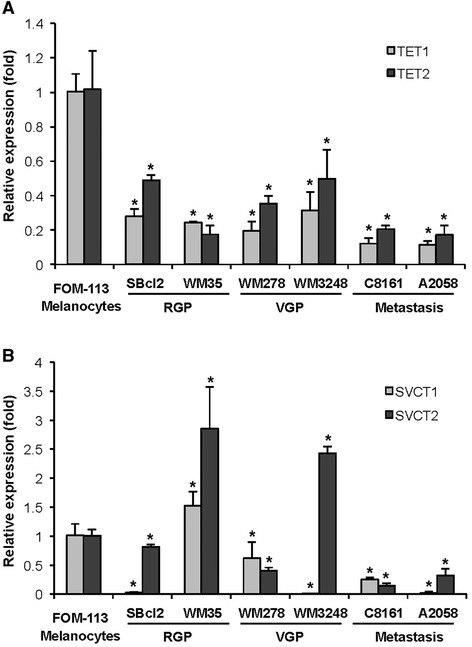
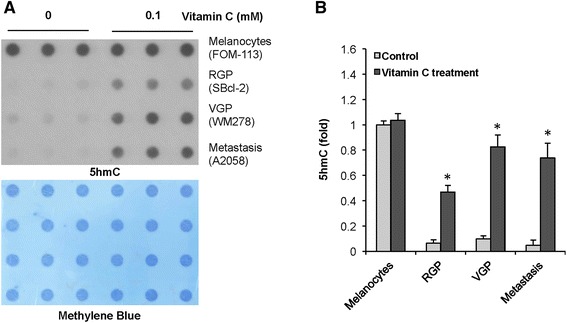
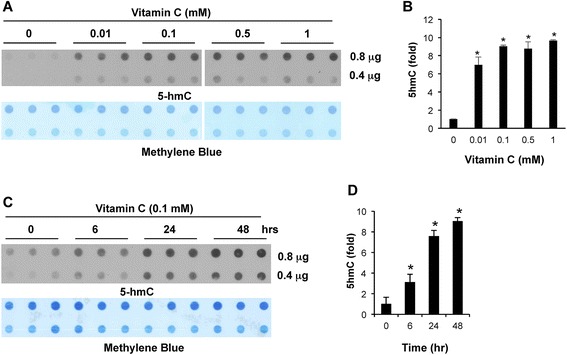
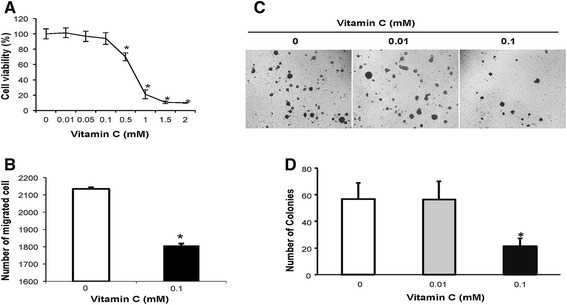
BACKGROUND: The loss of 5-hydroxymethylcytosine (5hmC) has been identified as a novel epigenetic hallmark for melanoma. One of the known mechanisms underlying the loss of 5hmC is the decrease in expression of ten-eleven translocation family dioxygenase (TET) genes, which encode enzymes that catalyze the generation of 5hmC. Overexpressing TET2 was shown to partially reestablish a normal 5hmC profile in melanoma and decrease invasiveness in rodents. However, the feasibility to overexpress TETs in patients remains unclear. We and others have recently demonstrated that TETs require vitamin C as a cofactor to generate 5hmC. This finding prompted us to test whether vitamin C, as an alternative to overexpressing TETs, could rebuild 5hmC content in melanoma. RESULTS: Consistent with previous reports, we found that the expression of TETs was decreased in various melanoma cell lines. In contrast, the expressions of sodium-dependent vitamin C transporters (SVCTs) were down-regulated in cell lines derived from melanoma metastases. Treatment of vitamin C at the physiological level (0.1 mM) promoted the content of 5hmC in melanoma cell lines derived from different stages toward the level of healthy melanocytes, which was comparable to the effect of overexpressing TET2. Vitamin C treatment decreased the malignancy of metastatic A2058 cells by inhibiting migration and anchorage-independent growth, while not exerting any effect on the rate of proliferation. Further, vitamin C treatment caused alterations in genome-wide transcriptions shown by RNA-seq, predominantly in ArhGAP30 and genes involved in extracellular matrix remodeling, which could underlie the decreased malignant phenotypes. CONCLUSIONS: Our data support the idea that vitamin C treatment increases 5hmC content in melanoma cells, while causing a decrease in tumor-cell invasiveness and clonogenic growth in soft agar. Thus, vitamin C could be a potential epigenetic treatment for melanoma.
Overview
The claims and statistics of this paper haven’t been checked yet.
Free: it reads the open-access text and checks the first 5 claims that cite a source we can check. Create a free account to check every claim.
Integrity signals
Registry
Cites
Statistics
Figures
Verification
Claims the paper makes
The claims and statistics of this paper haven’t been checked yet.
Free: it reads the open-access text and checks the first 5 claims that cite a source we can check. Create a free account to check every claim.
Claims other papers make about this one
Each is checked against this paper’s own text: does it say what the citing paper says it does?
The cited source says what the claim attributes to it.
In the citing paper
“Interestingly, vitamin C treatment has been shown to increase 5 hmC content in melanoma cell lines, also causing a consequent alteration in the transcriptome and a decrease in malignant phenotype [115].”
From The Roles of Vitamin C in Skin Health. (2017) · cites this paper as [115]
In the citing paper
“ascorbate treatment in melanoma and bladder cancer cells also enhanced 5hmC levels and decreased their malignancy70,71, suggesting that ascorbate treatment may also be effective in solid cancer with low levels of 5hmC.”
From Targeting cancer vulnerabilities with high-dose vitamin C (2019) · cites this paper as [70]
Self-check
Percentages, sums and reported differences re-computed from the paper’s own numbers.
The self-check needs the paper’s full text.
Citations
Cites
STAR: ultrafast universal RNA-seq aligner
Dobin, A., Davis, C. A., Schlesinger, F., Drenkow, J., Zaleski, C., Jha, S., Batut, P., Chaisson, M., & Gingeras, T. R. (2013) · Bioinformatics · doi:10.1093/bioinformatics/bts635 · Cited by 51,709
Robinson, M. D., McCarthy, D. J., & Smyth, G. K. (2010) · Bioinformatics · doi:10.1093/bioinformatics/btp616 · Cited by 41,364 · cited 2×
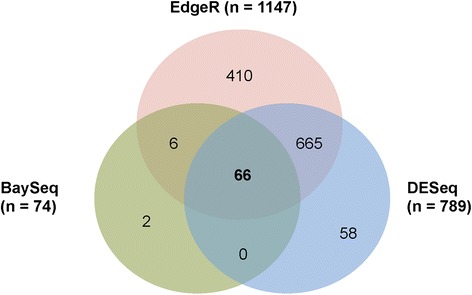
“However, only 66 genes including a few of noncoding transcripts were significantly and differentially expressed in the analyses of all three methods - EdgeR, DESeq, and BaySeq (Figure 5).”
HTSeq—a Python framework to work with high-throughput sequencing data
Anders, S., Pyl, P. T., & Huber, W. (2015) · Bioinformatics · doi:10.1093/bioinformatics/btu638 · Cited by 21,464 · cited 1×
“gtf file [38].”
Differential expression analysis for sequence count data
Anders, S., & Huber, W. (2010) · Genome Biology · doi:10.1186/gb-2010-11-10-r106 · Cited by 15,581
Conversion of 5-Methylcytosine to 5-Hydroxymethylcytosine in Mammalian DNA by MLL Partner TET1
Tahiliani, M., Koh, K. P., Shen, Y., Pastor, W. A., Bandukwala, H., Brudno, Y., Agarwal, S., Iyer, L. M., Liu, D. R., Aravind, L., et al. (2009) · Science · doi:10.1126/science.1170116 · Cited by 5,836 · cited 1×
“5hmC is converted from 5-methylcytosine (5mC), the major epigenetic modification of mammalian DNA, by a group of enzymes termed TET (ten-eleven translocation) family dioxygenases [5,6].”
Maere, S., Heymans, K., & Kuiper, M. (2005) · Bioinformatics · doi:10.1093/bioinformatics/bti551 · Cited by 4,155
Xu, W., Yang, H., Liu, Y., Yang, Y., Wang, P., Kim, S.-H., Ito, S., Yang, C., Wang, P., Xiao, M.-T., et al. (2011) · Cancer Cell · doi:10.1016/j.ccr.2010.12.014 · Cited by 2,875 · cited 2×
“Recently, the loss of 5-hydroxymethylcytosine (5hmC) has been identified as a novel hallmark for most, if not all, types of cancer (including melanoma) [1-4].”
Figueroa, M. E., Abdel-Wahab, O., Lu, C., Ward, P. S., Patel, J., Shih, A., Li, Y., Bhagwat, N., Vasanthakumar, A., Fernandez, H. F., et al. (2010) · Cancer Cell · doi:10.1016/j.ccr.2010.11.015 · Cited by 2,766 · cited 3×
“This previously unknown function of vitamin C in modulating DNA demethylation prompted us to test whether vitamin C, as an alternative to overexpressing TETs or IDHs, could be a potential epigenetic treatment for melanoma by rebuilding 5hmC profiles.”
Ito, S., D’Alessio, A. C., Taranova, O. V., Hong, K., Sowers, L. C., & Zhang, Y. (2010) · Nature · doi:10.1038/nature09303 · Cited by 2,373 · cited 1×
“5hmC is converted from 5-methylcytosine (5mC), the major epigenetic modification of mammalian DNA, by a group of enzymes termed TET (ten-eleven translocation) family dioxygenases [5,6].”
TET enzymes, TDG and the dynamics of DNA demethylation
Kohli, R. M., & Zhang, Y. (2013) · Nature · doi:10.1038/nature12750 · Cited by 1,623 · cited 16×
“The cascade oxidation of 5mC by TETs and the ensuing base excision repair has been recognized as the most consistent mechanism underlying the active demethylation of DNA [7].”
InfluentialImpaired hydroxylation of 5-methylcytosine in myeloid cancers with mutant TET2
Ko, M., Huang, Y., Jankowska, A. M., Pape, U. J., Tahiliani, M., Bandukwala, H. S., An, J., Lamperti, E. D., Koh, K. P., Ganetzky, R., et al. (2010) · Nature · doi:10.1038/nature09586 · Cited by 1,213 · cited 5×
“Various mechanisms may underlie 5hmC depletion in cancer such as mutations in TETs and IDHs [1,22] and thus decreased expression of TETs and IDHs [3].”
InfluentialDynamic regulation of 5-hydroxymethylcytosine in mouse ES cells and during differentiation
Ficz, G., Branco, M. R., Seisenberger, S., Santos, F., Krueger, F., Hore, T. A., Marques, C. J., Andrews, S., & Reik, W. (2011) · Nature · doi:10.1038/nature10008 · Cited by 1,133 · cited 1×
“distributed with unique patterns in the genome [8,9].”
Ascorbic acid: Chemistry, biology and the treatment of cancer
Du, J., Cullen, J. J., & Buettner, G. R. (2012) · Biochimica et Biophysica Acta (BBA) - Reviews on Cancer · doi:10.1016/j.bbcan.2012.06.003 · Cited by 1,070 · cited 1×
“This might explain why vitamin C treatment at pharmacological concentrations resulted in inconsistent therapeutic results for cancer [20].”
Quesada, V., Conde, L., Villamor, N., Ordóñez, G. R., Jares, P., Bassaganyas, L., Ramsay, A. J., Beà, S., Pinyol, M., Martínez-Trillos, A., et al. (2012) · Nature Genetics · doi:10.1038/ng.1032 · Cited by 996
Dynamic Readers for 5-(Hydroxy)Methylcytosine and Its Oxidized Derivatives
Spruijt, C. G., Gnerlich, F., Smits, A. H., Pfaffeneder, T., Jansen, P. W. T. C., Bauer, C., Münzel, M., Wagner, M., Müller, M., Khan, F., et al. (2013) · Cell · doi:10.1016/j.cell.2013.02.004 · Cited by 973 · cited 1×
“Further, 5hmC recruits different sets of binding proteins, as compared to 5mC, and correlates with unique transcription profiles [10-12].”
MeCP2 binds to 5hmC enriched within active genes and accessible chromatin in the nervous system
Mellén, M., Ayata, P., Dewell, S., Kriaucionis, S., & Heintz, N. (2012) · Cell · doi:10.1016/j.cell.2012.11.022 · Cited by 943
Quantitative Sequencing of 5-Methylcytosine and 5-Hydroxymethylcytosine at Single-Base Resolution
Booth, M. J., Branco, M. R., Ficz, G., Oxley, D., Krueger, F., Reik, W., & Balasubramanian, S. (2012) · Science · doi:10.1126/science.1220671 · Cited by 928
Vitamin C induces Tet-dependent DNA demethylation and a blastocyst-like state in ES cells
Blaschke, K., Ebata, K. T., Karimi, M. M., Zepeda-Martínez, J. A., Goyal, P., Mahapatra, S., Tam, A., Laird, D. J., Hirst, M., Rao, A., et al. (2013) · Nature · doi:10.1038/nature12362 · Cited by 865 · cited 4×
“This was subsequently verified by three other groups and is now widely accepted [13-17].”
InfluentialLoss of 5-hydroxymethylcytosine is an epigenetic hallmark of melanoma
Lian, C. G., Xu, Y., Ceol, C., Wu, F., Larson, A., Dresser, K., Xu, W., Tan, L., Hu, Y., Zhan, Q., et al. (2012) · Cell · doi:10.1016/j.cell.2012.07.033 · Cited by 789 · cited 12×
“One of the known mechanisms underlying the loss of 5hmC in melanoma is a lower expression of the TET and isocitrate dehydrogenases (IDH) genes [3,4], which encode enzymes that catalyze the production of 2oxoglutarate, a co-substrate for the TET enzymes.”
InfluentialbaySeq: Empirical Bayesian methods for identifying differential expression in sequence count data
Hardcastle, T. J., & Kelly, K. A. (2010) · BMC Bioinformatics · doi:10.1186/1471-2105-11-422 · Cited by 756 · cited 2×
“However, only 66 genes including a few of noncoding transcripts were significantly and differentially expressed in the analyses of all three methods - EdgeR, DESeq, and BaySeq (Figure 5).”
Epigenetic reprogramming in cancer
Suvà, M. L., Riggi, N., & Bernstein, B. E. (2013) · Science · doi:10.1126/science.1230184 · Cited by 706 · cited 1×
“Recent discoveries of the epigenetic abnormalities in cancer provide unprecedented opportunities to reprogram malignant cancer cells and alter them toward healthy cells by targeting related enzymes that are responsible for the epigenetic modifications [21].”
Dual functions of Tet1 in transcriptional regulation in mouse embryonic stem cells
Wu, H., D’Alessio, A. C., Ito, S., Xia, K., Wang, Z., Cui, K., Zhao, K., Eve Sun, Y., & Zhang, Y. (2011) · Nature · doi:10.1038/nature09934 · Cited by 646 · cited 1×
“Consistent with the dual function of TETs and the consequent 5hmC on transcription regulation [31], vitamin C-induced 5hmC also correlated with bi-directional effects on transcription, although the most significantly altered transcripts were up-regulated.”
Yin, R., Mao, S.-Q., Zhao, B., Chong, Z., Yang, Y., Zhao, C., Zhang, D., Huang, H., Gao, J., Li, Z., et al. (2013) · Journal of the American Chemical Society · doi:10.1021/ja4028346 · Cited by 609 · cited 4×
“This was subsequently verified by three other groups and is now widely accepted [13-17].”
InfluentialRecurrent mutations at codon 625 of the splicing factor SF3B1 in uveal melanoma
Harbour, J. W., Roberson, E. D. O., Anbunathan, H., Onken, M. D., Worley, L. A., & Bowcock, A. M. (2013) · Nature Genetics · doi:10.1038/ng.2523 · Cited by 516 · cited 1×
“Interestingly, recurrent mutations in the splicing factor SF3B1 have been identified in certain types of melanoma [27].”
Self-citationSchleicher, R. L., Carroll, M. D., Ford, E. S., & Lacher, D. A. (2009) · The American Journal of Clinical Nutrition · doi:10.3945/ajcn.2008.27016 · Cited by 504 · cited 1×
“4 μM in plasma) [24,25].”
Yildirim, O., Li, R., Hung, J.-H., Chen, P. B., Dong, X., Ee, L.-S., Weng, Z., Rando, O. J., & Fazzio, T. G. (2011) · Cell · doi:10.1016/j.cell.2011.11.054 · Cited by 450 · cited 1×
“Further, 5hmC recruits different sets of binding proteins, as compared to 5mC, and correlates with unique transcription profiles [10-12].”
Minor, E. A., Court, B. L., Young, J. I., & Wang, G. (2013) · Journal of Biological Chemistry · doi:10.1074/jbc.c113.464800 · Cited by 413 · cited 6×
“We and others have shown that the effect of vitamin C on 5hmC generation is independent of its property as a general reducer [13-17].”
InfluentialSelf-citationVitamin C: A concentration-function approach yields pharmacology and therapeutic discoveries
Levine, M., Padayatty, S. J., & Espey, M. G. (2011) · Advances in Nutrition · doi:10.3945/an.110.000109 · Cited by 357 · cited 1×
“15 mM [19].”
MeCP2 binds to 5hmc enriched within active genes and accessible chromatin in the nervous system
Mellen, M., Ayata, P., Dewell, S., Kriaucionis, S., & Heintz, N. (2013) · Epigenetics & Chromatin · doi:10.1186/1756-8935-6-s1-p52 · Cited by 345 · cited 1×
“Further, 5hmC recruits different sets of binding proteins, as compared to 5mC, and correlates with unique transcription profiles [10-12].”
Vitamin C modulates TET1 function during somatic cell reprogramming
Chen, J., Guo, L., Zhang, L., Wu, H., Yang, J., Liu, H., Wang, X., Hu, X., Gu, T., Zhou, Z., et al. (2013) · Nature Genetics · doi:10.1038/ng.2807 · Cited by 323 · cited 4×
“This was subsequently verified by three other groups and is now widely accepted [13-17].”
InfluentialActivation of Notch1 signaling is required for -catenin-mediated human primary melanoma progression
Balint, K. (2005) · Journal of Clinical Investigation · doi:10.1172/jci25001 · Cited by 317 · cited 1×
“Tumor cell colony formation in soft agar was carried out as described [36].”
Self-citationTET1 Suppresses Cancer Invasion by Activating the Tissue Inhibitors of Metalloproteinases
Hsu, C.-H., Peng, K.-L., Kang, M.-L., Chen, Y.-R., Yang, Y.-C., Tsai, C.-H., Chu, C.-S., Jeng, Y.-M., Chen, Y.-T., Lin, F.-M., et al. (2012) · Cell Reports · doi:10.1016/j.celrep.2012.08.030 · Cited by 281 · cited 2×
“Published studies have shown that overexpressing TET2 in melanoma cells and TET1 in breast cancer cells increases their 5hmC content and decreases their malignancy in vitro and in vivo [3,23].”
New insights into the physiology and pharmacology of vitamin C.
Padayatty, S. J., & Levine, M. (2001) · Europe PMC (PubMed Central) · Cited by 219
Breathing-in epigenetic change with vitamin C
Monfort, A., & Wutz, A. (2013) · The EMBO Reports · doi:10.1038/embor.2013.29 · Cited by 140 · cited 2×
“Astonishingly, vitamin C is often absent in the formulation of the majority of media used for culturing cancer cells [33].”
Timpson, N. J., Forouhi, N. G., Brion, M.-J., Harbord, R. M., Cook, D. G., Johnson, P., McConnachie, A., Morris, R. W., Rodriguez, S., Luan, J., et al. (2010) · The American Journal of Clinical Nutrition · doi:10.3945/ajcn.2010.29438 · Cited by 107 · cited 1×
“4 μM in plasma) [24,25].”
CHA, J., ROOMI, M. W., IVANOV, V., KALINOVSKY, T., NIEDZWIECKI, A., & RATH, M. (2013) · International Journal of Oncology · doi:10.3892/ijo.2012.1712 · Cited by 104
Dickson, K. M., Gustafson, C. B., Young, J. I., Züchner, S., & Wang, G. (2013) · Biochemical and Biophysical Research Communications · doi:10.1016/j.bbrc.2013.09.010 · Cited by 82 · cited 4×
“This was subsequently verified by three other groups and is now widely accepted [13-17].”
Self-citationArhGAP30 promotes p53 acetylation and function in colorectal cancer
Wang, J., Qian, J., Hu, Y., Kong, X., Chen, H., Shi, Q., Jiang, L., Wu, C., Zou, W., Chen, Y., et al. (2014) · Nature Communications · doi:10.1038/ncomms5735 · Cited by 82 · cited 1×
“A low level of ARHGAP30 expression also is associated with poor survival of CRC patients [32].”
Gambichler, T., Sand, M. S., & Skrygan, M. (2013) · Melanoma Research · doi:10.1097/cmr.0b013e32835f9bd4 · Cited by 74 · cited 3×
“Recently, the loss of 5-hydroxymethylcytosine (5hmC) has been identified as a novel hallmark for most, if not all, types of cancer (including melanoma) [1-4].”
Spielholz, C., Golde, D. W., Houghton, A. N., Nualart, F., & Vera, J. C. (1997) · PubMed · Cited by 67
Sinnberg, T. W., Noor, S., Venturelli, S., Berger, A., Schüler, P., Garbe, C., & Busch, C. (2013) · Journal of Cellular and Molecular Medicine · doi:10.1111/jcmm.12207 · Cited by 48 · cited 1×
“Besides these epigenetic pathways, the toxicity of vitamin C at mM ranges is also through reactive oxygen species pathways [35].”
Epigenetic Impacts of Ascorbate on Human Metastatic Melanoma Cells
Venturelli, S., Sinnberg, T. W., Berger, A., Noor, S., Levesque, M. P., Böcker, A., Niessner, H., Lauer, U. M., Bitzer, M., Garbe, C., et al. (2014) · Frontiers in Oncology · doi:10.3389/fonc.2014.00227 · Cited by 43 · cited 1×
“In addition to restoring 5hmC in melanoma cells as described above, vitamin C at pharmacological doses also have been shown to inhibit the activity of DNA methyltransferases and to alter the expression of many miRNAs [34].”
Ascorbate depletion increases growth and metastasis of melanoma cells in vitamin C deficient mice.
Cha, J., Roomi, M. W., Ivanov, V. O., Kalinovsky, T., Niedzwiecki, A., & Rath, M. (2011) · PubMed · Cited by 30
Cited by
The Roles of Vitamin C in Skin Health.
Pullar, J., Carr, A., & Vissers, M. (2017) · Nutrients · doi:10.3390/nu9080866 · Cited by 756
“Interestingly, vitamin C treatment has been shown to increase 5 hmC content in melanoma cell lines, also causing a consequent alteration in the transcriptome and a decrease in malignant phenotype [115].”
BackgroundTargeting cancer vulnerabilities with high-dose vitamin C
Ngo, B., Van Riper, J. M., Cantley, L. C., & Yun, J. (2019) · Nature Reviews Cancer · doi:10.1038/s41568-019-0135-7 · Cited by 423
Cui, B., Luo, Y., Tian, P., Peng, F., Lu, J., Yang, Y., Su, Q., Liu, B., Yu, J., Luo, X., et al. (2019) · Journal of Clinical Investigation · doi:10.1172/jci121685 · Cited by 308
“In addition, physiological-level vitamin C, acting as an antioxidant, increases the activity of TET enzymes to rebuild 5-hydroxymethylcytosine (5hmC) content, leading to the inhibition of invasiveness and clonogenic growth in melanoma (64).”
The DNA methylation landscape in cancer
Skvortsova, K., Stirzaker, C., & Taberlay, P. (2019) · Essays in Biochemistry · doi:10.1042/ebc20190037 · Cited by 308
TET (Ten-eleven translocation) family proteins: structure, biological functions and applications
Zhang, X., Zhang, Y., Wang, C., & Wang, X. (2023) · Signal Transduction and Targeted Therapy · doi:10.1038/s41392-023-01537-x · Cited by 273
Metadata
- Authors
- Gustafson, C. B., Yang, C., Dickson, K. M., Shao, H., Van Booven, D., Harbour, J. W., Liu, Z.-J., & Wang, G.
- Affiliations
- University of Miami (US)
- Corresponding author
- Wang, Gaofeng
- Venue
- Clinical Epigenetics
- Published
- 2015-04-29
- Volume
- 7
- Issue
- 1
- Pages
- 51-51
- ISSN
- 1868-7075 (ISSN-L)
- 1868-7083
- PMC
- PMC4430922
- OpenAlex
- W2122222595
- Cited by
- 90
- References
- 43
- Citations by year
- 2026: 2 · 2025: 9 · 2024: 5 · 2023: 11 · 2022: 6 · 2021: 11 · 2020: 10 · 2019: 8 · 2018: 9 · 2017: 11 · 2016: 7 · 2015: 1
- FWCI
- 4.05
- Type
- journal article
- Language
- en
- Open access
- gold
- doi.org
- Locations
- Clinical Epigenetics (publishedVersion, cc-by)
- PubMed Central (publishedVersion, cc-by)
- PubMed (publishedVersion)
- Funders
- National Cancer Institute (R01CA125970)
- Topics
- Life Sciences › Biochemistry, Genetics and Molecular Biology › Molecular Biology › Epigenetics and DNA Methylation
- Health Sciences › Nursing › Nutrition and Dietetics › Vitamin C and Antioxidants Research
- Life Sciences › Biochemistry, Genetics and Molecular Biology › Molecular Biology › Chromatin Remodeling and Cancer
- Keywords
- melanoma, vitamin C, 5-hydroxymethylcytosine, TET enzymes, TET2, sodium-dependent vitamin C transporters, epigenetic reprogramming, tumor invasion, metastasis, extracellular matrix remodeling, epigenetic therapy
About these checks
Registry, retraction, Cites and statistics results are computed, not judged, with one exception: a printed reference that no index lists is read once by a model before it counts as a citation error. Claims are extracted by a model and kept only when their quote appears verbatim in the text; each cited source is then checked, with a model’s help, for whether it says what the claim relies on. Those verdicts can be wrong — read the claim’s quote and the cited source before relying on one.
Statistics and arithmetic are recomputed, not judged.
Confidence bands are shown only for fields calibrated on our annotated test set. None is calibrated yet, so no band is shown.
What counts as a claim ›How we measure confidence ›How we check this ›
Are you an author, or do you see a problem with this page? Request a review
Data sources
Bibliographic data: Semantic Scholar, OpenAlex, Crossref.
Contains information from the Semantic Scholar Academic Graph Datasets, made available under the ODC Attribution License (ODC-BY 1.0).
Semantic Scholar’s data is described in: Kinney, R., et al. (2023). The Semantic Scholar Open Data Platform. arXiv:2301.10140.
