

The DOI matches its Crossref record; 12 of the 12 references it cites were found in a registry or an index.
Bapineuzumab for mild to moderate Alzheimer’s disease in two global, randomized, phase 3 trials
Open accessAbstract
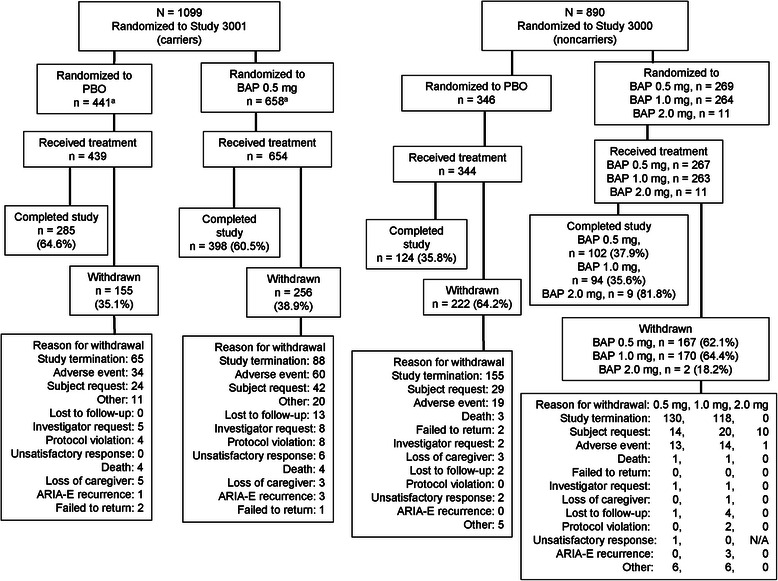
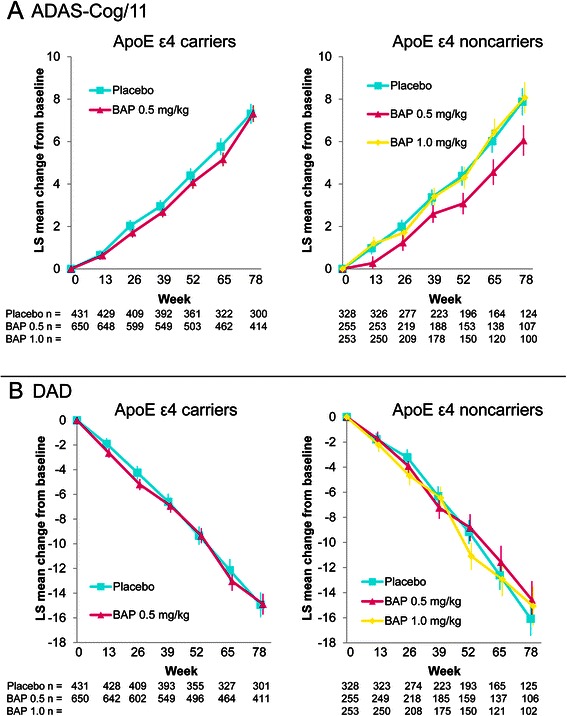
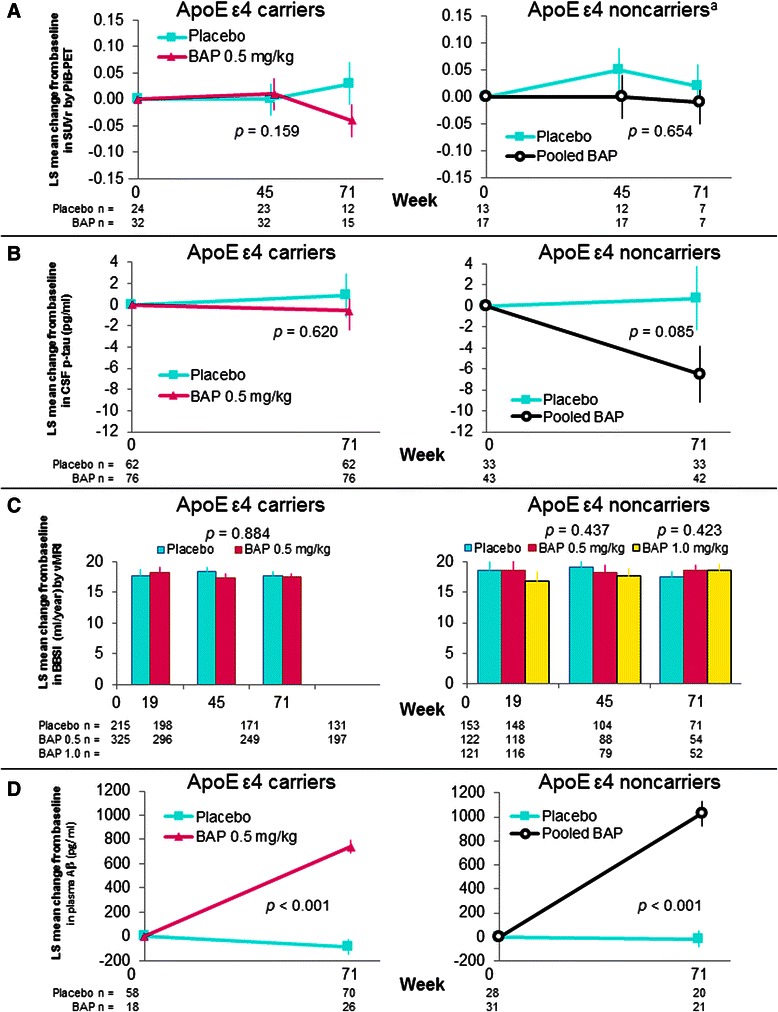
Background: Our objective was to evaluate the efficacy (clinical and biomarker) and safety of intravenous bapineuzumab in patients with mild to moderate Alzheimer’s disease (AD). Methods: Two of four phase 3, multicenter, randomized, double-blind, placebo-controlled, 18-month trials were conducted globally: one in apolipoprotein E ε4 carriers and another in noncarriers. Patients received bapineuzumab 0.5 mg/kg (both trials) or 1.0 mg/kg (noncarrier trial) or placebo every 13 weeks. Coprimary endpoints were change from baseline to week 78 on the 11-item Alzheimer’s Disease Assessment Scale–Cognitive subscale and the Disability Assessment for Dementia. Results: A total of 683 and 329 patients completed the current carrier and noncarrier trials, respectively, which were terminated prematurely owing to lack of efficacy in the two other phase 3 trials of bapineuzumab in AD. The current trials showed no significant difference between bapineuzumab and placebo for the coprimary endpoints and no effect of bapineuzumab on amyloid load or cerebrospinal fluid phosphorylated tau. (Both measures were stable over time in the placebo group.) Amyloid-related imaging abnormalities with edema or effusion were confirmed as the most notable adverse event. Conclusions: These phase 3 global trials confirmed lack of efficacy of bapineuzumab at tested doses on clinical endpoints in patients with mild to moderate AD. Some differences in the biomarker results were seen compared with the other phase 3 bapineuzumab trials. No unexpected adverse events were observed. Trial registration: Noncarriers (3000) ClinicalTrials.gov identifier NCT00667810; registered 24 Apr 2008. Carriers (3001) ClinicalTrials.gov identifier NCT00676143; registered 2 May 2008.
Overview
The claims and statistics of this paper haven’t been checked yet.
Run the check — free, no account needed. It reads the open-access text and checks the sources it cites.
Integrity signals
Registry
Cites
Statistics
Figures
Verification
Claims the paper makes
The claims and statistics of this paper haven’t been checked yet.
Run the check — free, no account needed. It reads the open-access text and checks the sources it cites.
Claims other papers make about this one
Each is checked against this paper’s own text: does it say what the citing paper says it does?
The source backs part of the claim, not all of it — or backs it for a different population, condition or comparison.
In the citing paper
“The third generation of human immunoglobulin monoclonal antibody (hmAB; aducanumab, donanemab, and lecanemab) directed against insoluble, modified, N-terminal truncated form of Aβ, targeting Aβ plaque clearance, seems to benefit MCI or AD with mild dementia patients [34, 37].”
From Current therapeutics for Alzheimer’s disease and clinical trials (2024) · cites this paper as [34]
Experimental — accuracy not yet measuredIn the citing paper
“The administration of this antibody manifested significant (27%) slower progress in cognitive decline in the patients based on the primary end points, the change from baseline at 19 months in the score on the CDR-SB”
From Current therapeutics for Alzheimer’s disease and clinical trials (2024) · cites this paper as [34]
In the citing paper
“these results did not extend to phase III trials, in which bapineuzumab had no effect on tau pathology184”
From Tau-targeting therapies for Alzheimer disease (2018) · cites this paper as [184]
In the citing paper
“Some of the recent failures of anti-amyloid agents in phase 3 clinical trials in patients with early-stage, mild, or mild-to-moderate stage AD were semagacestat,29 bapineuzumab,30 solanezumab31 and in similar trials of β-secretase inhibitors (BACE) lanabecestat,32 verubecestat,33 and atabecestat.34”
From Current and Future Treatments in Alzheimer Disease: An Update (2020) · cites this paper as [30]
Self-check
Percentages, sums and reported differences re-computed from the paper’s own numbers.
The self-check needs the paper’s full text.
Citations
Cites
Two Phase 3 Trials of Bapineuzumab in Mild-to-Moderate Alzheimer's Disease
Salloway, S., Sperling, R., Fox, N. C., Blennow, K., Klunk, W., Raskind, M., Sabbagh, M., Honig, L. S., Porsteinsson, A. P., Ferris, S., et al. (2014) · New England Journal of Medicine · doi:10.1056/nejmoa1304839 · Cited by 1,960
Self-citationPhase 3 Trials of Solanezumab for Mild-to-Moderate Alzheimer's Disease
Doody, R. S., Thomas, R. G., Farlow, M., Iwatsubo, T., Vellas, B., Joffe, S., Kieburtz, K., Raman, R., Sun, X., Aisen, P. S., et al. (2014) · New England Journal of Medicine · doi:10.1056/nejmoa1312889 · Cited by 1,668
Self-citationSperling, R. A., Jack, C. R., Black, S. E., Frosch, M. P., Greenberg, S. M., Hyman, B. T., Scheltens, P., Carrillo, M. C., Thies, W., Bednar, M. M., et al. (2011) · Alzheimer's & Dementia · doi:10.1016/j.jalz.2011.05.2351 · Cited by 857
Self-citationA phase 2 multiple ascending dose trial of bapineuzumab in mild to moderate Alzheimer disease
Salloway, S., Sperling, R., Gilman, S., Fox, N. C., Blennow, K., Raskind, M., Sabbagh, M., Honig, L. S., Doody, R., van Dyck, C. H., et al. (2009) · Neurology · doi:10.1212/wnl.0b013e3181c67808 · Cited by 753
Self-citationRinne, J. O., Brooks, D. J., Rossor, M. N., Fox, N. C., Bullock, R., Klunk, W. E., Mathis, C. A., Blennow, K., Barakos, J., Okello, A. A., et al. (2010) · The Lancet Neurology · doi:10.1016/s1474-4422(10)70043-0 · Cited by 701
Self-citationZetterberg, H. (2012) · Archives of Neurology · doi:10.1001/archneurol.2012.90 · Cited by 234
Immunotherapy for Alzheimer’s disease: hoops and hurdles
Lemere, C. A. (2013) · Molecular Neurodegeneration · doi:10.1186/1750-1326-8-36 · Cited by 196
Amyloid-β 11 C-PiB-PET imaging results from 2 randomized bapineuzumab phase 3 AD trials
Liu, E., Schmidt, M. E., Margolin, R., Sperling, R., Koeppe, R., Mason, N. S., Klunk, W. E., Mathis, C. A., Salloway, S., Fox, N. C., et al. (2015) · Neurology · doi:10.1212/wnl.0000000000001877 · Cited by 151
Self-citationTayeb, H. O., Murray, E. D., Price, B. H., & Tarazi, F. I. (2013) · Expert Opinion on Biological Therapy · doi:10.1517/14712598.2013.789856 · Cited by 119
Passive anti-amyloid immunotherapy in Alzheimer's disease: What are the most promising targets?
Moreth, J., Mavoungou, C., & Schindowski, K. (2013) · Immunity & Ageing · doi:10.1186/1742-4933-10-18 · Cited by 103
Cited by
Sorted by citations
Tau-targeting therapies for Alzheimer disease
Congdon, E. E., & Sigurdsson, E. M. (2018) · Nature Reviews Neurology · doi:10.1038/s41582-018-0013-z · Cited by 1,113
Current and Future Treatments in Alzheimer Disease: An Update
Yiannopoulou, K. G., & Papageorgiou, S. G. (2020) · Journal of Central Nervous System Disease · doi:10.1177/1179573520907397 · Cited by 966
Mehta, D. G., Jackson, R., Paul, G., Shi, J., & Sabbagh, M. N. (2017) · Expert Opinion on Investigational Drugs · doi:10.1080/13543784.2017.1323868 · Cited by 626
A phase III randomized trial of gantenerumab in prodromal Alzheimer’s disease
for the SCarlet RoAD Investigators, Ostrowitzki, S., Lasser, R. A., Dorflinger, E., Scheltens, P., Barkhof, F., Nikolcheva, T., Ashford, E., Retout, S., Hofmann, C., et al. (2017) · Alzheimer's Research & Therapy · doi:10.1186/s13195-017-0318-y · Cited by 567
Self-citationAlzheimer’s disease: Recent treatment strategies
Vaz, M., & Silvestre, S. (2020) · European Journal of Pharmacology · doi:10.1016/j.ejphar.2020.173554 · Cited by 547
Drug candidates in clinical trials for Alzheimer’s disease
Hung, S.-Y., & Fu, W.-M. (2017) · Journal of Biomedical Science · doi:10.1186/s12929-017-0355-7 · Cited by 420
Economic burden of Alzheimer disease and managed care considerations
Winston Wong, P. (2020) · The American Journal of Managed Care · doi:10.37765/ajmc.2020.88482 · Cited by 436
Anti-Amyloid Monoclonal Antibodies for the Treatment of Alzheimer’s Disease
Cummings, J. L., Osse, A. M. L., Cammann, D., Powell, J., & Chen, J. (2023) · BioDrugs · doi:10.1007/s40259-023-00633-2 · Cited by 420
Yiannopoulou, K. G., Anastasiou, A. I., Zachariou, V., & Pelidou, S.-H. (2019) · Biomedicines · doi:10.3390/biomedicines7040097 · Cited by 330
Jeremic, D., Jiménez-Díaz, L., & Navarro-López, J. D. (2021) · Ageing Research Reviews · doi:10.1016/j.arr.2021.101496 · Cited by 306
BACE1 inhibitors: Current status and future directions in treating Alzheimer's disease
Moussa‐Pacha, N. M., Abdin, S. M., Omar, H. A., Alniss, H., & Al‐Tel, T. H. (2020) · Medicinal Research Reviews · doi:10.1002/med.21622 · Cited by 274
The amyloid cascade hypothesis: an updated critical review
Kepp, K. P., Robakis, N. K. R. K., Høilund‐Carlsen, P. F., Sensi, S. L., & Vissel, B. (2023) · Brain · doi:10.1093/brain/awad159 · Cited by 315
Shi, M., Chu, F., Zhu, F., & Zhu, J. (2022) · Frontiers in Aging Neuroscience · doi:10.3389/fnagi.2022.870517 · Cited by 275
Avgerinos, K. I., Ferrucci, L., & Kapogiannis, D. (2021) · Ageing Research Reviews · doi:10.1016/j.arr.2021.101339 · Cited by 247
Neurodegenerative Diseases: Regenerative Mechanisms and Novel Therapeutic Approaches
Hussain, R., Zubair, H., Sarah, P., & Shahab, M. (2018) · Brain Sciences · doi:10.3390/brainsci8090177 · Cited by 244
Alzheimer’s Disease: Key Insights from Two Decades of Clinical Trial Failures
Kim, C. K., Lee, Y. R., Ong, L., Gold, M., Kalali, A., & Sarkar, J. (2022) · Journal of Alzheimer s Disease · doi:10.3233/jad-215699 · Cited by 241
Why do so many clinical trials of therapies for Alzheimer's disease fail?
Anderson, R. M., Hadjichrysanthou, C., Evans, S., & Wong, M. M. (2017) · The Lancet · doi:10.1016/s0140-6736(17)32399-1 · Cited by 228
Old Maids: Aging and Its Impact on Microglia Function
Koellhoffer, E. C., McCullough, L. D., & Ritzel, R. M. (2017) · International Journal of Molecular Sciences · doi:10.3390/ijms18040769 · Cited by 213
Tau passive immunization inhibits not only tau but also Aβ pathology
Dai, C., Tung, Y. C., Liu, F., Gong, C., & Iqbal, K. (2017) · Alzheimer s Research & Therapy · doi:10.1186/s13195-016-0227-5 · Cited by 192
Amyloid-Related Imaging Abnormalities and β-Amyloid-Targeting Antibodies: A Systematic Review.
Filippi, M., Cecchetti, G., Spinelli, E. G., Vezzulli, P., Falini, A., & Agosta, F. (2022) · JAMA Neurology · doi:10.1001/jamaneurol.2021.5205 · Cited by 189
Hughes, D., & Mallucci, G. R. (2018) · FEBS Journal · doi:10.1111/febs.14422 · Cited by 171
Barakos, J. A., Purcell, D. D., Suhy, J., Chalkias, S., Burkett, P., Grassi, C. M., Castrillo‐Viguera, C., Rubino, I., & Vijverberg, E. G. B. (2022) · The Journal of Prevention of Alzheimer s Disease · doi:10.14283/jpad.2022.21 · Cited by 173
Resveratrol Derivatives as Potential Treatments for Alzheimer’s and Parkinson’s Disease
Arbo, B. D., André‐Miral, C., Nasre‐Nasser, R. G., Schimith, L. E., dos Santos, M. G., da Costa-Silva, D. G., Muccillo-Baisch, A. L., & Hort, M. A. (2020) · Frontiers in Aging Neuroscience · doi:10.3389/fnagi.2020.00103 · Cited by 159
Kim, B., Kim, S., Nam, Y., Park, Y., Shin, S. M., & Moon, M. (2025) · Translational Neurodegeneration · doi:10.1186/s40035-025-00465-w · Cited by 162
Ferretti, M. T., Martínková, J., Biskup, E. M., Benke, T., Gialdini, G., Nedelská, Z., Rauen, K., Mantua, V., Religa, D., Hort, J., et al. (2020) · European Journal of Neurology · doi:10.1111/ene.14174 · Cited by 152
Therapeutic Strategies Targeting Amyloid-β in Alzheimer’s Disease
Pinheiro, L. M. V., & Faustino, C. M. C. (2019) · Current Alzheimer Research · doi:10.2174/1567205016666190321163438 · Cited by 144
Developing Effective Alzheimer’s Disease Therapies: Clinical Experience and Future Directions
Elmaleh, D. R., Farlow, M. R., Conti, P. S., Tompkins, R. G., Kundakovic, L., & Tanzi, R. E. (2019) · Journal of Alzheimer’s Disease · doi:10.3233/jad-190507 · Cited by 129
Blood-brain barrier integrity in the pathogenesis of Alzheimer’s disease
Huang, Z., Wong, L., Su, Y., Huang, X., Wang, N., Chen, H., & Yi, C. (2020) · Frontiers in Neuroendocrinology · doi:10.1016/j.yfrne.2020.100857 · Cited by 135
Counteracting role of nuclear factor erythroid 2-related factor 2 pathway in Alzheimer's disease
Sharma, V., Kaur, A., & Singh, T. G. (2020) · Biomedicine & Pharmacotherapy · doi:10.1016/j.biopha.2020.110373 · Cited by 116
Longitudinal multimodal imaging and clinical endpoints for frontotemporal dementia clinical trials
Staffaroni, A. M., Ljubenkov, P. A., Kornak, J., Cobigo, Y., Datta, S., Marx, G., Walters, S. M., Chiang, K., Olney, N., Elahi, F. M., et al. (2019) · Brain · doi:10.1093/brain/awy319 · Cited by 105
Anti‐amyloid antibody treatments for Alzheimer's disease
Perneczky, R., Dom, G., Chan, A., Falkai, P., & Bassetti, C. (2024) · European Journal of Neurology · doi:10.1111/ene.16049 · Cited by 106
Keshavan, A., Pannee, J., Karikari, T. K., Lantero‐Rodriguez, J., Ashton, N. J., Nicholas, J. M., Cash, D. M., Coath, W., Lane, C., Parker, T. D., et al. (2020) · Brain · doi:10.1093/brain/awaa403 · Cited by 110
Anti-Amyloid Therapies for Alzheimer’s Disease and the Amyloid Cascade Hypothesis
Fedele, E. (2023) · International Journal of Molecular Sciences · doi:10.3390/ijms241914499 · Cited by 102
Plog, B. A., Mestre, H., Olveda, G. E., Sweeney, A. M., Kenney, H. M., Cove, A., Dholakia, K. Y., Tithof, J., Nevins, T. D., Lundgaard, I., et al. (2018) · JCI Insight · doi:10.1172/jci.insight.120922 · Cited by 102
Iraji, A., Khoshneviszadeh, M., Firuzi, O., Khoshneviszadeh, M., & Edraki, N. (2020) · Bioorganic Chemistry · doi:10.1016/j.bioorg.2020.103649 · Cited by 106
Advances in Alzheimer’s disease’s pharmacological treatment
Filho, C. E. C., Loss, L. B., Pereira, C. M., Rossoni, J. V., Barcelos, R. M., Chiarelli-Neto, O., da Silva, B. S., Ambrósio, R. P., Castro, F. C. D. A. Q., Teixeira, S. F., et al. (2023) · Frontiers in Pharmacology · doi:10.3389/fphar.2023.1101452 · Cited by 107
Ebell, M. H., Barry, H. C., Baduni, K., & Grasso, G. (2024) · The Annals of Family Medicine · doi:10.1370/afm.3050 · Cited by 100
Lacorte, E., Ancidoni, A., Zaccaria, V., Remoli, G., Tariciotti, L., Bellomo, G., Sciancalepore, F., Corbo, M., Lombardo, F. L., Bacigalupo, I., et al. (2022) · Journal of Alzheimer s Disease · doi:10.3233/jad-220046 · Cited by 104
Iliyasu, M. O., Musa, S. A., Oladele, S. B., & Iliya, A. I. (2023) · Frontiers in Neuroscience · doi:10.3389/fnins.2023.1081938 · Cited by 106
Oligodendrocyte progenitor cells in Alzheimer's disease: from physiology to pathology
Zou, P., Wu, C., Liu, T. C.-Y., Duan, R., & Yang, L. (2023) · Translational Neurodegeneration · doi:10.1186/s40035-023-00385-7 · Cited by 97
Self-citationModulation of Brain Hyperexcitability: Potential New Therapeutic Approaches in Alzheimer’s Disease
Toniolo, S., Sen, A., & Husain, M. (2020) · International Journal of Molecular Sciences · doi:10.3390/ijms21239318 · Cited by 97
EFAD transgenic mice as a human APOE relevant preclinical model of Alzheimerʼns disease
Tai, L. M., Balu, D., Avila-Munoz, E., Abdullah, L., Thomas, R., Collins, N., Valencia-Olvera, A. C., & LaDu, M. J. (2017) · Journal of Lipid Research · doi:10.1194/jlr.r076315 · Cited by 93
Ono, K., & Tsuji, M. (2020) · International Journal of Molecular Sciences · doi:10.3390/ijms21030952 · Cited by 95
Friend, Foe or Both? Immune Activity in Alzheimer’s Disease
Frost, G. R., Jonas, L. A., & Li, Y. (2019) · Frontiers in Aging Neuroscience · doi:10.3389/fnagi.2019.00337 · Cited by 88
Drug development for Alzheimer’s disease: Review
Lao, K., Ji, N., Zhang, X., Qiao, W., Tang, Z., & Gou, X. (2019) · Journal of drug targeting · doi:10.1080/1061186x.2018.1474361 · Cited by 86
Duan, Y., Lu, L., Chen, J., Wu, C., Liang, J., Zheng, Y., Wu, J., Rong, P., & Tang, C. (2018) · BMC Geriatrics · doi:10.1186/s12877-018-0864-6 · Cited by 86
A Rationally Designed Humanized Antibody Selective for Amyloid Beta Oligomers in Alzheimer’s Disease
Gibbs, E., Silverman, J. M., Zhao, B., Peng, X., Wang, J., Wellington, C. L., Mackenzie, I. R., Plotkin, S. S., Kaplan, J. M., & Cashman, N. R. (2019) · Scientific Reports · doi:10.1038/s41598-019-46306-5 · Cited by 83
Microvascular Alterations in Alzheimer's Disease
Steinman, J., Sun, H., & Feng, Z. (2021) · Frontiers in Cellular Neuroscience · doi:10.3389/fncel.2020.618986 · Cited by 85
Finding Treatment Effects in Alzheimer Trials in the Face of Disease Progression Heterogeneity
Jutten, R. J., Sikkes, S. A. M., van der Flier, W. M., Scheltens, P., Visser, P. J., Tijms, B. M., & Initiative, A. D. N. (2021) · Neurology · doi:10.1212/wnl.0000000000012022 · Cited by 82
Self-citationJutten, R. J., Papp, K. V., Hendrix, S. B., Ellison, N., Langbaum, J. B. S., Donohue, M., Hassenstab, J. J., Maruff, P. T., Rentz, D. M., Harrison, J., et al. (2022) · Alzheimer s & Dementia · doi:10.1002/alz.12773 · Cited by 84
Self-citationAvgerinos, K. I., Manolopoulos, A., Ferrucci, L., & Kapogiannis, D. (2024) · Scientific Reports · doi:10.1038/s41598-024-75204-8 · Cited by 84
Do anti-amyloid beta protein antibody cross reactivities confound Alzheimer disease research?
Hunter, S., & Brayne, C. (2017) · Journal of Negative Results in BioMedicine · doi:10.1186/s12952-017-0066-3 · Cited by 80
Jeremic, D., Navarro‐López, J. D., & Jiménez‐Díaz, L. (2023) · Ageing Research Reviews · doi:10.1016/j.arr.2023.102012 · Cited by 82
Hole, K. L., & Williams, R. J. (2020) · Brain Plasticity · doi:10.3233/bpl-200098 · Cited by 81
The role of the immune system in driving neuroinflammation
Ní Chasaide, C., & Lynch, M. A. (2020) · Brain and Neuroscience Advances · doi:10.1177/2398212819901082 · Cited by 72
Krashia, P., Nobili, A., & D’Amelio, M. (2019) · Frontiers in Molecular Neuroscience · doi:10.3389/fnmol.2019.00123 · Cited by 70
An in vitro paradigm to assess potential anti-Aβ antibodies for Alzheimer’s disease
Jin, M., O’Nuallain, B., Hong, W., Boyd, J. D., Lagomarsino, V. N., O’Malley, T. T., Liu, W., Vanderburg, C. R., Frosch, M. P., Young‐Pearse, T. L., et al. (2018) · Nature Communications · doi:10.1038/s41467-018-05068-w · Cited by 70
Ng, K. P., Chiew, H. J., Lim, L., Rosa‐Neto, P., Kandiah, N., & Gauthier, S. G. (2018) · Expert Review of Neurotherapeutics · doi:10.1080/14737175.2018.1532792 · Cited by 72
Quantitative amyloid PET in Alzheimer's disease: the AMYPAD prognostic and natural history study
Alves, I. L., Collij, L. E., Altomare, D., Frisoni, G. B., Saint‐Aubert, L., Payoux, P., Kivipelto, M., Jessen, F., Drzezga, A. E., Leeuwis, A. E., et al. (2020) · Alzheimer s & Dementia · doi:10.1002/alz.12069 · Cited by 67
Self-citationCurrent and evolving treatment strategies for the Alzheimer disease continuum
Marasco, R. (2020) · The American Journal of Managed Care · doi:10.37765/ajmc.2020.88481 · Cited by 67
Antibody-Based Drugs and Approaches Against Amyloid-β Species for Alzheimer’s Disease Immunotherapy
Liu, J., Yang, B., Ke, J., Li, W., & Suen, W.-C. (2016) · Drugs & Aging · doi:10.1007/s40266-016-0406-x · Cited by 67
Improvements of symptoms of Alzheimer`s disease by inhibition of the angiotensin system
Quitterer, U., & AbdAlla, S. (2019) · Pharmacological Research · doi:10.1016/j.phrs.2019.04.014 · Cited by 67
Hull, M., Sadowsky, C., Arai, H., Leterme, G. L. P., Holstein, A., Booth, K., Peng, Y., Yoshiyama, T., Suzuki, H., Ketter, N., et al. (2017) · Current Alzheimer Research · doi:10.2174/1567205014666170117101537 · Cited by 65
Self-citationReview on anti-alzheimer drug development: approaches, challenges and perspectives
Abdallah, A. E. (2024) · RSC Advances · doi:10.1039/d3ra08333k · Cited by 63
Immune Regulation of Antibody Access to Neuronal Tissues
Iwasaki, A. (2017) · Trends in Molecular Medicine · doi:10.1016/j.molmed.2017.01.004 · Cited by 68
Monoclonal Antibodies as Neurological Therapeutics
Gklinos, P., Papadopoulou, M., Stanulović, V., Mitsikostas, D. D., & Papadopoulos, D. (2021) · Pharmaceuticals · doi:10.3390/ph14020092 · Cited by 65
Mouchlis, V. D., Melagraki, G., Zacharia, L. C., & Afantitis, A. (2020) · International Journal of Molecular Sciences · doi:10.3390/ijms21030703 · Cited by 65
Tau-Targeted Multifunctional Nanoinhibitor for Alzheimer’s Disease
Zhu, L., Xu, L., Wu, X., Dèng, F., Ma, R., Liu, Y., Huang, F., & Shi, L. (2021) · ACS Applied Materials & Interfaces · doi:10.1021/acsami.1c00257 · Cited by 59
Proportion of Women and Reporting of Outcomes by Sex in Clinical Trials for Alzheimer Disease
Martínková, J., Quevenco, F., Karcher, H., Ferrari, A., Sandset, E. C., Szoeke, C. E. I., Hort, J., Schmidt, R., Chadha, A. S., & Ferretti, M. T. (2021) · JAMA Network Open · doi:10.1001/jamanetworkopen.2021.24124 · Cited by 65
Ghosh, S., Durgvanshi, S., Agarwal, S., Raghunath, M., & Sinha, J. K. (2020) · Current Neuropharmacology · doi:10.2174/1570159x18666200429011823 · Cited by 57
Physiological Roles of Monomeric Amyloid-β and Implications for Alzheimer’s Disease Therapeutics
Jeong, H., Shin, H., Hong, S., & Kim, Y. S. (2022) · Experimental Neurobiology · doi:10.5607/en22004 · Cited by 59
Mechanistic insights and emerging therapeutic stratagems for Alzheimer’s disease
Rajendran, K., & Krishnan, U. M. (2024) · Ageing Research Reviews · doi:10.1016/j.arr.2024.102309 · Cited by 59
Ding, M., Ding, S., Du, D., Wang, X., Hu, X., Guan, P., Lyu, Z., & Lin, Y. (2023) · TrAC Trends in Analytical Chemistry · doi:10.1016/j.trac.2023.117087 · Cited by 56
Drug delivery strategies with lipid-based nanoparticles for Alzheimer’s disease treatment
Jang, Y.-J., Kang, S.-J., Park, H. S., Lee, D., Kim, J. H., Kim, J.-E., Kim, D., Chung, C., Yoon, J., & Bhang, S. H. (2025) · Journal of Nanobiotechnology · doi:10.1186/s12951-025-03109-3 · Cited by 64
Verger, A., Yakushev, I. Y., Albert, N. L., van Berckel, B. N. M., Brendel, M., Cecchin, D., Fernandez, P. A., Fraioli, F., Guedj, É., Morbelli, S. D., et al. (2023) · European Journal of Nuclear Medicine and Molecular Imaging · doi:10.1007/s00259-023-06177-5 · Cited by 58
Prospects for strain-specific immunotherapy in Alzheimer’s disease and tauopathies
Bittar, A., Sengupta, U., & Kayed, R. (2018) · npj Vaccines · doi:10.1038/s41541-018-0046-8 · Cited by 50
Mukherjee, S., Perez, K. A., Lago, L., Klatt, S., McLean, C., Birchall, I. E., Barnham, K. J., Masters, C. L., & Roberts, B. R. (2021) · Brain Communications · doi:10.1093/braincomms/fcab028 · Cited by 48
Barbera, L. L., Nobili, A., Cauzzi, E., Paoletti, I., Federici, M., Saba, L., Giacomet, C., Marino, R., Krashia, P., Melone, M., et al. (2022) · Molecular Neurodegeneration · doi:10.1186/s13024-022-00580-6 · Cited by 49
Deming, Y. K., Li, Z., Benítez, B. A., & Cruchaga, C. (2018) · Expert Opinion on Therapeutic Targets · doi:10.1080/14728222.2018.1486823 · Cited by 51
The P2X7 receptor: a new therapeutic target in Alzheimer’s disease
Illés, P., Rubini, P., Huang, L., & Tang, Y. (2019) · Expert Opinion on Therapeutic Targets · doi:10.1080/14728222.2019.1575811 · Cited by 50
Staffaroni, A. M., Bajorek, L. P., Casaletto, K. B., Cobigo, Y., Goh, S. M., Wolf, A. A., Heuer, H. W., Elahi, F. M., Ljubenkov, P. A., Dever, R., et al. (2019) · Alzheimer s & Dementia · doi:10.1016/j.jalz.2019.01.012 · Cited by 48
Association of CSF Aβ 38 Levels With Risk of Alzheimer Disease–Related Decline
Cullen, N., Janelidze, S., Palmqvist, S., Stomrud, E., Mattsson, N., Hansson, O., & Initiative, A. D. N. (2021) · Neurology · doi:10.1212/wnl.0000000000013228 · Cited by 47
Patel, P., & Shah, J. (2017) · Journal of Chemical Neuroanatomy · doi:10.1016/j.jchemneu.2017.06.007 · Cited by 46
Alzheimer’s Disease Model System Using Drosophila
Tsuda, L., & Lim, Y. (2018) · Advances in experimental medicine and biology · doi:10.1007/978-981-13-0529-0_3 · Cited by 48
IgG Fc N-glycosylation: Alterations in neurologic diseases and potential therapeutic target?
Kronimus, Y., Dodel, R. C., Galuska, S. P., & Neumann, S. (2018) · Journal of Autoimmunity · doi:10.1016/j.jaut.2018.10.006 · Cited by 48
Flavonoid-Based Nanomedicines in Alzheimer’s Disease Therapeutics: Promises Made, a Long Way To Go
Prasanna, P., & Upadhyay, A. (2021) · ACS Pharmacology & Translational Science · doi:10.1021/acsptsci.0c00224 · Cited by 48
Passive Aβ Immunotherapy: Current Achievements and Future Perspectives
Schilling, S., Rahfeld, J., Lues, I., & Lemere, C. A. (2018) · Molecules · doi:10.3390/molecules23051068 · Cited by 48
The application of positron emission tomography (PET) imaging in CNS drug development
Suridjan, I., Comley, R. A., & Rabiner, E. A. (2018) · Brain Imaging and Behavior · doi:10.1007/s11682-018-9967-0 · Cited by 44
Monoclonal Antibody Therapy in Alzheimer’s Disease
Neațu, M., Covaliu, A., Ioniță, I., Jugurt, A., Davidescu, E. I., & Popescu, B. O. (2023) · Pharmaceutics · doi:10.3390/pharmaceutics16010060 · Cited by 46
Amyloid-β and α-Synuclein Immunotherapy: From Experimental Studies to Clinical Trials
Nimmo, J., Kelly, L., Verma, A. K., Carare, R. O., Nicoll, J. A. R., & Dodart, J. (2021) · Frontiers in Neuroscience · doi:10.3389/fnins.2021.733857 · Cited by 40
Schwarz, A. J., Sundell, K. L., Charil, A., Case, M. G., Jaeger, R. K., Scott, D., Bracoud, L., Oh, J., Suhy, J., Pontecorvo, M. J., et al. (2019) · Alzheimer's & Dementia: Translational Research & Clinical Interventions · doi:10.1016/j.trci.2019.05.007 · Cited by 40
“In the bapineuzumab studies, no significant difference in whole-brain atrophy between treated and placebo groups was observed in any of the four phase 3 trials [8,9] nor in a meta-analysis of six phase 2 and 3 trials [19].”
BackgroundSantangelo, R., Cecchetti, G., Bernasconi, M. P., Cardamone, R., Barbieri, A., Pinto, P., Passerini, G., Scomazzoni, F., Comı, G., & Magnani, G. (2017) · Journal of Alzheimer s Disease · doi:10.3233/jad-170186 · Cited by 42
Wessels, A. M., Dowsett, S. A., & Sims, J. R. (2018) · The Journal of Prevention of Alzheimer s Disease · doi:10.14283/jpad.2018.2 · Cited by 41
Representation of ethnic groups in dementia trials: systematic review and meta-analysis
Vyas, M. V., Raval, P. K., Watt, J. A., & Tang‐Wai, D. F. (2018) · Journal of the Neurological Sciences · doi:10.1016/j.jns.2018.09.012 · Cited by 38
Adenosine receptor signalling in Alzheimer’s disease
Trinh, P. N. H., Baltos, J., Hellyer, S. D., May, L. T., & Gregory, K. J. (2022) · Purinergic Signalling · doi:10.1007/s11302-022-09883-1 · Cited by 43
Clinical Evaluation of Amyloid-Related Imaging Abnormalities in Bapineuzumab Phase III Studies
Brashear, H. R., Ketter, N., Bogert, J., Di, J., Salloway, S., & Sperling, R. A. (2018) · Journal of Alzheimer s Disease · doi:10.3233/jad-180675 · Cited by 39
Self-citationJeong, S. Y., Suh, C. H., Shim, W. H., Lim, J., Lee, J., & Kim, S. J. (2022) · Neurology · doi:10.1212/wnl.0000000000201019 · Cited by 45
Qiao, Y., Gu, J., Yu, M., Chi, Y., & Ma, Y. (2024) · CNS Drugs · doi:10.1007/s40263-024-01067-2 · Cited by 38
Lessons from Anti-Amyloid-β Immunotherapies in Alzheimer Disease: Aiming at a Moving Target
Wang, Y., Yan, T., Lu, H., Yin, W., Lin, B., Fan, W., Zhang, X., & Fernández-Fúnez, P. (2017) · Neurodegenerative Diseases · doi:10.1159/000478741 · Cited by 39
The potential of memory enhancement through modulation of perineuronal nets
Duncan, J. A., Foster, R., & Kwok, J. C. F. (2019) · British Journal of Pharmacology · doi:10.1111/bph.14672 · Cited by 41
Metadata
- Authors
- Vandenberghe, R., Rinne, J. O., Boada, M., Katayama, S., Scheltens, P., Vellas, B., Tuchman, M., Gass, A., Fiebach, J. B., Hill, D., Lobello, K., Li, D., McRae, T., Lucas, P., Evans, I., Booth, K., Luscan, G., Wyman, B. T., Hua, L., Yang, L., Brashear, H. R., Black, R. S., & for the Bapineuzumab 3000 and 3001 Clinical Study Investigators
- Affiliations
- KU Leuven (BE)
- University of Turku (FI)
- Hiroshima University (JP)
- Amsterdam UMC Location Vrije Universiteit Amsterdam (NL)
- Centre Hospitalier Universitaire de Toulouse (FR)
- Palm Beach Neurological Center (US)
- University Medical Centre Mannheim (DE)
- Center for Stroke Research Berlin (DE)
- Pfizer (United States) (US)
- Pfizer (France) (FR)
- Pfizer (United Kingdom) (GB)
- Janssen Alzheimer Immunotherapy Research & Development (United States) (US)
- Corresponding author
- Vandenberghe, Rik
- ORCID
- Venue
- Alzheimer's Research & Therapy
- Published
- 2016-05-12
- Volume
- 8
- Issue
- 1
- Pages
- 18-18
- ISSN
- 1758-9193 (ISSN-L)
- PMC
- PMC4866415
- OpenAlex
- W2385703614
- Cited by
- 304
- References
- 12
- Citations by year
- 2026: 15 · 2025: 25 · 2024: 36 · 2023: 37 · 2022: 26 · 2021: 35 · 2020: 36 · 2019: 28 · 2018: 44 · 2017: 21 · 2016: 1
- FWCI
- 25.22
- Type
- journal article
- Language
- en
- Open access
- gold
- doi.org
- Locations
- Alzheimer s Research & Therapy (publishedVersion, cc-by)
- PubMed Central (publishedVersion, cc-by)
- PubMed (publishedVersion)
- Amsterdam UMC (VU Amsterdam) - Institutional Repository (publishedVersion)
- Pure Amsterdam UMC (acceptedVersion, other-oa)
- Lirias (KU Leuven) (submittedVersion, other-oa)
- UCL Discovery (University College London) (submittedVersion)
- Refubium (Universitätsbibliothek der Freien Universität Berlin) (submittedVersion, cc-by)
- Data Archiving and Networked Services (DANS) (submittedVersion)
- Funders
- Pfizer Inc.
- Janssen Research and Development
- Topics
- Life Sciences › Neuroscience › Cellular and Molecular Neuroscience › Alzheimer's disease research and treatments
- Health Sciences › Medicine › Psychiatry and Mental health › Dementia and Cognitive Impairment Research
- Life Sciences › Neuroscience › Neurology › Neuroinflammation and Neurodegeneration Mechanisms
- Keywords
- bapineuzumab, Alzheimer's disease, anti-amyloid therapy, amyloid-related imaging abnormalities, amyloid load, phosphorylated tau, cognitive decline, disability, drug safety, treatment efficacy
- MeSH terms
- Aged, Alzheimer Disease, Brain, Female, Humans, Male, Neuropsychological Tests, Severity of Illness Index, Biomarkers, Amyloid beta-Peptides, tau Proteins, Treatment Outcome, Positron-Emission Tomography, Apolipoprotein E4, Antibodies, Monoclonal, Humanized
About these checks
Registry, retraction, Cites and statistics results are computed, not judged, with one exception: a printed reference that no index lists is read once by a model before it counts as a citation error. Claims are extracted by a model and kept only when their quote appears verbatim in the text; each cited source is then checked, with a model’s help, for whether it says what the claim relies on. Those verdicts can be wrong — read the claim’s quote and the cited source before relying on one.
Statistics and arithmetic are recomputed, not judged.
Confidence bands are shown only for fields calibrated on our annotated test set. None is calibrated yet, so no band is shown.
What counts as a claim ›How we measure confidence ›How we check this ›
Are you an author, or do you see a problem with this page? Request a review
