

The DOI matches its Crossref record; 104 of the 104 references it cites were found in a registry or an index.
Neurons derived from sporadic Alzheimer’s disease iPSCs reveal elevated TAU hyperphosphorylation, increased amyloid levels, and GSK3B activation
Open accessAbstract
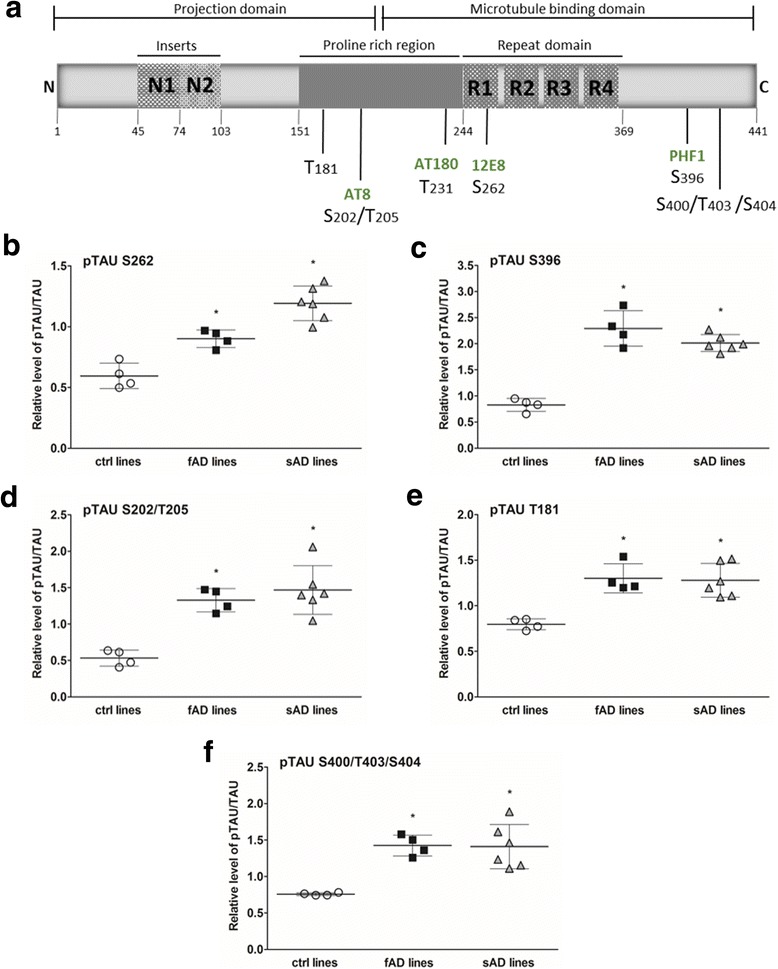
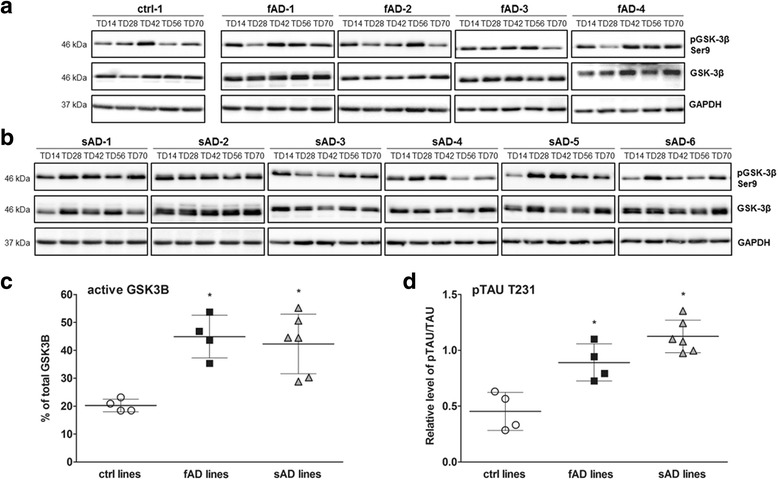
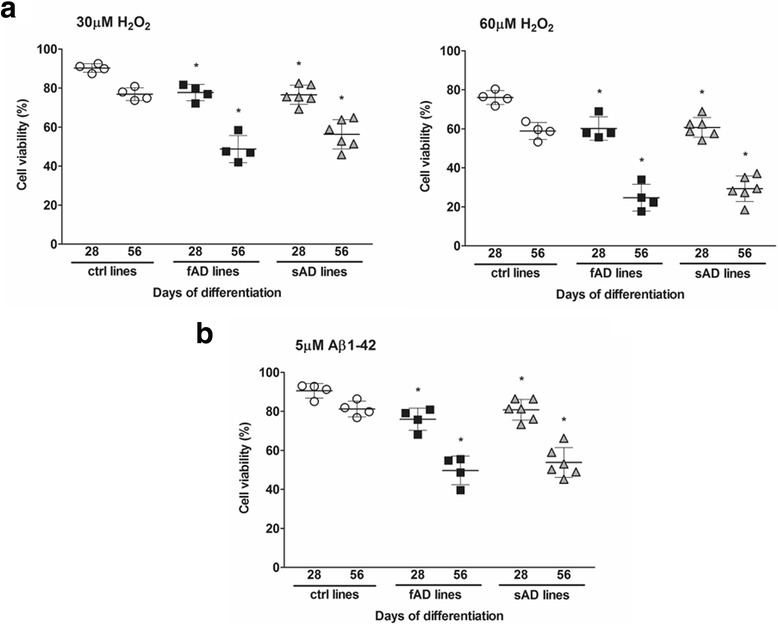
Alzheimer’s disease (AD) is the most common type of dementia, affecting one in eight adults over 65 years of age. The majority of AD cases are sporadic, with unknown etiology, and only 5% of all patients with AD present the familial monogenic form of the disease. In the present study, our aim was to establish an in vitro cell model based on patient-specific human neurons to study the pathomechanism of sporadic AD. We compared neurons derived from induced pluripotent stem cell (iPSC) lines of patients with early-onset familial Alzheimer’s disease (fAD), all caused by mutations in the PSEN1 gene; patients with late-onset sporadic Alzheimer’s disease (sAD); and three control individuals without dementia. The iPSC lines were differentiated toward mature cortical neurons, and AD pathological hallmarks were analyzed by RT-qPCR, enzyme-linked immunosorbent assay, and Western blotting methods. Neurons from patients with fAD and patients with sAD showed increased phosphorylation of TAU protein at all investigated phosphorylation sites. Relative to the control neurons, neurons derived from patients with fAD and patients with sAD exhibited higher levels of extracellular amyloid-β 1–40 (Aβ 1–40 ) and amyloid-β 1–42 (Aβ 1–42 ). However, significantly increased Aβ 1–42 /Aβ 1–40 ratios, which is one of the pathological markers of fAD, were observed only in samples of patients with fAD. Additionally, we detected increased levels of active glycogen synthase kinase 3 β, a physiological kinase of TAU, in neurons derived from AD iPSCs, as well as significant upregulation of amyloid precursor protein (APP) synthesis and APP carboxy-terminal fragment cleavage. Moreover, elevated sensitivity to oxidative stress, as induced by amyloid oligomers or peroxide, was detected in both fAD- and sAD-derived neurons. On the basis of the experiments we performed, we can conclude there is no evident difference except secreted Aβ 1–40 levels in phenotype between fAD and sAD samples. To our knowledge, this is the first study in which the hyperphosphorylation of TAU protein has been compared in fAD and sAD iPSC-derived neurons. Our findings demonstrate that iPSC technology is suitable to model both fAD and sAD and may provide a platform for developing new treatment strategies for these conditions.
Overview
The claims and statistics of this paper haven’t been checked yet.
Run the check — free, no account needed. It reads the open-access text and checks the sources it cites.
Integrity signals
Registry
Cites
Statistics
Figures
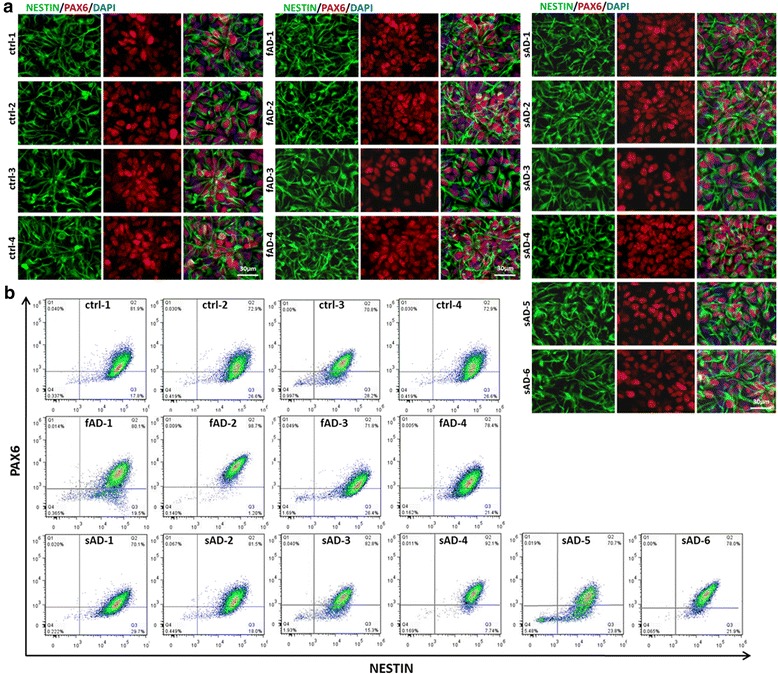
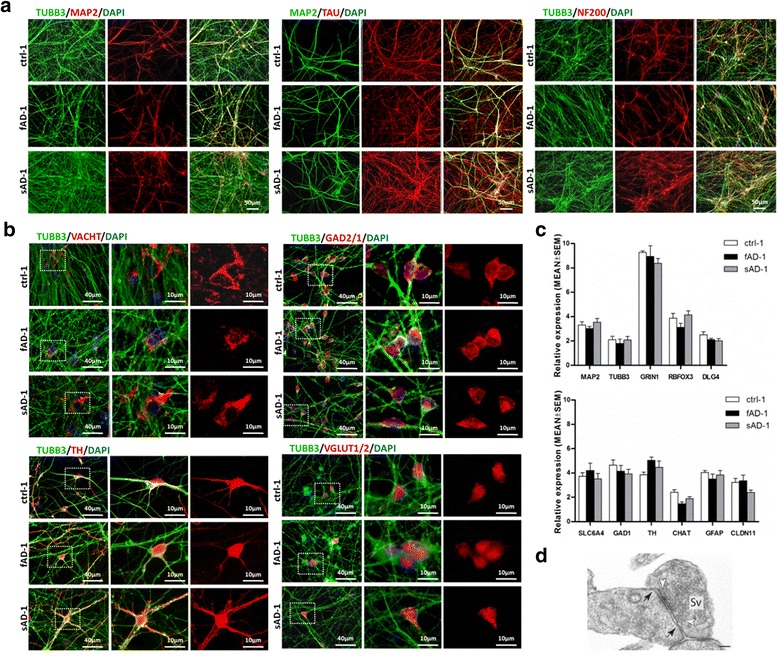
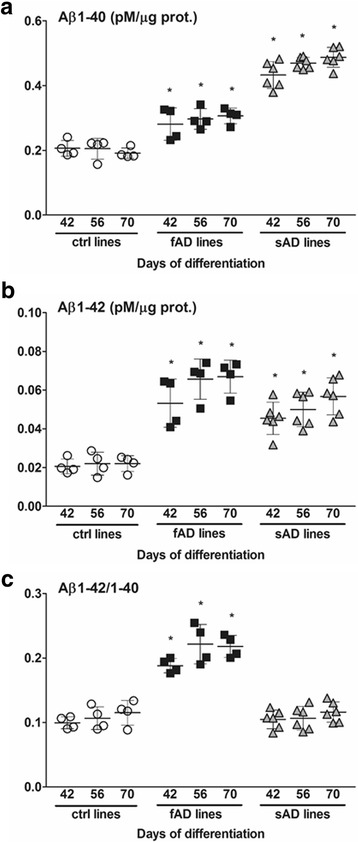
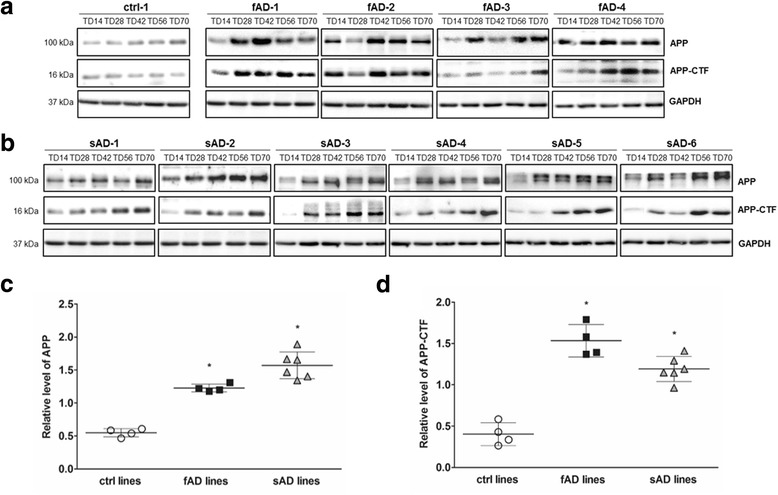
Verification
Claims the paper makes
The claims and statistics of this paper haven’t been checked yet.
Run the check — free, no account needed. It reads the open-access text and checks the sources it cites.
Claims other papers make about this one
Each is checked against this paper’s own text: does it say what the citing paper says it does?
The source backs part of the claim, not all of it — or backs it for a different population, condition or comparison.
In the citing paper
“iPSC-derived neurons from individuals with AD exhibit increased production of Aβ42, active GSK-3β, phosphorylated tau, endosomal abnormalities, and oxidative stress (12–17)”
From Modeling late-onset Alzheimer’s disease neuropathology via direct neuronal reprogramming (2024) · cites this paper as [15]
Experimental — accuracy not yet measuredThe cited source says what the claim attributes to it.
In the citing paper
“neurons derived from iPSCs obtained from sporadic AD cases also show elevated Tau hyperphosphorylation, increased Aβ levels and GSK3β activation44.”
From PLCG2 downregulation impairs synaptic function and increases Alzheimer’s disease hallmarks in neuronal cultures (2026) · cites this paper as [44]
The check wasn’t confident either way, so it gives no verdict — never disputed.
In the citing paper
“but late-stage neuropathological features, such as formation of insoluble tau and neurodegeneration have not been reported.”
From Modeling late-onset Alzheimer’s disease neuropathology via direct neuronal reprogramming (2024) · cites this paper as [15]
Experimental — accuracy not yet measured
Self-check
Percentages, sums and reported differences re-computed from the paper’s own numbers.
The self-check needs the paper’s full text.
Citations
Cites
Fast and accurate short read alignment with Burrows-Wheeler transform
Li, H., & Durbin, R. (2009) · Bioinformatics · doi:10.1093/bioinformatics/btp324 · Cited by 58,607
Richards, S., Aziz, N., Bale, S., Bick, D., Das, S., Gastier-Foster, J., Grody, W. W., Hegde, M., Lyon, E., Spector, E., et al. (2015) · Genetics in Medicine · doi:10.1038/gim.2015.30 · Cited by 32,594
The Genome Analysis Toolkit: A MapReduce framework for analyzing next-generation DNA sequencing data
McKenna, A., Hanna, M., Banks, E., Sivachenko, A., Cibulskis, K., Kernytsky, A., Garimella, K., Altshuler, D., Gabriel, S., Daly, M., et al. (2010) · Genome Research · doi:10.1101/gr.107524.110 · Cited by 27,895
Amyloid oligomers exacerbate tau pathology in a mouse model of tauopathy
Selenica, M.-L. B., Brownlow, M., Jimenez, J. P., Lee, D. C., Pena, G., Dickey, C. A., Gordon, M. N., & Morgan, D. (2013) · Neurodegenerative Diseases · doi:10.1159/000337230 · Cited by 10,359
The amyloid hypothesis of Alzheimer's disease at 25 years
Selkoe, D. J., & Hardy, J. (2016) · EMBO Molecular Medicine · doi:10.15252/emmm.201606210 · Cited by 6,164
Walsh, D. M., Klyubin, I., Fadeeva, J. V., Cullen, W. K., Anwyl, R., Wolfe, M. S., Rowan, M. J., & Selkoe, D. J. (2002) · Nature · doi:10.1038/416535a · Cited by 4,291
Grundke-Iqbal, I., Iqbal, K., Tung, Y. C., Quinlan, M., Wisniewski, H. M., & Binder, L. I. (1986) · Proceedings of the National Academy of Sciences · doi:10.1073/pnas.83.13.4913 · Cited by 3,676
Highly efficient neural conversion of human ES and iPS cells by dual inhibition of SMAD signaling
Chambers, S. M., Fasano, C. A., Papapetrou, E. P., Tomishima, M., Sadelain, M., & Studer, L. (2009) · Nature Biotechnology · doi:10.1038/nbt.1529 · Cited by 3,620
Apolipoprotein E and Alzheimer disease: risk, mechanisms and therapy
Liu, C.-C., Kanekiyo, T., Xu, H., & Bu, G. (2013) · Nature Reviews Neurology · doi:10.1038/nrneurol.2012.263 · Cited by 3,459
Uttara, B., Singh, A., Zamboni, P., & Mahajan, R. (2009) · Current Neuropharmacology · doi:10.2174/157015909787602823 · Cited by 3,378
Research works printed but not linked: 1
- Ferreira ST, Lourenco MV, Oliveira MM, De Felice FG. Soluble amyloid-β oligomers as synaptotoxins leading to cognitive impairment in Alzheimer’s disease. Front Cell Neurosci. 2015;9:191.
Cited by
Sorted by citations
Items 101–200 of 226
Advanced Animal Replacement Testing Strategies Using Stem Cell and Organoids
Lee, C.-J., Nam, Y., Rim, Y. A., & Ju, J. H. (2025) · International Journal of Stem Cells · doi:10.15283/ijsc24118 · Cited by 20
Li, W., Shi, Q., Bai, R., Zeng, J., Lin, L., Dai, X., Huang, Q., & Gong, G. (2025) · Molecular Medicine Reports · doi:10.3892/mmr.2025.13585 · Cited by 20
Bhattacharya, A., Izzo, A., Mollo, N., Napolitano, F., Limone, A., Margheri, F., Mocali, A., Minopoli, G., Bianco, A. L., Maggio, F. D., et al. (2020) · Journal of Personalized Medicine · doi:10.3390/jpm10040232 · Cited by 17
Hawkins, K., & Duchen, M. R. (2019) · World Journal of Stem Cells · doi:10.4252/wjsc.v11.i5.236 · Cited by 18
Zhang, Y., Xie, X., Hu, J., Afreen, K. S., Zhang, C., Zhuge, Q., & Yang, J. (2020) · Frontiers in Neuroscience · doi:10.3389/fnins.2020.546484 · Cited by 16
Chen, C., Lan, Z., Tang, X., Chen, W., Zhou, X. W., Su, H., Su, R., Chen, Z., Chen, H., Guo, Y., et al. (2024) · Annals of Neurology · doi:10.1002/ana.27001 · Cited by 16
Han, F., Liu, C., Huang, J., Chen, J., Wei, C., Geng, X., Liu, Y., Han, D., & Li, M. (2019) · Brain Science Advances · doi:10.1177/2096595819896178 · Cited by 16
Binding of two zinc ions promotes liquid-liquid phase separation of Tau
Yatoui, D., Tsvetkov, P. O., Rocca, R. L., Baksheeva, V. E., Allegro, D., Breuzard, G., Ferracci, G., Byrne, D., & Devred, F. (2022) · International Journal of Biological Macromolecules · doi:10.1016/j.ijbiomac.2022.11.060 · Cited by 16
Yousefi, N., Abdollahii, S., Kouhbanani, M. A. J., & Hassanzadeh, A. (2020) · Journal of Cellular Physiology · doi:10.1002/jcp.29800 · Cited by 17
Biglari, N., Mehdizadeh, A., Mastanabad, M. V., Gharaeikhezri, M. H., Afrakoti, L. G. M. P., Pourbala, H., Yousefi, M., & Soltani‐Zangbar, M. S. (2023) · Pathology - Research and Practice · doi:10.1016/j.prp.2023.154541 · Cited by 15
Human-induced pluripotent stem cells as a model for studying sporadic Alzheimer’s disease
Riemens, R. J. M., Kenis, G., & van den Beucken, T. (2020) · Neurobiology of Learning and Memory · doi:10.1016/j.nlm.2020.107318 · Cited by 16
Mendivil‐Perez, M., Velez‐Pardo, C., Kosik, K. S., Lopera, F. J., & Jiménez-Del-Río, M. (2019) · Neuroscience Letters · doi:10.1016/j.neulet.2019.03.032 · Cited by 15
He, C., Chen, B., Yan, C., & Zhou, X. (2025) · Frontiers in Genome Editing · doi:10.3389/fgeed.2025.1612868 · Cited by 16
Qiu, Q., Shen, L., Jia, L., Wang, Q., Li, F., Li, Y., & Jia, J. (2019) · Journal of Alzheimer s Disease · doi:10.3233/jad-181291 · Cited by 14
Watanabe, H., Imaizumi, K., Cai, T., Zhou, Z., Tomita, T., & Okano, H. (2021) · eNeuro · doi:10.1523/eneuro.0500-20.2021 · Cited by 15
Francistiová, L., Vörös, K., Lovász, Z., Dinnyés, A., & Kobolák, J. (2022) · Frontiers in Molecular Neuroscience · doi:10.3389/fnmol.2021.793769 · Cited by 14
Self-citationChen, S.-D., Li, H., Cui, M., Dong, Q., & Yu, J. (2020) · Expert Opinion on Drug Discovery · doi:10.1080/17460441.2020.1767579 · Cited by 15
Martins, S., Müller‐Schiffmann, A., Erichsen, L., Bohndorf, M., Wruck, W., Sleegers, K., Broeckhoven, C. V., Korth, C., & Adjaye, J. (2020) · International Journal of Molecular Sciences · doi:10.3390/ijms21124516 · Cited by 14
Misfolded protein aggregation and altered cellular pathways in neurodegenerative diseases
Li, H., Yu, Z., & Zhang, W. (2020) · STEMedicine · doi:10.37175/stemedicine.v1i4.63 · Cited by 14
Research models to study lewy body dementia
Boschen, S. L., Mukerjee, A. A., Faroqi, A. H., Rabichow, B. E., & Fryer, J. D. (2025) · Molecular Neurodegeneration · doi:10.1186/s13024-025-00837-w · Cited by 16
Wendt, S., Lin, A. J., Ebert, S. N., Brennan, D. J., Cai, W., Bai, Y., Kong, D. Y., Sorrentino, S., Groten, C. J., Lee, C., et al. (2025) · Journal of Neuroinflammation · doi:10.1186/s12974-025-03433-3 · Cited by 13
Apicidin attenuates memory deficits by reducing the Aβ load in APP / PS1 mice
Luo, B., Chen, J., Zhou, G., Xie, X., Tang, J., Wen, Q., Li, S., Xie, S., Long, Y., Chen, G., et al. (2023) · CNS Neuroscience & Therapeutics · doi:10.1111/cns.14102 · Cited by 12
Alami, M., Zerif, E., Khalil, A., Hajji, N., Ramassamy, C., Lacombe, G., Laurent, B., Cohen, A. A., Witkowski, J. M., Gris, D., et al. (2025) · Journal of Alzheimer s Disease · doi:10.1177/13872877251329474 · Cited by 13
Important advances in Alzheimer’s disease from the use of induced pluripotent stem cells
Majolo, F., Marinowic, D. R., Machado, D. C., & da Costa, J. C. (2019) · Journal of Biomedical Science · doi:10.1186/s12929-019-0501-5 · Cited by 15
Ryu, W., Cohen, B. M., & Sonntag, K. (2021) · Frontiers in Cell and Developmental Biology · doi:10.3389/fcell.2021.697578 · Cited by 14
Kadian, M., Saini, N., Khera, A., & Kumar, A. (2024) · Inflammopharmacology · doi:10.1007/s10787-023-01413-8 · Cited by 12
Cohen, B. M., & Sonntag, K. (2024) · EBioMedicine · doi:10.1016/j.ebiom.2024.105238 · Cited by 13
Cao, Q. C., Meng, T., Man, J., Peng, D., Chen, H., Xiang, Q., Su, Z., Zhang, Q., & Huang, Y. (2019) · Journal of Alzheimer s Disease · doi:10.3233/jad-190458 · Cited by 13
Human brain organoids in Alzheimer’s disease
Kang, Y. J., & Cho, H. (2021) · Organoid · doi:10.51335/organoid.2021.1.e5 · Cited by 13
Benchoua, A., Lasbareilles, M., & Tournois, J. (2021) · Cells · doi:10.3390/cells10123290 · Cited by 14
Current Development of iPSC-Based Modeling in Neurodegenerative Diseases
Guo, X., Wang, X., Wang, J., Ma, M., & Ren, Q. (2025) · International Journal of Molecular Sciences · doi:10.3390/ijms26083774 · Cited by 15
McInvale, J. J., Canoll, P., & Hargus, G. (2024) · Brain Pathology · doi:10.1111/bpa.13231 · Cited by 11
Sollazzo, R., Puma, D. D. L., Aceto, G., Paciello, F., Colussi, C., Vita, M. G., Giuffrè, G. M., Pastore, F., Casamassa, A., Rosati, J. D., et al. (2024) · Alzheimer s Research & Therapy · doi:10.1186/s13195-024-01632-3 · Cited by 10
Tuerxun, M., Muhda, A., & Yin, L. (2021) · Bioengineered · doi:10.1080/21655979.2021.1989261 · Cited by 11
Disease Modeling of Neuropsychiatric Brain Disorders Using Human Stem Cell-Based Neural Models
Kaindl, J., & Winner, B. (2019) · Current topics in behavioral neurosciences · doi:10.1007/7854_2019_111 · Cited by 12
Eglen, R. M., & Reisine, T. (2018) · SLAS TECHNOLOGY · doi:10.1177/2472630318803277 · Cited by 11
Giudice, M. L., Mihalik, B., Turi, Z., Dinnyés, A., & Kobolák, J. (2019) · Journal of Alzheimer s Disease · doi:10.3233/jad-190602 · Cited by 11
Self-citationMa, L., Wei, Q., Jiang, M., Wu, Y., Liu, X., Yang, Q., Bai, Z., & Yang, L. (2025) · International Journal of Molecular Sciences · doi:10.3390/ijms26136105 · Cited by 11
Culibrk, R. A., Ebbert, K. A., Yeisley, D. J., Chen, R., Qureshi, F. A., Hahn, J., & Hahn, M. S. (2024) · Journal of Alzheimer s Disease · doi:10.3233/jad-230600 · Cited by 10
Takeuchi, L. E., Kalia, L. V., & Simmons, C. A. (2025) · Neurobiology of Disease · doi:10.1016/j.nbd.2025.106864 · Cited by 11
Hasan, M. F., & Trushina, E. V. (2022) · Brain Sciences · doi:10.3390/brainsci12050552 · Cited by 10
Youn, K., & Jun, M. (2024) · International Journal of Molecular Sciences · doi:10.3390/ijms251910507 · Cited by 9
Kiris, E. (2021) · Advances in experimental medicine and biology · doi:10.1007/5584_2021_683 · Cited by 9
Current trends and updates in the treatment of Alzheimer's disease
Parikh, N. H., Parikh, P. K., Rao, H. J., Shah, K., Dave, B. P., & Prajapati, B. G. (2024) · Elsevier eBooks · doi:10.1016/b978-0-443-13205-6.00014-5 · Cited by 9
Patient-derived iPSCs, a reliable in vitro model for the investigation of Alzheimer’s disease
Asiamah, E. A., Guo, R., Kong, D., Feng, B., He, J., Zhang, W., Liu, X., Du, X., Ma, Z., Liu, B., et al. (2021) · Reviews in the Neurosciences · doi:10.1515/revneuro-2020-0065 · Cited by 9
Teaching An Old Drug New Tricks: Repositioning Strategies for Spinal Muscular atrophy
Hoolachan, J. M., Sutton, E. R., & Bowerman, M. (2019) · Future Neurology · doi:10.2217/fnl-2019-0006 · Cited by 10
Chong, C., Tan, Y., Tong, J., Ke, M., Zhang, K., Yan, L., Cen, X., Lu, J., Chen, G., Su, H., et al. (2022) · Cell & Bioscience · doi:10.1186/s13578-022-00874-8 · Cited by 8
Robinson, M. J., Newbury, S., Singh, K., Leonenko, Z., & Beazely, M. A. (2023) · Journal of Alzheimer s Disease · doi:10.3233/jad-230753 · Cited by 8
Advances in iPSC Technology in Neural Disease Modeling, Drug Screening, and Therapy
Dai, S., Qiu, L., Veeraraghavan, V. P., Sheu, C., & Mony, U. (2023) · Current Stem Cell Research & Therapy · doi:10.2174/1574888x18666230608105703 · Cited by 8
Genetic landscape of early-onset dementia in Hungary
Csabán, D., Illés, A., Toth-Bencsik, R., Balicza, P., Pentelényi, K., Molnár, V., Gézsi, A., Grosz, Z., Gál, A., Kovacs, T., et al. (2022) · Neurological Sciences · doi:10.1007/s10072-022-06168-8 · Cited by 7
Mikkelsen, R. B., Frederiksen, H. R. S., Gjerris, M., Holst, B., Hyttel, P., Luo, Y., Freude, K., & Sandøe, P. (2019) · The CRISPR Journal · doi:10.1089/crispr.2019.0024 · Cited by 7
Self-citationHuman pluripotent stem cells as a translational toolkit in psychedelic research in vitro
Salerno, J. A., & Rehen, S. K. (2024) · iScience · doi:10.1016/j.isci.2024.109631 · Cited by 6
Rogers, B. (2025) · Alzheimer s & Dementia · doi:10.1002/alz.14564 · Cited by 6
Disease Modeling of Neurodegenerative Disorders Using Direct Neural Reprogramming
Legault, E. M., Bouquety, J., & Drouin‐Ouellet, J. (2022) · Cellular Reprogramming · doi:10.1089/cell.2021.0172 · Cited by 7
Li, Y., Yang, Q., & Yu, Y. (2020) · Medical Science Monitor · doi:10.12659/msm.926295 · Cited by 6
Naffaa, M. M. (2025) · Regenerative medicine reports . · doi:10.4103/regenmed.regenmed-d-25-00013 · Cited by 5
Qin, S.-J., Zeng, Q.-G., Zeng, H.-X., Zeng, H.-X., Wu, Q.-Z., Lv, Y., Dai, J., Dong, G., & Zeng, X. (2025) · Environmental Pollution · doi:10.1016/j.envpol.2024.125601 · Cited by 6
Systems Medicine as a Strategy to Deal with Alzheimer’s Disease
Zeng, X. X., & Zeng, J. (2023) · Journal of Alzheimer s Disease · doi:10.3233/jad-230739 · Cited by 5
The Janus face of CaMKII: from memory consolidation to neurotoxic switch in Alzheimer’s disease
Tang, L., Liu, F., Sun, X., Yang, J., Liu, Y., Pan, X., Hao, L., Lou, F., & Su, J. (2025) · Archives of Toxicology · doi:10.1007/s00204-025-04160-7 · Cited by 5
Modeling neurovascular dysfunction in Alzheimer’s disease using an isogenic brain-chip model
Shen, A. N., Matazel, K. S., Gill, W. D., Ewart, L. C., Daughters, R. S., & Rosas-Hernández, H. (2026) · Fluids and Barriers of the CNS · doi:10.1186/s12987-025-00708-y · Cited by 5
Deng, J., & Gao, X. (2024) · BIO Web of Conferences · doi:10.1051/bioconf/202411103001 · Cited by 4
Pore-former enabled seeding of tau in rats: Alleviation by memantine and lithium chloride
Mietelska‐Porowska, A., Gąsiorowska, A., Pałasz, E., Koss, D. J., Riedel, G., & Niewiadomska, G. (2018) · Journal of Neuroscience Methods · doi:10.1016/j.jneumeth.2018.11.009 · Cited by 4
Siciliano, B., Henkel, N., Ryan, W. G., Imami, A. S., Vergis, J. M., Xu, C., Arvay, T. O., Sahay, S., Pulvender, P., Hamoud, A.-R. A., et al. (2025) · Brain Behavior & Immunity - Health · doi:10.1016/j.bbih.2025.101044 · Cited by 4
The role of PrPc in Alzheimer's disease related Amyloid-β hypothesis: a systematic review
Gomes, T. A. M., Silva, M. P. D. S., Gomes, M. P. S. M., Barh, D., Azevedo, V., & Dutra, J. D. C. F. (2023) · Brain Disorders · doi:10.1016/j.dscb.2023.100098 · Cited by 3
Gupta, A., Ghosh, A., Sharma, N., & Gorain, B. (2025) · Molecular Neurobiology · doi:10.1007/s12035-025-05003-3 · Cited by 4
Induced pluripotent stem cell technology: venturing into the second decade
Shi, Y., Inoue, H., Takahashi, J. B., & Yamanaka, S. (2020) · Elsevier eBooks · doi:10.1016/b978-0-12-818422-6.00095-2 · Cited by 4
Dibutyl phthalate disrupts glycogen synthase kinase 3α essential for sperm motility
Park, S. H., & Gye, M. C. (2024) · Ecotoxicology and Environmental Safety · doi:10.1016/j.ecoenv.2024.115977 · Cited by 3
Ahmad, M., Shafaq, Z., Rajput, A. R., & Bughio, R. (2024) · Journal of Health and Rehabilitation Research · doi:10.61919/jhrr.v4i2.766 · Cited by 5
Live-Cell Imaging of Single Neurotrophin Receptor Molecules on Human Neurons in Alzheimer’s Disease
Barabás, K., Kobolák, J., Godó, S., Ernszt, D., Kecskés, M., Varga, C., Kardos, J., Jánosi, T. Z., Fujiwara, T. K., Kusumi, A., et al. (2021) · International Journal of Molecular Sciences · doi:10.3390/ijms222413260 · Cited by 3
Self-citationIdentification of the three zinc-binding sites on Tau proteinPreprint
Rocca, R. L., Tsvetkov, P. O., Golovin, A. V., Allegro, D., Barbier, P., Malesinski, S., Guerlesquin, F., & Devred, F. (2021) · bioRxiv (Cold Spring Harbor Laboratory) · doi:10.1101/2021.04.23.441079 · Cited by 3
Coulon, A., Rabiller, F., Takalo, M., Roy, A., Pelletier, A., Martiskainen, H., Siedlecki-Wullich, D., Lannette-Weimann, N., Majerníková, N., Grenon, A., et al. (2024) · doi:10.1101/2024.04.29.591575 · Cited by 3
Autar, K., Guo, X., Powell, H., Patel, A., Malik, M., Grillo, M., Akanda, N., Narasimhan, N. S., Bogen, W., Long, C. J., et al. (2025) · Biomedicine & Pharmacotherapy · doi:10.1016/j.biopha.2025.118556 · Cited by 2
Aung, T. L., Aung, Y. W., & Shi, X. (2025) · Biomedical Physics & Engineering Express · doi:10.1088/2057-1976/ae1a8a · Cited by 2
Mapping key mitochondrial genes in Alzheimer’s disease through human tissue and iPSC derived neurons
Dong, D., Ahmed, W., Sagar, R., Boyd, R. J., & Mahairaki, V. (2025) · Scientific Reports · doi:10.1038/s41598-025-27019-4 · Cited by 3
Presenilin-dependent regulation of neuronal tau pathology via the autophagy and proteasome pathways
del Ser‐Badia, A., Soto-Faguás, C. M., Vecino, R., Vendrell, C., Molina‐Porcel, L., Sánchez‐Valle, R., Rodrı́guez-Álvarez, J., Vicario‐Abejón, C., & Saura, C. A. (2026) · Acta Neuropathologica Communications · doi:10.1186/s40478-026-02270-6 · Cited by 3
Predifferentiation Neurotoxicity of GenX Exposure on hiPSC-Derived Cortical Neurons
Wu, S., Xie, J., Zhao, X., Zhao, H., Sánchez, O. F., Yu, S., Rochet, J.-C., Freeman, J. L., & Yuan, C. (2026) · Environmental Science & Technology · doi:10.1021/acs.est.5c13193 · Cited by 2
Evaluation of the impact of iPSC differentiation protocols on transcriptomic signatures
Chandrasekaran, V., Wellens, S., Bourguignon, A., Djidrovski, I., Fransen, L. F. H., Ghosh, S., Mazidi, Z., Murphy, C., Nunes, C., Singh, P., et al. (2024) · Toxicology in Vitro · doi:10.1016/j.tiv.2024.105826 · Cited by 3
Self-citationAlzheimer’s Disease from Modeling to Mechanism Research
Sun, X., & Zhang, W. (2024) · Advances in neurobiology · doi:10.1007/978-3-031-69188-1_7 · Cited by 2
Farahani, N. I., Lin, L. D., Nazir, S., Naderi, A., Rokos, L., McIntosh, A. R., & Julian, L. M. (2025) · Frontiers in Cellular Neuroscience · doi:10.3389/fncel.2024.1478572 · Cited by 4
Schwarze‐Taufiq, T. A., Pranoto, I. K. A., Hui, K., Kinoshita, C., Yu, O., Crane, P. K., Gray, S. L., & Young, J. E. (2025) · Alzheimer s & Dementia Translational Research & Clinical Interventions · doi:10.1002/trc2.70040 · Cited by 3
Rostagno, A. A., & Ghiso, J. A. (2025) · Antioxidants · doi:10.3390/antiox14070812 · Cited by 3
Akkaoui, J., Devadoss, D., Wang, H., Movila, A., & Lakshmana, M. (2025) · Journal of Cellular and Molecular Medicine · doi:10.1111/jcmm.70686 · Cited by 1
Liu, S., Zhao, Y., Su, X., Zhou, C., Yang, P., Lin, Q., Li, S., Tan, H., Wang, Q., Wang, C., et al. (2020) · Stem Cells International · doi:10.1155/2020/8897494 · Cited by 2
Proteostasis and Neurodegeneration
Rahman, M. A., Rahman, M. S., Uddin, M. J., Mamun-Or-Rashid, A. N. M., Rahman, M. R., Pang, M., & Rhim, H. (2020) · Advances in medical diagnosis, treatment, and care (AMDTC) book series · doi:10.4018/978-1-7998-1317-0.ch006 · Cited by 2
Coulon, A., Rabiller, F., Takalo, M., Roy, A., Pelletier, A., Martiskainen, H., Siedlecki-Wullich, D., Lannette-Weimann, N., Majerníková, N., Grenon, A., et al. (2026) · Nature Genetics · doi:10.1038/s41588-026-02709-5 · Cited by 1
“Of note, neurons derived from iPSCs obtained from sporadic AD cases also show elevated Tau hyperphosphorylation, increased Aβ levels and GSK3β activation 44 .”
Carrera, I., Naidoo, V., Corzo, L., Martínez-Iglesias, O. A., & Cacabelos, R. (2025) · Genes · doi:10.3390/genes16101214 · Cited by 1
Disease-associated RNA and protein signatures in iPSC-derived microglia model of Alzheimer’s disease
Wu, W., Choi, E. S., Liu, L., Thamilselvan, V., LI, L., Rippee‐Brooks, M. D., Khatkar, K., Li, D.-Y., McGrath, D., Manning, A. C., et al. (2026) · Frontiers in Neuroscience · doi:10.3389/fnins.2026.1799542 · Cited by 1
Three-dimensional direct neuronal reprogramming for modeling Alzheimer’s disease neuropathology
Sun, Z., Lee, Y., Walker, C. K., Karch, C. M. M., & Yoo, A. S. J. (2026) · Nature Protocols · doi:10.1038/s41596-026-01388-0 · Cited by 1
Alghamdi, H. (2026) · Ageing Research Reviews · doi:10.1016/j.arr.2026.103322 · Cited by 1
Parveen, R., Fatima, M., Shoaib, M., & Tahir, M. N. (2024) · Journal of Health and Rehabilitation Research · doi:10.61919/jhrr.v4i1.720 · Cited by 1
Single cell transcriptomic profiling of tauopathy in a novel 3D neuron-astrocyte coculture modelPreprint
Rickner, H., Jiang, L., Hong, R., O’Neill, N. K., Mojica, C. A., Snyder, B. J., Zhang, L., Shaw, D., Medalla, M., Wolozin, B. L., et al. (2022) · bioRxiv (Cold Spring Harbor Laboratory) · doi:10.1101/2022.05.03.490513 · Cited by 1
New Prospects for Stem Cell Therapy in Alzheimer’s Disease
Jiang, K., Zhu, Y., & Zhang, L. (2021) · IntechOpen eBooks · doi:10.5772/intechopen.100334
Desperation and d'sespoir: gay activism in France
Wharton, S. (1995)
Advantages and limitations of hiPSC-derived neurons for the study of neurodegeneration
Mishra, S., Deursen, C. V., Robert, A., van der Kant, R., & Young, J. E. (2022) · Elsevier eBooks · doi:10.1016/b978-0-12-822277-5.00016-x
Presenilin-dependent regulation of tau pathology via the autophagy/proteasome pathwayPreprint
del Ser‐Badia, A., Soto-Faguás, C. M., Vecino, R., Rodrı́guez-Álvarez, J., Vicario‐Abejón, C., & Saura, C. A. (2023) · bioRxiv (Cold Spring Harbor Laboratory) · doi:10.1101/2023.12.21.572822
Induced-pluripotent stem cells and neuroproteomics as tools for studying neurodegeneration
Brandão‐Teles, C., Zuccoli, G. S., Vrechi, T. A. D. M., Ramos-da-Silva, L., Santos, A. V. S., Crunfli, F., & Martins‐de‐Souza, D. (2024) · Biochemical Society Transactions · doi:10.1042/bst20230341
Roles of Ipsc in Advancing Treatments for Neurological DisordersPreprint
Zhang, X. (2024) · SSRN Electronic Journal · doi:10.2139/ssrn.4818803
Human Induced Pluripotent Stem Cell–Derived Neuronal Cell Cultures in Drug Discovery and Development
Schroeder, O. H.-U., Schultz, L., Knospe, A., Winkler, M., Weiss, D. G., & Jügelt, K. (2024) · Springer eBooks · doi:10.1007/978-3-030-73317-9_82-1
Human Induced Pluripotent Stem Cell–Derived Neuronal Cell Cultures in Drug Discovery and Development
Schroeder, O. H.-U., Schultz, L., Knospe, A., Winkler, M., Weiss, D. G., & Jügelt, K. (2024) · Springer eBooks · doi:10.1007/978-3-031-35529-5_82
Metadata
- Authors
- Ochalek, A., Mihalik, B., Avci, H. X., Chandrasekaran, A., Téglási, A., Bock, I., Giudice, M. L., Táncos, Z., Molnár, K., László, L., Nielsen, J. E., Holst, B., Freude, K., Hyttel, P., Kobolák, J., & Dinnyés, A.
- Affiliations
- BioTalentum (Hungary) (HU)
- University of Szeged (HU)
- Eötvös Loránd University (HU)
- University of Copenhagen (DK)
- Bioneer (Denmark) (DK)
- Magyar Agrár- és Élettudományi Egyetem (HU)
- Corresponding author
- Dinnyés, András
- ORCID
- Venue
- Alzheimer's Research & Therapy
- Published
- 2017-12
- Volume
- 9
- Issue
- 1
- Pages
- 90-90
- ISSN
- 1758-9193 (ISSN-L)
- PMC
- PMC5709977
- OpenAlex
- W2769598455
- Cited by
- 225
- References
- 104
- Citations by year
- 2026: 16 · 2025: 27 · 2024: 28 · 2023: 19 · 2022: 29 · 2021: 25 · 2020: 38 · 2019: 29 · 2018: 13
- FWCI
- 16.19
- Type
- journal article
- Language
- en
- Open access
- gold
- doi.org
- Licence
- cc-by
- Locations
- Alzheimer s Research & Therapy (publishedVersion, cc-by)
- Europe PMC (PubMed Central) (publishedVersion, cc-by)
- PubMed Central (publishedVersion, cc-by)
- PubMed (publishedVersion)
- Research at the University of Copenhagen (University of Copenhagen) (publishedVersion, cc-by)
- DOAJ (DOAJ: Directory of Open Access Journals) (submittedVersion)
- ELTE Digital Institutional Repository (EDIT) (Eötvös Loránd University) (submittedVersion, other-oa)
- Funders
- EU FP7, STEMMAD (PIAPP-GA-2012-324451)
- EU FP7, EpiHealth (HEALTH-2012-F2-278418)
- EU FP7, EpiHealthNet (PITN-GA-2012-317146)
- Richter Gedeon Research Grant (RG-IPI-2013_TP7/026)
- Innovation Fund Denmark (BrainStem 4108-00008B, NeuroStem 4096-00001B)
- Topics
- Life Sciences › Neuroscience › Cellular and Molecular Neuroscience › Alzheimer's disease research and treatments
- Life Sciences › Biochemistry, Genetics and Molecular Biology › Molecular Biology › Pluripotent Stem Cells Research
- Health Sciences › Medicine › Psychiatry and Mental health › Dementia and Cognitive Impairment Research
- Keywords
- sporadic Alzheimer's disease, familial Alzheimer's disease, iPSC-derived neurons, tau hyperphosphorylation, amyloid-beta, amyloid precursor protein, oxidative stress, amyloid oligomers
- MeSH terms
- Glycogen Synthase Kinase 3 beta, Alzheimer Disease, Animals, Cell Differentiation, Cell Line, Transformed, Gene Expression Regulation, Humans, Hydrogen Peroxide, Mutation, Nerve Tissue Proteins, Neurons, Phosphorylation, RNA, Messenger, Time Factors, Amyloid beta-Peptides, Amyloid beta-Protein Precursor, tau Proteins, Oxidative Stress, Presenilin-1, Induced Pluripotent Stem Cells
About these checks
Registry, retraction, Cites and statistics results are computed, not judged, with one exception: a printed reference that no index lists is read once by a model before it counts as a citation error. Claims are extracted by a model and kept only when their quote appears verbatim in the text; each cited source is then checked, with a model’s help, for whether it says what the claim relies on. Those verdicts can be wrong — read the claim’s quote and the cited source before relying on one.
Statistics and arithmetic are recomputed, not judged.
Confidence bands are shown only for fields calibrated on our annotated test set. None is calibrated yet, so no band is shown.
What counts as a claim ›How we measure confidence ›How we check this ›
Are you an author, or do you see a problem with this page? Request a review
