

The DOI matches its Crossref record; 104 of the 104 references it cites were found in a registry or an index.
Neurons derived from sporadic Alzheimer’s disease iPSCs reveal elevated TAU hyperphosphorylation, increased amyloid levels, and GSK3B activation
Open accessAbstract
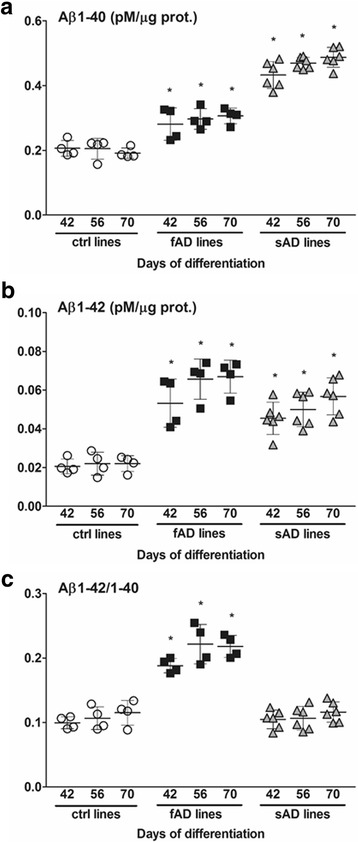
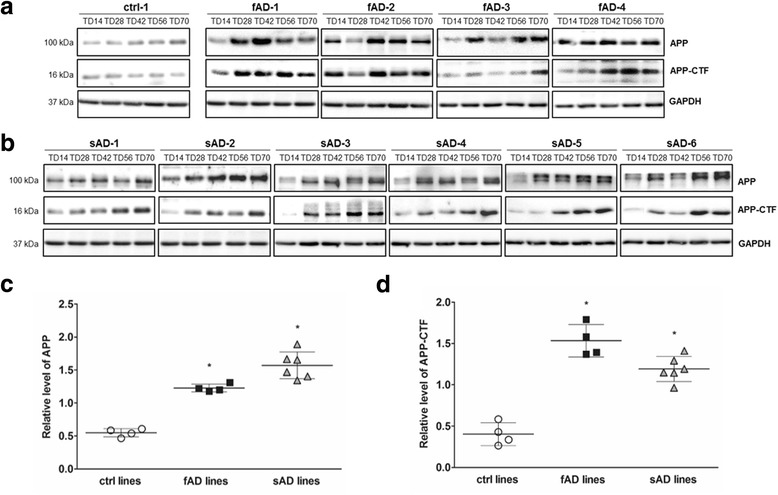
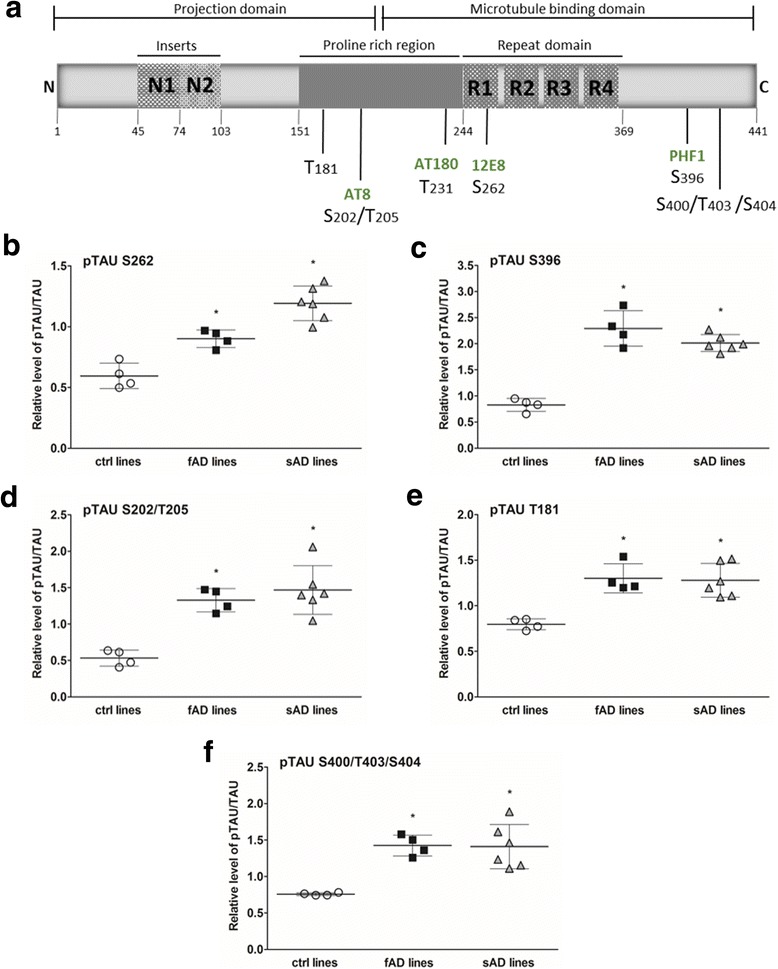
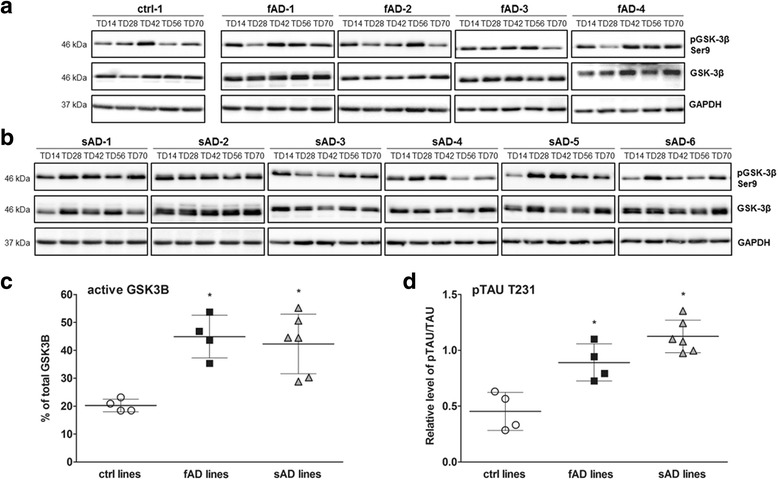
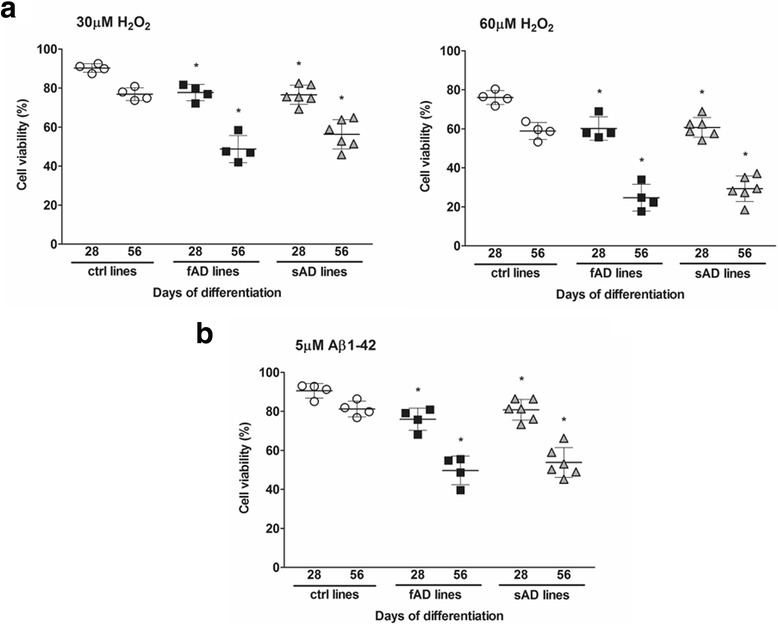
Alzheimer’s disease (AD) is the most common type of dementia, affecting one in eight adults over 65 years of age. The majority of AD cases are sporadic, with unknown etiology, and only 5% of all patients with AD present the familial monogenic form of the disease. In the present study, our aim was to establish an in vitro cell model based on patient-specific human neurons to study the pathomechanism of sporadic AD. We compared neurons derived from induced pluripotent stem cell (iPSC) lines of patients with early-onset familial Alzheimer’s disease (fAD), all caused by mutations in the PSEN1 gene; patients with late-onset sporadic Alzheimer’s disease (sAD); and three control individuals without dementia. The iPSC lines were differentiated toward mature cortical neurons, and AD pathological hallmarks were analyzed by RT-qPCR, enzyme-linked immunosorbent assay, and Western blotting methods. Neurons from patients with fAD and patients with sAD showed increased phosphorylation of TAU protein at all investigated phosphorylation sites. Relative to the control neurons, neurons derived from patients with fAD and patients with sAD exhibited higher levels of extracellular amyloid-β 1–40 (Aβ 1–40 ) and amyloid-β 1–42 (Aβ 1–42 ). However, significantly increased Aβ 1–42 /Aβ 1–40 ratios, which is one of the pathological markers of fAD, were observed only in samples of patients with fAD. Additionally, we detected increased levels of active glycogen synthase kinase 3 β, a physiological kinase of TAU, in neurons derived from AD iPSCs, as well as significant upregulation of amyloid precursor protein (APP) synthesis and APP carboxy-terminal fragment cleavage. Moreover, elevated sensitivity to oxidative stress, as induced by amyloid oligomers or peroxide, was detected in both fAD- and sAD-derived neurons. On the basis of the experiments we performed, we can conclude there is no evident difference except secreted Aβ 1–40 levels in phenotype between fAD and sAD samples. To our knowledge, this is the first study in which the hyperphosphorylation of TAU protein has been compared in fAD and sAD iPSC-derived neurons. Our findings demonstrate that iPSC technology is suitable to model both fAD and sAD and may provide a platform for developing new treatment strategies for these conditions.
Overview
The claims and statistics of this paper haven’t been checked yet.
Run the check — free, no account needed. It reads the open-access text and checks the sources it cites.
Integrity signals
Registry
Cites
Statistics
Figures
Verification
Claims the paper makes
The claims and statistics of this paper haven’t been checked yet.
Run the check — free, no account needed. It reads the open-access text and checks the sources it cites.
Claims other papers make about this one
Each is checked against this paper’s own text: does it say what the citing paper says it does?
The source backs part of the claim, not all of it — or backs it for a different population, condition or comparison.
In the citing paper
“iPSC-derived neurons from individuals with AD exhibit increased production of Aβ42, active GSK-3β, phosphorylated tau, endosomal abnormalities, and oxidative stress (12–17)”
From Modeling late-onset Alzheimer’s disease neuropathology via direct neuronal reprogramming (2024) · cites this paper as [15]
Experimental — accuracy not yet measuredThe cited source says what the claim attributes to it.
In the citing paper
“neurons derived from iPSCs obtained from sporadic AD cases also show elevated Tau hyperphosphorylation, increased Aβ levels and GSK3β activation44.”
From PLCG2 downregulation impairs synaptic function and increases Alzheimer’s disease hallmarks in neuronal cultures (2026) · cites this paper as [44]
The check wasn’t confident either way, so it gives no verdict — never disputed.
In the citing paper
“but late-stage neuropathological features, such as formation of insoluble tau and neurodegeneration have not been reported.”
From Modeling late-onset Alzheimer’s disease neuropathology via direct neuronal reprogramming (2024) · cites this paper as [15]
Experimental — accuracy not yet measured
Self-check
Percentages, sums and reported differences re-computed from the paper’s own numbers.
The self-check needs the paper’s full text.
Citations
Cites
Fast and accurate short read alignment with Burrows-Wheeler transform
Li, H., & Durbin, R. (2009) · Bioinformatics · doi:10.1093/bioinformatics/btp324 · Cited by 58,607
Richards, S., Aziz, N., Bale, S., Bick, D., Das, S., Gastier-Foster, J., Grody, W. W., Hegde, M., Lyon, E., Spector, E., et al. (2015) · Genetics in Medicine · doi:10.1038/gim.2015.30 · Cited by 32,594
The Genome Analysis Toolkit: A MapReduce framework for analyzing next-generation DNA sequencing data
McKenna, A., Hanna, M., Banks, E., Sivachenko, A., Cibulskis, K., Kernytsky, A., Garimella, K., Altshuler, D., Gabriel, S., Daly, M., et al. (2010) · Genome Research · doi:10.1101/gr.107524.110 · Cited by 27,895
Amyloid oligomers exacerbate tau pathology in a mouse model of tauopathy
Selenica, M.-L. B., Brownlow, M., Jimenez, J. P., Lee, D. C., Pena, G., Dickey, C. A., Gordon, M. N., & Morgan, D. (2013) · Neurodegenerative Diseases · doi:10.1159/000337230 · Cited by 10,359
The amyloid hypothesis of Alzheimer's disease at 25 years
Selkoe, D. J., & Hardy, J. (2016) · EMBO Molecular Medicine · doi:10.15252/emmm.201606210 · Cited by 6,164
Walsh, D. M., Klyubin, I., Fadeeva, J. V., Cullen, W. K., Anwyl, R., Wolfe, M. S., Rowan, M. J., & Selkoe, D. J. (2002) · Nature · doi:10.1038/416535a · Cited by 4,291
Grundke-Iqbal, I., Iqbal, K., Tung, Y. C., Quinlan, M., Wisniewski, H. M., & Binder, L. I. (1986) · Proceedings of the National Academy of Sciences · doi:10.1073/pnas.83.13.4913 · Cited by 3,676
Highly efficient neural conversion of human ES and iPS cells by dual inhibition of SMAD signaling
Chambers, S. M., Fasano, C. A., Papapetrou, E. P., Tomishima, M., Sadelain, M., & Studer, L. (2009) · Nature Biotechnology · doi:10.1038/nbt.1529 · Cited by 3,620
Apolipoprotein E and Alzheimer disease: risk, mechanisms and therapy
Liu, C.-C., Kanekiyo, T., Xu, H., & Bu, G. (2013) · Nature Reviews Neurology · doi:10.1038/nrneurol.2012.263 · Cited by 3,459
Uttara, B., Singh, A., Zamboni, P., & Mahajan, R. (2009) · Current Neuropharmacology · doi:10.2174/157015909787602823 · Cited by 3,378
Research works printed but not linked: 1
- Ferreira ST, Lourenco MV, Oliveira MM, De Felice FG. Soluble amyloid-β oligomers as synaptotoxins leading to cognitive impairment in Alzheimer’s disease. Front Cell Neurosci. 2015;9:191.
Cited by
Sorted by citations
The Amyloid-β Oligomer Hypothesis: Beginning of the Third Decade
Cline, E. N., Bicca, M. A., Viola, K. L., & Klein, W. L. (2018) · Journal of Alzheimer's Disease · doi:10.3233/jad-179941 · Cited by 870
Modeling Alzheimer’s disease with iPSC-derived brain cells
Penney, J., Ralvenius, W. T., & Tsai, L.-H. (2020) · Molecular Psychiatry · doi:10.1038/s41380-019-0468-3 · Cited by 471
Zhao, J., Fu, Y., Yamazaki, Y., Ren, Y., Davis, M. D., Liu, C.-C., Lu, W., Wang, X., Chen, K., Cherukuri, Y., et al. (2020) · Nature Communications · doi:10.1038/s41467-020-19264-0 · Cited by 374
van der Kant, R., Langness, V. F., Herrera, C. M., Williams, D. A., Fong, L. K., Leestemaker, Y., Steenvoorden, E., Rynearson, K. D., Brouwers, J. F., Helms, J. B., et al. (2019) · Cell Stem Cell · doi:10.1016/j.stem.2018.12.013 · Cited by 350
Shaping the Nrf2-ARE-related pathways in Alzheimer’s and Parkinson’s diseases
Fão, L., Mota, S. I., & Rego, A. C. (2019) · Ageing Research Reviews · doi:10.1016/j.arr.2019.100942 · Cited by 281
Mitochondria as Potential Targets in Alzheimer Disease Therapy: An Update
Cenini, G., & Voos, W. (2019) · Frontiers in Pharmacology · doi:10.3389/fphar.2019.00902 · Cited by 257
Nrf2: a dark horse in Alzheimer's disease treatment
Osama, A., Zhang, J., Yao, J., Yao, X., & Fang, J. (2020) · Ageing Research Reviews · doi:10.1016/j.arr.2020.101206 · Cited by 264
Janczura, K. J., Volmar, C.-H., Sartor, G. C., Rao, S. J., Ricciardi, N. R., Lambert, G., Brothers, S. P., & Wahlestedt, C. (2018) · Proceedings of the National Academy of Sciences · doi:10.1073/pnas.1805436115 · Cited by 183
RetractedAdult hippocampal neurogenesis in Alzheimer’s disease: A roadmap to clinical relevance
Salta, E., Lazarov, O., Fitzsimons, C. P., Tanzi, R. E., Lucassen, P. J., & Choi, S. H. (2023) · Cell stem cell · doi:10.1016/j.stem.2023.01.002 · Cited by 171
Kwak, S. S., Washicosky, K. J., Brand, E., von Maydell, D., Aronson, J., Kim, S., Capen, D. E., Cetinbas, M., Sadreyev, R., Ning, S., et al. (2020) · Nature Communications · doi:10.1038/s41467-020-15120-3 · Cited by 151
Stem cell therapy for Alzheimer's disease
Liu, X., Yang, L.-P., & Zhao, L. (2020) · World Journal of Stem Cells · doi:10.4252/wjsc.v12.i8.787 · Cited by 162
Arber, C., Toombs, J., Lovejoy, C., Ryan, N. S., Paterson, R. W., Willumsen, N., Gkanatsiou, E., Portelius, E., Blennow, K., Heslegrave, A., et al. (2020) · Molecular Psychiatry · doi:10.1038/s41380-019-0410-8 · Cited by 148
Redox signaling at the crossroads of human health and disease
Zuo, J., Zhang, Z., Luo, M., Zhou, L., Nice, E. C., Zhang, W., Wang, C., & Huang, C. (2022) · MedComm · doi:10.1002/mco2.127 · Cited by 123
Logan, S., Arzua, T., Canfield, S. G., Seminary, E. R., Sison, S. L., Ebert, A. D., & Bai, X. (2019) · Comprehensive physiology · doi:10.1002/cphy.c180025 · Cited by 143
Ma, Y., Deng, C., Zhou, Y., Zhang, Y., Qiu, F., Jiang, D., Zheng, G., Li, J., Shuai, J., Zhang, Y., et al. (2023) · Cell Genomics · doi:10.1016/j.xgen.2023.100383 · Cited by 113
Insights into Disease-Associated Tau Impact on Mitochondria
Szabo, L., Eckert, A., & Grimm, A. (2020) · International Journal of Molecular Sciences · doi:10.3390/ijms21176344 · Cited by 107
Barák, M., Fedorová, V., Pospíšilová, V., Raška, J., Vochyánová, S., Sedmík, J., Hříbková, H., Klímová, H., Váňová, T., & Bohačiaková, D. (2022) · Stem Cell Reviews and Reports · doi:10.1007/s12015-021-10254-3 · Cited by 102
Zeng, P. H., Wang, X., Ye, C., Su, H.-F., & Tian, Q. (2021) · International Journal of Molecular Sciences · doi:10.3390/ijms22073612 · Cited by 87
Candido, S., Lupo, G., Pennisi, M., Basile, M. S., Anfuso, C. D., Petralia, M. C., Gattuso, G., Vivarelli, S., Spandidos, D. A., Libra, M., et al. (2019) · Oncology Reports · doi:10.3892/or.2019.7215 · Cited by 86
Modeling late-onset Alzheimer’s disease neuropathology via direct neuronal reprogramming
Sun, Z., Kwon, J.-S., Ren, Y., Chen, S., Walker, C. K., Lu, X., Cates, K., Karahan, H., Sviben, S., Fitzpatrick, J. A. J., et al. (2024) · Science · doi:10.1126/science.adl2992 · Cited by 77
Wu, Y., Chiu, F., Yeh, C.-S., & Kuo, H. (2019) · Open Biology · doi:10.1098/rsob.180177 · Cited by 78
Mesenchymal Stem Cell Therapy and Alzheimer’s Disease: Current Status and Future Perspectives
Kim, J., Lee, Y., Lee, S., Kim, K., Song, M., & Lee, J. (2020) · Journal of Alzheimer's Disease · doi:10.3233/jad-200219 · Cited by 73
Guha, S. K., Johnson, G. V. W., & Nehrke, K. W. (2020) · Molecular Neurobiology · doi:10.1007/s12035-020-02084-0 · Cited by 77
The Role of P2X7 Receptor in Alzheimer’s Disease
Francistiová, L., Bianchi, C., Lauro, C. D., Sebastián‐Serrano, Á., de Diego-García, L., Kobolák, J., Dinnyés, A., & Díaz-Hernández, M. (2020) · Frontiers in Molecular Neuroscience · doi:10.3389/fnmol.2020.00094 · Cited by 73
Self-citationWilliams, G. H., Gatt, A. P., Clarke, E. E., Corcoran, J. P. T., Doherty, P., Chambers, D. J., & Ballard, C. G. (2019) · Translational Psychiatry · doi:10.1038/s41398-019-0555-x · Cited by 66
Jiang, H., Liu, J., Guo, S., Zeng, L., Cai, Z., Zhang, J., Wang, L., Li, Z., & Liu, R. (2022) · Molecular Therapy — Nucleic Acids · doi:10.1016/j.omtn.2022.04.008 · Cited by 72
Harberts, J. I., Fendler, C., Teuber, J., Siegmund, M., Trenkle, A. D. S., Rieck, N., Wolpert, M., Zierold, R., & Blick, R. H. (2020) · ACS Nano · doi:10.1021/acsnano.0c04640 · Cited by 68
Staicu, C. E., Jipa, F., Axente, E., Radu, M., Radu, B. M., & Sima, F. (2021) · Biomolecules · doi:10.3390/biom11060916 · Cited by 65
The future of stem cell therapies of Alzheimer’s disease
Wang, Z., Wang, Z.-T., Sun, Y., Tan, L., & Yu, J. (2022) · Ageing Research Reviews · doi:10.1016/j.arr.2022.101655 · Cited by 62
Stathas, S., Alvarez, V. E., Xia, W., Nicks, R., Meng, G., Daley, S. A., Pothast, M. J., Shah, A., Kelley, H. J., Esnault, C. D., et al. (2021) · Alzheimer s & Dementia · doi:10.1002/alz.12502 · Cited by 62
Ye, C., Liang, Y., Chen, Y., Xiong, Y., She, Y., Zhong, X., Chen, H., & Huang, M. (2021) · Cells · doi:10.3390/cells10051161 · Cited by 60
Dissecting Alzheimer's disease pathogenesis in human 2D and 3D models
Cenini, G., Hebisch, M., Iefremova, V., Flitsch, L. J., Breitkreuz, Y., Tanzi, R. E., Kim, D. Y., Peitz, M., & Brüstle, O. (2020) · Molecular and Cellular Neuroscience · doi:10.1016/j.mcn.2020.103568 · Cited by 60
Garcia, G., Pinto, S., Ferreira, S., Lopes, D., Serrador, M. J., Fernandes, A., Vaz, A. R., Mendonça, A. D., Edenhofer, F., Malm, T., et al. (2022) · Cells · doi:10.3390/cells11213377 · Cited by 55
Significance of native PLGA nanoparticles in the treatment of Alzheimer's disease pathology
Anand, B. G., Wu, Q., Nakhaei‐Nejad, M., Karthivashan, G., Dorosh, L., Amidian, S., Dahal, A., Li, X., Stepanova, M., Wille, H., et al. (2022) · Bioactive Materials · doi:10.1016/j.bioactmat.2022.05.030 · Cited by 57
Aulston, B. D., Liu, Q., Mante, M., Florio, J. B., Rissman, R. A., & Yuan, S. H. (2019) · Journal of Alzheimer s Disease · doi:10.3233/jad-190656 · Cited by 55
Modeling Brain Disorders Using Induced Pluripotent Stem CellsPreprint
Vadodaria, K. C., Jones, J. R., Linker, S. B., & Gage, F. H. (2019) · Cold Spring Harbor Perspectives in Biology · doi:10.1101/cshperspect.a035659 · Cited by 52
ACU193: An Immunotherapeutic Poised to Test the Amyloid β Oligomer Hypothesis of Alzheimer’s Disease
Krafft, G. A., Jerecı̀ć, J., Siemers, E., & Cline, E. N. (2022) · Frontiers in Neuroscience · doi:10.3389/fnins.2022.848215 · Cited by 54
Amyloid precursor protein glycosylation is altered in the brain of patients with Alzheimer’s disease
Boix, C. P., López‐Font, I., Cuchillo‐Ibáñez, I., & Sáez‐Valero, J. (2020) · Alzheimer s Research & Therapy · doi:10.1186/s13195-020-00664-9 · Cited by 57
Alquezar, C., Felix, J. B., McCandlish, E., Buckley, B. T., Caparros-Lefebvre, D., Karch, C. M., Golbe, L. I., & Kao, A. W. (2020) · Scientific Reports · doi:10.1038/s41598-019-56930-w · Cited by 49
Stem Cell Therapy for Alzheimer's Disease.
Han, F., Bi, J.-Z., Qiao, L.-Y., & Arancio, O. (2020) · Advances in Experimental Medicine and Biology · doi:10.1007/978-981-15-4370-8_4 · Cited by 19
The multifaceted role of WNT signaling in Alzheimer’s disease onset and age-related progression.
Kostes, W. W., & Brafman, D. A. (2023) · Cells · doi:10.3390/cells12081204 · Cited by 43
Tajiri, S., Yamanaka, S., Fujimoto, T., Matsumoto, K., Taguchi, A., Nishinakamura, R., Okano, H. J., & Yokoo, T. (2018) · Scientific Reports · doi:10.1038/s41598-018-33256-7 · Cited by 43
Zinc Induces Temperature-Dependent Reversible Self-Assembly of Tau
Roman, A. Y., Devred, F., Byrne, D., Rocca, R. L., Ninkina, N. N., Peyrot, V., & Tsvetkov, P. O. (2018) · Journal of Molecular Biology · doi:10.1016/j.jmb.2018.12.008 · Cited by 43
Liste, I., Coronel, R., Palmer, C., Bernabeu-Zornoza, A., Monteagudo, M., Rosca, A., & Zambrano, A. (2019) · Neural Regeneration Research · doi:10.4103/1673-5374.257511 · Cited by 48
Raman, S., Brookhouser, N., & Brafman, D. A. (2020) · Neurobiology of Disease · doi:10.1016/j.nbd.2020.104788 · Cited by 41
Developmental neurotoxicity of PFOA exposure on hiPSC-derived cortical neurons
Wu, S., Xie, J., Zhao, H., Zhao, X., Sánchez, O. F., Rochet, J., Freeman, J. L., & Yuan, C. (2024) · Environment International · doi:10.1016/j.envint.2024.108914 · Cited by 41
RETRACTED: Osthole attenuates APP-induced Alzheimer's disease through up-regulating miRNA-101a-3p
Lin, Y., Liang, X., Yao, Y., Xiao, H., Shi, Y., & Yang, J. (2019) · Life Sciences · doi:10.1016/j.lfs.2019.04.004 · Cited by 41
RetractedStem Cell Therapies in Alzheimer’s Disease: Applications for Disease Modeling
Si, Z., & Wang, X. (2021) · Journal of Pharmacology and Experimental Therapeutics · doi:10.1124/jpet.120.000324 · Cited by 42
Presenilin mutations and their impact on neuronal differentiation in Alzheimer’s disease
Canales-Aguirre, A. A., Hernández-Sapiéns, M. A., Reza-Zaldívar, E. E., Márquez-Aguirre, A. L., Gómez‐Pinedo, U., Matías‐Guiu, J., Cevallos, R. R., Mateos‐Díaz, J. C., & Sánchez-González, V. (2021) · Neural Regeneration Research · doi:10.4103/1673-5374.313016 · Cited by 41
Single cell transcriptomic profiling of a neuron-astrocyte assembloid tauopathy model
Rickner, H., Jiang, L., Hong, R., O’Neill, N. K., Mojica, C. A., Snyder, B. J., Zhang, L., Shaw, D., Medalla, M., Wolozin, B. L., et al. (2022) · Nature Communications · doi:10.1038/s41467-022-34005-1 · Cited by 43
Organoid intelligence (OI) – The ultimate functionality of a brain microphysiological system
Smirnova, L. (2023) · ALTEX · doi:10.14573/altex.2303261 · Cited by 45
Using induced pluripotent stem cell neuronal models to study neurodegenerative diseases
Zhang, X., Hu, D., Shang, Y., & Qi, X. (2019) · Biochimica et Biophysica Acta (BBA) - Molecular Basis of Disease · doi:10.1016/j.bbadis.2019.03.004 · Cited by 36
Scuto, M. C., Modafferi, S., Rampulla, F., Zimbone, V., Tomasello, M., Spanò, S. M., Ontario, M. L., Palmeri, A., Salinaro, A. T., Siracusa, R., et al. (2022) · Mechanisms of Ageing and Development · doi:10.1016/j.mad.2022.111686 · Cited by 40
Chen, L., Pan, H., Bai, Y., Li, H., Yang, W., Lin, Z., Cui, W., & Xian, Y. (2020) · Psychopharmacology · doi:10.1007/s00213-020-05522-y · Cited by 38
TIP60 in aging and neurodegeneration
Li, Z., & Rasmussen, L. J. (2020) · Ageing Research Reviews · doi:10.1016/j.arr.2020.101195 · Cited by 37
Modelling Sporadic Alzheimer’s Disease Using Induced Pluripotent Stem Cells
Rowland, H. A., Hooper, N. M., & Kellett, K. A. B. (2018) · Neurochemical Research · doi:10.1007/s11064-018-2663-z · Cited by 38
Modeling Alzheimer’s disease with human iPS cells: advancements, lessons, and applications
Essayan-Perez, S., Zhou, B., Nabet, A. M., Wernig, M., & Huang, Y. A. (2019) · Neurobiology of Disease · doi:10.1016/j.nbd.2019.104503 · Cited by 40
Strategies for modeling aging and age-related diseases
Jothi, D., & Kulka, L. A. M. (2024) · npj Aging · doi:10.1038/s41514-024-00161-5 · Cited by 39
Wang, J., Fourrière, L., & Gleeson, P. A. (2020) · Frontiers in Molecular Neuroscience · doi:10.3389/fnmol.2020.597391 · Cited by 36
Jacquet, A. D. R., Denis, H. L., Cicchetti, F., & Alpaugh, M. (2021) · Molecular Psychiatry · doi:10.1038/s41380-020-00999-7 · Cited by 36
Korhonen, P., Malm, T., & White, A. R. (2018) · Neurochemistry International · doi:10.1016/j.neuint.2018.08.012 · Cited by 34
The application of in vitro ‐derived human neurons in neurodegenerative disease modeling
D’Souza, G. X., Rose, S. E., Knupp, A., Nicholson, D. A., Keene, C. D., & Young, J. E. (2020) · Journal of Neuroscience Research · doi:10.1002/jnr.24615 · Cited by 36
Shang, Y., Liu, M., Wang, T., Wang, L., He, H., Zhong, Y., Qian, G., An, J., Zhu, T., Qiu, X., et al. (2018) · Environmental Pollution · doi:10.1016/j.envpol.2018.12.080 · Cited by 34
Alzheimer’s in a dish – induced pluripotent stem cell-based disease modeling
de Leeuw, S., & Tackenberg, C. (2019) · Translational Neurodegeneration · doi:10.1186/s40035-019-0161-0 · Cited by 31
Pathogenic Tau Causes a Toxic Depletion of Nuclear Calcium
Mahoney, R. E., Ochoa, E., Ramirez, P., Miller, H. E., Beckmann, A., Zuniga, G., Dobrowolski, R., & Frost, B. E. (2020) · Cell Reports · doi:10.1016/j.celrep.2020.107900 · Cited by 33
Freeman, J. L., & Kiper, K. (2021) · Current Neuropharmacology · doi:10.2174/1570159x19666210524155944 · Cited by 33
iPSC Modeling of Presenilin1 Mutation in Alzheimer's Disease with Cerebellar Ataxia
Li, L., Roh, J. H., Chang, E. H., Lee, Y. K., Lee, S., Kim, M., Koh, W., Chang, J. W., Kim, H. J., Nakanishi, M., et al. (2018) · Experimental Neurobiology · doi:10.5607/en.2018.27.5.350 · Cited by 32
Soto‐Mercado, V., Mendivil‐Perez, M., Velez‐Pardo, C., Lopera, F. J., & Jiménez-Del-Río, M. (2020) · PLoS ONE · doi:10.1371/journal.pone.0221669 · Cited by 33
Aversano, S., Caiazza, C., & Caiazzo, M. (2022) · Frontiers in Aging Neuroscience · doi:10.3389/fnagi.2022.1069482 · Cited by 33
On the Common Journey of Neural Cells through Ischemic Brain Injury and Alzheimer’s Disease
Kriška, J., Heřmanová, Z., Knotek, T., Turečková, J., & Anděrová, M. (2021) · International Journal of Molecular Sciences · doi:10.3390/ijms22189689 · Cited by 33
Lv, S., He, E., Luo, J., Liu, Y., Liang, W. J., Xu, S., Zhang, K., Yang, Y. F., Wang, M., Song, Y., et al. (2023) · Advanced Science · doi:10.1002/advs.202301828 · Cited by 32
Wu, Q., Karthivashan, G., Nakhaei‐Nejad, M., Anand, B. G., Giuliani, F., & Kar, S. (2022) · International Journal of Biological Macromolecules · doi:10.1016/j.ijbiomac.2022.08.148 · Cited by 30
Alzheimer's disease and synapse Loss: What can we learn from induced pluripotent stem Cells?
Rodríguez-Jiménez, F. J., Ureña‐Peralta, J. R., Jendelová, P., & Erceg, S. (2023) · Journal of Advanced Research · doi:10.1016/j.jare.2023.01.006 · Cited by 33
Bejoy, J., Song, L., Wang, Z., Sang, Q. A., Zhou, Y., & Li, Y. (2018) · ACS Biomaterials Science & Engineering · doi:10.1021/acsbiomaterials.8b00021 · Cited by 31
Caneus, J., Akanda, N., Rumsey, J. W., Guo, X., Jackson, M., Long, C. J., Sommerhage, F., Georgieva, S., Kanaan, N. M., Morgan, D., et al. (2020) · Alzheimer s & Dementia Translational Research & Clinical Interventions · doi:10.1002/trc2.12029 · Cited by 29
Emerging hiPSC Models for Drug Discovery in Neurodegenerative Diseases
Trudler, D., Ghatak, S., & Lipton, S. A. (2021) · International Journal of Molecular Sciences · doi:10.3390/ijms22158196 · Cited by 30
Cerebral Organoids as an Experimental Platform for Human Neurogenomics
Nowakowski, T. J., & Salama, S. R. (2022) · Cells · doi:10.3390/cells11182803 · Cited by 27
Xie, J., Wu, S., Szadowski, H., Min, S., Yang, Y., Bowman, A. B., Rochet, J., Freeman, J. L., & Yuan, C. (2023) · Journal of Biological Chemistry · doi:10.1016/j.jbc.2023.105023 · Cited by 27
Tideglusib Rescues Neurite Pathology of SPG11 iPSC Derived Cortical Neurons
Pozner, T., Schray, A., Regensburger, M., Lie, D. C., Schlötzer-Schrehardt, U. M., Winkler, J., Turan, S., & Winner, B. (2018) · Frontiers in Neuroscience · doi:10.3389/fnins.2018.00914 · Cited by 27
The Breakthroughs and Caveats of Using Human Pluripotent Stem Cells in Modeling Alzheimer’s Disease
Bendtsen, K. M., & Hall, V. J. (2023) · Cells · doi:10.3390/cells12030420 · Cited by 30
Battaglia, C., Venturin, M., Šojić, A., Jesuthasan, N., Orro, A., Spinelli, R., Musicco, M., Bellis, G. D., & Adorni, F. (2019) · Frontiers in Genetics · doi:10.3389/fgene.2019.00846 · Cited by 26
Harberts, J. I., Haferkamp, U., Haugg, S., Fendler, C., Lam, D. S. C., Zierold, R., Pleß, O., & Blick, R. H. (2020) · Biomaterials Science · doi:10.1039/d0bm00182a · Cited by 25
Novel test strategies for in vitro seizure liability assessment
Tukker, A. M., & Westerink, R. H. S. (2021) · Expert Opinion on Drug Metabolism & Toxicology · doi:10.1080/17425255.2021.1876026 · Cited by 27
Passive immunization against phosphorylated tau improves features of Huntington's disease pathology
Alpaugh, M., Masnata, M., de Rus Jacquet, A., Lepinay, E., Denis, H. L., Saint-Pierre, M., Davies, P., Planel, E., & Cicchetti, F. (2022) · Molecular Therapy · doi:10.1016/j.ymthe.2022.01.020 · Cited by 25
Complexity of Sex Differences and Their Impact on Alzheimer’s Disease
Kadlecová, M., Freude, K., & Haukedal, H. (2023) · Biomedicines · doi:10.3390/biomedicines11051261 · Cited by 27
Self-citationThe Use of Patient-Derived Induced Pluripotent Stem Cells for Alzheimer’s Disease Modeling
Lee, C., Willerth, S. M., & Nygaard, H. B. (2020) · Progress in Neurobiology · doi:10.1016/j.pneurobio.2020.101804 · Cited by 24
Cell type and sex specific mitochondrial phenotypes in iPSC derived models of Alzheimer’s disease
Flannagan, K., Stopperan, J. A., Hauger, B. M., Troutwine, B., Lysaker, C. R., Strope, T. A., Csikós, V., Gilmore, C. A., Swerdlow, N., Draper, J. M., et al. (2023) · Frontiers in Molecular Neuroscience · doi:10.3389/fnmol.2023.1201015 · Cited by 24
Kang, T., Han, Z., Zhu, L., & Cao, B. (2024) · European journal of medical research · doi:10.1186/s40001-024-01677-y · Cited by 21
Schrank, S., McDaid, J., Briggs, C. A., Mustaly-Kalimi, S., Brinks, D., Houcek, A., Singer, O., Bottero, V., Marr, R. A., & Stutzmann, G. E. (2020) · International Journal of Molecular Sciences · doi:10.3390/ijms21031030 · Cited by 22
Identification of the three zinc-binding sites on tau protein
Rocca, R. L., Tsvetkov, P. O., Golovin, A. V., Allegro, D., Barbier, P., Malesinski, S., Guerlesquin, F., & Devred, F. (2022) · International Journal of Biological Macromolecules · doi:10.1016/j.ijbiomac.2022.04.058 · Cited by 21
López-Toledo, G., Silva‐Lucero, M., Herrera‐Díaz, J., García, D.-E., Arias‐Montaño, J., & Cárdenas‐Aguayo, M. D. C. (2022) · Frontiers in Aging Neuroscience · doi:10.3389/fnagi.2022.921573 · Cited by 20
Alzheimer’s disease is an inherent, natural part of human brain aging: an integrated perspective
Ferrer, I. (2022) · Free Neuropathology · doi:10.17879/freeneuropathology-2022-3806 · Cited by 25
Yan, Y., Bejoy, J., Marzano, M., & Li, Y. (2019) · Cells · doi:10.3390/cells8030242 · Cited by 21
Zhang, L., Xu, M., Ren, Q., Liu, G., Meng, S., Xiahou, K., Zhang, Y., Jiang, N., & Zhou, W. (2020) · Stem Cells and Development · doi:10.1089/scd.2020.0103 · Cited by 20
Elsworthy, R. J., King, M. C., Grainger, A. I., Fisher, E., Crowe, J. A., Alqattan, S., Ludlam, A., Hill, E. J., & Aldred, S. (2021) · Molecular and Cellular Neuroscience · doi:10.1016/j.mcn.2021.103631 · Cited by 19
Loss of endosomal exchanger NHE6 leads to pathological changes in tau in human neurons
Fernandez, M. A., Bah, F., Ma, L., Lee, Y., Schmidt, M., Welch, E., Morrow, E. M., & Young‐Pearse, T. L. (2022) · Stem Cell Reports · doi:10.1016/j.stemcr.2022.08.001 · Cited by 19
Nunes, C., Singh, P., Mazidi, Z., Murphy, C., Bourguignon, A., Wellens, S., Chandrasekaran, V., Ghosh, S., Zana, M., Pamies, D., et al. (2022) · Toxicology in Vitro · doi:10.1016/j.tiv.2022.105333 · Cited by 19
Self-citationBrezováková, V., Syková, E., & Jadhav, S. (2022) · Cells · doi:10.3390/cells11091429 · Cited by 19
Supakul, S., Murakami, R., Oyama, C., Shindo, T., Hatakeyama, Y., Itsuno, M., Bannai, H., Shibata, S., Maeda, S., & Okano, H. (2024) · Inflammation and Regeneration · doi:10.1186/s41232-023-00310-5 · Cited by 20
Alzheimer’s Disease: Current Perspectives and Advances in Physiological Modeling
Boder, E. J., & Banerjee, I. A. (2021) · Bioengineering · doi:10.3390/bioengineering8120211 · Cited by 18
Metadata
- Authors
- Ochalek, A., Mihalik, B., Avci, H. X., Chandrasekaran, A., Téglási, A., Bock, I., Giudice, M. L., Táncos, Z., Molnár, K., László, L., Nielsen, J. E., Holst, B., Freude, K., Hyttel, P., Kobolák, J., & Dinnyés, A.
- Affiliations
- BioTalentum (Hungary) (HU)
- University of Szeged (HU)
- Eötvös Loránd University (HU)
- University of Copenhagen (DK)
- Bioneer (Denmark) (DK)
- Magyar Agrár- és Élettudományi Egyetem (HU)
- Corresponding author
- Dinnyés, András
- ORCID
- Venue
- Alzheimer's Research & Therapy
- Published
- 2017-12
- Volume
- 9
- Issue
- 1
- Pages
- 90-90
- ISSN
- 1758-9193 (ISSN-L)
- PMC
- PMC5709977
- OpenAlex
- W2769598455
- Cited by
- 225
- References
- 104
- Citations by year
- 2026: 16 · 2025: 27 · 2024: 28 · 2023: 19 · 2022: 29 · 2021: 25 · 2020: 38 · 2019: 29 · 2018: 13
- FWCI
- 16.19
- Type
- journal article
- Language
- en
- Open access
- gold
- doi.org
- Licence
- cc-by
- Locations
- Alzheimer s Research & Therapy (publishedVersion, cc-by)
- Europe PMC (PubMed Central) (publishedVersion, cc-by)
- PubMed Central (publishedVersion, cc-by)
- PubMed (publishedVersion)
- Research at the University of Copenhagen (University of Copenhagen) (publishedVersion, cc-by)
- DOAJ (DOAJ: Directory of Open Access Journals) (submittedVersion)
- ELTE Digital Institutional Repository (EDIT) (Eötvös Loránd University) (submittedVersion, other-oa)
- Funders
- EU FP7, STEMMAD (PIAPP-GA-2012-324451)
- EU FP7, EpiHealth (HEALTH-2012-F2-278418)
- EU FP7, EpiHealthNet (PITN-GA-2012-317146)
- Richter Gedeon Research Grant (RG-IPI-2013_TP7/026)
- Innovation Fund Denmark (BrainStem 4108-00008B, NeuroStem 4096-00001B)
- Topics
- Life Sciences › Neuroscience › Cellular and Molecular Neuroscience › Alzheimer's disease research and treatments
- Life Sciences › Biochemistry, Genetics and Molecular Biology › Molecular Biology › Pluripotent Stem Cells Research
- Health Sciences › Medicine › Psychiatry and Mental health › Dementia and Cognitive Impairment Research
- Keywords
- sporadic Alzheimer's disease, familial Alzheimer's disease, iPSC-derived neurons, tau hyperphosphorylation, amyloid-beta, amyloid precursor protein, oxidative stress, amyloid oligomers
- MeSH terms
- Glycogen Synthase Kinase 3 beta, Alzheimer Disease, Animals, Cell Differentiation, Cell Line, Transformed, Gene Expression Regulation, Humans, Hydrogen Peroxide, Mutation, Nerve Tissue Proteins, Neurons, Phosphorylation, RNA, Messenger, Time Factors, Amyloid beta-Peptides, Amyloid beta-Protein Precursor, tau Proteins, Oxidative Stress, Presenilin-1, Induced Pluripotent Stem Cells
About these checks
Registry, retraction, Cites and statistics results are computed, not judged, with one exception: a printed reference that no index lists is read once by a model before it counts as a citation error. Claims are extracted by a model and kept only when their quote appears verbatim in the text; each cited source is then checked, with a model’s help, for whether it says what the claim relies on. Those verdicts can be wrong — read the claim’s quote and the cited source before relying on one.
Statistics and arithmetic are recomputed, not judged.
Confidence bands are shown only for fields calibrated on our annotated test set. None is calibrated yet, so no band is shown.
What counts as a claim ›How we measure confidence ›How we check this ›
Are you an author, or do you see a problem with this page? Request a review
