

Safety, tolerability and efficacy of the glutaminyl cyclase inhibitor PQ912 in Alzheimer’s disease: results of a randomized, double-blind, placebo-controlled phase 2a study
Open accessThe DOI matches its Crossref record; 38 of the 38 references it cites were found in a registry or an index.
Abstract
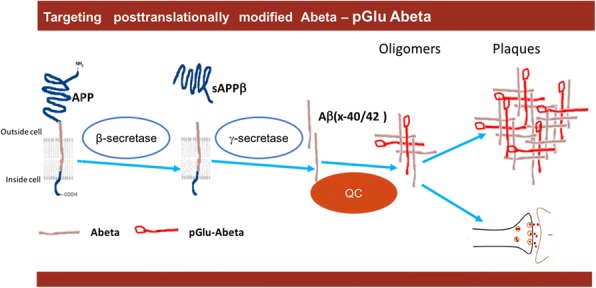
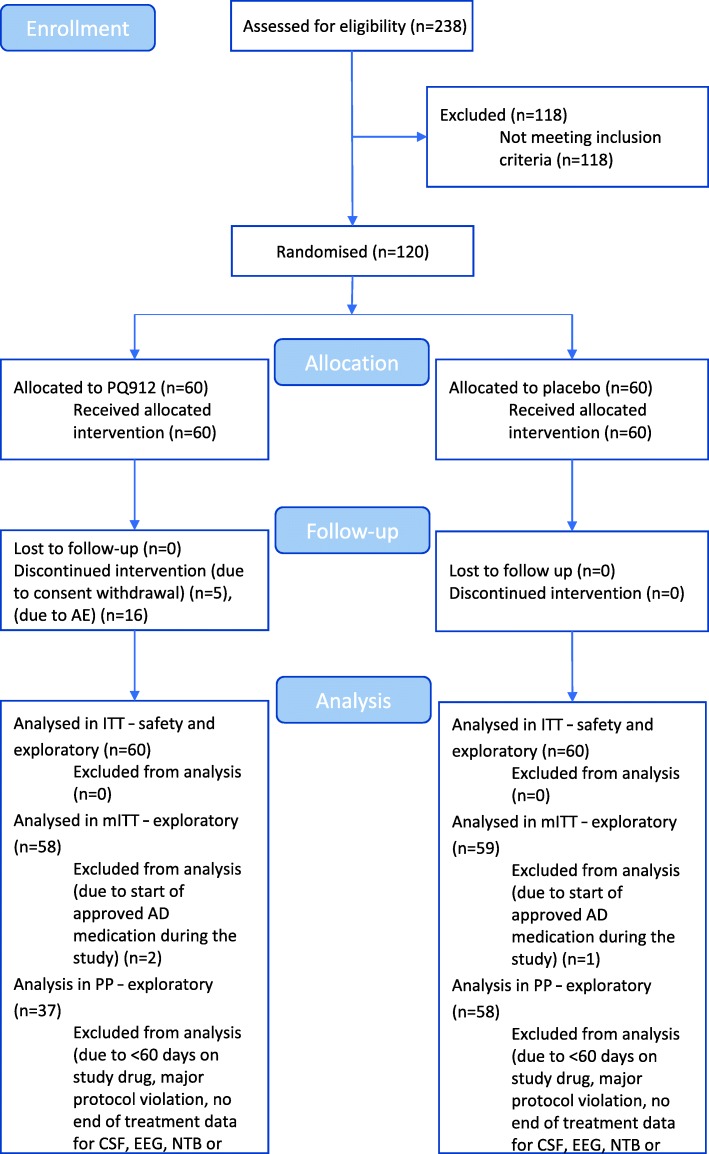
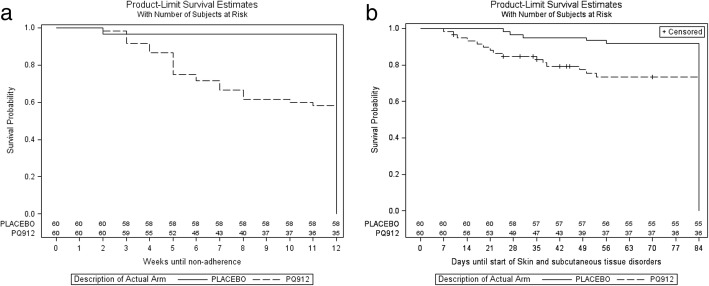
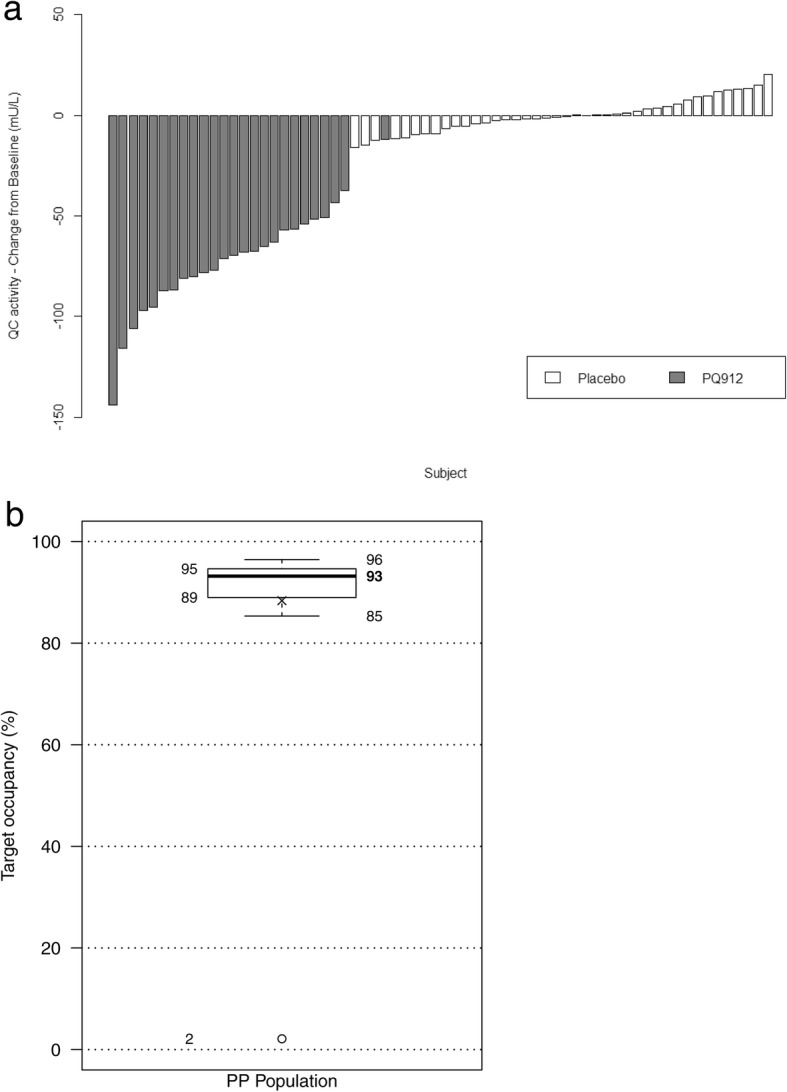
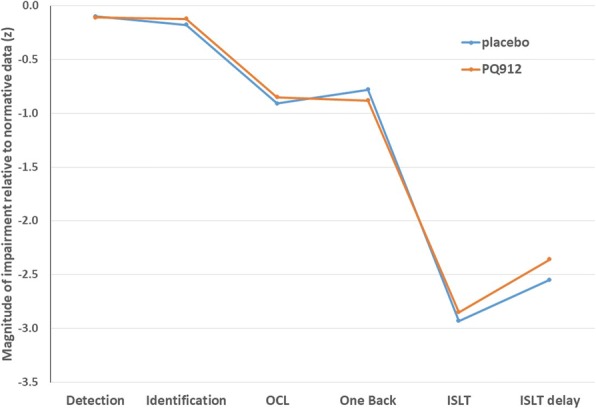
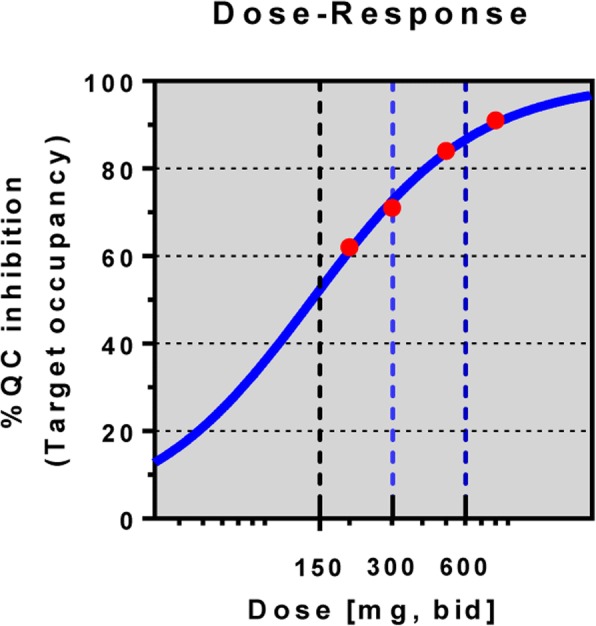
BACKGROUND: PQ912 is an inhibitor of the glutaminyl cyclase enzyme that plays a central role in the formation of synaptotoxic pyroglutamate-A-beta oligomers. We report on the first clinical study with PQ912 in subjects with biomarker-proven Alzheimer's disease (AD). The aim was to determine the maximal tolerated dose, target occupancy and treatment-related pharmacodynamic effects. The exploratory efficacy readouts selected were tailored to the patient population with early AD. The therapeutic approach focuses on synaptic dysfunction as captured by various measures such as electroencephalography (EEG), synaptic biomarkers and sensitive cognitive tests. METHODS: This was a randomized, double-blind, placebo-controlled trial evaluating the safety, tolerability and efficacy of PQ912 800 mg twice daily (bid) for 12 weeks in subjects with mild cognitive impairment or mild dementia due to AD. The 120 enrolled subjects were treatment-naïve at the start of the study, had confirmed AD biomarkers in their cerebrospinal fluid at screening and had a Mini Mental State Examination score between 21 and 30. After 1 week of treatment with 400 mg bid, patients were up-titrated to 800 mg bid for 11 weeks. Patients were randomized 1:1 to either PQ912 or placebo. The primary composite endpoints were to assess safety and tolerability based on the number of patients who discontinued due to (serious) adverse events (safety), and based on dose adjustment during the treatment period and/or nonadherence to randomized treatment (tolerability). All randomized subjects who took at least one dose of the study treatment or placebo were used for safety analyses. RESULTS: There was no significant difference between treatments in the number of subjects with (serious) adverse events, although there were slightly more patients with a serious adverse event in the PQ912 group compared to placebo. More subjects treated with PQ912 discontinued treatment due to adverse events, mostly related to gastrointestinal and skin/subcutaneous tissue disorders. PQ912 treatment resulted in a significant reduction in glutaminyl cyclase activity, which resulted in an average target occupancy of > 90%. A significant reduction of theta power in the EEG frequency analysis and a significant improvement in the One Back test of our Neuropsychological Test Battery was observed. The exploratory biomarker readouts, neurogranin for synaptic toxicity and YKL-40 as a marker of inflammation, appear to be sensitive enough to serve as efficacy markers in the next phase 2b study. CONCLUSIONS: The maximal tolerated dose of PQ912 has been identified and the results support future studies at still lower doses reaching > 50% target occupancy, a longer up-titration phase to potentially induce adaptation and longer treatment periods to confirm the early signals of efficacy as seen in this study. TRIAL REGISTRATION: Clinicaltrials.gov, NCT 02389413 . Registered on 17 March 2015.
Overview
The claims and statistics of this paper haven’t been checked yet.
Free: it reads the open-access text and checks the first 5 claims that cite a source we can check. Create a free account to check every claim.
Integrity signals
Registry
Cites
Statistics
Figures
Verification
Claims the paper makes
The claims and statistics of this paper haven’t been checked yet.
Free: it reads the open-access text and checks the first 5 claims that cite a source we can check. Create a free account to check every claim.
Claims other papers make about this one
Each is checked against this paper’s own text: does it say what the citing paper says it does?
The source backs part of the claim, not all of it — or backs it for a different population, condition or comparison.
In the citing paper
“In its phase IIa study (NCT03919162), varoglutamstat (17, formerly PQ912) demonstrated acceptable safety and tolerability, as well as a reduction in working memory decline.454”
From Recent advances in Alzheimer's disease: Mechanisms, clinical trials and new drug development strategies. (2024) · cites this paper as [454]
Experimental — accuracy not yet measured
Self-check
Percentages, sums and reported differences re-computed from the paper’s own numbers.
The self-check needs the paper’s full text.
Citations
Cites
McKhann, G. M., Knopman, D. S., Chertkow, H., Hyman, B. T., Jack, C. R., Kawas, C. H., Klunk, W. E., Koroshetz, W. J., Manly, J. J., Mayeux, R., et al. (2011) · Alzheimer's & Dementia · doi:10.1016/j.jalz.2011.03.005 · Cited by 18,657
Self-citationAmyloid oligomers exacerbate tau pathology in a mouse model of tauopathy
Selenica, M.-L. B., Brownlow, M., Jimenez, J. P., Lee, D. C., Pena, G., Dickey, C. A., Gordon, M. N., & Morgan, D. (2013) · Neurodegenerative Diseases · doi:10.1159/000337230 · Cited by 10,359
Albert, M. S., DeKosky, S. T., Dickson, D., Dubois, B., Feldman, H. H., Fox, N. C., Gamst, A., Holtzman, D. M., Jagust, W. J., Petersen, R. C., et al. (2011) · Alzheimer's & Dementia · doi:10.1016/j.jalz.2011.03.008 · Cited by 10,152 · cited 1×
“A total of 120 treatment-naïve men (n = 56) and women (n = 64), aged 51–85 years, with a diagnosis of mild cognitive impairment due to AD or mild dementia due to AD, according to the Alzheimer Association–National Institute on Aging criteria [14, 15], were included in the study.”
MethodNeuroinflammation in Alzheimer's disease
Heneka, M. T., Carson, M. J., Khoury, J. E., Landreth, G. E., Brosseron, F., Feinstein, D. L., Jacobs, A. H., Wyss-Coray, T., Vitorica, J., Ransohoff, R. M., et al. (2015) · The Lancet Neurology · doi:10.1016/s1474-4422(15)70016-5 · Cited by 6,226
2016 Alzheimer's disease facts and figures
Alzheimer's Association (2016) · Alzheimer's & Dementia · doi:10.1016/j.jalz.2016.03.001 · Cited by 5,069
Hypothetical model of dynamic biomarkers of the Alzheimer's pathological cascade
Jack, C. R., Knopman, D. S., Jagust, W. J., Shaw, L. M., Aisen, P. S., Weiner, M. W., Petersen, R. C., & Trojanowski, J. Q. (2010) · The Lancet Neurology · doi:10.1016/s1474-4422(09)70299-6 · Cited by 4,806
Alzheimer's Disease Is a Synaptic Failure
Selkoe, D. J. (2002) · Science · doi:10.1126/science.1074069 · Cited by 4,420
Albert, M. S., DeKosky, S. T., Dickson, D., Dubois, B., Feldman, H. H., Fox, N. C., Gamst, A., Holtzman, D. M., Jagust, W. J., Petersen, R. C., et al. (2013) · Focus · doi:10.1176/appi.focus.11.1.96 · Cited by 2,621
Villemagne, V. L., Burnham, S., Bourgeat, P., Brown, B., Ellis, K. A., Salvado, O., Szoeke, C., Macaulay, S. L., Martins, R., Maruff, P., et al. (2013) · The Lancet Neurology · doi:10.1016/s1474-4422(13)70044-9 · Cited by 2,279
Self-citationBloom (2014) · doi:10.1001/jamaneurol.2013.5847 · Cited by 2,194
Olsson, B., Lautner, R., Andreasson, U., Öhrfelt, A., Portelius, E., Bjerke, M., Hölttä, M., Rosén, C., Olsson, C., Strobel, G., et al. (2016) · The Lancet Neurology · doi:10.1016/s1474-4422(16)00070-3 · Cited by 2,049
Stam, C. J., Nolte, G., & Daffertshofer, A. (2007) · Human Brain Mapping · doi:10.1002/hbm.20346 · Cited by 2,018
2015 Alzheimer's disease facts and figures
Alzheimer's Association (2015) · Alzheimer's & Dementia · doi:10.1016/j.jalz.2015.02.003 · Cited by 1,635
EEG dynamics in patients with Alzheimer's disease
Jeong, J. (2004) · Clinical Neurophysiology · doi:10.1016/j.clinph.2004.01.001 · Cited by 1,337
Amyloid-β and tau--a toxic pas de deux in Alzheimer’s disease
Ittner, L. M., & Götz, J. (2011) · Nature Reviews Neuroscience · doi:10.1038/nrn2967 · Cited by 1,269
Nonlinear multivariate analysis of neurophysiological signals
Pereda, E., Quiroga, R. Q., & Bhattacharya, J. (2005) · Progress in Neurobiology · doi:10.1016/j.pneurobio.2005.10.003 · Cited by 1,076
Lombardo, I., Ramaswamy, G., Piscitelli, S. C., & Friedhoff, L. (2015) · Alzheimer's & Dementia · doi:10.1016/j.jalz.2015.08.154 · Cited by 656
Hutchinson, E. (2011) · Nature Reviews Neuroscience · doi:10.1038/nrn2985 · Cited by 532
Prion-like behaviour and tau-dependent cytotoxicity of pyroglutamylated amyloid-β
Nussbaum, J. M., Schilling, S., Cynis, H., Silva, A., Swanson, E., Wangsanut, T., Tayler, K., Wiltgen, B., Hatami, A., Rönicke, R., et al. (2012) · Nature · doi:10.1038/nature11060 · Cited by 427
Ferreira, S. T., Lourenco, M. V., Oliveira, M. M., & De Felice, F. G. (2015) · Frontiers in Cellular Neuroscience · doi:10.3389/fncel.2015.00191 · Cited by 373 · cited 1×
“However, in contrast to insoluble Aβ plaques, soluble Aβ oligomers are accepted as the primary source of toxicity because they lead to synaptic impairment, reduce spike numbers, impair neuronal connectivity and result in tau-dependent neurodegeneration over the course of the disease [6, 7].”
BackgroundDisparate roles of zinc in chemical hypoxia-induced neuronal death
Kim, S., Seo, J.-W., Oh, S. B., Kim, S. H., Kim, I., Suh, N., & Lee, J.-Y. (2015) · Frontiers in Cellular Neuroscience · doi:10.3389/fncel.2015.00001 · Cited by 362
The trees and the forest: Characterization of complex brain networks with minimum spanning trees
Stam, C. J., Tewarie, P., Van Dellen, E., van Straaten, E. C. W., Hillebrand, A., & Van Mieghem, P. (2014) · International Journal of Psychophysiology · doi:10.1016/j.ijpsycho.2014.04.001 · Cited by 354
The minimum spanning tree: An unbiased method for brain network analysis
Tewarie, P., van Dellen, E., Hillebrand, A., & Stam, C. J. (2015) · NeuroImage · doi:10.1016/j.neuroimage.2014.10.015 · Cited by 345
EEG coherence in Alzheimer?s dementia
Adler, G., Brassen, S., & Jajcevic, A. (2003) · Journal of Neural Transmission · doi:10.1007/s00702-003-0024-8 · Cited by 258
Amplitude envelope correlation detects coupling among incoherent brain signals
Bruns, A., Eckhorn, R., Jokeit, H., & Ebner, A. (2000) · NeuroReport · doi:10.1097/00001756-200005150-00029 · Cited by 256
Cerebrospinal fluid neurogranin and YKL ‐40 as biomarkers of Alzheimer's disease
Janelidze, S., Hertze, J., Zetterberg, H., Landqvist Waldö, M., Santillo, A., Blennow, K., & Hansson, O. (2016) · Annals of Clinical and Translational Neurology · doi:10.1002/acn3.266 · Cited by 179
Gouw, A. A., Alsema, A. M., Tijms, B. M., Borta, A., Scheltens, P., Stam, C. J., & van der Flier, W. M. (2017) · Neurobiology of Aging · doi:10.1016/j.neurobiolaging.2017.05.017 · Cited by 158
Self-citationHellwig, K., Kvartsberg, H., Portelius, E., Andreasson, U., Oberstein, T. J., Lewczuk, P., Blennow, K., Kornhuber, J., Maler, J. M., Zetterberg, H., et al. (2015) · Alzheimer's Research & Therapy · doi:10.1186/s13195-015-0161-y · Cited by 132
Binnewijzend, M. A. A., Adriaanse, S. M., Van der Flier, W. M., Teunissen, C. E., de Munck, J. C., Stam, C. J., Scheltens, P., van Berckel, B. N. M., Barkhof, F., & Wink, A. M. (2014) · Human Brain Mapping · doi:10.1002/hbm.22335 · Cited by 127
Self-citationQuantitative EEG Changes in Alzheimer Patients during Long-Term Donepezil Therapy
Rodriguez, G., Vitali, P., de Leo, C., De Carli, F., Girtler, N., & Nobili, F. (2002) · Neuropsychobiology · doi:10.1159/000063576 · Cited by 77
Hoffmann, T., Meyer, A., Heiser, U., Kurat, S., Böhme, L., Kleinschmidt, M., Bühring, K.-U., Hutter-Paier, B., Farcher, M., Demuth, H.-U., et al. (2017) · The Journal of Pharmacology and Experimental Therapeutics · doi:10.1124/jpet.117.240614 · Cited by 76
Self-citationGrochowska, K. M., Yuanxiang, P., Bär, J., Raman, R., Brugal, G., Sahu, G., Schweizer, M., Bikbaev, A., Schilling, S., Demuth, H., et al. (2017) · EMBO reports · doi:10.15252/embr.201643519 · Cited by 73
Lues, I., Weber, F., Meyer, A., Bühring, U., Hoffmann, T., Kühn‐Wache, K., Manhart, S., Heiser, U., Pokorny, R., Chiesa, J., et al. (2015) · Alzheimer's & Dementia: Translational Research & Clinical Interventions · doi:10.1016/j.trci.2015.08.002 · Cited by 60
Self-citationIsoglutaminyl cyclase contributes to CCL2-driven neuroinflammation in Alzheimer’s disease
Hartlage-Rübsamen, M., Waniek, A., Meißner, J., Morawski, M., Schilling, S., Jäger, C., Kleinschmidt, M., Cynis, H., Kehlen, A., Arendt, T., et al. (2015) · Acta Neuropathologica · doi:10.1007/s00401-015-1395-2 · Cited by 58
Activity and Architecture of Pyroglutamate-Modified Amyloid-β (AβpE3-42) Pores
Gillman, A. L., Jang, H., Lee, J., Ramachandran, S., Kagan, B. L., Nussinov, R., & Arce, F. T. (2014) · The Journal of Physical Chemistry B · doi:10.1021/jp5040954 · Cited by 49
Young Alzheimer patients show distinct regional changes of oscillatory brain dynamics
de Waal, H., Stam, C. J., de Haan, W., van Straaten, E. C. W., Scheltens, P., & van der Flier, W. M. (2011) · Neurobiology of Aging · doi:10.1016/j.neurobiolaging.2011.10.013 · Cited by 47
Self-citationPyroglutamylated Amyloid-β Peptide Reverses Cross β-Sheets by a Prion-Like Mechanism
Matos, J. O., Goldblatt, G., Jeon, J., Chen, B., & Tatulian, S. A. (2014) · The Journal of Physical Chemistry B · doi:10.1021/jp412743s · Cited by 27
Blennow, K., Nikolcheva, T., Lasser, R. A., Dukart, J., Rabe, C., Volz, D., & Scheltens, P. (2016) · Alzheimer s & Dementia · doi:10.1016/j.jalz.2016.06.346 · Cited by 4
Self-citation
Cited by
Zhang, J., Zhang, Y., Wang, J., Xia, Y., Zhang, J., & Chen, L. (2024) · Signal Transduction and Targeted Therapy · doi:10.1038/s41392-024-01911-3 · Cited by 1,138
Amyloid β-based therapy for Alzheimer’s disease: Challenges, successes and future
Zhang, Y., Chen, H., Li, R., Sterling, K., & Song, W. (2023) · Signal Transduction and Targeted Therapy · doi:10.1038/s41392-023-01484-7 · Cited by 988
Tolar, M., Abushakra, S., Hey, J. A., Porsteinsson, A., & Sabbagh, M. (2020) · Alzheimer's Research & Therapy · doi:10.1186/s13195-020-00663-w · Cited by 354
The clinical promise of biomarkers of synapse damage or loss in Alzheimer’s disease
the Synaptic Health Endpoints Working Group, Colom-Cadena, M., Spires-Jones, T., Zetterberg, H., Blennow, K., Caggiano, A., DeKosky, S. T., Fillit, H., Harrison, J. E., Schneider, L. S., et al. (2020) · Alzheimer's Research & Therapy · doi:10.1186/s13195-020-00588-4 · Cited by 328
Self-citationHow chemokines organize the tumour microenvironment
Mempel, T. R., Lill, J. K., & Altenburger, L. M. (2024) · Nature Reviews Cancer · doi:10.1038/s41568-023-00635-w · Cited by 281
“Accord-ingly, inhibitors of glutaminyl cyclases, which are being developed for the treatment of Alzheimer disease 254 and which prevent N-terminal cyclization of CCL7 to render it susceptible to truncation by DPP4, reduce the accumulation of alternatively activated macrophages in the TME and…”
Metadata
- Authors
- Scheltens, P., Hallikainen, M., Grimmer, T., Duning, T., Gouw, A. A., Teunissen, C. E., Wink, A. M., Maruff, P., Harrison, J., van Baal, C. M., Bruins, S., Lues, I., & Prins, N. D.
- Affiliations
- Amsterdam Neuroscience (NL)
- University of Eastern Finland (FI)
- TUM Klinikum (DE)
- University of Münster (DE)
- King's College London (GB)
- Probiodrug (Germany) (DE)
- Corresponding author
- Scheltens, Philip
- ORCID
- Venue
- Alzheimer's Research & Therapy
- Published
- 2018-10-12
- Volume
- 10
- Issue
- 1
- Pages
- 107-107
- ISSN
- 1758-9193 (ISSN-L)
- PMC
- PMC6182869
- OpenAlex
- W2895816045
- Cited by
- 129
- References
- 38
- Citations by year
- 2026: 10 · 2025: 17 · 2024: 21 · 2023: 18 · 2022: 15 · 2021: 24 · 2020: 12 · 2019: 9 · 2018: 1
- FWCI
- 7.88
- Type
- journal article
- Language
- en
- Open access
- gold
- doi.org
- Licence
- cc-by
- creativecommons.org/licenses/by/4.0/ (tdm)
- Locations
- Alzheimer s Research & Therapy (publishedVersion, cc-by)
- Europe PMC (PubMed Central) (publishedVersion, other-oa)
- PubMed Central (publishedVersion, cc-by)
- PubMed (publishedVersion)
- Minerva Access (University of Melbourne) (submittedVersion, cc-by)
- Pure Amsterdam UMC (submittedVersion, cc-by)
- DOAJ (DOAJ: Directory of Open Access Journals) (submittedVersion, cc-by-sa)
- mediaTUM – the media and publications repository of the Technical University Munich (Technical University Munich) (submittedVersion)
- Amsterdam UMC (VU Amsterdam) - Institutional Repository (submittedVersion, other-oa)
- Data Archiving and Networked Services (DANS) (submittedVersion, other-oa)
- Funders
- Probiodrug AG
- Topics
- Life Sciences › Neuroscience › Cellular and Molecular Neuroscience › Alzheimer's disease research and treatments
- Health Sciences › Medicine › Psychiatry and Mental health › Dementia and Cognitive Impairment Research
- Health Sciences › Medicine › Pharmacology (medical) › Cholinesterase and Neurodegenerative Diseases
- Keywords
- Alzheimer's disease, synaptic dysfunction, mild cognitive impairment, mild dementia, EEG theta power, neurogranin, YKL-40, neuroinflammation, target occupancy, drug safety and tolerability, cerebrospinal fluid biomarkers
- MeSH terms
- Aged, Aged, 80 and over, Alzheimer Disease, Benzimidazoles, Double-Blind Method, Female, Humans, Male, Middle Aged, Biomarkers, Treatment Outcome, Maximum Tolerated Dose, Imidazolines
About these checks
Registry, retraction, Cites and statistics results are computed, not judged, with one exception: a printed reference that no index lists is read once by a model before it counts as a citation error. Claims are extracted by a model and kept only when their quote appears verbatim in the text; each cited source is then checked, with a model’s help, for whether it says what the claim relies on. Those verdicts can be wrong — read the claim’s quote and the cited source before relying on one.
Statistics and arithmetic are recomputed, not judged.
Confidence bands are shown only for fields calibrated on our annotated test set. None is calibrated yet, so no band is shown.
What counts as a claim ›How we measure confidence ›How we check this ›
Are you an author, or do you see a problem with this page? Request a review
Data sources
Bibliographic data: Semantic Scholar, OpenAlex, Crossref.
Contains information from the Semantic Scholar Academic Graph Datasets, made available under the ODC Attribution License (ODC-BY 1.0).
Semantic Scholar’s data is described in: Kinney, R., et al. (2023). The Semantic Scholar Open Data Platform. arXiv:2301.10140.
