

Brief cognitive screening instruments for early detection of Alzheimer's disease: a systematic review
Open accessThe DOI matches its Crossref record; 76 of the 76 references it cites were found in a registry or an index.
Abstract
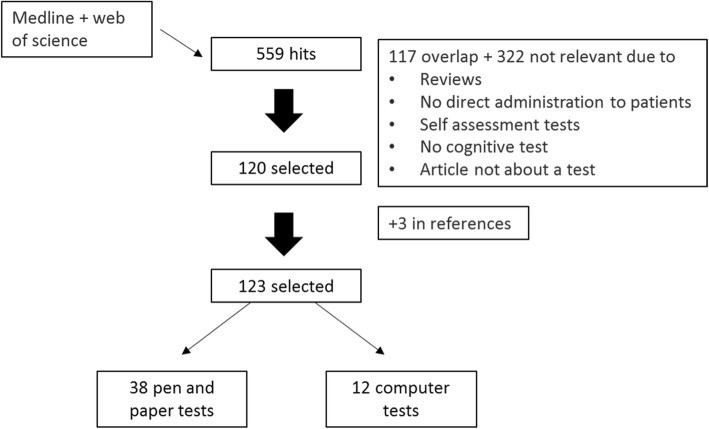
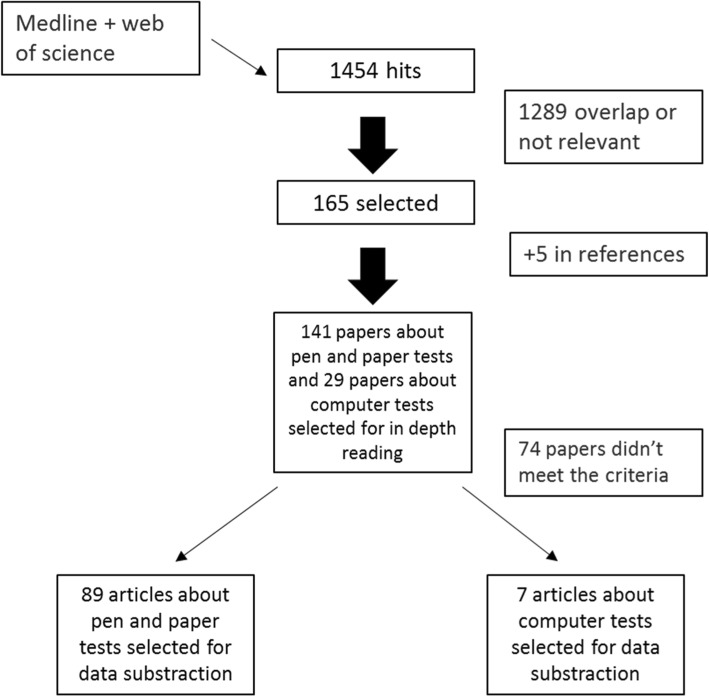
OBJECTIVES: The objective of this systematic review was (1) to give an overview of the available short screening instruments for the early detection of Alzheimer's disease (AD) and (2) to review the psychometric properties of these instruments. METHODS: First, a systematic search of titles and abstracts of PubMed and Web of Science was conducted between February and July 2015 and updated in April 2016 and May 2018. Only papers written in English or Dutch were considered. All full-text papers about cognitive screening instruments for the early detection of AD were included, resulting in the identification of 38 pencil and paper tests and 12 computer tests. In a second step, the psychometric quality of these instruments was evaluated. Therefore, the same databases were searched again to identify papers that described the psychometric properties of the instruments meanwhile applying diagnostic criteria for the diagnostic groups included. RESULTS: Out of 1454 papers, 96 clearly discussed the psychometric properties of the instruments. Eighty-nine papers discussed pencil and paper tests of which 80 were validated in a memory clinic setting. Based on the number of studies (31 articles) and the sensitivity (84%) and specificity (74%) values, the Montreal Cognitive Assessment (MoCA) seems to be a promising (pencil and paper) screening test for memory clinic testing as well as for population screening. Regarding computer tests, validation studies were only available for 7 out of 12 tests. CONCLUSIONS: A large number of screening tests for AD are available. However, most tests are only validated in a memory clinic setting and description of the psychometric properties of the instruments is limited. Especially, computer tests require further research. The MoCA is a promising instrument, but the specificity to detect early AD is rather low.
Overview
The claims and statistics of this paper haven’t been checked yet.
Free: it reads the open-access text and checks the first 5 claims that cite a source we can check. Create a free account to check every claim.
Integrity signals
Registry
Cites
Statistics
Figures
Verification
Claims the paper makes
The claims and statistics of this paper haven’t been checked yet.
Free: it reads the open-access text and checks the first 5 claims that cite a source we can check. Create a free account to check every claim.
Claims other papers make about this one
Each is checked against this paper’s own text: does it say what the citing paper says it does?
The source backs part of the claim, not all of it — or backs it for a different population, condition or comparison.
In the citing paper
“Second is new computerized neuropsychological products or new test batteries (22, 23), which are specifically designed for screening, comprehensive assessment or diagnostic purposes (16).”
From Research on digital tool in cognitive assessment: a bibliometric analysis (2023) · cites this paper as [23]
Experimental — accuracy not yet measured
Self-check
Percentages, sums and reported differences re-computed from the paper’s own numbers.
The self-check needs the paper’s full text.
Citations
Cites
Folstein, M. F., Folstein, S. E., & McHugh, P. R. (1975) · Journal of Psychiatric Research · doi:10.1016/0022-3956(75)90026-6 · Cited by 88,282 · cited 1×
“At present, the most used cognitive screening instrument for the detection of AD is the Mini-Mental State Examination (MMSE [5]).”
MethodThe Montreal Cognitive Assessment, MoCA: a brief screening tool for mild cognitive impairment
Nasreddine, Z. S., Phillips, N. A., Bédirian, V., Charbonneau, S., Whitehead, V., Collin, I., Cummings, J. L., & Chertkow, H. (2005) · Journal of the American Geriatrics Society · doi:10.1111/j.1532-5415.2005.53221.x · Cited by 25,553
Hirono, N., Mori, E., Ikejiri, Y., Imamura, T., Shimomura, T., Hashimoto, M., Yamashita, H., & Ikeda, M. (1997) · Brain and nerve · Cited by 21,030
Kok, J. S., Berg, I. J., & Scherder, E. J. A. (2013) · Dementia and Geriatric Cognitive Disorders Extra · doi:10.1159/000353441 · Cited by 20,589
Older Adults' Reasons for Using Technology while Aging in Place
Peek, S. T. M., Luijkx, K. G., Rijnaard, M. D., Nieboer, M. E., van der Voort, C. S., Aarts, S., van Hoof, J., Vrijhoef, H. J. M., & Wouters, E. J. M. (2016) · Gerontology · doi:10.1159/000430949 · Cited by 19,690
Sensitivity and False Alarm Rate of a Fall Sensor in Long-Term Fall Detection in the Elderly
Kangas, M., Korpelainen, R., Vikman, I., Nyberg, L., & Jämsä, T. (2015) · Gerontology · doi:10.1159/000362720 · Cited by 18,909
McKhann, G. M., Knopman, D. S., Chertkow, H., Hyman, B. T., Jack, C. R., Kawas, C. H., Klunk, W. E., Koroshetz, W. J., Manly, J. J., Mayeux, R., et al. (2011) · Alzheimer's & Dementia · doi:10.1016/j.jalz.2011.03.005 · Cited by 18,657
NIA‐AA Research Framework: Toward a biological definition of Alzheimer's disease
Jack, C. R., Bennett, D. A., Blennow, K., Carrillo, M. C., Dunn, B., Haeberlein, S. B., Holtzman, D. M., Jagust, W., Jessen, F., Karlawish, J., et al. (2018) · Alzheimer's & Dementia · doi:10.1016/j.jalz.2018.02.018 · Cited by 10,537
Albert, M. S., DeKosky, S. T., Dickson, D., Dubois, B., Feldman, H. H., Fox, N. C., Gamst, A., Holtzman, D. M., Jagust, W. J., Petersen, R. C., et al. (2011) · Alzheimer's & Dementia · doi:10.1016/j.jalz.2011.03.008 · Cited by 10,152
Mild Cognitive Impairment: Clinical Characterization and Outcome
Petersen, R. C., Smith, G. E., Waring, S. C., Ivnik, R. J., Tangalos, E. G., & Kokmen, E. (1999) · Archives of Neurology · doi:10.1001/archneur.56.3.303 · Cited by 8,980
Research works printed but not linked: 2
- American Psychiatric Association. Diagnostic and statistical manual of mental disorders (4th ed.). Washington, DC: American Psychiatric Association; 1994.
- Wiig EH Nielsen NP Minthon L Alzheimer’s quick test: assessment of parietal function 2002 San Antonio Harcourt Assessment
Cited by
Sabbagh, M. N., Boada, M., Borson, S., Chilukuri, M., Doraiswamy, P. M., Dubois, B., Ingram, J., Iwata, A., Porsteinsson, A. P., Possin, K. L., et al. (2020) · The Journal of Prevention of Alzheimer's Disease · doi:10.14283/jpad.2020.19 · Cited by 105
“…in this series summarizes the challenges and opportunities relating to the detection of MCI in non-clinical settings, i.e., at an individual’s home or in everyday settings such as pharmacies or community screening events, as has already been accomplished with brief paper and pencil tests (8, 9).”
BackgroundClassifying Alzheimer's Disease Using Audio and Text-Based Representations of Speech
Haulcy, R., & Glass, J. R. (2021) · Frontiers in Psychology · doi:10.3389/fpsyg.2020.624137 · Cited by 130
“There is currently no cure for AD (Yadav, 2019) and early detection is imperative for effective intervention to occur (De Roeck et al., 2019).”
BackgroundPerspectives and challenges in patient stratification in Alzheimer’s disease
Abdelnour, C., Agosta, F., Bozzali, M., Fougère, B., Iwata, A., Nilforooshan, R., Takada, L. T., Viñuela, F., & Traber, M. (2022) · Alzheimer's Research & Therapy · doi:10.1186/s13195-022-01055-y · Cited by 108
Swinnen, N., Vandenbulcke, M., de Bruin, E. D., Akkerman, R., Stubbs, B., Firth, J., & Vancampfort, D. (2021) · Alzheimer s Research & Therapy · doi:10.1186/s13195-021-00806-7 · Cited by 113
Is tau in the absence of amyloid on the Alzheimer’s continuum?: A study of discordant PET positivity
Weigand, A. J., Bangen, K. J., Thomas, K. R., Delano-Wood, L., Gilbert, P. E., Brickman, A. M., Bondi, M. W., & Initiative, A. D. N. (2020) · Brain Communications · doi:10.1093/braincomms/fcz046 · Cited by 86
Landry, M., Moreno, A., Patry, S., Potvin, S., & Lemasson, M. (2020) · Journal of Ect · doi:10.1097/yct.0000000000000723 · Cited by 95
The cognitive effect of anticholinergics for patients with overactive bladder
Welk, B. K., Richardson, K., & Panicker, J. N. (2021) · Nature Reviews Urology · doi:10.1038/s41585-021-00504-x · Cited by 82
Mattke, S., Batie, D., Chodosh, J., Felten, K., Flaherty, E., Fowler, N. R., Kobylarz, F. A., O'Brien, K., Paulsen, R., Pohnert, A., et al. (2023) · Alzheimer's & Dementia · doi:10.1002/alz.13051 · Cited by 70
Fowler, N. R., Partrick, K. A., Taylor, J. O., Hornbecker, M., Kelleher, K., Boustani, M. A., Cummings, J. L., MacLeod, T., Mielke, M. M., Brosch, J. R., et al. (2025) · Journal of Internal Medicine · doi:10.1111/joim.20098 · Cited by 86
“Guidelines that include recommendations on validated assessment tools are now available to help primary care teams select BCAs that best suit their patient populations, cultural contexts, and clinical environments [30, 125–127].”
Clinical Trial Endpoints and Their Clinical Meaningfulness in Early Stages of Alzheimer's Disease
Cohen, S., Cummings, J. L., Knox, S., Potashman, M. H., & Harrison, J. (2022) · The Journal of Prevention of Alzheimer s Disease · doi:10.14283/jpad.2022.41 · Cited by 74
“These include measures of cognition, function, and behavior, as well as global change, quality of life (QOL), and care partner burden (Table 2A) (2, 3, 5, 28-42).”
BackgroundYe, S., Sun, K. H., Huynh, D., Phi, H. Q., Ko, B., Huang, B., & Ghomi, R. H. (2022) · JMIR Aging · doi:10.2196/36825 · Cited by 73
“99 in detecting dementia due to AD [44], which were comparable with the results found in this study.”
ResultEligibility criteria in NIH-funded clinical trials: Can adults with intellectual disability get in?
McDonald, K., Schwartz, A., & Sabatello, M. (2022) · Disability and health journal · doi:10.1016/j.dhjo.2022.101368 · Cited by 66
Tavares-Júnior, J. W. L., de Souza, A. C. C., Alves, G. S., Bonfadini, J. D. C., Neto, J. I. S., & Braga‐Neto, P. (2019) · Frontiers in Psychiatry · doi:10.3389/fpsyt.2019.00878 · Cited by 64
A Critical Review of the Study of Neuroprotective Diets to Reduce Cognitive Decline
Duplantier, S. C., & Gardner, C. D. (2021) · Nutrients · doi:10.3390/nu13072264 · Cited by 55
“Both are considered crude measures of assessing cognitive decline which lack sensitivity to small changes [97] with the potential to under-report cognitive change.”
BackgroundCustodio, N., Duque, L., Montesinos, R., Alva‐Díaz, C., Mellado, M., & Slachevsky, A. (2020) · Frontiers in Aging Neuroscience · doi:10.3389/fnagi.2020.00270 · Cited by 57
“Given that reviews of BCS tools for other parts of the world have included up to 120 studies (De Roeck et al., 2019), our findings suggest that there is a notable lack of studies validating BCS tools in Spanishspeaking LA countries.”
BackgroundResultInfluentialMachine Learning and Eye Movements Give Insights into Neurodegenerative Disease Mechanisms
Przybyszewski, A. W., Śledzianowski, A., Chudzik, A., Szlufik, S., & Koziorowski, D. (2023) · Sensors · doi:10.3390/s23042145 · Cited by 63
Modarres, M. H., Kalafatis, C., Apostolou, P., Marefat, H., Khanbagi, M., Karimi, H., Vahabi, Z., Aarsland, D., & Khaligh‐Razavi, S. (2021) · Frontiers in Psychiatry · doi:10.3389/fpsyt.2021.706695 · Cited by 53
Kobayashi, M., Yamada, Y., Shinkawa, K., Nemoto, M., Nemoto, K., & Arai, T. (2022) · Journal of Alzheimer s Disease · doi:10.3233/jad-215714 · Cited by 48
Cognitive Assessment Tools Recommended in Geriatric Oncology Guidelines: A Rapid Review
Tuch, G., Soo, W. K., Luo, K.-Y., Frearson, K., Oh, E. L., Phillips, J. L., Agar, M. R., & Lane, H. P. (2021) · Current Oncology · doi:10.3390/curroncol28050339 · Cited by 49
“BOMC [28] 🗸 🗸 🗸 ≤7 = Normal ≥8 = Abnormal 2–3 min [68] No training recommended Free usage for healthcare professionals Copyrighted Three languages: English, Portuguese, and Spanish [69,70] No Suitable for telephone consultation”
BackgroundMethodInfluentialAtri, A., Dickerson, B. C., Clevenger, C. K., Karlawish, J. H., Knopman, D. S., Lin, P., Norman, M., Onyike, C. U., Sano, M., Scanland, S., et al. (2024) · Alzheimer s & Dementia · doi:10.1002/alz.14335 · Cited by 51
2023 China Alzheimer’s disease: facts and figures
Xiao, J., Li, J., Wang, J., Zhang, X., Wang, C., Peng, G., Hu, H., Liu, H., Liu, J., Shen, L., et al. (2023) · Human Brain · doi:10.37819/hb.3.1771 · Cited by 47
Pan, F., Huang, L., Chen, K., Zhao, Q., & Guo, Q. (2020) · BMC Neurology · doi:10.1186/s12883-020-01657-9 · Cited by 40
“Although these same screening tests are equally effective in early identification of MCI and AD, each test showed different sensitivity and specificity in identifying different degrees of cognitive impairment [19].”
BackgroundThe Role of Virtual Reality in Screening, Diagnosing, and Rehabilitating Spatial Memory Deficits
Jonson, M., Avramescu, S., Chen, D., & Alam, F. (2021) · Frontiers in Human Neuroscience · doi:10.3389/fnhum.2021.628818 · Cited by 41
Alden, E., Pudumjee, S. B., Lundt, E. S., Albertson, S. M., Machulda, M. M., Kremers, W. K., Jack, C. R., Knopman, D. S., Petersen, R. C., Mielke, M. M., et al. (2021) · Alzheimer s & Dementia · doi:10.1002/alz.12219 · Cited by 38
Palacios-Navarro, G., Buele, J., Jarque, S. G., & Garcia, A. B. (2022) · IEEE Transactions on Neural Systems and Rehabilitation Engineering · doi:10.1109/tnsre.2022.3196435 · Cited by 40
“[7] it is mentioned that these tests might not be as sensitive and therefore effective for the detection of AD.”
BackgroundDeep Learning and Risk Score Classification of Mild Cognitive Impairment and Alzheimer’s Disease
Nagaraj, S., & Duong, T. Q. (2021) · Journal of Alzheimer s Disease · doi:10.3233/jad-201438 · Cited by 36
Desta, N. T. (2021) · Journal of Oral Biosciences · doi:10.1016/j.job.2021.08.007 · Cited by 32
Advances in screening instruments for Alzheimer's disease
Zhou, X., & Ashford, J. W. (2019) · Aging Medicine · doi:10.1002/agm2.12069 · Cited by 31
Piccininni, M., Rohmann, J. L., Wechsung, M., Logroscino, G., & Kurth, T. (2022) · American Journal of Epidemiology · doi:10.1093/aje/kwac159 · Cited by 30
Validation of SATURN, a free, electronic, self‐administered cognitive screening test
Bissig, D., Kaye, J. A., & Erten‐Lyons, D. (2020) · Alzheimer s & Dementia Translational Research & Clinical Interventions · doi:10.1002/trc2.12116 · Cited by 32
Zeghari, R., Guerchouche, R., Tran, D.-M., Brémond, F., Lemoine, M. P., Bultingaire, V., Langel, K., Groote, Z. D., Kuhn, F., Martin, E., et al. (2021) · International Journal of Environmental Research and Public Health · doi:10.3390/ijerph18116108 · Cited by 30
“This can be very stressful for patients, especially those who have to travel far and those at early stages of cognitive impairment [7].”
BackgroundPaterson, T. S. E., Sivajohan, B., Gardner, S. L., Binns, M. A., Stokes, K. A., Freedman, M., Levine, B., & Troyer, A. K. (2021) · The Journals of Gerontology Series B · doi:10.1093/geronb/gbab097 · Cited by 29
Graph Embedded Ensemble Deep Randomized Network for Diagnosis of Alzheimer's Disease
Malik, A. K., & Tanveer, M. (2022) · IEEE Transactions on Computational Biology and Bioinformatics · doi:10.1109/tcbb.2022.3202707 · Cited by 33
“Recent studies for the diagnosis of AD disease includes [16], [17].”
BackgroundDeep Learning of Speech Data for Early Detection of Alzheimer’s Disease in the Elderly
Ahn, K., Cho, M., Kim, S., Lee, K. E., Song, Y., Yoo, S., Jeon, S. Y., Kim, J. L., Yoon, D. H., & Kong, H. (2023) · Bioengineering · doi:10.3390/bioengineering10091093 · Cited by 34
Cognitive and mood side effects of lower urinary tract medication
Müderrisoglu, A. E., Becher, K. F., Madersbacher, S., & Michel, M. C. (2019) · Expert Opinion on Drug Safety · doi:10.1080/14740338.2019.1652269 · Cited by 29
Screening for Mild Cognitive Impairment in the Preoperative Setting: A Narrative Review
Pas, M. T., Rikkert, M. G. M. O., Bouwman, R. A., Kessels, R. P. C., & Buise, M. P. (2022) · Healthcare · doi:10.3390/healthcare10061112 · Cited by 33
Dorociak, K. E., Mattek, N., Lee, J., Leese, M. I., Bouranis, N., Imtiaz, D., Doane, B. M., Bernstein, J. P. K., Kaye, J. A., & Hughes, A. M. (2021) · Gerontology · doi:10.1159/000514871 · Cited by 30
Research on digital tool in cognitive assessment: a bibliometric analysis
Chen, L., Zhen, W., & Peng, D. (2023) · Frontiers in Psychiatry · doi:10.3389/fpsyt.2023.1227261 · Cited by 26
Is the MMSE enough for MCI? A narrative review of the usefulness of the MMSE
D’Ignazio, G., Carlucci, L., Sergi, M. R., Palumbo, R., Dattilo, L., Terrei, M., & Balsamo, M. (2025) · Frontiers in Psychology · doi:10.3389/fpsyg.2025.1727738 · Cited by 27
Detecting dementia among older, ethnically diverse residents of rural subsidized housing
Wiese, L. K., Williams, C. L., Hain, D. J., Newman, D. M., Houston, C. P., Kaack, C., & Galvin, J. E. (2020) · Geriatric Nursing · doi:10.1016/j.gerinurse.2020.09.005 · Cited by 23
Digital screening for cognitive impairment - a proof of concept study
Bloniecki, V., Hagman, G., Ryden, M., & Kivipelto, M. (2021) · The Journal of Prevention of Alzheimer's Disease · doi:10.14283/jpad.2021.2 · Cited by 21
“Currently, there are a number of computerized screening instruments available, and they are either a digital version of the existing standardized tests or new computerized tests and batteries for cognitive function assessment (25).”
BackgroundMethodInfluentialValles‐Salgado, M., Matías‐Guiu, J. A., Delgado‐Álvarez, A., Delgado‐Alonso, C., Gil‐Moreno, M. J., Gordillo, E. V., López‐Carbonero, J. I., Fernández‐Romero, L., Peña-DeDiego, L., Oliver‐Mas, S., et al. (2024) · Journal of Clinical Medicine · doi:10.3390/jcm13164695 · Cited by 20
“This finding is consistent with previous studies validating each individual test [7,8].”
MethodResultSwinnen, N., de Bruin, E. D., Guimar�ães, V., Dumoulin, C. L., de Jong, J., Akkerman, R., Vandenbulcke, M., Stubbs, B., & Vancampfort, D. (2023) · Disability and Rehabilitation · doi:10.1080/09638288.2023.2182916 · Cited by 24
“The MoCA was not repeated since the burden on the participants was considered too high [83–86].”
BackgroundReliability and validity of the Montreal Cognitive Assessment’s auditory items (MoCA-22)
Lord, A. R., Amitrano, N. R., & González, D. A. (2023) · The Clinical Neuropsychologist · doi:10.1080/13854046.2023.2261634 · Cited by 21
“Clinimetrics, including aspects of reliability and validity, have been evaluated for both full and 22-point versions and found to be satisfactory (De Roeck et al., 2019; Fadzil et al., 2022; Wittich et al. 2010).”
MethodCognitive outcomes after unruptured intracranial aneurysm treatment with flow diversion
Wagner, K. M., Srivatsan, A., Mohanty, A., Srinivasan, V. M., Saleem, Y., Cherian, J., James, R. F., Chen, S., Burkhardt, J., Johnson, J. N., et al. (2019) · Journal of neurosurgery · doi:10.3171/2019.9.jns191910 · Cited by 19
Artificial intelligence detection of cognitive impairment in older adults during walking
Obuchi, S. P., Kojima, M., Suzuki, H., Garbalosa, J. C., Imamura, K., Ihara, K., Hirano, H., Sasai, H., Fujiwara, Y., & Kawai, H. (2024) · Alzheimer's & Dementia: Diagnosis, Assessment & Disease Monitoring · doi:10.1002/dad2.70012 · Cited by 18
Perioperative Neurocognitive Screening Tools for At-Risk Surgical Patients
Kaustov, L., Fleet, A., Brenna, C. T. A., Orser, B. A., & Choi, S. (2021) · Neurology Clinical Practice · doi:10.1212/cpj.0000000000001132 · Cited by 18
Swinnen, N., de Bruin, E. D., Dumoulin, C. L., Thalmann, M., Guimar�ães, V., de Jong, J., Vandenbulcke, M., & Vancampfort, D. (2021) · Frontiers in Aging Neuroscience · doi:10.3389/fnagi.2021.701319 · Cited by 18
“To describe the population more in detail, participants completed the Montreal Cognitive Assessment (MoCA) (De Roeck et al., 2019) and the Short Physical Performance Battery (SPPB) (Guralnik et al., 2000; Fox et al., 2014) prior to the exergame.”
BackgroundMethodInfluentialHilsabeck, R. C., Perry, W., Lacritz, L. H., Arnett, P. A., Shah, R. C., Borson, S., Galvin, J. E., Roaten, K., Daven, M., Hwang, U., et al. (2024) · The Annals of Family Medicine · doi:10.1370/afm.3174 · Cited by 19
“28 The Montreal Cognitive Assessment (MoCA) 29 was the most well validated in memory clinics and 1 of only 2 measures validated in population-based cohorts, yet high rates of false-positives in important subpopulations (eg, individuals with low education or sensory impairment) 30,31 limit its…”
Thompson, L. I., Gaster, B., Hammers, D. B., Fittipaldi, S., Barrett, A. M., Partrick, K. A., Scholler, E., Tiede, B., Butler, C., & Workgroup, T. C. D. C. A. (2025) · Alzheimer s & Dementia · doi:10.1002/alz.70966 · Cited by 17
Feasibility and reliability of online vs in-person cognitive testing in healthy older people
Morrissey, S., Gillings, R., & Hornberger, M. (2024) · PLoS ONE · doi:10.1371/journal.pone.0309006 · Cited by 19
“To date, very few studies have validated online cognitive assessments in older adults (33), with few showing that online cognitive assessments provide similar diagnostic accuracy to the MoCA (34).”
MethodTakahashi, J., Kawai, H., Suzuki, H., Fujiwara, Y., Watanabe, Y., Hirano, H., Kim, H., Ihara, K., Miki, A., & Obuchi, S. P. (2020) · Geriatrics and gerontology international/Geriatrics & gerontology international · doi:10.1111/ggi.13836 · Cited by 17
Yu, H., Wang, M., Yang, Q., Xu, X., Zhang, R., Chen, X., & Le, W. (2022) · Alzheimer s & Dementia · doi:10.1002/alz.12853 · Cited by 17
Richter-Laskowska, M., Sobotnicka, E., & Bednorz, A. (2025) · Scientific Reports · doi:10.1038/s41598-025-90460-y · Cited by 16
“While recognizing the limitations of screening tests in detecting cognitive impairment in older patients 37,38 , the proposed models offer an initial ’cognitive screening’ that can be conducted at the primary care level, helping to identify patients for further, more specialized evaluations.”
Nie, J., Yang, Y., Gao, Y., Jiang, W., Aisikeer, A., Sun, F., Prieto, L., Yu, J., Ju, K., Song, L., et al. (2023) · General Psychiatry · doi:10.1136/gpsych-2022-100837 · Cited by 16
“It may have created bias in MCI participants with low levels of education.”
Modarres, M. H., Kalafatis, C., Apostolou, P., Tabet, N., & Khaligh‐Razavi, S. (2023) · Frontiers in Aging Neuroscience · doi:10.3389/fnagi.2023.1243316 · Cited by 17
Advance and Prospect of Positron Emission Tomography in Alzheimer’s disease research
Wang, Y., Liao, W., Wang, L., Li, J., Huang, D., Cheng, W., Tian, J., & Luan, P. (2025) · Molecular Psychiatry · doi:10.1038/s41380-025-03081-2 · Cited by 17
Yamada, Y., Shinkawa, K., Kobayashi, M., Badal, V. D., Glorioso, D., Lee, E., Daly, R., Nebeker, C., Twamley, E. W., Depp, C. A., et al. (2022) · JMIR Formative Research · doi:10.2196/37014 · Cited by 17
“Examples of such research include approaches using computerized cognitive tests [29,40-42] and using behavioral data such as drawing, speech, and gait data [24,32,43-45].”
MethodMi, Y., Ma, X., Du, S., Du, C., Li, X., Tan, H., Zhang, J., Zhang, Q., Shi, W., Zhang, G., et al. (2023) · Frontiers in Aging Neuroscience · doi:10.3389/fnagi.2023.1068708 · Cited by 16
de Leon, E. B., Campos, H. L. M., Brito, F. A., & Almeida, F. A. (2022) · JMIR Research Protocols · doi:10.2196/37572 · Cited by 15
“Cognitive assessment is addressed through the 10-point Cognitive Screener [19] and Figure Recognition Test [20], a brief and easy-to-use screening strategy with higher accuracy developed for the Brazilian population [19], presenting sensitivity of 60.5 and specificity of 94.3 [21].”
InfluentialWu, J., Tu, J., Liu, Z., Cao, L., He, Y., Huang, J., Tao, J., Wong, M. N.-K., Chen, L., Lee, T. M. C., et al. (2023) · Journal of Medical Internet Research · doi:10.2196/40858 · Cited by 15
“The time needed to administer the MoCA is 10–15 minutes [12].”
Magno, M., Martins, A. I., Pais, J., Silva, A. G., & Rocha, N. P. (2024) · Applied Sciences · doi:10.3390/app14062640 · Cited by 15
“The early detection of cognitive impairment is critical to an early intervention [12,13].”
BackgroundThielen, H., Welkenhuyzen, L., Tuts, N., Vangkilde, S., Lemmens, R., Wibail, A., Lafosse, C., Wajer, I. M. C. H., & Gillebert, C. R. (2024) · Neuropsychologia · doi:10.1016/j.neuropsychologia.2024.108879 · Cited by 14
Custodio, N., Herrera‐Pérez, E., Montesinos, R., Lira, D., & Metcalf, T. (2020) · Dementia & Neuropsychologia · doi:10.1590/1980-57642020dn14-020006 · Cited by 14
Wang, X., Li, F., Gao, Q., Jiang, Z., Abudusaimaiti, X., Yao, J., & Zhu, H. (2022) · Journal of Alzheimer s Disease · doi:10.3233/jad-215394 · Cited by 14
“De Roeck et al. [101] reported that MoCA is a promising screening tool, but the specificity to detect the cognitive impairment of early AD is low.”
Morin, P., Li, M., Wang, Y., Aguilar, B. J., Berlowitz, D. R., Monfared, A. A. T., Irizarry, M. C., Zhang, Q., & Xia, W. (2022) · Neurology and Therapy · doi:10.1007/s40120-022-00379-z · Cited by 14
“Parallel assessments are made using more detailed and objective cognitive assessment tools, such as the MMSE and the MoCA that are solely based on cognition; however, these approaches do not have specificity and sensitivity for AD diagnosis [8, 9, 16].”
BackgroundMethodMeeuwsen, K. D., Groeneveld, K. M., Walker, L. A., Mennenga, A. M., Tittle, R. K., & White, E. K. (2020) · Restorative Neurology and Neuroscience · doi:10.3233/rnn-201053 · Cited by 15
“The MoCA is considered to be the most sensitive populationbased cognitive screening tool (De Roeck et al., 2019).”
BackgroundThe Impact of Age on Noise Sensitivity in Cochlear Implant Recipients
Shew, M. A., Herzog, J. A., Kallogjeri, D., Chen, S., Wick, C. C., Durakovic, N., McJunkin, J., & Buchman, C. A. (2021) · Otology & Neurotology · doi:10.1097/mao.0000000000003385 · Cited by 14
Kamalzadeh, L., Tayyebi, G., Shariati, B., Shati, M., Saeedi, V., & Malakouti, S. K. (2024) · BMC Geriatrics · doi:10.1186/s12877-024-04963-w · Cited by 13
Validation of Picture Free and Cued Selective Reminding Test for Illiteracy in Lima, Peru
Montesinos, R., Parodi, J. F., Diaz, M. M., Herrera‐Pérez, E., Valeriano-Lorenzo, E., Soto, A., Delgado, C., Slachevsky, A., & Custodio, N. (2022) · American Journal of Alzheimer s Disease & Other Dementias® · doi:10.1177/15333175221094396 · Cited by 13
“adapted and validated for use in individuals with high educational levels.(12,46,47) In low- and middle-income countries, manual labor is a common occupation of elderly populations from rural or urban areas of low socioeconomic strata, therefore, cognitive assessment tools that require reading and writing skills lose…”
BackgroundVerbal fluency response times predict incident cognitive impairment
Ayers, M. R., Bushnell, J., Gao, S., Unverzagt, F. W., Gaizo, J. D., Wadley, V. G., Kennedy, R., & Clark, D. G. (2022) · Alzheimer s & Dementia Diagnosis Assessment & Disease Monitoring · doi:10.1002/dad2.12277 · Cited by 15
A Novel Computerized Cognitive Stress Test to Detect Mild Cognitive Impairment
Curiel, R. E., Crocco, E., Kitaigorodsky, M., Beaufils, L., Peña, P. A., Grau, G. A., Visser, U., & Loewenstein, D. (2021) · The Journal of Prevention of Alzheimer s Disease · doi:10.14283/jpad.2021.1 · Cited by 14
“In fact, available systematic reviews have identified more than a dozen computerized measures designed to detect dementia or MCI (34, 35, 36).”
BackgroundBartoš, A., & Diondet, S. (2024) · Journal of Alzheimer s Disease · doi:10.1177/13872877241289385 · Cited by 12
Day, G. S. (2024) · CONTINUUM Lifelong Learning in Neurology · doi:10.1212/con.0000000000001507 · Cited by 15
Zegarra-Valdivia, J. A., Arana‐Nombera, H. A., Perez‐Fernandez, L. A., Casimiro‐Arana, M. D. R., Gallegos‐Manayay, V. N., Oliva‐Piscoya, M. D. R., Alamo‐Medina, R. E., Abanto‐Saldaña, E. S., Ordinola, M. C. C., Paredes-Manrique, C., et al. (2025) · Current Issues in Molecular Biology · doi:10.3390/cimb47040233 · Cited by 12
Walter, J., Grutza, M., Vogt, L., Unterberg, A. W., & Zweckberger, K. (2020) · BMC Neurology · doi:10.1186/s12883-020-02003-9 · Cited by 12
Association of Cognitive Performance with Frailty in Older Individuals with Cognitive Complaints
Lin, S. M., Apolinário, D., Gomes, G. C. V., Tosi, F. C., Magaldi, R. M., Busse, A. L., Gil, G., Ribeiro, E. S., Satomi, E., Aprahamian, I., et al. (2021) · The journal of nutrition health & aging · doi:10.1007/s12603-021-1712-5 · Cited by 12
Clinical Tests Predicting On-Road Performance in Older Drivers with Cognitive Impairment
Krasniuk, S., Crizzle, A. M., Toxopeus, R., Mychael, D., & Prince, N. (2022) · Canadian Journal of Occupational Therapy · doi:10.1177/00084174221117708 · Cited by 12
“Additionally, although we cannot make direct comparisons, prior studies used the Mini-Mental State Exam (MMSE) to identify CI with scores ranging from 25.3 to 28 (e.g., Classen et al., 2013; Dobbs & Shergill, 2013; Stern et al., 2016), indicating the samples in these studies did not have severe CI.”
InfluentialCampitelli, A., Paulson, S., Gills, J. L., Jones, M. D., Madero, E. N., Myers, J. R., Glenn, J. M., & Gray, M. (2023) · JMIR Aging · doi:10.2196/36663 · Cited by 14
Kleiman, M. J., Chang, L., & Galvin, J. E. (2022) · Journal of Alzheimer s Disease · doi:10.3233/jad-220927 · Cited by 12
Effectiveness and utilization of a cognitive screening program for primary geriatric care
Salmon, D. P., Malkina, A., Johnson, M. L., Gigliotti, C. M., Little, E. A., & Galasko, D. (2025) · Alzheimer s Research & Therapy · doi:10.1186/s13195-024-01637-y · Cited by 13
Ashford, J. W., Clifford, J. O., Anand, S., Bergeron, M. F., Ashford, C. B., & Bayley, P. J. (2022) · Frontiers in Aging Neuroscience · doi:10.3389/fnagi.2022.1005298 · Cited by 11
Diagnostic Accuracy of the Five-Word Test for Mild Cognitive Impairment Due to Alzheimer’s Disease
Fornari, C., Mori, F., Zoppi, N., Libri, I., Silvestri, C., Cosseddu, M., Turrone, R., Maffi, M., Caratozzolo, S., Borroni, B., et al. (2022) · Neurology International · doi:10.3390/neurolint14020029 · Cited by 11
A Gamified N-back App for Identifying Mild-cognitive Impairment in Older Adults
Murata, N., Nishii, S., Usuha, R., Kodaka, A., Fujimori, M., Sugawara, H., Kiriyama, T., Uchikado, H., Okumura, Y., & Takebe, T. (2025) · JMA Journal · doi:10.31662/jmaj.2024-0217 · Cited by 10
Dementia and the aging population: cognitive screening within correctional health
Washington, L. (2022) · International Journal of Prisoner Health · doi:10.1108/ijph-08-2021-0070 · Cited by 12
Delgado‐Álvarez, A., Díez‐Cirarda, M., Delgado‐Alonso, C., Hernández‐Lorenzo, L., Cuevas, C., Valles‐Salgado, M., Montero‐Escribano, P., Gil‐Moreno, M. J., Matías‐Guiu, J., García-Ramos, R., et al. (2022) · Journal of Alzheimer s Disease · doi:10.3233/jad-220907 · Cited by 11
Rice, R., Bryant, J., & Sanson‐Fisher, R. (2023) · BMC Geriatrics · doi:10.1186/s12877-023-04394-z · Cited by 10
Lima, J.-F., Acosta-Urigüen, M.-I., & Orellana, M. (2023) · Intelligent Systems with Applications · doi:10.1016/j.iswa.2023.200301 · Cited by 9
Achard, V., Ceyzériat, K., Tournier, B. B., Frisoni, G. B., Garibotto, V., & Zilli, T. (2021) · Frontiers in Oncology · doi:10.3389/fonc.2021.734881 · Cited by 9
“A large number of screening instruments for AD are available (68), as the Montreal Cognitive Assessment (MoCA) which seems to be a promising screening test due to its high sensitivity (84%) and specificity (74%) values (69).”
BackgroundBartoš, A., & Diondet, S. (2024) · Neurología · doi:10.1016/j.nrl.2023.02.007 · Cited by 9
Kleiman, M. J., Ariko, T., Galvin, J. E., & Initiative, T. A. D. N. (2022) · Journal of Alzheimer s Disease · doi:10.3233/jad-220891 · Cited by 8
“Many brief cognitive screeners, including the MoCA [4] and MMSE [11], require licensing and training for use, and can misclassify individuals with very mild impairment as not impaired [5], particularly individuals from underrepresented and underserved communities.”
Mangalagiu, A. G., Petrescu, B. M., Riga, S., & Vasiliu, O. (2025) · NeuroSci · doi:10.3390/neurosci7010002 · Cited by 7
Kouzuki, M., Miyamoto, M., Tanaka, N., & Urakami, K. (2022) · BMC Neurology · doi:10.1186/s12883-022-02997-4 · Cited by 8
“In addition, many of the computerized tests shown in other reviews also take more than 10 minutes to complete [16, 17].”
BackgroundCan Automated Speech Recognition Errors Provide Valuable Clues for Alzheimer’s Disease Detection?
Liu, Y.-L., Feng, R., Lu, Y.-X., Chen, J., Ai, Y., Yuan, J., & Ling, Z.-H. (2025) · IEEE International Conference on Acoustics Speech and Signal Processing · doi:10.1109/icassp49660.2025.10890694 · Cited by 12
“Early AD detection is crucial, as studies suggest that mid-course intervention before significant neuronal degeneration can alleviate symptoms [2, 3].”
Zhang, T., Liu, W., Bai, Q., & Gao, S. (2023) · Frontiers in Psychology · doi:10.3389/fpsyg.2023.1271458 · Cited by 10
Sigona, F., Radicioni, D., Fivela, B., Colla, D., Delsanto, M., Mensa, E., Bolioli, A., & Vigorelli, P. (2024) · Computer Speech and Language · doi:10.1016/j.csl.2024.101691 · Cited by 10
“Other problematic aspects and limitations of MMSE are discussed in Mitchell (2009), Tsoi et al. (2015), De Roeck et al. (2019).”
Sagües‐Sesé, E., Rioja, J., Garzón-Maldonado, F. J., Narváez, M., García-Arnés, J. A., & García‐Casares, N. (2022) · Journal of Alzheimer s Disease · doi:10.3233/jad-220688 · Cited by 8
Chen, Y., Verbert, K., Gerling, K., Abeele, M.-E. V., & Abeele, V. V. (2025) · ACM International Conference on Intelligent User Interfaces (IUI) · doi:10.1145/3708359.3712139 · Cited by 7
Li, B., Ji, S., Peng, A., Yang, N., Zhao, X., Feng, P., Zhang, Y., & Chen, L. (2022) · Biomolecules · doi:10.3390/biom12121861 · Cited by 8
“Although the scale is widely used, it still has the disadvantages of being subjective and time-consuming, and many participants are also unable to complete the questionnaire effectively due to cultural differences and literacy levels [31].”
BackgroundMapping cognitive function screening instruments for patients with heart failure: A scoping review
Arseda, A., Pahria, T., & Kurniawan, T. (2024) · Belitung Nursing Journal · doi:10.33546/bnj.3165 · Cited by 6
“However, none of these instruments are used specifically for patients with HF (De Roeck et al., 2019).”
Background
Metadata
- Authors
- De Roeck, E. E., De Deyn, P. P., Dierckx, E., & Engelborghs, S.
- Affiliations
- Vrije Universiteit Brussel (BE)
- Corresponding author
- Engelborghs, Sebastiaan
- Venue
- Alzheimer's Research & Therapy
- Published
- 2019-02-28
- Volume
- 11
- Issue
- 1
- Pages
- 21-21
- ISSN
- 1758-9193 (ISSN-L)
- PMC
- PMC6396539
- OpenAlex
- W2922917123
- Cited by
- 209
- References
- 75
- Citations by year
- 2026: 17 · 2025: 30 · 2024: 36 · 2023: 34 · 2022: 39 · 2021: 35 · 2020: 13 · 2019: 5
- FWCI
- 3.87
- Type
- journal article
- Language
- en
- Open access
- gold
- doi.org
- Licence
- cc-by
- creativecommons.org/licenses/by/4.0/ (tdm)
- Locations
- Alzheimer s Research & Therapy (publishedVersion, cc-by)
- Europe PMC (PubMed Central) (publishedVersion, cc-by)
- PubMed Central (publishedVersion, cc-by)
- PubMed (publishedVersion)
- DOAJ (DOAJ: Directory of Open Access Journals) (submittedVersion, cc-by-sa)
- VUBIR (Vrije Universiteit Brussel) (submittedVersion)
- Funders
- Flemish government Agency for Innovation by Science and Technology (IWT-140027-SBO)
- University of Antwerp Research Fund
- Topics
- Health Sciences › Medicine › Psychiatry and Mental health › Dementia and Cognitive Impairment Research
- Social Sciences › Psychology › Applied Psychology › Psychological Testing and Assessment
- Social Sciences › Psychology › Clinical Psychology › Historical and Modern Theater Studies
- Keywords
- Alzheimer's disease, early detection, cognitive screening tools, Montreal Cognitive Assessment, psychometric properties, paper-and-pencil tests, computerized cognitive assessment, sensitivity and specificity, mass screening
- MeSH terms
- Mental Status and Dementia Tests, Alzheimer Disease, Cognition, Humans, Brief Psychiatric Rating Scale, Early Diagnosis, Cognitive Dysfunction
About these checks
Registry, retraction, Cites and statistics results are computed, not judged, with one exception: a printed reference that no index lists is read once by a model before it counts as a citation error. Claims are extracted by a model and kept only when their quote appears verbatim in the text; each cited source is then checked, with a model’s help, for whether it says what the claim relies on. Those verdicts can be wrong — read the claim’s quote and the cited source before relying on one.
Statistics and arithmetic are recomputed, not judged.
Confidence bands are shown only for fields calibrated on our annotated test set. None is calibrated yet, so no band is shown.
What counts as a claim ›How we measure confidence ›How we check this ›
Are you an author, or do you see a problem with this page? Request a review
Data sources
Bibliographic data: Semantic Scholar, OpenAlex, Crossref.
Contains information from the Semantic Scholar Academic Graph Datasets, made available under the ODC Attribution License (ODC-BY 1.0).
Semantic Scholar’s data is described in: Kinney, R., et al. (2023). The Semantic Scholar Open Data Platform. arXiv:2301.10140.
