

Brief cognitive screening instruments for early detection of Alzheimer's disease: a systematic review
Open accessThe DOI matches its Crossref record; 76 of the 76 references it cites were found in a registry or an index.
Abstract
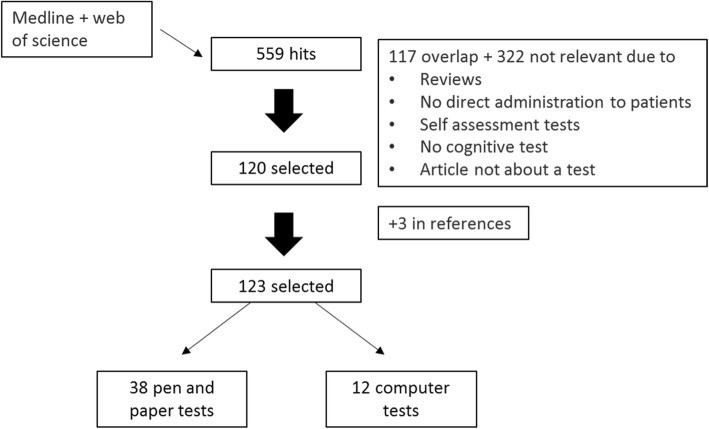
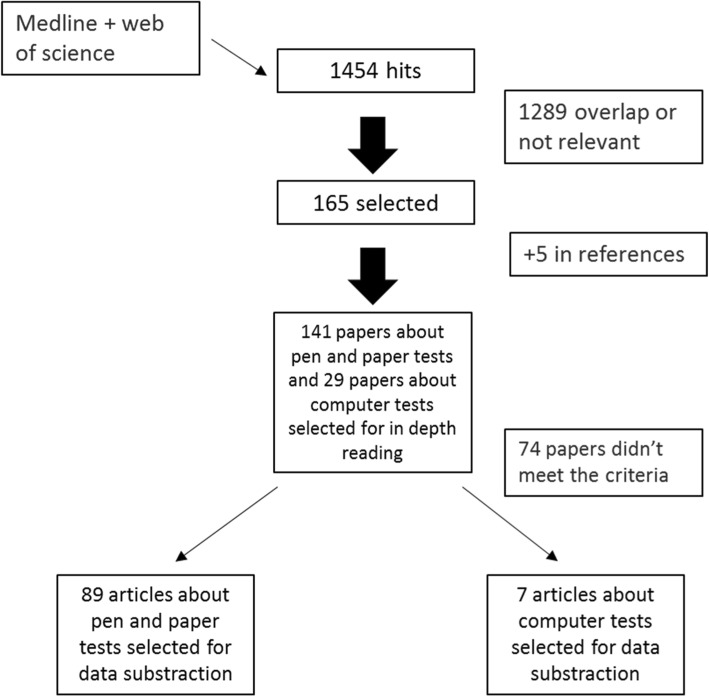
OBJECTIVES: The objective of this systematic review was (1) to give an overview of the available short screening instruments for the early detection of Alzheimer's disease (AD) and (2) to review the psychometric properties of these instruments. METHODS: First, a systematic search of titles and abstracts of PubMed and Web of Science was conducted between February and July 2015 and updated in April 2016 and May 2018. Only papers written in English or Dutch were considered. All full-text papers about cognitive screening instruments for the early detection of AD were included, resulting in the identification of 38 pencil and paper tests and 12 computer tests. In a second step, the psychometric quality of these instruments was evaluated. Therefore, the same databases were searched again to identify papers that described the psychometric properties of the instruments meanwhile applying diagnostic criteria for the diagnostic groups included. RESULTS: Out of 1454 papers, 96 clearly discussed the psychometric properties of the instruments. Eighty-nine papers discussed pencil and paper tests of which 80 were validated in a memory clinic setting. Based on the number of studies (31 articles) and the sensitivity (84%) and specificity (74%) values, the Montreal Cognitive Assessment (MoCA) seems to be a promising (pencil and paper) screening test for memory clinic testing as well as for population screening. Regarding computer tests, validation studies were only available for 7 out of 12 tests. CONCLUSIONS: A large number of screening tests for AD are available. However, most tests are only validated in a memory clinic setting and description of the psychometric properties of the instruments is limited. Especially, computer tests require further research. The MoCA is a promising instrument, but the specificity to detect early AD is rather low.
Overview
The claims and statistics of this paper haven’t been checked yet.
Free: it reads the open-access text and checks the first 5 claims that cite a source we can check. Create a free account to check every claim.
Integrity signals
Registry
Cites
Statistics
Figures
Verification
Claims the paper makes
The claims and statistics of this paper haven’t been checked yet.
Free: it reads the open-access text and checks the first 5 claims that cite a source we can check. Create a free account to check every claim.
Claims other papers make about this one
Each is checked against this paper’s own text: does it say what the citing paper says it does?
The source backs part of the claim, not all of it — or backs it for a different population, condition or comparison.
In the citing paper
“Second is new computerized neuropsychological products or new test batteries (22, 23), which are specifically designed for screening, comprehensive assessment or diagnostic purposes (16).”
From Research on digital tool in cognitive assessment: a bibliometric analysis (2023) · cites this paper as [23]
Experimental — accuracy not yet measured
Self-check
Percentages, sums and reported differences re-computed from the paper’s own numbers.
The self-check needs the paper’s full text.
Citations
Cites
Folstein, M. F., Folstein, S. E., & McHugh, P. R. (1975) · Journal of Psychiatric Research · doi:10.1016/0022-3956(75)90026-6 · Cited by 88,282 · cited 1×
“At present, the most used cognitive screening instrument for the detection of AD is the Mini-Mental State Examination (MMSE [5]).”
MethodThe Montreal Cognitive Assessment, MoCA: a brief screening tool for mild cognitive impairment
Nasreddine, Z. S., Phillips, N. A., Bédirian, V., Charbonneau, S., Whitehead, V., Collin, I., Cummings, J. L., & Chertkow, H. (2005) · Journal of the American Geriatrics Society · doi:10.1111/j.1532-5415.2005.53221.x · Cited by 25,553
Kok, J. S., Berg, I. J., & Scherder, E. J. A. (2013) · Dementia and Geriatric Cognitive Disorders Extra · doi:10.1159/000353441 · Cited by 20,589
Older Adults' Reasons for Using Technology while Aging in Place
Peek, S. T. M., Luijkx, K. G., Rijnaard, M. D., Nieboer, M. E., van der Voort, C. S., Aarts, S., van Hoof, J., Vrijhoef, H. J. M., & Wouters, E. J. M. (2016) · Gerontology · doi:10.1159/000430949 · Cited by 19,690
Sensitivity and False Alarm Rate of a Fall Sensor in Long-Term Fall Detection in the Elderly
Kangas, M., Korpelainen, R., Vikman, I., Nyberg, L., & Jämsä, T. (2015) · Gerontology · doi:10.1159/000362720 · Cited by 18,909
McKhann, G. M., Knopman, D. S., Chertkow, H., Hyman, B. T., Jack, C. R., Kawas, C. H., Klunk, W. E., Koroshetz, W. J., Manly, J. J., Mayeux, R., et al. (2011) · Alzheimer's & Dementia · doi:10.1016/j.jalz.2011.03.005 · Cited by 18,657
NIA‐AA Research Framework: Toward a biological definition of Alzheimer's disease
Jack, C. R., Bennett, D. A., Blennow, K., Carrillo, M. C., Dunn, B., Haeberlein, S. B., Holtzman, D. M., Jagust, W., Jessen, F., Karlawish, J., et al. (2018) · Alzheimer's & Dementia · doi:10.1016/j.jalz.2018.02.018 · Cited by 10,537
Albert, M. S., DeKosky, S. T., Dickson, D., Dubois, B., Feldman, H. H., Fox, N. C., Gamst, A., Holtzman, D. M., Jagust, W. J., Petersen, R. C., et al. (2011) · Alzheimer's & Dementia · doi:10.1016/j.jalz.2011.03.008 · Cited by 10,152
Mild Cognitive Impairment: Clinical Characterization and Outcome
Petersen, R. C., Smith, G. E., Waring, S. C., Ivnik, R. J., Tangalos, E. G., & Kokmen, E. (1999) · Archives of Neurology · doi:10.1001/archneur.56.3.303 · Cited by 8,980
Sperling, R. A., Aisen, P. S., Beckett, L. A., Bennett, D. A., Craft, S., Fagan, A. M., Iwatsubo, T., Jack, C. R., Kaye, J., Montine, T. J., et al. (2011) · Alzheimer's & Dementia · doi:10.1016/j.jalz.2011.03.003 · Cited by 7,155
Research works printed but not linked: 2
- American Psychiatric Association. Diagnostic and statistical manual of mental disorders (4th ed.). Washington, DC: American Psychiatric Association; 1994.
- Wiig EH Nielsen NP Minthon L Alzheimer’s quick test: assessment of parietal function 2002 San Antonio Harcourt Assessment
Cited by
Items 101–200 of 228
Leveraging Prompt Learning and Pause Encoding for Alzheimer's Disease Detection
Liu, Y.-L., Feng, R., Yuan, J., & Ling, Z.-H. (2024) · International Symposium on Chinese Spoken Language Processing (ISCSLP) · doi:10.1109/iscslp63861.2024.10799971 · Cited by 6
“Studies have shown that mid-course intervention before neuronal degeneration in the brain can effectively alleviate the problem, so early detection of AD is crucial [1, 2].”
Matsuzono, K., Suzuki, M., Miura, K., Ozawa, T., Mashiko, T., Koide, R., Tanaka, R., & Fujimoto, S. (2021) · Journal of Alzheimer s Disease · doi:10.3233/jad-210490 · Cited by 6
Takahashi, J., Kawai, H., Ejiri, M., Fujiwara, Y., Hirano, H., Sasai, H., & Obuchi, S. P. (2024) · PLoS ONE · doi:10.1371/journal.pone.0297433 · Cited by 8
Avancini, C., Jennings, S., Chennu, S., Noreika, V., Le, A., Bekinschtein, T. A., Walpert, M., Clare, I. C. H., Holland, A. J., Zaman, S. H., et al. (2022) · European Journal of Neuroscience · doi:10.1111/ejn.15762 · Cited by 6
Video Games and Gamification for Assessing Mild Cognitive Impairment: Scoping Review
Chen, Y., Gerling, K., Verbert, K., & Abeele, V. V. (2025) · JMIR Mental Health · doi:10.2196/71304 · Cited by 7
“Therefore, before a detailed examination is performed, it is advised to administer a quicker screening test and to continue with a full examination only if necessary [16].”
He, C., Chen, K., Yu, Y., Xiao, Y., Zhang, Y., Wu, X. H., & Jiang, N. (2025) · Ageing Research Reviews · doi:10.1016/j.arr.2025.102951 · Cited by 6
Santos-Ortega, Á., Alba‐Linero, C., Urbinati, F., Rocha‐de‐Lossada, C., Orti, R., Bueno, J. A. R., Garzón-Maldonado, F. J., Serrano, V., de Rojas-Leal, C., Cosme, C. D. L. C., et al. (2023) · Journal of Clinical Medicine · doi:10.3390/jcm12227035 · Cited by 5
“The techniques for screening for the disease focus on neurocognitive tests: the Minimental State Examination (MMSE) and the Montreal Cognitive Assessment (MoCA), as they are the fastest and most efficient [6].”
MethodMekulu, K., Aqlan, F., & Yang, H. Y. (2025) · Frontiers in Digital Health · doi:10.3389/fdgth.2025.1659366 · Cited by 5
Mekulu, K., Aqlan, F., & Yang, H. Y. (2025) · Frontiers in Aging Neuroscience · doi:10.3389/fnagi.2025.1681124 · Cited by 5
Dunlop, R. A. N., & van Zundert, A. A. J. (2023) · Saudi Journal of Anaesthesia · doi:10.4103/sja.sja_358_23 · Cited by 5
Choi, S., Jerath, A., Jones, P. M., Avramescu, S., Djaiani, G. N., Syed, S., Saha, T. K., Kaustov, L., Kiss, A., D’Aragon, F., et al. (2021) · BMJ Open · doi:10.1136/bmjopen-2020-046851 · Cited by 7
Hu, Z., Zhang, K., Qiang, W., Fan, X., & Chen, Z. (2023) · Frontiers in Psychology · doi:10.3389/fpsyg.2023.1055244 · Cited by 6
Hilsabeck, R. C., Keller, J. N., Henry, M. L., Li, J. J., Pugalenthi, L., Toprac, P., Chang, P., Chang, J., Schmitz, S., Largent, A., et al. (2025) · Alzheimer s & Dementia Translational Research & Clinical Interventions · doi:10.1002/trc2.70145 · Cited by 4
“16 The classification algorithm was chosen to exploit modern machine learning techniques, in particular, ones that hold promise in relatively small samples.”
Kleiman, M. J., Gibbs, G., Joshi, M. S., & Galvin, J. E. (2025) · Alzheimer s & Dementia · doi:10.1002/alz.70723 · Cited by 5
Marion, D., Li, Z., Roseborough, A. D., Whitehead, S. N., Freeman, E. E., Birnie, D. H., Elahi, F. M., Hachinski, V., Cushman, M., & Edwards, J. D. (2025) · Journal of the American Heart Association · doi:10.1161/jaha.124.039636 · Cited by 6
Cognition and Cognitive Screeners in Audiological Management
Gottschalk, K. E., & Olson, A. D. (2020) · Perspectives of the ASHA Special Interest Groups · doi:10.1044/2020_persp-20-00015 · Cited by 4
The Future of Cognitive Screening in Neurodegenerative Diseases
Umfleet, L. G., Bilder, R. M., Loring, D. W., Thames, A. D., Hampstead, B. M., Bauer, R. M., Drane, D. L., & Cavanagh, L. (2023) · Journal of Alzheimer s Disease · doi:10.3233/jad-221077 · Cited by 4
Furneri, G., Varrasi, S., Guerrera, C. S., Platania, G. A., Torre, V., Boccaccio, F. M., Testa, M. F., Martelli, F., Privitera, A., Razza, G., et al. (2024) · Aging Clinical and Experimental Research · doi:10.1007/s40520-024-02744-4 · Cited by 4
Diaz-Asper, C. M., Chandler, C., & Elvevåg, B. (2024) · Journal of Alzheimer s Disease · doi:10.3233/jad-240293 · Cited by 5
Determining the Optimal Cognitive Screening Tool in Older People With Diabetes
Mordenfeld, N., Gayus, N., Azmon, M., Twito, O. G., Yahalom-Peri, T., Natovich, R., & Cukierman‐Yaffe, T. (2020) · Frontiers in Endocrinology · doi:10.3389/fendo.2020.00322 · Cited by 5
Clinical utility of Phototest via teleneuropsychology in Chilean rural older adults
Caldichoury, N., Soto‐Añari, M., Camargo, L., Porto, M. F., Herrera‐Pino, J., Shelach, S., Rivera-Fernández, C., Ramos‐Henderson, M., Gargiulo, P. Á., & López, N. (2022) · Dementia & Neuropsychologia · doi:10.1590/1980-5764-dn-2021-0082 · Cited by 4
Revisión de las pruebas cognitivas breves para pacientes con sospecha de demencia
Bombón-Albán, P. E., Campoverde-Pineda, E. G., & Medina-Carrillo, M. A. (2022) · Acta neurológica colombiana · doi:10.22379/24224022406 · Cited by 6
“Además, no todas las PCB son adecuadas para cada población, es poco probable que exista una herramienta de detección perfecta que pueda usarse en todas las poblaciones y para todos los tipos de enfermedades cerebrales neurodegenerativas y cerebrovasculares (2,4).”
BackgroundEvaluation of Wav2Vec Speech Recognition for Speakers with Cognitive Disorders
Švec, J., Polák, F., Bartoš, A., Zapletalova, M. K., & Víta, M. (2022) · Lecture notes in computer science · doi:10.1007/978-3-031-16270-1_41 · Cited by 8
Boelders, S. M., Butterbrod, E., Vogelsmeier, L. V. D. E., Sitskoorn, M. M., Ong, L. S., & Gehring, K. (2024) · Assessment · doi:10.1177/10731911241289987 · Cited by 3
“This is especially the case for computerized batteries as studies regarding their validity are lacking (De Roeck et al., 2019; Zygouris & Tsolaki, 2015).”
Yang, B., Deng, X., Qu, X., Li, Y., Guo, L., & Yu, N. (2025) · Frontiers in Aging Neuroscience · doi:10.3389/fnagi.2025.1492800 · Cited by 3
“But because of wide variation in neuropsychological tests reported specificity and sensitivity (De Roeck et al., 2019).”
Cognitive impairment in hematology patients planned for chimeric antigen receptor T-cell therapy
Kuznetsova, V., Rosenfeld, H., Sales, C., van der Linde, S., Roos, I., Roberts, S., D’Aprano, F., Loi, S. M., Dowling, M. R., Dickinson, M. J., et al. (2025) · Expert Review of Hematology · doi:10.1080/17474086.2025.2542867 · Cited by 3
“The demonstrated futility of cognitive screening contrasts with De Roeck et al., who found the MoCA useful in detecting cognitive impairment in early presentation of dementia of the Alzheimer’s type [18].”
Li, Y., Yi, P., Jin, M., Li, Y., & Chen, W. (2025) · Scientific Reports · doi:10.1038/s41598-025-19586-3 · Cited by 4
“In addition, the use of neuropsychological scales could improve the diagnostic efficacy of MCI 15 .”
Cognitive assessment in neurodegenerative diseases: A review of interactive methods
Li, H., Yang, G., Su, Z., Xu, B., Hu, B., & He, L. (2025) · Information Fusion · doi:10.1016/j.inffus.2025.103836 · Cited by 5
A proposed framework for multimodal diagnosis in Alzheimer’s disease
Muthuchetty, S. (2026) · Discover Neuroscience · doi:10.1186/s13064-025-00227-4 · Cited by 3
“A paper that analyzed several studies (31 articles), determined that this tool had a sensitivity of 84%, and a specificity of 74% [17].”
Hake, H. S., van der Velde, M., Grabowski, T. J., van Rijn, H., & Stocco, A. (2026) · PLOS Digital Health · doi:10.1371/journal.pdig.0001686 · Cited by 3
“Access to memory assessments can be expanded through the online administration of neuropsychological tests [9,10].”
Brenna, C. T. A., Orser, B. A., Avramescu, S., Fleet, A., Kaustov, L., & Choi, S. (2021) · Brain and Behavior · doi:10.1002/brb3.2095 · Cited by 3
“COGNITIVE IMPAIRMENT Baseline cognitive screening to detect pre- CI prior to surgery has the formidable potential to identify surgical patients who are predisposed to P- NCD.”
BackgroundInfluentialTokiya, M., Hashimoto, M., Fukuda, K., Kawamoto, K., Akao, C., Tsuji, M., Yakushiji, Y., Koike, H., & Matsumoto, A. (2024) · Environmental Health and Preventive Medicine · doi:10.1265/ehpm.24-00214 · Cited by 3
Digital screening for cognitive decline in the Spanish language for older adults
de Larrea-Mancera, E. S. L., Flores-Medina, Y., Seitz, A. R., & Alcalá‐Lozano, R. (2025) · Journal of Alzheimer s Disease · doi:10.1177/13872877251318205 · Cited by 4
“Although there are growing examples of reliable and valid testing-systems for different aspects of cognition, 10,12 – 14 most of these systems are expensive and have been mainly developed in the English-language.”
Li, L., Zhang, B., Yang, Y., Zhang, S., An, R., & Wan, Q. (2025) · Aging & Mental Health · doi:10.1080/13607863.2025.2495794 · Cited by 4
“…tools showed high sensitivity and specificity of over 80% for the detection of MCI or dementia, which had a comparable or better diagnostic performance than the traditional paper-and-pencil cognitive test (De Roeck et al., 2019), with dementia screening tools exhibiting superior performance.”
Leese, M. I., Mattek, N., Bernstein, J. P. K., Dorociak, K. E., Gothard, S., Kaye, J. A., & Hughes, A. M. (2022) · The Clinical Neuropsychologist · doi:10.1080/13854046.2022.2103033 · Cited by 3
“To date, few cognitive assessments exist that are brief, web-based, have normative data, and that are available for completion in multiple platforms (e.g. computers, smartphones and tablets (de Roeck et al., 2019; Leese et al., 2021; Tsoi et al., 2015 ).”
BackgroundRadiomics for Alzheimer’s Disease: Fundamental Principles and Clinical Applications
Georgiadou, E., Bougias, H., Leandrou, S., & Stogiannos, N. (2023) · Advances in experimental medicine and biology · doi:10.1007/978-3-031-31982-2_34 · Cited by 3
Zong, H., Cha, J., Tao, L., Shi, M., Zhao, Y., Zhang, R., & Shen, B. (2025) · Digital Health · doi:10.1177/20552076251335544 · Cited by 2
Psychometric evaluation of the Brief Cognitive Screening Battery: Indonesian version
Fitri, F. I., Nazriani, D., Dachi, O. A., Nitríni, R., & Caramelli, P. (2025) · Dementia & Neuropsychologia · doi:10.1590/1980-5764-dn-2024-0250 · Cited by 2
“Other researchers evaluating brief cognitive tests have also reported good reliability, which was generally higher than 0.7 17 .”
InfluentialYoung, S. R., Shono, Y., Hauner, K. K. Y., Dworak, E. M., Mansolf, M. A., Curtis, L., Benavente, J. Y., Batio, S., Gershon, R. C., Wolf, M. S., et al. (2025) · Alzheimer s & Dementia Diagnosis Assessment & Disease Monitoring · doi:10.1002/dad2.70219 · Cited by 2
Simonian, N., & Reggente, N. (2026) · Virtual Worlds · doi:10.3390/virtualworlds5010007 · Cited by 3
“Many assessments also struggle with diagnostic accuracy, either failing to identify individuals with MCI or misclassifying healthy adults as impaired [24].”
Psychometric properties of the Seattle–Groningen Memory Assessment in healthy adults
Wilschut, T., Panesar, J., Potthoff, R. D., van Rentergem, J. A. A., Schagen, S. B., & van Rijn, H. (2026) · Journal of Neuropsychology · doi:10.1111/jnp.70074 · Cited by 2
Epidemiology of Alzheimer’s disease in the Odesa region
Хубетова, И. В., Voloshchuk, D. A., Kosenko, K., & Vorokhta, Y. M. (2023) · Zaporozhye Medical Journal · doi:10.14739/2310-1210.2023.2.270277 · Cited by 2
Lakshminarayanan, S., Aboobacker, M., Brar, A., Manoj, M. P., Elnimer, M. M. E. I., Marepalli, A., Shukla, K. J., Yousaf, M. S., Taqveem, A., & Hassan, M. J. (2024) · Cureus · doi:10.7759/cureus.59436 · Cited by 2
RetractedShen, G., Ye, F., Cheng, W., & Li, Q. (2024) · BioMedical Engineering OnLine · doi:10.1186/s12938-024-01305-0 · Cited by 2
Fernandez, D. A., Schmitz, S., Foil, H. C., Brouillette, R., Keller, J. N., & Hilsabeck, R. C. (2024) · International Journal of Geriatric Psychiatry · doi:10.1002/gps.70026 · Cited by 2
“Similarly, in another validation study, the Qmci was more accurate than the MoCA at distinguishing CN ( n = 101) from MCI ( n = 103) participants (AUC = 0.90 vs. 0.80) [14], and subsequent review articles have recommended use of the Qmci to detect MCI [15, 16].”
InfluentialYin, J., Chi, N., Sheng, W., Wang, P., Sung, Y., Peng, G., & Hu, H. (2025) · Diagnostics · doi:10.3390/diagnostics15111427 · Cited by 3
Bartoš, A., & Diondet, S. (2025) · Neurología (English Edition) · doi:10.1016/j.nrleng.2025.06.012 · Cited by 2
O’Donovan, M. R., Cornally, N., & Ó’Caoimh, R. (2026) · Journal of Ageing and Longevity · doi:10.3390/jal6010030 · Cited by 2
“However, given the plethora of short CSIs that have been proposed in the literature [21,22], there may be multiple brief CSIs that could be replicated in the SHARE using the subtests provided.”
Park, J., Choi, H., Jang, J., Lim, J., Yang, Y., Lee, C., & Park, K. H. (2021) · Journal of Clinical Neurology · doi:10.3988/jcn.2021.17.1.106 · Cited by 2
Burghart, M., O’Sullivan, J. L., Spang, R. P., & Voigt‐Antons, J. (2021) · Lecture notes in computer science · doi:10.1007/978-3-030-78111-8_13 · Cited by 2
Rystedt, E., Morén, J., Lindbäck, J., Cruz, V. T., Ingelsson, M., Kilander, L., Lunet, N., Pais, J., Ruano, L., & Westman, G. (2024) · PLoS ONE · doi:10.1371/journal.pone.0297575 · Cited by 2
Rocha, N. P., Bastardo, R., Pavão, J., & Gago, B. (2023) · Advances in game-based learning book series · doi:10.4018/978-1-6684-9166-9.ch013 · Cited by 1
McLeod, K. J. (2023) · OBM Geriatrics · doi:10.21926/obm.geriatr.2303249 · Cited by 1
Delgado‐Álvarez, A., Valles‐Salgado, M., Delgado‐Alonso, C., Matías‐Guiu, J., & Matias‐Guiu, J. A. (2024) · Brain and Behavior · doi:10.1002/brb3.3650 · Cited by 1
Mengxia, Y., Wang, Z., Zhou, Q., Zhang, Q., Li, Y., & Wang, Z. (2025) · Asian Journal of Psychiatry · doi:10.1016/j.ajp.2025.104758 · Cited by 2
Advancing Cognitive Health: Digital Screening Tools
Marton, K., Njoku, A., Clark, B., & Chen, M. H. (2025) · Wiley eBooks · doi:10.1002/9781394295432.ch02 · Cited by 1
Helphrey, J. H., Hart, J., McClintock, S. M., Peters, M. E., Thakkar, V. J., & LoBue, C. (2026) · International Review of Psychiatry · doi:10.1080/09540261.2026.2647921 · Cited by 1
“Brief measures of global cognition were the most commonly reported cognitive outcome across most studies (De Roeck et al., 2019).”
Levine, T. F., Mashinchi, G. M., Rodrigues, J., Cross, C. L., Caldwell, J. K., & The Health and Aging Brain Study (HABS‐HD) Study Team (2026) · Journal of Alzheimer s Disease · doi:10.1177/13872877261444759 · Cited by 1
“The lack of measurement sensitivity in women may be due to current cognitive screening procedures relying heavily on verbal learning and memory assessment, 15 despite women having a verbal learning and memory advantage in the preclinical phase of the disease.”
Imtiaz, A. (2021) · Pakistan Journal of Rehabilitation · doi:10.36283/pjr.zu.10.1/004 · Cited by 1
“[10] De Roeck EE, De Deyn PP, Dierckx E, Engelborghs S.”
BackgroundRavona-Springer, R. (2021) · International Psychogeriatrics · doi:10.1017/s1041610221000338 · Cited by 1
“Numerous cognitive screening tools – both paper and pencil and computerized tests–have been developed (De Roeck et al., 2019).”
BackgroundDiagnostic Evaluation of Dementia
Nous, A., Vyver, M. V., Wiels, W. A., & Engelborghs, S. (2021) · Springer eBooks · doi:10.1007/978-3-030-77904-7_3 · Cited by 2
Self-citationTRANSCULTURAL ADAPTATION DESIGN OF MONTREAL COGNITIVE ASSESSMENT (MOCA) IN BRAZIL
Filho, V. V., ICHI, C. A., Bertolucci, P. H. F., Rubert, M. C. D. S., & Zétola, V. D. H. F. (2021) · INTERNATIONAL JOURNAL OF SCIENTIFIC RESEARCH · doi:10.36106/ijsr/3830765 · Cited by 1
Screening for neuropsychological assessment in the diagnostics of neurocognitive disorder
Ramakers, I. H. G. B., & Verhey, F. R. J. (2022) · International Psychogeriatrics · doi:10.1017/s104161022200031x · Cited by 1
Chaiwong, P., Sungkarat, S., Rattakorn, P., & Munkhetvit, P. (2022) · Journal of Associated Medical Sciences · doi:10.12982/jams.2022.0012 · Cited by 1
Competing factor models of cognition of healthy older adults: Support for SuperAgers identification
NUDZ, C. R., Heissler, R., Georgi, H. S., Kožený, J., & Kopeček, M. (2023) · Ceskoslovenska psychologie · doi:10.51561/cspsych.67.1.30 · Cited by 1
SEDENTARY LIFESTYLE TERHADAP KEMAMPUAN MEMORI JANGKA PENDEK PADA MAHASISWA
Verdian, M. R., Saraswati, P. A. S., Kinandana, G. P., & Winaya, I. M. N. (2023) · Majalah Ilmiah Fisioterapi Indonesia · doi:10.24843/mifi.2023.v11.i02.p08 · Cited by 2
Molecular and environmental contributors to neurological complications in sickle cell disease
Karkoska, K. A., Gollamudi, J., & Hyacinth, H. I. (2023) · Experimental Biology and Medicine · doi:10.1177/15353702231187646 · Cited by 1
Sandu, I., Ștefăniu, R., Alexa‐Stratulat, T., Ilie, A. C., Albişteanu, S.-M., Turcu, A.-M., Sandu, C.-A., Alexa, A. I., Pîslaru, A. I., Grigoraș, G., et al. (2023) · Journal of Personalized Medicine · doi:10.3390/jpm13121630 · Cited by 1
“It was developed over 15 years ago to assess the risk of dementia in midlife adults [21,22].”
BackgroundThe Memory Assessment Scale: A Population-based Cognitive Impairment Screening Instrument
Tsushima, W. T., Abe, J., & Siu, A. (2024) · Hawai‘i Journal of Health & Social Welfare · doi:10.62547/jskg9101 · Cited by 1
Cognitive screening in elderly people
Cruz, R. M. (2024) · Journal of Psychology & Clinical Psychiatry · doi:10.15406/jpcpy.2024.15.00771 · Cited by 1
Design of a New Digital Cognitive Screening Tool on Tablet: AlzVR Project
Maronnat, F., Loup, G., Degand, J., Davesne, F., & Otmane, S. (2024) · International Conference on Software Technologies (ICSOFT) · doi:10.5220/0012837800003753 · Cited by 1
Takahashi, J., Kawai, H., Suzuki, H., Fujiwara, Y., Watanabe, Y., Hirano, H., Kim, H., Ihara, K., Miki, A., & Obuchi, S. P. (2020) · doi:10.2196/preprints.22317
Ertle, E., Simon, D. M., & Mast, B. T. (2021) · Elsevier eBooks · doi:10.1016/b978-0-12-818697-8.00108-4
Buele, J., Aldás, J. V., & Palacios-Navarro, G. (2022) · Congreso de Tecnología, Aprendizaje y Enseñanza de la Electrónica (TAEE) · doi:10.1109/taee54169.2022.9840591
Depression in a Patient With Alzheimer Disease
Lurati, A. R. (2022) · The Journal for Nurse Practitioners · doi:10.1016/j.nurpra.2022.05.003
Li, X.-Y., Yang, L.-J., Xu, L., & Liu, J. (2022) · International Conference on Data Science and Business Analytics (ICDSBA) · doi:10.1109/icdsba57203.2022.00043
“It is recommended that the skills and knowledge of Alzheimer's disease be expanded through the community, including the current clinical use of screening [19], access to knowledge, exercise patterns, etc.”
BackgroundKuznetsova, V., Rosenfeld, H., Sales, C., van der Linde, S., Roos, I., Roberts, S., D’Aprano, F., Loi, S. M., Dowling, M. R., Dickinson, M. J., et al. (2023) · medRxiv · doi:10.1101/2023.06.03.23290918
Maronnat, F., Loup, G., Degand, J., Davesne, F., & Otmane, S. (2023) · SSRN Electronic Journal · doi:10.2139/ssrn.4524820
The Emerging Role of Naturopathic Medical Care in Health Promotion and Aging
Buckley-Strobel, E. (2021) · CAND Journal · doi:10.54434/candj.74
Using Virtual Reality to Detect Memory Loss: An Exploratory Study
Rojas, M. A. C., & Figueroa, P. (2023) · Communications in computer and information science · doi:10.1007/978-3-031-47372-2_33
Li, Y., Zhu, Y., & Yao, M. (2023) · Human Brain · doi:10.37819/hb.2.1770
Street Medical for Future Medical Care
Murata, N., Kodaka, A., Masako, F., Nishii, S., & Takebe, T. (2023) · Health Evaluation and Promotion · doi:10.7143/jhep.50.533
Lakutin, A. A., Емельянцева, Т. А., Zhilevich, L. A., & Korzun, V. A. (2024) · Journal of the Grodno State Medical University · doi:10.25298/2221-8785-2023-21-6-583-587
Design and Usability Assessment of a Cognitive Screening Digital Tool on Tablet: AlzVR ProjectPreprint
Maronnat, F., Loup, G., Degand, J., Davesne, F., & Otmane, S. (2024) · Preprints.org · doi:10.20944/preprints202401.2080.v1
Jordan, E., & Al‐Tamimi, J. (2023) · HAL
Wang, H., Che, Y., Gao, J., Huang, Y., Zeng, L., Liao, X., Zeng, Z., Wen, L., Liu, Y., & Mo, Z. (2024) · Research Square · doi:10.21203/rs.3.rs-3936524/v1
COGNITIVE IMPAIRMENT IN PATIENTS WITH CHRONIC HEART FAILURE (REVIEW)
Aleynikova, A. V., & Ложкина, Н. Г. (2024) · Bulletin of Medical Science · doi:10.31684/25418475-2023-4-139
da Serra, J. C. A., da Rocha, M. L. C., Damasceno, A. C. D. S., & Omura, K. M. (2024) · Revista Neurociências · doi:10.34024/rnc.2024.v32.16032 · Cited by 1
Diagnostic Interviewing and Cognitive Screening
Martin, P. K., Surineni, K., & Schroeder, R. W. (2024) · Oxford University Press eBooks · doi:10.1093/med/9780197690024.003.0003
How can nurses spot the signs of early-stage dementia?
Olden, S. (2024) · Nursing Older People · doi:10.7748/nop.36.5.20.s9
Quejas de memoria y deterioro cognitivo leve en adultos mayores peruanos que viven en la comunidad
Castillo-Acobo, R. Y., Puma, E. G. M., Heras, J. E. L., & Toledo, A. C. (2024) · European Public & Social Innovation Review · doi:10.31637/epsir-2024-1817
Maronnat, F., Loup, G., Degand, J., Davesne, F., & Otmane, S. (2025) · Digital Health · doi:10.1177/20552076251317352 · Cited by 1
Early Diagnosis of Alzheimer’s Disease Using Adversarial Techniques
Mamta, & Garla, N. (2025) · Information systems engineering and management · doi:10.1007/978-3-031-91147-7_8
Mind matters: Navigating preoperative cognitive testing in elderly population
Nekvindová, K., Gabrhelík, T., Hůsková, J., & Michálek, P. (2025) · Trends in Anaesthesia and Critical Care · doi:10.1016/j.tacc.2025.101598
Kouzuki, M., Miyamoto, M., Tanaka, N., & Urakami, K. (2023) · Figshare · doi:10.6084/m9.figshare.22609460
Swinnen, N., Vandenbulcke, M., de Bruin, E. D., Akkerman, R., Stubbs, B., Firth, J., & Vancampfort, D. (2021) · Figshare · doi:10.6084/m9.figshare.14344456
Swinnen, N., Vandenbulcke, M., de Bruin, E. D., Akkerman, R., Stubbs, B., Firth, J., & Vancampfort, D. (2021) · Figshare · doi:10.6084/m9.figshare.14344453
Rice, R., Bryant, J., & Sanson‐Fisher, R. (2023) · Figshare · doi:10.6084/m9.figshare.24355023
Swinnen, N., Vandenbulcke, M., de Bruin, E. D., Akkerman, R., Stubbs, B., Firth, J., & Vancampfort, D. (2021) · Figshare · doi:10.6084/m9.figshare.14344447
Metadata
- Authors
- De Roeck, E. E., De Deyn, P. P., Dierckx, E., & Engelborghs, S.
- Affiliations
- Vrije Universiteit Brussel (BE)
- Corresponding author
- Engelborghs, Sebastiaan
- Venue
- Alzheimer's Research & Therapy
- Published
- 2019-02-28
- Volume
- 11
- Issue
- 1
- Pages
- 21-21
- ISSN
- 1758-9193 (ISSN-L)
- PMC
- PMC6396539
- OpenAlex
- W2922917123
- Semantic Scholar
- 3d92761fa85c95a7faba7fb45adb3f07524d693b
- Cited by
- 209
- References
- 75
- Citations by year
- 2026: 17 · 2025: 30 · 2024: 36 · 2023: 34 · 2022: 39 · 2021: 35 · 2020: 13 · 2019: 5
- FWCI
- 3.87
- Type
- journal article
- Language
- en
- Open access
- gold
- doi.org
- Licence
- cc-by
- creativecommons.org/licenses/by/4.0/ (tdm)
- Locations
- Alzheimer s Research & Therapy (publishedVersion, cc-by)
- Europe PMC (PubMed Central) (publishedVersion, cc-by)
- PubMed Central (publishedVersion, cc-by)
- PubMed (publishedVersion)
- DOAJ (DOAJ: Directory of Open Access Journals) (submittedVersion, cc-by-sa)
- VUBIR (Vrije Universiteit Brussel) (submittedVersion)
- Funders
- Flemish government Agency for Innovation by Science and Technology (IWT-140027-SBO)
- University of Antwerp Research Fund
- Topics
- Health Sciences › Medicine › Psychiatry and Mental health › Dementia and Cognitive Impairment Research
- Social Sciences › Psychology › Applied Psychology › Psychological Testing and Assessment
- Social Sciences › Psychology › Clinical Psychology › Historical and Modern Theater Studies
- Keywords
- Alzheimer's disease, early detection, cognitive screening tools, Montreal Cognitive Assessment, psychometric properties, paper-and-pencil tests, computerized cognitive assessment, sensitivity and specificity, mass screening
- MeSH terms
- Mental Status and Dementia Tests, Alzheimer Disease, Cognition, Humans, Brief Psychiatric Rating Scale, Early Diagnosis, Cognitive Dysfunction
About these checks
Registry, retraction, Cites and statistics results are computed, not judged, with one exception: a printed reference that no index lists is read once by a model before it counts as a citation error. Claims are extracted by a model and kept only when their quote appears verbatim in the text; each cited source is then checked, with a model’s help, for whether it says what the claim relies on. Those verdicts can be wrong — read the claim’s quote and the cited source before relying on one.
Statistics and arithmetic are recomputed, not judged.
Confidence bands are shown only for fields calibrated on our annotated test set. None is calibrated yet, so no band is shown.
What counts as a claim ›How we measure confidence ›How we check this ›
Are you an author, or do you see a problem with this page? Request a review
Data sources
Bibliographic data: Semantic Scholar, OpenAlex, Crossref.
Contains information from the Semantic Scholar Academic Graph Datasets, made available under the ODC Attribution License (ODC-BY 1.0).
Semantic Scholar’s data is described in: Kinney, R., et al. (2023). The Semantic Scholar Open Data Platform. arXiv:2301.10140.
