

Brief cognitive screening instruments for early detection of Alzheimer's disease: a systematic review
Open accessThe DOI matches its Crossref record; 76 of the 76 references it cites were found in a registry or an index.
Abstract
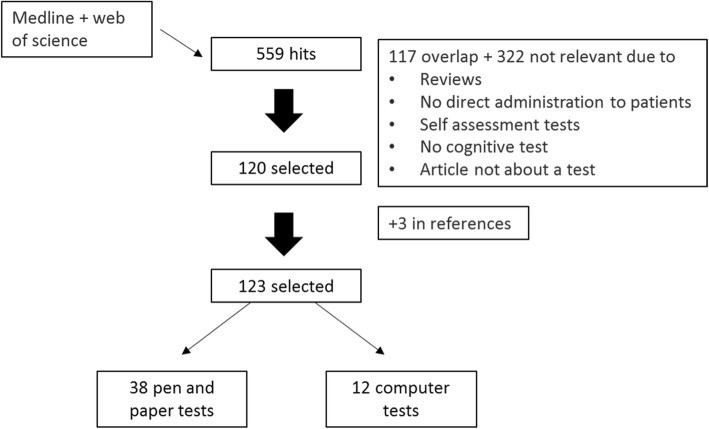
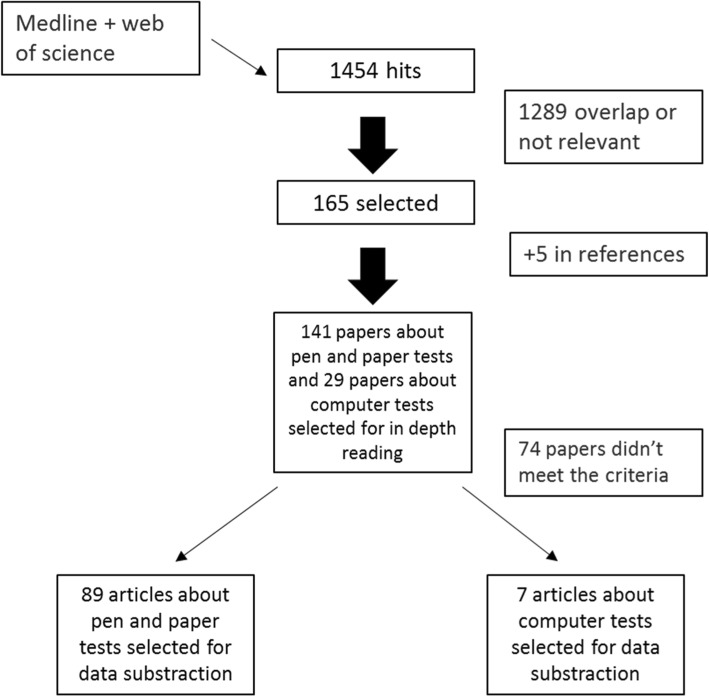
OBJECTIVES: The objective of this systematic review was (1) to give an overview of the available short screening instruments for the early detection of Alzheimer's disease (AD) and (2) to review the psychometric properties of these instruments. METHODS: First, a systematic search of titles and abstracts of PubMed and Web of Science was conducted between February and July 2015 and updated in April 2016 and May 2018. Only papers written in English or Dutch were considered. All full-text papers about cognitive screening instruments for the early detection of AD were included, resulting in the identification of 38 pencil and paper tests and 12 computer tests. In a second step, the psychometric quality of these instruments was evaluated. Therefore, the same databases were searched again to identify papers that described the psychometric properties of the instruments meanwhile applying diagnostic criteria for the diagnostic groups included. RESULTS: Out of 1454 papers, 96 clearly discussed the psychometric properties of the instruments. Eighty-nine papers discussed pencil and paper tests of which 80 were validated in a memory clinic setting. Based on the number of studies (31 articles) and the sensitivity (84%) and specificity (74%) values, the Montreal Cognitive Assessment (MoCA) seems to be a promising (pencil and paper) screening test for memory clinic testing as well as for population screening. Regarding computer tests, validation studies were only available for 7 out of 12 tests. CONCLUSIONS: A large number of screening tests for AD are available. However, most tests are only validated in a memory clinic setting and description of the psychometric properties of the instruments is limited. Especially, computer tests require further research. The MoCA is a promising instrument, but the specificity to detect early AD is rather low.
Overview
The claims and statistics of this paper haven’t been checked yet.
Free: it reads the open-access text and checks the first 5 claims that cite a source we can check. Create a free account to check every claim.
Integrity signals
Registry
Cites
Statistics
Figures
Verification
Claims the paper makes
The claims and statistics of this paper haven’t been checked yet.
Free: it reads the open-access text and checks the first 5 claims that cite a source we can check. Create a free account to check every claim.
Claims other papers make about this one
Each is checked against this paper’s own text: does it say what the citing paper says it does?
The source backs part of the claim, not all of it — or backs it for a different population, condition or comparison.
In the citing paper
“Second is new computerized neuropsychological products or new test batteries (22, 23), which are specifically designed for screening, comprehensive assessment or diagnostic purposes (16).”
From Research on digital tool in cognitive assessment: a bibliometric analysis (2023) · cites this paper as [23]
Experimental — accuracy not yet measured
Self-check
Percentages, sums and reported differences re-computed from the paper’s own numbers.
The self-check needs the paper’s full text.
Citations
Cites
Folstein, M. F., Folstein, S. E., & McHugh, P. R. (1975) · Journal of Psychiatric Research · doi:10.1016/0022-3956(75)90026-6 · Cited by 88,282 · cited 1×
“At present, the most used cognitive screening instrument for the detection of AD is the Mini-Mental State Examination (MMSE [5]).”
MethodThe Montreal Cognitive Assessment, MoCA: a brief screening tool for mild cognitive impairment
Nasreddine, Z. S., Phillips, N. A., Bédirian, V., Charbonneau, S., Whitehead, V., Collin, I., Cummings, J. L., & Chertkow, H. (2005) · Journal of the American Geriatrics Society · doi:10.1111/j.1532-5415.2005.53221.x · Cited by 25,553
Hirono, N., Mori, E., Ikejiri, Y., Imamura, T., Shimomura, T., Hashimoto, M., Yamashita, H., & Ikeda, M. (1997) · Brain and nerve · Cited by 21,030
Kok, J. S., Berg, I. J., & Scherder, E. J. A. (2013) · Dementia and Geriatric Cognitive Disorders Extra · doi:10.1159/000353441 · Cited by 20,589
Older Adults' Reasons for Using Technology while Aging in Place
Peek, S. T. M., Luijkx, K. G., Rijnaard, M. D., Nieboer, M. E., van der Voort, C. S., Aarts, S., van Hoof, J., Vrijhoef, H. J. M., & Wouters, E. J. M. (2016) · Gerontology · doi:10.1159/000430949 · Cited by 19,690
Sensitivity and False Alarm Rate of a Fall Sensor in Long-Term Fall Detection in the Elderly
Kangas, M., Korpelainen, R., Vikman, I., Nyberg, L., & Jämsä, T. (2015) · Gerontology · doi:10.1159/000362720 · Cited by 18,909
McKhann, G. M., Knopman, D. S., Chertkow, H., Hyman, B. T., Jack, C. R., Kawas, C. H., Klunk, W. E., Koroshetz, W. J., Manly, J. J., Mayeux, R., et al. (2011) · Alzheimer's & Dementia · doi:10.1016/j.jalz.2011.03.005 · Cited by 18,657
NIA‐AA Research Framework: Toward a biological definition of Alzheimer's disease
Jack, C. R., Bennett, D. A., Blennow, K., Carrillo, M. C., Dunn, B., Haeberlein, S. B., Holtzman, D. M., Jagust, W., Jessen, F., Karlawish, J., et al. (2018) · Alzheimer's & Dementia · doi:10.1016/j.jalz.2018.02.018 · Cited by 10,537
Albert, M. S., DeKosky, S. T., Dickson, D., Dubois, B., Feldman, H. H., Fox, N. C., Gamst, A., Holtzman, D. M., Jagust, W. J., Petersen, R. C., et al. (2011) · Alzheimer's & Dementia · doi:10.1016/j.jalz.2011.03.008 · Cited by 10,152
Mild Cognitive Impairment: Clinical Characterization and Outcome
Petersen, R. C., Smith, G. E., Waring, S. C., Ivnik, R. J., Tangalos, E. G., & Kokmen, E. (1999) · Archives of Neurology · doi:10.1001/archneur.56.3.303 · Cited by 8,980
Sperling, R. A., Aisen, P. S., Beckett, L. A., Bennett, D. A., Craft, S., Fagan, A. M., Iwatsubo, T., Jack, C. R., Kaye, J., Montine, T. J., et al. (2011) · Alzheimer's & Dementia · doi:10.1016/j.jalz.2011.03.003 · Cited by 7,155
Winblad, B., Palmer, K., Kivipelto, M., Jelic, V., Fratiglioni, L., Wahlund, L. ‐., Nordberg, A., Bäckman, L., Albert, M., Almkvist, O., et al. (2004) · Journal of Internal Medicine · doi:10.1111/j.1365-2796.2004.01380.x · Cited by 4,946 · cited 1×
“A last limitation is that within this review, MCI is treated as one concept, despite the fact that most clinicians and researchers differentiate between different subtypes of MCI (amnestic, non-amnestic, multiple or single domain) [11].”
BackgroundAlbert, M. S., DeKosky, S. T., Dickson, D., Dubois, B., Feldman, H. H., Fox, N. C., Gamst, A., Holtzman, D. M., Jagust, W. J., Petersen, R. C., et al. (2013) · Focus · doi:10.1176/appi.focus.11.1.96 · Cited by 2,621
Mioshi, E., Dawson, K., Mitchell, J., Arnold, R., & Hodges, J. R. (2006) · International Journal of Geriatric Psychiatry · doi:10.1002/gps.1610 · Cited by 2,016
Six-item screener to identify cognitive impairment among potential subjects for clinical research
Callahan, C. M., Unverzagt, F. W., Hui, S. L., Perkins, A. J., & Hendrie, H. C. (2002) · Medical Care · doi:10.1097/00005650-200209000-00007 · Cited by 1,499
The Mini-Cog as a screen for dementia: validation in a population-based sample
Borson, S., Scanlan, J. M., Chen, P., & Ganguli, M. (2003) · Journal of the American Geriatrics Society · doi:10.1046/j.1532-5415.2003.51465.x · Cited by 1,348
Mitchell, A. J. (2009) · Journal of Psychiatric Research · doi:10.1016/j.jpsychires.2008.04.014 · Cited by 1,129 · cited 2×
“The second excluded test was the MMSE, because it has already been reviewed extensively by Mitchell who concluded that the MMSE is not appropriate to detect mild cognitive impairment [6].”
BackgroundMethodKalbe, E., Kessler, J., Calabrese, P., Smith, R., Passmore, A. P., Brand, M., & Bullock, R. (2004) · International Journal of Geriatric Psychiatry · doi:10.1002/gps.1042 · Cited by 766
Cognitive impairment in preclinical Alzheimer's disease: a meta-analysis
Bäckman, L., Jones, S., Berger, A.-K., Laukka, E. J., & Small, B. J. (2005) · Neuropsychology · doi:10.1037/0894-4105.19.4.520 · Cited by 735 · cited 1×
“As memory function is one of the first domains affected by AD pathology [13, 14], it could be seen as a limitation for AD screening that the clock drawing test (CDT), Alzheimer Quick Test (AQT), and Quick Mild Cognitive Impairment screen (Qmci) do not measure memory functioning.”
BackgroundTariq, S. H., Tumosa, N., Chibnall, J. T., Perry, M. H., & Morley, J. E. (2006) · The American Journal of Geriatric Psychiatry · doi:10.1097/01.jgp.0000221510.33817.86 · Cited by 724
Screening for dementia with the Memory Impairment Screen
Buschke, H., Kuslansky, G., Katz, M., Stewart, W. F., Sliwinski, M. J., Eckholdt, H. M., & Lipton, R. B. (1999) · Neurology · doi:10.1212/wnl.52.2.231 · Cited by 653
A review of screening tests for cognitive impairment
Cullen, B., O'Neill, B., Evans, J. J., Coen, R. F., & Lawlor, B. A. (2007) · Journal of Neurology, Neurosurgery & Psychiatry · doi:10.1136/jnnp.2006.095414 · Cited by 566 · cited 1×
“As mentioned in previous reviews, it is unlikely that there is one perfect screening instrument that can be used in every population and for all types of neurodegenerative and cerebrovascular brain diseases [9].”
BackgroundThe Rowland Universal Dementia Assessment Scale (RUDAS): a multicultural cognitive assessment scale
Storey, J. E., Rowland, J. T. J., Conforti, D. A., & Dickson, H. G. (2004) · International Psychogeriatrics · doi:10.1017/s1041610204000043 · Cited by 509
Hill, R., Betts, L. R., & Gardner, S. E. (2015) · Computers in Human Behavior · doi:10.1016/j.chb.2015.01.062 · Cited by 470 · cited 1×
“Indeed, a majority of older adults lack familiarity with computers, which can negatively affect performance [16, 17].”
Background“Who over 65 is online?” Older adults’ dispositions toward information communication technology
Vroman, K. G., Arthanat, S., & Lysack, C. (2015) · Computers in Human Behavior · doi:10.1016/j.chb.2014.10.018 · Cited by 458 · cited 1×
“Indeed, a majority of older adults lack familiarity with computers, which can negatively affect performance [16, 17].”
BackgroundA 7 Minute Neurocognitive Screening Battery Highly Sensitive to Alzheimer's Disease
Solomon, P. R., Hirschoff, A., Kelly, B., Relin, M., Brush, M., DeVeaux, R. D., & Pendlebury, W. W. (1998) · Archives of Neurology · doi:10.1001/archneur.55.3.349 · Cited by 418
Gold Mining in the Peruvian Amazon: Global Prices, Deforestation, and Mercury Imports
Swenson, J. J., Carter, C. E., Domec, J.-C., & Delgado, C. I. (2011) · PLoS ONE · doi:10.1371/journal.pone.0018875 · Cited by 391
Julayanont, P., Tangwongchai, S., Hemrungrojn, S., Tunvirachaisakul, C., Phanthumchinda, K., Hongsawat, J., Suwichanarakul, P., Thanasirorat, S., & Nasreddine, Z. S. (2015) · Journal of the American Geriatrics Society · doi:10.1111/jgs.13820 · Cited by 292 · cited 2×
“Within this light, it may be interesting to improve the existing instruments and potentially adapt them for several settings and populations, such as the adaptation of the MoCA for lower educated people or for people with hearing impairments [19, 22].”
BackgroundResultWhat Is the Best Dementia Screening Instrument for General Practitioners to Use?
Brodaty, H., Low, L.-F., Gibson, L., & Burns, K. (2006) · The American Journal of Geriatric Psychiatry · doi:10.1097/01.jgp.0000216181.20416.b2 · Cited by 278
The Mini-Addenbrooke's Cognitive Examination: A New Assessment Tool for Dementia
Hsieh, S., McGrory, S., Leslie, F., Dawson, K., Ahmed, S., Butler, C. R., Rowe, J. B., Mioshi, E., & Hodges, J. R. (2015) · Dementia and Geriatric Cognitive Disorders · doi:10.1159/000366040 · Cited by 277
Computerized Cognitive Testing for Older Adults: A Review
Zygouris, S., & Tsolaki, M. (2015) · American Journal of Alzheimer's Disease & Other Dementias® · doi:10.1177/1533317514522852 · Cited by 272
Paired associate performance in the early detection of DAT
FOWLER, K. S., SALING, M. M., CONWAY, E. L., SEMPLE, & LOUIS, W. J. (2002) · Journal of the International Neuropsychological Society · doi:10.1017/s1355617701020069 · Cited by 251
Makizako, H., Shimada, H., Park, H., Doi, T., Yoshida, D., Uemura, K., Tsutsumimoto, K., & Suzuki, T. (2013) · Geriatrics & Gerontology International · doi:10.1111/ggi.12014 · Cited by 242
for the AIBL Research Group, Maruff, P., Lim, Y. Y., Darby, D., Ellis, K. A., Pietrzak, R. H., Snyder, P. J., Bush, A. I., Szoeke, C., Schembri, A., et al. (2013) · BMC Psychology · doi:10.1186/2050-7283-1-30 · Cited by 239 · cited 1×
“Cogstate Brief Battery [58] Yes 12–15 v v v”
Tang-Wai, D. F., Knopman, D. S., Geda, Y. E., Edland, S. D., Smith, G. E., Ivnik, R. J., Tangalos, E. G., Boeve, B. F., & Petersen, R. C. (2003) · Archives of Neurology · doi:10.1001/archneur.60.12.1777 · Cited by 200
Sperling, R. A., Aisen, P. S. S., Beckett, L. A., Bennett, D. A., Craft, S., Fagan, A. M., Iwatsubo, T., Jack, C. R., Kaye, J. A., Montine, T. J., et al. (2011) · Cited by 197
Apolinário, D., Lichtenthäler, D. G., Magaldi, R. M., Soares, A. T., Busse, A. L., Amaral, J. R. D. G., Filho, W. J., & Brucki, S. M. D. (2015) · International Journal of Geriatric Psychiatry · doi:10.1002/gps.4282 · Cited by 172
Computer Assessment of Mild Cognitive Impairment
Saxton, J., Morrow, L., Eschman, A., Archer, G., Luther, J., & Zuccolotto, A. (2009) · Postgraduate Medicine · doi:10.3810/pgm.2009.03.1990 · Cited by 168
The Death Knoll for the MMSE: Has It Outlived Its Purpose?
Nieuwenhuis-Mark, R. E. (2010) · Journal of Geriatric Psychiatry and Neurology · doi:10.1177/0891988710363714 · Cited by 164 · cited 1×
“In agreement with Mitchell’s results, some reviews [7, 8] suggest to replace the MMSE by more performant alternatives.”
ResultPaired associate performance in the early detection of DAT
FOWLER, K. S., Saling, M. M., Conway, E. L., et al. (2002) · Journal of the International Neuropsychological Society · doi:10.1017/s1355617702811067 · Cited by 139
¿Es hora de jubilar al Mini-Mental?
Carnero-Pardo, C. (2014) · Neurología · doi:10.1016/j.nrl.2013.07.003 · Cited by 138
Malmstrom, T. K., Voss, V. B., Cruz-Oliver, D. M., Cummings-Vaughn, L. A., Tumosa, N., Grossberg, G. T., & Morley, J. E. (2015) · The Journal of nutrition, health and aging · doi:10.1007/s12603-015-0564-2 · Cited by 135
Should the Mini-Mental State Examination be retired?
Pardo, C. C. (2014) · Neurología (English Edition) · doi:10.1016/j.nrleng.2013.07.005 · Cited by 126 · cited 1×
“In agreement with Mitchell’s results, some reviews [7, 8] suggest to replace the MMSE by more performant alternatives.”
ResultThe NUCOG: Validity and Reliability of a Brief Cognitive Screening Tool in Neuropsychiatric Patients
Walterfang, M., Siu, R., & Velakoulis, D. (2006) · Australian & New Zealand Journal of Psychiatry · doi:10.1080/j.1440-1614.2006.01923.x · Cited by 126
Development of cognitive screening test for the severely hearing impaired: Hearing‐impaired M o CA
Lin, V., Chung, J., Callahan, B. L., Smith, L., Gritters, N., Chen, J. M., Black, S. E., & Masellis, M. (2017) · The Laryngoscope · doi:10.1002/lary.26590 · Cited by 107
Ehreke, L., Luppa, M., König, H., & Riedel-Heller, S. G. (2009) · International Psychogeriatrics · doi:10.1017/s1041610209990676 · Cited by 91 · cited 1×
“Moreover, Ehreke and colleagues concluded in their systematic review that due to its poor psychometric properties, the CDT should not be used for MCI screening [15].”
BackgroundSix-item cognitive impairment test (6CIT): pragmatic diagnostic accuracy study for dementia and MCI
Abdel‐Aziz, K., & Larner, A. J. (2015) · International Psychogeriatrics · doi:10.1017/s1041610214002932 · Cited by 84
Memory and Executive Screening (MES): a brief cognitive test for detecting mild cognitive impairment
Guo, Q., Zhou, B., Zhao, Q., Wang, B., & Hong, Z. (2012) · BMC Neurology · doi:10.1186/1471-2377-12-119 · Cited by 82 · cited 1×
“The MES test is developed by Guo and colleagues for the detection of MCI and mild AD dementia and focuses on memory and executive functioning [23].”
MethodTrenkle, D. L., Shankle, W. R., & Azen, S. P. (2007) · Journal of Alzheimer's Disease · doi:10.3233/jad-2007-11309 · Cited by 79
The Neural Basis of Intrusions in Free Recall and Cued Recall: A PET Study in Alzheimer's Disease
Desgranges, B., Baron, J., Giffard, B., Chételat, G., Lalevée, C., Viader, F., Sayette, V. D. L., & Eustache, F. (2002) · NeuroImage · doi:10.1006/nimg.2002.1289 · Cited by 75
Inoue, M., Jinbo, D., Nakamura, Y., Taniguchi, M., & Urakami, K. (2009) · American Journal of Alzheimer's Disease & Other Dementias® · doi:10.1177/1533317508330222 · Cited by 71
Dougherty, J. H., Cannon, R. L., Nicholas, C. R. N., Hall, L., Hare, F., Carr, E. R., Dougherty, A., Janowitz, J., & Arunthamakun, J. (2010) · Journal of Alzheimer s Disease · doi:10.3233/jad-2010-1354 · Cited by 71
Ó’Caoimh, R., Gao, Y., Gallagher, P., Eustace, J. A., McGlade, C., & Molloy, D. W. (2013) · Age and Ageing · doi:10.1093/ageing/aft044 · Cited by 67
Mansbach, W. E., MacDougall, E. E., & Rosenzweig, A. S. (2012) · Journal of Clinical and Experimental Neuropsychology · doi:10.1080/13803395.2011.630649 · Cited by 64
Diagnostic accuracy of the Eurotest for dementia: a naturalistic, multicenter phase II study
The Trans-EUROTEST Group, Pardo, C. C., Gurpegui, M., Sánchez‐Cantalejo, E., Frank, A., de Rodas, S. M. C., Barquero, M. S., & Montoro‐Ríos, M. T. (2006) · BMC Neurology · doi:10.1186/1471-2377-6-15 · Cited by 62
Takechi, H., & Dodge, H. H. (2010) · Geriatrics and gerontology international/Geriatrics & gerontology international · doi:10.1111/j.1447-0594.2009.00576.x · Cited by 53
Screening for Alzheimer’s Disease with the Short Cognitive Evaluation Battery
Robert, P. H., Schück, S., Dubois, B., Olié, J., Lepine, J. P., Gallarda, T., Goni, S., & Troy, S. (2003) · Dementia and Geriatric Cognitive Disorders · doi:10.1159/000067971 · Cited by 51
Galetta, K. M., Chapman, K. R., Essis, M. D., Alosco, M. L., Gillard, D. M., Steinberg, E. G., Dixon, D. B., Martin, B. M., Chaisson, C. E., Kowall, N. W., et al. (2016) · Alzheimer Disease & Associated Disorders · doi:10.1097/wad.0000000000000157 · Cited by 51
Carnero-Pardo, C., Espejo-Martínez, B., López-Alcalde, S., Espinosa-García, M., Sáez-Zea, C., Hernández-Torres, E., Navarro-Espigares, J. L., & Vílchez-Carrillo, R. (2011) · PLoS ONE · doi:10.1371/journal.pone.0027069 · Cited by 50
Crocco, E., Loewenstein, D., Curiel, R. E., Alperin, N. J., Czaja, S. J., Harvey, P. D., Sun, X., Lenchus, J. D., Raffo, A., Peñate, A., et al. (2017) · Journal of Psychiatric Research · doi:10.1016/j.jpsychires.2017.08.015 · Cited by 49
The utility of the Addenbrooke’s cognitive examination version three in early-onset dementia
Elamin, M., Holloway, G., Bak, T. H., & Pal, S. (2016) · Dementia and Geriatric Cognitive Disorders · doi:10.1159/000439248 · Cited by 48
Memória, C. M., Yassuda, M. S., Nakano, E. Y., & Forlenza, O. V. (2014) · International Psychogeriatrics · doi:10.1017/s1041610214000726 · Cited by 42
Babacan-Yildiz, G., Isik, A. T., Ur, E., Aydemir, E., Ertas, C., Cebi, M., Soysal, P., Gursoy, E., Kolukisa, M., Kocaman, G., et al. (2013) · International Psychogeriatrics · doi:10.1017/s1041610212001780 · Cited by 41
Standish, T. I. M., Molloy, D. W., Cunje, A., & Lewis, D. L. (2007) · International Journal of Geriatric Psychiatry · doi:10.1002/gps.1659 · Cited by 41
The TE4D-Cog: a new test for detecting early dementia in English-speaking populations
Mahoney, R., Johnston, K., Katona, C., Maxmin, K., & Livingston, G. (2005) · International Journal of Geriatric Psychiatry · doi:10.1002/gps.1412 · Cited by 39
Short cognitive performance test: diagnostic accuracy and education bias in older Brazilian adults.
Flaks, M. K., Forlenza, O., Pereira, F. S., Viola, L., & Yassuda, M. (2009) · Archives of Clinical Neuropsychology · doi:10.1093/arclin/acp033 · Cited by 27
A Novel Technology to Screen for Cognitive Impairment in the Elderly
Wright, D. W., Nevárez, H., Kilgo, P., LaPlaca, M. C., Robinson, A. B., Fowler, S., Brumfield, J. R., & Goldstein, F. C. (2011) · American Journal of Alzheimer s Disease & Other Dementias® · doi:10.1177/1533317511426133 · Cited by 24
Werner, P., & Korczyn, A. D. (2011) · Alzheimer Disease & Associated Disorders · doi:10.1097/wad.0b013e318222323e · Cited by 24 · cited 1×
“For example, according to a study of Perla and colleagues, participants that were unfamiliar with computers, female participants, and participants with a lower socioeconomic status were less inclined to do a computer screening for dementia [18].”
BackgroundShort Montreal Cognitive Assessment
Larner, A. J. (2016) · Journal of Geriatric Psychiatry and Neurology · doi:10.1177/0891988716673469 · Cited by 22
Srinivasan, S. (2010) · Neurology India · doi:10.4103/0028-3886.72167 · Cited by 20
Validation of the Revised Quick Cognitive Screening Test
Mate-Kole, C. C., Conway, J. M., Catayong, K., Bieu, R. K., Sackey, N. A., Wood, R. M., & Fellows, R. P. (2009) · Archives of Physical Medicine and Rehabilitation · doi:10.1016/j.apmr.2009.02.007 · Cited by 18
The Fuld Object-Memory Evaluation: Development and Validation of an Alternate Form
Anderson-Hanley, C., Miele, A., & Dunnam, M. (2013) · Applied neuropsychology. Adult · doi:10.1080/09084282.2012.670156 · Cited by 16
A brief computerized self-screen for dementia
Kluger, B. M., Saunders, L. V., Hou, W., GARVAN, C. W., Kirli, S., Efros, D. B., Chau, Q.-A. N., Crucian, G. P., Finney, G. R., Meador, K. J., et al. (2008) · Journal of Clinical and Experimental Neuropsychology · doi:10.1080/13803390802317559 · Cited by 16 · cited 2×
“Kluger BM, Saunders LV, Hou W, Garvan CW, Kirli S, Efros DB, et al. A brief computerized self-screen for dementia.”
BackgroundThe Revised Kingston Standardized Cognitive Assessment
Hopkins, R. W., Kilik, L. A., Day, D. J. A., Rows, C. P., & Hamilton, P. F. (2004) · International Journal of Geriatric Psychiatry · doi:10.1002/gps.1083 · Cited by 15
Roeck, E. E. D., Engelborghs, S., & Dierckx, E. (2016) · Journal of the American Medical Directors Association · doi:10.1016/j.jamda.2016.02.015 · Cited by 15 · cited 2×
“Moreover, good diagnostic instruments that can be used for population screening should be available when disease-modifying treatment options for AD become available [4].”
BackgroundSelf-citationThe Mini-Kingston Standardized Cognitive Assessment
Hopkins, R. W., & Kilik, L. A. (2013) · American Journal of Alzheimer s Disease & Other Dementias® · doi:10.1177/1533317513481095 · Cited by 5
Research works printed but not linked: 2
- American Psychiatric Association. Diagnostic and statistical manual of mental disorders (4th ed.). Washington, DC: American Psychiatric Association; 1994.
- Wiig EH Nielsen NP Minthon L Alzheimer’s quick test: assessment of parietal function 2002 San Antonio Harcourt Assessment
Cited by
Sabbagh, M. N., Boada, M., Borson, S., Chilukuri, M., Doraiswamy, P. M., Dubois, B., Ingram, J., Iwata, A., Porsteinsson, A. P., Possin, K. L., et al. (2020) · The Journal of Prevention of Alzheimer's Disease · doi:10.14283/jpad.2020.19 · Cited by 105
“…in this series summarizes the challenges and opportunities relating to the detection of MCI in non-clinical settings, i.e., at an individual’s home or in everyday settings such as pharmacies or community screening events, as has already been accomplished with brief paper and pencil tests (8, 9).”
BackgroundClassifying Alzheimer's Disease Using Audio and Text-Based Representations of Speech
Haulcy, R., & Glass, J. R. (2021) · Frontiers in Psychology · doi:10.3389/fpsyg.2020.624137 · Cited by 130
“There is currently no cure for AD (Yadav, 2019) and early detection is imperative for effective intervention to occur (De Roeck et al., 2019).”
BackgroundPerspectives and challenges in patient stratification in Alzheimer’s disease
Abdelnour, C., Agosta, F., Bozzali, M., Fougère, B., Iwata, A., Nilforooshan, R., Takada, L. T., Viñuela, F., & Traber, M. (2022) · Alzheimer's Research & Therapy · doi:10.1186/s13195-022-01055-y · Cited by 108
Swinnen, N., Vandenbulcke, M., de Bruin, E. D., Akkerman, R., Stubbs, B., Firth, J., & Vancampfort, D. (2021) · Alzheimer s Research & Therapy · doi:10.1186/s13195-021-00806-7 · Cited by 113
Is tau in the absence of amyloid on the Alzheimer’s continuum?: A study of discordant PET positivity
Weigand, A. J., Bangen, K. J., Thomas, K. R., Delano-Wood, L., Gilbert, P. E., Brickman, A. M., Bondi, M. W., & Initiative, A. D. N. (2020) · Brain Communications · doi:10.1093/braincomms/fcz046 · Cited by 86
Metadata
- Authors
- De Roeck, E. E., De Deyn, P. P., Dierckx, E., & Engelborghs, S.
- Affiliations
- Vrije Universiteit Brussel (BE)
- Corresponding author
- Engelborghs, Sebastiaan
- Venue
- Alzheimer's Research & Therapy
- Published
- 2019-02-28
- Volume
- 11
- Issue
- 1
- Pages
- 21-21
- ISSN
- 1758-9193 (ISSN-L)
- PMC
- PMC6396539
- OpenAlex
- W2922917123
- Cited by
- 209
- References
- 75
- Citations by year
- 2026: 17 · 2025: 30 · 2024: 36 · 2023: 34 · 2022: 39 · 2021: 35 · 2020: 13 · 2019: 5
- FWCI
- 3.87
- Type
- journal article
- Language
- en
- Open access
- gold
- doi.org
- Licence
- cc-by
- creativecommons.org/licenses/by/4.0/ (tdm)
- Locations
- Alzheimer s Research & Therapy (publishedVersion, cc-by)
- Europe PMC (PubMed Central) (publishedVersion, cc-by)
- PubMed Central (publishedVersion, cc-by)
- PubMed (publishedVersion)
- DOAJ (DOAJ: Directory of Open Access Journals) (submittedVersion, cc-by-sa)
- VUBIR (Vrije Universiteit Brussel) (submittedVersion)
- Funders
- Flemish government Agency for Innovation by Science and Technology (IWT-140027-SBO)
- University of Antwerp Research Fund
- Topics
- Health Sciences › Medicine › Psychiatry and Mental health › Dementia and Cognitive Impairment Research
- Social Sciences › Psychology › Applied Psychology › Psychological Testing and Assessment
- Social Sciences › Psychology › Clinical Psychology › Historical and Modern Theater Studies
- Keywords
- Alzheimer's disease, early detection, cognitive screening tools, Montreal Cognitive Assessment, psychometric properties, paper-and-pencil tests, computerized cognitive assessment, sensitivity and specificity, mass screening
- MeSH terms
- Mental Status and Dementia Tests, Alzheimer Disease, Cognition, Humans, Brief Psychiatric Rating Scale, Early Diagnosis, Cognitive Dysfunction
About these checks
Registry, retraction, Cites and statistics results are computed, not judged, with one exception: a printed reference that no index lists is read once by a model before it counts as a citation error. Claims are extracted by a model and kept only when their quote appears verbatim in the text; each cited source is then checked, with a model’s help, for whether it says what the claim relies on. Those verdicts can be wrong — read the claim’s quote and the cited source before relying on one.
Statistics and arithmetic are recomputed, not judged.
Confidence bands are shown only for fields calibrated on our annotated test set. None is calibrated yet, so no band is shown.
What counts as a claim ›How we measure confidence ›How we check this ›
Are you an author, or do you see a problem with this page? Request a review
Data sources
Bibliographic data: Semantic Scholar, OpenAlex, Crossref.
Contains information from the Semantic Scholar Academic Graph Datasets, made available under the ODC Attribution License (ODC-BY 1.0).
Semantic Scholar’s data is described in: Kinney, R., et al. (2023). The Semantic Scholar Open Data Platform. arXiv:2301.10140.
