

Upregulation of MIF as a defense mechanism and a biomarker of Alzheimer’s disease
Open accessThe DOI matches its Crossref record; 45 of the 45 references it cites were found in a registry or an index.
Abstract
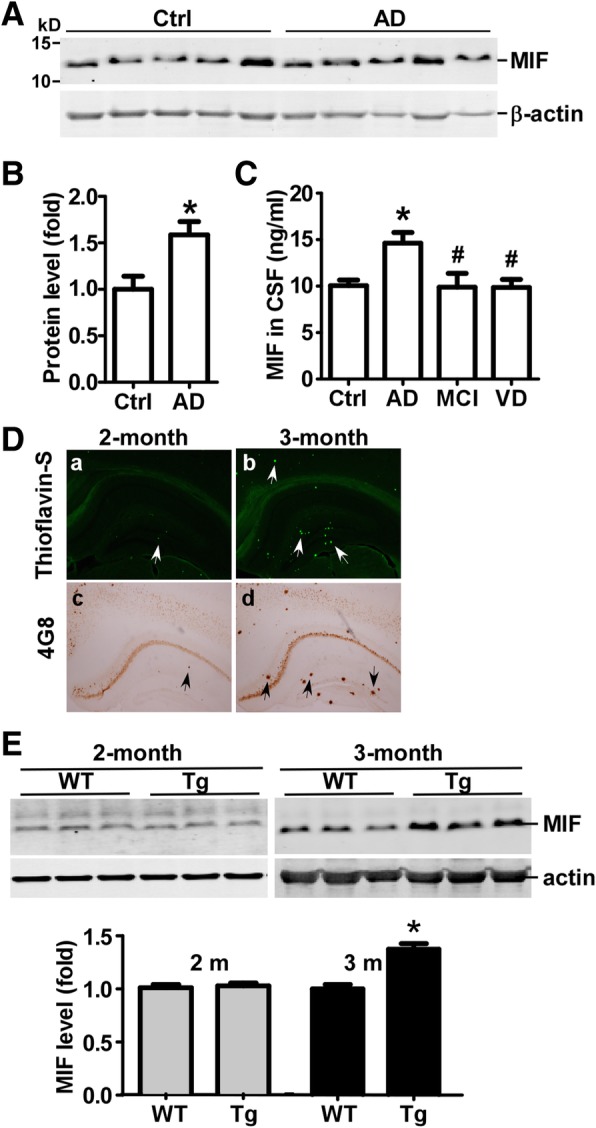
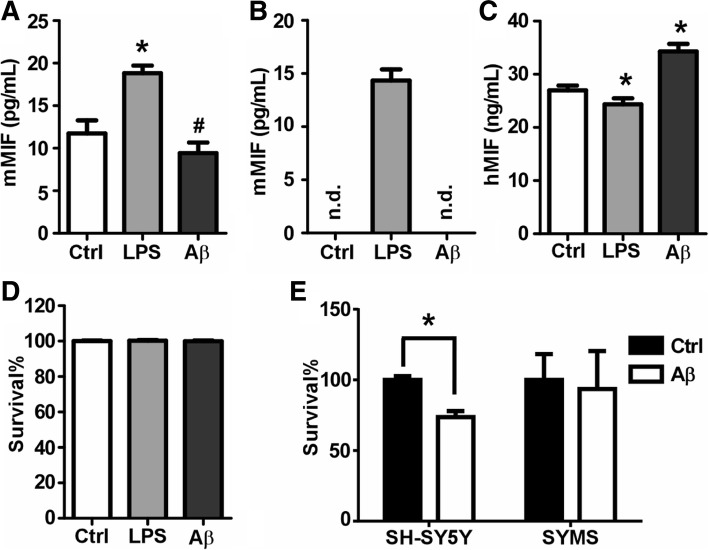
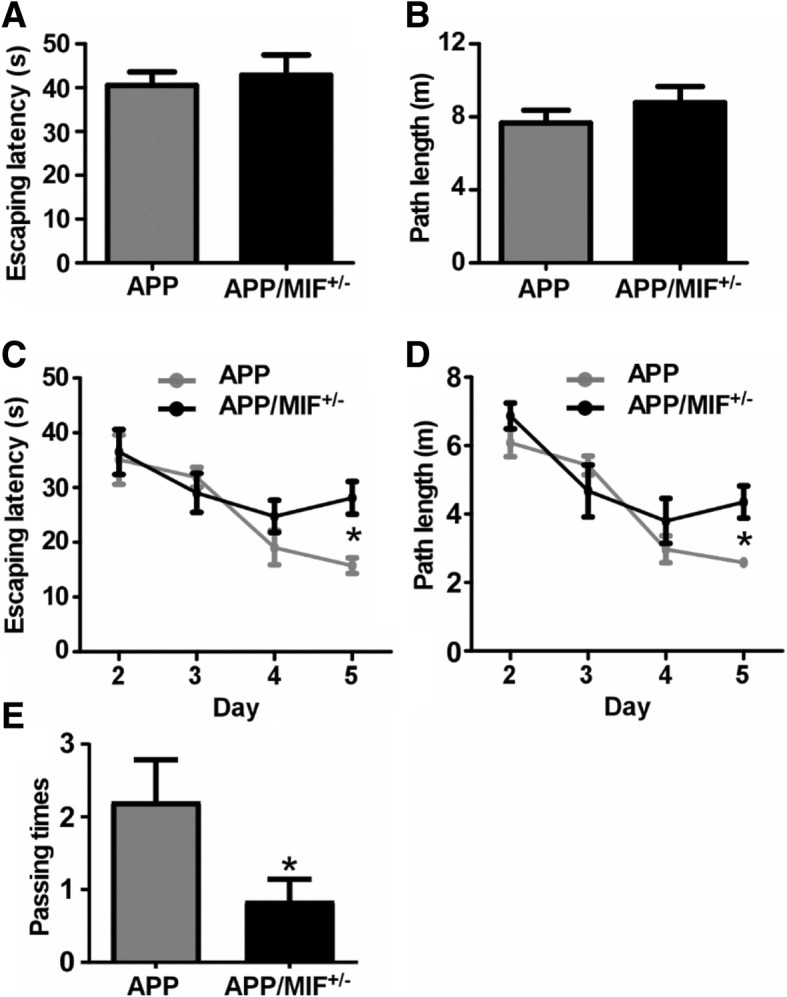
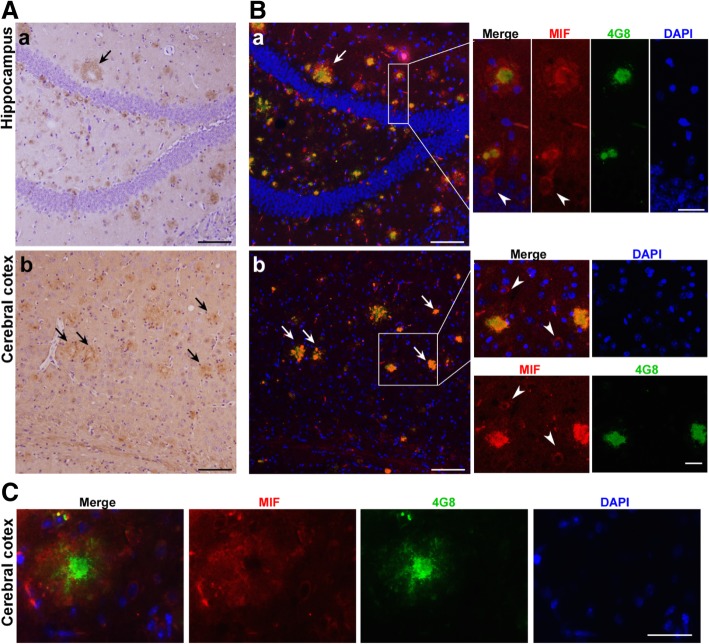
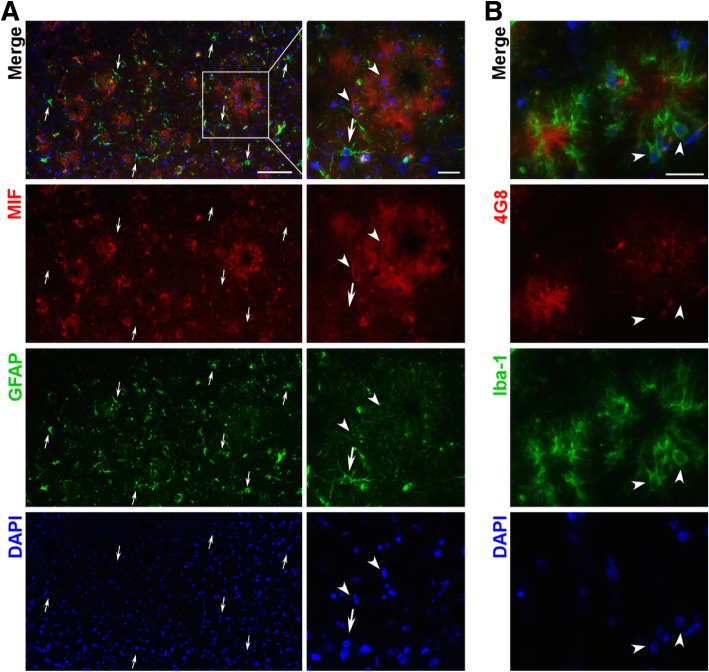
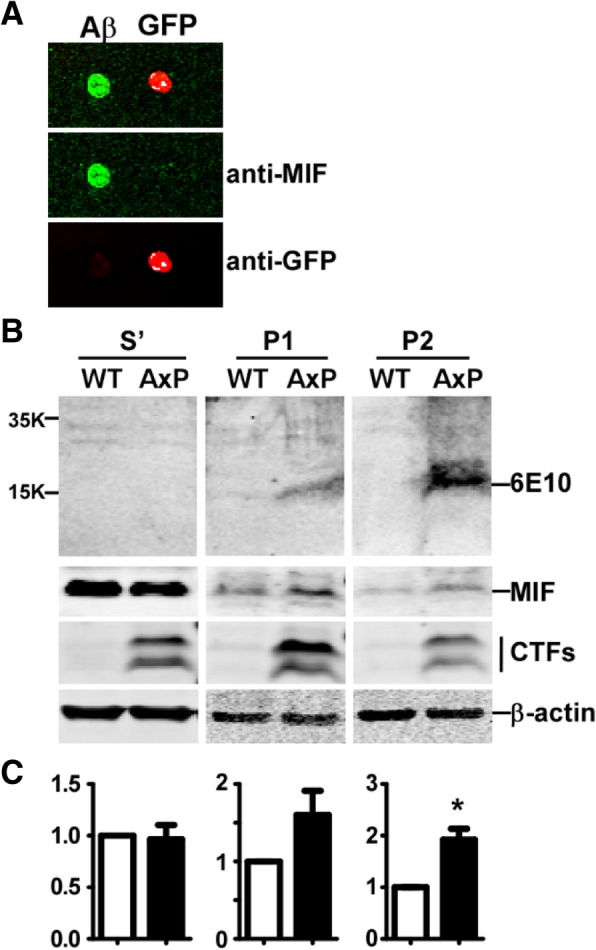
Macrophage migration inhibitory factor (MIF) is a pro-inflammatory cytokine. Chronic inflammation induced by amyloid β proteins (Aβ) is one prominent neuropathological feature in Alzheimer’s disease (AD) brain. Elisa, Western blot, and immunohistochemical staining analysis were performed to examine the level of MIF protein in CSF and brain tissues. MTT and LDH assays were used to examine the neurotoxicity, and the Morris Water Maze test was performed to examine the cognitive function in the MIF +/− /APP23 transgenic mice. MIF expression was upregulated in the brain of AD patients and AD model mice. Elevated MIF concentration was detected in the cerebrospinal fluid of AD patients but not in that of the patients suffering from mild cognitive impairment and vascular dementia. Reduced MIF expression impaired learning and memory in the AD model mice. MIF expression largely associates with Aβ deposits and microglia. The binding assay revealed a direct association between MIF and Aβ oligomers. Neurons instead of glial cells were responsible for the secretion of MIF upon stimulation by Aβ oligomers. In addition, overexpression of MIF significantly protected neuronal cells from Aβ-induced cytotoxicity. Our study suggests that neuronal secretion of MIF may serve as a defense mechanism to compensate for declined cognitive function in AD, and increased MIF level could be a potential AD biomarker.
Overview
The claims and statistics of this paper haven’t been checked yet.
Free: it reads the open-access text and checks the first 5 claims that cite a source we can check. Create a free account to check every claim.
Integrity signals
Registry
Cites
Statistics
Figures
Verification
Claims the paper makes
The claims and statistics of this paper haven’t been checked yet.
Free: it reads the open-access text and checks the first 5 claims that cite a source we can check. Create a free account to check every claim.
Claims other papers make about this one
Each is checked against this paper’s own text: does it say what the citing paper says it does?
The source backs part of the claim, not all of it — or backs it for a different population, condition or comparison.
In the citing paper
“There has been a previous study showing that MIF co-localized with Aβ plaques in APP23 transgenic mice, suggesting an association between MIF and AD [85].”
From Abnormal accumulation of extracellular vesicles in hippocampal dystrophic axons and regulation by the primary cilia in Alzheimer's disease (2023) · cites this paper as [85]
Experimental — accuracy not yet measuredThe cited source says what the claim attributes to it.
In the citing paper
“The increased expression of the macrophage migration inhibitory factor (MIF) protein (Fig. 4G, H), which is encoded by the Mif gene, provided additional evidence for the previous findings that an inflammatory response is closely associated with Aβ plaques [51, 85].”
From Abnormal accumulation of extracellular vesicles in hippocampal dystrophic axons and regulation by the primary cilia in Alzheimer's disease (2023) · cites this paper as [85]
Self-check
Percentages, sums and reported differences re-computed from the paper’s own numbers.
The self-check needs the paper’s full text.
Citations
Cites
Amyloid oligomers exacerbate tau pathology in a mouse model of tauopathy
Selenica, M.-L. B., Brownlow, M., Jimenez, J. P., Lee, D. C., Pena, G., Dickey, C. A., Gordon, M. N., & Morgan, D. (2013) · Neurodegenerative Diseases · doi:10.1159/000337230 · Cited by 10,359
The antibody aducanumab reduces Aβ plaques in Alzheimer’s disease
Sevigny, J., Chiao, P., Bussière, T., Weinreb, P. H., Williams, L., Maier, M., Dunstan, R., Salloway, S., Chen, T., Ling, Y., et al. (2016) · Nature · doi:10.1038/nature19323 · Cited by 3,059
Two amyloid precursor protein transgenic mouse models with Alzheimer disease-like pathology
Sturchler-Pierrat, C., Abramowski, D., Duke, M., Wiederhold, K.-H., Mistl, C., Rothacher, S., Ledermann, B., Bürki, K., Frey, P., Paganetti, P. A., et al. (1997) · Proceedings of the National Academy of Sciences · doi:10.1073/pnas.94.24.13287 · Cited by 1,507
Bernhagen, J., Krohn, R., Lue, H., Gregory, J. L., Zernecke, A., Koenen, R. R., Dewor, M., Georgiev, I., Schober, A., Leng, L., et al. (2007) · Nature Medicine · doi:10.1038/nm1567 · Cited by 1,269
MIF Signal Transduction Initiated by Binding to CD74
Leng, L., Metz, C. N., Fang, Y., Xu, J., Donnelly, S., Baugh, J., Delohery, T., Chen, Y., Mitchell, R. A., & Bucala, R. (2003) · The Journal of Experimental Medicine · doi:10.1084/jem.20030286 · Cited by 1,154
In vitro characterization of conditions for amyloid-β peptide oligomerization and fibrillogenesis
Stine, W. B., Dahlgren, K. N., Krafft, G. A., & LaDu, M. J. (2003) · Journal of Biological Chemistry · doi:10.1074/jbc.m210207200 · Cited by 1,015
Calandra, T., Bernhagen, J., Mitchell, R. A., & Bucala, R. (1994) · The Journal of experimental medicine · doi:10.1084/jem.179.6.1895 · Cited by 985
Inflammation in Alzheimer Disease--A Brief Review of the Basic Science and Clinical Literature
Wyss-Coray, T., & Rogers, J. (2012) · Cold Spring Harbor Perspectives in Medicine · doi:10.1101/cshperspect.a006346 · Cited by 975
Heterogeneity of Microglial Activation in the Innate Immune Response in the Brain
Colton, C. A. (2009) · Journal of Neuroimmune Pharmacology · doi:10.1007/s11481-009-9164-4 · Cited by 877
A Review: Inflammatory Process in Alzheimer's Disease, Role of Cytokines
Rubio-Perez, J. M., & Morillas-Ruiz, J. M. (2012) · The Scientific World Journal · doi:10.1100/2012/756357 · Cited by 839
A Proinflammatory Cytokine Inhibits P53 Tumor Suppressor Activity
Hudson, J. D., Shoaibi, M. A., Maestro, R., Carnero, A., Hannon, G. J., & Beach, D. H. (1999) · The Journal of Experimental Medicine · doi:10.1084/jem.190.10.1375 · Cited by 649
Hypoxia facilitates Alzheimer's disease pathogenesis by up-regulating BACE1 gene expression
Sun, X., He, G., Qing, H., Zhou, W., Dobie, F., Cai, F., Staufenbiel, M., Huang, L. E., & Song, W. (2006) · Proceedings of the National Academy of Sciences · doi:10.1073/pnas.0606298103 · Cited by 605
Self-citationInhibition of GSK3β-mediated BACE1 expression reduces Alzheimer-associated phenotypes
Ly, P. T. T., Wu, Y., Zou, H., Wang, R., Zhou, W., Kinoshita, A., Zhang, M., Yang, Y., Cai, F., Woodgett, J., et al. (2013) · Journal of Clinical Investigation · doi:10.1172/jci64516 · Cited by 442
Self-citationMiller, E. J., Li, J., Leng, L., McDonald, C., Atsumi, T., Bucala, R., & Young, L. H. (2008) · Nature · doi:10.1038/nature06504 · Cited by 429
A nuclease that mediates cell death induced by DNA damage and poly(ADP-ribose) polymerase-1
Wang, Y., An, R., Umanah, G. K., Park, H., Nambiar, K., Eacker, S. M., Kim, B., Bao, L., Harraz, M. M., Chang, C., et al. (2016) · Science · doi:10.1126/science.aad6872 · Cited by 421
Qing, H., He, G., Ly, P. T. T., Fox, C. J., Staufenbiel, M., Cai, F., Zhang, Z., Wei, S., Sun, X., Chen, C.-H., et al. (2008) · The Journal of Experimental Medicine · doi:10.1084/jem.20081588 · Cited by 364
Self-citationMIF: a new cytokine link between rheumatoid arthritis and atherosclerosis
Morand, E. F., Leech, M., & Bernhagen, J. (2006) · Nature Reviews Drug Discovery · doi:10.1038/nrd2029 · Cited by 351
Culmsee, C., Zhu, X., Yu, Q.-S., Chan, S. L., Camandola, S., Guo, Z., Greig, N. H., & Mattson, M. P. (2001) · Journal of Neurochemistry · doi:10.1046/j.1471-4159.2001.t01-1-00220.x · Cited by 313
Mitochondrial dysfunction, apoptotic cell death, and Alzheimer’s disease
Eckert, A., Keil, U., Marques, C. A., Bonert, A., Frey, C., Schüssel, K., & Müller, W. E. (2003) · Biochemical Pharmacology · doi:10.1016/s0006-2952(03)00534-3 · Cited by 309
Richard, K. L., Filali, M., Préfontaine, P., & Rivest, S. (2008) · The Journal of Neuroscience · doi:10.1523/jneurosci.1146-08.2008 · Cited by 298
Immune hyperreactivity of Aβ plaque-associated microglia in Alzheimer's disease
Yin, Z., Raj, D., Saiepour, N., Van Dam, D., Brouwer, N., Holtman, I. R., Eggen, B. J. L., Möller, T., Tamm, J. A., Abdourahman, A., et al. (2017) · Neurobiology of Aging · doi:10.1016/j.neurobiolaging.2017.03.021 · Cited by 238
Craig-Schapiro, R., Kuhn, M., Xiong, C., Pickering, E. H., Liu, J., Misko, T. P., Perrin, R. J., Bales, K. R., Soares, H., Fagan, A. M., et al. (2011) · PLoS ONE · doi:10.1371/journal.pone.0018850 · Cited by 237
Flieger, O., Engling, A., Bucala, R., Lue, H., Nickel, W., & Bernhagen, J. (2003) · FEBS Letters · doi:10.1016/s0014-5793(03)00900-1 · Cited by 230
Kamphuis, W., Kooijman, L., Schetters, S., Orre, M., & Hol, E. M. (2016) · Biochimica et Biophysica Acta (BBA) - Molecular Basis of Disease · doi:10.1016/j.bbadis.2016.07.007 · Cited by 209
Mehlhorn, G., Hollborn, M., & Schliebs, R. (2000) · International Journal of Developmental Neuroscience · doi:10.1016/s0736-5748(00)00012-5 · Cited by 198
Long-term potentiation decay and memory loss are mediated by AMPAR endocytosis
Dong, Z., Han, H., Li, H., Bai, Y., Wang, W., Tu, M., Peng, Y., Zhou, L., He, W., Wu, X., et al. (2015) · Journal of Clinical Investigation · doi:10.1172/jci77888 · Cited by 193
Self-citationBinding of cystatin C to Alzheimer’s amyloid β inhibits in vitro amyloid fibril formation
Sastre, M., Calero, M., Pawlik, M., Mathews, P. M., Kumar, A. R., Danilov, V., Schmidt, S. D., Nixon, R. A., Frangione, B., & Levy, E. (2004) · Neurobiology of Aging · doi:10.1016/j.neurobiolaging.2003.11.006 · Cited by 170
MIF Expression in the Rat Brain: Implications for Neuronal Function
Bacher, M., Meinhardt, A., Lan, H. Y., Dhabhar, F. S., Mu, W., Metz, C. N., Chesney, J. A., Gemsa, D., Donnelly, T., Atkins, R. C., et al. (1998) · Molecular Medicine · doi:10.1007/bf03401919 · Cited by 163
BACE1 Cleavage Site Selection Critical for Amyloidogenesis and Alzheimer's Pathogenesis
Zhang, S., Wang, Z., Cai, F., Zhang, M., Wu, Y., Zhang, J., & Song, W. (2017) · The Journal of Neuroscience · doi:10.1523/jneurosci.0340-17.2017 · Cited by 129
Self-citationKoga, K., Kenessey, Á., Powell, S. R., Sison, C. P., Miller, E. J., & Ojamaa, K. (2010) · Antioxidants and Redox Signaling · doi:10.1089/ars.2010.3163 · Cited by 125
Marginal vitamin A deficiency facilitates Alzheimer’s pathogenesis
Zeng, J., Chen, L., Wang, Z., Chen, Q., Fan, Z., Jiang, H., Wu, Y., Ren, L., Chen, J., Li, T., et al. (2017) · Acta Neuropathologica · doi:10.1007/s00401-017-1669-y · Cited by 105
Self-citationThe Role of Cystatin C in Cerebral Amyloid Angiopathy and Stroke: Cell Biology and Animal Models
Levy, E., Jaskolski, M., & Grubb, A. (2006) · Brain Pathology · doi:10.1111/j.1750-3639.2006.tb00562.x · Cited by 102
Macrophage migration inhibitory factor in mild cognitive impairment and Alzheimer’s disease
Popp, J., Bacher, M., Kölsch, H., Noelker, C., Deuster, O., Dodel, R. C., & Jessen, F. (2008) · Journal of Psychiatric Research · doi:10.1016/j.jpsychires.2008.10.006 · Cited by 99
Conboy, L., Varea, E., Castro, J. E., Ouertatani-Sakouhi, H., Calandra, T., Lashuel, H. A., & Sandi, C. (2010) · Molecular Psychiatry · doi:10.1038/mp.2010.15 · Cited by 98
The Role of Macrophage Migration Inhibitory Factor in Alzheimer’s Disease
Bacher, M., Deuster, O., Aljabari, B., Egensperger, R., Neff, F., Jessen, F., Popp, J., Noelker, C., Reese, J. P., Al-Abed, Y., et al. (2010) · Molecular Medicine · doi:10.2119/molmed.2009.00123 · Cited by 95
Cardioprotection Through S -Nitros(yl)ation of Macrophage Migration Inhibitory Factor
Luedike, P., Hendgen-Cotta, U. B., Sobierajski, J., Totzeck, M., Reeh, M., Dewor, M., Lue, H., Krisp, C., Wolters, D., Kelm, M., et al. (2012) · Circulation · doi:10.1161/circulationaha.111.069104 · Cited by 90
Islet amyloid polypeptide: Another key molecule in Alzheimer’s pathogenesis?
Zhang, Y., & Song, W. (2017) · Progress in Neurobiology · doi:10.1016/j.pneurobio.2017.03.001 · Cited by 83
Self-citationEthanol Alters APP Processing and Aggravates Alzheimer-Associated Phenotypes
Huang, D., Yu, M., Yang, S., Lou, D., Zhou, W., Zheng, L., Wang, Z., Cai, F., Zhou, W., Li, T., et al. (2017) · Molecular Neurobiology · doi:10.1007/s12035-017-0703-3 · Cited by 75
Self-citationFa, M., Orozco, I. J., Francis, Y. I., Saeed, F., Gong, Y., & Arancio, O. (2010) · Journal of Visualized Experiments · doi:10.3791/1884 · Cited by 73 · cited 1×
“Aβ oligomers were prepared as previously described with modification [20, 21].”
MethodOgata, A., Nishihira, J., Suzuki, T., Nagashima, K., & Tashiro, K. (1998) · Neuroscience Letters · doi:10.1016/s0304-3940(98)00203-1 · Cited by 58
Down‐regulation of MIF by NFκB under hypoxia accelerated neuronal loss during stroke
Zhang, S., Zis, O., Ly, P. T. T., Wu, Y., Zhang, S., Zhang, M., Cai, F., Bucala, R., Shyu, W., & Song, W. (2014) · The FASEB Journal · doi:10.1096/fj.14-253625 · Cited by 53
Self-citationHypoxia Signaling Regulates Macrophage Migration Inhibitory Factor (MIF) Expression in Stroke
Zis, O., Zhang, S., Dorovini‐Zis, K., Wang, L., & Song, W. (2014) · Molecular Neurobiology · doi:10.1007/s12035-014-8727-4 · Cited by 53
Self-citationBioplex analysis of plasma cytokines in Alzheimer’s disease and mild cognitive impairment
Lee, K. S., Chung, J. H., Lee, K. H., Shin, M.-J., Oh, B. H., & Hong, C. H. (2008) · Immunology Letters · doi:10.1016/j.imlet.2008.09.004 · Cited by 50
Upregulation of Macrophage Migration Inhibitory Factor Gene Expression in Stroke
Wang, L., Zis, O., Ma, G., Shan, Z., Zhang, X., Wang, S., Dai, C., Zhao, J., Lin, Q.-X., Lin, S., et al. (2009) · Stroke · doi:10.1161/strokeaha.108.530535 · Cited by 45
Self-citationAmyloid fibril formation by macrophage migration inhibitory factor
Lashuel, H. A., Aljabari, B., Sigurdsson, E. M., Metz, C. N., Leng, L., Callaway, D. J. E., & Bucala, R. (2005) · Biochemical and Biophysical Research Communications · doi:10.1016/j.bbrc.2005.10.040 · Cited by 21
Cited by
Amyloid β-based therapy for Alzheimer’s disease: Challenges, successes and future
Zhang, Y., Chen, H., Li, R., Sterling, K., & Song, W. (2023) · Signal Transduction and Targeted Therapy · doi:10.1038/s41392-023-01484-7 · Cited by 988
Self-citationBrain-Derived Neurotrophic Factor in Alzheimer’s Disease and Its Pharmaceutical Potential
Gao, L., Zhang, Y., Sterling, K., & Song, W. (2022) · Translational Neurodegeneration · doi:10.1186/s40035-022-00279-0 · Cited by 606
“Aβ- and tau-induced neuroinflammation and neuronal apoptosis contribute to AD pathogenesis [15, 16].”
BackgroundSelf-citationMcQuade, A., Kang, Y. J., Hasselmann, J., Jairaman, A., Sotelo, A., Coburn, M., Shabestari, S. K., Chadarevian, J. P., Fote, G., Tu, C. H., et al. (2020) · Nature Communications · doi:10.1038/s41467-020-19227-5 · Cited by 361
Sumaiya, K., Langford, D., Natarajaseenivasan, K., & Shanmughapriya, S. (2022) · Pharmacology & Therapeutics · doi:10.1016/j.pharmthera.2021.108024 · Cited by 299
Gut microbiota, circulating cytokines and dementia: a Mendelian randomization study
Ji, D., Chen, W.-Z., Zhang, L., Zhang, Z., & Chen, L. (2024) · Journal of Neuroinflammation · doi:10.1186/s12974-023-02999-0 · Cited by 164
“Previous studies have shown that increased MIF level could be a potential AD biomarker [41].”
Background
Metadata
- Authors
- Zhang, S., Zhao, J., Zhang, Y., Zhang, Y., Cai, F., Wang, L., & Song, W.
- Affiliations
- University of British Columbia (CA)
- Guangdong General Hospital (CN)
- Corresponding author
- Wang, Lijuan
- Song, Weihong
- Venue
- Alzheimer's Research & Therapy
- Published
- 2019-06-07
- Volume
- 11
- Issue
- 1
- Pages
- 54-54
- ISSN
- 1758-9193 (ISSN-L)
- PMC
- PMC6555932
- OpenAlex
- W2948651404
- Cited by
- 73
- References
- 45
- Citations by year
- 2026: 4 · 2025: 14 · 2024: 17 · 2023: 10 · 2022: 11 · 2021: 8 · 2020: 7 · 2019: 2
- FWCI
- 4.80
- Type
- journal article
- Language
- en
- Open access
- gold
- doi.org
- Licence
- cc-by
- creativecommons.org/licenses/by/4.0/ (tdm)
- creativecommons.org/licenses/by/4.0/ (vor)
- Locations
- Alzheimer s Research & Therapy (publishedVersion, cc-by)
- PubMed Central (publishedVersion, cc-by)
- PubMed (publishedVersion)
- cIRcle (University of British Columbia) (submittedVersion, cc-by)
- DOAJ (DOAJ: Directory of Open Access Journals) (submittedVersion)
- Open Collections
- Funders
- Canadian Institutes of Health Research (MOP-142487)
- Topics
- Life Sciences › Neuroscience › Cellular and Molecular Neuroscience › Alzheimer's disease research and treatments
- Life Sciences › Neuroscience › Neurology › Neuroinflammation and Neurodegeneration Mechanisms
- Life Sciences › Immunology and Microbiology › Immunology › Macrophage Migration Inhibitory Factor
- Keywords
- macrophage migration inhibitory factor, Alzheimer's disease, amyloid-beta oligomers, cerebrospinal fluid biomarkers, neuroinflammation, APP23 transgenic mice, learning and memory impairment, microglia, mild cognitive impairment, vascular dementia
- MeSH terms
- Adult, Aged, Alzheimer Disease, Animals, Brain, Female, Humans, Macrophage Migration-Inhibitory Factors, Male, Mice, Inbred BALB C, Mice, Inbred C57BL, Mice, Transgenic, Middle Aged, Biomarkers, Up-Regulation, Maze Learning, Intramolecular Oxidoreductases, Mice
About these checks
Registry, retraction, Cites and statistics results are computed, not judged, with one exception: a printed reference that no index lists is read once by a model before it counts as a citation error. Claims are extracted by a model and kept only when their quote appears verbatim in the text; each cited source is then checked, with a model’s help, for whether it says what the claim relies on. Those verdicts can be wrong — read the claim’s quote and the cited source before relying on one.
Statistics and arithmetic are recomputed, not judged.
Confidence bands are shown only for fields calibrated on our annotated test set. None is calibrated yet, so no band is shown.
What counts as a claim ›How we measure confidence ›How we check this ›
Are you an author, or do you see a problem with this page? Request a review
Data sources
Bibliographic data: Semantic Scholar, OpenAlex, Crossref.
Contains information from the Semantic Scholar Academic Graph Datasets, made available under the ODC Attribution License (ODC-BY 1.0).
Semantic Scholar’s data is described in: Kinney, R., et al. (2023). The Semantic Scholar Open Data Platform. arXiv:2301.10140.
