

Impaired 24-h activity patterns are associated with an increased risk of Alzheimer's disease, Parkinson's disease, and cognitive decline
Open accessThe DOI matches its Crossref record; 45 of the 45 references it cites were found in a registry or an index.
Abstract
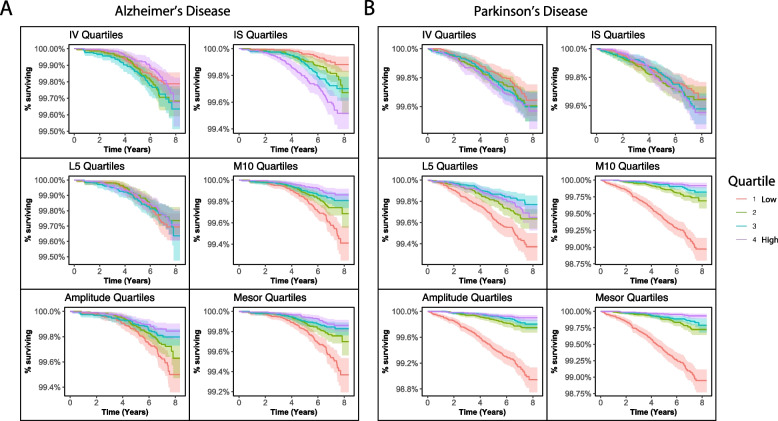
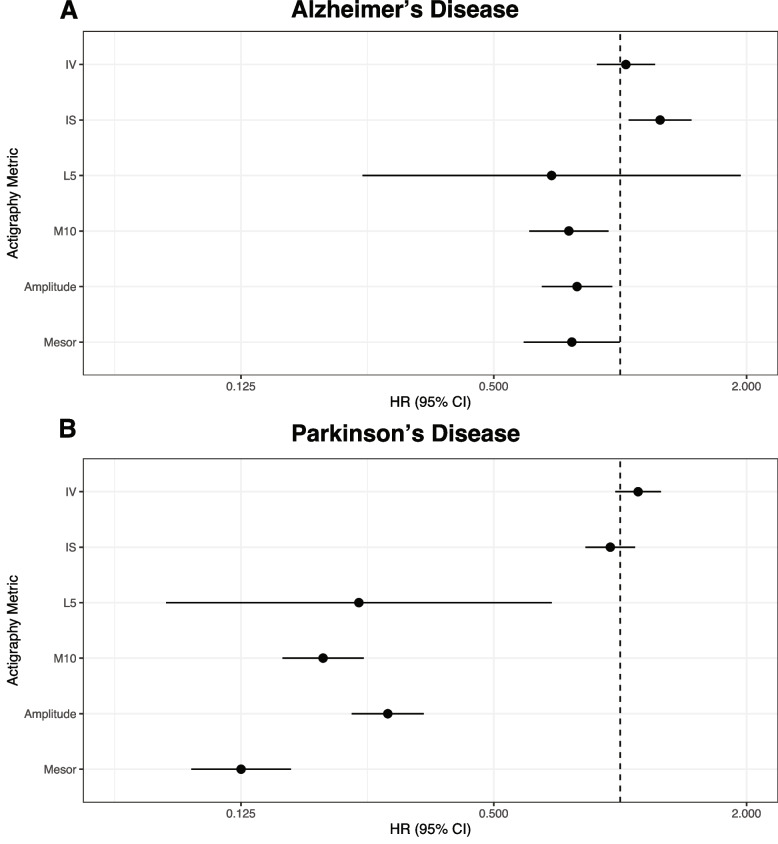
Background: Sleep-wake regulating circuits are affected during prodromal stages in the pathological progression of both Alzheimer’s disease (AD) and Parkinson’s disease (PD), and this disturbance can be measured passively using wearable devices. Our objective was to determine whether accelerometer-based measures of 24-h activity are associated with subsequent development of AD, PD, and cognitive decline. Methods: This study obtained UK Biobank data from 82,829 individuals with wrist-worn accelerometer data aged 40 to 79 years with a mean (± SD) follow-up of 6.8 (± 0.9) years. Outcomes were accelerometer-derived measures of 24-h activity (derived by cosinor, nonparametric, and functional principal component methods), incident AD and PD diagnosis (obtained through hospitalization or primary care records), and prospective longitudinal cognitive testing. Results: One hundred eighty-seven individuals progressed to AD and 265 to PD. Interdaily stability (a measure of regularity, hazard ratio [HR] per SD increase 1.25, 95% confidence interval [CI] 1.05–1.48), diurnal amplitude (HR 0.79, CI 0.65–0.96), mesor (mean activity; HR 0.77, CI 0.59–0.998), and activity during most active 10 h (HR 0.75, CI 0.61–0.94), were associated with risk of AD. Diurnal amplitude (HR 0.28, CI 0.23–0.34), mesor (HR 0.13, CI 0.10–0.16), activity during least active 5 h (HR 0.24, CI 0.08–0.69), and activity during most active 10 h (HR 0.20, CI 0.16–0.25) were associated with risk of PD. Several measures were additionally predictive of longitudinal cognitive test performance. Conclusions: In this community-based longitudinal study, accelerometer-derived metrics were associated with elevated risk of AD, PD, and accelerated cognitive decline. These findings suggest 24-h rhythm integrity, as measured by affordable, non-invasive wearable devices, may serve as a scalable early marker of neurodegenerative disease.
Overview
The claims and statistics of this paper haven’t been checked yet.
Free: it reads the open-access text and checks the first 5 claims that cite a source we can check. Create a free account to check every claim.
Integrity signals
Registry
Cites
Statistics
Figures
Verification
Claims the paper makes
The claims and statistics of this paper haven’t been checked yet.
Free: it reads the open-access text and checks the first 5 claims that cite a source we can check. Create a free account to check every claim.
Claims other papers make about this one
Each is checked against this paper’s own text: does it say what the citing paper says it does?
The source backs part of the claim, not all of it — or backs it for a different population, condition or comparison.
In the citing paper
“While classification tasks are common in automated speech analysis in neurodegenerative research, several studies have employed regression models to predict continuous cognitive outcomes (e.g., MMSE)97,98 or to explore relationships with imaging and biomarker measures.99–101”
From Review of Artificial Intelligence for Clinical Use in Alzheimer's Disease and Related Dementias (2026) · cites this paper as [100]
Experimental — accuracy not yet measured
Self-check
Percentages, sums and reported differences re-computed from the paper’s own numbers.
The self-check needs the paper’s full text.
Citations
Cites
Staging of brain pathology related to sporadic Parkinson’s disease
Braak, H., Tredici, K. D., Rüb, U., de Vos, R. A. I., Jansen Steur, E. N. H., & Braak, E. (2003) · Neurobiology of Aging · doi:10.1016/s0197-4580(02)00065-9 · Cited by 10,777 · cited 2×
“Multiple mechanisms may contribute to the link between reduced 24-h rhythms and risk of incident PD. Brainstem circuits involved in sleep-wake regulation are affected early in the disease process, before the onset of dopaminergic loss [4, 32, 33].”
BackgroundPoewe, W., Seppi, K., Tanner, C. M., Halliday, G. M., Brundin, P., Volkmann, J., Schrag, A.-E., & Lang, A. E. (2017) · Nature Reviews Disease Primers · doi:10.1038/nrdp.2017.13 · Cited by 5,415
Matching as Nonparametric Preprocessing for Reducing Model Dependence in Parametric Causal Inference
Ho, D. E., Imai, K., King, G., & Stuart, E. A. (2007) · Political Analysis · doi:10.1093/pan/mpl013 · Cited by 4,205 · cited 1×
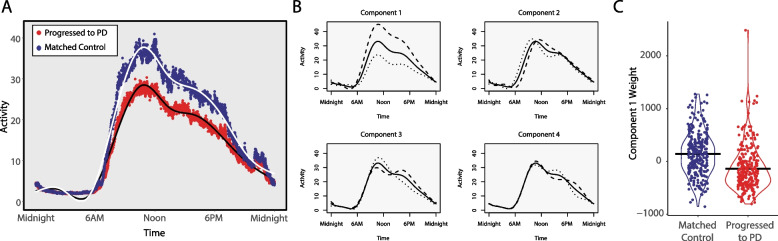
“…fPCA analyses, consisting of individuals who progressed to AD or PD (see below) and matched controls who did not progress to AD or PD (1:1 match on age at accelerometer collection, sex, education, general health, body mass index, and Townsend deprivation index, using the MatchIt package [25] in R).”
MethodAgeing as a risk factor for neurodegenerative disease
Hou, Y., Dan, X., Babbar, M., Wei, Y., Hasselbalch, S. G., Croteau, D. L., & Bohr, V. A. (2019) · Nature Reviews Neurology · doi:10.1038/s41582-019-0244-7 · Cited by 3,310 · cited 1×
“Alzheimer’s disease (AD) and Parkinson’s disease (PD) are the two most prevalent neurodegenerative diseases, with numbers predicted to increase in the coming decade [1, 2].”
BackgroundAmelia II: A Program for Missing Data
Honaker, J., King, G., & Blackwell, M. (2011) · Journal of Statistical Software · doi:10.18637/jss.v045.i07 · Cited by 2,552 · cited 1×
“%) were imputed using the Amelia II package in R [30].”
MethodFrequency of Stages of Alzheimer-Related Lesions in Different Age Categories
Braak, H., & Braak, E. (1997) · Neurobiology of Aging · doi:10.1016/s0197-4580(97)00056-0 · Cited by 1,656
Doherty, A., Jackson, D., Hammerla, N., Plötz, T., Olivier, P., Granat, M. H., White, T., van Hees, V. T., Trenell, M. I., Owen, C. G., et al. (2017) · PLOS ONE · doi:10.1371/journal.pone.0169649 · Cited by 1,250 · cited 2×
“More than 500,000 participants aged between 40 and 69 years were recruited in 2006–2010 (full details available in Doherty et al. 2017 [17]).”
BackgroundInfluentialCornelissen, G. (2014) · Theoretical Biology and Medical Modelling · doi:10.1186/1742-4682-11-16 · Cited by 811 · cited 1×
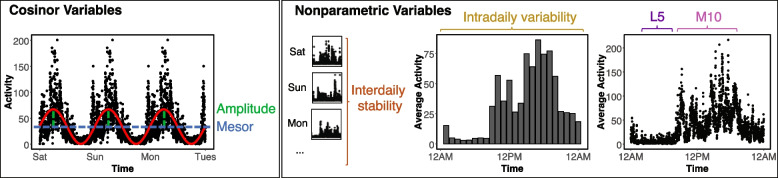
“Cosinor analyses (fitting a cosine wave to the data) were performed using the cosinor2 package in R [19] and resulted in two metrics of interest: (1) mesor (rhythm-adjusted mean activity) and (2) amplitude (half the difference between peak and nadir of fitted cosine wave).”
MethodLim, A. S. P., Kowgier, M., Yu, L., Buchman, A. S., & Bennett, D. A. (2013) · Sleep · doi:10.5665/sleep.2802 · Cited by 793 · cited 2×
“…this hypothesis, previous work using wrist-worn accelerometers has demonstrated that specific impairments in 24-h activity patterns are associated with accelerated cognitive decline [8–12], an increased risk of developing AD [8, 9, 13, 14], and in one study, an increased risk of developing PD [15].”
BackgroundResultTotal daily physical activity and the risk of AD and cognitive decline in older adults
Buchman, A. S., Boyle, P. A., Yu, L., Shah, R. C., Wilson, R. S., & Bennett, D. A. (2012) · Neurology · doi:10.1212/wnl.0b013e3182535d35 · Cited by 730 · cited 2×
“…this hypothesis, previous work using wrist-worn accelerometers has demonstrated that specific impairments in 24-h activity patterns are associated with accelerated cognitive decline [8–12], an increased risk of developing AD [8, 9, 13, 14], and in one study, an increased risk of developing PD [15].”
BackgroundResult
Research works printed but not linked: 2
- Smith A Symbol Digit Modalities Test: Manual 1982 Los Angeles Western Psychological Services
- Reitan RM, Wolfson D. The Halstead-Reitan neuropsychological test battery: theory and clinical interpretation. Tucson: Neuropsychological Press; 1985.
Cited by
Wearables in Chronomedicine and Interpretation of Circadian Health
Gubin, D. G., Weinert, D., Stefani, O., Otsuka, K., Borisenkov, M. F., & Cornélissen, G. (2025) · Diagnostics · doi:10.3390/diagnostics15030327 · Cited by 83
“Similar markers predicted cognitive deficits in Alzheimer’s and Parkinson’s diseases [36,38].”
Li, A., Lian, J., & Vardhanabhuti, V. (2025) · PLOS Digital Health · doi:10.1371/journal.pdig.0000795 · Cited by 27
Monitoring Wearable Devices for Elderly People with Dementia: A Review
Rocha, I. C., Arantes, M., Moreira, A. H. J., Vilaça, J. L., Morais, P., Matos, D., & Carvalho, V. H. (2024) · Designs · doi:10.3390/designs8040075 · Cited by 23
“[18] 2024 The study’s main goal is to determine whether accelerometer-based measures of 24 h activity are associated with the subsequent development of Alzheimer’s disease (AD), Parkinson’s disease (PD), and cognitive decline.”
BackgroundAI and Wearables for Early Detection of Cognitive Impairment and Dementia: Systematic Review
Cejudo, A., Arrojo, M., Martín, C., & Almeida, A. (2026) · Journal of Medical Internet Research · doi:10.2196/86262 · Cited by 22
“In larger cohort studies (n ≥ 100), effect estimates were generally lower, around β≈ .10.25 or OR 1.3-1.8 [45,46,49,54].”
InfluentialFunctional data analysis for wearable sensor data: a systematic review
Acar‐Denizli, N., & Delicado, P. (2025) · AStA Advances in Statistical Analysis · doi:10.1007/s10182-025-00531-8 · Cited by 21
“The main objectives for using FPCA in the relevant studies (Zeitzer et al. 2018; Xu et al. 2019; Yeung et al. 2023; Winer et al. 2024) were to reduce the dimen-sion and to find out the most important modes of variations of activity profiles.”
Sleep Abnormalities and Risk of Alzheimer’s Disease
Süzgün, M. A., Tang, Q., & Stefani, A. (2025) · Current Neurology and Neuroscience Reports · doi:10.1007/s11910-025-01451-5 · Cited by 16
“A longitudinal actigraphy study in older adults found that reduced diurnal amplitude and lower 24-hour activity levels were associated with an increased AD risk and greater cognitive decline [12].”
Multidimensional sleep profiles via machine learning and risk of dementia and cardiovascular disease
Cavaillès, C., Wallace, M. L., Leng, Y., Stone, K. L., Ancoli‐Israel, S., & Yaffe, K. S. (2025) · Communications Medicine · doi:10.1038/s43856-025-01019-x · Cited by 18
“Compared to AHS, FPS had a higher risk of dementia, consistent with variable-centered research linking short sleep duration, sleep fragmentation, poor sleep ef fi ciency, and weak circadian rhythms with dementia incidence 2,6,38 – 40 .”
Vidil, S., Danilevicz, I. M., Dugravot, A., Fayossé, A., Landré, B., van Hees, V. T., Chen, M., Singh‐Manoux, A., & Sabia, S. (2025) · Nature Communications · doi:10.1038/s41467-025-66407-2 · Cited by 13
Examining resilience to Alzheimer’s disease through the lens of monoaminergic neuromodulator systems
Crawford, J. L., & Berry, A. S. (2024) · Trends in Neurosciences · doi:10.1016/j.tins.2024.09.004 · Cited by 12
Adverse effects of late sleep on physical health in a large cohort of community-dwelling adults
Lok, R., Weed, L., Winer, J. R., & Zeitzer, J. M. (2024) · European Journal of Internal Medicine · doi:10.1016/j.ejim.2024.12.031 · Cited by 12
Self-citationBoura, I., Popławska-Domaszewicz, K., Limbachiya, N., Trivedi, D., Batzu, L., & Chaudhuri, К. R. (2025) · Neurologic Clinics · doi:10.1016/j.ncl.2024.12.004 · Cited by 13
Soreq, E., Kolanko, M., CRT group, Ravindran, K. K. G., della Monica, C., Revell, V. L., Daniels, S., Joffe, A., Lai, H., Golemme, M., et al. (2025) · Alzheimer s & Dementia · doi:10.1002/alz.70758 · Cited by 14
“46 Our approachenablestheseriskfactorstobeassessedobjectivelyandcon-tinuously.”
Review of Artificial Intelligence for Clinical Use in Alzheimer's Disease and Related Dementias
Breithaupt, A. G., Tang, A., Paolillo, E. W., Bibars, M., Johnson, E. C. B., Saloner, R., Possin, K. L., Windon, C. C., Hill-Jarrett, T. G., Giorgio, J., et al. (2026) · Seminars in Neurology · doi:10.1055/a-2744-9871 · Cited by 6
Jones, C. D., Wasilko, R., Zhang, G., Stone, K. L., Gujral, S., Rodakowski, J. L., & Smagula, S. F. (2025) · JMIR Aging · doi:10.2196/67294 · Cited by 7
“We failed to detect some associations that were expected based on prior literature examining dementia risk (eg, previous findings linking low rhythm strength with dementia risk [27]).”
Actigraphy for quantitative evaluation of health
Gubin, D. G., Markov, A. G., Solovieva, S. V., Борисовна, Х. Е., Malyugina, O. A., Petrova, Y. A., & Boldyreva, Y. V. (2025) · Russian Open Medical Journal · doi:10.15275/rusomj.2025.0201 · Cited by 6
Pulsford, R. M., Bakker, E. A., Ahmadi, M. N., Blodgett, J. M., Bosma, H., Brocklebank, L. A., Eussen, S. J. P. M., Hamer, M., Lear, R., Metcalf, B. S., et al. (2025) · International Journal of Behavioral Nutrition and Physical Activity · doi:10.1186/s12966-025-01839-z · Cited by 6
“…populations in particular have observed health benefits associated with more consistent and stable activity patterns, however it is possible that the regularity of behavioural patterns may be sensitive to different aspects of lifestyle and behaviour at different points on the life-course [24].”
Peterson, C., Louis, R. M. S., & Flannagan, C. A. C. (2025) · JMIR Aging · doi:10.2196/63768 · Cited by 7
“Supporting this potential, a large cohort study of cognitively healthy participants showed that changes in long-term 24-hour activity patterns were associated with elevated risk for the onset of Alzheimer disease, Parkinson disease, and cognitive decline [89].”
Maekawa, H., & Kume, Y. (2025) · JMIR Formative Research · doi:10.2196/71393 · Cited by 5
“This finding aligns with those of previous research indicating that increased IV and decreased IS are associated with cognitive decline [52,53].”
Shim, J., & Onnela, J.-P. “. (2026) · BMC Digital Health · doi:10.1186/s44247-026-00256-x · Cited by 4
“These dimensions are consistently associated with cognition, function, and neuropsychiatric outcomes [3, 4, 42].”
Associations of adherence to a healthy sleep pattern with the dementia risk in the UK biobank
Wei, T., Chang, J., Zhao, Y., Li, A., Sun, W., Liu, X., Liu, H., Xing, Y., Wang, Z., & Tang, Y. (2025) · Alzheimer s Research & Therapy · doi:10.1186/s13195-025-01864-x · Cited by 4
“Circadian rhythm disruptions, including circadian syndrome, were associated with a 40.1% increased risk of all-cause dementia [56], and impaired 24-hour rhythm integrity increased the risk of AD by 25% [57].”
InfluentialWang, H. Y., Mao, X., Liu, S., Zhang, J., Li, E., Song, Y., Li, H., Chang, L., & Wu, Y. (2025) · Journal of Alzheimer s Disease Reports · doi:10.1177/25424823251391704 · Cited by 4
Gubin, D. G., Boldyreva, Y. V., Danilova, L. A., Николаевич, К. С., Alkhimova, L. E., Markov, A. G., Malyugina, O. A., Кузнецова, Н. Е., Stefani, O., Weinert, D., et al. (2025) · Russian Open Medical Journal · doi:10.15275/rusomj.2025.0401 · Cited by 3
Chamberlin, K. W., Etzkorn, L., Davoudi, A., Wang, W. T. J., Dougherty, R. J., Palta, P., Wanigatunga, A. A., Windham, B. G., Chen, L. Y., Spira, A. P., et al. (2026) · Alzheimer s & Dementia Translational Research & Clinical Interventions · doi:10.1002/trc2.70219 · Cited by 3
“Several studies have linked higher IS to lower dementia risk, 3,6 while others have found the opposite 7 or a null association.”
Contactless longitudinal monitoring of ageing and dementia-related sleep trajectories in the homePreprint
Soreq, E., Kolanko, M., Ravindran, K. K. G., della Monica, C., Revell, V. L., Daniels, S., Lai, H., Golemme, M., Giovane, M. D., Walsh, C., et al. (2024) · Research Square · doi:10.21203/rs.3.rs-4523167/v1 · Cited by 3
Macheda, T., Hawkins, M. R., Johnson, C. E., Lapid, M. G., Whitlock, H. R., Shepard, S. M., Cox, M. F., Roberts, K. N., Bytyqi, L., Hash, H. M., et al. (2026) · Alzheimer s & Dementia · doi:10.1002/alz.71314 · Cited by 2
“11,12 18 These sleep–wake alterations show pronounced sex differences, such that women with AD and females of AD-related mouse models exhibit greater sleep fragmentation and circadian rhythm disruption than males despite similar amyloid burden.”
Digital Sleep-Wake Cycle Metrics and Dementia Prediction in Older Adults
Cavaillès, C., Danilevicz, I. M., Vidil, S., Fayossé, A., Chen, M., van Hees, V. T., Kivimäki, M., Dugravot, A., Singh‐Manoux, A., & Sabia, S. (2026) · JAMA Neurology · doi:10.1001/jamaneurol.2026.1232 · Cited by 4
Zawada, S. J., Ganjizadeh, A., Conte, G. M., Demaerschalk, B. M., & Erickson, B. J. (2024) · JMIR Neurotechnology · doi:10.2196/56679 · Cited by 3
Cavaillès, C., Stone, K. L., Leng, Y., & Yaffe, K. S. (2025) · SLEEP · doi:10.1093/sleep/zsaf219 · Cited by 1
“These rhythms have been notably linked to numerous adverse health outcomes, including cardiovascular diseases, 2 obesity, 3 diabetes, 4 cognitive impairment, 5,6 and mortality.”
Matias, I., Prociów, P., Daza, E. J., Kliegel, M., & Wac, K. (2026) · npj Digital Medicine · doi:10.1038/s41746-026-02650-1 · Cited by 3
“Regardingresearcharticlesthatemployedcorrelationanalysis, researchersinallsixarticles(20.0% 23,26,29,48,50,52 ) identi fi ed statistically signi fi cant links in the data that could be used to distinguish between CH, aMCI, MCI, dementia diagnosis, and their underlying pathology.”
InfluentialYang, S., Xiao, X., Yang, Y., Cai, Y., Zou, Y., Tang, Y., Ma, H., & Lai, Z. (2026) · Alzheimer s Research & Therapy · doi:10.1186/s13195-026-02088-3 · Cited by 1
“In UK Bio-bank, lower RA and related CRAR disruptions have been linked to incident dementia as well as to cognitive and neuroimaging correlates [17], and impaired 24-h activity patterns have been associated with increased risk of subsequent AD and other neurodegenerative outcomes [18].”
Time vortex: the circadian–dopaminergic dialogue in Parkinson’s disease
Zhou, M., Xu, Y., Liu, Y., Wang, J., Hou, K., An, Z., & Wei, J. (2026) · npj Parkinson s Disease · doi:10.1038/s41531-026-01429-1 · Cited by 1
“…a nonparametric analytic framework can reliably derive key indices — such as relative amplitude (RA), diurnal stability (IS), and rhythm fragmentation (IV) — from multi-day free-living data, thereby shifting rhythm disruption from a conceptual description to a quanti fi able measure 199,203,204 .”
Chronobiomaterials for circadian-aligned brain therapeutics
Garg, S., Walters, B., & Fernandez, D. C. (2026) · Trends in Pharmacological Sciences · doi:10.1016/j.tips.2026.05.005 · Cited by 1
Qin, S., & Chee, M. W. L. (2025) · SLEEP · doi:10.1093/sleep/zsaf154
“While such devices should be at least comparable to actigraphy for detecting sleep fragmentation and disruptions in rest–activity patterns [18, 19], the accuracy of their sleep measurement falls off relatively more with the lowered sleep efficiency [10] like that encountered in cognitively impaired…”
Talwar, P., Mortazavi, N., Koshmanova, E., Muto, V., Gasparello, A., Degueldre, C., Berthomier, C., Collette, F., Bastin, C., Phillips, C. L. M., et al. (2025) · Annals of Neurology · doi:10.1002/ana.78112
“25 These fi ndings add to the current literature and may isolate the earliest and potentially core links between REM sleep-and PD-related biology.”
Keeping Time With the 24-Hour Brain: What Rest-Activity Rhythms Reveal About Dementia Risk
Fang, Y., & Leng, Y. (2025) · Neurology · doi:10.1212/wnl.0000000000214599
UK Biobank at 20 — a growing, global resource for dementia research
Matthews, P. M., Allen, N. E., Debette, S., Doherty, A., Douaud, G., Duff, E. P., Elliott, P., Fulda, E. S., Ilina, A., Grand, Q. L., et al. (2026) · Nature Reviews Neurology · doi:10.1038/s41582-026-01200-3
“4c), and different accelerometry features might be sensitive to different diseases; for example, analytical metrics derived from the same data were able to predict future onset of AD in the UK Biobank population 35 .”
Lee, P.-S., Chen, Y.-L., Yang, Y.-C., Kubo, T., & Cheng, W.-J. (2026) · European Review of Aging and Physical Activity · doi:10.1186/s11556-026-00413-1
“The association between IS and cognitive decline, as well as the risk of Alzheimer’s disease, is inconsistent in the literature [45–48].”
Can Targeting Circadian Rhythms Help Prevent Alzheimer Disease? Lessons From Down Syndrome
Fang, Y., & Leng, Y. (2026) · Neurology · doi:10.1212/wnl.0000000000218086
Mejia, G. R., Brink-Kjær, A., Liu, L., Zhou, L., Gunter, K. M., Ryu, K. H., Wickramaratne, S., Parekh, A., Gan‐Or, Z., & During, E. (2026) · medRxiv · doi:10.64898/2026.07.02.26356952 · Cited by 1
Chamberlin, K. W., Etzkorn, L., Spira, A. P., Jiang, K., Chen, L. Y., Crainiceanu, C., Zipunnikov, V., & Schrack, J. A. (2026) · SLEEP Advances · doi:10.1093/sleepadvances/zpag093
“Daytime PA volume was quantif ied using the average MAD during the most active 10 h [ 56].”
Wolfová, K., White, C. C., Ghahjaverestan, N. M., Choeying, T., Arevalo, R., Onomichi, K. B., Davis, L., Leavitt, V. M., Buyukturkoglu, K., Riley, C., et al. (2026) · medRxiv · doi:10.64898/2026.08.31.26361636
Campbell, L. M., Hackett, K., Paolillo, E. W., Schultheis, M. T., & Chaytor, N. S. (2026) · Oxford University Press eBooks · doi:10.1093/9780197814116.003.0009
Chaowen, H., Gao, Y., & Wang, H. (2026) · Frontiers in Neuroscience · doi:10.3389/fnins.2026.1879617
“…statistical adjustment or analysis strategy, and the main inferential limitation for each key human study. et al., 1996; Haghayegh et al., 2024; Winer et al., 2024; Paget-Blanc et al., 2025; Wang et al., 2026); exercise timing affects circadian and sleep-related physiology (Kim et al., 2023;…”
Ibrahim, A., Ganglberger, W., Cesari, M., & Stefani, A. (2026) · Sleep Medicine Clinics · doi:10.1016/j.jsmc.2026.08.012
Qin, S., Jouvencel, A., Soon, C. S., Shaif, N., Ong, J. L., & Chee, M. W. L. (2026) · Sleep Health · doi:10.1016/j.sleh.2026.09.011
Leonid, T. T., Londhe, G. V., & Theivadas, J. R. (2026) · Scientific Reports · doi:10.1038/s41598-026-70620-4
Ting, Y. U., Wang, Q., Pan, M., Xiong, Y., Hu, S., Deng, Y., Kuang, L., & Liu, H. (2026) · Frontiers in Aging Neuroscience · doi:10.3389/fnagi.2026.1850991
“…cohorts (eight studies) (Del Din et al., 2019; Elshehabi et al., 2026; Gupta and Patel, 2025; Pelicioni et al., 2026; Schalkamp et al., 2023; Winer et al., 2024; Xie et al., 2026; Schalkamp et al., 2025), genetic high-risk populations (four studies) (Mirelman et al., 2016; Mirelman et al.,…”
InfluentialNext‐Generation Brain Health Monitoring Enabled by Integrated Wearable AI Infrastructure
Masrur, M. A., Khan, B., Khalid, R. T., Sumaira, & Abdullah, S. (2026) · Smart Medicine · doi:10.1002/smmd.70053
Gan, X., Zhou, X., Yan, S., Yang, S., & Li, Z. (2026) · Frontiers in Neurology · doi:10.3389/fneur.2026.1998439
“Winer and colleagues followed 82,829 UK Biobank participants for a mean 6.8 years, with 187 AD outcomes identified through hospital and primary-care records (12).”
Influential説明可能AIによるマルチモーダル・バイオマーカーの同定と認知機能低下の早期予測
FAHAD, A. H. M. (2026) · Institutional Repositories DataBase (IRDB)
Cai, Y., Miao, J., Gogniat, M. A., Snitz, B. E., & Cohen, A. D. (2026) · GeroScience · doi:10.1007/s11357-026-02645-6
THEME 10 DISEASE STRATIFICATION AND PHENOTYPING
(2026) · Amyotrophic Lateral Sclerosis and Frontotemporal Degeneration · doi:10.1080/21678421.2026.2732377
Metadata
- Authors
- Winer, J. R., Lok, R., Weed, L., He, Z., Poston, K. L., Mormino, E. C., & Zeitzer, J. M.
- Affiliations
- Stanford Medicine (US)
- Stanford University (US)
- VA Palo Alto Health Care System (US)
- Corresponding author
- Winer, Joseph R.
- ORCID
- Venue
- Alzheimer's Research & Therapy
- Published
- 2024-02-14
- Volume
- 16
- Issue
- 1
- Pages
- 35-35
- ISSN
- 1758-9193 (ISSN-L)
- PMC
- PMC10865579
- OpenAlex
- W4391814967
- Cited by
- 44
- References
- 45
- Citations by year
- 2026: 18 · 2025: 21 · 2024: 5
- FWCI
- 12.93
- Type
- journal article
- Language
- en
- Open access
- gold
- doi.org
- Licence
- cc-by
- creativecommons.org/licenses/by/4.0 (tdm)
- creativecommons.org/licenses/by/4.0 (vor)
- Locations
- Alzheimer s Research & Therapy (publishedVersion, cc-by)
- PubMed Central (publishedVersion, cc-by)
- PubMed (publishedVersion)
- DOAJ (DOAJ: Directory of Open Access Journals) (submittedVersion)
- Funders
- National Institute on Aging (F32AG074625, P30AG066515)
- Topics
- Health Sciences › Medicine › Psychiatry and Mental health › Dementia and Cognitive Impairment Research
- Life Sciences › Neuroscience › Endocrine and Autonomic Systems › Circadian rhythm and melatonin
- Social Sciences › Psychology › Experimental and Cognitive Psychology › Sleep and related disorders
- Keywords
- 24-hour activity patterns, circadian rhythm, accelerometer-measured activity, Alzheimer's disease risk, Parkinson's disease risk, cognitive decline, wearable devices, interdaily stability, diurnal amplitude, mesor, sleep-wake regulation, neurodegenerative disease biomarkers, UK Biobank
- MeSH terms
- Alzheimer Disease, Humans, Longitudinal Studies, Parkinson Disease, Prospective Studies, Neurodegenerative Diseases, Cognitive Dysfunction
About these checks
Registry, retraction, Cites and statistics results are computed, not judged, with one exception: a printed reference that no index lists is read once by a model before it counts as a citation error. Claims are extracted by a model and kept only when their quote appears verbatim in the text; each cited source is then checked, with a model’s help, for whether it says what the claim relies on. Those verdicts can be wrong — read the claim’s quote and the cited source before relying on one.
Statistics and arithmetic are recomputed, not judged.
Confidence bands are shown only for fields calibrated on our annotated test set. None is calibrated yet, so no band is shown.
What counts as a claim ›How we measure confidence ›How we check this ›
Are you an author, or do you see a problem with this page? Request a review
Data sources
Bibliographic data: Semantic Scholar, OpenAlex, Crossref.
Contains information from the Semantic Scholar Academic Graph Datasets, made available under the ODC Attribution License (ODC-BY 1.0).
Semantic Scholar’s data is described in: Kinney, R., et al. (2023). The Semantic Scholar Open Data Platform. arXiv:2301.10140.
