

Autistic children at risk of being underestimated: school based pilot study of a strength-informed assessment
Open accessThe DOI matches its Crossref record; 45 of the 45 references it cites were found in a registry or an index.
Abstract
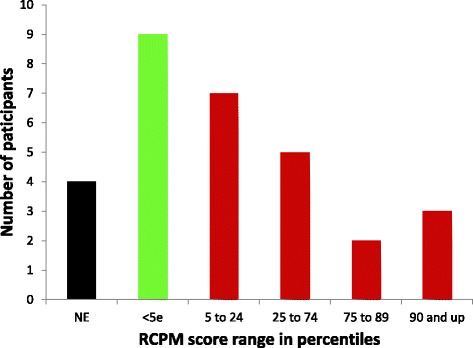
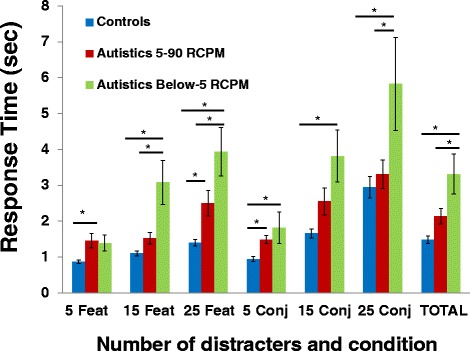
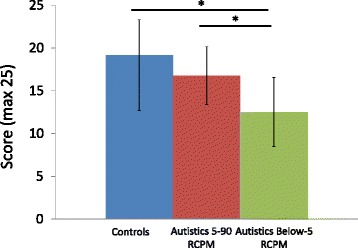
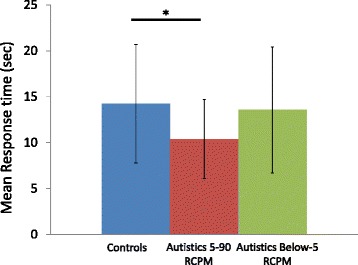
BACKGROUND: An important minority of school-aged autistic children, often characterized as 'nonverbal' or 'minimally verbal,' displays little or no spoken language. These children are at risk of being judged 'low-functioning' or 'untestable' via conventional cognitive testing practices. One neglected avenue for assessing autistic children so situated is to engage current knowledge of autistic cognitive strengths. Our aim was thus to pilot a strength-informed assessment of autistic children whose poor performance on conventional instruments suggests their cognitive potential is very limited. METHODS: Thirty autistic children (6 to 12 years) with little or no spoken language, attending specialized schools for autistic children with the highest levels of impairment, were assessed using Wechsler Intelligence Scale for Children (WISC-IV), Raven's Colored Progressive Matrices board form (RCPM), Children's Embedded Figures Test (CEFT), and a visual search task. An age-matched control group of 27 typical children was also assessed. RESULTS: None of the autistic children could complete WISC-IV; only six completed any subtest. In contrast, 26 autistic children could complete RCPM, with 17 scoring between the 5th and 90th percentile. Twenty-seven autistic children completed the visual search task, while 26 completed CEFT, on which autistic children were faster than RCPM-matched typical children. Autistic performance on RCPM, CEFT, and visual search were correlated. CONCLUSION: These results indicate that 'minimally verbal' or 'nonverbal' school-aged autistic children may be at risk of being underestimated: they may be wrongly regarded as having little cognitive potential. Our findings support the usefulness of strength-informed approaches to autism and have important implications for the assessment and education of autistic children.
Overview
The claims and statistics of this paper haven’t been checked yet.
Free: it reads the open-access text and checks the first 5 claims that cite a source we can check. Create a free account to check every claim.
Integrity signals
Registry
Cites
Statistics
Figures
Verification
Claims the paper makes
The claims and statistics of this paper haven’t been checked yet.
Free: it reads the open-access text and checks the first 5 claims that cite a source we can check. Create a free account to check every claim.
Claims other papers make about this one
Each is checked against this paper’s own text: does it say what the citing paper says it does?
The source backs part of the claim, not all of it — or backs it for a different population, condition or comparison.
In the citing paper
“When individuals with CCN, who were identified as having Intellectual Disability using language-based measures, were reassessed using more appropriate non-language-based instruments that employ visual spatial tasks, a significant proportion were found to be within or above the expected IQ range (Dawson et al., 2007; Barbeau et al., 2013; Courchesne et al., 2015; Crossley and Zimmerman, 2019).”
From Perspective: Presuming Autistic Communication Competence and Reframing Facilitated Communication (2022) · cites this paper as Courchesne et al., 2015
Experimental — accuracy not yet measuredThe source backs part of the claim, not all of it — or backs it for a different population, condition or comparison.
In the citing paper
“This argument is sustained by research that shows conventional measures for intelligence (e.g., WISC test batteries) generally underestimate the ability of nonspeaking autistics (Courchesne et al., 2015; Nadar et al., 2016; Akhtar and Jaswal, 2019).”
From Perspective: Presuming Autistic Communication Competence and Reframing Facilitated Communication (2022) · cites this paper as Courchesne et al., 2015
Experimental — accuracy not yet measuredIn the citing paper
“Recent research has shown that the cognitive abilities of nonspeaking autistic people have been significantly underestimated 43 .”
From Eye-tracking reveals agency in assisted autistic communication (2020) · cites this paper as [43]
Self-check
Percentages, sums and reported differences re-computed from the paper’s own numbers.
The self-check needs the paper’s full text.
Citations
Cites
Lord, C., Rutter, M., & Le Couteur, A. (1994) · Journal of Autism and Developmental Disorders · doi:10.1007/bf02172145 · Cited by 9,065 · cited 1×
“A review of the 30 participants’ files indicated an autism diagnosis based on Autism Diagnostic Observation Schedule (ADOS; [28]) for six participants; combined ADOS and Autism Diagnostic Interview Revised (ADI-R; [29]) for 12 participants; Childhood Autism Rating Scale (CARS; [30]) for two participants; and DSM-IV an…”
BackgroundLord, C., Risi, S., Lambrecht, L., Cook, E. H., Leventhal, B. L., DiLavore, P. C., Pickles, A., & Rutter, M. (2000) · Journal of Autism and Developmental Disorders · doi:10.1023/a:1005592401947 · Cited by 7,520 · cited 1×
“A review of the 30 participants’ files indicated an autism diagnosis based on Autism Diagnostic Observation Schedule (ADOS; [28]) for six participants; combined ADOS and Autism Diagnostic Interview Revised (ADI-R; [29]) for 12 participants; Childhood Autism Rating Scale (CARS; [30]) for two participants; and DSM-IV an…”
BackgroundToward objective classification of childhood autism: Childhood Autism Rating Scale (CARS)
Schopler, E., Reichler, R. J., DeVellis, R. F., & Daly, K. (1980) · Journal of Autism and Developmental Disorders · doi:10.1007/bf02408436 · Cited by 2,432 · cited 1×
“A review of the 30 participants’ files indicated an autism diagnosis based on Autism Diagnostic Observation Schedule (ADOS; [28]) for six participants; combined ADOS and Autism Diagnostic Interview Revised (ADI-R; [29]) for 12 participants; Childhood Autism Rating Scale (CARS; [30]) for two participants; and DSM-IV an…”
BackgroundTager‐Flusberg, H., & Kasari, C. (2013) · Autism Research · doi:10.1002/aur.1329 · Cited by 985 · cited 1×
“Background Autistic children who reach school age with little or no spoken language, and thus acquire labels such as ‘nonverbal’ or ‘minimally verbal’, have recently attracted concern as a neglected subgroup in autism research [1].”
BackgroundAn islet of ability in autistic children: a research note
Shah, A., & Frith, U. (1983) · Journal of Child Psychology and Psychiatry · doi:10.1111/j.1469-7610.1983.tb00137.x · Cited by 888 · cited 1×
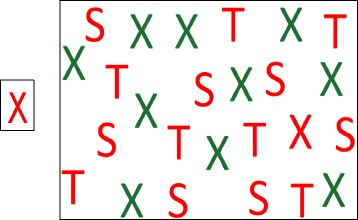
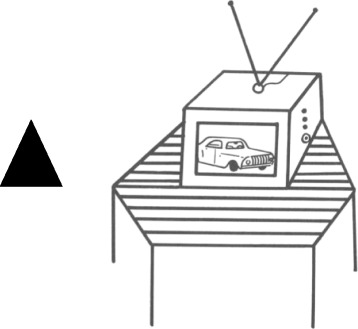
“We chose visual search [20,21] and embedded figures [22-24] tasks as the second and third tests in the pilot assessment.”
MethodVolkmar, F., Siegel, M., Woodbury-Smith, M., King, B., McCracken, J., & State, M. (2014) · Journal of the American Academy of Child & Adolescent Psychiatry · doi:10.1016/j.jaac.2013.10.013 · Cited by 848 · cited 1×
“Their difficult situation is made more so by prevailing views in which atypical autistic strengths and related strong interests are interpreted negatively as deficits, as suboptimal, as impediments to learning, or as symptoms which worsen autism ‘severity’ (for example, [43,44]; for more examples and reviews, see [9,4…”
BackgroundAre People with Autism and Asperger Syndrome Faster Than Normal on the Embedded Figures Test?
Jolliffe, T., & Baron‐Cohen, S. (1997) · Journal of Child Psychology and Psychiatry · doi:10.1111/j.1469-7610.1997.tb01539.x · Cited by 742 · cited 1×
“We chose visual search [20,21] and embedded figures [22-24] tasks as the second and third tests in the pilot assessment.”
MethodDevelopmental pathways to autism: A review of prospective studies of infants at risk
Jones, E. J. H., Gliga, T., Bedford, R., Charman, T., & Johnson, M. H. (2014) · Neuroscience & Biobehavioral Reviews · doi:10.1016/j.neubiorev.2013.12.001 · Cited by 607
IQ in children with autism spectrum disorders: Data from the special needs and autism project (SNAP)
Charman, T., Pickles, A., Simonoff, E., Chandler, S., Loucas, T., & Baird, G. (2011) · Psychological Medicine · doi:10.1017/s0033291710000991 · Cited by 599 · cited 2×
“The first test is Raven’s Progressive Matrices, an important test of general and fluid intelligence [13] on which autistics have displayed an advantage over Wechsler scales of intelligence that is not found in the nonautistic population [6,7,14-16].”
BackgroundMethodSuperior visual search in autism.
O'Riordan, M. A., Plaisted, K. C., Driver, J., & Baron-Cohen, S. (2001) · Journal of Experimental Psychology: Human Perception and Performance · doi:10.1037//0096-1523.27.3.719 · Cited by 557 · cited 1×
“The test used here was an adapted cardboard form of the computerized version in O’Riordan, Plaisted, Driver, and Baron-Cohen [34].”
Method
Research works printed but not linked: 7
- Raven J Raven JC Court JH Raven Manual 1998 Oxford, England Oxford Psychologists Press
- Dawson M Mottron L Where Autistics Excel: Compiling an Inventory of Autistic Cognitive Strengths 2009 Chicago, IL International Meeting for Autism Research
- Wechsler D The Wechsler Intelligence Scales for Children, Fourth Édition: Canadian (WISC-IV) 2005 Toronto, Canada Psychological Corporation
- Roid GH Miller LJ Leiter International Performance Scale-Revised: Examiners Manual 1997 Wood Dale, IL Stoeling Co.
- Raven JC Court JH Raven J Coloured Progressive Matrices 1995 Oxford Psychologist Press
- Witkin HA Oltman PK Raskin E Karp SA A Manual for the Embedded Figure Tests 1971 Palo Alto, CA Consulting Psychologists Press
- Baron-Cohen S Enhanced attention to detail and hyper-systemizing in autism. Commentary on Milne, E., Swettenham, J., & Campbell, R. Motion perception in autism: a review Curr Psychol Cogn 2005 23 59 64
Cited by
Items 101–160 of 160
Clinical Assessment of the Cerebellum
Gill, J. S., Deger, J., & Sillitoe, R. V. (2022) · Neuromethods · doi:10.1007/978-1-0716-2026-7_16 · Cited by 1
McKernan, E. P. (2017) · Syracuse University Libraries (Syracuse University) · Cited by 2
Hunsaker, M. R. (2017) · SocArXiv (OSF Preprints) · doi:10.31235/osf.io/zpn4w · Cited by 1
Conclusion and Directions for Further Research
(2022) · Advances in early childhood and K-12 education · doi:10.4018/978-1-7998-9442-1.ch011 · Cited by 1
Latent Literacy in Minimally Verbal Autistic Individuals Revealed by Eye GazePreprint
Ellert, K., Sykes-Haas, H. S., Shefer-Kaufmann, N., & Bonneh, Y. S. (2025) · bioRxiv (Cold Spring Harbor Laboratory) · doi:10.1101/2025.11.09.687411 · Cited by 2
“Pointing is often inconsistently acquired and not automatized in mvASD (5, 17), and previous touchscreen studies have likewise not shown good pointing performance on somewhat similar tasks (19).”
InfluentialWillay, E. (2020) · theses.fr (ABES) · doi:10.70675/10ad5b6bz6a7dz49c0za4b7zf43490be4179 · Cited by 1
Hudson, K. D., & Farran, E. K. (2017) · Research in Developmental Disabilities · doi:10.1016/j.ridd.2017.07.008
Insight into autism: a view from inside
Remington, A. (2017) · The Lancet · doi:10.1016/s0140-6736(17)31968-2
Effects of Premature Birth and/or Low Birthweight on Developmental Outcomes
Goldin, R. L. (2016) · Louisiana State University · doi:10.31390/gradschool_dissertations.4495
Hunsaker, M. R. (2018) · European Journal of Special Education Research · doi:10.46827/ejse.v0i0.1754 · Cited by 1
Autism and Communication: A Phenomenology of Parents’ Perspectives
Sargent, Z. (2018) · Digital Commons (Liberty University)
Theunissen, G. (2020) · PiD - Psychotherapie im Dialog · doi:10.1055/a-0987-5266
“[1] Courchesne V, Meilleur A-A, Poulin-Lord M-P et al.”
BackgroundFactor Invariance of Anxiety and Depression Measures in Autism
McKernan, E. P. (2020) · Syracuse University Libraries (Syracuse University)
Associated factors to develop traumatic events in the future: Young Lives analysis
Portella, R. Q. (2018) · Repositorio Académico de la Universidad Peruana de Ciencias Aplicadas (Universidad Peruana de Ciencias Aplicadas) · doi:10.19083/tesis/624877
Volkenburg, J. B. V. (2021) · The Research Repository @ WVU (West Virginia University) · doi:10.33915/etd.8344
Girard, D., Courchesne, V., Cimon‐Paquet, C., Jacques, C., & Soulières, I. (2021) · Research Square · doi:10.21203/rs.3.rs-1075028/v1
“To minimize verbal instructions, as it was done in previous studies (Courchesne et al. 2015; 2019), we removed the instruction not to rotate the target shape, which is normally part of the test instructions.”
MethodSelf-citationFaculty Opinions recommendation of Modeling autism spectrum disorders with human neurons.
Konopka, G. (2018) · Faculty Opinions – Post-Publication Peer Review of the Biomedical Literature · doi:10.3410/f.726133421.793545854
Dawson, M. (2018) · Springer eBooks · doi:10.1007/978-1-4614-6435-8_375-3
Self-citationDawson, M. (2021) · Springer eBooks · doi:10.1007/978-3-319-91280-6_375
Self-citationRebecchi, K. (2023) · PsyArXiv (OSF Preprints) · doi:10.31234/osf.io/erdba
Muller, K. (2023) · American Journal of Speech-Language Pathology · doi:10.1044/2023_ajslp-22-00267
Bezam, P. D. B. (2024) · Digital Library of Theses and Dissertations (Universidade de São Paulo) · doi:10.11606/t.59.2024.tde-05042024-090234 · Cited by 2
Intelligence profiles in autism spectrum disorder
Silleresi, S. (2023) · Language acquisition & language disorders · doi:10.1075/lald.68.c4
Interactive technologies for training language skills in children on the autism spectrum
Silleresi, S. (2023) · Language acquisition & language disorders · doi:10.1075/lald.68.c7
Structural language and Autism Spectrum Disorder
Silleresi, S. (2023) · Language acquisition & language disorders · doi:10.1075/lald.68.c2
Silleresi, S. (2023) · Language acquisition & language disorders · doi:10.1075/lald.68.c3
Silleresi, S. (2023) · Language acquisition & language disorders · doi:10.1075/lald.68.c1
Silleresi, S. (2023) · Language acquisition & language disorders · doi:10.1075/lald.68.ack
List of most frequent acronyms and abbreviations
Silleresi, S. (2023) · Language acquisition & language disorders · doi:10.1075/lald.68.abb
Silleresi, S. (2023) · Language acquisition & language disorders · doi:10.1075/lald.68.refs
Silleresi, S. (2023) · Language acquisition & language disorders · doi:10.1075/lald.68.lot
Profiles in children on the autism spectrum: Insights from research
Silleresi, S. (2023) · Language acquisition & language disorders · doi:10.1075/lald.68.c6
Silleresi, S. (2023) · Language acquisition & language disorders · doi:10.1075/lald.68.li
Autism severity and developmental factors
Silleresi, S. (2023) · Language acquisition & language disorders · doi:10.1075/lald.68.c5
Silleresi, S. (2023) · Language acquisition & language disorders · doi:10.1075/lald.68.pre
Silleresi, S. (2023) · Language acquisition & language disorders · doi:10.1075/lald.68.lof
Silleresi, S. (2023) · Language acquisition & language disorders · doi:10.1075/lald.68.si
Silleresi, S. (2023) · Language acquisition & language disorders · doi:10.1075/lald.68.toc
Silleresi, S. (2023) · Language acquisition & language disorders · doi:10.1075/lald.68.prelim
Silleresi, S. (2023) · Language acquisition & language disorders · doi:10.1075/lald.68.c8
Value Added by Assessing Nonspoken Vocabulary in Minimally Speaking Autistic Children
MacDonald-Prégent, A., McGuinness, L., & Nadig, A. (2025) · American Journal of Speech-Language Pathology · doi:10.1044/2024_ajslp-24-00290 · Cited by 1
Neuroqueering the Psychoanalytic Lens
Moga, D. E. (2025) · Journal of the American Psychoanalytic Association · doi:10.1177/00030651251387044 · Cited by 1
Gagnon, D., Zeribi, A., Douard, E. A., Courchesne, V., Rodríguez‐Herreros, B., Huguet, G., Jacquemont, S., Loum, M. A., & Mottron, L. (2021) · Figshare · doi:10.6084/m9.figshare.14594543
Self-citationGagnon, D., Zeribi, A., Douard, E. A., Courchesne, V., Rodríguez‐Herreros, B., Huguet, G., Jacquemont, S., Loum, M. A., & Mottron, L. (2021) · Figshare · doi:10.6084/m9.figshare.14594537
Self-citationAdditional file 4 of Enhanced interest in letters and numbers in autistic children
Ostrolenk, A., Gagnon, D., Boisvert, M., Lemire, O., Dick, S.-C., Côté, M.-P., & Mottron, L. (2024) · Figshare · doi:10.6084/m9.figshare.26733190
Gagnon, D., Zeribi, A., Douard, E. A., Courchesne, V., Rodríguez‐Herreros, B., Huguet, G., Jacquemont, S., Loum, M. A., & Mottron, L. (2021) · Figshare · doi:10.6084/m9.figshare.14594540
Self-citationAdditional file 3 of Enhanced interest in letters and numbers in autistic children
Ostrolenk, A., Gagnon, D., Boisvert, M., Lemire, O., Dick, S.-C., Côté, M.-P., & Mottron, L. (2024) · Figshare · doi:10.6084/m9.figshare.26733187
Gagnon, D., Zeribi, A., Douard, E. A., Courchesne, V., Rodríguez‐Herreros, B., Huguet, G., Jacquemont, S., Loum, M. A., & Mottron, L. (2021) · Figshare · doi:10.6084/m9.figshare.14594546
Self-citationAdditional file 1 of Enhanced interest in letters and numbers in autistic children
Ostrolenk, A., Gagnon, D., Boisvert, M., Lemire, O., Dick, S.-C., Côté, M.-P., & Mottron, L. (2024) · Figshare · doi:10.6084/m9.figshare.26733181
Gagnon, D., Zeribi, A., Douard, E. A., Courchesne, V., Rodríguez‐Herreros, B., Huguet, G., Jacquemont, S., Loum, M. A., & Mottron, L. (2021) · Figshare · doi:10.6084/m9.figshare.14594534
Self-citationAdditional file 5 of Enhanced interest in letters and numbers in autistic children
Ostrolenk, A., Gagnon, D., Boisvert, M., Lemire, O., Dick, S.-C., Côté, M.-P., & Mottron, L. (2024) · Figshare · doi:10.6084/m9.figshare.26733193
Courchesne, V., Bedford, R., Pickles, A. R., Duku, E., Kerns, C. M., Mirenda, P., Bennett, T., Georgiades, S., Smith, I. M., Ungar, W. J., et al. (2021) · Figshare · doi:10.6084/m9.figshare.15178955
Self-citationAdditional file 2 of Enhanced interest in letters and numbers in autistic children
Ostrolenk, A., Gagnon, D., Boisvert, M., Lemire, O., Dick, S.-C., Côté, M.-P., & Mottron, L. (2024) · Figshare · doi:10.6084/m9.figshare.26733184
Sykes-Haas, H. S., Kadosh, O., & Bonneh, Y. S. (2026) · bioRxiv (Cold Spring Harbor Laboratory) · doi:10.64898/2026.01.14.698823 · Cited by 1
Lamarche, M.-A., Nader, A.-M., & Courchesne, V. (2025) · Revue de la neurodiversité / Journal of Neurodiversity · doi:10.65130/hj5nr8q
Self-citationCheng, M., Hawco, C. S., Yang, D. Y. ‐., Ni, H., Yeh, C., Chang, J.-C., Tu, E., Hsu, M.-Y., Wu, Y.-Y., Chou, T., et al. (2026) · Journal of Neurodevelopmental Disorders · doi:10.1186/s11689-026-09683-3
“…intelligence tests with verbal components can underestimate cognitive capacity in individuals with significant language or performance impairments [18], all participants were also assessed with the Leiter International Performance Scale-Revised (Leiter-R) [71] to obtain a standardized measure of…”
Imagerie mentale et style cognitif dans le spectre de l'autisme
Bled, C. (2022) · theses.fr (ABES) · doi:10.70675/e5d07a80z019dz4dbez90f0zd8dc3661b1e9
Park, S. J., Mussey, J. L., Leonard, M., Slagel, M., Cowan, K., Murtagh, J., Messerli, M. C., Sapp, L., Yager, J., & Brooks, C. (2026) · Children and Youth Services Review · doi:10.1016/j.childyouth.2026.109053
Côté, A., Gregoire, P., & Courchesne, V. (2026) · Santé mentale au Québec · doi:10.7202/1125484ar · Cited by 2
Self-citationFacilitating autistic student voice in reasonable adjustments
Clayden, D., Lemon, N. S., & Main, S. (2026) · Learning and Instruction · doi:10.1016/j.learninstruc.2026.102423
Metadata
- Authors
- Courchesne, V., Meilleur, A.-A. S., Poulin-Lord, M.-P., Dawson, M., & Soulières, I.
- Affiliations
- Hôpital Rivière-des-Prairies (CA)
- Université du Québec à Montréal (CA)
- Corresponding author
- Soulières, Isabelle
- Venue
- Molecular Autism
- Published
- 2015-03-06
- Volume
- 6
- Issue
- 1
- Pages
- 12-12
- ISSN
- 2040-2392 (ISSN-L)
- PMC
- PMC4359559
- OpenAlex
- W2140319834
- Semantic Scholar
- 46f7853a604211109f88e592cbff925afea55ee0
- Cited by
- 160
- References
- 45
- Citations by year
- 2026: 7 · 2025: 15 · 2024: 15 · 2023: 38 · 2022: 10 · 2021: 19 · 2020: 21 · 2019: 6 · 2018: 11 · 2017: 9 · 2016: 8
- FWCI
- 5.61
- Type
- journal article
- Language
- en
- Open access
- gold
- doi.org
- Locations
- Molecular Autism (publishedVersion, cc-by)
- Europe PMC (PubMed Central) (publishedVersion, cc-by)
- PubMed Central (publishedVersion, cc-by)
- PubMed (publishedVersion)
- Topics
- Life Sciences › Neuroscience › Cognitive Neuroscience › Autism Spectrum Disorder Research
- Social Sciences › Psychology › Neuropsychology and Physiological Psychology › Developmental and Educational Neuropsychology
- Health Sciences › Medicine › Public Health, Environmental and Occupational Health › Down syndrome and intellectual disability research
- Keywords
- autism spectrum disorder, children with autism, nonverbal autism, minimally verbal children, cognitive assessment, Coloured Progressive Matrices, Children's Embedded Figures Test, visual search, WISC-IV
About these checks
Registry, retraction, Cites and statistics results are computed, not judged, with one exception: a printed reference that no index lists is read once by a model before it counts as a citation error. Claims are extracted by a model and kept only when their quote appears verbatim in the text; each cited source is then checked, with a model’s help, for whether it says what the claim relies on. Those verdicts can be wrong — read the claim’s quote and the cited source before relying on one.
Statistics and arithmetic are recomputed, not judged.
Confidence bands are shown only for fields calibrated on our annotated test set. None is calibrated yet, so no band is shown.
What counts as a claim ›How we measure confidence ›How we check this ›
Are you an author, or do you see a problem with this page? Request a review
Data sources
Bibliographic data: Semantic Scholar, OpenAlex, Crossref.
Contains information from the Semantic Scholar Academic Graph Datasets, made available under the ODC Attribution License (ODC-BY 1.0).
Semantic Scholar’s data is described in: Kinney, R., et al. (2023). The Semantic Scholar Open Data Platform. arXiv:2301.10140.
