

Autistic children at risk of being underestimated: school based pilot study of a strength-informed assessment
Open accessThe DOI matches its Crossref record; 45 of the 45 references it cites were found in a registry or an index.
Abstract
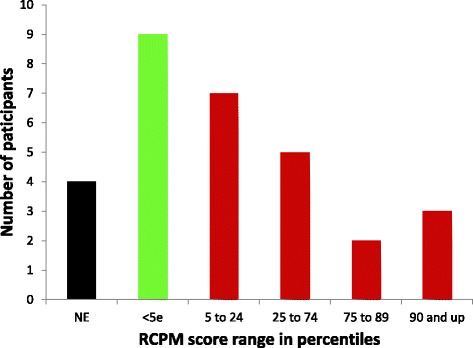
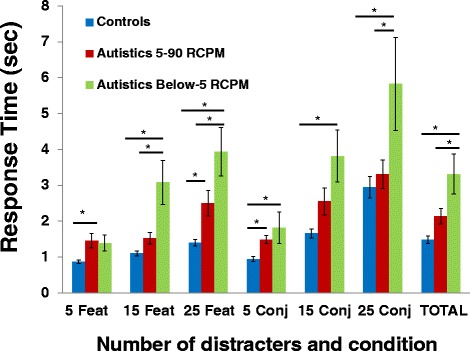
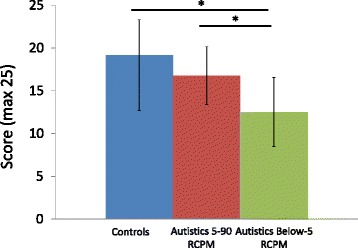
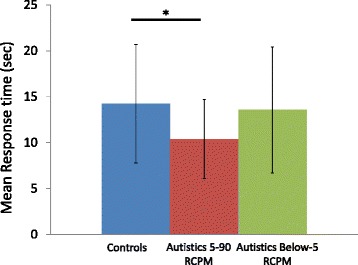
BACKGROUND: An important minority of school-aged autistic children, often characterized as 'nonverbal' or 'minimally verbal,' displays little or no spoken language. These children are at risk of being judged 'low-functioning' or 'untestable' via conventional cognitive testing practices. One neglected avenue for assessing autistic children so situated is to engage current knowledge of autistic cognitive strengths. Our aim was thus to pilot a strength-informed assessment of autistic children whose poor performance on conventional instruments suggests their cognitive potential is very limited. METHODS: Thirty autistic children (6 to 12 years) with little or no spoken language, attending specialized schools for autistic children with the highest levels of impairment, were assessed using Wechsler Intelligence Scale for Children (WISC-IV), Raven's Colored Progressive Matrices board form (RCPM), Children's Embedded Figures Test (CEFT), and a visual search task. An age-matched control group of 27 typical children was also assessed. RESULTS: None of the autistic children could complete WISC-IV; only six completed any subtest. In contrast, 26 autistic children could complete RCPM, with 17 scoring between the 5th and 90th percentile. Twenty-seven autistic children completed the visual search task, while 26 completed CEFT, on which autistic children were faster than RCPM-matched typical children. Autistic performance on RCPM, CEFT, and visual search were correlated. CONCLUSION: These results indicate that 'minimally verbal' or 'nonverbal' school-aged autistic children may be at risk of being underestimated: they may be wrongly regarded as having little cognitive potential. Our findings support the usefulness of strength-informed approaches to autism and have important implications for the assessment and education of autistic children.
Overview
The claims and statistics of this paper haven’t been checked yet.
Free: it reads the open-access text and checks the first 5 claims that cite a source we can check. Create a free account to check every claim.
Integrity signals
Registry
Cites
Statistics
Figures
Verification
Claims the paper makes
The claims and statistics of this paper haven’t been checked yet.
Free: it reads the open-access text and checks the first 5 claims that cite a source we can check. Create a free account to check every claim.
Claims other papers make about this one
Each is checked against this paper’s own text: does it say what the citing paper says it does?
The source backs part of the claim, not all of it — or backs it for a different population, condition or comparison.
In the citing paper
“When individuals with CCN, who were identified as having Intellectual Disability using language-based measures, were reassessed using more appropriate non-language-based instruments that employ visual spatial tasks, a significant proportion were found to be within or above the expected IQ range (Dawson et al., 2007; Barbeau et al., 2013; Courchesne et al., 2015; Crossley and Zimmerman, 2019).”
From Perspective: Presuming Autistic Communication Competence and Reframing Facilitated Communication (2022) · cites this paper as Courchesne et al., 2015
Experimental — accuracy not yet measuredThe source backs part of the claim, not all of it — or backs it for a different population, condition or comparison.
In the citing paper
“This argument is sustained by research that shows conventional measures for intelligence (e.g., WISC test batteries) generally underestimate the ability of nonspeaking autistics (Courchesne et al., 2015; Nadar et al., 2016; Akhtar and Jaswal, 2019).”
From Perspective: Presuming Autistic Communication Competence and Reframing Facilitated Communication (2022) · cites this paper as Courchesne et al., 2015
Experimental — accuracy not yet measuredIn the citing paper
“Recent research has shown that the cognitive abilities of nonspeaking autistic people have been significantly underestimated 43 .”
From Eye-tracking reveals agency in assisted autistic communication (2020) · cites this paper as [43]
Self-check
Percentages, sums and reported differences re-computed from the paper’s own numbers.
The self-check needs the paper’s full text.
Citations
Cites
Lord, C., Rutter, M., & Le Couteur, A. (1994) · Journal of Autism and Developmental Disorders · doi:10.1007/bf02172145 · Cited by 9,065 · cited 1×
“A review of the 30 participants’ files indicated an autism diagnosis based on Autism Diagnostic Observation Schedule (ADOS; [28]) for six participants; combined ADOS and Autism Diagnostic Interview Revised (ADI-R; [29]) for 12 participants; Childhood Autism Rating Scale (CARS; [30]) for two participants; and DSM-IV an…”
BackgroundLord, C., Risi, S., Lambrecht, L., Cook, E. H., Leventhal, B. L., DiLavore, P. C., Pickles, A., & Rutter, M. (2000) · Journal of Autism and Developmental Disorders · doi:10.1023/a:1005592401947 · Cited by 7,520 · cited 1×
“A review of the 30 participants’ files indicated an autism diagnosis based on Autism Diagnostic Observation Schedule (ADOS; [28]) for six participants; combined ADOS and Autism Diagnostic Interview Revised (ADI-R; [29]) for 12 participants; Childhood Autism Rating Scale (CARS; [30]) for two participants; and DSM-IV an…”
BackgroundToward objective classification of childhood autism: Childhood Autism Rating Scale (CARS)
Schopler, E., Reichler, R. J., DeVellis, R. F., & Daly, K. (1980) · Journal of Autism and Developmental Disorders · doi:10.1007/bf02408436 · Cited by 2,432 · cited 1×
“A review of the 30 participants’ files indicated an autism diagnosis based on Autism Diagnostic Observation Schedule (ADOS; [28]) for six participants; combined ADOS and Autism Diagnostic Interview Revised (ADI-R; [29]) for 12 participants; Childhood Autism Rating Scale (CARS; [30]) for two participants; and DSM-IV an…”
BackgroundTager‐Flusberg, H., & Kasari, C. (2013) · Autism Research · doi:10.1002/aur.1329 · Cited by 985 · cited 1×
“Background Autistic children who reach school age with little or no spoken language, and thus acquire labels such as ‘nonverbal’ or ‘minimally verbal’, have recently attracted concern as a neglected subgroup in autism research [1].”
BackgroundAn islet of ability in autistic children: a research note
Shah, A., & Frith, U. (1983) · Journal of Child Psychology and Psychiatry · doi:10.1111/j.1469-7610.1983.tb00137.x · Cited by 888 · cited 1×
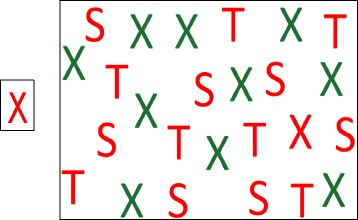
“We chose visual search [20,21] and embedded figures [22-24] tasks as the second and third tests in the pilot assessment.”
MethodVolkmar, F., Siegel, M., Woodbury-Smith, M., King, B., McCracken, J., & State, M. (2014) · Journal of the American Academy of Child & Adolescent Psychiatry · doi:10.1016/j.jaac.2013.10.013 · Cited by 848 · cited 1×
“Their difficult situation is made more so by prevailing views in which atypical autistic strengths and related strong interests are interpreted negatively as deficits, as suboptimal, as impediments to learning, or as symptoms which worsen autism ‘severity’ (for example, [43,44]; for more examples and reviews, see [9,4…”
BackgroundAre People with Autism and Asperger Syndrome Faster Than Normal on the Embedded Figures Test?
Jolliffe, T., & Baron‐Cohen, S. (1997) · Journal of Child Psychology and Psychiatry · doi:10.1111/j.1469-7610.1997.tb01539.x · Cited by 742 · cited 1×
“We chose visual search [20,21] and embedded figures [22-24] tasks as the second and third tests in the pilot assessment.”
MethodDevelopmental pathways to autism: A review of prospective studies of infants at risk
Jones, E. J. H., Gliga, T., Bedford, R., Charman, T., & Johnson, M. H. (2014) · Neuroscience & Biobehavioral Reviews · doi:10.1016/j.neubiorev.2013.12.001 · Cited by 607
IQ in children with autism spectrum disorders: Data from the special needs and autism project (SNAP)
Charman, T., Pickles, A., Simonoff, E., Chandler, S., Loucas, T., & Baird, G. (2011) · Psychological Medicine · doi:10.1017/s0033291710000991 · Cited by 599 · cited 2×
“The first test is Raven’s Progressive Matrices, an important test of general and fluid intelligence [13] on which autistics have displayed an advantage over Wechsler scales of intelligence that is not found in the nonautistic population [6,7,14-16].”
BackgroundMethodSuperior visual search in autism.
O'Riordan, M. A., Plaisted, K. C., Driver, J., & Baron-Cohen, S. (2001) · Journal of Experimental Psychology: Human Perception and Performance · doi:10.1037//0096-1523.27.3.719 · Cited by 557 · cited 1×
“The test used here was an adapted cardboard form of the computerized version in O’Riordan, Plaisted, Driver, and Baron-Cohen [34].”
MethodThe level and nature of autistic intelligence
Dawson, M., Soulières, I., Ann Gernsbacher, M., & Mottron, L. (2007) · Psychological Science · doi:10.1111/j.1467-9280.2007.01954.x · Cited by 549 · cited 2×
“The first test is Raven’s Progressive Matrices, an important test of general and fluid intelligence [13] on which autistics have displayed an advantage over Wechsler scales of intelligence that is not found in the nonautistic population [6,7,14-16].”
BackgroundMethodSelf-citationMackintosh, N. J. (1998) · Cited by 546
Plomin, R. (1999) · The American Journal of Human Genetics · doi:10.1086/302632 · Cited by 448
Neural networks for Braille reading by the blind
Sadato, N. (1998) · Brain · doi:10.1093/brain/121.7.1213 · Cited by 351 · cited 1×
“This resembles approaches to other disabilities (for example, blindness) where skills and abilities may present in highly atypical spontaneous and learned forms (for example, echolocation, braille reading, rapid speech recognition; [10-12]), and where adherence to conventional assessments of cognitive ability would ha…”
BackgroundInfant and toddler oral‐ and manual‐motor skills predict later speech fluency in autism
Gernsbacher, M. A., Sauer, E. A., Geye, H. M., Schweigert, E. K., & Hill Goldsmith, H. (2008) · Journal of Child Psychology and Psychiatry · doi:10.1111/j.1469-7610.2007.01820.x · Cited by 345 · cited 1×
“Even tests considered ‘well-suited for use with minimally verbal children’ ([5]; Tables one to six), such as picture vocabulary tests, may require specific typical abilities, such as the ability to reliably point, which some or many nonspeaking autistic children may lack [8].”
BackgroundAssessing the Minimally Verbal School‐Aged Child With Autism Spectrum Disorder
Kasari, C., Brady, N., Lord, C., & Tager‐Flusberg, H. (2013) · Autism Research · doi:10.1002/aur.1334 · Cited by 332 · cited 2×
“Current expert opinion recommendations for assessing minimally verbal school-aged autistic children emphasize ‘core domains’ (language, social behaviors, repetitive behaviors), typicality (in development and range of abilities), and comprehensiveness [5].”
BackgroundNeural Correlates of Natural Human Echolocation in Early and Late Blind Echolocation Experts
Thaler, L., Arnott, S. R., & Goodale, M. A. (2011) · PLoS ONE · doi:10.1371/journal.pone.0020162 · Cited by 331
Pellicano, E., & Stears, M. (2011) · Autism Research · doi:10.1002/aur.201 · Cited by 227 · cited 1×
“Endnote To reduce unhelpful biases (see, for example, [51]), and in keeping with the current consensus on language in autism research [52], we use the accurate, respectful terms ‘autistic’ and ‘autistic children’.”
MethodEnhanced visual processing contributes to matrix reasoning in autism
Soulières, I., Dawson, M., Samson, F., Barbeau, E. B., Sahyoun, C. P., Strangman, G. E., Zeffiro, T. A., & Mottron, L. (2009) · Human Brain Mapping · doi:10.1002/hbm.20831 · Cited by 217 · cited 3×
“Further, there is some evidence that autistics may be advantaged by more complex tasks or versions of tasks, such as the adult Embedded Figures Test [39] rather than the children’s version [40], more complex versus less complex mental rotation [27], more abstract versus more concrete tests [41], and more complex versu…”
BackgroundMethodSelf-citationSuperior Visual Search in Adults with Autism
O’riordan, M. A. (2004) · Autism · doi:10.1177/1362361304045219 · Cited by 216
Enhanced perception in savant syndrome: patterns, structure and creativity
Mottron, L., Dawson, M., & Soulières, I. (2009) · Philosophical Transactions of the Royal Society B: Biological Sciences · doi:10.1098/rstb.2008.0333 · Cited by 205 · cited 1×
“This model may be especially relevant for autistics, due to their overall atypicality in information processing [49], with higher variance and greater specialization in preferences and abilities [50].”
BackgroundSelf-citationDaniels, A. M., Halladay, A. K., Shih, A. J., Elder, L. M., & Dawson, G. (2013) · Journal of the American Academy of Child & Adolescent Psychiatry · doi:10.1016/j.jaac.2013.11.002 · Cited by 163 · cited 1×
“Not only are they likely to be regarded and treated as though very low-functioning, they are in addition considered far too old for popular interventions to improve their outcomes [4].”
BackgroundWhy I dislike “person first” Language
Sinclair, J. (2013) · Cited by 151
The motivation for very early intervention for infants at high risk for autism spectrum disorders
Webb, S. J., Jones, E. J. H., Kelly, J., & Dawson, G. (2014) · International Journal of Speech-Language Pathology · doi:10.3109/17549507.2013.861018 · Cited by 139 · cited 1×
“dominates autism research priorities [2,3] and is widely claimed to be determinative, the difficulties faced by autistic children so situated raise important concerns.”
BackgroundKaldy, Z., Kraper, C., Carter, A. S., & Blaser, E. (2011) · Developmental Science · doi:10.1111/j.1467-7687.2011.01053.x · Cited by 133 · cited 1×
“We chose visual search [20,21] and embedded figures [22-24] tasks as the second and third tests in the pilot assessment.”
MethodEnhanced mental image mapping in autism
Soulières, I., Zeffiro, T. A., Girard, M. L., & Mottron, L. (2011) · Neuropsychologia · doi:10.1016/j.neuropsychologia.2011.01.027 · Cited by 129 · cited 2×
“Further, there is some evidence that autistics may be advantaged by more complex tasks or versions of tasks, such as the adult Embedded Figures Test [39] rather than the children’s version [40], more complex versus less complex mental rotation [27], more abstract versus more concrete tests [41], and more complex versu…”
BackgroundSelf-citationDawson, M., Mottron, L., & Gernsbacher, M. A. (2008) · Elsevier eBooks · doi:10.1016/b978-012370509-9.00152-2 · Cited by 129
Self-citationNelson, K. B., & Bauman, M. L. (2003) · PEDIATRICS · doi:10.1542/peds.111.3.674 · Cited by 127 · cited 1×
“A published large data set including RCPM board form scores for 256 autistic children aged 7 to 11 years [19] also suggests this test belongs in a strength-informed assessment for minimally verbal autistic children in this age range.”
Brief Report: The Level and Nature of Autistic Intelligence Revisited
Bölte, S., Dziobek, I., & Poustka, F. (2009) · Journal of Autism and Developmental Disorders · doi:10.1007/s10803-008-0667-2 · Cited by 110 · cited 1×
“The first test is Raven’s Progressive Matrices, an important test of general and fluid intelligence [13] on which autistics have displayed an advantage over Wechsler scales of intelligence that is not found in the nonautistic population [6,7,14-16].”
MethodFactors and primes: a specific numerical ability
Hermelin, B., & O'Connor, N. (1990) · Psychological Medicine · doi:10.1017/s0033291700013349 · Cited by 102 · cited 1×
“Our tasks were also narrow in scope, not assessing abilities which may be strong in some minimally verbal autistics, such as numerical abilities, receptive vocabulary, or the ability to decode text [36-38].”
BackgroundThe level and nature of autistic intelligence III: inspection time
Barbeau, E. B., Soulières, I., Dawson, M., Zeffiro, T. A., & Mottron, L. (2013) · Journal of Abnormal Psychology · doi:10.1037/a0029984 · Cited by 97 · cited 2×
“The first test is Raven’s Progressive Matrices, an important test of general and fluid intelligence [13] on which autistics have displayed an advantage over Wechsler scales of intelligence that is not found in the nonautistic population [6,7,14-16].”
BackgroundMethodSelf-citationKemner, C., van Ewijk, L., van Engeland, H., & Hooge, I. (2008) · Journal of Autism and Developmental Disorders · doi:10.1007/s10803-007-0406-0 · Cited by 87 · cited 1×
“We chose visual search [20,21] and embedded figures [22-24] tasks as the second and third tests in the pilot assessment.”
MethodAbstract Spatial Reasoning as an Autistic Strength
Stevenson, J. L., & Gernsbacher, M. A. (2013) · PLoS ONE · doi:10.1371/journal.pone.0059329 · Cited by 85 · cited 1×
“Further, there is some evidence that autistics may be advantaged by more complex tasks or versions of tasks, such as the adult Embedded Figures Test [39] rather than the children’s version [40], more complex versus less complex mental rotation [27], more abstract versus more concrete tests [41], and more complex versu…”
BackgroundSensory Discrimination and Intelligence: Testing Spearman's Other Hypothesis
Deary, I. J., Bell, P. J., Bell, A. J., Campbell, M. L., & Fazal, N. D. (2004) · The American Journal of Psychology · doi:10.2307/1423593 · Cited by 72 · cited 1×
“Both tasks are considered perceptual, which respects the documented association between perception and intelligence especially prominent in autistics, but also found in the nonautistic population [15,16,26,27].”
BackgroundMore Is Less: Pitch Discrimination and Language Delays in Children with Optimal Outcomes from Autism
Eigsti, I., & Fein, D. A. (2013) · Autism Research · doi:10.1002/aur.1324 · Cited by 68 · cited 1×
“Their difficult situation is made more so by prevailing views in which atypical autistic strengths and related strong interests are interpreted negatively as deficits, as suboptimal, as impediments to learning, or as symptoms which worsen autism ‘severity’ (for example, [43,44]; for more examples and reviews, see [9,4…”
BackgroundRecognition of Rapid Speech by Blind and Sighted Older Adults
Gordon-Salant, S. M., & Friedman, S. A. (2010) · Journal of Speech Language and Hearing Research · doi:10.1044/1092-4388(2010/10-0052 · Cited by 41
Hyperlexia in a 4-year-old boy with Autistic Spectrum Disorder
Atkin, K., & Lorch, M. P. (2006) · Journal of Neurolinguistics · doi:10.1016/j.jneuroling.2005.11.006 · Cited by 35 · cited 1×
“Our tasks were also narrow in scope, not assessing abilities which may be strong in some minimally verbal autistics, such as numerical abilities, receptive vocabulary, or the ability to decode text [36-38].”
BackgroundInterventions for Infants and Toddlers at Risk for Autism Spectrum Disorder
Rogers, S. J., & Vismara, L. (2014) · Handbook of Autism and Pervasive Developmental Disorders, Fourth Edition · doi:10.1002/9781118911389.hautc29 · Cited by 29
Boys with autism spectrum disorders show superior performance on the adult Embedded Figures Test
Schlooz, W. A. J. M., & Hulstijn, W. (2013) · Research in Autism · doi:10.1016/j.rasd.2013.10.004 · Cited by 28 · cited 1×
“Further, there is some evidence that autistics may be advantaged by more complex tasks or versions of tasks, such as the adult Embedded Figures Test [39] rather than the children’s version [40], more complex versus less complex mental rotation [27], more abstract versus more concrete tests [41], and more complex versu…”
BackgroundClare, I. C. H., & Woodbury‐Smith, M. (2009) · Oxford University Press eBooks · doi:10.1093/med/9780198566830.003.0005 · Cited by 28
Language is More than Speech: A Case Study.
Gernsbacher, M. A. (2004) · PubMed · Cited by 21
Movies About Intelligence: The Limitations of g
Flynn, J. R. (2003) · Current Directions in Psychological Science · doi:10.1111/1467-8721.01238 · Cited by 21
Bello, K. D., Goharpey, N., Crewther, S. G., & Crewther, D. P. (2008) · BMC Pediatrics · doi:10.1186/1471-2431-8-30 · Cited by 20 · cited 1×
“There is preliminary evidence [18] that an improvised board or ‘puzzle’ form of RCPM, while equivalent to the on-paper version in typical children, produces both better scores and a higher completion rate in school-aged autistic children labeled with severe intellectual disability.”
BackgroundAn Economic and Rational Choice Approach to the Autism Spectrum and Human NeurodiversityPreprint
Cowen, T. (2011) · SSRN Electronic Journal · doi:10.2139/ssrn.1975809 · Cited by 17
THURBER, S. D., & Holt-Woehl, H. M. (2019) · Fortress Press eBooks · doi:10.2307/j.ctvcb5b2b.12 · Cited by 13
Research works printed but not linked: 7
- Raven J Raven JC Court JH Raven Manual 1998 Oxford, England Oxford Psychologists Press
- Dawson M Mottron L Where Autistics Excel: Compiling an Inventory of Autistic Cognitive Strengths 2009 Chicago, IL International Meeting for Autism Research
- Wechsler D The Wechsler Intelligence Scales for Children, Fourth Édition: Canadian (WISC-IV) 2005 Toronto, Canada Psychological Corporation
- Roid GH Miller LJ Leiter International Performance Scale-Revised: Examiners Manual 1997 Wood Dale, IL Stoeling Co.
- Raven JC Court JH Raven J Coloured Progressive Matrices 1995 Oxford Psychologist Press
- Witkin HA Oltman PK Raskin E Karp SA A Manual for the Embedded Figure Tests 1971 Palo Alto, CA Consulting Psychologists Press
- Baron-Cohen S Enhanced attention to detail and hyper-systemizing in autism. Commentary on Milne, E., Swettenham, J., & Campbell, R. Motion perception in autism: a review Curr Psychol Cogn 2005 23 59 64
Cited by
Annual Research Review: Shifting from ‘normal science’ to neurodiversity in autism science
Pellicano, E., & den Houting, J. (2022) · Journal of Child Psychology and Psychiatry · doi:10.1111/jcpp.13534 · Cited by 744
Lai, M.-C., Anagnostou, E., Wiznitzer, M., Allison, C., & Baron-Cohen, S. (2020) · The Lancet Neurology · doi:10.1016/s1474-4422(20)30034-x · Cited by 250
A capabilities approach to understanding and supporting autistic adulthood
Pellicano, E., Fatima, U., Hall, G., Heyworth, M., Lawson, W., Lilley, R., Mahony, J., & Stears, M. (2022) · Nature Reviews Psychology · doi:10.1038/s44159-022-00099-z · Cited by 237
Language Acquisition and Language Disorders
(2013) · Language acquisition & language disorders · doi:10.1075/lald · Cited by 165
Metadata
- Authors
- Courchesne, V., Meilleur, A.-A. S., Poulin-Lord, M.-P., Dawson, M., & Soulières, I.
- Affiliations
- Hôpital Rivière-des-Prairies (CA)
- Université du Québec à Montréal (CA)
- Corresponding author
- Soulières, Isabelle
- Venue
- Molecular Autism
- Published
- 2015-03-06
- Volume
- 6
- Issue
- 1
- Pages
- 12-12
- ISSN
- 2040-2392 (ISSN-L)
- PMC
- PMC4359559
- OpenAlex
- W2140319834
- Cited by
- 160
- References
- 45
- Citations by year
- 2026: 7 · 2025: 15 · 2024: 15 · 2023: 38 · 2022: 10 · 2021: 19 · 2020: 21 · 2019: 6 · 2018: 11 · 2017: 9 · 2016: 8
- FWCI
- 5.61
- Type
- journal article
- Language
- en
- Open access
- gold
- doi.org
- Locations
- Molecular Autism (publishedVersion, cc-by)
- Europe PMC (PubMed Central) (publishedVersion, cc-by)
- PubMed Central (publishedVersion, cc-by)
- PubMed (publishedVersion)
- Topics
- Life Sciences › Neuroscience › Cognitive Neuroscience › Autism Spectrum Disorder Research
- Social Sciences › Psychology › Neuropsychology and Physiological Psychology › Developmental and Educational Neuropsychology
- Health Sciences › Medicine › Public Health, Environmental and Occupational Health › Down syndrome and intellectual disability research
- Keywords
- autism spectrum disorder, children with autism, nonverbal autism, minimally verbal children, cognitive assessment, Coloured Progressive Matrices, Children's Embedded Figures Test, visual search, WISC-IV
About these checks
Registry, retraction, Cites and statistics results are computed, not judged, with one exception: a printed reference that no index lists is read once by a model before it counts as a citation error. Claims are extracted by a model and kept only when their quote appears verbatim in the text; each cited source is then checked, with a model’s help, for whether it says what the claim relies on. Those verdicts can be wrong — read the claim’s quote and the cited source before relying on one.
Statistics and arithmetic are recomputed, not judged.
Confidence bands are shown only for fields calibrated on our annotated test set. None is calibrated yet, so no band is shown.
What counts as a claim ›How we measure confidence ›How we check this ›
Are you an author, or do you see a problem with this page? Request a review
Data sources
Bibliographic data: Semantic Scholar, OpenAlex, Crossref.
Contains information from the Semantic Scholar Academic Graph Datasets, made available under the ODC Attribution License (ODC-BY 1.0).
Semantic Scholar’s data is described in: Kinney, R., et al. (2023). The Semantic Scholar Open Data Platform. arXiv:2301.10140.
