

Atypical sympathetic arousal in children with autism spectrum disorder and its association with anxiety symptomatology
Open accessThe DOI matches its Crossref record; 56 of the 58 references it cites were found in a registry or an index.
Abstract
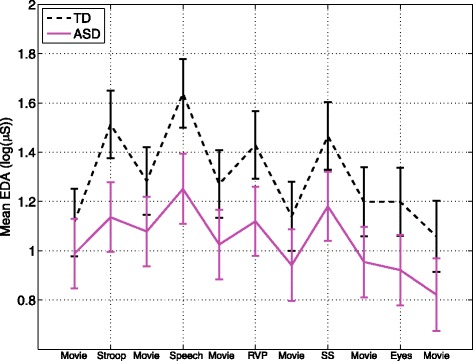
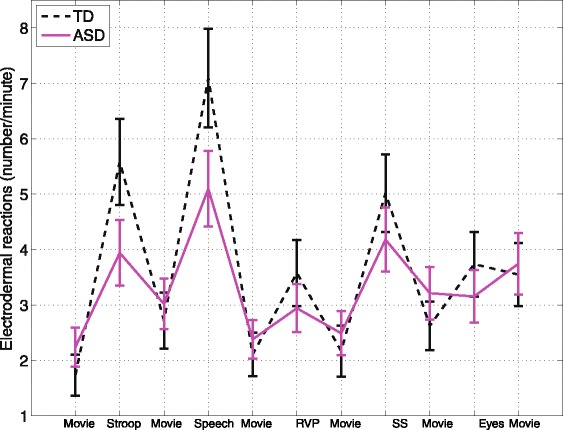
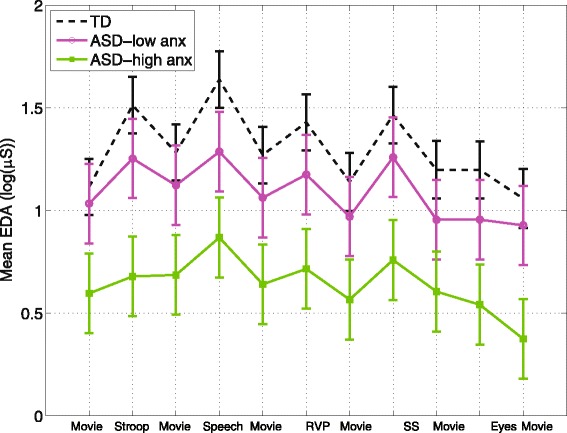
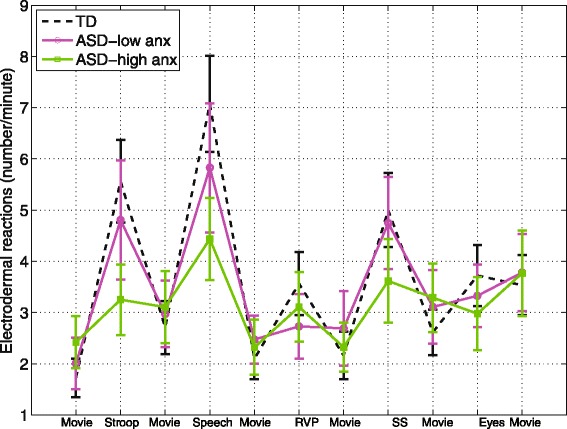
BACKGROUND: Autism spectrum disorder (ASD) has been associated with autonomic atypicalities, although the nature of these differences remains largely unknown. Moreover, existing literature suggests large variability in autonomic function in ASD, motivating the need to examine the existence of subgroups that exhibit more homogeneous autonomic features. METHODS: Electrodermal activity (EDA), a non-invasive physiological indicator of autonomic activity, was measured in typically developing children (n = 33) and those with ASD (n = 38) as participants performed tasks that elicit anxiety, attention, response inhibition, and social cognition processes. The ASD group was divided into low- (n = 18) and high-anxiety (n = 20) participants, and the groups were compared to mean EDA level and electrodermal reactions frequency (EDR). RESULTS: The ASD group had a significantly blunted mean EDA response to the anxiety tasks (p < 0.004). The EDR response to all tasks, except response inhibition, was also blunted in the ASD group (p < 0.04). For this group, EDR frequency during the anxiety and social cognition tasks was negatively correlated with behavioral scores in the domains that were probed by each task (p < 0.002). The high-anxiety ASD group showed significantly decreased mean EDA compared to both the low-anxiety ASD group (p = 0.02) and the typically developing control group (p = 0.04). The high-anxiety ASD group also had significantly more severe symptoms than the low-anxiety ASD group on domains related to anxiety, attention, rule breaking, aggression, obsessions and compulsions, and depression. CONCLUSIONS: Our results suggest atypical autonomic function in children with ASD, specifically with respect to sympathetic activity. Moreover, anxiety symptomatology defined subgroups with distinct physiological and behavioral profiles. Overall, the results add to the body of literature supporting autonomic dysfunction in ASD and highlight the role of anxiety and autonomic features in explaining the variability in the autism spectrum.
Overview
The claims and statistics of this paper haven’t been checked yet.
Free: it reads the open-access text and checks the first 5 claims that cite a source we can check. Create a free account to check every claim.
Integrity signals
Registry
Cites
Statistics
Figures
Verification
Claims the paper makes
The claims and statistics of this paper haven’t been checked yet.
Free: it reads the open-access text and checks the first 5 claims that cite a source we can check. Create a free account to check every claim.
Claims other papers make about this one
Each is checked against this paper’s own text: does it say what the citing paper says it does?
The cited source doesn’t support the claim as written.
In the citing paper
“In summary, the overall conclusion must be that assessments of sympathetic activity in children with ASD using HRV measures or electrodermal activity do not support sympathetic autonomic dysfunction associated with autism.”
From Autism Spectrum Disorder in Children Is Not Associated With Abnormal Autonomic Nervous System Function: Hypothesis and Theory (2022) · cites this paper as [53]
Checked by a reasoning model — may be wrong.
Experimental — accuracy not yet measuredThe source backs part of the claim, not all of it — or backs it for a different population, condition or comparison.
In the citing paper
“Contrary to their expectations, the baseline electrodermal activity in children with high anxiety levels was lower than controls.”
From Autism Spectrum Disorder in Children Is Not Associated With Abnormal Autonomic Nervous System Function: Hypothesis and Theory (2022) · cites this paper as [53]
Experimental — accuracy not yet measuredThe source backs part of the claim, not all of it — or backs it for a different population, condition or comparison.
In the citing paper
“compared to a control group, ASD children with low levels of anxiety were not different from controls in baseline electrodermal activity nor in sympathetic responses to any stimulus (53).”
From Autism Spectrum Disorder in Children Is Not Associated With Abnormal Autonomic Nervous System Function: Hypothesis and Theory (2022) · cites this paper as [53]
Experimental — accuracy not yet measuredThe source backs part of the claim, not all of it — or backs it for a different population, condition or comparison.
In the citing paper
“In response to tasks, the sympathetic activity goes up, similar to typically developing children, but there is no hyper-arousal.”
From Autism Spectrum Disorder in Children Is Not Associated With Abnormal Autonomic Nervous System Function: Hypothesis and Theory (2022) · cites this paper as [53]
Experimental — accuracy not yet measuredThe source backs part of the claim, not all of it — or backs it for a different population, condition or comparison.
In the citing paper
“These tasks increase sympathetic activity, as shown by electrodermal activity.”
From Autism Spectrum Disorder in Children Is Not Associated With Abnormal Autonomic Nervous System Function: Hypothesis and Theory (2022) · cites this paper as [53]
Experimental — accuracy not yet measured
2 more claims about this paper
Create a free account to see every claim other papers make about this one.
Self-check
Percentages, sums and reported differences re-computed from the paper’s own numbers.
The self-check needs the paper’s full text.
Citations
Cites
Studies of interference in serial verbal reactions
Stroop, J. R. (1935) · Journal of Experimental Psychology · doi:10.1037/h0054651 · Cited by 18,622
Lord, C., Rutter, M., & Le Couteur, A. (1994) · Journal of Autism and Developmental Disorders · doi:10.1007/bf02172145 · Cited by 9,065 · cited 1×
“Participants in the ASD group had a primary clinical diagnosis of ASD supported by the Autism Diagnostic Observation Schedule (ADOS) [28] and the Autism Diagnostic Interview-Revised (ADI-R) [29].”
MethodLord, C., Risi, S., Lambrecht, L., Cook, E. H., Leventhal, B. L., DiLavore, P. C., Pickles, A., & Rutter, M. (2000) · Journal of Autism and Developmental Disorders · doi:10.1023/a:1005592401947 · Cited by 7,520 · cited 1×
“Participants in the ASD group had a primary clinical diagnosis of ASD supported by the Autism Diagnostic Observation Schedule (ADOS) [28] and the Autism Diagnostic Interview-Revised (ADI-R) [29].”
MethodBaron‐Cohen, S., Wheelwright, S., Hill, J., Raste, Y., & Plumb, I. (2001) · Journal of Child Psychology and Psychiatry · doi:10.1111/1469-7610.00715 · Cited by 4,555 · cited 1×
“task [33]), and social cognition (Reading the Mind in the Eyes task [34, 35]).”
Background(2001) · doi:10.1017/cbo9780511546396 · Cited by 4,482
Baron‐Cohen, S., Wheelwright, S. J., Hill, J., Raste, Y., & Plumb, I. (2001) · PubMed · Cited by 4,313
Dawson, M. E., Schell, A. M., Filion, D. L., & Berntson, G. G. (2009) · Handbook of Psychophysiology · doi:10.1017/cbo9780511546396.007 · Cited by 1,720
A continuous measure of phasic electrodermal activity
Benedek, M., & Kaernbach, C. (2010) · Journal of Neuroscience Methods · doi:10.1016/j.jneumeth.2010.04.028 · Cited by 1,671 · cited 1×
“task [33]), and social cognition (Reading the Mind in the Eyes task [34, 35]).”
BackgroundAnxiety Disorders in Children and Adolescents with Autistic Spectrum Disorders: A Meta-Analysis
van Steensel, F. J. A., Bögels, S. M., & Perrin, S. (2011) · Clinical Child and Family Psychology Review · doi:10.1007/s10567-011-0097-0 · Cited by 1,463 · cited 1×
“These regions have also been implicated in studies of social deficits in ASD [47] as well as in neuro-circuitry of anxiety [50].”
BackgroundBeissner, F., Meissner, K., Bar, K.-J., & Napadow, V. (2013) · Journal of Neuroscience · doi:10.1523/jneurosci.1103-13.2013 · Cited by 920 · cited 1×
“Interestingly, markers of a well-regulated ANS have been associated with improved social function in children with ASD [45].”
Background
Research works printed but not linked: 1
- Porges SW. The Polyvagal Theory: Neurophysiological Foundations Of Emotions, Attachment, Communication, and Self-Regulation (Norton Series On Interpersonal Neurobiology). New York: WW Norton & Company; 2011.
Cited by
Sleep in Children with Autism Spectrum Disorder
Souders, M. C., Zavodny, S., Eriksen, W., Sinko, R., Connell, J., Kerns, C., Schaaf, R., & Pinto-Martin, J. (2017) · Current Psychiatry Reports · doi:10.1007/s11920-017-0782-x · Cited by 307
Keith, J. M., Jamieson, J. P., & Bennetto, L. (2019) · Journal of Abnormal Child Psychology · doi:10.1007/s10802-018-0455-1 · Cited by 93
Autism spectrum disorder is associated with autonomic underarousal
BUJNAKOVA, I., ONDREJKA, I., MESTANIK, M., VISNOVCOVA, Z., MESTANIKOVA, A., HRTANEK, I., FLESKOVA, D., CALKOVSKA, A., & TONHAJZEROVA, I. (2016) · Physiological Research · doi:10.33549/physiolres.933528 · Cited by 75
“Interestingly, Panju et al. (2015) studied two groups of ASD (low-anxiety and highanxiety) and they found significantly decreased mean EDA in high-anxiety ASD group.”
BackgroundPathological Demand Avoidance: symptoms but not a syndrome
Green, J., Absoud, M., Grahame, V., Malik, O., Simonoff, E. A., Couteur, A. S. L., & Baird, G. (2018) · The Lancet Child & Adolescent Health · doi:10.1016/s2352-4642(18)30044-0 · Cited by 89
Fluegge, K. (2016) · Environmental Toxicology and Pharmacology · doi:10.1016/j.etap.2016.08.013 · Cited by 72
Heart Rate Variability During a Joint Attention Task in Toddlers With Autism Spectrum Disorders
Billeci, L., Tonacci, A., Narzisi, A., Manigrasso, Z., Varanini, M., Fulceri, F., Lattarulo, C., Calderoni, S., & Muratori, F. (2018) · Frontiers in Physiology · doi:10.3389/fphys.2018.00467 · Cited by 55
“This fact, indirectly consistent with the existing literature on this topic (Ming et al., 2005; Bal et al., 2010; Daluwatte et al., 2013; Porges et al., 2013; Kushki et al., 2014; Panju et al., 2015).”
ResultSleep Disturbances in Children Affected by Autism Spectrum Disorder
Galli, J., Loi, E., Visconti, L. M., Mattei, P., Eusebi, A., Calza, S., Fazzi, E., & ASD Collaborative Group (2022) · Frontiers in Psychiatry · doi:10.3389/fpsyt.2022.736696 · Cited by 51
“Scheduled/urgent cesarean, N (%) 22 (22) / 14 (14)”
BackgroundInfluentialAmbrose, K., Simpson, K., & Adams, D. (2021) · Clinical Psychology Review · doi:10.1016/j.cpr.2021.102086 · Cited by 56
Gaining Insights into Aggressive Behaviour in Autism Spectrum Disorder Using Latent Profile Analysis
Sullivan, M. O., Gallagher, L., & Heron, E. A. (2019) · Journal of Autism and Developmental Disorders · doi:10.1007/s10803-019-04129-3 · Cited by 48
A scoping review of physiological biomarkers in autism
Shan, J., Gu, Y., Zhang, J., Hu, X., Wu, H., Yuan, T., & Zhao, D. (2023) · Frontiers in Neuroscience · doi:10.3389/fnins.2023.1269880 · Cited by 36
“Low-anxiety ASD group has a relatively higher arousal (elevated EDA magnitudes, faster latencies, slower habituation) and high-anxiety ASD group has a lower arousal (lower EDA magnitudes, slower latencies, faster habituation; Panju et al., 2015).”
BackgroundKong, X., Liu, J., Liu, K., Koh, M., Tian, R., Hobbie, C., Fong, M., Chen, Q., Zhao, M., Budjan, C., et al. (2020) · Journal of Autism and Developmental Disorders · doi:10.1007/s10803-020-04524-1 · Cited by 40
Edmiston, E. K., Blain, S. D., & Corbett, B. A. (2016) · Autism Research · doi:10.1002/aur.1660 · Cited by 37
Gualniera, L., Singh, J., Fiori, F., & Santosh, P. (2021) · Journal of Psychiatric Research · doi:10.1016/j.jpsychires.2021.03.052 · Cited by 33
The neurobiological presentation of anxiety in autism spectrum disorder: A systematic review
McVey, A. J. (2019) · Autism Research · doi:10.1002/aur.2063 · Cited by 30
Muscatello, R. A., Andujar, J. D., Taylor, J. L., & Corbett, B. A. (2020) · Journal of Autism and Developmental Disorders · doi:10.1007/s10803-020-04516-1 · Cited by 33
Mertens, J., Zane, E. R., Neumeyer, K., & Grossman, R. B. (2017) · Journal of Autism and Developmental Disorders · doi:10.1007/s10803-016-2979-y · Cited by 27
“This pattern has also been replicated twice in individuals with ASD, suggesting this paradoxical relationship transcends diagnostic groups (Hollocks et al. 2014a; Panju et al. 2015).”
BackgroundLynch, G. T. F., James, S., & VanDam, M. (2017) · Autism Research · doi:10.1002/aur.1888 · Cited by 29
“A pattern of blunted sympathetic responding has been replicated through measures of electrodermal activity (EDA), in which EDA levels were lower for children with ASD demonstrating behaviors associated with “high anxiety” vs “low anxiety” [Panju et al., 2015].”
BackgroundDiagnostic Assessment Techniques and Non-Invasive Biomarkers for Autism Spectrum Disorder
Tanu, T., & Kakkar, D. (2019) · International Journal of E-Health and Medical Communications · doi:10.4018/ijehmc.2019070105 · Cited by 30
Seo, W. S. (2021) · Journal of Yeungnam Medical Science · doi:10.12701/yujm.2021.01410 · Cited by 28
“In a study comparing the mean electrodermal activity (EDA) and electrodermal reaction frequency of two groups by anxiety level (low and high), the mean EDA for the high anxiety group was significantly lower than that of the control and low anxiety groups, suggesting an abnormality in sympathetic activity in children w…”
BackgroundVirtual Avatar-Based Life Coaching for Children With Autism Spectrum Disorder
Zhao, W., Liu, X., Qiu, T., & Luo, X. (2020) · Computer · doi:10.1109/mc.2019.2915979 · Cited by 28
Lower activity of salivary alpha-amylase in youths with depression
Ježová, D., Trebatická, J., Buzgoova, K., Ďuračková, Z., & Hlaváčová, N. (2020) · Stress · doi:10.1080/10253890.2020.1777975 · Cited by 26
Barbier, A., Chen, J.-H., & Huizinga, J. D. (2022) · Frontiers in Psychiatry · doi:10.3389/fpsyt.2022.830234 · Cited by 25
“The polyvagal theory predicts that children with autism would have a “hyper-responsive sympathetic system” (32, 53).”
BackgroundResultReilly, J., Gallagher, L., Leader, G., & Shen, S. (2020) · PLoS ONE · doi:10.1371/journal.pone.0242773 · Cited by 31
Fang, Z., Zhou, Y., Chen, K. G., Wang, J., Liu, X., & Jia, P. (2025) · Frontiers in Neuroscience · doi:10.3389/fnins.2025.1587818 · Cited by 29
Posada-Quintero, H. F., Manjur, S. M., Hossain, M.-B., Marmolejo‐Ramos, F., Lee, I., Skuse, D., Thompson, D., & Constable, P. A. (2023) · Research in Autism · doi:10.1016/j.rasd.2023.102258 · Cited by 26
Muscatello, R. A., Pachol, A., Romines, A., Smith, I., & Corbett, B. A. (2022) · Journal of Autism and Developmental Disorders · doi:10.1007/s10803-022-05664-2 · Cited by 22
A time to fight: Circadian control of aggression and associated autonomic support
Todd, W. D., & Machado, N. (2018) · Autonomic Neuroscience · doi:10.1016/j.autneu.2018.12.008 · Cited by 23
Profiles of autonomic activity in autism spectrum disorder with and without anxiety
Parma, V., Cellini, N., Guy, L., McVey, A. J., Rump, K., Worley, J., Maddox, B. B., Bush, J., Bennett, A., Franklin, M., et al. (2021) · Journal of Autism and Developmental Disorders · doi:10.1007/s10803-020-04862-0 · Cited by 19
Shannon, D. B. (2021) · International Journal of Qualitative Studies in Education · doi:10.1080/09518398.2021.2003894 · Cited by 21
“…suggested that EDA might be useful in predicting and preventing moments of crisis, or “ meltdowns ” (e.g. Baker et al., 2018; Cappadocia et al., 2009; Panju et al., 2015): Again, this seems due in part to doxa that narrate A/autistics as computational or robotic, or what Yergeau (2018) describes…”
Working Together: Ethnographic Observations on Participatory Design Involving Adults with Autism
Cascio, M. A., Grond, F., Motta‐Ochoa, R., Tembeck, T., Veen, D. T., & Blain‐Moraes, S. (2020) · Human Organization · doi:10.17730/0018-7259.79.1.1 · Cited by 18
The effect of ambient sounds on decision-making and heart rate variability in autism
Bellamy, R., RING, H. A., Watson, P., Kemp, A. H., Munn, G., & Clare, I. C. H. (2021) · Autism · doi:10.1177/13623613211014993 · Cited by 16
“However, the absence of HRV differences may also reflect autonomic dysregulation in autistic individuals (Panju et al., 2015; Truzzi et al., 2016) where, despite self-reported negative affect, a physiological response is absent.”
BackgroundGreenlee, J. L., Lorang, E. K., Olson, R. H., Rodriquez, G., Yoon, D. M., & Hartley, S. L. (2024) · Developmental Psychobiology · doi:10.1002/dev.22461 · Cited by 15
Sweat gland morphology and physiology in diabetes, neuropathy, and nephropathy: a review
Singaram, S., Ramakrishnan, K., Selvam, J., Senthil, M., & Narayanamurthy, V. (2022) · Archives of Physiology and Biochemistry · doi:10.1080/13813455.2022.2114499 · Cited by 14
“Panju et al. (2015) also tried to assess behavioural response in ASD children by giving five different tasks.”
Significance of electrodermal activity response in children with autism spectrum disorder
Airij, A. G., Sudirman, R., Sheikh, U. U., Khuan, L. Y., & Zakaria, N. A. (2020) · Indonesian Journal of Electrical Engineering and Computer Science · doi:10.11591/ijeecs.v19.i2.pp1113-1120 · Cited by 17
“specifically focuses on the EDA response of children with Autism Spectrum Disorder (ASD) as previous research suggests that they suffer from autonomic dysregulation [8, 10, 17, 19].”
BackgroundLudyga, S., Gerber, M., Bruggisser, F., Leuenberger, R., Brotzmann, M., Trescher, S., Förster, M., Zou, L., Herbrecht, E., & Hanke, M. (2023) · Autism Research · doi:10.1002/aur.2977 · Cited by 14
Souders, M. C., Eriksen, W., Bennett, A. E., Prasad, R., & Jackson, S. Z. (2018) · Springer eBooks · doi:10.1007/978-3-319-98414-8_11 · Cited by 12
Singh, J., Lanzarini, E., & Santosh, P. (2020) · Neuroscience & Biobehavioral Reviews · doi:10.1016/j.neubiorev.2020.08.012 · Cited by 13
“Using EDA, children with autism have also been shown to have an abnormal sympathetic profile (Panju et al., 2015).”
MethodFoldes, S. T., Jensen, A. R., Jacobson, A., Vassall, S. G., Foldes, E., Guthery, A., Brown, D., Levine, T. P., Tyler, W. J., & Frye, R. E. (2021) · Journal of Personalized Medicine · doi:10.3390/jpm11121307 · Cited by 13
“Multiple studies have documented autonomic nervous system (ANS) imbalances in individuals with ASD with relative sympathetic overactivation, leading to hyper-arousal, anxiety [37] and poor sleep [38].”
BackgroundMethodWass, S. V., Clackson, K., & Leong, V. (2018) · Infancy · doi:10.1111/infa.12243 · Cited by 12
Sleep Disturbances and Co-sleeping in Italian Children and Adolescents with Autism Spectrum Disorder
Scarpelli, S., Menghini, D., Alfonsi, V., Giumello, F., Annarumma, L., Gorgoni, M., Valeri, G., Pazzaglia, M., Gennaro, L. D., & Vicari, S. (2024) · Journal of Autism and Developmental Disorders · doi:10.1007/s10803-024-06507-y · Cited by 10
“…such as bedtime rituals, repetitive activities, sensory dysregulation (Mazurek & Petroski, 2015; Souders et al., 2009; Wiggs & Stores, 2004), phobias (Leyfer et al., 2006), pharmacological treatment (Mazzone et al., 2018; Panju et al., 2015) could interfere with sleep onset and sleep continuity.”
Sleep Dysregulation and Daytime Electrodermal Patterns in Children With Autism: A Descriptive Study
Chong, P. L. H., Abel, E., Pao, R. L. T., McCormick, C. E. B., & Schwichtenberg, A. J. (2021) · The Journal of Genetic Psychology · doi:10.1080/00221325.2021.1911919 · Cited by 10
ECG Recordings as Predictors of Very Early Autism Likelihood: A Machine Learning Approach
Tilwani, D., Bradshaw, J. L., Sheth, A., & O’Reilly, C. (2023) · Bioengineering · doi:10.3390/bioengineering10070827 · Cited by 11
“Previous research indicates that ASD symptoms could be linked with sympathetic arousal and parasympathetic activity [16,17].”
BackgroundVišňovcová, Z., Ferencová, N., Grendár, M., Ondrejka, I., Olexova, L. B., Bujnakova, I., & Tonhajzerová, I. (2023) · General Physiology and Biophysics · doi:10.4149/gpb_2022011 · Cited by 8
Alvarez-Dieppa, A. C., Griffin, K., Cavalier, S., de Souza, R. R., Engineer, C. T., & McIntyre, C. K. (2025) · Journal of Affective Disorders · doi:10.1016/j.jad.2025.01.098 · Cited by 9
Autistic Traits, Arousal, and Gender Features in a Nonclinical Sample of Italian Adolescents
Iannuzzo, F., Genovese, G., Lombardo, C., Infortuna, C., Stefano, R. D., Mento, C., Muscatello, M. R. A., & Bruno, A. (2022) · International Journal of Environmental Research and Public Health · doi:10.3390/ijerph20010693 · Cited by 9
“ASD is associated with the deregulation of the autonomic nervous system (ANS) in terms of sympathetic hyper-arousal, parasympathetic undertone, and atypical interaction of the two systems [7].”
BackgroundTrial‐to‐Trial Variability in Electrodermal Activity to Odor in Autism
Haigh, S. M., Endevelt–Shapira, Y., & Behrmann, M. (2020) · Autism Research · doi:10.1002/aur.2377 · Cited by 8
“Several studies have shown reduced amplitude of EDA responses to cognitive tasks [Panju et al., 2015] and reduced resting EDA activity (in boys only; Bujnakova et al., 2016), similar to the current results.”
ResultAutonomic Disequilibrium at Rest in Autistic Children and Adults
Bufo, M. R., Guidotti, M., Lemaire, M., Malvy, J., Houy‐Durand, E., Bonnet‐Brilhault, F., Briend, F., Aguillon-Hernandez, N., & Wardak, C. (2025) · Applied Psychophysiology and Biofeedback · doi:10.1007/s10484-025-09696-z · Cited by 8
“In particular, autonomic dysregulation in autism has been previously studied in the context of comorbidity with anxiety (e.g. Chiu et al., 2016; Panju et al., 2015; Parma et al., 2021), with autonomic SNS reactivity lower in anxious ASD children.”
The meltdown pathway: A multidisciplinary account of autistic meltdowns.
Soden, P. A., Bhat, A., Anderson, A. K., & Friston, K. J. (2025) · Psychological Review · doi:10.1037/rev0000543 · Cited by 9
Ezell, J., Hogan, A., Will, E., Smith, K., & Roberts, J. (2022) · Frontiers in Psychiatry · doi:10.3389/fpsyt.2021.729127 · Cited by 7
“, lower heart rate, less electrodermal activity) has been found compared to individuals with ASD only and typically developing peers (25, 27).”
BackgroundResultPredictors of irritability in pediatric autistic populations: a scoping review
Alatrash, S., Paul, T., Carbone, J., Penner, M., Fekr, A. R., & Kushki, A. (2024) · Frontiers in Child and Adolescent Psychiatry · doi:10.3389/frcha.2024.1393231 · Cited by 9
Self-citationAppling, C. B., Nuraini, N., Holem, R. R., Hunter, S., Hirst, K., Takahashi, N., Mazurek, M. O., Kanne, S. M., Ferguson, B. J., & Beversdorf, D. Q. (2025) · Journal of Personalized Medicine · doi:10.3390/jpm15070286 · Cited by 7
“Furthermore, research has shown that anxiety symptoms may help distinguish subgroups with unique physiological and behavioral patterns, suggesting that autonomic dysfunction and anxiety-related features may contribute to the clinical variability observed across the autism spectrum [17].”
Gonzaga, C. N., Valente, H. B., Ricci‐Vitor, A. L., Laurino, M. J. L., Santos, L. A., Stoco-Oliveira, M. C., Rodrigues, M. V., Ribeiro, A. A., Bofi, T. C., de Carvalho, A. C., et al. (2021) · Research in Developmental Disabilities · doi:10.1016/j.ridd.2021.104034 · Cited by 6
Potential Effect of Pharmacotherapy on Sympathetic Arousal in Autism
Bujnakova, I., Ondrejka, I., Mestanik, M., Flešková, D., Sekaninova, N., Farský, I., & Tonhajzerová, I. (2017) · Acta Medica Martiniana · doi:10.1515/acm-2017-0013 · Cited by 6
The Generalized Adaptation Account of Autism
Gernert, C. C., Falkai, P., & Falter, C. M. (2020) · Frontiers in Neuroscience · doi:10.3389/fnins.2020.534218 · Cited by 7
Clin, É., Miller, E., & Kissine, M. (2024) · Journal of Experimental Psychology General · doi:10.1037/xge0001553 · Cited by 5
Kaintura, A., Ramar, K., & Sankar, U. G. (2024) · Cureus · doi:10.7759/cureus.66685 · Cited by 5
“An involuntary function that is measured by changes in the electrical properties of the skin due to underlying medical conditions or stressors can offer important insights into the child’s physiological responses during dental treatment [4].”
BackgroundIrritability in autism examined through network analysis of phenotypic and physiological correlates
Alatrash, S., Paul, T., Andrade, B. F., Monga, S., Brian, J. A., Anagnostou, E. A., Penner, M., Fekr, A. R., & Kushki, A. (2025) · Scientific Reports · doi:10.1038/s41598-025-28408-5 · Cited by 3
“Atypical patterns of autonomic arousal have been reported in autism including autonomic hyperarousal and dampened reactivity to stressful tasks 20–22 .”
Self-citationBURAK, Y., ÖZDEN, E., & Sardroud, E. M. (2022) · Trakya Eğitim Dergisi · doi:10.24315/tred.906666 · Cited by 4
Universitāte, L., Bezborodovs, N., Bite, I., Grope, I., Helmane, I., Kronberga, Z., Laganovska, E., Nīmante, D., Raščevska, M., Tomele, G., et al. (2024) · LU Akadēmiskais apgāds eBooks · doi:10.22364/psnsk.1.24 · Cited by 4
Connecting the dots: environmental pollution and Autism Spectrum Disorder
Bhattacharya, B., Toor, D., & Chatterjee, M. (2025) · Reviews on Environmental Health · doi:10.1515/reveh-2024-0123 · Cited by 3
Bui, S., Veitch, B., & Power, S. (2018) · Advances in intelligent systems and computing · doi:10.1007/978-3-319-94866-9_13 · Cited by 3
Creating Space for Therapeutic Change: Boundary Expansions with Autism Spectrum Clients
Hull, K. B. (2020) · Journal of Infant Child and Adolescent Psychotherapy · doi:10.1080/15289168.2020.1717168 · Cited by 3
“ANS activation and the difficulty in regulating emotions may affect social functioning and joint attention (Panju et al., 2015), thus making it difficult to form and maintain relationships.”
BackgroundNature, Prevalence, and Characteristics of Challenging Behaviors in Functional Assessment
Strand, R. C. W., Vister, O. M., Eldevik, S., & Eikeseth, S. (2021) · Autism and child psychopathology series · doi:10.1007/978-3-030-66270-7_5 · Cited by 3
Measuring Peace of Heart: The Development and Validation of Taṭmainn al-Qulūb Scale (TQS)
Rusdi, A., Rumiani, R., Afsari, N., & Latifa, R. (2022) · JP3I (Jurnal Pengukuran Psikologi dan Pendidikan Indonesia) · doi:10.15408/jp3i.v11i1.23661 · Cited by 3
“This approach was widely used by many researchers (Nath & Thapliyal, 2021; Toussaint et al., 2021; Dindar et al., 2020; Geršak & Drnovšek, 2020; Pop-Jordanova & Pop-Jordanov, 2020; Schneider et al., 2020; Posada-Quintero et al., 2018; Madhuri et al., 2017; Mendoza-Denton et al., 2017; Panju et al., 2015; Ichihashi et…”
MethodPirinen, V., Eggers, K., Dindar, K., Helminen, T. M., Kotila, A., Kuusikko‐Gauffin, S., Mäkinen, L., Ebeling, H. E., Hurtig, T. M., Mäntymaa, M., et al. (2024) · Journal of Communication Disorders · doi:10.1016/j.jcomdis.2024.106425 · Cited by 5
Somatic disorders in autism as one of the factors of behavioral and social interaction disorders
Иванова, Д. В., Семина, И. И., & Зиганшин, А. У. (2019) · Kazan medical journal · doi:10.17816/kmj2019-689 · Cited by 4
Psychological Theories of Autism: Everything, All at Once, In One PlacePreprint
Ewen, J. B. (2023) · PsyArXiv (OSF Preprints) · doi:10.31234/osf.io/kguq2 · Cited by 3
Basal Sympathetic Nervous System Functioning in Autism: A Systematic Review of Neurochemical Studies
Neupane, K., Pillalamarri, S., & Anderson, G. M. (2025) · Journal of Autism and Developmental Disorders · doi:10.1007/s10803-025-07105-2 · Cited by 1
Vercesi, M. (2020) · Springer eBooks · doi:10.1007/978-3-030-28008-6_12 · Cited by 1
Improving Anxiety Assessment in Autism: A Potential Use for Heart Rate Variability and Heart Rate
Muskett, A. (2018) · VTechWorks (Virginia Tech)
Vercesi, M. (2020) · Springer eBooks · doi:10.1007/978-3-319-90305-7_12-1
ECG Recordings as Predictors of Very Early Autism Likelihood: A Machine Learning ApproachPreprint
Tilwani, D., Bradshaw, J. L., Sheth, A., & O’Reilly, C. (2023) · Preprints.org · doi:10.20944/preprints202305.0713.v1
The Effect of Autonomic Arousal on Attentional Orienting and Associations with Autism TraitsPreprint
Alvar, A. M., Keehn, B., & Francis, A. L. (2023) · Authorea · doi:10.22541/au.168969646.69162128/v1
Speech disfluencies in autistic young adults and controls
Pirinen, V. (2024) · Ghent University Academic Bibliography (Ghent University)
Draagbare sensoren in de psychiatrie: ervoor vechten of vluchten?
Lutin, E. (2023) · Lirias
刘, 彩. (2025) · International Journal of Psychiatry and Neurology · doi:10.12677/ijpn.2025.144011
Cardiac Autonomic Reactivity to Face-to-Face Social Stressor Stimuli in Autism Spectrum Disorder
Wong, S. K. A. (2024) · TSpace (University of Toronto) · Cited by 1
Brouche, S., Rigal, N., Paroissin, C., Bouaziz, N., Baleyte, J., & de la Combe, F. C.-J. (2026) · Frontiers in Psychiatry · doi:10.3389/fpsyt.2026.1783075
Bahameish, M., Al‐Thani, D., Al-Abdulla, M., Stockman, T., & Abd-alrazaq, A. (2026) · Review Journal of Autism and Developmental Disorders · doi:10.1007/s40489-026-00550-4 · Cited by 1
Brouche, S. (2024) · theses.fr (ABES) · doi:10.70675/bf70d134z3677z4719zb982zf6ca37f69ed7
Blanc, C. (2023) · theses.fr (ABES) · doi:10.70675/482020b8z2684z4f9bza44fz65537e312848
Alpha 2 Agonists: Clonidine and Guanfacine
Carle, K. J. (2026) · Springer eBooks · doi:10.1007/978-981-95-7244-1_4
Wearable technology and early socio-emotional processes in youth with autism: A systematic review
Thanh, T. N., Pecukonis, M., Parker, M., & Grabell, A. S. (2026) · Research in Autism · doi:10.1016/j.reia.2026.202976
Electrodermal Activity as a Metric of Arousal in Autistic Children Prior to Dental Treatment
Isralowitz, E. B., Cermak, S. A., Sideris, J. H., Baranek, G. T., Polido, J. C., Ferrer, J. M. Y., & Duker, L. I. S. (2026) · Sensors · doi:10.3390/s26196172
“Prior studies investigating autonomic profiles in autism, such as those by Panju et al. [13] and Parma et al. [14], have relied heavily on samples restricted to or characterized by high IQ ranges.”
InfluentialEllison, K. S., Pagán, A. F., Flint, D. D., & Davis, T. E., III (2026) · Review Journal of Autism and Developmental Disorders · doi:10.1007/s40489-026-00599-1
Metadata
- Authors
- Panju, S., Brian, J., Dupuis, A., Anagnostou, E., & Kushki, A.
- Affiliations
- University of Toronto (CA)
- Bloorview Research Institute (CA)
- Hospital for Sick Children (CA)
- Corresponding author
- Kushki, Azadeh
- Venue
- Molecular Autism
- Published
- 2015-12
- Volume
- 6
- Issue
- 1
- Pages
- 64-64
- ISSN
- 2040-2392 (ISSN-L)
- PMC
- PMC4676885
- OpenAlex
- W2191720120
- Cited by
- 79
- References
- 58
- Citations by year
- 2026: 6 · 2025: 9 · 2024: 7 · 2023: 8 · 2022: 8 · 2021: 10 · 2020: 13 · 2019: 4 · 2018: 7 · 2017: 4 · 2016: 3
- FWCI
- 2.81
- Type
- journal article
- Language
- en
- Open access
- gold
- doi.org
- Licence
- cc-by
- Locations
- Molecular Autism (publishedVersion, cc-by)
- Europe PMC (PubMed Central) (publishedVersion, cc-by)
- PubMed Central (publishedVersion, cc-by)
- PubMed (publishedVersion)
- TSpace (University of Toronto) (submittedVersion)
- Funders
- Ontario Brain Institute
- Government of Ontario
- Topics
- Life Sciences › Neuroscience › Cognitive Neuroscience › Autism Spectrum Disorder Research
- Health Sciences › Medicine › Cardiology and Cardiovascular Medicine › Heart Rate Variability and Autonomic Control
- Health Sciences › Medicine › Psychiatry and Mental health › Child Nutrition and Feeding Issues
- Keywords
- autism spectrum disorder, autonomic dysfunction, sympathetic activation, electrodermal activity, children, response inhibition, social cognition, attention
About these checks
Registry, retraction, Cites and statistics results are computed, not judged, with one exception: a printed reference that no index lists is read once by a model before it counts as a citation error. Claims are extracted by a model and kept only when their quote appears verbatim in the text; each cited source is then checked, with a model’s help, for whether it says what the claim relies on. Those verdicts can be wrong — read the claim’s quote and the cited source before relying on one.
Statistics and arithmetic are recomputed, not judged.
Confidence bands are shown only for fields calibrated on our annotated test set. None is calibrated yet, so no band is shown.
What counts as a claim ›How we measure confidence ›How we check this ›
Are you an author, or do you see a problem with this page? Request a review
Data sources
Bibliographic data: Semantic Scholar, OpenAlex, Crossref.
Contains information from the Semantic Scholar Academic Graph Datasets, made available under the ODC Attribution License (ODC-BY 1.0).
Semantic Scholar’s data is described in: Kinney, R., et al. (2023). The Semantic Scholar Open Data Platform. arXiv:2301.10140.
