

Parent-reported and clinician-observed autism spectrum disorder (ASD) symptoms in children with attention deficit/hyperactivity disorder (ADHD): implications for practice under DSM-5
Open accessThe DOI matches its Crossref record; 66 of the 66 references it cites were found in a registry or an index.
Abstract
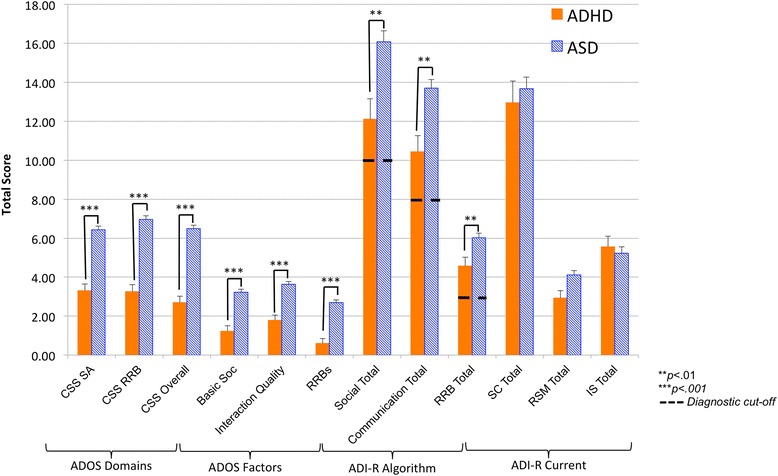
BACKGROUND: Children with attention deficit/hyperactivity disorder (ADHD) often present with social difficulties, though the extent to which these clearly overlap with symptoms of autism spectrum disorder (ASD) is not well understood. METHODS: We explored parent-reported and directly-observed ASD symptoms on the Autism Diagnostic Interview-Revised (ADI-R) and the Autism Diagnostic Observation Schedule (ADOS) in children referred to ASD-specialty clinics who received diagnoses of either ADHD (n = 48) or ASD (n = 164). RESULTS: Of the ADHD sample, 21 % met ASD cut-offs on the ADOS and 30 % met ASD cut-offs on all domains of the ADI-R. Four social communication ADOS items (Quality of Social Overtures, Unusual Eye Contact, Facial Expressions Directed to Examiner, and Amount of Reciprocal Social Communication) adequately differentiated the groups while none of the items on the ADI-R met the criteria for adequate discrimination. CONCLUSIONS: Results of this work highlight the challenges that clinicians and researchers face when distinguishing ASD from other disorders in verbally fluent, school-age children.
Overview
The claims and statistics of this paper haven’t been checked yet.
Free: it reads the open-access text and checks the first 5 claims that cite a source we can check. Create a free account to check every claim.
Integrity signals
Registry
Cites
Statistics
Figures
Verification
Claims the paper makes
The claims and statistics of this paper haven’t been checked yet.
Free: it reads the open-access text and checks the first 5 claims that cite a source we can check. Create a free account to check every claim.
Claims other papers make about this one
Each is checked against this paper’s own text: does it say what the citing paper says it does?
The source backs part of the claim, not all of it — or backs it for a different population, condition or comparison.
In the citing paper
“the social difficulties in ASD seem to reflect deficits in social knowledge10 that result in social disengagement, isolation, and indifference to social cues11,12”
From Executive function deficits in attention-deficit/hyperactivity disorder and autism spectrum disorder (2024) · cites this paper as [11]
Experimental — accuracy not yet measuredThe source backs part of the claim, not all of it — or backs it for a different population, condition or comparison.
In the citing paper
“select items from the Behavior Assessment System for Children-3 (BASC-3) and the Autism Diagnostic Observation System (ADOS-2) might accurately differentiate ASD from ADHD, although both measures fail to adequately differentiate ADHD from ASD.11,95”
From Executive function deficits in attention-deficit/hyperactivity disorder and autism spectrum disorder (2024) · cites this paper as [11]
Experimental — accuracy not yet measuredThe source backs part of the claim, not all of it — or backs it for a different population, condition or comparison.
In the citing paper
“none of the items on the gold-standard Autism Diagnostic Inventory – Revised (ADI-R) adequately differentiate ASD from ADHD.11,94”
From Executive function deficits in attention-deficit/hyperactivity disorder and autism spectrum disorder (2024) · cites this paper as [11]
Experimental — accuracy not yet measured
Self-check
Percentages, sums and reported differences re-computed from the paper’s own numbers.
The self-check needs the paper’s full text.
Citations
Cites
Diagnostic and Statistical Manual of Mental Disorders
American Psychiatric Association (2013) · doi:10.1176/appi.books.9780890425596 · Cited by 116,369
Diagnostic and Statistical Manual of Mental Disorders
Williams, J. B. W., & First, M. (2013) · Encyclopedia of Social Work · doi:10.1093/acrefore/9780199975839.013.104 · Cited by 109,519
Lord, C., Rutter, M., & Le Couteur, A. (1994) · Journal of Autism and Developmental Disorders · doi:10.1007/bf02172145 · Cited by 9,065 · cited 2×
“The ADOS [28] and the ADI-R [29] were administered in order to obtain information about ASD symptoms.”
BackgroundMethodSelf-citationInsel, T., Cuthbert, B., Garvey, M., Heinssen, R., Pine, D. S., Quinn, K., Sanislow, C., & Wang, P. (2010) · American Journal of Psychiatry · doi:10.1176/appi.ajp.2010.09091379 · Cited by 7,067 · cited 1×
“Although current research motivations emphasize exploration of symptoms on a continuum (Research Domain Criteria (RDoC)) [31], current clinical needs require practitioners to provide dichotomous determinations of whether someone does or does not have a disorder.”
Baio, J., Wiggins, L., Christensen, D. L., Maenner, M. J., Daniels, J., Warren, Z., Kurzius-Spencer, M., Zahorodny, W., Robinson, C., Rosenberg, et al. (2018) · MMWR. Surveillance Summaries · doi:10.15585/mmwr.ss6706a1 · Cited by 6,078
Wechsler Abbreviated Scale of Intelligence
Dumont, R., Willis, J. O., Veizel, K., & Zibulsky, J. (2014) · Encyclopedia of Special Education · doi:10.1002/9781118660584.ese2519 · Cited by 5,521
Wechsler Abbreviated Scale of Intelligence
Wechsler, D. (2012) · PsycTESTS Dataset · doi:10.1037/t15170-000 · Cited by 4,596
Peabody Picture Vocabulary Test
Campbell, J. M., & Dommestrup, A. K. (2010) · The Corsini Encyclopedia of Psychology · doi:10.1002/9780470479216.corpsy0649 · Cited by 3,787
Maenner, M. J., Shaw, K. A., Baio, J., EdS1, Washington, A., Patrick, M., DiRienzo, M., Christensen, D. L., Wiggins, L. D., Pettygrove, S., et al. (2020) · MMWR. Surveillance Summaries · doi:10.15585/mmwr.ss6904a1 · Cited by 3,780
Simonoff, E., Pickles, A., Charman, T., Chandler, S., Loucas, T., & Baird, G. (2008) · Journal of the American Academy of Child & Adolescent Psychiatry · doi:10.1097/chi.0b013e318179964f · Cited by 3,399
Research works printed but not linked: 5
- 28. Lord C Rutter M DiLavore PC Risi S Gotham K Bishop SL Autism diagnostic observation schedule, second edition (ADOS-2) modules 1-4 2012 Los Angeles, California Western Psychological Services
- 42. Bishop S, Havdahl KA, Huerta M, Lord C. Sub-domains of social-communication impairments in verbally fluent children with developmental disorders. under review.
- 43. Elliot CD Differential abilities scale 1990 San Antonio, TX Psychological Corporation
- 47. Wechsler D The Wechsler adult intelligence scale—revised manual 1981 New York Psychological Corporation
- 51. Raven JC Progressive matrices: a perceptual test of intelligence 1938 London, UK HK Lewis
Cited by
Items 101–192 of 192
Al‐Attar, Z., & Worthington, R. (2024) · Advances in Autism · doi:10.1108/aia-07-2023-0041 · Cited by 11
Capp, S., Burca, A. D., Aydın, Ü., Agnew‐Blais, J. C., Lautarescu, A., Ronald, A., Happe, F. G. E., & McLoughlin, G. (2025) · JCPP Advances · doi:10.1002/jcv2.70003 · Cited by 16
“This is reiterated by several researchers who emphasise that those presenting in clinical contexts likely represent more extreme or archetypal cases, whereas, in reality, mixed trait profiles are more common (Grzadzinski et al., 2016; Hartman et al., 2016; Miodovnik et al., 2015).”
Segura, P., Pagani, M., Bishop, S. L., Thomson, P., Colcombe, S. J., Xu, T., Factor, Z. Z., Hector, E. C., Kim, S. H., Lombardo, M. V., et al. (2025) · Molecular Psychiatry · doi:10.1038/s41380-025-03205-8 · Cited by 9
“We focused on total scores because autism is linked to impairment in both social communication and restricted and repetitive behaviors (RRBs) [65, 66], both of which have been observed in children with ADHD [4 – 6, 67, 68].”
InfluentialSelf-citationHeyman, M., Galligan, M. R. L., Salinas, G., Baker, E. J., Blacher, J., & Stavropoulos, K. K. M. (2021) · Advances in Autism · doi:10.1108/aia-01-2021-0002 · Cited by 11
Aiello, S., Vagni, D., Cerasa, A., Leonardi, E., Carrozza, C., Famà, F. I., Campisi, A., Marino, F., Siracusano, R., Alquino, A., et al. (2021) · Frontiers in Neuroscience · doi:10.3389/fnins.2021.734177 · Cited by 7
“95% C.I. Cut-off Sensibility Specificity Accuracy ASD vs. N-ASD AQ 101 97 0.877 0.024 0.001 0.830–0.923 73 0.822 0.794 0.808 EQ 94 61 0.806 0.035 0.001 0.737–0.874 26 0.745 0.721 0.733 ASD vs. ADHD AQ 101 33 0.795 0.039 0.001 0.719–0.872 77 0.723 0.727 0.725 EQ 94 32 0.680 0.051 0.002 0.581–0.779 18 0.362 0.937 0.650…”
BackgroundResultInfluentialKochhar, P., Arora, I., Bellato, A., Ropar, D., Hollis, C. P., & Groom, M. J. (2024) · Frontiers in Psychiatry · doi:10.3389/fpsyt.2024.1378593 · Cited by 9
Oculomotor Function in Children and Adolescents with Autism, ADHD or Co-occurring Autism and ADHD
Forbes, E. J., Tiego, J., Langmead, J., Unruh, K. E., Mosconi, M. W., Finlay, A., Kallady, K., Maclachlan, L., Moses, M., Cappel, K., et al. (2025) · Journal of Autism and Developmental Disorders · doi:10.1007/s10803-024-06718-3 · Cited by 6
“…clinical overlap between autism and ADHD, with 30–80% of autistic (Vivanti, 2020) individuals exhibiting ADHD symptomatology (Mayes et al., 2012; Reiersen & Todd, 2008), and 20–50% of individuals with ADHD having co-occurring autistic symptoms (Grzadzinski et al., 2016; Rommelse et al., 2010).”
Park, J. H., Kim, Y., Koh, Y., & LEVENTHAL, B. L. (2020) · Research in Autism · doi:10.1016/j.rasd.2020.101672 · Cited by 11
“Although identifying ASD among verbally fluent school-aged children is difficult (Grzadzinski et al., 2016), our results may improve the ability of clinicians and parents to detect ASD in the community by observing specific RRBs, especially in cognitively intact school-aged children who show Park et al.”
ResultZhang, K., Yuan, J., Pei, X., Fu, Z., Zhao, Y., Hu, N., Wang, Y., Yang, L., & Cao, Q. (2023) · Frontiers in Neuroscience · doi:10.3389/fnins.2023.1149703 · Cited by 9
“, 2019), as 15–25% of youth with primary diagnoses of ADHD demonstrate ASD symptoms (Grzadzinski et al., 2016).”
BackgroundSocial Skills in Autism Spectrum Disorders
Kanai, C., Toth, G., Kuroda, M., Miyake, A., & Itahashi, T. (2017) · Autism and child psychopathology series · doi:10.1007/978-3-319-64592-6_13 · Cited by 8
Are the autism symptoms in neurofibromatosis type 1 actually autism?
Klein-Tasman, B. (2020) · Developmental Medicine & Child Neurology · doi:10.1111/dmcn.14597 · Cited by 7
Mack, J. T., Wolff, N., Kohls, G., Becker, A., Stroth, S., Poustka, L., Kamp‐Becker, I., & Roessner, V. (2021) · Psychopathology · doi:10.1159/000520957 · Cited by 8
Zou, M., Sun, C., Wang, J., Kang, J. X., Xu, Z., Ma, Y., Chen, L., Xinxi, Z., Xia, W. T., & Wu, L. (2018) · Psychiatry Research · doi:10.1016/j.psychres.2017.12.084 · Cited by 7
“To date, although CSS have been widely used by Western research as a severity metric (de Bildt et al., 2011; Grzadzinski et al., 2016; Pickles et al., 2016; Wiggins et al., 2017), there was a paucity of studies focusing on the utility of CSS in Chinese sample populations.”
MethodTan, C., Zhou, H., Yang, M., Li, C., Chen, H., He, L., Yang, T., Chen, J., Zhang, J., & Li, T. (2025) · Scientific Reports · doi:10.1038/s41598-025-94156-1 · Cited by 6
The Quality of Everyday Eye Contact in Williams Syndrome: Insights From Cross-Syndrome Comparisons
Ridley, E., Arnott, B., Riby, D. M., Burt, D. M., Hanley, M., & Leekam, S. (2022) · American Journal on Intellectual and Developmental Disabilities · doi:10.1352/1944-7558-127.4.293 · Cited by 4
“One relevant study using the ADOS found that unusual eye contact was reported statistically more frequently in a sample of autistic children compared to children with ADHD (Grzadzinski et al., 2016).”
Psychopathologies Associated with ASD: Anxiety, OCD, Depression, and ADHD
Braconnier, M. L., Garza, I., & Moskowitz, L. J. (2022) · Autism and child psychopathology series · doi:10.1007/978-3-030-88538-0_2 · Cited by 5
Yamashita, M., Kagitani‐Shimono, K., Hirano, Y., Hamatani, S., Nishitani, S., Yao, A., Kurata, S., Kosaka, H., Jung, M., Yoshida, T., et al. (2023) · BMJ Open · doi:10.1136/bmjopen-2022-070157 · Cited by 4
Rosen, T. E., Rodriguez-Seijas, C. A., Gadow, K. D., & Lerner, M. D. (2022) · Research in Autism · doi:10.1016/j.rasd.2024.102413 · Cited by 4
Saban‐Bezalel, R., Avni, E., Ben‐Itzchak, E., & Zachor, D. A. (2023) · Children · doi:10.3390/children10111786 · Cited by 7
“…distinguish between those who will be diagnosed with ASD and those who will not, have shown that children who receive ASD diagnoses are characterized by lower cognitive ability [23], more severe RRB [22], and poorer abilities in the social communication domain, as determined by professionals [24].”
BackgroundAdachi, M., Takahashi, M., & Mori, H. (2025) · Frontiers in Psychiatry · doi:10.3389/fpsyt.2025.1566098 · Cited by 6
McKay, E., Kirk, H., & Cornish, K. M. (2024) · Neurodiversity · doi:10.1177/27546330241258329 · Cited by 3
“It is widely accepted that children and adolescents with ADHD frequently present with elevated autism symptoms when compared with typically developing peers (Grzadzinski et al., 2016; Kochhar et al., 2011; Mulligan et al., 2009).”
Related Disorders (Intellectual, Attention, and Language Disorders) and ASD
Dieckhaus, M. F. S., Thomas, R. P., Frisch, M., Moreno, M. P., Suh, J., & FEIN, D. A. (2024) · Autism and child psychopathology series · doi:10.1007/978-3-031-64499-3_4 · Cited by 4
Trajectories of attention problems in autistic children and relations to social skills outcomes
Richard, A., Duku, E., Bennett, T. A., Szatmári, P., Vaillancourt, T., Zwaigenbaum, L., Georgiades, S., Zaidman‐Zait, A., Kerns, C. M., Bedford, R., et al. (2025) · Development and Psychopathology · doi:10.1017/s0954579425000021 · Cited by 3
“As such, careful evaluation is required to reveal qualitative differences between social difficulties across these conditions to aid in the diagnosis (Grzadzinski et al., 2016; Mikami et al., 2019).”
The association of neurofibromatosis and autism symptomatology is confounded by behavioral problemsPreprint
Morotti, H., Mastel, S. A., Keller, K. L., Barnard, R., Hall, T. A., O’Roak, B. J., & Fombonne, E. J. (2019) · medRxiv · doi:10.1101/2019.12.20.19015420 · Cited by 3
“What this paper adds Diagnoses of ADHD, not of ASD, were raised among children with NF1.”
BackgroundResultInfluentialLampinen, L. A., Ederer, J. E., & Bal, V. H. (2025) · Journal of Autism and Developmental Disorders · doi:10.1007/s10803-025-06988-5 · Cited by 3
Identifying Neurodevelopmental Domain Subgroups in Autism and ADHD
Krakowski, A. D., Cost, K. T., Vandewouw, M. M., Szatmári, P., Anagnostou, E. A., Crosbie, J., Schachar, R. J., Duku, E., Georgiades, S., Ayub, M., et al. (2026) · Journal of Autism and Developmental Disorders · doi:10.1007/s10803-026-07266-8 · Cited by 2
Wang, X., Tong, J., Lu, M., Luo, L., Liu, Y., Huang, Q., Lv, P., Zheng, Y., Gan, H., Geng, M., et al. (2026) · Environmental Science & Technology · doi:10.1021/acs.est.6c01402 · Cited by 2
ADHD, Distractibility, and ABA
Orantes, D., Rohacek, A., & Antshel, K. M. (2023) · Autism and child psychopathology series · doi:10.1007/978-3-031-27587-6_20 · Cited by 2
Autism spectrum disorder profiles in RASopathies : A systematic review
Debbaut, E., Steyaert, J. G., & Bakkali, M. E. (2024) · Molecular Genetics & Genomic Medicine · doi:10.1002/mgg3.2428 · Cited by 3
“However, instruments are not entirely specific for ASD or ADHD this is to be expected (Grzadzinski et al., 2016; Havdahl et al., 2016; Hus et al., 2013) and the literature also indicates a high comorbidity in NF1 (Cohen et al., 2022; Garg, Lehtonen, et al., 2013; Hirabaru & Matsuo, 2018; Walsh et…”
BackgroundIdentifying Autistic-Like Symptoms in Children with ADHD: A Comparative Study Using ADOS-2
GIACOMO, A. D., Craig, F., Medicamento, S., Gradia, F., Sardella, D., Costabile, A., Matera, E., & Turi, M. (2024) · Neuropsychiatric Disease and Treatment · doi:10.2147/ndt.s462030 · Cited by 7
“30,31,40 In a noteworthy study, Sokolova and colleagues 41 conducted a mediation analysis on a large sample encompassing both ASD and ADHD individuals.”
BackgroundProbing Autism and ADHD subtypes using cortical signatures of the T1w/T2w-ratio and morphometry
Norbom, L. B., Syed, B., Kjelkenes, R., Rokicki, J., Beauchamp, A., Nerland, S., Kushki, A., Anagnostou, E. A., Arnold, P. D., Crosbie, J., et al. (2025) · NeuroImage Clinical · doi:10.1016/j.nicl.2025.103736 · Cited by 5
“There are for instance reports of children with ADHD showing elevated levels of autistic-like traits (Grzadzinski et al., 2016; Martin et al., 2014), and about 40 % of individuals with ASD also presenting with comorbid ADHD (Rong et al., 2021).”
Santra, R., Pacheco, C., Crocetti, D., Vidal, R., Mostofsky, S. H., & Tunçgenç, B. (2025) · The British Journal of Psychiatry · doi:10.1192/bjp.2024.235 · Cited by 3
Yu, L., Sun, L., Yue, X., Wang, Y., & Chen, C. (2025) · Research in Developmental Disabilities · doi:10.1016/j.ridd.2025.105081 · Cited by 6
Zibaee, A., Elyasi, F., Fariborzifar, A., & Shirazi, E. (2025) · Neuropsychopharmacology Reports · doi:10.1002/npr2.70028 · Cited by 2
Boxberger, A., Chen, B., Olson, L., Cordova, M., Mahmalji, J., Ríos, A., Linke, A. C., & Fishman, I. (2025) · Journal of Neurodevelopmental Disorders · doi:10.1186/s11689-025-09650-4 · Cited by 4
“…neurodevelopmental conditions are not formally diagnosed, subclinical co-occurrence is common, with symptoms of ADHD often observed in children with ASD [29] and vice versa [17, 18], suggesting that the two conditions might share a common genetic influence [55], Stergiakouli et al., 2015).”
Understanding shared family meals on the autism spectrum
Curtiss, S. L. (2017) · Illinois Digital Environment for Access to Learning and Scholarship (University of Illinois at Urbana-Champaign) · Cited by 4
Disagreement between assessment of ASD utilizing the ADOS-2 and DSM-5 – A preliminary study
Freudenstein, O., Shimoni, H. N., Gindi, S., & Leitner, Y. (2020) · Annales Universitatis Paedagogicae Cracoviensis Studia Psychologica · doi:10.24917/20845596.13.1 · Cited by 3
“The information used in ADOS-2 is collected through direct observation (Grzadzinski et al., 2016).”
MethodComorbid Diagnosis of ASD and ADHD: Assessment and Treatment Considerations
Tevis, C. M. (2023) · Autism and child psychopathology series · doi:10.1007/978-3-031-41709-2_15 · Cited by 2
Wu, N., Wang, Y., Jia, J.-Y., Pan, Y.-H., & Yuan, X. (2020) · bioRxiv (Cold Spring Harbor Laboratory) · doi:10.1101/2020.02.04.931121 · Cited by 2
Assessment of Childhood Neurodevelopmental Disorders
Williams, L. W., Sandercock, R., & Klinger, L. G. (2019) · Cambridge University Press eBooks · doi:10.1017/9781108235433.021 · Cited by 1
Epidemiological Surveys of ASD: Current Findings and New Directions
Fombonne, E. J. (2023) · Springer eBooks · doi:10.1007/978-3-031-42383-3_13 · Cited by 2
Udhnani, M. D., Becker, L., & Lecavalier, L. (2025) · Journal of Autism and Developmental Disorders · doi:10.1007/s10803-025-06857-1 · Cited by 4
Lieb, R., Kalb, L. G., Reetzke, R., Ludwig, N. N., Love, C. E., Ng, R., Wexler, D., Gornik, A. E., Holingue, C., & Hong, J. S. (2025) · Autism · doi:10.1177/13623613251355231 · Cited by 1
“Individuals referred for, but not diagnosed with autism are often diagnosed with other neurodevelopmental or psychiatric disorders (Grzadzinski et al., 2016; Robins et al., 2014) and symptom overlap can affect the diagnostic journey (Grzadzinski et al., 2011, 2016; Harkins et al., 2022).”
Blurred lines: Investigating functional profiles in autism and ADHD across key developmental domains
Crisci, G., Lievore, R., & Mammarella, I. C. (2026) · Research in Developmental Disabilities · doi:10.1016/j.ridd.2026.105240 · Cited by 2
Hochfunktionaler Autismus bei Erwachsenen
Kamp‐Becker, I., & Quaschner, K. (2018) · Springer eBooks · doi:10.1007/978-3-662-45995-9_15-1 · Cited by 1
Sturm, A., & Kasari, C. L. (2023) · Issues in clinical child psychology · doi:10.1007/978-3-031-20006-9_9 · Cited by 1
fMRI-Based Multi-class DMDC Model Efficiently Decodes the Overlaps between ASD and ADHD
Zolghadr, Z., Batouli, S. A. H., Majd, H. A., Shafaghi, L., & Mehrabi, Y. (2024) · Basic and Clinical Neuroscience Journal · doi:10.32598/bcn.2023.4302.1 · Cited by 2
“…2006; Simonoff et al., 2008; Yerys et al., 2009), the distinctions in the core psychopathologies of these disorders are well-established (Clark et al., 1999; Grzadzinski et al., 2011; Grzadzinski et al., 2016; Kotte et al., 2013; Kröger et al., 2011; Martin et al., 2014; Mul-ligan et al., 2009).”
BackgroundGhirardi, L. (2019) · Figshare · Cited by 1
de Jesus, A. J. B. (2020) · Digital Library of Theses and Dissertations (Universidade de São Paulo) · doi:10.11606/t.10.2020.tde-27082020-174347 · Cited by 2
Large-Scale Assessment of Language, Speech, and Movement in Autism and ADHD with AIPreprint
Silvan, A., Parra, L. C., Franco, A. R., Martino, A. D., Milham, M. P., & Madsen, J. (2025) · bioRxiv (Cold Spring Harbor Laboratory) · doi:10.1101/2025.10.20.682864 · Cited by 2
Bos, D. J., Dobos, D., Oranje, B., & Durston, S. (2020) · PsyArXiv (OSF Preprints) · doi:10.31234/osf.io/7xspg
(2020) · L'évaluation diagnostique de l'enfant avec trouble du spectre de l'autisme · doi:10.3917/dunod.dormo.2020.01.0217
(2019) · De Boeck Supérieur eBooks · doi:10.3917/dbu.grand.2019.01.0395
McCleery, J. P. (2022) · Journal of Autism and Developmental Disorders · doi:10.1007/s10803-022-05589-w
Rosen, T. E., Rodriguez-Seijas, C. A., Gadow, K. D., & Lerner, M. D. (2022) · Research Square · doi:10.21203/rs.3.rs-2026271/v1
Rebecchi, K. (2023) · PsyArXiv (OSF Preprints) · doi:10.31234/osf.io/erdba
The many faces of control: brain-behavior interactions in development
Gooskens, B. (2024) · Utrecht University Repository (Utrecht University) · doi:10.33540/1183
TND et intelligence : une approche en réseau
Pry, R. (2024) · Enfance · doi:10.3917/enf2.242.0083
Hanawa, Y., Hayashi, W., Nakamura, D., Suzuki, H., Aoyagi, K., Iwami, Y., Yamauchi, M., Seki, S., & Iwanami, A. (2025) · Psychiatry and Clinical Neurosciences Reports · doi:10.1002/pcn5.70118 · Cited by 1
“These results are generally consistent with the ADOS ‐ 2 scores from children with ADHD and ASD in a study by Grzadzinski et al. 29 In their study, children with ASD scored more on the quality of social overtures and responses, abnormal eye contact, and the level of reciprocal social interaction than their ADHD ‐ affe…”
InfluentialÉvaluation des troubles psychiatriques comorbides dans les troubles du spectre de l’autisme
Deprey, L., & Ozonoff, S. J. (2020) · Elsevier eBooks · doi:10.1016/b978-2-294-76574-2.00010-4
Rebecchi, K. (2025) · Autism and Developmental Disorders · doi:10.17759/autdd.2025230201 · Cited by 1
The Concept of Detecting Autism Spectrum Disorder in Toddlers Through Quantum-Inspired Algorithms
Barik, D., Gupta, S., & Som, S. (2025) · Lecture notes in networks and systems · doi:10.1007/978-981-96-6303-3_15
Mairena, M. Á., Alcover, C., Arias-Pujol, E., Díez‐Juan, M., Gava, M. M., Elias, N., Sentenach, A., Elías, M., Piera, E., González, M., et al. (2025) · Frontiers in Psychiatry · doi:10.3389/fpsyt.2025.1610221
Trelles, M. P., Levy, T., Lerman, B., Siper, P. M., Lozano, R., Halpern, D. B., Walker, H., Zweifach, J., Frank, Y., Foss‐Feig, J. H., et al. (2021) · Figshare · doi:10.6084/m9.figshare.16702981
Ohta, H., Aoki, Y. Y., Itahashi, T., Kanai, C., Fujino, J., Nakamura, M., Kato, N., & Hashimoto, R.-I. (2020) · Figshare · doi:10.6084/m9.figshare.13108622
Trelles, M. P., Levy, T., Lerman, B., Siper, P. M., Lozano, R., Halpern, D. B., Walker, H., Zweifach, J., Frank, Y., Foss‐Feig, J. H., et al. (2021) · Figshare · doi:10.6084/m9.figshare.16702972
Kerr‐Gaffney, J., Hayward, H., Jones, E. J. H., Halls, D., Murphy, D., & Tchanturia, K. (2021) · Figshare · doi:10.6084/m9.figshare.14889427
Trelles, M. P., Levy, T., Lerman, B., Siper, P. M., Lozano, R., Halpern, D. B., Walker, H., Zweifach, J., Frank, Y., Foss‐Feig, J. H., et al. (2021) · Figshare · doi:10.6084/m9.figshare.16702960
Trelles, M. P., Levy, T., Lerman, B., Siper, P. M., Lozano, R., Halpern, D. B., Walker, H., Zweifach, J., Frank, Y., Foss‐Feig, J. H., et al. (2021) · Figshare · doi:10.6084/m9.figshare.16702957
Additional file 1 of Delineating the autistic phenotype in children with neurofibromatosis type 1
Chisholm, A. K., Haebich, K. M., Pride, N. A., Walsh, K. S., Lami, F., Ure, A., Maloof, T., Brignell, A., Rouel, M., Granader, Y., et al. (2022) · Figshare · doi:10.6084/m9.figshare.17870175
Trelles, M. P., Levy, T., Lerman, B., Siper, P. M., Lozano, R., Halpern, D. B., Walker, H., Zweifach, J., Frank, Y., Foss‐Feig, J. H., et al. (2021) · Figshare · doi:10.6084/m9.figshare.16702954
Kerr‐Gaffney, J., Hayward, H., Jones, E. J. H., Halls, D., Murphy, D., & Tchanturia, K. (2021) · Figshare · doi:10.6084/m9.figshare.14889430
Trelles, M. P., Levy, T., Lerman, B., Siper, P. M., Lozano, R., Halpern, D. B., Walker, H., Zweifach, J., Frank, Y., Foss‐Feig, J. H., et al. (2021) · Figshare · doi:10.6084/m9.figshare.16702966
Cho, S., Cola, M., Knox, A., Pelella, M. R., Russell, A., Hauptmann, A., Covello, M., Cieri, C., Liberman, M., Schultz, R. T., et al. (2024) · Figshare · doi:10.6084/m9.figshare.26580995
Chevauchement symptomatologique et reconnaissance des émotions : approche cross-syndromique
Benkessas, T. (2018) · theses.fr (ABES) · doi:10.70675/719aa288z2dd9z4a87z9005z724983485c82
Similitudes et différences entre le TDAH et le TSA, illustrées par l’étude du défaut d’inhibition
Septier, M. (2019) · theses.fr (ABES) · doi:10.70675/22fe83c2z678fz4b7ezac95z1af4554dfcbf
Autisme et philosophie de terrain : des catégories nosologiques aux catégories diagnostiques
Sommier, M. (2022) · theses.fr (ABES) · doi:10.70675/13c87fc5z5240z4e02zbe76z0e8ac004c5ec
McCleery, J. P., Zitter, A., Cordero, L., Russell, A., Cola, M., Udhnani, M. D., Tena, K. G., Flanagan, A. Y., Turnacioglu, S. O., Solórzano, R., et al. (2026) · Journal of Autism and Developmental Disorders · doi:10.1007/s10803-026-07339-8
La consanguinité est-elle un facteur de risque pour les troubles neurodéveloppementaux ?
Achhab, A. E., & Pry, R. (2026) · Enfance · doi:10.3917/enf2.261.0069
Soto, E. F., Shuter, M., Shea, N., Schiros, A., Nord, J., Kuo, Y. C., Sun, H., Antshel, K. M., & Russo, N. N. (2026) · Journal of Autism and Developmental Disorders · doi:10.1007/s10803-026-07357-6
Pokoski, O. M., Engel, H., Furnier, S. M., Gangnon, R. E., Powell, P. S., Reyes, N., Travers, B. G., Wiggins, L. D., & Durkin, M. S. (2026) · Autism · doi:10.1177/13623613261447759 · Cited by 1
“While parents are typically reliable reporters of their child’s adaptive behaviors (Miller et al., 2017), the retrospective nature of some measures, particularly the ADI-R, may introduce recall bias (Grzadzinski et al., 2016).”
A naturalistic, non-invasive method for capturing biometric data during autism evaluations
Kamal, K., Hatvani, J., Pethő, M., Sárkány, A., Hamvas, I., Brune, C. W., Wainer, A., Dillon, E. F., Kravis, E. B., Ocampo, E. V., et al. (2026) · Frontiers in Psychiatry · doi:10.3389/fpsyt.2026.1819384
“These data are consistent with data from application of standard diagnostic tools to psychiatrically and medically complex populations (55, 56).”
When, How, and for Whom? A narrative review contextualizing bilingual effects in ADHD
Murphy, M.-K., & Durrleman, S. (2026) · Frontiers in Language Sciences · doi:10.3389/flang.2026.1808320
Nyamradnaa, B., Izumoto, M., Iwatani, Y., Yoshimoto, S., Ezure, K., Ono, A., Kato, Y., Makita, K., Hirata, I., Tachibana, M., et al. (2026) · Neuroimage Reports · doi:10.1016/j.ynirp.2026.100384
“Additionally, ASD and ADHD are commonly comorbid: 30 – 75% of children with ASD exhibit ADHD symptoms, and 20 – 60% of those with ADHD display ASD-like social difficulties (Grzadzinski et al., 2016).”
Yamashita, M., Shou, Q., Hamatani, S., Matsuzaki, H., Fujieda, M., Hirano, Y., Kagitani-Shimono, K., Okazawa, H., & Mizuno, Y. (2026) · Journal of Neural Transmission · doi:10.1007/s00702-026-03206-z
“…conditions, the symptoms of children with ADHD and ASD may not fit within the boundaries of a single disorder, as consid - erable clinical overlap (Grzadzinski et al. 2016 ), a high comorbidity rate (Simonoff et al. 2008 ), and within-disorder heterogeneity (Yamashita et al. 2024 ) have been…”
Parents’ understanding of the report and child after comprehensive assessment and feedback
Camodeca, A., Carroll, A., & Croyle, J. (2026) · Applied Neuropsychology Child · doi:10.1080/21622965.2026.2718521
Kadlaskar, G., Iosif, A., Ozonoff, S. J., & Miller, M. R. (2026) · Clinical Psychological Science · doi:10.1177/21677026251365933 · Cited by 1
Cartigny, A., Gosling, C. J., Chatzis, G., Godin, O., Frajerman, A., Humeau, É., Atzori, P., Pereira, S. R., Ellul, P., Antoun, S., et al. (2026) · Journal of the American Academy of Child & Adolescent Psychiatry · doi:10.1016/j.jaac.2026.09.010
Recent Advances in Autism Spectrum Disorder Research on Epigenetics and Personalised Medicine
Khosrofar, R., Morshedi, I., Behzadpour, M., Afzali, N., Hosseini, R. S., & Aghili, A. (2026) · International Journal of Developmental Neuroscience · doi:10.1002/jdn.70184
Cola, M., Lyons, M., Schillinger, S., Lee, A., Faulk, C., Fulop, L., Knox, A., Howard, N., Franke, H., Mulqueen, A., et al. (2026) · Journal of Autism and Developmental Disorders · doi:10.1007/s10803-026-07562-3
Network Analysis of ADHD and Autism Spectrum Disorder Symptoms in Clinic-Referred Adolescents
Gomez, R., Zarate, D., Langford, S., & Houghton, S. J. (2026) · Cognitive Therapy and Research · doi:10.1007/s10608-026-10802-6
Metadata
- Authors
- Grzadzinski, R., Dick, C., Lord, C., & Bishop, S.
- Affiliations
- NewYork–Presbyterian Hospital (US)
- University of California, San Francisco (US)
- Corresponding author
- Grzadzinski, Rebecca
- Venue
- Molecular Autism
- Published
- 2016-01-19
- Volume
- 7
- Issue
- 1
- Pages
- 7-7
- ISSN
- 2040-2392 (ISSN-L)
- PMC
- PMC4717584
- OpenAlex
- W2263330556
- Cited by
- 192
- References
- 66
- Citations by year
- 2026: 17 · 2025: 22 · 2024: 17 · 2023: 15 · 2022: 23 · 2021: 35 · 2020: 20 · 2019: 17 · 2018: 12 · 2017: 11 · 2016: 3
- FWCI
- 9.12
- Type
- journal article
- Language
- en
- Open access
- gold
- doi.org
- Licence
- cc-by
- creativecommons.org/licenses/by/4.0/ (tdm)
- creativecommons.org/licenses/by/4.0/ (vor)
- Locations
- Molecular Autism (publishedVersion, cc-by)
- PubMed Central (publishedVersion, cc-by)
- PubMed (publishedVersion)
- eScholarship (California Digital Library) (submittedVersion, cc-by)
- Funders
- National Institute of Mental Health (1RC1MH089721, 1R01MH089390)
- Health Resources and Services Administration (R40MC274730100)
- Weill Cornell Medical College (n/a)
- Teachers College, Columbia University (n/a)
- Topics
- Life Sciences › Neuroscience › Cognitive Neuroscience › Autism Spectrum Disorder Research
- Health Sciences › Medicine › Psychiatry and Mental health › Attention Deficit Hyperactivity Disorder
- Health Sciences › Medicine › Psychiatry and Mental health › Child Nutrition and Feeding Issues
- Keywords
- autism spectrum disorder, attention deficit hyperactivity disorder, comorbidities, parent-reported symptoms, DSM-5, social communication, diagnostic overlap, autism screening, ADI-R, Autism Diagnostic Observation Schedule
- MeSH terms
- Autism Spectrum Disorder, Adolescent, Attention Deficit Disorder with Hyperactivity, Child, Child, Preschool, Diagnosis, Differential, Facial Expression, Female, Fixation, Ocular, Humans, Interview, Psychological, Male, Parents, Psychiatry, Psychological Tests, Psychology, Severity of Illness Index, Social Behavior, Observer Variation, Age of Onset, Diagnostic and Statistical Manual of Mental Disorders, Symptom Assessment
About these checks
Registry, retraction, Cites and statistics results are computed, not judged, with one exception: a printed reference that no index lists is read once by a model before it counts as a citation error. Claims are extracted by a model and kept only when their quote appears verbatim in the text; each cited source is then checked, with a model’s help, for whether it says what the claim relies on. Those verdicts can be wrong — read the claim’s quote and the cited source before relying on one.
Statistics and arithmetic are recomputed, not judged.
Confidence bands are shown only for fields calibrated on our annotated test set. None is calibrated yet, so no band is shown.
What counts as a claim ›How we measure confidence ›How we check this ›
Are you an author, or do you see a problem with this page? Request a review
Data sources
Bibliographic data: Semantic Scholar, OpenAlex, Crossref.
Contains information from the Semantic Scholar Academic Graph Datasets, made available under the ODC Attribution License (ODC-BY 1.0).
Semantic Scholar’s data is described in: Kinney, R., et al. (2023). The Semantic Scholar Open Data Platform. arXiv:2301.10140.
