

Parent-reported and clinician-observed autism spectrum disorder (ASD) symptoms in children with attention deficit/hyperactivity disorder (ADHD): implications for practice under DSM-5
Open accessThe DOI matches its Crossref record; 66 of the 66 references it cites were found in a registry or an index.
Abstract
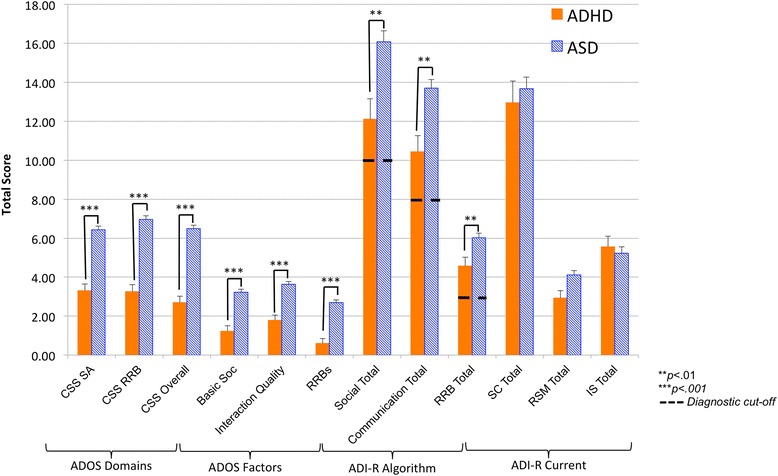
BACKGROUND: Children with attention deficit/hyperactivity disorder (ADHD) often present with social difficulties, though the extent to which these clearly overlap with symptoms of autism spectrum disorder (ASD) is not well understood. METHODS: We explored parent-reported and directly-observed ASD symptoms on the Autism Diagnostic Interview-Revised (ADI-R) and the Autism Diagnostic Observation Schedule (ADOS) in children referred to ASD-specialty clinics who received diagnoses of either ADHD (n = 48) or ASD (n = 164). RESULTS: Of the ADHD sample, 21 % met ASD cut-offs on the ADOS and 30 % met ASD cut-offs on all domains of the ADI-R. Four social communication ADOS items (Quality of Social Overtures, Unusual Eye Contact, Facial Expressions Directed to Examiner, and Amount of Reciprocal Social Communication) adequately differentiated the groups while none of the items on the ADI-R met the criteria for adequate discrimination. CONCLUSIONS: Results of this work highlight the challenges that clinicians and researchers face when distinguishing ASD from other disorders in verbally fluent, school-age children.
Overview
The claims and statistics of this paper haven’t been checked yet.
Free: it reads the open-access text and checks the first 5 claims that cite a source we can check. Create a free account to check every claim.
Integrity signals
Registry
Cites
Statistics
Figures
Verification
Claims the paper makes
The claims and statistics of this paper haven’t been checked yet.
Free: it reads the open-access text and checks the first 5 claims that cite a source we can check. Create a free account to check every claim.
Claims other papers make about this one
Each is checked against this paper’s own text: does it say what the citing paper says it does?
The source backs part of the claim, not all of it — or backs it for a different population, condition or comparison.
In the citing paper
“the social difficulties in ASD seem to reflect deficits in social knowledge10 that result in social disengagement, isolation, and indifference to social cues11,12”
From Executive function deficits in attention-deficit/hyperactivity disorder and autism spectrum disorder (2024) · cites this paper as [11]
Experimental — accuracy not yet measuredThe source backs part of the claim, not all of it — or backs it for a different population, condition or comparison.
In the citing paper
“select items from the Behavior Assessment System for Children-3 (BASC-3) and the Autism Diagnostic Observation System (ADOS-2) might accurately differentiate ASD from ADHD, although both measures fail to adequately differentiate ADHD from ASD.11,95”
From Executive function deficits in attention-deficit/hyperactivity disorder and autism spectrum disorder (2024) · cites this paper as [11]
Experimental — accuracy not yet measuredThe source backs part of the claim, not all of it — or backs it for a different population, condition or comparison.
In the citing paper
“none of the items on the gold-standard Autism Diagnostic Inventory – Revised (ADI-R) adequately differentiate ASD from ADHD.11,94”
From Executive function deficits in attention-deficit/hyperactivity disorder and autism spectrum disorder (2024) · cites this paper as [11]
Experimental — accuracy not yet measured
Self-check
Percentages, sums and reported differences re-computed from the paper’s own numbers.
The self-check needs the paper’s full text.
Citations
Cites
Diagnostic and Statistical Manual of Mental Disorders
American Psychiatric Association (2013) · doi:10.1176/appi.books.9780890425596 · Cited by 116,369
Diagnostic and Statistical Manual of Mental Disorders
Williams, J. B. W., & First, M. (2013) · Encyclopedia of Social Work · doi:10.1093/acrefore/9780199975839.013.104 · Cited by 109,519
Lord, C., Rutter, M., & Le Couteur, A. (1994) · Journal of Autism and Developmental Disorders · doi:10.1007/bf02172145 · Cited by 9,065 · cited 2×
“The ADOS [28] and the ADI-R [29] were administered in order to obtain information about ASD symptoms.”
BackgroundMethodSelf-citationInsel, T., Cuthbert, B., Garvey, M., Heinssen, R., Pine, D. S., Quinn, K., Sanislow, C., & Wang, P. (2010) · American Journal of Psychiatry · doi:10.1176/appi.ajp.2010.09091379 · Cited by 7,067 · cited 1×
“Although current research motivations emphasize exploration of symptoms on a continuum (Research Domain Criteria (RDoC)) [31], current clinical needs require practitioners to provide dichotomous determinations of whether someone does or does not have a disorder.”
Baio, J., Wiggins, L., Christensen, D. L., Maenner, M. J., Daniels, J., Warren, Z., Kurzius-Spencer, M., Zahorodny, W., Robinson, C., Rosenberg, et al. (2018) · MMWR. Surveillance Summaries · doi:10.15585/mmwr.ss6706a1 · Cited by 6,078
Wechsler Abbreviated Scale of Intelligence
Dumont, R., Willis, J. O., Veizel, K., & Zibulsky, J. (2014) · Encyclopedia of Special Education · doi:10.1002/9781118660584.ese2519 · Cited by 5,521
Wechsler Abbreviated Scale of Intelligence
Wechsler, D. (2012) · PsycTESTS Dataset · doi:10.1037/t15170-000 · Cited by 4,596
Peabody Picture Vocabulary Test
Campbell, J. M., & Dommestrup, A. K. (2010) · The Corsini Encyclopedia of Psychology · doi:10.1002/9780470479216.corpsy0649 · Cited by 3,787
Maenner, M. J., Shaw, K. A., Baio, J., EdS1, Washington, A., Patrick, M., DiRienzo, M., Christensen, D. L., Wiggins, L. D., Pettygrove, S., et al. (2020) · MMWR. Surveillance Summaries · doi:10.15585/mmwr.ss6904a1 · Cited by 3,780
Simonoff, E., Pickles, A., Charman, T., Chandler, S., Loucas, T., & Baird, G. (2008) · Journal of the American Academy of Child & Adolescent Psychiatry · doi:10.1097/chi.0b013e318179964f · Cited by 3,399
Research works printed but not linked: 5
- 28. Lord C Rutter M DiLavore PC Risi S Gotham K Bishop SL Autism diagnostic observation schedule, second edition (ADOS-2) modules 1-4 2012 Los Angeles, California Western Psychological Services
- 42. Bishop S, Havdahl KA, Huerta M, Lord C. Sub-domains of social-communication impairments in verbally fluent children with developmental disorders. under review.
- 43. Elliot CD Differential abilities scale 1990 San Antonio, TX Psychological Corporation
- 47. Wechsler D The Wechsler adult intelligence scale—revised manual 1981 New York Psychological Corporation
- 51. Raven JC Progressive matrices: a perceptual test of intelligence 1938 London, UK HK Lewis
Cited by
Antshel, K. M., & Russo, N. (2019) · Current Psychiatry Reports · doi:10.1007/s11920-019-1020-5 · Cited by 450
Co-occurring psychiatric conditions in autism spectrum disorder
Rosen, T. E., Mazefsky, C. A., Vasa, R. A., & Lerner, M. D. (2018) · International Review of Psychiatry · doi:10.1080/09540261.2018.1450229 · Cited by 325
“To address the dearth of studies utilizing direct clinical observation, Grzadzinski et al. (2016) used structured diagnostic assessments of ASD symptoms in ADHD only and ASD only samples, and found that clinical observation via the ADOS (Lord et al., 2012) yielded more specificity than parentreport…”
BackgroundState of the field: Differentiating intellectual disability from autism spectrum disorder
Thurm, A., Farmer, C., Salzman, E., Lord, C., & Bishop, S. (2019) · Frontiers in Psychiatry · doi:10.3389/fpsyt.2019.00526 · Cited by 267
“, peek-a-boo), are most specific to ASD (74, 75).”
BackgroundSelf-citationSolmi, M., Song, M., Yon, D. K., Lee, S. W., Fombonne, E., Kim, M. S., Park, S., Lee, M. H., Hwang, J., Keller, R., et al. (2022) · Molecular Psychiatry · doi:10.1038/s41380-022-01630-7 · Cited by 226
Khundrakpam, B. S., Lewis, J. D., Kostopoulos, P., Carbonell, F., & Evans, A. C. (2017) · Cerebral Cortex · doi:10.1093/cercor/bhx038 · Cited by 216
“These inconsistencies are, to some extent, due to the fact that ASD is a very heterogeneous disorder characterized by a wide range of symptoms with varying severity and is often accompanied by one of a number of comorbid conditions (Johnston et al. 2013; Kim et al. 2015; Grzadzinski et al. 2016; Kantzer et al. 2016).”
Challenges Surrounding the Diagnosis of Autism in Children
Hus, Y., & Segal, O. (2021) · Neuropsychiatric Disease and Treatment · doi:10.2147/ndt.s282569 · Cited by 173
“There is evidence indicating that deficits in nonverbal communication behaviors that typically emerge in early development, such as eye contact, facial expressions, gestures, as well as the capacity to share enjoyment and participate in simple back-and-forth games (eg, peek-a-boo), are mostly specific to ASD.(94,95) H…”
BackgroundEpidemiological surveys of ASD: advances and remaining challenges
Fombonne, E., MacFarlane, H., & Salem, A. C. (2021) · Journal of Autism and Developmental Disorders · doi:10.1007/s10803-021-05005-9 · Cited by 147
Aoki, Y., Yoncheva, Y. N., Chen, B., Nath, T., Sharp, D., Lazar, M., Velasco, P., Milham, M. P., & Di Martino, A. (2017) · JAMA Psychiatry · doi:10.1001/jamapsychiatry.2017.2573 · Cited by 149
Multidimensional Influences on Autism Symptom Measures: Implications for Use in Etiological Research
Havdahl, K. A., Hus Bal, V., Huerta, M., Pickles, A., Øyen, A.-S., Stoltenberg, C., Lord, C., & Bishop, S. L. (2016) · Journal of the American Academy of Child & Adolescent Psychiatry · doi:10.1016/j.jaac.2016.09.490 · Cited by 139
“The raw totals were used when examinin g co tinuous ADOS scores given the restricted range (1-10) of the CSS.”
Self-citationThalamic Reticular Dysfunction as a Circuit Endophenotype in Neurodevelopmental Disorders
Krol, A., Wimmer, R. D., Halassa, M. M., & Feng, G. (2018) · Neuron · doi:10.1016/j.neuron.2018.03.021 · Cited by 121
“First, several disease-linked genes are highly expressed in the TRN including neurodevelopmental disorder/autism spectrum disorder (ASD) gene PTCHD1, SCZ GWAS hits Cacna1i and Grm3, and ASD risk gene CHD2 (Figure 2), suggesting this structure may reflect a source of common vulnerability across a subset of neurodevelop…”
InfluentialLake, E. M. R., Finn, E. S., Noble, S. M., Vanderwal, T., Shen, X., Rosenberg, M. D., Spann, M. N., Chun, M. M., Scheinost, D., & Constable, R. T. (2019) · Biological Psychiatry · doi:10.1016/j.biopsych.2019.02.019 · Cited by 115
Lebersfeld, J. B., Swanson, M., Clesi, C. D., & O’Kelley, S. E. (2021) · Journal of Autism and Developmental Disorders · doi:10.1007/s10803-020-04839-z · Cited by 111
Hartman, C. A., Geurts, H. M., Franke, B., Buitelaar, J. K., & Rommelse, N. N. J. (2016) · Neuroscience & Biobehavioral Reviews · doi:10.1016/j.neubiorev.2016.09.003 · Cited by 111
“…practice, we daily struggle deciding if one, or the other, or both disorders, best describe the child’s problems (e.g., Costello et al., 2011; Grzadzinski et al., 2016; Miodovnik et al., 2015) In part, this co-occurrence may be due to common etiologial mechanisms (Doherty and Owen, 2014;…”
BackgroundScandurra, V., Gialloreti, L. E., Barbanera, F., Scordo, M. R., Pierini, A., & Canitano, R. (2019) · Frontiers in Psychiatry · doi:10.3389/fpsyt.2019.00673 · Cited by 145
Hollingdale, J., Woodhouse, E., Young, S., Fridman, A., & Mandy, W. (2020) · Psychological Medicine · doi:10.1017/s0033291719002368 · Cited by 110
“, 2017) and those that used more comprehensive diagnostic tests (Russell et al., 2014; Jensen and Steinhausen, 2015; Salley et al., 2015; Grzadzinski et al., 2016).”
BackgroundMethodResultInfluentialMikami, A. Y., Miller, M., & Lerner, M. D. (2019) · Clinical Psychology Review · doi:10.1016/j.cpr.2018.12.005 · Cited by 105
Williams, Z. J., Suzman, E., & Woynaroski, T. G. (2021) · Ear and Hearing · doi:10.1097/aud.0000000000001005 · Cited by 129
Hartman, C. A., Larsson, H., Vos, M., Bellato, A., Libutzki, B., Solberg, B. S., Chen, Q., Du Rietz, E., Mostert, J. C., Kittel-Schneider, S., et al. (2023) · Neuroscience & Biobehavioral Reviews · doi:10.1016/j.neubiorev.2023.105209 · Cited by 104
“…common conditions that co-occur with ADHD in childhood are Oppositional Defiant Disorder (ODD), Autism Spectrum Disorder (ASD) and anxiety disorders (ADs) (Antshel et al., 2016; Cordova et al., 2022; Grzadzinski et al., 2016; Jensen et al., 2001; Noordermeer et al., 2017; Spencer et al., 1999).”
Ghirardi, L., Pettersson, E., Taylor, M. J., Freitag, C. M., Franke, B., Asherson, P., Larsson, H., & Kuja-Halkola, R. (2019) · Psychological Medicine · doi:10.1017/s003329171800243x · Cited by 99
“Autistic trait dimensions were self-rated via 12 items of the Autism – Tics, AD/HD, and other Comorbidities inventory (A-TAC), which is based on DSM-IV symptoms (Hansson et al., 2005).”
MethodResting-State Neurophysiological Activity Patterns in Young People with ASD, ADHD, and ASD + ADHD
Shephard, E., Tye, C., Ashwood, K. L., Azadi, B., Asherson, P., Bolton, P. F., & McLoughlin, G. (2018) · Journal of Autism and Developmental Disorders · doi:10.1007/s10803-017-3300-4 · Cited by 79
“Autism spectrum disorder (ASD) and attention-deficit/ hyperactivity disorder (ADHD) are two of the most common and impairing neurodevelopmental disorders which frequently co-occur and share genetic mechanisms (Grzadzinski et al. 2016; Ronald et al. 2008; Simonoff et al. 2008).”
BackgroundAutism Spectrum Disorder: Brain Areas Involved, Neurobiological Mechanisms, Diagnoses and Therapies
Lamanna, J., & Meldolesi, J. (2024) · International Journal of Molecular Sciences · doi:10.3390/ijms25042423 · Cited by 92
“Therefore, the results with child ASD together with ADHD can be interpreted as a form of psychiatric comorbidity [71,72].”
Fu, D., Wu, D.-D., Guo, H.-L., Hu, Y.-H., Xia, Y., Ji, X., Fang, W.-R., Li, Y.-M., Xu, J., Chen, F., et al. (2022) · Frontiers in Psychiatry · doi:10.3389/fpsyt.2021.780921 · Cited by 66
Environmental Chemicals and Autism: A Scoping Review of the Human and Animal Research
Pelch, K. E., Bolden, A. L., & Kwiatkowski, C. F. (2019) · Environmental Health Perspectives · doi:10.1289/ehp4386 · Cited by 72
“On the other hand, studies that include children diagnosed at later, preteen ages may be susceptible to misdiagnosis with other phenotypically similar disorders such as attention deficit hyperactivity disorder (ADHD) (Bal et al. 2019; Grzadzinski et al. 2016; Hommer and Swedo 2015).”
BackgroundLi, M., Tang, D., Zeng, J., Zhou, T., Zhu, H., Chen, B., & Zou, X. (2018) · Computer Speech & Language · doi:10.1016/j.csl.2018.11.002 · Cited by 74
The profile of pragmatic language impairments in children with ADHD: A systematic review
Carruthers, S., Taylor, L. J., Sadiq, H., & Tripp, G. (2021) · Development and Psychopathology · doi:10.1017/s0954579421000328 · Cited by 89
““gold-standard” diagnostic measures of autism (Grzadzinski et al., 2016).”
Friend matters: sex differences in social language during autism diagnostic interviews
Cola, M., Yankowitz, L. D., Tena, K. G., Russell, A. R. B., Bateman, L., Knox, A., Plate, S. N., Cubit, L. S., Zampella, C., Pandey, J., et al. (2022) · Molecular Autism · doi:10.1186/s13229-021-00483-1 · Cited by 73
“Grzadzinski R, Dick C, Lord C, Bishop S. Parent‑reported and clinician‑ observed autism spectrum disorder (ASD) symptoms in children with attention deficit/hyperactivity disorder (ADHD): implications for practice under DSM‑5.”
BackgroundInfluentialCasseus, M., Kim, W. J., & Horton, D. B. (2023) · Autism Research · doi:10.1002/aur.2894 · Cited by 63
Lukito, S., Jones, C. R. G., Pickles, A., Baird, G., Happé, F., Charman, T., & Simonoff, E. (2017) · Molecular Autism · doi:10.1186/s13229-017-0177-1 · Cited by 52
Ohta, H., Aoki, Y. Y., Itahashi, T., Kanai, C., Fujino, J., Nakamura, M., Kato, N., & Hashimoto, R. (2020) · Molecular Autism · doi:10.1186/s13229-020-00379-6 · Cited by 56
Executive function deficits in attention-deficit/hyperactivity disorder and autism spectrum disorder
Kofler, M. J., Soto, E. F., Singh, L. J., Harmon, S. L., Jaisle, E. M., Smith, J. N., Feeney, K. E., & Musser, E. D. (2024) · Nature Reviews Psychology · doi:10.1038/s44159-024-00350-9 · Cited by 51
“By contrast, select items from the Behavior Assessment System for Children 3 (BASC-3) and the Autism Diagnostic Observation System 2 (ADOS-2) might accurately differentiate ASD from ADHD, although both measures fail to adequately differentiate ADHD from ASD 11,95 .”
Krakowski, A. D., Cost, K. T., Anagnostou, E., Lai, M.-C., Crosbie, J., Schachar, R., Georgiades, S., Duku, E., & Szatmari, P. (2020) · Molecular Autism · doi:10.1186/s13229-020-00338-1 · Cited by 50
“A disadvantage with using single informant-based reports is that some ASD and ADHD symptoms may be difficult to distinguish by parents, and may be interpreted differently between parents and clinicians [60].”
BackgroundRao, S., Baranova, A. V., Yao, Y., Wang, J., & Zhang, F. (2022) · Neuropsychobiology · doi:10.1159/000525411 · Cited by 54
Intensive Child‐Centered Play Therapy for Children on the Autism Spectrum: A Pilot Study
Schottelkorb, A. A., Swan, K. L., & Ogawa, Y. (2020) · Journal of Counseling & Development · doi:10.1002/jcad.12300 · Cited by 56
“The combination of ASD, ADHD, and externalizing behaviors such as aggression appears to create myriad complicated outcomes, including decreased quality of life, adaptive functioning, and educational achievement (Farmer et al., 2015; Grzadzinski et al., 2016; Salazar et al., 2015).”
BackgroundResultAvlund, S. H., Thomsen, P. H., Schendel, D., Jørgensen, M., Carlsen, A. H., & Clausen, L. (2021) · Journal of Autism and Developmental Disorders · doi:10.1007/s10803-020-04849-x · Cited by 54
“quality of social overtures, unusual eye contact, facial expression directed to examiner and amount of reciprocal social communication) (Grzadzinski et al. 2016).”
BackgroundNatural language markers of social phenotype in girls with autism
Song, A. Y., Cola, M., Plate, S. N., Petrulla, V., Yankowitz, L. D., Pandey, J., Schultz, R. T., & Parish‐Morris, J. (2020) · Journal of Child Psychology and Psychiatry · doi:10.1111/jcpp.13348 · Cited by 60
Trelles, M. P., Levy, T., Lerman, B., Siper, P. M., Lozano, R., Halpern, D. B., Walker, H., Zweifach, J., Frank, Y., Foss‐Feig, J. H., et al. (2021) · Molecular Autism · doi:10.1186/s13229-021-00469-z · Cited by 49
“Furthermore, they highlight the limitations of these instruments when evaluating individuals with complex neurobehavioral profiles including those with high rates of externalizing behaviors, like ADHD symptoms [65].”
BackgroundTseng, P., Cheng, Y., Chen, Y., Stubbs, B., Whiteley, P., Carvalho, A. F., Li, D., Chen, T., Yang, W., Tang, C.-H., et al. (2017) · Nutrition Research · doi:10.1016/j.nutres.2017.11.004 · Cited by 55
The Impact of the Comorbidity of ASD and ADHD on Social Impairment
Harkins, C. M., Handen, B. L., & Mazurek, M. O. (2021) · Journal of Autism and Developmental Disorders · doi:10.1007/s10803-021-05150-1 · Cited by 58
Patra, S., Nebhinani, N., Viswanathan, A., & Kirubakaran, R. (2019) · Autism Research · doi:10.1002/aur.2059 · Cited by 46
Autism symptoms in anorexia nervosa: a comparative study with females with autism spectrum disorder
Kerr‐Gaffney, J., Hayward, H., Jones, E. J. H., Halls, D., Murphy, D., & Tchanturia, K. (2021) · Molecular Autism · doi:10.1186/s13229-021-00455-5 · Cited by 52
ADHD and autism symptoms in youth: a network analysis
Farhat, L. C., Brentani, H., de Toledo, V. H. C., Shephard, E., Mattos, P., Baron‐Cohen, S., Thapar, A., Casella, E. B., & Polanczyk, G. V. (2021) · Journal of Child Psychology and Psychiatry · doi:10.1111/jcpp.13436 · Cited by 52
“Thus, children with autism may initially be misdiagnosed with ADHD (Perry, 1998) and vice versa (Grzadzinski et al., 2016).”
BackgroundGreene, R. K., Vasile, I., Bradbury, K. R., Olsen, A., & Duvall, S. W. (2021) · The Clinical Neuropsychologist · doi:10.1080/13854046.2021.1942220 · Cited by 48
Schulte‐Rüther, M., Kulvičius, T., Stroth, S., Wolff, N., Roessner, V., Marschik, P. B., Kamp‐Becker, I., & Poustka, L. (2022) · Journal of Child Psychology and Psychiatry · doi:10.1111/jcpp.13650 · Cited by 66
Shephard, E., Tye, C., Ashwood, K. L., Azadi, B., Johnson, M. H., Charman, T., Asherson, P. J., McLoughlin, G., & Bolton, P. (2019) · Cortex · doi:10.1016/j.cortex.2019.03.005 · Cited by 43
Delineating the autistic phenotype in children with neurofibromatosis type 1
Chisholm, A. K., Haebich, K. M., Pride, N. A., Walsh, K. S., Lami, F., Ure, A., Maloof, T., Brignell, A., Rouel, M., Granader, Y., et al. (2022) · Molecular Autism · doi:10.1186/s13229-021-00481-3 · Cited by 40
“Although the ADOS-2 and ADI-R are clinician-rated tools with high sensitivity and specificity for autism [32], scores on these measures have also been shown to be inflated by cognitive impairments and behavioural disorders not specific to autism [51, 95].”
BackgroundASD symptoms in adults with ADHD: a preliminary study using the ADOS-2
Hayashi, W., Hanawa, Y., Iwami, Y., Aoyagi, K., Saga, N., Nakamura, D., & Iwanami, A. (2021) · European Archives of Psychiatry and Clinical Neuroscience · doi:10.1007/s00406-021-01250-2 · Cited by 36
Duvall, S. W., Armstrong, K., Shahabuddin, A., Grantz, C. J., FEIN, D. A., & Lord, C. (2021) · The Clinical Neuropsychologist · doi:10.1080/13854046.2021.1921276 · Cited by 69
“Importantly, children with multiple comorbidities (e.g., ADHD, learning disorders, and anxiety) can obtain mildly elevated scores, placing them into the clinical range, even when they do not meet ASD criteria (Grzadzinski et al., 2016; Havdahl et al., 2016).”
Self-citationCola, M., Zampella, C., Yankowitz, L. D., Plate, S. N., Petrulla, V., Tena, K. G., Russell, A. R. B., Pandey, J., Schultz, R. T., & Parish‐Morris, J. (2022) · Autism Research · doi:10.1002/aur.2693 · Cited by 56
Differentiation of autism spectrum disorder and mood or anxiety disorder
Wittkopf, S., Stroth, S., Langmann, A., Wolff, N., Roessner, V., Roepke, S., Poustka, L., & Kamp‐Becker, I. (2021) · Autism · doi:10.1177/13623613211039673 · Cited by 34
“To understand the differences between diagnostic categories, disorders are usually compared in individuals without comorbidity to describe single diagnoses among individuals with overlapping symptoms (e.g. Grzadzinski et al., 2011, 2016).”
Age at diagnosis and diagnostic delay across attention-deficit hyperactivity and autism spectrums
Knott, R., Mellahn, O. J., Tiego, J., Kallady, K., Brown, L. E., Coghill, D., Williams, K. J., Bellgrove, M. A., & Johnson, B. P. (2023) · Australian & New Zealand Journal of Psychiatry · doi:10.1177/00048674231206997 · Cited by 38
“…disorder (ADHD) and autism spectrum disorder (autism) are prevalent neurodevelopmental disorders affecting 5.9% and 2–4% of children, respectively (Faraone et al., 2021; Li et al., 2022), and are recognised as commonly co-occurring (ADHD + autism; Grzadzinski et al., 2016; Zablotsky et al., 2020).”
BackgroundInfluentialPeyre, H., Schoeler, T., Liu, C.-Y., Williams, C. M., Hoertel, N., Havdahl, A., & Pingault, J. (2021) · Journal of Child Psychology and Psychiatry · doi:10.1111/jcpp.13479 · Cited by 33
Sadiq, A., Al-Hiyali, M. I., Yahya, N., Tang, T. B., & Khan, D. M. (2022) · IEEE Access · doi:10.1109/access.2022.3146719 · Cited by 35
Diagnosis and treatment of children and adolescents with autism and ADHD
Hatch, B., Kadlaskar, G., & Miller, M. R. (2022) · Psychology in the Schools · doi:10.1002/pits.22808 · Cited by 34
“Rates of co‐occurring diagnoses may be lower when reported by clinicians than based on standardized parent interviews alone (Grzadzinski et al., 2016), and may indicate that clinicians view some parent‐reported ADHD symptoms as being accounted for by the autism diagnosis.”
BackgroundKnott, R., Johnson, B. P., Tiego, J., Mellahn, O. J., Finlay, A., Kallady, K., Kouspos, M., Sindhu, V. P. M., Hawi, Z., Arnatkevičiūtė, A., et al. (2021) · Molecular Autism · doi:10.1186/s13229-021-00457-3 · Cited by 30
“The introduction of the DSM-5 has allowed, for the rst time, the concurrent diagnosis of ASD and ADHD, and the two disorders are now recognized to co-occur in up to 50% of cases (Grzadzinski et al., 2016; Stevens, Peng, & Barnard-Brak, 2016).”
BackgroundMorotti, H., Mastel, S. A., Keller, K. L., Barnard, R., Hall, T. A., O’Roak, B. J., & Fombonne, E. J. (2020) · Developmental Medicine & Child Neurology · doi:10.1111/dmcn.14558 · Cited by 36
“Similarly, in a study of verbally fluent school-age children diagnosed with either ASD or ADHD, Grzadzinski et al.20 showed that the Autism Diagnostic Interview-Revised, a criterion standard diagnostic measure based on parental interviewing, lost its discriminant power in contrast to the Autism Diagnostic Observation…”
ResultGooskens, B., Bos, D. J., Mensen, V. T., Shook, D. A., Bruchhage, M. M. K., Naaijen, J., Wolf, I., Brandeis, D., Williams, S. C. R., Buitelaar, J. K., et al. (2019) · Developmental Cognitive Neuroscience · doi:10.1016/j.dcn.2018.11.004 · Cited by 24
“Previous work has suggested that repetitive behavior in ASD and OCD may be related to impairments in cognitive control (Chamberlain et al., 2005; Hill, 2004; Moritz et al., 2002; Mosconi et al., 2009; Snyder et al., 2015), yet it has been challenging to find a consistent relation between repetitive…”
BackgroundSchachar, R. J. (2023) · Neuroscience & Biobehavioral Reviews · doi:10.1016/j.neubiorev.2023.105461 · Cited by 34
Cañigueral, R., Palmer, J. A., Ashwood, K. L., Azadi, B., Asherson, P. J., Bolton, P., McLoughlin, G., & Tye, C. (2021) · Journal of Child Psychology and Psychiatry · doi:10.1111/jcpp.13514 · Cited by 29
Sex differences in the temporal dynamics of autistic children’s natural conversations
Cho, S., Cola, M., Knox, A., Pelella, M. R., Russell, A. R. B., Hauptmann, A., Covello, M., Cieri, C., Liberman, M., Schultz, R. T., et al. (2023) · Molecular Autism · doi:10.1186/s13229-023-00545-6 · Cited by 51
“This is because many disorders can result in elevated scores on these metrics (e.g., ADHD [64]), and the behavior snapshot afforded by the ADOS-2 may not fully capture the scope or impact of an individual’s symptoms.”
BackgroundSchmeißer, K., Fardghassemi, Y., & Parker, J. A. (2017) · Experimental Neurology · doi:10.1016/j.expneurol.2017.03.022 · Cited by 31
“communication, stereotypies and repetitive behavior, seizures, obsession with routines, and delays in cognitive development (Gadke et al., 2016; Grzadzinski et al., 2016).”
Worms on the spectrum - C. elegans models in autism research
Schmeißer, K., & Parker, J. A. (2017) · Experimental Neurology · doi:10.1016/j.expneurol.2017.04.007 · Cited by 27
“ASD covers a range of phenotypes, but in all cases, abnormalities in brain function and morphology can be observed, ultimately resulting in early-onset stereotypies and repetitive behaviour, abnormal social behaviour, difficulties in communication, seizures, obsession with routines, and delays in cognitive development…”
May, T., Brignell, A., Hawi, Z., Brereton, A. V., Tonge, B. J., Bellgrove, M. A., & Rinehart, N. (2018) · Current Developmental Disorders Reports · doi:10.1007/s40474-018-0131-8 · Cited by 34
“Around one third of 4–18-year olds with ADHD have clinically elevated levels of ASD symptoms [14].”
BackgroundDillon, E. F., Holingue, C., Herman, D., & Landa, R. J. (2021) · Journal of Speech Language and Hearing Research · doi:10.1044/2021_jslhr-20-00753 · Cited by 31
“Additionally, accurate ratings of children’s social communication skills are challenging for lay raters, especially with children with unclear diagnoses (Grzadzinski et al., 2016).”
BackgroundDeserno, M. K., Bathelt, J., Groenman, A. P., & Geurts, H. M. (2023) · European Child & Adolescent Psychiatry · doi:10.1007/s00787-022-01986-9 · Cited by 22
Rigidity coincides with reduced cognitive control to affective cues in children with autism.
Bos, D. J., Silverman, M. R., Ajodan, E. L., Martin, C. N., Silver, B., Brouwer, G. J., Martino, A. D., & Jones, R. M. (2019) · Journal of Abnormal Psychology · doi:10.1037/abn0000423 · Cited by 29
“…behavior not only in children with autism, but ultimately also in those exhibiting restricted patterns of behavior within the context of other neurodevelopmental disorders (e.g. OCD, Gilles de la Tourette Syndrome and ADHD: (Grzadzinski et al, 2016; Hirschtritt et al, 2018; Zandt et al, 2009)).”
BackgroundDiagnostic Utility of the ADI-R and DSM-5 in the Assessment of Latino Children and Adolescents
Magaña, S., & Vanegas, S. B. (2017) · Journal of Autism and Developmental Disorders · doi:10.1007/s10803-017-3043-2 · Cited by 25
“We determined the final DSM-5 items for analyses by reviewing how they were mapped in previous studies (Barton et al. 2013; Christiansz et al. 2016; Grzadzinski et al. 2016; Huerta et al. 2012; Mazefsky et al. 2013).”
MethodPatterns of objectively measured motor activity among infants developing ASD and concerns for ADHD
Reetzke, R., Iosif, A., Hatch, B., de la Paz, L., Chuang, A., Ozonoff, S. J., & Miller, M. R. (2021) · Journal of Child Psychology and Psychiatry · doi:10.1111/jcpp.13504 · Cited by 26
“…DSM-5 , American Psychiatric Association, 2013), children with ASD often present with elevated ADHD symptoms (Simonoff et al., 2008) and vice versa (Grzadzinski, Dick, Lord, & Bishop, 2016), which can lead to challenges in differential diagnosis, especially at early ages (Ken-trou, de Veld, Mataw,…”
Baixauli, I., Berenguer, C., Diago, C. C., Casas, A. M., & Miranda, B. R. (2018) · Research in Autism · doi:10.1016/j.rasd.2018.02.006 · Cited by 28
Ghirardi, L., Chen, Q., Chang, Z., Kuja‐Halkola, R., Skoglund, C., Quinn, P. D., D'Onofrio, B. M., & Larsson, H. (2020) · Journal of Child Psychology and Psychiatry · doi:10.1111/jcpp.13136 · Cited by 20
“…between ADHD and other NDs in childhood, with comorbidity rates between 30 and 50% (Larson et al., 2011, Koolwijk et al., 2014, Korrel et al., 2017, Grzadzinski et al., 2016, Faraone et al., 2017, Zablotsky et al., 2017, Ghirardi et al., 2018), and the burden of injuries in this age group (WHO,…”
BackgroundCamodeca, A. (2019) · Child Psychiatry & Human Development · doi:10.1007/s10578-019-00899-0 · Cited by 20
Anning, K. L., Langley, K., Hobson, C., & Van Goozen, S. H. M. (2023) · Cortex · doi:10.1016/j.cortex.2023.06.005 · Cited by 18
Petruzzelli, M. G., Matera, E., Margari, L., Marzulli, L., Gabellone, A., Cotugno, C., Annecchini, F., & Cortese, S. (2025) · Expert Review of Neurotherapeutics · doi:10.1080/14737175.2025.2599856 · Cited by 23
“…true comorbidity from phenotypic overlap in specific symptom domains poses significant challenges for both diagnostic formulation and differential diagnosis [11], with consequent implications for the development and implementation of appropriate and specific clinical management strategies [12].”
Shulman, C., Rice, C. E., Morrier, M. J., & Esler, A. (2020) · Child and Adolescent Psychiatric Clinics of North America · doi:10.1016/j.chc.2020.01.002 · Cited by 22
Building Language Resources for Exploring Autism Spectrum Disorders
Parish‐Morris, J., Cieri, C., Liberman, M., Bateman, L., Ferguson, E. F., & Schultz, R. T. (2016) · Language Resources and Evaluation Conference (LREC) · doi:10.63317/224b2p8n9h7i · Cited by 46
Miranda, B. R., Berenguer, C., Navío, P., Baixauli, I., & Miranda, A. (2017) · Current Developmental Disorders Reports · doi:10.1007/s40474-017-0114-1 · Cited by 22
Adaptation of the Autism Spectrum Screening Questionnaire (ASSQ) to preschool children
Adachi, M., Takahashi, M., Takayanagi, N., Yoshida, S., Yasuda, S., Tanaka, M., Osato‐Kaneda, A., Saito, M., Kuribayashi, M., Kato, S., et al. (2018) · PLoS ONE · doi:10.1371/journal.pone.0199590 · Cited by 21
May, T., & Williams, K. J. (2022) · Development and Psychopathology · doi:10.1017/s0954579422001067 · Cited by 22
Robust diagnostic classification via Q-learning
Ardulov, V., Martínez, V. R., Somandepalli, K., Zheng, S., Salzman, E., Lord, C., Bishop, S. L., & Narayanan, S. S. (2021) · Scientific Reports · doi:10.1038/s41598-021-90000-4 · Cited by 16
Self-citationAvlund, S. H., Thomsen, P. H., Schendel, D., Jørgensen, M., & Clausen, L. (2020) · Journal of Autism and Developmental Disorders · doi:10.1007/s10803-020-04555-8 · Cited by 17
Available Treatments for Autism Spectrum Disorder: From Old Strategies to New Options
Dell’Osso, L., Bonelli, C., Giovannoni, F., Poli, F., Anastasio, L., Cerofolini, G., Nardi, B., Cremone, I. M., Pini, S., & Carpita, B. (2025) · Pharmaceuticals · doi:10.3390/ph18030324 · Cited by 20
“According to several studies, ASD and ADHD share high comorbidity rates, ranging between 18 and 50% for children with ADHD with ASD symptoms [163–165], while, conversely, 40–70% of children with ASD present ADHD symptoms [166–168].”
Zhang, J., Zhang, Z., Sun, H. G., Ma, Y., Yang, J. Y., Chen, K., Yu, X., Qin, T., Zhao, T., Zhang, J., et al. (2024) · Translational Psychiatry · doi:10.1038/s41398-024-02797-z · Cited by 18
“…Disorders, Fifth Edition (DSM-5) [2] that the core symptoms of ASD and ADHD do not overlap, a lot of existing research found common behavioral or neurophysiological properties in ASD and ADHD, and 30 – 75% ASD subjects have symptoms of ADHD while 20 – 60% ADHD subjects have symptoms of ASD [3].”
BackgroundMethodDuvall, S. W., Greene, R. K., Phelps, R. A., Rutter, T. M., Markwardt, S., Painter, J. G., Cordova, M., Calamé, B., Doyle, O. J., Nigg, J. T., et al. (2024) · Journal of Autism and Developmental Disorders · doi:10.1007/s10803-024-06329-y · Cited by 19
“The current study utilized a team of experts and et al., 2021; South et al., 2017) or ADHD symptomatology (Grzadzinski et al., 2016; Havdahl et al., 2016).”
Vaidya, C. J., & Klein, C. (2022) · Current topics in behavioral neurosciences · doi:10.1007/7854_2022_334 · Cited by 17
Wolff, N., Kohls, G., Mack, J. T., Vahid, A., Elster, E. M., Stroth, S., Poustka, L., Küpper, C. S., Roepke, S., Kamp‐Becker, I., et al. (2022) · Scientific Reports · doi:10.1038/s41598-022-21719-x · Cited by 25
Wu, N., Wang, Y., Jia, J.-Y., Pan, Y.-H., & Yuan, X. (2021) · Neuroscience Bulletin · doi:10.1007/s12264-021-00770-0 · Cited by 15
Hung, Y., Dallenbach, N. T., Green, A., Gaillard, S. L., Capella, J., Hoskova, B., Vater, C. H., Cooper, E., Rudberg, N., Takahashi, A., et al. (2022) · Psychiatry Research · doi:10.1016/j.psychres.2022.115039 · Cited by 15
Transdiagnostic subtyping of males with developmental disorders using cortical characteristics
Itahashi, T., Fujino, J., Hashimoto, R., Tachibana, Y., Sato, T., Ohta, H., Nakamura, M., Kato, N., Eickhoff, S. B., Cortese, S., et al. (2020) · NeuroImage Clinical · doi:10.1016/j.nicl.2020.102288 · Cited by 15
Wittkopf, S., Langmann, A., Roessner, V., Roepke, S., Poustka, L., Nenadić, I., Stroth, S., & Kamp‐Becker, I. (2022) · European Child & Adolescent Psychiatry · doi:10.1007/s00787-022-02062-y · Cited by 14
Autism questionnaire scores do not only rise because of autism
Fombonne, E. J., Morotti, H., Mastel, S. A., Keller, K. L., Barnard, R., Hall, T. A., & O’Roak, B. J. (2020) · Developmental Medicine & Child Neurology · doi:10.1111/dmcn.14725 · Cited by 11
Krakowski, A. D., Szatmári, P., Crosbie, J., Schachar, R. J., Duku, E., Georgiades, S., & Anagnostou, E. A. (2021) · Frontiers in Psychiatry · doi:10.3389/fpsyt.2021.654120 · Cited by 13
Zhong, Q., & Porter, M. A. (2024) · Review Journal of Autism and Developmental Disorders · doi:10.1007/s40489-024-00443-4 · Cited by 15
“Given that both ADHD and ASD often extend well into adulthood (Cherkasova et al., 2013), there is a clear necessity to better understand how the profile and stability of ASD symptomatology in individuals with ADHD may change across the lifespan.”
InfluentialGuttentag, S., Bishop, S. L., Doggett, R. A., Shalev, R. A., Kaplan, M., Dyson, M. W., Cohen, M. T., Lord, C., & Martino, A. D. (2021) · Autism · doi:10.1177/13623613211030071 · Cited by 14
“For example, elevated ASD clinician’s ratings in ADHDw/oASD children have been reported in an earlier study using the ADOS-2 administered and scored “blindly” to presumptive diagnosis (Grzadzinski et al., 2016).”
MethodResultSelf-citationBurrows, C. A., Sung, S., Zheng, S., Young, G. S., Charman, T., Klaiman, C., Klin, A. J., Marrus, N. M., Ozonoff, S. J., Piven, J., et al. (2025) · JAMA Network Open · doi:10.1001/jamanetworkopen.2025.25887 · Cited by 12
Self-citationKurokawa, S., 野村, 健., Hosogane, N., Nagasawa, T., Kawade, Y., Matsumoto, Y., Morinaga, S., Kaise, Y., Higuchi, A., Goto, A., et al. (2024) · Journal of Medical Internet Research · doi:10.2196/51749 · Cited by 14
“The wide range of interpretations provided by caregivers and evaluators may be a contributing factor [27].”
Autismus-Spektrum-Störungen im Kindes- und Erwachsenenalter: Diagnose und Differenzialdiagnosen
Kamp‐Becker, I., Stroth, S., & Stehr, T. (2020) · Der Nervenarzt · doi:10.1007/s00115-020-00901-4 · Cited by 14
Stordeur, C., Boële, A., Peyre, H., Delorme, R., & Acquaviva, É. (2018) · L Encéphale · doi:10.1016/j.encep.2018.08.004 · Cited by 13
Shulman, C., Rice, C. E., Morrier, M. J., & Esler, A. (2020) · Psychiatric Clinics of North America · doi:10.1016/j.psc.2020.08.002 · Cited by 15
An investigation of adherence to best practice guidelines for autism diagnosis in New Zealand
Taylor, L. J., Eggleston, M. J. F., Thabrew, H., van der Meer, L. A. J., Waddington, H. L., Whitehouse, A., & Evans, K. L. (2021) · Autism · doi:10.1177/13623613211015757 · Cited by 16
“…et al., 2017), and a subset of children with neurodevelopmental conditions that share features of autism, such as Attention Deficit Hyperactivity Disorder, meet autism spectrum cutoffs on the ADOS-2 and the ADI-R despite not meeting full diagnostic criteria for autism (Grzadzinski et al., 2016).”
BackgroundMellahn, O. J., Knott, R., Tiego, J., Kallady, K., Williams, K. J., Bellgrove, M. A., & Johnson, B. P. (2022) · Frontiers in Psychiatry · doi:10.3389/fpsyt.2022.914668 · Cited by 11
Epidemiological Surveys of ASD: Current Findings and New Directions
Fombonne, E. J., MacFarlane, H., Salem, A. C., & Zuckerman, K. E. (2022) · Autism and child psychopathology series · doi:10.1007/978-3-030-88538-0_6 · Cited by 12
Metadata
- Authors
- Grzadzinski, R., Dick, C., Lord, C., & Bishop, S.
- Affiliations
- NewYork–Presbyterian Hospital (US)
- University of California, San Francisco (US)
- Corresponding author
- Grzadzinski, Rebecca
- Venue
- Molecular Autism
- Published
- 2016-01-19
- Volume
- 7
- Issue
- 1
- Pages
- 7-7
- ISSN
- 2040-2392 (ISSN-L)
- PMC
- PMC4717584
- OpenAlex
- W2263330556
- Cited by
- 192
- References
- 66
- Citations by year
- 2026: 17 · 2025: 22 · 2024: 17 · 2023: 15 · 2022: 23 · 2021: 35 · 2020: 20 · 2019: 17 · 2018: 12 · 2017: 11 · 2016: 3
- FWCI
- 9.12
- Type
- journal article
- Language
- en
- Open access
- gold
- doi.org
- Licence
- cc-by
- creativecommons.org/licenses/by/4.0/ (tdm)
- creativecommons.org/licenses/by/4.0/ (vor)
- Locations
- Molecular Autism (publishedVersion, cc-by)
- PubMed Central (publishedVersion, cc-by)
- PubMed (publishedVersion)
- eScholarship (California Digital Library) (submittedVersion, cc-by)
- Funders
- National Institute of Mental Health (1RC1MH089721, 1R01MH089390)
- Health Resources and Services Administration (R40MC274730100)
- Weill Cornell Medical College (n/a)
- Teachers College, Columbia University (n/a)
- Topics
- Life Sciences › Neuroscience › Cognitive Neuroscience › Autism Spectrum Disorder Research
- Health Sciences › Medicine › Psychiatry and Mental health › Attention Deficit Hyperactivity Disorder
- Health Sciences › Medicine › Psychiatry and Mental health › Child Nutrition and Feeding Issues
- Keywords
- autism spectrum disorder, attention deficit hyperactivity disorder, comorbidities, parent-reported symptoms, DSM-5, social communication, diagnostic overlap, autism screening, ADI-R, Autism Diagnostic Observation Schedule
- MeSH terms
- Autism Spectrum Disorder, Adolescent, Attention Deficit Disorder with Hyperactivity, Child, Child, Preschool, Diagnosis, Differential, Facial Expression, Female, Fixation, Ocular, Humans, Interview, Psychological, Male, Parents, Psychiatry, Psychological Tests, Psychology, Severity of Illness Index, Social Behavior, Observer Variation, Age of Onset, Diagnostic and Statistical Manual of Mental Disorders, Symptom Assessment
About these checks
Registry, retraction, Cites and statistics results are computed, not judged, with one exception: a printed reference that no index lists is read once by a model before it counts as a citation error. Claims are extracted by a model and kept only when their quote appears verbatim in the text; each cited source is then checked, with a model’s help, for whether it says what the claim relies on. Those verdicts can be wrong — read the claim’s quote and the cited source before relying on one.
Statistics and arithmetic are recomputed, not judged.
Confidence bands are shown only for fields calibrated on our annotated test set. None is calibrated yet, so no band is shown.
What counts as a claim ›How we measure confidence ›How we check this ›
Are you an author, or do you see a problem with this page? Request a review
Data sources
Bibliographic data: Semantic Scholar, OpenAlex, Crossref.
Contains information from the Semantic Scholar Academic Graph Datasets, made available under the ODC Attribution License (ODC-BY 1.0).
Semantic Scholar’s data is described in: Kinney, R., et al. (2023). The Semantic Scholar Open Data Platform. arXiv:2301.10140.
