

An investigation of the ‘female camouflage effect’ in autism using a computerized ADOS-2 and a test of sex/gender differences
Open accessThe DOI matches its Crossref record; 38 of the 40 references it cites were found in a registry or an index.
Abstract
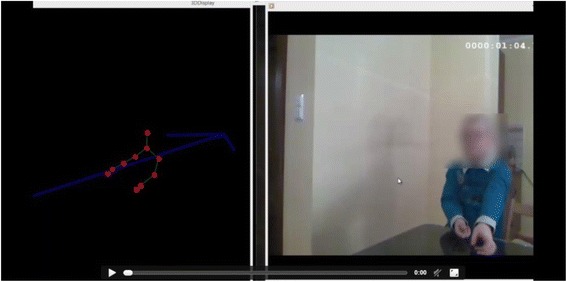
BACKGROUND: Autism spectrum conditions (autism) are diagnosed more frequently in boys than in girls. Females with autism may have been under-identified due to not only a male-biased understanding of autism but also females' camouflaging. The study describes a new technique that allows automated coding of non-verbal mode of communication (gestures) and offers the possibility of objective, evaluation of gestures, independent of human judgment. The EyesWeb software platform and the Kinect sensor during two demonstration activities of ADOS-2 (Autism Diagnostic Observation Schedule, Second Edition) were used. METHODS: The study group consisted of 33 high-functioning Polish girls and boys with formal diagnosis of autism or Asperger syndrome aged 5-10, with fluent speech, IQ average and above and their parents (girls with autism, n = 16; boys with autism, n = 17). All children were assessed during two demonstration activities of Module 3 of ADOS-2, administered in Polish, and coded using Polish codes. Children were also assessed with Polish versions of the Eyes and Faces Tests. Parents provided information on the author-reviewed Polish research translation of SCQ (Social Communication Questionnaire, Current and Lifetime) and Polish version of AQ Child (Autism Spectrum Quotient, Child). RESULTS: Girls with autism tended to use gestures more vividly as compared to boys with autism during two demonstration activities of ADOS-2. Girls with autism made significantly more mistakes than boys with autism on the Faces Test. All children with autism had high scores in AQ Child, which confirmed the presence of autistic traits in this group. The current communication skills of boys with autism reported by parents in SCQ were significantly better than those of girls with autism. However, both girls with autism and boys with autism improved in the social and communication abilities over the lifetime. The number of stereotypic behaviours in boys significantly decreased over life whereas it remained at a comparable level in girls with autism. CONCLUSIONS: High-functioning females with autism might present better on non-verbal (gestures) mode of communication than boys with autism. It may camouflage other diagnostic features. It poses risk of under-diagnosis or not receiving the appropriate diagnosis for this population. Further research is required to examine this phenomenon so appropriate gender revisions to the diagnostic assessments might be implemented.
Overview
The claims and statistics of this paper haven’t been checked yet.
Free: it reads the open-access text and checks the first 5 claims that cite a source we can check. Create a free account to check every claim.
Integrity signals
Registry
Cites
Statistics
Figures
Verification
Claims the paper makes
The claims and statistics of this paper haven’t been checked yet.
Free: it reads the open-access text and checks the first 5 claims that cite a source we can check. Create a free account to check every claim.
Claims other papers make about this one
Each is checked against this paper’s own text: does it say what the citing paper says it does?
The source backs part of the claim, not all of it — or backs it for a different population, condition or comparison.
In the citing paper
“Interestingly, Rynkiewicz et al.’s (2016) cross-sectional study found that the number of stereotyped behaviours in boys significantly decreased between five and 10 years of age, whereas it remained at a consistent level across these ages in girls with ASD.”
From Barriers to Autism Spectrum Disorder Diagnosis for Young Women and Girls: a Systematic Review (2021) · cites this paper as Rynkiewicz et al. 2016
Experimental — accuracy not yet measuredThe source backs part of the claim, not all of it — or backs it for a different population, condition or comparison.
In the citing paper
“While qualitative differences in gesture use by children with ASD are thought-provoking, they must be considered with caution due to small numbers and lack of a significant group effect.”
From Barriers to Autism Spectrum Disorder Diagnosis for Young Women and Girls: a Systematic Review (2021) · cites this paper as Rynkiewicz et al. 2016
Experimental — accuracy not yet measuredThe source backs part of the claim, not all of it — or backs it for a different population, condition or comparison.
In the citing paper
“Autistic people report attempting to camouflage their ASC in order to try and fit in in social situations, which may delay obtaining a timely ASC diagnosis and negatively affect their mental health [31–33].”
From Risk markers for suicidality in autistic adults (2018) · cites this paper as [33]
Experimental — accuracy not yet measuredThe source backs part of the claim, not all of it — or backs it for a different population, condition or comparison.
In the citing paper
“Using 3D motion capture, a recent study showed that girls with ASD gesture in ways that are more vibrant and noticeable than boys with ASD, despite similar struggles with social communication [48].”
From Linguistic camouflage in girls with autism spectrum disorder (2017) · cites this paper as [48]
Experimental — accuracy not yet measuredThe cited source says what the claim attributes to it.
In the citing paper
“Rynkiewicz et al.’s (2016) study included the use of the Faces Test to assess emotion recognition in a clinical sample of 5- to 10-year olds and found that girls with ASD made significantly more mistakes than boys, indicating poorer emotion recognition skills.”
From Barriers to Autism Spectrum Disorder Diagnosis for Young Women and Girls: a Systematic Review (2021) · cites this paper as Rynkiewicz et al. 2016
5 more claims about this paper
Create a free account to see every claim other papers make about this one.
Self-check
Percentages, sums and reported differences re-computed from the paper’s own numbers.
The self-check needs the paper’s full text.
Citations
Cites
Diagnostic and Statistical Manual of Mental Disorders
American Psychiatric Association (2013) · doi:10.1176/appi.books.9780890425596 · Cited by 116,369
Diagnostic and Statistical Manual of Mental Disorders
Williams, J. B. W., & First, M. (2013) · Encyclopedia of Social Work · doi:10.1093/acrefore/9780199975839.013.104 · Cited by 109,519
Baron-Cohen, S., Wheelwright, S., Skinner, R., Martin, J., & Clubley, E. (2001) · Journal of Autism and Developmental Disorders · doi:10.1023/a:1005653411471 · Cited by 6,450 · cited 2×
“ard” observational assessment for diagnosing autism), AQ (Autism Spectrum Quotient) [29] and SCQ (Social”
BackgroundSelf-citationPrevalence of Autism Spectrum Disorders in a Total Population Sample
Kim, Y. S., Leventhal, B. L., Koh, Y.-J., Fombonne, E., Laska, E., Lim, E.-C., Cheon, K.-A., Kim, S.-J., Kim, Y.-K., Lee, H., et al. (2011) · American Journal of Psychiatry · doi:10.1176/appi.ajp.2011.10101532 · Cited by 1,524
Epidemiological Surveys of Autism and Other Pervasive Developmental Disorders: An Update
Fombonne, E. (2003) · Journal of Autism and Developmental Disorders · doi:10.1023/a:1025054610557 · Cited by 1,505
Autistic Traits in the General Population: A Twin Study
Constantino, J. N., & Todd, R. D. (2003) · Archives of General Psychiatry · doi:10.1001/archpsyc.60.5.524 · Cited by 1,317 · cited 1×
“To a certain degree, these theories can explain why autistic traits are fewer in many high-functioning girls with autism as compared to boys with autism [20, 21].”
BackgroundSex/Gender Differences and Autism: Setting the Scene for Future Research
Lai, M.-C., Lombardo, M. V., Auyeung, B., Chakrabarti, B., & Baron-Cohen, S. (2015) · Journal of the American Academy of Child & Adolescent Psychiatry · doi:10.1016/j.jaac.2014.10.003 · Cited by 1,120
Self-citationSocial Communication Questionnaire
Lund, E. (2014) · Encyclopedia of Special Education · doi:10.1002/9781118660584.ese2224 · Cited by 972
Wallbott, H. G. (1998) · European Journal of Social Psychology · doi:10.1002/(sici)1099-0992(1998110)28:6<879::aid-ejsp901>3.0.co;2-w · Cited by 922
Prevalence of autism-spectrum conditions: UK school-based population study
Baron-Cohen, S., Scott, F. J., Allison, C., Williams, J., Bolton, P., Matthews, F. E., & Brayne, C. (2009) · British Journal of Psychiatry · doi:10.1192/bjp.bp.108.059345 · Cited by 918 · cited 1×
“Autism spectrum condition (autism) affects 1 % of the population [1 – 3].”
BackgroundSelf-citation
Research works printed but not linked: 5
- Lord C Rutter M DiLavorne PC Risi S Gotham K Bishop SL Autism Diagnostic Observation Schedule, Second Edition (ADOS-2) Manual (Part I): Modules 1-4 2012 Torrance, CA Western Psychological Services
- World Health Organization The ICD-10 Classification of Mental and Behavioural Disorders: clinical descriptions and diagnostic guidelines 1992 Geneva World Health Organization
- Laban R Lawrence FC Effort 1947 London Macdonald & Evans
- Baron-Cohen, S. Wheelwright & T. Jolliffe. Visual Cognition. 1997; 4: 311-331. Polish adaptation: Rynkiewicz, A., Ptaszek K. (2013). http://www.autismresearchcentre.com/arc_tests. Accessed 19 Oct 2015.
- Baron-Cohen S, Wheelwright S, Scahill V, Lawson J, Spong A. Journal of Development and Learning Disorders. 2001; 5, 47-78. Polish adaptation: Rynkiewicz, A., Ptaszek, K. (2013). http://www.autismresearchcentre.com/arc_tests. Accessed 19 Oct 2015.
Cited by
Items 101–200 of 495
When Are We Sure? Predictors of Clinician Certainty in the Diagnosis of Autism Spectrum Disorder
McDonnell, C. G., Bradley, C. C., Kanne, S. M., Lajonchere, C., Warren, Z. E., & Carpenter, L. A. (2018) · Journal of Autism and Developmental Disorders · doi:10.1007/s10803-018-3831-3 · Cited by 52
Samuel, M. H., Meiri, G., Dinstein, I., Flusser, H., Michaelovski, A., Bashiri, A., & Menashe, I. (2019) · Journal of Autism and Developmental Disorders · doi:10.1007/s10803-019-04034-9 · Cited by 52
Cummings, K. K., Lawrence, K. E., Hernandez, L. M., Wood, E. T., Bookheimer, S. Y., Dapretto, M., & Green, S. A. (2020) · Autism Research · doi:10.1002/aur.2351 · Cited by 51
Social withdrawal and gender differences: Clinical phenotypes and biological bases
Masi, G., Berloffa, S., Milone, A., & Brovedani, P. (2021) · Journal of Neuroscience Research · doi:10.1002/jnr.24802 · Cited by 50
Keating, C. T., Hickman, L., Geelhand, P., Takahashi, T., Leung, J., Monk, R., Schuster, B. A., Rybicki, A. J., Girolamo, T. M., Clin, É., et al. (2024) · PLoS ONE · doi:10.1371/journal.pone.0299824 · Cited by 48
McFayden, T. C., Antezana, L., Albright, J., Muskett, A., & Scarpa, A. (2019) · Review Journal of Autism and Developmental Disorders · doi:10.1007/s40489-019-00183-w · Cited by 47
Medical Therapies for Children With Autism Spectrum Disorder—An Update
Edwin Williamson, M. D., Sathe, N. A., & Andrews, J. C. (2017) · doi:10.23970/ahrqepccer189 · Cited by 50
A systematic review of social camouflaging in autistic adults and youth: Implications and theory
Klein, J. L., Krahn, R., Howe, S. J., Lewis, J., McMorris, C. A., & Macoun, S. J. (2024) · Development and Psychopathology · doi:10.1017/s0954579424001159 · Cited by 48
Dillon, E. F., Kanne, S. M., Landa, R. J., Annett, R. D., Bernier, R., Bradley, C. C., Carpenter, L. A., Kim, S. H., Parish‐Morris, J., Schultz, R. T., et al. (2021) · Journal of Autism and Developmental Disorders · doi:10.1007/s10803-021-05385-y · Cited by 47
Adamou, M., Johnson, M., & Alty, B. (2018) · Advances in Autism · doi:10.1108/aia-01-2018-0003 · Cited by 46
Is Older Age Associated with Higher Self- and Other-Rated ASD Characteristics?
Lever, A. G., & Geurts, H. M. (2018) · Journal of Autism and Developmental Disorders · doi:10.1007/s10803-017-3444-2 · Cited by 44
The ASC-Inclusion Perceptual Serious Gaming Platform for Autistic Children
Marchi, E., Baltrušaitis, T., Adams, A., Mahmoud, M., Golan, O., Fridenson-Hayo, S., Tal, S., Newman, S., Meir-Goren, N., Camurri, A., et al. (2018) · IEEE Transactions on Games · doi:10.1109/tg.2018.2864640 · Cited by 43
Self-citationCraig, F., Crippa, A., GIACOMO, A. D., Ruggiero, M., Rizzato, V., Lorenzo, A., Fanizza, I., Margari, L., & Trabacca, A. (2020) · Autism Research · doi:10.1002/aur.2305 · Cited by 42
Lundin, K., Mahdi, S., Isaksson, J., & Bölte, S. (2021) · Autism · doi:10.1177/1362361320975311 · Cited by 39
“The professionals’ perceptions encompassed in our third main category endorse emerging research evidence relating the female autism phenotype to increased social motivation (Head et al., 2014; Sedgewick et al., 2016).”
BackgroundWallace, G. L., Richard, E., Wolff, A., Nadeau, M., & Zucker, N. (2021) · Autism · doi:10.1177/1362361320942087 · Cited by 39
“Females with ASD are known to “camouflage” more than males with ASD; that is, they are better able to mask behaviors that may make their ASD evident to those around them (e.g. Lai et al., 2017; Rynkiewicz et al., 2016).”
Background‘I just rolled up my sleeves’: Mothers’ perspectives on raising girls on the autism spectrum
Fowler, K., & O’Connor, C. (2020) · Autism · doi:10.1177/1362361320956876 · Cited by 39
Gender differences in special educational needs identification
Daniel, J., & Wang, H. (2023) · Review of Education · doi:10.1002/rev3.3437 · Cited by 38
Treatment effectiveness for offenders with autism spectrum conditions: a systematic review
Melvin, C. L., Langdon, P. E., & Murphy, G. H. (2017) · Psychology Crime and Law · doi:10.1080/1068316x.2017.1324027 · Cited by 37
Bednarz, H. M., Trapani, J. A., & Kana, R. K. (2020) · Child Neuropsychology · doi:10.1080/09297049.2020.1745166 · Cited by 36
Anorexia nervosa and autism: a prospective twin cohort study
Dinkler, L., Taylor, M. J., Råstam, M., Hadjikhani, N. K., Bulik, C. M., Lichtenstein, P., Gillberg, C., & Lundström, S. (2020) · Journal of Child Psychology and Psychiatry · doi:10.1111/jcpp.13265 · Cited by 36
Allely, C. S. (2018) · Journal of Criminal Psychology · doi:10.1108/jcp-06-2017-0028 · Cited by 36
Allely, C. S. (2019) · Advances in Autism · doi:10.1108/aia-09-2018-0030 · Cited by 36
Self-Reported Empathy in Adult Women with Autism Spectrum Disorders – A Systematic Mini Review
Kok, F. M., Groen, Y., Becke, M., Fuermaier, A. B. M., & Tucha, O. M. (2016) · PLoS ONE · doi:10.1371/journal.pone.0151568 · Cited by 36
Potential Sex Differences Relative to Autism Spectrum Disorder and Metals
Dickerson, A. S., Rotem, R. S., Christian, M. A., Nguyen, V. T., & Specht, A. J. (2017) · Current Environmental Health Reports · doi:10.1007/s40572-017-0164-x · Cited by 34
Special considerations for assessing and caring for autism in girls and women
Rynkiewicz, A., Zheng, S., & Lacroix, A. (2023) · Current Opinion in Psychiatry · doi:10.1097/yco.0000000000000913 · Cited by 33
Self-citationAsif, M., Martiniano, H., Marques, A. R., Santos, J. X., Vilela, J. E. R., Rasga, C., Oliveira, G., Couto, F. M., & Vicente, A. M. (2020) · Translational Psychiatry · doi:10.1038/s41398-020-0721-1 · Cited by 33
Problematic eating behaviours of autistic women—A scoping review
Schröder, S. S., Danner, U. N., Spek, A. A., & Elburg, A. A. V. (2022) · European Eating Disorders Review · doi:10.1002/erv.2932 · Cited by 33
de Moraes, Í. A. P., Lima, J. A. S., Silva, N. M., Simcsik, A. O., Silveira, A. C., de Menezes, L. D. C., de Araújo, L. V., Crocetta, T. B., Voos, M. C., Tonks, J., et al. (2022) · International Journal of Environmental Research and Public Health · doi:10.3390/ijerph192214668 · Cited by 33
“I Was Like a Bird Without Wings”: Autistic Women’s Retrospective Experiences in General Schools
Zakai-Mashiach, M. (2022) · Journal of Autism and Developmental Disorders · doi:10.1007/s10803-022-05717-6 · Cited by 31
Diagnostic Challenges of High-Functioning Autism Spectrum Disorder in Females
Gupta, M., & Chaudhary, R. (2021) · Cureus · doi:10.7759/cureus.13006 · Cited by 30
Exploring profiles of anxiety symptoms in male and female children on the autism spectrum
Ambrose, K., Adams, D., Simpson, K., & Keen, D. (2020) · Research in Autism · doi:10.1016/j.rasd.2020.101601 · Cited by 30
Research, Clinical, and Sociological Aspects of Autism
Whiteley, P., Carr, K., & Shattock, P. (2021) · Frontiers in Psychiatry · doi:10.3389/fpsyt.2021.481546 · Cited by 30
Tofani, M., Scarcella, L., Galeoto, G., Giovannone, F., & Sogos, C. (2022) · Journal of Autism and Developmental Disorders · doi:10.1007/s10803-022-05498-y · Cited by 30
van der Putten, W., van Rentergem, J. A. A., Radhoe, T. A., Torenvliet, C., Groenman, A. P., Mol, A. J. J., & Geurts, H. M. (2022) · Research in Autism · doi:10.1016/j.rasd.2022.102072 · Cited by 31
Sex differences in social and emotional insight in youth with and without autism
Mattern, H., Cola, M., Tena, K. G., Knox, A., Russell, A. R. B., Pelella, M. R., Hauptmann, A., Covello, M., Parish‐Morris, J., & McCleery, J. P. (2023) · Molecular Autism · doi:10.1186/s13229-023-00541-w · Cited by 29
Tsirgiotis, J. M., Young, R. L., & Weber, N. (2023) · Autism · doi:10.1177/13623613231190682 · Cited by 30
The double empathy problem, camouflage, and the value of expertise from experience
Mitchell, P., Cassidy, S., & Sheppard, E. (2019) · Behavioral and Brain Sciences · doi:10.1017/s0140525x18002212 · Cited by 29
Camouflaging in autism: a systematic reviewPreprint
Cook, J. M., Hull, L., Crane, L., & Mandy, W. (2021) · OSF Preprints (OSF Preprints) · doi:10.31219/osf.io/u5b9e · Cited by 29
Pyszkowska, A. (2024) · Journal of Autism and Developmental Disorders · doi:10.1007/s10803-024-06416-0 · Cited by 22
Whyte, E. M., & Scherf, K. S. (2017) · Clinical Psychological Science · doi:10.1177/2167702617738380 · Cited by 28
Chen, M., Lin, Y., Yu, C., Fu, R., Shentu, H., Yao, J., Huang, J., He, Y., & Yu, M. (2023) · Archives of Gynecology and Obstetrics · doi:10.1007/s00404-023-07059-9 · Cited by 28
Gender differences between adolescents with autism in emergency psychiatry
So, P., Wierdsma, A. I., van Boeijen, C. A., Vermeiren, R. R. J. M., & Mulder, N. C. L. (2021) · Autism · doi:10.1177/13623613211019855 · Cited by 26
Bordt, E. A., Moya, H., Jo, Y. C., Ravichandran, C. T., Bankowski, I. M., Ceasrine, A. M., McDougle, C. J., Carlezon, W. A., & Bilbo, S. D. (2022) · Brain Behavior and Immunity · doi:10.1016/j.bbi.2023.11.010 · Cited by 26
Caplan, B., Blacher, J., & Eisenhower, A. (2019) · Journal of Autism and Developmental Disorders · doi:10.1007/s10803-019-04039-4 · Cited by 26
McQuaid, G. A., Sadowski, L. Y., Lee, N., & Wallace, G. L. (2024) · Autism in Adulthood · doi:10.1089/aut.2022.0121 · Cited by 26
Cancino-Barros, I., Villacura-Herrera, C., & Castillo, R. D. (2025) · Scientific Reports · doi:10.1038/s41598-025-06137-z · Cited by 23
‘Not at the diagnosis point’: Dealing with contradiction in autism assessment teams
Hayes, J., McCabe, R., Ford, T. J., Parker, D., & Russell, G. (2020) · Social Science & Medicine · doi:10.1016/j.socscimed.2020.113462 · Cited by 24
Deep Aphantasia: a visual brain with minimal influence from priors or inhibitory feedback?
Bouyer, L. N., & Arnold, D. H. (2024) · Frontiers in Psychology · doi:10.3389/fpsyg.2024.1374349 · Cited by 23
Identifying autism spectrum disorder in undiagnosed adults
Lewis, L. F. (2018) · The Nurse Practitioner · doi:10.1097/01.npr.0000544285.02331.2c · Cited by 24
Natraj, S., Kojovic, N., Maillart, T., & Schaer, M. (2024) · PLoS ONE · doi:10.1371/journal.pone.0308388 · Cited by 22
Female gender and autism: underdiagnosis and misdiagnosis – clinical and scientific urgency
Minutoli, R., Marraffa, C., Failla, C., Pioggia, G., & Marino, F. (2026) · Frontiers in Psychiatry · doi:10.3389/fpsyt.2025.1704579 · Cited by 22
Cremone, I. M., Nardi, B., Amatori, G., Palego, L., Baroni, D., Casagrande, D., Massimetti, E., Betti, L., Giannaccini, G., Dell’Osso, L., et al. (2023) · Biomedicines · doi:10.3390/biomedicines11061600 · Cited by 22
Neurodiversité et autisme : entre handicap et différence, science et idéologie
Rebecchi, K. (2023) · Revue de la neurodiversité / Journal of Neurodiversity · doi:10.65130/zm3rp4x · Cited by 21
Dai, M., Lin, L., Liang, J., Wang, Z., & Jin, J. (2018) · Journal of Autism and Developmental Disorders · doi:10.1007/s10803-018-3813-5 · Cited by 21
Guan, J., Blanchard, A. M., DiGuiseppi, C. G., Chihuri, S. T., & Li, G. (2021) · Journal of Autism and Developmental Disorders · doi:10.1007/s10803-021-05065-x · Cited by 20
ZAHARIA, A. L., Noir-Kahlo, K., Bressoud, N., Sander, D., Dukes, D., & Samson, A. C. (2021) · Frontiers in Psychology · doi:10.3389/fpsyg.2021.705937 · Cited by 19
Tunç, B., Pandey, J., John, T. S., Meera, S. S., Maldarelli, J. E., Zwaigenbaum, L., Hazlett, H. C., Dager, S. R., Botteron, K. N., Girault, J. B., et al. (2021) · Journal of Child Psychology and Psychiatry · doi:10.1111/jcpp.13406 · Cited by 19
Chen, M., Huang, C.-F., Lin, Y.-S., Chiu, Y., Gau, S. S., & Wu, Y.-Y. (2023) · Research in Autism · doi:10.1016/j.rasd.2023.102184 · Cited by 18
El-Salahi, S., Khaki, Z., & Vohora, R. (2023) · Review Journal of Autism and Developmental Disorders · doi:10.1007/s40489-023-00405-2 · Cited by 18
Camouflaging and autism: Conceptualisation and methodological issues
Arnold, W. M., Bitsika, V., & Sharpley, C. F. (2026) · Autism · doi:10.1177/13623613261420085 · Cited by 17
Autistic traits in epilepsy models: Why, when and how?
Velíšková, J., Silverman, J. L., Benson, M. J., & Lenck‐Santini, P. (2018) · Epilepsy Research · doi:10.1016/j.eplepsyres.2018.05.009 · Cited by 16
Insights into Sex and Gender Differences in Brain and Psychopathologies Using Big Data
Zelco, A., Wapeesittipan, P., & Joshi, A. (2023) · Life · doi:10.3390/life13081676 · Cited by 15
Sex- and age-related differences in autistic behaviours in children with neurofibromatosis type 1
Chisholm, A. K., Lami, F., Haebich, K. M., Ure, A., Brignell, A., Maloof, T., Pride, N. A., Walsh, K. S., Maier, A., Rouel, M., et al. (2022) · Journal of Autism and Developmental Disorders · doi:10.1007/s10803-022-05571-6 · Cited by 15
Is This Autism? A Guide for Clinicians and Everyone Else
Henderson, D., Wayland, S. C., & White, J. (2023) · Routledge eBooks · doi:10.4324/9781003242130 · Cited by 15
Bitsika, V., & Sharpley, C. F. (2019) · Journal of Autism and Developmental Disorders · doi:10.1007/s10803-019-04159-x · Cited by 15
Cardon, G. J., McQuarrie, M., Calton, S., & Gabrielsen, T. P. (2023) · Research in Autism · doi:10.1016/j.rasd.2023.102263 · Cited by 15
TRANSTORNO DO ESPECTRO AUTISTA: POPULAÇÃO ADULTA
Fabretti, J. O., Mendonça, A. B., Oliveira, M. D. A. S., de Sousa, L. M., Abreu, S. A., Rocha, L. E. D. A., Mazzuco, A., Nanami, C. L., de Aquino, R. V., de Oliveira, M. C., et al. (2024) · Brazilian Journal of Implantology and Health Sciences · doi:10.36557/2674-8169.2024v6n2p173-185 · Cited by 14
Brief Report: Predicting Sex Differences and Diagnosis from Early Parent Concerns
Wallisch, A. M., Behrens, S., Salley, B. J., Jamison, R., & Boyd, B. A. (2021) · Journal of Autism and Developmental Disorders · doi:10.1007/s10803-020-04866-w · Cited by 14
HEAR4Health: a blueprint for making computer audition a staple of modern healthcare
Triantafyllopoulos, A., Kathan, A., Baird, A., Christ, L., Gebhard, A., Gerczuk, M., Karas, V., Hübner, T., Jing, X., Liu, S., et al. (2023) · Frontiers in Digital Health · doi:10.3389/fdgth.2023.1196079 · Cited by 15
Self-citationGiovanniello, J. R., Ahrens, S., Yu, K., & Li, B. (2021) · Biological Psychiatry Global Open Science · doi:10.1016/j.bpsgos.2021.01.001 · Cited by 14
Zagury‐Orly, I., Kroeck, M. R., Soussand, L., & Cohen, A. L. (2021) · Journal of Autism and Developmental Disorders · doi:10.1007/s10803-021-04971-4 · Cited by 14
Rynkiewicz, A., Szura, M., Bernaciak, D., Kozak, A., & Karwowska, M. (2021) · Brain Sciences · doi:10.3390/brainsci11060682 · Cited by 15
Self-citationSex Differences in Autism Spectrum Disorders Across the Lifespan
Lawson, L. P. (2019) · Current Developmental Disorders Reports · doi:10.1007/s40474-019-00164-y · Cited by 13
O’Loghlen, J., & Lang, C. P. (2024) · Autism in Adulthood · doi:10.1089/aut.2022.0094 · Cited by 13
Oneib, B., Fajoui, Y., & Elghazouani, F. (2022) · The Egyptian Journal of Neurology Psychiatry and Neurosurgery · doi:10.1186/s41983-021-00437-7 · Cited by 13
Enabling autistic sociality: unrealised potentials intwo-sided social interaction
Heasman, B. (2018) · London School of Economics and Political Science Theses Online (London School of Economics and Political Science) · Cited by 13
The Role of Everyday Executive Function in Observed Social Symptoms of Autism Spectrum Disorder
Burroughs, C., Muscatello, R. A., & Corbett, B. A. (2024) · Journal of Autism and Developmental Disorders · doi:10.1007/s10803-024-06351-0 · Cited by 12
Hechler, F. C., Tuomainen, O., Weber, N., Fahr, F., Karlek, B., Maroske, M., Misia, M., & Caruana, N. (2025) · Molecular Autism · doi:10.1186/s13229-025-00643-7 · Cited by 12
Lassalle, C. M. D., Lerens, E., Mousset, E., Kurzeja, N., Poncin, F., Charlier, D., & Wintgens, A. (2020) · L Évolution Psychiatrique · doi:10.1016/j.evopsy.2020.06.012 · Cited by 12
Frigaux, A., Vacant, C., & Évrard, R. (2022) · L Évolution Psychiatrique · doi:10.1016/j.evopsy.2022.06.001 · Cited by 14
Glenthøj, L. B., Kristensen, T. D., Gibson, C. M., Jepsen, J. R. M., & Nordentoft, M. (2019) · Schizophrenia Research · doi:10.1016/j.schres.2019.08.025 · Cited by 12
Fernández, R. V., Plaza-Sanz, M., Hernández-Layna, C., Verde‐Cagiao, M., Benito-Ruiz, G., & Carvajal, F. (2023) · Frontiers in Psychiatry · doi:10.3389/fpsyt.2023.1088727 · Cited by 11
Diagnosis and treatment of ASD in women in secure and forensic hospitals
Markham, S. (2018) · Advances in Autism · doi:10.1108/aia-09-2018-0027 · Cited by 11
Yui, K., Imataka, G., Sasaki, H., Kawasaki, Y., Okanshi, T., Shiroki, R., & Yoshihara, S. (2019) · Case Reports in Pediatrics · doi:10.1155/2019/2070619 · Cited by 11
Sex/Gender Differences in Camouflaging in Children and Adolescents with Autism
(2020) · Children and Young People Now · doi:10.12968/cypn.2020.12.46 · Cited by 11
de Moraes, Í. A. P. (2017) · Digital Library of Theses and Dissertations (Universidade de São Paulo) · doi:10.11606/d.100.2017.tde-03082017-160628 · Cited by 11
Janicki, M. P., McCallion, P., Jokinen, N. S., Larsen, F., Mughal, D., Palanisamy, V., Santos, F. H., Service, K. P., Shih, A. J., Shooshtari, S., et al. (2025) · Journal of Autism and Developmental Disorders · doi:10.1007/s10803-025-06843-7 · Cited by 10
Pagán, A. F., Izuno‐Garcia, A. K., Hughes, K. R., Chapman, K. S., & Loveland, K. A. (2023) · Advances in Neurodevelopmental Disorders · doi:10.1007/s41252-023-00371-0 · Cited by 10
Demartini, B., Ingrosso, G., Serio, F., Nisticò, V., Broglia, G., Bertani, A., Faggioli, R., Gambini, O., Massimetti, G., Dell’Osso, L., et al. (2024) · European Psychiatry · doi:10.1192/j.eurpsy.2024.1791 · Cited by 10
Single-Cell Analysis of Sex and Gender Differences in the Human Brain During Development and Disease
Zelco, A., & Joshi, A. (2025) · Cellular and Molecular Neurobiology · doi:10.1007/s10571-025-01536-2 · Cited by 10
Psychometric Evaluation of Two Adult Autism Screening Tools in Brazil
Marques, L. D. N., Murray, C., Ferreira, L. F. D. A., Landeira-Fernández, J., & Anunciação, L. (2025) · Autism Research · doi:10.1002/aur.70089 · Cited by 9
Rynkiewicz, A., King, B. H., Kalisz, K., Słopień, A., Janas-Kozik, M. H., & Łucka, I. (2018) · Psychiatria i Psychologia Kliniczna · doi:10.15557/pipk.2018.0047 · Cited by 9
Self-citationMarcantonio, W., Simonti, M., Léna, I., & Mantegazza, M. (2025) · Genes Brain & Behavior · doi:10.1111/gbb.70034 · Cited by 8
Leaf, J. B., Creem, A. N., Bukszpan, A. R., Hickey, J., & Hillhouse, B. J. (2023) · Education and Training in Autism and Developmental Disabilities · doi:10.1177/215416472305800304 · Cited by 8
Torres, J. C., Valle, C. R. D., Aldunate, S. R., & Farías, V. (2021) · Revista de Estudiantes de Terapia Ocupacional · Cited by 8
Rynkiewicz, A., Lassalle, A., King, B. H., Smith, R. A., Mazur, A., Podgórska‐Bednarz, J., Słopień, A., & Tabarkiewicz, J. (2018) · Oxford University Press eBooks · doi:10.1093/obo/9780199791231-0209 · Cited by 8
Self-citationWood, M., Atkinson, A., & Papen, U. (2024) · Durham Research Online (Durham University) · doi:10.48785/100/268 · Cited by 8
Al-khresheh, M. H., & AL-Qadri, A. H. (2021) · World Journal of English Language · doi:10.5430/wjel.v11n2p29 · Cited by 7
Sex Differences in the Broad Autism Phenotype: Insights from the Australian Biobank
Mento, B. D., John, J. R., Diaz, A. M., Lin, P., Masi, A., Grove, R., & Eapen, V. (2024) · Journal of Autism and Developmental Disorders · doi:10.1007/s10803-024-06466-4 · Cited by 7
Investigating sex differences in narrative production of autistic pre-adolescents and adolescents
Belenger, M., Dumont, C., Geelhand, P., & Kissine, M. (2025) · Research in Autism · doi:10.1016/j.reia.2025.202589 · Cited by 7
Metadata
- Authors
- Rynkiewicz, A., Schuller, B., Marchi, E., Piana, S., Camurri, A., Lassalle, A., & Baron-Cohen, S.
- Affiliations
- Gdańsk Medical University (PL)
- University of Passau (DE)
- Technical University of Munich (DE)
- University of Genoa (IT)
- University of Cambridge (GB)
- Corresponding author
- Rynkiewicz, Agnieszka
- Venue
- Molecular Autism
- Published
- 2016-01-21
- Volume
- 7
- Issue
- 1
- Pages
- 10-10
- ISSN
- 2040-2392 (ISSN-L)
- PMC
- PMC4721191
- OpenAlex
- W2285089828
- Cited by
- 404
- References
- 40
- Citations by year
- 2026: 97 · 2025: 26 · 2024: 33 · 2023: 56 · 2022: 35 · 2021: 34 · 2020: 30 · 2019: 26 · 2018: 36 · 2017: 18 · 2016: 12
- FWCI
- 19.52
- Type
- journal article
- Language
- en
- Open access
- gold
- doi.org
- Licence
- cc-by
- Locations
- Molecular Autism (publishedVersion, cc-by)
- PubMed Central (publishedVersion, cc-by)
- PubMed (publishedVersion)
- Spiral (Imperial College London) (submittedVersion, other-oa)
- OPUS (Augsburg University) (submittedVersion, cc-by)
- Apollo (University of Cambridge) (submittedVersion, cc-by)
- Zenodo (CERN European Organization for Nuclear Research) (submittedVersion, cc-by)
- Funders
- Seventh Framework Programme (289021)
- Topics
- Life Sciences › Neuroscience › Cognitive Neuroscience › Autism Spectrum Disorder Research
- Social Sciences › Psychology › Social Psychology › Social Robot Interaction and HRI
- Health Sciences › Medicine › Psychiatry and Mental health › Child Nutrition and Feeding Issues
- Keywords
- autism spectrum disorder, Asperger syndrome, sex differences, gender differences, nonverbal communication, gesture, ADOS-2, Kinect sensor, stereotypy, social communication skills, high-functioning autism
- MeSH terms
- Autistic Disorder, Child, Child, Preschool, Communication Disorders, Culture, Diagnosis, Computer-Assisted, Diagnostic Errors, Emotions, Facial Expression, Female, Fixation, Ocular, Gestures, Humans, Male, Parents, Poland, Psychomotor Performance, Surveys and Questionnaires, Severity of Illness Index, Sex Characteristics, Sex Factors, Social Behavior, Software, Stereotyped Behavior, Asperger Syndrome
About these checks
Registry, retraction, Cites and statistics results are computed, not judged, with one exception: a printed reference that no index lists is read once by a model before it counts as a citation error. Claims are extracted by a model and kept only when their quote appears verbatim in the text; each cited source is then checked, with a model’s help, for whether it says what the claim relies on. Those verdicts can be wrong — read the claim’s quote and the cited source before relying on one.
Statistics and arithmetic are recomputed, not judged.
Confidence bands are shown only for fields calibrated on our annotated test set. None is calibrated yet, so no band is shown.
What counts as a claim ›How we measure confidence ›How we check this ›
Are you an author, or do you see a problem with this page? Request a review
Data sources
Bibliographic data: Semantic Scholar, OpenAlex, Crossref.
Contains information from the Semantic Scholar Academic Graph Datasets, made available under the ODC Attribution License (ODC-BY 1.0).
Semantic Scholar’s data is described in: Kinney, R., et al. (2023). The Semantic Scholar Open Data Platform. arXiv:2301.10140.
