

An investigation of the ‘female camouflage effect’ in autism using a computerized ADOS-2 and a test of sex/gender differences
Open accessThe DOI matches its Crossref record; 38 of the 40 references it cites were found in a registry or an index.
Abstract
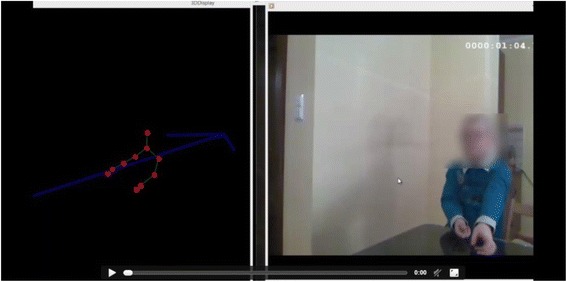
BACKGROUND: Autism spectrum conditions (autism) are diagnosed more frequently in boys than in girls. Females with autism may have been under-identified due to not only a male-biased understanding of autism but also females' camouflaging. The study describes a new technique that allows automated coding of non-verbal mode of communication (gestures) and offers the possibility of objective, evaluation of gestures, independent of human judgment. The EyesWeb software platform and the Kinect sensor during two demonstration activities of ADOS-2 (Autism Diagnostic Observation Schedule, Second Edition) were used. METHODS: The study group consisted of 33 high-functioning Polish girls and boys with formal diagnosis of autism or Asperger syndrome aged 5-10, with fluent speech, IQ average and above and their parents (girls with autism, n = 16; boys with autism, n = 17). All children were assessed during two demonstration activities of Module 3 of ADOS-2, administered in Polish, and coded using Polish codes. Children were also assessed with Polish versions of the Eyes and Faces Tests. Parents provided information on the author-reviewed Polish research translation of SCQ (Social Communication Questionnaire, Current and Lifetime) and Polish version of AQ Child (Autism Spectrum Quotient, Child). RESULTS: Girls with autism tended to use gestures more vividly as compared to boys with autism during two demonstration activities of ADOS-2. Girls with autism made significantly more mistakes than boys with autism on the Faces Test. All children with autism had high scores in AQ Child, which confirmed the presence of autistic traits in this group. The current communication skills of boys with autism reported by parents in SCQ were significantly better than those of girls with autism. However, both girls with autism and boys with autism improved in the social and communication abilities over the lifetime. The number of stereotypic behaviours in boys significantly decreased over life whereas it remained at a comparable level in girls with autism. CONCLUSIONS: High-functioning females with autism might present better on non-verbal (gestures) mode of communication than boys with autism. It may camouflage other diagnostic features. It poses risk of under-diagnosis or not receiving the appropriate diagnosis for this population. Further research is required to examine this phenomenon so appropriate gender revisions to the diagnostic assessments might be implemented.
Overview
The claims and statistics of this paper haven’t been checked yet.
Free: it reads the open-access text and checks the first 5 claims that cite a source we can check. Create a free account to check every claim.
Integrity signals
Registry
Cites
Statistics
Figures
Verification
Claims the paper makes
The claims and statistics of this paper haven’t been checked yet.
Free: it reads the open-access text and checks the first 5 claims that cite a source we can check. Create a free account to check every claim.
Claims other papers make about this one
Each is checked against this paper’s own text: does it say what the citing paper says it does?
The source backs part of the claim, not all of it — or backs it for a different population, condition or comparison.
In the citing paper
“Interestingly, Rynkiewicz et al.’s (2016) cross-sectional study found that the number of stereotyped behaviours in boys significantly decreased between five and 10 years of age, whereas it remained at a consistent level across these ages in girls with ASD.”
From Barriers to Autism Spectrum Disorder Diagnosis for Young Women and Girls: a Systematic Review (2021) · cites this paper as Rynkiewicz et al. 2016
Experimental — accuracy not yet measuredThe source backs part of the claim, not all of it — or backs it for a different population, condition or comparison.
In the citing paper
“While qualitative differences in gesture use by children with ASD are thought-provoking, they must be considered with caution due to small numbers and lack of a significant group effect.”
From Barriers to Autism Spectrum Disorder Diagnosis for Young Women and Girls: a Systematic Review (2021) · cites this paper as Rynkiewicz et al. 2016
Experimental — accuracy not yet measuredThe source backs part of the claim, not all of it — or backs it for a different population, condition or comparison.
In the citing paper
“Autistic people report attempting to camouflage their ASC in order to try and fit in in social situations, which may delay obtaining a timely ASC diagnosis and negatively affect their mental health [31–33].”
From Risk markers for suicidality in autistic adults (2018) · cites this paper as [33]
Experimental — accuracy not yet measuredThe source backs part of the claim, not all of it — or backs it for a different population, condition or comparison.
In the citing paper
“Using 3D motion capture, a recent study showed that girls with ASD gesture in ways that are more vibrant and noticeable than boys with ASD, despite similar struggles with social communication [48].”
From Linguistic camouflage in girls with autism spectrum disorder (2017) · cites this paper as [48]
Experimental — accuracy not yet measuredThe cited source says what the claim attributes to it.
In the citing paper
“Rynkiewicz et al.’s (2016) study included the use of the Faces Test to assess emotion recognition in a clinical sample of 5- to 10-year olds and found that girls with ASD made significantly more mistakes than boys, indicating poorer emotion recognition skills.”
From Barriers to Autism Spectrum Disorder Diagnosis for Young Women and Girls: a Systematic Review (2021) · cites this paper as Rynkiewicz et al. 2016
5 more claims about this paper
Create a free account to see every claim other papers make about this one.
Self-check
Percentages, sums and reported differences re-computed from the paper’s own numbers.
The self-check needs the paper’s full text.
Citations
Cites
Diagnostic and Statistical Manual of Mental Disorders
American Psychiatric Association (2013) · doi:10.1176/appi.books.9780890425596 · Cited by 116,369
Diagnostic and Statistical Manual of Mental Disorders
Williams, J. B. W., & First, M. (2013) · Encyclopedia of Social Work · doi:10.1093/acrefore/9780199975839.013.104 · Cited by 109,519
Baron-Cohen, S., Wheelwright, S., Skinner, R., Martin, J., & Clubley, E. (2001) · Journal of Autism and Developmental Disorders · doi:10.1023/a:1005653411471 · Cited by 6,450 · cited 2×
“ard” observational assessment for diagnosing autism), AQ (Autism Spectrum Quotient) [29] and SCQ (Social”
BackgroundSelf-citationPrevalence of Autism Spectrum Disorders in a Total Population Sample
Kim, Y. S., Leventhal, B. L., Koh, Y.-J., Fombonne, E., Laska, E., Lim, E.-C., Cheon, K.-A., Kim, S.-J., Kim, Y.-K., Lee, H., et al. (2011) · American Journal of Psychiatry · doi:10.1176/appi.ajp.2011.10101532 · Cited by 1,524
Epidemiological Surveys of Autism and Other Pervasive Developmental Disorders: An Update
Fombonne, E. (2003) · Journal of Autism and Developmental Disorders · doi:10.1023/a:1025054610557 · Cited by 1,505
Autistic Traits in the General Population: A Twin Study
Constantino, J. N., & Todd, R. D. (2003) · Archives of General Psychiatry · doi:10.1001/archpsyc.60.5.524 · Cited by 1,317 · cited 1×
“To a certain degree, these theories can explain why autistic traits are fewer in many high-functioning girls with autism as compared to boys with autism [20, 21].”
BackgroundSex/Gender Differences and Autism: Setting the Scene for Future Research
Lai, M.-C., Lombardo, M. V., Auyeung, B., Chakrabarti, B., & Baron-Cohen, S. (2015) · Journal of the American Academy of Child & Adolescent Psychiatry · doi:10.1016/j.jaac.2014.10.003 · Cited by 1,120
Self-citationSocial Communication Questionnaire
Lund, E. (2014) · Encyclopedia of Special Education · doi:10.1002/9781118660584.ese2224 · Cited by 972
Wallbott, H. G. (1998) · European Journal of Social Psychology · doi:10.1002/(sici)1099-0992(1998110)28:6<879::aid-ejsp901>3.0.co;2-w · Cited by 922
Prevalence of autism-spectrum conditions: UK school-based population study
Baron-Cohen, S., Scott, F. J., Allison, C., Williams, J., Bolton, P., Matthews, F. E., & Brayne, C. (2009) · British Journal of Psychiatry · doi:10.1192/bjp.bp.108.059345 · Cited by 918 · cited 1×
“Autism spectrum condition (autism) affects 1 % of the population [1 – 3].”
BackgroundSelf-citation
Research works printed but not linked: 5
- Lord C Rutter M DiLavorne PC Risi S Gotham K Bishop SL Autism Diagnostic Observation Schedule, Second Edition (ADOS-2) Manual (Part I): Modules 1-4 2012 Torrance, CA Western Psychological Services
- World Health Organization The ICD-10 Classification of Mental and Behavioural Disorders: clinical descriptions and diagnostic guidelines 1992 Geneva World Health Organization
- Laban R Lawrence FC Effort 1947 London Macdonald & Evans
- Baron-Cohen, S. Wheelwright & T. Jolliffe. Visual Cognition. 1997; 4: 311-331. Polish adaptation: Rynkiewicz, A., Ptaszek K. (2013). http://www.autismresearchcentre.com/arc_tests. Accessed 19 Oct 2015.
- Baron-Cohen S, Wheelwright S, Scahill V, Lawson J, Spong A. Journal of Development and Learning Disorders. 2001; 5, 47-78. Polish adaptation: Rynkiewicz, A., Ptaszek, K. (2013). http://www.autismresearchcentre.com/arc_tests. Accessed 19 Oct 2015.
Cited by
Bargiela, S., Steward, R., & Mandy, W. (2016) · Journal of Autism and Developmental Disorders · doi:10.1007/s10803-016-2872-8 · Cited by 1,087
Quantifying and exploring camouflaging in men and women with autism
Lai, M.-C., Lombardo, M. V., Ruigrok, A. N., Chakrabarti, B., Auyeung, B., Szatmari, P., Happé, F., Baron-Cohen, S., & MRC AIMS Consortium (2017) · Autism · doi:10.1177/1362361316671012 · Cited by 705
“By analysing behaviour from the demonstration activities in the ADOS-2, Rynkiewicz et al. (2016) found girls with autism used gestures more vividly than boys with autism and suspected this to be one component of enhanced camouflaging in females which ‘may pose risk of underdiagnosis or not receiving the appropriate di…”
Self-citationBotha, M., & Frost, D. M. (2020) · Society and Mental Health · doi:10.1177/2156869318804297 · Cited by 651
“The present sample could reflect the frustration that autistic women feel at the usual exclusion from research (Rynkiewicz et al. 2016; Shefcyk 2015).”
BackgroundRisk markers for suicidality in autistic adults
Cassidy, S., Bradley, L., Shaw, R., & Baron-Cohen, S. (2018) · Molecular Autism · doi:10.1186/s13229-018-0226-4 · Cited by 621
Self-citationThe Female Autism Phenotype and Camouflaging: a Narrative Review
Hull, L., Petrides, K. V., & Mandy, W. (2020) · Review Journal of Autism and Developmental Disorders · doi:10.1007/s40489-020-00197-9 · Cited by 614
Camouflaging in autism: A systematic review
Cook, J., Hull, L., Crane, L., & Mandy, W. (2021) · Clinical Psychology Review · doi:10.1016/j.cpr.2021.102080 · Cited by 554
Development and validation of the camouflaging autistic traits questionnaire (CAT-Q)
Hull, L., Mandy, W., Lai, M.-C., Baron-Cohen, S., Allison, C., Smith, P., & Petrides, K. V. (2019) · Journal of Autism and Developmental Disorders · doi:10.1007/s10803-018-3792-6 · Cited by 496
“Other studies have demonstrated autistic females’ greater use of camouflaging strategies during communication than males, whether through gesture (Rynkiewicz et al. 2016), or filling pauses in conversation (Parish-Morris et al.”
BackgroundSelf-citationBarriers to Autism Spectrum Disorder Diagnosis for Young Women and Girls: a Systematic Review
Lockwood Estrin, G., Milner, V., Spain, D., Happé, F., & Colvert, E. (2021) · Review Journal of Autism and Developmental Disorders · doi:10.1007/s40489-020-00225-8 · Cited by 444
Camm-Crosbie, L., Bradley, L., Shaw, R., Baron-Cohen, S., & Cassidy, S. (2019) · Autism · doi:10.1177/1362361318816053 · Cited by 415
“, 2010), difficulties with social and communication skills (APA, 2013), and report ‘camouflaging’ their symptoms in order to fit in social situations (Hull et al., 2017; Lai et al., 2017; Rynkiewicz et al., 2016).”
BackgroundSelf-citationLivingston, L. A., & Happé, F. (2017) · Neuroscience & Biobehavioral Reviews · doi:10.1016/j.neubiorev.2017.06.005 · Cited by 414
Sex differences in autism spectrum disorder: a review
Ferri, S. L., Abel, T., & Brodkin, E. S. (2018) · Current Psychiatry Reports · doi:10.1007/s11920-018-0874-2 · Cited by 392
Leedham, A., Thompson, A. R., Smith, R., & Freeth, M. (2020) · Autism · doi:10.1177/1362361319853442 · Cited by 353
Cassidy, S. A., Gould, K., Townsend, E., Pelton, M., Robertson, A. E., & Rodgers, J. (2020) · Journal of Autism and Developmental Disorders · doi:10.1007/s10803-019-04323-3 · Cited by 315
McQuaid, G. A., Lee, N., & Wallace, G. L. (2021) · Autism · doi:10.1177/13623613211042131 · Cited by 239
Factors influencing the probability of a diagnosis of autism spectrum disorder in girls versus boys
Duvekot, J., van der Ende, J., Verhulst, F. C., Slappendel, G., van Daalen, E., Maras, A., & Greaves-Lord, K. (2017) · Autism · doi:10.1177/1362361316672178 · Cited by 236
“A possible reason is that females with ASD may be better at masking their problems during a short observation (e.g. Hiller et al., 2016; Kreiser and White, 2014; Rynkiewicz et al., 2016).”
BackgroundSex Differences in Autism Spectrum Disorder: Diagnostic, Neurobiological, and Behavioral Features
Napolitano, A., Schiavi, S., La Rosa, P., Rossi-Espagnet, M. C., Petrillo, S., Bottino, F., Tagliente, E., Longo, D., Lupi, E., Casula, L., et al. (2022) · Frontiers in Psychiatry · doi:10.3389/fpsyt.2022.889636 · Cited by 234
Sex/Gender Differences in Camouflaging in Children and Adolescents with Autism
Wood-Downie, H., Wong, B., Kovshoff, H., Mandy, W., Hull, L., & Hadwin, J. A. (2021) · Journal of Autism and Developmental Disorders · doi:10.1007/s10803-020-04615-z · Cited by 228
Missed diagnoses and misdiagnoses of adults with autism spectrum disorder
Fusar-Poli, L., Brondino, N., Politi, P., & Aguglia, E. (2022) · European Archives of Psychiatry and Clinical Neuroscience · doi:10.1007/s00406-020-01189-w · Cited by 219
Gesi, C., Migliarese, G., Torriero, S., Capellazzi, M., Omboni, A. C., Cerveri, G., & Mencacci, C. (2021) · Brain Sciences · doi:10.3390/brainsci11070912 · Cited by 212
A Mixed Methods Study of Barriers to Formal Diagnosis of Autism Spectrum Disorder in Adults
Lewis, L. F. (2017) · Journal of Autism and Developmental Disorders · doi:10.1007/s10803-017-3168-3 · Cited by 206
Sedgewick, F., Hill, V., & Pellicano, E. (2019) · Autism · doi:10.1177/1362361318794930 · Cited by 187
A qualitative study of the service experiences of women with autism spectrum disorder
Tint, A., & Weiss, J. A. (2018) · Autism · doi:10.1177/1362361317702561 · Cited by 146
Linguistic camouflage in girls with autism spectrum disorder
Parish-Morris, J., Liberman, M. Y., Cieri, C., Herrington, J. D., Yerys, B. E., Bateman, L., Donaher, J., Ferguson, E., Pandey, J., & Schultz, R. T. (2017) · Molecular Autism · doi:10.1186/s13229-017-0164-6 · Cited by 181
“Combined with a recent study showing gestural camouflaging in girls with ASD [48], the linguistic camouflage effect identified in this study suggests that subtle sex differences in behavioral domains relevant to ASD (e.”
BackgroundInfluentialDechsling, A., Orm, S., Kalandadze, T., Sütterlin, S., Øien, R. A., Shic, F., & Nordahl‐Hansen, A. (2021) · Journal of Autism and Developmental Disorders · doi:10.1007/s10803-021-05338-5 · Cited by 184
Is There a Bias Towards Males in the Diagnosis of Autism? A Systematic Review and Meta-Analysis
Cruz, S., Zubizarreta, S. C.-P., Costa, A. D., Araújo, R., Martinho, J., Tubío-Fungueiriño, M., Sampaio, A., Cruz, R., Carracedo, Á., & Fernández‐Prieto, M. (2024) · Neuropsychology Review · doi:10.1007/s11065-023-09630-2 · Cited by 191
Corbett, B. A., Schwartzman, J. M., Libsack, E. J., Muscatello, R. A., Lerner, M. D., Simmons, G. L., & White, S. W. (2021) · Autism Research · doi:10.1002/aur.2440 · Cited by 113
Sex and Gender Differences in Central Nervous System-Related Disorders
Zagni, E., Simoni, L., & Colombo, D. (2016) · Neuroscience Journal · doi:10.1155/2016/2827090 · Cited by 173
Schuck, R. K., Flores, R. E., & Fung, L. K. (2019) · Journal of Autism and Developmental Disorders · doi:10.1007/s10803-019-03998-y · Cited by 172
“2014) in males, and on the other hand, higher severity of ASD traits in females (e.g. Carter et al. 2007; Holtmann et al. 2007; Rynkiewicz et al. 2016).”
Sex differences matter: Males and females are equal but not the same
Szadvári, I., Ostatníková, D., & Durdiaková, J. (2022) · Physiology & Behavior · doi:10.1016/j.physbeh.2022.114038 · Cited by 172
Social Camouflaging in Females with Autism Spectrum Disorder: A Systematic Review
Tubío-Fungueiriño, M., Cruz, S., Sampaio, A., Carracedo, A., & Fernández-Prieto, M. (2021) · Journal of Autism and Developmental Disorders · doi:10.1007/s10803-020-04695-x · Cited by 168
‘Anything but the phone!’: Communication mode preferences in the autism community
Howard, P. L., & Sedgewick, F. (2021) · Autism · doi:10.1177/13623613211014995 · Cited by 168
Convergence of Sex Differences and the Neuroimmune System in Autism Spectrum Disorder
McCarthy, M. M., & Wright, C. L. (2017) · Biological Psychiatry · doi:10.1016/j.biopsych.2016.10.004 · Cited by 158
Dell'Osso, L., Gesi, C., Massimetti, E., Cremone, I. M., Barbuti, M., Maccariello, G., Moroni, I., Barlati, S., Castellini, G., Luciano, M., et al. (2017) · Comprehensive Psychiatry · doi:10.1016/j.comppsych.2016.11.001 · Cited by 131
Cassidy, S. A., Bradley, L., Bowen, E., Wigham, S., & Rodgers, J. (2018) · Autism Research · doi:10.1002/aur.1922 · Cited by 144
Sapiets, S. J., Totsika, V., & Hastings, R. P. (2021) · Journal of Applied Research in Intellectual Disabilities · doi:10.1111/jar.12852 · Cited by 141
“Differential presentation of ASD between females and males can mask diagnostic features of ASD in females, such as non-verbal communication (Rynkiewicz et al., 2016), obstructing identification.”
BackgroundKojovic, N., Natraj, S., Mohanty, S. P., Maillart, T., & Schaer, M. (2021) · Scientific Reports · doi:10.1038/s41598-021-94378-z · Cited by 143
Self-reported camouflaging behaviours used by autistic adults during everyday social interactions
Cook, J., Crane, L., Hull, L., Bourne, L., & Mandy, W. (2022) · Autism · doi:10.1177/13623613211026754 · Cited by 105
Au-Yeung, S. K., Bradley, L., Robertson, A. E., Shaw, R., Baron-Cohen, S., & Cassidy, S. (2019) · Autism · doi:10.1177/1362361318818167 · Cited by 136
“This may be due to differences in presentation, such as better nonverbal communication skills and the ability to camouflage other diagnostic features (Rynkiewicz et al., 2016).”
BackgroundSelf-citationPosserud, M., Skretting Solberg, B., Engeland, A., Haavik, J., & Klungsøyr, K. (2021) · Acta Psychiatrica Scandinavica · doi:10.1111/acps.13368 · Cited by 135
Pelton, M. K., & Cassidy, S. A. (2017) · Autism Research · doi:10.1002/aur.1828 · Cited by 135
“However, recent research has indicated that ASC may be under-diagnosed in females [Rynkiewicz et al., 2016; Rutherford et al., 2016], and that females diagnosed with ASC, without co-morbid intellectual disability, are at higher risk of dying by suicide than males [Hirvikoski et al., 2015].”
BackgroundGender differences in restricted and repetitive behaviors and interests in youth with autism
Antezana, L., Factor, R. S., Condy, E. E., Strege, M. V., Scarpa, A., & Richey, J. A. (2019) · Autism Research · doi:10.1002/aur.2049 · Cited by 111
Neural self-representation in autistic women and association with ‘compensatory camouflaging’
Lai, M.-C., Lombardo, M. V., Chakrabarti, B., Ruigrok, A. N., Bullmore, E. T., Suckling, J., Auyeung, B., Happé, F., Szatmari, P., Baron-Cohen, S., et al. (2019) · Autism · doi:10.1177/1362361318807159 · Cited by 134
“We used the updated algorithm Social Affect (SA) domain score of the ADOS module 4 (Hus and Lord, 2014) to reflect extrinsic presentation.”
BackgroundResultInfluentialSelf-citationKinnaird, E., Norton, C., Stewart, C., & Tchanturia, K. (2019) · International Review of Psychiatry · doi:10.1080/09540261.2018.1531831 · Cited by 111
The role of monoamine oxidase enzymes in the pathophysiology of neurological disorders
Jones, D. N., & Raghanti, M. A. (2021) · Journal of Chemical Neuroanatomy · doi:10.1016/j.jchemneu.2021.101957 · Cited by 135
Clinical characteristics and problems diagnosing autism spectrum disorder in girls
Young, H., Oreve, M.-J., & Speranza, M. (2018) · Archives de Pédiatrie · doi:10.1016/j.arcped.2018.06.008 · Cited by 133
“You Must Become a Chameleon to Survive”: Adolescent Experiences of Camouflaging
Bernardin, C. J., Mason, E. N., Lewis, T., & Kanne, S. M. (2021) · Journal of Autism and Developmental Disorders · doi:10.1007/s10803-021-04912-1 · Cited by 135
EGGER, H. L., Dawson, G., Hashemi, J., Carpenter, K. L. H., Espinosa, S., Campbell, K. M., Brotkin, S. M., Borg, J. S., Qiu, Q., Tepper, M., et al. (2018) · npj Digital Medicine · doi:10.1038/s41746-018-0024-6 · Cited by 125
Visual attention to faces in children with autism spectrum disorder: are there sex differences?
Harrop, C., Jones, D., Zheng, S., Nowell, S., Schultz, R., & Parish-Morris, J. (2019) · Molecular Autism · doi:10.1186/s13229-019-0276-2 · Cited by 107
Allely, C. S. (2019) · Advances in Autism · doi:10.1108/aia-09-2018-0036 · Cited by 123
Tillmann, J., Ashwood, K., Absoud, M., Bölte, S., Bonnet-Brilhault, F., Buitelaar, J. K., Calderoni, S., Calvo, R., Canal-Bedia, R., Canitano, R., et al. (2018) · Journal of Autism and Developmental Disorders · doi:10.1007/s10803-018-3510-4 · Cited by 121
“2014), others have proposed that the male-preponderance in ASD prevalence, particularly at the intellectually able end of the spectrum, may be related to females being better at compensating for their difficulties (“female camouflage”); (Attwood 2006; Lai et al. 2011; Postorino et al. 2015; Rynkiewicz et al. 2016), po…”
BackgroundUnderstanding camouflaging and identity in autistic children and adolescents using photo-elicitation
Howe, S. J., Hull, L., Sedgewick, F., Hannon, B., & McMorris, C. A. (2023) · Research in Autism · doi:10.1016/j.rasd.2023.102232 · Cited by 121
Linguistic markers of autism in girls: evidence of a “blended phenotype” during storytelling
Boorse, J., Cola, M., Plate, S., Yankowitz, L., Pandey, J., Schultz, R. T., & Parish-Morris, J. (2019) · Molecular Autism · doi:10.1186/s13229-019-0268-2 · Cited by 98
Kaat, A. J., Shui, A. M., Ghods, S. S., Farmer, C. A., Esler, A. N., Thurm, A., Georgiades, S., Kanne, S. M., Lord, C., Kim, Y. S., et al. (2021) · Journal of Child Psychology and Psychiatry · doi:10.1111/jcpp.13242 · Cited by 116
Sex Differences in Autism Spectrum Disorder: Focus on High Functioning Children and Adolescents
de Giambattista, C., Ventura, P., Trerotoli, P., Margari, F., & Margari, L. (2021) · Frontiers in Psychiatry · doi:10.3389/fpsyt.2021.539835 · Cited by 116
Perceived misdiagnosis of psychiatric conditions in autistic adults
Kentrou, V., Livingston, L. A., Grove, R., Hoekstra, R. A., & Begeer, S. (2024) · EClinicalMedicine · doi:10.1016/j.eclinm.2024.102586 · Cited by 114
Diagnosing ASD in Adults Without ID: Accuracy of the ADOS-2 and the ADI-R
Fusar‐Poli, L., Brondino, N., Rocchetti, M., Panisi, C., Provenzani, U., Damiani, S., & Politi, P. (2017) · Journal of Autism and Developmental Disorders · doi:10.1007/s10803-017-3258-2 · Cited by 106
Jorgenson, C. D., Lewis, T., Rose, C. A., & Kanne, S. M. (2020) · Journal of Autism and Developmental Disorders · doi:10.1007/s10803-020-04491-7 · Cited by 105
Evans, S. C., Boan, A. D., Bradley, C., & Carpenter, L. A. (2019) · Journal of Clinical Child & Adolescent Psychology · doi:10.1080/15374416.2018.1437734 · Cited by 83
Autistic traits in adults who have attempted suicide
Richards, G., Kenny, R., Griffiths, S., Allison, C., Mosse, D., Holt, R., O’Connor, R. C., Cassidy, S., & Baron-Cohen, S. (2019) · Molecular Autism · doi:10.1186/s13229-019-0274-4 · Cited by 85
Self-citationPrevalence and Characteristics of Autism Spectrum Disorder Among Spanish School-Age Children
Morales-Hidalgo, P., Roigé-Castellví, J., Hernández-Martínez, C., Voltas, N., & Canals, J. (2018) · Journal of Autism and Developmental Disorders · doi:10.1007/s10803-018-3581-2 · Cited by 98
Emotional expression in psychiatric conditions: New technology for clinicians
Grabowski, K., Rynkiewicz, A., Lassalle, A., Baron‐Cohen, S., Schuller, B. W., Cummins, N., Baird, A., Podgórska‐Bednarz, J., Pieniążek, A., & Łucka, I. (2018) · Psychiatry and Clinical Neurosciences · doi:10.1111/pcn.12799 · Cited by 98
Self-citationCorbett, B. A., Vandekar, S., Muscatello, R. A., & Tanguturi, Y. C. (2020) · Autism Research · doi:10.1002/aur.2406 · Cited by 98
Keating, C. T., Hickman, L., Geelhand, P., Takahashi, T., Leung, J., Schuster, B. A., Rybicki, A. J., Girolamo, T. M., Clin, É., Papastamou, F., et al. (2021) · PLoS ONE · doi:10.1371/journal.pone.0261774 · Cited by 96
Neurodivergence, intersectionality, and eating disorders: a lived experience-led narrative review
Cobbaert, L., Millichamp, A., Elwyn, R., Silverstein, S., Schweizer, K., Thomas, E., & Miskovic‐Wheatley, J. (2024) · Journal of Eating Disorders · doi:10.1186/s40337-024-01126-5 · Cited by 95
Challenges for females with high functioning autism in the workplace: a systematic review
Hayward, S. M., McVilly, K. R., & Stokes, M. A. (2018) · Disability and Rehabilitation · doi:10.1080/09638288.2016.1254284 · Cited by 68
Knutsen, J., Crossman, M., Perrin, J., Shui, A., & Kuhlthau, K. (2019) · Autism · doi:10.1177/1362361318786490 · Cited by 78
Sex differences in the first impressions made by girls and boys with autism
Cola, M., Plate, S. N., Yankowitz, L. D., Petrulla, V., Bateman, L., Zampella, C., de Marchena, A. B., Pandey, J., Schultz, R. T., & Parish‐Morris, J. (2020) · Molecular Autism · doi:10.1186/s13229-020-00336-3 · Cited by 88
Milner, V. L., Mandy, W., Happe, F. G. E., & Colvert, E. (2022) · Autism · doi:10.1177/13623613221098240 · Cited by 88
The social experiences and sense of belonging in adolescent females with autism in mainstream school
Myles, O., Boyle, C., & Richards, A. (2019) · Educational and Child Psychology · doi:10.53841/bpsecp.2019.36.4.8 · Cited by 87
The relationship between camouflaging and mental health in autistic children and adolescents
Ross, A., Grove, R., & McAloon, J. (2022) · Autism Research · doi:10.1002/aur.2859 · Cited by 85
Calderoni, S. (2022) · Journal of Neuroscience Research · doi:10.1002/jnr.25000 · Cited by 77
Sex and gender affect the social brain: Beyond simplicity
Pavlova, M. A. (2016) · Journal of Neuroscience Research · doi:10.1002/jnr.23871 · Cited by 75
Friend matters: sex differences in social language during autism diagnostic interviews
Cola, M., Yankowitz, L. D., Tena, K. G., Russell, A. R. B., Bateman, L., Knox, A., Plate, S. N., Cubit, L. S., Zampella, C., Pandey, J., et al. (2022) · Molecular Autism · doi:10.1186/s13229-021-00483-1 · Cited by 73
Self-reported sex differences in high-functioning adults with autism: a meta-analysis
Moseley, R. L., Hitchiner, R., & Kirkby, J. A. (2018) · Molecular Autism · doi:10.1186/s13229-018-0216-6 · Cited by 56
Dwivedi, S., Medishetti, R., Rani, R., Sevilimedu, A., Kulkarni, P., & Yogeeswari, P. (2018) · Journal of Pharmacological and Toxicological Methods · doi:10.1016/j.vascn.2018.11.006 · Cited by 73
García-Delgar, B., Servera, M., Coffey, B. J., Lázaro, L., Openneer, T. J. C., Benaroya-Milshtein, N., Steinberg, T., Hoekstra, P. J., Dietrich, A., Morer, Á., et al. (2021) · European Child & Adolescent Psychiatry · doi:10.1007/s00787-021-01751-4 · Cited by 73
Belcher, H., Morein‐Zamir, S., Stagg, S. D., & Ford, R. M. (2022) · Journal of Autism and Developmental Disorders · doi:10.1007/s10803-022-05583-2 · Cited by 73
Robot Enhanced Therapy for Children with Autism (DREAM): A Social Model of Autism
Richardson, K., Coeckelbergh, M., Wakunuma, K., Billing, E., Ziemke, T., Gomez, P., Vanderborght, B., & Belpaeme, T. (2018) · IEEE Technology and Society Magazine · doi:10.1109/mts.2018.2795096 · Cited by 72
Sex differences in the reciprocal behaviour of children with autism
Backer van Ommeren, T., Koot, H. M., Scheeren, A. M., & Begeer, S. (2017) · Autism · doi:10.1177/1362361316669622 · Cited by 52
Social Cognition in Autism and Other Neurodevelopmental Disorders: A Co-twin Control Study
Isaksson, J., Westeinde, A. V., Cauvet, É., Kuja‐Halkola, R., Remnélius, K. L., Neufeld, J., Willfors, C., & Bölte, S. (2019) · Journal of Autism and Developmental Disorders · doi:10.1007/s10803-019-04001-4 · Cited by 69
A Systematic Review of Passing as Non-autistic in Autism Spectrum Disorder
Libsack, E. J., Keenan, E. G., Freden, C. E., Mirmina, J., Iskhakov, N., Krishnathasan, D., & Lerner, M. D. (2021) · Clinical Child and Family Psychology Review · doi:10.1007/s10567-021-00365-1 · Cited by 68
Are males and females with autism spectrum disorder more similar than we thought?
Mussey, J. L., Ginn, N. C., & Klinger, L. G. (2017) · Autism · doi:10.1177/1362361316682621 · Cited by 47
Strang, J. F., Klomp, S. E., Caplan, R., Griffin, A. D., Anthony, L. G., Harris, M. C., Graham, E. K., Knauss, M., & van der Miesen, A. I. R. (2019) · Clinical Practice in Pediatric Psychology · doi:10.1037/cpp0000310 · Cited by 68
Social cognition in autism: Face tuning
Pavlova, M. A., Guerreschi, M., Tagliavento, L., Gitti, F., Sokolov, A. N., Fallgatter, A. J., & Fazzi, E. M. (2017) · Scientific Reports · doi:10.1038/s41598-017-02790-1 · Cited by 65
Stability of co-occurring psychiatric diagnoses in autistic men and women
Kentrou, V., Oostervink, M., Scheeren, A. M., & Begeer, S. (2021) · Research in Autism · doi:10.1016/j.rasd.2021.101736 · Cited by 65
Autism, thy name is man: Exploring implicit and explicit gender bias in autism perceptions
Brickhill, R., Atherton, G., Piovesan, A., & Cross, L. (2023) · PLoS ONE · doi:10.1371/journal.pone.0284013 · Cited by 65
Lawson, C. (2017) · Cambridge University Press eBooks · doi:10.1017/9781316848319 · Cited by 63
Lawson, L. P., Joshi, R., Barbaro, J., & Dissanayake, C. (2018) · Journal of Autism and Developmental Disorders · doi:10.1007/s10803-018-3516-y · Cited by 64
Adult Psychiatric Morbidity Survey- Survey of Mental Health and Wellbeing, England, 2023/4
Morris, S., Hill, S., Brugha, T. S., & McManus, S. (2025) · City Research Online (City University London) · doi:10.13140/rg.2.2.24367.39840 · Cited by 65
Sex Differences in Neurodevelopmental Disorders: A Key Role for the Immune System
Breach, M. R., & Lenz, K. M. (2022) · Current Topics in Behavioral Neurosciences · doi:10.1007/7854_2022_308 · Cited by 62
How Can We Support the Healthcare Needs of Autistic Adults Without Intellectual Disability?
Bradshaw, P., Pellicano, E., van Driel, M., & Urbanowicz, A. (2019) · Current Developmental Disorders Reports · doi:10.1007/s40474-019-00159-9 · Cited by 60
Belcher, H., Uglik‐Marucha, N., Vitoratou, S., Ford, R. M., & Morein‐Zamir, S. (2023) · BJPsych Open · doi:10.1192/bjo.2023.562 · Cited by 63
Natural language markers of social phenotype in girls with autism
Song, A. Y., Cola, M., Plate, S. N., Petrulla, V., Yankowitz, L. D., Pandey, J., Schultz, R. T., & Parish‐Morris, J. (2020) · Journal of Child Psychology and Psychiatry · doi:10.1111/jcpp.13348 · Cited by 60
A comparison of methods for measuring camouflaging in autism
Hannon, B., Mandy, W., & Hull, L. (2022) · Autism Research · doi:10.1002/aur.2850 · Cited by 59
Zilkha, N., Sofer, Y., Beny, Y., & Kimchi, T. (2016) · Current Opinion in Neurobiology · doi:10.1016/j.conb.2016.04.014 · Cited by 58
Simcoe, S. M., Brownlow, C., Garnett, M. S., Rynkiewicz, A., & Attwood, T. (2018) · Journal of Autism and Developmental Disorders · doi:10.1007/s10803-017-3324-9 · Cited by 56
Self-citationRisk and resilience in autism spectrum disorder: a missed translational opportunity?
Szatmari, P. (2018) · Developmental Medicine & Child Neurology · doi:10.1111/dmcn.13588 · Cited by 56
“There is also emerging work that females with ASD might be able to ‘camouflage’ their presentation which might add to the risk of misdiagnosis.(18) The most popular way of explaining these sex differences in ASD is to think of a multiple threshold model.”
BackgroundCola, M., Zampella, C., Yankowitz, L. D., Plate, S. N., Petrulla, V., Tena, K. G., Russell, A. R. B., Pandey, J., Schultz, R. T., & Parish‐Morris, J. (2022) · Autism Research · doi:10.1002/aur.2693 · Cited by 56
Remnélius, K. L., & Bölte, S. (2023) · Journal of Autism and Developmental Disorders · doi:10.1007/s10803-023-05909-8 · Cited by 56
Matheis, M., Matson, J. L., Hong, E. S., & Cervantes, P. E. (2018) · Journal of Autism and Developmental Disorders · doi:10.1007/s10803-018-3819-z · Cited by 52
Metadata
- Authors
- Rynkiewicz, A., Schuller, B., Marchi, E., Piana, S., Camurri, A., Lassalle, A., & Baron-Cohen, S.
- Affiliations
- Gdańsk Medical University (PL)
- University of Passau (DE)
- Technical University of Munich (DE)
- University of Genoa (IT)
- University of Cambridge (GB)
- Corresponding author
- Rynkiewicz, Agnieszka
- Venue
- Molecular Autism
- Published
- 2016-01-21
- Volume
- 7
- Issue
- 1
- Pages
- 10-10
- ISSN
- 2040-2392 (ISSN-L)
- PMC
- PMC4721191
- OpenAlex
- W2285089828
- Cited by
- 404
- References
- 40
- Citations by year
- 2026: 97 · 2025: 26 · 2024: 33 · 2023: 56 · 2022: 35 · 2021: 34 · 2020: 30 · 2019: 26 · 2018: 36 · 2017: 18 · 2016: 12
- FWCI
- 19.52
- Type
- journal article
- Language
- en
- Open access
- gold
- doi.org
- Licence
- cc-by
- Locations
- Molecular Autism (publishedVersion, cc-by)
- PubMed Central (publishedVersion, cc-by)
- PubMed (publishedVersion)
- Spiral (Imperial College London) (submittedVersion, other-oa)
- OPUS (Augsburg University) (submittedVersion, cc-by)
- Apollo (University of Cambridge) (submittedVersion, cc-by)
- Zenodo (CERN European Organization for Nuclear Research) (submittedVersion, cc-by)
- Funders
- Seventh Framework Programme (289021)
- Topics
- Life Sciences › Neuroscience › Cognitive Neuroscience › Autism Spectrum Disorder Research
- Social Sciences › Psychology › Social Psychology › Social Robot Interaction and HRI
- Health Sciences › Medicine › Psychiatry and Mental health › Child Nutrition and Feeding Issues
- Keywords
- autism spectrum disorder, Asperger syndrome, sex differences, gender differences, nonverbal communication, gesture, ADOS-2, Kinect sensor, stereotypy, social communication skills, high-functioning autism
- MeSH terms
- Autistic Disorder, Child, Child, Preschool, Communication Disorders, Culture, Diagnosis, Computer-Assisted, Diagnostic Errors, Emotions, Facial Expression, Female, Fixation, Ocular, Gestures, Humans, Male, Parents, Poland, Psychomotor Performance, Surveys and Questionnaires, Severity of Illness Index, Sex Characteristics, Sex Factors, Social Behavior, Software, Stereotyped Behavior, Asperger Syndrome
About these checks
Registry, retraction, Cites and statistics results are computed, not judged, with one exception: a printed reference that no index lists is read once by a model before it counts as a citation error. Claims are extracted by a model and kept only when their quote appears verbatim in the text; each cited source is then checked, with a model’s help, for whether it says what the claim relies on. Those verdicts can be wrong — read the claim’s quote and the cited source before relying on one.
Statistics and arithmetic are recomputed, not judged.
Confidence bands are shown only for fields calibrated on our annotated test set. None is calibrated yet, so no band is shown.
What counts as a claim ›How we measure confidence ›How we check this ›
Are you an author, or do you see a problem with this page? Request a review
Data sources
Bibliographic data: Semantic Scholar, OpenAlex, Crossref.
Contains information from the Semantic Scholar Academic Graph Datasets, made available under the ODC Attribution License (ODC-BY 1.0).
Semantic Scholar’s data is described in: Kinney, R., et al. (2023). The Semantic Scholar Open Data Platform. arXiv:2301.10140.
