

An investigation of the ‘female camouflage effect’ in autism using a computerized ADOS-2 and a test of sex/gender differences
Open accessThe DOI matches its Crossref record; 38 of the 40 references it cites were found in a registry or an index.
Abstract
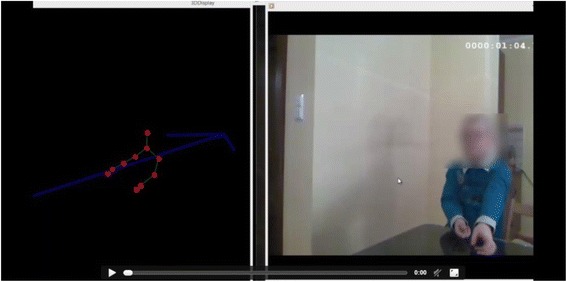
BACKGROUND: Autism spectrum conditions (autism) are diagnosed more frequently in boys than in girls. Females with autism may have been under-identified due to not only a male-biased understanding of autism but also females' camouflaging. The study describes a new technique that allows automated coding of non-verbal mode of communication (gestures) and offers the possibility of objective, evaluation of gestures, independent of human judgment. The EyesWeb software platform and the Kinect sensor during two demonstration activities of ADOS-2 (Autism Diagnostic Observation Schedule, Second Edition) were used. METHODS: The study group consisted of 33 high-functioning Polish girls and boys with formal diagnosis of autism or Asperger syndrome aged 5-10, with fluent speech, IQ average and above and their parents (girls with autism, n = 16; boys with autism, n = 17). All children were assessed during two demonstration activities of Module 3 of ADOS-2, administered in Polish, and coded using Polish codes. Children were also assessed with Polish versions of the Eyes and Faces Tests. Parents provided information on the author-reviewed Polish research translation of SCQ (Social Communication Questionnaire, Current and Lifetime) and Polish version of AQ Child (Autism Spectrum Quotient, Child). RESULTS: Girls with autism tended to use gestures more vividly as compared to boys with autism during two demonstration activities of ADOS-2. Girls with autism made significantly more mistakes than boys with autism on the Faces Test. All children with autism had high scores in AQ Child, which confirmed the presence of autistic traits in this group. The current communication skills of boys with autism reported by parents in SCQ were significantly better than those of girls with autism. However, both girls with autism and boys with autism improved in the social and communication abilities over the lifetime. The number of stereotypic behaviours in boys significantly decreased over life whereas it remained at a comparable level in girls with autism. CONCLUSIONS: High-functioning females with autism might present better on non-verbal (gestures) mode of communication than boys with autism. It may camouflage other diagnostic features. It poses risk of under-diagnosis or not receiving the appropriate diagnosis for this population. Further research is required to examine this phenomenon so appropriate gender revisions to the diagnostic assessments might be implemented.
Overview
The claims and statistics of this paper haven’t been checked yet.
Free: it reads the open-access text and checks the first 5 claims that cite a source we can check. Create a free account to check every claim.
Integrity signals
Registry
Cites
Statistics
Figures
Verification
Claims the paper makes
The claims and statistics of this paper haven’t been checked yet.
Free: it reads the open-access text and checks the first 5 claims that cite a source we can check. Create a free account to check every claim.
Claims other papers make about this one
Each is checked against this paper’s own text: does it say what the citing paper says it does?
The source backs part of the claim, not all of it — or backs it for a different population, condition or comparison.
In the citing paper
“Interestingly, Rynkiewicz et al.’s (2016) cross-sectional study found that the number of stereotyped behaviours in boys significantly decreased between five and 10 years of age, whereas it remained at a consistent level across these ages in girls with ASD.”
From Barriers to Autism Spectrum Disorder Diagnosis for Young Women and Girls: a Systematic Review (2021) · cites this paper as Rynkiewicz et al. 2016
Experimental — accuracy not yet measuredThe source backs part of the claim, not all of it — or backs it for a different population, condition or comparison.
In the citing paper
“While qualitative differences in gesture use by children with ASD are thought-provoking, they must be considered with caution due to small numbers and lack of a significant group effect.”
From Barriers to Autism Spectrum Disorder Diagnosis for Young Women and Girls: a Systematic Review (2021) · cites this paper as Rynkiewicz et al. 2016
Experimental — accuracy not yet measuredThe source backs part of the claim, not all of it — or backs it for a different population, condition or comparison.
In the citing paper
“Autistic people report attempting to camouflage their ASC in order to try and fit in in social situations, which may delay obtaining a timely ASC diagnosis and negatively affect their mental health [31–33].”
From Risk markers for suicidality in autistic adults (2018) · cites this paper as [33]
Experimental — accuracy not yet measuredThe source backs part of the claim, not all of it — or backs it for a different population, condition or comparison.
In the citing paper
“Using 3D motion capture, a recent study showed that girls with ASD gesture in ways that are more vibrant and noticeable than boys with ASD, despite similar struggles with social communication [48].”
From Linguistic camouflage in girls with autism spectrum disorder (2017) · cites this paper as [48]
Experimental — accuracy not yet measuredThe cited source says what the claim attributes to it.
In the citing paper
“Rynkiewicz et al.’s (2016) study included the use of the Faces Test to assess emotion recognition in a clinical sample of 5- to 10-year olds and found that girls with ASD made significantly more mistakes than boys, indicating poorer emotion recognition skills.”
From Barriers to Autism Spectrum Disorder Diagnosis for Young Women and Girls: a Systematic Review (2021) · cites this paper as Rynkiewicz et al. 2016
5 more claims about this paper
Create a free account to see every claim other papers make about this one.
Self-check
Percentages, sums and reported differences re-computed from the paper’s own numbers.
The self-check needs the paper’s full text.
Citations
Cites
Diagnostic and Statistical Manual of Mental Disorders
American Psychiatric Association (2013) · doi:10.1176/appi.books.9780890425596 · Cited by 116,369
Diagnostic and Statistical Manual of Mental Disorders
Williams, J. B. W., & First, M. (2013) · Encyclopedia of Social Work · doi:10.1093/acrefore/9780199975839.013.104 · Cited by 109,519
Baron-Cohen, S., Wheelwright, S., Skinner, R., Martin, J., & Clubley, E. (2001) · Journal of Autism and Developmental Disorders · doi:10.1023/a:1005653411471 · Cited by 6,450 · cited 2×
“ard” observational assessment for diagnosing autism), AQ (Autism Spectrum Quotient) [29] and SCQ (Social”
BackgroundSelf-citationPrevalence of Autism Spectrum Disorders in a Total Population Sample
Kim, Y. S., Leventhal, B. L., Koh, Y.-J., Fombonne, E., Laska, E., Lim, E.-C., Cheon, K.-A., Kim, S.-J., Kim, Y.-K., Lee, H., et al. (2011) · American Journal of Psychiatry · doi:10.1176/appi.ajp.2011.10101532 · Cited by 1,524
Epidemiological Surveys of Autism and Other Pervasive Developmental Disorders: An Update
Fombonne, E. (2003) · Journal of Autism and Developmental Disorders · doi:10.1023/a:1025054610557 · Cited by 1,505
Autistic Traits in the General Population: A Twin Study
Constantino, J. N., & Todd, R. D. (2003) · Archives of General Psychiatry · doi:10.1001/archpsyc.60.5.524 · Cited by 1,317 · cited 1×
“To a certain degree, these theories can explain why autistic traits are fewer in many high-functioning girls with autism as compared to boys with autism [20, 21].”
BackgroundSex/Gender Differences and Autism: Setting the Scene for Future Research
Lai, M.-C., Lombardo, M. V., Auyeung, B., Chakrabarti, B., & Baron-Cohen, S. (2015) · Journal of the American Academy of Child & Adolescent Psychiatry · doi:10.1016/j.jaac.2014.10.003 · Cited by 1,120
Self-citationSocial Communication Questionnaire
Lund, E. (2014) · Encyclopedia of Special Education · doi:10.1002/9781118660584.ese2224 · Cited by 972
Wallbott, H. G. (1998) · European Journal of Social Psychology · doi:10.1002/(sici)1099-0992(1998110)28:6<879::aid-ejsp901>3.0.co;2-w · Cited by 922
Prevalence of autism-spectrum conditions: UK school-based population study
Baron-Cohen, S., Scott, F. J., Allison, C., Williams, J., Bolton, P., Matthews, F. E., & Brayne, C. (2009) · British Journal of Psychiatry · doi:10.1192/bjp.bp.108.059345 · Cited by 918 · cited 1×
“Autism spectrum condition (autism) affects 1 % of the population [1 – 3].”
BackgroundSelf-citation
Research works printed but not linked: 5
- Lord C Rutter M DiLavorne PC Risi S Gotham K Bishop SL Autism Diagnostic Observation Schedule, Second Edition (ADOS-2) Manual (Part I): Modules 1-4 2012 Torrance, CA Western Psychological Services
- World Health Organization The ICD-10 Classification of Mental and Behavioural Disorders: clinical descriptions and diagnostic guidelines 1992 Geneva World Health Organization
- Laban R Lawrence FC Effort 1947 London Macdonald & Evans
- Baron-Cohen, S. Wheelwright & T. Jolliffe. Visual Cognition. 1997; 4: 311-331. Polish adaptation: Rynkiewicz, A., Ptaszek K. (2013). http://www.autismresearchcentre.com/arc_tests. Accessed 19 Oct 2015.
- Baron-Cohen S, Wheelwright S, Scahill V, Lawson J, Spong A. Journal of Development and Learning Disorders. 2001; 5, 47-78. Polish adaptation: Rynkiewicz, A., Ptaszek, K. (2013). http://www.autismresearchcentre.com/arc_tests. Accessed 19 Oct 2015.
Cited by
Items 401–495 of 495
Autism Spectrum Disorders in Imprisoned Women: A Concise Systematic Review
Vaskinn, A., Haukvik, U. K., & Friestad, C. (2026) · Review Journal of Autism and Developmental Disorders · doi:10.1007/s40489-026-00572-y
A INVISIBILIDADE DO AUTISMO FEMININO E OS DESAFIOS DIAGNÓSTICOS: REVISÃO INTEGRATIVA
Azevedo, F. D. S., Rodrigues, N. M., & Pereira, M. E. D. (2026) · Revista Tópicos · doi:10.70773/revistatopicos/780009600
Ingrosso, G., Serio, F., Demartini, B., Nisticò, V., Bertani, A., Faggioli, R., Massimetti, G., Nardi, B., Dell’Osso, L., & Carpita, B. (2026) · Research Square · doi:10.21203/rs.3.rs-9827828/v1
Bello, M. A. R., Barba-Colmenero, F., Camino-Alarcón, J. V., & Naranjo, N. V. (2026) · Journal of Intelligence · doi:10.3390/jintelligence14070132
Güler, H. A., Ekici, F., Tan, Ö., Çelik, M. E., & Kandeğer, A. (2026) · International Journal of Developmental Neuroscience · doi:10.1002/jdn.70155
Individual and In-Session Strategies
Rodrigues, S. (2026) · Oxford University Press eBooks · doi:10.1093/9780197843413.003.0046
Reimagining Family Engagement Through a Neurodiversity Lens
Rodrigues, S. (2026) · Oxford University Press eBooks · doi:10.1093/9780197843413.003.0044
Rodrigues, S. (2026) · Oxford University Press eBooks · doi:10.1093/9780197843413.002.0008
Restorative Practices and Regulation-Informed Discipline
Rodrigues, S. (2026) · Oxford University Press eBooks · doi:10.1093/9780197843413.003.0043
Neurodivergence and Socioeconomic Class
Rodrigues, S. (2026) · Oxford University Press eBooks · doi:10.1093/9780197843413.003.0020
Performative Inclusion and the Burden of Adaptation
Rodrigues, S. (2026) · Oxford University Press eBooks · doi:10.1093/9780197843413.003.0038
Reorienting the System: Unpacking Bias
Rodrigues, S. (2026) · Oxford University Press eBooks · doi:10.1093/9780197843413.003.0024
Designing Accessible and Inclusive Social Emotional Learning
Rodrigues, S. (2026) · Oxford University Press eBooks · doi:10.1093/9780197843413.003.0031
The Ethical Imperative of Action
Rodrigues, S. (2026) · Oxford University Press eBooks · doi:10.1093/9780197843413.003.0058
Rodrigues, S. (2026) · Oxford University Press eBooks · doi:10.1093/9780197843413.003.0001
Sustaining the Work: Burnout, Compassion Fatigue, and Systemic Support
Rodrigues, S. (2026) · Oxford University Press eBooks · doi:10.1093/9780197843413.003.0034
Rodrigues, S. (2026) · Oxford University Press eBooks · doi:10.1093/9780197843413.003.0053
Rodrigues, S. (2026) · Oxford University Press eBooks · doi:10.1093/9780197843413.003.0049
Rodrigues, S. (2026) · Oxford University Press eBooks · doi:10.1093/9780197843413.005.0002
Glossary of Key Terms and Concepts
Rodrigues, S. (2026) · Oxford University Press eBooks · doi:10.1093/9780197843413.005.0001
Transformative Social Emotional Learning
Rodrigues, S. (2026) · Oxford University Press eBooks · doi:10.1093/9780197843413.003.0032
Rodrigues, S. (2026) · Oxford University Press eBooks · doi:10.1093/9780197843413.003.0050
Applying the Person-In-Environment Framework
Rodrigues, S. (2026) · Oxford University Press eBooks · doi:10.1093/9780197843413.003.0008
Cultural Humility in Neurodiversity Affirming Practice
Rodrigues, S. (2026) · Oxford University Press eBooks · doi:10.1093/9780197843413.003.0009
Rodrigues, S. (2026) · Oxford University Press eBooks · doi:10.1093/9780197843413.003.0036
Peer Relationships and Dedicated Interests
Rodrigues, S. (2026) · Oxford University Press eBooks · doi:10.1093/9780197843413.003.0040
Rodrigues, S. (2026) · Oxford University Press eBooks · doi:10.1093/9780197843413.002.0002
Communication Justice as a Social Work Imperative
Rodrigues, S. (2026) · Oxford University Press eBooks · doi:10.1093/9780197843413.003.0011
Rodrigues, S. (2026) · Oxford University Press eBooks · doi:10.1093/9780197843413.003.0051
Rodrigues, S. (2026) · Oxford University Press eBooks · doi:10.1093/9780197843413.003.0002
Rodrigues, S. (2026) · Oxford University Press eBooks · doi:10.1093/9780197843413.003.0042
School Social Workers as Policy Advocates
Rodrigues, S. (2026) · Oxford University Press eBooks · doi:10.1093/9780197843413.003.0055
Rodrigues, S. (2026) · Oxford University Press eBooks · doi:10.1093/9780197843413.003.0035
Narrative Theory and the Reclamation of Neurodivergent Identity
Rodrigues, S. (2026) · Oxford University Press eBooks · doi:10.1093/9780197843413.003.0016
Advocacy in a Shifting Political Landscape
Rodrigues, S. (2026) · Oxford University Press eBooks · doi:10.1093/9780197843413.003.0057
Rodrigues, S. (2026) · Oxford University Press eBooks · doi:10.1093/9780197843413.005.0006
Rethinking Social Intelligence
Rodrigues, S. (2026) · Oxford University Press eBooks · doi:10.1093/9780197843413.003.0027
Rodrigues, S. (2026) · Oxford University Press eBooks · doi:10.1093/9780197843413.003.0048
Rodrigues, S. (2026) · Oxford University Press eBooks · doi:10.1093/9780197843413.003.0004
Culturally Responsive and Sustaining Practice
Rodrigues, S. (2026) · Oxford University Press eBooks · doi:10.1093/9780197843413.003.0030
Neurodivergent Cultural Communication at the Intersection of Race
Rodrigues, S. (2026) · Oxford University Press eBooks · doi:10.1093/9780197843413.003.0021
Applying Critical Disability Studies in Practice
Rodrigues, S. (2026) · Oxford University Press eBooks · doi:10.1093/9780197843413.003.0014
Intersectionality as Praxis in Inclusive Social Work
Rodrigues, S. (2026) · Oxford University Press eBooks · doi:10.1093/9780197843413.003.0018
Building Coalitions and Cross-System Partnerships
Rodrigues, S. (2026) · Oxford University Press eBooks · doi:10.1093/9780197843413.003.0056
Rodrigues, S. (2026) · Oxford University Press eBooks · doi:10.1093/9780197843413.002.0005
Spotlighting Communication Diversity as a Strategy
Rodrigues, S. (2026) · Oxford University Press eBooks · doi:10.1093/9780197843413.003.0047
Rodrigues, S. (2026) · Oxford University Press eBooks · doi:10.1093/9780197843413.003.0025
Modeling Youth-Adult Relationships
Rodrigues, S. (2026) · Oxford University Press eBooks · doi:10.1093/9780197843413.003.0028
Bridging Individual Work to Systemic Change
Rodrigues, S. (2026) · Oxford University Press eBooks · doi:10.1093/9780197843413.003.0054
Crisis Intervention through a Neurodiversity-Affirming Lens
Rodrigues, S. (2026) · Oxford University Press eBooks · doi:10.1093/9780197843413.003.0052
Rodrigues, S. (2026) · Oxford University Press eBooks · doi:10.1093/9780197843413.002.0007
Rodrigues, S. (2026) · Oxford University Press eBooks · doi:10.1093/9780197843413.003.0013
Rodrigues, S. (2026) · Oxford University Press eBooks · doi:10.1093/9780197843413.003.0037
Revisiting the Theory of Mind Narrative
Rodrigues, S. (2026) · Oxford University Press eBooks · doi:10.1093/9780197843413.003.0006
Rodrigues, S. (2026) · Oxford University Press eBooks · doi:10.1093/9780197843413.003.0039
Cultural Humility and Reflexivity in Practice
Rodrigues, S. (2026) · Oxford University Press eBooks · doi:10.1093/9780197843413.003.0022
Centering Dignity, Strength, and Self-Determination
Rodrigues, S. (2026) · Oxford University Press eBooks · doi:10.1093/9780197843413.003.0007
Reimagining Behavior Support in Schools
Rodrigues, S. (2026) · Oxford University Press eBooks · doi:10.1093/9780197843413.003.0026
Rodrigues, S. (2026) · Oxford University Press eBooks · doi:10.1093/9780197843413.003.0003
Environmental Fit and the Ecology of Inclusion
Rodrigues, S. (2026) · Oxford University Press eBooks · doi:10.1093/9780197843413.003.0015
Rodrigues, S. (2026) · Oxford University Press eBooks · doi:10.1093/9780197843413.003.0012
Rodrigues, S. (2026) · Oxford University Press eBooks · doi:10.1093/9780197843413.005.0007
Rodrigues, S. (2026) · Oxford University Press eBooks · doi:10.1093/9780197843413.005.0005
Gender, Masking, and the Performance of Acceptability
Rodrigues, S. (2026) · Oxford University Press eBooks · doi:10.1093/9780197843413.003.0019
Recognizing Strengths and Challenges Across Neurodivergent Profiles
Rodrigues, S. (2026) · Oxford University Press eBooks · doi:10.1093/9780197843413.003.0005
Centering Sensory Inclusivity and Student Voice in Neurodiversity-Affirming SEL
Rodrigues, S. (2026) · Oxford University Press eBooks · doi:10.1093/9780197843413.003.0033
Advocacy in Special Education Systems
Rodrigues, S. (2026) · Oxford University Press eBooks · doi:10.1093/9780197843413.003.0023
Rodrigues, S. (2026) · Oxford University Press eBooks · doi:10.1093/9780197843413.005.0003
Supporting Neurodivergent Caregivers
Rodrigues, S. (2026) · Oxford University Press eBooks · doi:10.1093/9780197843413.003.0045
Accessible Design for Learning
Rodrigues, S. (2026) · Oxford University Press eBooks · doi:10.1093/9780197843413.003.0029
Rodrigues, S. (2026) · Oxford University Press eBooks · doi:10.1093/9780197843413.005.0004
Rodrigues, S. (2026) · Oxford University Press eBooks · doi:10.1093/9780197843413.003.0017
Honoring Dedicated Interests as Pathways to Learning and Connection
Rodrigues, S. (2026) · Oxford University Press eBooks · doi:10.1093/9780197843413.003.0041
Accessible Design for Learning
Rodrigues, S. (2026) · Oxford University Press eBooks · doi:10.1093/9780197843413.003.0010
Rodrigues, S. (2026) · Oxford University Press eBooks · doi:10.1093/9780197843413.002.0006
Measurement Invariance of the Autism Spectrum Rating Scales Across Gender
Golson, M. E., McClain, M. B., Schwartz, S., Harris, B., & Gabrielsen, T. P. (2026) · Contemporary School Psychology · doi:10.1007/s40688-026-00612-8
Development and pilot evaluation of the Children’s Masking Questionnaire
Delara, L., O’Donnell, N. A., Baldoza, S. M., Belcher, H., Halsall, J., Autistica), S. O. (. A., Sanctuary, L., & Hull, L. (2026) · Frontiers in Psychiatry · doi:10.3389/fpsyt.2026.1893936
Sherwood, K. L., Erickson, D., Burke-Miller, J. K., & Smith, M. J. (2026) · Journal of Autism and Developmental Disorders · doi:10.1007/s10803-026-07476-0
Byrne, D., & Delimata, N. (2026) · Irish Educational Studies · doi:10.1080/03323315.2026.2716027
Medina, S. F., Gutierrez, J. V., & Duarte‐Díaz, A. (2026) · Advances in Autism · doi:10.1108/aia-12-2025-0134
Johnstone, K. (2026) · White Rose eTheses Online (University of Leeds, The University of Sheffield, University of York)
Integrating Sex and Gender into Transcriptomics of the Brain
McCarthy, M. M., & Raznahan, A. (2026) · Springer eBooks · doi:10.1007/978-3-032-40218-9_3
What’s behind the mask: The diagnostic divide in the female autism phenotype
Alston, S. G. (2026) · JMU Scholoraly Commons (James Madison University)
Samoilis, G., & Lewis, C. (2026) · Neurodiversity · doi:10.1177/27546330261490701
Sweidan, M., & El-Zraigat, I. A. (2025) · Cross-cultural communication · doi:10.3968/13727
Diferències en la manifestació clínica del Trastorn de l'Espectre Autista segons el gènere
Vilar, O. R. (2024) · Rovira & Virgili repository
Özbaran, N. B., Şener, Z. İ., Sarı, S., & Şahin, G. K. (2026) · Frontiers in Child and Adolescent Psychiatry · doi:10.3389/frcha.2026.1910194
Vasileiou, I., Mantsos, E., Kofa, O., & Krokou, Z. (2026) · CLOK (University of Central Lancashire)
Cola, M., Lyons, M., Schillinger, S., Lee, A., Faulk, C., Fulop, L., Knox, A., Howard, N., Franke, H., Mulqueen, A., et al. (2026) · Journal of Autism and Developmental Disorders · doi:10.1007/s10803-026-07562-3
Freeth, M., Ramachandran, R., Sheppard, E., & CHEN, J. (2026) · Wiley eBooks · doi:10.1002/9781394489886.ch47
Autism and the Autism Spectrum
Volkmar, F. R., Reichow, B., WESTPHAL, A., Macari, S. L., & Øien, R. A. (2026) · Wiley eBooks · doi:10.1002/9781394389933.ch1
Alonso-Esteban, Y., Marín, F. A., Navarro‐Pardo, E., & López-Ramón, M. F. (2026) · Behavioral Psychology/Psicología Conductual · doi:10.31083/bp45494
Damiani–Arias, D., Wettling–Carpio, I., Julio–Ramos, T., Solomons, D., Torres–Cea, M., & Toloza–Ramirez, D. (2026) · Revista de Investigación e Innovación en Ciencias de la Salud · doi:10.46634/riics.609
Metadata
- Authors
- Rynkiewicz, A., Schuller, B., Marchi, E., Piana, S., Camurri, A., Lassalle, A., & Baron-Cohen, S.
- Affiliations
- Gdańsk Medical University (PL)
- University of Passau (DE)
- Technical University of Munich (DE)
- University of Genoa (IT)
- University of Cambridge (GB)
- Corresponding author
- Rynkiewicz, Agnieszka
- Venue
- Molecular Autism
- Published
- 2016-01-21
- Volume
- 7
- Issue
- 1
- Pages
- 10-10
- ISSN
- 2040-2392 (ISSN-L)
- PMC
- PMC4721191
- OpenAlex
- W2285089828
- Cited by
- 404
- References
- 40
- Citations by year
- 2026: 97 · 2025: 26 · 2024: 33 · 2023: 56 · 2022: 35 · 2021: 34 · 2020: 30 · 2019: 26 · 2018: 36 · 2017: 18 · 2016: 12
- FWCI
- 19.52
- Type
- journal article
- Language
- en
- Open access
- gold
- doi.org
- Licence
- cc-by
- Locations
- Molecular Autism (publishedVersion, cc-by)
- PubMed Central (publishedVersion, cc-by)
- PubMed (publishedVersion)
- Spiral (Imperial College London) (submittedVersion, other-oa)
- OPUS (Augsburg University) (submittedVersion, cc-by)
- Apollo (University of Cambridge) (submittedVersion, cc-by)
- Zenodo (CERN European Organization for Nuclear Research) (submittedVersion, cc-by)
- Funders
- Seventh Framework Programme (289021)
- Topics
- Life Sciences › Neuroscience › Cognitive Neuroscience › Autism Spectrum Disorder Research
- Social Sciences › Psychology › Social Psychology › Social Robot Interaction and HRI
- Health Sciences › Medicine › Psychiatry and Mental health › Child Nutrition and Feeding Issues
- Keywords
- autism spectrum disorder, Asperger syndrome, sex differences, gender differences, nonverbal communication, gesture, ADOS-2, Kinect sensor, stereotypy, social communication skills, high-functioning autism
- MeSH terms
- Autistic Disorder, Child, Child, Preschool, Communication Disorders, Culture, Diagnosis, Computer-Assisted, Diagnostic Errors, Emotions, Facial Expression, Female, Fixation, Ocular, Gestures, Humans, Male, Parents, Poland, Psychomotor Performance, Surveys and Questionnaires, Severity of Illness Index, Sex Characteristics, Sex Factors, Social Behavior, Software, Stereotyped Behavior, Asperger Syndrome
About these checks
Registry, retraction, Cites and statistics results are computed, not judged, with one exception: a printed reference that no index lists is read once by a model before it counts as a citation error. Claims are extracted by a model and kept only when their quote appears verbatim in the text; each cited source is then checked, with a model’s help, for whether it says what the claim relies on. Those verdicts can be wrong — read the claim’s quote and the cited source before relying on one.
Statistics and arithmetic are recomputed, not judged.
Confidence bands are shown only for fields calibrated on our annotated test set. None is calibrated yet, so no band is shown.
What counts as a claim ›How we measure confidence ›How we check this ›
Are you an author, or do you see a problem with this page? Request a review
Data sources
Bibliographic data: Semantic Scholar, OpenAlex, Crossref.
Contains information from the Semantic Scholar Academic Graph Datasets, made available under the ODC Attribution License (ODC-BY 1.0).
Semantic Scholar’s data is described in: Kinney, R., et al. (2023). The Semantic Scholar Open Data Platform. arXiv:2301.10140.
