

An investigation of the ‘female camouflage effect’ in autism using a computerized ADOS-2 and a test of sex/gender differences
Open accessThe DOI matches its Crossref record; 38 of the 40 references it cites were found in a registry or an index.
Abstract
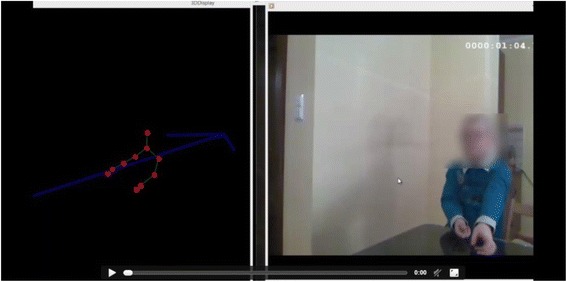
BACKGROUND: Autism spectrum conditions (autism) are diagnosed more frequently in boys than in girls. Females with autism may have been under-identified due to not only a male-biased understanding of autism but also females' camouflaging. The study describes a new technique that allows automated coding of non-verbal mode of communication (gestures) and offers the possibility of objective, evaluation of gestures, independent of human judgment. The EyesWeb software platform and the Kinect sensor during two demonstration activities of ADOS-2 (Autism Diagnostic Observation Schedule, Second Edition) were used. METHODS: The study group consisted of 33 high-functioning Polish girls and boys with formal diagnosis of autism or Asperger syndrome aged 5-10, with fluent speech, IQ average and above and their parents (girls with autism, n = 16; boys with autism, n = 17). All children were assessed during two demonstration activities of Module 3 of ADOS-2, administered in Polish, and coded using Polish codes. Children were also assessed with Polish versions of the Eyes and Faces Tests. Parents provided information on the author-reviewed Polish research translation of SCQ (Social Communication Questionnaire, Current and Lifetime) and Polish version of AQ Child (Autism Spectrum Quotient, Child). RESULTS: Girls with autism tended to use gestures more vividly as compared to boys with autism during two demonstration activities of ADOS-2. Girls with autism made significantly more mistakes than boys with autism on the Faces Test. All children with autism had high scores in AQ Child, which confirmed the presence of autistic traits in this group. The current communication skills of boys with autism reported by parents in SCQ were significantly better than those of girls with autism. However, both girls with autism and boys with autism improved in the social and communication abilities over the lifetime. The number of stereotypic behaviours in boys significantly decreased over life whereas it remained at a comparable level in girls with autism. CONCLUSIONS: High-functioning females with autism might present better on non-verbal (gestures) mode of communication than boys with autism. It may camouflage other diagnostic features. It poses risk of under-diagnosis or not receiving the appropriate diagnosis for this population. Further research is required to examine this phenomenon so appropriate gender revisions to the diagnostic assessments might be implemented.
Overview
The claims and statistics of this paper haven’t been checked yet.
Free: it reads the open-access text and checks the first 5 claims that cite a source we can check. Create a free account to check every claim.
Integrity signals
Registry
Cites
Statistics
Figures
Verification
Claims the paper makes
The claims and statistics of this paper haven’t been checked yet.
Free: it reads the open-access text and checks the first 5 claims that cite a source we can check. Create a free account to check every claim.
Claims other papers make about this one
Each is checked against this paper’s own text: does it say what the citing paper says it does?
The source backs part of the claim, not all of it — or backs it for a different population, condition or comparison.
In the citing paper
“Interestingly, Rynkiewicz et al.’s (2016) cross-sectional study found that the number of stereotyped behaviours in boys significantly decreased between five and 10 years of age, whereas it remained at a consistent level across these ages in girls with ASD.”
From Barriers to Autism Spectrum Disorder Diagnosis for Young Women and Girls: a Systematic Review (2021) · cites this paper as Rynkiewicz et al. 2016
Experimental — accuracy not yet measuredThe source backs part of the claim, not all of it — or backs it for a different population, condition or comparison.
In the citing paper
“While qualitative differences in gesture use by children with ASD are thought-provoking, they must be considered with caution due to small numbers and lack of a significant group effect.”
From Barriers to Autism Spectrum Disorder Diagnosis for Young Women and Girls: a Systematic Review (2021) · cites this paper as Rynkiewicz et al. 2016
Experimental — accuracy not yet measuredThe source backs part of the claim, not all of it — or backs it for a different population, condition or comparison.
In the citing paper
“Autistic people report attempting to camouflage their ASC in order to try and fit in in social situations, which may delay obtaining a timely ASC diagnosis and negatively affect their mental health [31–33].”
From Risk markers for suicidality in autistic adults (2018) · cites this paper as [33]
Experimental — accuracy not yet measuredThe source backs part of the claim, not all of it — or backs it for a different population, condition or comparison.
In the citing paper
“Using 3D motion capture, a recent study showed that girls with ASD gesture in ways that are more vibrant and noticeable than boys with ASD, despite similar struggles with social communication [48].”
From Linguistic camouflage in girls with autism spectrum disorder (2017) · cites this paper as [48]
Experimental — accuracy not yet measuredThe cited source says what the claim attributes to it.
In the citing paper
“Rynkiewicz et al.’s (2016) study included the use of the Faces Test to assess emotion recognition in a clinical sample of 5- to 10-year olds and found that girls with ASD made significantly more mistakes than boys, indicating poorer emotion recognition skills.”
From Barriers to Autism Spectrum Disorder Diagnosis for Young Women and Girls: a Systematic Review (2021) · cites this paper as Rynkiewicz et al. 2016
5 more claims about this paper
Create a free account to see every claim other papers make about this one.
Self-check
Percentages, sums and reported differences re-computed from the paper’s own numbers.
The self-check needs the paper’s full text.
Citations
Cites
Diagnostic and Statistical Manual of Mental Disorders
American Psychiatric Association (2013) · doi:10.1176/appi.books.9780890425596 · Cited by 116,369
Diagnostic and Statistical Manual of Mental Disorders
Williams, J. B. W., & First, M. (2013) · Encyclopedia of Social Work · doi:10.1093/acrefore/9780199975839.013.104 · Cited by 109,519
Baron-Cohen, S., Wheelwright, S., Skinner, R., Martin, J., & Clubley, E. (2001) · Journal of Autism and Developmental Disorders · doi:10.1023/a:1005653411471 · Cited by 6,450 · cited 2×
“ard” observational assessment for diagnosing autism), AQ (Autism Spectrum Quotient) [29] and SCQ (Social”
BackgroundSelf-citationPrevalence of Autism Spectrum Disorders in a Total Population Sample
Kim, Y. S., Leventhal, B. L., Koh, Y.-J., Fombonne, E., Laska, E., Lim, E.-C., Cheon, K.-A., Kim, S.-J., Kim, Y.-K., Lee, H., et al. (2011) · American Journal of Psychiatry · doi:10.1176/appi.ajp.2011.10101532 · Cited by 1,524
Epidemiological Surveys of Autism and Other Pervasive Developmental Disorders: An Update
Fombonne, E. (2003) · Journal of Autism and Developmental Disorders · doi:10.1023/a:1025054610557 · Cited by 1,505
Autistic Traits in the General Population: A Twin Study
Constantino, J. N., & Todd, R. D. (2003) · Archives of General Psychiatry · doi:10.1001/archpsyc.60.5.524 · Cited by 1,317 · cited 1×
“To a certain degree, these theories can explain why autistic traits are fewer in many high-functioning girls with autism as compared to boys with autism [20, 21].”
BackgroundSex/Gender Differences and Autism: Setting the Scene for Future Research
Lai, M.-C., Lombardo, M. V., Auyeung, B., Chakrabarti, B., & Baron-Cohen, S. (2015) · Journal of the American Academy of Child & Adolescent Psychiatry · doi:10.1016/j.jaac.2014.10.003 · Cited by 1,120
Self-citationSocial Communication Questionnaire
Lund, E. (2014) · Encyclopedia of Special Education · doi:10.1002/9781118660584.ese2224 · Cited by 972
Wallbott, H. G. (1998) · European Journal of Social Psychology · doi:10.1002/(sici)1099-0992(1998110)28:6<879::aid-ejsp901>3.0.co;2-w · Cited by 922
Prevalence of autism-spectrum conditions: UK school-based population study
Baron-Cohen, S., Scott, F. J., Allison, C., Williams, J., Bolton, P., Matthews, F. E., & Brayne, C. (2009) · British Journal of Psychiatry · doi:10.1192/bjp.bp.108.059345 · Cited by 918 · cited 1×
“Autism spectrum condition (autism) affects 1 % of the population [1 – 3].”
BackgroundSelf-citation
Research works printed but not linked: 5
- Lord C Rutter M DiLavorne PC Risi S Gotham K Bishop SL Autism Diagnostic Observation Schedule, Second Edition (ADOS-2) Manual (Part I): Modules 1-4 2012 Torrance, CA Western Psychological Services
- World Health Organization The ICD-10 Classification of Mental and Behavioural Disorders: clinical descriptions and diagnostic guidelines 1992 Geneva World Health Organization
- Laban R Lawrence FC Effort 1947 London Macdonald & Evans
- Baron-Cohen, S. Wheelwright & T. Jolliffe. Visual Cognition. 1997; 4: 311-331. Polish adaptation: Rynkiewicz, A., Ptaszek K. (2013). http://www.autismresearchcentre.com/arc_tests. Accessed 19 Oct 2015.
- Baron-Cohen S, Wheelwright S, Scahill V, Lawson J, Spong A. Journal of Development and Learning Disorders. 2001; 5, 47-78. Polish adaptation: Rynkiewicz, A., Ptaszek, K. (2013). http://www.autismresearchcentre.com/arc_tests. Accessed 19 Oct 2015.
Cited by
Items 201–300 of 495
Self-reported masking in sexual minority and heterosexual autistic adults
McQuaid, G. A., Lee, N., & Wallace, G. L. (2025) · Autism · doi:10.1177/13623613251335738 · Cited by 7
The Long and Winding Road to Understanding Autism
Manzo, J., Hernández‐Aguilar, M. E., Toledo‐Cárdenas, M. R., Herrera‐Covarrubias, D., Coria‐Ávila, G. A., Libreros-Jiménez, H. M., Cañedo, L. F., & Pineda, L. A. O. (2025) · NeuroSci · doi:10.3390/neurosci6030084 · Cited by 7
Empathy and a Personalised Approach in Autism
Woods, R., Waldock, K. E., Keates, N., & Morgan, H. (2019) · Journal of Autism and Developmental Disorders · doi:10.1007/s10803-019-04287-4 · Cited by 7
Geschlechtsunterschiede in der Autismusdiagnostik
Breddemann, A., Schilbach, L., Kunerl, E., Witzmann, M., & Schuwerk, T. (2023) · Psychiatrische Praxis · doi:10.1055/a-2043-9812 · Cited by 7
TRANSTORNO DO ESPECTRO AUTISTA: RELATO DE CASO FEMININO
David, R. S. (2024) · Revista Eletrônica Multidisciplinar de Investigação Científica · doi:10.56166/remici.2023.5.v2n4.2.34 · Cited by 7
青年期の女性ASDへの「自己理解」プログラムにおける変化 : 「カモフラージュ」から解放される居場所
木谷, 秀., 岩男, 芙., 豊丹生, 啓., 土橋, 悠., 牛見, 明., & 飯田, 潤. (2020) · 教育実践総合センター研究紀要 · Cited by 7
Beyond the mask: The role of camouflaging in managing an autistic identity for girls and women
Burns, J., & Tierney, S. (2023) · Principles of Gender-Specific Medicine · doi:10.1016/b978-0-323-88534-8.00046-8 · Cited by 8
Barsotti, J., Mangani, G., Nencioli, R., Narzisi, A., Pfanner, L., Chilosi, A. M., Cipriani, P., Mancini, A., Cosenza, A., Tancredi, R., et al. (2023) · Journal of Clinical Medicine · doi:10.3390/jcm12154923 · Cited by 7
'Against the norm' mothering: A reflexive thematic analysis of autistic motherhood
Sanchez, P. (2023) · Research Open (London South Bank University) · doi:10.18744/lsbu.95443 · Cited by 7
Approaching Autism Diagnosis and Care Through the Lens of Gender Diversity
Goss, M., Huynh, C. K., Taing, M., & Brumback, A. C. (2023) · Child Neurology Open · doi:10.1177/2329048x231219201 · Cited by 6
Autism, gender, and identity in college students
Cooper, J. (2024) · Discover Psychology · doi:10.1007/s44202-024-00116-7 · Cited by 7
Trundle, G., Alexander, Z., & Chester, V. (2025) · Advances in Autism · doi:10.1108/aia-08-2024-0055 · Cited by 6
Lee, H., Ko, K., Kim, S., Lee, G. Q., Kim, S., Lee, J., Song, D.-Y., Bong, G., Han, J. H., Lee, J., et al. (2026) · Genome biology · doi:10.1186/s13059-026-04041-x · Cited by 7
Social functioning in autism: a systematic review and meta-analysis
Li, S., Wang, H., Chen, G., Cheng, X., Wang, Y., Hu, W., Hamilton, A. F. D. C., Schilbach, L., Yi, L., Alaerts, K., et al. (2026) · Nature Human Behaviour · doi:10.1038/s41562-026-02457-w · Cited by 6
Wykształcone osoby w spektrum autyzmu na rynku pracy. Status quo i perspektywy
Perkowski, M., Oksztulski, M., Zoń, W., & Kaczyńska, I. (2024) · doi:10.15290/wosarp.2024 · Cited by 7
Prosopagnosia is highly comorbid in individuals with probable developmental coordination disorder
Maw, K., Beattie, G. W., & Burns, E. J. (2025) · Quarterly Journal of Experimental Psychology · doi:10.1177/17470218241275977 · Cited by 6
Camouflaging Behaviours Used by Autistic Adults During Everyday Social Interactions
Cook, J., Crane, L., Hull, L., Bourne, L., & Mandy, W. (2020) · doi:10.21203/rs.3.rs-96362/v1 · Cited by 5
Predicting autism traits from baby wellness records: A machine learning approach
Ben‐Sasson, A., Guedalia, J., Ilan, K., Shaham, M., Shefer, G., Cohen, R., Tamir, Y., & Gabis, L. V. (2024) · Autism · doi:10.1177/13623613241253311 · Cited by 5
The Moderating Effect of Sex on Autistic Trait Emotional Intelligence, Alexithymia, and Empathy
Cargill, M. I., Lerner, M. D., & Kang, E. (2024) · Journal of Autism and Developmental Disorders · doi:10.1007/s10803-024-06540-x · Cited by 5
Futaisi, N. D. A., Schuller, B. W., Ringeval, F., & Pantić, M. (2025) · Frontiers in Digital Health · doi:10.3389/fdgth.2025.1274675 · Cited by 5
Self-citationVincent, J. (2025) · Disability & Society · doi:10.1080/09687599.2025.2570348 · Cited by 5
A Review of Autism Spectrum Disorder Diagnostic Tools
Melaka, U. T. M., Azamudin, W. Z. W., Syafeeza, A. R., Melaka, U. T. M., Ali, N. A., Melaka, U. T. M., & Nor, N. K. (2022) · International Journal of Integrated Engineering · doi:10.30880/ijie.2022.14.06.029 · Cited by 5
“You should smile more”: Population-level sex differences in smiling also exist in autistic people
Zampella, C., Parish‐Morris, J., Foy, J., Cola, M., Schultz, R. T., & Herrington, J. D. (2024) · Autism · doi:10.1177/13623613241301113 · Cited by 5
La representación de las mujeres con autismo en Forbrydelsen (2007) y Bron/Broen (2015)
Medina-Vicent, M., & García-Molina, I. (2022) · IC Revista Científica de Información y Comunicación · doi:10.12795/ic.2022.i19.12 · Cited by 5
Ohtani, T., Matsuo, K., Sutoh, C., Oshima, F., Hirano, Y., Wakabayashi, A., & Shimizu, E. (2021) · Neuropsychiatric Disease and Treatment · doi:10.2147/ndt.s327608 · Cited by 5
The Hypothesised Female ASC Phenotype: Implications for Research and Practice
Wood‐Downie, H., & Wong, B. (2017) · ePrints Soton (University of Southampton) · doi:10.15123/uel.88721 · Cited by 5
Dighton, S., & McAloon, J. (2026) · Advances in Neurodevelopmental Disorders · doi:10.1007/s41252-026-00476-2 · Cited by 4
"Camouflaging" in Women with Autistic Traits: Measures, Mechanisms, and Mental Health Implications
Beck, J. S. (2019) · ScholarsArchive (Brigham Young University) · Cited by 4
Maternal androgens and autism spectrum disorder in the MARBLES prospective cohort study
Granillo, L., Iosif, A., Goodrich, A. J., Snyder, N. W., & Schmidt, R. J. (2022) · Research in Autism · doi:10.1016/j.rasd.2022.102054 · Cited by 4
Autism-like phenotype across the lifespan of Shank3B-mutant mice of both sexes
Szabó, J., Filo, J., Démuthová, R., Renczés, E., Borbélyová, V., Ostatníková, D., & Celec, P. (2025) · Journal of Neurodevelopmental Disorders · doi:10.1186/s11689-025-09635-3 · Cited by 4
Gender differences in high-functioning autism: implications in everyday life and clinical settings
Micai, M., Caruso, A., Fatta, L. M., Fulceri, F., & Scattoni, M. L. (2019) · IRIS Research product catalog (Sapienza University of Rome) · doi:10.1723/3188.31668 · Cited by 4
Camouflaging in Autism Spectrum Conditions in the Context of Self-Esteem Level
Kossewska, J., & Milczarek, M. (2022) · Psychologia Rozwojowa · doi:10.4467/20843879pr.22.012.17469 · Cited by 4
Recognising the Rheumatological Needs of Neurodivergent Females: Commentary
Martin, R., Taylor, R., & Kelly, C. A. (2023) · Rheumato · doi:10.3390/rheumato3040017 · Cited by 4
Domarecki, P., & Plata‐Nazar, K. (2024) · Global Pediatric Health · doi:10.1177/2333794x241258657 · Cited by 4
Internalizing Disorders and Female Autism
Davico, C., Secci, I., & Vitiello, B. (2024) · Springer eBooks · doi:10.1007/978-3-031-62072-0_6 · Cited by 4
Ferrini, L., Bartolini, E., Mancini, A., Tancredi, R., Ferrari, A. R., & Calderoni, S. (2025) · Journal of Clinical Medicine · doi:10.3390/jcm14020529 · Cited by 4
Tollerfield, I., Chapman, H. M., & Lovell, A. (2021) · Journal of Autism and Developmental Disorders · doi:10.1007/s10803-021-05092-8 · Cited by 4
Autismo, género y performatividad: alteridades enmascaradas
Marrero, A. B. (2022) · Estudios LGBTIQ+ Comunicación y Cultura · doi:10.5209/eslg.81953 · Cited by 4
Females evaluated for autism: characteristics and co-occurring and differential DSM-5 diagnoses
Yeung, T. S., Greene, R. K., Dick, C. C., & Duvall, S. W. (2023) · The Clinical Neuropsychologist · doi:10.1080/13854046.2023.2281709 · Cited by 5
Győri, M., Borsos, Z., Stefanik, K., & Csákvári, J. (2016) · Lecture notes in computer science · doi:10.1007/978-3-319-41267-2_51 · Cited by 4
ウェクスラー式知能検査に見られる内在化障害 : 社交不安・心身症・女性の発達障害・選択性緘黙を中心に
木谷, 秀., 岩男, 芙., 土橋, 悠., 豊丹生, 啓., & 飯田, 潤. (2019) · 教育実践総合センター研究紀要 · Cited by 4
Volkmar, F. R., & Pelphrey, K. A. (2023) · Oxford University Press eBooks · doi:10.1093/med-psych/9780197542521.003.0021 · Cited by 4
Sedgewick, F. (2018) · UCL Discovery (University College London) · Cited by 4
Adult Women on the High-Functioning Autism Spectrum
Pearlman-Avnion, S., & Shlain, R. (2019) · Autism and child psychopathology series · doi:10.1007/978-3-030-28833-4_5 · Cited by 3
Development of performative identities in autism writers’ autobiographies
Norvaišaite, A., & Tateo, L. (2024) · European Journal of Special Needs Education · doi:10.1080/08856257.2024.2407660 · Cited by 3
Rodrigues, É., Livanos, A., Garbin, J. A. L., Fernandes, S. M. D. S., Simcsik, A. O., Crocetta, T. B., Dias, E. D., Monteiro, C. B. D. M., Magalhães, F. H., Ré, A. H. N., et al. (2025) · Healthcare · doi:10.3390/healthcare13121402 · Cited by 3
Given, J. E., Paoletti, O., Bromley, R., Ballardini, E., Beau, A., Bartolini, C., Caillet, A., Coldea, A., Damase‐Michel, C., Evans, H., et al. (2025) · Journal of Autism and Developmental Disorders · doi:10.1007/s10803-025-06997-4 · Cited by 3
Sex difference contributes to phenotypic diversity in individuals with neurodevelopmental disorders
Cuppens, T., Shatto, J., Mangnier, L., Kumar, A. A., Ng, A. C., Kaur, M., Bui, T. A., Leclercq, M., Droit, A., Dunham, I., et al. (2023) · Frontiers in Pediatrics · doi:10.3389/fped.2023.1172154 · Cited by 3
Femme-bracing Neurodiversity: Applying Femme Theory to the Experiences of Feminine Autistics
Coombs, E. C., & Comeau, E. E. (2024) · Journal of femininities. · doi:10.1163/29501229-bja10006 · Cited by 3
Yui, K., Imataka, G., Sasaki, H., Kawasaki, Y., & Yoshihara, S. (2020) · Cureus · doi:10.7759/cureus.6920 · Cited by 3
Åkerlund, S., Håkansson, A., & Claesdotter‐Knutsson, E. (2023) · Frontiers in Psychology · doi:10.3389/fpsyg.2022.1068001 · Cited by 3
Yui, K., Sasaki, H., Imataka, G., & Okanishi, T. (2018) · Global Medicine and Therapeutics · doi:10.15761/gmt.1000101 · Cited by 3
Rynkiewicz, A., Centrum Diagnozy, T. I. E. S. A.-M., Łucka, I., Grylowska, G., Szura, M., Centrum Medyczne w Łańcucie, Ł., & Plata‐Nazar, K. (2022) · Psychiatria i Psychologia Kliniczna · doi:10.15557/pipk.2022.0014 · Cited by 3
Self-citationAutism trends in a medium size coastal town of England
Fleet, B. G., Elliott, A., Orwin, M., Spencer, M. A., & Sedda, L. (2023) · PLoS ONE · doi:10.1371/journal.pone.0287808 · Cited by 3
Myles, O. (2017) · Figshare · Cited by 3
Arnot, M. (2025) · Digital Education Resource Archive (University College London) · Cited by 3
Colat-Parros, L. (2023) · UCL Discovery (University College London) · Cited by 3
Jacob, U. S., Adigwe, G. O., Pillay, J., Osisanya, A., & Olatunbosun, S. O. (2024) · Journal of Intellectual Disability - Diagnosis and Treatment · doi:10.6000/2292-2598.2024.12.03.4 · Cited by 3
Wienand, L. (2025) · International Journal of Research Publication and Reviews · doi:10.55248/gengpi.6.0225.0925 · Cited by 2
FEM-A Questionnaire: Assessment Tool for Level 1 Autism in Women
de Haro, E. O., & Negrillo, E. A. (2025) · Education Sciences · doi:10.3390/educsci15091242 · Cited by 2
Altunkaya, A., Köse, S., Inal-Kaleli, I., Sari, S. F. Y. M., Pilan, B. Ş., & Bildik, T. (2025) · Scientific Reports · doi:10.1038/s41598-025-24026-3 · Cited by 2
Barabasz, K. M., Baran, J., Barczuk, P., Bańkowski, D., Bielak, K., Kamińska, K., Kłaptocz, P., Łukoś-Karcz, K., & Nowak, M. (2025) · Advances in Autism · doi:10.1108/aia-07-2025-0069 · Cited by 2
Autistic and clinician perspectives on the influence of camouflaging in adult autism assessments
Tassone, A. U., Andrzejewski, T. M., Breitenfeldt, K. E., Miller, M., & McDonnell, C. G. (2026) · Research in Autism · doi:10.1016/j.reia.2026.202788 · Cited by 2
Hodge, G., Zhao, Y. V., & Aitken, D. (2026) · Current Psychology · doi:10.1007/s12144-025-08737-4 · Cited by 2
Sex differences in invasive and noninvasive neurotechnologies
Dubreuil-Vall, L., Laabs, T. L., Eyre, H. A., Smith, E., & Catuara‐Solarz, S. (2022) · Elsevier eBooks · doi:10.1016/b978-0-12-821392-6.00008-x · Cited by 2
Özkaya, M., & Şahin, S. (2022) · Aksaray Üniversitesi Sosyal Bilimler Enstitüsü Dergisi · doi:10.38122/ased.62.9 · Cited by 2
Hopkins, N., Iles, J. E., & Satherley, R. (2023) · Review Journal of Autism and Developmental Disorders · doi:10.1007/s40489-023-00419-w · Cited by 2
Xavier, C. E. L., Schütz, A., Hallberg, S. C. M., Arteche, A. X., & Bandeira, D. R. (2024) · Psicologia - Teoria e Prática · doi:10.5935/1980-6906/eptphd16498.en · Cited by 2
Actually Autistic at Forty: A Source of my Auto/Biographical Troubles
Twinley, R. (2022) · Auto/Biography Review · doi:10.56740/abrev.v3i1.3 · Cited by 2
Cabezas-Gutiérrez, S., Vázquez-Herrera, P., & Goitia-Aritxa, B. (2024) · Psiquiatría Biológica · doi:10.1016/j.psiq.2024.100442 · Cited by 2
Recognising Autistic women: A minority within a minority
Hefferon, K. A. (2020) · Research Commons (University of Waikato) · Cited by 2
The female side of ADHD and ASD
Kok, F. M. (2021) · University of Groningen research database (University of Groningen / Centre for Information Technology) · doi:10.33612/diss.179073089 · Cited by 2
Parsons, C. H., & Jackson, M. C. (2023) · PsyArXiv (OSF Preprints) · doi:10.31234/osf.io/k4ey5 · Cited by 2
Alzamel, A. (2023) · Carolina Digital Repository (University of North Carolina at Chapel Hill) · doi:10.17615/6th7-ea16 · Cited by 2
Woman with autism spectrum condition. An outline of the characteristics
Buchholz, A. (2021) · Man – Disability – Society · doi:10.5604/01.3001.0015.0625 · Cited by 1
Carroll, W. G. (2021) · Digital Commons (Liberty University) · Cited by 1
Camouflage in autism: a bibliometric perspective
Hernández, O., Durán, L. R., Fresno, A., & Chamorro, M. F. (2024) · Advances in Autism · doi:10.1108/aia-01-2024-0007 · Cited by 1
Compensación social e identidad en los adolescentes con trastorno del espectro autista
Ageitos, A. G., Vicente-Alba, J., Pérez, V. Á., Hijano, C. M. G., & Millares, M. V. (2024) · Revista de Psiquiatría Infanto-Juvenil · doi:10.31766/revpsij.v41n4a5 · Cited by 1
How do autistic people view their empathic capacity?
Campbell‐Templeton, S., Branney, P., & Mitchell, P. J. (2025) · British Journal of Developmental Psychology · doi:10.1111/bjdp.70009 · Cited by 1
Rebecchi, K. (2025) · Autism and Developmental Disorders · doi:10.17759/autdd.2025230201 · Cited by 1
Autistic traits, gender and age interact to influence attitudes towards Artificial Intelligence
Hechler, F. C., Tuomainen, O., & Caruana, N. (2025) · Computers in Human Behavior Reports · doi:10.1016/j.chbr.2025.100847 · Cited by 1
Schools Responding to the Special Needs of Girls
Ladegard, K. M., Ryst, E., Shah, K., & Wimbiscus, M. M. (2025) · Child and Adolescent Psychiatric Clinics of North America · doi:10.1016/j.chc.2025.08.003 · Cited by 1
Systematic review and meta-analysis of late diagnosis of Autism Spectrum Disorder (ASD) in women
Marques, N. S. H., Quint, F. C., da Silveira, J. M., de Vasconcelos, F. A. O., de Souza, M. F., Taconeli, C. A., da Silva, J. L. P., & Shimakura, S. E. (2025) · Brazilian Journal of Biometrics · doi:10.28951/bjb.v43i4.845 · Cited by 1
Eating Disorders and Autistic Traits Camouflaging: Insights from the EAT Study
Cesco, M., Garzitto, M., Croccia, V., Bier, F., Saetti, L., Balestrieri, M., & Colizzi, M. (2025) · Nutrients · doi:10.3390/nu18010034 · Cited by 1
Validating the German Translation of the Revised Comprehensive Autistic Trait Inventory
Hechler, F. C., Caruana, N., Fahr, F., Karlek, B., Maroske, M., Misia, M., & Tuomainen, O. (2026) · Autism in Adulthood · doi:10.1177/25739581251406751 · Cited by 1
Pyszkowska, A., Burek, P., & Nowacki, A. (2026) · Research in Autism · doi:10.1016/j.reia.2026.202811 · Cited by 1
Expanding Understanding of Autism Spectrum Disorder in Girls and Women: A New Paradigm
Bitensky, D., Clauss‐Ehlers, C. S., & Veksler, K. M. (2026) · Behavioral Sciences · doi:10.3390/bs16030396 · Cited by 1
A multi-method phenotypic study of sex differences in pragmatic language in autism
Landau, E. B., Brooks, S. E., Guilfoyle, J. L., Nayar, K., Crawford, S., Xing, J., Lau, J. C. Y., Martin, G. E., Voigt, R., Soorya, L. V., et al. (2026) · Frontiers in Psychiatry · doi:10.3389/fpsyt.2026.1759436 · Cited by 1
Gao, H., Kiselev, S., & Xiao, N. (2026) · Children · doi:10.3390/children13060725 · Cited by 1
Turner, S. A., Josselin, D., & Barnicot, K. (2026) · Advances in Neurodevelopmental Disorders · doi:10.1007/s41252-026-00499-9 · Cited by 1
Sukupuolten välisiä eroja kognitiivisesti hyvätasoisilla autismikirjon henkilöillä
Matilainen, J., Hytönen, A., Kekkonen, K., Kuusikko‐Gauffin, S., Joskitt, L., Mattila, M., Mäntymaa, M., & Jussila, K. K. (2025) · Helda - University of Helsinki Institutional Repository · Cited by 1
Sexuality Among Females and Males with High-Functioning Autism Spectrum
Pearlman-Avnion, S., Eldan, A., & Cohen, N. (2019) · Autism and child psychopathology series · doi:10.1007/978-3-030-28833-4_10 · Cited by 1
Yui, K., Imataka, G., Okanishi, T., Oka, H., & Kawasaki, Y. (2017) · Neonatal and Pediatric Medicine · doi:10.4172/2572-4983.1000128 · Cited by 1
Applications of Developmental Psychopathology
de Pablo, G. S., Vaquerizo‐Serrano, J., Gómez‐Vallejo, S., Sanchez‐Cerezo, J., & Ruiz, C. M. (2019) · Advances in experimental medicine and biology · doi:10.1007/978-981-32-9721-0_21 · Cited by 1
Transtorno do Espectro Autista: relato de caso feminino
Leal, S. S. R., Romano, P. V. N., Bini, J. A. P., Juda, L. H. B., & Silva, M. F. P. T. B. D. (2022) · Brazilian Journal of Health Review · doi:10.34119/bjhrv5n6-012 · Cited by 1
“Gender Differences in Autism”: TED Talks as Inclusive Spaces for Co-creation of Collective Memories
Sivadasan, A., & Christie, L. G. (2023) · Studies in Media and Communication · doi:10.11114/smc.v11i1.5929 · Cited by 1
Signes cliniques précoces chez les enfants porteurs d’un TSA léger : description et effet de genre
Demulier, D., Mousset, E., Kurzeja, N., Evrard, S., & Wintgens, A. (2023) · Neuropsychiatrie de l Enfance et de l Adolescence · doi:10.1016/j.neurenf.2023.03.006 · Cited by 1
Muratori, F., & Calderoni, S. (2023) · RICERCHE DI PSICOLOGIA · doi:10.3280/rip2022oa15717 · Cited by 1
L’autisme au féminin : une énigme clinique
Houy‐Durand, E. (2024) · La Presse Médicale Formation · doi:10.1016/j.lpmfor.2024.02.003 · Cited by 1
Xavier, C. E. L., Schütz, A., Hallberg, S. C. M., Arteche, A. X., & Bandeira, D. R. (2024) · Psicologia - Teoria e Prática · doi:10.5935/1980-6906/eptphd16498.pt · Cited by 1
Metadata
- Authors
- Rynkiewicz, A., Schuller, B., Marchi, E., Piana, S., Camurri, A., Lassalle, A., & Baron-Cohen, S.
- Affiliations
- Gdańsk Medical University (PL)
- University of Passau (DE)
- Technical University of Munich (DE)
- University of Genoa (IT)
- University of Cambridge (GB)
- Corresponding author
- Rynkiewicz, Agnieszka
- Venue
- Molecular Autism
- Published
- 2016-01-21
- Volume
- 7
- Issue
- 1
- Pages
- 10-10
- ISSN
- 2040-2392 (ISSN-L)
- PMC
- PMC4721191
- OpenAlex
- W2285089828
- Cited by
- 404
- References
- 40
- Citations by year
- 2026: 97 · 2025: 26 · 2024: 33 · 2023: 56 · 2022: 35 · 2021: 34 · 2020: 30 · 2019: 26 · 2018: 36 · 2017: 18 · 2016: 12
- FWCI
- 19.52
- Type
- journal article
- Language
- en
- Open access
- gold
- doi.org
- Licence
- cc-by
- Locations
- Molecular Autism (publishedVersion, cc-by)
- PubMed Central (publishedVersion, cc-by)
- PubMed (publishedVersion)
- Spiral (Imperial College London) (submittedVersion, other-oa)
- OPUS (Augsburg University) (submittedVersion, cc-by)
- Apollo (University of Cambridge) (submittedVersion, cc-by)
- Zenodo (CERN European Organization for Nuclear Research) (submittedVersion, cc-by)
- Funders
- Seventh Framework Programme (289021)
- Topics
- Life Sciences › Neuroscience › Cognitive Neuroscience › Autism Spectrum Disorder Research
- Social Sciences › Psychology › Social Psychology › Social Robot Interaction and HRI
- Health Sciences › Medicine › Psychiatry and Mental health › Child Nutrition and Feeding Issues
- Keywords
- autism spectrum disorder, Asperger syndrome, sex differences, gender differences, nonverbal communication, gesture, ADOS-2, Kinect sensor, stereotypy, social communication skills, high-functioning autism
- MeSH terms
- Autistic Disorder, Child, Child, Preschool, Communication Disorders, Culture, Diagnosis, Computer-Assisted, Diagnostic Errors, Emotions, Facial Expression, Female, Fixation, Ocular, Gestures, Humans, Male, Parents, Poland, Psychomotor Performance, Surveys and Questionnaires, Severity of Illness Index, Sex Characteristics, Sex Factors, Social Behavior, Software, Stereotyped Behavior, Asperger Syndrome
About these checks
Registry, retraction, Cites and statistics results are computed, not judged, with one exception: a printed reference that no index lists is read once by a model before it counts as a citation error. Claims are extracted by a model and kept only when their quote appears verbatim in the text; each cited source is then checked, with a model’s help, for whether it says what the claim relies on. Those verdicts can be wrong — read the claim’s quote and the cited source before relying on one.
Statistics and arithmetic are recomputed, not judged.
Confidence bands are shown only for fields calibrated on our annotated test set. None is calibrated yet, so no band is shown.
What counts as a claim ›How we measure confidence ›How we check this ›
Are you an author, or do you see a problem with this page? Request a review
Data sources
Bibliographic data: Semantic Scholar, OpenAlex, Crossref.
Contains information from the Semantic Scholar Academic Graph Datasets, made available under the ODC Attribution License (ODC-BY 1.0).
Semantic Scholar’s data is described in: Kinney, R., et al. (2023). The Semantic Scholar Open Data Platform. arXiv:2301.10140.
