

The bidirectional association between sleep problems and autism spectrum disorder: a population-based cohort study
Open accessThe DOI matches its Crossref record; 72 of the 72 references it cites were found in a registry or an index.
Abstract
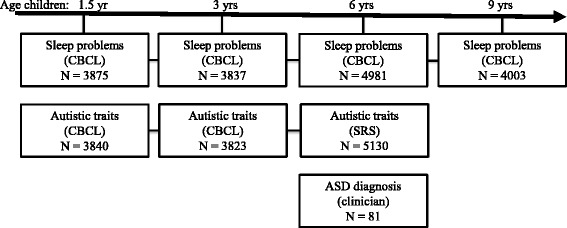
Background: Sleep difficulties are prevalent in children with autism spectrum disorder (ASD). The temporal nature of the association between sleep problems and ASD is unclear because longitudinal studies are lacking. Our aim is to clarify whether sleep problems precede and worsen autistic traits and ASD or occur as a consequence of the disorder. Methods: Repeated sleep measures were available at 1.5, 3, 6, and 9 years of age in 5151 children participating in the Generation R Study, a large prospective birth cohort in the Netherlands. Autistic traits were determined with the Pervasive Developmental Problems score (PDP) of the Child Behavior Checklist (CBCL) at 1.5 and 3 years and the Social Responsiveness Scale (SRS) at 6 years. This cohort included 81 children diagnosed with ASD. Results: Sleep problems in early childhood were prospectively associated with a higher SRS score, but not when correcting for baseline PDP score. By contrast, a higher SRS score and an ASD diagnosis were associated with more sleep problems at later ages, even when adjusting for baseline sleep problems. Likewise, a trajectory of increasing sleep problems was associated with ASD. Conclusions: Sleep problems and ASD are not bidirectionally associated. Sleep problems do not precede and worsen autistic behavior but rather co-occur with autistic traits in early childhood. Over time, children with ASD have an increase in sleep problems, whereas typically developing children have a decrease in sleep problems. Our findings suggest that sleep problems are part of the construct ASD.
Overview
The claims and statistics of this paper haven’t been checked yet.
Free: it reads the open-access text and checks the first 5 claims that cite a source we can check. Create a free account to check every claim.
Integrity signals
Registry
Cites
Statistics
Figures
Verification
Claims the paper makes
The claims and statistics of this paper haven’t been checked yet.
Free: it reads the open-access text and checks the first 5 claims that cite a source we can check. Create a free account to check every claim.
Claims other papers make about this one
Each is checked against this paper’s own text: does it say what the citing paper says it does?
The cited source says what the claim attributes to it.
In the citing paper
“Children with ASD frequently suffer from difficulties falling asleep or nightmares (85, 86).”
From Autism Spectrum Disorder in Children Is Not Associated With Abnormal Autonomic Nervous System Function: Hypothesis and Theory (2022) · cites this paper as [85]
Self-check
Percentages, sums and reported differences re-computed from the paper’s own numbers.
The self-check needs the paper’s full text.
Citations
Cites
1 retracted
Adams, H. L., Matson, J. L., Cervantes, P. E., & Goldin, R. L. (2014) · Research in Autism · doi:10.1016/j.rasd.2013.11.008 · Cited by 102 · cited 1×
“Thus, it is difficult to properly asses the course of sleep problems in children with ASD [28, 30, 31].”
BackgroundRetractedSimonoff, E., Pickles, A., Charman, T., Chandler, S., Loucas, T., & Baird, G. (2008) · Journal of the American Academy of Child & Adolescent Psychiatry · doi:10.1097/chi.0b013e318179964f · Cited by 3,399
An Introduction to Latent Class Growth Analysis and Growth Mixture Modeling
Jung, T., & Wickrama, K. A. S. (2008) · Social and Personality Psychology Compass · doi:10.1111/j.1751-9004.2007.00054.x · Cited by 3,181 · cited 1×
“Trajectories of sleep disturbance up to 6 years of age were defined using Latent Class Trajectory Models [46], as previously applied to this data in Generation R [47].”
MethodExecutive functions and developmental psychopathology.
Pennington, B. F., & Ozonoff, S. (1996) · Journal of Child Psychology and Psychiatry · doi:10.1111/j.1469-7610.1996.tb01380.x · Cited by 3,150
Social Jetlag: Misalignment of Biological and Social Time
Wittmann, M., Dinich, J., Merrow, M., & Roenneberg, T. (2006) · Chronobiology International · doi:10.1080/07420520500545979 · Cited by 2,625
Neurocognitive consequences of sleep deprivation
Goel, N., Rao, H., Durmer, J., & Dinges, D. (2009) · Seminars in Neurology · doi:10.1055/s-0029-1237117 · Cited by 2,154
Baird, G., Simonoff, E., Pickles, A., Chandler, S., Loucas, T., Meldrum, D., & Charman, T. (2006) · The Lancet · doi:10.1016/s0140-6736(06)69041-7 · Cited by 2,104
Structural Variation of Chromosomes in Autism Spectrum Disorder
Marshall, C. R., Noor, A., Vincent, J. B., Lionel, A. C., Feuk, L., Skaug, J., Shago, M., Moessner, R., Pinto, D., Ren, Y., et al. (2008) · The American Journal of Human Genetics · doi:10.1016/j.ajhg.2007.12.009 · Cited by 1,815
Constantino, J. N., Davis, S. A., Todd, R. D., Schindler, M. K., Gross, M. M., Brophy, S. L., Metzger, L. M., Shoushtari, C. S., Splinter, R., & Reich, W. (2003) · Journal of Autism and Developmental Disorders · doi:10.1023/a:1025014929212 · Cited by 1,611 · cited 1×
“The SRS provides a valid quantitative measure of subclinical and clinical autistic traits [41].”
BackgroundNeurocognitive Consequences of Sleep Deprivation
Durmer, J. S., & Dinges, D. F. (2005) · Seminars in Neurology · doi:10.1055/s-2005-867080 · Cited by 1,473
Research works printed but not linked: 2
- Verhulst FC, Van der Ende J. Handleiding ASEBA Vragenlijsten voor leeftijden 6 tot met 18 jaar. ASEBA Nederland: Rotterdam; 2013.
- Corbett B, Medoza SP, Levine S. Cortisol dysregulation in children with autism. Int J Neuropsychopharmacol. 2004;7:S298-S9.
Cited by
Carmassi, C., Palagini, L., Caruso, D., Masci, I., Nobili, L., Vita, A., & Dell’Osso, L. (2019) · Frontiers in Psychiatry · doi:10.3389/fpsyt.2019.00366 · Cited by 220
Gastrointestinal Symptoms in Autism Spectrum Disorder: A Systematic Review
Leader, G., Abberton, C., Cunningham, S., Gilmartin, K., Grudzien, M., Higgins, E., Joshi, L., Whelan, S., & Mannion, A. (2022) · Nutrients · doi:10.3390/nu14071471 · Cited by 156
“However, the relationship between ASD and sleep problems is unclear as there is a lack of longitudinal studies on this topic [75].”
BackgroundGao, X., Meng, L.-X., Ma, K.-L., Liang, J., Wang, H., Gao, Q., & Wang, T. (2019) · European Psychiatry · doi:10.1016/j.eurpsy.2019.05.004 · Cited by 94
Shank3 modulates sleep and expression of circadian transcription factors
Ingiosi, A. M., Schoch, H., Wintler, T., Singletary, K. G., Righelli, D., Roser, L. G., Medina, E., Risso, D., Frank, M. G., & Peixoto, L. (2019) · eLife · doi:10.7554/elife.42819 · Cited by 95
Otterman, D. L., Koopman‐Verhoeff, M. E., White, T. J. H., Tiemeier, H. W., Bolhuis, K., & Jansen, P. W. (2019) · Child and Adolescent Psychiatry and Mental Health · doi:10.1186/s13034-019-0299-7 · Cited by 91
Self-citationSleep, Sensory Integration/Processing, and Autism: A Scoping Review
Lane, S. J., Leão, M. A., & Spielmann, V. (2022) · Frontiers in Psychology · doi:10.3389/fpsyg.2022.877527 · Cited by 83
Sleep in Children with Autism Spectrum Disorder: A Narrative Review and Systematic Update
Schwichtenberg, A. J., Janis, A., Lindsay, A., Desai, H., Sahu, A., Kellerman, A., Chong, P. L. H., Abel, E. A., & Yatcilla, J. K. (2022) · Current Sleep Medicine Reports · doi:10.1007/s40675-022-00234-5 · Cited by 65
Deliens, G., & Peigneux, P. (2019) · Developmental Medicine & Child Neurology · doi:10.1111/dmcn.14235 · Cited by 68
“SLEEP PROBLEMS IN AUTISM Sleep problems are common in typically developing children – roughly 50%,(4) as assessed by the Children’s Sleep Habits Questionnaire(5) – and, in most cases, are transient.(6) They can be more frequent (up to 81.”
BackgroundInsomnia disorder and its reciprocal relation with psychopathology
Lancel, M., Boersma, G. J., & Kamphuis, J. (2021) · Current Opinion in Psychology · doi:10.1016/j.copsyc.2021.02.001 · Cited by 64
A Review of Sleep Disturbances among Infants and Children with Neurodevelopmental Disorders
Kamara, D., & Beauchaine, T. P. (2019) · Review Journal of Autism and Developmental Disorders · doi:10.1007/s40489-019-00193-8 · Cited by 64
Prenatal Progestin Exposure Is Associated With Autism Spectrum Disorders
Li, L., Li, M., Lu, J., Ge, X., Xie, W., Wang, Z., Li, X., Li, C., Wang, X., Yan, H., et al. (2018) · Frontiers in Psychiatry · doi:10.3389/fpsyt.2018.00611 · Cited by 58
Koopman‐Verhoeff, M. E., Serdarević, F., Kocevska, D., Bodrij, F. F., Mileva‐Seitz, V. R., Reiss, I. K. M., Hillegers, M. H. J., Tiemeier, H. W., Cecil, C. A. M., Verhulst, F. C., et al. (2019) · Journal of Child Psychology and Psychiatry · doi:10.1111/jcpp.13060 · Cited by 59
“Preschool family irregularity and the development of sleep problems in childhood: a longitudinal study Maria Elisabeth Koopman-Verhoeff,1,2 Fadila Serdarevic,1,2 Desana Kocevska,1,2,3 F. Fenne Bodrij,4 Viara R. Mileva-Seitz,1 Irwin Reiss,5 Manon H.J. Hillegers,1 Henning Tiemeier,1,6 Charlotte A.M. Cecil,1,7 Frank C. V…”
BackgroundMethodResultInfluentialSelf-citationUpdated consensus guidelines on the management of Phelan–McDermid syndrome
Srivastava, S., Şahin, M., Buxbaum, J. D., Berry‐Kravis, E., Soorya, L. V., Thurm, A. E., Bernstein, J. A., Asante‐Otoo, A., Bennett, W. E., Betancur, C., et al. (2023) · American Journal of Medical Genetics Part A · doi:10.1002/ajmg.a.63312 · Cited by 55
“The diagnosis of catatonia may be overlooked due to the overlap of some catatonia symptoms with common features of ASD and ID, such as motor stereotypies and negativism.”
BackgroundResultInfluentialSleep as a translationally-relevant endpoint in studies of autism spectrum disorder (ASD)
Missig, G., McDougle, C. J., & Carlezon, W. A. (2019) · Neuropsychopharmacology · doi:10.1038/s41386-019-0409-5 · Cited by 53
Han, G. T., Trevisan, D. A., Abel, E. A., Cummings, E. M., Carlos, C., Bagdasarov, A., Kala, S., Parker, T., Canapari, C. A., & McPartland, J. C. (2022) · Autism Research · doi:10.1002/aur.2758 · Cited by 51
“These sleep problems arise in early development (Humphreys et al., 2014; Verhoeff et al., 2018), are present throughout the life course (Baker & Richdale, 2015; Ballester et al., 2019), and are known to both exacerbate and be influenced by core ASD symptomatology, cooccurring behavioral problems,…”
BackgroundSleep and Mental Health Problems in Children and Adolescents
Morales‐Muñoz, I., & Gregory, A. M. (2023) · Sleep Medicine Clinics · doi:10.1016/j.jsmc.2023.01.006 · Cited by 51
Doldur-Balli, F., Imamura, T., Veatch, O. J., Gong, N. N., Lim, D. C., Hart, M. P., Abel, T. G., Kayser, M. S., Brodkin, E. S., & Pack, A. I. (2022) · Sleep Medicine Reviews · doi:10.1016/j.smrv.2022.101595 · Cited by 50
Dysregulation of Circadian Rhythms in Autism Spectrum Disorders
Pinato, L., Spilla, C. S. G., Markus, R. P., & Cruz‐Machado, S. D. S. (2019) · Current Pharmaceutical Design · doi:10.2174/1381612825666191102170450 · Cited by 50
Autistic traits are associated with faster pace of aging: Evidence from the Dunedin study at age 45
Mason, D., Ronald, A., Ambler, A. P., Caspi, A., Houts, R., Poulton, R., Ramrakha, S., Wertz, J., Moffitt, T. E., & Happe, F. G. E. (2021) · Autism Research · doi:10.1002/aur.2534 · Cited by 45
“In clinical samples of diagnosed autistic people these include sleep problems in childhood (Verhoeff et al., 2018) and adulthood (Ballester et al., 2019); and poor mental health, particularly increased rates of anxiety and depression (Croen et al., 2015; Howlin & Magiati, 2017).”
BackgroundLord, J. S., Gay, S. M., Harper, K. M., Nikolova, V. D., Smith, K. M., Moy, S. S., & Diering, G. H. (2022) · Molecular Autism · doi:10.1186/s13229-022-00514-5 · Cited by 46
“However, it is unclear whether sleep disruption during development plays a causal role in altered brain maturation, directly contributing to the behavioral symptoms of ASD [6].”
BackgroundSTXBP1-associated neurodevelopmental disorder: a comparative study of behavioural characteristics
Study, T. D., O’Brien, S., Ng‐Cordell, E., Astle, D. E., Scerif, G., & Baker, K. (2019) · Journal of Neurodevelopmental Disorders · doi:10.1186/s11689-019-9278-9 · Cited by 43
Zaidman‐Zait, A., Zwaigenbaum, L., Duku, E., Bennett, T. A., Szatmári, P., Mirenda, P., Smith, I. M., Vaillancourt, T., Volden, J., Waddell, C., et al. (2020) · Research in Developmental Disabilities · doi:10.1016/j.ridd.2019.103548 · Cited by 41
Sleep and psychiatric disorders: Bidirectional interactions and shared neurobiological mechanisms
Hyndych, A., Koval, K., Dzeruzhynska, N., & Mader, E. C. (2025) · PLOS mental health. · doi:10.1371/journal.pmen.0000531 · Cited by 40
Uren, J., Richdale, A. L., Cotton, S., & Whitehouse, A. (2019) · European Child & Adolescent Psychiatry · doi:10.1007/s00787-019-01275-y · Cited by 39
Sleep problems and mental health difficulties in older adults who endorse high autistic traits
Stewart, G. R., Corbett, A., Ballard, C. G., Creese, B., Aarsland, D., Hampshire, A., Charlton, R. A., & Happe, F. G. E. (2020) · Research in Autism · doi:10.1016/j.rasd.2020.101633 · Cited by 37
“Furthermore, a longitudinal study conducted by Verhoeff et al. (2018) examined whether sleep problems, ASD, and autistic traits (measured by the Childhood Behavior Checklist) are associated across childhood.”
Romeo, D. M., Brogna, C., Belli, A., Lucibello, S., Cutrona, C., Apicella, M., Mercuri, E. M., & Mariotti, P. (2021) · Medicina · doi:10.3390/medicina57020095 · Cited by 38
“So far, recent studies in the literature have reported that the etiology of sleep problems in ASD is multi-factorial; although they are part of the construct of ASD, they do not predict the severity of autistic traits over time, and probably represent a condition not correlated with autism symptoms, but related to ass…”
BackgroundInfant sleep predicts trajectories of social attention and later autism traits
Ali, J. B., Gossé, L. K., Mason, L., Pasco, G., Charman, T., Johnson, M. H., Jones, E. J. H., & The STAARS Team (2023) · Journal of Child Psychology and Psychiatry · doi:10.1111/jcpp.13791 · Cited by 36
“Sleep disruptions may persist into childhood and adolescence in the form of shorter sleep durations (Humphreys et al., 2014) or parent-reported presence of sleep problems (Hvolby, 2015; Verhoeff et al., 2018).”
Tsai, T.-H., Chen, Y., & Gau, S. S. (2019) · Psychological Medicine · doi:10.1017/s0033291719003271 · Cited by 32
“Moreover, a recent study showed that the diagnosis of ASD predicted more severe and chronic sleep problems in children’s later life, but not reversely (Verhoeff et al., 2018).”
BackgroundLevin, J., Khokhlovich, E., & Vyshedskiy, A. (2022) · Research in Autism · doi:10.1016/j.rasd.2022.102024 · Cited by 34
Sleep disturbances in autism spectrum disorder: Animal models, neural mechanisms, and therapeutics
Maurer, J. J., Choi, A., An, I., Sathi, N., & Chung, S. (2023) · Neurobiology of Sleep and Circadian Rhythms · doi:10.1016/j.nbscr.2023.100095 · Cited by 35
Muratori, F., Turi, M., Prosperi, M., Narzisi, A., Valeri, G., Guerrera, S., Santocchi, E., Apicella, F., Lattarulo, C., Calderoni, S., et al. (2019) · Frontiers in Psychiatry · doi:10.3389/fpsyt.2019.00107 · Cited by 29
“Therefore, in accordance with previous studies (108, 109), we could speculate that the PDP scale could be used as a measure not only of the possible presence of an ASD disorder but also of likely different functional impairments.”
ResultDuring day and night: Childhood psychotic experiences and objective and subjective sleep problems
Koopman‐Verhoeff, M. E., Bolhuis, K., Cecil, C. A. M., Kocevska, D., Hudziak, J. J., Hillegers, M. H. J., Mileva‐Seitz, V. R., Reiss, I. K. M., Duijts, L., Verhulst, F. C., et al. (2018) · Schizophrenia Research · doi:10.1016/j.schres.2018.12.002 · Cited by 32
Self-citationHolingue, C., Volk, H. E., Crocetti, D., Gottlieb, B., Spira, A. P., & Mostofsky, S. H. (2021) · Sleep Health · doi:10.1016/j.sleh.2020.12.006 · Cited by 30
Koopman‐Verhoeff, M. E., Mulder, R. H., Saletin, J., Reiss, I. K. M., van der Horst, G. T. J., Felix, J. F., Carskadon, M. A., Tiemeier, H. W., & Cecil, C. A. M. (2020) · Journal of Child Psychology and Psychiatry · doi:10.1111/jcpp.13252 · Cited by 29
“While poor sleep can exacerbate mental health difficulties (Lovato & Gradisar, 2014; Owens, 2005), mental health problems can also precede and worsen sleep (Verhoeff et al., 2018).”
BackgroundSelf-citationGroup-based sleep trajectories in children and adolescents: A systematic review
Wang, Y., Li, B., Zhang, C., Buxton, O. M., Redline, S. S., & Li, X. (2024) · Sleep Medicine Reviews · doi:10.1016/j.smrv.2024.101916 · Cited by 28
Sleep Problems in Children with Autism Spectrum Disorder
Posar, A., & Visconti, P. (2020) · Pediatric Annals · doi:10.3928/19382359-20200511-01 · Cited by 29
Barbier, A., Chen, J.-H., & Huizinga, J. D. (2022) · Frontiers in Psychiatry · doi:10.3389/fpsyt.2022.830234 · Cited by 25
Rana, M., Kothare, S. V., & DeBassio, W. A. (2021) · Europe PMC (PubMed Central) · Cited by 39
Tesfaye, R., Wright, N., Zaidman‐Zait, A., Bedford, R., Zwaigenbaum, L., Kerns, C. M., Duku, E., Mirenda, P., Bennett, T. A., Georgiades, S., et al. (2021) · SLEEP · doi:10.1093/sleep/zsab122 · Cited by 27
Sleep problems in children with autism spectrum disorder and typical development
Inthikoot, N., & Chonchaiya, W. (2020) · Pediatrics International · doi:10.1111/ped.14496 · Cited by 27
SREBP modulates the NADP+/NADPH cycle to control night sleep in Drosophila
Mariano, V., Kanellopoulos, A. K., Aiello, G., Lo, A. C., Legius, E., Achsel, T., & Bagni, C. (2023) · Nature Communications · doi:10.1038/s41467-022-35577-8 · Cited by 24
Pini, N., Fifer, W. P., Oh, J., Nebeker, C., Croff, J. M., & Smith, B. A. (2024) · Developmental Cognitive Neuroscience · doi:10.1016/j.dcn.2024.101446 · Cited by 22
“For example, brain circuits underpinning both sleep and attention are closely linked (Humphreys et al., 2014; Hvolby, 2015; Verhoeff et al., 2018).”
Douglas, P. (2019) · Frontiers in Integrative Neuroscience · doi:10.3389/fnint.2019.00066 · Cited by 23
“But upregulated infant behavior, or crying and fussing, also predisposes to negative affect and mood problems in parents (Vik et al., 2009; Cook et al., 2017), which disrupt the parent’s capacity to engage and lengthen reciprocity chains.”
BackgroundKildahl, A. N., Helverschou, S. B., Bakken, T. L., & Oddli, H. W. (2020) · Journal of Mental Health Research in Intellectual Disabilities · doi:10.1080/19315864.2020.1760972 · Cited by 23
“Self-injury, irritability/angry outbursts, and sleep problems are common issues in individuals with ASD (Oliver et al., 2017; Samson et al., 2014; Verhoeff et al., 2018), and do not specifically relate to trauma and PTSD.”
BackgroundWang, Y., Lin, J., Zeng, Y., Liu, Y., Li, Y., Xia, K., Zhao, J., Shen, Y., & Ou, J. (2021) · Frontiers in Psychiatry · doi:10.3389/fpsyt.2020.559694 · Cited by 22
Albertini, M. L., Spoto, G., Ceraolo, G., Fichera, M. F., Consoli, C., Nicotera, A. G., & Rosa, G. D. (2025) · Brain Sciences · doi:10.3390/brainsci15090983 · Cited by 25
“Polysomnography remains the gold standard for evaluating sleep in children with ASD, particularly for detecting conditions such as sleep apnea, seizures, parasomnias, and periodic limb movements [24,114–116].”
Clinical and behavioral attributes leading to sleep disorders in children on the autism spectrum
Masi, A., Moni, M. A., Azim, S. I., Choi, B., Heussler, H., Lin, P., Diaz, A. M., & Eapen, V. (2022) · Autism Research · doi:10.1002/aur.2745 · Cited by 22
“In recent years, emerging evidence shows bidirectional relationship between sleep and autism-related behavioral features in that behavior problems could exacerbate sleep problems and vice versa (Adams et al., 2014; Verhoeff et al., 2018).”
BackgroundSleep and Sensory Processing in Infants and Toddlers: A Cross-Sectional and Longitudinal Study
Appleyard, K. C., Schaughency, E. A., Taylor, B. J., Sayers, R., Haszard, J. J., Lawrence, J., Taylor, R. W., & Galland, B. C. (2020) · American Journal of Occupational Therapy · doi:10.5014/ajot.2020.038182 · Cited by 23
“…exists addressing whether the link with sleep is fundamental to, or a manifestation of, neurodevelopmental disorder, although a study has suggested that sleep problems in ASD are not bidirectionally associated but rather co-occur with autistic traits in early childhood (Verhoeff et al., 2018).”
Evidence Base Update on Assessing Sleep in Youth
Meter, A. V., & Anderson, E. A. (2020) · Journal of Clinical Child & Adolescent Psychology · doi:10.1080/15374416.2020.1802735 · Cited by 22
Lee, J., & Barger, B. D. (2022) · Journal of Autism and Developmental Disorders · doi:10.1007/s10803-022-05870-y · Cited by 23
“Growing evidence also reports sleep problems as an important co-morbid condition in children with ASD (Verhoeff et al., 2018).”
Taylor, M. J., Larsson, H., Lundström, S., Lichtenstein, P., & Butwicka, A. (2021) · Journal of Child Psychology and Psychiatry · doi:10.1111/jcpp.13473 · Cited by 19
Sommers, L., Papadopoulos, N. V., Fuller‐Tyszkiewicz, M., Sciberras, E., McGillivray, J., Howlin, P., & Rinehart, N. (2024) · Journal of Autism and Developmental Disorders · doi:10.1007/s10803-024-06298-2 · Cited by 21
“Autistic children typically experience multiple, and con - current sleep problems (Liu et al., 2006) with severity worsening over time, compared to non-autistic peers (Hodge et al., 2014 ; Verhoeff et al., 2018).”
Critical periods and Autism Spectrum Disorders, a role for sleep
Medina, E., Peterson, S., Ford, K., Singletary, K. G., & Peixoto, L. (2022) · Neurobiology of Sleep and Circadian Rhythms · doi:10.1016/j.nbscr.2022.100088 · Cited by 21
Autistic Traits Are Associated With Decreased Activity of Fast Sleep Spindles During Adolescence
Merikanto, I., Kuula, L., Makkonen, T., Salmela, L., Räikkönen, K., & Pesonen, A. (2019) · Journal of Clinical Sleep Medicine · doi:10.5664/jcsm.7662 · Cited by 16
“6,7 The most common sleep problems in autism include difficulties in falling asleep or maintaining sleep and parasomnias during non-rapid eye movement sleep.”
InfluentialFeng, S., Huang, H., Wang, N., Wei, Y., Liu, Y., & Qin, D. (2021) · Frontiers in Behavioral Neuroscience · doi:10.3389/fnbeh.2021.673372 · Cited by 19
O’Hora, K., Lin, A., Kushan, L., & Bearden, C. E. (2022) · Journal of Neurodevelopmental Disorders · doi:10.1186/s11689-022-09450-0 · Cited by 15
“Also consistent with previous findings in idiopathic ASD [46], we found total SRS score was significantly associated with sleep cross-sectionally and longitudinally, with poorer sleep being associated with elevated SRS scores over time.”
ResultThe Association between Autistic Traits and Sleep Habits/Problems in Toddlers
Horiuchi, F., Kawabe, K., Oka, Y., Nakachi, K., Hosokawa, R., & Ueno, S. (2020) · Developmental Neuropsychology · doi:10.1080/87565641.2020.1865357 · Cited by 18
Lamônica, D. A. C., Giacheti, C. M., Haduo, M. D. H., dos Santos, M. J. D., da Silva, N. C., & Pinato, L. (2021) · Research in Developmental Disabilities · doi:10.1016/j.ridd.2021.104024 · Cited by 18
Sleep Problems and Autism Impairments in a Large Community Sample of Children and Adolescents
Saletin, J., Koopman‐Verhoeff, M. E., Han, G. T., Barker, D., Carskadon, M. A., Anders, T. F., & Sheinkopf, S. J. (2022) · Child Psychiatry & Human Development · doi:10.1007/s10578-022-01470-0 · Cited by 14
“Whereas such difficulties are transient in the general population, sleep problems in children with ASD persist over time [7].”
Burman, D., Ramanujam, K., Manzar, M. D., Chattu, V. K., Spence, D. W., Zaki, N. F. W., Jahrami, H., & Pandi-Perumal, S. R. (2023) · Sleep and Vigilance · doi:10.1007/s41782-022-00222-3 · Cited by 17
Lunsford‐Avery, J. R., Falls, A., Cary, S., & Duke, N. N. (2024) · Current Sleep Medicine Reports · doi:10.1007/s40675-024-00300-0 · Cited by 13
“Evidence from a large, prospective birth cohort in the Netherlands suggests sleep problems may be a part of the ASD construct [64].”
Aggression in Toddlers with Autism Spectrum Disorder as Predicted by Sleep Problems
Callahan, M., Matson, J. L., Tevis, C. M., & Brown, M. (2021) · Journal of Developmental and Physical Disabilities · doi:10.1007/s10882-021-09818-5 · Cited by 14
“Previous research has investigated the bi-directional relationship between ASD and sleep problems (Adams et al., 2014a; Verhoeff et al., 2018) with contradicting results and thus may warrant efforts into the directionality of sleep and aggression in this population.”
ResultMoysés‐Oliveira, M., Paschalidis, M., Souza-Cunha, L. A., Esteves-Guerreiro, P. A., Adami, L. N. G., Kloster, A. K., Mosini, A. C., Moreira, G. A., Doria, S., Tempaku, P. F., et al. (2023) · Journal of Neuroscience Research · doi:10.1002/jnr.25180 · Cited by 13
Milman, N., Tinsley, C. E., Raju, R. M., & Lim, M. M. (2022) · Neurobiology of Sleep and Circadian Rhythms · doi:10.1016/j.nbscr.2022.100085 · Cited by 14
Hoshino, K. (2023) · Diagnostics · doi:10.3390/diagnostics13111859 · Cited by 14
“Verhoeff [20] analysed the association between sleep disorders in infants and ASD in a population-based cohort study.”
BackgroundElectrophysiological Biomarkers in Genetic Epilepsies
Armstrong, C., & Marsh, E. D. (2021) · Neurotherapeutics · doi:10.1007/s13311-021-01132-4 · Cited by 14
Sleep mediates the relationship between having an autistic child and poor family functioning
Phadraig, A. N. G., & Smyth, S. (2022) · Sleep Medicine · doi:10.1016/j.sleep.2022.10.014 · Cited by 12
Jia, Q., Li, H., Wang, M., Wei, C., Xu, L., Ye, L., Wang, C., Ke, S., Li, L., & Yao, P. (2023) · Journal of Psychiatry and Neuroscience · doi:10.1503/jpn.230046 · Cited by 11
Miike, T., Oniki, K., Toyoura, M., Tonooka, S., Tajima, S., Saruwatari, J., Kinoshita, J., & Konishi, Y. (2024) · Clocks & Sleep · doi:10.3390/clockssleep6010012 · Cited by 11
Complexity of Body Movements during Sleep in Children with Autism Spectrum Disorder
Furutani, N., Takahashi, T., Naito, N., Maruishi, T., Yoshimura, Y., Hasegawa, C., Hirosawa, T., & Kikuchi, M. (2021) · Entropy · doi:10.3390/e23040418 · Cited by 11
Sadikova, E., Dovgan, K., & Mazurek, M. O. (2023) · Journal of Autism and Developmental Disorders · doi:10.1007/s10803-021-05401-1 · Cited by 10
“Children with ASD are prone to increased sleep difficulties over time (Verhoeff et al., 2018), and our findings indicate that more severe ASD symptoms (specifically communication, repetitive behaviors, peer interaction, and atypical behaviors) are closely linked to future increases in sleep problems, even when account…”
BackgroundResultSleep quality and temperament in association with autism spectrum disorder among infants in Japan
Kikuchi, K., Michikawa, T., Morokuma, S., Hamada, N., Suetsugu, Y., Ikeda, S., Nakahara, K., Kato, K., Ochiai, M., Shibata, E., et al. (2023) · Communications Medicine · doi:10.1038/s43856-023-00314-9 · Cited by 10
“In the study following children from 1.5 to 9 years old, children with increasing sleep problem trajectory and children with stable and moderate sleep problems had higher levels of autistic traits 23 .”
InfluentialBian, W.-J., Gonzalez, O. C., & de Lecea, L. (2023) · SLEEP · doi:10.1093/sleep/zsad131 · Cited by 9
Nijhof, D., Melville, C. A., Rydzewska, E., Pavlopoulou, G., Meehan, L., & Gardani, M. (2024) · Sleep Medicine · doi:10.1016/j.sleep.2024.08.011 · Cited by 8
Sindicato de trabajadoras domésticas en México
Corelly, M. G. (1992) · LA Referencia (Red Federada de Repositorios Institucionales de Publicaciones Científicas) · Cited by 17
Psychotropic Medications for Sleep Disorders in Autism Spectrum Disorders
Rossignol, D. A., & Frye, R. E. (2022) · Autism and child psychopathology series · doi:10.1007/978-3-030-88538-0_53 · Cited by 12
Berenguer, C., Rosa, E., STASIO, S. D., & Olsson, N. C. (2024) · Sleep Medicine · doi:10.1016/j.sleep.2024.03.028 · Cited by 7
Jiao, J., Tan, L., Zhang, Y., Li, T., & Tang, X. (2022) · Frontiers in Psychiatry · doi:10.3389/fpsyt.2022.977341 · Cited by 7
Jones, C. E., Olson, R. J., Mader, M., Wickham, P. T., Gutowsky, K., Wong, C., Chu, S. S., Milman, N., Cao, H., & Lim, M. M. (2022) · Neurobiology of Sleep and Circadian Rhythms · doi:10.1016/j.nbscr.2022.100087 · Cited by 7
Impact of adverse childhood experiences and family resilience on sleep duration in autistic children
Sadikova, E., Soland, J., Menezes, M., & Mazurek, M. O. (2024) · Autism · doi:10.1177/13623613241235880 · Cited by 7
“While neuro-typical children’s sleep difficulties are more likely to improve with age, autistic children are more likely to have worsening sleep problems over time (Verhoeff et al., 2018).”
Health status of people with autism spectrum disorder
Koceski, A., & Trajkovski, V. (2021) · Advances in Autism · doi:10.1108/aia-01-2021-0005 · Cited by 7
Bjørklund, G., Oleshchuk, O., Ivankiv, Y. I., Венгер, О. П., Liuta, O. O., Мочернюк, Х. І., Lukanyuk, M. I., & Shanaida, M. (2025) · Molecular Neurobiology · doi:10.1007/s12035-025-04809-5 · Cited by 7
“Sleep problems often emerge alongside the development of ASD symptoms in early childhood [9].”
Li, T., Xie, Y., Tao, S., Zou, L., Yang, Y., Mou, X., Wang, M., Zhou, P., Tao, F., & Wu, X. (2022) · Journal of Affective Disorders · doi:10.1016/j.jad.2022.12.048 · Cited by 8
Hernández‐Arteaga, E., Candia, J. A. C., Pluma-Romo, R., Solís-Meza, M. I., Villafuerte-Vega, M. N., & Guevara, F. A. (2025) · Neuroglia · doi:10.3390/neuroglia6020018 · Cited by 6
“These disturbances include irregular sleep–wake patterns, decreased sleep efficiency, reduced total sleep duration, delayed sleep onset, increased nighttime awakenings, bedtime resistance, and excessive daytime sleepiness [19–21].”
Sadikova, E., & Mazurek, M. O. (2024) · Journal of Autism and Developmental Disorders · doi:10.1007/s10803-024-06321-6 · Cited by 6
“The current findings were also consistent with previous research demonstrating that more severe ASD symptoms are associated with poorer sleep (Hollway et al., 2013; Sivertsen et al., 2012; Verhoeff et al., 2018).”
The Association and Mediators Between Sleep Problems in Autistic Children and Parenting Stress
Tang, M., Li, M., Huang, M., Liu, L., Zhu, L., & Chen, Y. (2025) · Psychology Research and Behavior Management · doi:10.2147/prbm.s495629 · Cited by 6
“8,9 Data from large-scale survey and clinical diagnoses show that the overall prevalence of sleep disturbances in autistic children is 13% (95% CI: 9–17%), still notably higher than in the general child population.”
Influentialthe TACERN Study Group, Cook, I. A., Wilson, A. C., Peters, J. M., Goyal, M., Bebin, E. M., Northrup, H., Krueger, D. A., Leuchter, A. F., & Şahin, M. (2019) · Journal of Autism and Developmental Disorders · doi:10.1007/s10803-019-04326-0 · Cited by 6
González, L., Rebagliato, M., Arregi, A., Carrasco, P., Guxens, M., Vegas, Ó., Júlvez, J., & Estarlich, M. (2023) · European Journal of Pediatrics · doi:10.1007/s00431-023-05145-3 · Cited by 5
“These items have been employed previously [23, 26–29] and present good convergent validity with other sleep questionnaires, such as the sleep disorders scale for children [27].”
MethodSleep and daytime behavior in individuals with Christianson Syndrome
Gruber, R., Scholes, S., Bertone, A., McKinney, R. A., Orlowski, J., & Wise, M. S. (2021) · Sleep Medicine · doi:10.1016/j.sleep.2021.11.007 · Cited by 4
Wang, H., Li, Y. M., Hu, S., Gao, H., & Shen, Q. (2026) · BMC Psychiatry · doi:10.1186/s12888-026-08191-x · Cited by 3
“For instance, the relationship between SD and the severity of ASD symptoms has been debated: while previous clinical literature suggested a bidirectional interactive mechanism [12], recent research has challenged this view [13].”
InfluentialSpaargaren, K. L., Begeer, S., Nieuwenhuis, S., Bradley, J. E., Riper, H. M., Greaves‐Lord, K., & van Straten, A. (2026) · SLEEP · doi:10.1093/sleep/zsag199 · Cited by 3
Hoşoğlu, E., Akça, Ö. F., Bilgiç, A., & Tuzcu, M. S. (2024) · International Journal of Developmental Disabilities · doi:10.1080/20473869.2024.2331839 · Cited by 4
“Verhoeff et al. (2018) conducted a longitudinal cohort study with 5,151 children to investigate the relationship between sleep problems, autistic traits, and ASD.”
Comparative Analysis of Sleep Behavior in ASD Children: A Taif City Perspective
Aljaid, M. S., Alharthi, M. S., Alrubie, S. S., Qattan, F. M., Almalki, A. S., Alzahrani, E. S., & Alnefaie, G. (2025) · Bangladesh Journal of Medical Science · doi:10.3329/bjms.v24i10.79181 · Cited by 3
Sleep in Infants with Down Syndrome or Familial Likelihood of Autism in the First Year of Life
Coco, E. R., MUNSON, J. A., John, T. S., Dager, S. R., Botteron, K. N., Elison, J. T., Garic, D., Hazlett, H. C., Lee, C.-M., Marrus, N. M., et al. (2025) · Journal of Autism and Developmental Disorders · doi:10.1007/s10803-025-06927-4 · Cited by 3
Children on the Spectrum…. Information Every Occupational Therapist Should Know!
Barnes, M., Bernau, M., Johnson, L. M., Melchert, J., Patek, M., Zebrowski, K., & Moser, C. S. (2019) · Journal of Occupational Therapy Schools & Early Intervention · doi:10.1080/19411243.2019.1677019 · Cited by 3
“ASD is linked to poor sleep hygiene, while children with ADHD had greater anxiety/depression and evening chronotype links to sleep concerns (Verhoeff et al., 2018).”
BackgroundSleep in children with autism spectrum disorders
Kaier, E., Tomaselli, L. E., & Connolly, H. (2022) · Elsevier eBooks · doi:10.1016/b978-0-12-822963-7.00306-6 · Cited by 3
Bellemare, S., López‐Arango, G., Deguire, F., Knoth, I. S., & Lippé, S. (2025) · Children · doi:10.3390/children12020153 · Cited by 2
“…measuring dyssomnia symptoms (doesn’t want to sleep alone; has trouble getting to sleep; resists going to bed at night; sleeps less than most kids during day and/or night; wakes up often at night), which has been utilized in previous research to evaluate sleep-related issues in children [49–51].”
Mohamed, Z., Ponsonby, A., Wakhlu, A., Thomson, S. M., Love, C. J., Symeonides, C., Ranganathan, S., O’Hely, M., Vuillermin, P., & Drummond, K. D. (2025) · Archives of Disease in Childhood · doi:10.1136/archdischild-2024-328393 · Cited by 2
“35 This study analysed sleep patterns after the age of 1.5 years, not addressing the critical first year when sleep may significantly impact neurodevelopment.”
InfluentialSleep and Behaviour in Early Autism: Examining Bidirectional Associations Near Diagnosis
Sadka, N., Richdale, A. L., Li, X., Date, P., & Barbaro, J. (2026) · Journal of Autism and Developmental Disorders · doi:10.1007/s10803-025-07170-7 · Cited by 2
Zhao, X.-D., Li, W., Yang, Y., Feng, X., Hong, S., & Shi, W. (2024) · Research in Autism · doi:10.1016/j.rasd.2024.102412 · Cited by 2
Metadata
- Authors
- Verhoeff, M. E., Blanken, L. M. E., Kocevska, D., Mileva-Seitz, V. R., Jaddoe, V. W. V., White, T., Verhulst, F., Luijk, M. P. C. M., & Tiemeier, H.
- Affiliations
- Erasmus MC (NL)
- Corresponding author
- Tiemeier, Henning
- ORCID
- Venue
- Molecular Autism
- Published
- 2018-01-30
- Volume
- 9
- Issue
- 1
- Pages
- 8-8
- ISSN
- 2040-2392 (ISSN-L)
- PMC
- PMC5791216
- OpenAlex
- W2788020653
- Cited by
- 126
- References
- 72
- Citations by year
- 2026: 10 · 2025: 7 · 2024: 15 · 2023: 15 · 2022: 31 · 2021: 17 · 2020: 11 · 2019: 17 · 2018: 2
- FWCI
- 7.00
- Type
- journal article
- Language
- en
- Open access
- gold
- doi.org
- Licence
- cc-by
- Locations
- Molecular Autism (publishedVersion, cc-by)
- PubMed Central (publishedVersion, cc-by)
- PubMed (publishedVersion)
- EUR Research Repository (Erasmus University Rotterdam) (acceptedVersion, other-oa)
- EUR Research Repository (Erasmus University Rotterdam) (submittedVersion, other-oa)
- RePub (Erasmus University Rotterdam) (submittedVersion, other-oa)
- DOAJ (DOAJ: Directory of Open Access Journals) (submittedVersion, cc-by-sa)
- Funders
- Nederlandse Organisatie voor Wetenschappelijk Onderzoek (016.VICI.170.200)
- Erasmus Medisch Centrum (Mrace)
- European Commission (2013-2548/001-001-EMA-2)
- Simons Foundation (SFARI - 307280)
- Topics
- Life Sciences › Neuroscience › Cognitive Neuroscience › Autism Spectrum Disorder Research
- Social Sciences › Psychology › Experimental and Cognitive Psychology › Sleep and related disorders
- Health Sciences › Medicine › Psychiatry and Mental health › Child Nutrition and Feeding Issues
- Keywords
- autism spectrum disorder, sleep disorders, bidirectional relationship, autistic traits, social responsiveness, early childhood, sleep trajectories, temporal association, Generation R Study
- MeSH terms
- Autism Spectrum Disorder, Child, Child, Preschool, Female, Humans, Infant, Male, Sleep Wake Disorders, Cohort Studies
About these checks
Registry, retraction, Cites and statistics results are computed, not judged, with one exception: a printed reference that no index lists is read once by a model before it counts as a citation error. Claims are extracted by a model and kept only when their quote appears verbatim in the text; each cited source is then checked, with a model’s help, for whether it says what the claim relies on. Those verdicts can be wrong — read the claim’s quote and the cited source before relying on one.
Statistics and arithmetic are recomputed, not judged.
Confidence bands are shown only for fields calibrated on our annotated test set. None is calibrated yet, so no band is shown.
What counts as a claim ›How we measure confidence ›How we check this ›
Are you an author, or do you see a problem with this page? Request a review
Data sources
Bibliographic data: Semantic Scholar, OpenAlex, Crossref.
Contains information from the Semantic Scholar Academic Graph Datasets, made available under the ODC Attribution License (ODC-BY 1.0).
Semantic Scholar’s data is described in: Kinney, R., et al. (2023). The Semantic Scholar Open Data Platform. arXiv:2301.10140.
