

Harmonised culture procedures minimise but do not eliminate mesenchymal stromal cell donor and tissue variability in a decentralised multicentre manufacturing approach
Open accessPublished version of a preprint
The DOI matches its Crossref record; 60 of the 62 references it cites were found in a registry or an index; 20 of the 41 sources its claims cite were checked for support.
Abstract
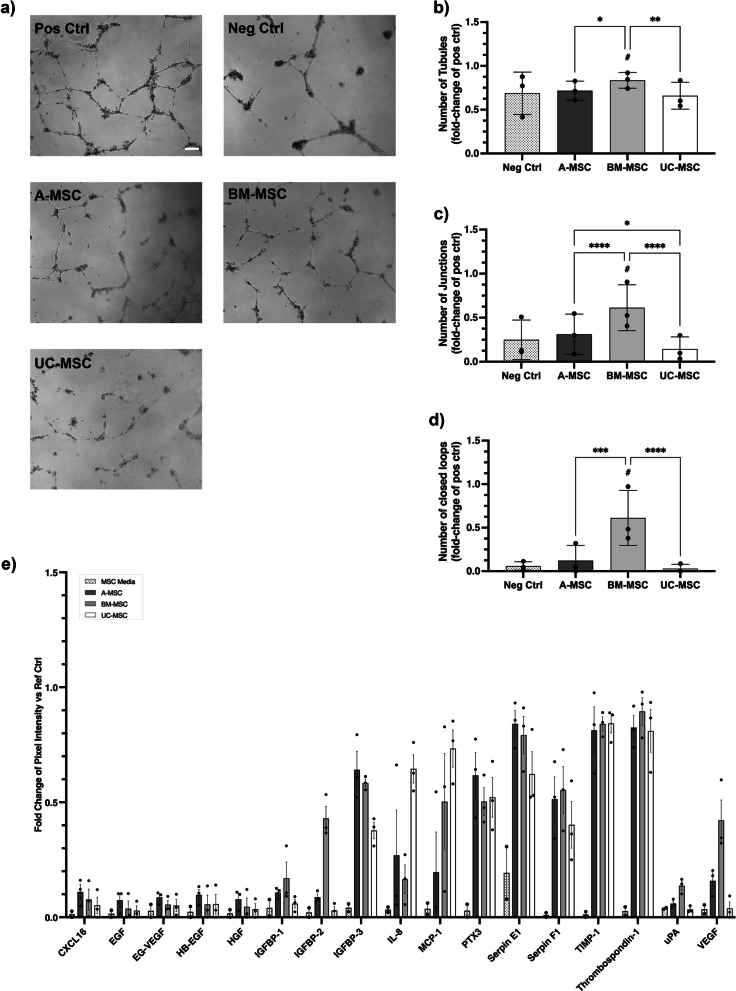
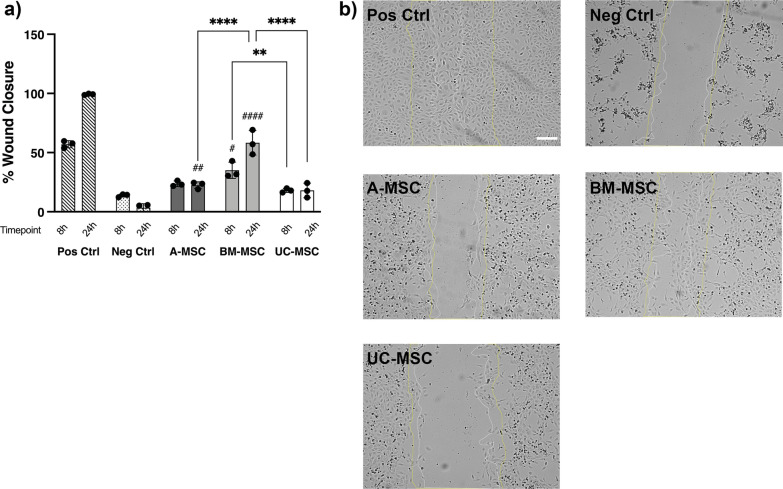
Background: Mesenchymal stromal cells (MSCs), commonly sourced from adipose tissue, bone marrow and umbilical cord, have been widely used in many medical conditions due to their therapeutic potential. Yet, the still limited understanding of the underlying mechanisms of action hampers clinical translation. Clinical potency can vary considerably depending on tissue source, donor attributes, but importantly, also culture conditions. Lack of standard procedures hinders inter-study comparability and delays the progression of the field. The aim of this study was A- to assess the impact on MSC characteristics when different laboratories, performed analysis on the same MSC material using harmonised culture conditions and B- to understand source-specific differences. Methods: Three independent institutions performed a head-to-head comparison of human-derived adipose (A-), bone marrow (BM-), and umbilical cord (UC-) MSCs using harmonised culture conditions. In each centre, cells from one specific tissue source were isolated and later distributed across the network to assess their biological properties, including cell expansion, immune phenotype, and tri-lineage differentiation (part A). To assess tissue-specific function, angiogenic and immunomodulatory properties and the in vivo biodistribution were compared in one expert lab (part B). Results: By implementing a harmonised manufacturing workflow, we obtained largely reproducible results across three independent laboratories in part A of our study. Unique growth patterns and differentiation potential were observed for each tissue source, with similar trends observed between centres. Immune phenotyping verified expression of typical MSC surface markers and absence of contaminating surface markers. Depending on the established protocols in the different laboratories, quantitative data varied slightly. Functional experiments in part B concluded that conditioned media from BM-MSCs significantly enhanced tubulogenesis and endothelial migration in vitro. In contrast, immunomodulatory studies reported superior immunosuppressive abilities for A-MSCs. Biodistribution studies in healthy mice showed lung entrapment after administration of all three types of MSCs, with a significantly faster clearance of BM-MSCs. Conclusion: These results show the heterogeneous behaviour and regenerative properties of MSCs as a reflection of intrinsic tissue-origin properties while providing evidence that the use of harmonised culture procedures can reduce but do not eliminate inter-lab and operator differences.
Overview
CoChat Summary
TL;DR
This multicentre study harmonised MSC culture across three independent laboratories and found that harmonised procedures improved reproducibility but did not eliminate site-to-site, donor-to-donor, or tissue-origin variability. Tissue source strongly influenced growth, differentiation, angiogenic, immunomodulatory, and in vivo biodistribution behaviour.
Key findings
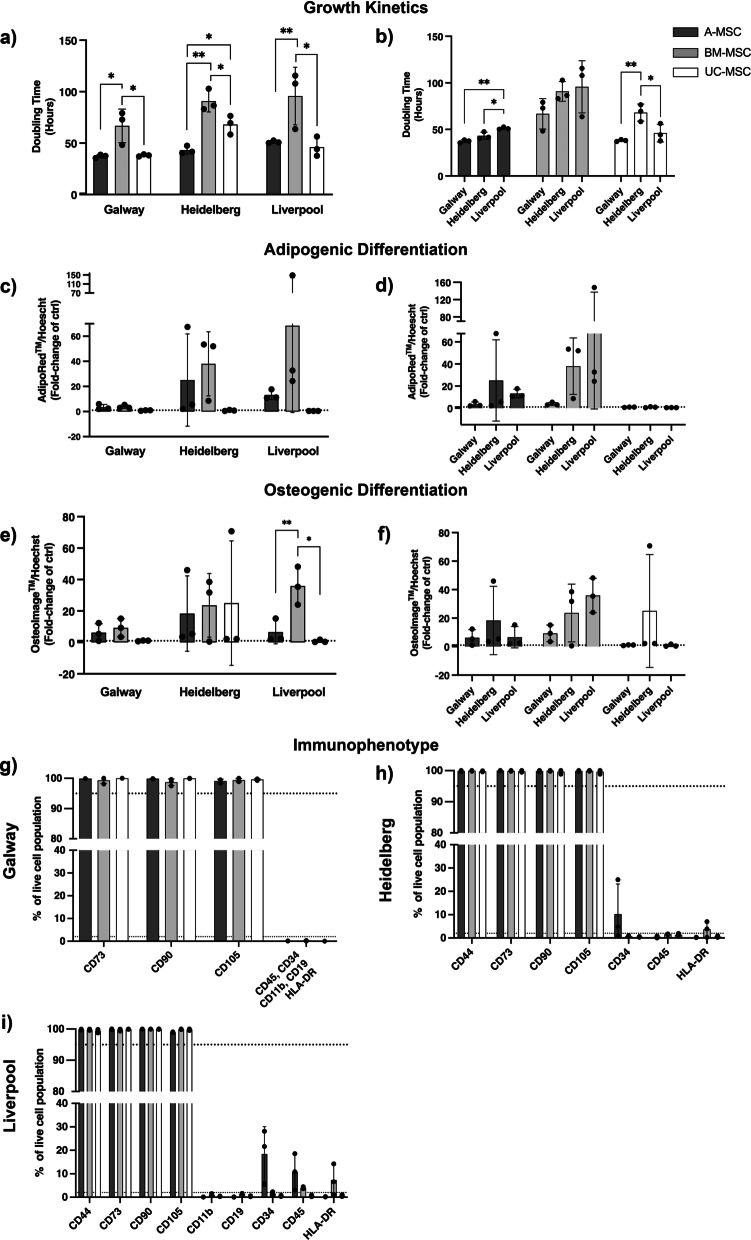
- Harmonised culture reduced but did not eliminate inter-lab differences: BM-MSCs consistently showed the longest population doubling times across sites (90.81 ± 10.57 h Heidelberg, 66.78 ± 16.32 h Galway, 95.72 ± 28.02 h Liverpool), compared with A-MSCs (43.17 ± 3.84 h, 37.25 ± 1.64 h, 51.10 ± 1.25 h) and UC-MSCs (68.07 ± 9.11 h, 38.06 ± 1.04 h, 46.06 ± 9.47 h).
- Differentiation was tissue-dependent and variable: A- and BM-MSCs differentiated into adipocytes and osteocytes, while UC-MSCs showed negligible differentiation, with only one osteogenic outlier in one site.
- Immunophenotype largely met MSC criteria, with >95% CD73, CD90, and CD105 across sites; however, A-MSCs showed increased negative markers such as CD34 (10.21 ± 12.96% Heidelberg, 18.40 ± 11.69% Liverpool) and CD45 (10.81 ± 7.77% Liverpool), and BM-MSCs showed HLA-DR in Heidelberg and Liverpool (3.70 ± 3.36% and 7.33 ± 6.51%).
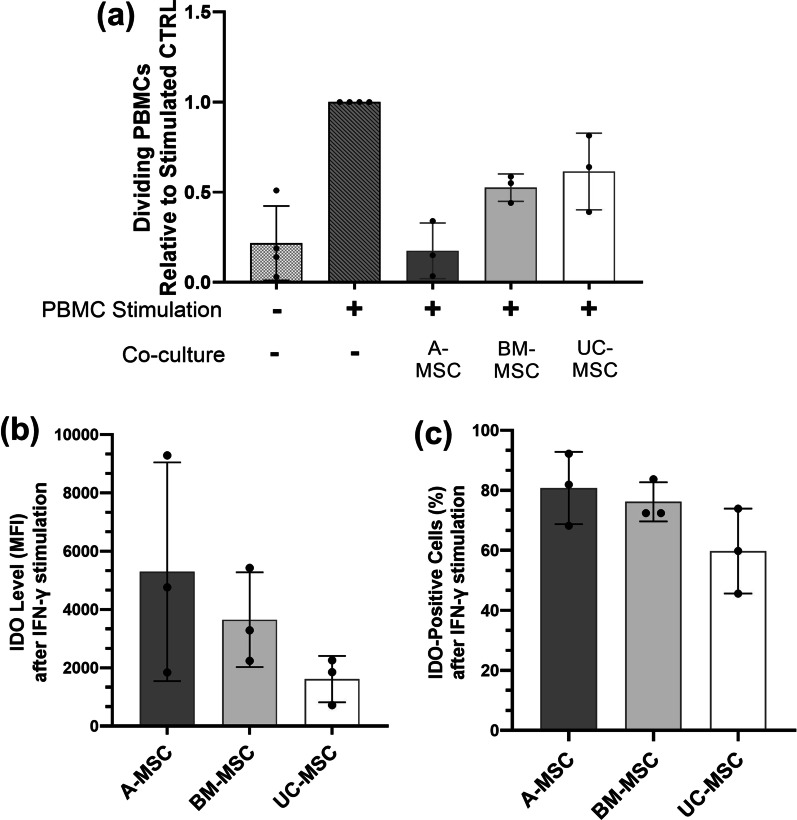
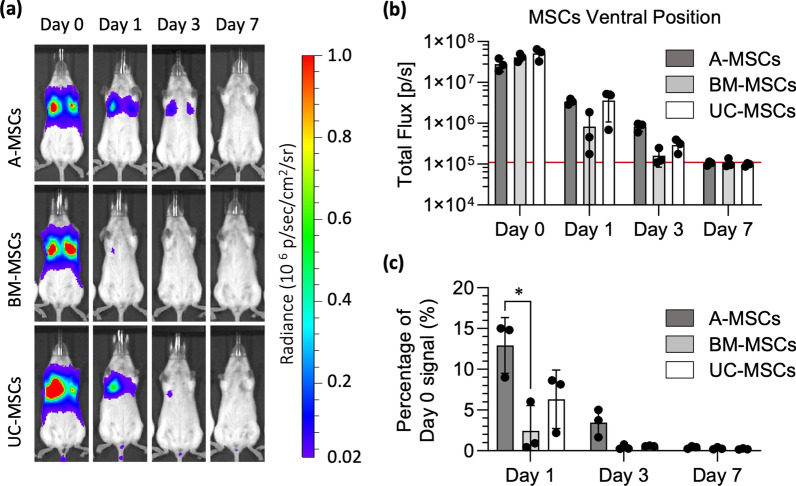
- Functionally, BM-CM enhanced tubulogenesis and endothelial migration, while A-MSCs showed superior immunosuppression: PBMC proliferation was 17 ± 5.2% with A-MSCs, 52 ± 7% with BM-MSCs, and 61 ± 21% with UC-MSCs. All MSC types were entrapped in lungs after IV administration, with faster clearance of BM-MSCs (day 1 normalised signal: 2.5 ± 3.1% BM vs 12.9 ± 3.4% A and 6.3 ± 3.6% UC).
Methods
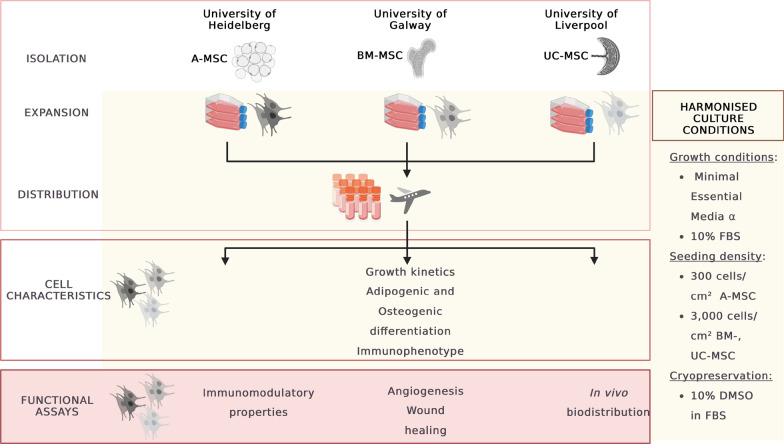
- Three independent institutions performed a head-to-head comparison of human adipose (A-), bone marrow (BM-), and umbilical cord (UC-) MSCs using harmonised culture conditions: MEM-α, a common FBS lot, and optimised seeding densities (300 cells/cm² for A-MSCs; 3,000 cells/cm² for BM- and UC-MSCs).
- Part A assessed growth kinetics, tri-lineage differentiation, and immunophenotype across centres after cells were isolated in one centre, cryopreserved, shipped, and expanded in parallel. Part B assessed angiogenic and immunomodulatory properties in expert labs and in vivo biodistribution in healthy C57BL/6 albino female mice using luciferase-expressing MSCs and bioluminescence imaging (n = 4 animals per donor per cell type).
- Quantitative data are reported as mean ± SD; statistical analyses used GraphPad Prism with p < 0.05 considered significant.
Limitations
- The paper states that site-to-site variation may be partly due to differing shipment duration on dry ice interrupting the cold chain, and to manual handling of cell counting and confluence assessment; it also states that the effect of international shipping was not evaluated in detail.
- The paper notes that cryopreservation can affect proliferation, differentiation, and immunosuppressive properties, and that differentiation potential may not be a meaningful selection criterion unless assessed qualitatively or as batch comparisons within one centre.
- Evident from the text: only three donors per tissue source were used, part B functional assays were each performed in a single expert centre, and the study did not validate the proposed assays in specific injury models to confirm their ability to predict therapeutic potency.
Model-written summary. Check it against the paper before relying on it.
Integrity signals
Registry
Cites
Statistics
Figures
Verification
Claims the paper makes
15 Valid · 0 Not valid · 10 Not checked · 86 Own results and interpretations
Every source the paper cites for this claim was checked and supports it.
In the paper
“The variation in culture conditions included the use of different media (type and composition), sera (origin and concentration in the medium) and seeding densities [11].”
§ Harmonised culture procedures minimise but do not eliminate mesenchymal stromal cell donor and tissue variability in a decentralised multicentre manufacturing approach > Background
What the sources say
- Supportedcites [11] Stroncek DF Jin P McKenna DH Takanashi M Fontaine MJ Pati S Human mesenchymal stromal cell (MSC) characteristics vary among laboratories when manufactured from the same source material: a report by the cellular therapy team of the biomedical excellence for safer transfusion (BEST) collaborative Front Cell Dev Biol 2020 8 458 10.3389/fcell.2020.00458 32612991 PMC7308721 source
The Results section (Inter-Laboratory Method Comparisons; page not provided) reports different basal media, bovine serum versus human platelet lysate supplements, supplement concentrations, and seeding densities across the five laboratories. These are the culture-condition variations described in the claim. (LLM, conf=0.93)
plain- Asserted: passes — The authors put it forward as true.
- Checkable: passes — It can be checked against evidence.
- Load-bearing: passes — The paper’s conclusions depend on it.
- Based: passes — The paper gives a reason why it holds.
- Supported
The cited sources support only part of this claim — read each source’s verdict below.
In the paper
“In many clinical trials, MSCs have shown little benefit [1, 5, 9].”
§ Harmonised culture procedures minimise but do not eliminate mesenchymal stromal cell donor and tissue variability in a decentralised multicentre manufacturing approach > Background
What the sources say
- Partly supportedcites [1] Pittenger MF Discher DE Peault BM Phinney DG Hare JM Caplan AI Mesenchymal stem cell perspective: cell biology to clinical progress NPJ Regen Med 2019 4 22 10.1038/s41536-019-0083-6 31815001 PMC6889290 sourceExperimental — accuracy not yet measured
In “Optimizing MSCs for therapeutic purposes” (page unavailable), the paper says MSCs may have potent effects in only 40–50% of patients. In “MSC modulation of the immune system” (page unavailable), it reports that a phase 3 trial for graft-versus-host disease missed its overall endpoints, while showing life-saving benefit in pediatric patients. These passages support limited or inconsistent benefit, but do not establish that many clinical trials showed little benefit. (LLM, conf=0.84)
- Supportedcites [5] Galipeau J Sensebe L Mesenchymal stromal cells: clinical challenges and therapeutic opportunities Cell Stem Cell 2018 22 6 824 833 10.1016/j.stem.2018.05.004 29859173 PMC6434696 source
The paper’s “Cognitive dissonance between pre-clinical murine and human MSC clinical trials outcomes” section says that positive results in mouse studies have not readily translated into equivalent outcomes in human phase III trials. This supports the broad claim that MSCs have shown little benefit in many clinical trials, without implying that all trials failed. (LLM, conf=0.88)
- Supportedcites [9] Amadeo F Trivino Cepeda K Littlewood J Wilm B Taylor A Murray P Mesenchymal stromal cells: what have we learned so far about their therapeutic potential and mechanisms of action? Emerg Top Life Sci 2021 5 4 549 562 10.1042/ETLS20210013 34495324 PMC8589440 source
The Summary states that most clinical trials of MSC therapies show limited, if any, efficacy. The clinical picture section likewise describes generally disappointing outcomes, while noting that some studies suggest benefit. (LLM, conf=0.94)
plain- Asserted: passes — The authors put it forward as true.
- Checkable: passes — It can be checked against evidence.
- Load-bearing: passes — The paper’s conclusions depend on it.
- Based: passes — The paper gives a reason why it holds.
- Partly supported
The sources with a verdict support this claim; the rest weren’t checked yet, have no full text we could read, or their verdicts aren’t rated yet.
In the paper
“Given that some of their therapeutic properties are elicited by their ability to release soluble bioactive factors to promote angiogenesis as well as to modulate immune responses [12–14], these properties were assessed individually in Galway and Heidelberg, respectively.”
§ Harmonised culture procedures minimise but do not eliminate mesenchymal stromal cell donor and tissue variability in a decentralised multicentre manufacturing approach > Background
What the sources say
- Not checked — no full text of the sourcecites [12] Bieback K Kuci S Schafer R Production and quality testing of multipotent mesenchymal stromal cell therapeutics for clinical use Transfusion 2019 59 6 2164 2173 30882925 source
- Not checked — no full text of the sourcecites [13] Fontaine MJ Shih H Schafer R Pittenger MF Unraveling the mesenchymal stromal cells' paracrine immunomodulatory effects Transfus Med Rev 2016 30 1 37 43 10.1016/j.tmrv.2015.11.004 26689863 source
- Supportedcites [14] Baraniak PR McDevitt TC Stem cell paracrine actions and tissue regeneration Regen Med 2010 5 1 121 143 10.2217/rme.09.74 20017699 PMC2833273 source
The ‘Stem cell paracrine actions & tissue regeneration’ section says molecules secreted by BM-MSCs and ASCs increase vascular density and blood flow. The ‘Stem cell paracrine actions & immune modulation’ section describes MSC-secreted factors that regulate immune-cell activity. Together, these passages support the attributed claim; page numbers were not supplied. (LLM, conf=0.93)
hedgedstates a cause- Asserted: passes — The authors put it forward as true.
- Checkable: passes — It can be checked against evidence.
- Load-bearing: passes — The paper’s conclusions depend on it.
- Based: passes — The paper gives a reason why it holds.
The sources with a verdict support this claim; the rest weren’t checked yet, have no full text we could read, or their verdicts aren’t rated yet.
In the paper
“However, it is well known that MSCs get entrapped in the lung, the so-called pulmonary first pass effect [53–55].”
§ Harmonised culture procedures minimise but do not eliminate mesenchymal stromal cell donor and tissue variability in a decentralised multicentre manufacturing approach > Discussion
What the sources say
- Not checked — no full text of the sourcecites [53] Fischer UM Harting MT Jimenez F Monzon-Posadas WO Xue H Savitz SI Pulmonary passage is a major obstacle for intravenous stem cell delivery: the pulmonary first-pass effect Stem Cells Dev 2009 18 5 683 692 10.1089/scd.2008.0253 19099374 PMC3190292 source
- Supportedcites [54] Eggenhofer E Benseler V Kroemer A Popp FC Geissler EK Schlitt HJ Mesenchymal stem cells are short-lived and do not migrate beyond the lungs after intravenous infusion Front Immunol 2012 3 297 10.3389/fimmu.2012.00297 23056000 PMC3458305 source
The Introduction states that most MSCs localize to the lungs after intravenous infusion and attributes their detainment to space restriction in lung capillaries. The Discussion reports that infused MSCs accumulated in the lungs and that viable MSCs did not pass the lung capillary bed. This supports the described pulmonary first-pass entrapment. (LLM, conf=0.94)
- Not checked — no full text of the sourcecites [55] de Witte SFH Luk F Sierra Parraga JM Gargesha M Merino A Korevaar SS Immunomodulation by therapeutic mesenchymal stromal cells (MSC) is triggered through phagocytosis of MSC By monocytic cells Stem Cells 2018 36 4 602 615 10.1002/stem.2779 29341339 source
boostedstates a cause- Asserted: passes — The authors put it forward as true.
- Checkable: passes — It can be checked against evidence.
- Load-bearing: passes — The paper’s conclusions depend on it.
- Based: passes — The paper gives a reason why it holds.
A result the paper reports from its own data — it cites no other source for it, so there is none to check. The quote shows it is in the paper.
In the paper
“The opposite was observed for A-MSCs, which showed a more MSC-like phenotype when grown at 300 cells/cm2 (Additional file 2: Fig. S2b).”
§ Harmonised culture procedures minimise but do not eliminate mesenchymal stromal cell donor and tissue variability in a decentralised multicentre manufacturing approach > Results > Cell culture harmonisation
plainstates an association- Asserted: passes — The authors put it forward as true.
- Checkable: passes — It can be checked against evidence.
- Load-bearing: passes — The paper’s conclusions depend on it.
- Based: passes — The paper gives a reason why it holds.
52 more claims
Create a free account to see all 111 claims and to verify the 2 references still open.
- Probably not a substantial claim. 16
- It may state two separate claims as one. 40
- The quote only partly states this claim. 1
Claims other papers make about this one
Each is checked against this paper’s own text: does it say what the citing paper says it does?
The source backs part of the claim, not all of it — or backs it for a different population, condition or comparison.
In the citing paper
“Human MSCs derived from adipose tissue, bone marrow, and umbilical cord were cultured under these harmonized protocols, and assessments of cell expansion, differentiation potential, and immune phenotyping were largely consistent across centers.”
From Primary cell cultures versus immortalized cell lines: critical comparative insights into biological fidelity and translational applications (2026) · cites this paper as Calcat-I-Cervera et al. (2023)
Experimental — accuracy not yet measuredThe cited source says what the claim attributes to it.
In the citing paper
“Calcat-I-Cervera et al. (2023) demonstrated that harmonized culture procedures across three independent laboratories substantially reduced inter-laboratory variability in MSC research.”
From Primary cell cultures versus immortalized cell lines: critical comparative insights into biological fidelity and translational applications (2026) · cites this paper as Calcat-I-Cervera et al. (2023)
The cited source says what the claim attributes to it.
In the citing paper
“Despite this improved reproducibility, MSCs retained tissuespecific functional characteristics, with bone marrow MSCs enhancing angiogenic activity and adipose MSCs exhibiting superior immunosuppressive properties, reflecting intrinsic biological heterogeneity.”
From Primary cell cultures versus immortalized cell lines: critical comparative insights into biological fidelity and translational applications (2026) · cites this paper as Calcat-I-Cervera et al. (2023)
Self-check
Percentages, sums and reported differences re-computed from the paper’s own numbers.
Each contradiction between two passages listed here was confirmed by an independent check.
Rated minor: it would not touch a result — a value no result rests on, a p-value that stays on the same side of the significance level, or a conflict that is clerical, resolved elsewhere in the paper, or outside its own findings.
In the paper
§ Harmonised culture procedures minimise but do not eliminate mesenchymal stromal cell donor and tissue variability in a decentralised multicentre manufacturing approach > Abstract > Results
“Immune phenotyping verified expression of typical MSC surface markers and absence of contaminating surface markers.”
§ Harmonised culture procedures minimise but do not eliminate mesenchymal stromal cell donor and tissue variability in a decentralised multicentre manufacturing approach > Part A: Biological comparison
“In Heidelberg and Liverpool, A-MSCs expressed rather high levels of negative surface markers such as CD34 (10.21 ± 12.96% in Heidelberg and 18.40 ± 11.69% in Liverpool) and CD45 (10.81 ± 7.77% in Liverpool).”
Citations
Cites
Dominici, M., Le Blanc, K., Mueller, I., Slaper-Cortenbach, I., Marini, F. C., Krause, D. S., Deans, R. J., Keating, A., Prockop, D. J., & Horwitz, E. M. (2006) · Cytotherapy · doi:10.1080/14653240600855905 · Cited by 17,766 · cited 3×
“Next, we interrogated the immunophenotype of MSCs using flow cytometry based on the minimal criteria defined previously [22].”
BackgroundMethodInfluentialStöckl, S., Göttl, C., Grifka, J., & Grässel, S. (2013) · Cellular Physiology and Biochemistry · doi:10.1159/000350089 · Cited by 4,656
Kern, S., Eichler, H., Stoeve, J., Klüter, H., & Bieback, K. (2006) · STEM CELLS · doi:10.1634/stemcells.2005-0342 · Cited by 3,370
Self-citationMesenchymal stem cell perspective: cell biology to clinical progress
Pittenger, M. F., Discher, D. E., Péault, B. M., Phinney, D. G., Hare, J. M., & Caplan, A. I. (2019) · npj Regenerative Medicine · doi:10.1038/s41536-019-0083-6 · Cited by 2,008 · cited 2×
“In many clinical trials, MSCs have shown little benefit [1, 5, 9].”
BackgroundHeterotopic of bone marrow. Analysis of precursor cells for osteogenic and hematopoietic tissues.
Friedenstein, A. J., Kv, P., KUROLESOVA, A. I., & Frolova, G. P. (1968) · PubMed · Cited by 1,921
Bourin, P., Bunnell, B. A., Casteilla, L., Dominici, M., Katz, A. J., March, K. L., Redl, H., Rubin, J. P., Yoshimura, K., & Gimble, J. M. (2013) · Cytotherapy · doi:10.1016/j.jcyt.2013.02.006 · Cited by 1,890
Mesenchymal Stromal Cells: Clinical Challenges and Therapeutic Opportunities
Galipeau, J., & Sensébé, L. (2018) · Cell Stem Cell · doi:10.1016/j.stem.2018.05.004 · Cited by 1,819 · cited 2×
“In many clinical trials, MSCs have shown little benefit [1, 5, 9].”
BackgroundHETEROTOPIC TRANSPLANTS OF BONE MARROW
FRIEDENSTEIN, A. J., PETRAKOVA, K. V., KUROLESOVA, A. I., & FROLOVA, G. P. (1968) · Transplantation · doi:10.1097/00007890-196803000-00009 · Cited by 1,699 · cited 1×
“[6] and since then cells with similar properties have been identified in several other tissues (e.”
BackgroundLe Blanc, K., Tammik, L., Sundberg, B., Haynesworth, S. E., & Ringdén, O. (2003) · Scandinavian Journal of Immunology · doi:10.1046/j.1365-3083.2003.01176.x · Cited by 1,368
Fischer, U. M., Harting, M. T., Jimenez, F., Monzon-Posadas, W. O., Xue, H., Savitz, S. I., Laine, G. A., & Cox, C. S. (2009) · Stem Cells and Development · doi:10.1089/scd.2008.0253 · Cited by 1,292
Stem Cell Paracrine Actions and Tissue Regeneration
Baraniak, P. R., & McDevitt, T. C. (2010) · Regenerative Medicine · doi:10.2217/rme.09.74 · Cited by 843
Eggenhofer, E., Benseler, V., Kroemer, A., Popp, F. C., Geissler, E. K., Schlitt, H. J., Baan, C. C., Dahlke, M. H., & Hoogduijn, M. J. (2012) · Frontiers in Immunology · doi:10.3389/fimmu.2012.00297 · Cited by 804 · cited 1×
“This result is consistent with various reports [54, 55] and confirms that this effect is not influenced by MSC origin.”
ResultStem Cells in the Treatment of Refractory Chronic Migraines
Mauskop, A., & Rothaus, K. O. (2017) · Case Reports in Neurology · doi:10.1159/000477393 · Cited by 793
Production, concentration and titration of pseudotyped HIV-1-based lentiviral vectors
Kutner, R. H., Zhang, X.-Y., & Reiser, J. (2009) · Nature Protocols · doi:10.1038/nprot.2009.22 · Cited by 668 · cited 1×
“Lentiviral particles were produced using standard protocols [18] by co-transfection of HEK cells with the transfer vector (pHIV-Luc2-ZsGreen), an envelope plasmid (pMD2.”
MethodApoptosis in mesenchymal stromal cells induces in vivo recipient-mediated immunomodulation
Galleu, A., Riffo-Vasquez, Y., Trento, C., Lomas, C., Dolcetti, L., Cheung, T. S., von Bonin, M., Barbieri, L., Halai, K., Ward, S., et al. (2017) · Science Translational Medicine · doi:10.1126/scitranslmed.aam7828 · Cited by 646
Prockop, D. J. (2009) · Molecular Therapy · doi:10.1038/mt.2009.62 · Cited by 577 · cited 1×
“Besides posing a risk for embolisation, pulmonary trap reduces the number of cells that could eventually home and engraft to the injured tissue [56].”
Backgroundde Witte, S. F. H., Luk, F., Sierra Parraga, J. M., Gargesha, M., Merino, A., Korevaar, S. S., Shankar, A. S., O'Flynn, L., Elliman, S. J., Roy, D., et al. (2018) · Stem Cells · doi:10.1002/stem.2779 · Cited by 504 · cited 1×
“This result is consistent with various reports [54, 55] and confirms that this effect is not influenced by MSC origin.”
ResultMoll, G., Ankrum, J. A., Kamhieh-Milz, J., Bieback, K., Ringdén, O., Volk, H.-D., Geissler, S., & Reinke, P. (2019) · Trends in Molecular Medicine · doi:10.1016/j.molmed.2018.12.006 · Cited by 440 · cited 1×
“Intravenous administration of MSCs is the most common delivery route used in clinical trials [52].”
Self-citationRebelatto, C. K., Aguiar, A. M., Moretão, M. P., Senegaglia, A. C., Hansen, P., Barchiki, F., Oliveira, J., Martins, J., Kuligovski, C., Mansur, F., et al. (2008) · Experimental Biology and Medicine · doi:10.3181/0712-rm-356 · Cited by 429 · cited 1×
“Reduced or entire lack of adipogenic differentiation potential has been repeatedly reported for perinatal MSCs [27, 28].”
BackgroundHsiao, S. T.-F., Asgari, A., Lokmic, Z., Sinclair, R., Dusting, G. J., Lim, S. Y., & Dilley, R. J. (2012) · Stem Cells and Development · doi:10.1089/scd.2011.0674 · Cited by 410 · cited 18×
“BM-MSCs exhibited the longest doubling time as well as the highest interdonor variability, whereas A-MSCs consistently showed the least donor-to-donor variation regardless of where they were cultured.”
ResultInfluentialMesenchymal Stem Cells Current Clinical Applications: A Systematic Review
Rodríguez-Fuentes, D. E., Fernández-Garza, L. E., Samia-Meza, J. A., Barrera-Barrera, S. A., Caplan, A. I., & Barrera-Saldaña, H. A. (2021) · Archives of Medical Research · doi:10.1016/j.arcmed.2020.08.006 · Cited by 376 · cited 2×
“However, it is associated with high costs of isolation, expansion, safety testing and donor-related comorbidities that might impact product quality [7].”
BackgroundFrançois, M., Copland, I. B., Yuan, S., Romieu-Mourez, R., Waller, E. K., & Galipeau, J. (2012) · Cytotherapy · doi:10.3109/14653249.2011.623691 · Cited by 375 · cited 1×
“Cryopreservation not only affects the proliferation of the cells [35], but also impacts the differentiation potential [36] and the immunosuppressive properties [37].”
BackgroundComparative Analysis of Mesenchymal Stem Cells from Bone Marrow, Cartilage, and Adipose Tissue
Peng, L., Jia, Z., Yin, X., Zhang, X., Liu, Y., Chen, P., Ma, K., & Zhou, C. (2008) · Stem Cells and Development · doi:10.1089/scd.2007.0217 · Cited by 368 · cited 1×
“Although our results align with previous studies showing superior proangiogenic abilities [41] and higher secretion of VEGF in BM-MSC cultures [42], others have conversely reported higher tube formation and angiogenic bioactivity in the secretome of A-MSCs [43, 44].”
ResultChallenges in Clinical Development of Mesenchymal Stromal/Stem Cells: Concise Review
Mastrolia, I., Foppiani, E. M., Murgia, A., Candini, O., Samarelli, A. V., Grisendi, G., Veronesi, E., Horwitz, E. M., & Dominici, M. (2019) · Stem Cells Translational Medicine · doi:10.1002/sctm.19-0044 · Cited by 350 · cited 1×
“Donor variability is a well-known phenomenon we have also observed within our sample preparations, emphasising the need to dissect donor characteristics and variability in autologous and allogeneic settings to achieve favourable clinical outcomes [46].”
BackgroundZheng, X., Baker, H., Hancock, W. S., Fawaz, F., McCaman, M., & Pungor, E. (2006) · Biotechnology Progress · doi:10.1021/bp060121o · Cited by 346
Marquez-Curtis, L. A., Janowska-Wieczorek, A., McGann, L. E., & Elliott, J. A. W. (2015) · Cryobiology · doi:10.1016/j.cryobiol.2015.07.003 · Cited by 346
Insights into the Secretome of Mesenchymal Stem Cells and Its Potential Applications
Eleuteri, S., & Fierabracci, A. (2019) · International Journal of Molecular Sciences · doi:10.3390/ijms20184597 · Cited by 303 · cited 1×
“detailed and complex picture of their secretome, including the shedding of extracellular vesicles [49] and microRNAs [50], the mitochondrial and metabolic properties [51], together with other aspects of their immunomodulatory properties not addressed in this study, might highlight further attributes aligned with desir…”
BackgroundKim, Y. J., Kim, H. K., Cho, H. H., Bae, Y. C., Suh, K. T., & Jung, J. S. (2007) · Cellular Physiology and Biochemistry · doi:10.1159/000110447 · Cited by 298 · cited 18×
“BM-MSCs exhibited the longest doubling time as well as the highest interdonor variability, whereas A-MSCs consistently showed the least donor-to-donor variation regardless of where they were cultured.”
ResultInfluentialChinnadurai, R., Copland, I. B., Patel, S. R., & Galipeau, J. (2014) · The Journal of Immunology · doi:10.4049/jimmunol.1301828 · Cited by 266 · cited 2×
“A study by Chinnadurai et al. elegantly showed that MSCs can inhibit PBMC proliferation through PD1/PD-L1 [48].”
BackgroundParacrine Mechanisms of Mesenchymal Stromal Cells in Angiogenesis
Maacha, S., Sidahmed, H., Jacob, S., Gentilcore, G., Calzone, R., Grivel, J.-C., & Cugno, C. (2020) · Stem Cells International · doi:10.1155/2020/4356359 · Cited by 259 · cited 6×
“Although our results align with previous studies showing superior proangiogenic abilities [41] and higher secretion of VEGF in BM-MSC cultures [42], others have conversely reported higher tube formation and angiogenic bioactivity in the secretome of A-MSCs [43, 44].”
BackgroundInfluentialMesenchymal stromal cell apoptosis is required for their therapeutic function
Pang, S. H. M., D’Rozario, J., Mendonca, S., Bhuvan, T., Payne, N. L., Zheng, D., Hisana, A., Wallis, G., Barugahare, A., Powell, D., et al. (2021) · Nature Communications · doi:10.1038/s41467-021-26834-3 · Cited by 245
Is CD34 truly a negative marker for mesenchymal stromal cells?
Lin, C.-S., Ning, H., Lin, G., & Lue, T. F. (2012) · Cytotherapy · doi:10.3109/14653249.2012.729817 · Cited by 239
Petrenko, Y., Vackova, I., Kekulova, K., Chudickova, M., Koci, Z., Turnovcova, K., Kupcova Skalnikova, H., Vodicka, P., & Kubinova, S. (2020) · Scientific Reports · doi:10.1038/s41598-020-61167-z · Cited by 218
Du, W. J., Chi, Y., Yang, Z. X., Li, Z. J., Cui, J. J., Song, B. Q., Li, X., Yang, S. G., Han, Z. B., & Han, Z. C. (2016) · Stem Cell Research & Therapy · doi:10.1186/s13287-016-0418-9 · Cited by 200 · cited 1×
“Although our results align with previous studies showing superior proangiogenic abilities [41] and higher secretion of VEGF in BM-MSC cultures [42], others have conversely reported higher tube formation and angiogenic bioactivity in the secretome of A-MSCs [43, 44].”
ResultMajore, I., Moretti, P., Stahl, F., Hass, R., & Kasper, C. (2011) · Stem Cell Reviews and Reports · doi:10.1007/s12015-010-9165-y · Cited by 167 · cited 1×
“It may reflect differing requirements of UC-MSCs for osteoinduction [29].”
BackgroundYan, W., Diao, S., & Fan, Z. (2021) · Stem Cell Research & Therapy · doi:10.1186/s13287-021-02194-z · Cited by 167 · cited 1×
“detailed and complex picture of their secretome, including the shedding of extracellular vesicles [49] and microRNAs [50], the mitochondrial and metabolic properties [51], together with other aspects of their immunomodulatory properties not addressed in this study, might highlight further attributes aligned with desir…”
BackgroundBraza, F., Dirou, S., Forest, V., Sauzeau, V., Hassoun, D., Chesné, J., Cheminant-Muller, M.-A., Sagan, C., Magnan, A., & Lemarchand, P. (2016) · Stem Cells · doi:10.1002/stem.2344 · Cited by 164
Unraveling the Mesenchymal Stromal Cells' Paracrine Immunomodulatory Effects
Fontaine, M. J., Shih, H., Schäfer, R., & Pittenger, M. F. (2016) · Transfusion Medicine Reviews · doi:10.1016/j.tmrv.2015.11.004 · Cited by 162
The exciting prospects of new therapies with mesenchymal stromal cells
Prockop, D. J. (2016) · Cytotherapy · doi:10.1016/j.jcyt.2016.09.008 · Cited by 137
Quirici, N., Scavullo, C., de Girolamo, L., Lopa, S., Arrigoni, E., Deliliers, G. L., & Brini, A. T. (2010) · Stem Cells and Development · doi:10.1089/scd.2009.0408 · Cited by 117
Ketterl, N., Brachtl, G., Schuh, C., Bieback, K., Schallmoser, K., Reinisch, A., & Strunk, D. (2015) · Stem Cell Research & Therapy · doi:10.1186/s13287-015-0233-8 · Cited by 110 · cited 1×
“The ability to inhibit PBMC proliferation upon PHA stimulation is often taken as a measure of the immunomodulatory strength [24, 25].”
BackgroundSelf-citationLiu, S., de Castro, L. F., Jin, P., Civini, S., Ren, J., Reems, J.-A., Cancelas, J., Nayak, R., Shaw, G., O’Brien, T., et al. (2017) · Scientific Reports · doi:10.1038/srep46731 · Cited by 80
Self-citationDevelopment of a surrogate angiogenic potency assay for clinical-grade stem cell production
Lehman, N., Cutrone, R., Raber, A., Perry, R., van't Hof, W., Deans, R., Ting, A. E., & Woda, J. (2012) · Cytotherapy · doi:10.3109/14653249.2012.688945 · Cited by 76 · cited 6×
“Although our results align with previous studies showing superior proangiogenic abilities [41] and higher secretion of VEGF in BM-MSC cultures [42], others have conversely reported higher tube formation and angiogenic bioactivity in the secretome of A-MSCs [43, 44].”
BackgroundInfluentialHiguera, G., Schop, D., Janssen, F., van Dijkhuizen-Radersma, R., van Boxtel, T., & van Blitterswijk, C. A. (2009) · Tissue Engineering Part A · doi:10.1089/ten.tea.2008.0328 · Cited by 69 · cited 2×
“Given that MSCs show contact-dependent growth inhibition [23], slight differences in the confluence may affect the calculation of growth kinetics.”
BackgroundGrau-Vorster, M., Laitinen, A., Nystedt, J., & Vives, J. (2019) · Stem Cell Research & Therapy · doi:10.1186/s13287-019-1279-9 · Cited by 61 · cited 1×
“who revealed variability in BM-MSC preparations for clinical applications, concluding that the absence or presence of HLA-DR does not have an impact on the overall properties of the cells [34].”
BackgroundStroncek, D. F., Jin, P., McKenna, D. H., Takanashi, M., Fontaine, M. J., Pati, S., Schäfer, R., Peterson, E., Benedetti, E., & Reems, J.-A. (2020) · Frontiers in Cell and Developmental Biology · doi:10.3389/fcell.2020.00458 · Cited by 59
Škovroňová, R., Grange, C., Dimuccio, V., Deregibus, M. C., Camussi, G., & Bussolati, B. (2021) · Cells · doi:10.3390/cells10112948 · Cited by 58 · cited 1×
“detailed and complex picture of their secretome, including the shedding of extracellular vesicles [49] and microRNAs [50], the mitochondrial and metabolic properties [51], together with other aspects of their immunomodulatory properties not addressed in this study, might highlight further attributes aligned with desir…”
BackgroundBahsoun, S., Coopman, K., & Akam, E. C. (2020) · Stem Cell Research & Therapy · doi:10.1186/s13287-020-02054-2 · Cited by 55 · cited 1×
“Cryopreservation not only affects the proliferation of the cells [35], but also impacts the differentiation potential [36] and the immunosuppressive properties [37].”
BackgroundWilson, A. J., Rand, E., Webster, A. J., & Genever, P. G. (2021) · Stem Cell Research & Therapy · doi:10.1186/s13287-021-02435-1 · Cited by 55
Umbilical cord as a long-term source of activatable mesenchymal stromal cells for immunomodulation
Selich, A., Zimmermann, K., Tenspolde, M., Dittrich‐Breiholz, O., von Kaisenberg, C., Schambach, A., & Rothe, M. (2019) · Stem Cell Research & Therapy · doi:10.1186/s13287-019-1376-9 · Cited by 50 · cited 1×
“Although BM-MSCs are the most commonly used cell source in clinical trials [7], adipose (A-) and umbilical cord (UC-) derived MSCs have become quite attractive sources as they can be easily obtained with relatively good yields and less invasively [8].”
BackgroundTorres Crigna, A., Uhlig, S., Elvers-Hornung, S., Klüter, H., & Bieback, K. (2020) · Cells · doi:10.3390/cells9112419 · Cited by 46
Self-citationKaragianni, M., Brinkmann, I., Kinzebach, S., Grassl, M., Weiss, C., Bugert, P., & Bieback, K. (2013) · Cytotherapy · doi:10.1016/j.jcyt.2012.11.001 · Cited by 43
Self-citationDefined serum- and xeno-free cryopreservation of mesenchymal stem cells
Al-Saqi, S. H., Saliem, M., Quezada, H. C., Ekblad, Å., Jonasson, A. F., Hovatta, O., & Götherström, C. (2015) · Cell and Tissue Banking · doi:10.1007/s10561-014-9463-8 · Cited by 43 · cited 1×
“Cryopreservation not only affects the proliferation of the cells [35], but also impacts the differentiation potential [36] and the immunosuppressive properties [37].”
BackgroundCalcat-i-Cervera, S., Sanz‐Nogués, C., & O’Brien, T. (2021) · Frontiers in Medicine · doi:10.3389/fmed.2021.728496 · Cited by 43 · cited 3×
“clear whether the in vitro differentiation potential is a meaningful selection criterion when defining the best source of MSC for the intended therapeutic application [4, 10].”
BackgroundSelf-citationMohamed, S., Howard, L., McInerney, V., Hayat, A., Krawczyk, J., Naughton, S., Finnerty, A. A., Holohan, M., Duffy, A. M., Moloney, T., et al. (2020) · Cytotherapy · doi:10.1016/j.jcyt.2020.02.007 · Cited by 39 · cited 1×
“Three different donors per tissue source were isolated in each centre according to their standard procedures ([15] Galway, [16] Heidelberg).”
MethodSelf-citationFiori, A., Uhlig, S., Klüter, H., & Bieback, K. (2021) · Cells · doi:10.3390/cells10010058 · Cited by 36 · cited 1×
“We also measured IDO production after IFN-γ stimulation as IDO has been implicated as the key factor responsible for inhibition of PBMC proliferation by catabolism of tryptophan to kynurenine [17, 47].”
MethodSelf-citationThej, C., Ramadasse, B., Walvekar, A., Majumdar, A. S., & Balasubramanian, S. (2017) · Stem Cell Research & Therapy · doi:10.1186/s13287-017-0488-3 · Cited by 35 · cited 1×
“For instance, dose-dependent levels of VEGF from BM-MSC secretomes have been correlated with angiogenic activity and proposed as a surrogate potency assay for clinical preparations [45].”
BackgroundAmadeo, F., Plagge, A., Chacko, A. R., Wilm, B., Hanson, V., Liptrott, N. J., Murray, P. A., & Taylor, A. (2021) · European Journal of Nuclear Medicine and Molecular Imaging · doi:10.1007/s00259-021-05439-4 · Cited by 30 · cited 1×
“Animals (n = 4 per donor per cell type) were anaesthetised with isoflurane and intravenously (IV) injected with 100 μL of cell suspension through the tail vein, followed by subcutaneous administration (SC) of 200 μL of 47 mM D-Luciferin 20 min before imaging [20].”
MethodSelf-citationProduction and quality testing of multipotent mesenchymal stromal cell therapeutics for clinical use
Bieback, K., Kuçi, S., & Schäfer, R. (2019) · Transfusion · doi:10.1111/trf.15252 · Cited by 24
Self-citationAmadeo, F., Trivino Cepeda, K., Littlewood, J., Wilm, B., Taylor, A., & Murray, P. (2021) · Emerging Topics in Life Sciences · doi:10.1042/etls20210013 · Cited by 20 · cited 1×
“In many clinical trials, MSCs have shown little benefit [1, 5, 9].”
BackgroundSelf-citationYeh, S.-P., Chang, J.-G., Lin, C.-L., Lo, W.-J., Lee, C.-C., Lin, C.-Y., & Chiu, C.-F. (2005) · Leukemia · doi:10.1038/sj.leu.2403795 · Cited by 12
Amadeo, F., Hanson, V., Murray, P. A., & Taylor, A. (2022) · Molecular Biotechnology · doi:10.1007/s12033-022-00549-2 · Cited by 12 · cited 1×
“To produce the transduced populations, MSCs were infected overnight with a multiplicity of infection of 5 in the presence of 6 μg/mL diethylaminoethyl-dextran (DEAE-dextran) [19].”
MethodSelf-citation
Cited by
The issue of heterogeneity of MSC-based advanced therapy medicinal products–a review
Česnik, A. B., & Švajger, U. (2024) · Frontiers in Cell and Developmental Biology · doi:10.3389/fcell.2024.1400347 · Cited by 128
Bulliard, Y., Freeborn, R. A., Uyeda, M. J., Humes, D. G., Bjordahl, R., VRIES, D. D., & Roncarolo, M. G. (2024) · Frontiers in Immunology · doi:10.3389/fimmu.2024.1509956 · Cited by 54
A scalable platform for EPSC-induced MSC extracellular vesicles with therapeutic potential
Gong, S., Li, N., Peng, Q., Wang, F., Du, R., Zhang, B., Wang, J., Han, L., Zhang, Y., Ning, Z., et al. (2025) · Stem Cell Research & Therapy · doi:10.1186/s13287-025-04507-y · Cited by 28
“Whereas primary MSC sources, most commonly bone-marrow-or adipose-derived, exhibit donor-to-donor variation and phenotypic drift during extended expansion [35, 36].”
Faria, J., Calcat-i-Cervera, S., Škovroňová, R., Broeksma, B. C., Berends, A. J., Zaal, E. A., Bussolati, B., O’Brien, T., Mihaila, S. M., & Masereeuw, R. (2023) · Stem Cell Research & Therapy · doi:10.1186/s13287-023-03563-6 · Cited by 28
“A thorough characterization of all three MSC sources, including morphology, growth kinetics, differentiation capabilities, and immunophenotypic profiles, was recently published [27].”
BackgroundInfluentialSelf-citationHori, A., Takahashi, A., Miharu, Y., Yamaguchi, S., Sugita, M., Mukai, T., Nagamura, F., & Nagamura‐Inoue, T. (2024) · Frontiers in Cell and Developmental Biology · doi:10.3389/fcell.2024.1329218 · Cited by 25
Metadata
- Authors
- Calcat-i-Cervera, S., Rendra, E., Scaccia, E., Amadeo, F., Hanson, V., Wilm, B., Murray, P., O’Brien, T., Taylor, A., & Bieback, K.
- Affiliations
- Ollscoil na Gaillimhe – University of Galway (IE)
- Heidelberg University (DE)
- NHS Blood and Transplant (GB)
- University of Liverpool (GB)
- Corresponding author
- Bieback, Karen
- ORCID
- Venue
- Stem Cell Research & Therapy
- Published
- 2023-05-04
- Volume
- 14
- Issue
- 1
- Pages
- 120-120
- ISSN
- 1757-6512 (ISSN-L)
- PMC
- PMC10161493
- OpenAlex
- W4368617526
- Cited by
- 56
- References
- 62
- Citations by year
- 2026: 15 · 2025: 16 · 2024: 17 · 2023: 8
- FWCI
- 5.64
- Type
- journal article
- Language
- en
- Open access
- gold
- doi.org
- Licence
- cc-by
- creativecommons.org/licenses/by/4.0 (tdm)
- creativecommons.org/licenses/by/4.0 (vor)
- Locations
- Stem Cell Research & Therapy (publishedVersion, cc-by)
- Research Square (submittedVersion, cc-by)
- bioRxiv (Cold Spring Harbor Laboratory) (submittedVersion)
- PubMed Central (publishedVersion, cc-by)
- PubMed (publishedVersion)
- DOAJ (DOAJ: Directory of Open Access Journals) (submittedVersion, cc-by-sa)
- Zenodo (CERN European Organization for Nuclear Research) (submittedVersion, cc-by)
- Funders
- H2020 European Research Council (813839)
- Ruprecht-Karls-Universität Heidelberg
- Topics
- Life Sciences › Biochemistry, Genetics and Molecular Biology › Cell Biology › Mesenchymal stem cell research
- Health Sciences › Dentistry › Periodontics › Periodontal Regeneration and Treatments
- Health Sciences › Medicine › Hematology › Hematopoietic Stem Cell Transplantation
- Keywords
- mesenchymal stem cells, adipose-derived MSCs, bone marrow-derived MSCs, umbilical cord-derived MSCs, donor variability, trilineage differentiation, immunophenotype, angiogenic activity, immunomodulation, in vivo biodistribution
- MeSH terms
- Animals, Bone Marrow Cells, Cell Differentiation, Cells, Cultured, Humans, Tissue Distribution, Umbilical Cord, Cell Culture Techniques, Cell Proliferation, Mice, Mesenchymal Stem Cells
About these checks
Registry, retraction, Cites and statistics results are computed, not judged, with one exception: a printed reference that no index lists is read once by a model before it counts as a citation error. Claims are extracted by a model and kept only when their quote appears verbatim in the text; each cited source is then checked, with a model’s help, for whether it says what the claim relies on. Those verdicts can be wrong — read the claim’s quote and the cited source before relying on one.
The claim verdicts this report counts are experimental: their accuracy is not yet measured.
A language model drew the claims from the paper on 2026-10-07, under version 3 of the claim definition (model deepseek-v4.1-flash, prompt extract-v3).
A second model labelled each claim on 2026-10-07 (model jev-1.13-20260917, definition revision gold-guideline-v0.2).
Cited sources are checked with a language model’s help (gpt-6-sol).
Statistics and arithmetic are recomputed, not judged.
Confidence bands are shown only for fields calibrated on our annotated test set. None is calibrated yet, so no band is shown.
What counts as a claim ›How we measure confidence ›How we check this ›
Are you an author, or do you see a problem with this page? Request a review
Data sources
Bibliographic data: Semantic Scholar, OpenAlex, Crossref.
Contains information from the Semantic Scholar Academic Graph Datasets, made available under the ODC Attribution License (ODC-BY 1.0).
Semantic Scholar’s data is described in: Kinney, R., et al. (2023). The Semantic Scholar Open Data Platform. arXiv:2301.10140.
