

The potency of mesenchymal stem/stromal cells: does donor sex matter?
Open accessThe DOI matches its Crossref record; 63 of the 63 references it cites were found in a registry or an index.
Abstract
Mesenchymal stem/stromal cells (MSCs) are a promising therapeutic tool in cell therapy and tissue engineering because of their multi-lineage differentiation capacity, immunomodulatory effects, and tissue protective potential. To achieve optimal results as a therapeutic tool, factors affecting MSC potency, including but not limited to cell source, donor age, and cell batch, have been investigated. Although the sex of the donor has been attributed as a potential factor that can influence MSC potency and efficacy, the impact of donor sex on MSC characteristics has not been carefully investigated. In this review, we summarize published studies demonstrating donor-sex-related MSC heterogeneity and emphasize the importance of disclosing donor sex as a key factor affecting MSC potency in cell therapy.
Overview
The claims and statistics of this paper haven’t been checked yet.
Free: it reads the open-access text and checks the first 5 claims that cite a source we can check. Create a free account to check every claim.
Integrity signals
Registry
Cites
Statistics
Figures
Verification
Claims the paper makes
The claims and statistics of this paper haven’t been checked yet.
Free: it reads the open-access text and checks the first 5 claims that cite a source we can check. Create a free account to check every claim.
Claims other papers make about this one
Each is checked against this paper’s own text: does it say what the citing paper says it does?
The source backs part of the claim, not all of it — or backs it for a different population, condition or comparison.
In the citing paper
“Rigorous donor selection and characterization, including consideration of age, sex, health status, and specific biomarkers, further enhance the uniformity of cell populations (Carp and Liang 2022;Maged et al. 2024).”
From Primary cell cultures versus immortalized cell lines: critical comparative insights into biological fidelity and translational applications (2026) · cites this paper as Maged et al. 2024
Experimental — accuracy not yet measured
Self-check
Percentages, sums and reported differences re-computed from the paper’s own numbers.
The self-check needs the paper’s full text.
Citations
Cites
1 retracted
Markov, A., Thangavelu, L., Aravindhan, S., Zekiy, A. O., Jarahian, M., Chartrand, M. S., Pathak, Y., Marofi, F., Shamlou, S., & Hassanzadeh, A. (2021) · Stem Cell Research & Therapy · doi:10.1186/s13287-021-02265-1 · Cited by 257
RetractedDominici, M., Le Blanc, K., Mueller, I., Slaper-Cortenbach, I., Marini, F. C., Krause, D. S., Deans, R. J., Keating, A., Prockop, D. J., & Horwitz, E. M. (2006) · Cytotherapy · doi:10.1080/14653240600855905 · Cited by 17,766 · cited 2×
“In vitro differentiation is one of the defining features of MSCs and can be measured by their ability to differentiate into osteogenic, chondrogenic, and adipogenic lineages under specific circumstances [4].”
BackgroundMesenchymal stem cell perspective: cell biology to clinical progress
Pittenger, M. F., Discher, D. E., Péault, B. M., Phinney, D. G., Hare, J. M., & Caplan, A. I. (2019) · npj Regenerative Medicine · doi:10.1038/s41536-019-0083-6 · Cited by 2,008
The X-files in immunity: sex-based differences predispose immune responses
Fish, E. N. (2008) · Nature Reviews Immunology · doi:10.1038/nri2394 · Cited by 1,162 · cited 1×
“HIV infection also showed genetic disparities between males and females, and unequally affects women more than men [62, 63].”
BackgroundMesenchymal Stem Cell Immunomodulation: Mechanisms and Therapeutic Potential
Song, N., Scholtemeijer, M., & Shah, K. (2020) · Trends in Pharmacological Sciences · doi:10.1016/j.tips.2020.06.009 · Cited by 948
Ren, G., Zhao, X., Zhang, L., Zhang, J., L'Huillier, A., Ling, W., Roberts, A. I., Le, A. D., Shi, S., Shao, C., et al. (2010) · The Journal of Immunology · doi:10.4049/jimmunol.0902023 · Cited by 656 · cited 1×
“…also been shown to produce several immunomodulatory factors including IL-10, IL-1 receptor antagonist (IL-1Ra), TGF-β and the cell adhesive molecules intercellular adhesion molecule-1 (ICAM-1) and vascular cell adhesion molecule 1 (VCAM-1) [48, 50] that mediate their immunosuppressive properties.”
BackgroundMechanisms underlying the protective effects of mesenchymal stem cell-based therapy
Fan, X.-L., Zhang, Y., Li, X., & Fu, Q.-L. (2020) · Cellular and Molecular Life Sciences · doi:10.1007/s00018-020-03454-6 · Cited by 535
Choudhery, M. S., Badowski, M., Muise, A., Pierce, J., & Harris, D. T. (2014) · Journal of Translational Medicine · doi:10.1186/1479-5876-12-8 · Cited by 529 · cited 2×
“Therefore, strategies such as licensing might be needed to enhance the yield, cell proliferation, and expansion capabilities of MSCs from aged donors if autologous cells are used [11].”
BackgroundHarrell, C., Fellabaum, C., Jovicic, N., Djonov, V., Arsenijevic, N., & Volarevic, V. (2019) · Cells · doi:10.3390/cells8050467 · Cited by 501 · cited 2×
“…also been shown to produce several immunomodulatory factors including IL-10, IL-1 receptor antagonist (IL-1Ra), TGF-β and the cell adhesive molecules intercellular adhesion molecule-1 (ICAM-1) and vascular cell adhesion molecule 1 (VCAM-1) [48, 50] that mediate their immunosuppressive properties.”
BackgroundSiegel, G., Kluba, T., Hermanutz-Klein, U., Bieback, K., Northoff, H., & Schäfer, R. (2013) · BMC Medicine · doi:10.1186/1741-7015-11-146 · Cited by 493
Mesenchymal Stem Cells Current Clinical Applications: A Systematic Review
Rodríguez-Fuentes, D. E., Fernández-Garza, L. E., Samia-Meza, J. A., Barrera-Barrera, S. A., Caplan, A. I., & Barrera-Saldaña, H. A. (2021) · Archives of Medical Research · doi:10.1016/j.arcmed.2020.08.006 · Cited by 376
The Regulation of Differentiation in Mesenchymal Stem Cells
Augello, A., & De Bari, C. (2010) · Human Gene Therapy · doi:10.1089/hum.2010.173 · Cited by 370 · cited 1×
“In addition, MSCs can differentiate into other cell types, such as skeletal myocytes and tenocytes, with the appropriate environmental cues [32].”
BackgroundAmable, P. R., Teixeira, M. V. T., Carias, R. B. V., Granjeiro, J. M., & Borojevic, R. (2014) · Stem Cell Research & Therapy · doi:10.1186/scrt442 · Cited by 345 · cited 1×
“MSCs secrete vascular endothelial growth factor A (VEGF-A) and transforming growth factor-β (TGF-β), which are both linked to in vitro and in vivo angiogenesis and anti-fibrotic processes [42].”
BackgroundCosta, L. A., Eiro, N., Fraile, M., Gonzalez, L. O., Saá, J., Garcia-Portabella, P., Vega, B., Schneider, J., & Vizoso, F. J. (2021) · Cellular and Molecular Life Sciences · doi:10.1007/s00018-020-03600-0 · Cited by 313 · cited 1×
“On the other hand, UC-MSCs have a higher proliferation rate and a higher tendency toward chondrogenic differentiation than BM-MSCs and ASCs [20].”
BackgroundAlcayaga-Miranda, F., Cuenca, J., & Khoury, M. (2017) · Frontiers in Immunology · doi:10.3389/fimmu.2017.00339 · Cited by 296 · cited 1×
“The immunosuppressive properties of MSCs can also be manifested via paracrine effects of cell communication, cell adhesion molecules, and extracellular vesicles (EVs) [47, 48].”
BackgroundSexual dimorphism in mammalian gene expression
Rinn, J. L., & Snyder, M. (2005) · Trends in Genetics · doi:10.1016/j.tig.2005.03.005 · Cited by 286 · cited 1×
“Although male and female genomes are nearly identical, there are differences at the molecular level due to variations in gene expression [37].”
BackgroundDeasy, B. M., Lu, A., Tebbets, J. C., Feduska, J. M., Schugar, R. C., Pollett, J. B., Sun, B., Urish, K. L., Gharaibeh, B. M., Cao, B., et al. (2007) · The Journal of Cell Biology · doi:10.1083/jcb.200612094 · Cited by 251 · cited 4×
“Subsequently, the data showed that female MDSCs could regenerate skeletal muscles more efficiently than their male counterparts [53].”
BackgroundInfluentialLi, P., Ou, Q., Shi, S., & Shao, C. (2023) · Cellular & Molecular Immunology · doi:10.1038/s41423-023-00998-y · Cited by 250 · cited 2×
“They interact with immune cells such as T cells, B cells, and natural killer cells, modulating immune responses [43, 44].”
BackgroundAksu, A. E., Rubin, J. P., Dudas, J. R., & Marra, K. G. (2008) · Annals of Plastic Surgery · doi:10.1097/sap.0b013e3180621ff0 · Cited by 196 · cited 1×
“On the contrary, the osteogenic differentiation degree was not significantly different between female ASCs from superficial or deep depots [34].”
BackgroundZha, K., Li, X., Yang, Z., Tian, G., Sun, Z., Sui, X., Dai, Y., Liu, S., & Guo, Q. (2021) · npj Regenerative Medicine · doi:10.1038/s41536-021-00122-6 · Cited by 190 · cited 1×
“Lastly, although adequate chondrogenesis has been demonstrated by both dental pulp-derived MSCs (DPSCs) and periodontal ligament-derived MSCs, DPSCs uniquely show a higher tendency towards both osteogenesis and adipogenesis [21].”
BackgroundSex-Based Differences in HIV Type 1 Pathogenesis
Addo, M. M., & Altfeld, M. (2014) · Journal of Infectious Diseases · doi:10.1093/infdis/jiu175 · Cited by 162 · cited 1×
“HIV infection also showed genetic disparities between males and females, and unequally affects women more than men [62, 63].”
BackgroundLotfy, A., Salama, M., Zahran, F., Jones, E., Badawy, A., & Sobh, M. (2014) · International Journal of Stem Cells · doi:10.15283/ijsc.2014.7.2.135 · Cited by 159
Self-citationImpact of Age on Human Adipose Stem Cells for Bone Tissue Engineering
Dufrane, D. (2017) · Cell Transplantation · doi:10.1177/0963689717721203 · Cited by 133 · cited 1×
“Another study also demonstrated a significant decline in the quantity of MSCs in bone marrow associated with older age due to the decrease in bone density [18].”
BackgroundMultiplicity of Mesenchymal Stromal Cells: Finding the Right Route to Therapy
Wilson, A., Hodgson-Garms, M., Frith, J. E., & Genever, P. (2019) · Frontiers in Immunology · doi:10.3389/fimmu.2019.01112 · Cited by 124 · cited 1×
“1) [14–17].”
Mesenchymal stem cells and their mitochondrial transfer: a double-edged sword
Li, C., Cheung, M. K. H., Han, S., Zhang, Z., Chen, L., Chen, J., Zeng, H., & Qiu, J. (2019) · Bioscience Reports · doi:10.1042/bsr20182417 · Cited by 112
FGF21 Mediates Mesenchymal Stem Cell Senescence via Regulation of Mitochondrial Dynamics
Li, X., Hong, Y., He, H., Jiang, G., You, W., Liang, X., Fu, Q., Han, S., Lian, Q., & Zhang, Y. (2019) · Oxidative Medicine and Cellular Longevity · doi:10.1155/2019/4915149 · Cited by 103 · cited 1×
“A study by Li and colleagues showed human MSCs isolated from aged donors (65–80 years old) showed a lower expression of fibroblast growth factor 2 (FGF2) and a higher level of senescent activity than MSCs isolated from younger donors (18–25 years old) [13].”
BackgroundDunn, C. M., Kameishi, S., Grainger, D. W., & Okano, T. (2021) · Acta Biomaterialia · doi:10.1016/j.actbio.2021.03.069 · Cited by 101 · cited 1×
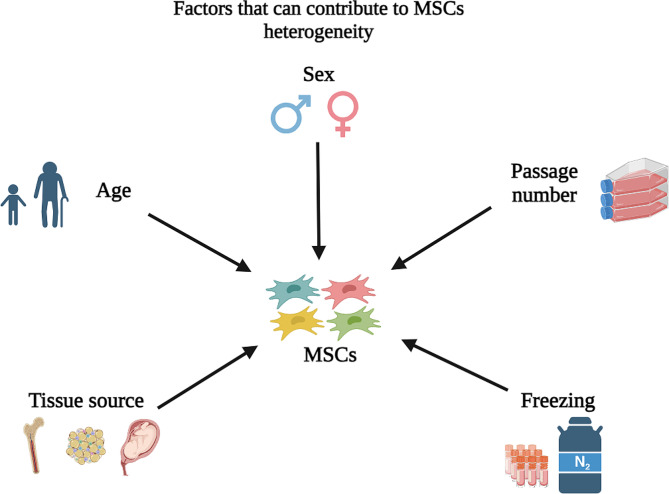
“1 Factors that can contribute to MSCs heterogeneity rate, immunomodulatory properties, and gene expression profiles [16, 19].”
BackgroundImmunomodulatory Mechanisms and Therapeutic Potential of Mesenchymal Stem Cells
Yang, G., Fan, X., Liu, Y., Jie, P., Mazhar, M., Liu, Y., Dechsupa, N., & Wang, L. (2023) · Stem Cell Reviews and Reports · doi:10.1007/s12015-023-10539-9 · Cited by 97
Strube, P., Mehta, M., Baerenwaldt, A., Trippens, J., Wilson, C. J., Ode, A., Perka, C., Duda, G. N., & Kasper, G. (2009) · Bone · doi:10.1016/j.bone.2009.08.005 · Cited by 92 · cited 1×
“Interestingly, the quantity could differ between male and female MSCs. Strube P et al. showed that male rat bone marrow contained significantly higher BM-MSCs than female rats, represented by high colony-forming unit numbers in both femora and tibiae [59].”
BackgroundAge-Related Changes in the Frequency of Mesenchymal Stem Cells in the Bone Marrow of Rats
Tokalov, S. V., Grüner, S., Schindler, S., Wolf, G., Baumann, M., & Abolmaali, N. (2007) · Stem Cells and Development · doi:10.1089/scd.2006.0078 · Cited by 90
Sammour, I., Somashekar, S., Huang, J., Batlahally, S., Breton, M., Valasaki, K., Khan, A., Wu, S., & Young, K. C. (2016) · PLOS ONE · doi:10.1371/journal.pone.0164269 · Cited by 89 · cited 3×
“Ibrahim Sammour and colleagues studied the effect of BM-MSC donor sex on the therapeutic potential of neonatal hyperoxia-induced lung injury [56].”
BackgroundInfluentialSui, B., Chen, J., Zhang, X., He, T., Zhao, P., Zheng, C., Li, M., Hu, C., & Jin, Y. J. (2018) · Experimental & Molecular Medicine · doi:10.1038/s12276-018-0192-0 · Cited by 89 · cited 1×
“In contrast, no difference was observed between male and female donor MSCs when their therapeutic efficacies in recovering bone loss were compared in the gonadectomy mouse model in different recipient genders [55].”
ResultBaharlooi, H., Azimi, M., Salehi, Z., & Izad, M. (2020) · International Journal of Stem Cells · doi:10.15283/ijsc19108 · Cited by 88 · cited 1×
“For instance, in tissue injury caused by autoreactive T cells in autoimmune diseases, this type of cell communication is recruited to evoke immune response and EVs are carried to the site of inflammation by biofluids to modulate immunity [49].”
BackgroundHong, L., Sultana, H., Paulius, K., & Zhang, G. (2009) · The Journal of Steroid Biochemistry and Molecular Biology · doi:10.1016/j.jsbmb.2009.02.001 · Cited by 85 · cited 4×
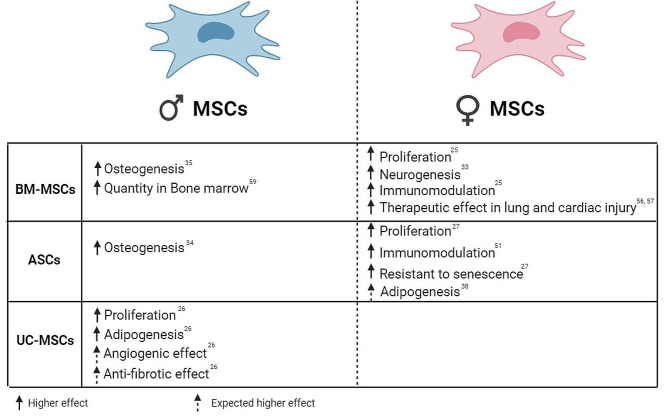
“…M: Male, F: female, NA: data not available, BM-MSCs: Bone marrow mesenchymal stem cells, ASCs: Adipose tissue derived stem cells, PBMCs: Peripheral blood mononuclear cell, UC-MSCs: Umbilical cord-derived MSCs. in female BM-MSCs treated with lower concentrations of E2, but not in male BM-MSCs [29].”
BackgroundInfluentialEvidence of sex differences in cellular senescence
Ng, M., & Hazrati, L.-N. (2022) · Neurobiology of Aging · doi:10.1016/j.neurobiolaging.2022.08.014 · Cited by 78 · cited 1×
“The sex differences in cellular senescence have been reported in many other cell types and the causes are not clear yet; however, some factors such as sex chromosomes may play a role [58].”
BackgroundCXCL3 positively regulates adipogenic differentiation
Kusuyama, J., Komorizono, A., Bandow, K., Ohnishi, T., & Matsuguchi, T. (2016) · Journal of Lipid Research · doi:10.1194/jlr.m067207 · Cited by 75 · cited 1×
“Previous studies have shown the integral role of CXCL3 in promoting adipogenic differentiation in mouse preadi-pocyte and MSC cell lines [39].”
BackgroundZanotti, S., Kalajzic, I., Aguila, H. L., & Canalis, E. (2014) · PLoS ONE · doi:10.1371/journal.pone.0086757 · Cited by 70 · cited 1×
“Moreover, in a mouse study, BM-MSCs from female mice showed lower osteogenesis than cells from male littermates [35].”
BackgroundCiria, M., García, N. A., Ontoria-Oviedo, I., González-King, H., Carrero, R., De La Pompa, J. L., Montero, J. A., & Sepúlveda, P. (2017) · Stem Cells and Development · doi:10.1089/scd.2016.0331 · Cited by 69
Wruck, W., Graffmann, N., Spitzhorn, L., & Adjaye, J. (2021) · Frontiers in Cell and Developmental Biology · doi:10.3389/fcell.2021.717772 · Cited by 65
Yamaguchi, S., Horie, N., Satoh, K., Ishikawa, T., Mori, T., Maeda, H., Fukuda, Y., Ishizaka, S., Hiu, T., Morofuji, Y., et al. (2017) · Journal of Cerebral Blood Flow & Metabolism · doi:10.1177/0271678x17731964 · Cited by 61 · cited 1×
“It was reported that multiple factors including donor sex affect the therapeutic efficacy of MSCs [52].”
BackgroundKang, H., Kim, K.-H., Lim, J., Kim, Y.-S., Heo, J., Choi, J., Jeong, J., Kim, Y., Kim, S. W., Oh, Y.-M., et al. (2015) · Stem Cells and Development · doi:10.1089/scd.2014.0496 · Cited by 55 · cited 1×
“For instance, the increase in the S1P enhanced the therapeutic efficacy of MSCs in pulmonary arterial animal model hypertension [61].”
BackgroundImmune modulation via adipose derived Mesenchymal Stem cells is driven by donor sex in vitro
Mckinnirey, F., Herbert, B., Vesey, G., & McCracken, S. (2021) · Scientific Reports · doi:10.1038/s41598-021-91870-4 · Cited by 54 · cited 2×
“Female ASCs also promoted the downregulation of IL-2 receptor gene expression in PBMCs, leading to higher immunosuppression levels in comparison to male ASCs [51].”
BackgroundSheashaa, H., Lotfy, A., El-Husseini, F., Abdel‐Aziz, A., Baiomy, A., AWAD, S., Alsayed, A., El‐Gilany, A., Saad, M. A., Mahmoud, K. M., et al. (2016) · Experimental and Therapeutic Medicine · doi:10.3892/etm.2016.3109 · Cited by 52
Self-citationMesenchymal stem cell-based therapy and exosomes in COVID-19: current trends and prospects
Abdelgawad, M., Bakry, N. S., Farghali, A. A., Abdel-Latif, A., & Lotfy, A. (2021) · Stem Cell Research & Therapy · doi:10.1186/s13287-021-02542-z · Cited by 52
Self-citationSex-Specific Transcriptome Differences in Human Adipose Mesenchymal Stem Cells
Bianconi, E., Casadei, R., Frabetti, F., Ventura, C., Facchin, F., & Canaider, S. (2020) · Genes · doi:10.3390/genes11080909 · Cited by 48 · cited 2×
“TRAM results indicate that female ASCs are likely to differentiate into adipocytes compared to male ASCs because of low abundance of CXCL3 in male cells [38].”
BackgroundMesenchymal Stromal Cells: Heterogeneity and Therapeutical Applications
Ouzin, M., & Kogler, G. (2023) · Cells · doi:10.3390/cells12162039 · Cited by 42 · cited 1×
“1 Factors that can contribute to MSCs heterogeneity rate, immunomodulatory properties, and gene expression profiles [16, 19].”
BackgroundDNA methylation with a sting: An active DNA methylation system in the honeybee
Schaefer, M., & Lyko, F. (2007) · BioEssays · doi:10.1002/bies.20548 · Cited by 40 · cited 1×
“This methyltransferase plays a critical role in maintaining methylation patterns during DNA replication [41], with higher expression in males indicating a sex-dependent epigenetic modulation [40].”
BackgroundLessons from human umbilical cord: gender differences in stem cells from Wharton’s jelly
Balzano, F., Bellu, E., Basoli, V., Giudici, S. D., Santaniello, S., Cruciani, S., Facchin, F., Oggiano, A., Capobianco, G., Dessole, F., et al. (2019) · European Journal of Obstetrics & Gynecology and Reproductive Biology · doi:10.1016/j.ejogrb.2018.12.028 · Cited by 32 · cited 3×
“However, the expression of the stemness-regulating gene Oct4 significantly differed between male and female MSCs derived from Wharton’s jelly [40].”
BackgroundFemale stem cells are superior to males in preserving myocardial function following endotoxemia
Manukyan, M. C., Weil, B. R., Wang, Y., Abarbanell, A. M., Herrmann, J. L., Poynter, J. A., Brewster, B. D., & Meldrum, D. R. (2011) · American Journal of Physiology-Regulatory, Integrative and Comparative Physiology · doi:10.1152/ajpregu.00518.2010 · Cited by 31 · cited 2×
“Female MSCs have also been shown to exhibit a higher protective advantage than their male counterparts in sepsis and endotoxemia [57].”
BackgroundFrazier, T., Lee, S., Bowles, A., Semon, J., Bunnell, B., Wu, X., & Gimble, J. (2018) · Adipocyte · doi:10.1080/21623945.2018.1460009 · Cited by 31 · cited 1×
“Moreover, assessing the gender–related characteristics in ASCs has also proven the gender-specific heterogeneity in MSC biology [27, 28].”
BackgroundLotfy, A., El-Sherbiny, Y. M., Cuthbert, R., Jones, E., & Badawy, A. (2019) · Biomedical Reports · doi:10.3892/br.2019.1236 · Cited by 30 · cited 1×
“One of the MSCs features is the in vitro proliferation [1, 22–24].”
BackgroundSelf-citationDeVeaux, S. A., Ogle, M. E., Vyshnya, S., Chiappa, N. F., Leitmann, B., Rudy, R., Day, A., Mortensen, L. J., Kurtzberg, J., Roy, K., et al. (2022) · Cytotherapy · doi:10.1016/j.jcyt.2021.12.009 · Cited by 27
Ock, S., Lee, Y.-M., Ji-Sung, P. A. R. K., Shivakumar, S. B., Seon-Woung, M. O. O. N., Sung, N., Lee, W., Jang, S., Park, J., Lee, S.-C., et al. (2016) · Journal of Veterinary Medical Science · doi:10.1292/jvms.15-0596 · Cited by 25 · cited 5×
“For example, ASCs from female donors show a greater ability to maintain their proliferative capacity in vitro than their male counterparts due to the higher expression of the OCT3/4 protein, a transcription factor indicative of the proliferative capacity of MSCs [27].”
BackgroundInfluentialWidowati, W., Noverina, R., Ayuningtyas, W., Kurniawan, D., Kusuma, H. S. W., Arumwardana, S., Artie, D. S., Sholihah, I. A., Handayani, R. A. S., Laksmıtawatı, D. R., et al. (2019) · PubMed Central · doi:10.22088/ijmcm.bums.8.4.283 · Cited by 25
Sexual dimorphism on the neurogenic potential of rhesus monkeys mesenchymal stem cells
Yuan, J., Yu, J., & Ge, J. (2010) · Biochemical and Biophysical Research Communications · doi:10.1016/j.bbrc.2010.04.103 · Cited by 24 · cited 2×
“…for neurogenic differentiation at passage 10 was notable with an elevation of γ-aminobutyric acid (GABA) synthesis and release with female rhesus monkey BM-MSCs in comparison to nes-tin-positive male BM-MSCs due to a higher production of nestin-positive cells observed in the female BM-MSCs [33].”
ResultScibetta, A. C., Morris, E. R., Liebowitz, A. B., Gao, X., Lu, A., Philippon, M. J., & Huard, J. (2019) · Journal of Orthopaedic Research® · doi:10.1002/jor.24231 · Cited by 23 · cited 2×
“It has also been evidenced that the chondrogenic and osteogenic differentiation potential of human MDSCs in bone and cartilage regeneration is donor sex-related [54].”
BackgroundConnard, S. S., Linardi, R. L., Even, K. M., Berglund, A. K., Schnabel, L. V., & Ortved, K. F. (2021) · Veterinary Immunology and Immunopathology · doi:10.1016/j.vetimm.2021.110203 · Cited by 21 · cited 1×
“1) [14–17].”
Kowal, J. M., Möller, S., Ali, D., Figeac, F., Barington, T., Schmal, H., & Kassem, M. S. (2021) · Stem Cell Research & Therapy · doi:10.1186/s13287-021-02338-1 · Cited by 21 · cited 3×
“[36] Abbreviations: M: Male, F: female, NA: data not available, BM-MSCs: Bone marrow mesenchymal stem cells, ASCs: Adipose tissue derived stem cells, PBMCs: Peripheral blood mononuclear cells, UC-MSCs: Umbilical cord-derived MSCs, LPS: lipopolysaccharide, TRAM: transcriptome mapper media [29].”
BackgroundNam, B. M., Kim, B. Y., Jo, Y.-H., Lee, S., Nemeno, J. G., Yang, W., Lee, K., Kim, H., Jang, I., Takebe, T., et al. (2014) · Transplantation Proceedings · doi:10.1016/j.transproceed.2013.11.117 · Cited by 16
Stokes, S. C., Theodorou, C. M., Jackson, J. E., Pivetti, C. D., Kumar, P., Yamashiro, K. J., Paxton, Z. J., Reynaga, L., Hyllen, A. A., Wang, A., et al. (2021) · Journal of Pediatric Surgery · doi:10.1016/j.jpedsurg.2021.09.021 · Cited by 16 · cited 2×
“MSCs are a popular source of cell therapy in regenerative medicine due to their multi-lineage differentiation capacity, immunomodulatory effects, and tissue protective potential [1].”
BackgroundMesenchymal Stromal Cells from Female Donors Enhance Breast Cancer Cell Proliferation in vitro
Pasanen, I., Pietilä, M., Lehtonen, S. T., Lehtilahti, E., Hakkarainen, T., Sequeiros, R. T. B., Lehenkari, P. P., & Kuvaja, P. (2014) · Oncology · doi:10.1159/000368556 · Cited by 15 · cited 2×
“[31] Bone Marrow M:6 F”
BackgroundZhang, Y., Lv, P., Li, Y., Zhang, Y., Cheng, C., Hao, H., & Yue, H. (2020) · Differentiation · doi:10.1016/j.diff.2020.05.005 · Cited by 14 · cited 4×
“[26] Bone Marrow M:28 F:25 Female BM-MSCs exhibited a significantly greater ability to suppress T cell proliferation compared to males.”
BackgroundResultInfluentialLee, W., Lee, S.-C., Lee, J., Rho, G., & Lee, S. (2016) · Journal of Veterinary Science · doi:10.4142/jvs.2016.17.2.159 · Cited by 13
Cited by
Patel, J. C., Shukla, M., & Shukla, M. (2025) · Frontiers in Bioengineering and Biotechnology · doi:10.3389/fbioe.2025.1639439 · Cited by 59
Wang, X., He, W., Huang, H., Han, J., Wang, R., Li, H., Long, Y., Wang, G., & Han, X. (2024) · Biomolecules · doi:10.3390/biom14070858 · Cited by 29
Boysen, A. T., Whitehead, B. J., Revenfeld, A. L., Gupta, D., Petersen, T., & Nejsum, P. L. (2024) · Stem Cell Research & Therapy · doi:10.1186/s13287-024-03903-0 · Cited by 18
“In a wider context, donor age and sex have been proposed to affect the therapeutic potential of MSC-based therapies, however, this subject has not been systematically addressed yet [60, 61].”
BackgroundShin, K., Lee, J. H., Chae, S., Goto, K., An, H., Wakefield, J. S., Ha, D. H., Lee, H., Lee, K., Lee, H., et al. (2025) · Journal of Extracellular Vesicles · doi:10.1002/jev2.70121 · Cited by 16
Tschon, M., Codispoti, G., Cabras, P., Cafarelli, A., Trucco, D., Vannozzi, L., Manferdini, C., Carniato, M., Cassiolas, G., Martini, L., et al. (2025) · Biomaterials · doi:10.1016/j.biomaterials.2025.123728 · Cited by 18
Metadata
- Authors
- Maged, G., Abdelsamed, M. A., Wang, H., & Lotfy, A.
- Affiliations
- Alexandria University (EG)
- Beni-Suef University (EG)
- Medical University of South Carolina (US)
- Corresponding author
- Wang, Hongjun
- Lotfy, Ahmed
- Venue
- Stem Cell Research & Therapy
- Published
- 2024-04-22
- Volume
- 15
- Issue
- 1
- Pages
- 112-112
- ISSN
- 1757-6512 (ISSN-L)
- PMC
- PMC11034072
- OpenAlex
- W4395007314
- Cited by
- 42
- References
- 63
- Citations by year
- 2026: 19 · 2025: 18 · 2024: 5
- FWCI
- 3.19
- Type
- journal article
- Language
- en
- Open access
- gold
- doi.org
- Licence
- cc-by
- creativecommons.org/licenses/by/4.0 (tdm)
- creativecommons.org/licenses/by/4.0 (vor)
- Locations
- Stem Cell Research & Therapy (publishedVersion, cc-by)
- PubMed Central (publishedVersion, cc-by)
- PubMed (publishedVersion)
- DOAJ (DOAJ: Directory of Open Access Journals) (submittedVersion, cc-by-sa)
- Funders
- National Institute of Diabetes and Digestive and Kidney Diseases (1R01DK105183, DK120394, DK118529)
- U.S. Department of Veterans Affairs (I01BX004536)
- Topics
- Life Sciences › Biochemistry, Genetics and Molecular Biology › Cell Biology › Mesenchymal stem cell research
- Health Sciences › Medicine › Hematology › Hematopoietic Stem Cell Transplantation
- Life Sciences › Biochemistry, Genetics and Molecular Biology › Molecular Biology › Pluripotent Stem Cells Research
- Keywords
- mesenchymal stem cells, donor sex, sex differences, MSC heterogeneity, cell therapy, immunomodulation, multilineage differentiation, tissue protection, cell sources
- MeSH terms
- Cell Differentiation, Female, Humans, Male, Sex Factors, Tissue Donors, Mesenchymal Stem Cell Transplantation, Immunomodulation, Mesenchymal Stem Cells, Cell- and Tissue-Based Therapy
About these checks
Registry, retraction, Cites and statistics results are computed, not judged, with one exception: a printed reference that no index lists is read once by a model before it counts as a citation error. Claims are extracted by a model and kept only when their quote appears verbatim in the text; each cited source is then checked, with a model’s help, for whether it says what the claim relies on. Those verdicts can be wrong — read the claim’s quote and the cited source before relying on one.
Statistics and arithmetic are recomputed, not judged.
Confidence bands are shown only for fields calibrated on our annotated test set. None is calibrated yet, so no band is shown.
What counts as a claim ›How we measure confidence ›How we check this ›
Are you an author, or do you see a problem with this page? Request a review
Data sources
Bibliographic data: Semantic Scholar, OpenAlex, Crossref.
Contains information from the Semantic Scholar Academic Graph Datasets, made available under the ODC Attribution License (ODC-BY 1.0).
Semantic Scholar’s data is described in: Kinney, R., et al. (2023). The Semantic Scholar Open Data Platform. arXiv:2301.10140.
