

The DOI matches its Crossref record; 71 of the 71 references it cites were found in a registry or an index.
Deep-learning: investigating deep neural networks hyper-parameters and comparison of performance to shallow methods for modeling bioactivity data
Open accessAbstract
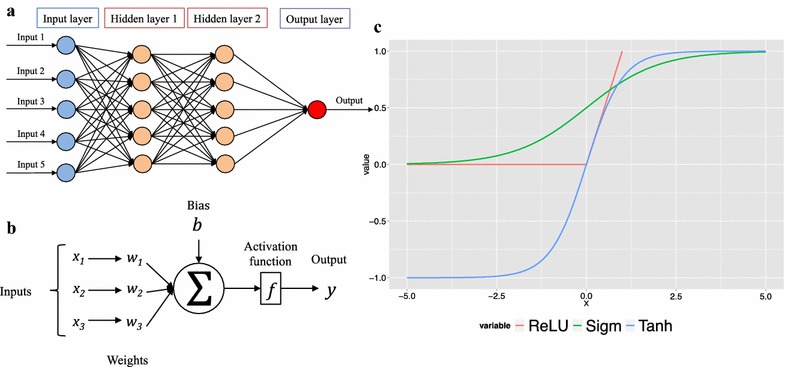
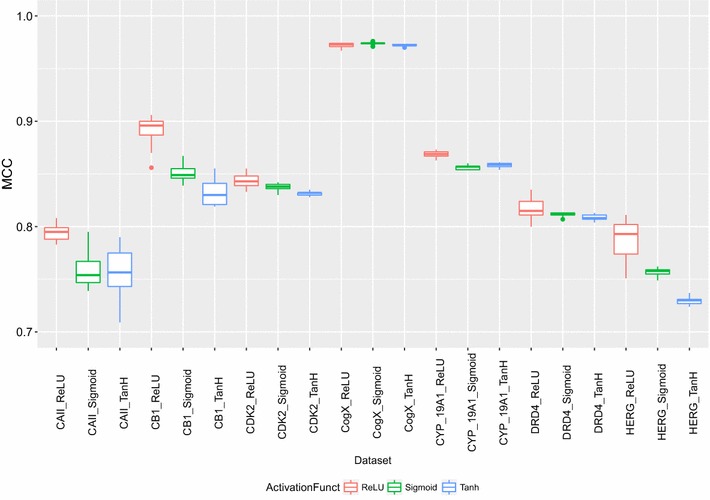
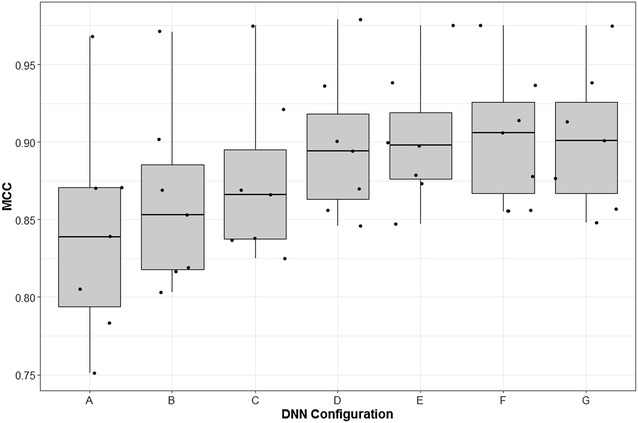
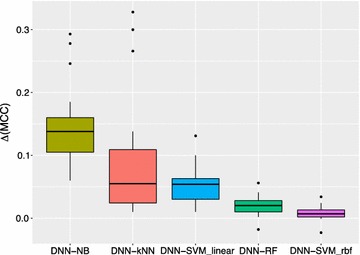
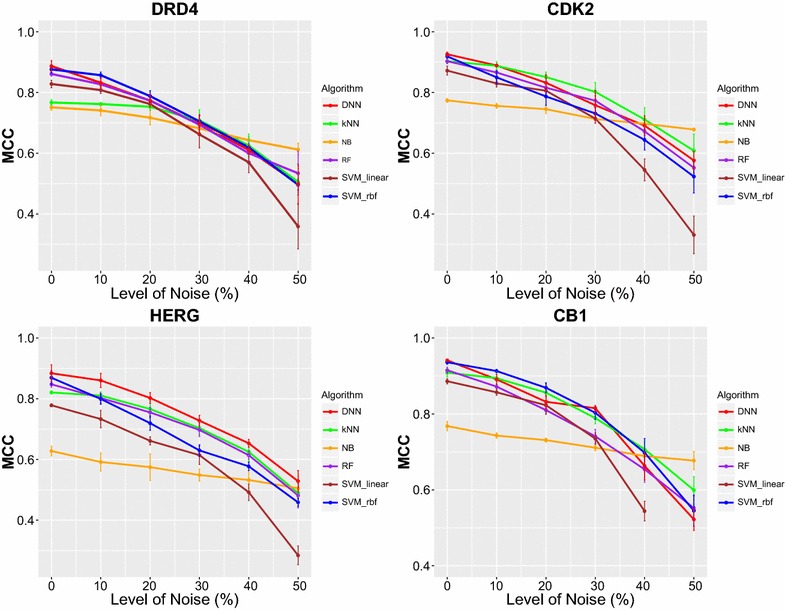
BACKGROUND: In recent years, research in artificial neural networks has resurged, now under the deep-learning umbrella, and grown extremely popular. Recently reported success of DL techniques in crowd-sourced QSAR and predictive toxicology competitions has showcased these methods as powerful tools in drug-discovery and toxicology research. The aim of this work was dual, first large number of hyper-parameter configurations were explored to investigate how they affect the performance of DNNs and could act as starting points when tuning DNNs and second their performance was compared to popular methods widely employed in the field of cheminformatics namely Naïve Bayes, k-nearest neighbor, random forest and support vector machines. Moreover, robustness of machine learning methods to different levels of artificially introduced noise was assessed. The open-source Caffe deep-learning framework and modern NVidia GPU units were utilized to carry out this study, allowing large number of DNN configurations to be explored. RESULTS: We show that feed-forward deep neural networks are capable of achieving strong classification performance and outperform shallow methods across diverse activity classes when optimized. Hyper-parameters that were found to play critical role are the activation function, dropout regularization, number hidden layers and number of neurons. When compared to the rest methods, tuned DNNs were found to statistically outperform, with p value <0.01 based on Wilcoxon statistical test. DNN achieved on average MCC units of 0.149 higher than NB, 0.092 than kNN, 0.052 than SVM with linear kernel, 0.021 than RF and finally 0.009 higher than SVM with radial basis function kernel. When exploring robustness to noise, non-linear methods were found to perform well when dealing with low levels of noise, lower than or equal to 20%, however when dealing with higher levels of noise, higher than 30%, the Naïve Bayes method was found to perform well and even outperform at the highest level of noise 50% more sophisticated methods across several datasets.
Overview
The claims and statistics of this paper haven’t been checked yet.
Run the check — free, no account needed. It reads the open-access text and checks the sources it cites.
Integrity signals
Registry
Cites
Statistics
Figures
Verification
Claims the paper makes
The claims and statistics of this paper haven’t been checked yet.
Run the check — free, no account needed. It reads the open-access text and checks the sources it cites.
Claims other papers make about this one
Each is checked against this paper’s own text: does it say what the citing paper says it does?
In the citing paper
“This comparison demonstrated that DNNs and support vector machines appear to be superior methods regardless of the descriptor type for training and 5-fold cross validation.”
From Exploiting machine learning for end-to-end drug discovery and development (2019) · cites this paper as [51]
In the citing paper
“Conversely, external testing of DNN models with a large test set did not perform as well as other machine learning methods.”
From Exploiting machine learning for end-to-end drug discovery and development (2019) · cites this paper as [51]
Self-check
Percentages, sums and reported differences re-computed from the paper’s own numbers.
The self-check needs the paper’s full text.
Citations
Cites
Breiman, L. (2001) · Machine Learning · doi:10.1023/a:1010933404324 · Cited by 133,538 · cited 1×
“RF was developed by Breiman and Cutler [60] and presents a number of advantages, which makes it attractive and well suited for chemin-formatic applications; (a) it is robust when dealing with large number of features, (b) achieves generally good performance, (c) resilient to over-fitting and (d)…”
LeCun, Y., Bengio, Y., & Hinton, G. (2015) · Nature · doi:10.1038/nature14539 · Cited by 84,126
Scikit-learn: Machine Learning in Python
Pedregosa, F., Varoquaux, G., Gramfort, A., Michel, V., Thirion, B., Grisel, O., Blondel, M., Müller, A., Nothman, J., Louppe, G., et al. (2012) · arXiv · doi:10.48550/arxiv.1201.0490 · Cited by 71,016
Cortes, C., & Vapnik, V. (1995) · Machine Learning · doi:10.1007/bf00994018 · Cited by 59,421
LIBSVM: A library for support vector machines
Chang, C.-C., & Lin, C.-J. (2011) · ACM Transactions on Intelligent Systems and Technology · doi:10.1145/1961189.1961199 · Cited by 40,918
Cortes, C., & Vapnik, V. N. (1995) · Machine Learning · doi:10.1023/a:1022627411411 · Cited by 34,565 · cited 1×
“SVMs was proposed by Cor-tes and Vapnik and can be applied for classification, regression and outliers detection tasks [65].”
(2014) · Cited by 33,419
Learning representations by back-propagating errors
Rumelhart, D. E., Hinton, G. E., & Williams, R. J. (1986) · Nature · doi:10.1038/323533a0 · Cited by 31,892 · cited 1×
“Deep neural networks are typically trained, by updating and adjusting neurons weights and biases, utilizing the supervised learning back-propagation algorithm in conjunction with optimization technique such as stochastic gradient descent [29, 30].”
A logical calculus of the ideas immanent in nervous activity
McCulloch, W. S., & Pitts, W. (1943) · The Bulletin of Mathematical Biophysics · doi:10.1007/bf02478259 · Cited by 18,566
Individual Comparisons by Ranking Methods
Wilcoxon, F. (1945) · Biometrics Bulletin · doi:10.2307/3001968 · Cited by 15,354
Research works printed but not linked: 2
- Aspuru-Guzik A, Duvenaud D, Maclaurin D, Aguilera-Iparraguire J, Gomez-Bombarelli R, Hirzel TD, Adams RP (2015) Convolutional networks on graphs for learning molecular fingerprints. In: Proceedings of neural information processing systems, Quebec, pp 2224–2232
- Barrett SJ, Langdon WB (2006) Advances in the application of machine learning techniques in drug discovery. Des Dev 36:99–110
Cited by
Sorted by citations
Items 101–200 of 317
A novel medical text classification model with Kalman filter for clinical decision making
Li, J., Huang, Q., Ren, S., Jiang, L., Deng, B., & Qin, Y. (2022) · Biomedical Signal Processing and Control · doi:10.1016/j.bspc.2022.104503 · Cited by 30
Predicting molecular activity on nuclear receptors by multitask neural networks
Valsecchi, C., Collarile, M., Grisoni, F., Todeschini, R., Ballabio, D., & Consonni, V. (2020) · Journal of Chemometrics · doi:10.1002/cem.3325 · Cited by 26
Lee, D., Jeong, S., Yun, S., & Lee, S. (2024) · Journal of the Science of Food and Agriculture · doi:10.1002/jsfa.13334 · Cited by 29
Classification of Ear Imagery Database using Bayesian Optimization based on CNN-LSTM Architecture
Mohammed, K. K., Hassanien, A. E., & Afify, H. M. (2022) · Journal of Imaging Informatics in Medicine · doi:10.1007/s10278-022-00617-8 · Cited by 24
“Many works [39, 40] presented to define the extent of hyperparameters’ influence on CNN architecture.”
BackgroundRavikumar, B., Timonen, S., Alam, Z., Parri, E., Wennerberg, K., & Aittokallio, T. A. (2019) · Cell chemical biology · doi:10.1016/j.chembiol.2019.08.007 · Cited by 24
Advances in machine learning for optimizing pharmaceutical drug discovery
Ogbonna, U. E., Ofoezie, E. F., Babalola, O. O., Ottu, P. O., Ogbonna, C. A., Olisakwe, S. C., George, E. T., Babarinde, S., Omaba, O. J., Chukwuemeka, C. G., et al. (2025) · Current Proteomics · doi:10.1016/j.curpro.2025.100015 · Cited by 25
Sabando, M. V., Ponzoni, I., & Soto, A. J. (2019) · Applied Soft Computing · doi:10.1016/j.asoc.2019.105777 · Cited by 23
“Although the application of deep learning in QSAR modeling is still in its beginnings, several research studies have developed deep learning-based models for various drug discovery problems successfully [49–51].”
MethodNaga, D., Muster, W., Musvasva, E., & Ecker, G. F. (2022) · Journal of Cheminformatics · doi:10.1186/s13321-022-00603-w · Cited by 23
“Extended Circular Finger Prints with radius 4 (ECFP4) [16] were selected in this study since they are considered amongst the best performing features in bioactivity predictions [12, 17–19].”
MethodSinhal, R., Ansari, I. A., & Jain, D. K. (2019) · Journal of Real-Time Image Processing · doi:10.1007/s11554-019-00937-z · Cited by 22
Rachmatullah, M. I. C., Santoso, J., & Surendro, K. (2020) · IEEE Access · doi:10.1109/access.2020.3036853 · Cited by 23
“One important aspect for designing neural networks is due to its architecture having generalization capabilities [8], [9].”
BackgroundMethodInfluentialAlazzam, M. B., Mohammad, W. T., Younis, M. B., Sayeh, A. M. A., Hajjej, F., AlGhamdi, A. S., & Rahman, M. A. (2022) · Computational and Mathematical Methods in Medicine · doi:10.1155/2022/8332737 · Cited by 22
RetractedWang, H., Liu, B., Lei, J., & Zhao, N. (2024) · Ocean Engineering · doi:10.1016/j.oceaneng.2024.117258 · Cited by 23
Mamada, H., Nomura, Y., & Uesawa, Y. (2021) · ACS Omega · doi:10.1021/acsomega.1c03689 · Cited by 22
pdCSM-GPCR: predicting potent GPCR ligands with graph-based signatures
Velloso, J. P. L., Ascher, D. B., & Pires, D. E. V. (2021) · Bioinformatics Advances · doi:10.1093/bioadv/vbab031 · Cited by 22
Assessing facial weakness in myasthenia gravis with facial recognition software and deep learning
Ruiter, A. M., Wang, Z., Yin, Z., Naber, W. C., Simons, J., Blom, J. T., van Gemert, J. C., Verschuuren, J. J. G. M., & Tannemaat, M. R. (2023) · Annals of Clinical and Translational Neurology · doi:10.1002/acn3.51823 · Cited by 22
Deep Learning in Environmental Toxicology: Current Progress and Open Challenges
Tan, H., Jin, J., Fang, C., Zhang, Y., Chang, B., Zhang, X., Yu, H., & Shi, W. F. (2023) · ACS ES&T Water · doi:10.1021/acsestwater.3c00152 · Cited by 22
Clinically Applicable Deep Learning Algorithm Using Quantitative Proteomic Data
Kim, H., Kim, Y., Han, B., Jang, J., & Kim, Y. (2019) · Journal of Proteome Research · doi:10.1021/acs.jproteome.9b00268 · Cited by 22
AKT Inhibitors: The Road Ahead to Computational Modeling-Guided Discovery
Halder, A. K., & Cordeiro, M. N. D. S. (2021) · International Journal of Molecular Sciences · doi:10.3390/ijms22083944 · Cited by 21
“One can see that both these models are not random, but truly statistically significant classifiers, since the area under the ROC curves (ROC AUC scores calculated with Scikit-learn [44]) for all the sets are statistically higher (>0.88) than that of a random classifier model (ROC AUC score = 0.5).”
MethodInfluentialLateef, R. A. R., & Abbas, A. R. (2022) · Engineering and Technology Journal · doi:10.30684/etj.v40i4.2054 · Cited by 25
“The results showed that DNNs outperformed the selected methods [8].”
ResultAutomated discovery of GPCR bioactive ligands
Raschka, S. (2019) · Current Opinion in Structural Biology · doi:10.1016/j.sbi.2019.02.011 · Cited by 23
Predicting demand for new products in fashion retailing using censored data
Sousa, M. S., Loureiro, A. L. D., & Miguéis, V. L. (2024) · Expert Systems with Applications · doi:10.1016/j.eswa.2024.125313 · Cited by 20
Zhou, Y., Zhang, Z., Ding, F., Ahn, S., Wu, K., & Ran, B. (2024) · IEEE Transactions on Intelligent Transportation Systems · doi:10.1109/tits.2024.3412329 · Cited by 20
“The feature extraction module consists of two or greater LSTM layers, which make the neural network as ‘deep’ [36], [37], in order to capture the complex mapping relationship between the input and prediction.”
Ni, H.-P., Liu, C., Li, Y., Chong, W. O., & Chou, J. (2025) · Building and Environment · doi:10.1016/j.buildenv.2025.112589 · Cited by 19
An overview of recent advances and challenges in predicting compound-protein interaction (CPI)
Li, Y., Fan, Z., Rao, J., Chen, Z., Chu, Q., Zheng, M., & Li, X. (2023) · Medical Review · doi:10.1515/mr-2023-0030 · Cited by 19
Self-citationMondal, A., & Sharma, S. (2024) · International Journal of Heat and Mass Transfer · doi:10.1016/j.ijheatmasstransfer.2024.125499 · Cited by 19
Rezaeian, N., Gurina, R., Saltykova, O. A., Hezla, L., Nohurov, M., & Kashyzadeh, K. R. (2024) · Applied Sciences · doi:10.3390/app14083354 · Cited by 20
Handwritten Digit Recognition: Hyperparameters-Based Analysis
Albahli, S., Alhassan, F. M., Albattah, W., & Khan, R. U. (2020) · Applied Sciences · doi:10.3390/app10175988 · Cited by 19
“Results for efficiency of each neural network (NN) based on different hyperparameters; outperformed standard tuning methods, but their approach is still su ering from limited meta-features”
BackgroundClassifying functional nuclear images with convolutional neural networks: a survey
Lin, Q., Man, Z., Cao, Y., Deng, T., Han, C., Cao, C., Zhang, L., Zeng, S., Gao, R., Wang, W., et al. (2020) · IET Image Processing · doi:10.1049/iet-ipr.2019.1690 · Cited by 20
Prediction of Chromatography Conditions for Purification in Organic Synthesis Using Deep Learning
Vaškevičius, M., Kapočiūtė-Dzikienė, J., & Šlepikas, L. (2021) · Molecules · doi:10.3390/molecules26092474 · Cited by 18
“This activation function has statistically outperformed sigmoid and Tanh activation functions in similar bioactivity modeling tasks [57].”
MethodMilošević, D., Vodanović, M., Galić, I., & Subašić, M. (2022) · IEEE Access · doi:10.1109/access.2022.3187959 · Cited by 18
Shi, Y., Zhang, X., Yang, Y., Cai, T., Peng, C., Wu, L., Zhou, L., Han, J., Ma, M., Zhu, W., et al. (2023) · Computers in Biology and Medicine · doi:10.1016/j.compbiomed.2023.107283 · Cited by 20
Campaign participation prediction with deep learning
Ayvaz, D., Aydoğan, R., Akçura, M. T., & Şensoy, M. (2021) · Electronic Commerce Research and Applications · doi:10.1016/j.elerap.2021.101058 · Cited by 18
Chen, B., Zhang, H., & Li, M. (2019) · Neural Computing and Applications · doi:10.1007/s00521-018-3956-5 · Cited by 18
Drug Design: Where We Are and Future Prospects
Zagotto, G., & Bortoli, M. (2021) · Molecules · doi:10.3390/molecules26227061 · Cited by 18
“Other recent studies t at benchmarke DL against other machine learnin algor thms for properties prediction, using large biomolecular datasets comprising hundreds of thousands of compounds, consis ently showed that deep neur l networks ar the best performing approach [42,43].”
BackgroundImproved frost forecast using machine learning methods
Rozante, J. R., Ramírez, E., Ramirez, D., & Rozante, G. (2023) · Artificial Intelligence in Geosciences · doi:10.1016/j.aiig.2023.10.001 · Cited by 17
Qin, W., Pan, J., Ge, P., Liu, F., & Chen, Z. (2023) · Engineering Applications of Artificial Intelligence · doi:10.1016/j.engappai.2023.107683 · Cited by 17
Benchmarking 2D/3D/MD-QSAR Models for Imatinib Derivatives: How Far Can We Predict?
Zin, P. P. K., Borrel, A., & Fourches, D. (2020) · Journal of Chemical Information and Modeling · doi:10.1021/acs.jcim.0c00200 · Cited by 19
Rodríguez-Pérez, R., & Bajorath, J. (2021) · Journal of Computer-Aided Molecular Design · doi:10.1007/s10822-021-00376-8 · Cited by 18
Shin, D. S., Lee, C. H., Kim, S. H., Park, D. Y., Oh, J. W., Gal, C. W., Koo, J. M., Park, S. J., & Lee, S. C. (2019) · Powder Technology · doi:10.1016/j.powtec.2019.05.042 · Cited by 17
Electromagnetic Modulation Signal Classification Using Dual-Modal Feature Fusion CNN
Bai, J., Yao, J., Qi, J., & Wang, L. (2022) · Entropy · doi:10.3390/e24050700 · Cited by 16
SQL Injection Vulnerability Detection Using Deep Learning: A Feature-based Approach
Hassan, M. M., Ahmad, R. B., & Ghosh, T. (2021) · Indonesian Journal of Electrical Engineering and Informatics (IJEEI) · doi:10.52549/.v9i3.3131 · Cited by 17
“solving detection problems using deep learning [59-65].”
MethodReCRNet: a deep residual network for crack detection in historical buildings
Reis, H. Ç., & Khoshelham, K. (2021) · Arabian Journal of Geosciences · doi:10.1007/s12517-021-08491-4 · Cited by 15
Bynagari, N. B. (2018) · Asian Journal of Applied Science and Engineering · doi:10.18034/ajase.v7i1.46 · Cited by 15
“…begin with, many technique comparison studies only include a single or a small number of assays or targets (Ma et al., 2015; Ramsundar et al., 2015; Kearnes et al., 2016; Koutsoukas et al., 2017), whereas compound databases, such as ChEMBL (Bento et al., 2014; Bynagari, 2015), have many more tests.”
MethodNguyen, D. C., & Ishikawa, Y. (2023) · Heliyon · doi:10.1016/j.heliyon.2023.e18097 · Cited by 15
A Machine Learning Framework for Olive Farms Profit Prediction
Christias, P., & Mocanu, M. (2021) · Water · doi:10.3390/w13233461 · Cited by 17
Deep-learning- and pharmacophore-based prediction of RAGE inhibitors
Huang, D. Z., Kouznetsova, V. L., & Tsigelny, I. F. (2020) · Physical Biology · doi:10.1088/1478-3975/ab6819 · Cited by 15
“Koutsoukas and colleagues used datasets of 1031 compounds on average for their benchmark study [35].”
MethodZhang, C., Xiao, L., Wang, J. J., Song, Q., & Miao, S. (2025) · Trends in Food Science & Technology · doi:10.1016/j.tifs.2025.104964 · Cited by 14
Insight into Automatic Image Diagnosis of Ear Conditions Based on Optimized Deep Learning Approach
Afify, H. M., Mohammed, K. K., & Hassanien, A. E. (2023) · Annals of Biomedical Engineering · doi:10.1007/s10439-023-03422-8 · Cited by 22
“Some studies [33, 34] were performed to determine the amount of hyperparameters' influence on CNN design.”
BackgroundUddin, M. G., Bamal, A., Diganta, M. T. M., Sajib, A. M., Rahman, A., Abioui, M., & Olbert, A. I. (2025) · Alexandria Engineering Journal · doi:10.1016/j.aej.2025.03.022 · Cited by 14
Determining the Neural Network Topology
Ibnu, C. R. M., Santoso, J., & Surendro, K. (2019) · International Conference on Software and Computer Applications (ICSCA) · doi:10.1145/3316615.3316697 · Cited by 14
“The determination of the number of hidden layers and the number of neurons is very important and has a large influence on the performance of deep neural networks [5][6].”
BackgroundAdvances in the prediction of mouse liver microsomal studies: From machine learning to deep learning
Renn, A., Su, B., Hsin, L., Sun, J., & Tseng, Y. J. (2020) · Wiley Interdisciplinary Reviews Computational Molecular Science · doi:10.1002/wcms.1479 · Cited by 14
“Similarly, Koutsoukas et al.(81) show that a “tuned” (hyperparameters such as activation function, dropout regularization, number hidden layers, and number of neurons) DNN model statistically outperforms naive Bayesian, knearest neighbor, SVM, and RF methods with p value < .”
MethodLi, T., Mao, J., Yu, J., Zhao, Z., Chen, M., Yao, Z., Fang, L., & Hu, B. (2024) · Quantitative Imaging in Medicine and Surgery · doi:10.21037/qims-24-234 · Cited by 13
Davoodi, S., Longe, P. O., Makarov, N., Wood, D. A., Thanh, H. V., & Mehrad, M. (2025) · Energy & Fuels · doi:10.1021/acs.energyfuels.4c05843 · Cited by 13
Black Magic in Deep Learning: How Human Skill Impacts Network Training
Anand, K., Wang, Z., Loog, M., & van Gemert, J. C. (2020) · British Machine Vision Conference (BMVC) · doi:10.5244/c.34.137 · Cited by 16
Frontiers in the Solicitation of Machine Learning Approaches in Vegetable Science Research
Sharma, M., Kaushik, P., & Chawade, A. (2021) · Sustainability · doi:10.3390/su13158600 · Cited by 13
“Further, deep ANNs, also known as deep neural networks (DNNs) or deep learning (DL), allow computational models with multiple processing layers to learn complex data [38].”
BackgroundHyper Parameters Selection for Image Classification in Convolutional Neural Networks
Nazir, S., Patel, S., & Patel, D. A. (2018) · IEEE International Conference on Cognitive Informatics & Cognitive Computing (ICCI*CC) · doi:10.1109/icci-cc.2018.8482081 · Cited by 13
“The activation functions have been compared in [14] and ReLU provided the best results.”
BackgroundMethodInfluentialAssessing Hyper Parameter Optimization and Speedup for Convolutional Neural Networks
Nazir, S., Patel, S., & Patel, D. A. (2020) · International Journal of Artificial Intelligence and Machine Learning · doi:10.4018/ijaiml.2020070101 · Cited by 17
“A manual search for DNNs is described in (Koutsoukas et al., 2017) by considering hyper parameterssuchasactivationfunctions,learningrate,numberofneuronsperlayer,numberofhidden layers,anddropoutregularization.”
Machine Learning Algorithms for Smart Gas Sensor Arrays
Nath, V. G., Bharath, S. P., Dsouza, A., & Angappane, S. (2024) · Advanced structured materials · doi:10.1007/978-981-97-1390-5_8 · Cited by 15
Al‐Rousan, N., & Al-Najjar, H. M. (2021) · Journal of the Chinese Institute of Engineers · doi:10.1080/02533839.2020.1856726 · Cited by 12
Application of Deep Learning in Biomedical Informatics and Healthcare
Nayak, D. K., Mishra, P., Das, P., Jamader, A. R., & Acharya, B. (2021) · Intelligent systems reference library · doi:10.1007/978-981-16-5304-9_9 · Cited by 13
Deep Learning Generative Indonesian Response Model Chatbot for JKN-KIS
Khadija, M. A., Nurharjadmo, W., & Widyawan, W. (2022) · International Conference on Smart Technology, Applied Informatics, and Engineering (APICS) · doi:10.1109/apics56469.2022.9918686 · Cited by 12
“In the Deep Learning model, the determination of hyperparameter values is related to the architectural form [27].”
BackgroundBunch graph based dimensionality reduction using auto-encoder for character recognition
Bhadoria, R. S., Samanta, S., Pathak, Y., Shukla, P. K., Zubi, A. A., & Kaur, M. (2022) · Multimedia Tools and Applications · doi:10.1007/s11042-022-12907-y · Cited by 12
“The first hidden layer, which is next to the input layer, has dimension as the average of dimension or number of neurons of the input layer and central layer [16].”
BackgroundTutorial: Artificial neural networks to analyze single-case experimental designs.
Lanovaz, M. J., & Bailey, J. D. (2022) · Psychological Methods · doi:10.1037/met0000487 · Cited by 11
Computational Advancements in Cancer Combination Therapy Prediction
Flanary, V. L., Fisher, J. L., Wilk, E. J., Howton, T. C., & Lasseigne, B. N. (2023) · JCO Precision Oncology · doi:10.1200/po.23.00261 · Cited by 11
Thapa, V., Galande, A. S., Ram, G. H. P., & John, R. (2024) · Journal of Biomedical Optics · doi:10.1117/1.jbo.29.1.016010 · Cited by 13
“60 The nonlinear activation function choices are sigmoid function h ð a Þ ¼ 1 ð 1 þ exp ð − a ÞÞ , RELU h ð a Þ ¼ max ð 0 ; a Þ , and hyperbolic tangent tan h ð a Þ function.”
Lee, D. H., Park, E. G., Lee, Y. J., Jeong, H.-S., Roh, H.-Y., Jeong, G.-R., Kim, S.-W., & Kim, H. (2025) · International Journal of Molecular Sciences · doi:10.3390/ijms262210925 · Cited by 13
AI-driven GPCR analysis, engineering, and targeting
Velloso, J. P. L., Kovacs, A. S., Pires, D. E. V., & Ascher, D. B. (2024) · Current Opinion in Pharmacology · doi:10.1016/j.coph.2023.102427 · Cited by 10
Survey on Current Trend in Emotion Recognition Techniques Using Deep Learning
Adebiyi, M. O., Olaniyan, D., Adebiyi, A. A., & Okunola, A. A. (2023) · International Conference on Science, Engineering and Business for Sustainable Development Goals (SEB-SDG) · doi:10.1109/seb-sdg57117.2023.10124548 · Cited by 11
“A deep learning model is composed of several layers of artificial neural networks, each of which processes the input data and passes it on to the next layer [32].”
BackgroundZhu, Y. (2020) · International Journal of Electrical Engineering Education · doi:10.1177/0020720920936839 · Cited by 9
RetractedFernandes, E., Wildemberg, P. F., & Santos, J. D. (2020) · Workshop of Computer Vision (WVC) · doi:10.5753/wvc.2020.13491 · Cited by 9
“In [13], Koutsoukas, Monaghan, Li & Huan compare the performance of a deep neural network (DNN) [4], Naïve Bayes [14], K-nearest neighbours [15], random forest [16] and SVM methods for the problem of modeling bio-activity data, and conclude that DNNs, with optimal hyper-parameters and low noise…”
BackgroundAravinda, P. T., Sooriyaarachchi, S. J., Gamage, C. D., & Kottege, N. (2021) · International Conference on Information Networking · doi:10.1109/icoin50884.2021.9334026 · Cited by 9
“ReLu as activation function, Mean Squared Error (MSE) and Mean Absolute Error (MAE) as loss functions, and three hidden layers are found to be the best for noisy data sets in [18] and [19].”
BackgroundDiffraction denoising using self‐supervised learning
Markovic, M., Malehmir, R., & Malehmir, A. (2023) · Geophysical Prospecting · doi:10.1111/1365-2478.13340 · Cited by 9
“For the model training, we optimized a set of parameters, the so-called hyperparameters to achieve, among others, an optimal computational time (e.g. Koutsoukas et al., 2017).”
MethodSchieferdecker, S., Eberlein, A., Vock, E., & Beilmann, M. (2022) · Computational Toxicology · doi:10.1016/j.comtox.2022.100226 · Cited by 8
An AI-based Liver Disease Prediction Model based on Pearson Correlation Feature Selection Method
Kumar, S., & Rani, P. (2024) · Biomedical & Pharmacology Journal · doi:10.13005/bpj/3016 · Cited by 8
Liu, L., Wang, T., Long, X., & Ji, S. (2025) · Computational Particle Mechanics · doi:10.1007/s40571-025-00928-x · Cited by 8
Proteochemometric Modeling Identifies Chemically Diverse Norepinephrine Transporter Inhibitors
Bongers, B. J., Sijben, H. J., Hartog, P. B. R., Tarnovskiy, A., IJzerman, A. P., Heitman, L. H., & van Westen, G. J. P. (2023) · Journal of Chemical Information and Modeling · doi:10.1021/acs.jcim.2c01645 · Cited by 9
Kumar, N., & Acharya, V. (2023) · Computers in Biology and Medicine · doi:10.1016/j.compbiomed.2022.106525 · Cited by 8
DZ-OPINION: Algerian Dialect Opinion Analysis Model with Deep Learning Techniques
Bousmaha, K. Z., Hamadouche, K., Gourara, I., & Belguith, L. H. (2022) · Revue d intelligence artificielle · doi:10.18280/ria.360610 · Cited by 8
“If the trained model is not valid, a parameter review process will be implemented during which the neural network hyper-parameters are modified in order to obtain better results [18].”
MethodArtificial Intelligence in Biological Activity Prediction
Correia, J. V. M., Resende, T., Baptista, D., & Rocha, M. (2019) · Advances in intelligent systems and computing · doi:10.1007/978-3-030-23873-5_20 · Cited by 9
Comparative Analysis of use of Machine Learning Algorithm for Prediction of Sales
Ravikant Suryawanshi, S. M. (2024) · Journal of Electrical Systems · doi:10.52783/jes.1383 · Cited by 7
Amin, R., Mo, Y., Richter, F., Kurzer, C., Werther, N., & Rein, G. (2024) · Fire Technology · doi:10.1007/s10694-024-01593-x · Cited by 7
“These hyperparameters, include the learning rate, number of layers, number of neurons, activation and error functions [45, 46].”
Current advancement in AI-integrated drug discovery: Methods and applications
Mathur, Y., Choudhury, A., Prabha, S., Saeed, M. U., Sulaimani, M. N., Mohammad, T., & Hassan, M. I. (2025) · Biotechnology Advances · doi:10.1016/j.biotechadv.2025.108642 · Cited by 8
Automated Parameter Tuning of Artificial Neural Networks for Software Defect Prediction
Zhao, Y., & Qian, H. (2018) · International Conference on Advances in Image Processing (ICAIP) · doi:10.1145/3239576.3239622 · Cited by 10
“[8] point out that the number of neurons per hidden layer is found to depend on the dataset and should be optimized on a case-by-case basis.”
BackgroundA Carbonate Reservoir Prediction Method Based on Deep Learning and Multiparameter Joint Inversion
Tian, X., Huang, H., Cheng, S., Wang, C., Li, P., & Hao, Y. (2022) · Energies · doi:10.3390/en15072506 · Cited by 8
One-Day-Ahead Wind Speed Forecasting Based on Advanced Deep and Hybrid Quantum Machine Learning
Blazakis, K. V., Katsigiannis, Y. A., Schetakis, N. A., & Stavrakakis, G. S. (2024) · Frontiers of artificial intelligence, ethics and multidisciplinary applications. · doi:10.1007/978-981-99-9836-4_13 · Cited by 7
Prediction of antischistosomal small molecules using machine learning in the era of big data
Kwofie, S. K., Agyenkwa-Mawuli, K., Broni, E., Miller, W. A., & Wilson, M. D. (2021) · Molecular Diversity · doi:10.1007/s11030-021-10288-2 · Cited by 7
“Examples are sigmoid, rectified linear unit (ReLU), LeakyReLU, and softmax [80, 81].”
BackgroundTarget State Optimization: Drivability Improvement for Vehicles with Dual Clutch Transmissions
Schmiedt, M., He, P., & Rinderknecht, S. (2022) · Applied Sciences · doi:10.3390/app122010283 · Cited by 7
“In this study, the number of layers and the number of neurons per layer (model de ‐ sign hyperparameters [64]) as well as the learning rate as another important hyperparam ‐ eter, are optimized [65].”
BackgroundSmall Drug Molecule Classification Using Deep Neural Networks
Korkmaz, S. (2019) · Turkiye Klinikleri Journal of Biostatistics · doi:10.5336/biostatic.2019-64948 · Cited by 7
“25 Lenselink et al (2017) compared performance of a DNN model with NB, RF, SVM and logistic regression using ChEMBL bioactivity dataset.”
MethodPredicting Ca2+ and Mg2+ ligand binding sites by deep neural network algorithm
Sun, K., Hu, X., Feng, Z., Wang, H., Lv, H., Wang, Z., Zhang, G., Xu, S., & You, X. (2021) · BMC Bioinformatics · doi:10.1186/s12859-021-04250-0 · Cited by 5
“Considering the influence on model accuracy, computing resources and computing time, referring to previous studies [27, 28], we selected three hyper-parameters, namely, the number of hidden layers, the number of hidden layer nodes and the batch size, to optimize, and gave the value range of…”
MethodNarayanan, P. S., & Runthala, A. (2022) · Biocatalysis and Biotransformation · doi:10.1080/10242422.2022.2030317 · Cited by 6
“the data size is 1 lakh samples for training then it can be split to a batch size of 10,000 samples to be trained at a time and likewise 10 batches of the whole dataset [43].”
BackgroundSecurity Versus Accuracy: Trade-Off Data Modeling to Safe Fault Classification Systems
Zhuo, Y., Song, Z., & Ge, Z. (2023) · IEEE Transactions on Neural Networks and Learning Systems · doi:10.1109/tnnls.2023.3251999 · Cited by 6
“In particular, this work concerns the hyperparameters of two widely used classification models, SVM and NN. [19], such as the number of hidden layers, the number of neurons in each layer, the activation function types, regularization weight, and learning rate.”
MethodLehavi, A., & Kim, S. (2022) · International Conference on Machine Learning and Applications · doi:10.1109/icmla55696.2022.00211 · Cited by 6
Novel Deep CNN Model based Breast Cancer Classification
Karthik, M., Thangavel, K., & Sasirekha, K. (2023) · International Conference on Computing Methodologies and Communication (ICCMC) · doi:10.1109/iccmc56507.2023.10084229 · Cited by 6
“The performance of the proposed custom model is very challenging due to the complexity of the network [10].”
BackgroundMorabbi, S., Soltanizadeh, H., Mozaffari, S., & Fadaeieslam, M. J. (2023) · The Journal of Supercomputing · doi:10.1007/s11227-023-05448-0 · Cited by 6
“DNNs with larger number of parameters typically outperform shallow models [46].”
BackgroundHwang, J., Lustig, N., Jung, M., & Lee, J. (2023) · Heliyon · doi:10.1016/j.heliyon.2023.e18086 · Cited by 6
“We denoted the FNN with more than one hidden layer as DNN following the definition in previous studies [39 – 42].”
MethodYang, S., Kim, M., & Lee, S.-J. (2023) · Electronics · doi:10.3390/electronics12153294 · Cited by 6
“…networks with two or more hidden layers are commonly referred to as “deep”, and using two to five hidden layers can Note that refs. provide higher [19–22] have reported that artificial neural networks with two or more hidden layers are commonly referred “deep”, and using two to five hidden layers…”
Decoding phenotypic screening: A comparative analysis of image representations
Borowa, A., Rymarczyk, D., Żyła, M., Kańduła, M. M., Sánchez-Fernández, A., Rataj, K., Struski, Ł., Tabor, J., & Zieliński, B. (2024) · Computational and Structural Biotechnology Journal · doi:10.1016/j.csbj.2024.02.022 · Cited by 5
“This procedure follows previous works in the field [40].”
MethodHusso, M., Afara, I. O., Nissi, M. J., Kuivanen, A., Halonen, P. J., Tarkia, M., Teuho, J., Saunavaara, V., Vainio, P. A., Sipola, P., et al. (2020) · Annals of Biomedical Engineering · doi:10.1007/s10439-020-02591-0 · Cited by 6
Prasad, P. J. R., Survarachakan, S., Khan, Z. A., Lindseth, F., Elle, O. J., Albregtsen, F., & Kumar, R. P. (2021) · Electronics · doi:10.3390/electronics10040431 · Cited by 6
Tian, Y., Lei, X., Liu, X., Liu, M., Wen, X., & Wang, H. E. (2019) · Advances in Mechanical Engineering · doi:10.1177/1687814018824812 · Cited by 5
Metadata
- Authors
- Koutsoukas, A., Monaghan, K. J., Li, X., & Huan, J.
- Affiliations
- University of Kansas (US)
- Corresponding author
- Huan, Jun
- ORCID
- Venue
- Journal of Cheminformatics
- Published
- 2017-06-28
- Volume
- 9
- Issue
- 1
- Pages
- 42-42
- ISSN
- 1758-2946 (ISSN-L)
- PMC
- PMC5489441
- OpenAlex
- W2731161895
- Cited by
- 315
- References
- 69
- Citations by year
- 2026: 12 · 2025: 25 · 2024: 40 · 2023: 42 · 2022: 53 · 2021: 55 · 2020: 32 · 2019: 33 · 2018: 22 · 2017: 1
- FWCI
- 18.06
- Type
- journal article
- Language
- en
- Open access
- gold
- doi.org
- Locations
- Journal of Cheminformatics (publishedVersion, cc-by)
- PubMed Central (publishedVersion, cc-by)
- PubMed (publishedVersion)
- National University of Singapore (submittedVersion, cc-by)
- DOAJ (DOAJ: Directory of Open Access Journals) (submittedVersion)
- Funders
- National Science Foundation (CNS 1337899)
- Topics
- Life Sciences › Pharmacology, Toxicology and Pharmaceutics › Drug Discovery › Computational Drug Discovery Methods
- Physical Sciences › Materials Science › Materials Chemistry › Machine Learning in Materials Science
- Physical Sciences › Computer Science › Artificial Intelligence › Neural Networks and Applications
- Keywords
- deep neural network, hyperparameter optimization, bioactivity prediction, QSAR, predictive toxicology, feedforward neural networks, noise robustness, activation functions, dropout regularization, Caffe, drug discovery, naive Bayes, k-nearest neighbors, random forest, support vector machine
About these checks
Registry, retraction, Cites and statistics results are computed, not judged, with one exception: a printed reference that no index lists is read once by a model before it counts as a citation error. Claims are extracted by a model and kept only when their quote appears verbatim in the text; each cited source is then checked, with a model’s help, for whether it says what the claim relies on. Those verdicts can be wrong — read the claim’s quote and the cited source before relying on one.
Statistics and arithmetic are recomputed, not judged.
Confidence bands are shown only for fields calibrated on our annotated test set. None is calibrated yet, so no band is shown.
What counts as a claim ›How we measure confidence ›How we check this ›
Are you an author, or do you see a problem with this page? Request a review
