

The DOI matches its Crossref record; 71 of the 71 references it cites were found in a registry or an index.
Deep-learning: investigating deep neural networks hyper-parameters and comparison of performance to shallow methods for modeling bioactivity data
Open accessAbstract
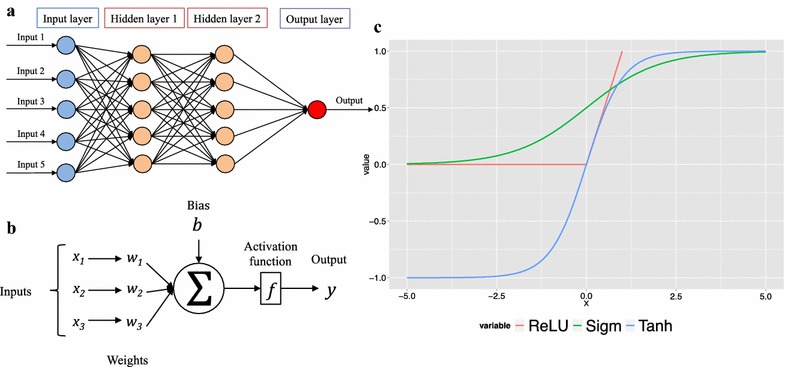
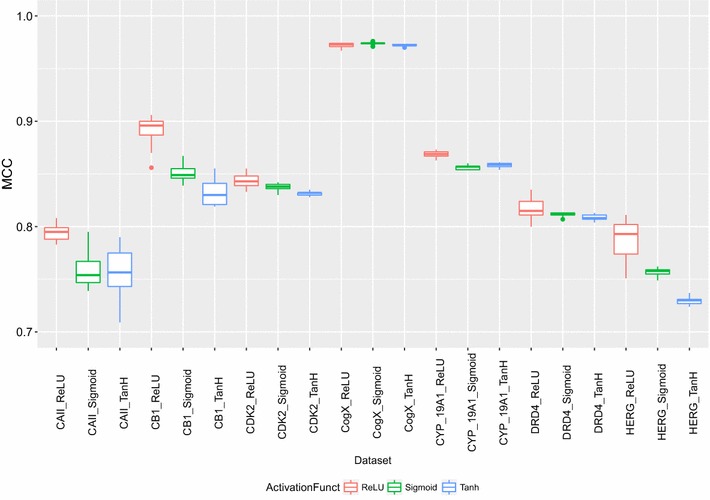
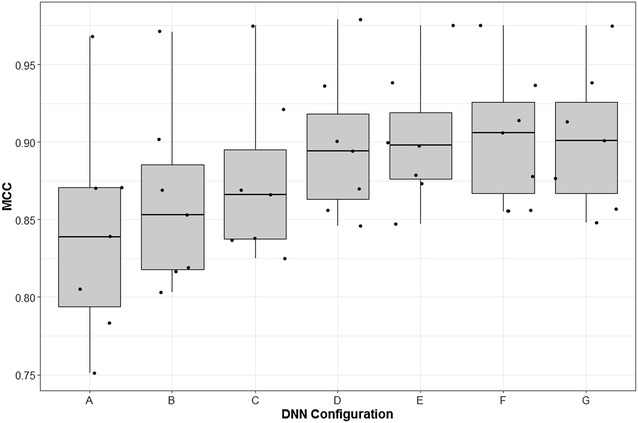
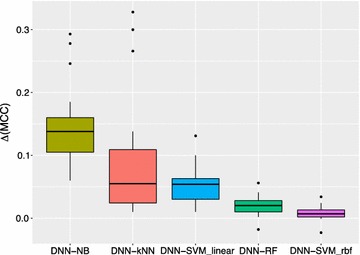
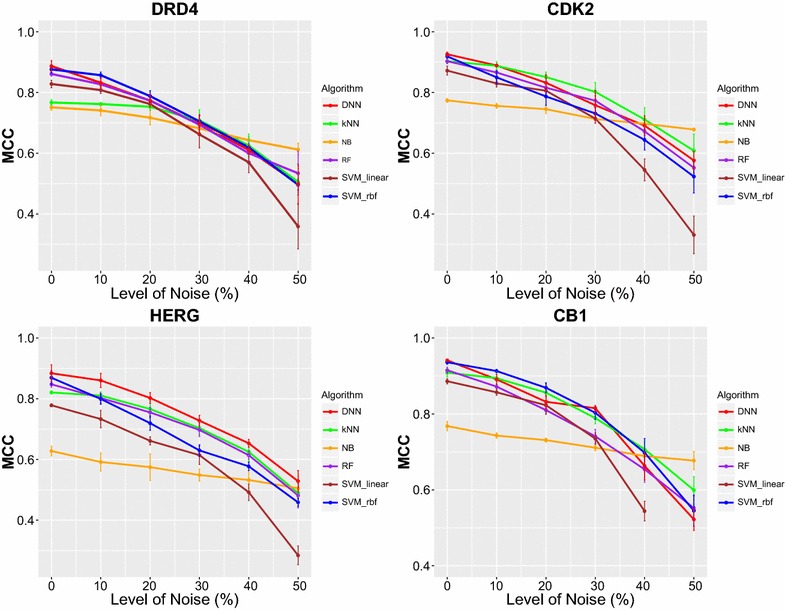
BACKGROUND: In recent years, research in artificial neural networks has resurged, now under the deep-learning umbrella, and grown extremely popular. Recently reported success of DL techniques in crowd-sourced QSAR and predictive toxicology competitions has showcased these methods as powerful tools in drug-discovery and toxicology research. The aim of this work was dual, first large number of hyper-parameter configurations were explored to investigate how they affect the performance of DNNs and could act as starting points when tuning DNNs and second their performance was compared to popular methods widely employed in the field of cheminformatics namely Naïve Bayes, k-nearest neighbor, random forest and support vector machines. Moreover, robustness of machine learning methods to different levels of artificially introduced noise was assessed. The open-source Caffe deep-learning framework and modern NVidia GPU units were utilized to carry out this study, allowing large number of DNN configurations to be explored. RESULTS: We show that feed-forward deep neural networks are capable of achieving strong classification performance and outperform shallow methods across diverse activity classes when optimized. Hyper-parameters that were found to play critical role are the activation function, dropout regularization, number hidden layers and number of neurons. When compared to the rest methods, tuned DNNs were found to statistically outperform, with p value <0.01 based on Wilcoxon statistical test. DNN achieved on average MCC units of 0.149 higher than NB, 0.092 than kNN, 0.052 than SVM with linear kernel, 0.021 than RF and finally 0.009 higher than SVM with radial basis function kernel. When exploring robustness to noise, non-linear methods were found to perform well when dealing with low levels of noise, lower than or equal to 20%, however when dealing with higher levels of noise, higher than 30%, the Naïve Bayes method was found to perform well and even outperform at the highest level of noise 50% more sophisticated methods across several datasets.
Overview
The claims and statistics of this paper haven’t been checked yet.
Run the check — free, no account needed. It reads the open-access text and checks the sources it cites.
Integrity signals
Registry
Cites
Statistics
Figures
Verification
Claims the paper makes
The claims and statistics of this paper haven’t been checked yet.
Run the check — free, no account needed. It reads the open-access text and checks the sources it cites.
Claims other papers make about this one
Each is checked against this paper’s own text: does it say what the citing paper says it does?
In the citing paper
“This comparison demonstrated that DNNs and support vector machines appear to be superior methods regardless of the descriptor type for training and 5-fold cross validation.”
From Exploiting machine learning for end-to-end drug discovery and development (2019) · cites this paper as [51]
In the citing paper
“Conversely, external testing of DNN models with a large test set did not perform as well as other machine learning methods.”
From Exploiting machine learning for end-to-end drug discovery and development (2019) · cites this paper as [51]
Self-check
Percentages, sums and reported differences re-computed from the paper’s own numbers.
The self-check needs the paper’s full text.
Citations
Cites
Breiman, L. (2001) · Machine Learning · doi:10.1023/a:1010933404324 · Cited by 133,538 · cited 1×
“RF was developed by Breiman and Cutler [60] and presents a number of advantages, which makes it attractive and well suited for chemin-formatic applications; (a) it is robust when dealing with large number of features, (b) achieves generally good performance, (c) resilient to over-fitting and (d)…”
LeCun, Y., Bengio, Y., & Hinton, G. (2015) · Nature · doi:10.1038/nature14539 · Cited by 84,126
Scikit-learn: Machine Learning in Python
Pedregosa, F., Varoquaux, G., Gramfort, A., Michel, V., Thirion, B., Grisel, O., Blondel, M., Müller, A., Nothman, J., Louppe, G., et al. (2012) · arXiv · doi:10.48550/arxiv.1201.0490 · Cited by 71,016
Cortes, C., & Vapnik, V. (1995) · Machine Learning · doi:10.1007/bf00994018 · Cited by 59,421
LIBSVM: A library for support vector machines
Chang, C.-C., & Lin, C.-J. (2011) · ACM Transactions on Intelligent Systems and Technology · doi:10.1145/1961189.1961199 · Cited by 40,918
Cortes, C., & Vapnik, V. N. (1995) · Machine Learning · doi:10.1023/a:1022627411411 · Cited by 34,565 · cited 1×
“SVMs was proposed by Cor-tes and Vapnik and can be applied for classification, regression and outliers detection tasks [65].”
(2014) · Cited by 33,419
Learning representations by back-propagating errors
Rumelhart, D. E., Hinton, G. E., & Williams, R. J. (1986) · Nature · doi:10.1038/323533a0 · Cited by 31,892 · cited 1×
“Deep neural networks are typically trained, by updating and adjusting neurons weights and biases, utilizing the supervised learning back-propagation algorithm in conjunction with optimization technique such as stochastic gradient descent [29, 30].”
A logical calculus of the ideas immanent in nervous activity
McCulloch, W. S., & Pitts, W. (1943) · The Bulletin of Mathematical Biophysics · doi:10.1007/bf02478259 · Cited by 18,566
Individual Comparisons by Ranking Methods
Wilcoxon, F. (1945) · Biometrics Bulletin · doi:10.2307/3001968 · Cited by 15,354
Research works printed but not linked: 2
- Aspuru-Guzik A, Duvenaud D, Maclaurin D, Aguilera-Iparraguire J, Gomez-Bombarelli R, Hirzel TD, Adams RP (2015) Convolutional networks on graphs for learning molecular fingerprints. In: Proceedings of neural information processing systems, Quebec, pp 2224–2232
- Barrett SJ, Langdon WB (2006) Advances in the application of machine learning techniques in drug discovery. Des Dev 36:99–110
Cited by
Sorted by citations
Items 201–300 of 317
Hyper-parameter optimization in neural-based translation systems: A case study
Datta, G., Joshi, N., & Gupta, K. (2023) · International Journal on Smart Sensing and Intelligent Systems · doi:10.2478/ijssis-2023-0010 · Cited by 5
Caniceiro, A. B., Orzeł, U., Rosário‐Ferreira, N., Filipek, S., & Moreira, I. S. (2024) · Methods in molecular biology · doi:10.1007/978-1-0716-4213-9_10 · Cited by 6
Parikesit, A. A. (2019) · Jurnal Teknologi Industri Pertanian · doi:10.24961/j.tek.ind.pert.2019.29.2.175 · Cited by 5
“Hal ini terbukti dengan efektifitas penggunaannya pada crowd-sourced QSAR dan prediksi toksikologi terhadap senyawa bioaktif, yang melibatkan banyak nodus di jaringan internet (Koutsoukas et al., 2017).”
MethodHao, S., Hu, X., Feng, Z., Sun, K., You, X., Wang, Z., & Yang, C. (2022) · Frontiers in Genetics · doi:10.3389/fgene.2022.969412 · Cited by 5
“Considering the influence on model accuracy, computing resources, computing time and previous studies (Koutsoukas et al., 2017), we selected three hyper-parameters to optimize, which included the number of hidden layers, the number of hidden layer nodes (the number of hidden neurons) and the batch size.”
MethodNew Improved Training for Deep Neural Networks Based on Intrusion Detection System
Benmessahel, I., Xie, K., & Chellal, M. (2018) · IOP Conference Series Materials Science and Engineering · doi:10.1088/1757-899x/435/1/012034 · Cited by 5
“A DNN is comprised of a collection of advanced deep connected neurons listed in a distinctly layered topology, namely, an input layer, one or multiple hidden layers, and a single output layer [16].”
BackgroundBlack Magic in Deep Learning: How Human Skill Impacts Network TrainingPreprint
Anand, K., Wang, Z., Loog, M., & van Gemert, J. C. (2020) · arXiv (Cornell University) · doi:10.48550/arxiv.2008.05981 · Cited by 14
“Hyperparameters are essential to good performance as many learning algorithms are critically sensitive to hyperparameter settings [12, 18, 28].”
BackgroundData Science and Machine Learning
(2022) · doi:10.5121/csit.2022.1215 · Cited by 5
Kim, M.-G., Kim, S. Y., Lee, K., Kim, P., Kim, H.-S., & Song, H. (2025) · Atmospheric Pollution Research · doi:10.1016/j.apr.2025.102672 · Cited by 4
Model-free selective inference under covariate shift via weighted conformal p -values
Jin, Y., & Candès, E. J. (2025) · Biometrika · doi:10.1093/biomet/asaf066 · Cited by 4
A Deep Learning-Based Ensemble System for Brent and WTI Crude Oil Price Analysis and Prediction
Zhang, Y., & Lahmiri, S. (2025) · Entropy · doi:10.3390/e27111122 · Cited by 4
“…is computed as This pre-activation value is then passed through an activation function g to produce the final output y : y = g ( z L ) The performance of DFFNNs can be influenced by various hyperparameters, such as the activation function, dropout regularization, and network architecture [22].”
Predicting protein network topology clusters from chemical structure using deep learning
Sreenivasan, A. P., Harrison, P. J., Schaal, W., Matuszewski, D. J., Kultima, K., & Spjuth, O. (2022) · Journal of Cheminformatics · doi:10.1186/s13321-022-00622-7 · Cited by 4
Drowsiness Detection System for Masked Face Based on Deep Neural Network and Haar Cascade
Pratama, E. N., & Maki, W. F. A. (2022) · International Conference on Software Engineering and Information Technology (ICoSEIT) · doi:10.1109/icoseit55604.2022.10029948 · Cited by 4
“The Deep Neural Network (DNN) is a component of a distributed representation learning algorithm that looks for the features that make up a multi-level distributed representation in order to extract and organize discriminatory information from data [9][10].”
BackgroundRosmawarni, N., Thoyyibah, T., Ahmad, I., Sanusi, S., Hilabi, S. S., & Saputri, G. (2023) · International Conference on Informatics, Multimedia, Cyber and Information System (ICIMCIS) · doi:10.1109/icimcis60089.2023.10349006 · Cited by 4
Hyperparameter experiments on end-to-end automatic speech recognition*
Yang, H., & Nam, H. (2021) · Phonetics and Speech Sciences · doi:10.13064/ksss.2021.13.1.045 · Cited by 4
“A few papers (Koutsoukas et al., 2017; Popel & Bojar, 2018) try to suggest the solutions to improve the performance but not mainly focus on speech recognition task.”
BackgroundImproved Logistic Regression Approach in Feature Selection for EHR
Gajare, S., & Sonawani, S. S. (2019) · Advances in intelligent systems and computing · doi:10.1007/978-3-030-16657-1_30 · Cited by 4
Datar, A., Lyu, Q., & Lin, L. (2023) · Wiley eBooks · doi:10.1002/9781119819783.ch11 · Cited by 4
APPLICATIONS OF DEEP LEARNING IN BIOINFORMATICS AND DRUG DISCOVERYPreprint
Kotkondawar, R. R., Sutar, S. R., & Kiwelekar, A. W. (2024) · doi:10.22541/au.170433004.48304398/v1 · Cited by 4
Kim, J. K., & Chang, M. C. (2024) · Scientific Reports · doi:10.1038/s41598-024-59288-w · Cited by 3
“It can learn from unstructured and perceptual image data, and several studies have demonstrated that the DL technique can outperform traditional ML techniques 13–15 .”
MethodPost-processing of Docking Results: Tools and Strategies
Podlewska, S., & Bojarski, A. J. (2021) · Elsevier eBooks · doi:10.1016/b978-0-12-822312-3.00004-7 · Cited by 3
Analysis of the impact of parameters in TextGCN
Ehrenfried, H. V., & Todt, E. (2021) · Anais do Computer on the Beach · doi:10.14210/cotb.v12.p014-019 · Cited by 3
“Kout-soukas and colleagues[7] tested different methods with different parameters to classify different types of bioactivity.”
MethodUsing Deep Analysis of Driver Behavior for Vehicle Theft Detection and Recovery
Bosire, A., & Maingi, D. M. (2021) · International Arab Conference on Information Technology (ACIT) · doi:10.1109/acit53391.2021.9677433 · Cited by 3
Shin, K.-H., Jung, J., Chang, K.-H., Kim, K., Jung, W., Lee, D., & You, C. (2022) · Journal of the Korean Physical Society · doi:10.1007/s40042-022-00472-4 · Cited by 5
On the ability of machine learning methods to discover novel scaffolds
Jagdev, R., Madsen, T. B., & Finn, P. W. (2022) · Journal of Molecular Modeling · doi:10.1007/s00894-022-05359-6 · Cited by 3
“[14] performed an extensive comparison of feed forward deep neural networks with classical machine learning techniques, where the DL technique performed better than ML techniques for a majority of diverse targets.”
MethodBurlacu, C. M., Burlacu, A. C., Praisler, M., & Paraschiv, C. (2023) · Inventions · doi:10.3390/inventions8050129 · Cited by 4
Developing an Efficient Toxic Comment Detector Using Machine Learning Techniques
Bajaj, P., Shimpi, A., Kumar, S., Jadhav, P., & Bongale, A. M. (2024) · Communications in computer and information science · doi:10.1007/978-3-031-56700-1_23 · Cited by 3
Malashin, I. P., Тынченко, В. С., Gantimurov, A., Nelyub, V., & Бородулин, А. С. (2024) · International Journal of Molecular Sciences · doi:10.3390/ijms25073860 · Cited by 3
Pawar, S. B., Deshmukh, N., & Jadhav, S. B. (2024) · Biomedical Engineering Letters · doi:10.1007/s13534-024-00355-6 · Cited by 3
Innovations in Healthcare and Biotechnology Driven by Industry 5.0
Srinivasan, V. A., Annalakshmi, M., & Priya, C. (2024) · Advances in chemical and materials engineering book series · doi:10.4018/979-8-3693-2814-9.ch011 · Cited by 3
Sales Prediction Analysis in Determining New Minimarket Stores
Edwardo, T. O., & Ruldeviyani, Y. (2020) · International Conference on Information Technology Systems and Innovation · doi:10.1109/icitsi50517.2020.9264911 · Cited by 3
“[7 , 8] These parameters can be adjust through simulations to find the fit model based on the data available and its condition.”
BackgroundModel Optimisation Techniques for Convolutional Neural Networks
Nazir, S., Patel, S., & Patel, D. A. (2022) · Advances in computational intelligence and robotics book series · doi:10.4018/978-1-7998-8686-0.ch011 · Cited by 3
Farahani, H., Blagojević, M., Azadfallah, P., Watson, P., Esrafilian, F., & Saljoughi, S. (2023) · Springer eBooks · doi:10.1007/978-3-031-31172-7_6 · Cited by 3
Cortés‐Ciriano, I., & Bender, A. (2018) · arXiv (Cornell University) · Cited by 3
da Silva, R. F. (2021) · Digital Library of Theses and Dissertations (Universidade de São Paulo) · doi:10.11606/t.3.2021.tde-10082021-160557 · Cited by 3
Deep-learning-assisted micro impurity detection on an optical surface
Zhang, Y., Zhang, Y., & Chen, L. (2021) · Acta Physica Sinica · doi:10.7498/aps.70.20210403 · Cited by 2
Targeting GPCRs Via Multi-Platform Arrays and AI
Preto, A. J., Marques-Pereira, C., Baptista, S. J., Bueschbell, B., Barreto, C. A. V., Gaspar, A. T., Pinheiro, I., Pereira, N. N., Pires, M., Ramalhão, D., et al. (2021) · Elsevier eBooks · doi:10.1016/b978-0-12-820472-6.00048-7 · Cited by 2
Prediction of protein structure and intrinsic disorder in the era of deep learning
Erdős, G., & Dosztányi, Z. (2022) · Elsevier eBooks · doi:10.1016/b978-0-323-99533-7.00007-8 · Cited by 2
Seangsri, S., Wanglomklang, T., Khaewnak, N., Yachum, N., & Srisertpol, J. (2023) · Systems · doi:10.3390/systems11030116 · Cited by 2
Drakakis, G., Cortés‐Ciriano, I., Alexander-Dann, B., & Bender, A. (2019) · Current Protocols in Chemical Biology · doi:10.1002/cpch.73 · Cited by 2
“…classifiers such as inductive rules and decision trees (Drakakis, Moledina, Chome-nidis, & Doganis, 2016) all the way to neural networks (Koutsoukas, Monaghan, Li, & Huan, 2017; Lenselink et al., 2017; Ma, Sheri-dan, Liaw, Dahl, & Svetnik, 2015; Ramsundar et al., 2015), random forests…”
BackgroundOn the Sensitivity of Residual Networks for Time Series Classification
Alwadei, S., & Ahmed, M. (2021) · International Conference on Artificial Intelligence and Data Analytics (CAIDA) · doi:10.1109/caida51941.2021.9425060 · Cited by 2
Detecting Defects in Deep Learning Systems: a Survey
Xing, S., Zhou, J., Zhu, F., Yang, X., Wang, Y., & Wang, L. (2022) · Asia-Pacific Symposium on Internetware · doi:10.1145/3545258.3545261 · Cited by 2
“Hyper-parameters such as regularization coefficient, dropout coefficient, batch size and training epoch have a great impact on the final performance of DL systems [26], which need to be carefully tuned for each model.”
BackgroundZhang, Y. (2023) · Acadlore Transactions on AI and Machine Learning · doi:10.56578/ataiml020105 · Cited by 2
Hyperparameter Tuning On Machine Learning Transformers For Mood Classification In Indonesian Music
Rosmawarni, N., Thoyyibah, T., Ahmad, I., Ardhianto, E., Handayani, D., & Sari, W. P. (2023) · International Conference on Informatics, Multimedia, Cyber and Information System (ICIMCIS) · doi:10.1109/icimcis60089.2023.10349008 · Cited by 2
“The seventh research is the use of hyperparameters in bioactivity data [8].”
BackgroundPeng, Y., Zhang, H., Zhang, Z., Lin, Y., Zhou, S., & Qiao, S. (2023) · IEEE International Conference on Bioinformatics and Biomedicine (BIBM) · doi:10.1109/bibm58861.2023.10385367 · Cited by 2
“However, the performance of Deep Learning model (DLM) depends heavily on the appropriate neural structure and global hyperparameters (i.e.,training-related hyperparameters) [16]–[18], which has hampered the construction of high-performance DLMs in the bioinformatics and cheminformatics communities.”
BackgroundSoares, B., Gouveia, C., Albuquerque, D. F., & Pinho, P. G. L. F. (2024) · Applied Sciences · doi:10.3390/app14020921 · Cited by 2
Sieradzki, I., Leśniak, D., & Podlewska, S. (2020) · Molecules · doi:10.3390/molecules25061452 · Cited by 2
Non-Invasive Air-Writing Using Deep Neural Network
Perotto, M., Gemma, L., & Brunelli, D. (2021) · IEEE International Workshop on Metrology for Industry 4.0 & IoT (MetroInd4.0&IoT) · doi:10.1109/metroind4.0iot51437.2021.9488442 · Cited by 2
A probability calibrator for machine-learning classifiersPreprint
Dyrland, K., Lundervold, A. S., & Mana, P. P. (2022) · OSF Preprints (OSF Preprints) · doi:10.31219/osf.io/vct9y · Cited by 2
Deep learning Support Vector Machine Application Management for Prediction Binding Elements
Kiran, G. U., Srilakshmi, V., & Hussain, M. M. (2022) · International Conference on Advance Computing and Innovative Technologies in Engineering (ICACITE) · doi:10.1109/icacite53722.2022.9823666 · Cited by 1
Zhu, Y., Zhang, W., Zhang, Y., Zhang, X., & Zhang, M. (2025) · Biosystems Engineering · doi:10.1016/j.biosystemseng.2025.104200 · Cited by 1
Al-Sager, S. M., Almady, S. S., Almasoud, W. A., Al-Janobi, A. A., Marey, S. A., Al-Hamed, S. A., & Aboukarima, A. M. (2025) · Processes · doi:10.3390/pr13061811 · Cited by 1
Edge device computing power scheduling and allocation based on adaptive deep model compression
Zhang, L., Tian, L., Yang, X., Dang, Y., & Guo, C. (2025) · Journal of Computational Methods in Sciences and Engineering · doi:10.1177/14727978251374347 · Cited by 1
Khemlichi, F., Chougrad, H., Ali, S. E. B., & Khamlichi, Y. I. (2025) · International Conference on Electrical, Computer, Communications and Mechatronics Engineering (ICECCME) · doi:10.1109/iceccme64568.2025.11277752 · Cited by 2
“The architecture consists of three stacked LSTM layers with 512, 256, and 128 neurons, respectively, each using the tanh activation function [14].”
Prediction of soil moisture via feature selection, model optimization, and climate data integration
Katipoğlu, O. M., Kartal, V., Akıner, M. E., Terzioğlu, Z. Ö., & Kılıç, Z. (2025) · Physics and Chemistry of the Earth Parts A/B/C · doi:10.1016/j.pce.2025.104250 · Cited by 1
MQ-Fus: A novel mesh quality evaluation method based on dual-branch deep fusion network
Peng, Q., Zhang, H., Li, H., Wang, M., & Zhang, L. (2026) · Computers & Fluids · doi:10.1016/j.compfluid.2026.107088 · Cited by 1
Fan, T., Gu, A., Xu, W., Meng, X., Wang, Y., Cui, Q., 胡冠九, Zhang, B., Qu, C., Guo, J., et al. (2026) · Environmental Science & Technology · doi:10.1021/acs.est.6c01532 · Cited by 1
Fabietti, M. I., Mahmud, M., Lotfi, A., & Kaiser, M. S. (2022) · Brain Informatics · doi:10.1186/s40708-022-00167-3 · Cited by 1
Nascimben, M., Spriano, S., Rimondini, L., & Venturin, M. (2023) · SEMA SIMAI Springer series · doi:10.1007/978-3-031-35715-2_7 · Cited by 1
ENHANCING AIR POLLUTION CONTROL WITH MACHINE LEARNING IN THE AUTOMATION FIELD
Nishat, N., Rahman, M. M., Mim, M. A., & Shoaib, A. S. M. (2024) · Academic journal on business administration, innovation & sustainability. · doi:10.69593/ajbais.v4i2.68 · Cited by 2
The optimised model of predicting protein‐metal ion ligand binding residues
Yang, C., Hu, X., Feng, Z., Hao, S., Zhang, G., Chen, S., & Guo, G. (2025) · IET Systems Biology · doi:10.1049/syb2.70001 · Cited by 1
“Therefore, referring to previous studies [26, 27], we selected the hidden layer number, hidden layer node number and batch for optimisation.”
Rejili, M., Farahani, N., Alimohammadi, M., & Hushmandi, K. (2026) · Discover Oncology · doi:10.1007/s12672-026-05260-1 · Cited by 1
Jensen, T. D., Bresciano, K. A., Dallon, E., Fujimoto, M., Lyman, C. A., Stewart, E., Griffitts, J. S., & Clement, M. (2018) · ACM International Conference on Bioinformatics, Computational Biology, and Health Informatics (ACM-BCB) · doi:10.1145/3233547.3233599 · Cited by 1
“Even more work has been done trying to optimize QSAR machine learning parameters to afford the best predictions [1] and to automate the generation of QSAR networks [12].”
BackgroundImproved Automatic Feature Selection Approach for Health Risk Prediction
Gajare, S., & Sonawani, S. S. (2018) · International Conference on Computing Methodologies and Communication (ICCMC) · doi:10.1109/iccmc.2018.8487695 · Cited by 1
Fault and Delay Tolerance in Deep Learning Framework under GPU
Balaiah, T., Gomathy, N., Shwetha, B., & Sumithra, A. (2019) · International Conference on Advanced Computing · doi:10.1109/icoac48765.2019.246830 · Cited by 1
Sharma, M., & Deswal, S. (2022) · Journal of Electronic Imaging · doi:10.1117/1.jei.32.5.052304 · Cited by 1
“DNN was tested against other well-known ML methods, such as SVMs, RFs, and many more, on seven datasets selected from ChEMBL by Koutsoukas et al. 34 Other than ML, DNN outperformed them all.”
MethodRetractedHasan, M. M. (2021) · Queensland University of Technology · doi:10.5204/thesis.eprints.211388 · Cited by 1
Advances in Multiobjective Optimization for Drug Discovery and Development
Honeycutt, J. D., Zorn, K. M., Clark, A. M., & Ekins, S. (2021) · Wiley eBooks · doi:10.1002/0471266949.bmc122.pub2 · Cited by 2
Naga, D., Muster, W., Musvasva, E., & Ecker, G. F. (2021) · Research Square · doi:10.21203/rs.3.rs-957525/v1 · Cited by 1
Deep Learning on Site‐Specific Drug Delivery System
Mishra, P. S., Mishra, R., & Mazumder, R. (2022) · Wiley eBooks · doi:10.1002/9781119857983.ch3 · Cited by 1
State of Charge Estimation Using Deep Neural Networks for Lithium-Ion BatteriesPreprint
Aryal, A., Hossain, M. J., & Khalilpour, K. R. (2023) · Preprints.org · doi:10.20944/preprints202304.0203.v1 · Cited by 1
Baldo, F. (2018) · Apollo (University of Cambridge) · doi:10.17863/cam.36962
Rachmatullah, M. I. C., Surendro, K., Santoso, J., & Mahayana, D. (2019) · International Conference of Artificial Intelligence and Information Technology (ICAIIT) · doi:10.1109/icaiit.2019.8834664
Measuring fault resilience in neural networks
Ausonio, J. T. (2018) · CentAUR (University of Reading) · doi:10.48683/1926.00083583
Fault Tolerant Model for Redundant System Based on Health Assessment
Wang, T., Cao, J., Luo, Y., Sun, W., Zhang, Y., & Wang, Y. (2020) · International Conference on Information Communication and Signal Processing (ICICSP) · doi:10.1109/icicsp50920.2020.9232043
“Therefore, it is necessary to select parameters[14] of one-dimensional convolutional autoencoder for time series data to improve the accuracy and real-time performance of the fault-tolerant model.”
BackgroundShin, K. H., Jung, J. W., Seo, S. K., You, C., Lee, D., Lee, J., Chang, K.-H., Jung, W. S., & Kim, K. (2021) · arXiv (Cornell University) · doi:10.48550/arxiv.2101.09356
Accurate computational evolution of proteins and its dependence on deep learningPreprint
Narayanan, P. S., & Runthala, A. (2021) · arXiv (Cornell University) · doi:10.48550/arxiv.2106.01951
“the data size is 1 lakh samples for training then it can be split to a batch size of 10,000 samples to be trained at a time and likewise 10 batches of the whole dataset [43].”
BackgroundResearch on Drug Response Prediction Model Based on Big Data
Li, G., & Xie, M. (2021) · Communications in computer and information science · doi:10.1007/978-3-030-78615-1_46
Fabietti, M. I., Mahmud, M., Lotfi, A., & Kaiser, M. S. (2022) · Research Square · doi:10.21203/rs.3.rs-1592565/v1
AI-based Parameter Optimization Method
Schmiedt, M., Pawlenka, A., & Rinderknecht, S. (2022) · Proceedings · doi:10.1007/978-3-658-37009-1_24
Morabbi, S., Soltanizadeh, H., Mozaffari, S., & Fadaeieslam, M. J. (2022) · Research Square · doi:10.21203/rs.3.rs-1987096/v1
KANBERİZ, H., Korkmaz, S., & Süt, N. (2022) · Turkiye Klinikleri Journal of Biostatistics · doi:10.5336/biostatic.2022-88704
Data mining with deep learning in biomedical data
Singh, K., & Malhotra, J. (2022) · Elsevier eBooks · doi:10.1016/b978-0-323-99864-2.00018-4
Mining Online Drug Reviews Database for the Treatment of Rheumatoid Arthritis by using Deep Learning
Yıldırım, P. (2022) · International Conference on Data Science and Machine Learning (DSML) · doi:10.5121/csit.2022.121509
State of Charge Estimation Using Deep Neural Networks for Lithium-Ion BatteriesPreprint
Aryal, A., Hossain, M. J., & Khalilpour, K. R. (2023) · Preprints.org · doi:10.20944/preprints202304.0203.v2
State of Charge Estimation Using Deep Neural Networks for Lithium-Ion BatteriesPreprint
Aryal, A., Hossain, M. J., & Khalilpour, K. R. (2023) · Preprints.org · doi:10.20944/preprints202304.0203.v3
State of Charge Estimation Using Deep Neural Networks for Lithium-Ion BatteriesPreprint
Aryal, A., Hossain, M. J., & Khalilpour, K. R. (2023) · Preprints.org · doi:10.20944/preprints202304.0203.v4
Deep learning methodologies in drug design
Sarimveis, H., Gousiadou, C., Doganis, P., Karatzas, P., Sotiropoulos, I., & Tsiros, P. (2023) · Elsevier eBooks · doi:10.1016/b978-0-443-18638-7.00030-x
Soil Moisture Prediction Using Deep Learning and Machine Learning ModelsPreprint
Teshome, F. T., Bayabil, H. K., Ampatzidis, Y. G., Hoogenboom, G., & Schaffer, B. A. (2024) · SSRN Electronic Journal · doi:10.2139/ssrn.4779354
Af’idah, D. I., Handayani, S. F., Dairoh, D., & Pratiwi, R. W. (2024) · AIP conference proceedings · doi:10.1063/5.0199034
Jiang, D., Wu, Z., Hsieh, C., Chen, G., Liao, B., Wang, Z., Shen, C., Cao, D., Wu, J., & Hou, T. (2021) · Figshare · doi:10.6084/m9.figshare.14053377
Jiang, D., Wu, Z., Hsieh, C., Chen, G., Liao, B., Wang, Z., Shen, C., Cao, D., Wu, J., & Hou, T. (2021) · Figshare · doi:10.6084/m9.figshare.14053374
Subject Detection of Algerian Posts for Opinion Analysis
Bousmaha, K. Z., Hamadouche, K., Cheurfaoui, N., & Belguith, L. H. (2024) · Ingénierie des systèmes d information · doi:10.18280/isi.290303
“The hyper-parameters and parameters [10] fixed before the training, if we judge, via the evaluation metrics, that the model is not valid, they will be manipulated and modified and the training is redone until the final model is obtained.”
BackgroundGregório, J. R., Cansian, A. M., & Neves, L. A. (2024) · Applied Sciences · doi:10.3390/app14167244
Remote Fault Detection of Anemometers Using Machine Learning on Simulated Wake Models
Norris, A., & Abdeltawab, H. H. (2024) · IEEE International Conference on Big Data (BigData) · doi:10.1109/bigdata62323.2024.10824952
An approach to parameter optimizer for music mood classification in machine learning
Arianti, N. D., Thoyyibah, T., Zailani, A. U., Rosmawarni, N., Rachmatika, R., & Fuadi, A. L. (2025) · AIP conference proceedings · doi:10.1063/5.0253728
Introduction to Cheminformatics for Predictive Modeling
Fernandes, P. O., Almeida, R. L., & Maltarollo, V. G. (2025) · Challenges and advances in computational chemistry and physics · doi:10.1007/978-3-031-78736-2_2
Machine Learning for Volcanology and Volcano Monitoring
Carniel, R., & Guzmán, S. R. (2025) · Advances in volcanology · doi:10.1007/978-3-031-86841-2_14 · Cited by 1
Metadata
- Authors
- Koutsoukas, A., Monaghan, K. J., Li, X., & Huan, J.
- Affiliations
- University of Kansas (US)
- Corresponding author
- Huan, Jun
- ORCID
- Venue
- Journal of Cheminformatics
- Published
- 2017-06-28
- Volume
- 9
- Issue
- 1
- Pages
- 42-42
- ISSN
- 1758-2946 (ISSN-L)
- PMC
- PMC5489441
- OpenAlex
- W2731161895
- Cited by
- 315
- References
- 69
- Citations by year
- 2026: 12 · 2025: 25 · 2024: 40 · 2023: 42 · 2022: 53 · 2021: 55 · 2020: 32 · 2019: 33 · 2018: 22 · 2017: 1
- FWCI
- 18.06
- Type
- journal article
- Language
- en
- Open access
- gold
- doi.org
- Locations
- Journal of Cheminformatics (publishedVersion, cc-by)
- PubMed Central (publishedVersion, cc-by)
- PubMed (publishedVersion)
- National University of Singapore (submittedVersion, cc-by)
- DOAJ (DOAJ: Directory of Open Access Journals) (submittedVersion)
- Funders
- National Science Foundation (CNS 1337899)
- Topics
- Life Sciences › Pharmacology, Toxicology and Pharmaceutics › Drug Discovery › Computational Drug Discovery Methods
- Physical Sciences › Materials Science › Materials Chemistry › Machine Learning in Materials Science
- Physical Sciences › Computer Science › Artificial Intelligence › Neural Networks and Applications
- Keywords
- deep neural network, hyperparameter optimization, bioactivity prediction, QSAR, predictive toxicology, feedforward neural networks, noise robustness, activation functions, dropout regularization, Caffe, drug discovery, naive Bayes, k-nearest neighbors, random forest, support vector machine
About these checks
Registry, retraction, Cites and statistics results are computed, not judged, with one exception: a printed reference that no index lists is read once by a model before it counts as a citation error. Claims are extracted by a model and kept only when their quote appears verbatim in the text; each cited source is then checked, with a model’s help, for whether it says what the claim relies on. Those verdicts can be wrong — read the claim’s quote and the cited source before relying on one.
Statistics and arithmetic are recomputed, not judged.
Confidence bands are shown only for fields calibrated on our annotated test set. None is calibrated yet, so no band is shown.
What counts as a claim ›How we measure confidence ›How we check this ›
Are you an author, or do you see a problem with this page? Request a review
