

The DOI matches its Crossref record; 71 of the 71 references it cites were found in a registry or an index.
Deep-learning: investigating deep neural networks hyper-parameters and comparison of performance to shallow methods for modeling bioactivity data
Open accessAbstract
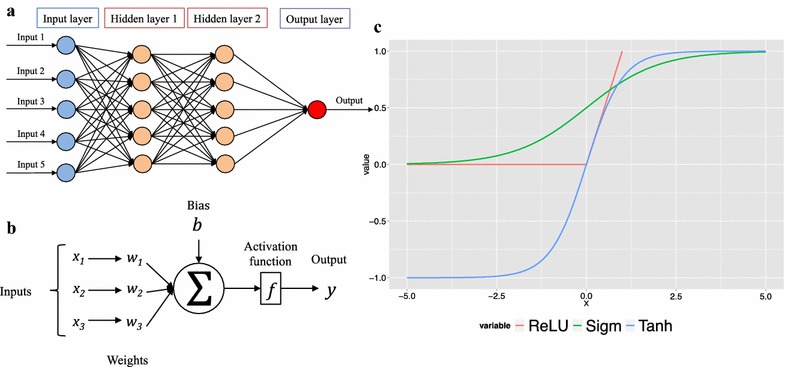
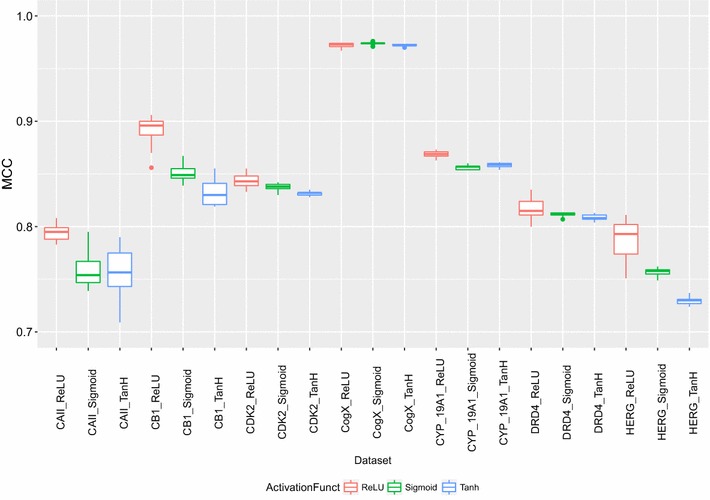
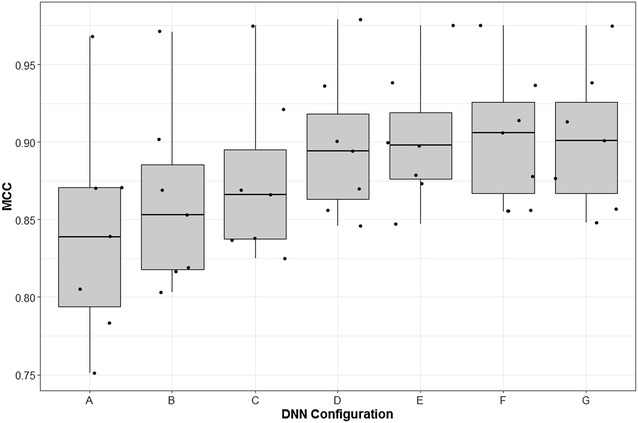
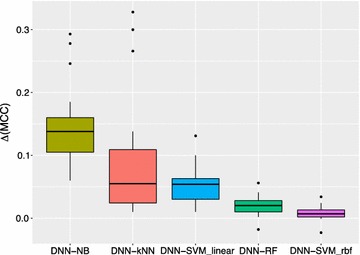
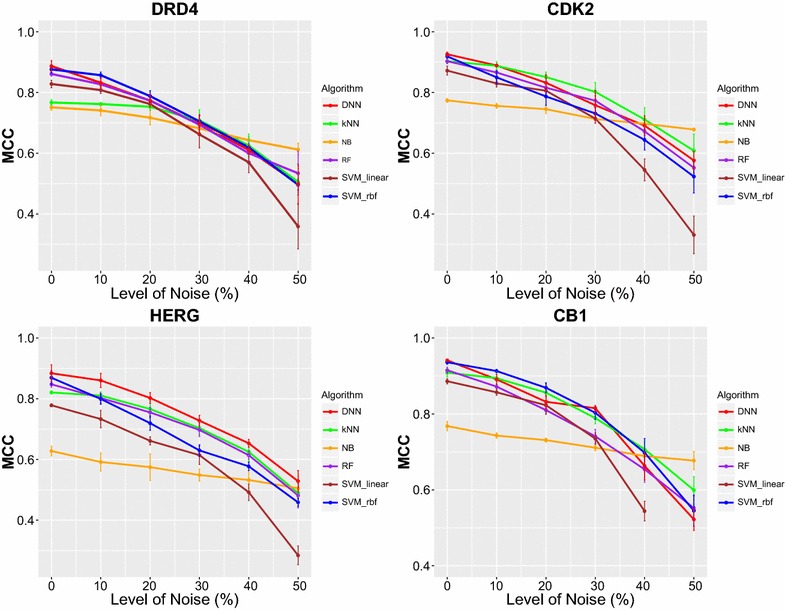
BACKGROUND: In recent years, research in artificial neural networks has resurged, now under the deep-learning umbrella, and grown extremely popular. Recently reported success of DL techniques in crowd-sourced QSAR and predictive toxicology competitions has showcased these methods as powerful tools in drug-discovery and toxicology research. The aim of this work was dual, first large number of hyper-parameter configurations were explored to investigate how they affect the performance of DNNs and could act as starting points when tuning DNNs and second their performance was compared to popular methods widely employed in the field of cheminformatics namely Naïve Bayes, k-nearest neighbor, random forest and support vector machines. Moreover, robustness of machine learning methods to different levels of artificially introduced noise was assessed. The open-source Caffe deep-learning framework and modern NVidia GPU units were utilized to carry out this study, allowing large number of DNN configurations to be explored. RESULTS: We show that feed-forward deep neural networks are capable of achieving strong classification performance and outperform shallow methods across diverse activity classes when optimized. Hyper-parameters that were found to play critical role are the activation function, dropout regularization, number hidden layers and number of neurons. When compared to the rest methods, tuned DNNs were found to statistically outperform, with p value <0.01 based on Wilcoxon statistical test. DNN achieved on average MCC units of 0.149 higher than NB, 0.092 than kNN, 0.052 than SVM with linear kernel, 0.021 than RF and finally 0.009 higher than SVM with radial basis function kernel. When exploring robustness to noise, non-linear methods were found to perform well when dealing with low levels of noise, lower than or equal to 20%, however when dealing with higher levels of noise, higher than 30%, the Naïve Bayes method was found to perform well and even outperform at the highest level of noise 50% more sophisticated methods across several datasets.
Overview
The claims and statistics of this paper haven’t been checked yet.
Run the check — free, no account needed. It reads the open-access text and checks the sources it cites.
Integrity signals
Registry
Cites
Statistics
Figures
Verification
Claims the paper makes
The claims and statistics of this paper haven’t been checked yet.
Run the check — free, no account needed. It reads the open-access text and checks the sources it cites.
Claims other papers make about this one
Each is checked against this paper’s own text: does it say what the citing paper says it does?
In the citing paper
“This comparison demonstrated that DNNs and support vector machines appear to be superior methods regardless of the descriptor type for training and 5-fold cross validation.”
From Exploiting machine learning for end-to-end drug discovery and development (2019) · cites this paper as [51]
In the citing paper
“Conversely, external testing of DNN models with a large test set did not perform as well as other machine learning methods.”
From Exploiting machine learning for end-to-end drug discovery and development (2019) · cites this paper as [51]
Self-check
Percentages, sums and reported differences re-computed from the paper’s own numbers.
The self-check needs the paper’s full text.
Citations
Cites
Breiman, L. (2001) · Machine Learning · doi:10.1023/a:1010933404324 · Cited by 133,538 · cited 1×
“RF was developed by Breiman and Cutler [60] and presents a number of advantages, which makes it attractive and well suited for chemin-formatic applications; (a) it is robust when dealing with large number of features, (b) achieves generally good performance, (c) resilient to over-fitting and (d)…”
LeCun, Y., Bengio, Y., & Hinton, G. (2015) · Nature · doi:10.1038/nature14539 · Cited by 84,126
Scikit-learn: Machine Learning in Python
Pedregosa, F., Varoquaux, G., Gramfort, A., Michel, V., Thirion, B., Grisel, O., Blondel, M., Müller, A., Nothman, J., Louppe, G., et al. (2012) · arXiv · doi:10.48550/arxiv.1201.0490 · Cited by 71,016
Cortes, C., & Vapnik, V. (1995) · Machine Learning · doi:10.1007/bf00994018 · Cited by 59,421
LIBSVM: A library for support vector machines
Chang, C.-C., & Lin, C.-J. (2011) · ACM Transactions on Intelligent Systems and Technology · doi:10.1145/1961189.1961199 · Cited by 40,918
Cortes, C., & Vapnik, V. N. (1995) · Machine Learning · doi:10.1023/a:1022627411411 · Cited by 34,565 · cited 1×
“SVMs was proposed by Cor-tes and Vapnik and can be applied for classification, regression and outliers detection tasks [65].”
(2014) · Cited by 33,419
Learning representations by back-propagating errors
Rumelhart, D. E., Hinton, G. E., & Williams, R. J. (1986) · Nature · doi:10.1038/323533a0 · Cited by 31,892 · cited 1×
“Deep neural networks are typically trained, by updating and adjusting neurons weights and biases, utilizing the supervised learning back-propagation algorithm in conjunction with optimization technique such as stochastic gradient descent [29, 30].”
A logical calculus of the ideas immanent in nervous activity
McCulloch, W. S., & Pitts, W. (1943) · The Bulletin of Mathematical Biophysics · doi:10.1007/bf02478259 · Cited by 18,566
Individual Comparisons by Ranking Methods
Wilcoxon, F. (1945) · Biometrics Bulletin · doi:10.2307/3001968 · Cited by 15,354
Research works printed but not linked: 2
- Aspuru-Guzik A, Duvenaud D, Maclaurin D, Aguilera-Iparraguire J, Gomez-Bombarelli R, Hirzel TD, Adams RP (2015) Convolutional networks on graphs for learning molecular fingerprints. In: Proceedings of neural information processing systems, Quebec, pp 2224–2232
- Barrett SJ, Langdon WB (2006) Advances in the application of machine learning techniques in drug discovery. Des Dev 36:99–110
Cited by
Sorted by citations
On hyperparameter optimization of machine learning algorithms: Theory and practice
Yang, L., & Shami, A. A. (2020) · Neurocomputing · doi:10.1016/j.neucom.2020.07.061 · Cited by 3,530
“Since all neural network models have an input layer and an output layer, the complexity of a deep learning model mainly depends on the number of hidden layers and the number of neurons of each layer, which are two main hyper-parameters to build DL models [64].”
BackgroundThe rise of deep learning in drug discovery
Chen, H., Engkvist, O., Wang, Y., Olivecrona, M., & Blaschke, T. (2018) · Drug Discovery Today · doi:10.1016/j.drudis.2018.01.039 · Cited by 1,770
“[39] compared a DNN model with some commonly used machine learning methods such as SVM, RF, among others, on seven datasets selected from ChEMBL [40].”
MethodConcepts of Artificial Intelligence for Computer-Assisted Drug Discovery
Yang, X. Y., Wang, Y., Byrne, R., Schneider, G., & Yang, S. (2019) · Chemical Reviews · doi:10.1021/acs.chemrev.8b00728 · Cited by 1,079
Jiang, D., Wu, Z., Hsieh, C.-Y., Chen, G., Liao, B., Wang, Z., Shen, C., Cao, D., Wu, J., & Hou, T. (2021) · Journal of Cheminformatics · doi:10.1186/s13321-020-00479-8 · Cited by 664
Large-scale comparison of machine learning methods for drug target prediction on ChEMBL
Mayr, A., Klambauer, G., Unterthiner, T., Steijaert, M., Wegner, J. K., Ceulemans, H., Clevert, D.-A., & Hochreiter, S. (2018) · Chemical Science · doi:10.1039/c8sc00148k · Cited by 584
Exploiting machine learning for end-to-end drug discovery and development
Ekins, S., Puhl, A. C., Zorn, K. M., Lane, T. R., Russo, D. P., Klein, J. J., Hickey, A. J., & Clark, A. M. (2019) · Nature Materials · doi:10.1038/s41563-019-0338-z · Cited by 578
Data-Driven Machine Learning in Environmental Pollution: Gains and Problems
Liu, X., Lü, D., Zhang, A., Liu, Q. S., & Jiang, G. (2022) · Environmental Science & Technology · doi:10.1021/acs.est.1c06157 · Cited by 588
Rifaioğlu, A. S., Ataş, H., Martin, M. J., Çetin-Atalay, R., Atalay, V., & Doğan, T. (2018) · Briefings in Bioinformatics · doi:10.1093/bib/bby061 · Cited by 549
A review on machine learning approaches and trends in drug discovery
Carracedo-Reboredo, P., Liñares-Blanco, J., Rodríguez-Fernández, N., Cedrón, F., Novoa, F. J., Carballal, A., Maojo, V., Pazos, A., & Fernandez-Lozano, C. (2021) · Computational and Structural Biotechnology Journal · doi:10.1016/j.csbj.2021.08.011 · Cited by 517
“In general the most complex part of this ML model is obtaining datasets of sufficient size and finding the best hyperparameters for drug analysis [29].”
BackgroundKorotcov, A. V., Tkachenko, V., Russo, D. P., & Ekins, S. (2017) · Molecular Pharmaceutics · doi:10.1021/acs.molpharmaceut.7b00578 · Cited by 367
“A second group has assessed several machine learning methods with 7 ChEMBL datasets but only focused on a single metric to assess performance 42 .”
MethodKim, J. I., Maguire, F., Tsang, K. K., Gouliouris, T., Peacock, S. J., McAllister, T. A., McArthur, A. G., & Beiko, R. G. (2022) · Clinical Microbiology Reviews · doi:10.1128/cmr.00179-21 · Cited by 295
“A simple, well-trained model with carefully optimized hyperparameters can outperform even highly complex models on some data sets (80).”
BackgroundExploring the use of deep neural networks for sales forecasting in fashion retail
Loureiro, A. L. D., Miguéis, V. L., & da Silva, L. F. M. (2018) · Decision Support Systems · doi:10.1016/j.dss.2018.08.010 · Cited by 296
“Although different deep architectures are available, the most common are the feed-forward networks with application of the backpropagation algorithm for learning process together with an optimization technique (Gardner & Dorling, 1998; Koutsoukas et al., 2017).”
MethodDeep learning for drug response prediction in cancer
Baptista, D., Ferreira, P. G., & Rocha, M. (2019) · Briefings in Bioinformatics · doi:10.1093/bib/bbz171 · Cited by 243
Parametric deep energy approach for elasticity accounting for strain gradient effects
Nguyen‐Thanh, V. M., Anitescu, C., Alajlan, N., Rabczuk, T., & Zhuang, X. (2021) · Computer Methods in Applied Mechanics and Engineering · doi:10.1016/j.cma.2021.114096 · Cited by 240
Neural network and deep-learning algorithms used in QSAR studies: merits and drawbacks
Ghasemi, F., Mehridehnavi, A., Pérez-Garrido, A., & Pérez‐Sánchez, H. (2018) · Drug Discovery Today · doi:10.1016/j.drudis.2018.06.016 · Cited by 232
Ezzat, D., Hassanien, A. E., & Aboul-Ella, H. (2020) · Applied Soft Computing · doi:10.1016/j.asoc.2020.106742 · Cited by 226
“Many studies, such as [19,20] conducted to determine the extent of hyperparameters’ influence on various DL architectures.”
BackgroundMethodMachine learning models for drug–target interactions: current knowledge and future directions
D’Souza, S., Prema, K. V., & Balaji, S. (2020) · Drug Discovery Today · doi:10.1016/j.drudis.2020.03.003 · Cited by 213
Comparing Multiple Machine Learning Algorithms and Metrics for Estrogen Receptor Binding Prediction
Russo, D. P., Zorn, K. M., Clark, A. M., Zhu, H., & Ekins, S. (2018) · Molecular Pharmaceutics · doi:10.1021/acs.molpharmaceut.8b00546 · Cited by 152
DeepRank: a deep learning framework for data mining 3D protein-protein interfaces
Renaud, N., Geng, C., Georgievska, S., Ambrosetti, F., Ridder, L., Marzella, D. F., Réau, M. F., Bonvin, A. M. J. J., & Xue, L. C. (2021) · Nature Communications · doi:10.1038/s41467-021-27396-0 · Cited by 125
Deep Learning-Based Imbalanced Data Classification for Drug Discovery
Korkmaz, S. (2020) · Journal of Chemical Information and Modeling · doi:10.1021/acs.jcim.9b01162 · Cited by 133
Biosensors, Artificial Intelligence Biosensors, False Results and Novel Future Perspectives
Goumas, G. S., Vlachothanasi, E. N., Fradelos, Ε. C., & Mouliou, D. S. (2025) · Diagnostics · doi:10.3390/diagnostics15081037 · Cited by 135
Artificial intelligence in drug combination therapy
Tsigelny, I. F. (2018) · Briefings in Bioinformatics · doi:10.1093/bib/bby004 · Cited by 124
Revolutionizing Drug Discovery: A Comprehensive Review of AI Applications
Dhudum, R., Ganeshpurkar, A., & Pawar, A. (2024) · Drugs and Drug Candidates · doi:10.3390/ddc3010009 · Cited by 131
“By leveraging AI expertise, researchers can efficiently discover target-specific compounds, predict physicochemical properties, assess bioactivity, and predict compound toxicity.”
BackgroundJain, S., Siramshetty, V. B., Alves, V. M., Muratov, E. N., Kleinstreuer, N., Tropsha, A., Nicklaus, M. C., Simeonov, A. M., & Zakharov, A. V. (2021) · Journal of Chemical Information and Modeling · doi:10.1021/acs.jcim.0c01164 · Cited by 119
Machine learning and AI-based approaches for bioactive ligand discovery and GPCR-ligand recognition
Raschka, S., & Kaufman, B. (2020) · Methods · doi:10.1016/j.ymeth.2020.06.016 · Cited by 115
“[91] applied a multilayer perceptron model for diverse bioactivity prediction (pKi and pIC50) against 7 different targets, including two GPCRs, dopamine receptor D4 and cannabinoid receptor 1 based on molecular fingerprint representation of the molecules (similar to the illustration in Fig.”
BackgroundResultInfluentialMaxwell, A. E., Warner, T. A., & Guillén, L. A. (2021) · Remote Sensing · doi:10.3390/rs13132591 · Cited by 125
“However, due to lengthy training times, computational demands, and a wide variety of hyperparameters and architecture changes that can be assessed, such systematic experimentation is currently not possible for CNN-based DL [4,5,7,8,89].”
BackgroundCortés‐Ciriano, I., & Bender, A. (2018) · Journal of Chemical Information and Modeling · doi:10.1021/acs.jcim.8b00542 · Cited by 105
“We defined three hidden layers, composed of 60, 20, and 10 nodes, respectively, and used rectified linear unit (ReLU) activation.”
BackgroundMethodHyper-parameter optimization of deep learning model for prediction of Parkinson’s disease
Kaur, S., Aggarwal, H., & Rani, R. (2020) · Machine Vision and Applications · doi:10.1007/s00138-020-01078-1 · Cited by 99
Reviewing methods of deep learning for intelligent healthcare systems in genomics and biomedicine
Zafar, I., Anwar, S., kanwal, F., Yousaf, W., Nisa, F. U., Kausar, T., Ain, Q. U., Unar, A., Kamal, M. A., Rashid, S., et al. (2023) · Biomedical Signal Processing and Control · doi:10.1016/j.bspc.2023.105263 · Cited by 104
Jiang, D., Lei, T., Wang, Z., Shen, C., Cao, D., & Hou, T. (2020) · Journal of Cheminformatics · doi:10.1186/s13321-020-00421-y · Cited by 94
AI‐organoid integrated systems for biomedical studies and applications
Maramraju, S., Kowalczewski, A. C., Kaza, A., Liu, X., Singaraju, J. P., Albert, M. V., Ma, Z., & Yang, H. (2024) · Bioengineering & Translational Medicine · doi:10.1002/btm2.10641 · Cited by 95
“73 For instance, when fitting the data points using regression approaches, the degree of polynomials (a linear, quadratic, or cubic function) is a hyperparameter to be considered.”
MethodImproving soil moisture prediction with deep learning and machine learning models
Teshome, F. T., Bayabil, H. K., Schaffer, B. A., Ampatzidis, Y. G., & Hoogenboom, G. (2024) · Computers and Electronics in Agriculture · doi:10.1016/j.compag.2024.109414 · Cited by 98
Deep learning for predicting toxicity of chemicals: a mini review
Tang, W., Chen, J., Wang, Z., Xie, H., & Hong, H. (2018) · Journal of Environmental Science and Health Part C · doi:10.1080/10590501.2018.1537563 · Cited by 86
“66 They discovered that the number of hidden layers should be more than two when training their datasets; the number of neurons in each hidden layer is dataset-dependent and can be optimized based on case by case.”
BackgroundInfluentialYoo, T. K., Ryu, I. H., Choi, H., Kim, J. K., Lee, I. S., Kim, J. S., Lee, G., & Rim, T. H. (2020) · Translational Vision Science & Technology · doi:10.1167/tvst.9.2.8 · Cited by 89
Adoui, M. E., Drisis, S., & Benjelloun, M. (2020) · International Journal of Computer Assisted Radiology and Surgery · doi:10.1007/s11548-020-02209-9 · Cited by 82
“other one as validation to determine the hyper-parameters such as learning rate (lr) and the number of epochs [26].”
BackgroundIdakwo, G., Thangapandian, S., Luttrell, J., Zhou, Z., Zhang, C., & Gong, P. (2021) · US Army Corps of Engineers: Engineer Research and Development Center (Knowledge Core) · doi:10.21079/11681/41302 · Cited by 82
Onishi, Y., Teramoto, A., Tsujimoto, M., Tsukamoto, T., Saito, K., Toyama, H., Imaizumi, K., & Fujita, H. (2019) · International Journal of Computer Assisted Radiology and Surgery · doi:10.1007/s11548-019-02092-z · Cited by 79
“In addition, the significant difference from 1 to 4 in the table was tested using Wilcoxon signed-rank test, which is a nonparametric test method using a pair of samples [18].”
MethodMaragheh, H. K., Gharehchopogh, F. S., Majidzadeh, K., & Sangar, A. B. (2022) · Mathematics · doi:10.3390/math10030488 · Cited by 79
DDMTS: A novel dynamic load balancing scheduling scheme under SLA constraints in cloud computing
Tong, Z., Deng, X., Chen, H., & Mei, J. (2020) · Journal of Parallel and Distributed Computing · doi:10.1016/j.jpdc.2020.11.007 · Cited by 75
Large-scale evaluation of k-fold cross-validation ensembles for uncertainty estimation
Dutschmann, T., Kinzel, L., ter Laak, A., & Baumann, K. (2023) · Journal of Cheminformatics · doi:10.1186/s13321-023-00709-9 · Cited by 87
“Generalizing settings for DNNs remains an active field of research [42].”
Sakai, M., Nagayasu, K., Shibui, N., Andoh, C., Takayama, K., Shirakawa, H., & Kaneko, S. (2021) · Scientific Reports · doi:10.1038/s41598-020-80113-7 · Cited by 75
Ensemble Deep Learning for Multilabel Binary Classification of User-Generated Content
Haralabopoulos, G., Anagnostopoulos, I. E., & McAuley, D. (2020) · Algorithms · doi:10.3390/a13040083 · Cited by 72
Tripathi, N., Goshisht, M. K., Sahu, S. K., & Arora, C. (2021) · Molecular Diversity · doi:10.1007/s11030-021-10237-z · Cited by 75
Applications of machine learning in GPCR bioactive ligand discovery
Jabeen, A., & Ranganathan, S. (2019) · Current Opinion in Structural Biology · doi:10.1016/j.sbi.2019.03.022 · Cited by 65
Pinto, J., Mestre, M., Ramos, J., Costa, R. S., Striedner, G., & Oliveira, R. (2022) · Computers and Chemical Engineering · doi:10.1016/j.compchemeng.2022.107952 · Cited by 54
Artificial intelligence in Parkinson's disease: Early detection and diagnostic advancements
Reddy, A. P., Reddy, R. P., Roghani, A. K., Garcia, R. I., Khemka, S., Pattoor, V., Jacob, M., Reddy, P. H., & Sehar, U. (2024) · Ageing Research Reviews · doi:10.1016/j.arr.2024.102410 · Cited by 72
Ciallella, H. L., Russo, D. P., Aleksunes, L. M., Grimm, F. A., & Zhu, H. (2021) · Environmental Science & Technology · doi:10.1021/acs.est.1c02656 · Cited by 63
Machine Learning Prediction of Allosteric Drug Activity from Molecular Dynamics
Marchetti, F., Moroni, E., Pandini, A., & Colombo, G. (2021) · The Journal of Physical Chemistry Letters · doi:10.1021/acs.jpclett.1c00045 · Cited by 62
Abbas, F., Zhang, F., Ismail, M., Khan, G., Javed Iqbal, M., Alrefaei, A. F., & Albeshr, M. F. (2023) · Sensors · doi:10.3390/s23156843 · Cited by 61
“SVM, and RF can solve classification problems [27–31].”
MethodKim, H., Lim, D. H., & Kim, Y. (2021) · International Journal of Environmental Research and Public Health · doi:10.3390/ijerph18115597 · Cited by 65
Ciallella, H. L., Russo, D. P., Aleksunes, L. M., Grimm, F. A., & Zhu, H. (2020) · Laboratory Investigation · doi:10.1038/s41374-020-00477-2 · Cited by 62
Yan, W., Tang, W., Wang, L., Bin, Y., & Xia, J. (2022) · PLoS Computational Biology · doi:10.1371/journal.pcbi.1010511 · Cited by 58
“It is generally known that the performance of the DL model was affected by some hyperparameters, such as learning rate, number of hidden layers, and dropout regularization [45].”
BackgroundKoirala, M., Yan, L., Mohamed, Z., & DiPaola, M. (2025) · International Journal of Molecular Sciences · doi:10.3390/ijms26199384 · Cited by 78
“…the risk of overfitting to noisy variables, it tolerates collinearity among descriptors, since each tree considers only a subset of variables. and it demonstrates resilience to outliers in bioactivity data, as the ensemble averaging across many trees dampens the effect of anomalous points [46,47].”
Liu, R., Wang, H., Glover, K., Feasel, M. G., & Wallqvist, A. (2018) · Journal of Chemical Information and Modeling · doi:10.1021/acs.jcim.8b00348 · Cited by 61
David, L., Arús‐Pous, J., Karlsson, J., Engkvist, O., Bjerrum, E. J., Kogej, T., Kriegl, J. M., Beck, B., & Chen, H. (2019) · Frontiers in Pharmacology · doi:10.3389/fphar.2019.01303 · Cited by 60
“…have been applied (Ramsundar et al., 2017; Chen et al., 2018) on aspects of compound activity prediction (Dahl et al., 2014; Ma et al., 2015; Koutsoukas et al., 2017), de novo molecular design (Brown et al., 2019), protein–ligand interaction prediction (Lenselink et al., 2017; Feinberg et…”
MethodCortés‐Ciriano, I., & Bender, A. (2019) · Journal of Cheminformatics · doi:10.1186/s13321-019-0364-5 · Cited by 63
Xuan, P., Ye, Y., Zhang, T., Zhao, L., & Sun, C. Y. (2019) · Cells · doi:10.3390/cells8070705 · Cited by 56
Idakwo, G., Thangapandian, S., Luttrell, J., Zhou, Z., Zhang, C., & Gong, P. (2019) · Frontiers in Physiology · doi:10.3389/fphys.2019.01044 · Cited by 55
Reliable Prediction Errors for Deep Neural Networks Using Test-Time Dropout
Cortés-Ciriano, I., & Bender, A. (2019) · Journal of Chemical Information and Modeling · doi:10.1021/acs.jcim.9b00297 · Cited by 51
“We used either 10%, 20% or 50% dropout in the four hidden layers both during training and at test time 2,53,54 .”
MethodZhang, J., Wang, Q., & Shen, W. (2022) · Chinese Journal of Chemical Engineering · doi:10.1016/j.cjche.2022.04.004 · Cited by 51
Playe, B., & Stoven, V. (2020) · Journal of Cheminformatics · doi:10.1186/s13321-020-0413-0 · Cited by 48
“Deep learning approaches have also been proposed in QSAR methods, such as Koutsoukas et al.[51].”
MethodMaino, C., Misul, D. A., Mauro, A. D., & Spessa, E. (2021) · Energy and AI · doi:10.1016/j.egyai.2021.100073 · Cited by 53
Images and CNN applications in smart agriculture
Sakka, M. E., Mothe, J., & Ivanovici, M. (2024) · European Journal of Remote Sensing · doi:10.1080/22797254.2024.2352386 · Cited by 59
“In studies that compare multiple CNNs, the model in bold has the best performance. setup conditions that are employed (Koutsoukas et al., 2017).”
Assessing Deep and Shallow Learning Methods for Quantitative Prediction of Acute Chemical Toxicity
Liu, R., Madore, M., Glover, K. P., Feasel, M. G., & Wallqvist, A. (2018) · Toxicological Sciences · doi:10.1093/toxsci/kfy111 · Cited by 47
“11 where deeper and wider networks generally performed better than shallower and narrower ones (Koutsoukas et al., 2017; Lenselink et al., 2017).”
BackgroundOptimizing neural networks for medical data sets: A case study on neonatal apnea prediction
Shirwaikar, R. D., Acharya, U. D., Makkithaya, K., Mallayasamy, S., Srivastava, S., & U, L. E. S. L. (2019) · Artificial Intelligence in Medicine · doi:10.1016/j.artmed.2019.07.008 · Cited by 48
Machine Learning in Chemoinformatics and Medicinal Chemistry
Rodríguez-Pérez, R., Miljković, F. N., & Bajorath, J. (2022) · Annual Review of Biomedical Data Science · doi:10.1146/annurev-biodatasci-122120-124216 · Cited by 50
Norsahperi, N. M. H., & Danapalasingam, K. A. (2020) · ISA Transactions · doi:10.1016/j.isatra.2020.03.001 · Cited by 48
Ambreen, S., Umar, M., Noor, A., Jain, H., & Ali, R. (2024) · European Journal of Medicinal Chemistry · doi:10.1016/j.ejmech.2024.117164 · Cited by 51
Determining the Number of Hidden Layers in Neural Network by Using Principal Component Analysis
Rachmatullah, M. I. C., Santoso, J., & Surendro, K. (2019) · Advances in intelligent systems and computing · doi:10.1007/978-3-030-29513-4_36 · Cited by 47
Ten quick tips for deep learning in biology
Lee, B. D., Gitter, A., Greene, C. S., Raschka, S., Maguire, F., Titus, A., Kessler, M. D., Lee, A. J., Chevrette, M. G., Stewart, P. A., et al. (2022) · PLoS Computational Biology · doi:10.1371/journal.pcbi.1009803 · Cited by 45
“, who benchmarked several traditional machine learning approaches against deep neural networks for modeling bioactivity data on moderately sized datasets [44].”
BackgroundLi, S., Zhang, L., Feng, H., Meng, J., Xie, D., Yi, L., Arkin, I. T., & Liu, H. (2021) · Interdisciplinary Sciences Computational Life Sciences · doi:10.1007/s12539-020-00407-2 · Cited by 46
Convolutional neural network hyperparameter optimization applied to land cover classification
Yaloveha, V., Podorozhniak, A., & Kuchuk, H. (2022) · RADIOELECTRONIC AND COMPUTER SYSTEMS · doi:10.32620/reks.2022.1.09 · Cited by 43
One-Day-Ahead Solar Irradiation and Windspeed Forecasting with Advanced Deep Learning Techniques
Blazakis, K. V., Katsigiannis, Y. A., & Stavrakakis, G. S. (2022) · Energies · doi:10.3390/en15124361 · Cited by 40
Overview of Computational Toxicology Methods Applied in Drug and Green Chemical Discovery
Bueso-Bordils, J. I., Antón-Fos, G. M., Martín-Algarra, R. V., & Aleman, P. (2024) · Journal of Xenobiotics · doi:10.3390/jox14040101 · Cited by 43
Matsuzaka, Y., & Uesawa, Y. (2019) · International Journal of Molecular Sciences · doi:10.3390/ijms20194855 · Cited by 40
Cortés‐Ciriano, I., & Bender, A. (2019) · Apollo (University of Cambridge) · doi:10.17863/cam.43757 · Cited by 39
Determining the number of hidden layer and hidden neuron of neural network for wind speed prediction
Rachmatullah, M. I. C., Santoso, J., & Surendro, K. (2021) · PeerJ Computer Science · doi:10.7717/peerj-cs.724 · Cited by 39
“One of the crucial factor for designing a neural network is its structure or topology, namely determining the hidden layers number and the hidden neurons number for corresponding hidden layer because it is closely related to the topological performance (Aggarwal, 2018; Koutsoukas et al., 2017; Nitta, 2017), but until…”
BackgroundHuang, D. Z., Baber, J. C., & Bahmanyar, S. S. (2021) · Expert Opinion on Drug Discovery · doi:10.1080/17460441.2021.1901685 · Cited by 39
Prediction of Compound Profiling Matrices Using Machine Learning
Rodríguez-Pérez, R., Miyao, T., Jasial, S., Vogt, M., & Bajorath, J. (2018) · ACS Omega · doi:10.1021/acsomega.8b00462 · Cited by 38
Thalagala, S., & Walgampaya, C. (2021) · International Research Conference on Smart Computing and Systems Engineering (SCSE) · doi:10.1109/scse53661.2021.9568315 · Cited by 39
Xu, Y. (2021) · Methods in molecular biology · doi:10.1007/978-1-0716-1787-8_10 · Cited by 38
Si, B., Ni, Z., Xu, J., Li, Y., & Liu, F. (2024) · Case Studies in Thermal Engineering · doi:10.1016/j.csite.2024.104124 · Cited by 36
Virtual Screening Meets Deep Learning
Pérez-Sianes, J., Pérez‐Sánchez, H., & Díaz, F. (2018) · Current Computer - Aided Drug Design · doi:10.2174/1573409914666181018141602 · Cited by 39
Burgdorf, T., Piersma, A. H., Landsiedel, R., Clewell, R. A., Kleinstreuer, N., Oelgeschläger, M., Desprez, B., Kienhuis, A. S., Bos, P. M. J., de Vries, R. B. M., et al. (2019) · Toxicology in Vitro · doi:10.1016/j.tiv.2019.03.039 · Cited by 39
“Interestingly, the description of neural networks is reminiscent of the AOP scheme (Koutsoukas et al., 2017).”
MethodMatsuzaka, Y., Hosaka, T., Ogaito, A., Yoshinari, K., & Uesawa, Y. (2020) · Molecules · doi:10.3390/molecules25061317 · Cited by 35
Rodríguez-Pérez, R., Trunzer, M., Schneider, N., Faller, B., & Gerebtzoff, G. (2022) · Molecular Pharmaceutics · doi:10.1021/acs.molpharmaceut.2c00680 · Cited by 38
A Novel Method for Exploring the Store Sales Forecasting using Fuzzy Pruning LS-SVM Approach
Gandhi, M. A., Maharram, V. K., Raja, G., Sellapaandi, S. P., Rathor, K., & Singh, K. (2023) · International Conference on Edge Computing and Applications (ICECAA) · doi:10.1109/icecaa58104.2023.10212292 · Cited by 34
“Authors in a variety of fields have revealed parallels between their respective goals and the work of[13] in modeling bioactivity data and [14]in stock market analysis & prediction.”
BackgroundAdvances in machine intelligence‐driven virtual screening approaches for big‐data
Kumar, N., & Acharya, V. (2023) · Medicinal Research Reviews · doi:10.1002/med.21995 · Cited by 36
Ibrahim, M. F., Hussein, N. K., Guinovart, D., & Qaraad, M. (2025) · Archives of Computational Methods in Engineering · doi:10.1007/s11831-025-10292-x · Cited by 43
hERG-toxicity prediction using traditional machine learning and advanced deep learning techniques
Ylipää, E., Chavan, S., Bånkestad, M., Broberg, J., Glinghammar, B., Norinder, U., & Cotgreave, I. A. (2023) · Current Research in Toxicology · doi:10.1016/j.crtox.2023.100121 · Cited by 31
“, 2016), and deep neural networks (DNN) (Koutsoukas et al., 2017; Cai et al., 2019; Zhang et al., 2019; Choi et al., 2020; Ryu et al., 2020).”
BackgroundAhsan, M., Eshkabilov, S. L., Cemek, B., Küçüktopçu, E., Lee, C. W., & Şimşek, H. (2021) · Sustainability · doi:10.3390/su14010416 · Cited by 31
Multi-channel PINN: investigating scalable and transferable neural networks for drug discovery
Lee, M., Kim, H., Joe, H., & Kim, H. (2019) · Journal of Cheminformatics · doi:10.1186/s13321-019-0368-1 · Cited by 32
Deep learning-based molecular dynamics simulation for structure-based drug design against SARS-CoV-2
Sun, Y., Jiao, Y., Shi, C., & Zhang, Y. (2022) · Computational and Structural Biotechnology Journal · doi:10.1016/j.csbj.2022.09.002 · Cited by 33
“Up to now, several DL frameworks, such as deep neural network (DNN) [14,15], convolutional neural network (CNN) [16,17], deep confidence network [18], recurrent neural network (RNN) [19], and generative adversarial network (GAN) [20,21], etc. have been broadly applied in various fields, achieving better results comparin…”
InfluentialKour, S., Biswas, I., Sheoran, S., Arora, S., Sheela, P., Duppala, S. K., Murthy, D. K., Pawar, S. C., Singh, H., Kumar, D., et al. (2023) · Journal of Drug Delivery Science and Technology · doi:10.1016/j.jddst.2023.104392 · Cited by 33
Pinto, J., Ramos, J. R. C., Costa, R. S., Rossell, S., Dumas, P., & Oliveira, R. (2023) · Frontiers in Bioengineering and Biotechnology · doi:10.3389/fbioe.2023.1237963 · Cited by 29
Streamlining plant disease diagnosis with convolutional neural networks and edge devices
Ahamed, M. F., Salam, A., Nahiduzzaman, M., Abdullah-Al-Wadud, M., & Islam, S. M. R. (2024) · Neural Computing and Applications · doi:10.1007/s00521-024-10152-y · Cited by 42
“Notably, incorporating batch normalization, a technique that introduces non-trainable parameters for mean and variance scaling within each batch, stabilizes and accelerates the training process, enhancing the model’s robustness and generalization capabilities [70].”
Zheng, Y., Ma, Y., Xiong, Q., Zhu, K., Weng, N., & Zhu, Q. X. (2024) · Pharmacological Research · doi:10.1016/j.phrs.2024.107381 · Cited by 32
Emulating Docking Results Using a Deep Neural Network: A New Perspective for Virtual Screening
Jastrzȩbski, S., Szymczak, M., Pocha, A., Mordalski, S., Tabor, J., Bojarski, A. J., & Podlewska, S. (2020) · Journal of Chemical Information and Modeling · doi:10.1021/acs.jcim.9b01202 · Cited by 30
Deep-GHBP: Improving prediction of Growth Hormone-binding proteins using deep learning model
Ali, F., R, H. K. G., Patil, S., Ahmad, A., Babour, A., & Daud, A. Y. (2022) · Biomedical Signal Processing and Control · doi:10.1016/j.bspc.2022.103856 · Cited by 29
Artificial Intelligence, Machine Learning, and Big Data for Ebola Virus Drug Discovery
Kwofie, S. K., Adams, J., Broni, E., Enninful, K. S., Agoni, C., Soliman, M. E. S., & Wilson, M. D. (2023) · Pharmaceuticals · doi:10.3390/ph16030332 · Cited by 29
“It can be difficult to optimize these hyperparameters, since there are frequently a large number of alternative combinations to explore, and finding the ideal combination might take a lot of computing effort [74].”
Metadata
- Authors
- Koutsoukas, A., Monaghan, K. J., Li, X., & Huan, J.
- Affiliations
- University of Kansas (US)
- Corresponding author
- Huan, Jun
- ORCID
- Venue
- Journal of Cheminformatics
- Published
- 2017-06-28
- Volume
- 9
- Issue
- 1
- Pages
- 42-42
- ISSN
- 1758-2946 (ISSN-L)
- PMC
- PMC5489441
- OpenAlex
- W2731161895
- Cited by
- 315
- References
- 69
- Citations by year
- 2026: 12 · 2025: 25 · 2024: 40 · 2023: 42 · 2022: 53 · 2021: 55 · 2020: 32 · 2019: 33 · 2018: 22 · 2017: 1
- FWCI
- 18.06
- Type
- journal article
- Language
- en
- Open access
- gold
- doi.org
- Locations
- Journal of Cheminformatics (publishedVersion, cc-by)
- PubMed Central (publishedVersion, cc-by)
- PubMed (publishedVersion)
- National University of Singapore (submittedVersion, cc-by)
- DOAJ (DOAJ: Directory of Open Access Journals) (submittedVersion)
- Funders
- National Science Foundation (CNS 1337899)
- Topics
- Life Sciences › Pharmacology, Toxicology and Pharmaceutics › Drug Discovery › Computational Drug Discovery Methods
- Physical Sciences › Materials Science › Materials Chemistry › Machine Learning in Materials Science
- Physical Sciences › Computer Science › Artificial Intelligence › Neural Networks and Applications
- Keywords
- deep neural network, hyperparameter optimization, bioactivity prediction, QSAR, predictive toxicology, feedforward neural networks, noise robustness, activation functions, dropout regularization, Caffe, drug discovery, naive Bayes, k-nearest neighbors, random forest, support vector machine
About these checks
Registry, retraction, Cites and statistics results are computed, not judged, with one exception: a printed reference that no index lists is read once by a model before it counts as a citation error. Claims are extracted by a model and kept only when their quote appears verbatim in the text; each cited source is then checked, with a model’s help, for whether it says what the claim relies on. Those verdicts can be wrong — read the claim’s quote and the cited source before relying on one.
Statistics and arithmetic are recomputed, not judged.
Confidence bands are shown only for fields calibrated on our annotated test set. None is calibrated yet, so no band is shown.
What counts as a claim ›How we measure confidence ›How we check this ›
Are you an author, or do you see a problem with this page? Request a review
