

Myostatin blockade with a fully human monoclonal antibody induces muscle hypertrophy and reverses muscle atrophy in young and aged mice
Open accessThe DOI matches its Crossref record; 36 of the 36 references it cites were found in a registry or an index.
Abstract
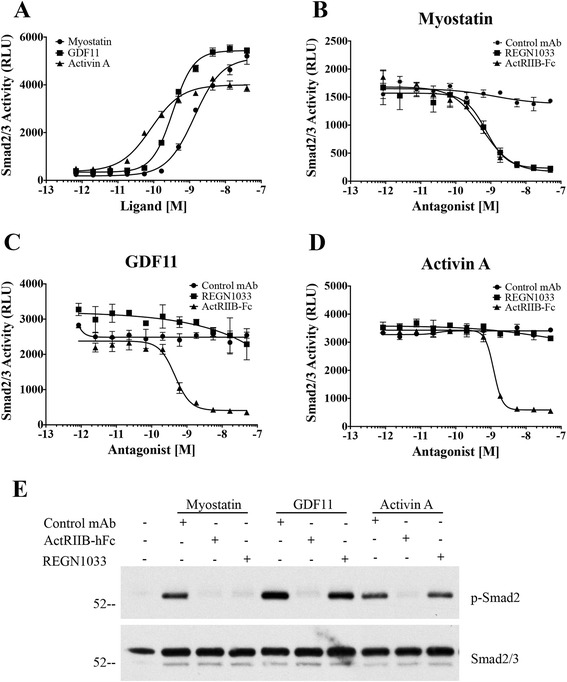
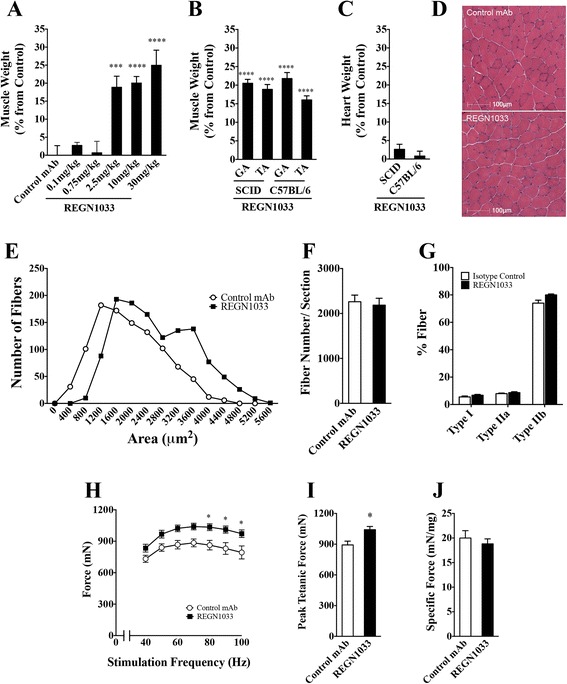
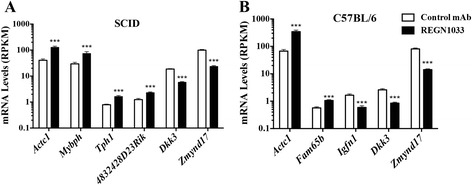
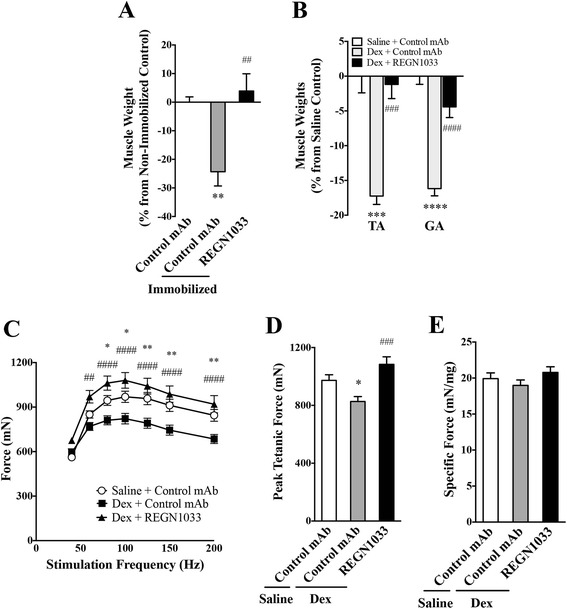
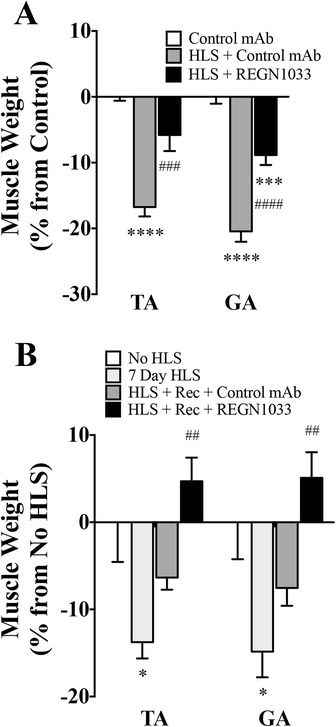
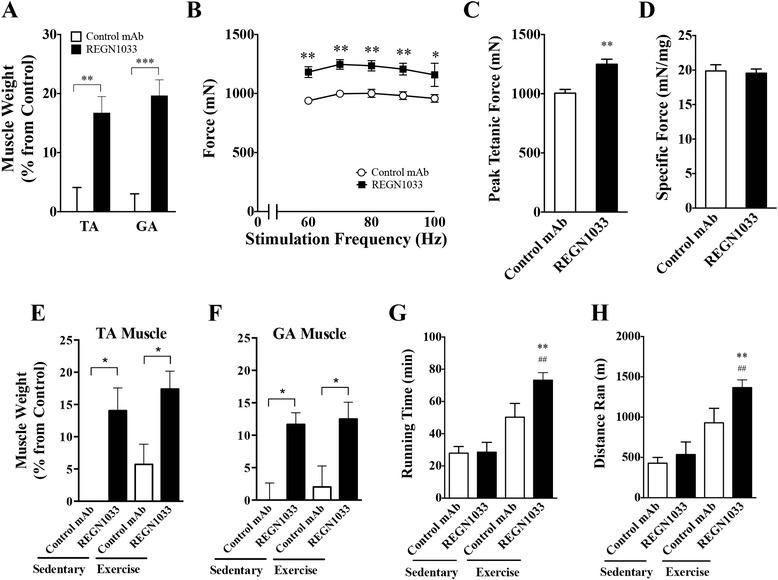
BACKGROUND: Loss of skeletal muscle mass and function in humans is associated with significant morbidity and mortality. The role of myostatin as a key negative regulator of skeletal muscle mass and function has supported the concept that inactivation of myostatin could be a useful approach for treating muscle wasting diseases. METHODS: We generated a myostatin monoclonal blocking antibody (REGN1033) and characterized its effects in vitro using surface plasmon resonance biacore and cell-based Smad2/3 signaling assays. REGN1033 was tested in mice for the ability to induce skeletal muscle hypertrophy and prevent atrophy induced by immobilization, hindlimb suspension, or dexamethasone. The effect of REGN1033 on exercise training was tested in aged mice. Messenger RNA sequencing, immunohistochemistry, and ex vivo force measurements were performed on skeletal muscle samples from REGN1033-treated mice. RESULTS: The human monoclonal antibody REGN1033 is a specific and potent myostatin antagonist. Chronic treatment of mice with REGN1033 increased muscle fiber size, muscle mass, and force production. REGN1033 prevented the loss of muscle mass induced by immobilization, glucocorticoid treatment, or hindlimb unweighting and increased the gain of muscle mass during recovery from pre-existing atrophy. In aged mice, REGN1033 increased muscle mass and strength and improved physical performance during treadmill exercise. CONCLUSIONS: We show that specific myostatin antagonism with the human antibody REGN1033 enhanced muscle mass and function in young and aged mice and had beneficial effects in models of skeletal muscle atrophy.
Overview
The claims and statistics of this paper haven’t been checked yet.
Free: it reads the open-access text and checks the first 5 claims that cite a source we can check. Create a free account to check every claim.
Integrity signals
Registry
Cites
Statistics
Figures
Verification
Claims the paper makes
The claims and statistics of this paper haven’t been checked yet.
Free: it reads the open-access text and checks the first 5 claims that cite a source we can check. Create a free account to check every claim.
Claims other papers make about this one
Each is checked against this paper’s own text: does it say what the citing paper says it does?
The check wasn’t confident either way, so it gives no verdict — never disputed.
In the citing paper
“combining these blocking antibodies results in much greater increases in muscle than either of the antibodies individually, with dual blockade matching the muscle growth induced by broader ActRIIA/B pathway blockade in both mice and non-human primates (NHPs)28,31”
From GDF8 and activin A blockade protects against GLP-1–induced muscle loss while enhancing fat loss in obese male mice and non-human primates (2025) · cites this paper as [31]
Experimental — accuracy not yet measured
Self-check
Percentages, sums and reported differences re-computed from the paper’s own numbers.
The self-check needs the paper’s full text.
Citations
Cites
Regulation of skeletal muscle mass in mice by a new TGF-p superfamily member
McPherron, A. C., Lawler, A. M., & Lee, S.-J. (1997) · Nature · doi:10.1038/387083a0 · Cited by 4,013
Regulation of myostatin activity and muscle growth
Lee, S.-J., & McPherron, A. C. (2001) · Proceedings of the National Academy of Sciences · doi:10.1073/pnas.151270098 · Cited by 1,616 · cited 2×
“Myostatin in circulation exists primarily as a latent complex consisting of the mature homodimer bound non-covalently by its propeptide; unprocessed dimeric pro-myostatin and an apparently partially processed form are also seen [5].”
BackgroundA deletion in the bovine myostatin gene causes the double–muscled phenotype in cattle
Grobet, L., Royo Martin, L. J., Poncelet, D., Pirottin, D., Brouwers, B., Riquet, J., Schoeberlein, A., Dunner, S., Ménissier, F., Massabanda, J., et al. (1997) · Nature Genetics · doi:10.1038/ng0997-71 · Cited by 1,556 · cited 1×
“effects [6–10].”
Myostatin Mutation Associated with Gross Muscle Hypertrophy in a Child
Schuelke, M., Wagner, K. R., Stolz, L. E., Hübner, C., Riebel, T., Kömen, W., Braun, T., Tobin, J. F., & Lee, S.-J. (2004) · New England Journal of Medicine · doi:10.1056/nejmoa040933 · Cited by 1,399
Mutations in myostatin ( GDF8 ) in Double-Muscled Belgian Blue and Piedmontese Cattle
Kambadur, R., Sharma, M., Smith, T. P. L., & Bass, J. J. (1997) · Genome Research · doi:10.1101/gr.7.9.910 · Cited by 1,204 · cited 1×
“effects [6–10].”
Loffredo, F. S., Steinhauser, M. L., Jay, S. M., Gannon, J., Pancoast, J. R., Yalamanchi, P., Sinha, M., Dall’Osso, C., Khong, D., Shadrach, J. L., et al. (2013) · Cell · doi:10.1016/j.cell.2013.04.015 · Cited by 948 · cited 1×
“The lack of cross-reactivity to GDF11 is important, since data suggest that GDF11 has beneficial effects in aged skeletal muscle and reverses age-related cardiac hypertrophy [26, 27], so that blockade of GDF11 would not be desirable.”
BackgroundFunctional improvement of dystrophic muscle by myostatin blockade
Bogdanovich, S., Krag, T. O. B., Barton, E. R., Morris, L. D., Whittemore, L.-A., Ahima, R. S., & Khurana, T. S. (2002) · Nature · doi:10.1038/nature01154 · Cited by 831 · cited 1×
“It has previously been reported that administration of myostatin-directed monoclonal antibodies in adult mice increases muscle mass and strength and attenuates muscle atrophy [20–25].”
Mosher, D. S., Quignon, P., Bustamante, C. D., Sutter, N. B., Mellersh, C. S., Parker, H. G., & Ostrander, E. A. (2007) · PLoS Genetics · doi:10.1371/journal.pgen.0030079 · Cited by 826 · cited 1×
“effects [6–10].”
Restoring systemic GDF11 levels reverses age-related dysfunction in mouse skeletal muscle
Sinha, M., Jang, Y. C., Oh, J., Khong, D., Wu, E. Y., Manohar, R., Miller, C., Regalado, S. G., Loffredo, F. S., Pancoast, J. R., et al. (2014) · Science · doi:10.1126/science.1251152 · Cited by 824 · cited 1×
“The lack of cross-reactivity to GDF11 is important, since data suggest that GDF11 has beneficial effects in aged skeletal muscle and reverses age-related cardiac hypertrophy [26, 27], so that blockade of GDF11 would not be desirable.”
BackgroundREGULATION OF MUSCLE MASS BY MYOSTATIN
Lee, S.-J. (2004) · Annual Review of Cell and Developmental Biology · doi:10.1146/annurev.cellbio.20.012103.135836 · Cited by 819 · cited 1×
“Myostatin mediates its biological effects primarily through the activin receptor IIB (ActRIIB), which then recruits activin-like kinase-4 (ALK-4) or ALK-5, leading to phosphorylation and activation of the cytoplasmic receptor-regulated Smad2 and 3, which translocate to the nucleus to induce specific gene changes [4, 1…”
Background
Research works printed but not linked: 2
- LeBrasseur NK Schelhorn TM Bernardo BL Cosgrove PG Loria PM Brown TA Myostatin inhibition enhances the effects of exercise on performance and metabolic outcomes in aged mice J Gerontol A Biol Sci Med Sci 2009 64A 9 940 948 10.1093/gerona/glp068 19483181 · DOI · Paper page
- Bernardo BL Wachtmann TS Cosgrove PG Kuhn M Opsahl AC Judkins KM Postnatal PPARdelta activation and myostatin inhibition exert distinct yet complimentary effects on the metabolic profile of obese insulin-resistant mice PLoS One 2010 5 6 e11307 10.1371/journal.pone.0011307 20593012 PMC2892469 · DOI · Paper page
Cited by
Items 101–159 of 159
Pharmacologic Treatments for the Preservation of Lean Body Mass During Weight Loss
Arora, G., Conde, K. R., & Desouza, C. V. (2026) · Journal of Clinical Medicine · doi:10.3390/jcm15020541 · Cited by 8
Chen, L., Zheng, J., Ye, B., Huang, Y., & Wang, Z. (2025) · Experimental Gerontology · doi:10.1016/j.exger.2025.112874 · Cited by 7
Self-citationBigford, G. E., Donovan, A., Webster, M. T., Dietrich, W. D., & Nash, M. S. (2021) · Journal of Neurotrauma · doi:10.1089/neu.2021.0061 · Cited by 7
Salemi, S., Schori, L. J., Gerwinn, T., Horst, M., & Eberli, D. (2023) · International Journal of Molecular Sciences · doi:10.3390/ijms24054462 · Cited by 6
Baik, J., & Lee, Y. (2025) · Journal of Bone Metabolism · doi:10.11005/jbm.25.919 · Cited by 6
Genome-wide association study of handgrip strength in the Northern Chinese adult twins
Luo, J., Zhang, T., Wang, W., & Zhang, D. (2022) · Connective Tissue Research · doi:10.1080/03008207.2022.2104160 · Cited by 6
Mo, C., Wang, Z., Bonewald, L. F., & Brotto, M. A. P. (2017) · Molecular and integrative toxicology · doi:10.1007/978-3-319-56192-9_9 · Cited by 6
Skeletal Muscle in Spinal Muscular Atrophy As an Opportunity for Therapeutic Intervention
Verche, V. L., Sunshine, S., Hammers, D. W., Sweeney, H. L., & Paushkin, S. V. (2016) · Elsevier eBooks · doi:10.1016/b978-0-12-803685-3.00021-5 · Cited by 7
Inactivation of myostatin by photo-oxygenation using catalyst-functionalized peptides
Okamoto, H., Taniguchi, A., Usami, S., Taguchi, A., Takayama, K., & Hayashi, Y. (2019) · Chemical Communications · doi:10.1039/c9cc04368c · Cited by 6
Macdonald, L. E., Meagher, K. A., Franklin, M. C., Levenkova, N., Hansen, J. K., Badithe, A., Zhong, M., Krueger, P., Rafique, A., Tu, N., et al. (2019) · Proceedings of the National Academy of Sciences · doi:10.1073/pnas.1901734117 · Cited by 6
Self-citationAkhter, A., Sheikh, A. M., Yoshino, J., Kanda, T., Nagai, A., Matsuo, M., & Yano, S. (2025) · International Journal of Molecular Sciences · doi:10.3390/ijms26073098 · Cited by 5
Okamoto, H., Taniguchi, A., Usami, S., Katsuyama, M., Konno, S., Taguchi, A., Takayama, K., & Hayashi, Y. (2021) · Organic & Biomolecular Chemistry · doi:10.1039/d0ob02042g · Cited by 5
Type 2 Diabetes and Sarcopenia
Sathyakumar, S. (2025) · Apollo Medicine · doi:10.1177/09760016251326660 · Cited by 4
Bak, D., Choi, M. J., Lee, E., Kwon, T., Kim, J. H., Nam, S., Kim, K., Ahn, S. W., Mun, S., Na, J., et al. (2018) · Basic & Clinical Pharmacology & Toxicology · doi:10.1111/bcpt.13151 · Cited by 4
Boido, M., Butenko, O., Filippo, C., Schellino, R., Vrijbloed, J. W., Fariello, R. G., & Vercelli, A. (2020) · PLoS ONE · doi:10.1371/journal.pone.0228653 · Cited by 4
Shahrokhian, S., Habibi, A., & Shakerian, S. (2022) · African journal of diabetes medicine/The African journal of diabetes medicine · doi:10.54931/2053-4787.30-1-5 · Cited by 3
Regulating eEF2 and eEF2K in skeletal muscle by exercise
Salimi, K., Alvandi, M., Pirouz, M. S., Rakhshan, K., & Howatson, G. (2023) · Archives of Physiology and Biochemistry · doi:10.1080/13813455.2023.2164898 · Cited by 3
Drug Delivery Systems for Muscles
Naito, M., & Hori, M. (2024) · Springer eBooks · doi:10.1007/978-3-031-55653-1_6 · Cited by 3
van Krimpen, S. J., Simons, S. O., Schols, A. M. W. J., LANGEN, R. C. J., & Gosker, H. R. (2026) · Expert Review of Respiratory Medicine · doi:10.1080/17476348.2026.2620144 · Cited by 2
Sisi, S. Z. H., Azarbayjani, M. A., Vafaeenasab, M., Peeri, M., & Dehghani, M. (2021) · International Journal of Reproductive BioMedicine (IJRM) · doi:10.18502/ijrm.v19i3.8576 · Cited by 2
Hasani, F., Gholami, M., & Ghazalian, F. (2018) · doi:10.30699/acadpub.ijbd..11.3.44 · Cited by 2
Araújo, M. C., Costa, A. D. S., Frota, C. M., Cortez, A. C. L., Gomes, A. C., & Simões, H. G. (2018) · Revista de Educação Física / Journal of Physical Education · doi:10.37310/ref.v87i1.255 · Cited by 2
Yum, Y., Yoon, J., Nam, Y. H., Kang, D., Jung, S., & Park, S. (2025) · Tissue Engineering and Regenerative Medicine · doi:10.1007/s13770-025-00753-6 · Cited by 2
Lei, C., Jiang, H., Yang, X., Ding, S., Yu, Y., Zhang, Z., Wang, L., Gao, C., Lü, A., Qin, L., et al. (2026) · International Journal of Molecular Sciences · doi:10.3390/ijms27093836 · Cited by 1
Khamoui, A. V., Abraham, A., Pórszász, J., Kovanecz, I., Constantinescu, S., Rossiter, H. B., & Reisz‐Porszasz, S. (2026) · Experimental Physiology · doi:10.1113/ep093775 · Cited by 1
Myostatin Signaling in Skeletal Muscle: Implications for Athletic Performance
Chandel, S., Uvarajan, D., Iyer, M., HariKrishnaReddy, D., Siama, Z., Giridharan, B., Narayanasamy, A., John, M., Wander, A., & Vellingiri, B. (2026) · Comprehensive physiology · doi:10.1002/cph4.70190 · Cited by 1
Nickels, J. Z. (2017) · Scholarship@Western (Western University) · Cited by 1
MOLECULAR GENETIC FACTORS OF THE SKELETAL MUSCLE HYPERTROPHY
Drozdovska, S., & Kalinski, M. I. (2018) · Bulletin of Problems Biology and Medicine · doi:10.29254/2077-4214-2018-4-2-147-15-22 · Cited by 1
Chen, P. R. (2016) · OhioLink ETD Center (Ohio Library and Information Network)
Antikörper als Therapieoption bei geriatrischen Patienten
Gosch, M., & Wicklein, S. (2017) · Zeitschrift für Gerontologie und Geriatrie · doi:10.1007/s00391-017-1352-x
Heat shock proteins in exercised human skeletal muscle
Folkesson, M. (2018) · Örebro University Library (Örebro University)
Genetic and epigenetic determinants of muscle mass
KALINSKI, M. I., & Drozdovska, S. (2019) · Elsevier eBooks · doi:10.1016/b978-0-12-816193-7.00012-9
Faculty Opinions recommendation of JNK regulates muscle remodeling via myostatin/SMAD inhibition.
Debold, E. P. (2018) · Faculty Opinions – Post-Publication Peer Review of the Biomedical Literature · doi:10.3410/f.733755069.793550548
Omosule, C. L. (2021) · MOspace Institutional Repository (University of Missouri) · doi:10.32469/10355/90078
Kang, M., Kim, T., Joo, H., Kim, D., Lee, D., & Hwang, J. K. (2024) · Journal of Medicinal Food · doi:10.1089/jmf.2024.k.0182
Hassan, F., Aftab, S., Rehman, M. S.-U., Arif, S., Safdar, M., Ahmed, S., Ahmad, K., Cerbo, A. D., Azzam, M. M., & Alagawany, M. M. (2025) · Brazilian Journal of Poultry Science · doi:10.1590/1806-9061-2024-2004
Bunn, R. C., Adatorwovor, R., Ray, P. D., Keeble, A. R., Fry, C. S., Uppuganti, S., Nyman, J. S., Fowlkes, J. L., & Kalaitzoglou, E. (2025) · Frontiers in Endocrinology · doi:10.3389/fendo.2025.1558740
Η γενετική βάση της καχεξίας στον καρκίνο
Κόκκαλης, Α. (2019) · University of Thessaly Institutional Repository (University of Thessaly) · doi:10.26253/heal.uth.7906
Fatores que controlam a hipertrofia muscular – uma revisão bibliográfica
Lima, K. D. S. S. D. (2021) · UNIFESP Institutional Repository (Universidade Federal de São Paulo)
The Effects Of Maternal Immunization Against Myostatin On Post-hatch Chicken Growth
Mishra, R. K. (2021) · ScholarSpace (University of Hawaii at Manoa)
Braun, A. C. (2018) · Online Publication Service of Würzburg University (Würzburg University)
Xu, X. (2018) · ScholarSpace (University of Hawaii at Manoa)
The Association between Myostatin and Sarcopenia in Liver Cirrhosis
Nugraha, K. A. W., Mariadi, I. K., Suryadarma, I. G. A., Somayana, G., & Kumbara, C. I. Y. K. (2026) · Acta Medica Philippina · doi:10.47895/amp.vi0.12442
Rôle du gène H19 dans les cellules souches musculaires
Martinet, C. (2016) · theses.fr (ABES) · doi:10.70675/f74e1efcz5886z4eb9za20az554e3ea95626
Parenté, A. (2019) · theses.fr (ABES) · doi:10.70675/3d9a23f5z3546z46f1z957cz5d167994539d
Jacquez, Q., Peabody, J., Acosta, E. H., Chackerian, B., & Endicott, S. J. (2026) · bioRxiv (Cold Spring Harbor Laboratory) · doi:10.64898/2026.04.06.716693
Mansoor, M. A. M., Alam, M. T., Lijeron-Herrera, F., & Masternak, M. M. (2026) · Advances in Translational Research · doi:10.1556/1661.2026.00109
Crawford, T. K., Lafaver, B. N., Davis, B. R., Chapman, I. M., Mastaitis, J. W., Ohler, A. M., Oestreich, A. K., Schulz, L. C., & Phillips, C. L. (2026) · Bone · doi:10.1016/j.bone.2026.117900
Self-citationPreclinical development of an extended half-life anti-myostatin monoclonal antibody
HSU, T., Moore, C., Taguchi, A. T., Phuong, T., Zhang, H., DENT, M., Hada, A., ZOUR, C. W., DiMartino, J., Crutcher, P., et al. (2026) · Scientific Reports · doi:10.1038/s41598-026-59882-0
Sewell, P. E., & Jensen, C. (2026) · Frontiers in Aging · doi:10.3389/fragi.2026.1908078
Strengthening muscle for healthy ageing: innovative treatments for sarcopenia
Ancel, S., Moal, E. L., Wang, Y. X., & Blau, H. M. (2026) · Nature Reviews Drug Discovery · doi:10.1038/s41573-026-01514-3
Usaç, G. (2018) · Bilecik Şeyh Edebali University Institutional Repository
Kang, S., Yan, W., Yu, Y., Wang, W., Fan, X., Sun, L., Tang, L., & Ta, D. (2026) · Journal of Ultrasound in Medicine · doi:10.1002/jum.70489
BindingDB Entry 50010290: Design and synthesis of potent myostatin inhibitory cyclic peptides.
BindingDB (2021) · UC San Diego · doi:10.7270/q2w099fn
Kubra, S., Badshah, F., & Abdi, G. (2026) · Experimental Gerontology · doi:10.1016/j.exger.2026.113373
Sakellariou, P., Walpurgis, K., Thomas, A., & Thevis, M. (2026) · Scientific Reports · doi:10.1038/s41598-026-78914-3
Metadata
- Authors
- Latres, E., Pangilinan, J., Miloscio, L., Bauerlein, R., Na, E., Potocky, T. B., Huang, Y., Eckersdorff, M., Rafique, A., Mastaitis, J., Lin, C., Murphy, A. J., Yancopoulos, G. D., Gromada, J., & Stitt, T.
- Affiliations
- Regeneron (United States) (US)
- Corresponding author
- Gromada, Jesper
- ORCID
- Venue
- Skeletal Muscle
- Published
- 2015-10-09
- Volume
- 5
- Issue
- 1
- Pages
- 34-34
- ISSN
- 2044-5040 (ISSN-L)
- PMC
- PMC4600334
- OpenAlex
- W2114952053
- Semantic Scholar
- 40795d4e963b05ec66dd2b4ab7e26f7d34f79307
- Cited by
- 143
- References
- 36
- Citations by year
- 2026: 10 · 2025: 13 · 2024: 10 · 2023: 15 · 2022: 6 · 2021: 18 · 2020: 13 · 2019: 21 · 2018: 14 · 2017: 13 · 2016: 10
- FWCI
- 5.36
- Type
- journal article
- Language
- en
- Open access
- gold
- doi.org
- Licence
- cc-by
- Locations
- Skeletal Muscle (publishedVersion, cc-by)
- Europe PMC (PubMed Central) (publishedVersion, cc-by)
- PubMed Central (publishedVersion, cc-by)
- PubMed (publishedVersion)
- Topics
- Life Sciences › Biochemistry, Genetics and Molecular Biology › Molecular Biology › Muscle Physiology and Disorders
- Health Sciences › Medicine › Genetics (clinical) › Neurogenetic and Muscular Disorders Research
- Health Sciences › Medicine › Physiology (medical) › Nutrition and Health in Aging
- Keywords
- myostatin, monoclonal antibodies, skeletal muscle hypertrophy, muscle atrophy, Smad2/3 signaling, immobilization, dexamethasone, hindlimb unloading, aging, exercise training, muscle strength, muscle mass
About these checks
Registry, retraction, Cites and statistics results are computed, not judged, with one exception: a printed reference that no index lists is read once by a model before it counts as a citation error. Claims are extracted by a model and kept only when their quote appears verbatim in the text; each cited source is then checked, with a model’s help, for whether it says what the claim relies on. Those verdicts can be wrong — read the claim’s quote and the cited source before relying on one.
Statistics and arithmetic are recomputed, not judged.
Confidence bands are shown only for fields calibrated on our annotated test set. None is calibrated yet, so no band is shown.
What counts as a claim ›How we measure confidence ›How we check this ›
Are you an author, or do you see a problem with this page? Request a review
Data sources
Bibliographic data: Semantic Scholar, OpenAlex, Crossref.
Contains information from the Semantic Scholar Academic Graph Datasets, made available under the ODC Attribution License (ODC-BY 1.0).
Semantic Scholar’s data is described in: Kinney, R., et al. (2023). The Semantic Scholar Open Data Platform. arXiv:2301.10140.
