

Myostatin blockade with a fully human monoclonal antibody induces muscle hypertrophy and reverses muscle atrophy in young and aged mice
Open accessThe DOI matches its Crossref record; 36 of the 36 references it cites were found in a registry or an index.
Abstract
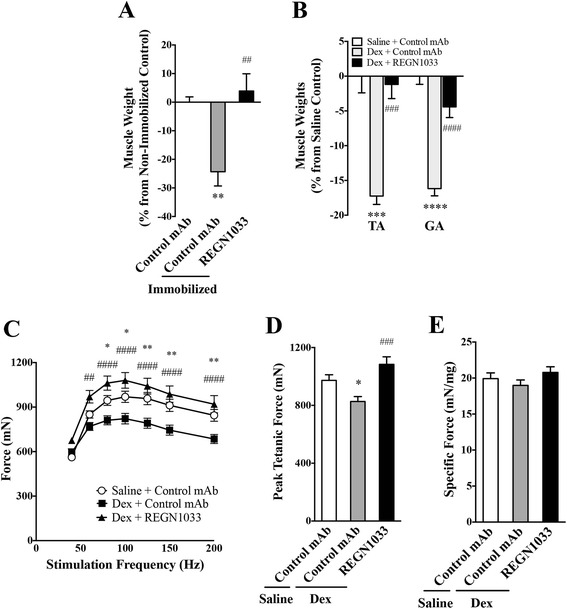
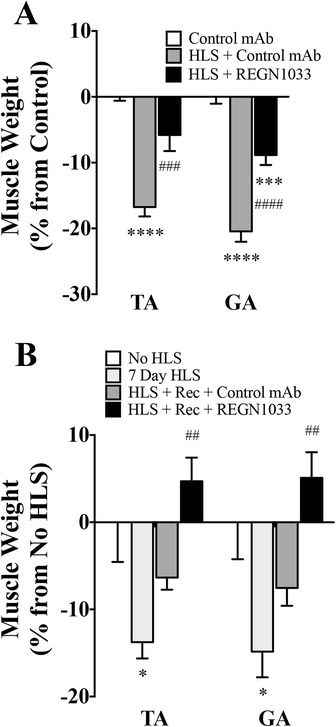
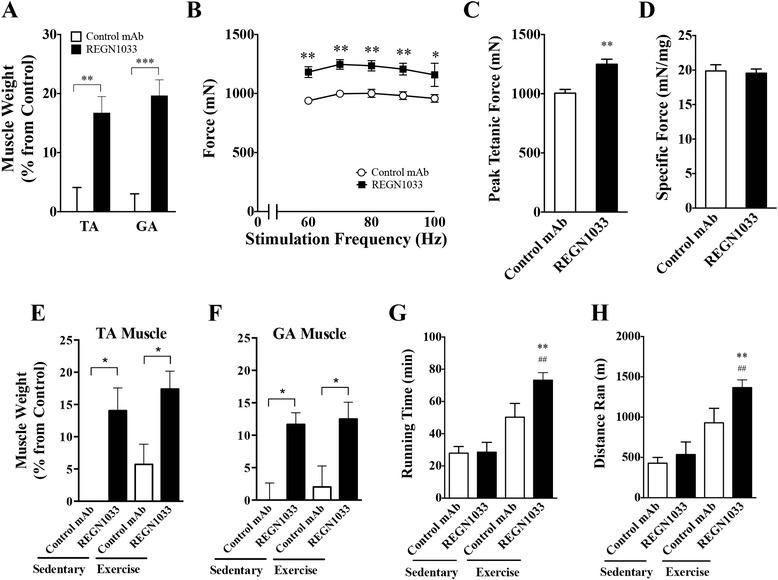
BACKGROUND: Loss of skeletal muscle mass and function in humans is associated with significant morbidity and mortality. The role of myostatin as a key negative regulator of skeletal muscle mass and function has supported the concept that inactivation of myostatin could be a useful approach for treating muscle wasting diseases. METHODS: We generated a myostatin monoclonal blocking antibody (REGN1033) and characterized its effects in vitro using surface plasmon resonance biacore and cell-based Smad2/3 signaling assays. REGN1033 was tested in mice for the ability to induce skeletal muscle hypertrophy and prevent atrophy induced by immobilization, hindlimb suspension, or dexamethasone. The effect of REGN1033 on exercise training was tested in aged mice. Messenger RNA sequencing, immunohistochemistry, and ex vivo force measurements were performed on skeletal muscle samples from REGN1033-treated mice. RESULTS: The human monoclonal antibody REGN1033 is a specific and potent myostatin antagonist. Chronic treatment of mice with REGN1033 increased muscle fiber size, muscle mass, and force production. REGN1033 prevented the loss of muscle mass induced by immobilization, glucocorticoid treatment, or hindlimb unweighting and increased the gain of muscle mass during recovery from pre-existing atrophy. In aged mice, REGN1033 increased muscle mass and strength and improved physical performance during treadmill exercise. CONCLUSIONS: We show that specific myostatin antagonism with the human antibody REGN1033 enhanced muscle mass and function in young and aged mice and had beneficial effects in models of skeletal muscle atrophy.
Overview
The claims and statistics of this paper haven’t been checked yet.
Free: it reads the open-access text and checks the first 5 claims that cite a source we can check. Create a free account to check every claim.
Integrity signals
Registry
Cites
Statistics
Figures
Verification
Claims the paper makes
The claims and statistics of this paper haven’t been checked yet.
Free: it reads the open-access text and checks the first 5 claims that cite a source we can check. Create a free account to check every claim.
Claims other papers make about this one
Each is checked against this paper’s own text: does it say what the citing paper says it does?
The check wasn’t confident either way, so it gives no verdict — never disputed.
In the citing paper
“combining these blocking antibodies results in much greater increases in muscle than either of the antibodies individually, with dual blockade matching the muscle growth induced by broader ActRIIA/B pathway blockade in both mice and non-human primates (NHPs)28,31”
From GDF8 and activin A blockade protects against GLP-1–induced muscle loss while enhancing fat loss in obese male mice and non-human primates (2025) · cites this paper as [31]
Experimental — accuracy not yet measured
Self-check
Percentages, sums and reported differences re-computed from the paper’s own numbers.
The self-check needs the paper’s full text.
Citations
Cites
Regulation of skeletal muscle mass in mice by a new TGF-p superfamily member
McPherron, A. C., Lawler, A. M., & Lee, S.-J. (1997) · Nature · doi:10.1038/387083a0 · Cited by 4,013
Regulation of myostatin activity and muscle growth
Lee, S.-J., & McPherron, A. C. (2001) · Proceedings of the National Academy of Sciences · doi:10.1073/pnas.151270098 · Cited by 1,616 · cited 2×
“Myostatin in circulation exists primarily as a latent complex consisting of the mature homodimer bound non-covalently by its propeptide; unprocessed dimeric pro-myostatin and an apparently partially processed form are also seen [5].”
BackgroundA deletion in the bovine myostatin gene causes the double–muscled phenotype in cattle
Grobet, L., Royo Martin, L. J., Poncelet, D., Pirottin, D., Brouwers, B., Riquet, J., Schoeberlein, A., Dunner, S., Ménissier, F., Massabanda, J., et al. (1997) · Nature Genetics · doi:10.1038/ng0997-71 · Cited by 1,556 · cited 1×
“effects [6–10].”
Myostatin Mutation Associated with Gross Muscle Hypertrophy in a Child
Schuelke, M., Wagner, K. R., Stolz, L. E., Hübner, C., Riebel, T., Kömen, W., Braun, T., Tobin, J. F., & Lee, S.-J. (2004) · New England Journal of Medicine · doi:10.1056/nejmoa040933 · Cited by 1,399
Mutations in myostatin ( GDF8 ) in Double-Muscled Belgian Blue and Piedmontese Cattle
Kambadur, R., Sharma, M., Smith, T. P. L., & Bass, J. J. (1997) · Genome Research · doi:10.1101/gr.7.9.910 · Cited by 1,204 · cited 1×
“effects [6–10].”
Loffredo, F. S., Steinhauser, M. L., Jay, S. M., Gannon, J., Pancoast, J. R., Yalamanchi, P., Sinha, M., Dall’Osso, C., Khong, D., Shadrach, J. L., et al. (2013) · Cell · doi:10.1016/j.cell.2013.04.015 · Cited by 948 · cited 1×
“The lack of cross-reactivity to GDF11 is important, since data suggest that GDF11 has beneficial effects in aged skeletal muscle and reverses age-related cardiac hypertrophy [26, 27], so that blockade of GDF11 would not be desirable.”
BackgroundFunctional improvement of dystrophic muscle by myostatin blockade
Bogdanovich, S., Krag, T. O. B., Barton, E. R., Morris, L. D., Whittemore, L.-A., Ahima, R. S., & Khurana, T. S. (2002) · Nature · doi:10.1038/nature01154 · Cited by 831 · cited 1×
“It has previously been reported that administration of myostatin-directed monoclonal antibodies in adult mice increases muscle mass and strength and attenuates muscle atrophy [20–25].”
Mosher, D. S., Quignon, P., Bustamante, C. D., Sutter, N. B., Mellersh, C. S., Parker, H. G., & Ostrander, E. A. (2007) · PLoS Genetics · doi:10.1371/journal.pgen.0030079 · Cited by 826 · cited 1×
“effects [6–10].”
Restoring systemic GDF11 levels reverses age-related dysfunction in mouse skeletal muscle
Sinha, M., Jang, Y. C., Oh, J., Khong, D., Wu, E. Y., Manohar, R., Miller, C., Regalado, S. G., Loffredo, F. S., Pancoast, J. R., et al. (2014) · Science · doi:10.1126/science.1251152 · Cited by 824 · cited 1×
“The lack of cross-reactivity to GDF11 is important, since data suggest that GDF11 has beneficial effects in aged skeletal muscle and reverses age-related cardiac hypertrophy [26, 27], so that blockade of GDF11 would not be desirable.”
BackgroundREGULATION OF MUSCLE MASS BY MYOSTATIN
Lee, S.-J. (2004) · Annual Review of Cell and Developmental Biology · doi:10.1146/annurev.cellbio.20.012103.135836 · Cited by 819 · cited 1×
“Myostatin mediates its biological effects primarily through the activin receptor IIB (ActRIIB), which then recruits activin-like kinase-4 (ALK-4) or ALK-5, leading to phosphorylation and activation of the cytoplasmic receptor-regulated Smad2 and 3, which translocate to the nucleus to induce specific gene changes [4, 1…”
Background
Research works printed but not linked: 2
- LeBrasseur NK Schelhorn TM Bernardo BL Cosgrove PG Loria PM Brown TA Myostatin inhibition enhances the effects of exercise on performance and metabolic outcomes in aged mice J Gerontol A Biol Sci Med Sci 2009 64A 9 940 948 10.1093/gerona/glp068 19483181 · DOI · Paper page
- Bernardo BL Wachtmann TS Cosgrove PG Kuhn M Opsahl AC Judkins KM Postnatal PPARdelta activation and myostatin inhibition exert distinct yet complimentary effects on the metabolic profile of obese insulin-resistant mice PLoS One 2010 5 6 e11307 10.1371/journal.pone.0011307 20593012 PMC2892469 · DOI · Paper page
Cited by
Update on the effects of microgravity on the musculoskeletal system
Juhl, O. J., Buettmann, E. G., Friedman, M. A., DeNapoli, R. C., Hoppock, G. A., & Donahue, H. J. (2021) · npj Microgravity · doi:10.1038/s41526-021-00158-4 · Cited by 187
Activin A more prominently regulates muscle mass in primates than does GDF8
Latres, E., Mastaitis, J., Fury, W., Miloscio, L., Trejos, J., Pangilinan, J., Okamoto, H., Cavino, K., Na, E., Papatheodorou, A., et al. (2017) · Nature Communications · doi:10.1038/ncomms15153 · Cited by 185
Self-citationRooks, D., Swan, T., Goswami, B., Filosa, L. A., Bunte, O., Panchaud, N., Coleman, L. A., Miller, R. R., Garcia Garayoa, E., Praestgaard, J., et al. (2020) · JAMA Network Open · doi:10.1001/jamanetworkopen.2020.20836 · Cited by 177
Cytokine Signaling in Skeletal Muscle Wasting
Zhou, J., Liu, B., Liang, C., Li, Y., & Song, Y.-H. (2016) · Trends in Endocrinology & Metabolism · doi:10.1016/j.tem.2016.03.002 · Cited by 172
“Upregulation of myostatin has been reported in several muscle wasting conditions [67,68].”
BackgroundRoles of myokines in exercise-induced improvement of neuropsychiatric function
Kim, S., Choi, J.-Y., Moon, S., Park, D.-H., Kwak, H.-B., & Kang, J.-H. (2019) · Pflügers Archiv - European Journal of Physiology · doi:10.1007/s00424-019-02253-8 · Cited by 160
Targeting the myostatin signaling pathway to treat muscle loss and metabolic dysfunction
Lee, S.-J. (2021) · Journal of Clinical Investigation · doi:10.1172/jci148372 · Cited by 143
Regulation of myokine expression: Role of exercise and cellular stress
Ost, M., Coleman, V., Kasch, J., & Klaus, S. (2016) · Free Radical Biology and Medicine · doi:10.1016/j.freeradbiomed.2016.02.018 · Cited by 149
Cisplatin-Induced Skeletal Muscle Dysfunction: Mechanisms and Counteracting Therapeutic Strategies
Conte, E., Bresciani, E., Rizzi, L., Cappellari, O., Luca, A. D., Torsello, A., & Liantonio, A. (2020) · International Journal of Molecular Sciences · doi:10.3390/ijms21041242 · Cited by 143
Stefanakis, K., Kokkorakis, M., & Mantzoros, C. S. (2024) · Metabolism · doi:10.1016/j.metabol.2024.156057 · Cited by 142
Morvan, F., Rondeau, J.-M., Zou, C., Minetti, G., Scheufler, C., Scharenberg, M., Jacobi, C., Brebbia, P., Ritter, V., Toussaint, G., et al. (2017) · Proceedings of the National Academy of Sciences · doi:10.1073/pnas.1707925114 · Cited by 142
Myostatin and its Regulation: A Comprehensive Review of Myostatin Inhibiting Strategies
Baig, M. H., Ahmad, K., Moon, J. S., Park, S.-Y., Ho Lim, J., Chun, H. J., Qadri, A. F., Hwang, Y. C., Jan, A. T., Ahmad, S. S., et al. (2022) · Frontiers in Physiology · doi:10.3389/fphys.2022.876078 · Cited by 135
Kumar, A., Moynagh, M. R., Multinu, F., Cliby, W. A., McGree, M. E., Weaver, A. L., Young, P. M., Bakkum-Gamez, J. N., Langstraat, C., Dowdy, S. C., et al. (2016) · Gynecologic Oncology · doi:10.1016/j.ygyno.2016.05.027 · Cited by 132
Specific inhibition of myostatin activation is beneficial in mouse models of SMA therapy
Long, K. K., O’Shea, K. M., Khairallah, R. J., Howell, K., Paushkin, S., Chen, K. S., Cote, S. M., Webster, M. T., Stains, J. P., Treece, E., et al. (2019) · Human Molecular Genetics · doi:10.1093/hmg/ddy382 · Cited by 112
JNK regulates muscle remodeling via myostatin/SMAD inhibition
Lessard, S. J., MacDonald, T. L., Pathak, P., Han, M. S., Coffey, V. G., Edge, J., Rivas, D. A., Hirshman, M. F., Davis, R. J., & Goodyear, L. J. (2018) · Nature Communications · doi:10.1038/s41467-018-05439-3 · Cited by 119
Mesinovic, J., Fyfe, J. J., Talevski, J., Wheeler, M. J., Leung, G. K. W., George, E. S., Hunegnaw, M. T., Glavas, C., Jansons, P., Daly, R. M., et al. (2023) · Diabetes & Metabolism Journal · doi:10.4093/dmj.2023.0112 · Cited by 115
Myostatin/Activin Receptor Ligands in Muscle and the Development Status of Attenuating Drugs
Rodgers, B. D., & Ward, C. W. (2022) · Endocrine Reviews · doi:10.1210/endrev/bnab030 · Cited by 111
Blocking extracellular activation of myostatin as a strategy for treating muscle wasting
Pirruccello-Straub, M., Jackson, J., Wawersik, S., Webster, M. T., Salta, L., Long, K., McConaughy, W., Capili, A., Boston, C., Carven, G. J., et al. (2018) · Scientific Reports · doi:10.1038/s41598-018-20524-9 · Cited by 94
Myostatin Inhibitors: Panacea or Predicament for Musculoskeletal Disorders?
Suh, J., & Lee, Y. (2020) · Journal of Bone Metabolism · doi:10.11005/jbm.2020.27.3.151 · Cited by 104
Metformin induces muscle atrophy by transcriptional regulation of myostatin via HDAC6 and FoxO3a
Kang, M. J., Moon, J. W., Lee, J. O., Kim, J. H., Jung, E. J., Kim, S. J., Oh, J. Y., Wu, S. W., Lee, P. R., Park, S. H., et al. (2022) · Journal of Cachexia, Sarcopenia and Muscle · doi:10.1002/jcsm.12833 · Cited by 101
Myostatin and muscle atrophy during chronic kidney disease
Bataille, S., Chauveau, P., Fouque, D. P., Aparicio, M., & Koppe, L. (2020) · Nephrology Dialysis Transplantation · doi:10.1093/ndt/gfaa129 · Cited by 103
Current pharmacotherapies for sarcopenia
Hardee, J. P., & Lynch, G. S. (2019) · Expert Opinion on Pharmacotherapy · doi:10.1080/14656566.2019.1622093 · Cited by 84
Abati, E., Manini, A., Comi, G. P., & Corti, S. P. (2022) · Cellular and Molecular Life Sciences · doi:10.1007/s00018-022-04408-w · Cited by 91
Myostatin: a skeletal muscle chalone
Lee, S.-J. (2023) · Annual Review of Physiology · doi:10.1146/annurev-physiol-012422-112116 · Cited by 84
Aykul, S., Corpina, R. A., Goebel, E. J., Cunanan, C. J., Dimitriou, A., Kim, H. J., Zhang, Q., Rafique, A., Leidich, R., Wang, X., et al. (2020) · eLife · doi:10.7554/elife.54582 · Cited by 82
Self-citationSkeletal Muscle Atrophy: Discovery of Mechanisms and Potential Therapies
Ebert, S. M., Al-Zougbi, A., Bodine, S. C., & Adams, C. M. (2019) · Physiology · doi:10.1152/physiol.00003.2019 · Cited by 80
Paez, H. G., Pitzer, C. R., & Alway, S. E. (2023) · Cells · doi:10.3390/cells12020249 · Cited by 79
Dogra, D., Ahuja, S., Kim, H.-T., Rasouli, S. J., Stainier, D. Y. R., & Reischauer, S. (2017) · Nature Communications · doi:10.1038/s41467-017-01950-1 · Cited by 79
Wetzlich, B., Nyakundi, B. B., & Yang, J. (2024) · Molecular and Cellular Biochemistry · doi:10.1007/s11010-024-05120-y · Cited by 78
Tarum, J., Folkesson, M., Atherton, P. J., & Kadi, F. (2017) · Experimental Physiology · doi:10.1113/ep086581 · Cited by 63
Quercetin glycosides prevent dexamethasone-induced muscle atrophy in mice
Otsuka, Y., Egawa, K., Kanzaki, N., Izumo, T., Rogi, T., & Shibata, H. (2019) · Biochemistry and Biophysics Reports · doi:10.1016/j.bbrep.2019.100618 · Cited by 69
Principles of the activin receptor signaling pathway and its inhibition
Lodberg, A. (2021) · Cytokine & Growth Factor Reviews · doi:10.1016/j.cytogfr.2021.04.001 · Cited by 62
Passey, S. L., Hansen, M. J., Bozinovski, S., McDonald, C. F., Holland, A. E., & Vlahos, R. (2016) · Pharmacology & Therapeutics · doi:10.1016/j.pharmthera.2016.06.013 · Cited by 61
Antimyostatin Treatment in Health and Disease: The Story of Great Expectations and Limited Success
Nielsen, T. L., Vissing, J., & Krag, T. O. B. (2021) · Cells · doi:10.3390/cells10030533 · Cited by 61
Iskenderian, A., Liu, N., Deng, Q., Huang, Y. L., Shen, C., Palmieri, K. J., Crooker, R., Lundberg, D. M., Kastrapeli, N., Pescatore, B., et al. (2018) · Skeletal Muscle · doi:10.1186/s13395-018-0180-z · Cited by 59
Self-citationIGF1 stimulates greater muscle hypertrophy in the absence of myostatin in male mice
Hennebry, A., Oldham, J. M., Shavlakadze, T., Grounds, M. D., Sheard, P. W., Fiorotto, M. L., Falconer, S. J., Smith, H. K., Berry, C., Jeanplong, F., et al. (2017) · Journal of Endocrinology · doi:10.1530/joe-17-0032 · Cited by 60
Sarcopenia: Tilting the Balance of Protein Homeostasis
Tan, K. T., Ang, S. T., & Tsai, S. (2019) · PROTEOMICS · doi:10.1002/pmic.201800411 · Cited by 58
Jang, J., Park, S., Kim, Y., Jung, J., Lee, J., Chang, Y., Lee, S. P., Park, B., Wolfe, R. R., Choi, C. S., et al. (2021) · Nutrients · doi:10.3390/nu13051508 · Cited by 57
Muscle wasting in osteoarthritis model induced by anterior cruciate ligament transection
Silva, J. M. D. S., Alabarse, P. V. G., Teixeira, V. D. O. N., Freitas, E. C., de Oliveira, F. H., Chakr, R. M. D. S., & Xavier, R. M. (2018) · PLoS ONE · doi:10.1371/journal.pone.0196682 · Cited by 56
Brent, M. B. (2023) · Pharmacology & Therapeutics · doi:10.1016/j.pharmthera.2023.108383 · Cited by 55
Mastaitis, J. W., Gomez, D., Raya, J. G., Li, D., Min, S., Stec, M., Kleiner, S., McWilliams, T., Altarejos, J. Y., Murphy, A. J., et al. (2025) · Nature Communications · doi:10.1038/s41467-025-59485-9 · Cited by 53
Self-citationAdvances in sarcopenia: mechanisms, therapeutic targets, and intervention strategies
Zheng, Y., Feng, J., Yu, Y., Ling, M., & Wang, X. (2024) · Archives of Pharmacal Research · doi:10.1007/s12272-024-01493-2 · Cited by 50
Low-intensity pulsed ultrasound prevents muscle atrophy induced by type 1 diabetes in rats
Tang, L., Li, N., Jian, W., Kang, Y., Yin, B., Sun, S., Guo, J., Sun, L., & Ta, D. (2017) · Skeletal Muscle · doi:10.1186/s13395-017-0145-7 · Cited by 50
Inhibition of myostatin prevents microgravity-induced loss of skeletal muscle mass and strength
Smith, R. C., Cramer, M. S., Mitchell, P. J., Lucchesi, J., Ortega, A. M., Livingston, E. W., Ballard, D., Zhang, L., Hanson, J., Barton, K., et al. (2020) · PLoS ONE · doi:10.1371/journal.pone.0230818 · Cited by 48
The histone deacetylase SIRT6 blocks myostatin expression and development of muscle atrophy
Samant, S. A., Kanwal, A., Pillai, V. B., Bao, R., & Gupta, M. P. (2017) · Scientific Reports · doi:10.1038/s41598-017-10838-5 · Cited by 46
Effect of Bimagrumab on Body Composition: A Systematic Review and Meta-Analysis
Kanbay, M., Siriopol, D., Copur, S., Hasbal, N. B., Güldan, M., Kalantar-Zadeh, K., Garfias-Veitl, T., & von Haehling, S. (2024) · Aging Clinical and Experimental Research · doi:10.1007/s40520-024-02825-4 · Cited by 45
Salzler, R. R., Shah, D., Dore, A. T., Bauerlein, R., Miloscio, L., Latres, E., Papadopoulos, N. J., Olson, W. C., MacDonald, D., & Duan, X. (2016) · PROTEOMICS · doi:10.1002/pmic.201600006 · Cited by 45
Self-citationHoogaars, W. M. H., & Jaspers, R. T. (2018) · Advances in experimental medicine and biology · doi:10.1007/978-981-13-1435-3_8 · Cited by 45
INVITED REVIEW: Inhibitors of myostatin as methods of enhancing muscle growth and development1
Chen, P. R., & Lee, K. (2016) · Journal of Animal Science · doi:10.2527/jas.2016-0532 · Cited by 45
Skeletal muscle atrophy after sciatic nerve damage: Mechanistic insights
Yadav, A., & Dabur, R. (2024) · European Journal of Pharmacology · doi:10.1016/j.ejphar.2024.176506 · Cited by 46
Novel GLP-1-based Medications for Type 2 Diabetes and Obesity
Son, J. W., le Roux, C. W., Blüher, M., Nauck, M. A., & Lim, S. (2026) · Endocrine Reviews · doi:10.1210/endrev/bnaf036 · Cited by 40
Lu‐Nguyen, N., Malerba, A., Popplewell, L. J., Schnell, F., Hanson, G. J., & Dickson, G. (2016) · Molecular Therapy — Nucleic Acids · doi:10.1016/j.omtn.2016.11.009 · Cited by 40
Glucocorticoids counteract hypertrophic effects of myostatin inhibition in dystrophic muscle
Hammers, D. W., Hart, C. C., Patsalos, A., Matheny, M. K., Wright, L. A., Nagy, L., & Sweeney, H. L. (2020) · JCI Insight · doi:10.1172/jci.insight.133276 · Cited by 38
miR‐422a suppresses SMAD4 protein expression and promotes resistance to muscle loss
Paul, R., Lee, J. Y., Donaldson, A. V. J., Connolly, M., Sharif, M. N., Natanek, S. A., Rosendahl, U., Polkey, M. I., Griffiths, M., & Kemp, P. R. (2017) · Journal of Cachexia Sarcopenia and Muscle · doi:10.1002/jcsm.12236 · Cited by 38
Elsheikh, M., Sabagh, A. E., Mohamed, I. B., Bhongade, M., Hassan, M. M., & Jalal, P. K. (2023) · World Journal of Gastroenterology · doi:10.3748/wjg.v29.i46.6028 · Cited by 38
Vallejo, J. A., Spence, M., Cheng, A., Brotto, L. S., Edens, N. K., Garvey, S. M., & Brotto, M. (2016) · PLoS ONE · doi:10.1371/journal.pone.0150066 · Cited by 37
Melatonin improves muscle injury and differentiation by increasing Pax7 expression
Su, C., Tsai, C., Chen, H., Wu, Y., Chang, J., Yang, S., & Tang, C. (2023) · International Journal of Biological Sciences · doi:10.7150/ijbs.79169 · Cited by 36
Targeting TGFβ Signaling to Address Fibrosis Using Antisense Oligonucleotides
March, J. T., Golshirazi, G., Cernisova, V., Carr, H., Leong, Y., Lu‐Nguyen, N., & Popplewell, L. J. (2018) · Biomedicines · doi:10.3390/biomedicines6030074 · Cited by 37
Matrix Metalloproteinase Responsive Delivery of Myostatin Inhibitors
Braun, A. C., Gutmann, M., Ebert, R., Jakob, F. J., Gieseler, H., Lühmann, T. C., & Meinel, L. (2016) · Pharmaceutical Research · doi:10.1007/s11095-016-2038-6 · Cited by 35
Mss51 deletion enhances muscle metabolism and glucose homeostasis in mice
Gonzalez, Y. I. R., Moyer, A. L., LeTexier, N. J., Bratti, A. D., Feng, S., Sun, C., Liu, T., Mula, J., Jha, P., Iyer, S. R., et al. (2019) · JCI Insight · doi:10.1172/jci.insight.122247 · Cited by 33
Dagbay, K. B., Treece, E. R., Streich, F. C., Jackson, J., Faucette, R., Nikiforov, A., Lin, S. C., Boston, C., Nicholls, S. B., Capili, A. D., et al. (2020) · Journal of Biological Chemistry · doi:10.1074/jbc.ra119.012293 · Cited by 33
Servais, L., Baranello, G., Scoto, M., Daron, A., & Oskoui, M. (2021) · Expert Opinion on Investigational Drugs · doi:10.1080/13543784.2021.1904889 · Cited by 33
A Pediatric Review of Facioscapulohumeral Muscular Dystrophy
Chen, Y., & Mah, J. K. (2017) · Journal of Pediatric Neurology · doi:10.1055/s-0037-1604197 · Cited by 33
Systemic Blockade of ACVR2B Ligands Protects Myocardium from Acute Ischemia-Reperfusion Injury
Magga, J. M., Vainio, L., Kilpiö, T., Hulmi, J. J., Taponen, S., Lin, R., Ramste, M. O., Szabó, Z., Gao, E., Rahtu‐Korpela, L., et al. (2019) · Molecular Therapy · doi:10.1016/j.ymthe.2019.01.013 · Cited by 33
Effect of myostatin deletion on cardiac and microvascular function
Butcher, J. T., Ali, M. I., Merry, W., McCarthy, C. G., Islam, B. N., Fox, L. G., MINTZ, J. D., Larion, S., Fulton, D. J., & Stepp, D. W. (2017) · Physiological Reports · doi:10.14814/phy2.13525 · Cited by 31
Mitra, A., Qaisar, R., Bose, B., & Sudheer Shenoy, P. (2023) · Osteoporosis and Sarcopenia · doi:10.1016/j.afos.2023.03.008 · Cited by 30
Hillege, M. M., Shi, A., Galli, R., Wu, G., Bertolino, P., Hoogaars, W. M. H., & Jaspers, R. T. (2022) · eLife · doi:10.7554/elife.77610 · Cited by 29
Chen, P. R., Suh, Y., Shin, S., Woodfint, R. M., Hwang, S., & Lee, K. (2019) · International Journal of Molecular Sciences · doi:10.3390/ijms20184617 · Cited by 29
Brightwell, C. R., Latham, C. M., Keeble, A. R., Thomas, N. T., Owen, A. M., Reeves, K. A., Long, D. E., Patrick, M. D., Gonzalez‐Velez, S., Abed, V., et al. (2023) · Science Advances · doi:10.1126/sciadv.adi9134 · Cited by 29
Myostatin inhibits eEF2K-eEF2 by regulating AMPK to suppress protein synthesis
Deng, Z., Luo, P., Lai, W., Song, T., Peng, J., & Wei, H. (2017) · Biochemical and Biophysical Research Communications · doi:10.1016/j.bbrc.2017.10.040 · Cited by 25
Lodberg, A., van der Eerden, B. C. J., Boers-Sijmons, B., Thomsen, J. S., Brüel, A., van Leeuwen, J. P. T. M., & Eijken, M. (2019) · The FASEB Journal · doi:10.1096/fj.201801969rr · Cited by 25
Cellular and molecular modulation of rotator cuff muscle pathophysiology
Fu, C., Huang, A. H., Galatz, L. M., & Han, W. M. (2021) · Journal of Orthopaedic Research® · doi:10.1002/jor.25179 · Cited by 24
Low Myostatin Serum Levels Are Associated with Poor Outcome in Critically Ill Patients
Wirtz, T. H., Loosen, S. H., Buendgens, L., Kurt, B., Jhaisha, S. A., Hohlstein, P., Brozat, J. F., Weiskirchen, R., Luedde, T., Tacke, F., et al. (2020) · Diagnostics · doi:10.3390/diagnostics10080574 · Cited by 24
Gonzalez Trotter, D., Donahue, S., Wynne, C., Ali, S., Parasoglou, P., Boyapati, A., Mohammadi, K., Musser, B. J., Meier, P., Mastaitis, J., et al. (2025) · Nature Communications · doi:10.1038/s41467-025-59380-3 · Cited by 23
Self-citationSun, L., An, S., Zhang, Z., Zhou, Y., Yu, Y., Ma, Z., Fan, X., Tang, L., & Guo, J. (2021) · International Journal of Molecular Sciences · doi:10.3390/ijms222212112 · Cited by 22
Emerging molecular mediators and targets for age-related skeletal muscle atrophy
Brown, L. A., Guzman, S. D., & Brooks, S. V. (2020) · Translational research · doi:10.1016/j.trsl.2020.03.001 · Cited by 22
Omosule, C. L., Gremminger, V. L., AGUILLARD, A., Jeong, Y., Harrelson, E. N., Miloscio, L., Mastaitis, J. W., Rafique, A., Kleiner, S., Pfeiffer, F. M., et al. (2020) · Journal of Bone and Mineral Research · doi:10.1002/jbmr.4223 · Cited by 21
Self-citationLu‐Nguyen, N., Ferry, A., Schnell, F. J., Hanson, G. J., Popplewell, L. J., Dickson, G., & Malerba, A. (2019) · Human Molecular Genetics · doi:10.1093/hmg/ddz125 · Cited by 19
miR-222 is involved in the regulation of genistein on skeletal muscle fiber type
Gan, M., Shen, L., Liu, L., Guo, Z., Wang, S., Chen, L., Zheng, T., Fan, Y., Tan, Y., Jiang, D., et al. (2019) · The Journal of Nutritional Biochemistry · doi:10.1016/j.jnutbio.2019.108320 · Cited by 18
Shen, C., Iskenderian, A., Lundberg, D. M., He, T., Palmieri, K. J., Crooker, R., Deng, Q., Traylor, M. J., Gu, S., Rong, H., et al. (2018) · Journal of Pharmacology and Experimental Therapeutics · doi:10.1124/jpet.118.248195 · Cited by 18
Hanson, A. M., Young, M. H., Harrison, B. C., Zhou, X., Han, H. Q., Stodieck, L., & Ferguson, V. L. (2023) · npj Microgravity · doi:10.1038/s41526-022-00233-4 · Cited by 17
Wu, J., Chen, X., Li, R., Lu, Q., Ba, Y., Fang, J. M., Liu, Y., Li, R., Liu, Y., Wang, Y., et al. (2024) · Metabolism · doi:10.1016/j.metabol.2024.155994 · Cited by 16
Self-citationAimelet, V., & Holst, J. J. (2025) · Diabetes Obesity and Metabolism · doi:10.1111/dom.70229 · Cited by 15
Wen, J., Ansari, U., Shehabat, M., Ansari, Z., Syed, B., Razick, A. A., Razick, D., Akhtar, M., & Frezza, E. (2025) · Journal of Diabetes · doi:10.1111/1753-0407.70119 · Cited by 15
Kramerova, I. A., Marinov, M., Owens, J. M., Lee, S., Becerra, D., & Spencer, M. J. (2020) · The Journal of Physiology · doi:10.1113/jp279943 · Cited by 15
Structures of activin ligand traps using natural sets of type I and type II TGFβ receptors
Goebel, E. J., Kattamuri, C., Gipson, G. R., Krishnan, L., Chavez, M., Czepnik, M., Maguire, M. C., Grenha, R., Håkansson, M., Logan, D. T., et al. (2021) · iScience · doi:10.1016/j.isci.2021.103590 · Cited by 15
Myostatin's marvels: From muscle regulator to diverse implications in health and disease
Sharma, S., & Patil, A. (2024) · Cell Biochemistry and Function · doi:10.1002/cbf.4106 · Cited by 13
Gonzalez, Y. I. R., Moyer, A. L., LeTexier, N. J., Bratti, A. D., Feng, S., Peña, V. N., Sun, C., Pulcastro, H. C., Liu, T., Iyer, S. R., et al. (2021) · The FASEB Journal · doi:10.1096/fj.202002106rr · Cited by 13
The Role of TGF-β, Activin and Follistatin in Inflammatory Bowel Disease
Esfahani, N. H., & Day, A. S. (2023) · Gastrointestinal Disorders · doi:10.3390/gidisord5020015 · Cited by 12
Vishnu, P. G., Bhattacharya, T. K., Bhushan, B., Kumar, T. V., CHATTERJEE, R. N., Paswan, C., Dushyanth, K., Divya, D., & Prasad, A. R. (2019) · Molecular Biology Reports · doi:10.1007/s11033-019-04756-0 · Cited by 12
Tavoian, D., Arnold, W. D., Mort, S. C., & Lacalle, S. D. (2019) · PLoS ONE · doi:10.1371/journal.pone.0225283 · Cited by 12
Ali, S. M., Ahmad, K., Shaikh, S., Chun, H. J., Choi, I., & Lee, E. J. (2023) · Journal of Biomolecular Structure and Dynamics · doi:10.1080/07391102.2023.2223652 · Cited by 12
Schellino, R., Boido, M., Vrijbloed, J. W., Fariello, R. G., & Vercelli, A. (2023) · Aging and Disease · doi:10.14336/ad.2023.0713-1 · Cited by 12
miR299a-5p promotes renal fibrosis by suppressing the antifibrotic actions of follistatin
Mehta, N., Li, R., Zhang, D., Soomro, A., He, J., Zhang, I., MacDonald, M. E., Gao, B., & Krepinsky, J. C. (2021) · Scientific Reports · doi:10.1038/s41598-020-80199-z · Cited by 12
Design and synthesis of potent myostatin inhibitory cyclic peptides
Rentier, C., Takayama, K., Saitoh, M., Nakamura, A., Ikeyama, H., Taguchi, A., Taniguchi, A., & Hayashi, Y. (2019) · Bioorganic & Medicinal Chemistry · doi:10.1016/j.bmc.2019.02.019 · Cited by 11
Myokines and interorgan crosstalk: bridging exercise to health promotion and disease prevention
Ha, J., Sung, S., & Kim, H. (2025) · Annals of Pediatric Endocrinology & Metabolism · doi:10.6065/apem.2448218.109 · Cited by 10
Nagy‐Fazekas, D., Fazekas, Z., Taricska, N., Stráner, P., Menyhárd, D. K., & Perczel, A. (2023) · Molecules · doi:10.3390/molecules28155655 · Cited by 10
Bunn, R. C., Adatorwovor, R., Smith, R. R., Ray, P. D., Fields, S. E., Keeble, A. R., Fry, C. S., Uppuganti, S., Nyman, J. S., Fowlkes, J. L., et al. (2023) · JBMR Plus · doi:10.1002/jbm4.10833 · Cited by 9
Samali, S. A., Hosseini, S. F., Mohammadi, Y., Sadri, F., & Rezaei, Z. (2025) · Molecular Biology Reports · doi:10.1007/s11033-025-11390-6 · Cited by 9
Cote, S. M., Jackson, J., Pirruccello, M., Carven, G. J., & Wawersik, S. (2019) · SLAS DISCOVERY · doi:10.1177/2472555219860779 · Cited by 8
Park, C., Kim, Y., Raygani, S., & Grunvald, E. L. (2025) · Frontiers in Endocrinology · doi:10.3389/fendo.2025.1630199 · Cited by 7
Metadata
- Authors
- Latres, E., Pangilinan, J., Miloscio, L., Bauerlein, R., Na, E., Potocky, T. B., Huang, Y., Eckersdorff, M., Rafique, A., Mastaitis, J., Lin, C., Murphy, A. J., Yancopoulos, G. D., Gromada, J., & Stitt, T.
- Affiliations
- Regeneron (United States) (US)
- Corresponding author
- Gromada, Jesper
- ORCID
- Venue
- Skeletal Muscle
- Published
- 2015-10-09
- Volume
- 5
- Issue
- 1
- Pages
- 34-34
- ISSN
- 2044-5040 (ISSN-L)
- PMC
- PMC4600334
- OpenAlex
- W2114952053
- Semantic Scholar
- 40795d4e963b05ec66dd2b4ab7e26f7d34f79307
- Cited by
- 143
- References
- 36
- Citations by year
- 2026: 10 · 2025: 13 · 2024: 10 · 2023: 15 · 2022: 6 · 2021: 18 · 2020: 13 · 2019: 21 · 2018: 14 · 2017: 13 · 2016: 10
- FWCI
- 5.36
- Type
- journal article
- Language
- en
- Open access
- gold
- doi.org
- Licence
- cc-by
- Locations
- Skeletal Muscle (publishedVersion, cc-by)
- Europe PMC (PubMed Central) (publishedVersion, cc-by)
- PubMed Central (publishedVersion, cc-by)
- PubMed (publishedVersion)
- Topics
- Life Sciences › Biochemistry, Genetics and Molecular Biology › Molecular Biology › Muscle Physiology and Disorders
- Health Sciences › Medicine › Genetics (clinical) › Neurogenetic and Muscular Disorders Research
- Health Sciences › Medicine › Physiology (medical) › Nutrition and Health in Aging
- Keywords
- myostatin, monoclonal antibodies, skeletal muscle hypertrophy, muscle atrophy, Smad2/3 signaling, immobilization, dexamethasone, hindlimb unloading, aging, exercise training, muscle strength, muscle mass
About these checks
Registry, retraction, Cites and statistics results are computed, not judged, with one exception: a printed reference that no index lists is read once by a model before it counts as a citation error. Claims are extracted by a model and kept only when their quote appears verbatim in the text; each cited source is then checked, with a model’s help, for whether it says what the claim relies on. Those verdicts can be wrong — read the claim’s quote and the cited source before relying on one.
Statistics and arithmetic are recomputed, not judged.
Confidence bands are shown only for fields calibrated on our annotated test set. None is calibrated yet, so no band is shown.
What counts as a claim ›How we measure confidence ›How we check this ›
Are you an author, or do you see a problem with this page? Request a review
Data sources
Bibliographic data: Semantic Scholar, OpenAlex, Crossref.
Contains information from the Semantic Scholar Academic Graph Datasets, made available under the ODC Attribution License (ODC-BY 1.0).
Semantic Scholar’s data is described in: Kinney, R., et al. (2023). The Semantic Scholar Open Data Platform. arXiv:2301.10140.
