

Turning the tide on Alzheimer’s disease: modulation of γ-secretase
Open accessThe DOI matches its Crossref record; 89 of the 89 references it cites were found in a registry or an index.
Abstract
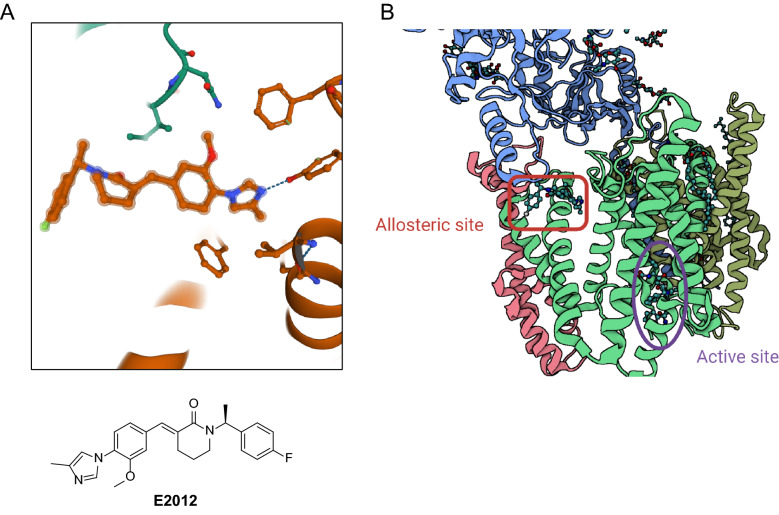
Alzheimer’s disease (AD) is the most common type of neurodegenerative disorder. Amyloid-beta (Aβ) plaques are integral to the “amyloid hypothesis,” which states that the accumulation of Aβ peptides triggers a cascade of pathological events leading to neurodegeneration and ultimately AD. While the FDA approved aducanumab, the first Aβ-targeted therapy, multiple safe and effective treatments will be needed to target the complex pathologies of AD. γ-Secretase is an intramembrane aspartyl protease that is critical for the generation of Aβ peptides. Activity and specificity of γ-secretase are regulated by both obligatory subunits and modulatory proteins. Due to its complex structure and function and early clinical failures with pan inhibitors, γ-secretase has been a challenging drug target for AD. γ-secretase modulators, however, have dramatically shifted the approach to targeting γ-secretase. Here we review γ-secretase and small molecule modulators, from the initial characterization of a subset of NSAIDs to the most recent clinical candidates. We also discuss the chemical biology of γ-secretase, in which small molecule probes enabled structural and functional insights into γ-secretase before the emergence of high-resolution structural studies. Finally, we discuss the recent crystal structures of γ-secretase, which have provided valuable perspectives on substrate recognition and molecular mechanisms of small molecules. We conclude that modulation of γ-secretase will be part of a new wave of AD therapeutics.
Overview
The claims and statistics of this paper haven’t been checked yet.
Free: it reads the open-access text and checks the first 5 claims that cite a source we can check. Create a free account to check every claim.
Integrity signals
Registry
Cites
Statistics
Figures
Verification
Claims the paper makes
The claims and statistics of this paper haven’t been checked yet.
Free: it reads the open-access text and checks the first 5 claims that cite a source we can check. Create a free account to check every claim.
Claims other papers make about this one
Each is checked against this paper’s own text: does it say what the citing paper says it does?
The cited source says what the claim attributes to it.
In the citing paper
“Allosteric modulators of γ-secretase encourage the production of shorter, less toxic Aβ subtypes, and even potentially minimize effects on Notch and some other substrates. Some γ-secretase modulators (GSMs) also exhibited promising safety outcomes in preclinical studies and clinical trials.546–548”
From Recent advances in Alzheimer's disease: Mechanisms, clinical trials and new drug development strategies. (2024) · cites this paper as [546]
The cited source says what the claim attributes to it.
In the citing paper
“Some γ-secretase modulators (GSMs) also exhibited promising safety outcomes in preclinical studies and clinical trials.546–548”
From Recent advances in Alzheimer's disease: Mechanisms, clinical trials and new drug development strategies. (2024) · cites this paper as [546]
Self-check
Percentages, sums and reported differences re-computed from the paper’s own numbers.
The self-check needs the paper’s full text.
Citations
Cites
The Amyloid Hypothesis of Alzheimer’s Disease: Progress and Problems on the Road to Therapeutics
Hardy, J., & Selkoe, D. J. (2002) · Science · doi:10.1126/science.1072994 · Cited by 13,864
Amyloid oligomers exacerbate tau pathology in a mouse model of tauopathy
Selenica, M.-L. B., Brownlow, M., Jimenez, J. P., Lee, D. C., Pena, G., Dickey, C. A., Gordon, M. N., & Morgan, D. (2013) · Neurodegenerative Diseases · doi:10.1159/000337230 · Cited by 10,359
The amyloid hypothesis of Alzheimer's disease at 25 years
Selkoe, D. J., & Hardy, J. (2016) · EMBO Molecular Medicine · doi:10.15252/emmm.201606210 · Cited by 6,164 · cited 1×
“The ability to image amyloid and CSF biomarkers in human subjects has been crucial to monitoring the progress of clinical trials in AD [75].”
BackgroundDrug combination studies and their synergy quantification using the Chou-Talalay method
Chou, T.-C. (2010) · Cancer Research · doi:10.1158/0008-5472.can-09-1947 · Cited by 5,739 · cited 1×
“Drug combinations using drugs which act on distinct targets or show different mechanisms of action have been commonly been used in cancer [92].”
BackgroundGlenner, G. G., & Wong, C. W. (1984) · Biochemical and Biophysical Research Communications · doi:10.1016/s0006-291x(84)80190-4 · Cited by 5,404
Goate, A., Chartier-Harlin, M.-C., Mullan, M., Brown, J., Crawford, F., Fidani, L., Giuffra, L., Haynes, A., Irving, N., James, L., et al. (1991) · Nature · doi:10.1038/349704a0 · Cited by 4,659
Cloning of a gene bearing missense mutations in early-onset familial Alzheimer's disease
Sherrington, R., Rogaev, E. I., Liang, Y., Rogaeva, E. A., Levesque, G., Ikeda, M., Chi, H., Lin, C., Li, G., Holman, K., et al. (1995) · Nature · doi:10.1038/375754a0 · Cited by 4,051
Clinical and biomarker changes in dominantly inherited Alzheimer's disease
Bateman, R. J., Xiong, C., Benzinger, T. L. S., Fagan, A. M., Goate, A., Fox, N. C., Marcus, D. S., Cairns, N. J., Xie, X., Blazey, T. M., et al. (2012) · New England Journal of Medicine · doi:10.1056/nejmoa1202753 · Cited by 3,814
The antibody aducanumab reduces Aβ plaques in Alzheimer’s disease
Sevigny, J., Chiao, P., Bussière, T., Weinreb, P. H., Williams, L., Maier, M., Dunstan, R., Salloway, S., Chen, T., Ling, Y., et al. (2016) · Nature · doi:10.1038/nature19323 · Cited by 3,059 · cited 1×
“Aducanumab, a human monoclonal antibody which targets aggregated amyloid-beta (Aβ), reduced amyloid plaques in the brain, and is expected to delay cognitive decline [2, 3].”
BackgroundCandidate gene for the chromosome 1 familial Alzheimer’s disease locus
Levy-Lahad, E., Wasco, W., Poorkaj, P., Romano, D. M., Oshima, J., Pettingell, W. H., Yu, C.-E., Jondro, P. D., Schmidt, S. D., Wang, K., et al. (1995) · Science · doi:10.1126/science.7638622 · Cited by 2,577
Research works printed but not linked: 2
- Nagy CSE, Ishibashi A, Nakatani Y, Rege B, Logovinsky V. E2012, a novel gamma-secretase modulator, decreases plasma amyloid-beta levels in humans. Alzheimers Dement. 2010;6:S574.
- Hashimoto TI, Hagiwara H, Murata Y, Takenaka O, Miyagawa T. A novel gamma-secretase modulator-pharmacology. Alzheimers Dement. 2010;6:S242.
Cited by
Zhang, J., Zhang, Y., Wang, J., Xia, Y., Zhang, J., & Chen, L. (2024) · Signal Transduction and Targeted Therapy · doi:10.1038/s41392-024-01911-3 · Cited by 1,138
Multipronged diagnostic and therapeutic strategies for Alzheimer's disease
Ramesh, M., & Govindaraju, T. (2022) · Chemical Science · doi:10.1039/d2sc03932j · Cited by 94
Meier‐Stephenson, F., Meier‐Stephenson, V., Carter, M. D., Meek, A. R., Wang, Y., Pan, L., Chen, Q., Jacobo, S., Wu, F., Lu, E., et al. (2022) · Alzheimer s & Dementia Translational Research & Clinical Interventions · doi:10.1002/trc2.12283 · Cited by 92
Microglial activation as a hallmark of neuroinflammation in Alzheimer’s disease
Ebrahimi, R., Nejad, S. S., Tafti, M. F., Karimi, Z., Sadr, S. R., Hussein, D. R., Talebian, N., & Esmaeilpour, K. (2025) · Metabolic Brain Disease · doi:10.1007/s11011-025-01631-9 · Cited by 64
“Recent studies have linked systemic inflammation with microglial activation, prompting interest in NSAIDs as potential treatments for AD due to their anti-neuroinflammatory properties and effects on Aβ aggregation (Luo and Li 2022).”
Newer Therapeutic Approaches in Treating Alzheimer’s Disease: A Comprehensive Review
Sree, R. R., Kalyan, M., Anand, N., Mani, S., Gorantla, V. R., Sakharkar, M. K., Song, B., & Chidambaram, S. B. (2025) · ACS Omega · doi:10.1021/acsomega.4c05527 · Cited by 57
“146 All of these adverse effects were observed in clinical trials and raised serious safety concerns about the use of γ -secretase inhibitors as a therapeutic approach for AD.”
Gamma-secretase modulators: a promising route for the treatment of Alzheimer's disease
Nordvall, G., Lundkvist, J., & Sandin, J. (2023) · Frontiers in Molecular Neuroscience · doi:10.3389/fnmol.2023.1279740 · Cited by 44
Neuroinflammation of Microglial Regulation in Alzheimer’s Disease: Therapeutic Approaches
Chen, H., Zeng, Y., Wang, D., Li, Y., Xing, J., Zeng, Y., Liu, Z., Zhou, X., & Fan, H. J. (2024) · Molecules · doi:10.3390/molecules29071478 · Cited by 47
Self-citationDulewicz, M., Kulczyńska‐Przybik, A., Mroczko, P., Kornhuber, J., Lewczuk, P., & Mroczko, B. (2022) · International Journal of Molecular Sciences · doi:10.3390/ijms23158598 · Cited by 46
“This and other studies appear to indicate a therapeutic target related to γ-secretase modulators, which could reduce Aβ plaque formation [35,39,40].”
BackgroundDe Strooper, B., & Karran, E. (2024) · The EMBO Journal · doi:10.1038/s44318-024-00057-w · Cited by 36
“Gamma-secretase modulation was fi rst demonstrated with non-steroidal anti-in fl ammatory drugs (NSAID), such as ibuprofen, indomethacine, and sulindac sul fi de (Luo and Li, 2022; Weggen et al, 2001).”
BackgroundResultOumata, N., Lu, K., Teng, Y., Cavé, C., Yu, P., Galons, H., & Roques, B. P. (2022) · European Journal of Medicinal Chemistry · doi:10.1016/j.ejmech.2022.114578 · Cited by 38
Soliman, A. M., El-wahab, H. A. A. A., Akıncıoğlu, H., Gülçın, İ., & Omar, F. A. (2023) · Bioorganic Chemistry · doi:10.1016/j.bioorg.2023.106916 · Cited by 30
Natural Products from Plants and Algae for Treatment of Alzheimer’s Disease: A Review
Klose, J., Griehl, C., Roßner, S., & Schilling, S. (2022) · Biomolecules · doi:10.3390/biom12050694 · Cited by 23
Molecular Therapeutics in Development to Treat Alzheimer’s Disease
Tartaglia, M. C., & Ingelsson, M. (2024) · Molecular Diagnosis & Therapy · doi:10.1007/s40291-024-00738-6 · Cited by 25
Lipid mediators generated by the cytochrome P450—Epoxide hydrolase pathway
Frömel, T., Hu, J., & Fleming, I. (2023) · Advances in pharmacology · doi:10.1016/bs.apha.2022.12.004 · Cited by 24
Antisense therapy: a potential breakthrough in the treatment of neurodegenerative diseases
Romanò, R., & Bucci, C. (2023) · Neural Regeneration Research · doi:10.4103/1673-5374.385285 · Cited by 23
“In AD, increased activity of BACE1 has been associated with Aβ plaque deposition and neurodegeneration (Luo and Li, 2022).”
BackgroundBaşaran, E. (2022) · Russian Journal of Bioorganic Chemistry · doi:10.1134/s1068162023010065 · Cited by 19
Koch, M. K., Enzlein, T., Chen, S., Petit, D., Lismont, S., Zacharias, M., Hopf, C., & Chávez‐Gutiérrez, L. (2023) · The EMBO Journal · doi:10.15252/embj.2023114372 · Cited by 19
“The gene transfer procedures and cell culture procedures should be described in detail.”
Modulation of Notch Signaling by Small-Molecular Compounds and Its Potential in Anticancer Studies
Czerwonka, A., Kałafut, J., & Nees, M. (2023) · Cancers · doi:10.3390/cancers15184563 · Cited by 16
“The initial target for the first GSI, however, was Alzheimer’s disease (AD), in which the γ -secretase complex is associated with the deposition of senile plaques, resulting from the aberrant deposition of amyloid precursor protein (APP) and the production of short amyloid-β peptides (A β ) [112].”
BackgroundChoudhary, D., Khan, M. I., Khan, Z., Mehan, S., Gupta, G. D., Narula, A. S., & Samant, R. (2025) · European Journal of Pharmacology · doi:10.1016/j.ejphar.2025.177417 · Cited by 16
Fernández, S. G., Oria, C. G., Petit, D., Annaert, W. G., Ringman, J. M., Fox, N. C., Ryan, N. S., & Chávez‐Gutiérrez, L. (2025) · Molecular Neurodegeneration · doi:10.1186/s13024-025-00832-1 · Cited by 18
Chen, X., Sawa, M., Becker, A., Karachentsev, D., Zuo, X., Rynearson, K. D., Tanzi, R. E., & Mobley, W. C. (2023) · Annals of Neurology · doi:10.1002/ana.26659 · Cited by 13
Incongruence between transcriptional and vascular pathophysiological cell states
Fernández-Chacón, M., Mühleder, S., Regano, Á., García-Ortega, L., Rocha, S. F., Torroja, C., Sanchez-Muñoz, M. S., Lytvyn, M., Casquero-García, V., Andrés-Laguillo, M. D., et al. (2023) · Nature Cardiovascular Research · doi:10.1038/s44161-023-00272-4 · Cited by 16
Emerging structures and dynamic mechanisms of γ-secretase for Alzheimer’s disease
Miao, Y., & Wolfe, M. S. (2024) · Neural Regeneration Research · doi:10.4103/nrr.nrr-d-23-01781 · Cited by 13
Petit, D., Hitzenberger, M., Koch, M. K., Lismont, S., Zoltowska, K. M., Enzlein, T., Hopf, C., Zacharias, M., & Chávez‐Gutiérrez, L. (2022) · The EMBO Journal · doi:10.15252/embj.2022111084 · Cited by 12
“Their mechanism of action thus mitigates toxicity phenotypes associated with general GSEC inhibitors (Luo & Li, 2022).”
Amylin and Secretases in the Pathology and Treatment of Alzheimer’s Disease
Singh, S. P., Yang, F., Sivils, A., Cegielski, V., & Chu, X. (2022) · Biomolecules · doi:10.3390/biom12070996 · Cited by 11
Kim, S., Ullah, I., Beloor, J., Chung, K., Kim, J.-K., Yi, Y., Kang, E., Yun, G., Heo, S., Pyun, S.-H., et al. (2024) · Biomaterials Research · doi:10.34133/bmr.0027 · Cited by 12
Gomez-Sequeda, N., Jiménez-Del-Río, M., & Velez‐Pardo, C. (2024) · ACS Chemical Neuroscience · doi:10.1021/acschemneuro.4c00472 · Cited by 10
Hakem, F. T., Fouad, Y. F., & Arafa, R. K. (2023) · Current Topics in Medicinal Chemistry · doi:10.2174/0115680266259174231006070637 · Cited by 12
Mullins, R. J., & Kapogiannis, D. (2022) · Frontiers in Neuroscience · doi:10.3389/fnins.2022.908650 · Cited by 9
Protein kinases as therapeutic targets for Alzheimer’s disease: a brief review
Silva, I. M. F., Franco, G. D. R. R., Gontijo, V. S., & Viegas, C. (2024) · Exploration of Neuroprotective Therapy · doi:10.37349/ent.2024.00092 · Cited by 9
Liu, Y., Zhang, J., Tang, L., Yang, J., Hao, L., Lou, F., & Su, J. (2025) · Archives of Toxicology · doi:10.1007/s00204-025-04174-1 · Cited by 9
“PS1 catalyzes the further cleavage of APP’s C99 fragment by γ-secretase, generating neurotoxic Aβ40/42 fragments (Luo and Li 2022; Wang et al. 2023b).”
The Neuroprotective Effect of Rooibos Herbal Tea Against Alzheimer's Disease: A Review
Chipofya, E., Docrat, T. F., & Marnewick, J. L. (2024) · Molecular Nutrition & Food Research · doi:10.1002/mnfr.202400670 · Cited by 8
Genetically engineered pig models of neurological diseases
Li, C., Li, J., Lai, L., Li, S., & Yan, S. (2022) · Ageing and Neurodegenerative Diseases · doi:10.20517/and.2022.13 · Cited by 9
Rao, N. R., Santiago-Marrero, I. G., DeGulis, O. A., Nomura, T., Goyal, K., Lee, S., Hark, T. J., Dynes, J. C., Dexter, E., Dulewicz, M., et al. (2026) · Science Translational Medicine · doi:10.1126/scitranslmed.adp3984 · Cited by 7
Williams, K. L., Badiei, B., Reilly, J., Andrews, W., Minsky, H., Haddad, N. R., Peña, E. G. M., Sun, M., Lee, S. S., Li, A., et al. (2025) · Nature Communications · doi:10.1038/s41467-025-65789-7 · Cited by 6
“…chemokines and cytokines is common with several genordematosis, today it is becoming increasingly evident that the formation of tunnels in the skin of the patients is the main pathogenic feature of HS May the Authors explain the role of fibroblasts and the lack of NCSTN expression for this feature”
Emerging Novel Therapeutic Approaches for the Treatment of Alzheimer’s Disease
Panwar, A., Khan, M. I. K., Kumar, R., Kumar, R., Kumar, S., & Kumar, A. (2024) · Advances in Alzheimer s Disease · doi:10.4236/aad.2024.133006 · Cited by 5
Ohno, M. (2024) · Journal of Alzheimer s Disease · doi:10.3233/jad-231451 · Cited by 5
Nanotechnological advancement for the treatment of neurodegenerative disorders
Rai, G., Sharma, S., Singh, A., Chandekar, V., Rastogi, A., Gauba, P., Chaudhary, V., & Dang, S. (2024) · Journal of Dispersion Science and Technology · doi:10.1080/01932691.2024.2431086 · Cited by 5
The immunomodulatory effects of psychedelics in Alzheimer’s disease-related dementia
Hosseini, A. M., Khaleghzadeh‐Ahangar, H., & Rahimi, A. (2024) · Neuroscience · doi:10.1016/j.neuroscience.2024.11.062 · Cited by 4
The manipulator behind “Scissors”: γ -secretase and its modulators in Alzheimer’s disease
Ning, G., Fan, X., Du, J., wenxue, Z., Sijia, W., Meinei, C., Xiaolong, D., & Yiming, Q. (2025) · Frontiers in Aging Neuroscience · doi:10.3389/fnagi.2025.1637671 · Cited by 5
The human RAP1 and GFAPɛ proteins increase γ-secretase activity in a yeast model system
Swanson, M. J., Lewis, K. N., Carpenter, R., Whetzel, A. M., & Bae, N. S. (2023) · G3 Genes Genomes Genetics · doi:10.1093/g3journal/jkad057 · Cited by 5
“GSMPs are emerging as possible targets of therapeutics since chemical modifiers have met with little success (Luo and Li 2022).”
Backgroundγ-secretase targeting in Alzheimer's disease
Du, L., Li, G., Wei, Y., & Han, G. (2025) · Journal of Alzheimer s Disease Reports · doi:10.1177/25424823251349529 · Cited by 4
“108,109 However, the ef fi cacy of NSAIDs to reduce A β 42 levels in animal models is inconsistent and complex.”
Wagdy, M., Ibrahim, A. A., Yahia, A. M., Maher, R. M., Abo-Elwafa, A. H., Salah, A., & Heikal, Y. M. (2025) · Journal of Neuroimmunology · doi:10.1016/j.jneuroim.2025.578821 · Cited by 2
Hurdles and Strategies in Treating Alzheimer’s Disease
Qureshi, T., Desale, S. E., Chidambaram, H., & Chinnathambi, S. (2024) · Springer eBooks · doi:10.1007/978-981-96-0259-9_6 · Cited by 3
In Silico Phosphoproteomic Analysis Reveals Divergent Regulation of Presenilin 1 and Presenilin 2
Begum, S., Álvarez, J. D. A., Manzoni, C., Arber, C., & Lewis, P. A. (2026) · NeuroMolecular Medicine · doi:10.1007/s12017-026-08906-z · Cited by 1
“These data reinforce the func - tional diversity of gamma secretase and provide evidence calling for the development of specific therapeutic targeting strategies (Luo & Li, 2022). phosphorylation, this study has focused on reported canonical serine, threonine, and tyrosine phosphorylation events.”
Das, S., Padubidri, S. R., Sreelakshmi, K., V, Shetty, K. S., Jena, R., R, H. K., Dehury, B., & Pandurangan, A. P. (2026) · Briefings in Bioinformatics · doi:10.1093/bib/bbag231 · Cited by 1
“While previous reviews have often discussed γ -secretase structural biology, substr ate processing, or modulator development in isolation [4, 22], the rapid convergence of cryo-EM-guided hybrid modeling, enhanced-sampling molecular simulations, computational mutagenesis, and AI-driven ligand design…”
Eccles, M. K., Groth, D. M., Verdile, G., & Agostino, M. (2023) · bioRxiv (Cold Spring Harbor Laboratory) · doi:10.1101/2023.05.17.541079
Alzheimer's Disease and the Amyloid Cascade
Oliveira, I. C., Castro, M. D. M. E., CONSULIN, V., Antunes, G. H., dos Santos, T. A., Lourenço, J. P. V., Covizzi, I. V. B., Vayego, S. A., Lima, A. R. D. A., & Covizzi, U. D. S. (2024) · Seven Editora eBooks · doi:10.56238/sevened2024.016-023
γ-Secretase in the pathogenesis of Alzheimer’s disease and therapeutic potential of its modulators
Николаевич, В. В., Иванович, В. В., & Shabanov, P. D. (2024) · Психофармакология и биологическая наркология · doi:10.17816/phbn635851
Tereshchenko, S. Y., Potupchik, T. V., Evert, L. S., Alieva, L. G., Kozyrina, Y. E., & Maremkulov, A. A. (2025) · Molekulyarnaya Meditsina (Molecular medicine) · doi:10.29296/24999490-2025-01-02
Structural Characterization of the Interaction of γ-Secretase with GSM-1 Modulator
Santiago, Á., Melendez-Martinez, D., Aguayo‐Ortiz, R., & Domínguez, L. (2026) · ACS Chemical Neuroscience · doi:10.1021/acschemneuro.6c00080
Cellular and molecular consequences of tau and amyloid-β in Alzheimers disease
Chinnathambi, S., & Prakash, L. E. (2026) · Advances in protein chemistry and structural biology · doi:10.1016/bs.apcsb.2026.07.003
Clemente, W. S., Bezerra, K. S., Matias, E. G. C., Oliveira, J. I. N., & Fulco, U. L. (2026) · Physical Chemistry Chemical Physics · doi:10.1039/d6cp02037b
Bhattacharya, H., Chakraborty, P., & Dewanjee, S. (2026) · International review of neurobiology · doi:10.1016/bs.irn.2026.08.022
Hossain, M. S., Amin, M. A., Akter, A., Dutta, A., Sakib, M. S. A., Das, L. C., Islam, M. N., & Rahman, M. M. (2026) · Heliyon · doi:10.1016/j.heliyon.2026.e45453
Poonam, Rana, R., Thakur, M., Sharma, A., Pannu, S., Sharma, S., Naman, S., Rani, S., Devi, D., Kumar, V., et al. (2026) · Frontiers in Oncology · doi:10.3389/fonc.2026.1908830
李东洋, Weng, X., Huang, Y., Yang, D., Yao, S., Zheng, W., 姜晓红, Wei, Y., Xu, S., & Wei, C. (2026) · PLoS ONE · doi:10.1371/journal.pone.0361766
Metadata
- Authors
- Luo, J. E., & Li, Y.-M.
- Affiliations
- Memorial Sloan Kettering Cancer Center (US)
- Corresponding author
- Luo, Joanna E.
- Li, Yue-Ming
- Venue
- Cell & Bioscience
- Published
- 2022-01-04
- Volume
- 12
- Issue
- 1
- Pages
- 2-2
- ISSN
- 2045-3701 (ISSN-L)
- PMC
- PMC8725520
- OpenAlex
- W4206369042
- Cited by
- 59
- References
- 89
- Citations by year
- 2026: 9 · 2025: 10 · 2024: 18 · 2023: 12 · 2022: 10
- FWCI
- 1.72
- Type
- journal article
- Language
- en
- Open access
- gold
- doi.org
- Licence
- cc-by
- creativecommons.org/licenses/by/4.0 (tdm)
- creativecommons.org/licenses/by/4.0 (vor)
- Locations
- Cell & Bioscience (publishedVersion, cc-by)
- PubMed Central (publishedVersion, cc-by)
- PubMed (publishedVersion)
- DOAJ (DOAJ: Directory of Open Access Journals) (submittedVersion, cc-by-sa)
- Funders
- National Institutes of Health (R01NS096275, RF1AG057593, R01AG061350)
- JPB Foundation
- Metropolitan Life Insurance Company
- Cure Alzheimer's Fund
- Edward N. and Della L. Thome Memorial Foundation
- Coins for Alzheimer's Research Trust
- National Institute on Aging (F31AG064813)
- Topics
- Life Sciences › Neuroscience › Cellular and Molecular Neuroscience › Alzheimer's disease research and treatments
- Health Sciences › Medicine › Pharmacology (medical) › Cholinesterase and Neurodegenerative Diseases
- Health Sciences › Medicine › Psychiatry and Mental health › Dementia and Cognitive Impairment Research
- Keywords
- Alzheimer's disease, gamma-secretase, γ-secretase modulators, amyloid-beta, amyloid hypothesis, aducanumab, nonsteroidal anti-inflammatory drugs, chemical probes, chemical biology, crystal structure, substrate recognition, neurodegeneration, therapeutic target
About these checks
Registry, retraction, Cites and statistics results are computed, not judged, with one exception: a printed reference that no index lists is read once by a model before it counts as a citation error. Claims are extracted by a model and kept only when their quote appears verbatim in the text; each cited source is then checked, with a model’s help, for whether it says what the claim relies on. Those verdicts can be wrong — read the claim’s quote and the cited source before relying on one.
Statistics and arithmetic are recomputed, not judged.
Confidence bands are shown only for fields calibrated on our annotated test set. None is calibrated yet, so no band is shown.
What counts as a claim ›How we measure confidence ›How we check this ›
Are you an author, or do you see a problem with this page? Request a review
Data sources
Bibliographic data: Semantic Scholar, OpenAlex, Crossref.
Contains information from the Semantic Scholar Academic Graph Datasets, made available under the ODC Attribution License (ODC-BY 1.0).
Semantic Scholar’s data is described in: Kinney, R., et al. (2023). The Semantic Scholar Open Data Platform. arXiv:2301.10140.
