

Wellbeing in the Making: Peoples' Experiences with Wearable Activity Trackers
Open accessThe DOI matches its Crossref record; 43 of the 45 references it cites were found in a registry or an index.
Abstract
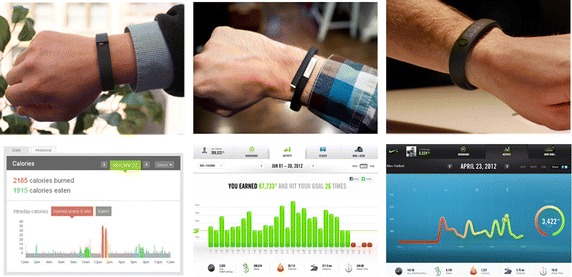
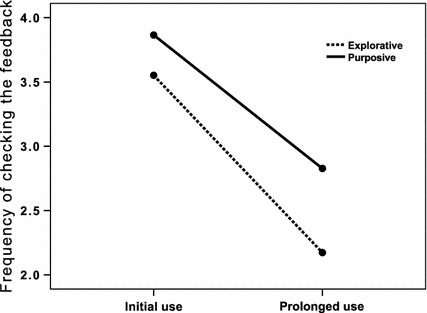
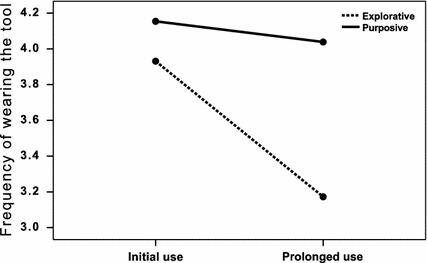
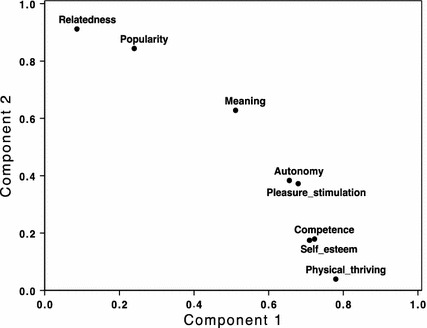
Wearable activity trackers have become a viable business opportunity. Nevertheless, research has raised concerns over their potentially detrimental effects on wellbeing. For example, a recent study found that while counting steps with a pedometer increased steps taken throughout the day, at the same time it decreased the enjoyment people derived from walking. This poses a serious threat to the incorporation of healthy routines into everyday life. Most studies aim at proving the effectiveness of activity trackers. In contrast, a wellbeing-oriented perspective calls for a deeper understanding of how trackers create and mediate meaningful experiences in everyday life. We present a study of real life experiences with three wearable activity trackers: Fitbit , Jawbone Up and Nike + Fuelband . Using need fulfillment as a theoretical lens, we study recent, memorable experiences submitted by 133 users of activity trackers. We reveal a two-dimensional structure of users’ experience driven by the needs of physical thriving or relatedness. Our qualitative findings further show a nuanced picture of the adoption of activity trackers and their impact on wellbeing. For instance, while reflection about own exercising practices lost its relevance over time, users continued to wear the tracker to document and collect their runs. More than just supporting behavioral change, we find trackers to provide multiple psychological benefits. For instance, they enhance feelings of autonomy as people gain more control about their exercising regime. Others experience relatedness, when family members purchase a tracker for relatives and join them in their efforts towards a better, healthier self. The study highlights that activity trackers can be more than “tools” to change behavior. Through incorporation in daily life, they offer new social experiences, new ways of boosting our self-esteem and getting closer to our ideal selves.
Overview
The claims and statistics of this paper haven’t been checked yet.
Free: it reads the open-access text and checks the first 5 claims that cite a source we can check. Create a free account to check every claim.
Integrity signals
Registry
Cites
Statistics
Figures
Verification
Claims the paper makes
The claims and statistics of this paper haven’t been checked yet.
Free: it reads the open-access text and checks the first 5 claims that cite a source we can check. Create a free account to check every claim.
Claims other papers make about this one
Each is checked against this paper’s own text: does it say what the citing paper says it does?
The cited source says what the claim attributes to it.
In the citing paper
“their study showed that tracking involves much more nuanced socially motivated experiences, including a sense of belonging, social support, and bonding.”
From Designing for Motivation, Engagement and Wellbeing in Digital Experience (2018) · cites this paper as Karapanos et al. (2016)
The cited source says what the claim attributes to it.
In the citing paper
“While recent research has examined the general impact of behavioral tracking on different dimensions of consumer wellbeing (e.g., Etkin 2016; Karapanos et al. 2016), none has explored how highlighting specific patterns of past behavior through such technology actually affects subsequent behavior.”
From On or Off Track: How (Broken) Streaks Affect Consumer Decisions (2023) · cites this paper as Karapanos et al. 2016
Self-check
Percentages, sums and reported differences re-computed from the paper’s own numbers.
The self-check needs the paper’s full text.
Citations
Cites
Development and validation of brief measures of positive and negative affect: The PANAS scales.
Watson, D., Clark, L. A., & Tellegen, A. (1988) · Journal of Personality and Social Psychology · doi:10.1037/0022-3514.54.6.1063 · Cited by 32,433
Deci, E. L., Koestner, R., & Ryan, R. M. (1999) · Psychological Bulletin · doi:10.1037/0033-2909.125.6.627 · Cited by 7,176
Subjective well-being. The science of happiness and a proposal for a national index
Diener, E. (2000) · American Psychologist · doi:10.1037/0003-066x.55.1.34 · Cited by 7,121
Implementation intentions: Strong effects of simple plans.
Gollwitzer, P. M. (1999) · American Psychologist · doi:10.1037/0003-066x.54.7.493 · Cited by 5,478 · cited 1×
“This should increase the probability of achieving goals (e.g., Gollwitzer 1999).”
BackgroundWhat is satisfying about satisfying events? Testing 10 candidate psychological needs.
Sheldon, K. M., Elliot, A. J., Kim, Y., & Kasser, T. (2001) · Journal of Personality and Social Psychology · doi:10.1037/0022-3514.80.2.325 · Cited by 1,694 · cited 2×
“which users look at and reflect upon the collected information (i.e., either through web tools or mobile applications).”
BackgroundPersuasive technology: using computers to change what we think and do
Fogg, B. J. (2002) · Ubiquity · doi:10.1145/764008.763957 · Cited by 1,554 · cited 1×
“Given these potential effects, interest in and research on activity trackers has grown considerably, resulting in theoretically informed design strategies to increase exercise (e.g., Fogg 2003; Consolvo et al.”
Background(2004) · Technology as Experience · doi:10.7551/mitpress/6687.003.0011 · Cited by 1,306
What things do: philosophical reflections on technology, agency, and design
(2005) · Choice Reviews Online · doi:10.5860/choice.43-1523 · Cited by 1,059 · cited 1×
“2012; Verbeek 2005), objects, such as activity trackers, have the power to make activities, such as running, more or less need fulfilling (Howell and Hill 2009; Guevarra and Howell 2015; Diefenbach et al.”
BackgroundMcCarthy, J., & Wright, P. (2004) · Interactions · doi:10.1145/1015530.1015549 · Cited by 1,011 · cited 1×
“For instance, McCarthy and Wright (2004) decomposed the process of experiencing into six sub-processes, from anticipation to reflection and recounting.”
BackgroundUnderstanding experience in interactive systems
Forlizzi, J., & Battarbee, K. (2004) · Proceedings of the 5th conference on Designing interactive systems: processes, practices, methods, and techniques · doi:10.1145/1013115.1013152 · Cited by 925 · cited 1×
“Forlizzi and Battarbee (2004) described how experiencing, as an ever-present stream of “self-talk”, is transformed into “an experience”, something memorable, a story, a narrative that can also be communicated to others.”
BackgroundSelf-citation
Cited by
Designing for Motivation, Engagement and Wellbeing in Digital Experience
Peters, D., Calvo, R. A., & Ryan, R. M. (2018) · Frontiers in Psychology · doi:10.3389/fpsyg.2018.00797 · Cited by 888
“For example, Karapanos et al. (2016) explored how commercial wearable activity trackers mediate meaningful experiences in everyday life.”
BackgroundSullivan, A. N., & Lachman, M. E. (2017) · Frontiers in Public Health · doi:10.3389/fpubh.2016.00289 · Cited by 458
“Fitness trackers have the potential, however, to increase feelings of control over one’s own exercise behaviors (100).”
BackgroundShin, G., Jarrahi, M. H., Fei, Y., Karami, A., Gafinowitz, N., Byun, A., & Lu, X. (2019) · Journal of Biomedical Informatics · doi:10.1016/j.jbi.2019.103153 · Cited by 326
Kononova, A., Li, L., Kamp, K., Bowen, M., Rikard, R., Cotten, S., & Peng, W. (2019) · JMIR mHealth and uHealth · doi:10.2196/mhealth.9832 · Cited by 225
“Overall, 1 in 3 activity tracker users of all adult ages stop using the device within 6 months after purchase [7,13].”
The Evolution of Technology and Physical Inactivity: The Good, the Bad, and the Way Forward
Woessner, M. N., Tacey, A., Levinger-Limor, A., Parker, A. G., Levinger, P., & Levinger, I. (2021) · Frontiers in Public Health · doi:10.3389/fpubh.2021.655491 · Cited by 203
How do we engage with activity trackers?: a longitudinal study of Habito
Gouveia, R., Karapanos, E., & Hassenzahl, M. (2015) · Proceedings of the 2015 ACM International Joint Conference on Pervasive and Ubiquitous Computing · doi:10.1145/2750858.2804290 · Cited by 194
Self-citationMotivation and User Engagement in Fitness Tracking: Heuristics for Mobile Healthcare Wearables
Asimakopoulos, S., Asimakopoulos, G., & Spillers, F. (2017) · Informatics · doi:10.3390/informatics4010005 · Cited by 191
“Using health technology improve quality of my health 29.”
BackgroundAttig, C., & Franke, T. (2020) · Computers in Human Behavior · doi:10.1016/j.chb.2019.08.025 · Cited by 185
“…offer social networking and comparison (e.g., challenges, leaderboards) opportunities, and thus potentially meet the needs for competence and relatedness (Asimakopoulos, Asimakopoulos & Spillers, 2017; Karapanos, Gouveia, Hassenzahl, & Forlizzi, 2016; Rockmann & Gewald, 2018; Rupp et al., 2018).”
BackgroundUsers' experiences of wearable activity trackers: a cross-sectional study
Maher, C., Ryan, J., Ambrosi, C., & Edney, S. (2017) · BMC Public Health · doi:10.1186/s12889-017-4888-1 · Cited by 180
“These findings are consistent with previous work that has found some segments of users who have used, or intend to use, their device for a sustained period of time [10 – 12].”
ResultLiang, J., Xian, D., Liu, X., Fu, J., Zhang, X., Tang, B., & Lei, J. (2018) · JMIR mHealth and uHealth · doi:10.2196/11066 · Cited by 140
“Although the use of wearable devices can enhance the ability to monitor the user’s behavior, if they perform similar activities and movements every day then, over time, it becomes easier to stop using the device as the user’s perception of the link between the results of the behavior intervention and the device monito…”
BackgroundFeng, W., Tu, R., & Hsieh, P.-S. (2020) · Journal of Retailing and Consumer Services · doi:10.1016/j.jretconser.2020.102229 · Cited by 152
Attig, C., & Franke, T. (2019) · International Journal of Human-Computer Studies · doi:10.1016/j.ijhcs.2018.04.007 · Cited by 124
Exploring the design space of glanceable feedback for physical activity trackers
Gouveia, R. H. D. F., Pereira, F., Karapanos, E., Munson, S. A., & Hassenzahl, M. (2016) · ACM International Joint Conference on Pervasive and Ubiquitous Computing (UbiComp) · doi:10.1145/2971648.2971754 · Cited by 142
“Prior work has found that individuals quickly lose interest in deep data exploration [24].”
BackgroundSelf-citationSmartwatch Wearing Behavior Analysis: A Longitudinal Study
Jeong, H., Kim, H., Kim, R., Lee, U., & Jeong, Y. (2017) · Proceedings of the ACM on Interactive Mobile Wearable and Ubiquitous Technologies · doi:10.1145/3131892 · Cited by 133
“These conflicting results could be attributed to diversity of users such as readiness of behavioral changes, purpose of usage, and incentive for participation: for example, higher adoption were partly observed among those who were ready to change their behaviors [17, 49], used trackers for the purpose of improving hea…”
BackgroundJin, D., Halvari, H., Mæhle, N., & Olafsen, A. H. (2020) · Behaviour and Information Technology · doi:10.1080/0144929x.2020.1801840 · Cited by 126
“In terms of task experience, Karapanos et al. (2016) have found that fitness tracking is positively associated with pleasure by enhancing users’ feelings of autonomy, competence and relatedness, whereas Etkin (2016) has shown that fitness tracker usage reduces task enjoyment by making the task feel…”
BackgroundMethodInfluentialFerguson, C., Hickman, L., Turkmani, S., Breen, P. P., Gargiulo, G. D., & Inglis, S. C. (2021) · Cardiovascular Digital Health Journal · doi:10.1016/j.cvdhj.2021.02.001 · Cited by 102
“abandonment are common, with 1 in 3 adults discontinuing use within 6 months after purchase and adults aged 70 years or older ceasing use in only 2 weeks.(7,8) Therefore, it is important to explore in older adults who are likely to gain the most benefit through use.”
BackgroundLong-Term IoT-Based Maternal Monitoring: System Design and Evaluation
Sarhaddi, F., Azimi, I., Labbaf, S., Niela‐Vilén, H., Dutt, N. D., Axelin, A., Liljeberg, P., & Rahmani, A. M. (2021) · Sensors · doi:10.3390/s21072281 · Cited by 104
“Several studies show that social interaction, personalized monitoring, usability in daily life settings, and the design of the long-term intervention enhance user experience and keep the participants motivated to continue the monitoring [24,84,85].”
BackgroundFostering Engagement with Personal Informatics Systems
Gulotta, R., Forlizzi, J., Yang, R., & Newman, M. W. (2016) · Proceedings of the 2016 ACM Conference on Designing Interactive Systems · doi:10.1145/2901790.2901803 · Cited by 81
Self-citationFrom panopticon to heautopticon: A new form of surveillance introduced by quantified‐self practices
Moya, J. D., & Pallud, J. (2020) · Information Systems Journal · doi:10.1111/isj.12284 · Cited by 104
“QS technologies sometimes provide unreliable data since the context of use is often neglected or insufficiently exploited (Karapanos et al., 2016).”
BackgroundNuss, K. J., Moore, K., Nelson, T., & Li, K. (2020) · American Journal of Health Promotion · doi:10.1177/0890117120939030 · Cited by 95
Chuah, S. H.-W. (2019) · Telematics and Informatics · doi:10.1016/j.tele.2019.101245 · Cited by 66
Identification and Classification of Usage Patterns in Long-Term Activity Tracking
Meyer, J., Wasmann, M., Heuten, W., El Ali, A., & Boll, S. C. J. (2017) · Proceedings of the 2017 CHI Conference on Human Factors in Computing Systems · doi:10.1145/3025453.3025690 · Cited by 72
Ryan, J. C., Edney, S. M., & Maher, C. A. (2019) · BMC Psychology · doi:10.1186/s40359-019-0315-y · Cited by 91
A Review of Wrist-Worn Wearable: Sensors, Models, and Challenges
Al-Eidan, R. M. B., Al-Khalifa, H. S., & Al‐Salman, A. S. (2018) · Journal of Sensors · doi:10.1155/2018/5853917 · Cited by 69
Tan, N. H., Wong, R. Y., Desjardins, A., Munson, S. A., & Pierce, J. (2022) · CHI Conference on Human Factors in Computing Systems · doi:10.1145/3491102.3517617 · Cited by 90
“Prior work has provided qualitative empirical studies of smart devices in general [25, 32, 77, 90] and of specific sensing devices—including smart speakers [6, 14, 16] and activity trackers [75, 91, 93].”
BackgroundFactors Associated with Older Adults' Long-Term Use of Wearable Activity Trackers
Li, L., Peng, W., Kononova, A. G., Bowen, M., & Cotten, S. R. (2020) · Telemedicine Journal and e-Health · doi:10.1089/tmj.2019.0052 · Cited by 59
“9 20 Second, WATS’ ability to collect various indicators of personal activity and to construct a holistic quantified self-image 21 has been found to be important for quantified selfers who are strongly motivated to gather high-quality data about themselves.”
Verma, B., & Tandon, U. (2022) · Global Knowledge, Memory and Communication · doi:10.1108/gkmc-08-2022-0209 · Cited by 53
Co-designing wearable devices for sports: The case study of sport climbing
Mencarini, E., Leonardi, C., Cappelletti, A., Giovanelli, D., Angeli, A. D., & Zancanaro, M. (2018) · International Journal of Human-Computer Studies · doi:10.1016/j.ijhcs.2018.10.005 · Cited by 71
Carbon footprint tracking apps. Does feedback help reduce carbon emissions?
Hoffmann, S., Lasarov, W., Reimers, H., & Trabandt, M. (2023) · Journal of Cleaner Production · doi:10.1016/j.jclepro.2023.139981 · Cited by 57
The Thing and I (Summer of ’17 Remix)
Hassenzahl, M. (2018) · Human-computer interaction series · doi:10.1007/978-3-319-68213-6_2 · Cited by 53
Self-citationFactors and Design Features Influencing the Continued Use of Wearable Devices
El-Gayar, O., & Elnoshokaty, A. (2023) · Journal of Healthcare Informatics Research · doi:10.1007/s41666-023-00135-4 · Cited by 61
Development and Validation of a Basic Psychological Needs Scale for Technology Use
Moradbakhti, L., Leichtmann, B., & Mara, M. (2024) · Psychological Test Adaptation and Development · doi:10.1027/2698-1866/a000062 · Cited by 41
Beyond Behavior: The Coach's Perspective on Technology in Health Coaching
Rutjes, H., Willemsen, M. C., & IJsselsteijn, W. A. (2019) · CHI Conference on Human Factors in Computing Systems · doi:10.1145/3290605.3300900 · Cited by 50
“The real value of self-tracking is often pointed out as a contextualized, subjective and social process [16,31,33,55], nicely illustrated by Rooksby, Rost, Morrison, and Chalmers who conceptualized the use of activity trackers as ‘lived informatics’: “Tracking was explained in terms of people’s…”
BackgroundCarter, S., Green, J., & Speed, E. (2018) · Sociology Compass · doi:10.1111/soc4.12572 · Cited by 49
“Karapanos et al. (2016) note that behaviour change techniques of self-monitoring and reinforcing are relatively ‘primitive’ and may be limited in long-term effectiveness.”
BackgroundGouveia, R. H. D. F., Karapanos, E., & Hassenzahl, M. (2018) · CHI Conference on Human Factors in Computing Systems · doi:10.1145/3173574.3173936 · Cited by 45
“Researchers produced models of how people use self-tracking tools informed by qualitative inquiry [16, 32]; investigated how people lapse and abandon these devices [29]; explored the ability of trackers to align with users’ motivations and desires [25, 28]; and investigated tracking practices in everyday life [10,18,4…”
BackgroundSelf-citationOn or Off Track: How (Broken) Streaks Affect Consumer Decisions
Silverman, J., & Barasch, A. (2023) · Journal of Consumer Research · doi:10.1093/jcr/ucac029 · Cited by 43
Self‐quantification and consumer well‐being: A meta‐analytic review
Jain, A., Pradhan, D., Kuanr, A., & Singh, S. (2024) · Psychology and Marketing · doi:10.1002/mar.22141 · Cited by 38
Ummels, D., Beekman, E., Moser, A., Braun, S., & Beurskens, A. J. H. M. (2019) · Disability and Rehabilitation · doi:10.1080/09638288.2019.1590470 · Cited by 36
Continued use of wearables for wellbeing with a cultural probe
Lin, F., & Windasari, N. A. (2018) · Service Industries Journal · doi:10.1080/02642069.2018.1504924 · Cited by 40
“Only Karapanos et al. (2016) showing that using a wearable activity tracker supporting behavioral change driven by either physical thriving or relatedness, showing a positive effect of behavior change on psychological wellbeing.”
BackgroundLee, B. C., Xie, J., Ajisafe, T., & Kim, S.-H. (2020) · International Journal of Environmental Research and Public Health · doi:10.3390/ijerph17103461 · Cited by 32
Exercise in Obesity—the Role of Technology in Health Services: Can This Approach Work?
Dobbie, L. J., Tahrani, A. A., Alam, U., James, J., Wilding, J. P. H., & Cuthbertson, D. J. (2021) · Current Obesity Reports · doi:10.1007/s13679-021-00461-x · Cited by 32
Mwangi, V. N., Millard, R., & Histon, W. (2024) · Psychology and Marketing · doi:10.1002/mar.21962 · Cited by 27
Creaser, A. V., Frazer, M. T., Costa, S., Bingham, D. D., & Clemes, S. A. (2022) · International Journal of Environmental Research and Public Health · doi:10.3390/ijerph192114067 · Cited by 32
“In adult wearable users, wearable use was negatively associated with psychological distress [34], and enhanced autonomy and perceived control over health and well-being [35].”
BackgroundUsing an Activity Tracker in Healthcare: Experiences of Healthcare Professionals and Patients
Ummels, D., Beekman, E., Braun, S., & Beurskens, A. J. H. M. (2021) · International Journal of Environmental Research and Public Health · doi:10.3390/ijerph18105147 · Cited by 23
Țicău, I. R., & Hadad, S. (2021) · Management Dynamics in the Knowledge Economy · doi:10.2478/mdke-2021-0011 · Cited by 25
Health Media: From Multimedia Signals to Personal Health Insights
Boll, S., Meyer, J., & O'Connor, N. E. (2018) · IEEE Multimedia · doi:10.1109/mmul.2018.011921235 · Cited by 20
Positive Emodiversity in Everyday Human-Technology Interactions and Users’ Subjective Well-Being
Yoon, J., & Kim, C. (2022) · International Journal of Human-Computer Interaction · doi:10.1080/10447318.2022.2121564 · Cited by 22
“Likewise, similar to literature on technology-mediated well-being (Karapanos et al., 2016), several cases showed that both hedonic and eudai-monic pursuits could be attributed to a particular technology.”
BackgroundA Meta-Synthesis of the Barriers and Facilitators for Personal Informatics Systems
Kabir, K. S., & Wiese, J. (2023) · Proceedings of the ACM on Interactive Mobile Wearable and Ubiquitous Technologies · doi:10.1145/3610893 · Cited by 17
Making Sense in the Long Run: Long-Term Health Monitoring in Real Lives
Meyer, J., Beck, E., Wasmann, M., & Boll, S. (2017) · IEEE International Conference on Healthcare Informatics (ICHI) · doi:10.1109/ichi.2017.11 · Cited by 21
“Further Karapanos [3] found that, in the long term, the user’s thoughts about the behavior become less important as the incentive to continue; rather, the decision to continue is driven more by improved physical health and by social relationships.”
BackgroundResultInfluentialBeckett, D., Curtis, R., Szeto, K., & Maher, C. A. (2025) · Journal of Medical Internet Research · doi:10.2196/56251 · Cited by 24
“It is possible that enhancements in WATs over time, such as improved health monitoring capabilities and integration with smartphones, have increased the perceived value of the devices and made them more valuable in people’s lives [18].”
Posting Exercise Activity on Social Media for Self-Efficacy and Well-Being
Kashian, N., & Liu, Y. (2019) · Southern Communication Journal · doi:10.1080/1041794x.2019.1658801 · Cited by 22
“Elsewhere, research has shown that individuals who share their fitness info in online communities report that they are physically thriving (i.e., feel that their body is healthy and well taken care of; Karapanos et al., 2016).”
BackgroundPuri, S., Pandey, S., & Chawla, D. (2022) · Benchmarking An International Journal · doi:10.1108/bij-12-2020-0647 · Cited by 19
O’Loughlin, E. K., Sabiston, C. M., deJonge, M. L., Lucibello, K. M., & O’Loughlin, J. L. (2021) · Journal of Health Psychology · doi:10.1177/13591053211008209 · Cited by 18
“Activity tracking devices have been shown to increase feelings of empowerment, confidence in training programs and motivation to achieve PA goals (Duus et al., 2018; Karapanos et al., 2016; Little, 2017).”
BackgroundResultChanging Health Goals with Personal Informatics
Ekhtiar, T., Karahanoğlu, A., Gouveia, R. H. D. F., & Ludden, G. (2025) · Designing Interactive Systems Conference · doi:10.1145/3715336.3735813 · Cited by 19
“Karapanos et al. has critiqued how PI can for potentially lead to fostering feelings of incompetence when framed around rigid performance metrics, where goal completion and failure are the only outcomes [47].”
Self-citationFlitcroft, L., Chen, W. S., & Meyer, D. (2020) · Journal of Medical Internet Research · doi:10.2196/14977 · Cited by 18
“Research into the effect of self-monitoring in general on health status suggests that mechanisms may include empowerment or self-efficacy [8,13], self-actualization and self-esteem, as well as greater sensitivity and awareness [6].”
BackgroundPandey, S., Chawla, D., Puri, S., & Jeong, L. S. (2021) · Journal of Asia Business Studies · doi:10.1108/jabs-11-2020-0456 · Cited by 20
Ummels, D., Braun, S., Stevens, A., Beekman, E., & Beurskens, A. J. H. M. (2020) · Disability and Rehabilitation Assistive Technology · doi:10.1080/17483107.2020.1815089 · Cited by 16
Black, M., & Brunet, J. (2021) · JMIR mhealth and uhealth · doi:10.2196/28128 · Cited by 16
Predictors of Food and Physical Activity Tracking Among Young Adults
O’Loughlin, E. K., Marashi, M., Sabiston, C. M., Lucibello, K. M., Sylvestre, M., & O’Loughlin, J. L. (2023) · Health Education & Behavior · doi:10.1177/10901981231159679 · Cited by 15
“Activity tracking has also been related to increases in empowerment, confidence in training programs and motivation to achieve PA goals, all of which may increase self-determined motivations such as identified regulation (Duus et al., 2018; Karapanos et al., 2016; Little, 2017; E. K. O’Loughlin et al., 2022).”
BackgroundHa, Y., Karyda, M., & Lucero, A. (2020) · Designing Interactive Systems Conference · doi:10.1145/3357236.3395477 · Cited by 14
“Thus, activity trackers often combine multiple persuasive technologies, with one of the most used techniques to be conditioning [10, 20, 32].”
BackgroundWong, A. K. C., Bayuo, J., Su, J. J., Wong, F. K. Y., Chow, K. K. S., Wong, B. P., Wong, S. M., & Hui, V. C. C. (2024) · Journal of Medical Internet Research · doi:10.2196/52435 · Cited by 15
Taxonomy of Wearable Devices: A Systematic Review of Literature
Sinha, N., & Gupta, M. (2019) · International Journal of Technology Diffusion · doi:10.4018/ijtd.2019040101 · Cited by 11
Self‐tracking in effortful activities: Gender differences in consumers' task experience
Jin, D., Halvari, H., Mæhle, N., & Niemiec, C. P. (2020) · Journal of Consumer Behaviour · doi:10.1002/cb.1865 · Cited by 14
Heiskari, M., Celuch, M., Koivula, A., Savolainen, I., & Oksanen, A. (2025) · International Journal of Information Management · doi:10.1016/j.ijinfomgt.2025.102926 · Cited by 13
Moisture‐Insensitive Force Sensor Yarns and Fabrics to Monitor Biological Motion
Uno, M. O., Omori, M., Morita, S., Kojitani, T., Yoshimura, K., Tsurumi, T., & Ito, K. (2023) · Advanced Materials Technologies · doi:10.1002/admt.202301124 · Cited by 10
Coşkun, A. (2019) · The Design Journal · doi:10.1080/14606925.2019.1634447 · Cited by 11
“This reason was mainly stated by the participants who intend to use the tracker for not only having an awareness of their performance but also seeing that the device can help them increase their performance, i.e. purposive users (Karapanos et al. 2016).”
BackgroundCrowdWalk: leveraging the wisdom of the crowd to inspire walking activities
de Ornelas, T. J. F., Caraban, A., Gouveia, R. H. D. F., & Karapanos, E. (2015) · ACM International Joint Conference on Pervasive and Ubiquitous Computing (UbiComp) · doi:10.1145/2800835.2800923 · Cited by 10
Self-citationBonacaro, A., Rubbi, I., & Sookhoo, D. (2019) · PROFESSIONI INFERMIERISTICHE · Cited by 9
Annoyed to Discontinue: Factors Influencing (Dis)Continuance of Using Activity Tracking Wearables
Fietkiewicz, K. J., & Ilhan, A. (2021) · Lecture notes in computer science · doi:10.1007/978-3-030-78465-2_28 · Cited by 9
‘Counting your steps’: The use of wearable technology to promote employees’ health and wellbeing
Henning, A., & van de Ven, K. (2017) · Performance Enhancement & Health · doi:10.1016/j.peh.2017.11.002 · Cited by 10
A modified activity protocol for claudication
Endicott, K. M., Hynes, C. F., AMDUR, R. L., & Macsata, R. A. (2019) · The Journal of Cardiovascular Surgery · doi:10.23736/s0021-9509.18.10021-8 · Cited by 7
Customization in long-term use: the case of the sports watch
Nurkka, P. (2016) · International Conference on Mobile and Ubiquitous Multimedia (MUM) · doi:10.1145/3012709.3012744 · Cited by 11
Health Self-Management Applications in the Work Environment: The Effects on Employee Autonomy
Bonvanie, A. M., Broekhuis, M., Janssen, O., Maeckelberghe, E. L. M., & Wortmann, J. C. (2020) · Frontiers in Digital Health · doi:10.3389/fdgth.2020.00009 · Cited by 8
“confirm the general assumption underlying HSMAs that their use increases an individual’s autonomy to self-regulate their healthrelated behavior (43, 44).”
BackgroundSocial interaction, support preferences, and the use of wearable health trackers
Pennington, N., & Dam, L. (2023) · Frontiers in Communication · doi:10.3389/fcomm.2023.1256452 · Cited by 10
An Inquiry into Goal-Setting Practices with Physical Activity Trackers
Konstanti, C., & Karapanos, E. (2018) · CHI Conference Extended Abstracts on Human Factors in Computing Systems (CHI EA) · doi:10.1145/3170427.3188663 · Cited by 9
“According to this, people are typically asked to “walk 10000 steps per day” and monitor their performance throughout a day, rather than simply being urged to “walk more” [6].”
BackgroundSelf-citationWentz, J. R., & Stanis, S. A. W. (2023) · Health Promotion Practice · doi:10.1177/15248399231160152 · Cited by 8
“The change in step ratio was utilized rather than just base-line and completion steps due to the fact that PA research has a high attrition rate over time (Karapanos et al., 2016), and it will allow the research to see the difference in steps from where a participant started.”
MethodErlebnis- und wohlbefindensorientiertes Gestalten: ein Arbeitsmodell
Hassenzahl, M., & Diefenbach, S. (2017) · Springer eBooks · doi:10.1007/978-3-662-53026-9_4 · Cited by 6
Self-citationLiu, Y., & Kashian, N. (2020) · Health Communication · doi:10.1080/10410236.2020.1750774 · Cited by 6
“Elsewhere, research has shown that people who wear physical activity trackers and log their exercise data report psychological benefits (Karapanos et al., 2016).”
BackgroundTracking and its Potential for Older Adults with Memory Concerns
Short, A., Su, N. M., Hu, R., Choe, E. K., Kacorri, H., Danilovich, M., Conroy, D. E., Jetté, S., Barnett, B., & Lazar, A. (2025) · CHI Conference on Human Factors in Computing Systems · doi:10.1145/3706598.3714093 · Cited by 6
“For instance, one study analyzed the experiences of people using wearable activity trackers and discussed the role of positive and negative emotions in influencing user behavior [39].”
van de Belt, T. H., de Croon, A., Freriks, F., Blomseth Christiansen, T., Eg Larsen, J., & de Groot, M. (2022) · JMIR Formative Research · doi:10.2196/32704 · Cited by 5
The rise of large language models in wearable health sensing
Farrahi, V. (2025) · Intelligent Medicine · doi:10.1016/j.imed.2025.12.003 · Cited by 5
Uhde, A., Hoff, T. Z., & Hassenzahl, M. (2023) · Proceedings of the ACM on Human-Computer Interaction · doi:10.1145/3604247 · Cited by 5
“mobile technologies such as smart glasses [2, 14, 21, 23, 24], fitness trackers [16, 19], and wearables [5, 12, 20, 36, 41].”
BackgroundSelf-citationAre Trackers Social Actors? The Role of Self-tracking on Self-evaluation
Hancı, E., Ruijten, P. A. M., Lacroix, J. P. W., Dijk, E. T. K.-V., & IJsselsteijn, W. A. (2019) · Lecture notes in computer science · doi:10.1007/978-3-030-17287-9_3 · Cited by 8
Black, M., & Brunet, J. (2022) · Digital Health · doi:10.1177/20552076221093134 · Cited by 4
Conceptualizing Phygital Work Experience (PH-WX): A Framework for Enhanced Employee Well-Being
Gustafsson, A., Bartikowski, B., Lund, K., Gori, S., & Mameli, E. (2026) · Journal of Macromarketing · doi:10.1177/02761467261422574 · Cited by 6
“Research suggests that responsive and adaptive devices reduce physical strain and help maintain a sense of presence and continuity across locations and tasks (Chughtai, 2020; Karapanos et al., 2016; Peters, 2023).”
Weinberger, N., Baumann, M., & Maia, M. (2025) · Frontiers in Digital Health · doi:10.3389/fdgth.2025.1588183 · Cited by 5
“For example, one study has shown that step counters can increase physical activity but simultaneously decrease enjoyment of walking [see e.g., (72)].”
Use of Fitbit Technology Does Not Impact Health Biometrics in a Community of Older Adults
Hong, E., Jakacic, A. N., Sahoo, A., Breyman, E., Ukegbu, G., TABACOF, L. R., Sachs, D., Migliaccio, J., Phipps, C., Schwartz, J., et al. (2020) · Telemedicine Journal and e-Health · doi:10.1089/tmj.2020.0060 · Cited by 3
“9,10,11 Many older adults who are health wearable users are increasingly reporting them as helpful and easy to use, 12,13 and therefore, it is likely that they will continue to grow in popularity.”
Data Warehouse Hybrid Modeling Methodology
Takács, V. L., Bubnó, K., Ráthonyi, G., Bába, É. B., & Szilágyi, R. (2020) · Data Science Journal · doi:10.5334/dsj-2020-038 · Cited by 8
Schumacher, A., & Halabi, M. E. (2025) · Psychology and Marketing · doi:10.1002/mar.22237 · Cited by 2
Freeman, J. L. (2025) · International Journal of Adolescence and Youth · doi:10.1080/02673843.2025.2590907 · Cited by 4
“…and psychological wellbeing, from enhanced feelings of autonomy and social relatedness to increased pressure to perform and disordered eating behaviors (e.g. Etkin, 2016; Feng et al., 2021; Karapanos et al., 2016; Kelley et al., 2017), much remains unknown about these complex relationships.”
Research Challenges of Emerging Technologies Supporting Life-Long Health and Wellbeing
Meyer, J., & Eslambolchilar, P. (2017) · International Workshop on Multimedia for Personal Health and Health Care (MMHealth) · doi:10.1145/3132635.3132639 · Cited by 2
“Other researchers addressing long-term use of tracking point into similar directions [33,27].”
BackgroundDesigning Wearables with People in Mind
Tomberg, V., & Kotsjuba, D. (2019) · Springer eBooks · doi:10.1007/978-3-319-64301-4_13 · Cited by 2
Mixed-Methods Self-Tracking: Qualitative Styles of Quantifying the Self
Nolasco, H. R., Vargo, A. W., & Kise, K. (2022) · ACM International Joint Conference on Pervasive and Ubiquitous Computing (UbiComp) · doi:10.1145/3544793.3560386 · Cited by 1
“Bodies are heterogeneous [8], and a person’s unchangeable characteristics (e.g. the presence of a disability) and socioeconomic conditions can impact their ability to do the things most tracking systems summarize to suit only limited contexts [15].”
BackgroundHow Mobile Exercise Apps Support Behavior Change—and What Exercise Professionals Should Know
Reiner, S. L. (2025) · ACSMʼs Health & Fitness Journal · doi:10.1249/fit.0000000000001112 · Cited by 2
Krupp, A., Ullrich, D., & Diefenbach, S. (2026) · CHI Conference on Human Factors in Computing Systems · doi:10.1145/3772318.3790727 · Cited by 2
“…WriteAway) included haptic features and one concept is connected to smell (ScentConnect), the need for physicalness might be more prominent for health or fitness-related technologies [39], or concepts with a closer connection to physical features such as touch, breath, or heart rate [31, 32, 36].”
Heiskari, M., Koivula, A., Celuch, M., Savolainen, I., Osma, T., & Oksanen, A. (2026) · Journal of Medical Internet Research · doi:10.2196/83054 · Cited by 1
“In terms of social connectedness, trackers can foster a sense of belonging and social support from family and friends who use the trackers together as well as from other users in online communities and platforms [21].”
InfluentialRajan, B. (2020) · Health & New Media Research · doi:10.22720/hnmr.2020.4.2.193 · Cited by 1
School Administrators’ Experiences in a 6-Month Well-Being Pilot Program
Waldron, J. J., Alborn-yilek, S. D., Gute, G. G., Schares, D., & Huckstadt, K. (2019) · Journal of School Leadership · doi:10.1177/1052684619832159 · Cited by 2
Relationship between pleasure and psychological needs in the automotive domain
Redet, J., Louvel, G., Vrinat, D., Vian, M., Esposito, N., & Tijus, C. (2018) · doi:10.1145/3317326.3317328 · Cited by 1
Metadata
- Authors
- Karapanos, E., Gouveia, R., Hassenzahl, M., & Forlizzi, J.
- Affiliations
- Cyprus University of Technology (CY)
- Universidade da Madeira (PT)
- Folkwang University of the Arts (DE)
- Carnegie Mellon University (US)
- Corresponding author
- Karapanos, Evangelos
- Venue
- Psychology of Well-Being
- Published
- 2016-06-14
- Volume
- 6
- Issue
- 1
- Pages
- 4-4
- ISSN
- 2211-1522 (ISSN-L)
- PMC
- PMC4908170
- OpenAlex
- W2431062613
- Cited by
- 124
- References
- 45
- Citations by year
- 2026: 6 · 2025: 15 · 2024: 6 · 2023: 13 · 2022: 8 · 2021: 15 · 2020: 16 · 2019: 18 · 2018: 13 · 2017: 9 · 2016: 3
- FWCI
- 22.32
- Type
- journal article
- Language
- en
- Open access
- hybrid
- doi.org
- Locations
- Psychology of Well-Being Theory Research and Practice (publishedVersion, cc-by)
- PubMed Central (publishedVersion, cc-by)
- PubMed (publishedVersion)
- Ktisis at Cyprus University of Technology (Cyprus University of Technology) (submittedVersion)
- Funders
- Fundação para a Ciência e a Tecnologia (PT) (CMUP- EPB/TIC/0063/2013)
- Topics
- Physical Sciences › Computer Science › Human-Computer Interaction › Innovative Human-Technology Interaction
- Health Sciences › Health Professions › General Health Professions › Mobile Health and mHealth Applications
- Physical Sciences › Computer Science › Computer Vision and Pattern Recognition › Context-Aware Activity Recognition Systems
- Keywords
- wearable activity trackers, well-being, need satisfaction, relatedness, autonomy, exercise behavior, Fitbit, self-esteem, social support, meaningful experiences, technology adoption
About these checks
Registry, retraction, Cites and statistics results are computed, not judged, with one exception: a printed reference that no index lists is read once by a model before it counts as a citation error. Claims are extracted by a model and kept only when their quote appears verbatim in the text; each cited source is then checked, with a model’s help, for whether it says what the claim relies on. Those verdicts can be wrong — read the claim’s quote and the cited source before relying on one.
Statistics and arithmetic are recomputed, not judged.
Confidence bands are shown only for fields calibrated on our annotated test set. None is calibrated yet, so no band is shown.
What counts as a claim ›How we measure confidence ›How we check this ›
Are you an author, or do you see a problem with this page? Request a review
Data sources
Bibliographic data: Semantic Scholar, OpenAlex, Crossref.
Contains information from the Semantic Scholar Academic Graph Datasets, made available under the ODC Attribution License (ODC-BY 1.0).
Semantic Scholar’s data is described in: Kinney, R., et al. (2023). The Semantic Scholar Open Data Platform. arXiv:2301.10140.
