

Wellbeing in the Making: Peoples' Experiences with Wearable Activity Trackers
Open accessThe DOI matches its Crossref record; 43 of the 45 references it cites were found in a registry or an index.
Abstract
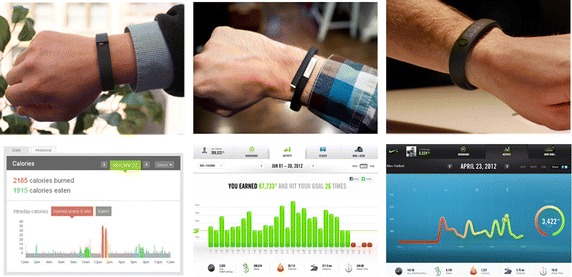
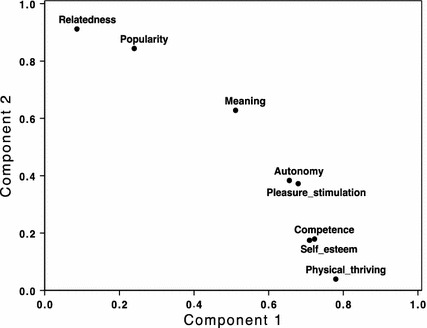
Wearable activity trackers have become a viable business opportunity. Nevertheless, research has raised concerns over their potentially detrimental effects on wellbeing. For example, a recent study found that while counting steps with a pedometer increased steps taken throughout the day, at the same time it decreased the enjoyment people derived from walking. This poses a serious threat to the incorporation of healthy routines into everyday life. Most studies aim at proving the effectiveness of activity trackers. In contrast, a wellbeing-oriented perspective calls for a deeper understanding of how trackers create and mediate meaningful experiences in everyday life. We present a study of real life experiences with three wearable activity trackers: Fitbit , Jawbone Up and Nike + Fuelband . Using need fulfillment as a theoretical lens, we study recent, memorable experiences submitted by 133 users of activity trackers. We reveal a two-dimensional structure of users’ experience driven by the needs of physical thriving or relatedness. Our qualitative findings further show a nuanced picture of the adoption of activity trackers and their impact on wellbeing. For instance, while reflection about own exercising practices lost its relevance over time, users continued to wear the tracker to document and collect their runs. More than just supporting behavioral change, we find trackers to provide multiple psychological benefits. For instance, they enhance feelings of autonomy as people gain more control about their exercising regime. Others experience relatedness, when family members purchase a tracker for relatives and join them in their efforts towards a better, healthier self. The study highlights that activity trackers can be more than “tools” to change behavior. Through incorporation in daily life, they offer new social experiences, new ways of boosting our self-esteem and getting closer to our ideal selves.
Overview
The claims and statistics of this paper haven’t been checked yet.
Free: it reads the open-access text and checks the first 5 claims that cite a source we can check. Create a free account to check every claim.
Integrity signals
Registry
Cites
Statistics
Figures
Verification
Claims the paper makes
The claims and statistics of this paper haven’t been checked yet.
Free: it reads the open-access text and checks the first 5 claims that cite a source we can check. Create a free account to check every claim.
Claims other papers make about this one
Each is checked against this paper’s own text: does it say what the citing paper says it does?
The cited source says what the claim attributes to it.
In the citing paper
“their study showed that tracking involves much more nuanced socially motivated experiences, including a sense of belonging, social support, and bonding.”
From Designing for Motivation, Engagement and Wellbeing in Digital Experience (2018) · cites this paper as Karapanos et al. (2016)
The cited source says what the claim attributes to it.
In the citing paper
“While recent research has examined the general impact of behavioral tracking on different dimensions of consumer wellbeing (e.g., Etkin 2016; Karapanos et al. 2016), none has explored how highlighting specific patterns of past behavior through such technology actually affects subsequent behavior.”
From On or Off Track: How (Broken) Streaks Affect Consumer Decisions (2023) · cites this paper as Karapanos et al. 2016
Self-check
Percentages, sums and reported differences re-computed from the paper’s own numbers.
The self-check needs the paper’s full text.
Citations
Cites
Development and validation of brief measures of positive and negative affect: The PANAS scales.
Watson, D., Clark, L. A., & Tellegen, A. (1988) · Journal of Personality and Social Psychology · doi:10.1037/0022-3514.54.6.1063 · Cited by 32,433
Deci, E. L., Koestner, R., & Ryan, R. M. (1999) · Psychological Bulletin · doi:10.1037/0033-2909.125.6.627 · Cited by 7,176
Subjective well-being. The science of happiness and a proposal for a national index
Diener, E. (2000) · American Psychologist · doi:10.1037/0003-066x.55.1.34 · Cited by 7,121
Implementation intentions: Strong effects of simple plans.
Gollwitzer, P. M. (1999) · American Psychologist · doi:10.1037/0003-066x.54.7.493 · Cited by 5,478 · cited 1×
“This should increase the probability of achieving goals (e.g., Gollwitzer 1999).”
BackgroundWhat is satisfying about satisfying events? Testing 10 candidate psychological needs.
Sheldon, K. M., Elliot, A. J., Kim, Y., & Kasser, T. (2001) · Journal of Personality and Social Psychology · doi:10.1037/0022-3514.80.2.325 · Cited by 1,694 · cited 2×
“which users look at and reflect upon the collected information (i.e., either through web tools or mobile applications).”
BackgroundPersuasive technology: using computers to change what we think and do
Fogg, B. J. (2002) · Ubiquity · doi:10.1145/764008.763957 · Cited by 1,554 · cited 1×
“Given these potential effects, interest in and research on activity trackers has grown considerably, resulting in theoretically informed design strategies to increase exercise (e.g., Fogg 2003; Consolvo et al.”
Background(2004) · Technology as Experience · doi:10.7551/mitpress/6687.003.0011 · Cited by 1,306
What things do: philosophical reflections on technology, agency, and design
(2005) · Choice Reviews Online · doi:10.5860/choice.43-1523 · Cited by 1,059 · cited 1×
“2012; Verbeek 2005), objects, such as activity trackers, have the power to make activities, such as running, more or less need fulfilling (Howell and Hill 2009; Guevarra and Howell 2015; Diefenbach et al.”
BackgroundMcCarthy, J., & Wright, P. (2004) · Interactions · doi:10.1145/1015530.1015549 · Cited by 1,011 · cited 1×
“For instance, McCarthy and Wright (2004) decomposed the process of experiencing into six sub-processes, from anticipation to reflection and recounting.”
BackgroundUnderstanding experience in interactive systems
Forlizzi, J., & Battarbee, K. (2004) · Proceedings of the 5th conference on Designing interactive systems: processes, practices, methods, and techniques · doi:10.1145/1013115.1013152 · Cited by 925 · cited 1×
“Forlizzi and Battarbee (2004) described how experiencing, as an ever-present stream of “self-talk”, is transformed into “an experience”, something memorable, a story, a narrative that can also be communicated to others.”
BackgroundSelf-citationNeeds, affect, and interactive products – Facets of user experience
Hassenzahl, M., Diefenbach, S., & Göritz, A. (2010) · Interacting with Computers · doi:10.1016/j.intcom.2010.04.002 · Cited by 867 · cited 2×
“While Hassenzahl et al. (2010) and Tuch et al. (2013) excluded self-esteem, physical thriving and luxury, we decided to include them as we found them potentially relevant to trackers.”
BackgroundSelf-citationThe Dynamics of Social Practice
(2012) · The Dynamics of Social Practice: Everyday Life and How it Changes · doi:10.4135/9781446250655.n1 · Cited by 846
Personal tracking as lived informatics
Rooksby, J., Rost, M., Morrison, A., & Chalmers, M. (2014) · Proceedings of the SIGCHI Conference on Human Factors in Computing Systems · doi:10.1145/2556288.2557039 · Cited by 655
Theory-driven design strategies for technologies that support behavior change in everyday life
Consolvo, S., McDonald, D. W., & Landay, J. A. (2009) · Proceedings of the SIGCHI Conference on Human Factors in Computing Systems · doi:10.1145/1518701.1518766 · Cited by 592
User experience over time: an initial framework
Karapanos, E., Zimmerman, J., Forlizzi, J., & Martens, J.-B. (2009) · Proceedings of the SIGCHI Conference on Human Factors in Computing Systems · doi:10.1145/1518701.1518814 · Cited by 561
Self-citationMcCarthy, J., & Wright, P. (2004) · The MIT Press eBooks · doi:10.7551/mitpress/6687.001.0001 · Cited by 561
Behavior Change Techniques in Top-Ranked Mobile Apps for Physical Activity
Conroy, D. E., Yang, C.-H., & Maher, J. P. (2014) · American Journal of Preventive Medicine · doi:10.1016/j.amepre.2014.01.010 · Cited by 466
Designing Moments of Meaning and Pleasure. Experience Design and Happiness
Hassenzahl, M., Eckoldt, K., Diefenbach, S., Laschke, M., Lenz, E., & Kim, J. (2013) · International journal of design · Cited by 382
Self-citationFritz, T., Huang, E. M., Murphy, G. C., & Zimmermann, T. (2014) · Proceedings of the SIGCHI Conference on Human Factors in Computing Systems · doi:10.1145/2556288.2557383 · Cited by 380
Positive Computing: Technology for Wellbeing and Human Potential
Calvo, R. A., & Peters, D. (2014) · doi:10.7551/mitpress/9764.001.0001 · Cited by 376 · cited 1×
“Since we tie our model of experience to need fulfillment, the present study is also a study of how subjective wellbeing is made through technology (see also Calvo and Peters 2014; Desmet and Hassenzahl 2012).”
ResultWhat Things Do: Philosophical Reflections on Technology, Agency, and Design
Verbeek, P.-P. (2005) · doi:10.1515/9780271033228 · Cited by 371 · cited 1×
“2012; Verbeek 2005), objects, such as activity trackers, have the power to make activities, such as running, more or less need fulfilling (Howell and Hill 2009; Guevarra and Howell 2015; Diefenbach et al.”
BackgroundPositive computing: technology for wellbeing and human potential
(2015) · Choice Reviews Online · doi:10.5860/choice.189530 · Cited by 283
The Hidden Cost of Personal Quantification
Etkin, J. (2016) · Journal of Consumer Research · doi:10.1093/jcr/ucv095 · Cited by 274 · cited 3×
“For instance, an experimental study (Etkin 2016) found, that though counting steps led participants to walk more, it decreased people’s enjoyment of walking.”
BackgroundInfluentialEpstein, D. A., Caraway, M., Johnston, C., Ping, A., Fogarty, J., & Munson, S. A. (2016) · Proceedings of the 2016 CHI Conference on Human Factors in Computing Systems · doi:10.1145/2858036.2858045 · Cited by 254
Howell, R. T., & Hill, G. (2009) · The Journal of Positive Psychology · doi:10.1080/17439760903270993 · Cited by 239 · cited 1×
“2012; Verbeek 2005), objects, such as activity trackers, have the power to make activities, such as running, more or less need fulfilling (Howell and Hill 2009; Guevarra and Howell 2015; Diefenbach et al.”
BackgroundExercise is Medicine: A Historical Perspective
Berryman, J. W. (2010) · Current Sports Medicine Reports · doi:10.1249/jsr.0b013e3181e7d86d · Cited by 202 · cited 2×
“*Correspondence: e.karapanos@gmail.com 1 Cyprus University of Technology, 3036 Limassol, Cyprus Full list of author information is available at the end of the article activities like aerobics, bicycling, and running” (Berryman 2010, p. 9).”
BackgroundHow do we engage with activity trackers?: a longitudinal study of Habito
Gouveia, R., Karapanos, E., & Hassenzahl, M. (2015) · Proceedings of the 2015 ACM International Joint Conference on Pervasive and Ubiquitous Computing · doi:10.1145/2750858.2804290 · Cited by 194
Self-citationTo have in order to do: Exploring the effects of consuming experiential products on well‐being
Guevarra, D. A., & Howell, R. T. (2015) · Journal of Consumer Psychology · doi:10.1016/j.jcps.2014.06.006 · Cited by 183 · cited 1×
“2012; Verbeek 2005), objects, such as activity trackers, have the power to make activities, such as running, more or less need fulfilling (Howell and Hill 2009; Guevarra and Howell 2015; Diefenbach et al.”
BackgroundThe 'hedonic' in human-computer interaction: history, contributions, and future research directions
Diefenbach, S., Kolb, N., & Hassenzahl, M. (2014) · Proceedings of the 2014 conference on Designing interactive systems · doi:10.1145/2598510.2598549 · Cited by 174
Self-citationHassenzahl, M., Wiklund-Engblom, A., Bengs, A., Hägglund, S., & Diefenbach, S. (2015) · International Journal of Human-Computer Interaction · doi:10.1080/10447318.2015.1064664 · Cited by 167
Self-citationTowards Happiness: Possibility-Driven Design
Desmet, P., & Hassenzahl, M. (2012) · Studies in computational intelligence · doi:10.1007/978-3-642-25691-2_1 · Cited by 163 · cited 1×
“Since we tie our model of experience to need fulfillment, the present study is also a study of how subjective wellbeing is made through technology (see also Calvo and Peters 2014; Desmet and Hassenzahl 2012).”
ResultSelf-citationPartala, T., & Kallinen, A. (2012) · Interacting with Computers · doi:10.1016/j.intcom.2011.10.001 · Cited by 154 · cited 2×
“2013; Partala and Kallinen 2012; Karapanos et al.”
BackgroundExploring the design space of glanceable feedback for physical activity trackers
Gouveia, R. H. D. F., Pereira, F., Karapanos, E., Munson, S. A., & Hassenzahl, M. (2016) · ACM International Joint Conference on Pervasive and Ubiquitous Computing (UbiComp) · doi:10.1145/2971648.2971754 · Cited by 142
Self-citationA qualitative approach to HCI research
Adams, A., Lunt, P., & Cairns, P. (2008) · Research Methods for Human-Computer Interaction · doi:10.1017/cbo9780511814570.008 · Cited by 136
Analyzing users' narratives to understand experience with interactive products
Tuch, A. N., Trusell, R., & Hornbæk, K. (2013) · Proceedings of the SIGCHI Conference on Human Factors in Computing Systems · doi:10.1145/2470654.2481285 · Cited by 136
Momentary Happiness: The Role of Psychological Need Satisfaction
Howell, R. T., Chenot, D., Hill, G., & Howell, C. J. (2011) · Journal of Happiness Studies · doi:10.1007/s10902-009-9166-1 · Cited by 121
Lucero, A., Karapanos, E., Arrasvuori, J. H., & Korhonen, H. (2014) · interactions · doi:10.1145/2590973 · Cited by 120
Self-citationIncreasing the Awareness of Daily Activity Levels with Pervasive Computing
Maitland, J., Sherwood, S., Barkhuus, L., Anderson, I., Hall, M., Brown, B., Chalmers, M., & Muller, H. (2006) · 2006 Pervasive Health Conference and Workshops · doi:10.1109/pcthealth.2006.361667 · Cited by 111
Hassenzahl, M., & Laschke, M. (2015) · The MIT Press eBooks · doi:10.7551/mitpress/9788.003.0011 · Cited by 66
Self-citationSustaining user engagement with behavior-change tools
Karapanos, E. (2015) · Interactions · doi:10.1145/2775388 · Cited by 48 · cited 1×
“…the perceived future value of data accumulation, to a gradual shift towards opportunistic engagement with the reductive wrist-worn display, as well as the mere symbolic empowerment that users felt when wearing the tool (see Karapanos 2015, for a list of design strategies to sustaining engagement).”
MethodSelf-citationKeymoment: initiating behavior change through friendly friction
Laschke, M., Diefenbach, S., Schneider, T., & Hassenzahl, M. (2014) · Nordic Conference on Human-Computer Interaction · doi:10.1145/2639189.2670179 · Cited by 46
Self-citationDesigning for well-being: A case study of keeping small secrets
Diefenbach, S., Hassenzahl, M., Eckoldt, K., Hartung, L., Lenz, E., & Laschke, M. (2016) · The Journal of Positive Psychology · doi:10.1080/17439760.2016.1163405 · Cited by 32
Self-citationExploring the Role of Ten Universal Values in Using Products and Services
Partala, T., & Kujala, S. (2015) · Interacting with Computers · doi:10.1093/iwc/iwv007 · Cited by 26 · cited 2×
“2015; Partala and Kujala 2015).”
Background
Cited by
Designing for Motivation, Engagement and Wellbeing in Digital Experience
Peters, D., Calvo, R. A., & Ryan, R. M. (2018) · Frontiers in Psychology · doi:10.3389/fpsyg.2018.00797 · Cited by 888
“For example, Karapanos et al. (2016) explored how commercial wearable activity trackers mediate meaningful experiences in everyday life.”
BackgroundSullivan, A. N., & Lachman, M. E. (2017) · Frontiers in Public Health · doi:10.3389/fpubh.2016.00289 · Cited by 458
“Fitness trackers have the potential, however, to increase feelings of control over one’s own exercise behaviors (100).”
BackgroundShin, G., Jarrahi, M. H., Fei, Y., Karami, A., Gafinowitz, N., Byun, A., & Lu, X. (2019) · Journal of Biomedical Informatics · doi:10.1016/j.jbi.2019.103153 · Cited by 326
Kononova, A., Li, L., Kamp, K., Bowen, M., Rikard, R., Cotten, S., & Peng, W. (2019) · JMIR mHealth and uHealth · doi:10.2196/mhealth.9832 · Cited by 225
“Overall, 1 in 3 activity tracker users of all adult ages stop using the device within 6 months after purchase [7,13].”
The Evolution of Technology and Physical Inactivity: The Good, the Bad, and the Way Forward
Woessner, M. N., Tacey, A., Levinger-Limor, A., Parker, A. G., Levinger, P., & Levinger, I. (2021) · Frontiers in Public Health · doi:10.3389/fpubh.2021.655491 · Cited by 203
Metadata
- Authors
- Karapanos, E., Gouveia, R., Hassenzahl, M., & Forlizzi, J.
- Affiliations
- Cyprus University of Technology (CY)
- Universidade da Madeira (PT)
- Folkwang University of the Arts (DE)
- Carnegie Mellon University (US)
- Corresponding author
- Karapanos, Evangelos
- Venue
- Psychology of Well-Being
- Published
- 2016-06-14
- Volume
- 6
- Issue
- 1
- Pages
- 4-4
- ISSN
- 2211-1522 (ISSN-L)
- PMC
- PMC4908170
- OpenAlex
- W2431062613
- Cited by
- 124
- References
- 45
- Citations by year
- 2026: 6 · 2025: 15 · 2024: 6 · 2023: 13 · 2022: 8 · 2021: 15 · 2020: 16 · 2019: 18 · 2018: 13 · 2017: 9 · 2016: 3
- FWCI
- 22.32
- Type
- journal article
- Language
- en
- Open access
- hybrid
- doi.org
- Locations
- Psychology of Well-Being Theory Research and Practice (publishedVersion, cc-by)
- PubMed Central (publishedVersion, cc-by)
- PubMed (publishedVersion)
- Ktisis at Cyprus University of Technology (Cyprus University of Technology) (submittedVersion)
- Funders
- Fundação para a Ciência e a Tecnologia (PT) (CMUP- EPB/TIC/0063/2013)
- Topics
- Physical Sciences › Computer Science › Human-Computer Interaction › Innovative Human-Technology Interaction
- Health Sciences › Health Professions › General Health Professions › Mobile Health and mHealth Applications
- Physical Sciences › Computer Science › Computer Vision and Pattern Recognition › Context-Aware Activity Recognition Systems
- Keywords
- wearable activity trackers, well-being, need satisfaction, relatedness, autonomy, exercise behavior, Fitbit, self-esteem, social support, meaningful experiences, technology adoption
About these checks
Registry, retraction, Cites and statistics results are computed, not judged, with one exception: a printed reference that no index lists is read once by a model before it counts as a citation error. Claims are extracted by a model and kept only when their quote appears verbatim in the text; each cited source is then checked, with a model’s help, for whether it says what the claim relies on. Those verdicts can be wrong — read the claim’s quote and the cited source before relying on one.
Statistics and arithmetic are recomputed, not judged.
Confidence bands are shown only for fields calibrated on our annotated test set. None is calibrated yet, so no band is shown.
What counts as a claim ›How we measure confidence ›How we check this ›
Are you an author, or do you see a problem with this page? Request a review
Data sources
Bibliographic data: Semantic Scholar, OpenAlex, Crossref.
Contains information from the Semantic Scholar Academic Graph Datasets, made available under the ODC Attribution License (ODC-BY 1.0).
Semantic Scholar’s data is described in: Kinney, R., et al. (2023). The Semantic Scholar Open Data Platform. arXiv:2301.10140.
