

Feasibility and safety of virtual-reality-based early neurocognitive stimulation in critically ill patients
Open accessThe DOI matches its Crossref record; 43 of the 43 references it cites were found in a registry or an index.
Abstract
BACKGROUND: Growing evidence suggests that critical illness often results in significant long-term neurocognitive impairments in one-third of survivors. Although these neurocognitive impairments are long-lasting and devastating for survivors, rehabilitation rarely occurs during or after critical illness. Our aim is to describe an early neurocognitive stimulation intervention based on virtual reality for patients who are critically ill and to present the results of a proof-of-concept study testing the feasibility, safety, and suitability of this intervention. METHODS: Twenty critically ill adult patients undergoing or having undergone mechanical ventilation for ≥24 h received daily 20-min neurocognitive stimulation sessions when awake and alert during their ICU stay. The difficulty of the exercises included in the sessions progressively increased over successive sessions. Physiological data were recorded before, during, and after each session. Safety was assessed through heart rate, peripheral oxygen saturation, and respiratory rate. Heart rate variability analysis, an indirect measure of autonomic activity sensitive to cognitive demands, was used to assess the efficacy of the exercises in stimulating attention and working memory. RESULTS: Patients successfully completed the sessions on most days. No sessions were stopped early for safety concerns, and no adverse events occurred. Heart rate variability analysis showed that the exercises stimulated attention and working memory. Critically ill patients considered the sessions enjoyable and relaxing without being overly fatiguing. CONCLUSIONS: The results in this proof-of-concept study suggest that a virtual-reality-based neurocognitive intervention is feasible, safe, and tolerable, stimulating cognitive functions and satisfying critically ill patients. Future studies will evaluate the impact of interventions on neurocognitive outcomes. Trial registration Clinical trials.gov identifier: NCT02078206.
Overview
The claims and statistics of this paper haven’t been checked yet.
Free: it reads the open-access text and checks the first 5 claims that cite a source we can check. Create a free account to check every claim.
Integrity signals
Registry
Cites
Statistics
Figures
Verification
Claims the paper makes
The claims and statistics of this paper haven’t been checked yet.
Free: it reads the open-access text and checks the first 5 claims that cite a source we can check. Create a free account to check every claim.
Claims other papers make about this one
Each is checked against this paper’s own text: does it say what the citing paper says it does?
The cited source says what the claim attributes to it.
In the citing paper
“Moreover, evidence demonstrates that virtual reality-based neurocognitive intervention is feasible, safe, and tolerable in critically ill patients with a goal of improving neurocognitive outcomes.29”
From Feasibility of a virtual reality intervention in the intensive care unit (2021) · cites this paper as [29]
The cited source says what the claim attributes to it.
In the citing paper
“Turon et al. reported fatigue (50%), extreme sleepiness (20%), and confusion (10%) to be common reasons for discontinuing VR therapy sessions in ICU patients.29”
From Feasibility of a virtual reality intervention in the intensive care unit (2021) · cites this paper as [29]
The check wasn’t confident either way, so it gives no verdict — never disputed.
In the citing paper
“Through VR, it is possible to simulate stressful and traumatic experiences in a highly engaging and realistic manner (16–19).”
From Virtual Reality to Improve Sequelae of the Postintensive Care Syndrome: A Multicenter, Randomized Controlled Feasibility Study (2021) · cites this paper as [17]
Experimental — accuracy not yet measured
Self-check
Percentages, sums and reported differences re-computed from the paper’s own numbers.
The self-check needs the paper’s full text.
Citations
Cites
Heart Rate Variability: Standards of Measurement, Physiological Interpretation, and Clinical Use
Electrophysiology, T. F. O. T. E. S. O. C. T. N. A. (1996) · Circulation · doi:10.1161/01.cir.93.5.1043 · Cited by 17,159
Heart rate variability: Standards of measurement, physiological interpretation, and clinical use
Malik, M., Bigger, J. T., Camm, A. J., Kleiger, R. E., Malliani, A., Moss, A. J., & Schwartz, P. J. (1996) · European Heart Journal · doi:10.1093/oxfordjournals.eurheartj.a014868 · Cited by 15,289
Schweickert, W. D., Pohlman, M. C., Pohlman, A. S., Nigos, C., Pawlik, A. J., Esbrook, C. L., Spears, L., Miller, M., Franczyk, M., Deprizio, D., et al. (2009) · The Lancet · doi:10.1016/s0140-6736(09)60658-9 · Cited by 3,339
Functional Disability 5 Years after Acute Respiratory Distress Syndrome
Herridge, M. S., Tansey, C. M., Matté, A., Tomlinson, G., Diaz-Granados, N., Cooper, A., Guest, C. B., Mazer, C. D., Mehta, S., Stewart, T. E., et al. (2011) · New England Journal of Medicine · doi:10.1056/nejmoa1011802 · Cited by 2,847
Long-term cognitive impairment after critical illness
Pandharipande, P. P., Girard, T. D., Jackson, J. C., Morandi, A., Thompson, J. L., Pun, B. T., Brummel, N. E., Hughes, C. G., Vasilevskis, E. E., Shintani, A. K., et al. (2013) · New England Journal of Medicine · doi:10.1056/nejmoa1301372 · Cited by 2,842
Thayer, J. F., Hansen, A. L., Saus-Rose, E., & Johnsen, B. H. (2009) · Annals of Behavioral Medicine · doi:10.1007/s12160-009-9101-z · Cited by 1,872 · cited 2×
“functions [24, 25] are stimulated, these results indicate that the intervention stimulated these cognitive functions in our critically ill patients, including those with low alertness levels.”
BackgroundEarly intensive care unit mobility therapy in the treatment of acute respiratory failure*
Morris, P. E., Goad, A., Thompson, C., Taylor, K., Harry, B., Passmore, L., Ross, A., Anderson, L., Baker, S., Sanchez, M., et al. (2008) · Critical Care Medicine · doi:10.1097/ccm.0b013e318180b90e · Cited by 1,349
Long-Term Cognitive Impairment After Critical Illness
Pandharipande, P. P., Girard, T. D., Jackson, J. C., Morandi, A., Thompson, J. L., Pun, B. T., Brummel, N. E., Hughes, C. G., Vasilevskis, E. E., Shintani, A. K., et al. (2014) · Survey of Anesthesiology · doi:10.1097/sa.0000000000000071 · Cited by 1,114
Early exercise in critically ill patients enhances short-term functional recovery*
Burtin, C., Clerckx, B., Robbeets, C., Ferdinande, P., Langer, D., Troosters, T., Hermans, G., Decramer, M., & Gosselink, R. (2009) · Critical Care Medicine · doi:10.1097/ccm.0b013e3181a38937 · Cited by 1,032
Early activity is feasible and safe in respiratory failure patients*
Bailey, P., Thomsen, G. E., Spuhler, V. J., Blair, R., Jewkes, J., Bezdjian, L., Veale, K., Rodriquez, L., & Hopkins, R. O. (2007) · Critical Care Medicine · doi:10.1097/01.ccm.0000251130.69568.87 · Cited by 865
Two-Year Cognitive, Emotional, and Quality-of-Life Outcomes in Acute Respiratory Distress Syndrome
Hopkins, R. O., Weaver, L. K., Collingridge, D., Parkinson, R. B., Chan, K. J., & Orme, J. F. (2005) · American Journal of Respiratory and Critical Care Medicine · doi:10.1164/rccm.200406-763oc · Cited by 759 · cited 1×
“Onethird of patients in intensive care units (ICU) develop neurocognitive impairments in a magnitude similar to mild–moderate dementia [1] persisting for years after hospital discharge [2, 3].”
BackgroundGosselink, R., Bott, J., Johnson, M., Dean, E., Nava, S., Norrenberg, M., Schönhofer, B., Stiller, K., van de Leur, H., & Vincent, J. L. (2008) · Intensive Care Medicine · doi:10.1007/s00134-008-1026-7 · Cited by 751
Hodgson, C. L., Stiller, K., Needham, D. M., Tipping, C. J., Harrold, M., Baldwin, C. E., Bradley, S., Berney, S., Caruana, L. R., Elliott, D., et al. (2014) · Critical Care · doi:10.1186/s13054-014-0658-y · Cited by 657 · cited 1×
“The safety analysis was based on expert consensus criteria for unsafe active mobilization of mechanically ventilated critically ill patients [30]: SpO2 < 90%, RR > 35 breaths per minute, and HR > 150 beats per minute, all during ≥5 min.”
MethodMikkelsen, M. E., Christie, J. D., Lanken, P. N., Biester, R. C., Thompson, B. T., Bellamy, S. L., Localio, A. R., Demissie, E., Hopkins, R. O., & Angus, D. C. (2012) · American Journal of Respiratory and Critical Care Medicine · doi:10.1164/rccm.201111-2025oc · Cited by 615
Six-month neuropsychological outcome of medical intensive care unit patients
Jackson, J. C., Hart, R. P., Gordon, S. M., Shintani, A., Truman, B., May, L., & Ely, E. W. (2003) · Critical Care Medicine · doi:10.1097/01.ccm.0000059996.30263.94 · Cited by 397 · cited 1×
“Onethird of patients in intensive care units (ICU) develop neurocognitive impairments in a magnitude similar to mild–moderate dementia [1] persisting for years after hospital discharge [2, 3].”
BackgroundJackson, J. C., Ely, E. W., Morey, M. C., Anderson, V. M., Denne, L. B., Clune, J., Siebert, C. S., Archer, K. R., Torres, R., Janz, D., et al. (2012) · Critical Care Medicine · doi:10.1097/ccm.0b013e3182373115 · Cited by 318 · cited 1×
“[39] found that combined cognitive and physical therapy improved executive function and instrumental activities of daily living in a sample of ICU survivors.”
BackgroundRothenhäusler, H.-B., Ehrentraut, S., Stoll, C., Schelling, G., & Kapfhammer, H.-P. (2001) · General Hospital Psychiatry · doi:10.1016/s0163-8343(01)00123-2 · Cited by 306
Analysis of heart rate variability in the presence of ectopic beats using the heart timing signal
Mateo, J., & Laguna, P. (2003) · IEEE Transactions on Biomedical Engineering · doi:10.1109/tbme.2003.808831 · Cited by 288 · cited 1×
“HRV was derived from the detected normal beat occurrence time series using the integral pulse frequency modulation (IPFM) model, which takes ectopic beats into accounts [32].”
MethodRehabilitation therapy and outcomes in acute respiratory failure: An observational pilot project
Zanni, J. M., Korupolu, R., Fan, E., Pradhan, P., Janjua, K., Palmer, J. B., Brower, R. G., & Needham, D. M. (2010) · Journal of Critical Care · doi:10.1016/j.jcrc.2009.10.010 · Cited by 284 · cited 1×
“In a pilot study of feasibility of physical interventions in critically ill patients, profound levels of sedation made 27% of physical sessions impossible [38]; protocols reducing sedation could help enable both physical and neurocognitive interventions in the ICU.”
BackgroundBrummel, N. E., Girard, T. D., Ely, E. W., Pandharipande, P. P., Morandi, A., Hughes, C. G., Graves, A. J., Shintani, A., Murphy, E., Work, B., et al. (2014) · Intensive Care Medicine · doi:10.1007/s00134-013-3136-0 · Cited by 256 · cited 2×
“Recently, early rehabilitation strategies in the ICU have been extended beyond physical therapy to include cognitive interventions [19].”
BackgroundMethodRelationships between features of autonomic cardiovascular control and cognitive performance
Duschek, S., Muckenthaler, M., Werner, N., & Reyes del Paso, G. A. (2009) · Biological Psychology · doi:10.1016/j.biopsycho.2009.03.003 · Cited by 249 · cited 2×
“Since HRV decreases when attentional [22, 23] and executive Table 1 Clinical and sociodemographic characteristics of critically ill patients undergoing early neurocognitive intervention (n = 20)”
BackgroundRehabilitation Interventions for Postintensive Care Syndrome: A Systematic Review*
Mehlhorn, J., Freytag, A., Schmidt, K., Brunkhorst, F. M., Graf, J., Troitzsch, U., Schlattmann, P., Wensing, M., & Gensichen, J. (2014) · Critical Care Medicine · doi:10.1097/ccm.0000000000000148 · Cited by 222 · cited 1×
“However, delaying interventions until after ICU discharge may be less effective, and introducing interventions only when cognitive and physical decline has already appeared seems insufficient to completely reverse deficits [40].”
BackgroundPreventing Delirium in the Intensive Care Unit
Brummel, N. E., & Girard, T. D. (2013) · Critical Care Clinics · doi:10.1016/j.ccc.2012.10.007 · Cited by 215
Quality of life, emotional, and cognitive function following acute respiratory distress syndrome
HOPKINS, R. O., WEAVER, L. K., CHAN, K. J., & ORME, J. F. (2004) · Journal of the International Neuropsychological Society · doi:10.1017/s135561770410711x · Cited by 178
Bogdanova, Y., Yee, M. K., Ho, V. T., & Cicerone, K. D. (2016) · Journal of Head Trauma Rehabilitation · doi:10.1097/htr.0000000000000203 · Cited by 176
Blanch, L., Sales, B., Montanya, J., Lucangelo, U., Garcia-Esquirol, O., Villagra, A., Chacon, E., Estruga, A., Borelli, M., Burgueño, M. J., et al. (2012) · Intensive Care Medicine · doi:10.1007/s00134-012-2493-4 · Cited by 158 · cited 1×
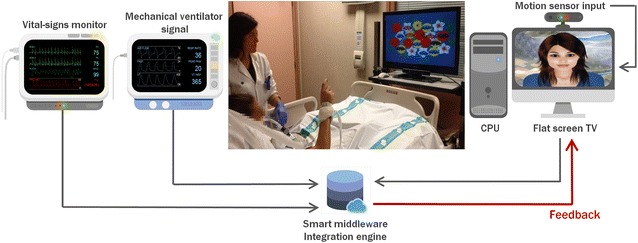
“The platform also incorporates a system to collect and store physiological data (BetterCare®, Barcelona, Spain) from bedside monitors and ventilators [29] that could be used to adapt the level of cognitive stimulation to patients’ clinical condition (Fig.”
MethodSelf-citationJones, C., Griffiths, R., Slater, T., Benjamin, K. S., & Wilson, S. L. (2006) · Intensive Care Medicine · doi:10.1007/s00134-006-0112-y · Cited by 146
Prolonged cognitive dysfunction in survivors of critical illness
Sukantarat, K. T., Burgess, P. W., Williamson, R. C. N., & Brett, S. J. (2005) · Anaesthesia · doi:10.1111/j.1365-2044.2005.04148.x · Cited by 144
Norman, B. C., Jackson, J. C., Graves, J. A., Girard, T. D., Pandharipande, P. P., Brummel, N. E., Wang, L., Thompson, J. L., Chandrasekhar, R., & Ely, E. W. (2016) · Critical Care Medicine · doi:10.1097/ccm.0000000000001849 · Cited by 134 · cited 1×
“activities of daily living, to decreased quality of life for patients and relatives, to increased medical costs, and to inability to return to work [11, 12]; however, patients rarely undergo rehabilitation during or after critical illness.”
BackgroundAutonomic predictors of Stroop performance in young and middle-aged adults
Mathewson, K. J., Jetha, M. K., Drmic, I., Bryson, S. E., Goldberg, J. O., Hall, G. B., Santesso, D. L., Segalowitz, S. J., & Schmidt, L. A. (2010) · International Journal of Psychophysiology · doi:10.1016/j.ijpsycho.2010.02.007 · Cited by 109 · cited 2×
“functions [24, 25] are stimulated, these results indicate that the intervention stimulated these cognitive functions in our critically ill patients, including those with low alertness levels.”
BackgroundBailón, R., Laouini, G., Grao, C., Orini, M., Laguna, P., & Meste, O. (2011) · IEEE Transactions on Biomedical Engineering · doi:10.1109/tbme.2010.2095011 · Cited by 109 · cited 1×
“Since the mean heart rate is not constant (it evolves continuously in challenging situations, such as physical and mental effort, especially in critically ill patients), the HRV signal was corrected by the time-varying mean heart rate [33], yielding the modulating signal which, according to the IPFM model, represents…”
MethodSelf-citationCardiac vagal tone is correlated with selective attention to neutral distractors under load
Park, G., Vasey, M. W., Van Bavel, J. J., & Thayer, J. F. (2013) · Psychophysiology · doi:10.1111/psyp.12029 · Cited by 95 · cited 2×
“Since HRV decreases when attentional [22, 23] and executive Table 1 Clinical and sociodemographic characteristics of critically ill patients undergoing early neurocognitive intervention (n = 20)”
BackgroundCognitive, mood and quality of life impairments in a select population of ARDS survivors
MIKKELSEN, M. E., SHULL, W. H., BIESTER, R. C., TAICHMAN, D. B., LYNCH, S., DEMISSIE, E., HANSEN‐FLASCHEN, J., & CHRISTIE, J. D. (2009) · Respirology · doi:10.1111/j.1440-1843.2008.01419.x · Cited by 95
Quílez, M. E., López‐Aguilar, J., & Blanch, L. L. (2011) · Current Opinion in Critical Care · doi:10.1097/mcc.0b013e32834ef3ea · Cited by 70 · cited 1×
“Neurocognitive impairments in ICU survivors may be understood as a manifestation of occult brain damage resulting from pathophysiological mechanisms related to critical illness and crosstalk between organs [34, 35].”
BackgroundSelf-citationFernández‐Gonzalo, S., Turón, M., Jódar, M., Pousa, E., Rambla, C. H., García, R., & Palao, D. J. (2015) · Psychiatry Research · doi:10.1016/j.psychres.2015.06.007 · Cited by 67 · cited 1×
“Physical and cognitive rehabilitation tools based on new technologies are being used successfully in patients with dementia, traumatic brain injury, stroke [20], and schizophrenia [21].”
BackgroundPredicting Cognitive Sequelae in Survivors of Critical Illness with Cognitive Screening Tests
Woon, F. L., Dunn, C. B., & Hopkins, R. O. (2012) · American Journal of Respiratory and Critical Care Medicine · doi:10.1164/rccm.201112-2261oc · Cited by 62
Lung–brain cross talk in the critically ill
Blanch, L. L., & Quintel, M. (2016) · Intensive Care Medicine · doi:10.1007/s00134-016-4583-1 · Cited by 50 · cited 1×
“Neurocognitive impairments in ICU survivors may be understood as a manifestation of occult brain damage resulting from pathophysiological mechanisms related to critical illness and crosstalk between organs [34, 35].”
BackgroundSelf-citationDo sedation and analgesia contribute to long-term cognitive dysfunction in critical care survivors?
Fernández‐Gonzalo, S., Turón, M., de Haro, C., López‐Aguilar, J., Jódar, M., & Blanch, L. L. (2017) · Medicina Intensiva · doi:10.1016/j.medin.2017.06.010 · Cited by 32 · cited 1×
“In our study, neurocognitive stimulation started when patients reached RASS −1 to +1 (median, 10 days after ICU admission; range 2–23 days), suggesting that deep-sedation strategies, in addition to leading to increased prevalence of brain dysfunction in ICU [37], are the most important barrier to this kind of interven…”
BackgroundSelf-citationCognitive stimulation in ICU patients: should we pay more attention?
Turón, M., Fernández‐Gonzalo, S., Gomez-Simon, V., Blanch, L. L., & Jódar, M. (2013) · Critical Care · doi:10.1186/cc12719 · Cited by 10 · cited 1×
“Therefore, it might be interesting to consider ICU patients as a subset of brain-injured patients and treat them with tools such as cognitive stimulation that have proven effective in treating neurocognitive impairments in outpatient populations [36].”
BackgroundSelf-citationEARLY NEUROCOGNITIVE REHABILITATION IN CRITICALLY ILL PATIENTS DURING ICU STAY: A SAFETY STUDY
Fernández‐Gonzalo, S., Turón, M., Gomà, G., Martínez-Pérez, M., de Haro, C., Montanyà, J., Jódar, M., López‐Aguilar, J., & Blanch, L. L. (2015) · Intensive Care Medicine Experimental · doi:10.1186/2197-425x-3-s1-a994 · Cited by 1
Self-citationTurón, M., Hernando, D., Fernández‐Gonzalo, S., Bailón, R., Gomà, G., Lázaro, J. M., Montanyà, J., Gil, E., Martínez-Pérez, M., de Haro, C., et al. (2015) · Intensive Care Medicine Experimental · doi:10.1186/2197-425x-3-s1-a989 · Cited by 1
Self-citationHernando, D., Turón, M., Bailón, R., Fernández‐Gonzalo, S., Lázaro, J. M., Gomà, G., Gil, E., Montanyà, J., López‐Aguilar, J., de Haro, C., et al. (2015) · Computing in cardiology · doi:10.1109/cic.2015.7411028 · Cited by 1
Self-citation
Cited by
Bruno, R. R., Wolff, G., Wernly, B., Masyuk, M., Piayda, K., Leaver, S., Erkens, R., Oehler, D., Afzal, S., Heidari, H., et al. (2022) · Critical Care · doi:10.1186/s13054-022-04202-x · Cited by 242
“However, there was no control group, and no follow-up data were available [31].”
BackgroundVirtual and Augmented Reality in Cardiovascular Care
Jung, C., Wolff, G., Wernly, B., Bruno, R. R., Franz, M., Schulze, P. C., Silva, J. N. A., Silva, J. R., Bhatt, D. L., & Kelm, M. (2021) · JACC. Cardiovascular imaging · doi:10.1016/j.jcmg.2021.08.017 · Cited by 169
Lee, S. Y., & Kang, J. (2020) · Intensive and Critical Care Nursing · doi:10.1016/j.iccn.2020.102849 · Cited by 114
Virtual and augmented reality in intensive care medicine: a systematic review
Kanschik, D., Bruno, R. R., Wolff, G., Kelm, M., & Jung, C. (2023) · Annals of Intensive Care · doi:10.1186/s13613-023-01176-z · Cited by 152
“In this context, Turon et al. examined in a pilot study the benefits of VR-assisted early neurocognitive stimulation in 20 critically ill adult patients [44].”
BackgroundMinimizing Asynchronies in Mechanical Ventilation: Current and Future Trends
Subirá, C., de Haro, C., Magrans, R., Fernández, R., & Blanch, L. (2018) · Respiratory care · doi:10.4187/respcare.05949 · Cited by 74
Self-citation
Metadata
- Authors
- Turon, M., Fernandez-Gonzalo, S., Jodar, M., Gomà, G., Montanya, J., Hernando, D., Bailón, R., de Haro, C., Gomez-Simon, V., Lopez-Aguilar, J., Magrans, R., Martinez-Perez, M., Oliva, J. C., & Blanch, L.
- Affiliations
- Universitat Autònoma de Barcelona (ES)
- Universidad de Zaragoza (ES)
- Instituto de Salud Carlos III (ES)
- Institute of Research and Innovation Parc Tauli (ES)
- Venue
- Annals of Intensive Care
- Publisher
- Elsevier BV
- Published
- 2017
- Volume
- 7
- Issue
- 1
- Pages
- 81
- ISSN
- 2110-5820 (ISSN-L)
- PMC
- PMC5540744
- OpenAlex
- W2742045203
- Cited by
- 56
- References
- 43
- Citations by year
- 2026: 6 · 2025: 9 · 2024: 5 · 2023: 7 · 2022: 4 · 2021: 10 · 2020: 3 · 2019: 8 · 2018: 2 · 2017: 2
- FWCI
- 3.86
- Type
- journal article
- Language
- en
- Open access
- gold
- doi.org
- Licence
- cc-by
- www.elsevier.com/tdm/userlicense/1.0/ (tdm)
- www.elsevier.com/legal/tdmrep-license (tdm)
- creativecommons.org/licenses/by-nc-nd/4.0/ (vor, 3244 d)
- Locations
- Annals of Intensive Care (publishedVersion, cc-by)
- PubMed Central (publishedVersion, cc-by)
- PubMed (publishedVersion)
- Dipòsit Digital de Documents de la UAB (Universitat Autònoma de Barcelona) (submittedVersion, cc-by)
- DOAJ (DOAJ: Directory of Open Access Journals) (submittedVersion, cc-by-sa)
- Zaguan (University of Zaragoza Repository) (submittedVersion, cc-by)
- Funders
- Fundació La Marató TV3 (181/U/2011)
- Instituto de Salud Carlos III (PI13/02204)
- Centro de Investigación Biomédica en Red en Enfermedades Respiratorias (ES) (ES15PINT007)
- Fundació Parc Taulí (ES) (CIR2014/028)
- Topics
- Health Sciences › Medicine › Critical Care and Intensive Care Medicine › Intensive Care Unit Cognitive Disorders
- Physical Sciences › Computer Science › Human-Computer Interaction › Virtual Reality Applications and Impacts
- Health Sciences › Medicine › Clinical Neurology › Traumatic Brain Injury Research
- Keywords
- virtual reality, critical illness, post-intensive care syndrome, neurocognitive impairment, mechanical ventilation, heart rate variability, attention, working memory, cognitive rehabilitation, feasibility and safety, intensive care unit
About these checks
Registry, retraction, Cites and statistics results are computed, not judged, with one exception: a printed reference that no index lists is read once by a model before it counts as a citation error. Claims are extracted by a model and kept only when their quote appears verbatim in the text; each cited source is then checked, with a model’s help, for whether it says what the claim relies on. Those verdicts can be wrong — read the claim’s quote and the cited source before relying on one.
Statistics and arithmetic are recomputed, not judged.
Confidence bands are shown only for fields calibrated on our annotated test set. None is calibrated yet, so no band is shown.
What counts as a claim ›How we measure confidence ›How we check this ›
Are you an author, or do you see a problem with this page? Request a review
Data sources
Bibliographic data: Semantic Scholar, OpenAlex, Crossref.
Contains information from the Semantic Scholar Academic Graph Datasets, made available under the ODC Attribution License (ODC-BY 1.0).
Semantic Scholar’s data is described in: Kinney, R., et al. (2023). The Semantic Scholar Open Data Platform. arXiv:2301.10140.
